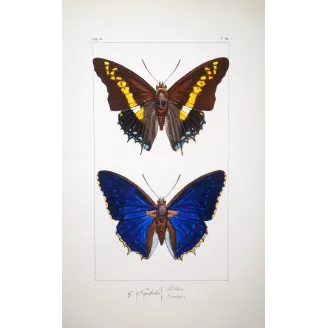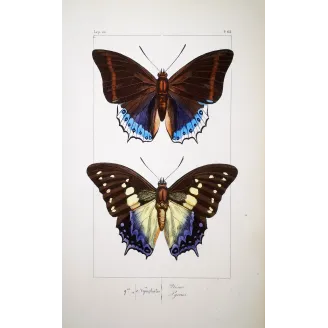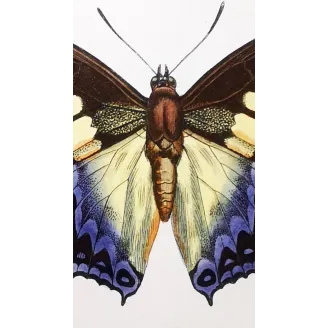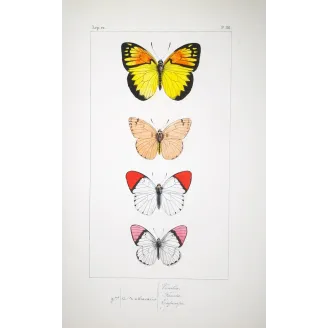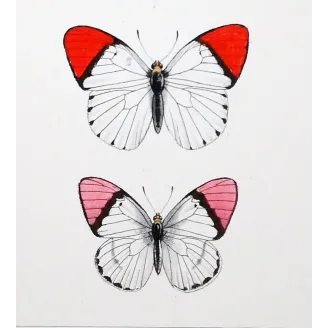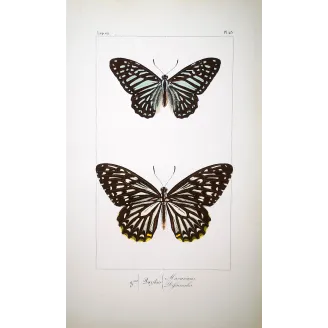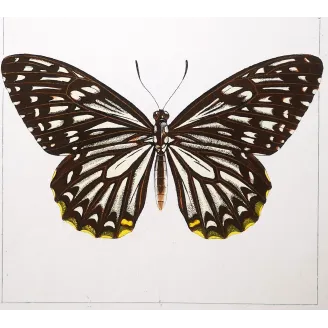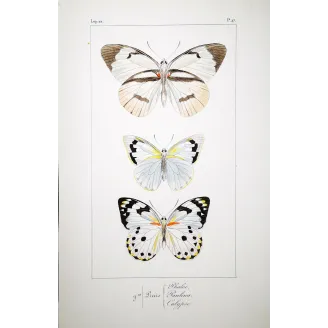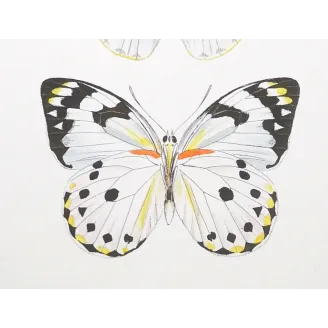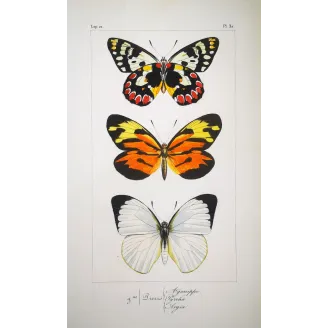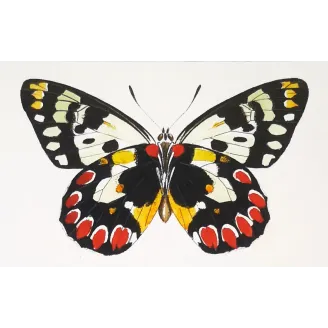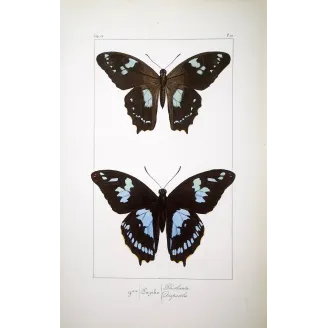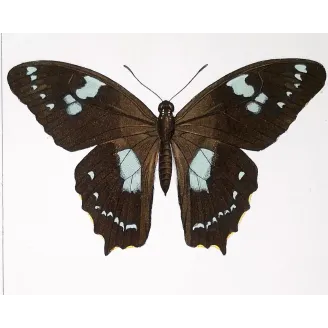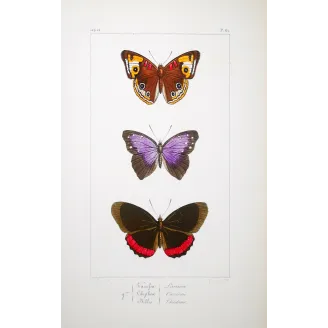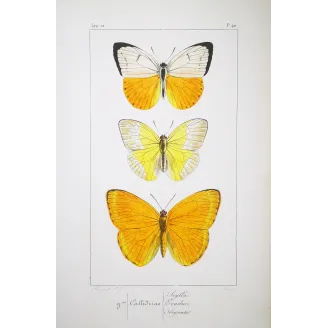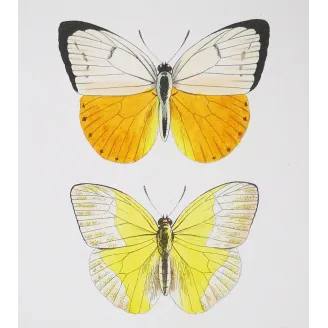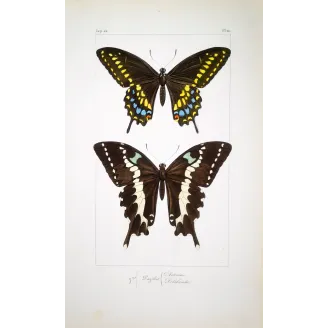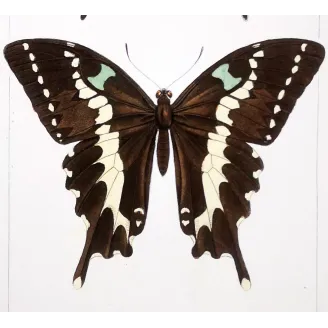
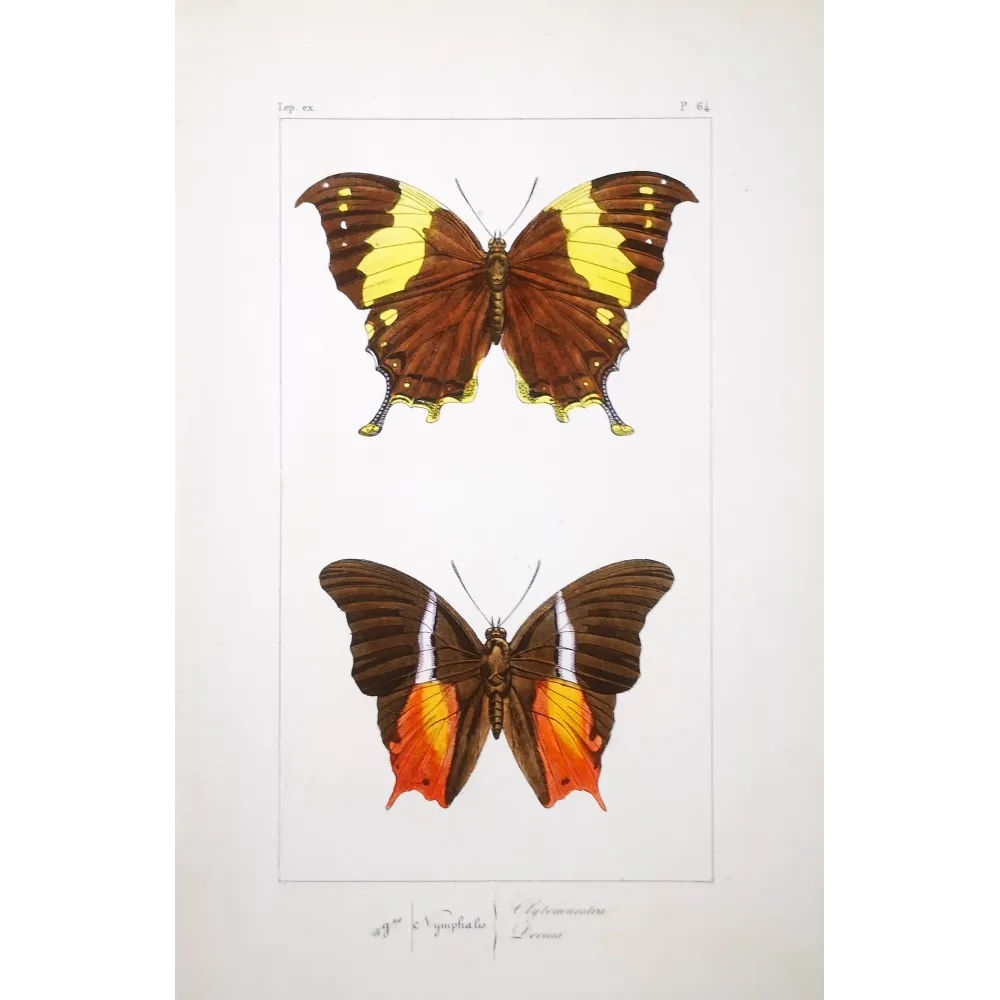
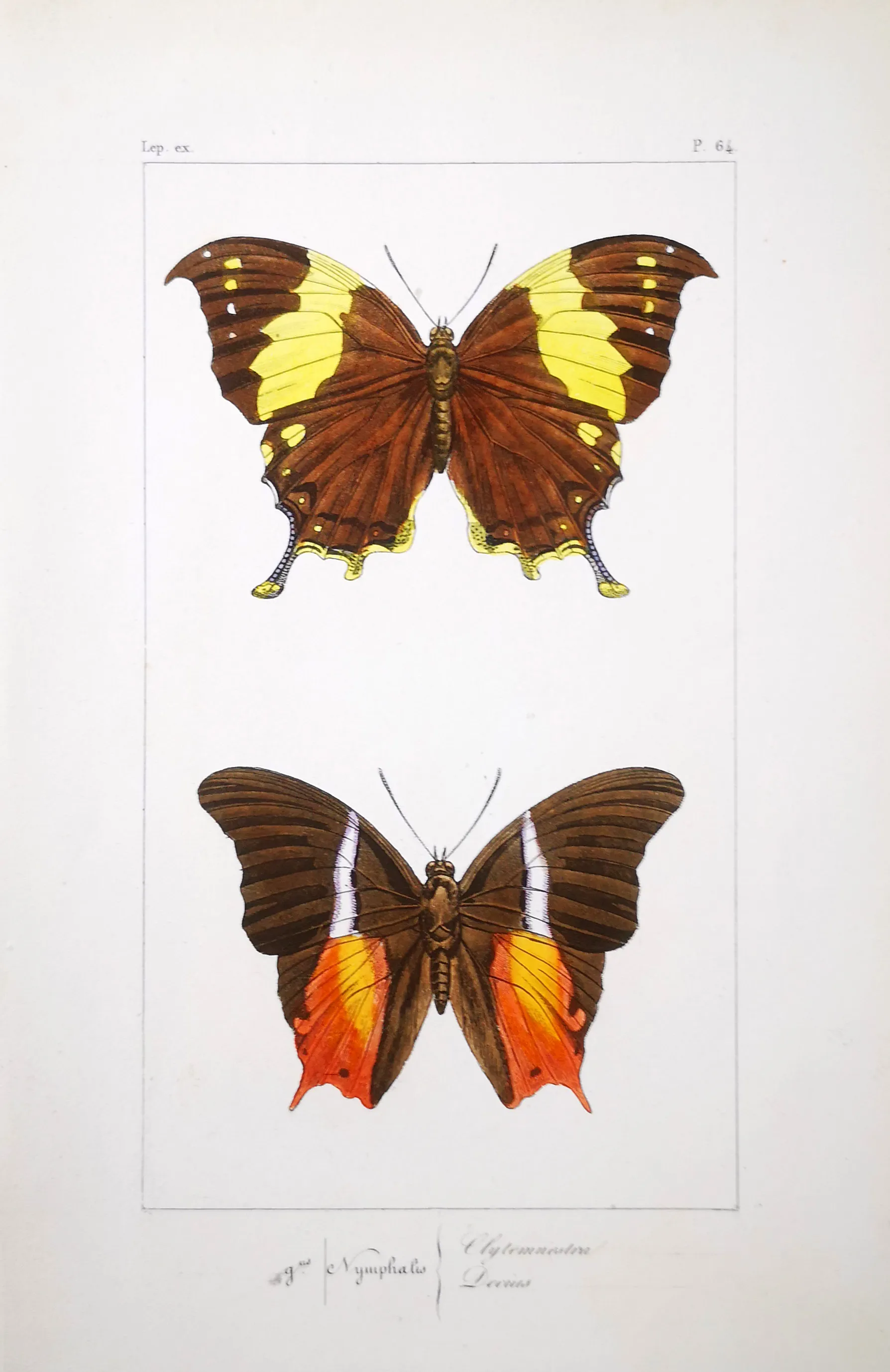
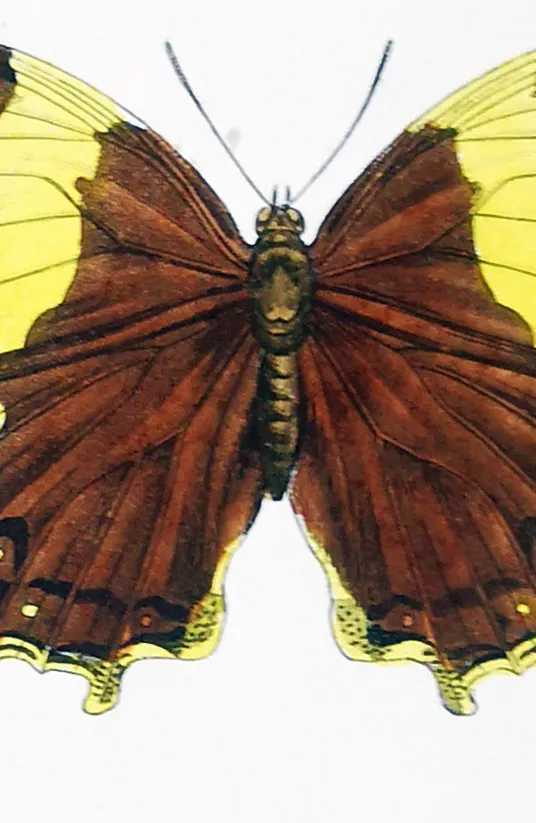
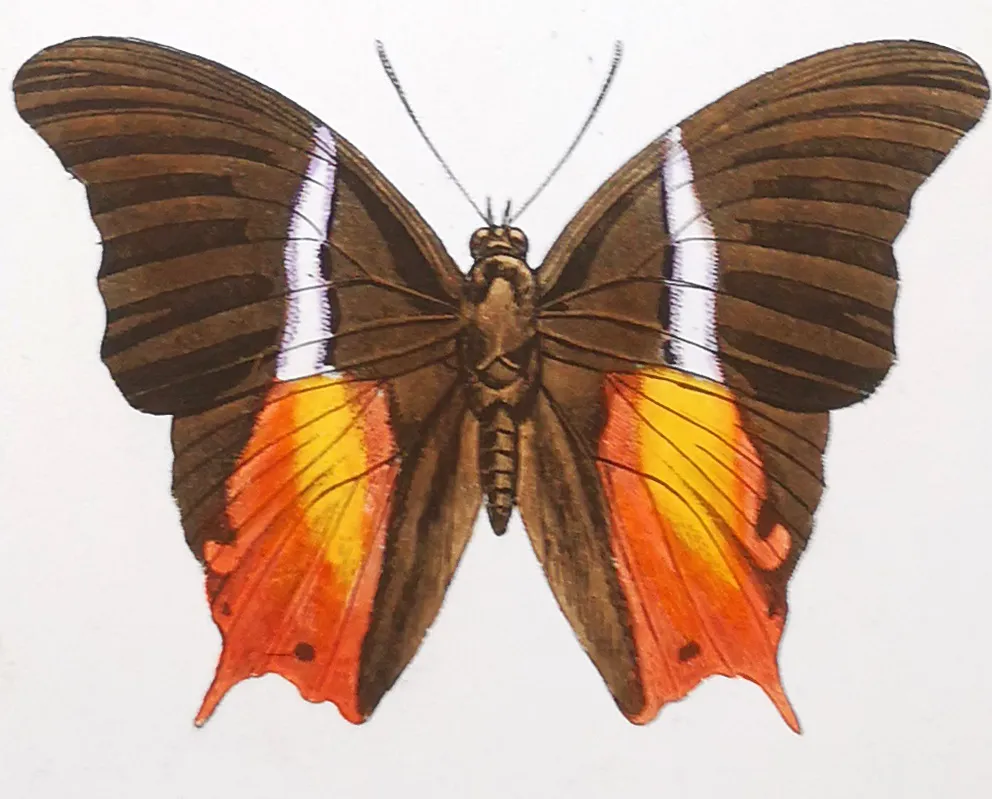
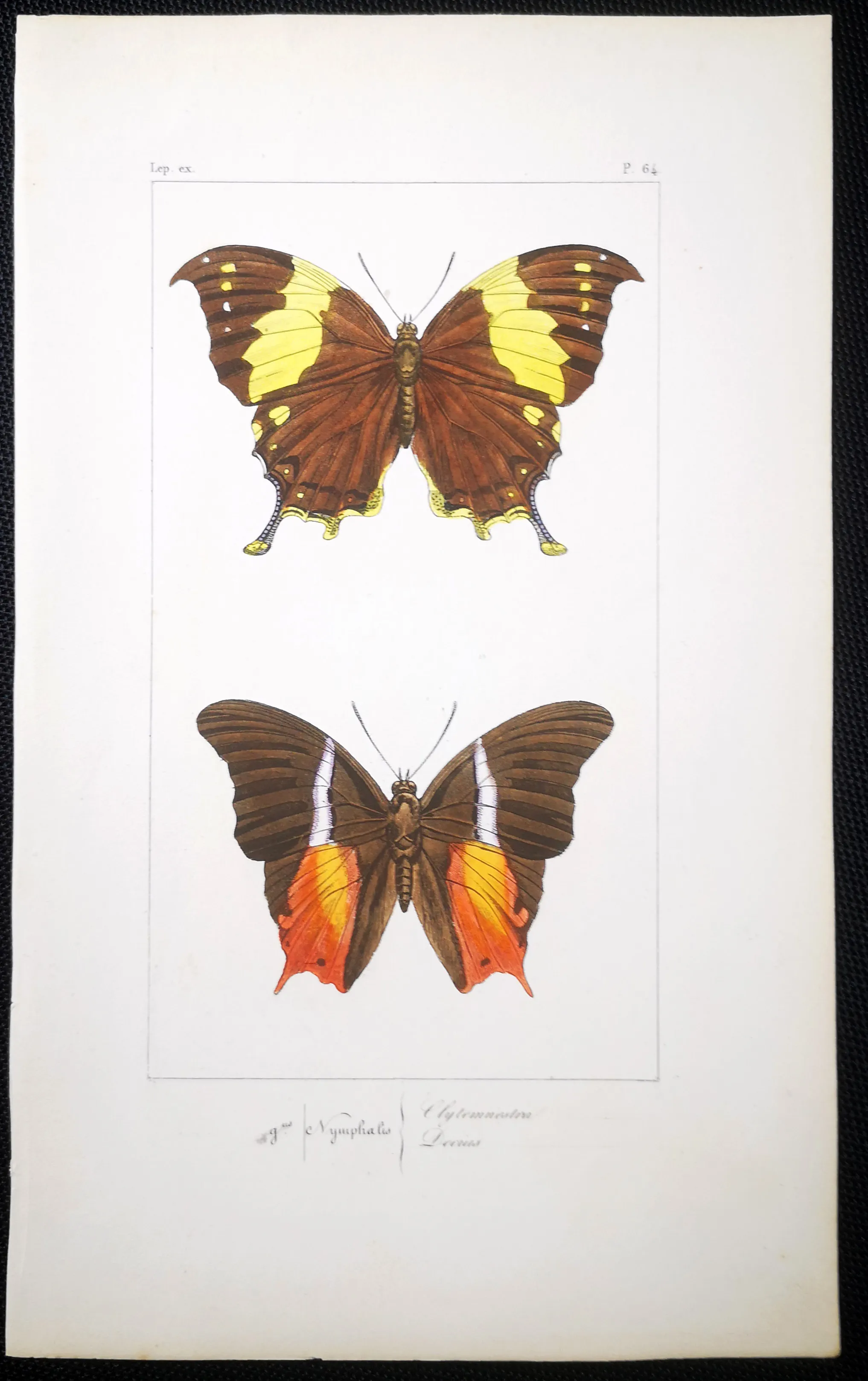
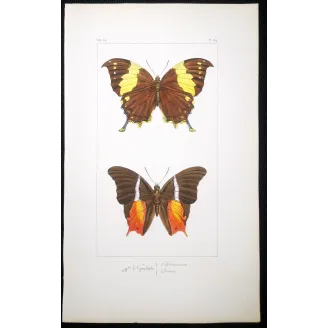
Tropical butterflies with warm amber, yellow and red tones on deep brown wings. A refined 1835 engraving, ideal as antique butterfly wall art.
 Delivery policy
Your print will be carefully prepared and shipped worldwide via trusted couriers (UPS or similar).
 Authentic antique prints
Original engravings from the 17th–19th century.
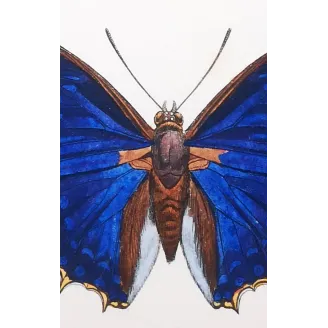
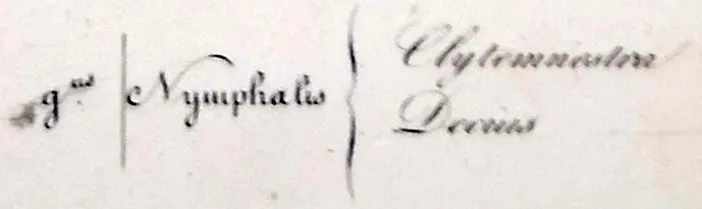
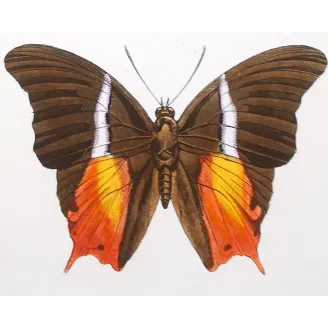
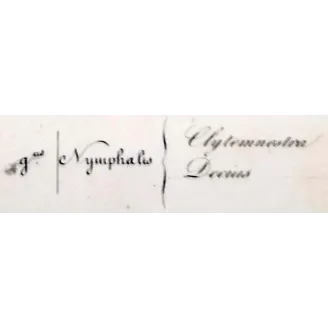
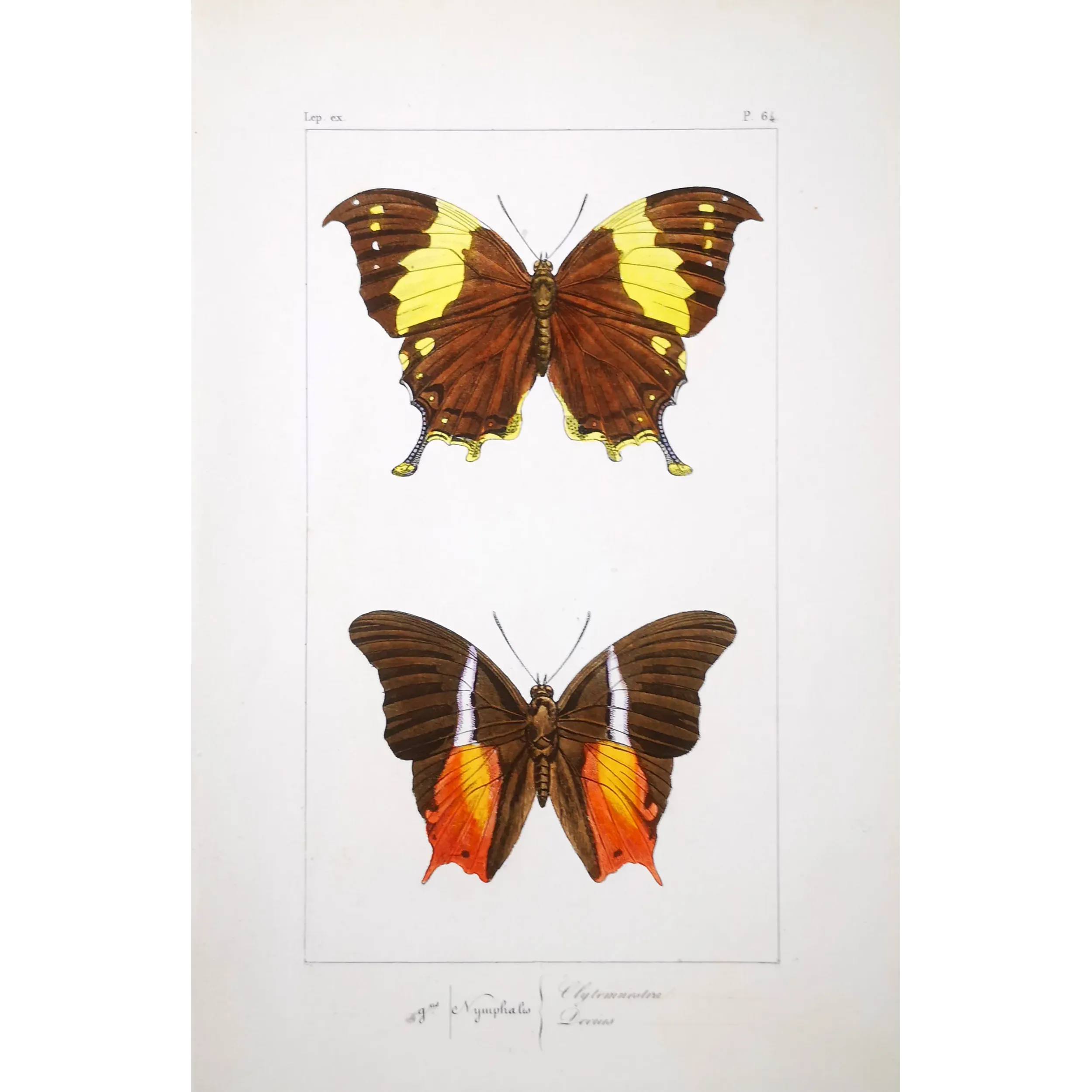
This original 1835 hand-colored copper engraving depicts two refined tropical butterflies belonging to the Nymphalidae family, likely within the Charaxes / Memphis group. Produced under the scientific direction of Hippolyte Lucas and engraved by Pauquet, the plate reflects the delicate balance between scientific observation and aesthetic refinement characteristic of nineteenth-century natural history illustration.
The composition presents two distinct yet harmonious specimens. The upper butterfly displays warm brown wings accented by soft yellow patches, creating a natural and understated elegance. Below, a more vivid specimen introduces a striking gradient of red and orange tones, subtly illuminated against a darker background.
Together, the two butterflies form a composition defined by warmth and depth, making this engraving a particularly appealing piece of antique butterfly wall art for interiors that favour natural palettes and refined tonal variation.
— • —
The upper specimen is defined by a structured arrangement of golden-yellow markings across rich brown wings. Its symmetry and restraint give the composition a calm, almost architectural presence.
In contrast, the lower butterfly introduces movement through colour. The transition from deep brown to glowing orange and red creates a luminous effect, reminiscent of tropical light and heat. This gradient quality adds depth and visual interest without overwhelming the composition.
Butterflies of the Charaxes and related genera are known for their strong flight and territorial behaviour. Often found in tropical forests, they are attracted to fermenting fruit rather than flowers, a habit that intrigued early naturalists and set them apart from many other butterfly groups.
Their coloration, ranging from earthy browns to vivid flashes of orange and yellow, provides both camouflage and sudden visual signalling. This dual function made them important subjects in early studies of adaptation and behaviour.
Engravings such as this one introduced European audiences to these less flamboyant but deeply sophisticated species, highlighting the diversity and subtle beauty of tropical Lepidoptera.
Part of the Lucas – Exotic Butterflies series (1835), this engraving belongs to a period when nature was documented with both scientific rigor and artistic sensitivity.
Learn more in our editorial: Hippolyte Lucas and Exotic Butterflies .
The plate was engraved by Pauquet, whose work exemplifies the precision of nineteenth-century copper engraving: Pauquet, Engraver .
Very good antique condition. Fresh original hand-coloring with warm and well-preserved tones. Strong engraved impression on fine nineteenth-century paper. Minor age toning consistent with the period. Such examples, retaining this level of tonal richness and overall balance, are increasingly difficult to find.
Specific References
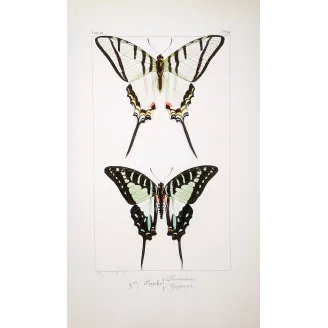
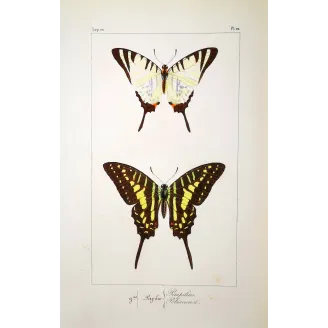
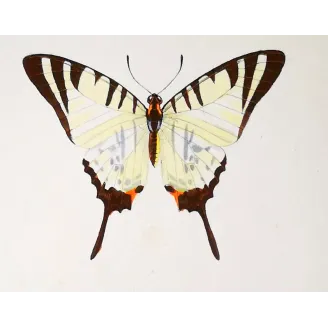
A refined 19th-century hand-colored engraving depicting two elegant kite swallowtails: Eurytides protesilaus and Eurytides agapenor. Published in Hippolyte Lucas’s Exotic Butterflies (1835), the plate highlights their distinctive elongated tails and delicate translucent wings.
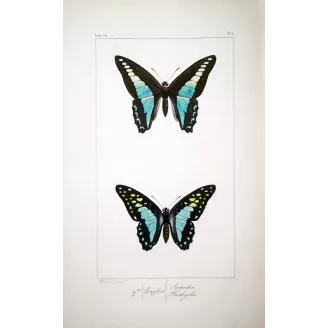
A vivid 19th-century hand-colored engraving depicting two striking Asian swallowtail butterflies: the Common Bluebottle (Papilio sarpedon) and the Spotted Bluebottle (Papilio bathycles). Published in Hippolyte Lucas’s Exotic Butterflies (1835), the plate highlights their elegant turquoise wing bands set against deep black wings.
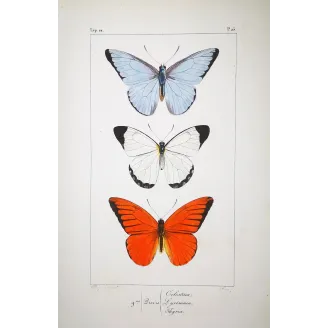
Delicate blue, white, and vivid red butterflies arranged in a refined vertical composition. An elegant 1835 engraving with balanced decorative appeal.
Original 1835 hand-colored copper engraving depicting the butterflies Pollux and Eurilochus. A visually striking double-specimen plate from Hippolyte Lucas’ celebrated Exotic Butterflies, engraved by Pauquet, with strong appeal as natural history art and antique butterfly wall art.
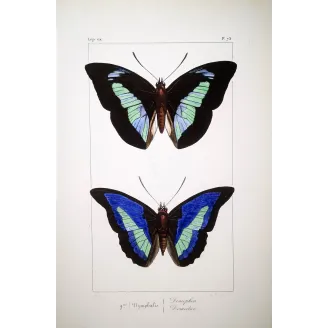
Deep brown butterflies with electric blue bands and eye-spot patterns, characteristic of Prepona-type species. A refined and highly decorative 1835 engraving, ideal as antique butterfly wall art.
Bright yellow and white butterflies with vivid orange and pink tips. A refined 1835 engraving with strong decorative contrast.
A finely detailed 19th-century hand-colored engraving depicting two forms of the Clipper Butterfly (Parthenos sylvia). Published in Hippolyte Lucas’s Exotic Butterflies (1835), the plate highlights the species’ elegant network of white markings across dark wings, creating a striking geometric pattern characteristic of tropical Asian butterflies.
Delicate white butterflies with subtle yellow, orange, and black accents. A refined 1835 engraving with light and elegant decorative appeal.
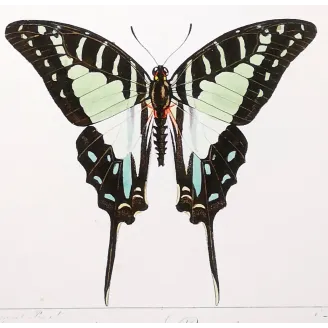
Black swallowtail butterflies with ivory, yellow and green patterns. A refined 1835 engraving, ideal as antique butterfly wall art.
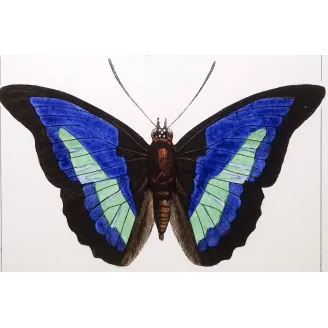
Demophon & Demodice Butterflies (Archaeoprepona demophon, Prepona laertes demodice) – Antique Hand-Colored Engraving, Exotic Butterflies (1835).
Elegant butterflies combining bright orange, yellow, and white tones. A refined 1835 engraving with strong visual contrast and balance.
A refined 19th-century hand-colored engraving depicting two forms of the La Réunion Swallowtail (Papilio phorbanta). Published in Hippolyte Lucas’s Exotic Butterflies (1835), the plate captures the striking contrast between deep velvety wings and luminous pale blue markings characteristic of this Indian Ocean species.
Striking butterflies in deep red, violet, and dark tones with eye-like markings. A refined 1835 engraving with strong decorative character.
Elegant yellow butterflies with soft brown and natural tones. A refined 1835 engraving with balanced and decorative appeal.
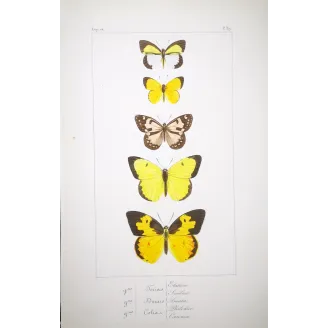
Luminous yellow and white butterflies with warm golden tones. A refined 1835 engraving with bright and elegant decorative appeal.
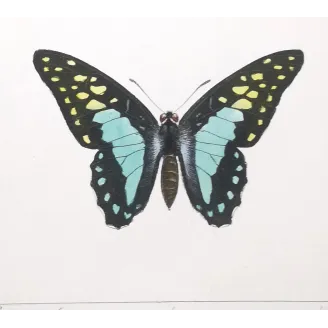
Elegant Asian swallowtail butterflies with yellow, blue, and ivory patterns on deep brown wings. A refined 1835 engraving, ideal as antique butterfly wall art.
Tropical butterflies with warm amber, yellow and red tones on deep brown wings. A refined 1835 engraving, ideal as antique butterfly wall art.