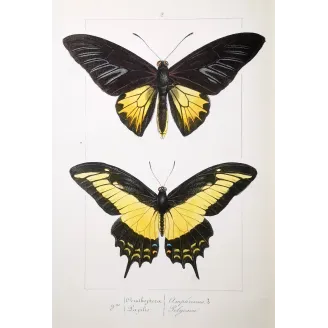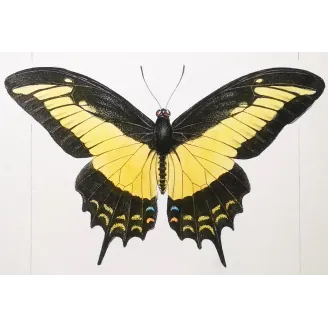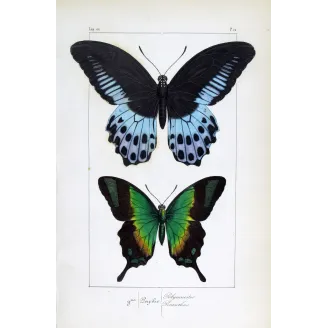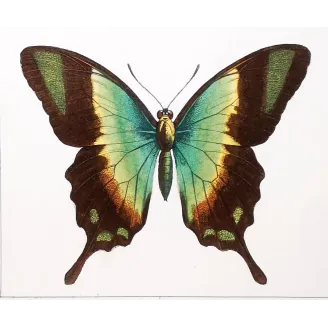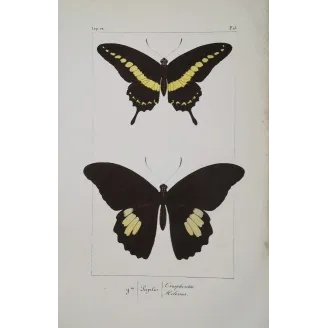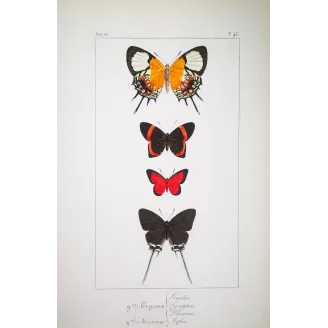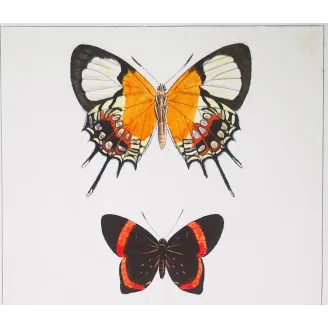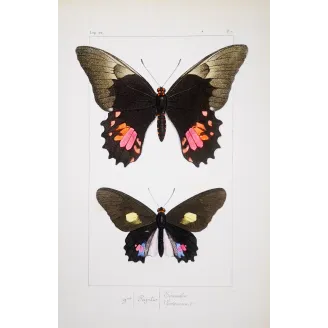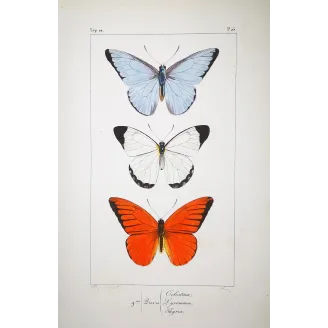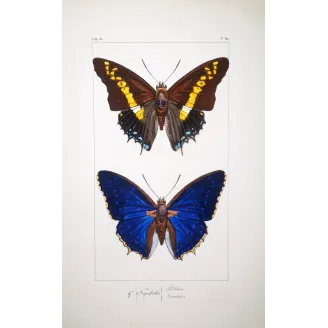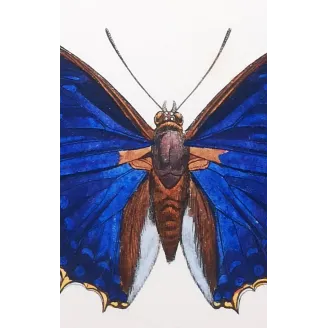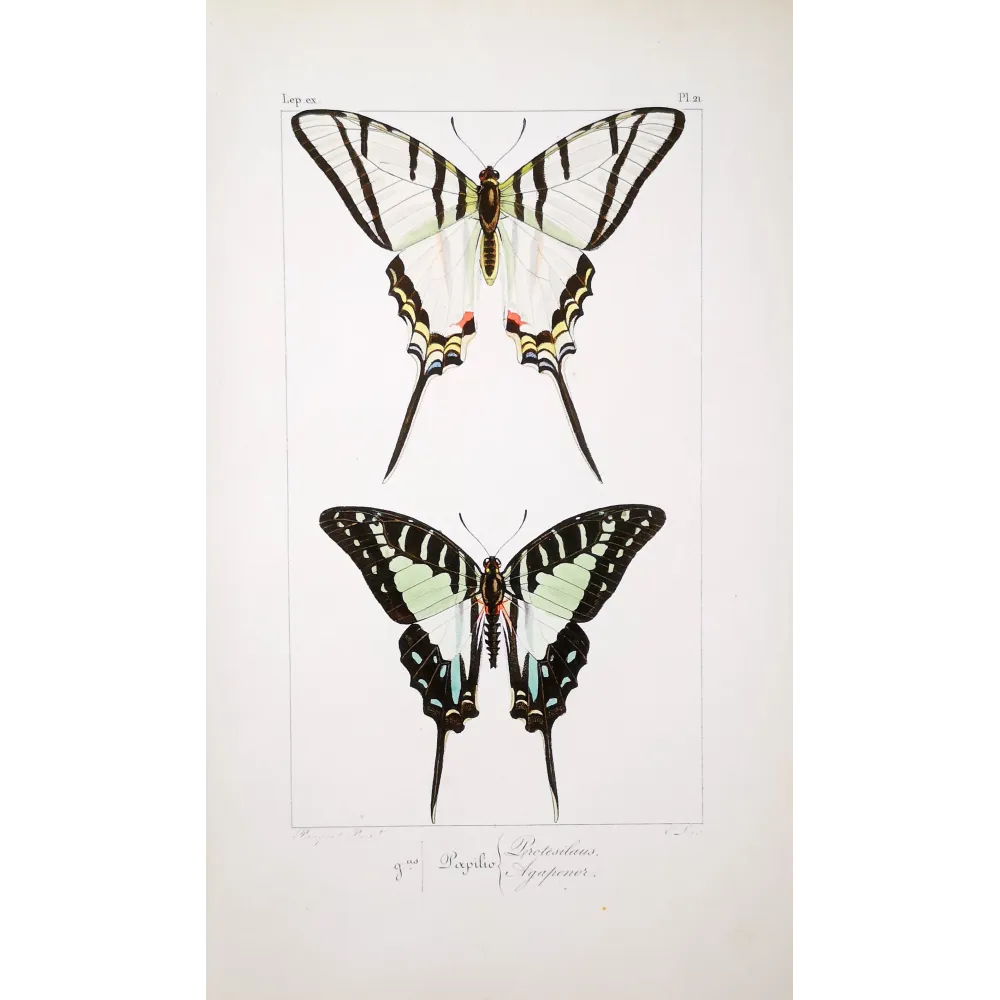
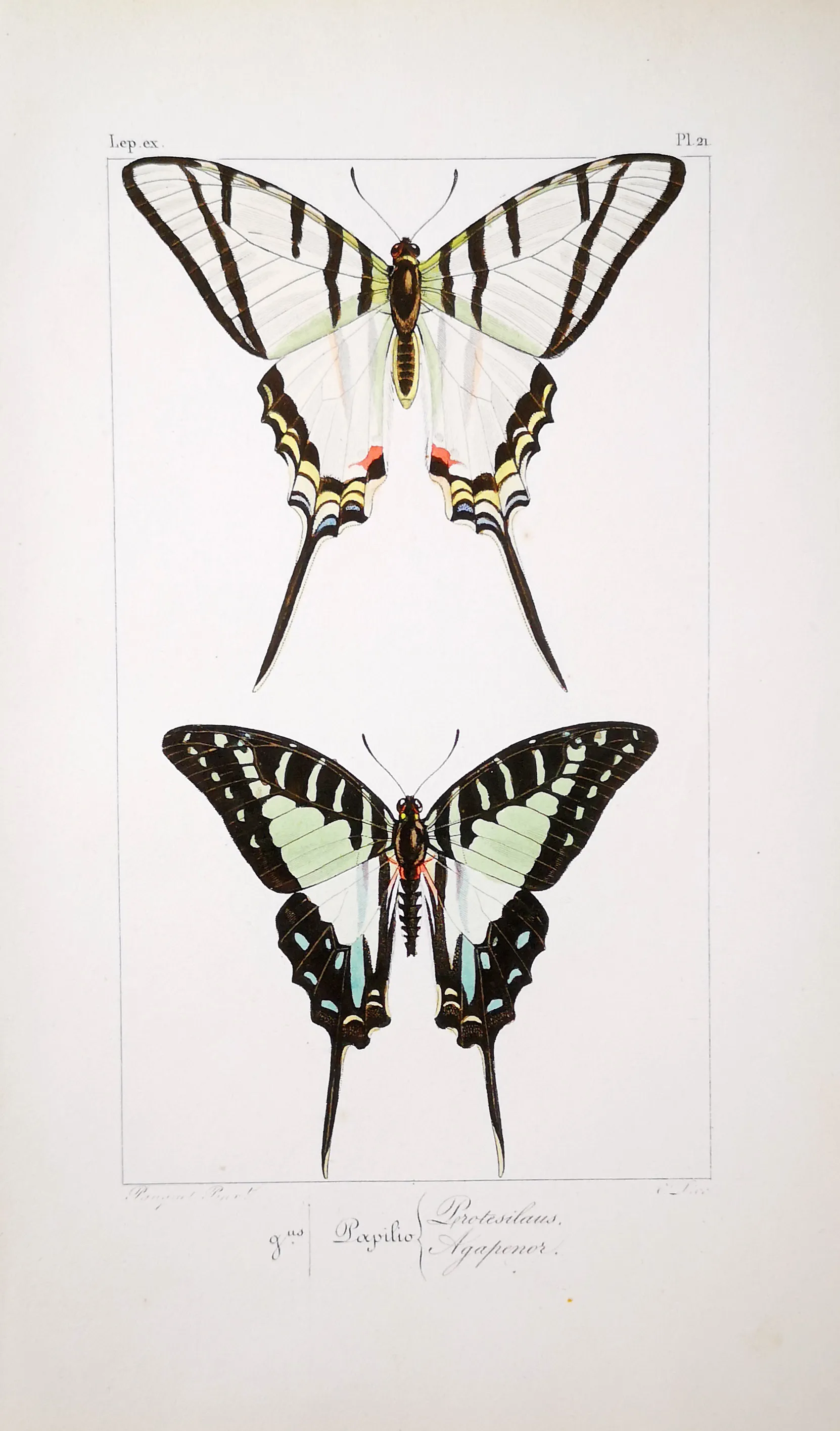
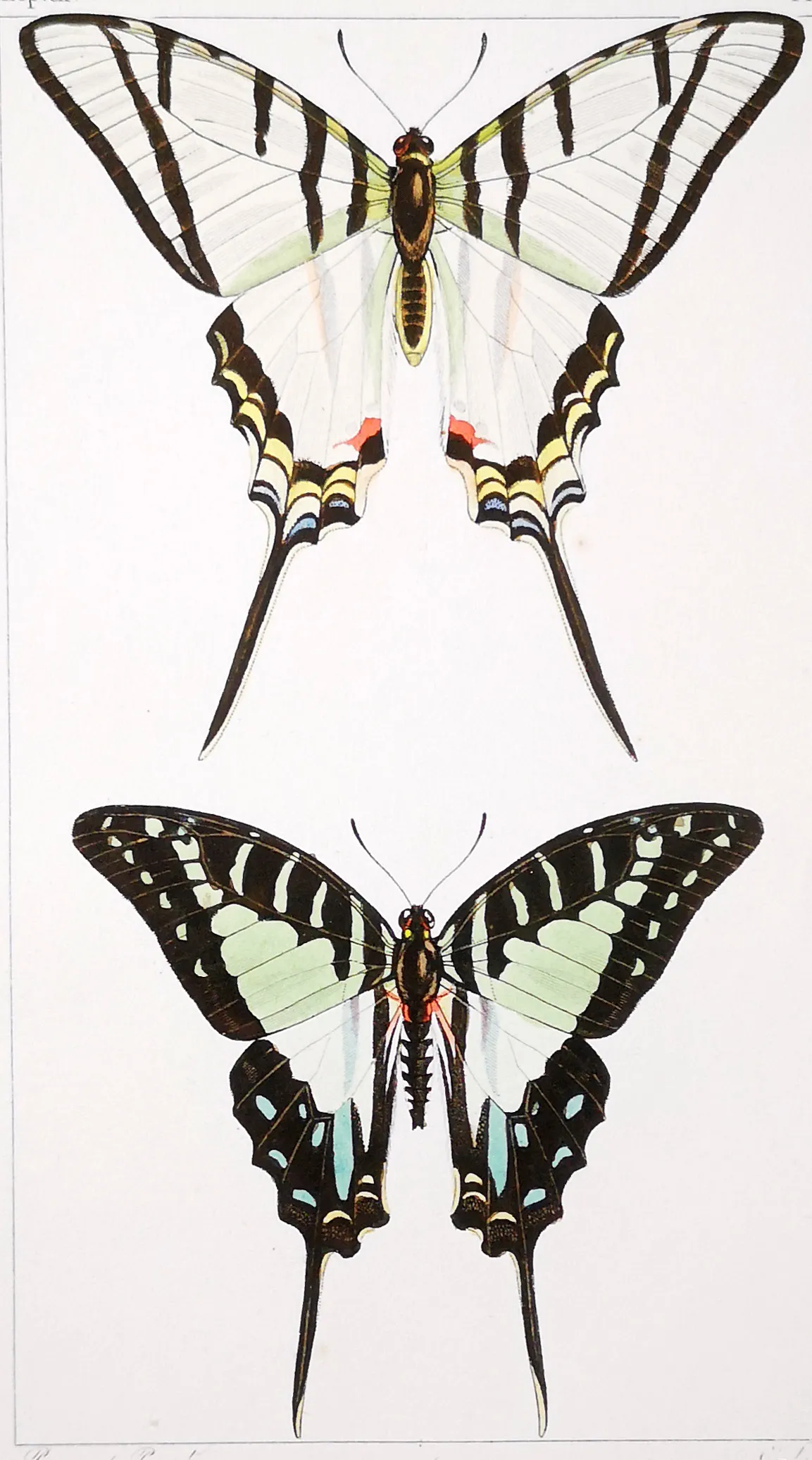
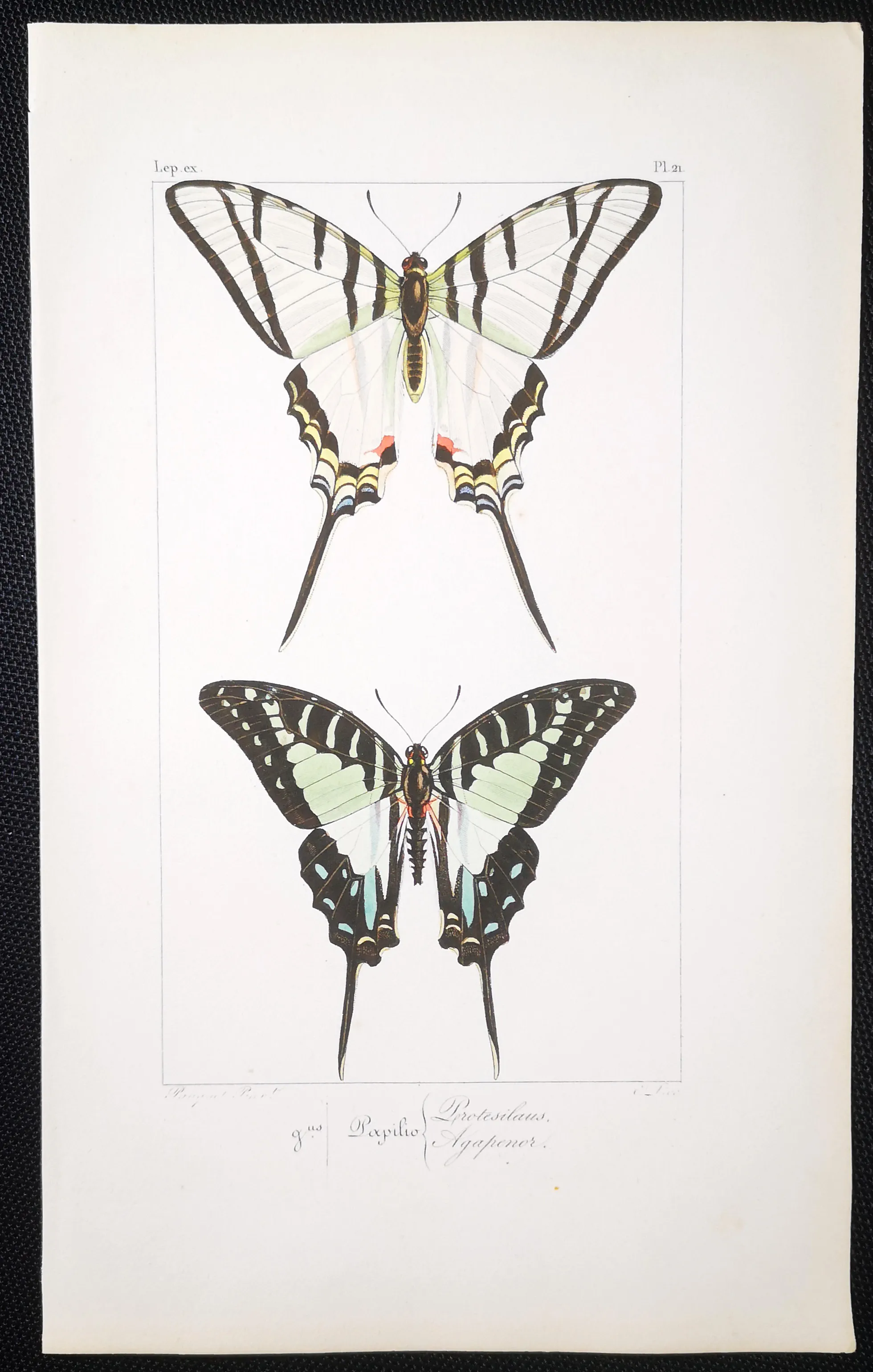
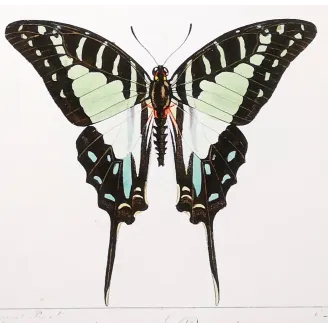
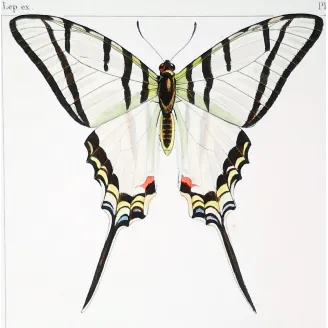
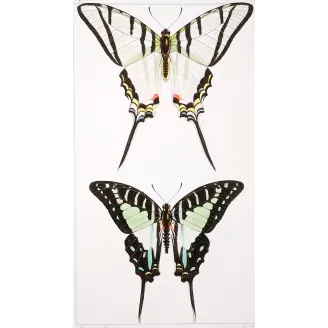
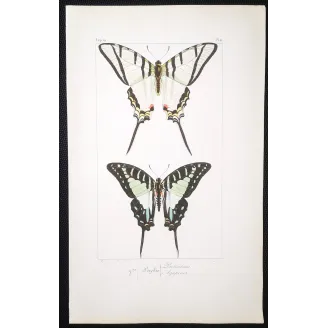
A refined 19th-century hand-colored engraving depicting two elegant kite swallowtails: Eurytides protesilaus and Eurytides agapenor. Published in Hippolyte Lucas’s Exotic Butterflies (1835), the plate highlights their distinctive elongated tails and delicate translucent wings.
 Delivery policy
Your print will be carefully prepared and shipped worldwide via trusted couriers (UPS or similar).
 Authentic antique prints
Original engravings from the 17th–19th century.
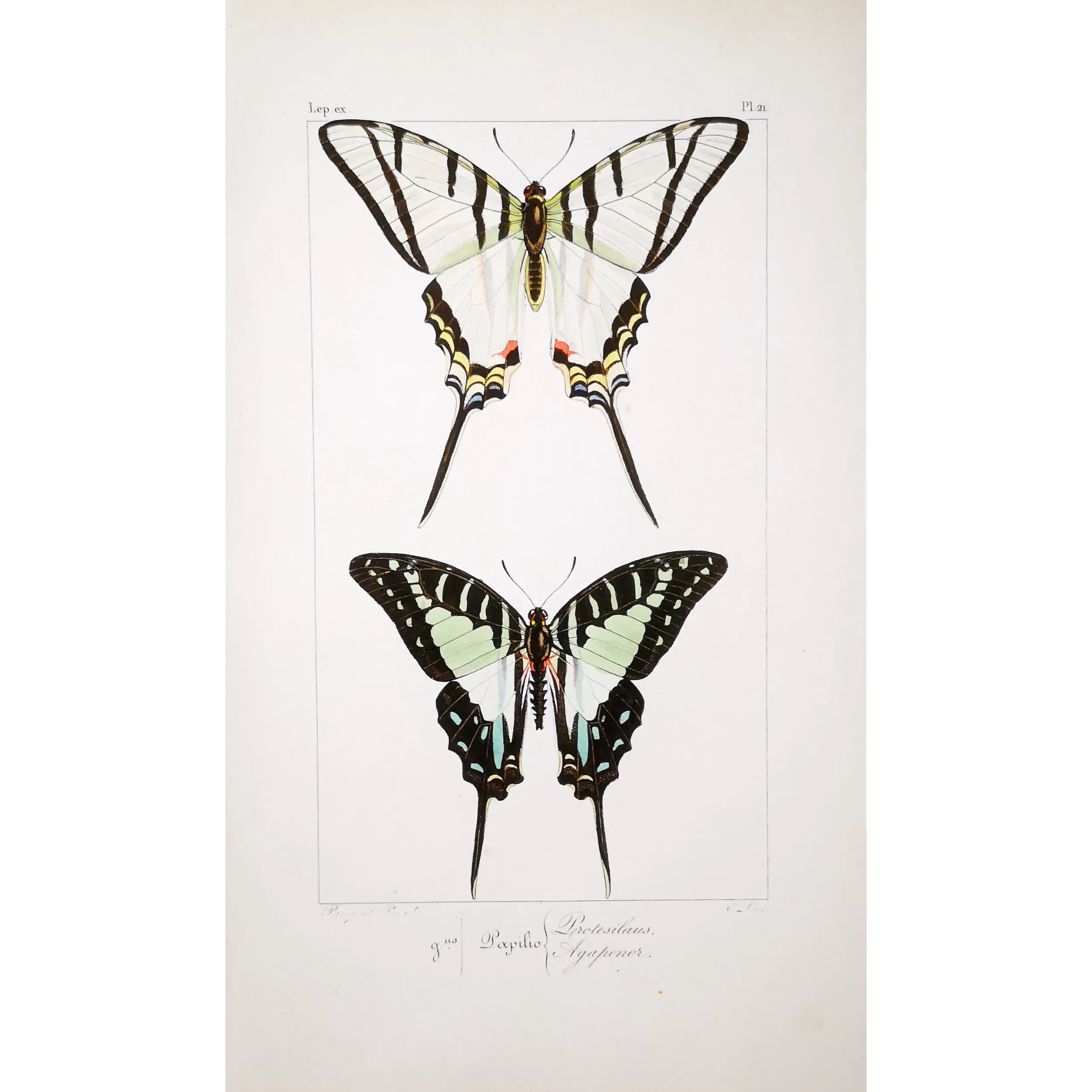
This original 1835 hand-colored copper engraving depicts two remarkable tropical swallowtail butterflies: Eurytides protesilaus, known as the Protesilaus Kite Swallowtail, and Eurytides agapenor, a closely related species admired for its striking pale green wing panels and elongated tails. The plate forms part of Exotic Butterflies, produced under the scientific direction of Hippolyte Lucas and drawn and engraved by Pauquet.
Arranged in a refined vertical composition against a clean background, the two butterflies appear almost like specimens displayed within a natural history cabinet. Their slender bodies, elongated hindwing tails, and contrasting patterns reflect the fascination that nineteenth-century naturalists held for the extraordinary diversity of tropical Lepidoptera.
Beyond its scientific importance, the engraving possesses a distinctive decorative quality. The elegant geometry of the wings and the delicate translucency of the forms make the plate especially appealing today as antique butterfly wall art for interiors inspired by natural history, travel, and historical refinement.
— • —
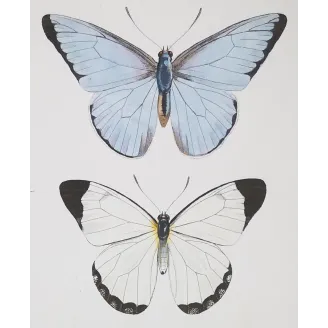
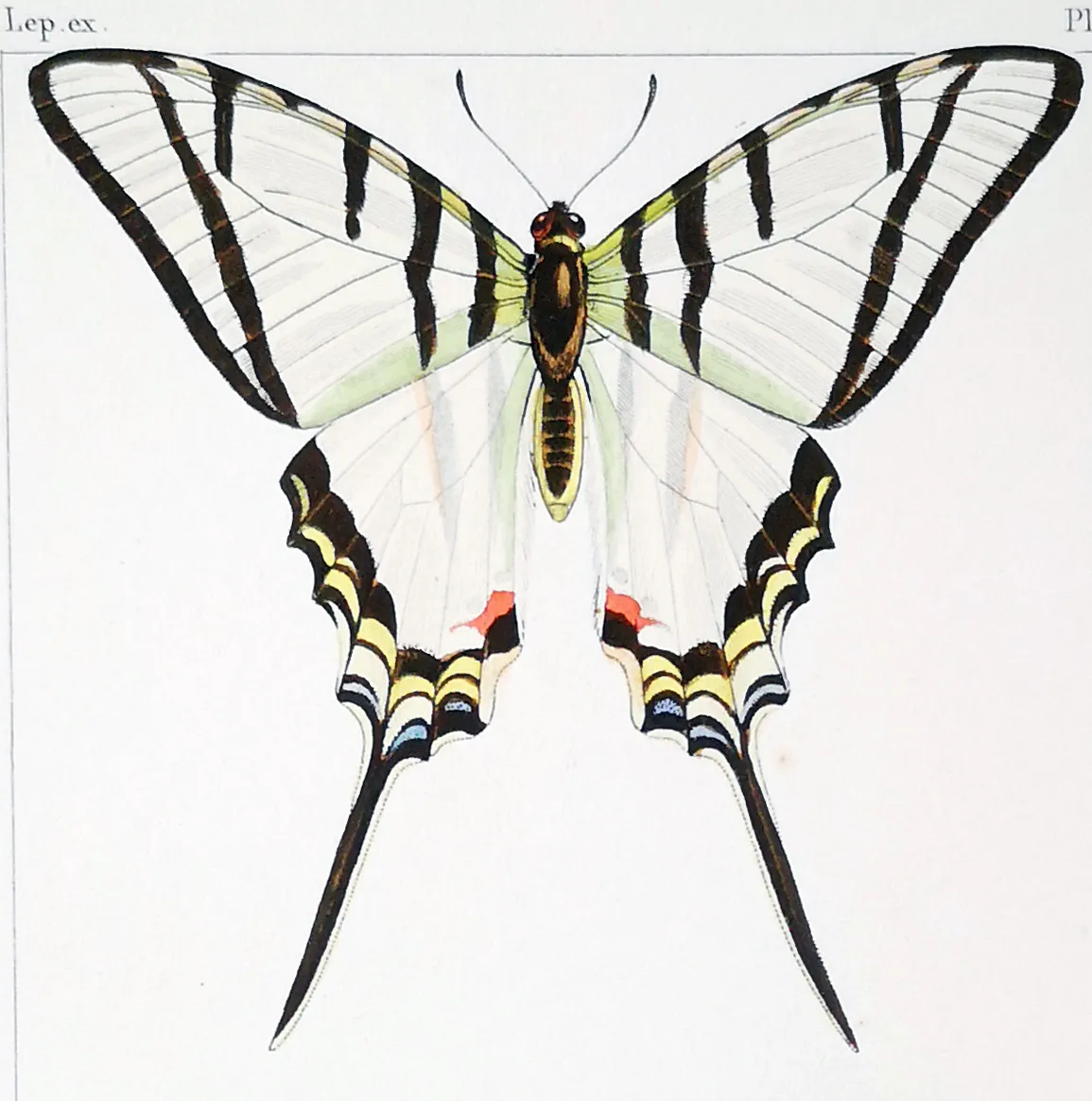
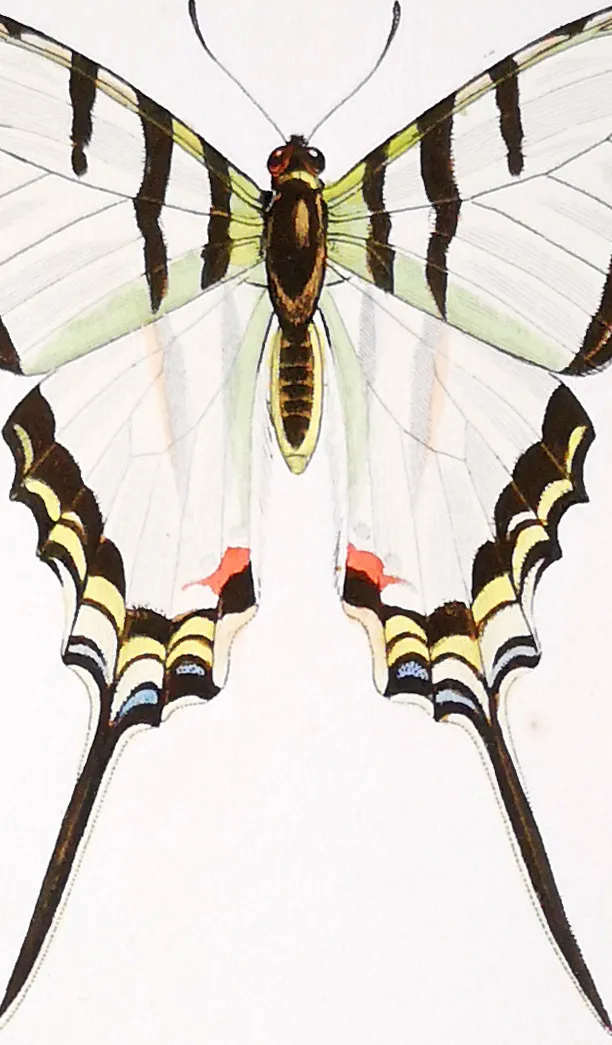
The upper butterfly, Eurytides protesilaus, displays pale translucent wings crossed by bold dark bands, creating a delicate balance between transparency and graphic structure. Its remarkably long hindwing tails extend like ribbons beneath the body, giving the insect a graceful, almost airborne elegance.
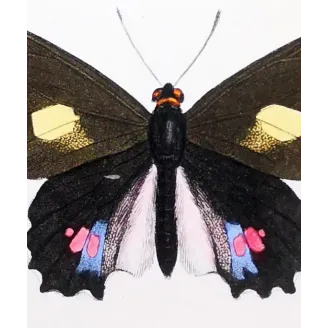
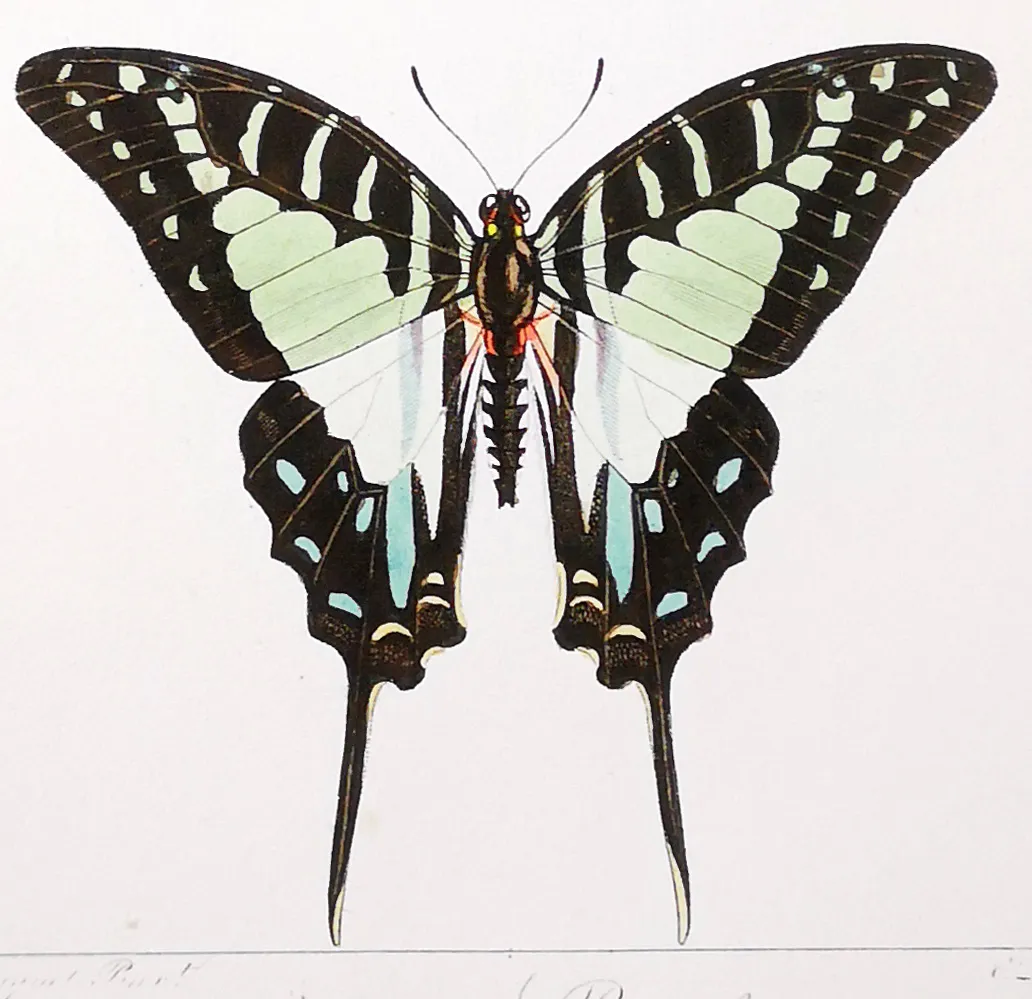
Below, Eurytides agapenor presents a more contrasting appearance, with soft greenish panels set against deep black margins and subtle blue accents near the hindwings. The composition of the two species highlights both similarity and variation within the kite swallowtails, revealing the remarkable diversity of tropical Papilionidae.
Butterflies of the genus Eurytides belong to a group often referred to as kite swallowtails, distinguished by their slender wings and elongated tails. Native primarily to tropical regions of the Americas, these butterflies were among the most elegant species encountered by early naturalists.
Illustrated works such as Lucas’s Exotic Butterflies introduced European scholars and collectors to this extraordinary diversity of tropical insects. The engraved plates served not only as scientific documentation but also as artistic interpretations that captured the beauty and structure of these fragile creatures.
This engraving forms part of the celebrated series Lucas – Exotic Butterflies , published in 1835 under the scientific direction of Hippolyte Lucas — a period when nature was celebrated through monumental illustrated works combining scientific observation with refined artistic craftsmanship.
Discover the broader historical context in our editorial feature: Hippolyte Lucas: Scientific Vision and the Golden Age of Exotic Butterflies .
The plate was drawn and engraved by Pauquet, whose refined copperplate technique translated real specimens into enduring images of exceptional clarity: Pauquet: The Engraver Behind the Exotic Butterflies .
Very good antique condition. Fresh and vibrant original hand-coloring with strong engraved impression. Printed on fine original nineteenth-century paper. Minor age toning consistent with the 1835 publication. Examples in such well-presed condition are now uncommon, especially with this level of color vibrancy and detail.
Specific References
Golden Birdwing butterflies with bold yellow and black contrast and elegant swallowtail forms. A striking 1835 engraving, ideal as antique butterfly wall art.
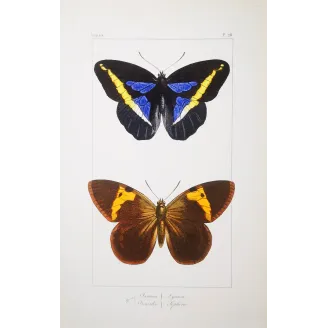
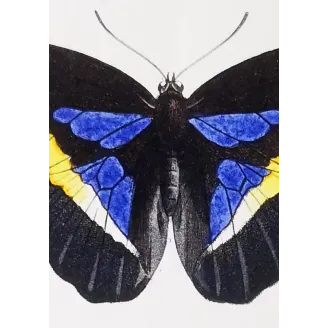
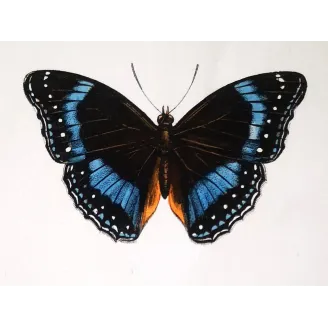
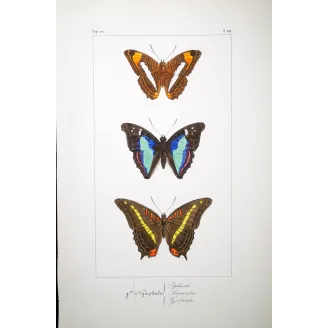
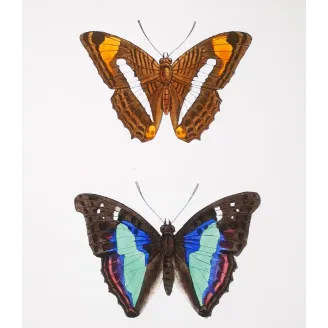
A bold pairing of Demophon Prepona (Archaeoprepona demophon) and Brassolis sophorae, featuring electric blue and golden bands on deep black wings. A striking example of antique butterfly wall art with strong visual contrast.
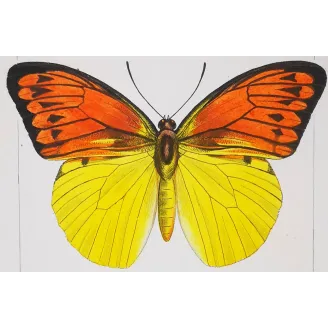
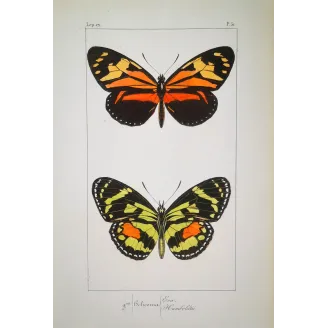
Bright orange and yellow butterflies with striking contrast against white wings. A vivid 1835 engraving with strong decorative and visual impact.
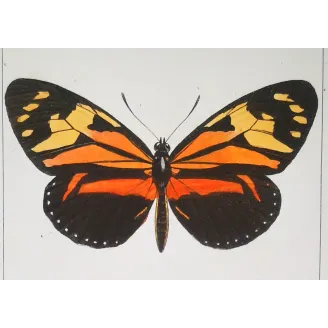
Striking black butterflies with vivid orange and yellow bands. A bold 1835 engraving with strong contrast and exceptional decorative impact.
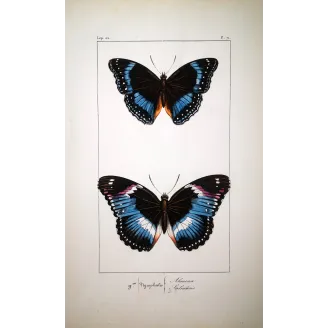
A vivid 19th-century hand-colored engraving depicting two striking tropical butterflies: the Blue-banded Eggfly (Hypolimnas alimena) and the Blue Diadem (Hypolimnas salmacis). Published in Hippolyte Lucas’s Exotic Butterflies (1835), the plate highlights their dramatic contrast of velvety black wings with electric blue bands and delicate white markings.
Elegant black swallowtail butterflies with soft yellow markings and refined contrast. A sophisticated 1835 engraving, ideal as antique butterfly wall art.
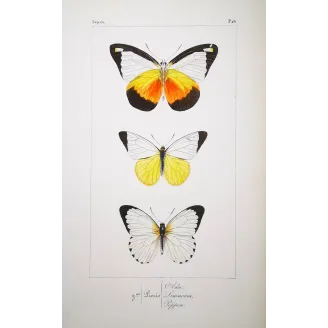
Sulphur Butterflies (Pieris philyra, Pieris jase, Pieris epicharis) – Antique Hand-Colored Engraving (1835).
Metalmark & Long-Tailed Butterflies (Erycina cnidus, Lysis iphron, Moyina sapra) – Antique Hand-Colored Engraving (1835).
Striking butterflies with iridescent blue, green, and warm orange tones. A bold 1835 engraving with exceptional decorative presence.
Elegant black butterflies with luminous pink and orange accents, creating a refined yet dramatic visual composition. A distinctive 1835 antique butterfly engraving.
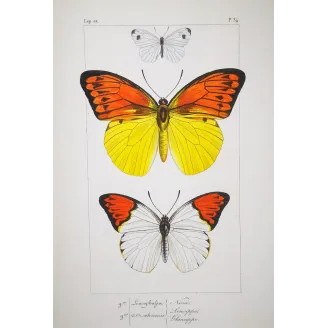
Bright yellow and white butterflies with vivid orange and pink tips. A refined 1835 engraving with strong decorative contrast.
Delicate blue, white, and vivid red butterflies arranged in a refined vertical composition. An elegant 1835 engraving with balanced decorative appeal.
Vivid butterflies with striking eye-spots, deep purple, and bright orange tones. A bold 1835 engraving with strong decorative appeal.
Original 1835 hand-colored copper engraving depicting the butterflies Pollux and Eurilochus. A visually striking double-specimen plate from Hippolyte Lucas’ celebrated Exotic Butterflies, engraved by Pauquet, with strong appeal as natural history art and antique butterfly wall art.
Elegant white and yellow butterflies with a striking orange-accented specimen. A refined 1835 engraving with bright and balanced decorative appeal.
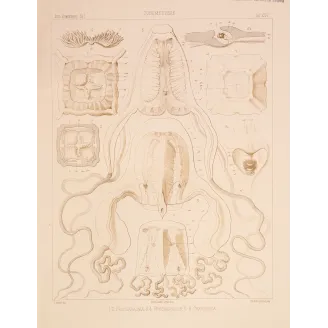
An original 1879 lithograph by Ernst Haeckel from Das System der Medusen, depicting the remarkable anatomy of Cubomedusae (box jellyfish). Combining scientific precision with striking architectural symmetry, this authentic nineteenth-century plate reveals the hidden biological structures behind one of the ocean’s most fascinating marine organisms.
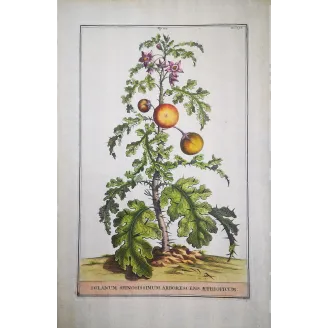
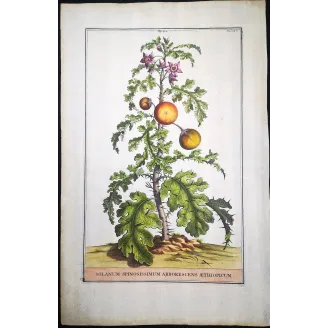
Original 17th-century hand-colored engraving of a spiny Solanum (Solanum aethiopicum) by Abraham Munting, featuring thorned stems, vivid fruit and striking botanical contrast.
A striking 19th-century engraving depicting two vividly colored parakeets in a dynamic composition. The intense contrast of blue, red, green and yellow creates a highly decorative work, ideal as a focal piece in refined interiors.
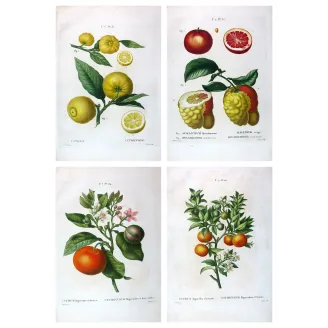
A coherent ensemble of eight original orange and bigarade engravings by Pancrace Bessa, reflecting the cultivated discipline of French orangeries in the Napoleonic era. Botanical precision and architectural composure unite in a refined citrus portfolio preserved as a complete series.
Graceful composition of bay laurel with fruits, blossoms, and internal flower structure.
A refined 19th-century hand-colored engraving depicting two elegant kite swallowtails: Eurytides protesilaus and Eurytides agapenor. Published in Hippolyte Lucas’s Exotic Butterflies (1835), the plate highlights their distinctive elongated tails and delicate translucent wings.