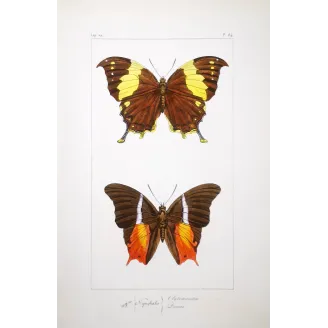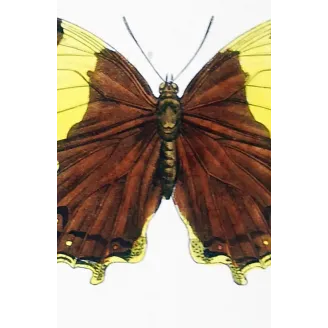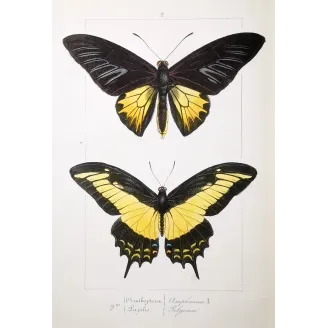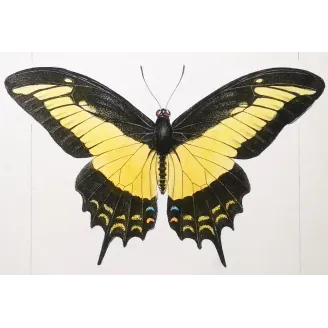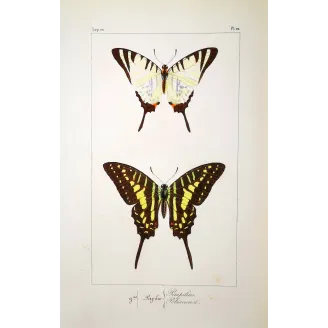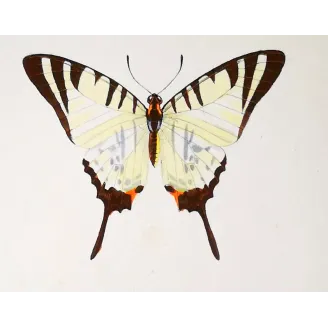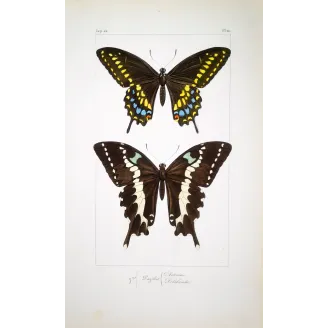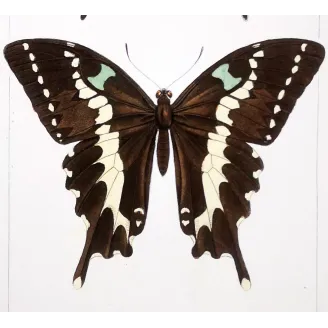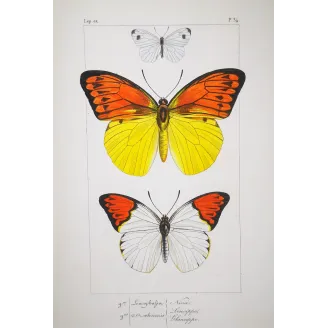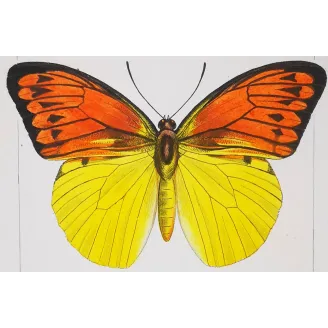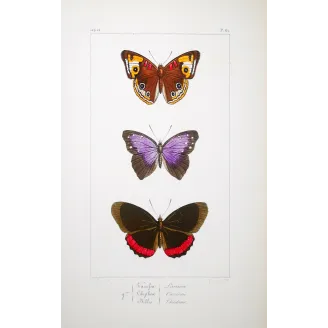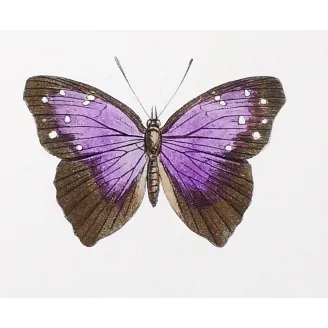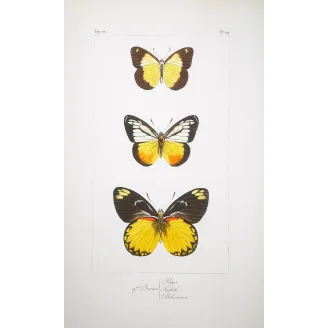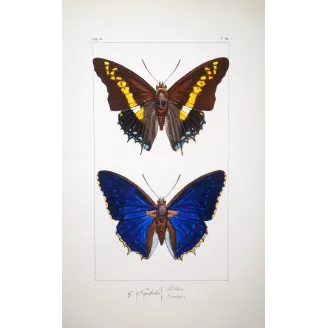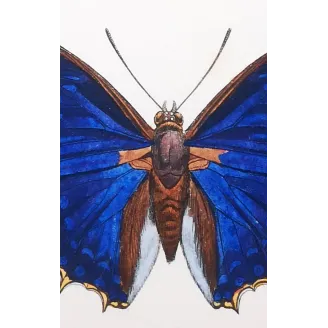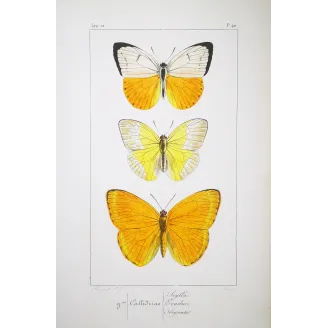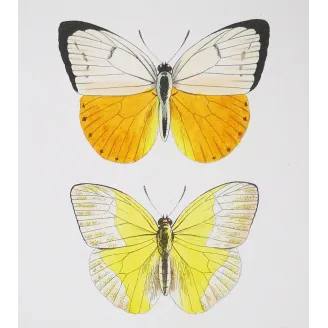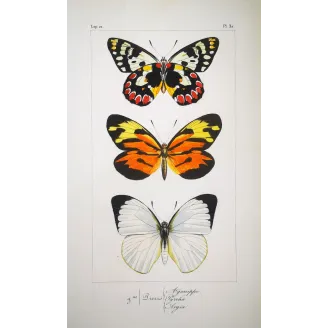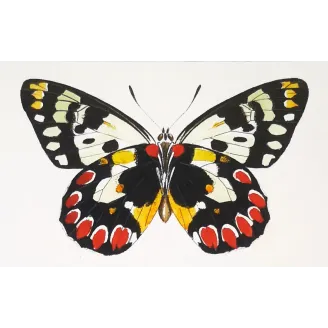
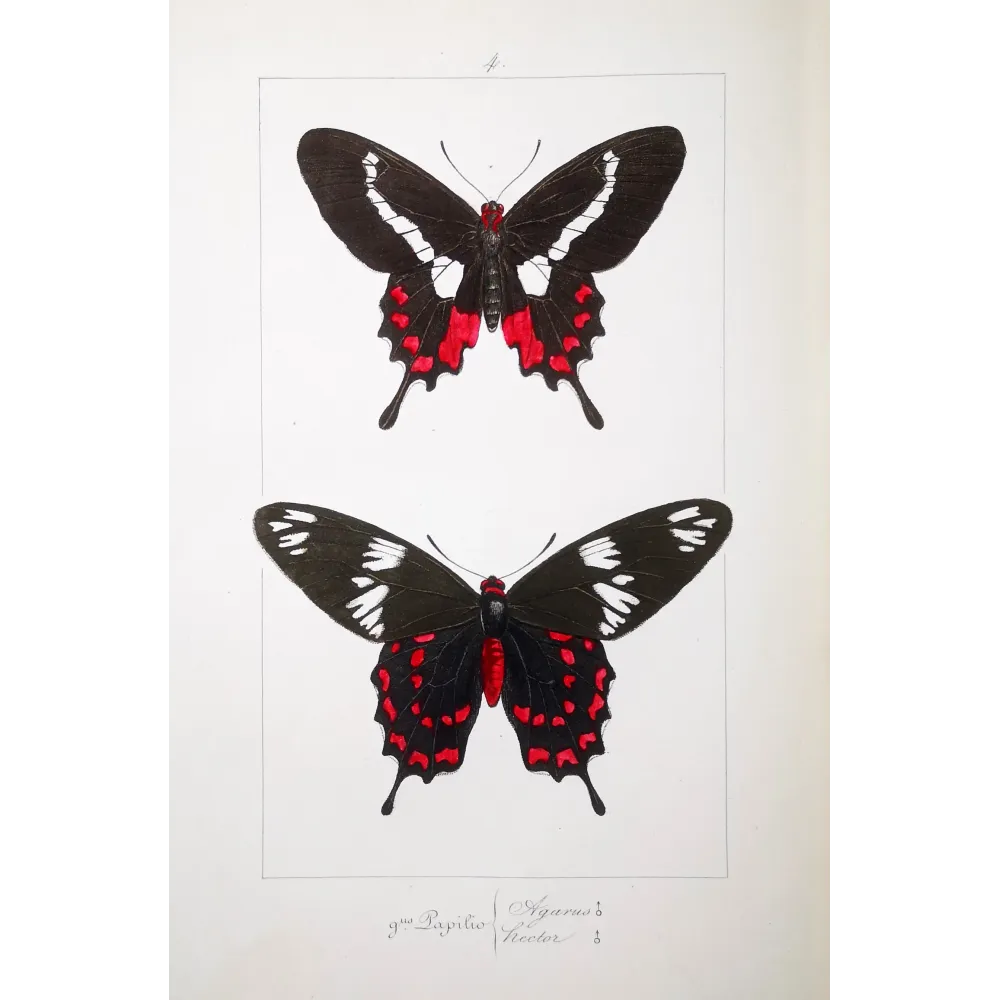
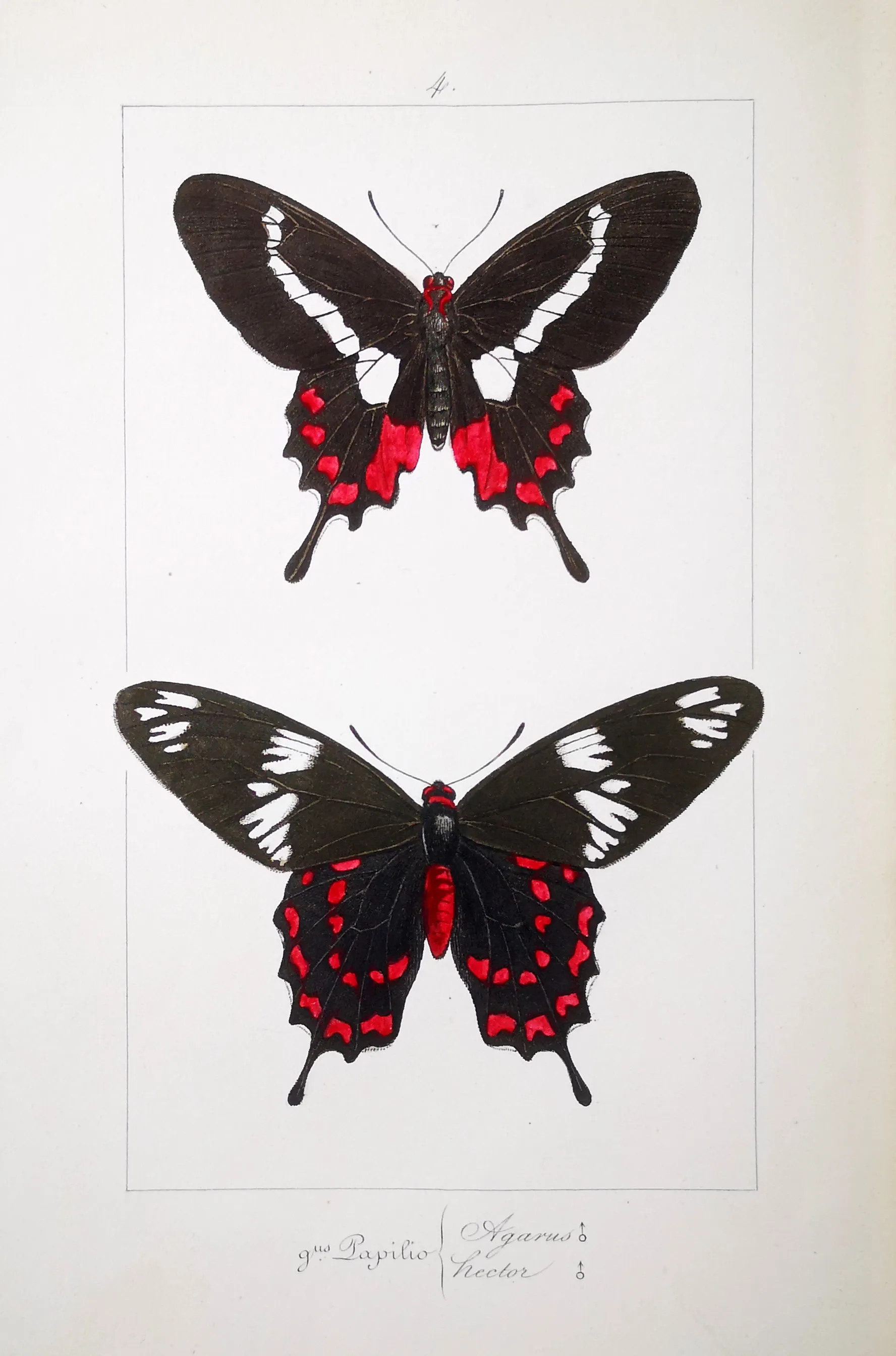
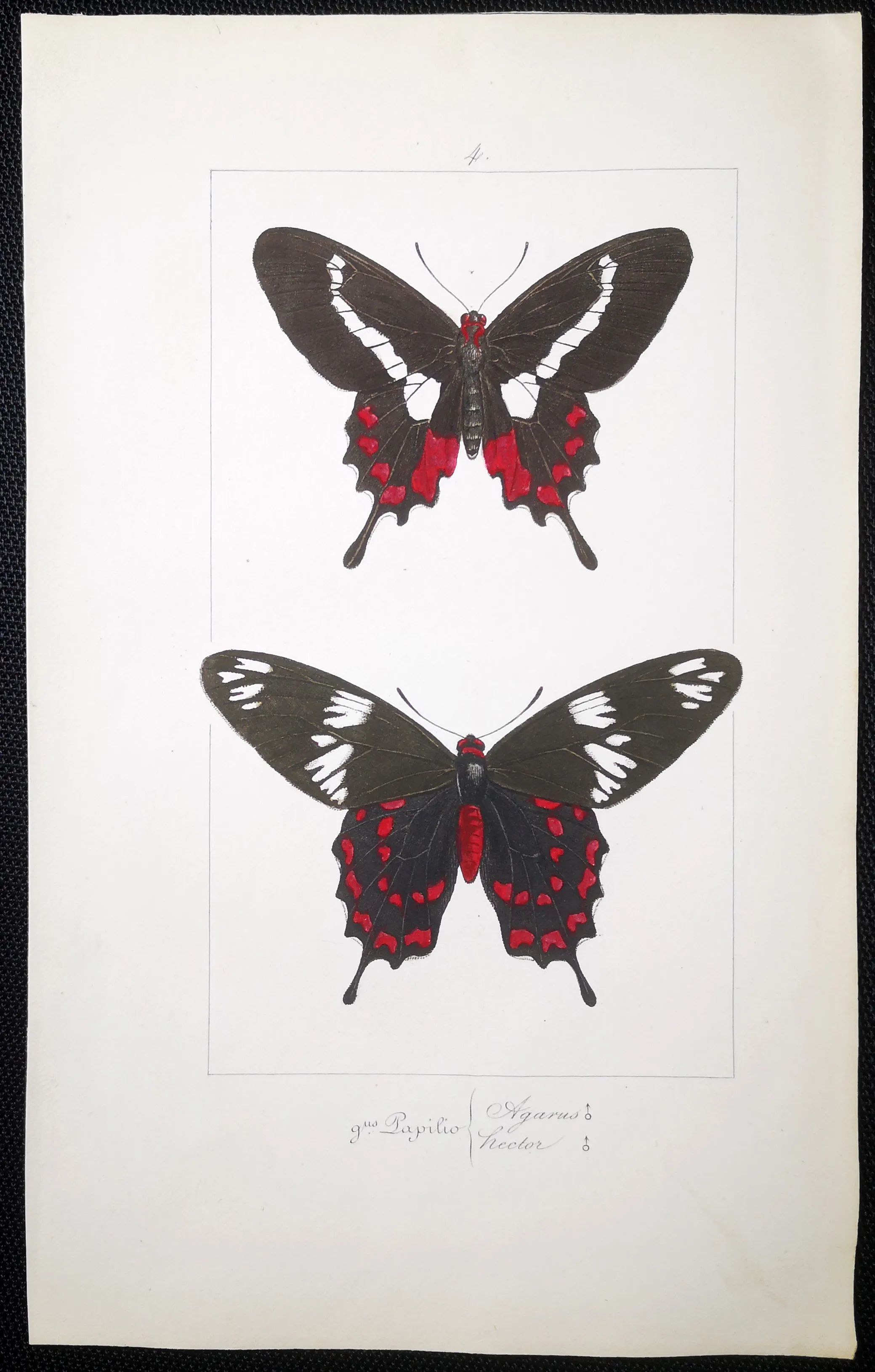
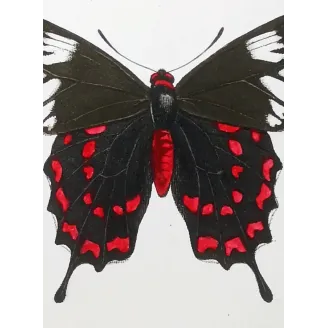
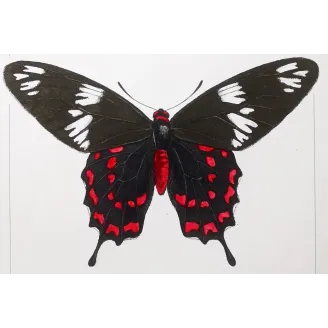
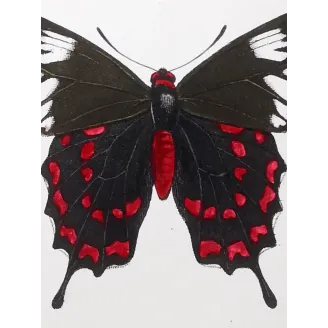
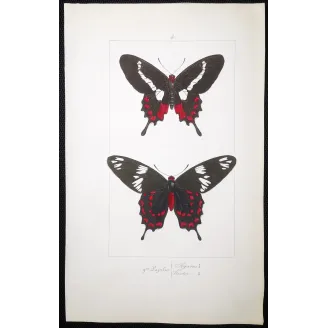
Crimson Rose swallowtails with deep black wings and vivid red markings. A dramatic 1835 engraving, perfect as bold antique butterfly wall art.
 Delivery policy
Your print will be carefully prepared and shipped worldwide via trusted couriers (UPS or similar).
 Authentic antique prints
Original engravings from the 17th–19th century.
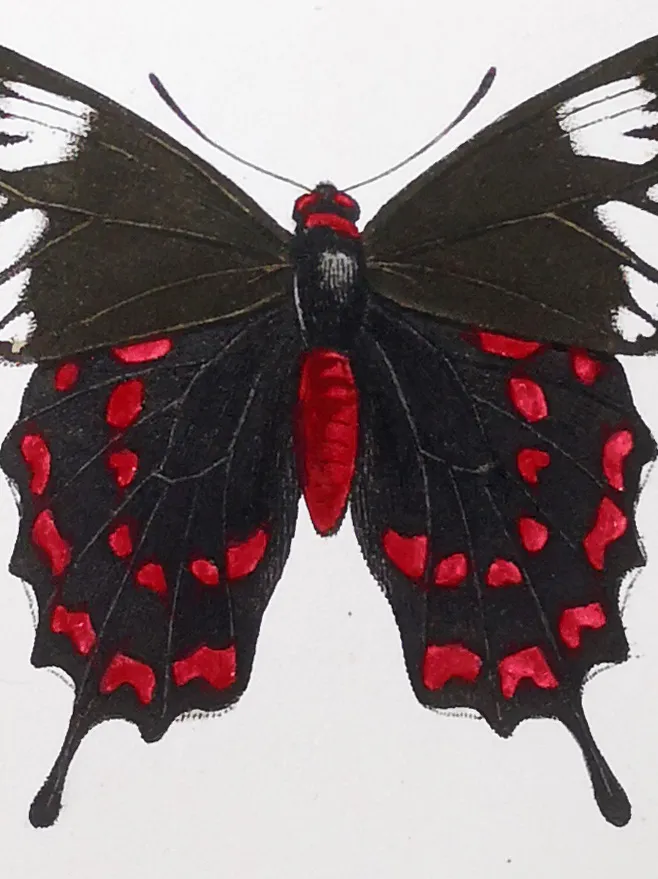
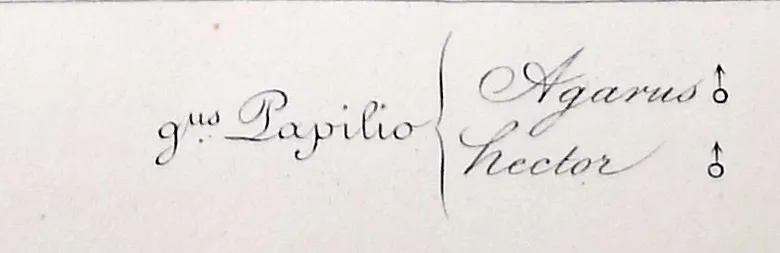
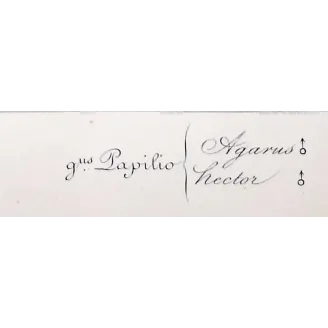
This original 1835 hand-colored copper engraving depicts two striking butterflies from the Pachliopta hector group, commonly known as Crimson Rose swallowtails. These visually powerful species were admired by nineteenth-century naturalists for their bold coloration and distinctive form. The plate belongs to Exotic Butterflies, produced under the scientific direction of Hippolyte Lucas and engraved by Pauquet.
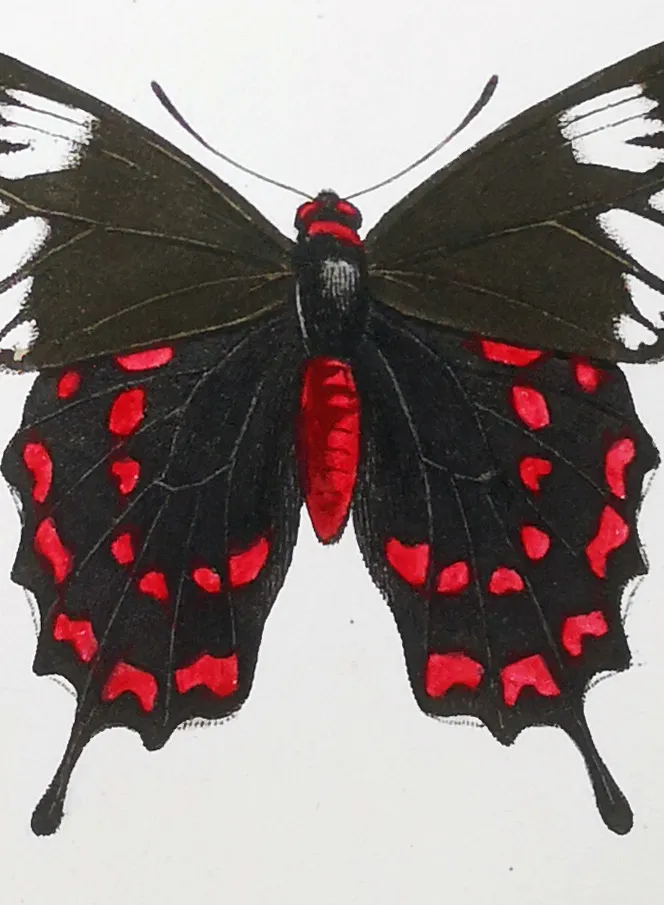
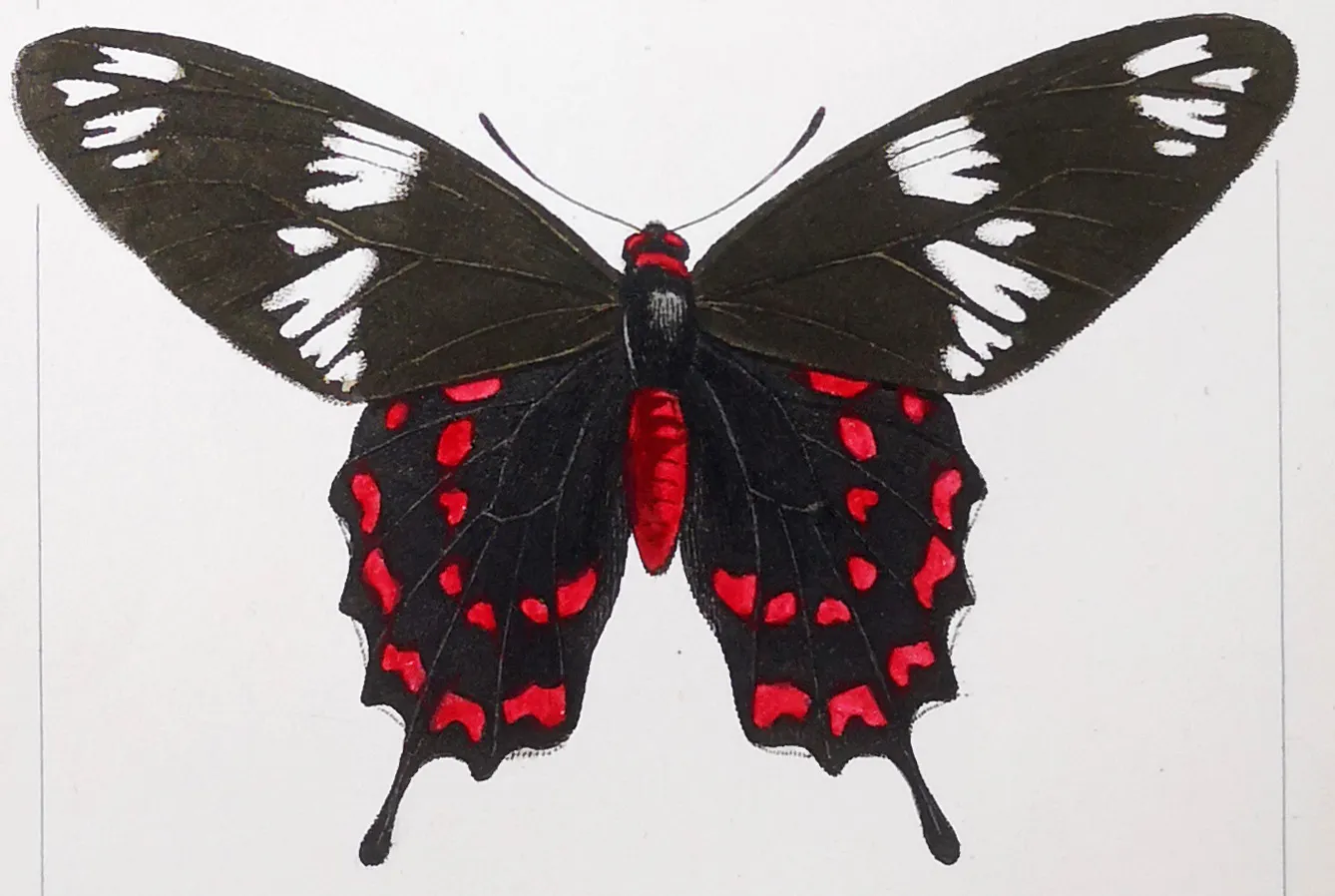
The composition presents two closely related specimens, each emphasizing the dramatic interplay between deep black wings and intense crimson markings. The upper butterfly introduces a slightly more restrained pattern, while the lower specimen amplifies the red tones across the hindwings, creating a richer and more immersive visual effect.
The contrast between velvety black and vivid red gives this engraving a strong decorative presence, making it a particularly compelling example of antique butterfly wall art suited to interiors that favour bold, high-contrast compositions.
— • —
Both butterflies are defined by a dramatic chromatic palette. The dark wings act as a deep background against which the crimson markings appear almost luminous. The scalloped edges and elongated tails reinforce the characteristic swallowtail silhouette, adding elegance to the otherwise powerful composition.
The subtle white accents near the forewings provide balance and prevent the composition from becoming visually heavy. Together, these elements create a refined yet intense visual rhythm, combining strength, contrast, and ornamental detail.
Crimson Rose butterflies (Pachliopta hector) are native to South Asia and are well known for their aposematic coloration — bright red markings that signal toxicity to potential predators. This natural warning system fascinated early naturalists and became a key example in the study of defensive adaptation.
These butterflies are also involved in mimicry systems, influencing the appearance of other non-toxic species that evolved to resemble them. Such ecological interactions made them particularly significant in the development of evolutionary theory during the nineteenth century.
Engravings like this one introduced European audiences to these striking tropical species, transforming them into enduring symbols of exotic biodiversity and bold natural design within the tradition of antique butterfly engraving.
This engraving belongs to the refined series Lucas – Exotic Butterflies , published in 1835 during the golden age of illustrated natural history.
Discover more about this work in our article: Hippolyte Lucas and Exotic Butterflies .
The engraving was executed by Pauquet, whose work bridges science and fine art: Pauquet, Engraver .
Very good antique condition. Fresh and vibrant original hand-coloring with strong engraved impression. Printed on fine original nineteenth-century paper. Minor age toning consistent with the 1835 publication. Such well-preserved examples are increasingly difficult to find, especially with this level of contrast and color intensity.
Specific References
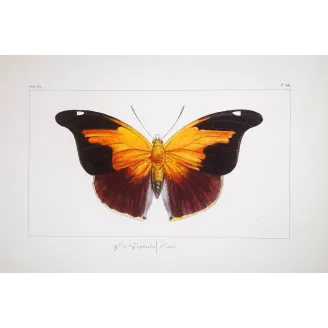
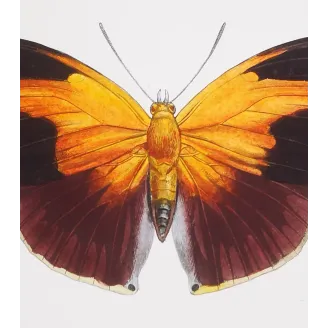
Tropical butterflies with warm amber, yellow and red tones on deep brown wings. A refined 1835 engraving, ideal as antique butterfly wall art.
Golden Birdwing butterflies with bold yellow and black contrast and elegant swallowtail forms. A striking 1835 engraving, ideal as antique butterfly wall art.
Black swallowtail butterflies with ivory, yellow and green patterns. A refined 1835 engraving, ideal as antique butterfly wall art.
Elegant Asian swallowtail butterflies with yellow, blue, and ivory patterns on deep brown wings. A refined 1835 engraving, ideal as antique butterfly wall art.
Bright orange and yellow butterflies with striking contrast against white wings. A vivid 1835 engraving with strong decorative and visual impact.
Striking butterflies in deep red, violet, and dark tones with eye-like markings. A refined 1835 engraving with strong decorative character.
Bright yellow butterflies with bold black and white contrasts. A refined 1835 engraving with strong decorative appeal.
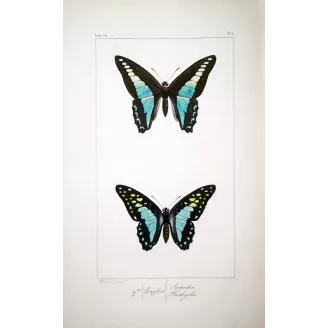
A vivid 19th-century hand-colored engraving depicting two striking Asian swallowtail butterflies: the Common Bluebottle (Papilio sarpedon) and the Spotted Bluebottle (Papilio bathycles). Published in Hippolyte Lucas’s Exotic Butterflies (1835), the plate highlights their elegant turquoise wing bands set against deep black wings.
Original 1835 hand-colored copper engraving depicting the butterflies Pollux and Eurilochus. A visually striking double-specimen plate from Hippolyte Lucas’ celebrated Exotic Butterflies, engraved by Pauquet, with strong appeal as natural history art and antique butterfly wall art.
Luminous yellow and white butterflies with warm golden tones. A refined 1835 engraving with bright and elegant decorative appeal.
Elegant butterflies combining bright orange, yellow, and white tones. A refined 1835 engraving with strong visual contrast and balance.
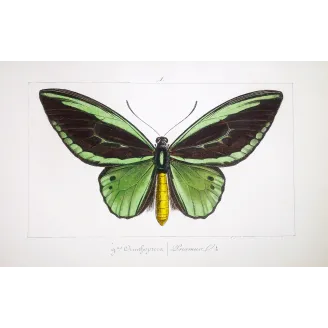
Original 1835 hand-colored engraving of Ornithoptera priamus (Common Green Birdwing), drawn and engraved by Pauquet under the scientific direction of Hippolyte Lucas.
An original 19th-century hand-colored engraving of Morpho leonte, the striking Blue Morpho butterfly, drawn and engraved by Pauquet under the scientific direction of Hippolyte Lucas.
Original 1835 hand-colored engraving of Nymphalis orion, drawn and engraved by Pauquet under the scientific direction of Hippolyte Lucas for Exotic Butterflies.
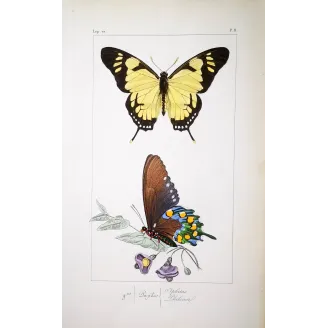
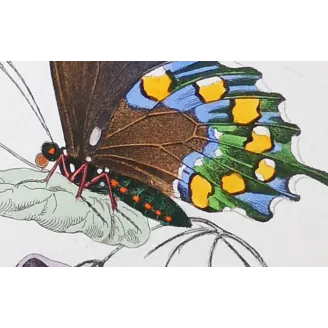
Yellow swallowtail and Pipevine butterfly (Papilio iphitas, Battus philenor) combining bold yellow-black contrast with iridescent blue and green tones. A highly decorative 1835 engraving, ideal as antique butterfly wall art.
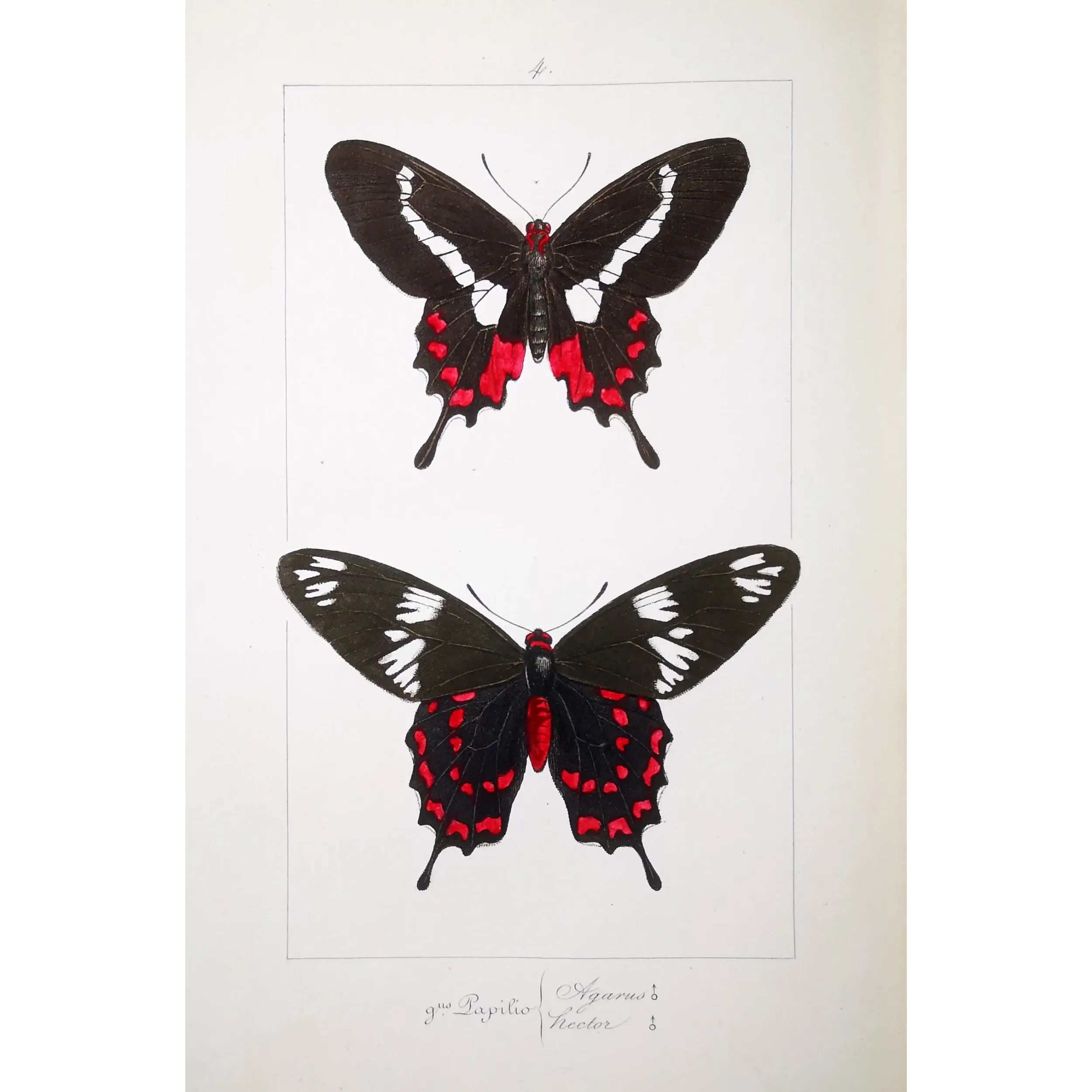
Crimson Rose swallowtails with deep black wings and vivid red markings. A dramatic 1835 engraving, perfect as bold antique butterfly wall art.