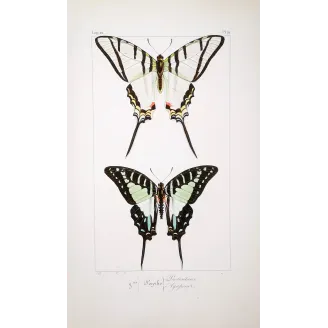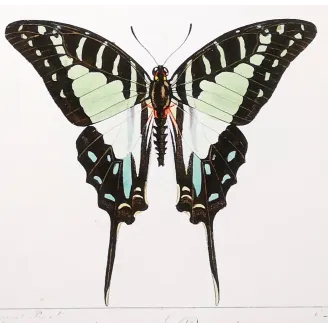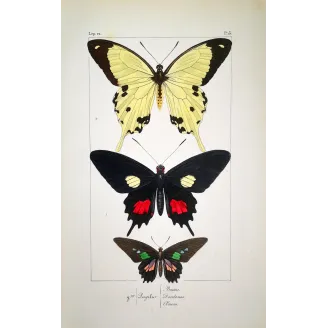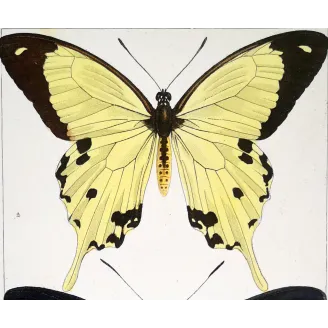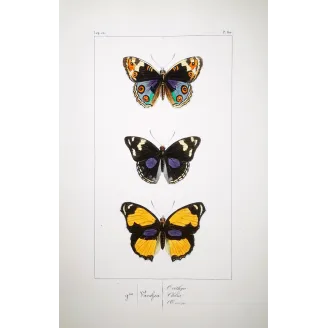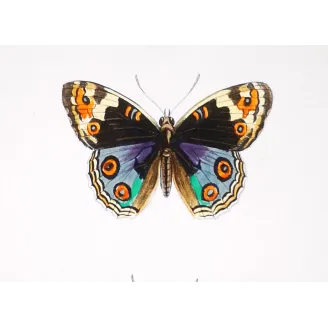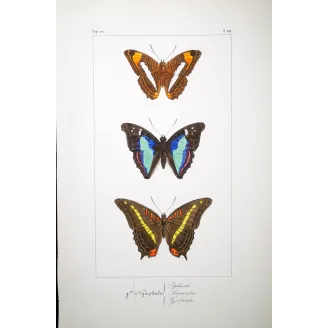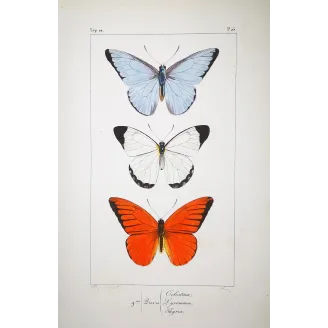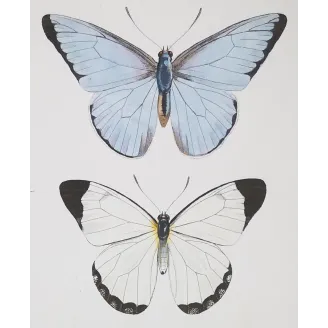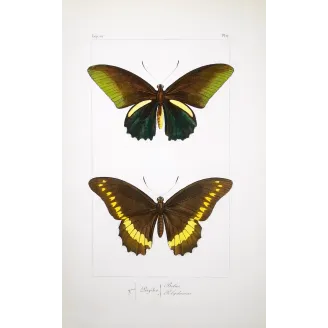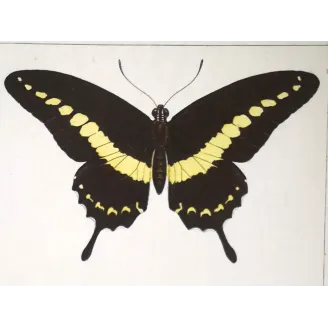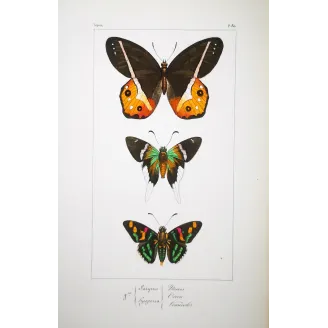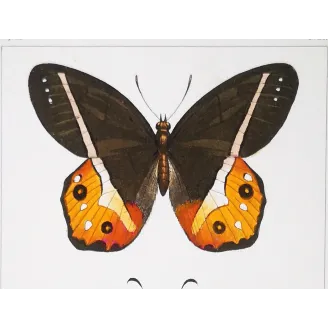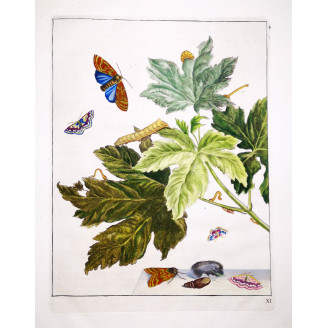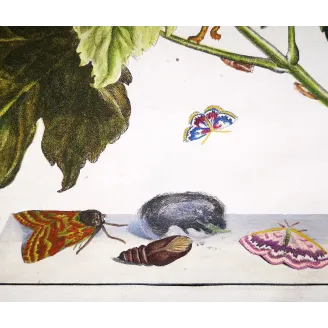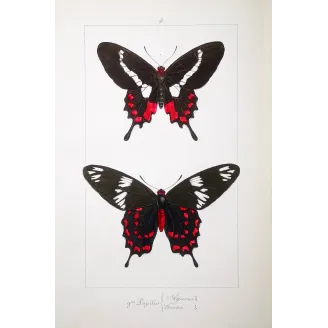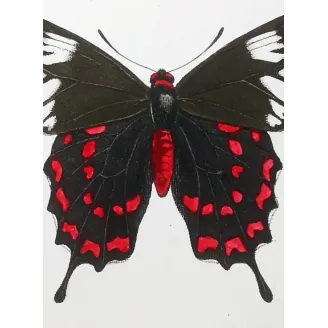
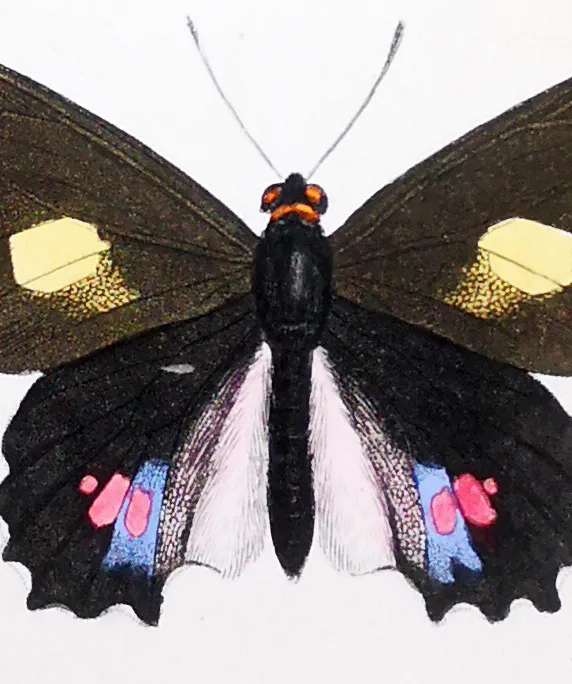
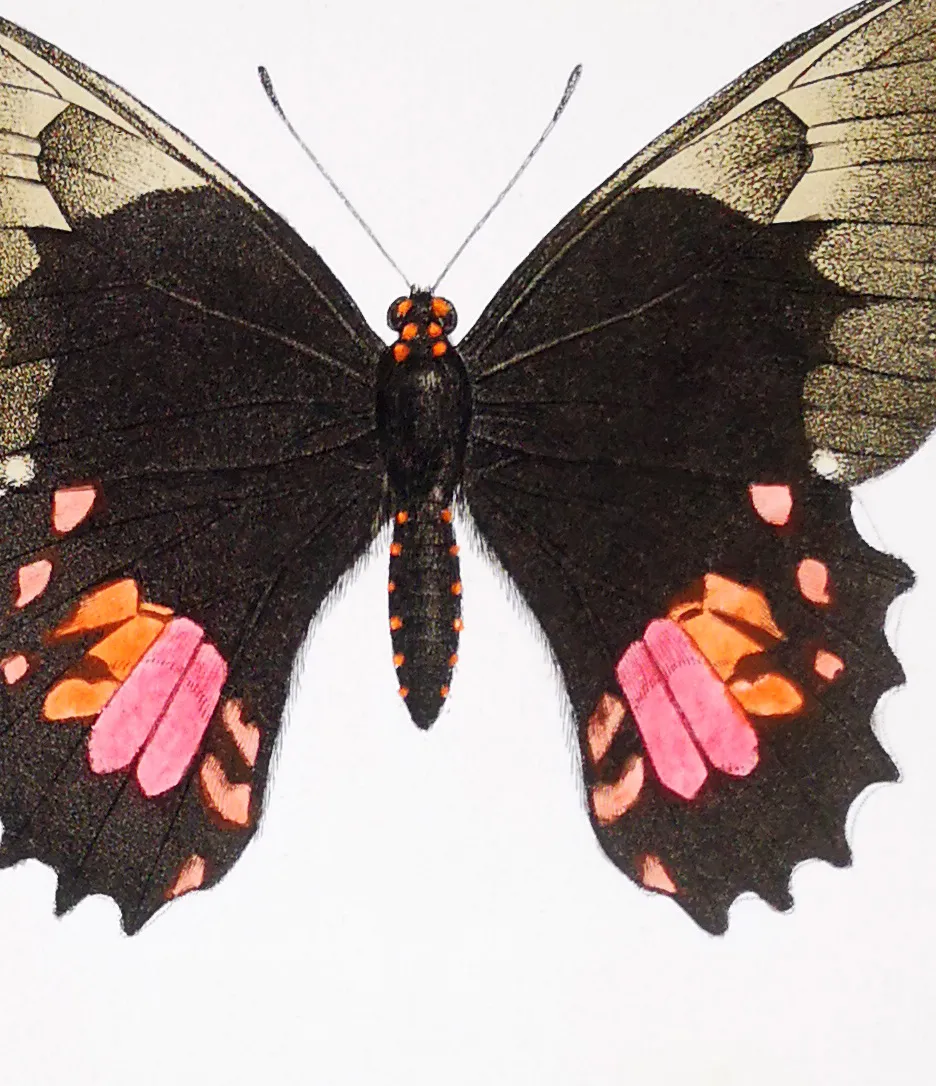
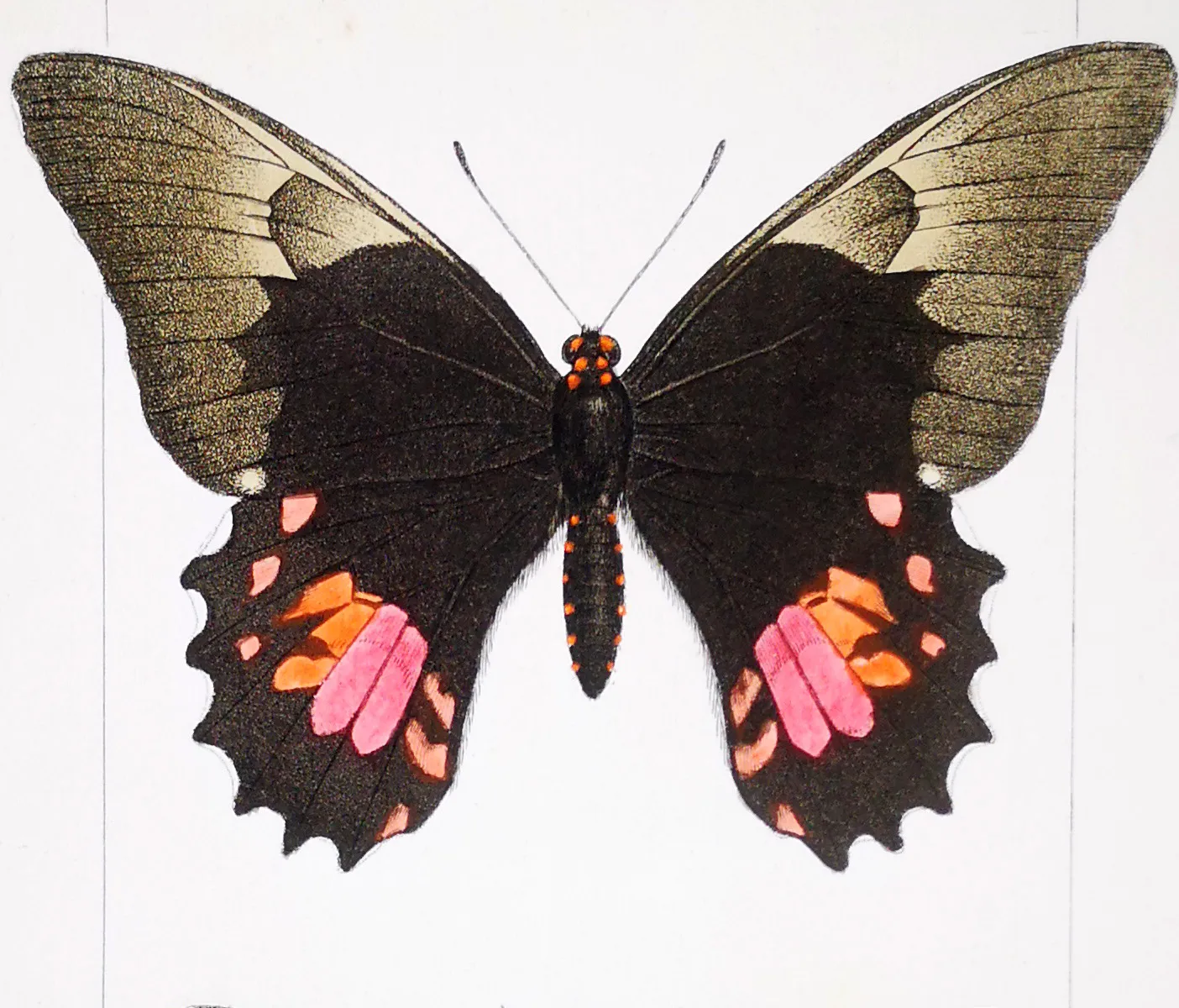
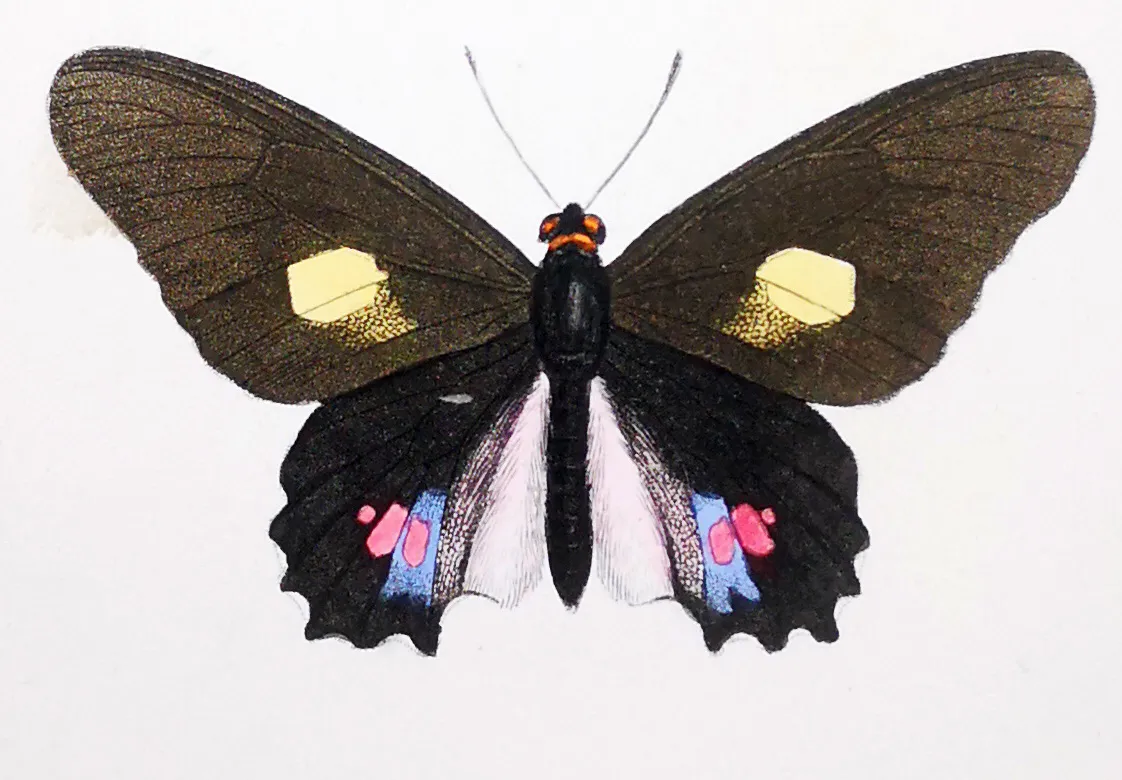
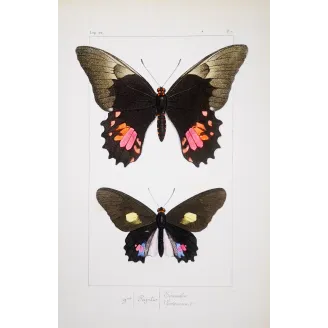
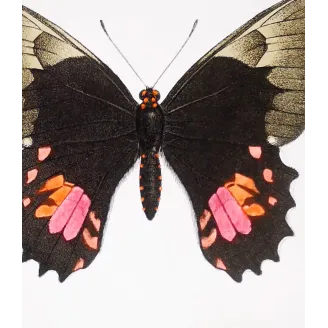
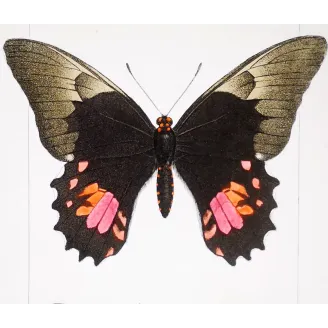
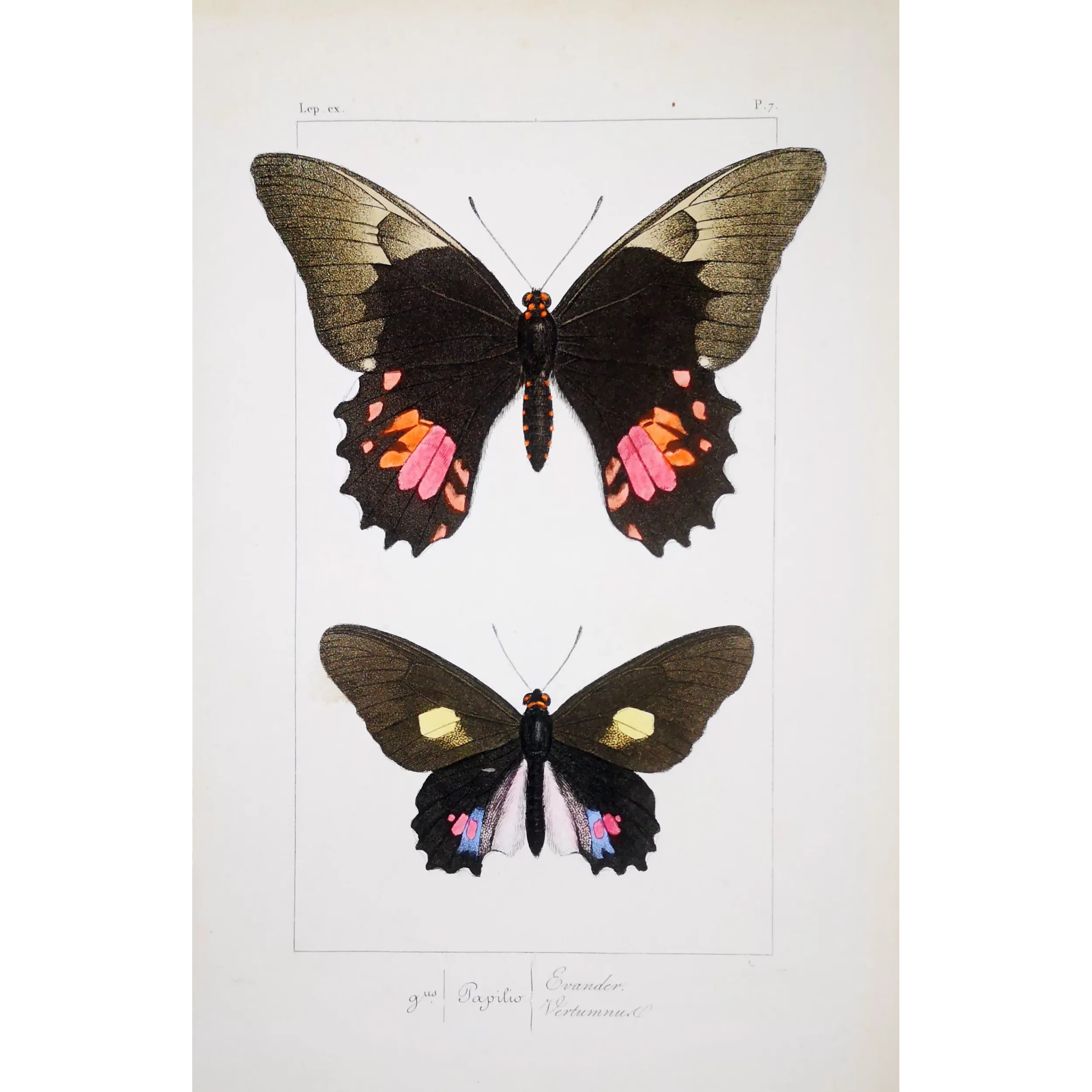
Elegant black butterflies with luminous pink and orange accents, creating a refined yet dramatic visual composition. A distinctive 1835 antique butterfly engraving.
 Delivery policy
Your print will be carefully prepared and shipped worldwide via trusted couriers (UPS or similar).
 Authentic antique prints
Original engravings from the 17th–19th century.
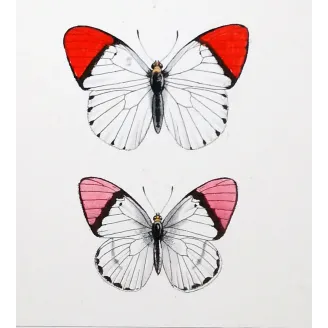
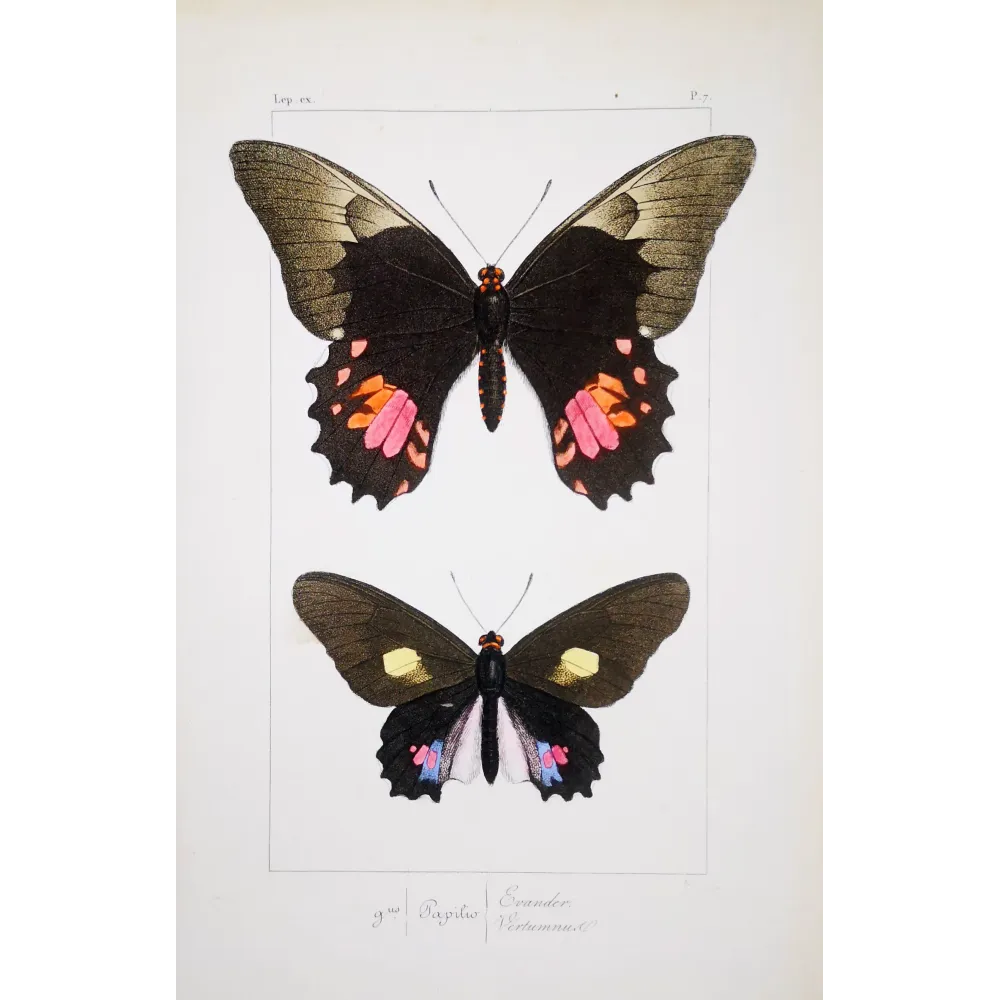
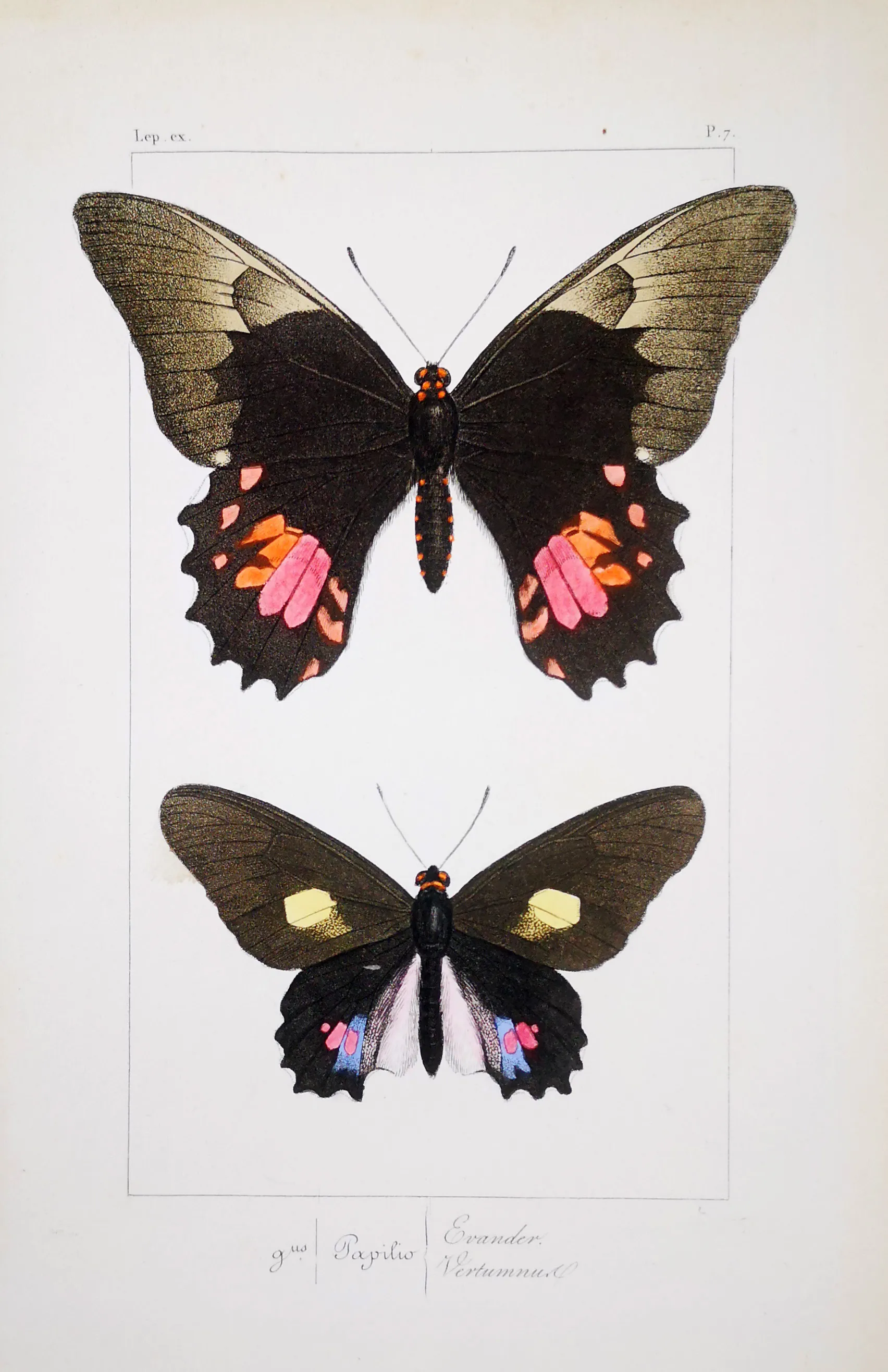
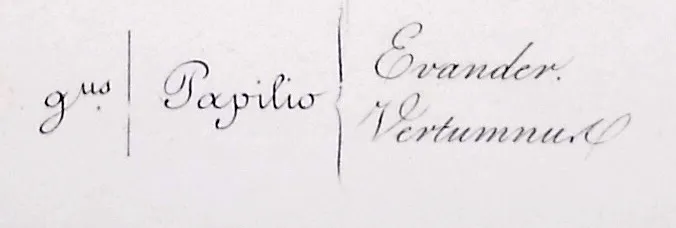
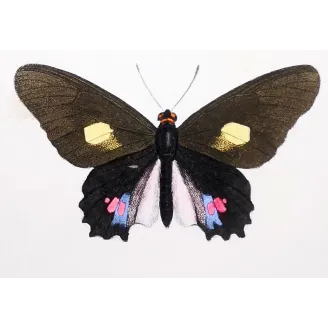
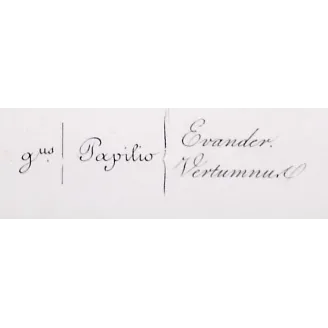
This original 1835 hand-colored copper engraving presents two striking butterflies identified on the plate as Papilio evander and Papilio vertumnus. Characterized by deep velvety black wings enriched with vivid pink, orange, and subtle ivory accents, the composition exemplifies the refined visual language of nineteenth-century natural history illustration.
The plate belongs to the renowned Exotic Butterflies series directed by Hippolyte Lucas and engraved by Pauquet, where scientific precision meets a remarkable sense of decorative balance. The symmetrical arrangement enhances the contrast between the upper and lower specimens, creating a visually harmonious yet dynamic composition.
With its bold color contrasts and elegant structure, this engraving stands out as a sophisticated example of antique butterfly wall art, perfectly suited to both classic and contemporary interiors.
— • —
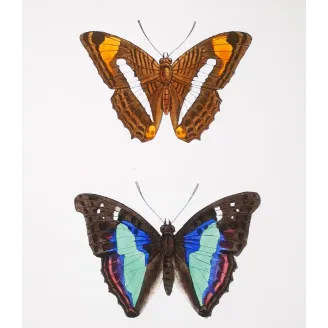
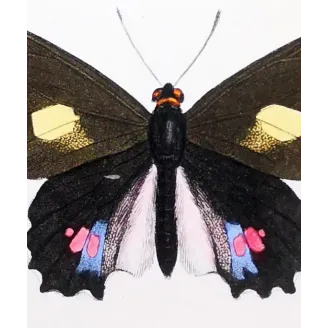
The upper butterfly is defined by a dramatic black field softened by warm ivory tones at the wing tips and illuminated by vivid pink and orange markings near the hindwings. These bright accents create a striking focal point, giving the specimen a sense of depth and movement while maintaining an overall elegance.
Below, the second butterfly introduces a more delicate balance, with softer contrasts and small, carefully placed color accents. Subtle touches of pink and blue enrich the darker wings, offering a refined variation that complements the boldness of the upper specimen.
Butterflies historically classified under names such as Papilio evander and Papilio vertumnus belong to a group of tropical species known for their rich dark coloration and vivid accent markings. These visual traits are often linked to complex ecological strategies, including mimicry and signaling, which fascinated nineteenth-century naturalists.
The interplay between dark backgrounds and bright color patches was particularly valued in early entomological illustration, as it allowed artists to emphasize both structure and ornament. Today, these same qualities make such engravings especially desirable as decorative objects, bridging scientific observation and artistic expression.
This engraving belongs to the celebrated Lucas – Exotic Butterflies series, published in 1835 during a period when natural history was explored through richly illustrated works combining scientific rigor and artistic excellence.
Learn more about this remarkable project in our article: Hippolyte Lucas: Scientific Vision and Exotic Butterflies.
The engraving was executed by Pauquet, whose refined copperplate technique captures the subtle textures and contrasts of tropical butterflies with exceptional clarity: Pauquet: Master Engraver of Natural History.
Very good antique condition. Fresh original hand-coloring with well-preserved contrast and fine engraved detail. Printed on original nineteenth-century paper. Minor age toning consistent with age. Examples in such well-preserved condition, with this level of color intensity and clarity, are increasingly difficult to find.
Specific References
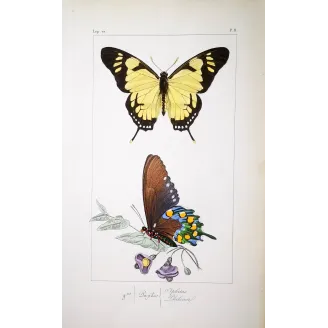
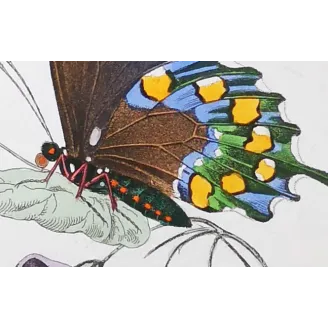
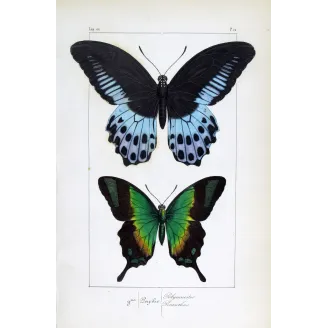
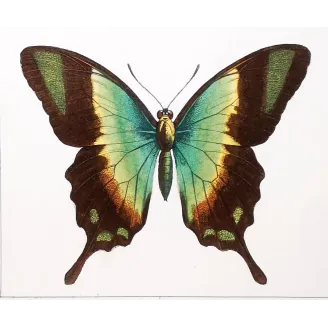
Yellow swallowtail and Pipevine butterfly (Papilio iphitas, Battus philenor) combining bold yellow-black contrast with iridescent blue and green tones. A highly decorative 1835 engraving, ideal as antique butterfly wall art.
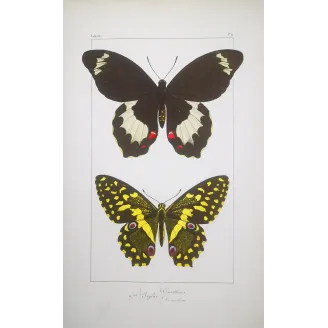
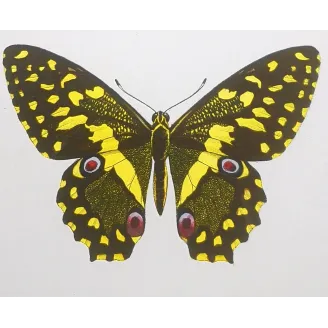
Yellow and black butterflies with striking eye spots and bold contrast patterns. A vivid 1835 engraving, perfect as antique butterfly wall art.
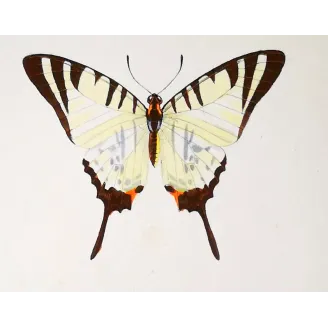
A refined 19th-century hand-colored engraving depicting two elegant kite swallowtails: Eurytides protesilaus and Eurytides agapenor. Published in Hippolyte Lucas’s Exotic Butterflies (1835), the plate highlights their distinctive elongated tails and delicate translucent wings.
Dramatic swallowtail butterflies including Papilio dardanus, featuring bold yellow, black, and red contrasts with iridescent accents. A striking 1835 engraving, ideal as antique butterfly wall art.
Vivid butterflies with striking eye-spots, deep purple, and bright orange tones. A bold 1835 engraving with strong decorative appeal.
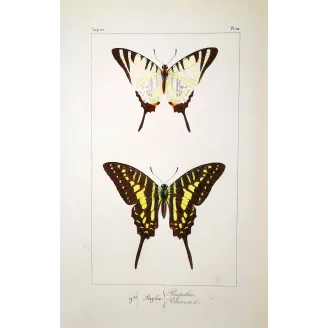
Black swallowtail butterflies with ivory, yellow and green patterns. A refined 1835 engraving, ideal as antique butterfly wall art.
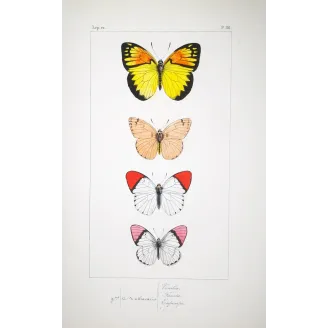
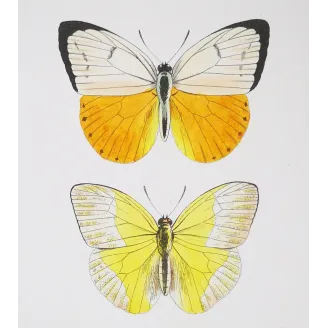
Bright yellow and white butterflies with vivid orange and pink tips. A refined 1835 engraving with strong decorative contrast.
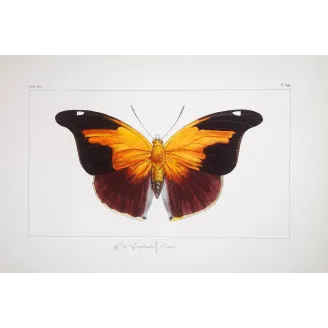
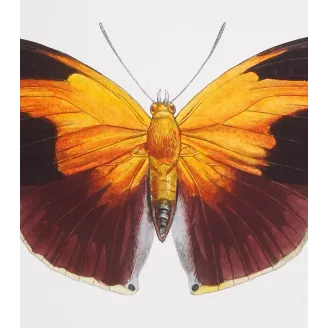
Original 1835 hand-colored engraving of Nymphalis orion, drawn and engraved by Pauquet under the scientific direction of Hippolyte Lucas for Exotic Butterflies.
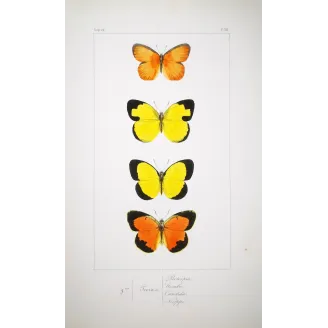
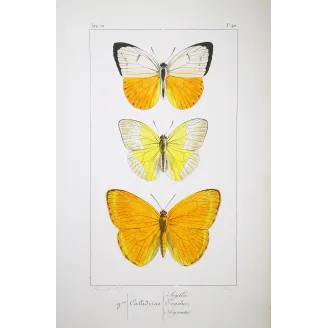
Sulphur Butterflies (Terias hecabe, candida, nicippe) – Antique Hand-Colored Engraving (1835)
Striking butterflies with iridescent blue, green, and warm orange tones. A bold 1835 engraving with exceptional decorative presence.
Delicate blue, white, and vivid red butterflies arranged in a refined vertical composition. An elegant 1835 engraving with balanced decorative appeal.
Elegant golden and yellow swallowtail butterflies with luminous contrast and flowing wing shapes. A refined antique engraving from 1835.
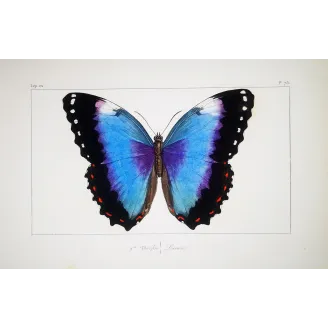
An original 19th-century hand-colored engraving of Morpho leonte, the striking Blue Morpho butterfly, drawn and engraved by Pauquet under the scientific direction of Hippolyte Lucas.
Luminous yellow and white butterflies with warm golden tones. A refined 1835 engraving with bright and elegant decorative appeal.
Striking multicolored butterflies with deep black, orange, green, and iridescent tones. A bold 1835 engraving with exceptional decorative impact.
Crimson Rose swallowtails with deep black wings and vivid red markings. A dramatic 1835 engraving, perfect as bold antique butterfly wall art.
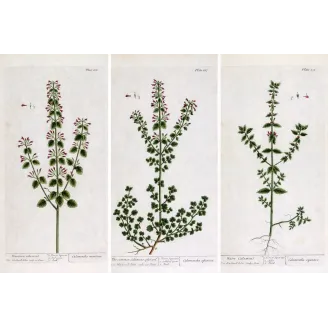
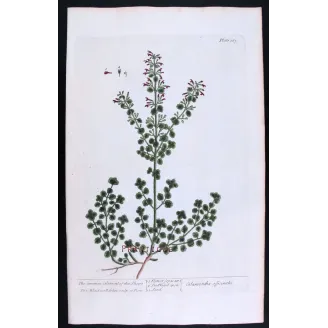
A curated botanical trio illustrating three closely related Calamintha species — officinalis, montana, and aquatica — as engraved and hand-colored by Elisabeth Blackwell for A Curious Herbal (1737–1739). Presented together, these plates offer a rare comparative view of medicinal, habitat-specific, and morphological variation within a single genus, reflecting early modern botanical practice and apothecary knowledge.
Bright yellow and white butterflies with vivid orange and pink tips. A refined 1835 engraving with strong decorative contrast.
An elegant original nineteenth-century hand-colored engraving from Ludwig Reichenbach's Trochilinarum Enumeratio, depicting Ramond's Hummingbird among the scarlet blossoms of Lemoinea spectabilis. A beautifully balanced composition celebrating the harmony between hummingbirds and tropical flowers.
Original 17th-century hand-colored engraving of Cyclamen (Cyclamen europaeum) by Abraham Munting, featuring exposed root structure and elegant botanical composition.
Elegant black butterflies with luminous pink and orange accents, creating a refined yet dramatic visual composition. A distinctive 1835 antique butterfly engraving.