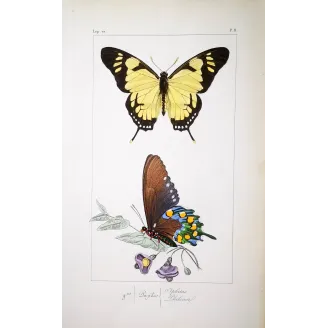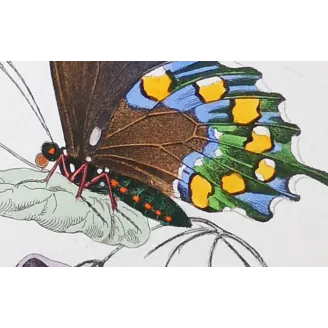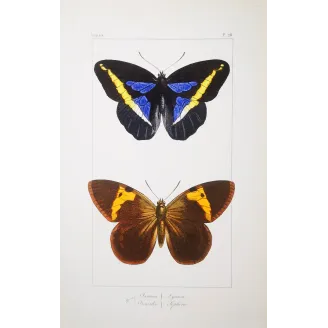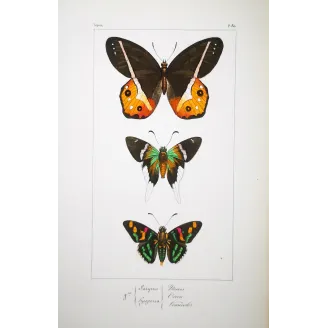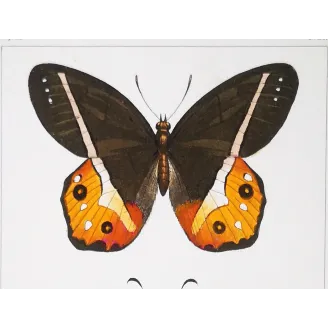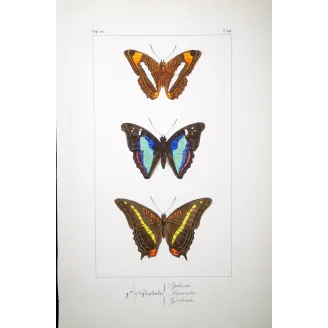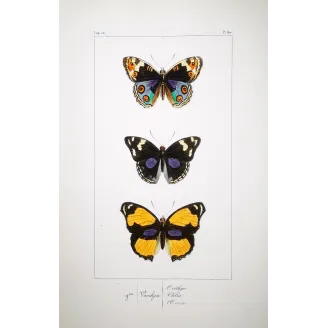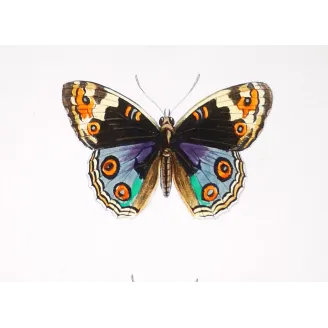
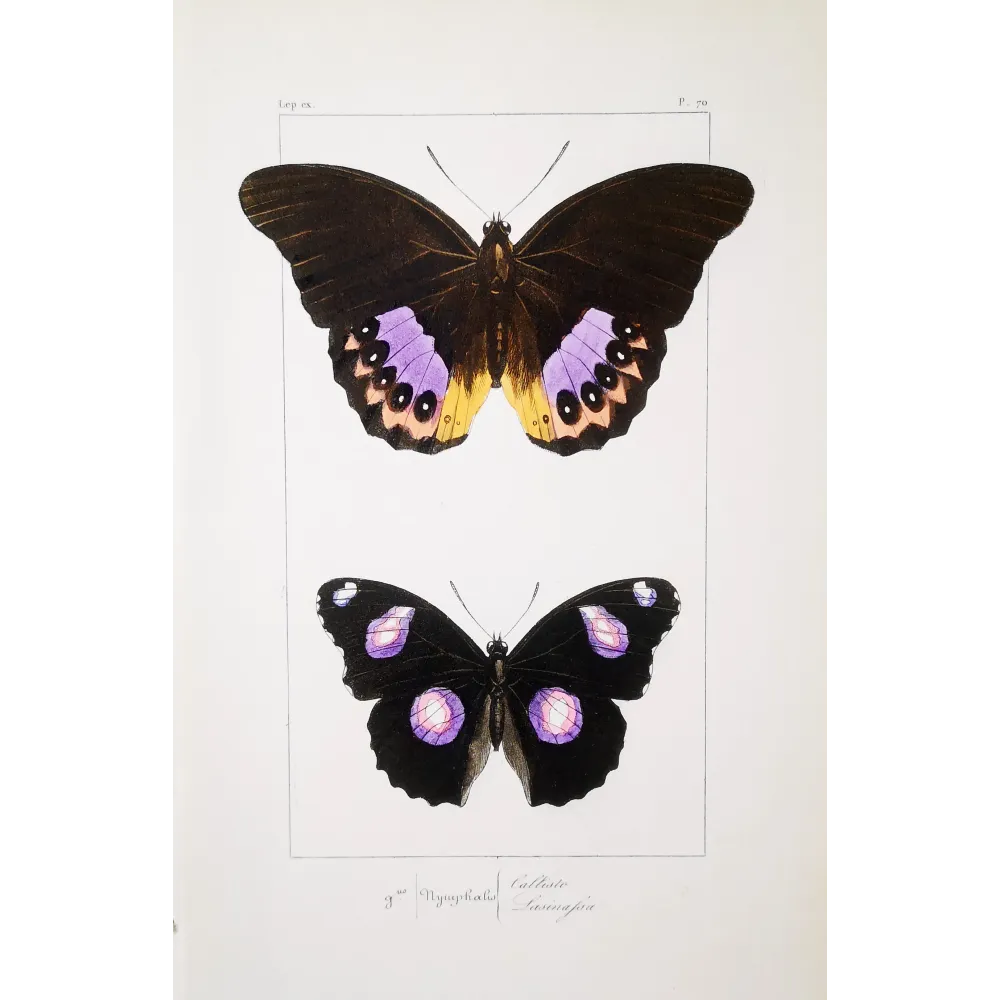
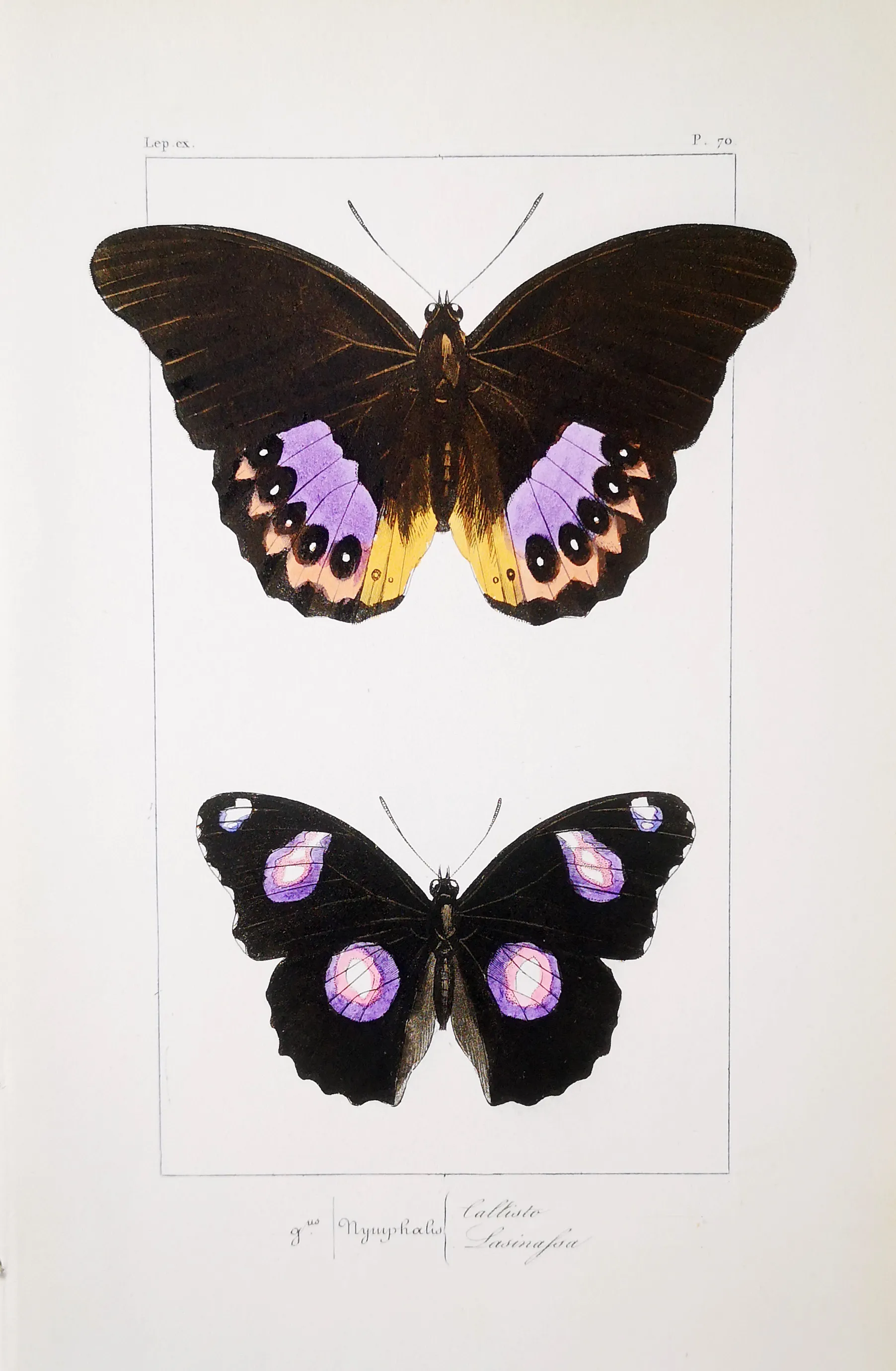
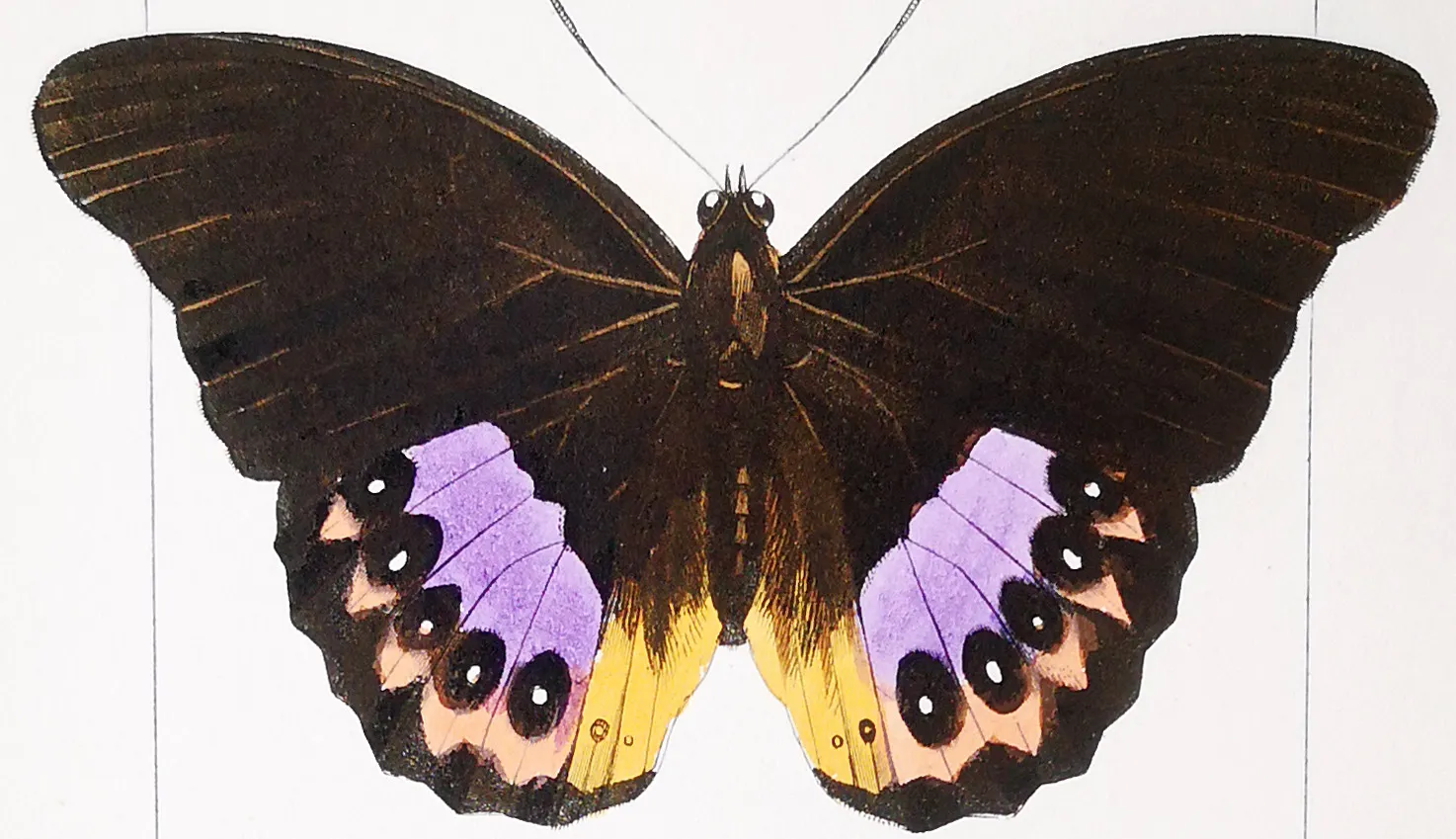
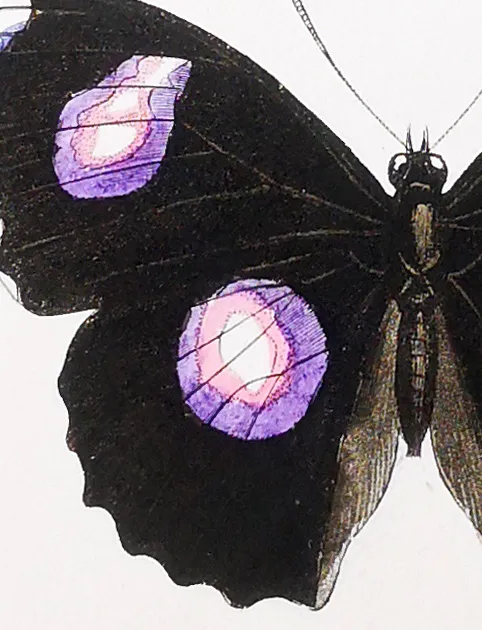
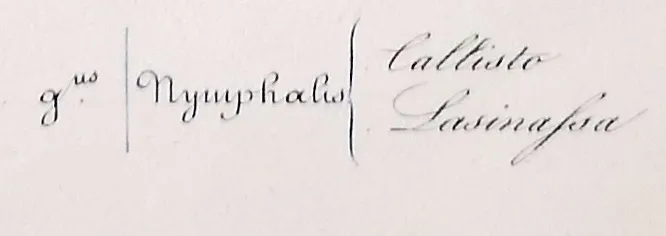
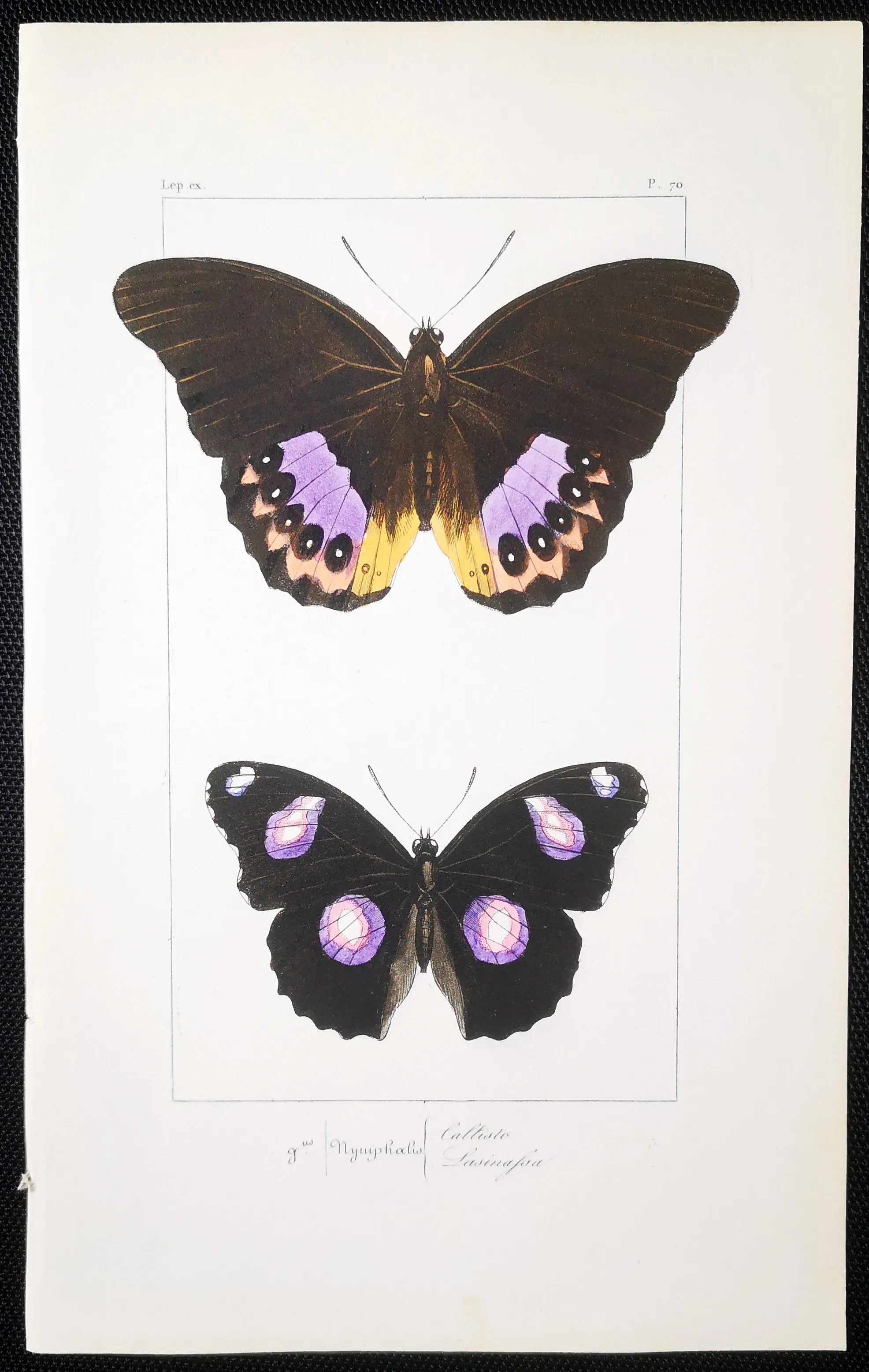
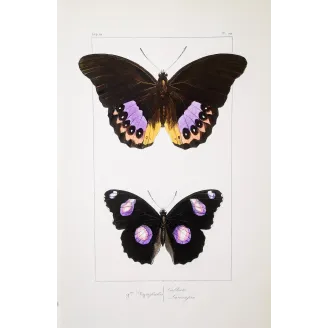
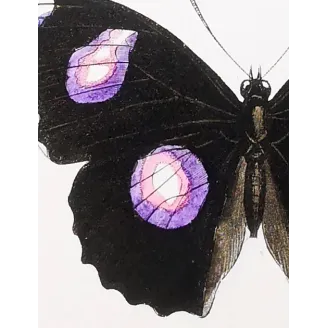
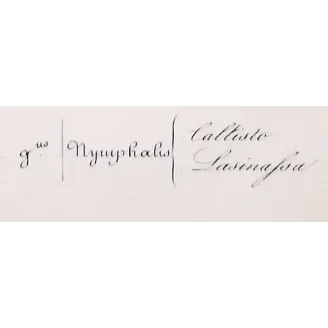
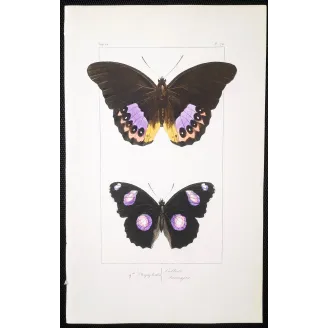
A striking 19th-century hand-colored engraving depicting two tropical pansy butterflies: the Golden Pansy (Junonia callista) and the Purple Pansy (Junonia laomedia). Published in Hippolyte Lucas’s Exotic Butterflies (1835), the plate highlights their dramatic wing contrasts and luminous violet eye-spots.
 Delivery policy
Your print will be carefully prepared and shipped worldwide via trusted couriers (UPS or similar).
 Authentic antique prints
Original engravings from the 17th–19th century.
This original 1835 hand-colored copper engraving illustrates two remarkable tropical butterflies: the Golden Pansy (Junonia callista) and the Purple Pansy (Junonia laomedia). The plate forms part of the celebrated work Exotic Butterflies, produced under the scientific direction of Hippolyte Lucas and drawn and engraved by Pauquet.
Presented in a balanced vertical composition against a clean ground, the two specimens resemble a carefully arranged natural history display. Their striking eye-spots and luminous colour contrasts reflect the refined visual language of nineteenth-century entomological illustration, where scientific observation and artistic elegance were deliberately combined.
Beyond its scientific significance, the engraving also possesses a powerful decorative presence. The dramatic ocelli, vivid colour contrasts, and elegant wing shapes give the plate a strong visual rhythm, making it especially appealing today as antique butterfly wall art for interiors inspired by natural history and historical refinement.
— • —
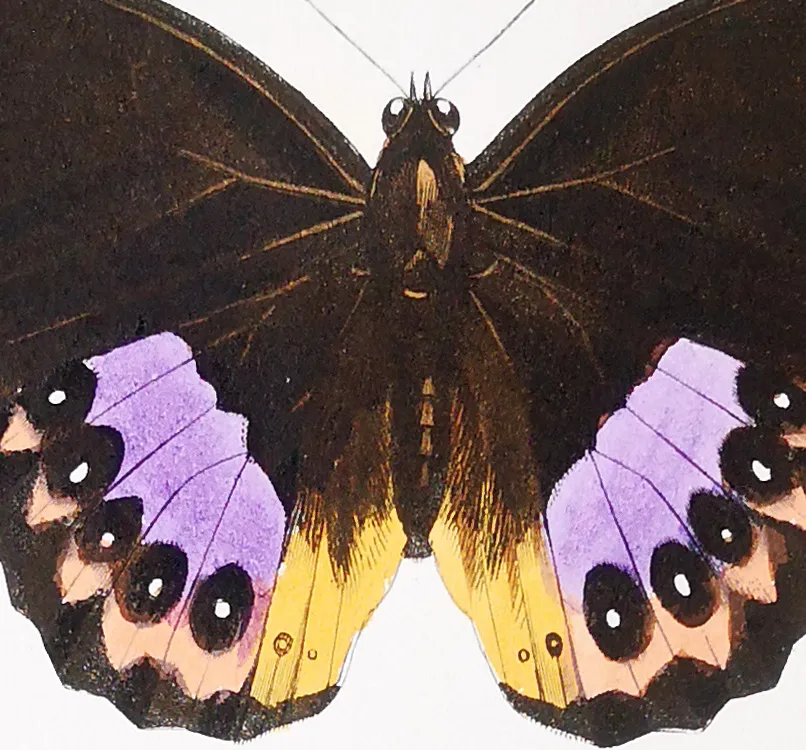
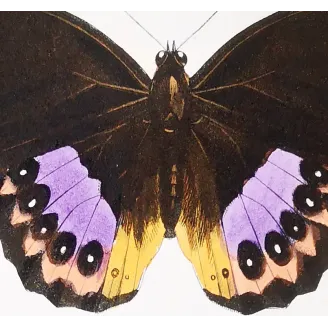
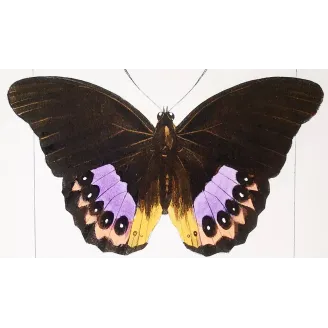
The upper butterfly, Junonia callista, unfolds broad wings in deep brown tones enriched with warm golden areas and soft violet patches. Along the hindwings, rounded eye-spots create a rhythmic sequence that draws the eye across the composition while enhancing the butterfly’s dramatic appearance.
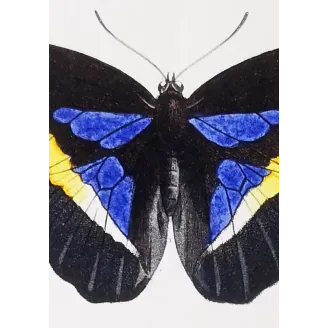
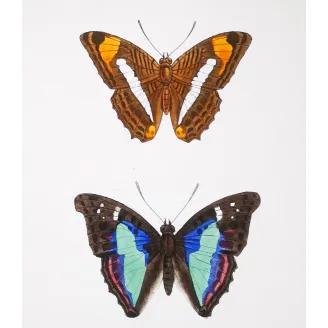
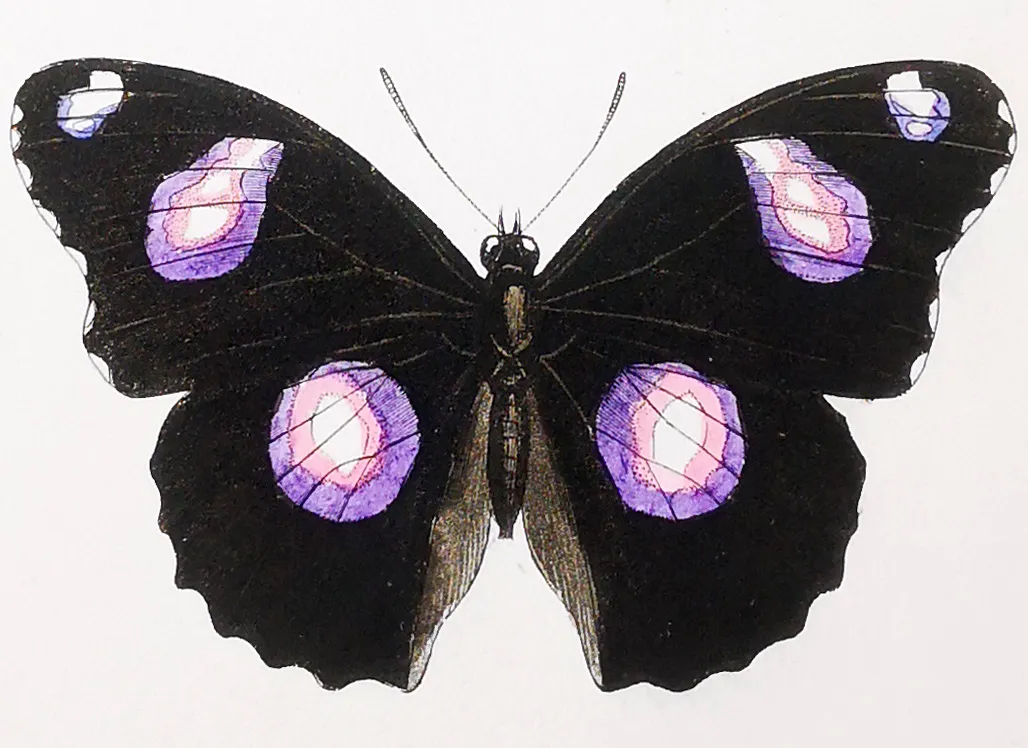
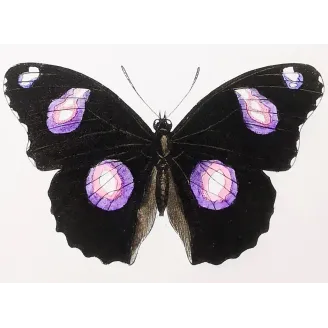
Below, Junonia laomedia reveals a darker and more theatrical palette. Its velvety black wings are illuminated by luminous purple ocelli framed by pale rings, creating a striking contrast that appears almost jewel-like against the dark background. Together, the two butterflies form a harmonious visual dialogue between warm and cool tones.
Butterflies of the genus Junonia are famous for the distinctive eye-spots that decorate their wings. These markings serve an important biological function, helping to confuse predators by mimicking the eyes of larger animals.
During the nineteenth century, such species fascinated European naturalists and collectors for both their biological interest and their extraordinary visual patterns. Illustrated works such as Lucas’s Exotic Butterflies allowed scholars to study and admire these remarkable insects from distant tropical regions.
This engraving forms part of the celebrated series Lucas – Exotic Butterflies , published in 1835 under the scientific direction of Hippolyte Lucas — a period when nature was celebrated through monumental illustrated works combining scientific observation with refined artistic craftsmanship.
Discover the broader historical context in our editorial feature: Hippolyte Lucas: Scientific Vision and the Golden Age of Exotic Butterflies .
The plate was drawn and engraved by Pauquet, whose refined copperplate technique translated real specimens into enduring images of exceptional clarity: Pauquet: The Engraver Behind the Exotic Butterflies .
Very good antique condition. Fresh and vibrant original hand-coloring with strong engraved impression. Printed on fine original nineteenth-century paper. Minor age toning consistent with the 1835 publication. Examples in such well-presed condition are now uncommon, especially with this level of color vibrancy and detail.
Specific References
Yellow swallowtail and Pipevine butterfly (Papilio iphitas, Battus philenor) combining bold yellow-black contrast with iridescent blue and green tones. A highly decorative 1835 engraving, ideal as antique butterfly wall art.
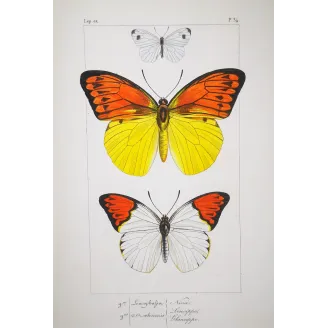
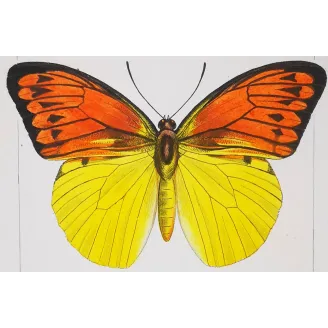
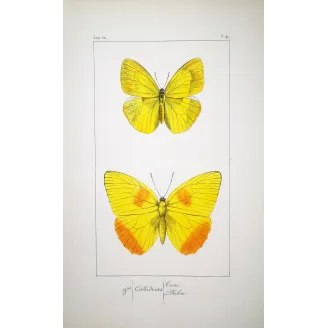
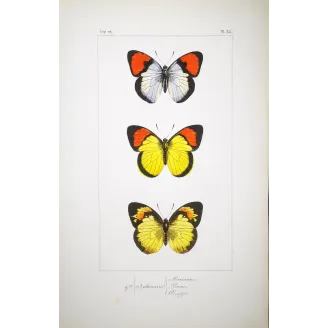
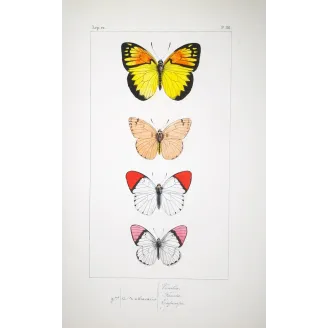
Bright orange and yellow butterflies with striking contrast against white wings. A vivid 1835 engraving with strong decorative and visual impact.
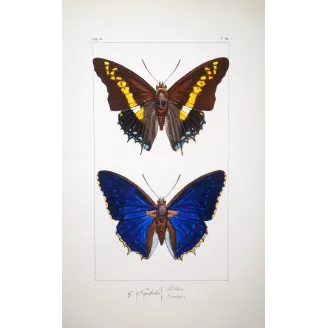
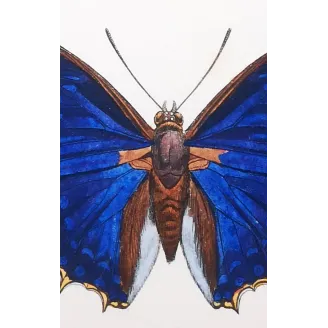
A bold pairing of Demophon Prepona (Archaeoprepona demophon) and Brassolis sophorae, featuring electric blue and golden bands on deep black wings. A striking example of antique butterfly wall art with strong visual contrast.
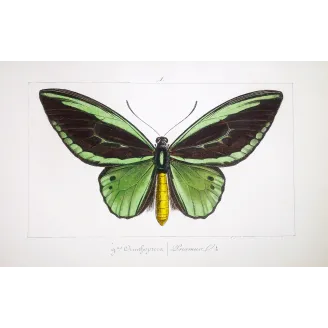
Original 1835 hand-colored engraving of Ornithoptera priamus (Common Green Birdwing), drawn and engraved by Pauquet under the scientific direction of Hippolyte Lucas.
Striking multicolored butterflies with deep black, orange, green, and iridescent tones. A bold 1835 engraving with exceptional decorative impact.
Striking butterflies with iridescent blue, green, and warm orange tones. A bold 1835 engraving with exceptional decorative presence.
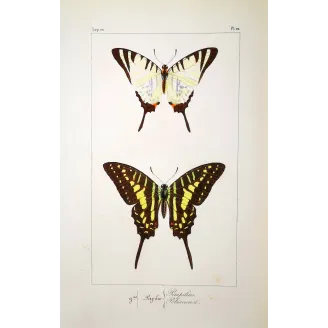
Black swallowtail butterflies with ivory, yellow and green patterns. A refined 1835 engraving, ideal as antique butterfly wall art.
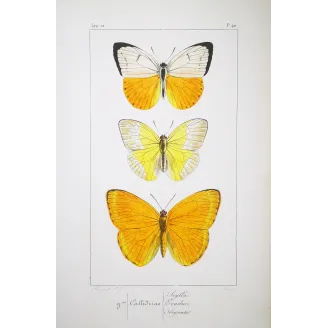
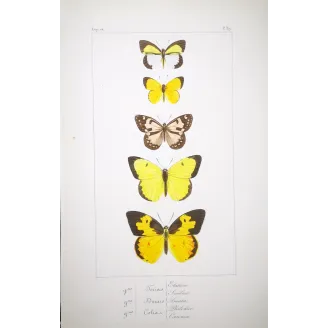
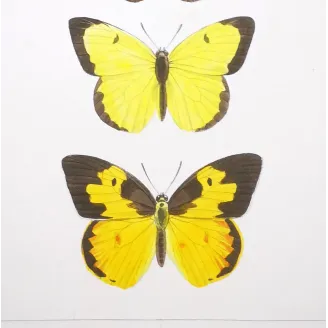
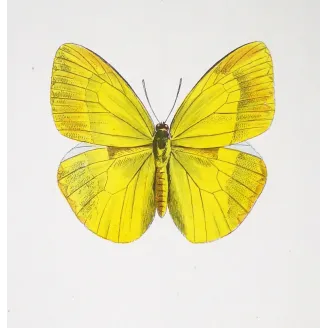
Luminous yellow and white butterflies with warm golden tones. A refined 1835 engraving with bright and elegant decorative appeal.
Elegant yellow butterflies with soft brown and natural tones. A refined 1835 engraving with balanced and decorative appeal.
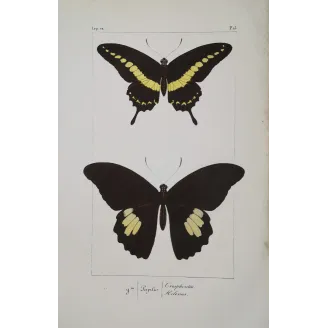
Elegant black swallowtail butterflies with soft yellow markings and refined contrast. A sophisticated 1835 engraving, ideal as antique butterfly wall art.
Vivid butterflies with striking eye-spots, deep purple, and bright orange tones. A bold 1835 engraving with strong decorative appeal.
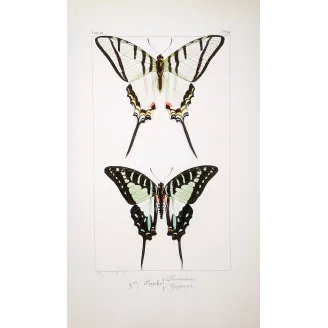
A refined 19th-century hand-colored engraving depicting two elegant kite swallowtails: Eurytides protesilaus and Eurytides agapenor. Published in Hippolyte Lucas’s Exotic Butterflies (1835), the plate highlights their distinctive elongated tails and delicate translucent wings.
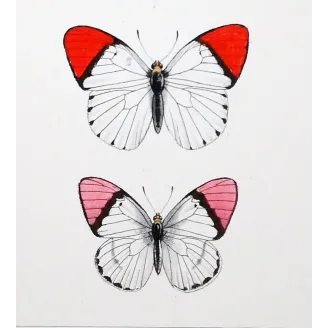
Elegant butterflies with vivid red tips and bright yellow tones. A refined 1835 engraving balancing delicacy and bold contrast.
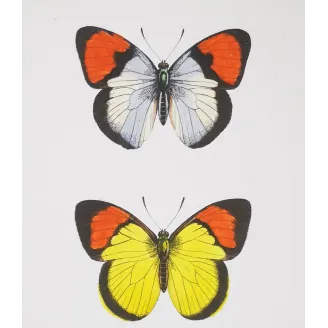
Bright yellow and white butterflies with vivid orange and pink tips. A refined 1835 engraving with strong decorative contrast.
Original 1835 hand-colored copper engraving depicting the butterflies Pollux and Eurilochus. A visually striking double-specimen plate from Hippolyte Lucas’ celebrated Exotic Butterflies, engraved by Pauquet, with strong appeal as natural history art and antique butterfly wall art.
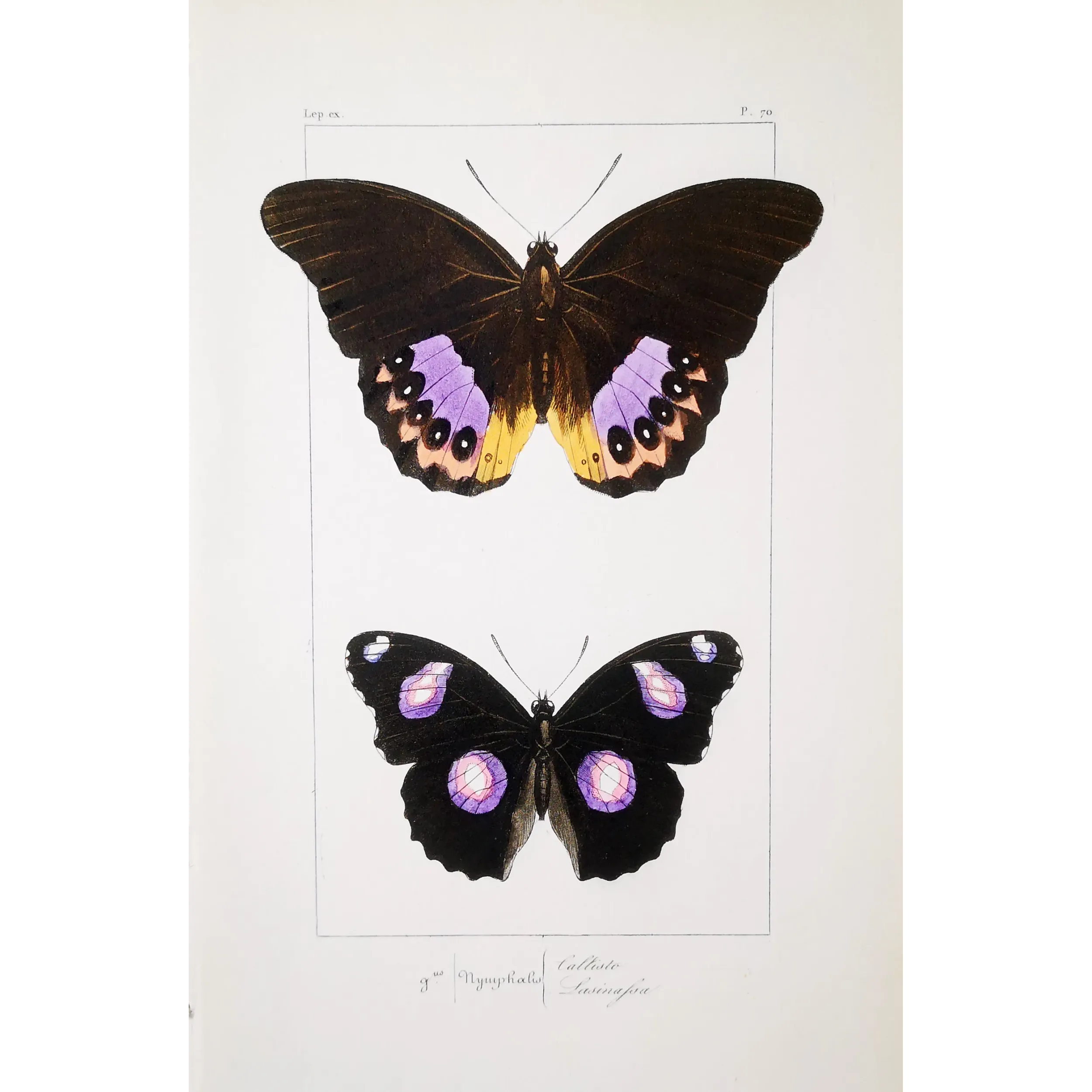
A striking 19th-century hand-colored engraving depicting two tropical pansy butterflies: the Golden Pansy (Junonia callista) and the Purple Pansy (Junonia laomedia). Published in Hippolyte Lucas’s Exotic Butterflies (1835), the plate highlights their dramatic wing contrasts and luminous violet eye-spots.