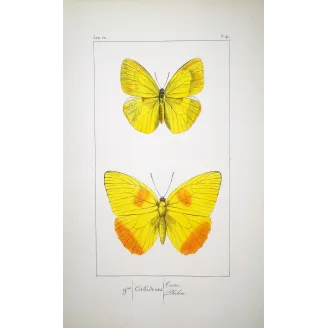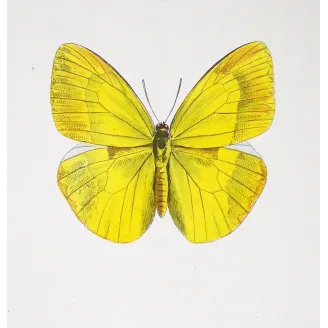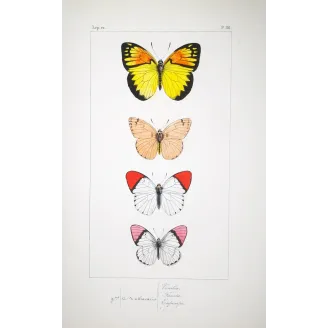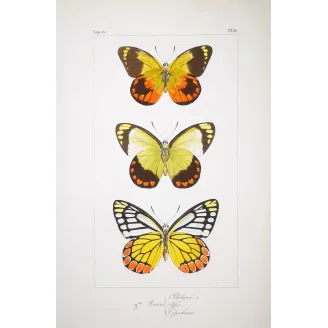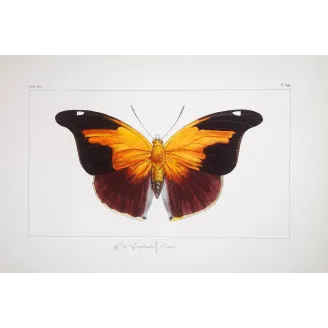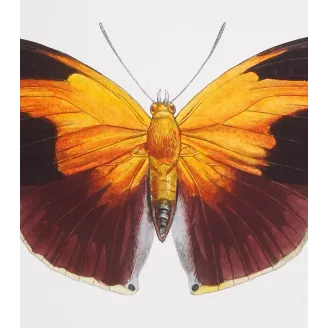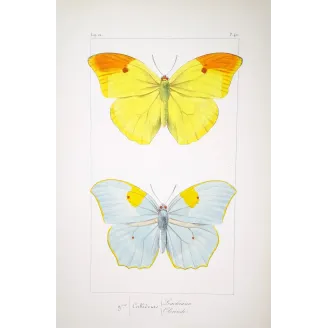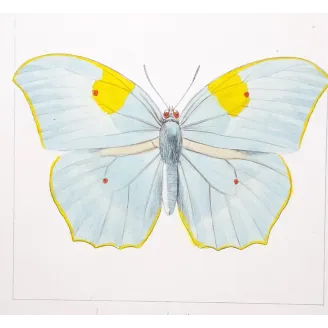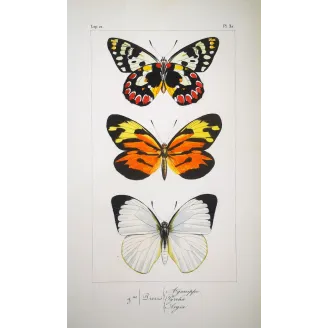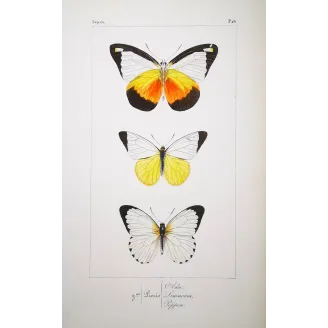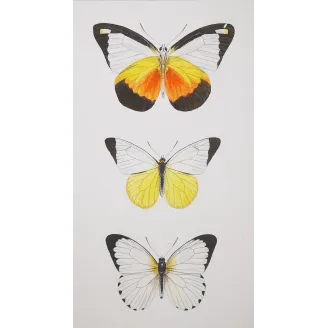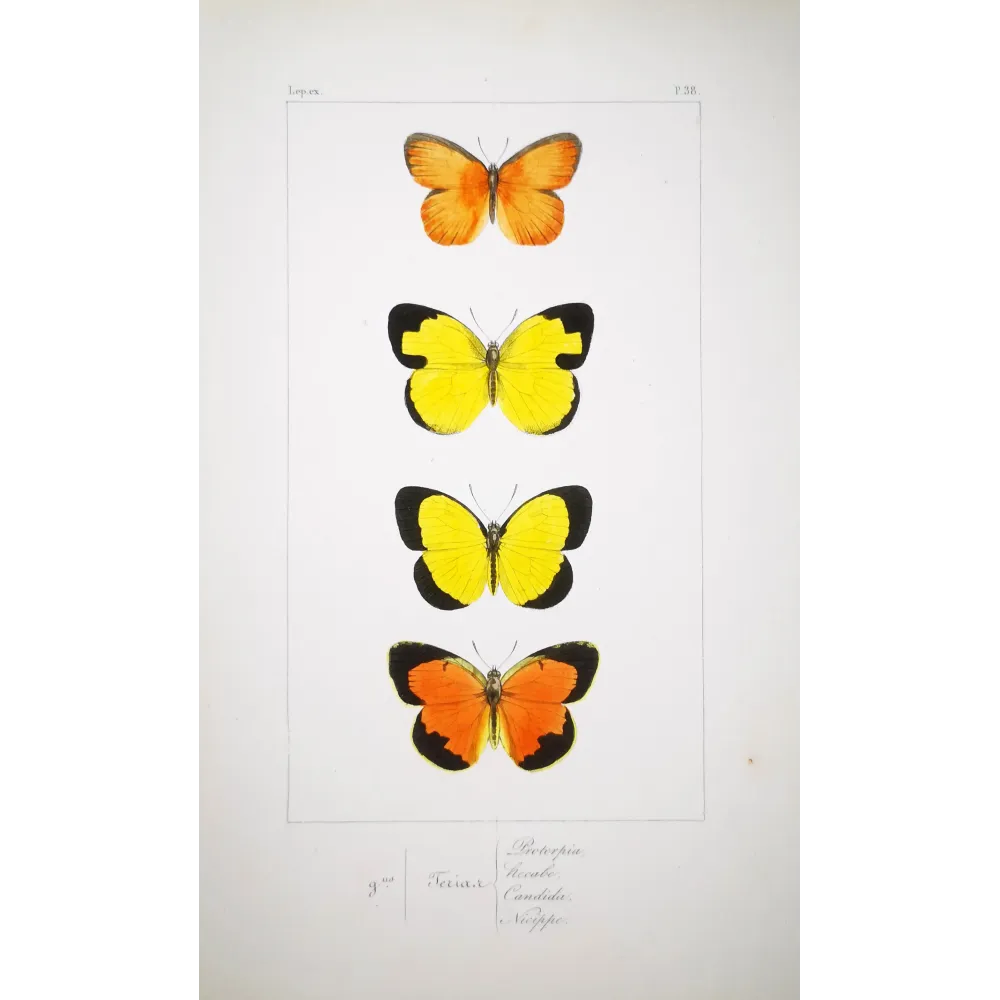
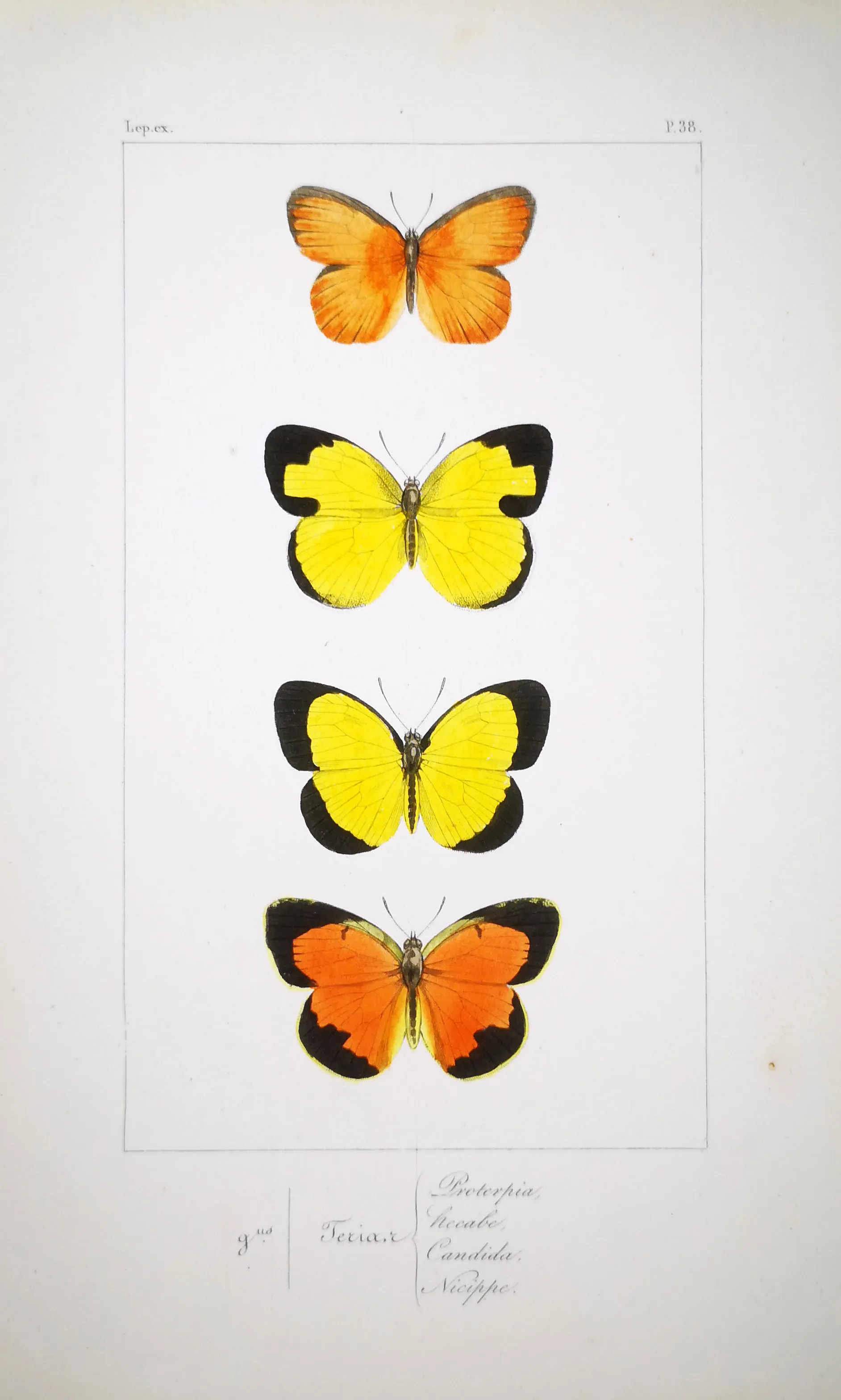
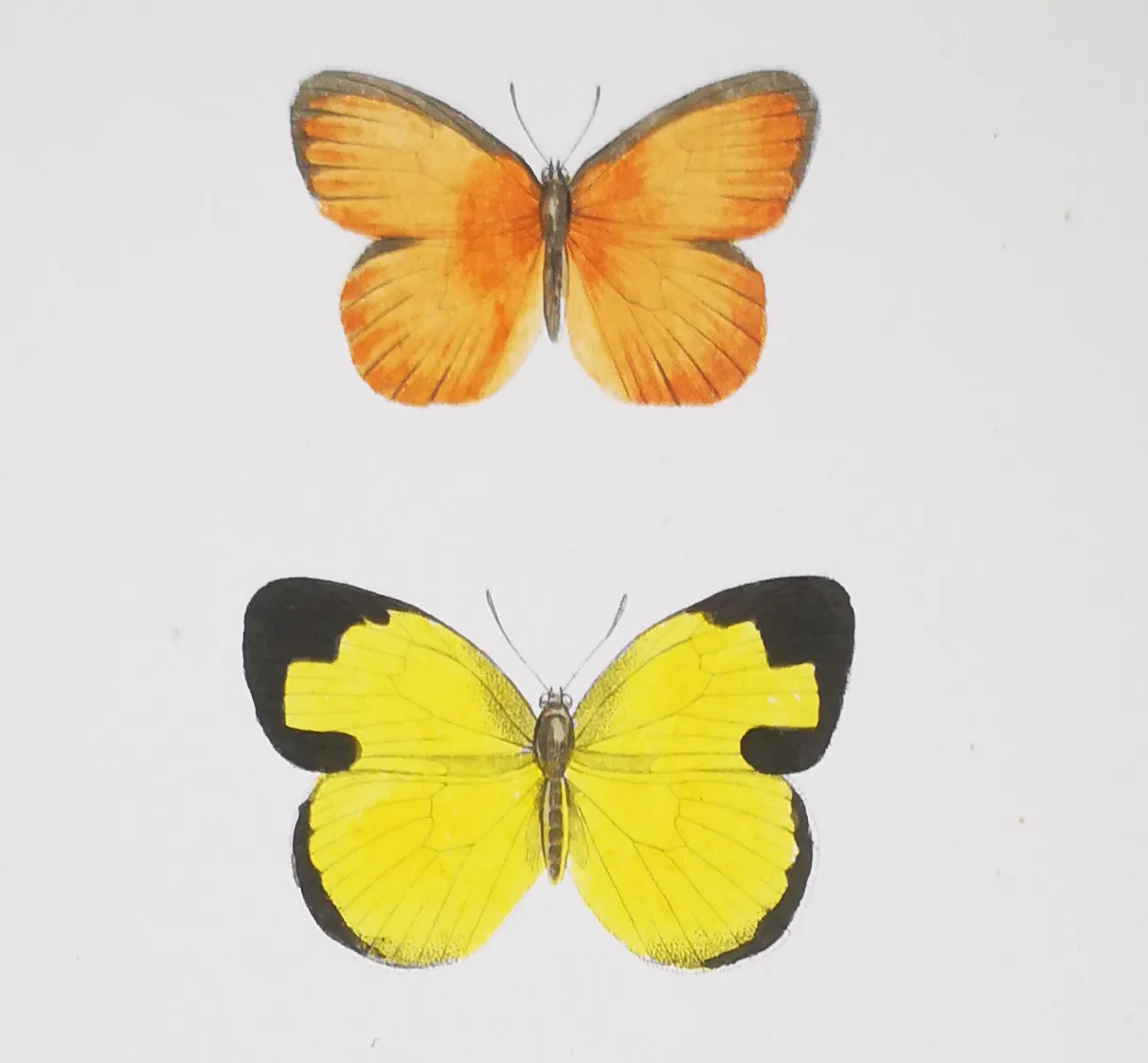
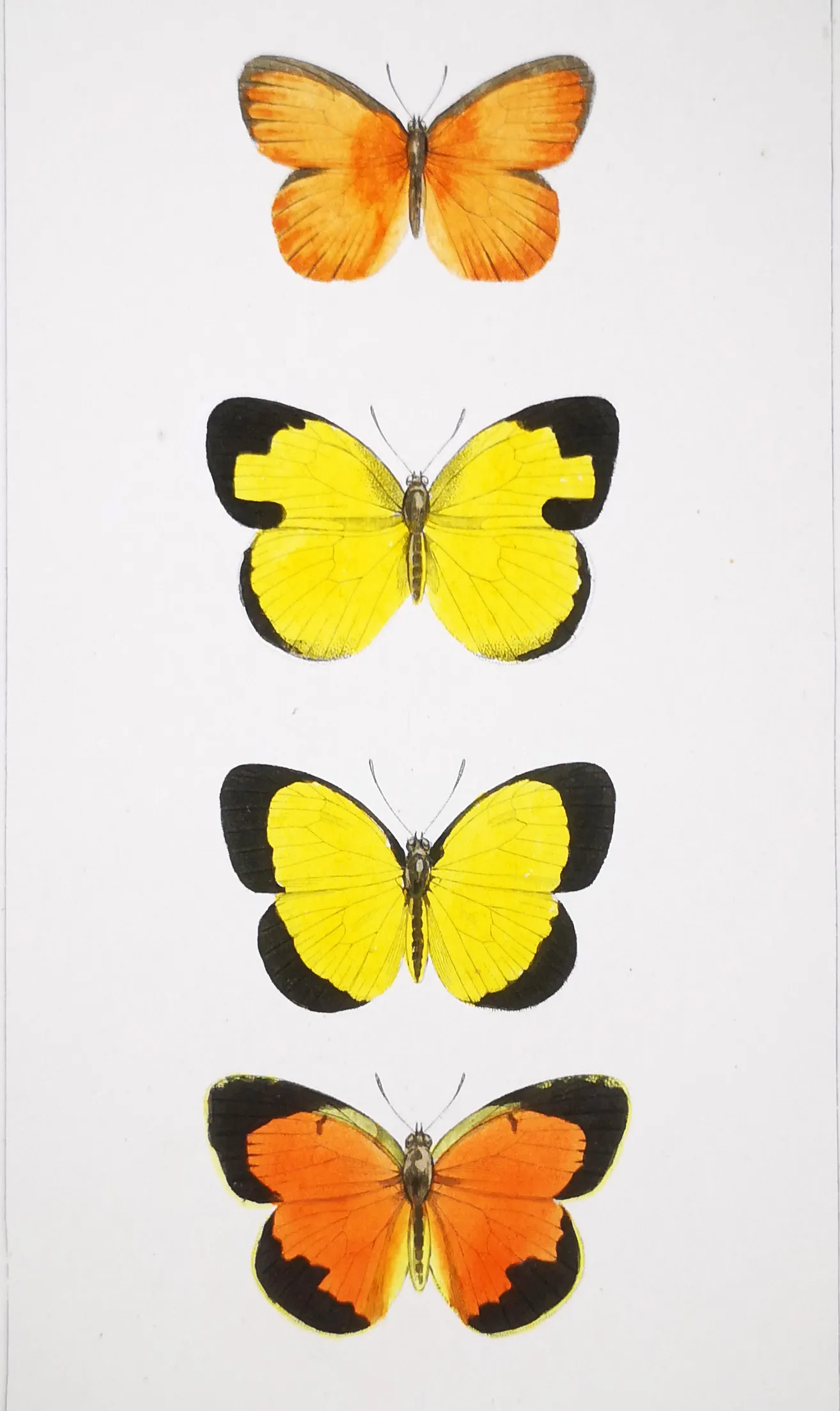
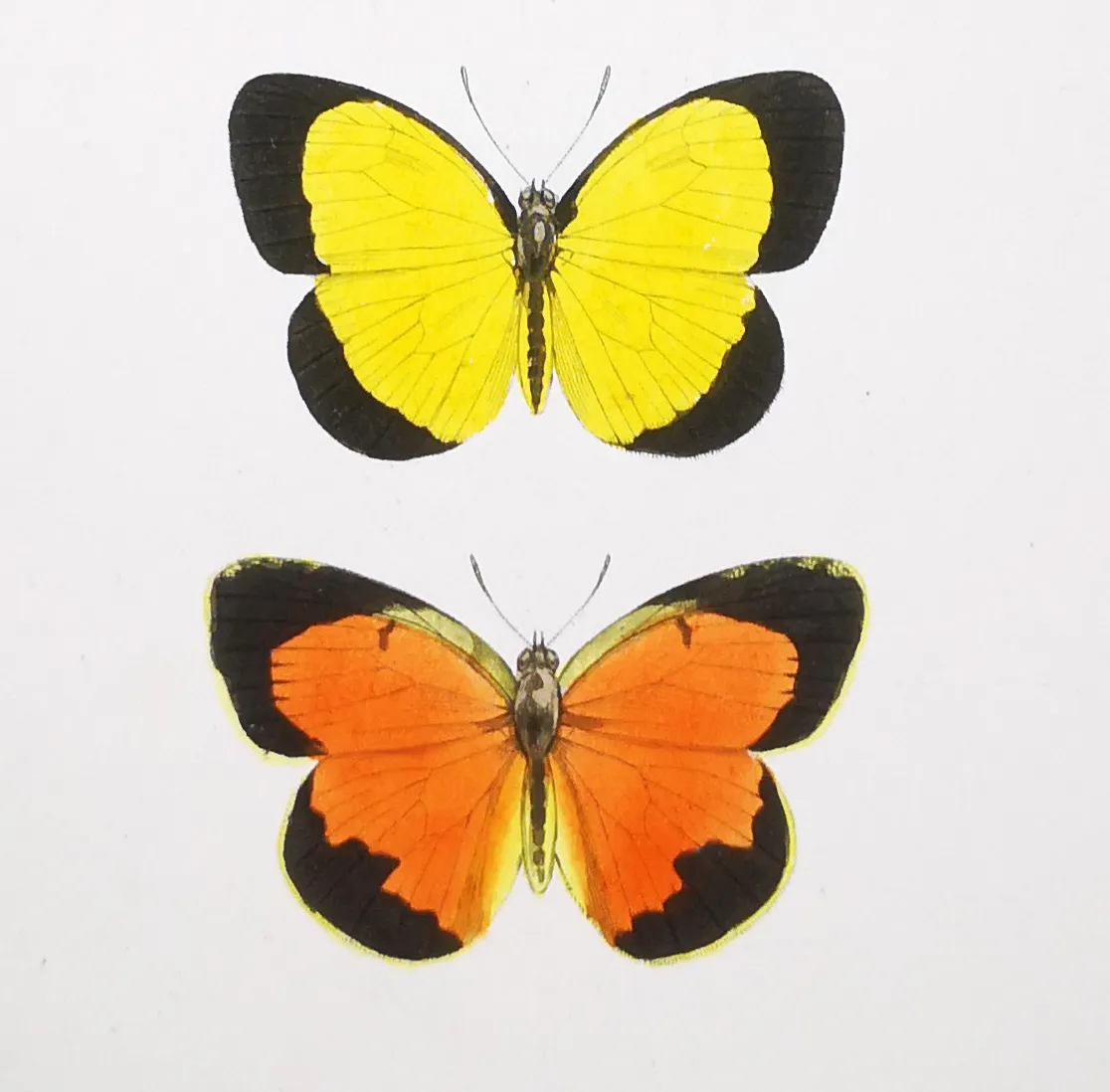
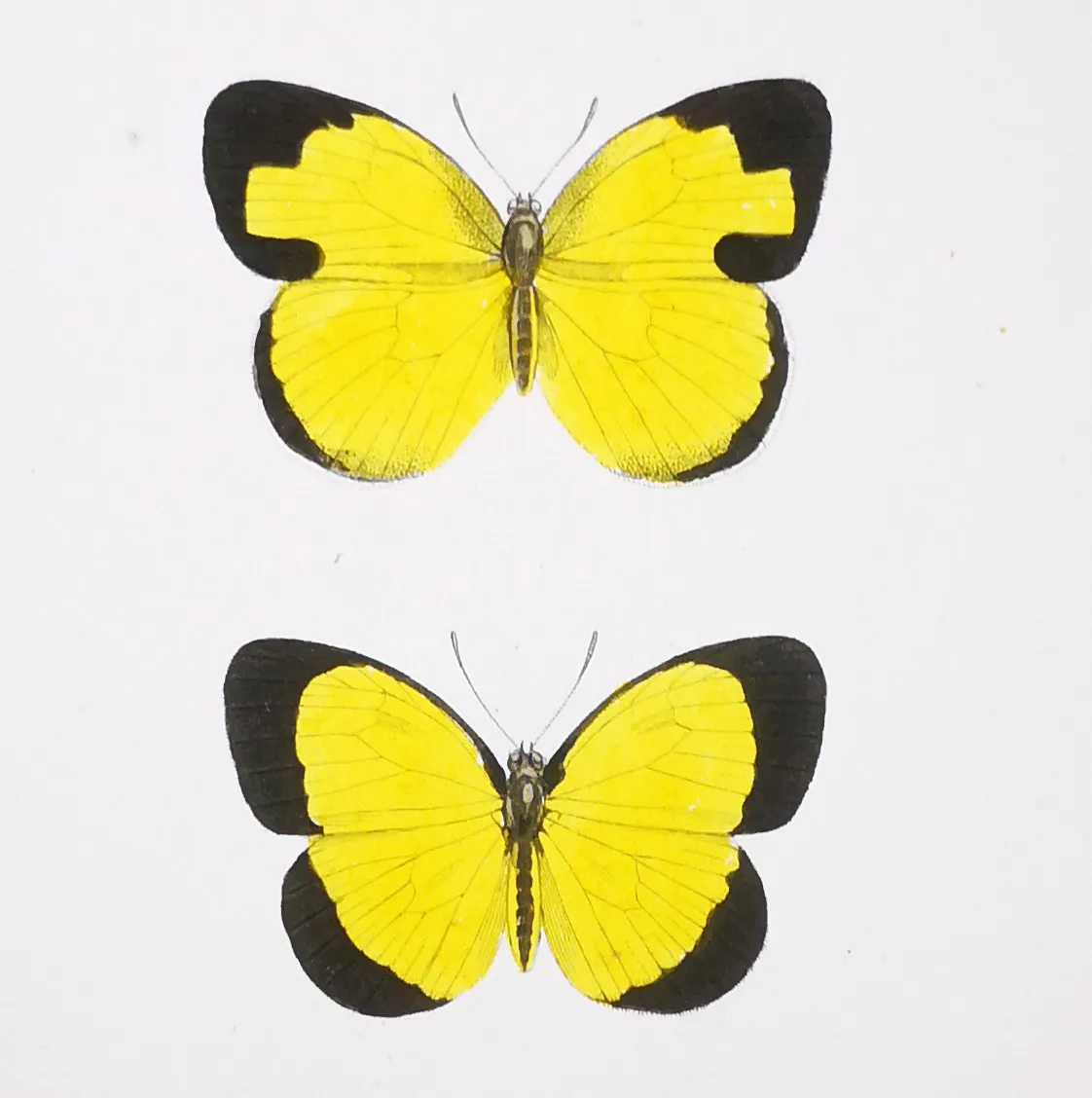
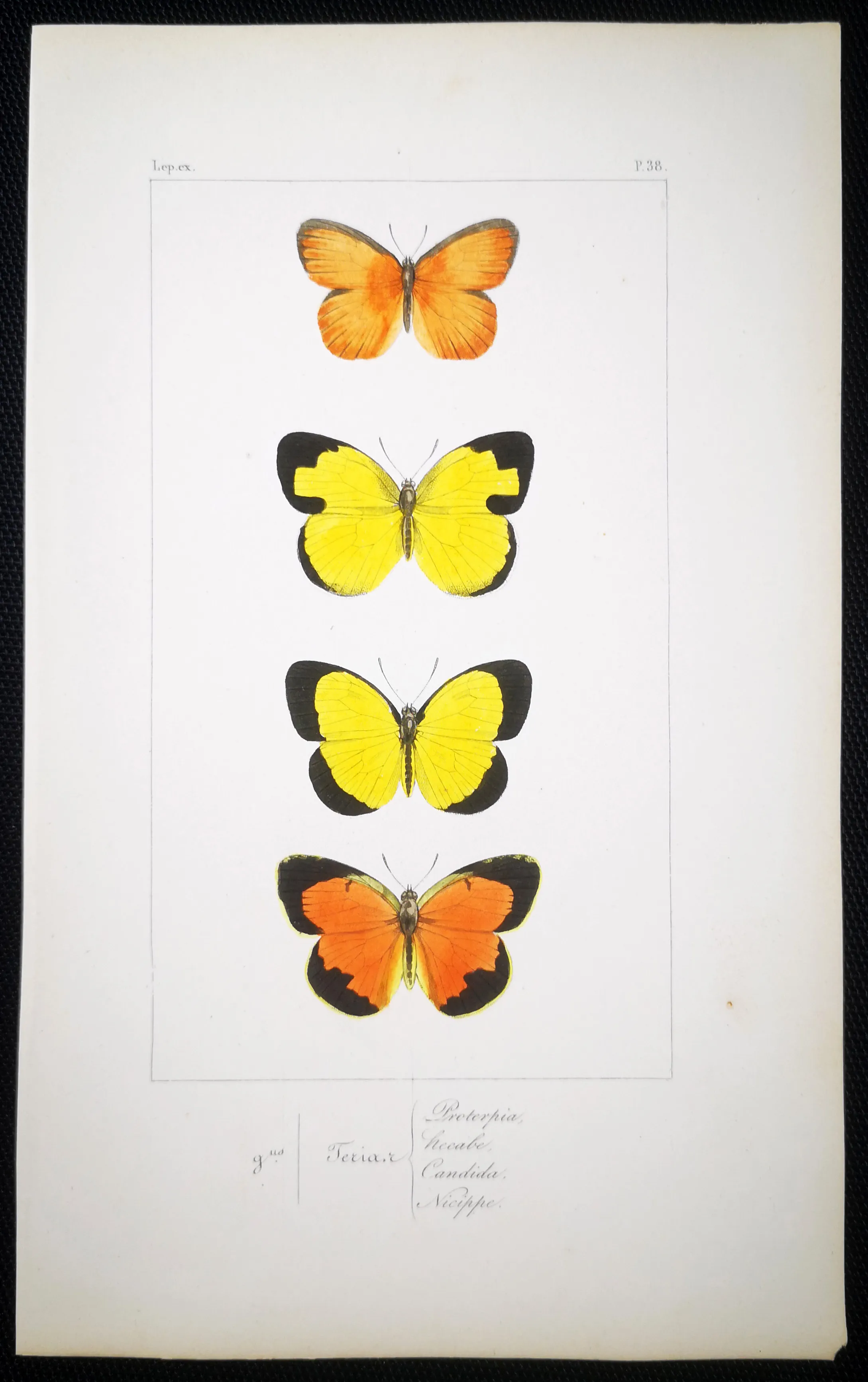
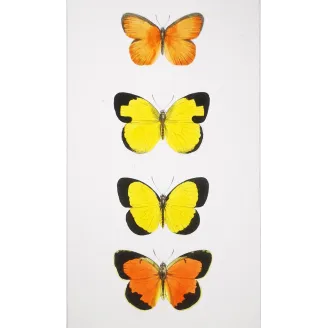
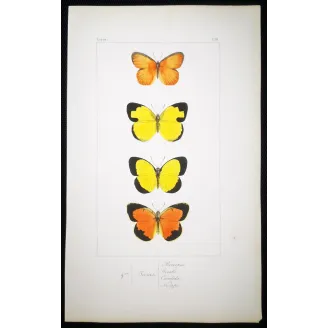
Sulphur Butterflies (Terias hecabe, candida, nicippe) – Antique Hand-Colored Engraving (1835)
 Delivery policy
Your print will be carefully prepared and shipped worldwide via trusted couriers (UPS or similar).
 Authentic antique prints
Original engravings from the 17th–19th century.
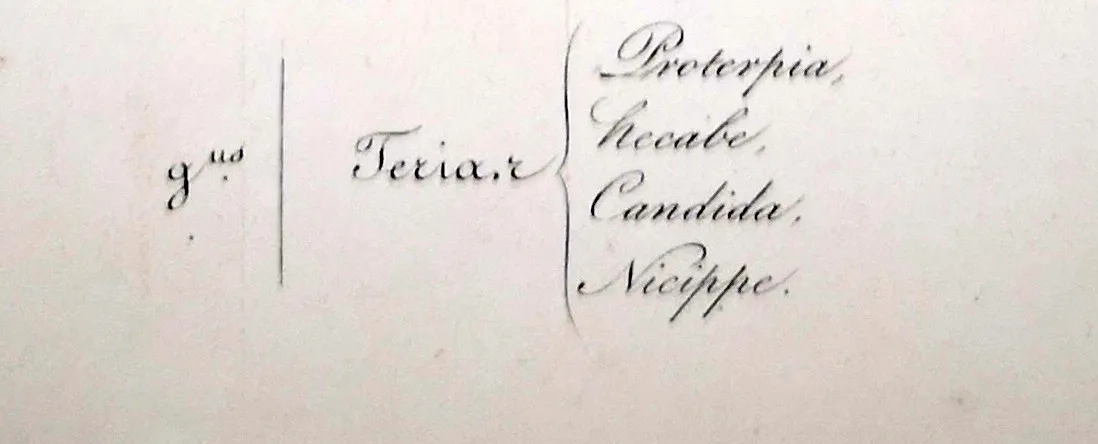
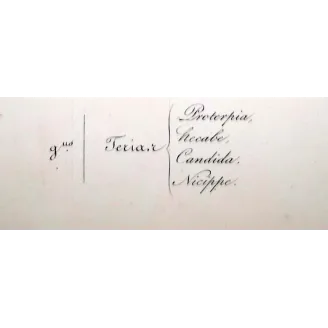
This original 1835 hand-colored copper engraving depicts four vivid butterflies of the genus Terias, historically identified as Terias hecabe, Terias candida, and Terias nicippe. The plate belongs to the celebrated Exotic Butterflies series directed by Hippolyte Lucas and engraved by Pauquet.
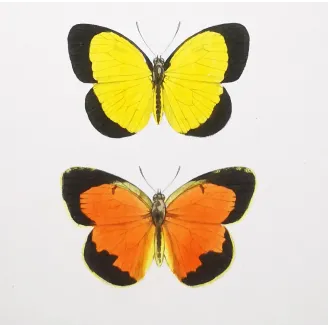
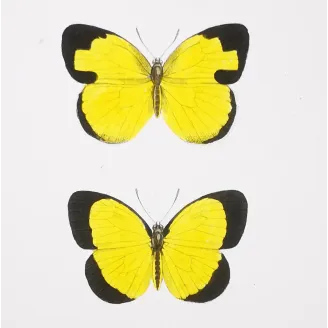
The composition is defined by a bold palette of bright yellow and intense orange, framed by strong black wing margins. This high-contrast combination creates a lively and highly decorative visual effect.
With its repeated chromatic structure and striking tones, this engraving is particularly suited as antique butterfly wall art, offering a vibrant and eye-catching presence.
— • —
The upper butterfly introduces warm orange tones with subtle shading, setting a soft yet luminous opening to the composition.
The central specimens intensify the palette with bright yellow wings framed by bold black edges, creating a strong visual rhythm.
The lower butterfly completes the composition with a vivid orange field contrasted by deep black margins, reinforcing the overall chromatic harmony.
Butterflies of the genus Terias, commonly known as sulphurs, are admired for their bright coloration and lively presence.
Their vivid yellow and orange tones made them particularly appealing subjects in nineteenth-century natural history illustration.
This engraving captures their characteristic brilliance while presenting a cohesive and visually striking composition.
This engraving is part of the renowned Lucas – Exotic Butterflies series, published in 1835 during the golden age of natural history illustration.
Learn more in our article: Hippolyte Lucas and Exotic Butterflies .
The engraving was executed by Pauquet, whose refined technique allowed vivid colors and sharp contrasts to be rendered with exceptional clarity: Pauquet: Master Engraver .
Very good antique condition. Bright, well-preserved hand-coloring with vivid yellow and orange tones and strong black contrasts. Printed on original nineteenth-century paper. Minor age toning consistent with age. Examples with such vibrant color intensity and decorative impact are increasingly difficult to find.
Specific References
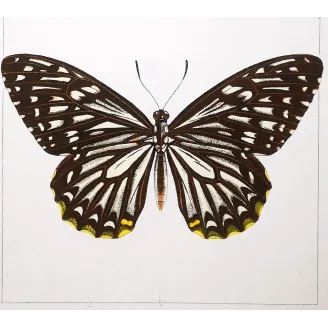
A finely detailed 19th-century hand-colored engraving depicting two forms of the Clipper Butterfly (Parthenos sylvia). Published in Hippolyte Lucas’s Exotic Butterflies (1835), the plate highlights the species’ elegant network of white markings across dark wings, creating a striking geometric pattern characteristic of tropical Asian butterflies.
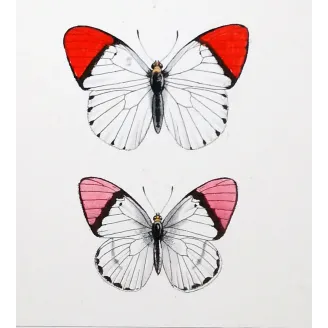
Bright yellow and white butterflies with vivid orange and pink tips. A refined 1835 engraving with strong decorative contrast.
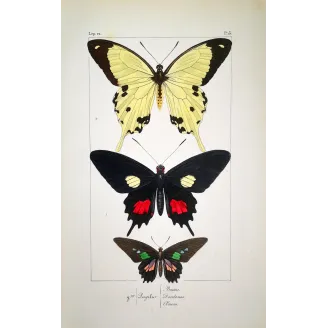
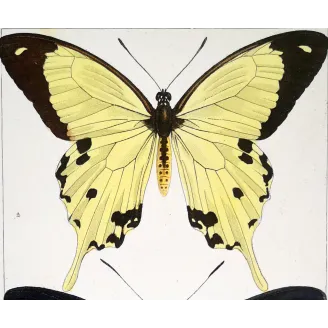
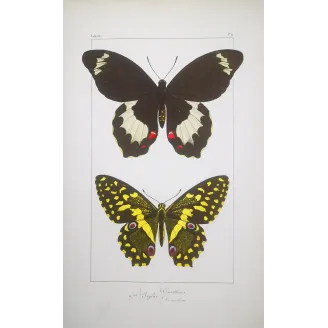
Dramatic swallowtail butterflies including Papilio dardanus, featuring bold yellow, black, and red contrasts with iridescent accents. A striking 1835 engraving, ideal as antique butterfly wall art.
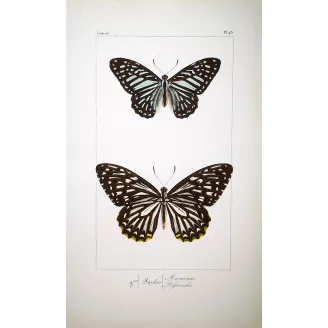
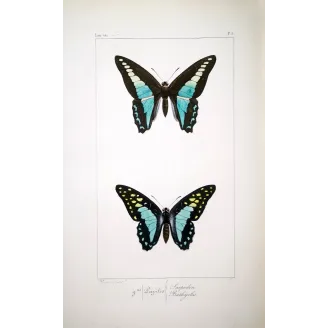
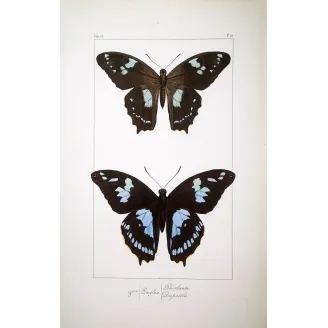
A vivid 19th-century hand-colored engraving depicting two striking Asian swallowtail butterflies: the Common Bluebottle (Papilio sarpedon) and the Spotted Bluebottle (Papilio bathycles). Published in Hippolyte Lucas’s Exotic Butterflies (1835), the plate highlights their elegant turquoise wing bands set against deep black wings.
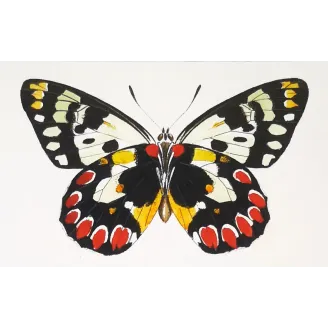
Sulphur Butterflies (Pieris philyra, Pieris jase, Pieris epicharis) – Antique Hand-Colored Engraving (1835).
Original 1835 hand-colored engraving of Nymphalis orion, drawn and engraved by Pauquet under the scientific direction of Hippolyte Lucas for Exotic Butterflies.
Soft yellow and pale blue butterflies with delicate orange accents. A refined 1835 engraving with elegant tones and subtle decorative appeal.
Elegant butterflies combining bright orange, yellow, and white tones. A refined 1835 engraving with strong visual contrast and balance.
Elegant golden and yellow swallowtail butterflies with luminous contrast and flowing wing shapes. A refined antique engraving from 1835.
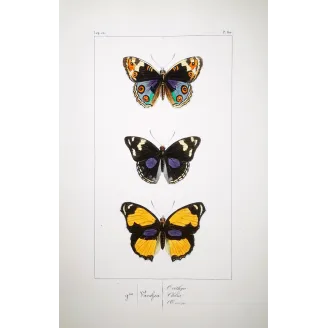
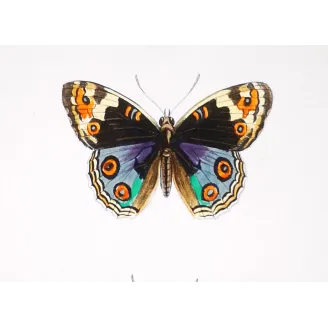
Vivid butterflies with striking eye-spots, deep purple, and bright orange tones. A bold 1835 engraving with strong decorative appeal.
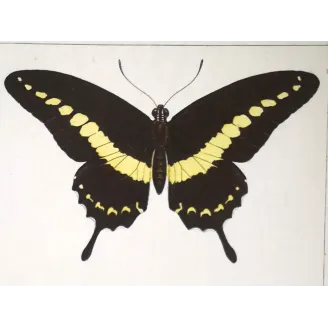
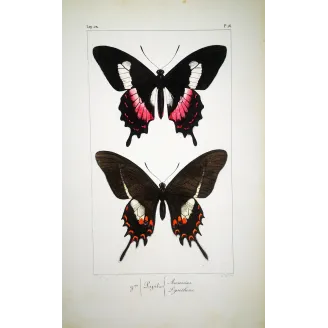
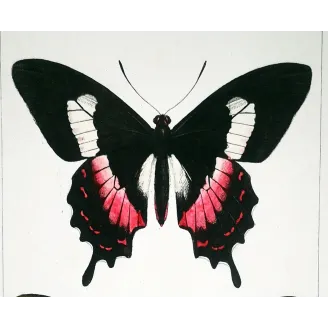
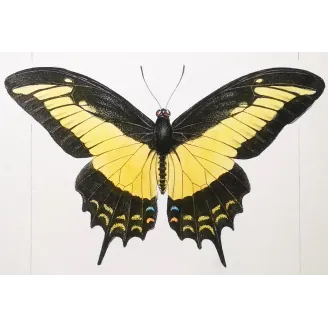
Cattleheart Swallowtail Butterflies (Parides lysithous group) – Antique Hand-Colored Engraving, Exotic Butterflies (1835)
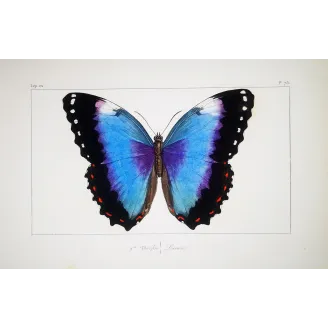
An original 19th-century hand-colored engraving of Morpho leonte, the striking Blue Morpho butterfly, drawn and engraved by Pauquet under the scientific direction of Hippolyte Lucas.
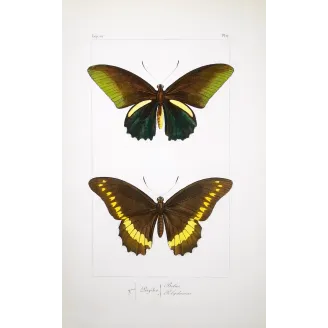
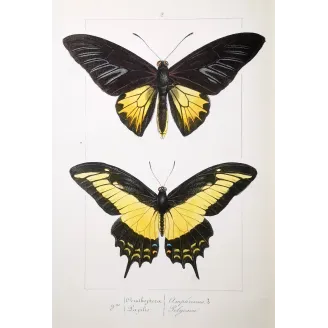
Golden Birdwing butterflies with bold yellow and black contrast and elegant swallowtail forms. A striking 1835 engraving, ideal as antique butterfly wall art.
A refined 19th-century hand-colored engraving depicting two forms of the La Réunion Swallowtail (Papilio phorbanta). Published in Hippolyte Lucas’s Exotic Butterflies (1835), the plate captures the striking contrast between deep velvety wings and luminous pale blue markings characteristic of this Indian Ocean species.
Yellow and black butterflies with striking eye spots and bold contrast patterns. A vivid 1835 engraving, perfect as antique butterfly wall art.
Square-tailed Cuckoo (Cacomantis pyrrophanus) – Original lithograph by Henrik Grønvold.
Elegant white and yellow butterflies with a striking orange-accented specimen. A refined 1835 engraving with bright and balanced decorative appeal.
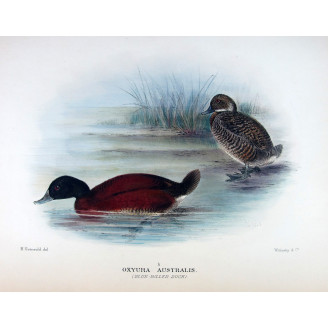
Blue-billed Duck (Oxyura australis) – Original antique bird print by H. Grønvold.
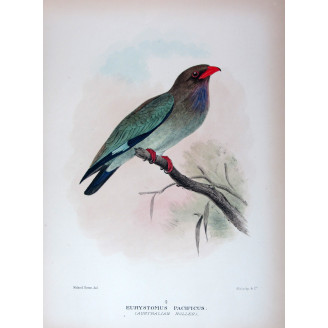
Original lithograph of the Australian Roller (Eurystomus pacificus) by Roland Green
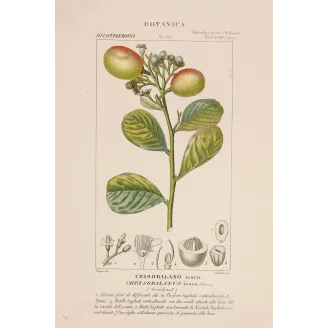
Elegant hand-colored botanical engraving of *Chrysobalanus icaco*, showing the round fruits and smooth glossy leaves in rich natural hues.
Soft yellow and pale blue butterflies with delicate orange accents. A refined 1835 engraving with elegant tones and subtle decorative appeal.
Original early 19th-century hand-colored engraving depicting King Vulture and Brown Vulture from the Dizionario di Scienze Naturali.
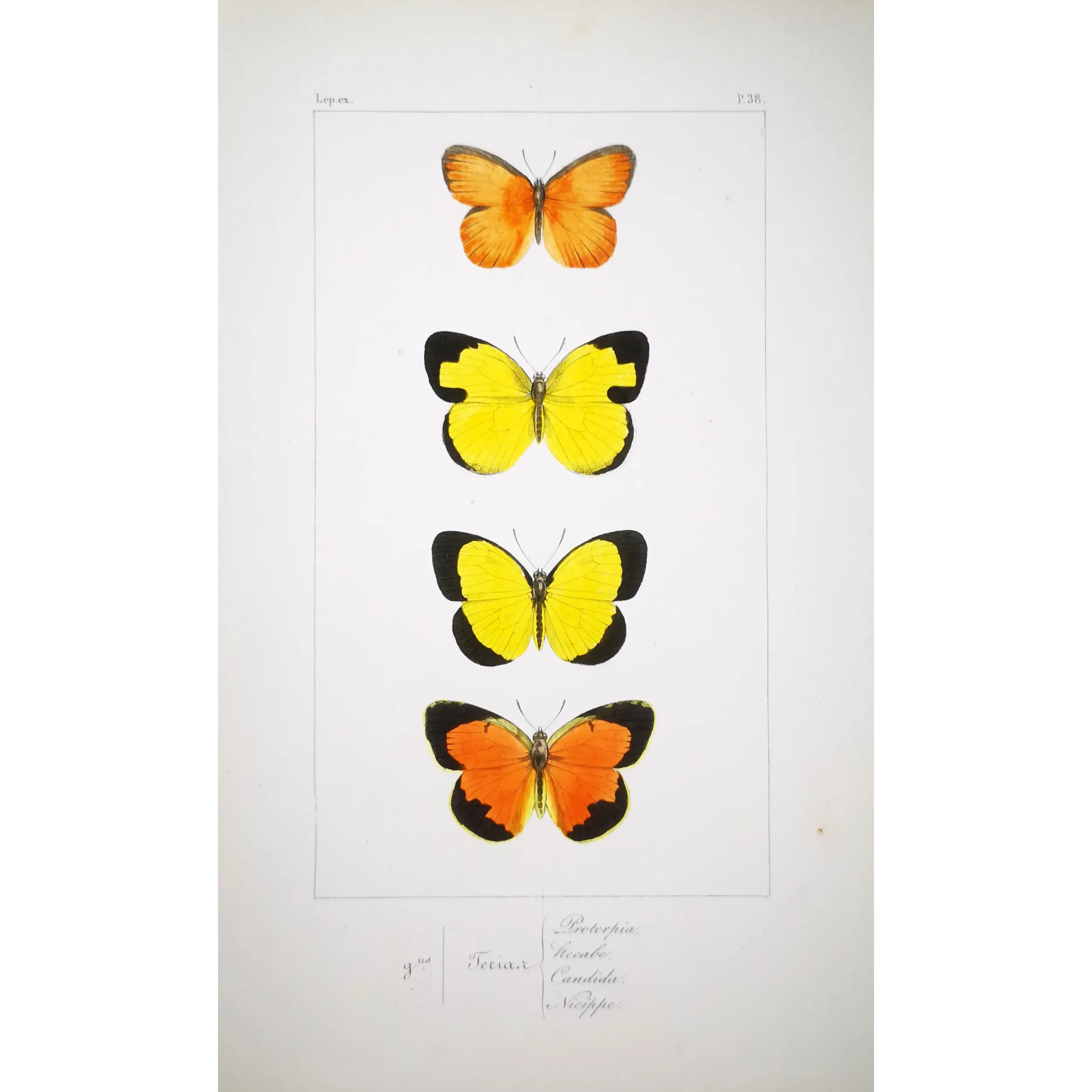
Sulphur Butterflies (Terias hecabe, candida, nicippe) – Antique Hand-Colored Engraving (1835)