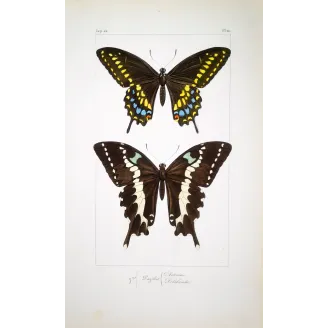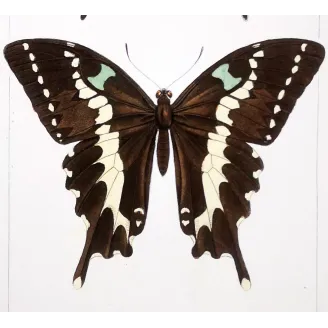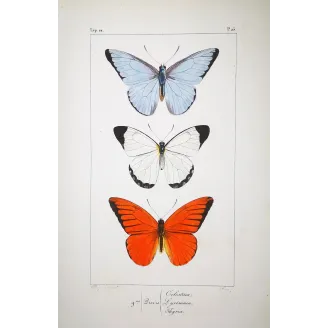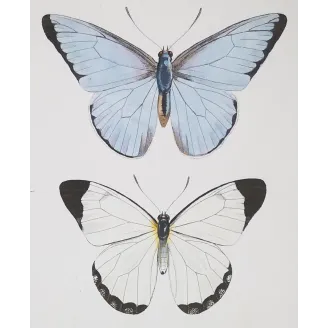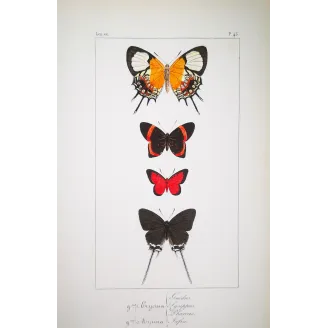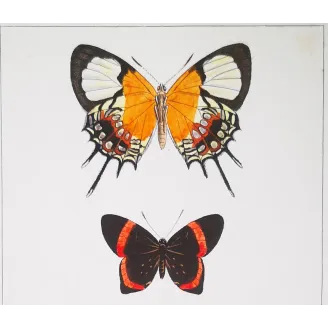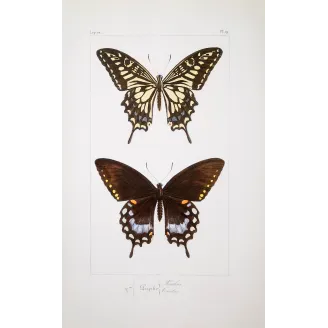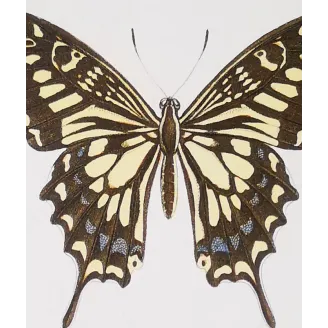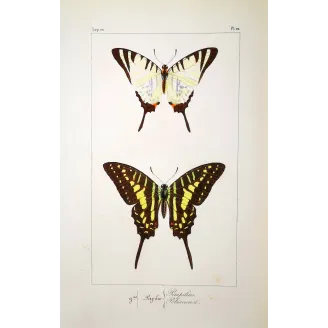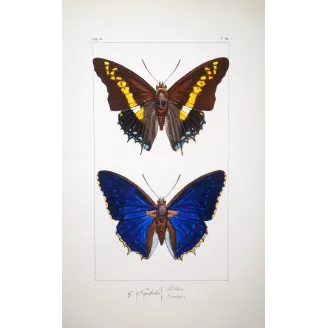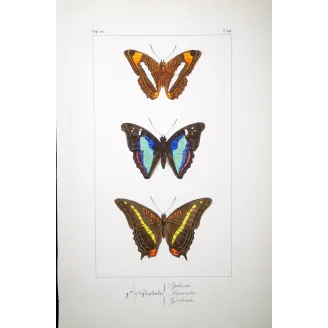
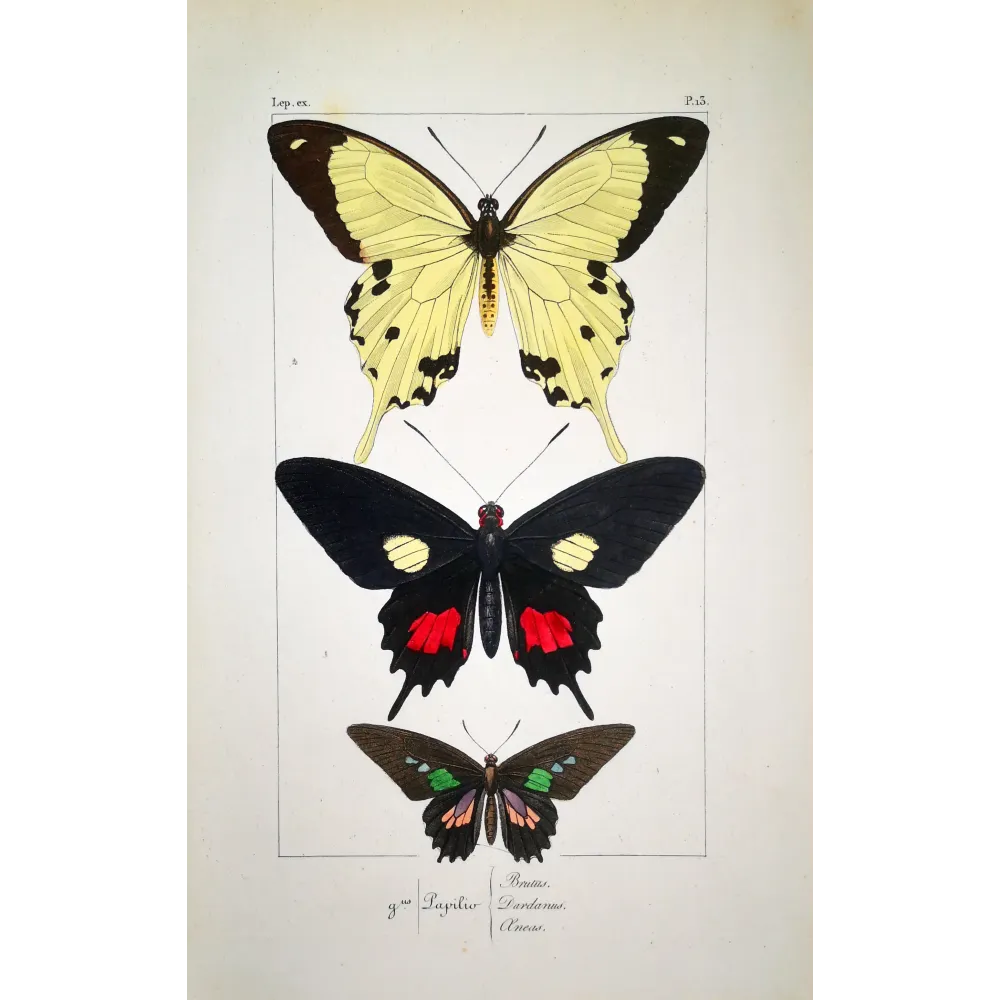
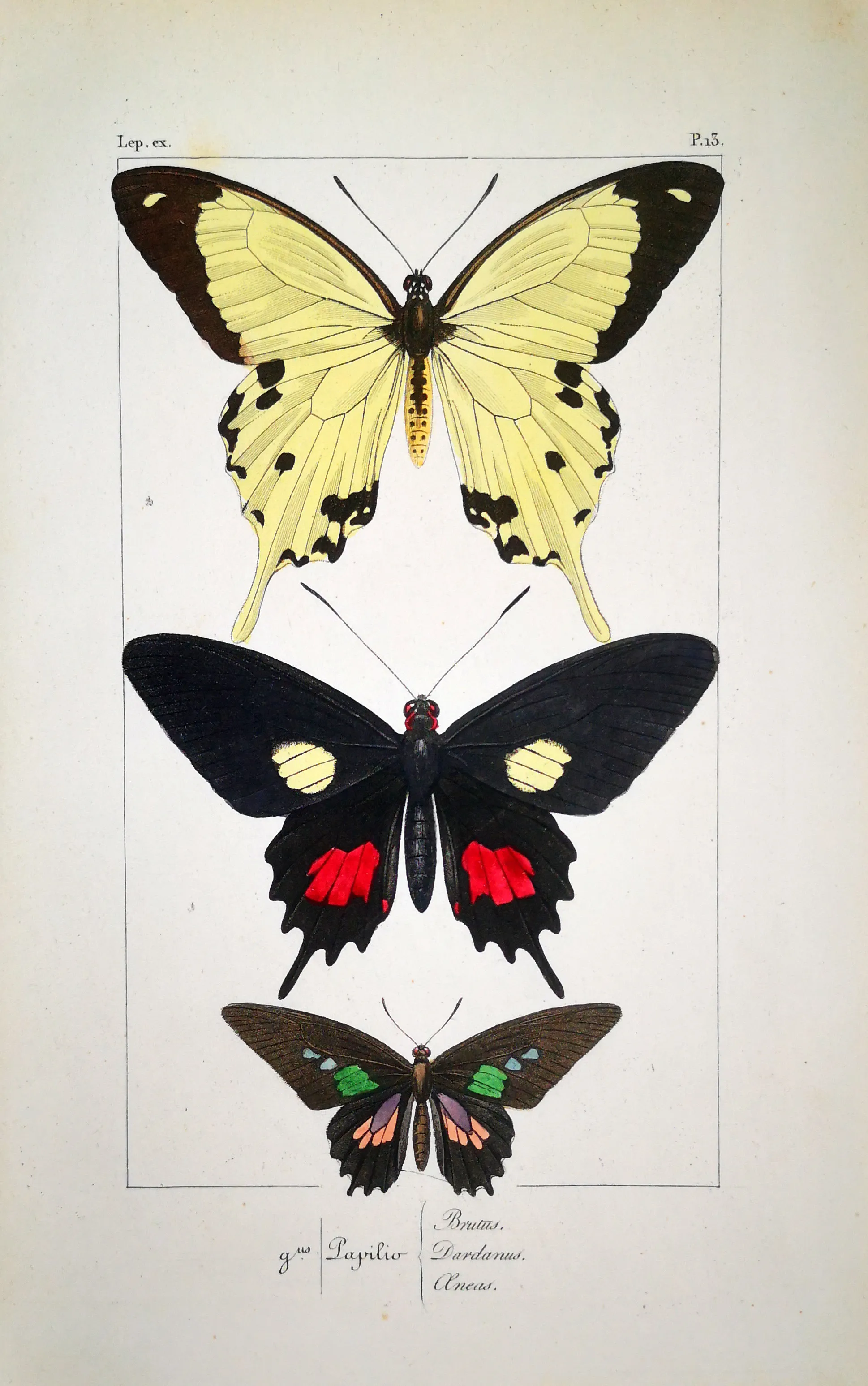
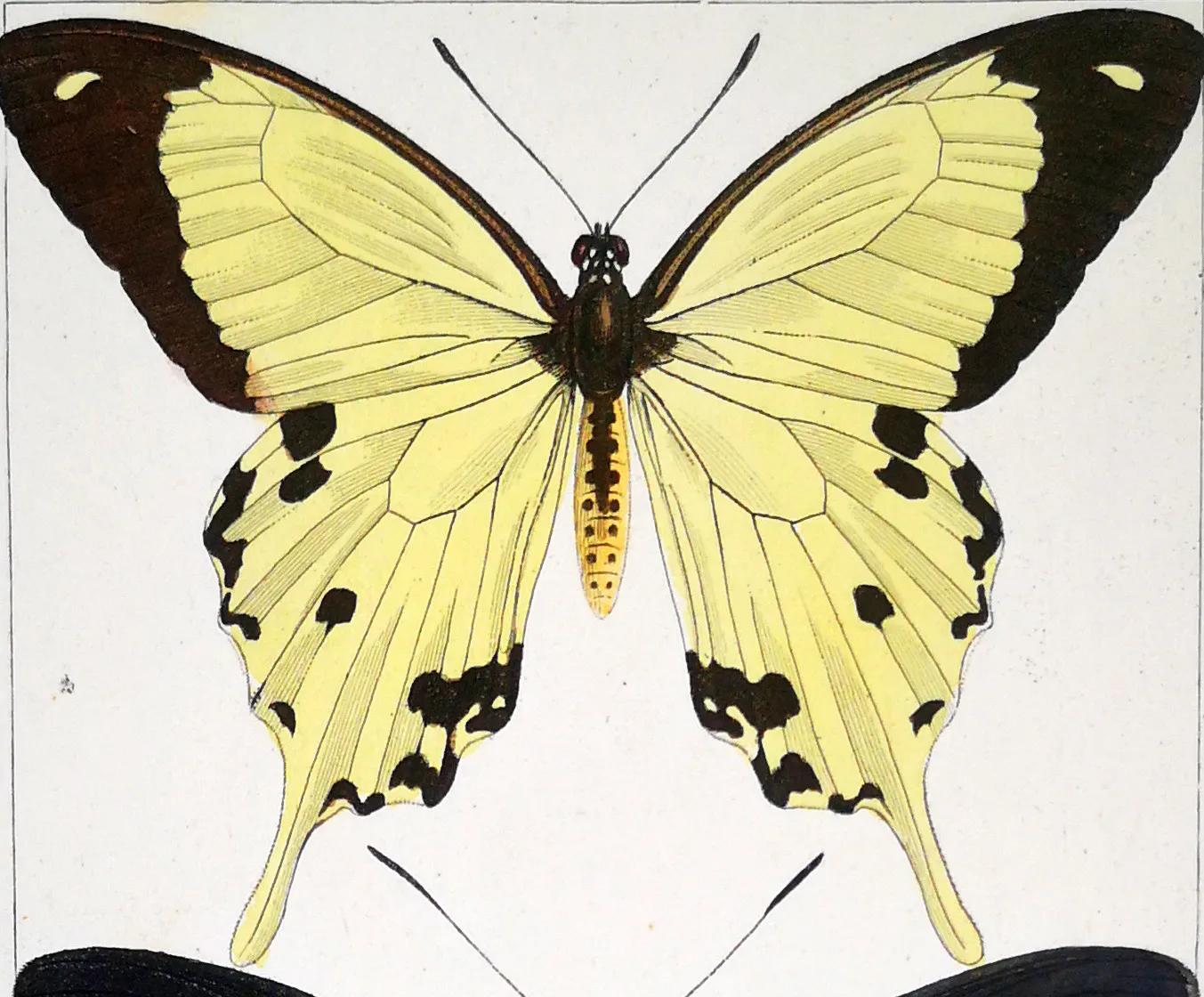
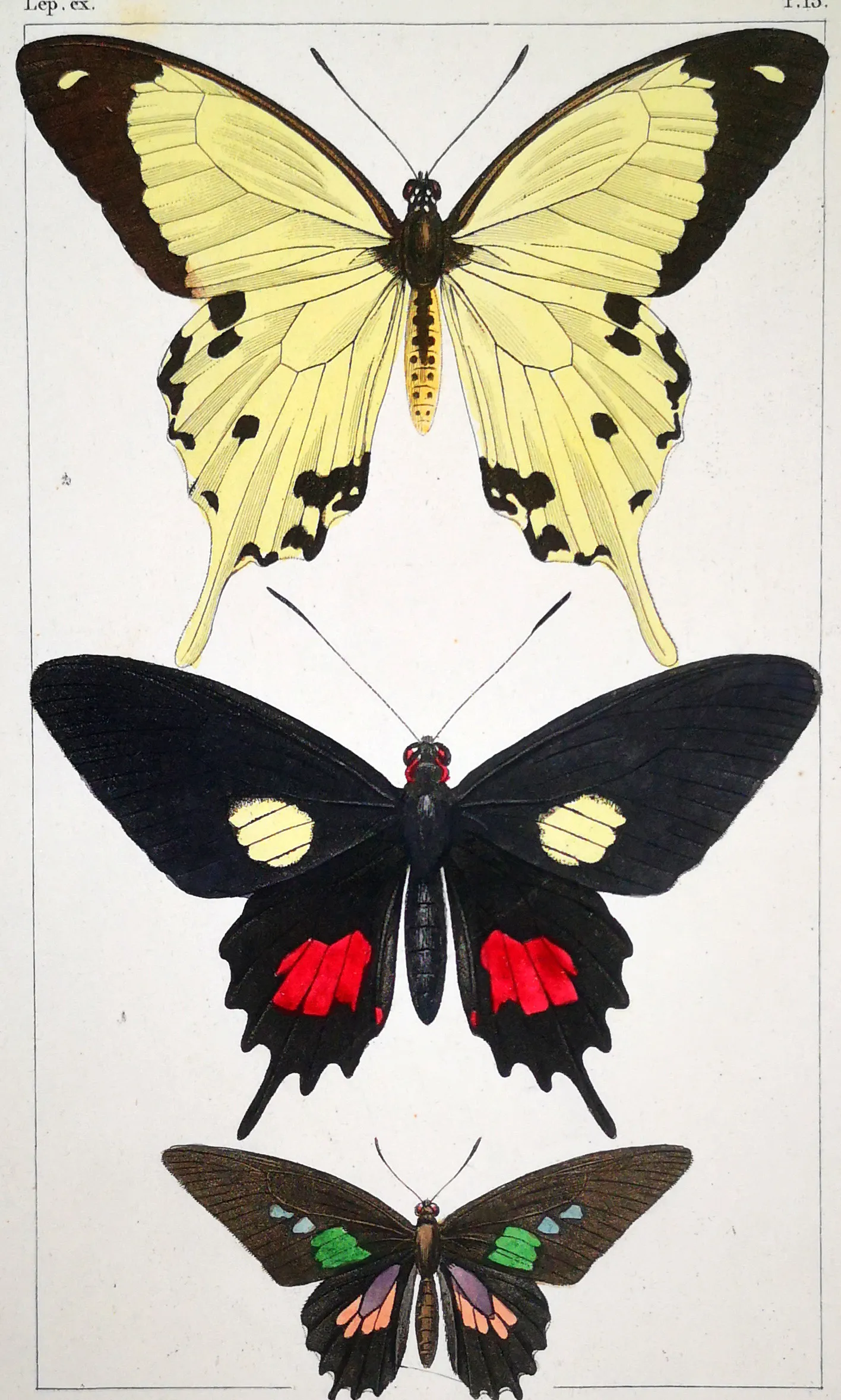
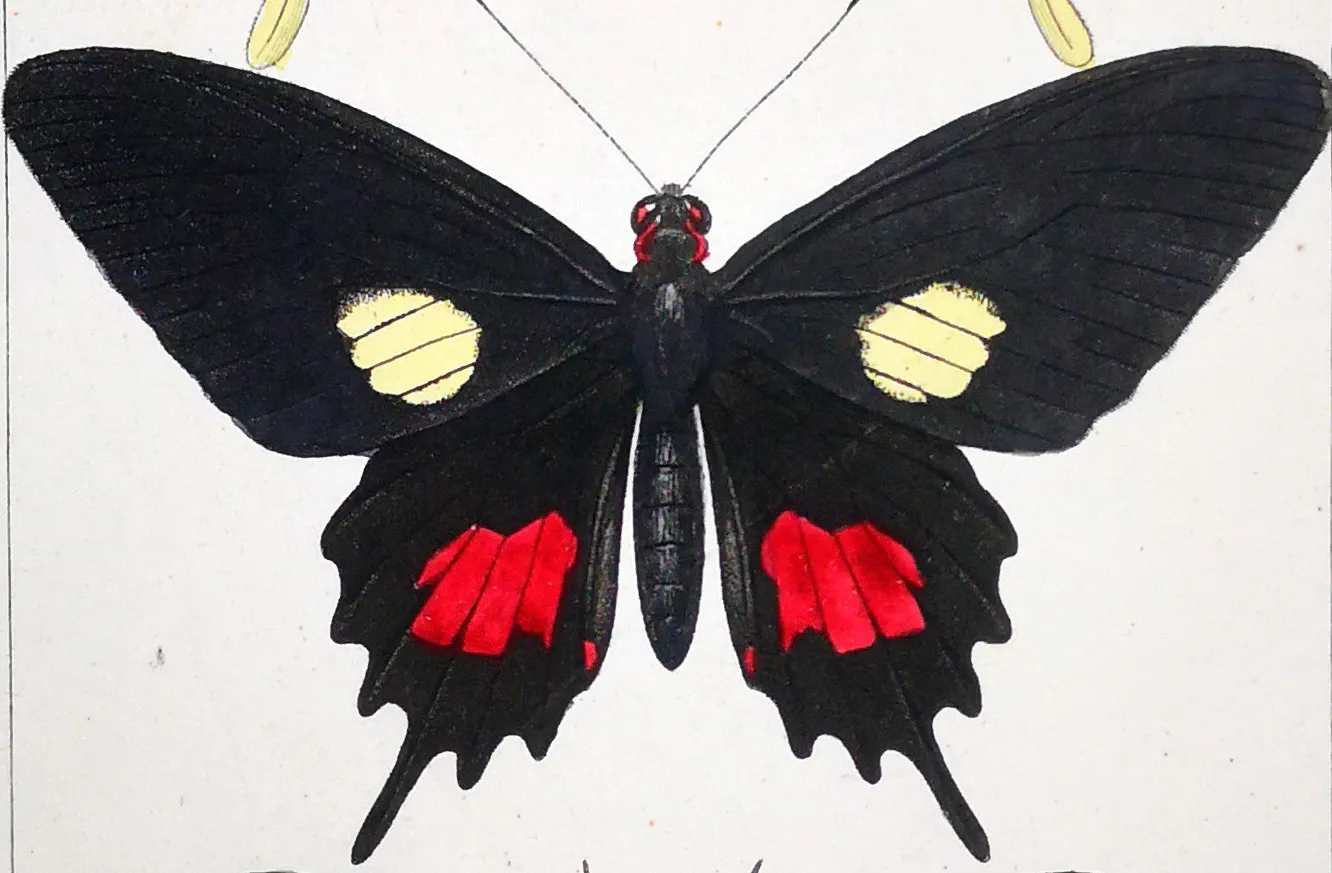
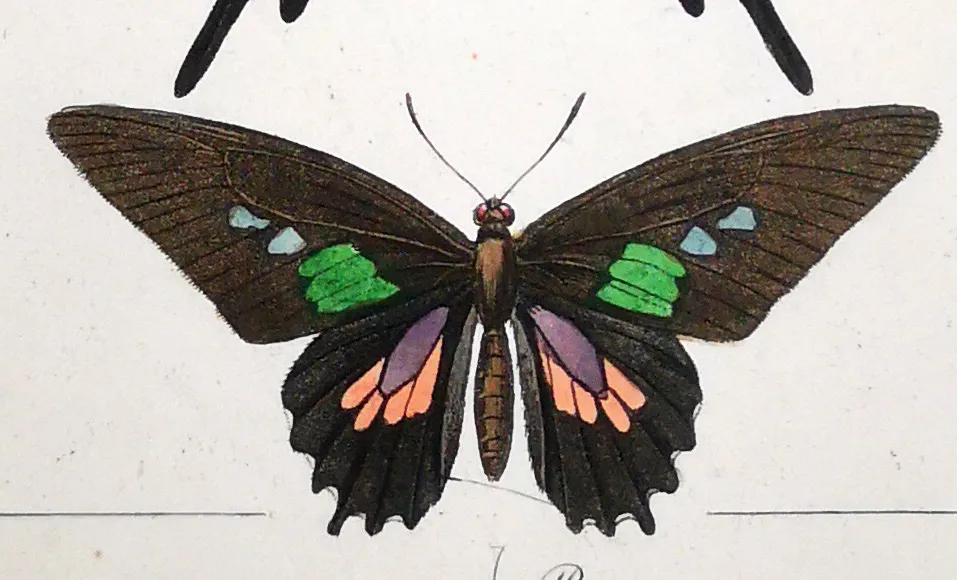
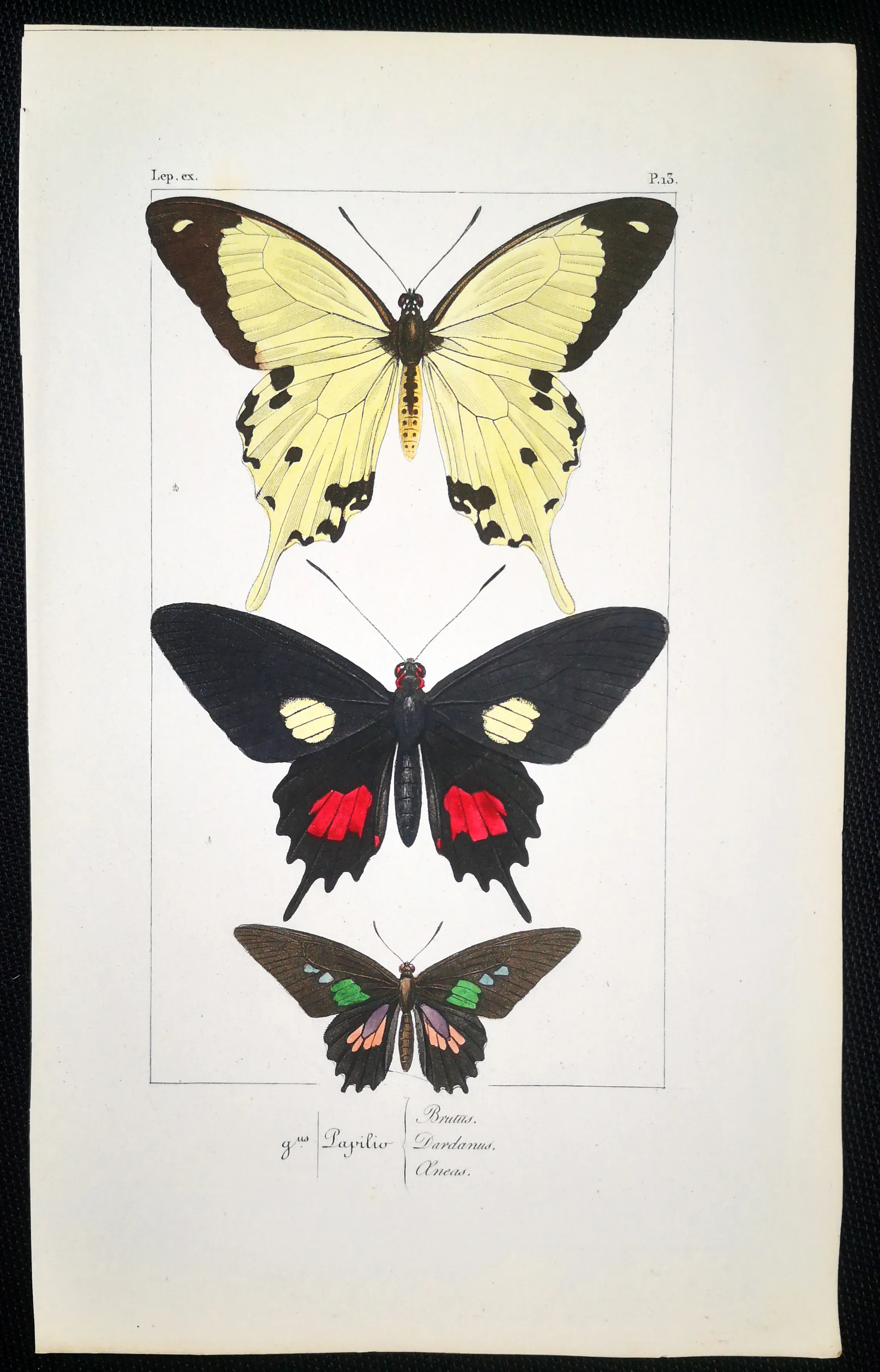
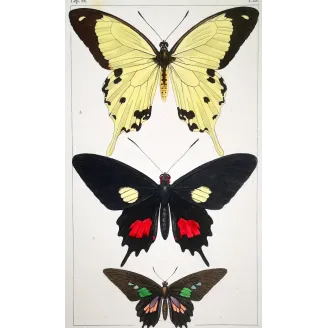
Dramatic swallowtail butterflies including Papilio dardanus, featuring bold yellow, black, and red contrasts with iridescent accents. A striking 1835 engraving, ideal as antique butterfly wall art.
 Delivery policy
Your print will be carefully prepared and shipped worldwide via trusted couriers (UPS or similar).
 Authentic antique prints
Original engravings from the 17th–19th century.
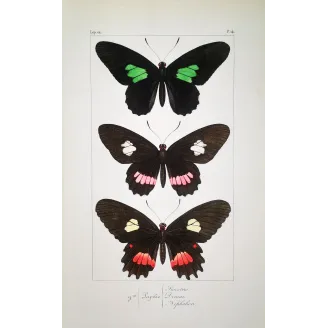
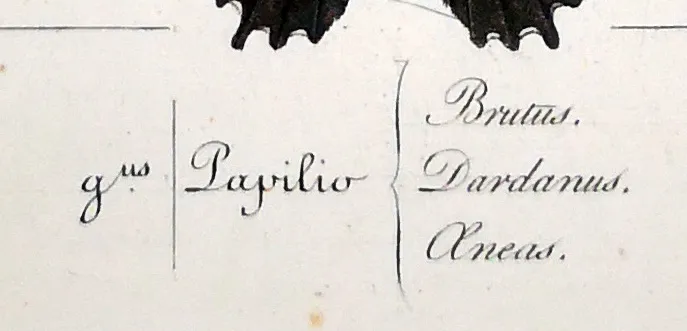
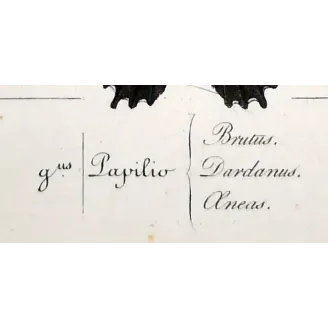
This original 1835 hand-colored copper engraving depicts three remarkable swallowtail butterflies: Papilio dardanus, Papilio brutus, and Papilio aeneas, all admired for their striking coloration and distinctive wing forms. The plate forms part of Exotic Butterflies, produced under the scientific direction of Hippolyte Lucas and engraved by Pauquet. The original plate clearly identifies these species under their historical denominations.
Arranged in a refined vertical composition, the engraving presents a dynamic progression of forms and colours, from the luminous yellow specimen above to the dramatic black and red butterfly at the center, concluding with a smaller yet richly coloured specimen below. This layout reflects the visual sophistication of nineteenth-century natural history illustration.
The interplay of bold yellow, deep black, vivid red, and iridescent green tones creates a highly decorative composition. This engraving stands out as an exceptional piece of antique butterfly wall art, ideal for interiors seeking strong visual impact and natural elegance.
— • —
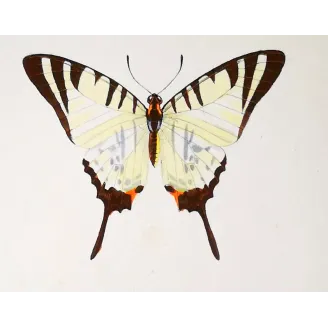
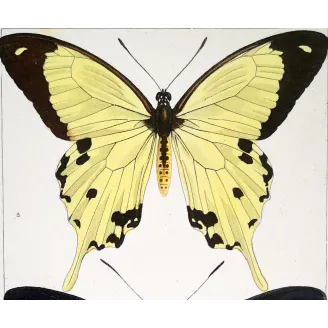
The upper butterfly, Papilio dardanus, displays luminous pale yellow wings framed by dark margins, creating a strong yet elegant contrast. Its elongated tails and refined markings give it a classic and highly decorative swallowtail appearance.
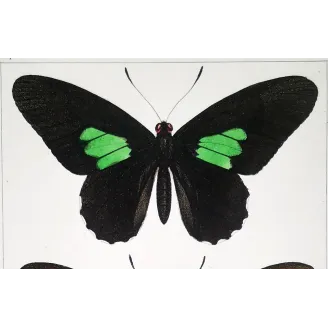
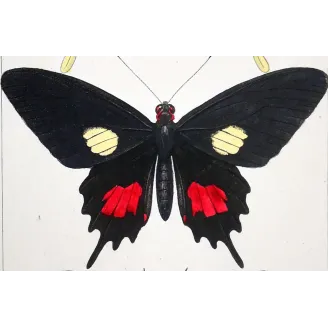
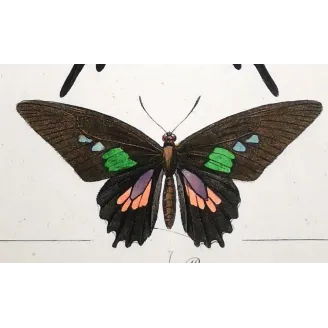
At the center, Papilio brutus introduces a dramatic shift in tone, with deep black wings accented by vivid red patches and pale markings. Below, Papilio aeneas adds a final layer of complexity, combining dark tones with iridescent green and subtle pastel accents, enriching the overall composition.
Swallowtail butterflies of the genus Papilio were among the most admired species in nineteenth-century collections, valued for their variation, elegance, and striking visual diversity.
Papilio dardanus, in particular, is well known for its remarkable polymorphism and mimicry, making it one of the most fascinating species both scientifically and visually. Engravings such as this remain outstanding examples of antique butterfly engraving and refined natural history illustration.
This engraving forms part of the celebrated series Lucas – Exotic Butterflies , published in 1835 under the scientific direction of Hippolyte Lucas.
Discover more in our editorial feature: Hippolyte Lucas and the Golden Age of Exotic Butterflies .
Engraved by Pauquet, whose work remains a benchmark in nineteenth-century scientific illustration: Pauquet, Engraver of Exotic Butterflies .
Very good antique condition. Fresh original hand-coloring with strong engraved impression. Printed on original nineteenth-century paper. Minor age toning consistent with the 1835 publication. It is increasingly rare to find impressions preserved with such freshness of color and overall integrity.
Specific References
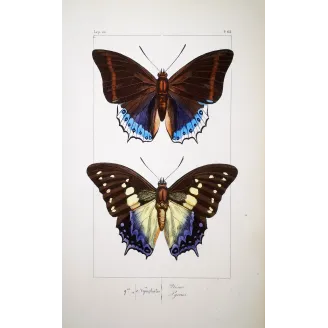
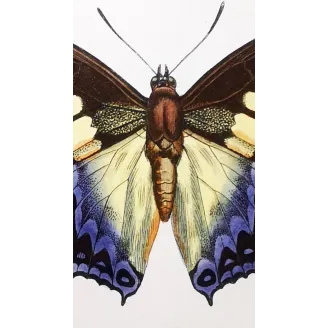
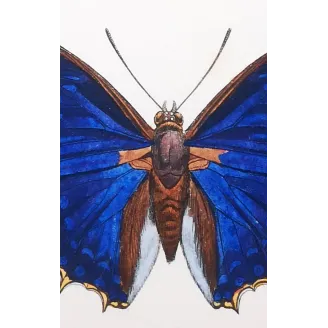
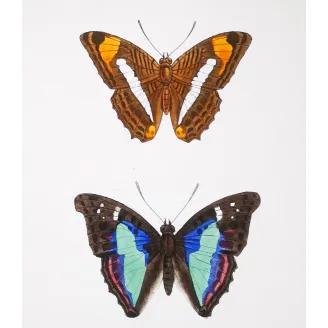
Deep brown butterflies with electric blue bands and eye-spot patterns, characteristic of Prepona-type species. A refined and highly decorative 1835 engraving, ideal as antique butterfly wall art.
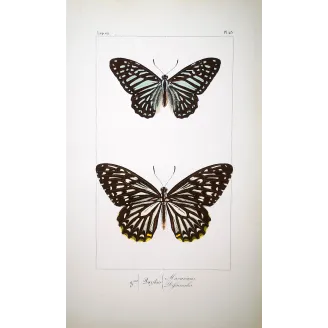
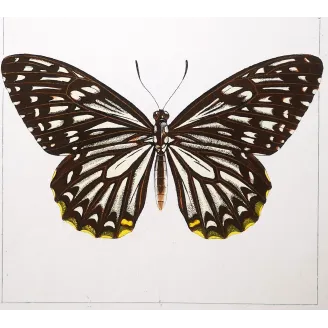
A finely detailed 19th-century hand-colored engraving depicting two forms of the Clipper Butterfly (Parthenos sylvia). Published in Hippolyte Lucas’s Exotic Butterflies (1835), the plate highlights the species’ elegant network of white markings across dark wings, creating a striking geometric pattern characteristic of tropical Asian butterflies.
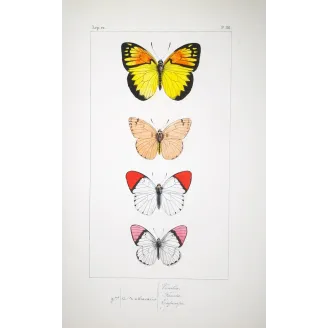
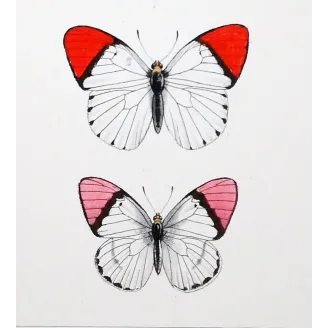
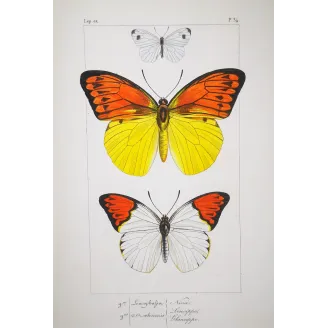
Bright yellow and white butterflies with vivid orange and pink tips. A refined 1835 engraving with strong decorative contrast.
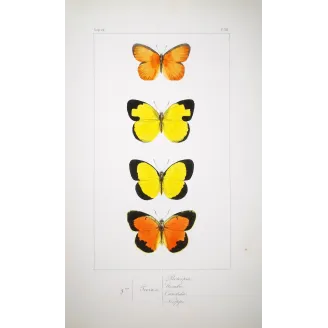
Sulphur Butterflies (Terias hecabe, candida, nicippe) – Antique Hand-Colored Engraving (1835)
Original 1835 hand-colored engraving of Nymphalis orion, drawn and engraved by Pauquet under the scientific direction of Hippolyte Lucas for Exotic Butterflies.
Elegant Asian swallowtail butterflies with yellow, blue, and ivory patterns on deep brown wings. A refined 1835 engraving, ideal as antique butterfly wall art.
Delicate blue, white, and vivid red butterflies arranged in a refined vertical composition. An elegant 1835 engraving with balanced decorative appeal.
Metalmark & Long-Tailed Butterflies (Erycina cnidus, Lysis iphron, Moyina sapra) – Antique Hand-Colored Engraving (1835).
Elegant Mormon swallowtail butterflies (Papilio polytes group) featuring bold black and cream contrast with soft blue and orange accents. A refined 1835 engraving, ideal as antique butterfly wall art.
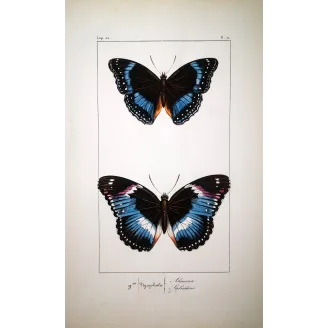
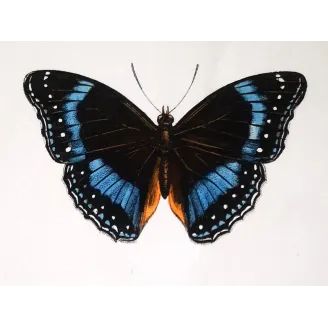
A vivid 19th-century hand-colored engraving depicting two striking tropical butterflies: the Blue-banded Eggfly (Hypolimnas alimena) and the Blue Diadem (Hypolimnas salmacis). Published in Hippolyte Lucas’s Exotic Butterflies (1835), the plate highlights their dramatic contrast of velvety black wings with electric blue bands and delicate white markings.
Black swallowtail butterflies with ivory, yellow and green patterns. A refined 1835 engraving, ideal as antique butterfly wall art.
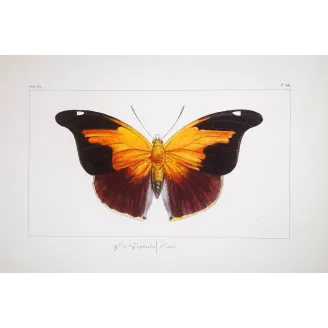
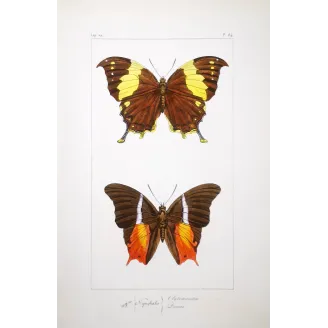
Tropical butterflies with warm amber, yellow and red tones on deep brown wings. A refined 1835 engraving, ideal as antique butterfly wall art.
Original 1835 hand-colored copper engraving depicting the butterflies Pollux and Eurilochus. A visually striking double-specimen plate from Hippolyte Lucas’ celebrated Exotic Butterflies, engraved by Pauquet, with strong appeal as natural history art and antique butterfly wall art.
Striking black butterflies with vivid green, pink, and red accents. A dramatic 1835 engraving with strong contrast and bold decorative appeal.
Striking butterflies with iridescent blue, green, and warm orange tones. A bold 1835 engraving with exceptional decorative presence.
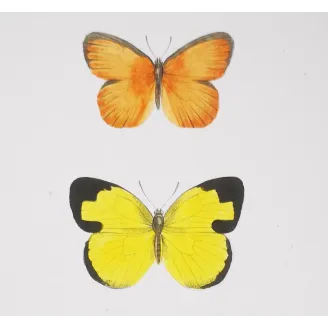
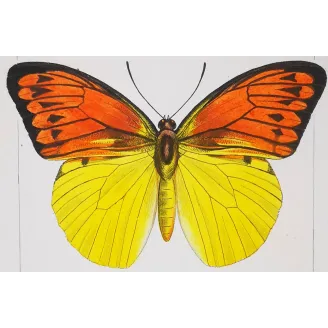
Bright orange and yellow butterflies with striking contrast against white wings. A vivid 1835 engraving with strong decorative and visual impact.
This vivid 1835 hand-colored engraving presents two striking tropical butterflies: the intensely colored Agrias rogeri, with its brilliant red and orange wings, and the elegant Adelpha stenele, known for its intricate pattern and pale blue markings. The strong chromatic contrast between the two species creates a visually compelling composition, making this piece a refined example of antique butterfly wall art and natural history illustration.
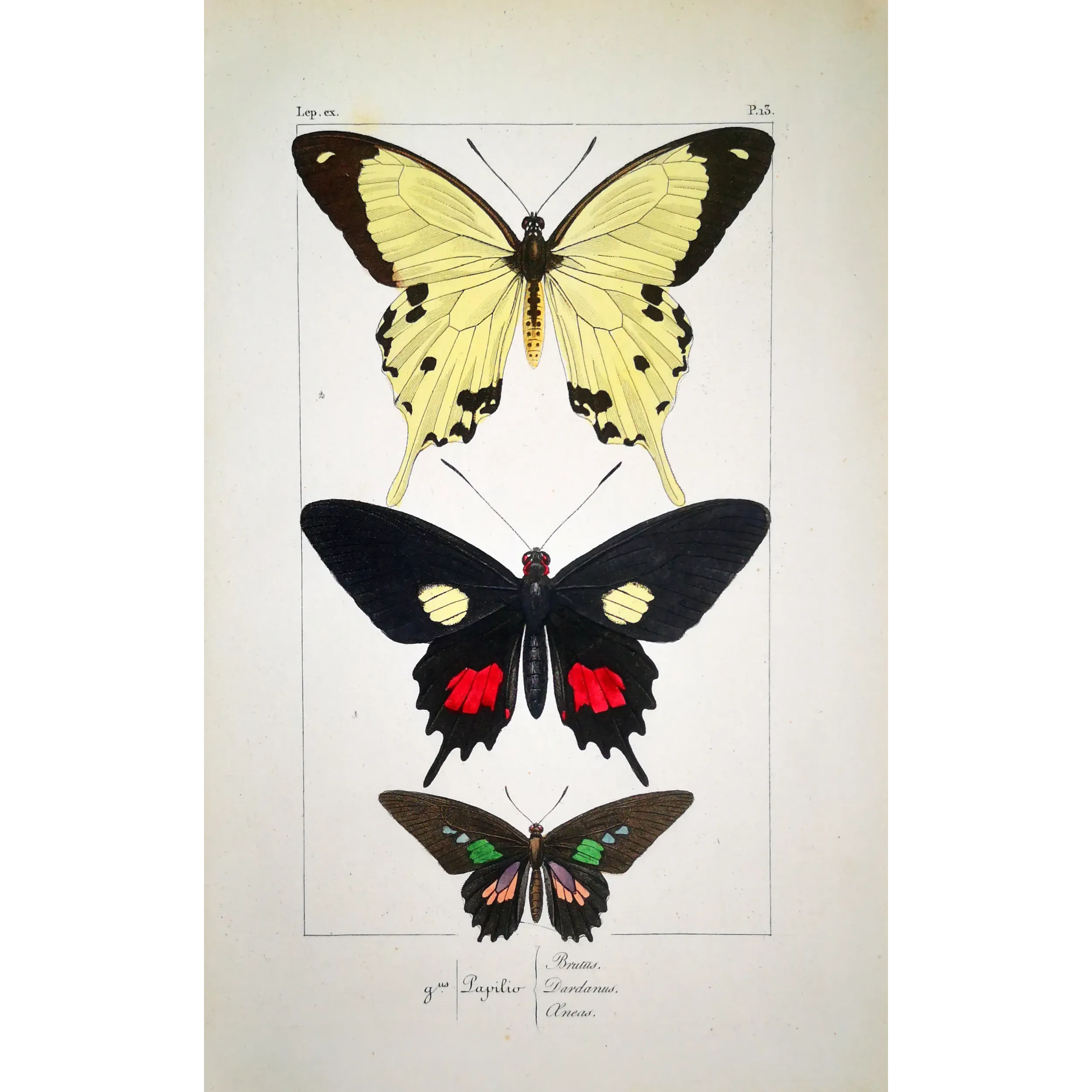
Dramatic swallowtail butterflies including Papilio dardanus, featuring bold yellow, black, and red contrasts with iridescent accents. A striking 1835 engraving, ideal as antique butterfly wall art.