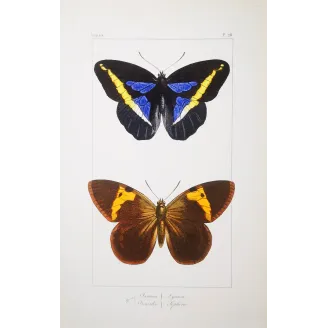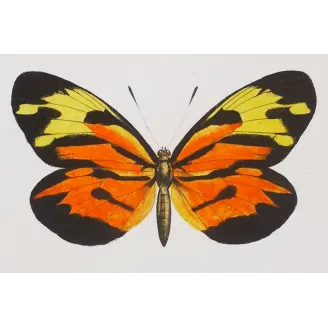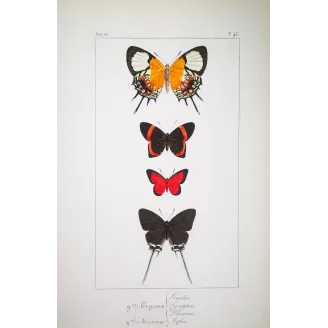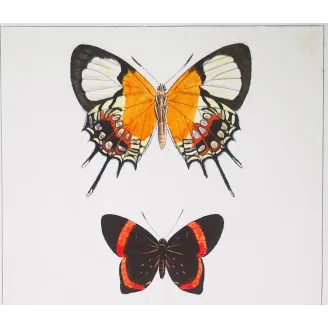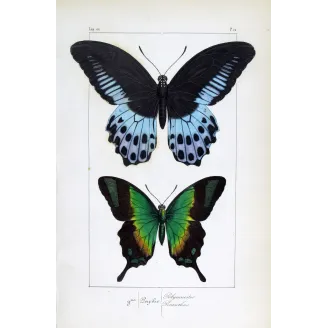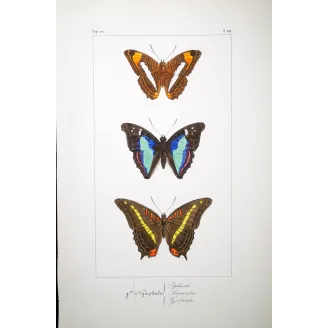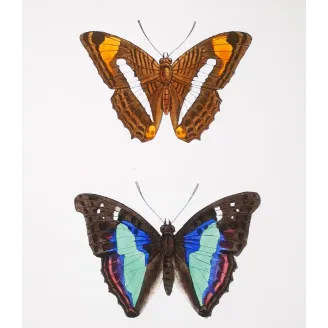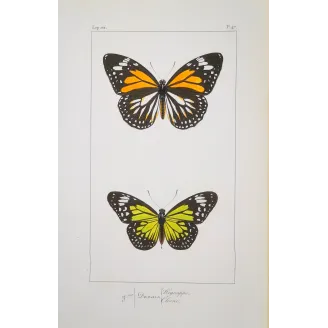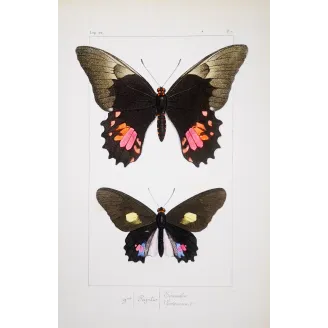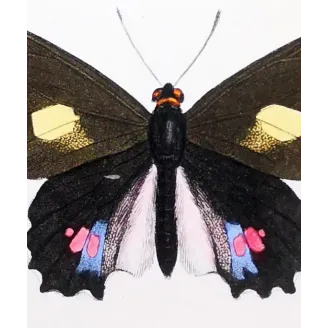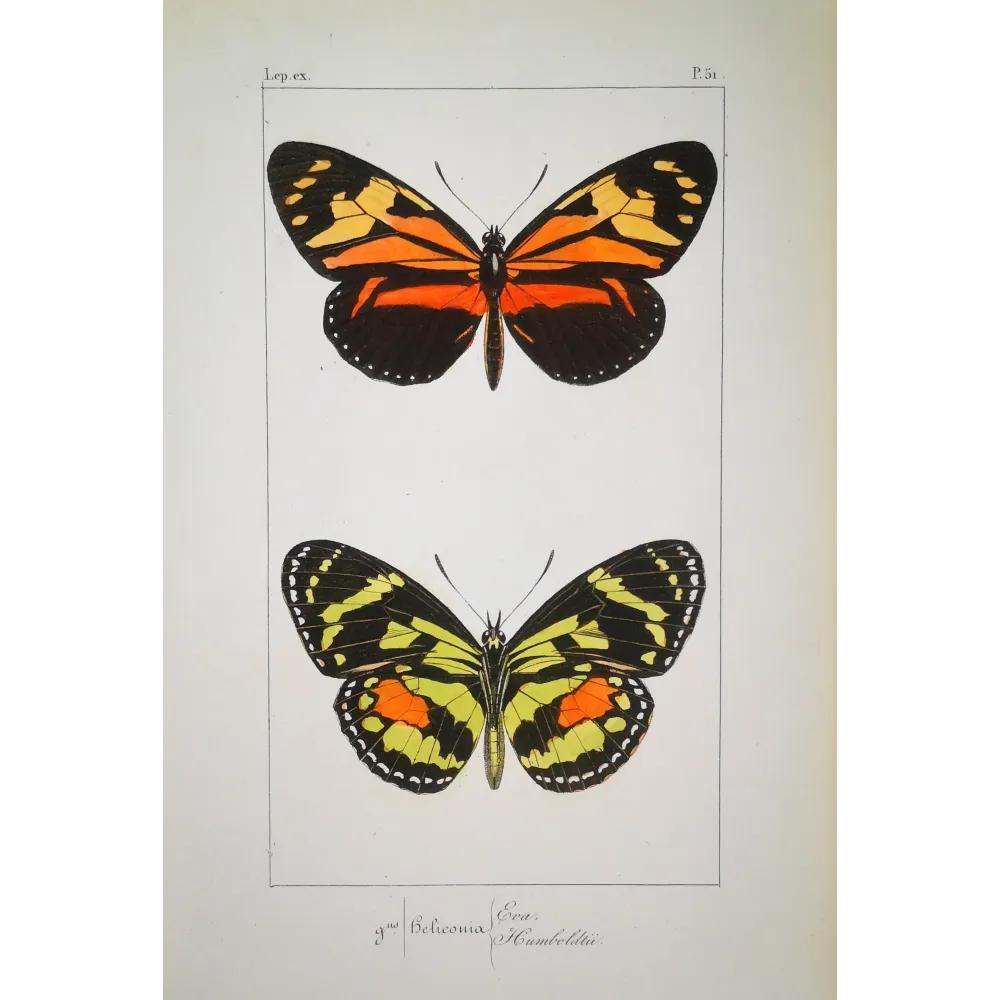
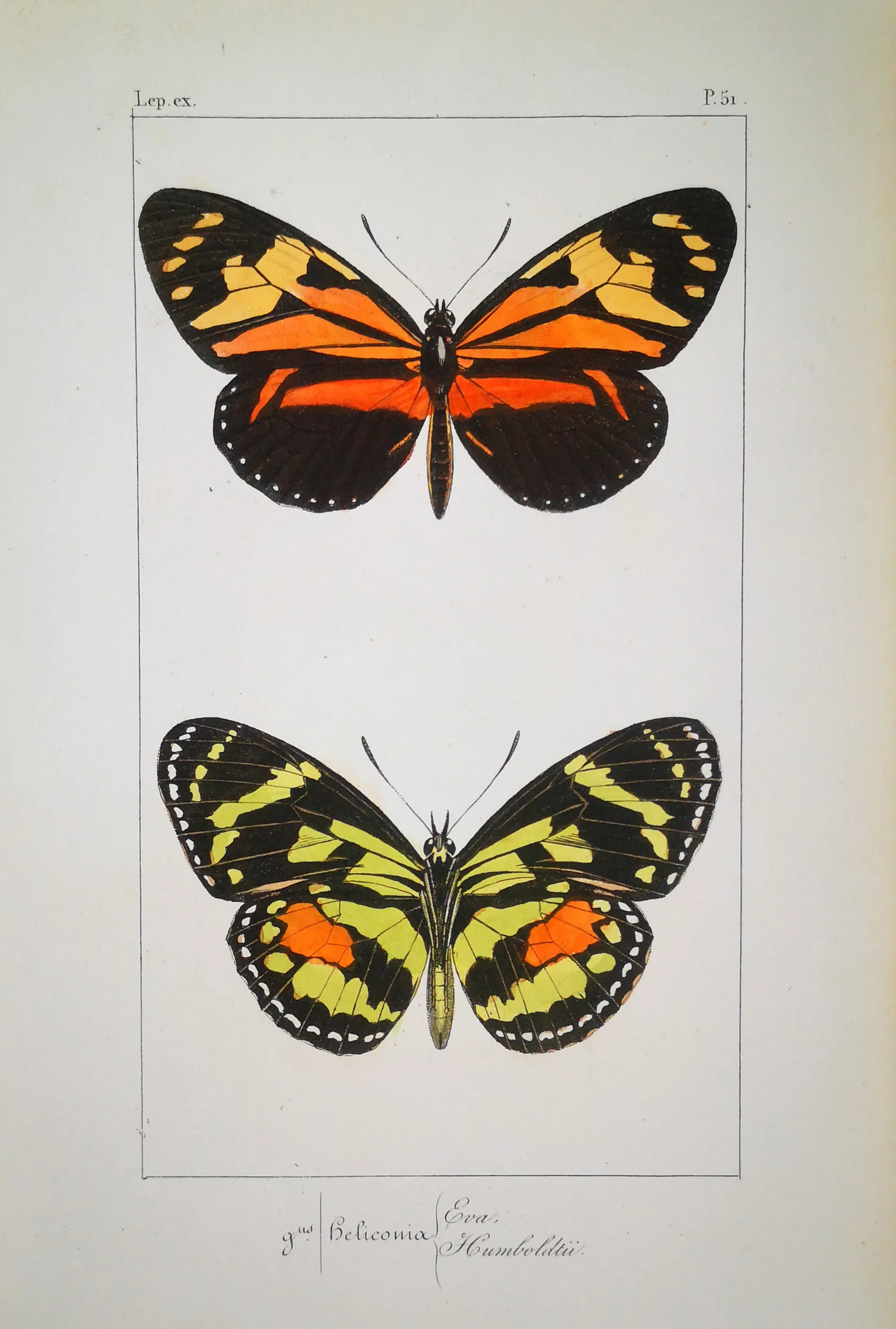
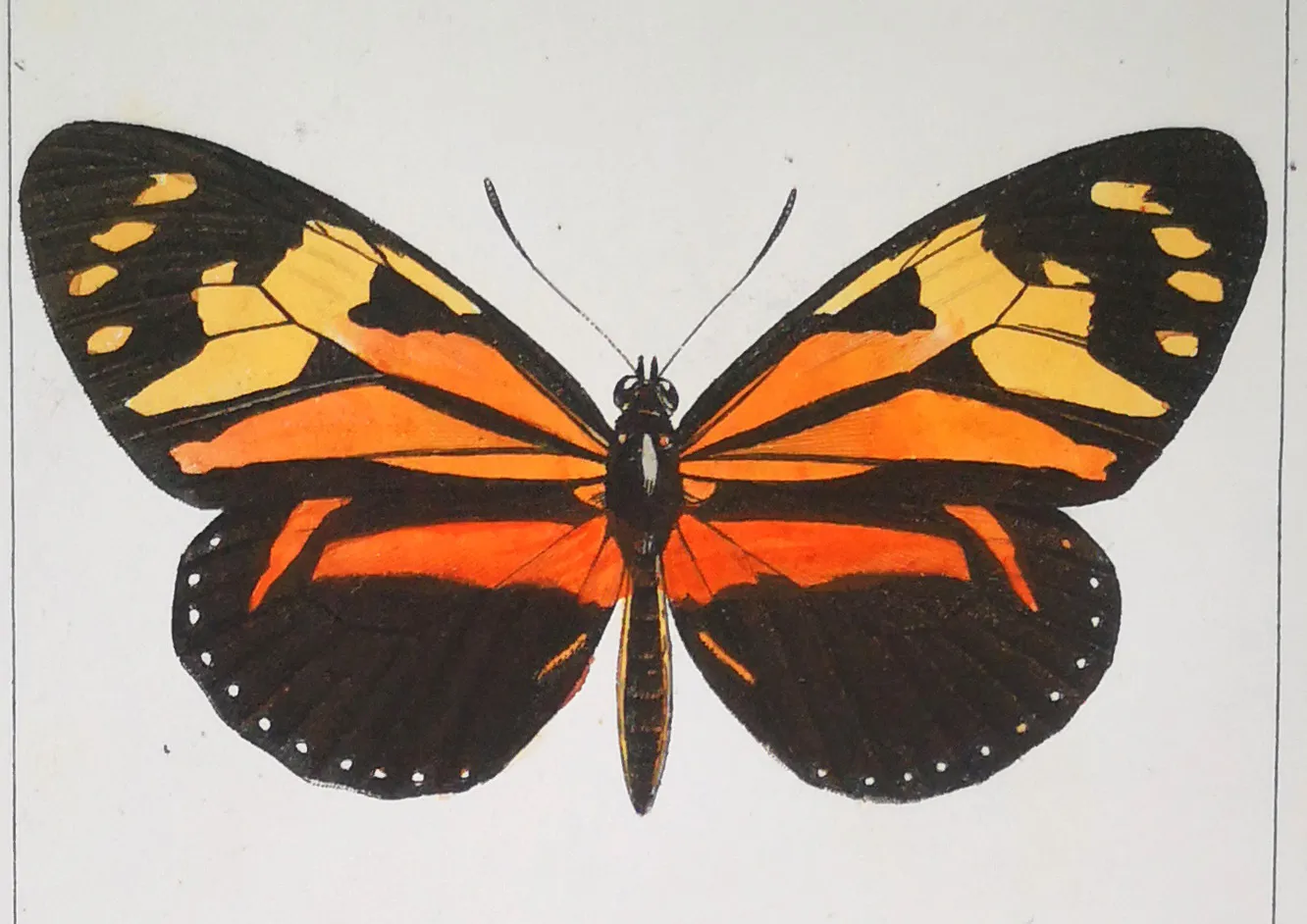
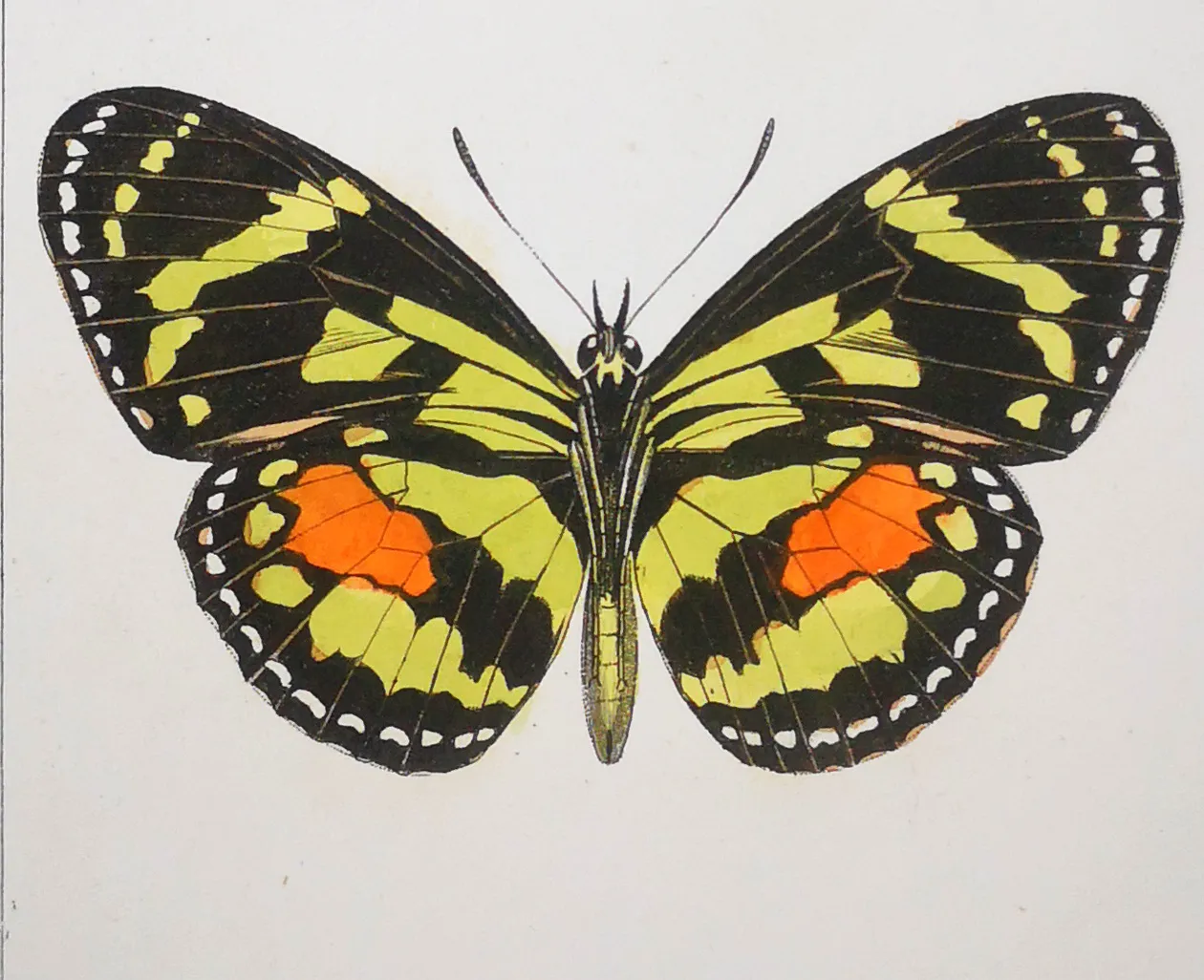
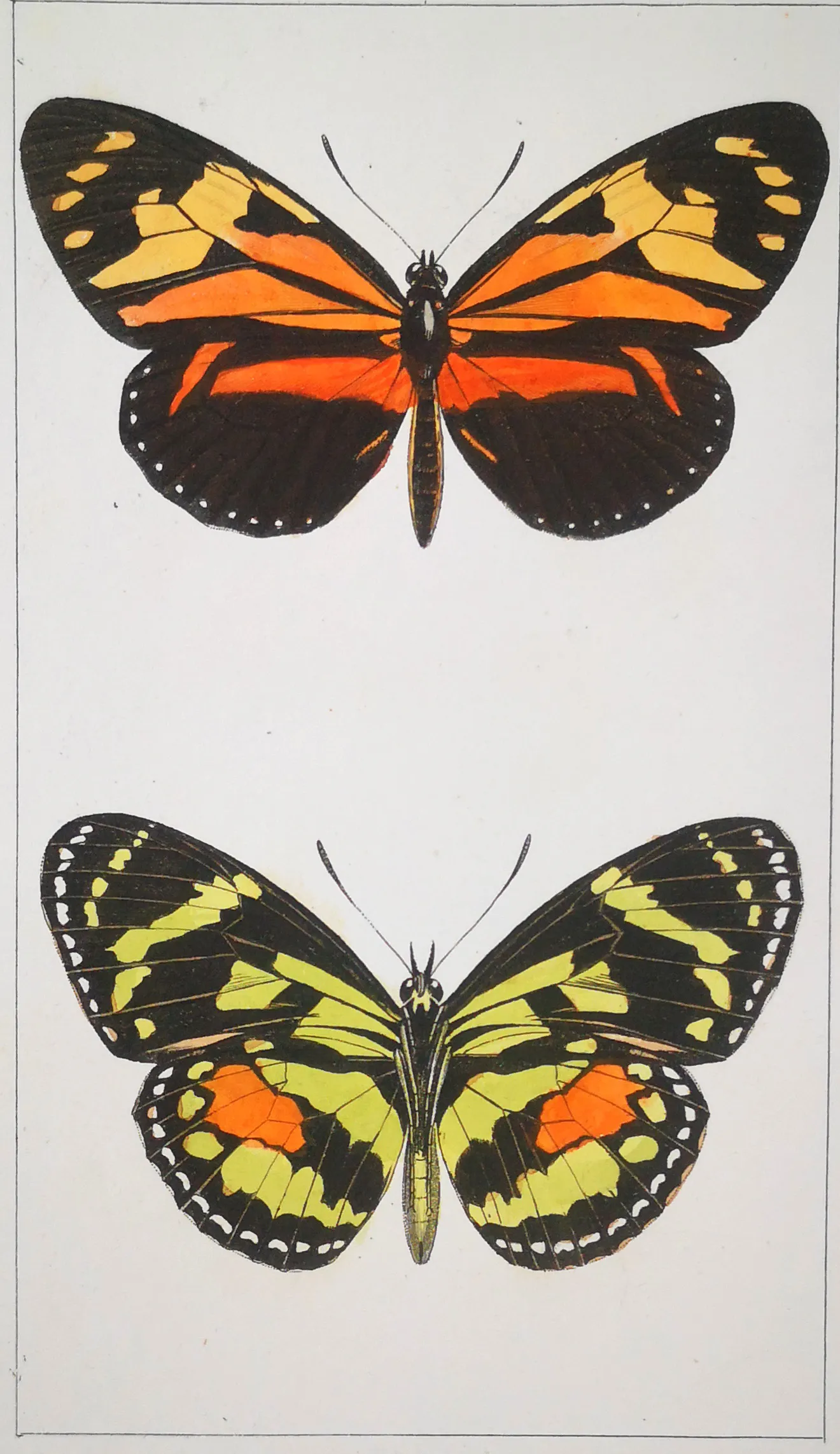
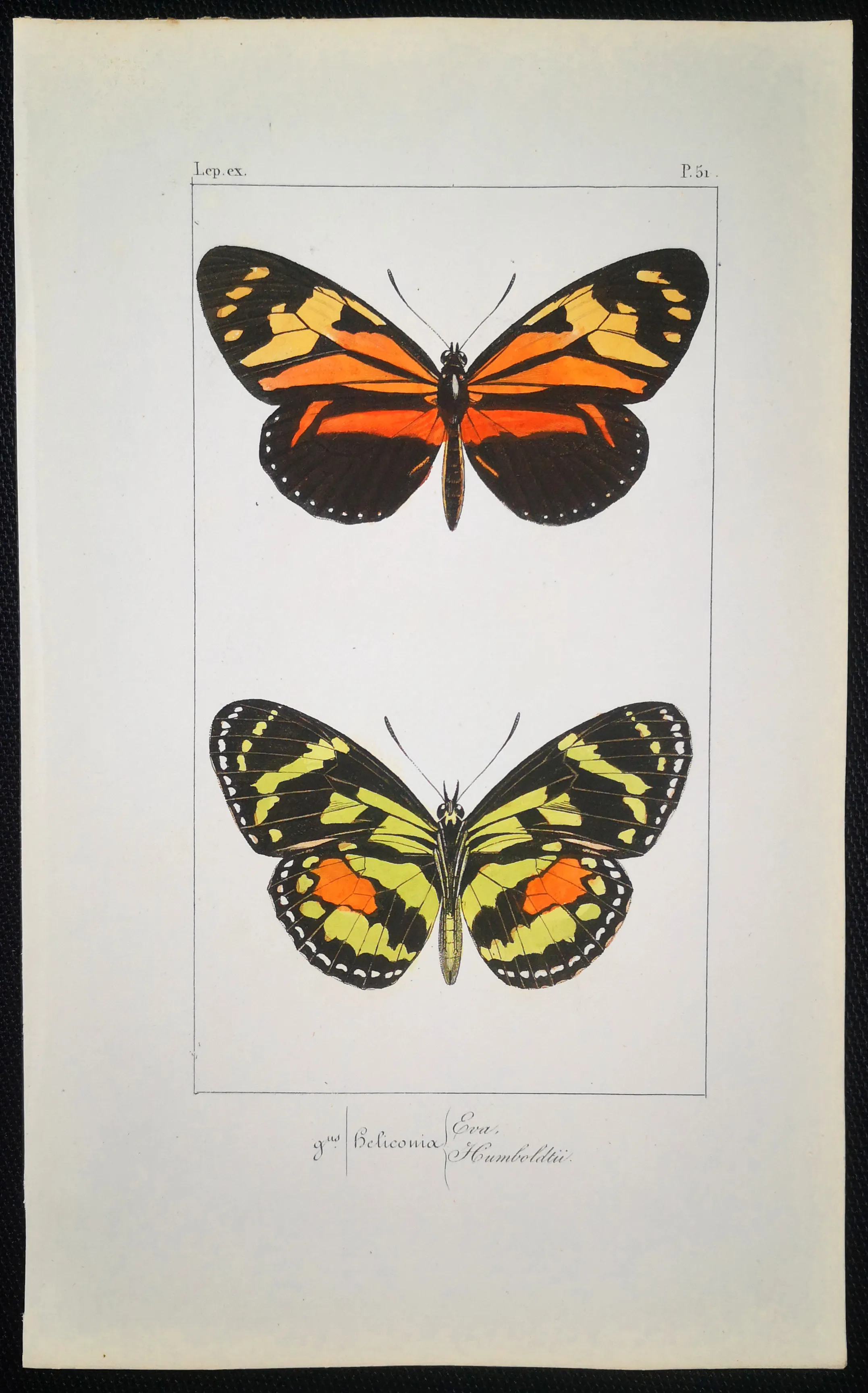
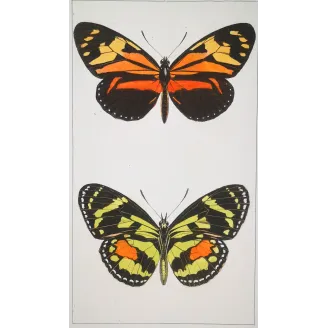
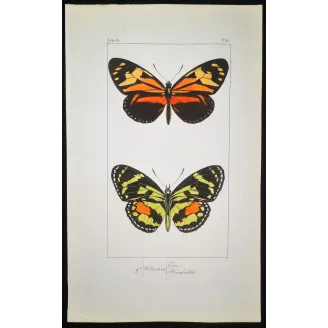
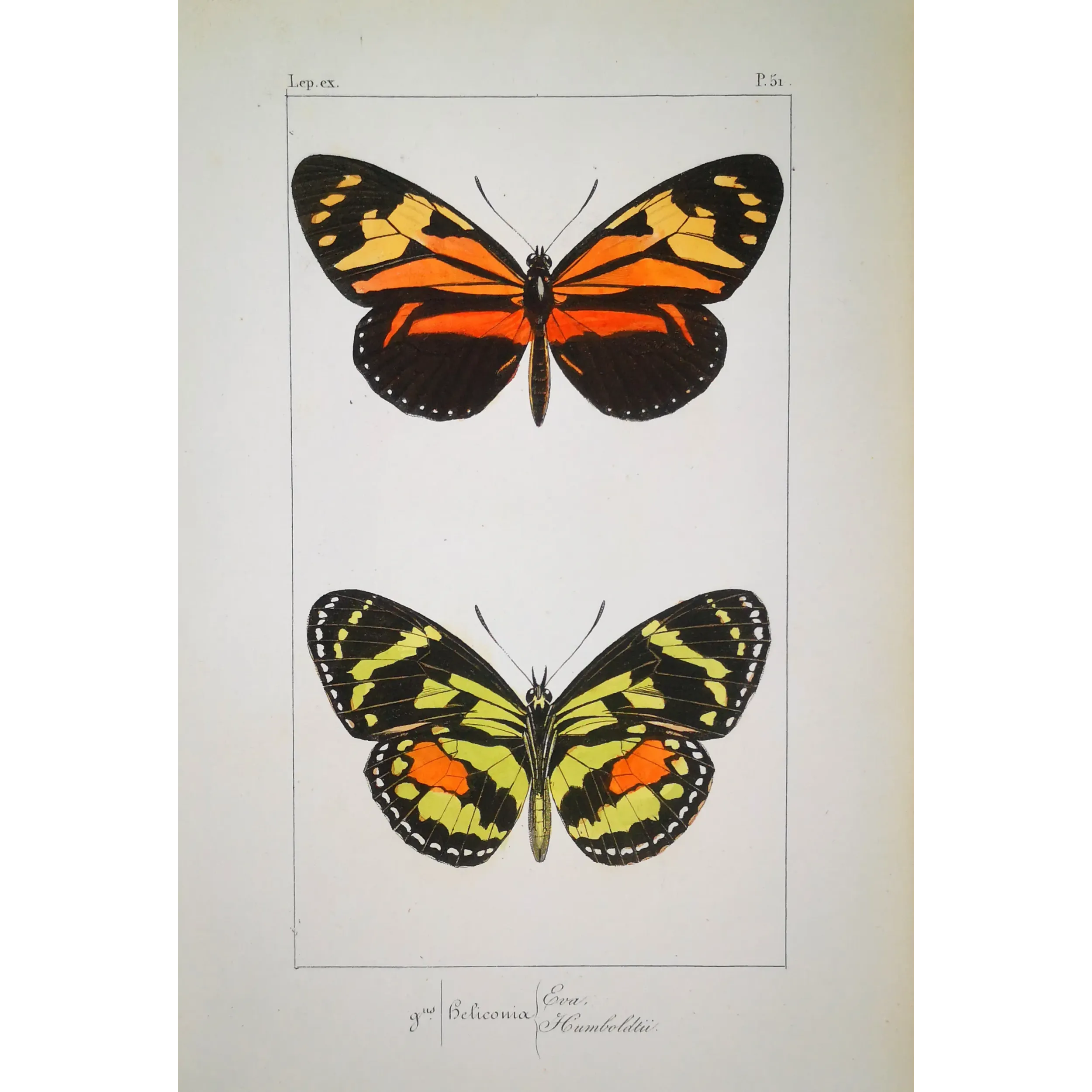
Striking black butterflies with vivid orange and yellow bands. A bold 1835 engraving with strong contrast and exceptional decorative impact.
 Delivery policy
Your print will be carefully prepared and shipped worldwide via trusted couriers (UPS or similar).
 Authentic antique prints
Original engravings from the 17th–19th century.
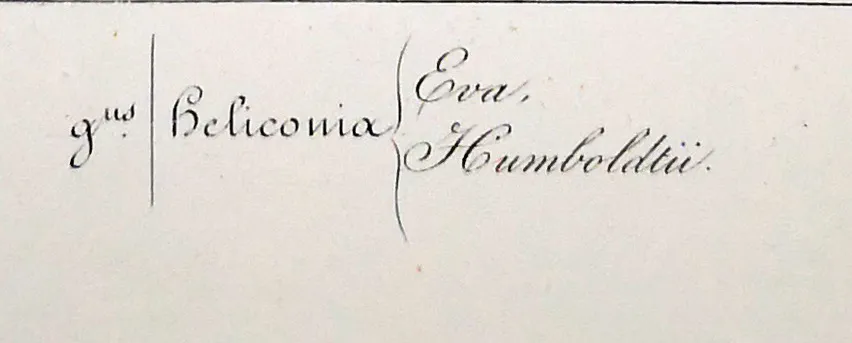
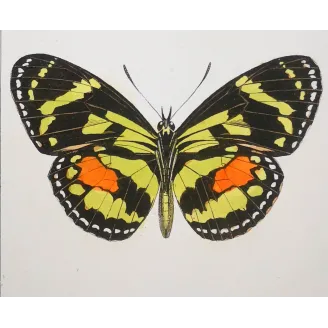
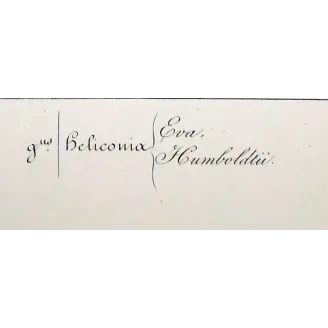
This original 1835 hand-colored copper engraving depicts two vivid tropical butterflies, identified as Heliconius erato and Heliconius melpomene. The plate belongs to the celebrated Exotic Butterflies series directed by Hippolyte Lucas and engraved by Pauquet.
The composition is defined by a deep black ground dramatically contrasted by intense orange bands and luminous yellow markings. This interplay of saturated warm tones against dark wings creates a bold and highly decorative visual effect.
With its strong graphic presence, this engraving is particularly suited as antique butterfly wall art, offering a refined yet impactful statement.
— • —
The upper butterfly presents a powerful horizontal composition, with fiery orange bands cutting across velvety black wings, enhanced by pale yellow patches that add brightness and balance.
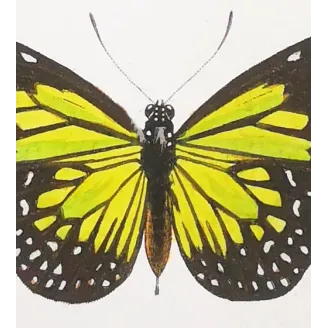
The lower specimen introduces a more intricate pattern, combining soft yellow-green tones with vivid orange accents and delicate white spotting along the wing margins.
This contrast between bold structure and intricate detailing creates a dynamic visual rhythm, making the plate both visually engaging and highly decorative.
Heliconius butterflies are among the most recognizable tropical species, known for their elongated wings and striking color patterns used in warning and mimicry.
These butterflies were of great interest to nineteenth-century naturalists, as their coloration reflects complex evolutionary strategies related to survival and adaptation.
This engraving captures both their scientific importance and their remarkable visual impact with exceptional clarity.
This engraving is part of the renowned Lucas – Exotic Butterflies series, published in 1835 during the golden age of natural history illustration.
Learn more in our article: Hippolyte Lucas and Exotic Butterflies .
The engraving was executed by Pauquet, whose refined technique allowed even the strongest color contrasts to be rendered with exceptional precision: Pauquet: Master Engraver .
Very good antique condition. Deep blacks and vivid original hand-coloring remain well preserved. Printed on original nineteenth-century paper with minor age toning consistent with age. Examples with such strong contrast and color intensity are increasingly difficult to find.
Specific References
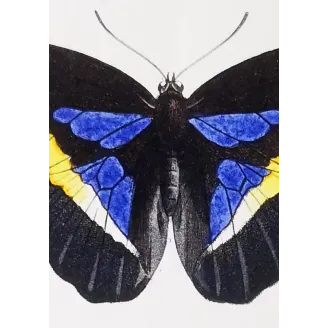
A bold pairing of Demophon Prepona (Archaeoprepona demophon) and Brassolis sophorae, featuring electric blue and golden bands on deep black wings. A striking example of antique butterfly wall art with strong visual contrast.
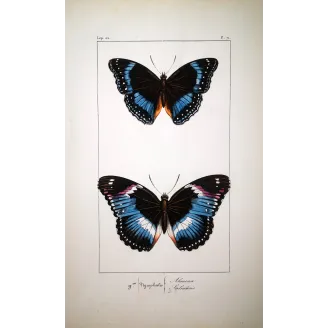
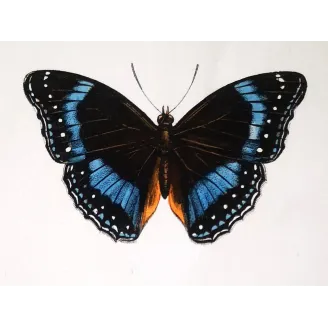
A vivid 19th-century hand-colored engraving depicting two striking tropical butterflies: the Blue-banded Eggfly (Hypolimnas alimena) and the Blue Diadem (Hypolimnas salmacis). Published in Hippolyte Lucas’s Exotic Butterflies (1835), the plate highlights their dramatic contrast of velvety black wings with electric blue bands and delicate white markings.
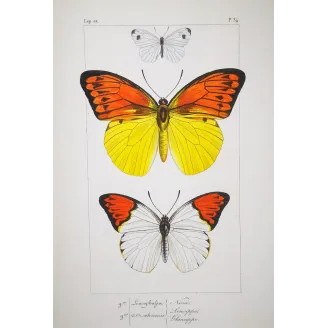
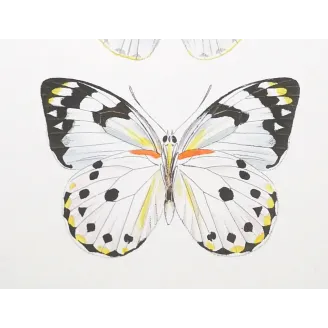
Bright orange and yellow butterflies with striking contrast against white wings. A vivid 1835 engraving with strong decorative and visual impact.
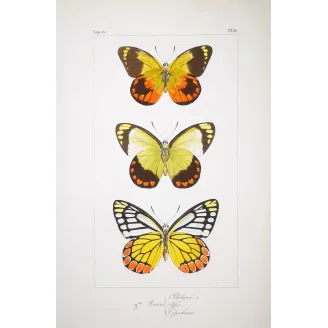
Sulphur Butterflies (Pieris philyra, Pieris jase, Pieris epicharis) – Antique Hand-Colored Engraving (1835).
Metalmark & Long-Tailed Butterflies (Erycina cnidus, Lysis iphron, Moyina sapra) – Antique Hand-Colored Engraving (1835).
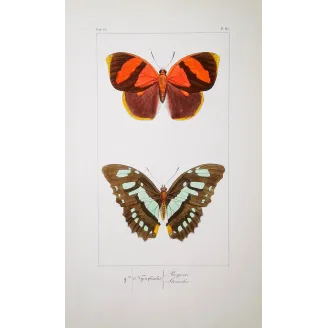
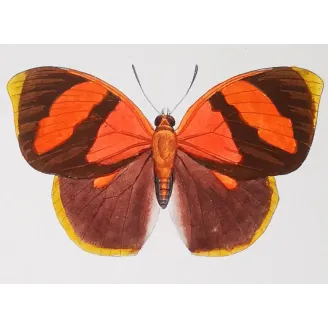
This vivid 1835 hand-colored engraving presents two striking tropical butterflies: the intensely colored Agrias rogeri, with its brilliant red and orange wings, and the elegant Adelpha stenele, known for its intricate pattern and pale blue markings. The strong chromatic contrast between the two species creates a visually compelling composition, making this piece a refined example of antique butterfly wall art and natural history illustration.
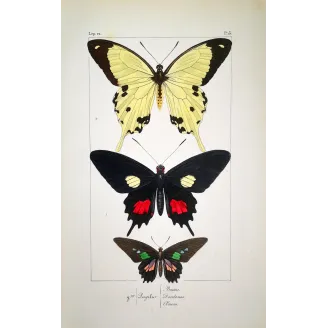
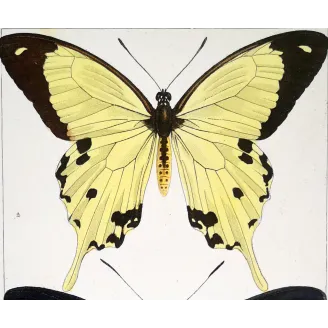
Dramatic swallowtail butterflies including Papilio dardanus, featuring bold yellow, black, and red contrasts with iridescent accents. A striking 1835 engraving, ideal as antique butterfly wall art.
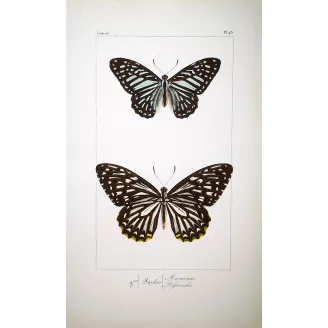
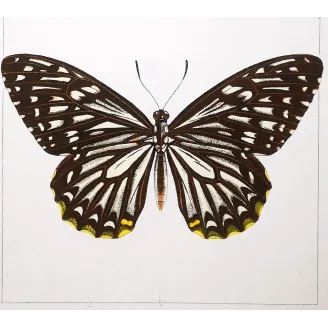
A finely detailed 19th-century hand-colored engraving depicting two forms of the Clipper Butterfly (Parthenos sylvia). Published in Hippolyte Lucas’s Exotic Butterflies (1835), the plate highlights the species’ elegant network of white markings across dark wings, creating a striking geometric pattern characteristic of tropical Asian butterflies.
Striking butterflies with iridescent blue, green, and warm orange tones. A bold 1835 engraving with exceptional decorative presence.
Delicate blue, white, and vivid red butterflies arranged in a refined vertical composition. An elegant 1835 engraving with balanced decorative appeal.
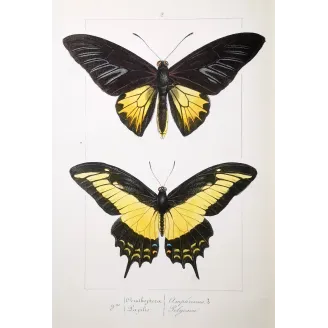
Golden Birdwing butterflies with bold yellow and black contrast and elegant swallowtail forms. A striking 1835 engraving, ideal as antique butterfly wall art.
Elegant black butterflies with luminous pink and orange accents, creating a refined yet dramatic visual composition. A distinctive 1835 antique butterfly engraving.
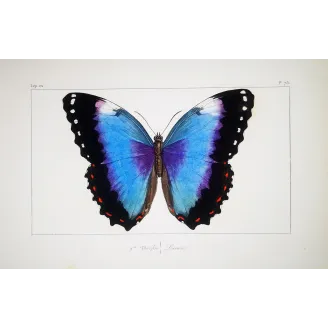
An original 19th-century hand-colored engraving of Morpho leonte, the striking Blue Morpho butterfly, drawn and engraved by Pauquet under the scientific direction of Hippolyte Lucas.
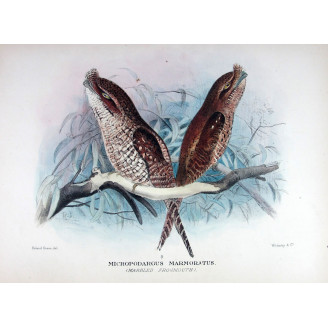
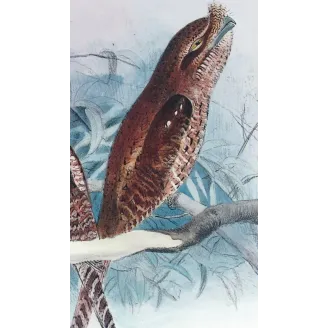
Original lithograph of the Marbled Frogmouth by Roland Green from Mathews' Birds of Australia.
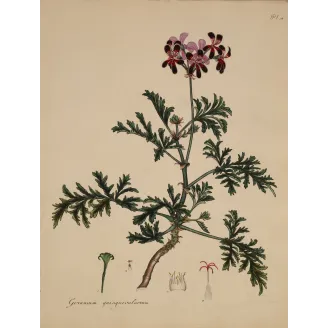
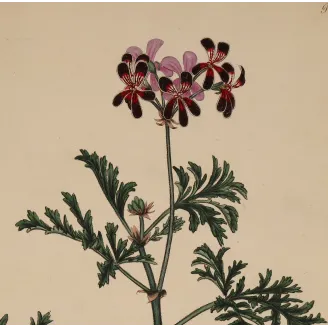
An original botanical engraving from Henry Andrews' celebrated The Botanist's Repository, depicting Geranium quinquevulnerum with richly coloured velvety flowers, transparent hand colouring and refined eighteenth-century botanical craftsmanship.
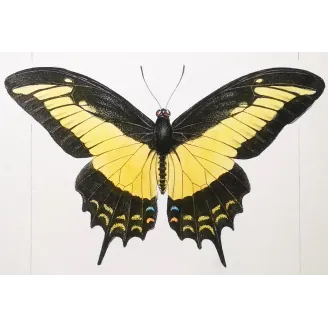
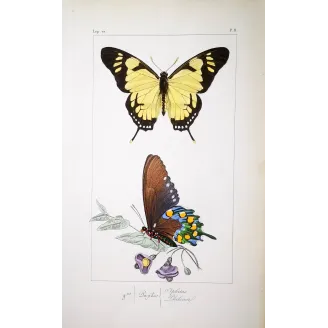
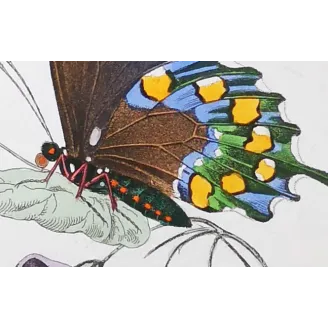
Yellow swallowtail and Pipevine butterfly (Papilio iphitas, Battus philenor) combining bold yellow-black contrast with iridescent blue and green tones. A highly decorative 1835 engraving, ideal as antique butterfly wall art.
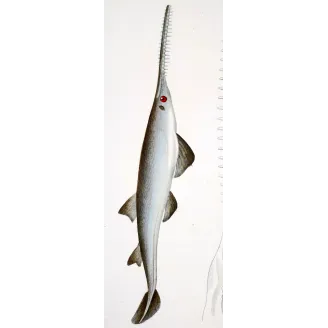
Exceptional 19th-century antique print by Pierre Antoine Prêtre depicting the majestic Sawfish with anatomical accuracy and rare charm.
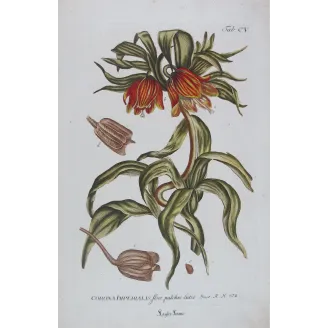
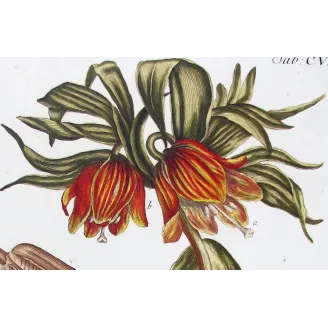
A striking 18th-century botanical engraving of Crown Imperial (Fritillaria imperialis), distinguished by unusually bold hand-coloring and a dynamic, flowing composition. This plate exemplifies the expressive character of German botanical illustration, combining strong visual presence with refined natural observation.
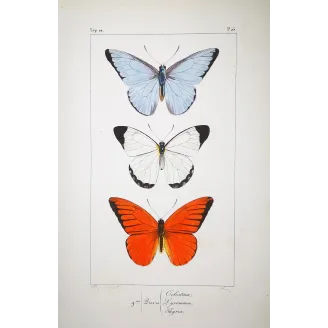
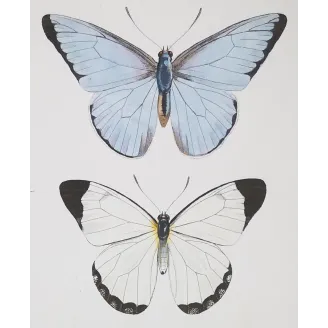
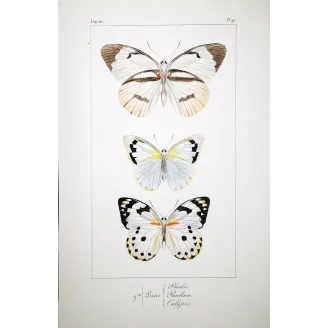
Delicate white butterflies with subtle yellow, orange, and black accents. A refined 1835 engraving with light and elegant decorative appeal.
Striking antique print of Fritillaria imperialis with bright orange crown flowers.
Striking black butterflies with vivid orange and yellow bands. A bold 1835 engraving with strong contrast and exceptional decorative impact.