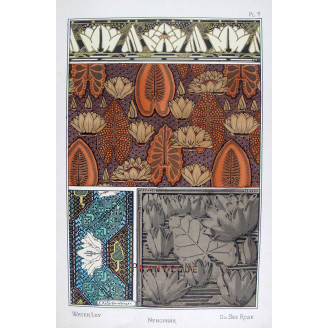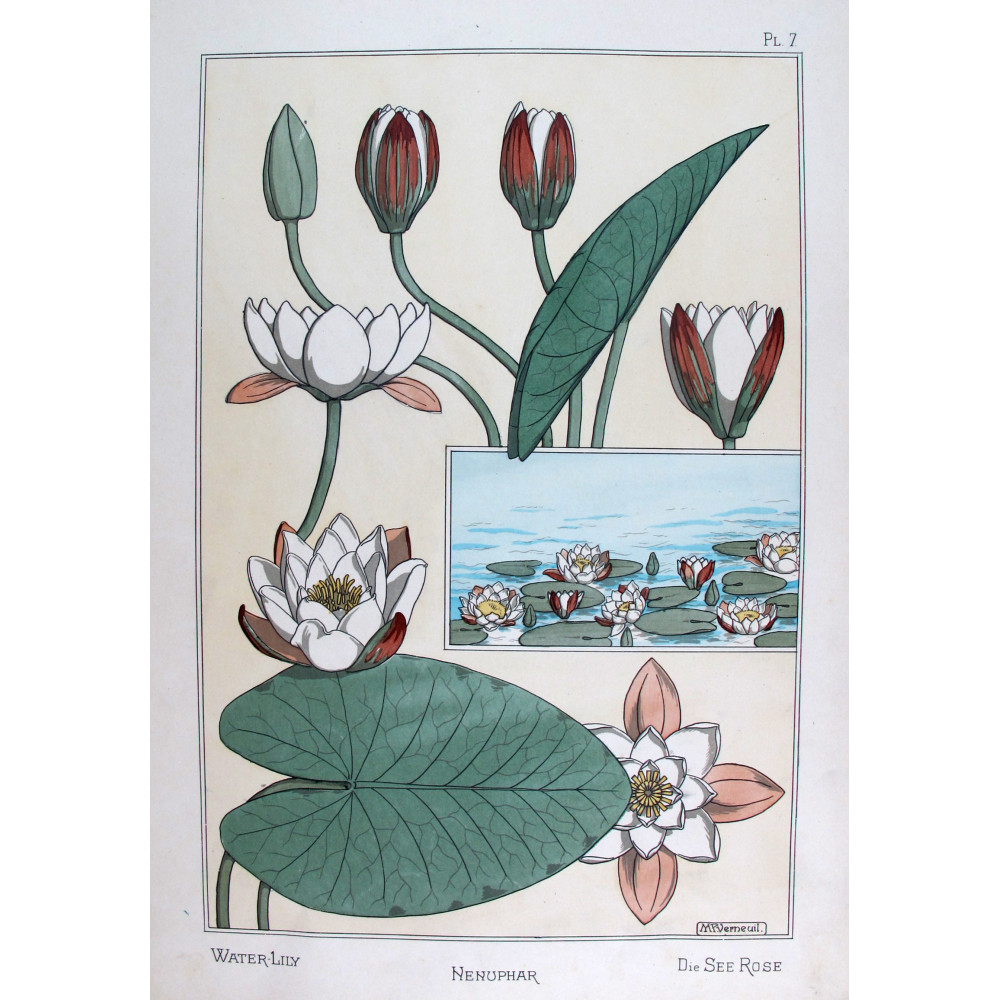
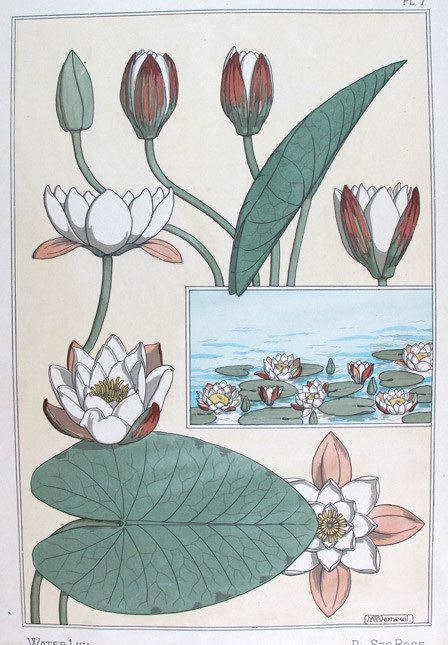
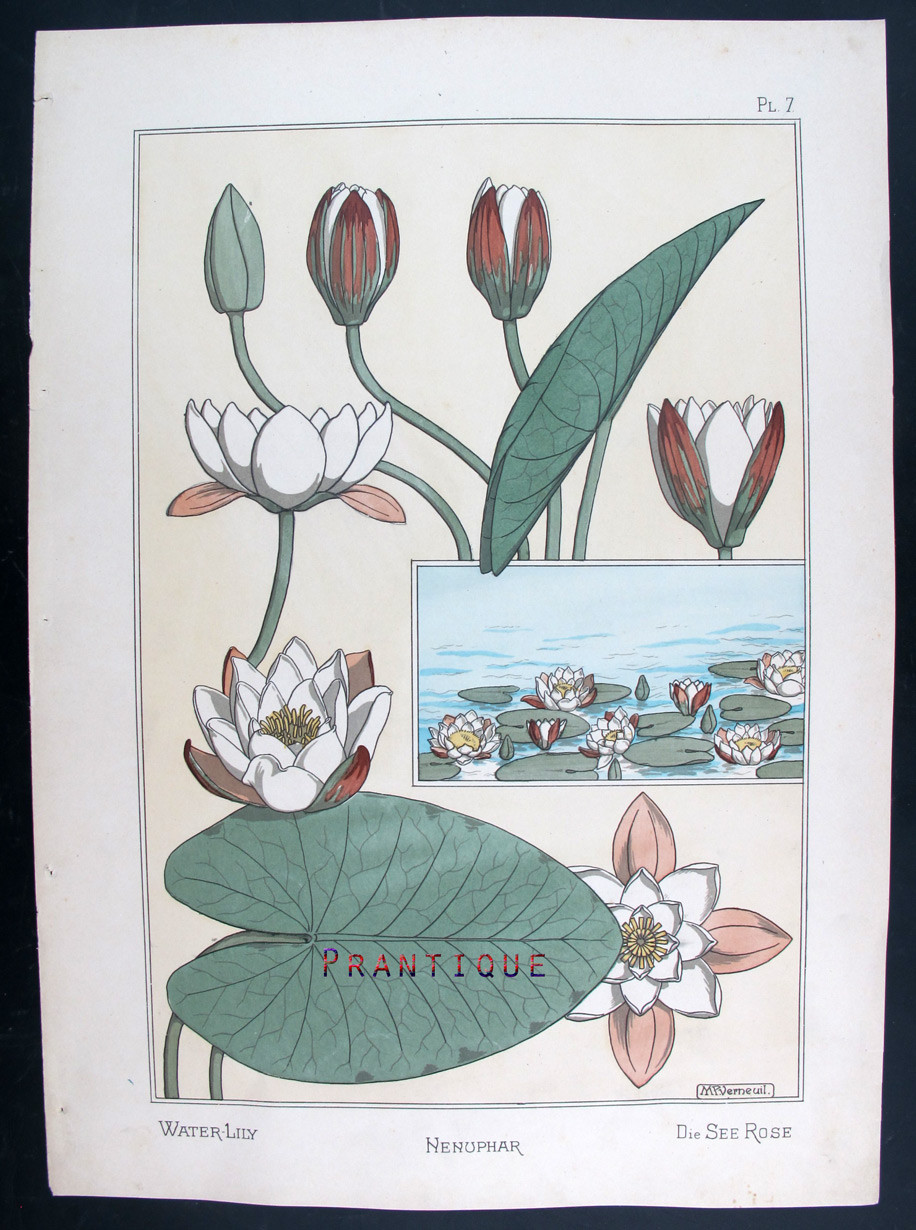
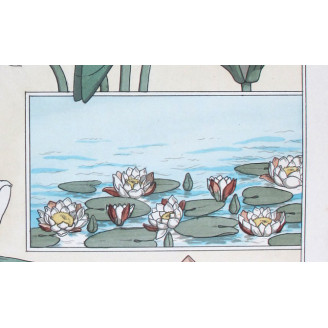
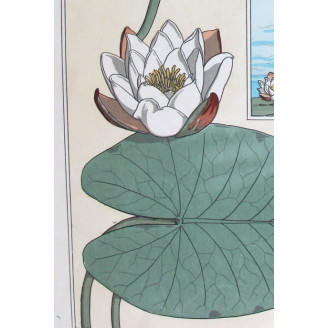
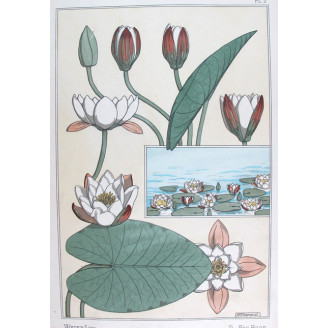
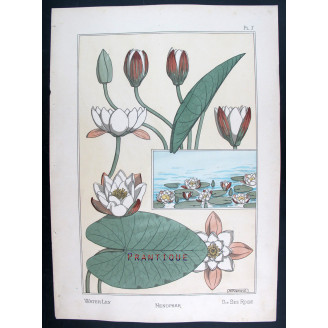
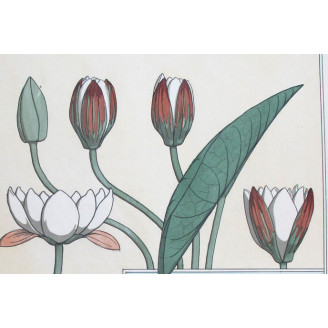
This second edition of the Water-Lily plate (No. 7) captures all the refined serenity of Plate 9, with slight variations in layout and ornamental balance.
 Delivery policy
Your print will be carefully prepared and shipped worldwide via trusted couriers (UPS or similar).
 Authentic antique prints
Original engravings from the 17th–19th century.
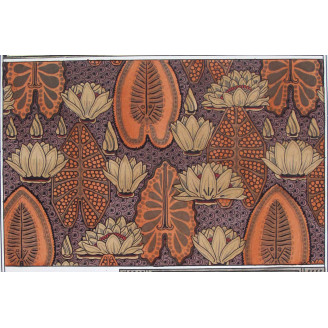
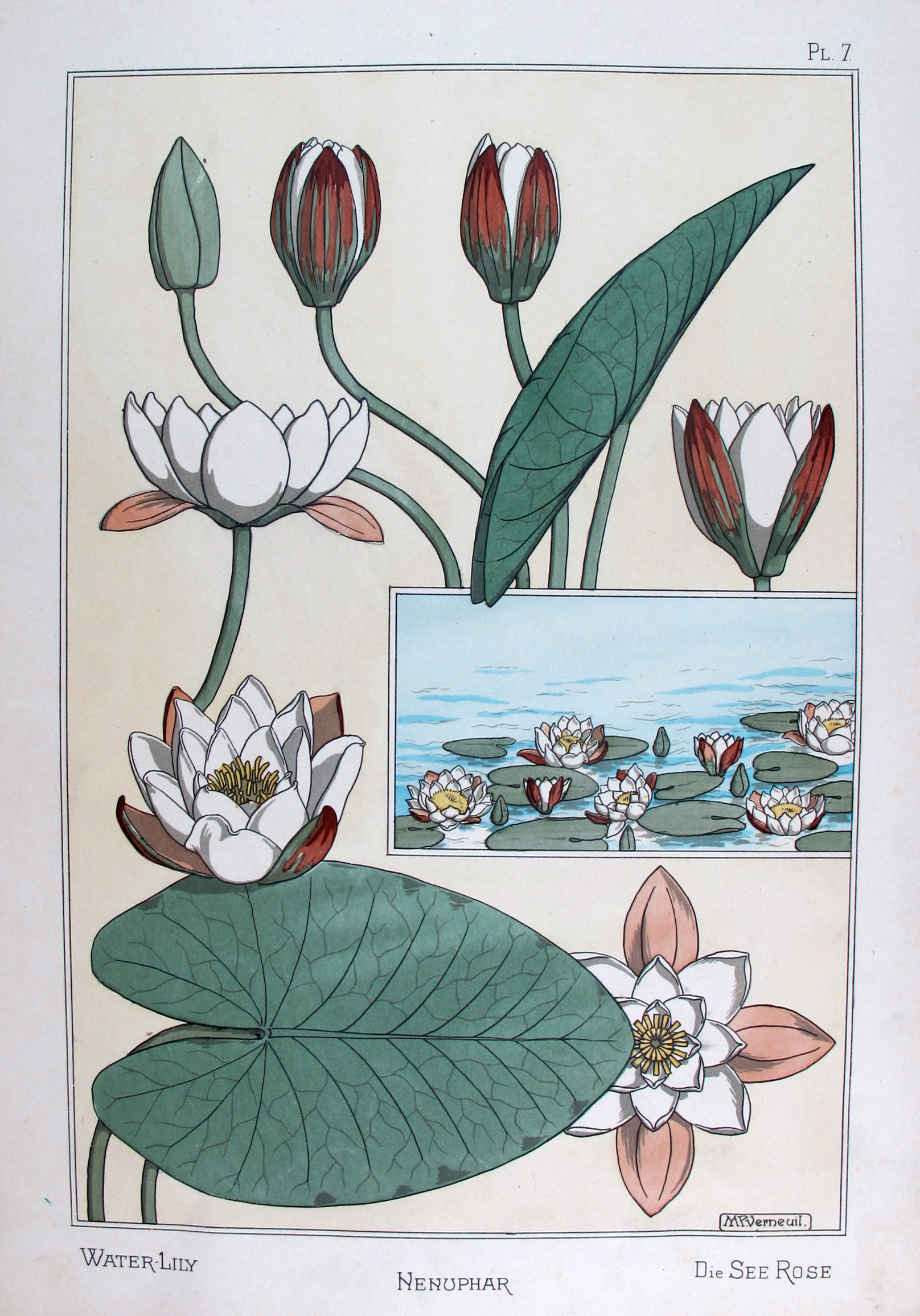
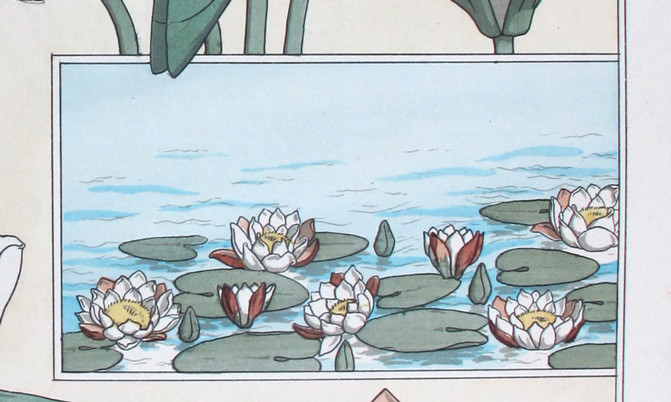
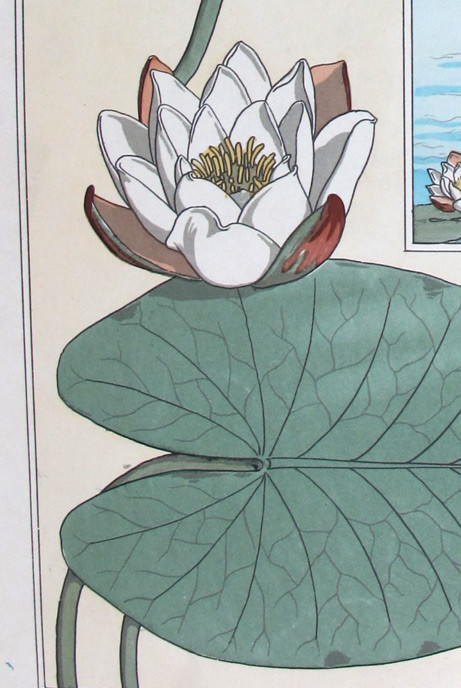
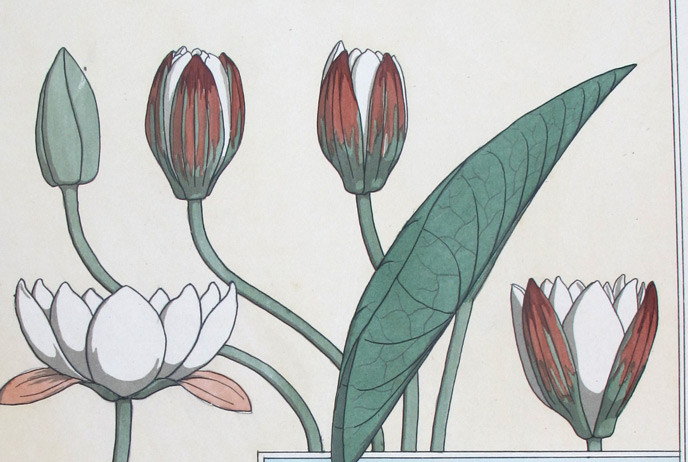
This second edition of the Water-Lily plate (No. 7) captures all the refined serenity of Plate 9, with slight variations in layout and ornamental balance. Grasset’s interpretation of the nénuphar transforms the aquatic bloom into a sinuous decorative motif, ideal for panels and stained glass work.
As a sacred symbol of rebirth and inner stillness, this design brings harmony and depth to any setting — a true icon of the Art Nouveau spirit.
Artist: Eugène Grasset-Explore the story behind this plate on our blog
Title: Water-Lily (Nénuphar)
Plate Number: 7
Date: 1896
Technique: Original color lithograph
Size: 45 × 32 cm
Condition: Fine
Edition: Charles Gillot, Paris
A luminous plate of botanical balance and calm — perfect for peaceful interiors and collectors of floral art.
Specific References
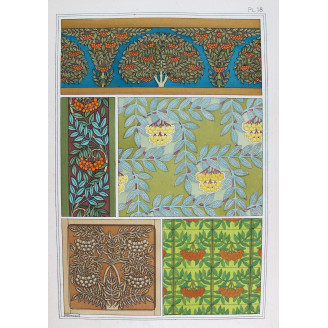
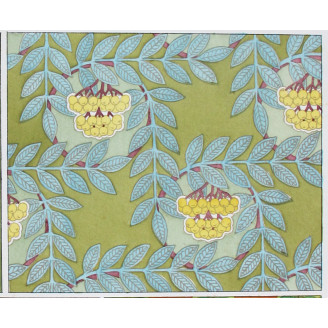
With its compound leaves and clusters of red berries, the sorb tree is rich in folk symbolism.
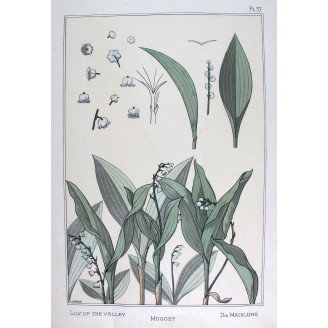
Delicate, fragrant, and full of symbolism, the Lily of the Valley (Muguet).
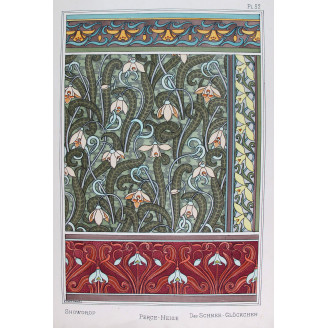
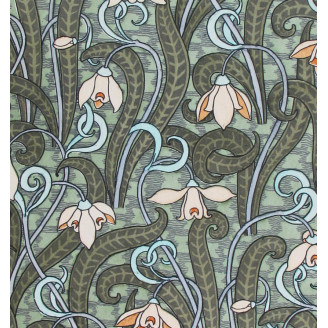
The snowdrop — the first sign of spring — is here celebrated with minimalism and grace.
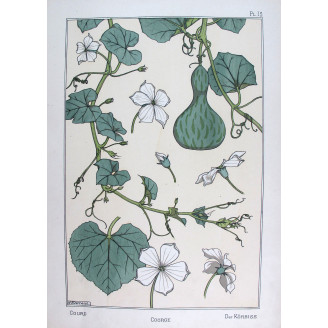
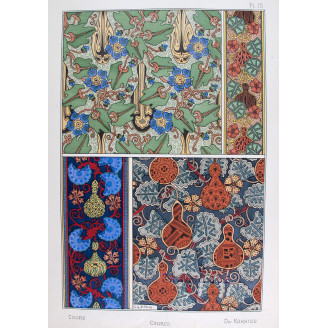
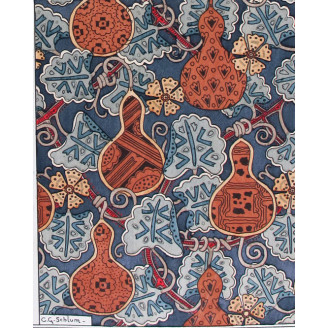
A companion to Plate 15, this second Gourd composition explores the same plant through a different visual logic. While the botanical study remains consistent, the ornamentation diverges — emphasizing asymmetry, contrast, and a playful yet sophisticated energy.
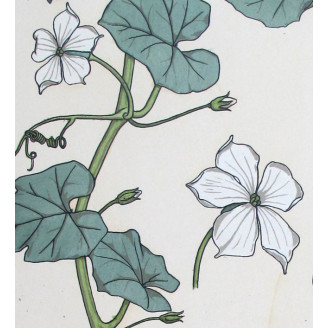
In this vibrant composition, Grasset elevates the humble gourd (courge) to an elegant decorative form.
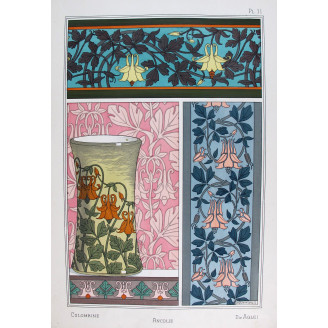
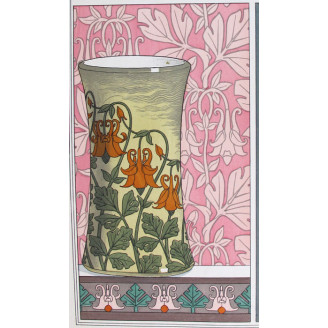
Graceful and enigmatic, the columbine (ancolie) is rendered here in flowing lines and soft complexity.
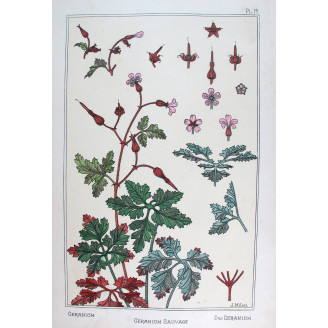
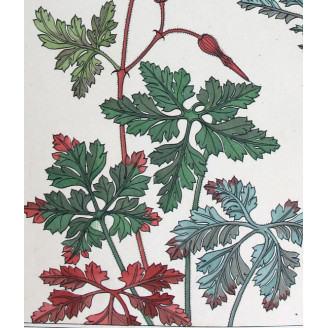
The wild geranium bursts forth with lightness and vitality. In this composition, Grasset uses its delicate petals and slender stems to create a lively decorative rhythm, suitable for textiles, embroidery, or wallpaper.
In this vibrant composition, Grasset elevates the humble gourd (courge) to an elegant decorative form.
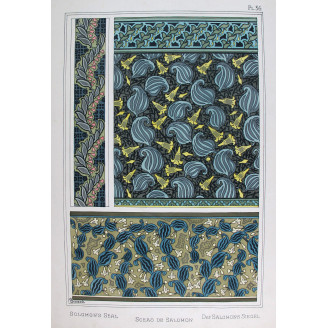
An emblem of wisdom and mystery, Solomon’s Seal is presented with refined elegance.
his extraordinary plate by Eugène Grasset features the water-lily (Nénuphar), rendered with both botanical accuracy and ornamental imagination.
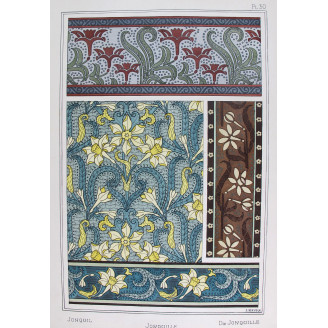
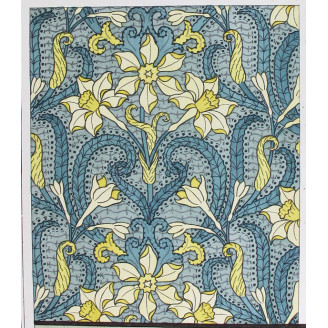
Bright and light, the jonquil (jonquille) is captured in a delicate interplay of upright stems and star-like blossoms.
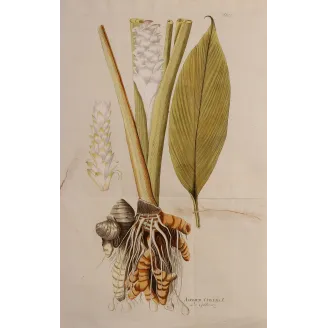
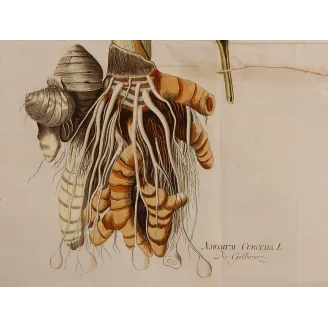
Exceptional large-format eighteenth-century botanical engraving depicting <em>Amomum Curcuma</em> L., published as Plate IV of Joseph Jacob von Plenck’s <em>Icones Plantarum Medicinalium</em>. Printed on a large folded sheet of Honig laid paper with complete watermark and contemporary hand colouring, the composition combines a remarkably refined pale inflorescence, monumental foliage and an exceptionally detailed rhizomatous structure. A powerful Plenck Statement Piece preserving both extraordinary botanical clarity and the visible material history of an eighteenth-century folded plate.
In this vibrant composition, Grasset elevates the humble gourd (courge) to an elegant decorative form.
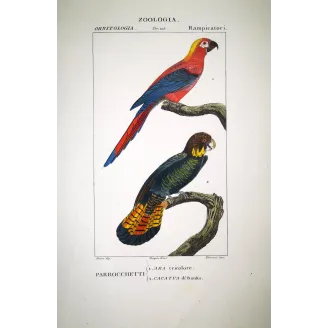
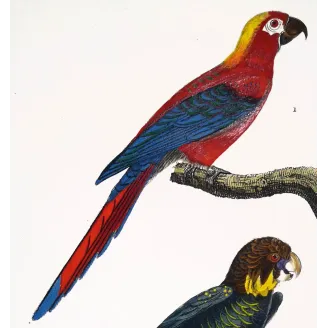
Vibrant parakeets perched on branches: a scarlet macaw and a black cockatoo with yellow and red highlights.
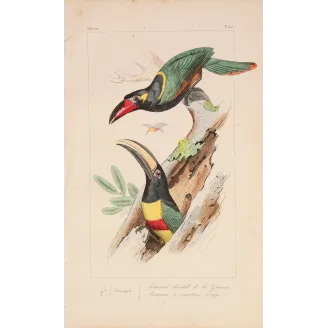
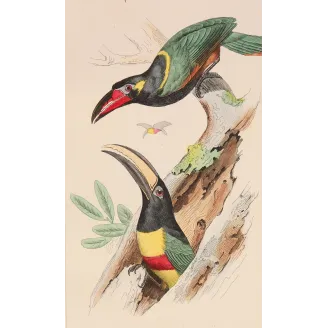
This vivid 19th-century engraving depicts two exotic aracaris, showcasing striking contrasts of green, red and yellow plumage. A highly decorative composition combining scientific observation with strong visual appeal, ideal for collectors of tropical ornithology and refined interior spaces.
Fine 18th-century engraving of the Medlar Tree by Elisabeth Blackwell, featuring fruit, blossom, and botanical detail.
With its compound leaves and clusters of red berries, the sorb tree is rich in folk symbolism.
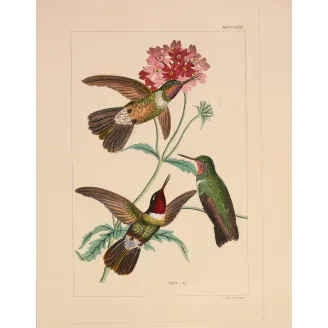
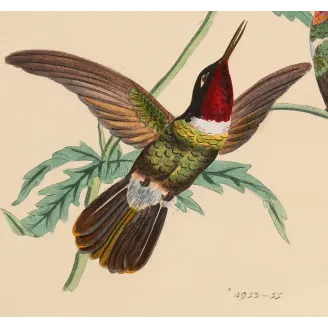
Original nineteenth-century hand-colored engraving by Ludwig Reichenbach, depicting three hummingbirds among pink blossoms. A rare later plate from the Trochilinarum Enumeratio corpus, not fully documented in the principal published index.
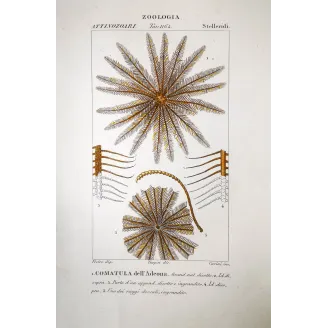
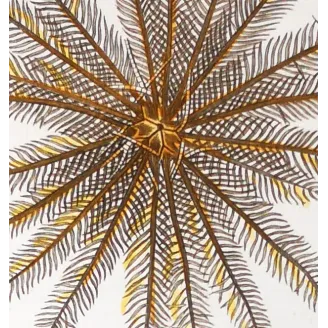
Rare 19th-century print of the feather star Comatula of the Adeona, with anatomical details.
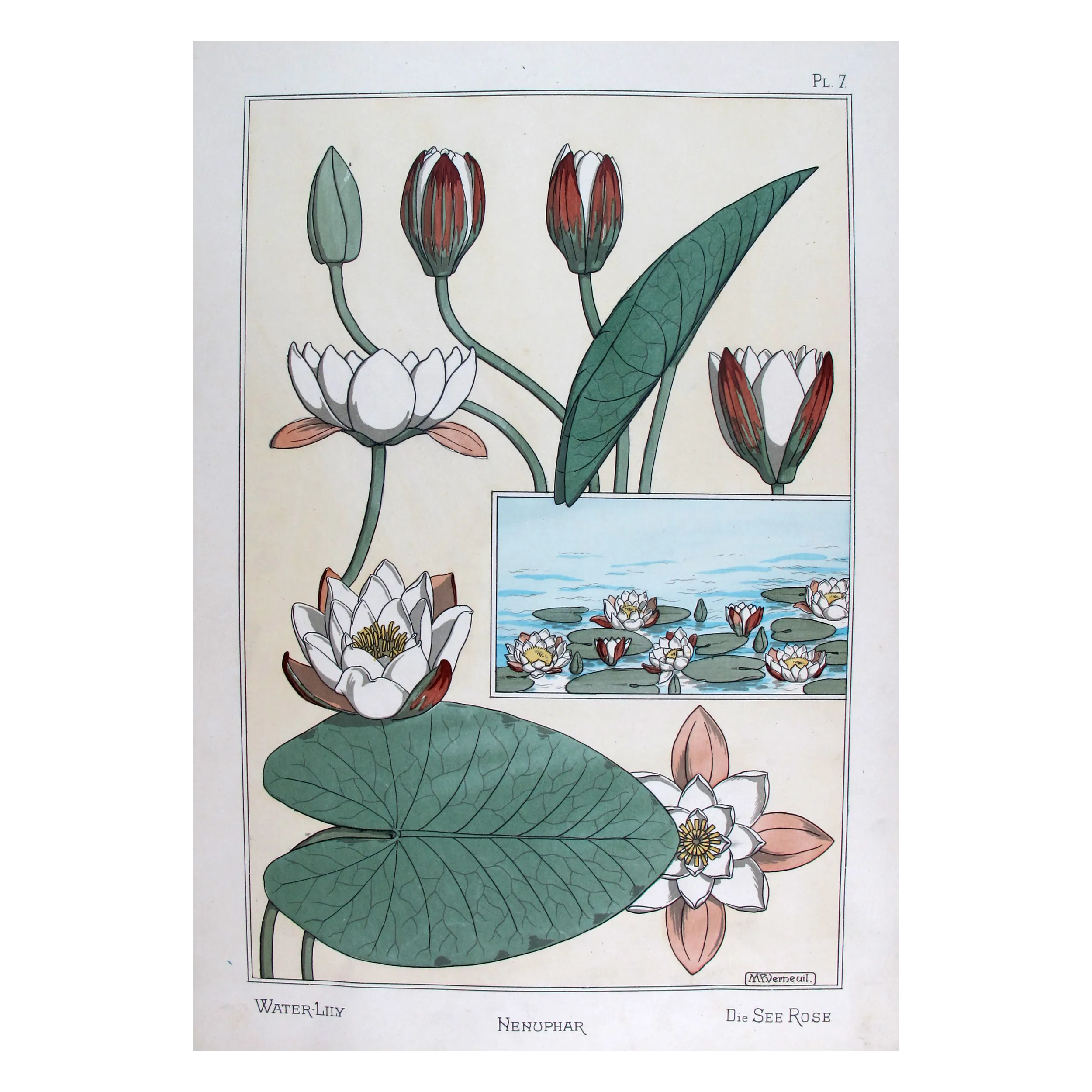
This second edition of the Water-Lily plate (No. 7) captures all the refined serenity of Plate 9, with slight variations in layout and ornamental balance.