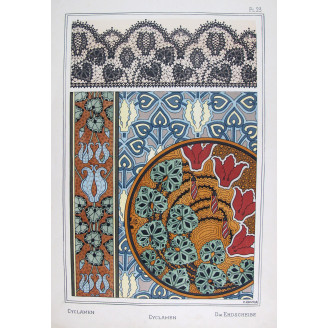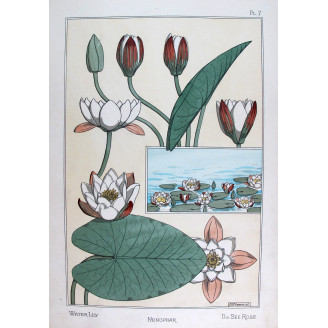
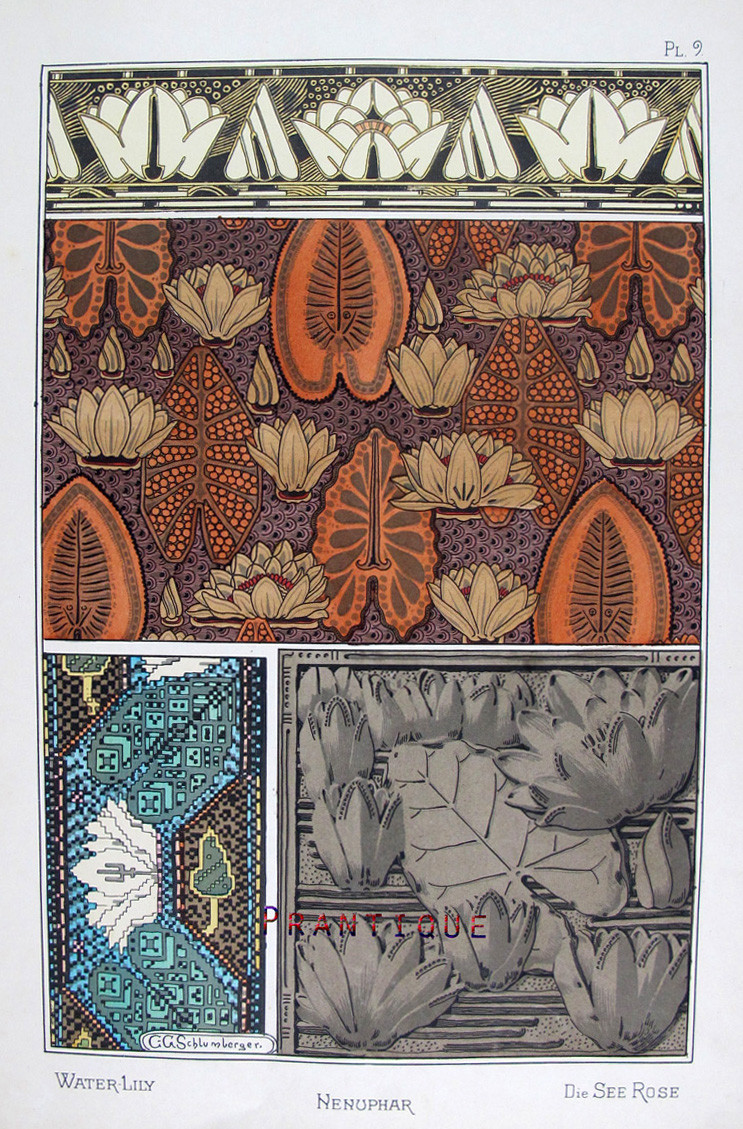
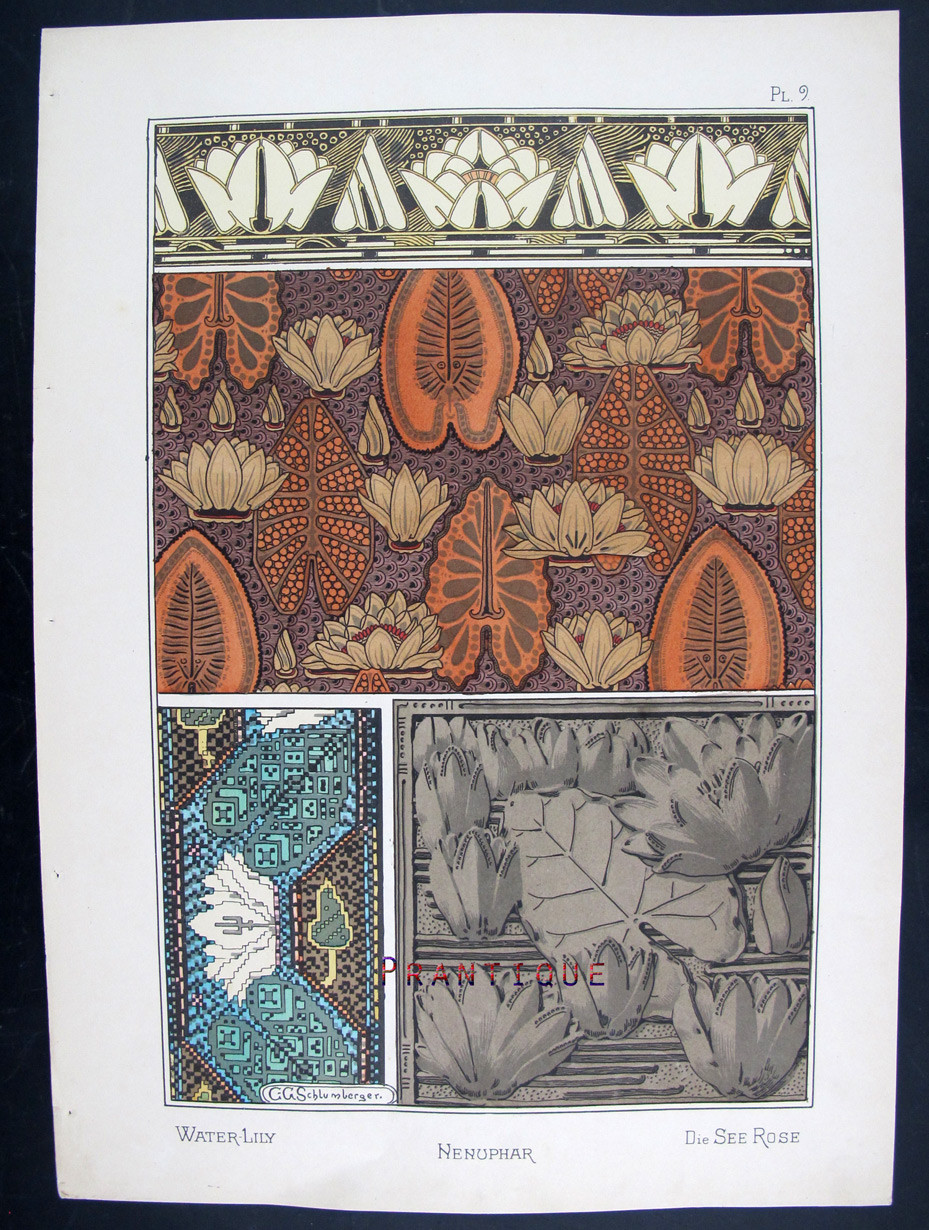
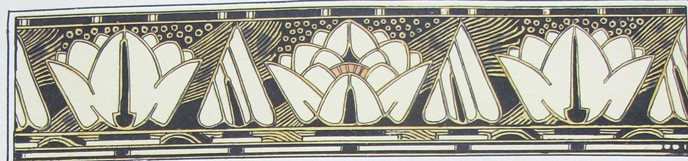
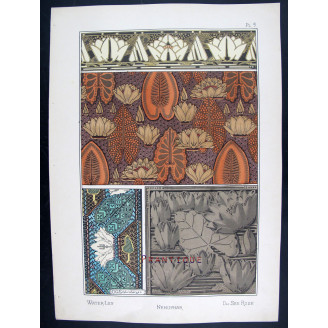
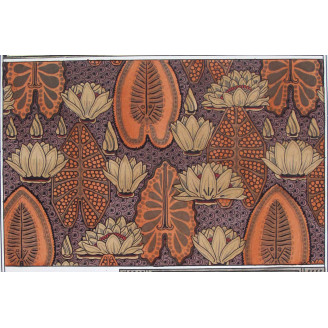
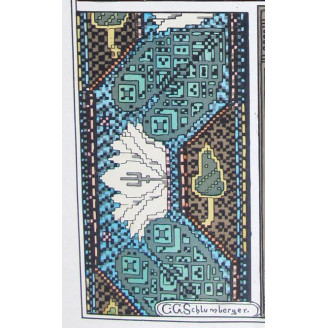
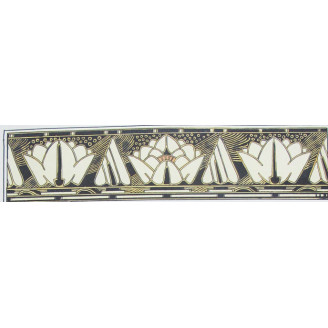
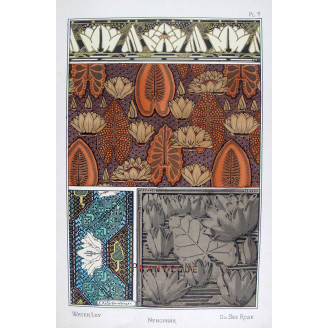
his extraordinary plate by Eugène Grasset features the water-lily (Nénuphar), rendered with both botanical accuracy and ornamental imagination.
 Delivery policy
Your print will be carefully prepared and shipped worldwide via trusted couriers (UPS or similar).
 Authentic antique prints
Original engravings from the 17th–19th century.
The quiet elegance of the water-lily reimagined through Art Nouveau sensibility.
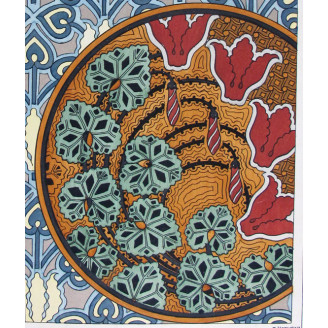
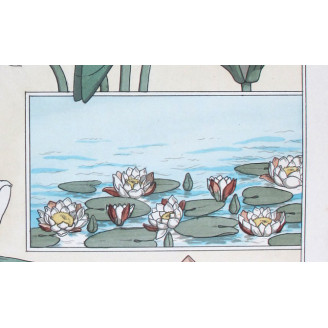
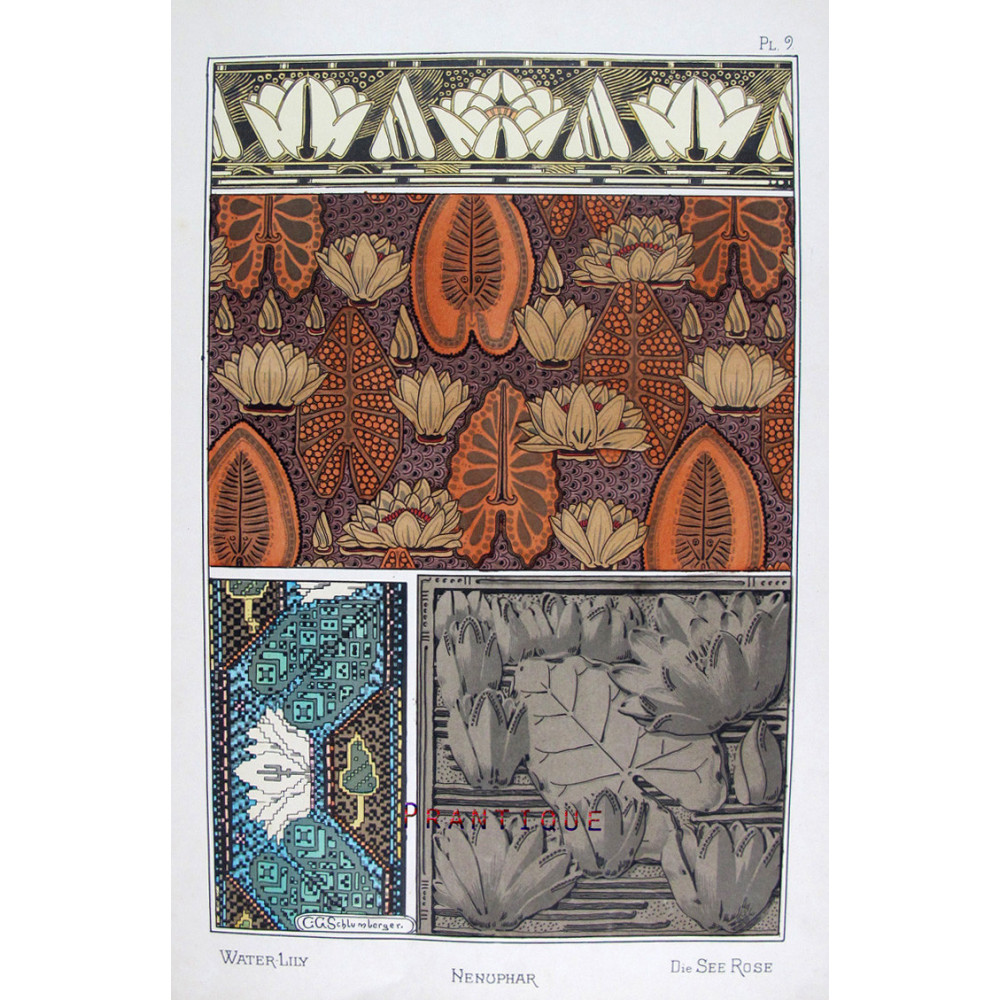
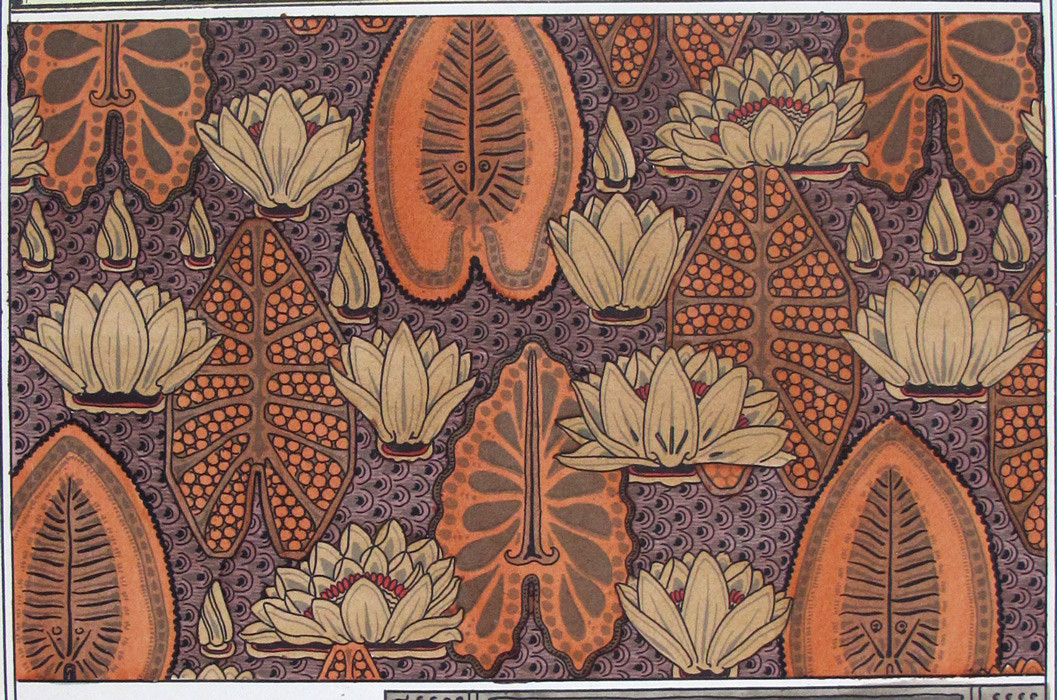
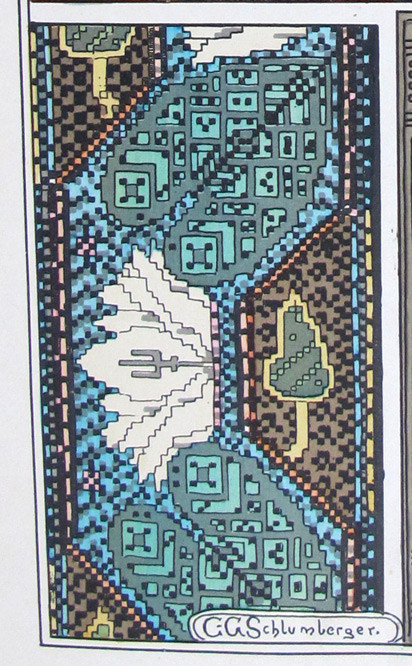
This extraordinary plate by Eugène Grasset features the water-lily (Nénuphar), rendered with both botanical accuracy and ornamental imagination. In the upper part, the flower floats serenely in its natural setting. At the center, it transforms into rhythmic, stylized patterns: sinuous petals, fluid lines, and graceful symmetry evoke the calm of water and the harmony of decorative arts. The bottom portion illustrates a suggested application — possibly for stained glass, ceramics, or textile panels.
A Symbolic Masterpiece
A sacred flower in ancient cultures and a timeless emblem of renewal and inner peace, the water-lily becomes, in Grasset’s vision, a visual metaphor of contemplation and beauty. Ideal for serene interiors, botanical collections, and Art Nouveau lovers.
Artist: Eugène Grasset (1845–1917)
Plate title: Water-Lily (Nénuphar)
Plate number: 9
Technique: Original color lithograph
Year: 1896
Sheet size: approx. 45 × 32 cm
Condition: Excellent; light age-related wear consistent with the period
Provenance: Original edition by Charles Gillot, Paris
A poetic and serene icon of botanical harmony — ideal for collectors and interior design spaces focused on calm and beauty.
Specific References
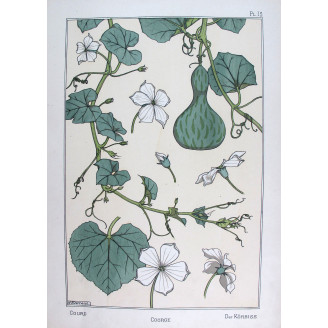
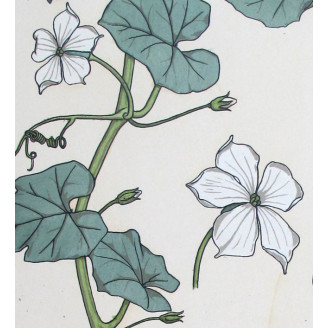
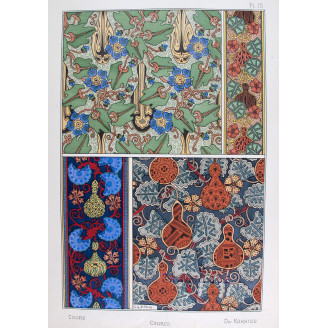
In this vibrant composition, Grasset elevates the humble gourd (courge) to an elegant decorative form.
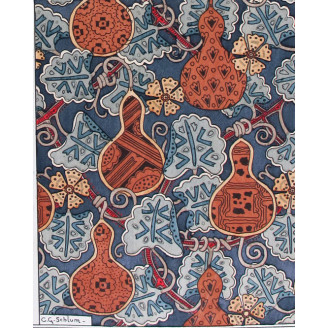
A companion to Plate 15, this second Gourd composition explores the same plant through a different visual logic. While the botanical study remains consistent, the ornamentation diverges — emphasizing asymmetry, contrast, and a playful yet sophisticated energy.
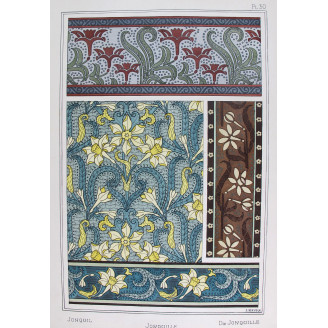
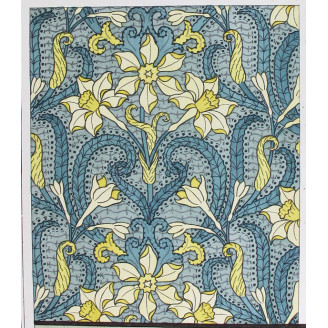
Bright and light, the jonquil (jonquille) is captured in a delicate interplay of upright stems and star-like blossoms.
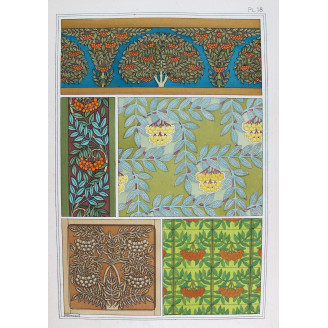
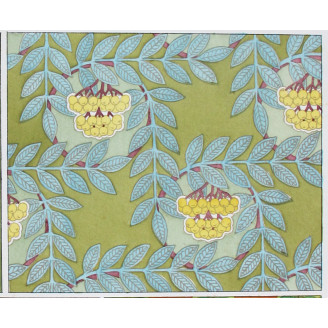
With its compound leaves and clusters of red berries, the sorb tree is rich in folk symbolism.
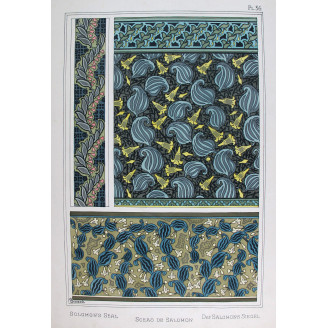
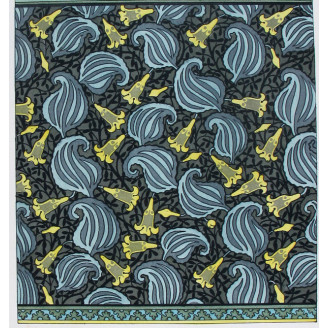
An emblem of wisdom and mystery, Solomon’s Seal is presented with refined elegance.
This second edition of the Water-Lily plate (No. 7) captures all the refined serenity of Plate 9, with slight variations in layout and ornamental balance.
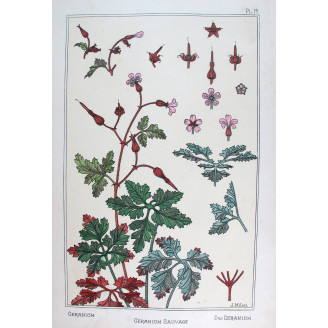
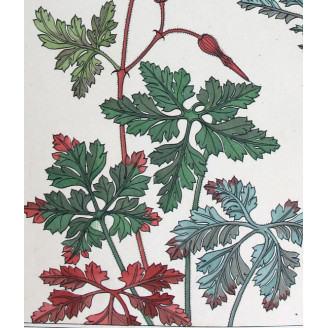
The wild geranium bursts forth with lightness and vitality. In this composition, Grasset uses its delicate petals and slender stems to create a lively decorative rhythm, suitable for textiles, embroidery, or wallpaper.
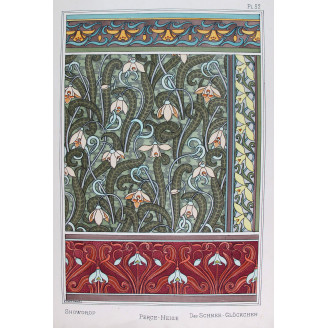
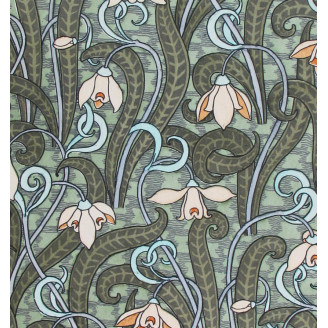
The snowdrop — the first sign of spring — is here celebrated with minimalism and grace.
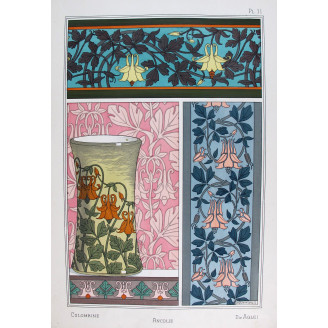
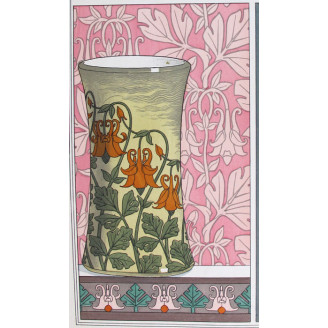
Graceful and enigmatic, the columbine (ancolie) is rendered here in flowing lines and soft complexity.
In this vibrant composition, Grasset elevates the humble gourd (courge) to an elegant decorative form.
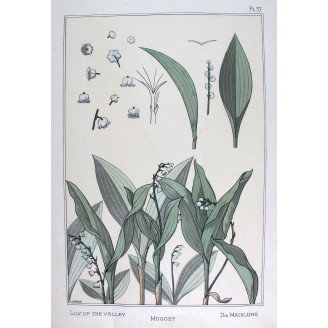
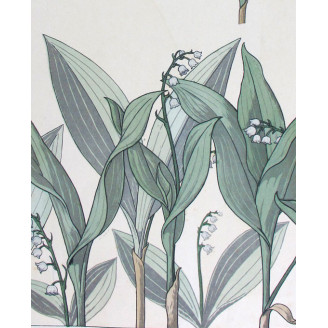
Delicate, fragrant, and full of symbolism, the Lily of the Valley (Muguet).
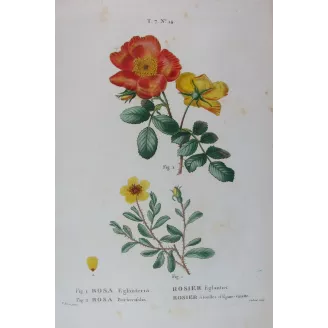
Eglantine & Berberis-leaved Rose Rosier à feuilles d'Épine-vinette Original hand-colored botanical engraving by Pancrace Bessa.
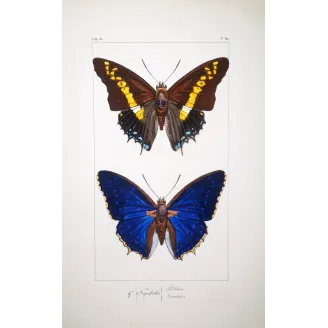
Original 1835 hand-colored copper engraving depicting the butterflies Pollux and Eurilochus. A visually striking double-specimen plate from Hippolyte Lucas’ celebrated Exotic Butterflies, engraved by Pauquet, with strong appeal as natural history art and antique butterfly wall art.
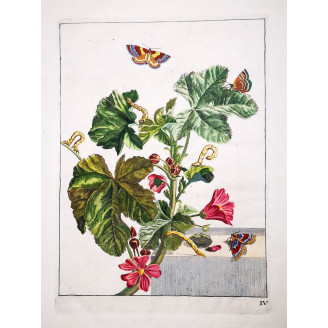
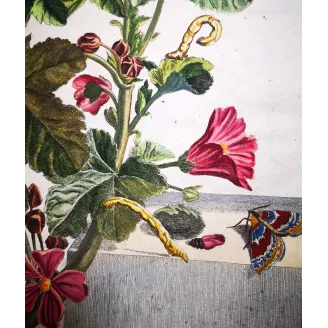
Original 1774 engraving by Jacob L'Admiral: Red Twin-spot Carpet on Mallow.
18th-century hand-colored engraving of the Wilding or Crab Tree by Elisabeth Blackwell, with blossom and fruit details.
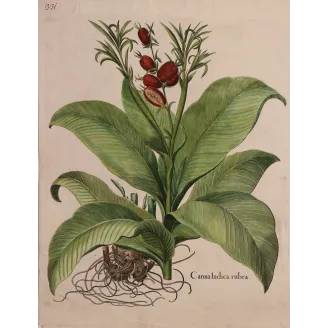
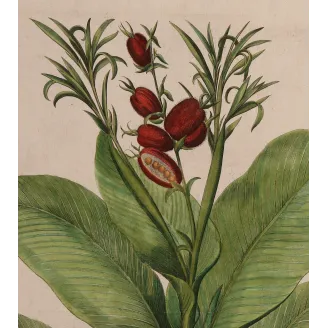
Original seventeenth-century hand-colored botanical engraving of Canna Indica rubra from Basilius Besler's monumental Hortus Eystettensis, first published in 1613. The imposing composition combines sweeping green foliage, exposed roots and vivid red botanical forms, while the laid-paper sheet preserves a watermark and the remarkable printed autumnal heading “SECVNDVS ORDO COLLECTARVM PLANTARVM AVTVMNALIVM” on its verso.
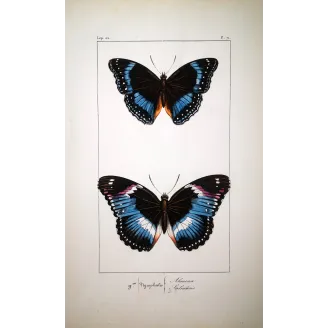
A vivid 19th-century hand-colored engraving depicting two striking tropical butterflies: the Blue-banded Eggfly (Hypolimnas alimena) and the Blue Diadem (Hypolimnas salmacis). Published in Hippolyte Lucas’s Exotic Butterflies (1835), the plate highlights their dramatic contrast of velvety black wings with electric blue bands and delicate white markings.
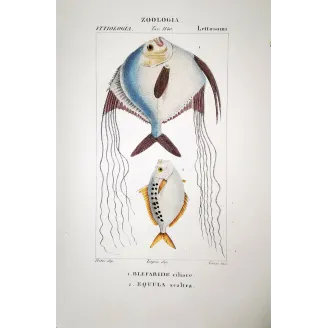
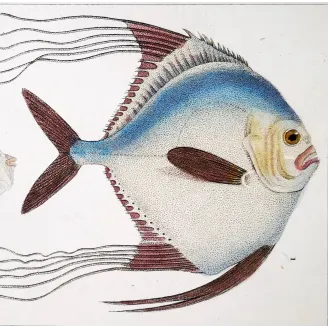
Delicate 19th-century hand-colored engraving of a ponyfish with companion species, ideal for marine-themed interiors and collectors.
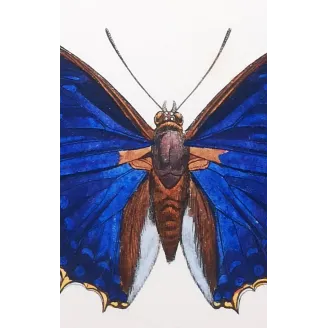
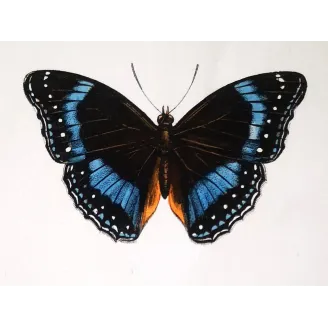
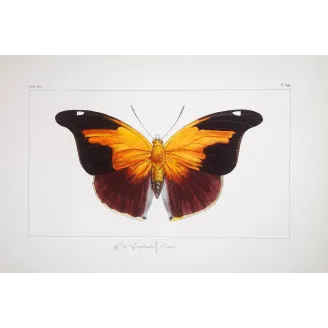
Original 1835 hand-colored engraving of Nymphalis orion, drawn and engraved by Pauquet under the scientific direction of Hippolyte Lucas for Exotic Butterflies.
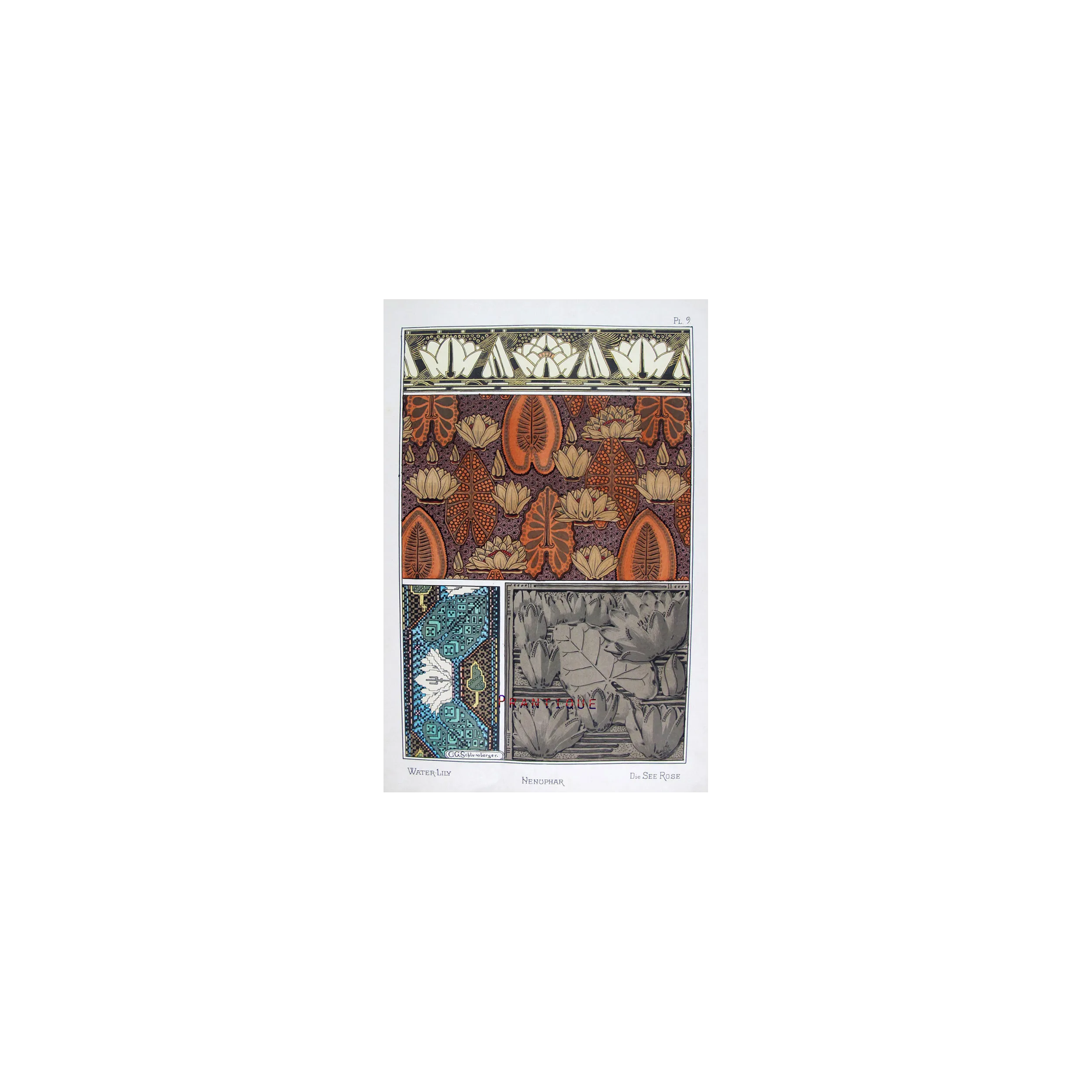
his extraordinary plate by Eugène Grasset features the water-lily (Nénuphar), rendered with both botanical accuracy and ornamental imagination.