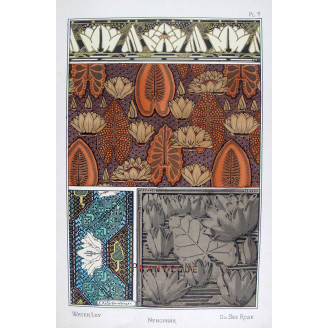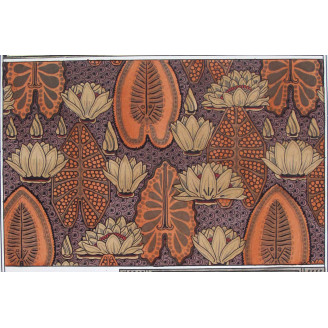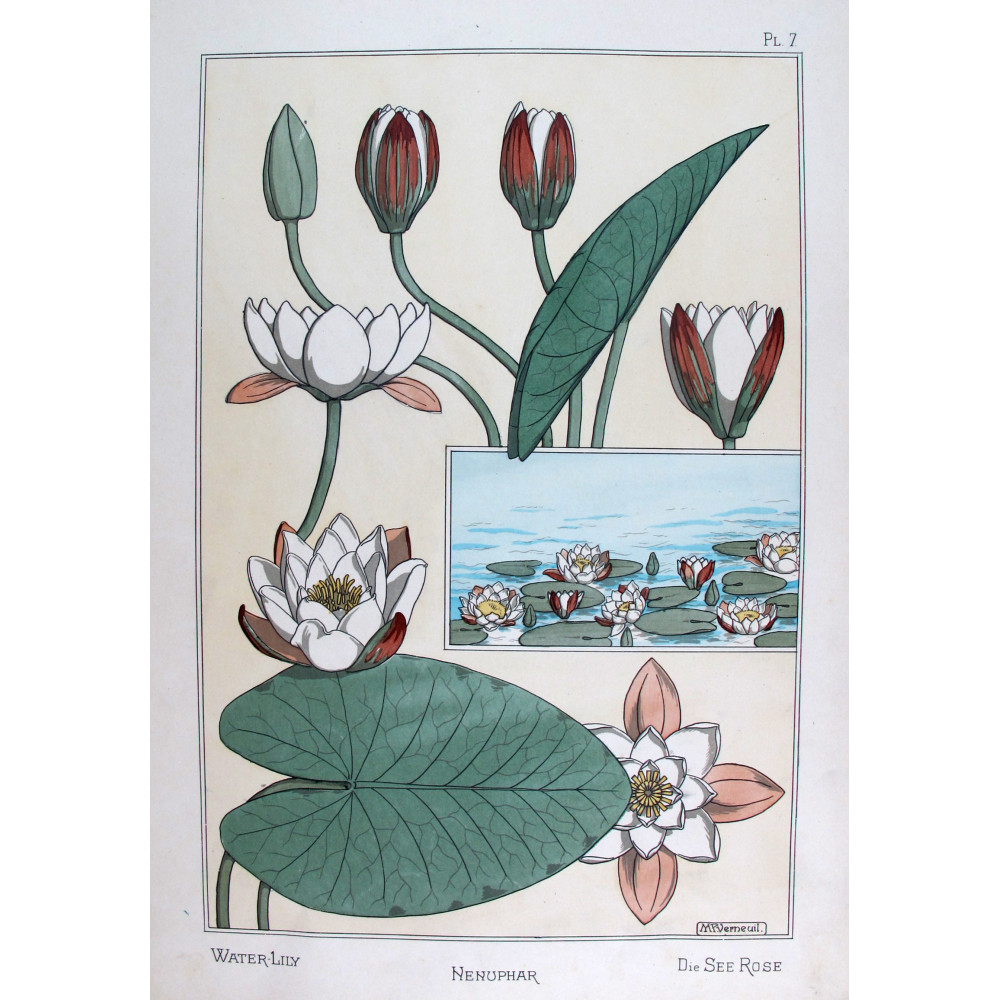
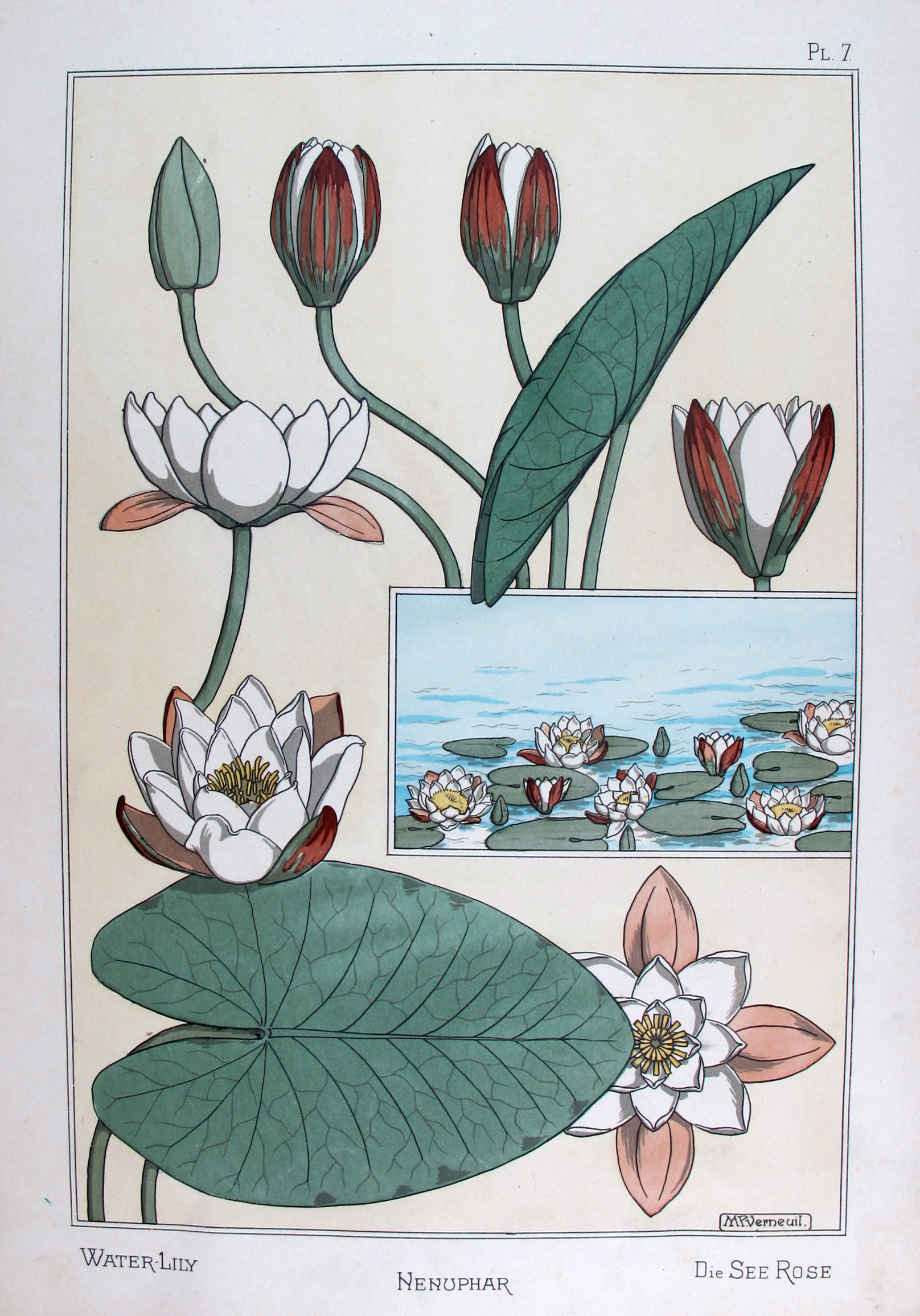
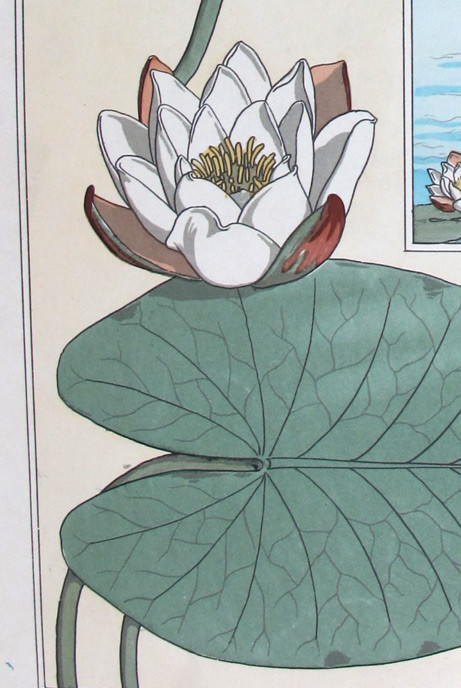
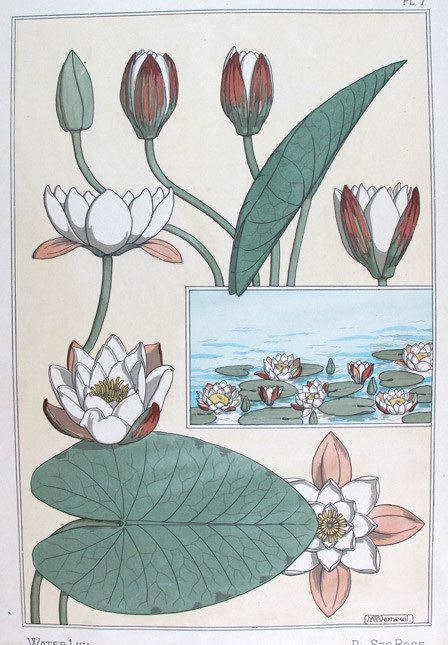
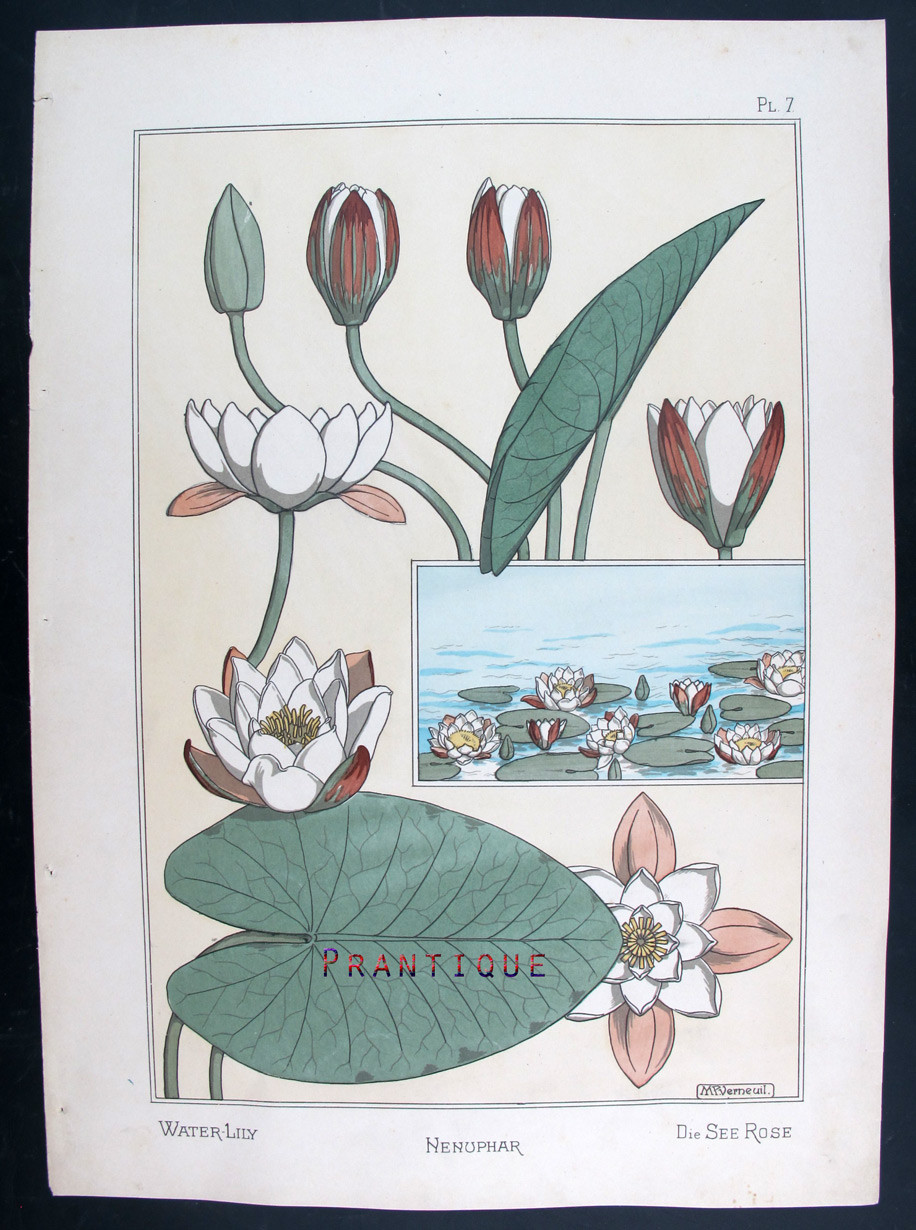
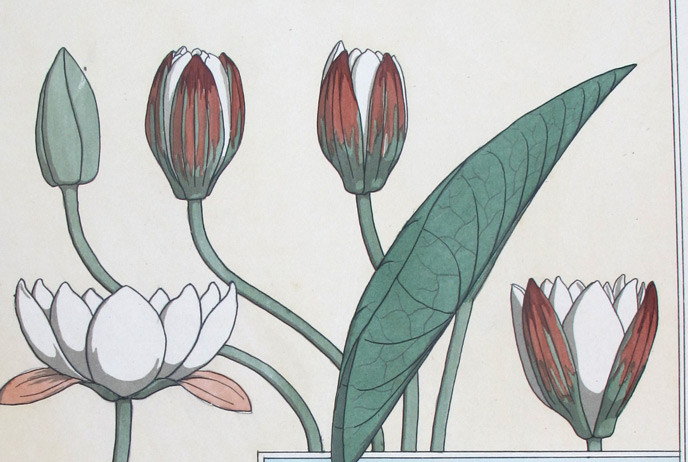
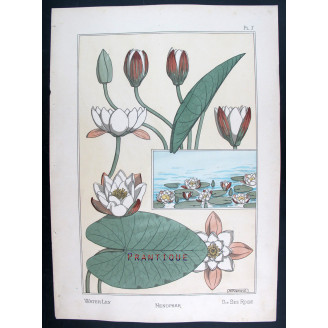
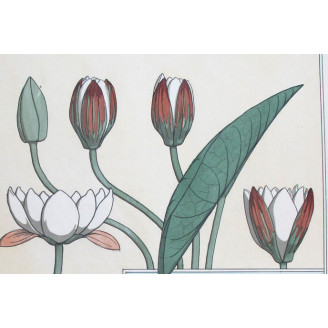
This second edition of the Water-Lily plate (No. 7) captures all the refined serenity of Plate 9, with slight variations in layout and ornamental balance.
 Delivery policy
Your print will be carefully prepared and shipped worldwide via trusted couriers (UPS or similar).
 Authentic antique prints
Original engravings from the 17th–19th century.
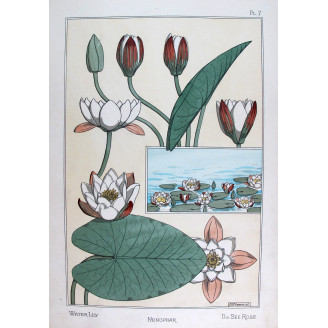
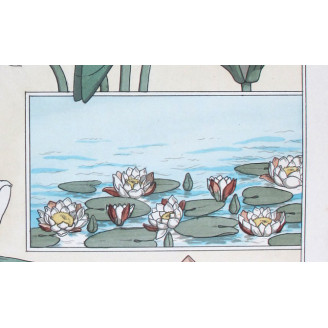
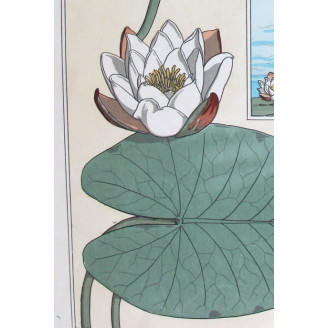
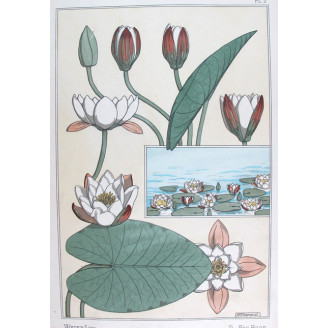
This second edition of the Water-Lily plate (No. 7) captures all the refined serenity of Plate 9, with slight variations in layout and ornamental balance. Grasset’s interpretation of the nénuphar transforms the aquatic bloom into a sinuous decorative motif, ideal for panels and stained glass work.
As a sacred symbol of rebirth and inner stillness, this design brings harmony and depth to any setting — a true icon of the Art Nouveau spirit.
Artist: Eugène Grasset-Explore the story behind this plate on our blog
Title: Water-Lily (Nénuphar)
Plate Number: 7
Date: 1896
Technique: Original color lithograph
Size: 45 × 32 cm
Condition: Fine
Edition: Charles Gillot, Paris
A luminous plate of botanical balance and calm — perfect for peaceful interiors and collectors of floral art.
Specific References
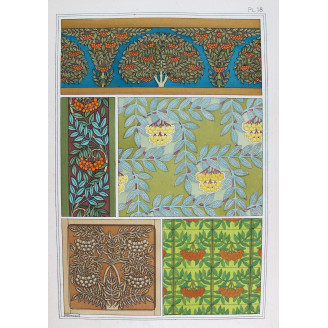
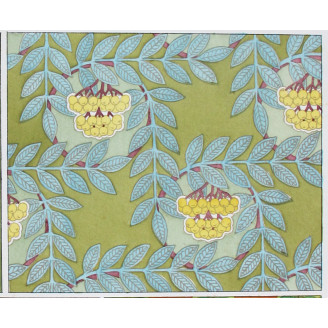
With its compound leaves and clusters of red berries, the sorb tree is rich in folk symbolism.
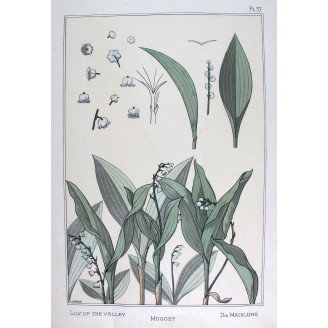
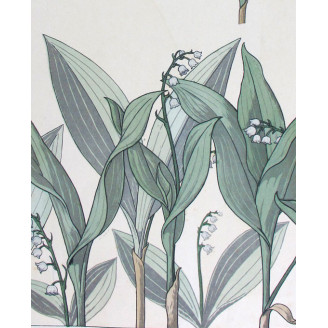
Delicate, fragrant, and full of symbolism, the Lily of the Valley (Muguet).
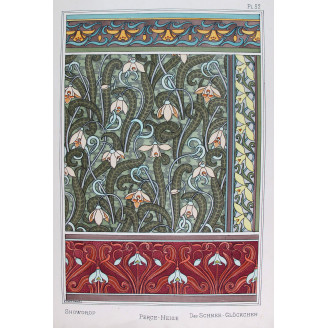
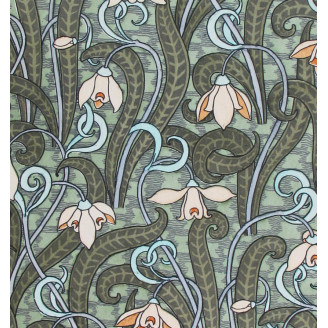
The snowdrop — the first sign of spring — is here celebrated with minimalism and grace.
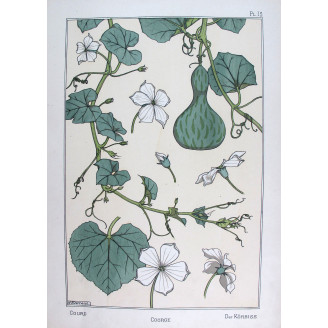
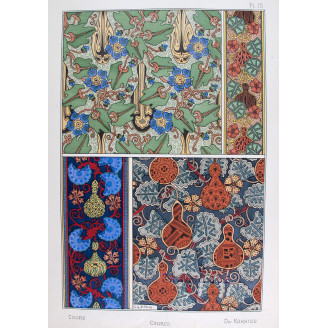
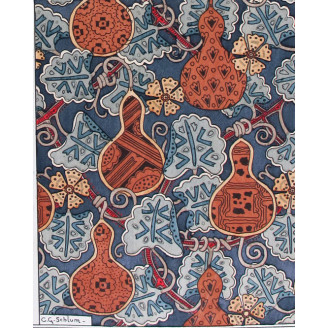
A companion to Plate 15, this second Gourd composition explores the same plant through a different visual logic. While the botanical study remains consistent, the ornamentation diverges — emphasizing asymmetry, contrast, and a playful yet sophisticated energy.
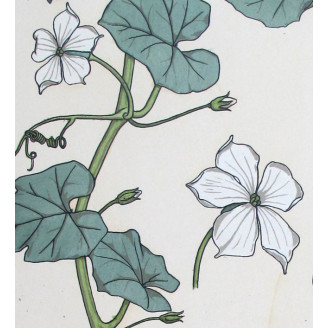
In this vibrant composition, Grasset elevates the humble gourd (courge) to an elegant decorative form.
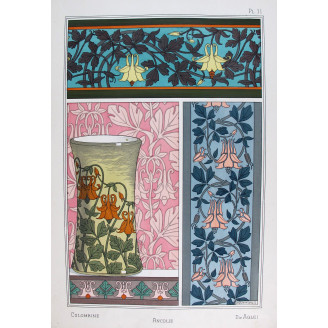
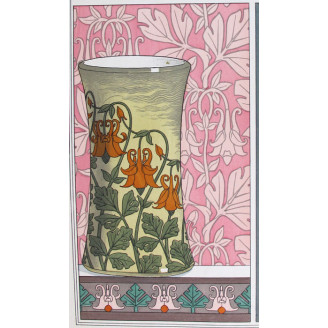
Graceful and enigmatic, the columbine (ancolie) is rendered here in flowing lines and soft complexity.
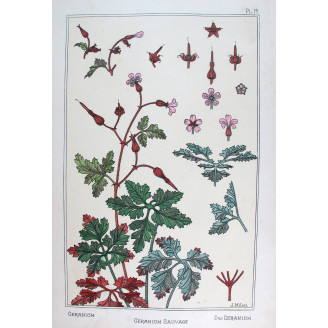
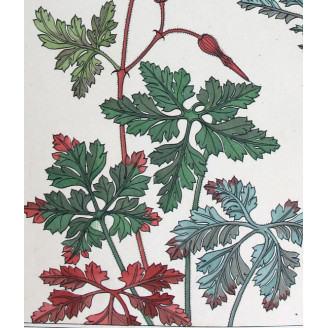
The wild geranium bursts forth with lightness and vitality. In this composition, Grasset uses its delicate petals and slender stems to create a lively decorative rhythm, suitable for textiles, embroidery, or wallpaper.
In this vibrant composition, Grasset elevates the humble gourd (courge) to an elegant decorative form.
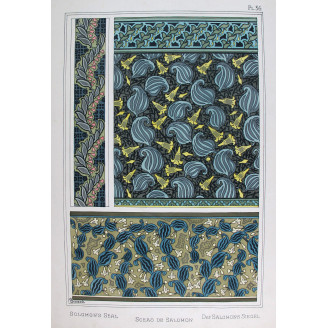
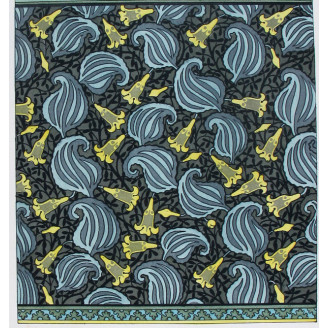
An emblem of wisdom and mystery, Solomon’s Seal is presented with refined elegance.
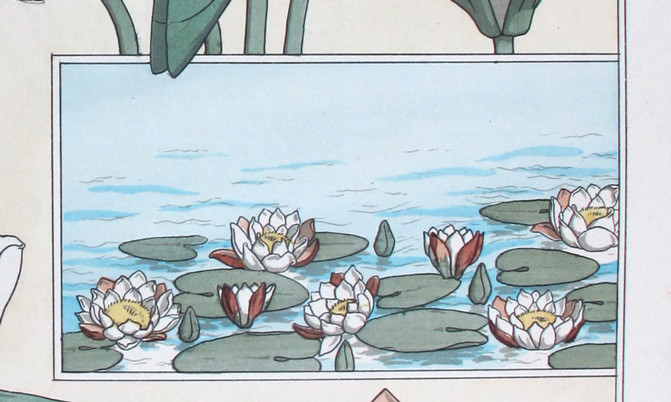
his extraordinary plate by Eugène Grasset features the water-lily (Nénuphar), rendered with both botanical accuracy and ornamental imagination.
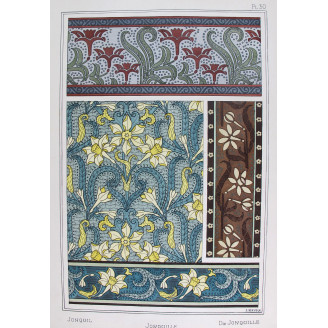
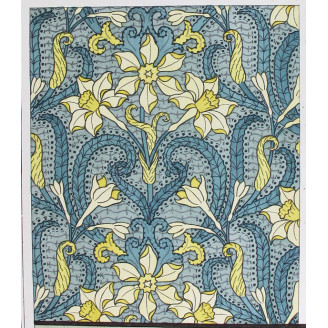
Bright and light, the jonquil (jonquille) is captured in a delicate interplay of upright stems and star-like blossoms.
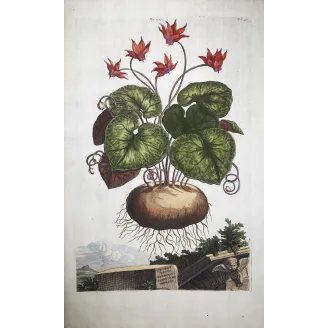
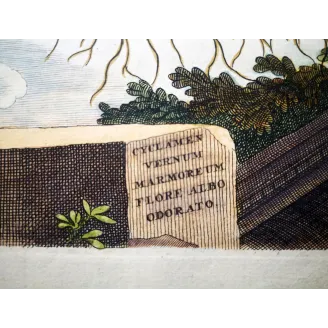
Original 17th-century hand-colored engraving of Cyclamen (Cyclamen europaeum) by Abraham Munting, featuring exposed root structure and elegant botanical composition.
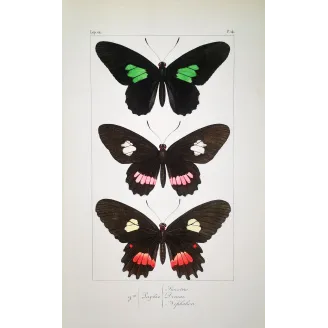
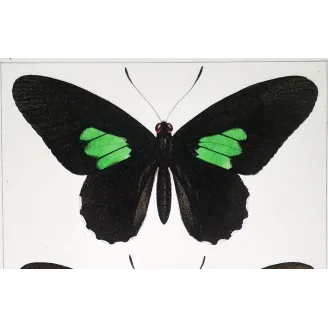
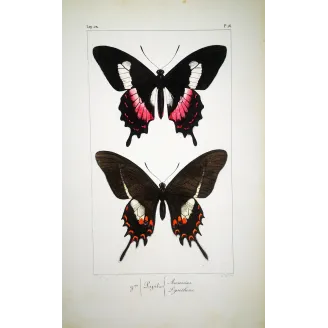
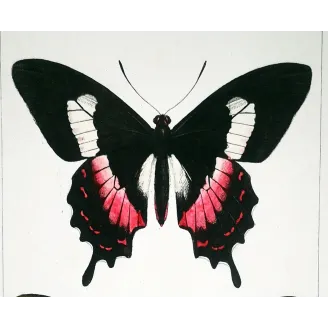
Striking black butterflies with vivid green, pink, and red accents. A dramatic 1835 engraving with strong contrast and bold decorative appeal.
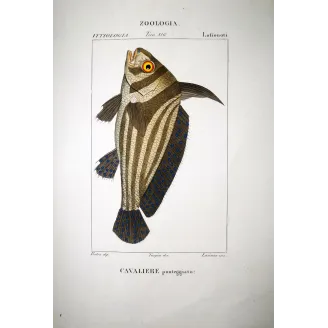
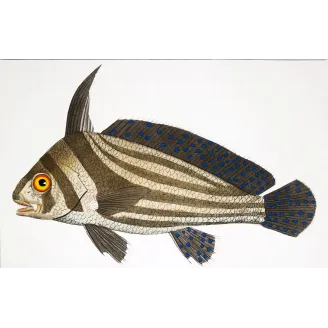
Striped body with blue-spotted fins; a refined 19th-century marine engraving ideal for study walls and coastal interiors.
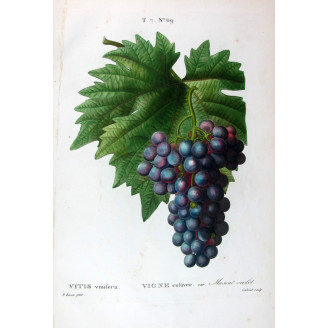
Elegant depiction of a rich purple Muscat grape variety by Pancrace Bessa.
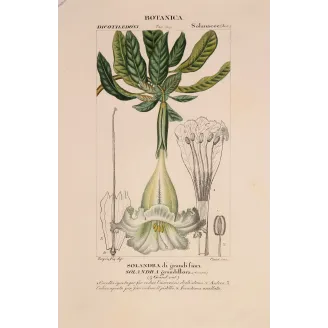
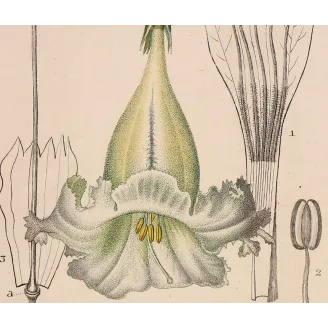
Beautiful antique flower print of Solandra, with large trumpet-shaped bloom.
Cattleheart Swallowtail Butterflies (Parides lysithous group) – Antique Hand-Colored Engraving, Exotic Butterflies (1835)
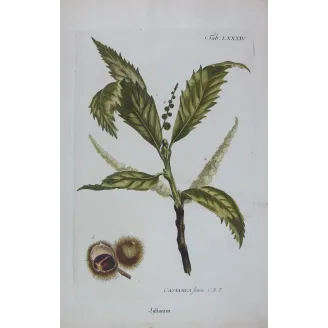
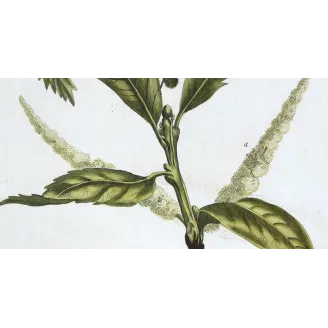
A refined 18th-century botanical engraving depicting the chestnut tree, featuring detailed foliage and characteristic fruit. The balanced composition and original hand-coloring create a visually rich and highly decorative natural history print.
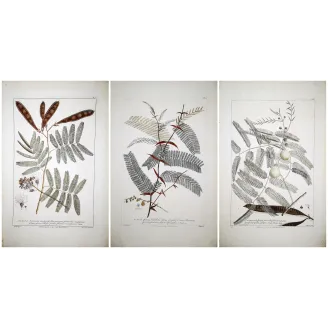
A curated group of three Acacia engravings by Georg Dionysius Ehret, offering a coherent botanical study of form and variation within the genus.
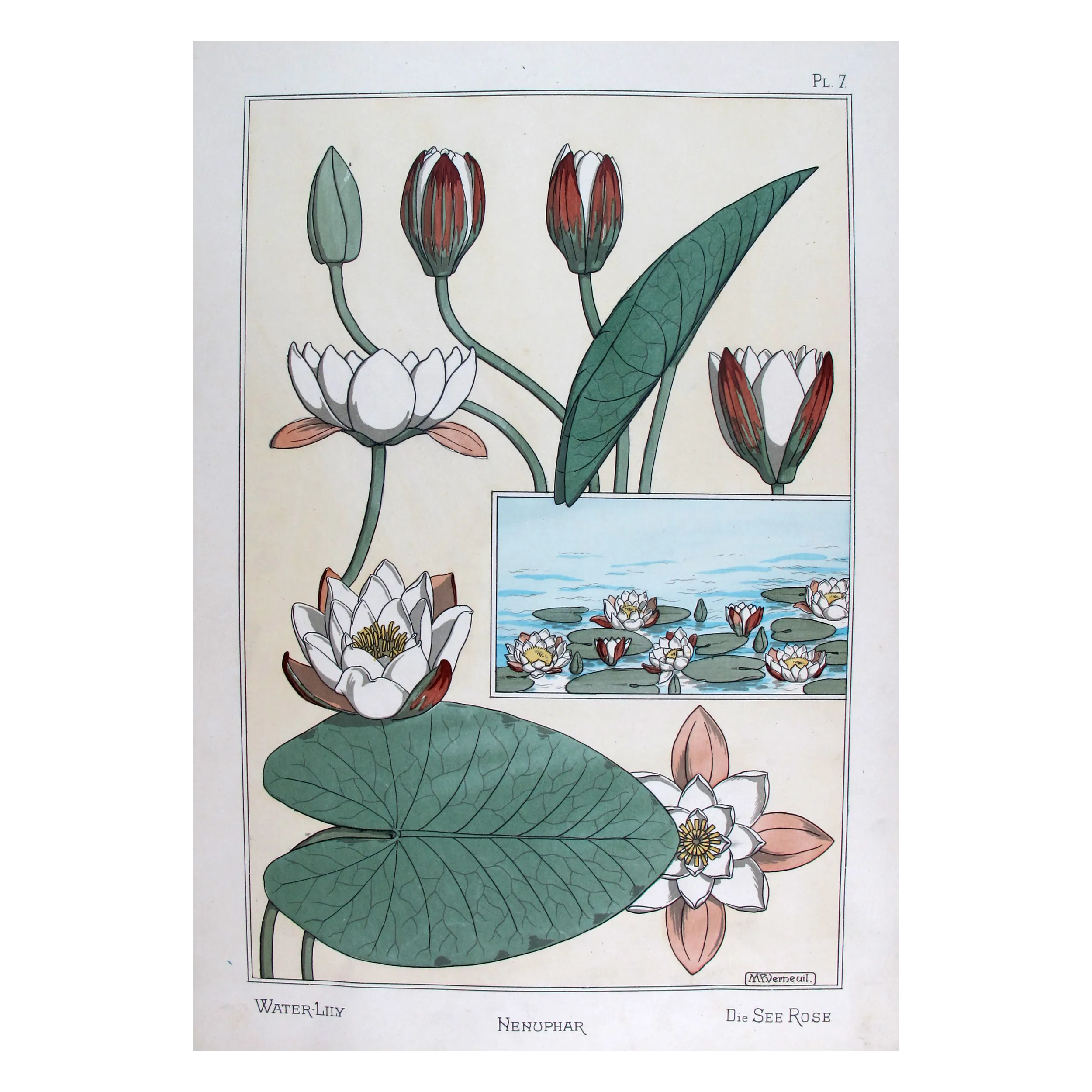
This second edition of the Water-Lily plate (No. 7) captures all the refined serenity of Plate 9, with slight variations in layout and ornamental balance.