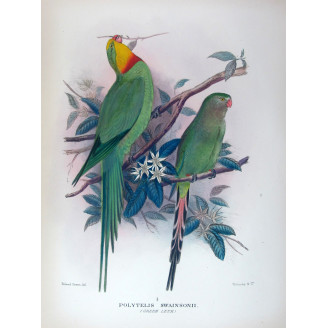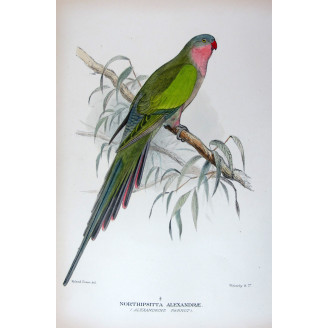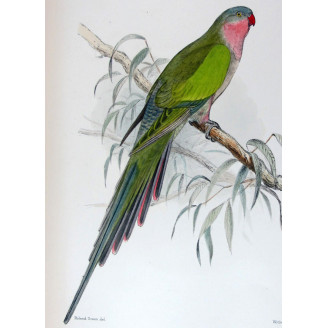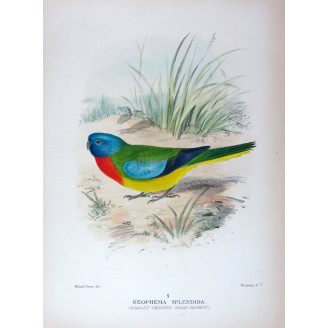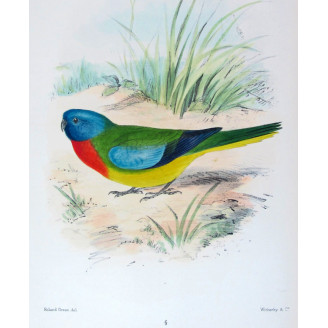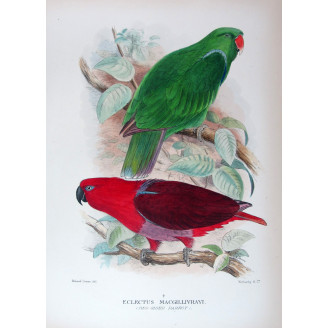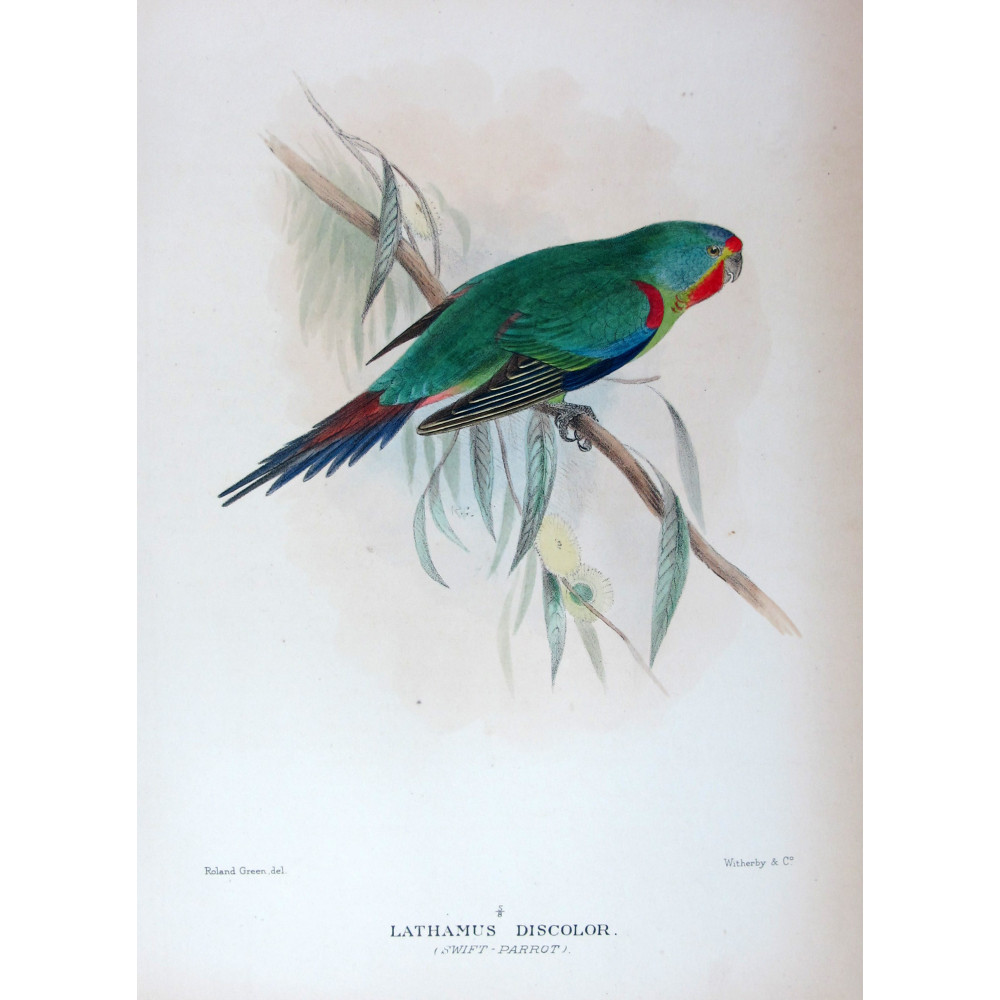
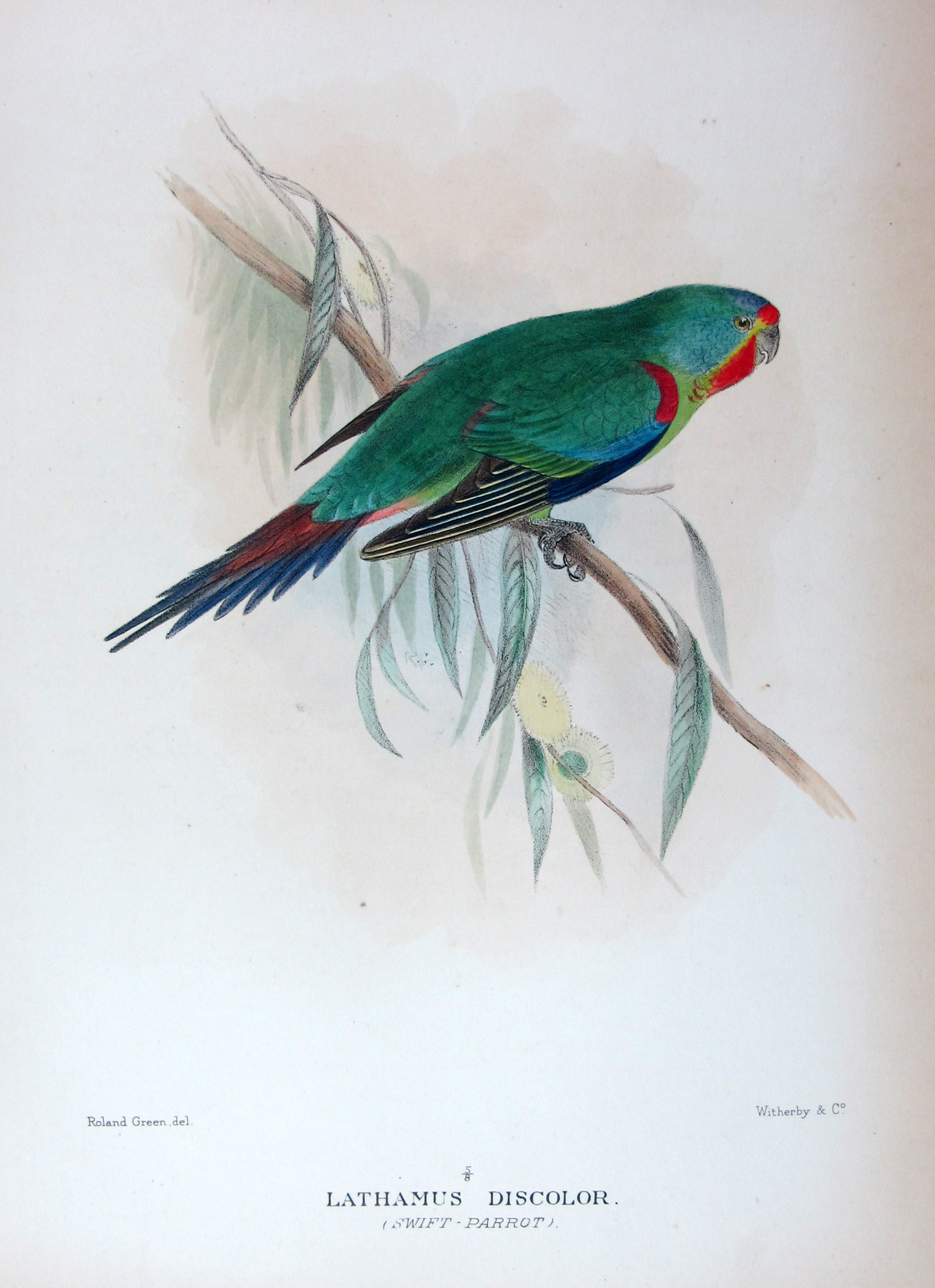
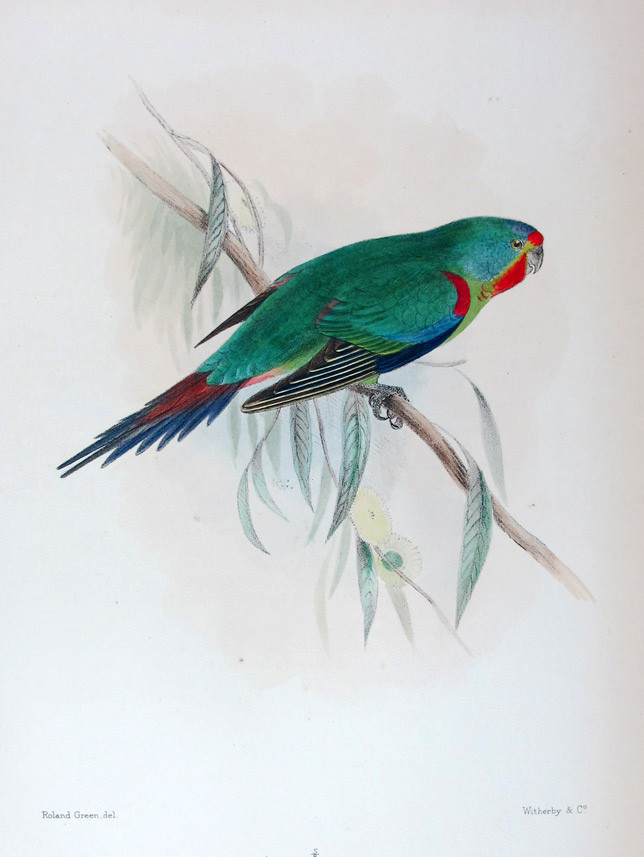
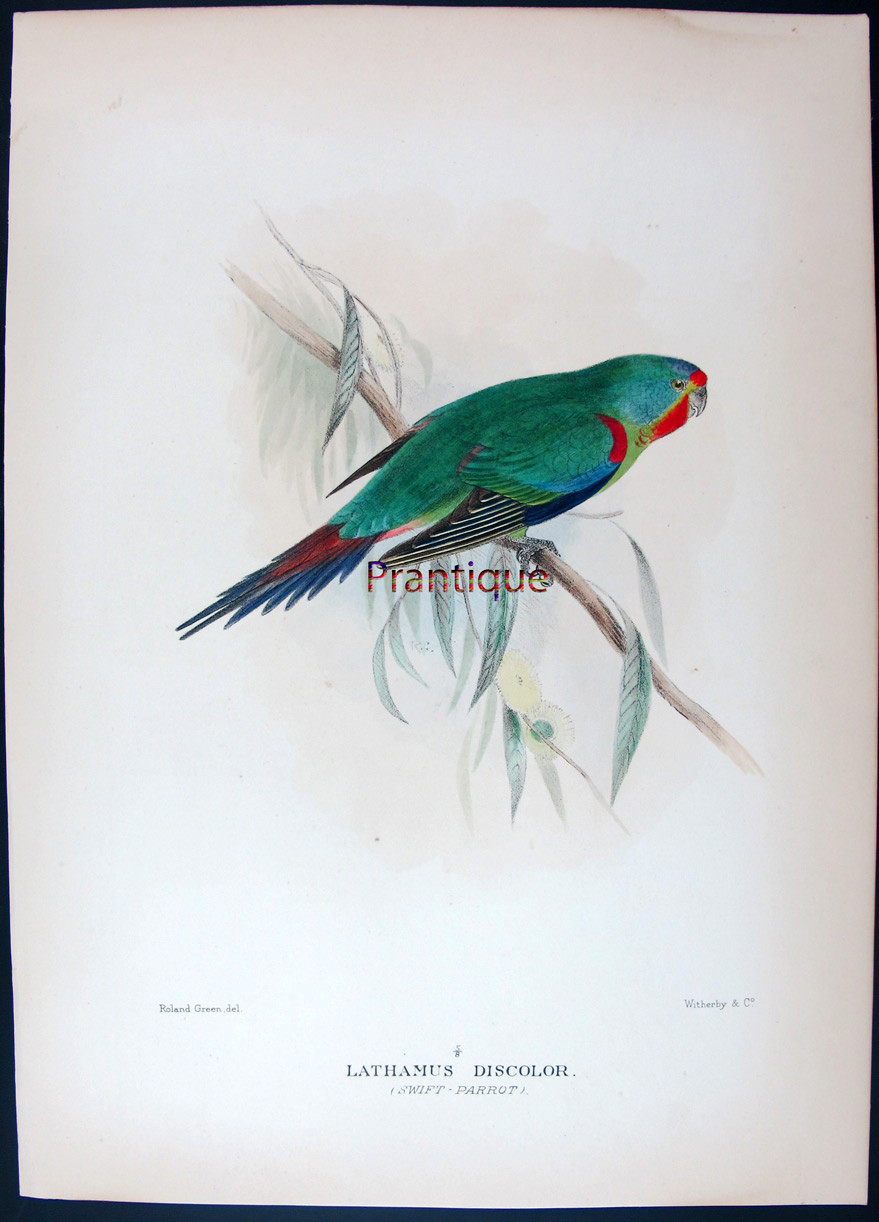
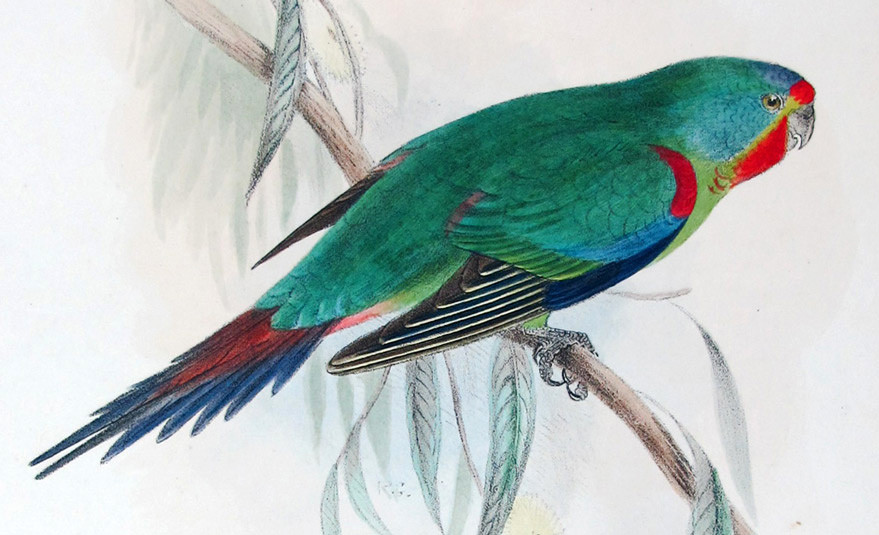
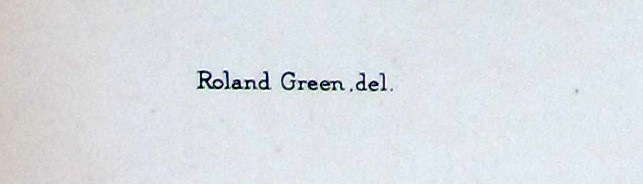
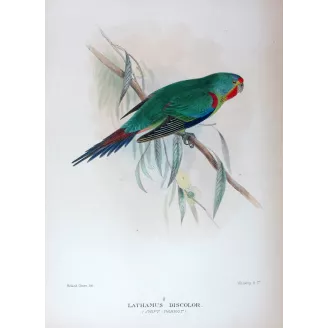
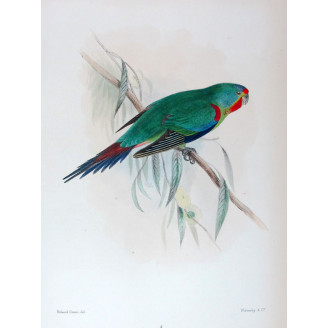
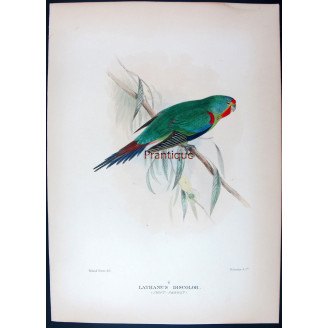
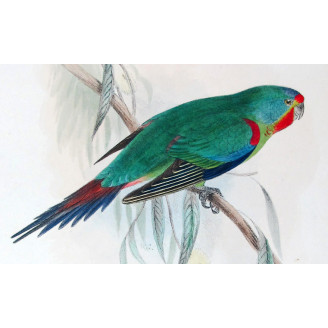
Antique lithograph of the Swift Parrot by Roland Green.
 Delivery policy
Your print will be carefully prepared and shipped worldwide via trusted couriers (UPS or similar).
 Authentic antique prints
Original engravings from the 17th–19th century.
This original early twentieth-century hand-colored lithograph depicts Lathamus discolor, known as the Swift Parrot. The plate belongs to Gregory M. Mathews’ monumental publication The Birds of Australia, illustrated by Roland Green and issued by Witherby & Co.
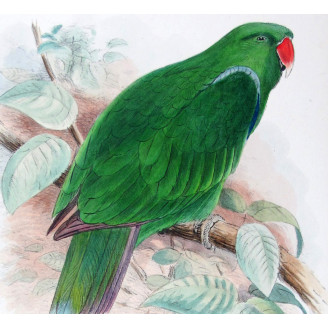
Perched lightly upon a slender eucalyptus branch, the bird is rendered with refined clarity: deep emerald plumage, a vivid scarlet throat patch, and cool blue accents along the wing coverts and tail. The composition is open and balanced, allowing the figure to command attention through tonal harmony rather than theatrical contrast.
— • —
Roland Green constructs the image with characteristic restraint. The parrot’s elongated silhouette, tapering tail, and poised stance suggest alertness and speed—qualities embedded in both the species name and the visual design. The green body is subtly modelled through layered feather texture, while the scarlet throat introduces a controlled yet striking chromatic accent.
The surrounding eucalyptus leaves are delicately suggested rather than fully developed, reinforcing a sense of lightness. This sparseness of setting enhances the decorative clarity of the bird, giving the print a refined and contemporary wall presence despite its early twentieth-century origin.
The Swift Parrot is native to southeastern Australia and Tasmania, historically known for its rapid flight and migratory behaviour. Unlike many larger parrots, it combines slender proportions with vivid colour contrast, making it both ecologically distinctive and visually compelling.
Today the species is regarded as critically endangered, adding a modern layer of significance to early ornithological depictions such as this. Mathews’ documentation preserves not only taxonomy, but a visual record of Australia’s fragile avian heritage.
This lithograph originates from The Birds of Australia, Gregory M. Mathews’ ambitious early twentieth-century ornithological enterprise. Conceived as a definitive scientific record, the work united rigorous taxonomy with the refined artistry of leading wildlife illustrators, producing one of the most authoritative visual catalogues of Australian birdlife. Explore the broader historical scope in our editorial feature: Gregory M. Mathews and The Birds of Australia .
Roland Green’s disciplined draughtsmanship is especially evident in species of slender build such as Lathamus discolor, where proportion, posture, and feather articulation must convey vitality without visual excess.
Very good antique condition. Fresh original hand-coloring with strong lithographic impression. Printed on fine early twentieth-century wove paper. Minor age toning slightly more visible along the outer margins, consistent with age.
For further insight into Roland Green’s contribution to ornithological illustration: Roland Green – Dynamic Vision and Field-Born Precision in Bird Art
Specific References
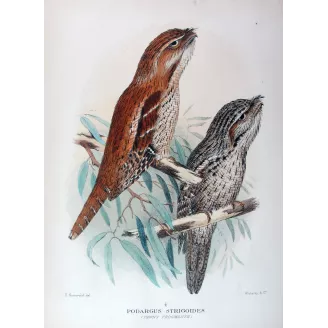
Original lithograph of the Tawny Frogmouth by H. Grönvold from Mathews' Birds of Australia.
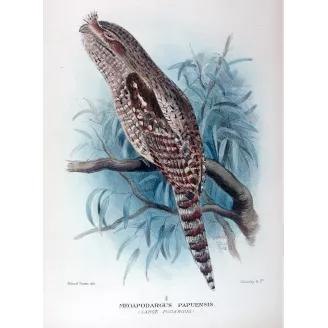
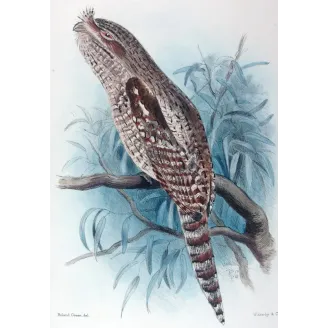
Original lithograph of the Large Podargus by Roland Green from Mathews' Birds of Australia.
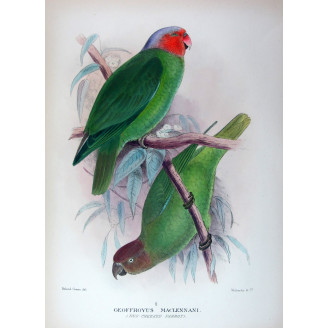
Antique lithograph of the Scarlet-chested Grass Parrot by Roland Green.
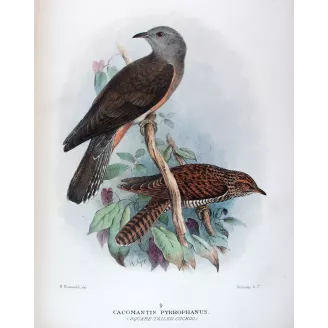
Square-tailed Cuckoo (Cacomantis pyrrophanus) – Original lithograph by Henrik Grønvold.
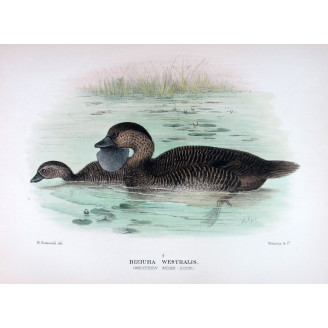
Western Musk Duck (Biziura westensis) – Original antique bird print by H. Grønvold.
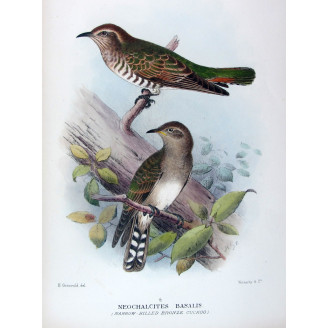
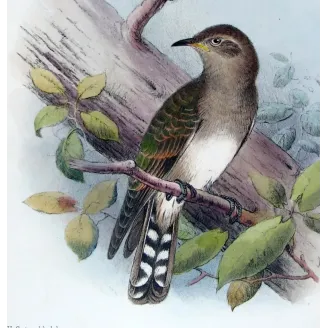
Narrow-billed Bronze Cuckoo (Neochalcites basalis) – Original lithograph by Henrik Grønvold.
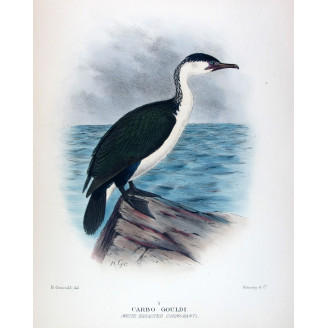
White-breasted Cormorant from Mathews' Birds of Australia, drawn by Grönvold.
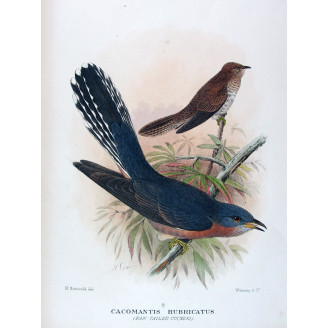
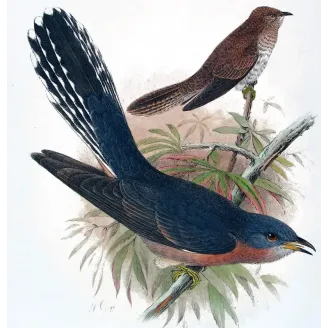
Fan-tailed Cuckoo (Cacomantis rubricatus) – Original lithograph by Henrik Grønvold.
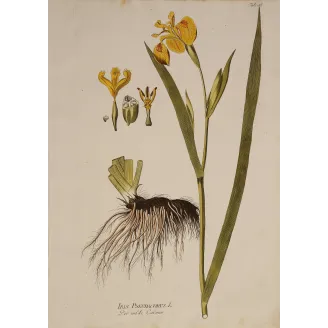
Original hand-coloured copper engraving depicting the Yellow Flag Iris (Iris pseudacorus), published by Joseph Jacob von Plenck in Vienna around 1788 for Icones Plantarum Medicinalium. A refined eighteenth-century botanical illustration distinguished by its elegant composition, beautifully engraved rhizome, luminous yellow flower, selective gum arabic highlights and excellent state of preservation.
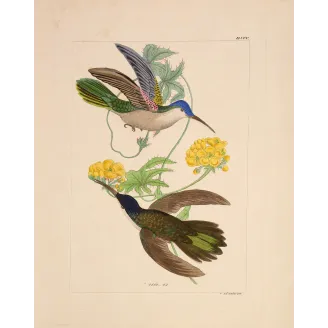
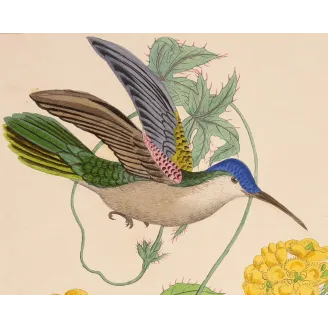
Original nineteenth-century hand-colored engraving depicting the Blue-headed Sabrewing (Saepiopterus lazulus), a tropical hummingbird illustrated by Ludwig Reichenbach in his celebrated Trochilinarum Enumeratio.
Charming pear study by Redouté, showing delicate blossom and ripening fruit. Balanced and refined.
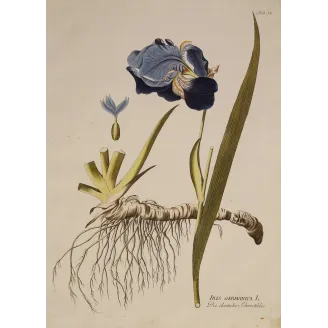
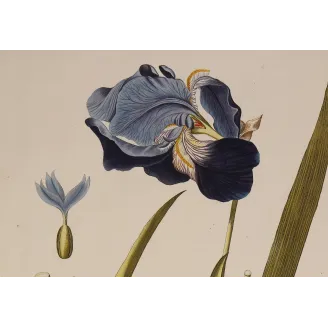
An original eighteenth-century botanical engraving depicting Iris germanica, published in Joseph Jacob von Plenck's celebrated Icones Plantarum Medicinalium. Printed on fine laid paper bearing the Honig watermark, the sheet combines scientific precision with the refined artistic craftsmanship of the Viennese botanical school.
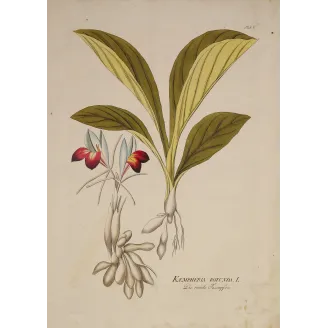
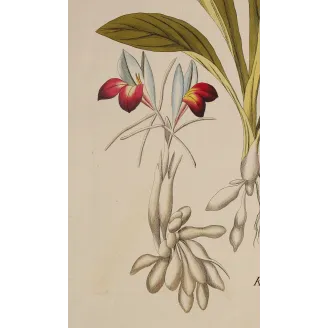
Original eighteenth-century botanical engraving depicting Kaempferia rotunda, published in Vienna by Joseph Jacob von Plenck for Icones Plantarum Medicinalium (Plate 5). The elegant composition combines broad architectural foliage, richly coloured crimson flowers and delicately modelled underground tubers, demonstrating the extraordinary refinement of Plenck's Viennese botanical school. Printed on fine Honig laid paper with visible "IV" watermark.
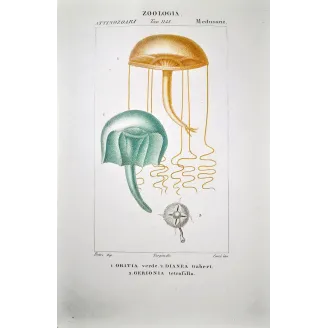
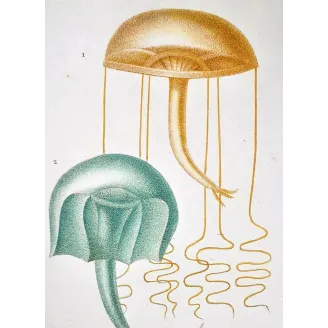
Trio of rare jellyfish types in soft tones, hand-colored lithograph by Prêtre.
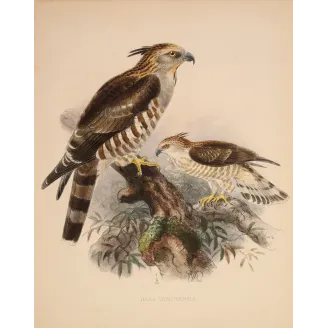
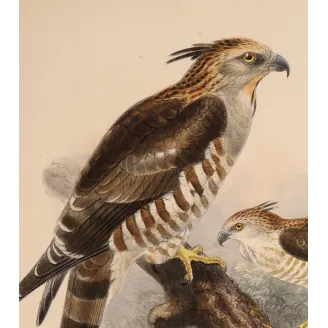
Original antique bird print depicting Baza ceylonensis (Ceylon Hawk-Eagle), illustrated by J.G. Keulemans for A History of the Birds of Ceylon. A striking Victorian ornithological lithograph featuring a refined pair of raptors with strong decorative presence.
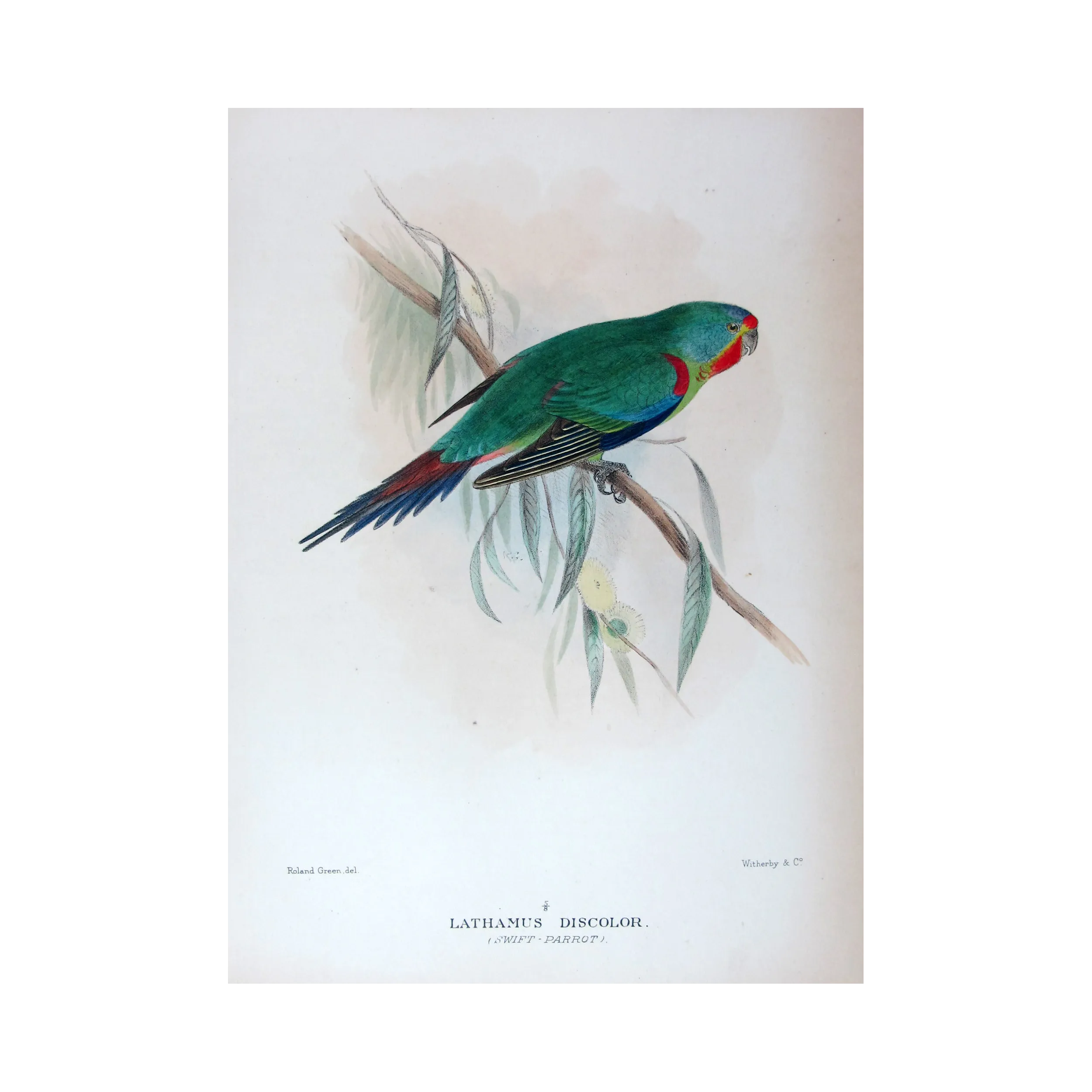
Antique lithograph of the Swift Parrot by Roland Green.