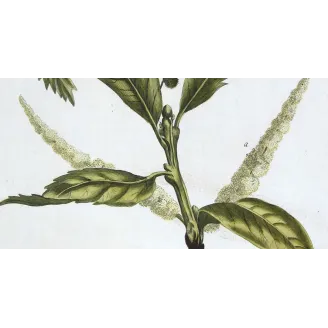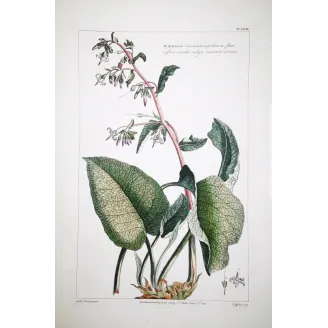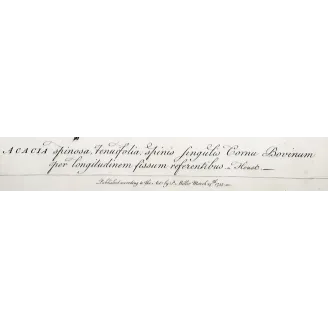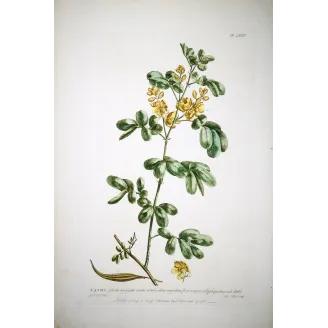
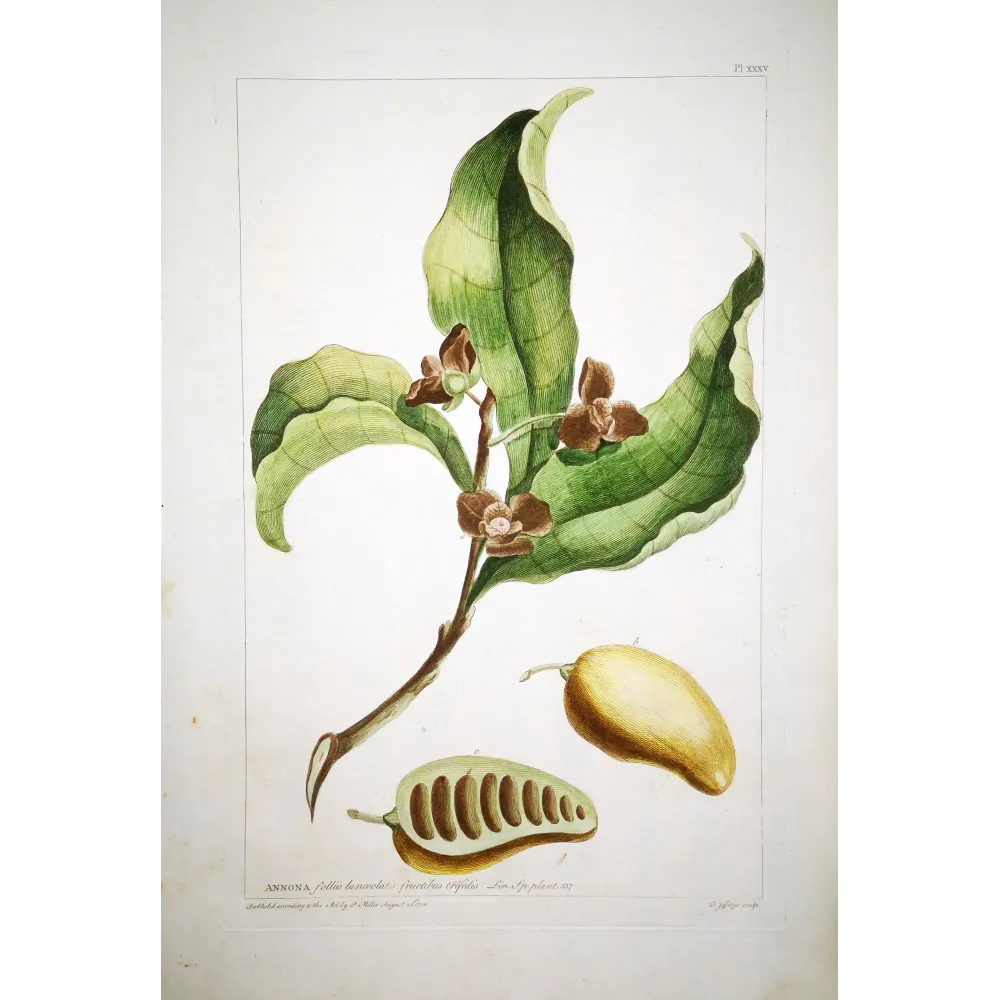
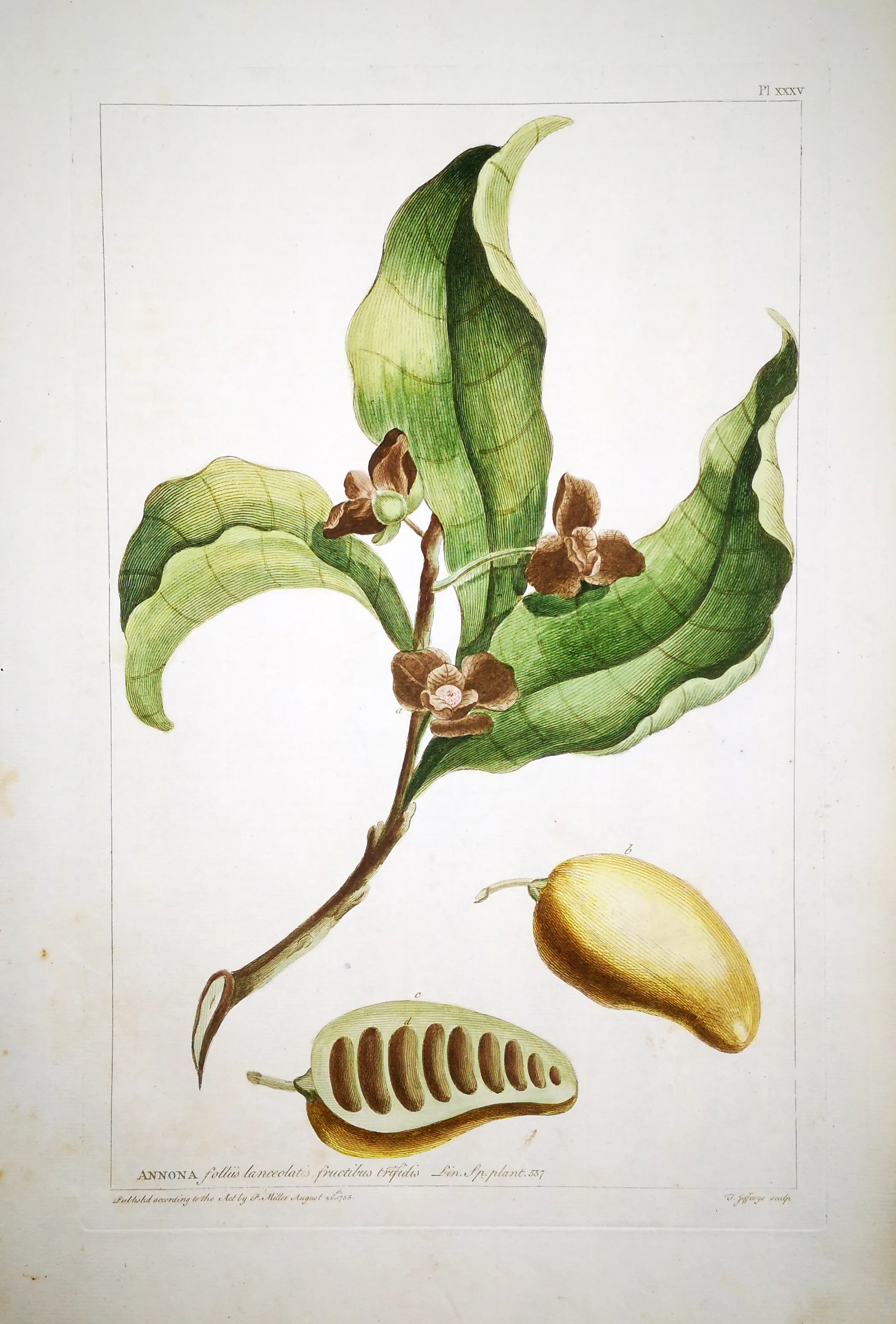

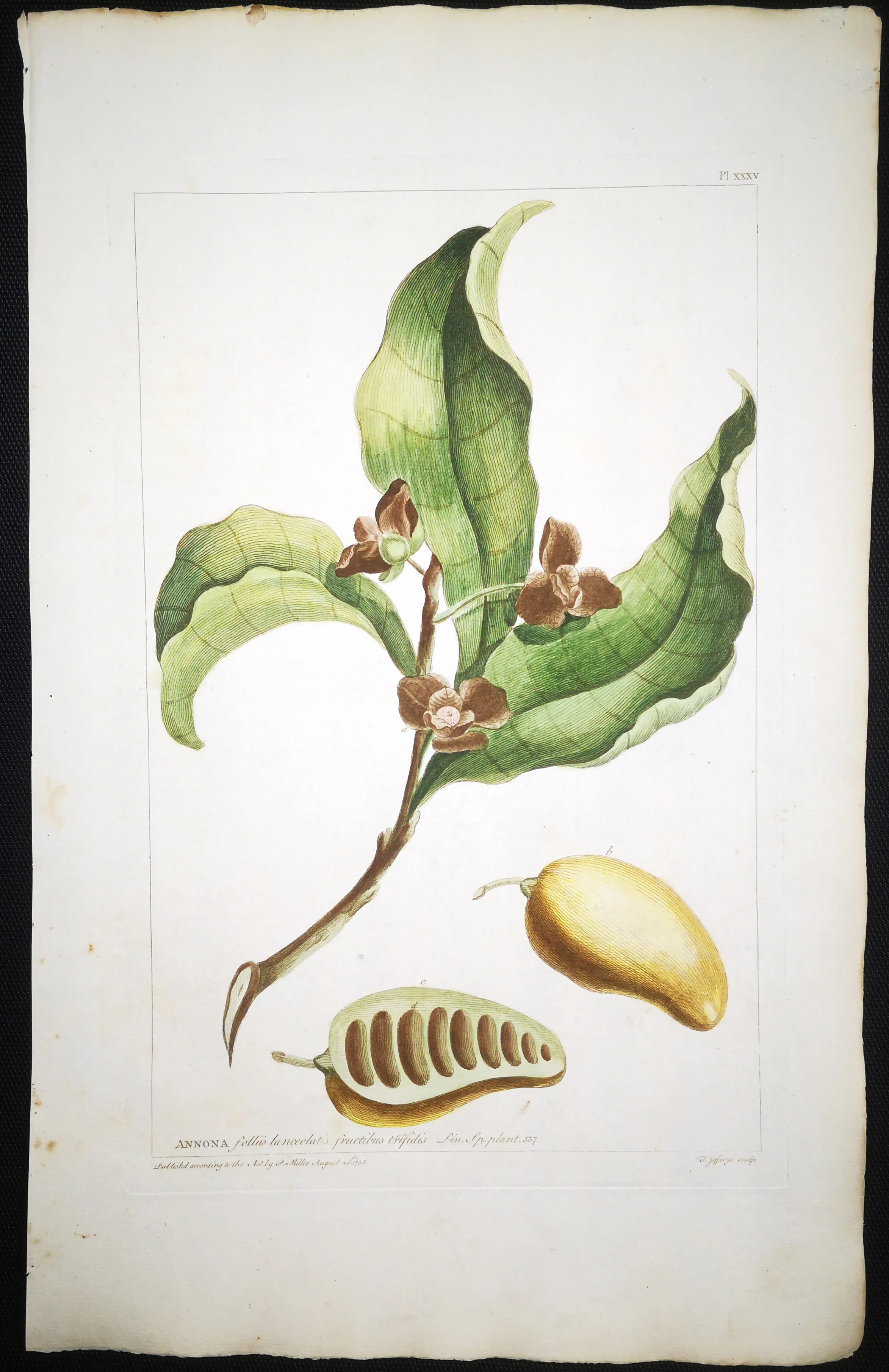
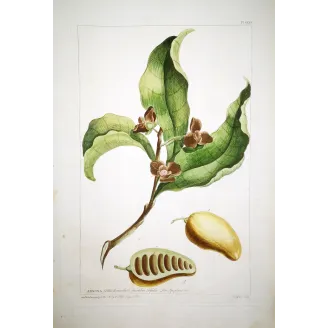
An original 18th-century hand-colored engraving depicting a Custard Apple (Annona sp.), from Philip Miller’s Figures of the Most Beautiful, Useful, and Uncommon Plants. Combining botanical precision with decorative clarity, the composition features both the plant and its distinctive fruit in sectional detail.
 Delivery policy
Your print will be carefully prepared and shipped worldwide via trusted couriers (UPS or similar).
 Authentic antique prints
Original engravings from the 17th–19th century.
This original 18th-century hand-colored copper engraving depicts a Custard Apple (Annona sp.), published in Philip Miller’s Figures of the Most Beautiful, Useful, and Uncommon Plants, issued in London in the mid-18th century.
The composition combines a flowering branch with a detailed representation of the fruit, including a sectional view, reflecting both scientific precision and refined aesthetic sensibility.
— • —
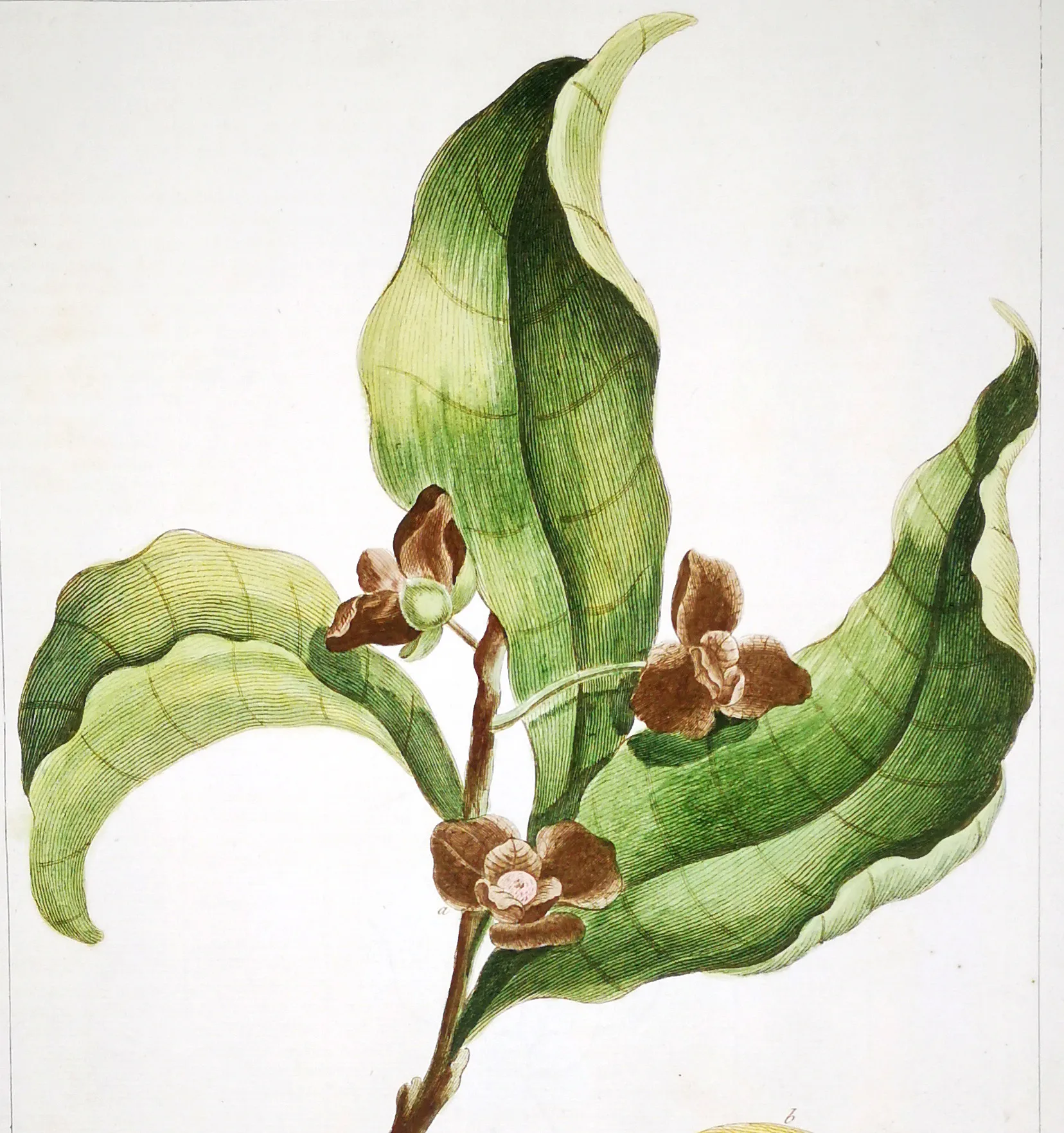
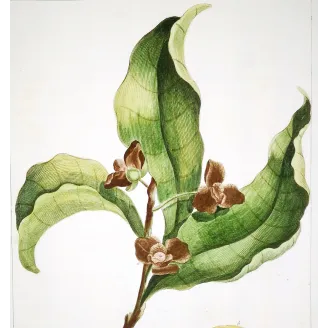
The elegantly curved branch structures the composition with a natural sense of movement, while the broad, softly shaded leaves introduce tonal variation through layered greens. Their undulating forms create a rhythmic flow across the plate, enhancing its visual coherence.
The flowers, rendered in warm brown and soft cream tones, provide a restrained yet sophisticated contrast against the foliage. This subtle palette contributes to the refined and balanced character of the engraving, avoiding excess while preserving visual richness.
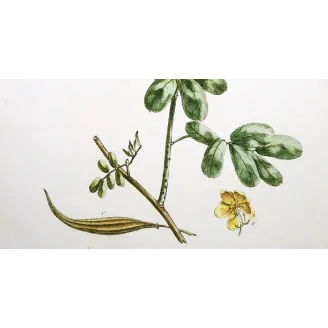
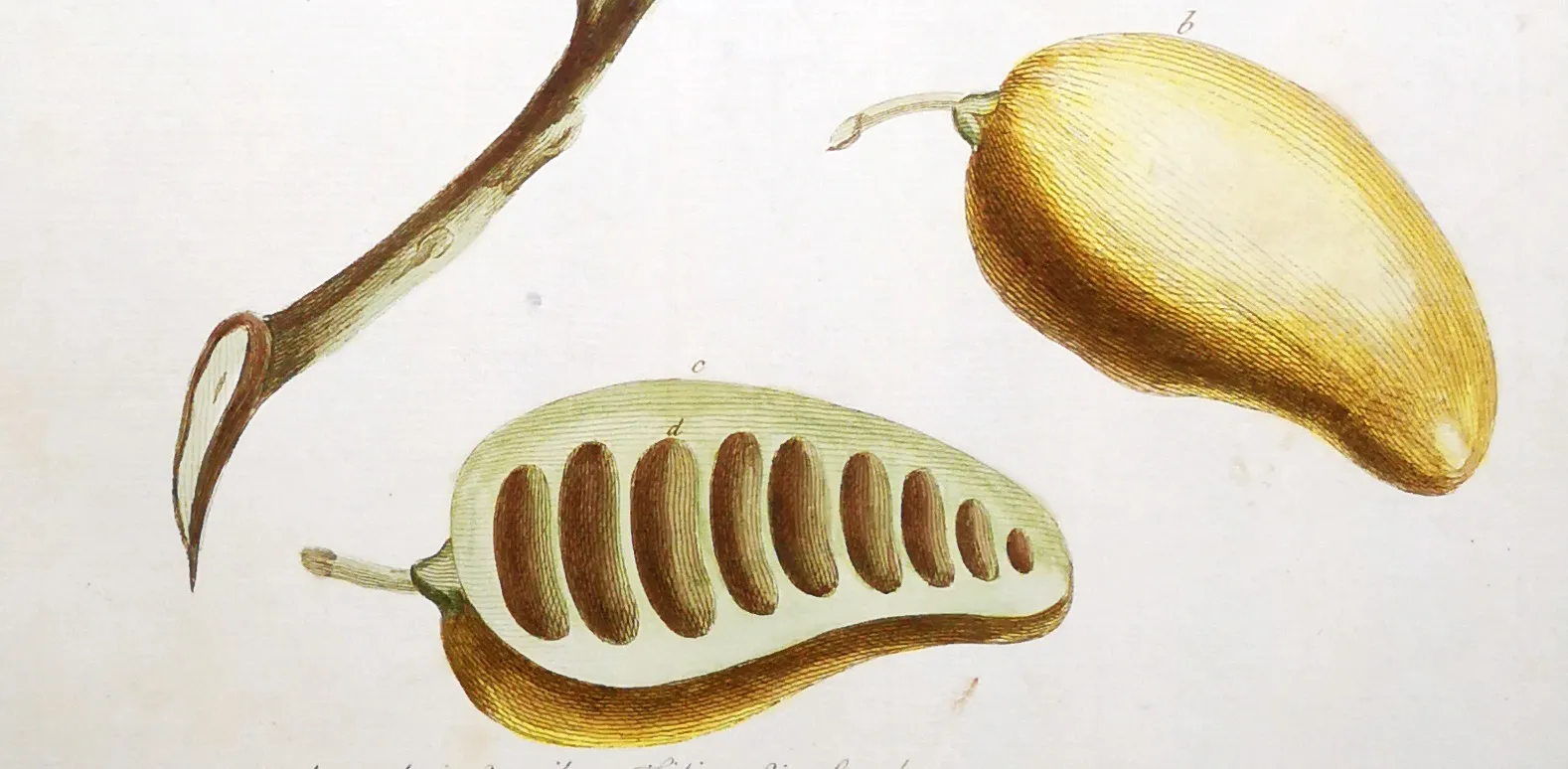
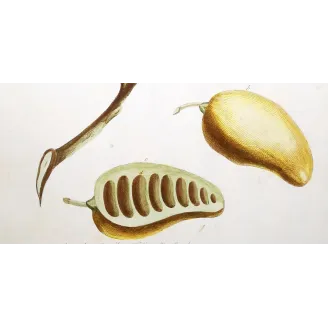
In the lower section, the fruit is presented both whole and in cross-section, revealing its internal structure with remarkable clarity. This dual representation reinforces the scientific purpose of the image while adding a strong decorative element through its distinctive geometry and warm coloration.
The result is a composition of quiet sophistication, where botanical observation and visual elegance are held in perfect balance, creating a work with both intellectual and decorative appeal.
Plants of the genus Annona were among the exotic species introduced into European botanical collections during the 18th century. Valued for their unusual fruits and tropical origin, they attracted both scientific interest and horticultural curiosity.
Their inclusion in Miller’s work reflects the expanding global knowledge of plant species during the Enlightenment, when botanical illustration played a central role in documenting and communicating newly encountered flora.
This engraving forms part of Philip Miller’s celebrated botanical publication, closely associated with the scientific activity of the Chelsea Physic Garden and the broader development of Enlightenment botany in Britain.
Miller’s work is renowned for presenting rare and exotic plants with both botanical discipline and refined visual clarity, making it one of the most important illustrated botanical works of the 18th century.
Explore the broader botanical context in our editorial feature: Philip Miller — Botanical Science and the Art of Cultivation .
Browse the complete collection: Miller – Uncommon Plants Collection , featuring original 18th-century engravings that combine scientific precision with refined decorative presence.
Excellent antique condition. A particularly crisp and fresh impression, with exceptionally well-preserved original hand-coloring. Printed on fine 18th-century laid paper, retaining generous margins and a remarkably bright and clean appearance. The sheet shows a pictorial watermark clearly visible in the paper. Minor signs of age may be present at the extreme edges, as expected, but the print remains exceptionally well preserved overall.
Specific References
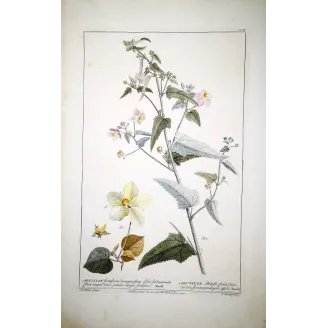
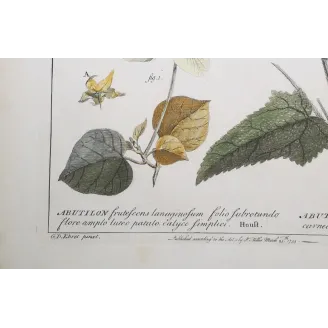
A refined botanical engraving depicting Abutilon, illustrating the balance between structural clarity and delicate floral detail in 18th-century botany.
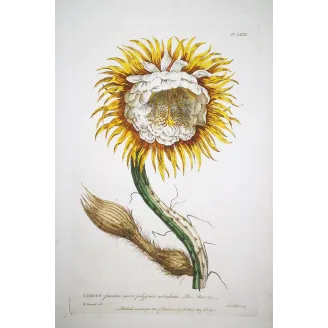
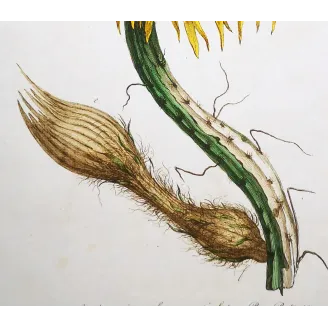
A dramatic Cereus engraving by Richard Lancake, featuring a luminous night-blooming flower from Miller’s celebrated 18th-century botanical work.
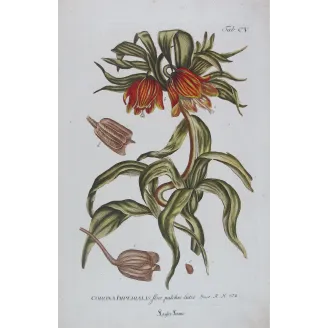
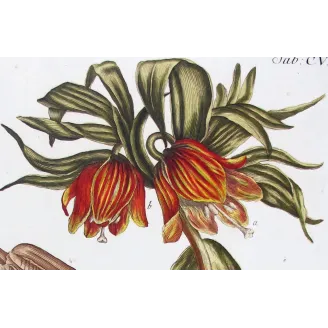
A striking 18th-century botanical engraving of Crown Imperial (Fritillaria imperialis), distinguished by unusually bold hand-coloring and a dynamic, flowing composition. This plate exemplifies the expressive character of German botanical illustration, combining strong visual presence with refined natural observation.
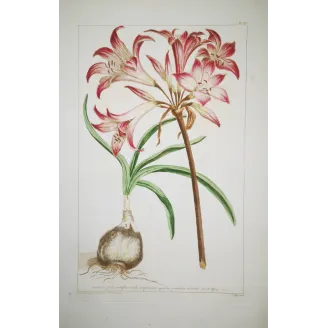
An elegant 18th-century botanical engraving of the Belladonna Lily (Amaryllis belladonna), published in Philip Miller’s Figures of the Most Beautiful, Useful, and Uncommon Plants. Presented in exceptional “like brand new” condition, this plate combines scientific clarity with refined decorative appeal, enhanced by fresh original hand-coloring.
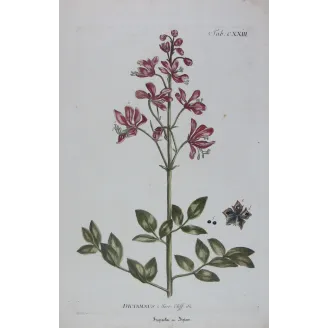
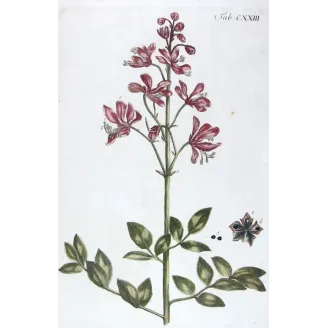
A refined 18th-century botanical engraving depicting Dictamnus albus, known for its elegant pink blossoms and structured foliage. The balanced composition and delicate hand-coloring make this a highly decorative and versatile botanical print.
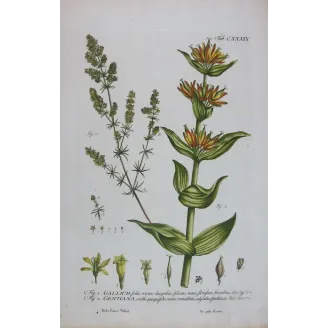
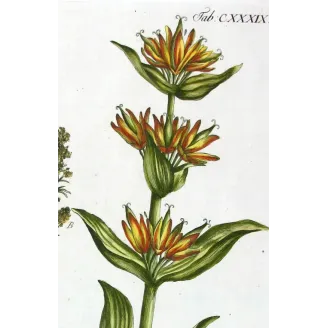
An elegant 18th-century botanical engraving depicting Gentian and Bedstraw, combining structured vertical growth with delicate botanical detail. The vivid hand-coloring and dual composition create a refined and visually engaging natural history print.
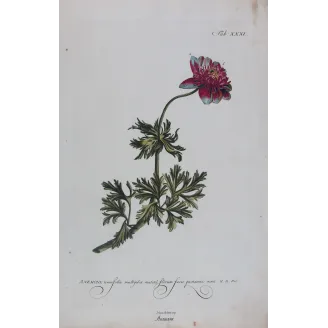
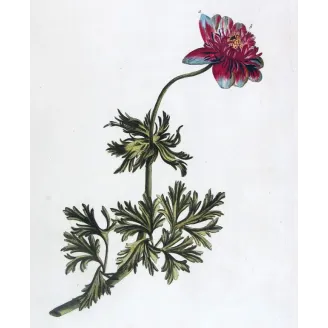
A refined 18th-century botanical engraving depicting an Anemone (Anemone tenuifolia), distinguished by bold hand-coloring and a delicate, minimal composition. The vivid flower contrasts elegantly against the open background, creating a refined decorative presence.
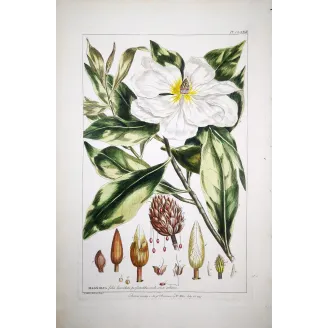
A refined Magnolia engraving by Johann Sebastian Mueller, combining botanical precision with elegant 18th-century composition.
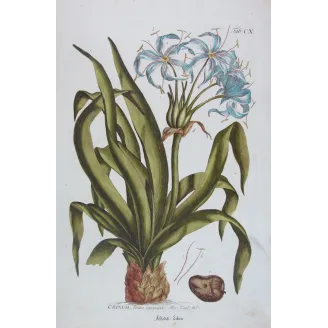
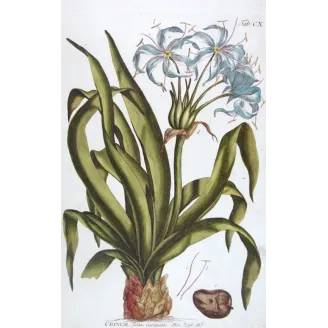
A striking 18th-century botanical engraving depicting a Blue Crinum Lily (Crinum sp.), distinguished by bold hand-coloring and an elegant vertical composition. The vivid blue blossoms and sculptural foliage exemplify the expressive character of German botanical illustration.
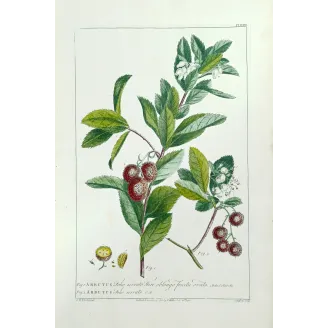
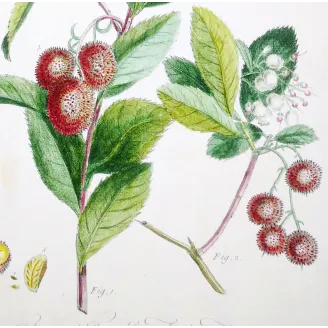
A vibrant Arbutus engraving by Georg Dionysius Ehret from Miller’s 1755 botanical work, combining botanical precision with striking decorative appeal.
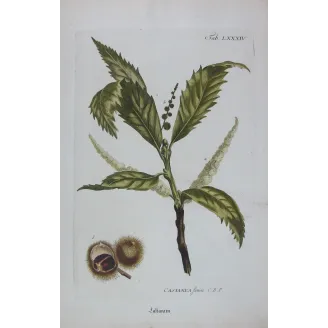
A refined 18th-century botanical engraving depicting the chestnut tree, featuring detailed foliage and characteristic fruit. The balanced composition and original hand-coloring create a visually rich and highly decorative natural history print.
Borage Plant (Borrago sp.) – Antique Hand-Colored Engraving by Ehret (1756).
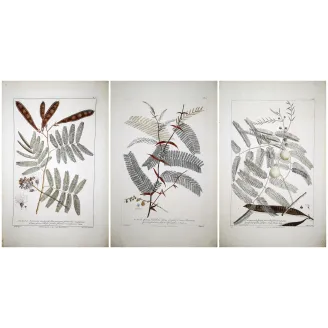
A curated group of three Acacia engravings by Georg Dionysius Ehret, offering a coherent botanical study of form and variation within the genus.
Original 18th-century hand-colored copper engraving depicts a species of Cassia (now commonly associated with the genus Senna)
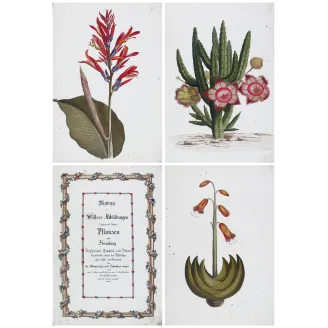
A rare set of four original 18th-century botanical watercolors, entirely hand-painted and rich in color and detail. A curated ensemble combining scientific observation with decorative elegance — perfect for refined interiors and collectors.
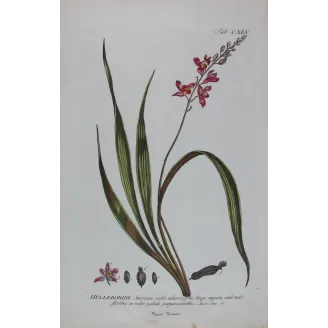
An elegant 18th-century botanical engraving depicting Helleborine, characterized by slender foliage and delicate pink blossoms. The refined vertical composition and original hand-coloring create a balanced and decorative botanical image.
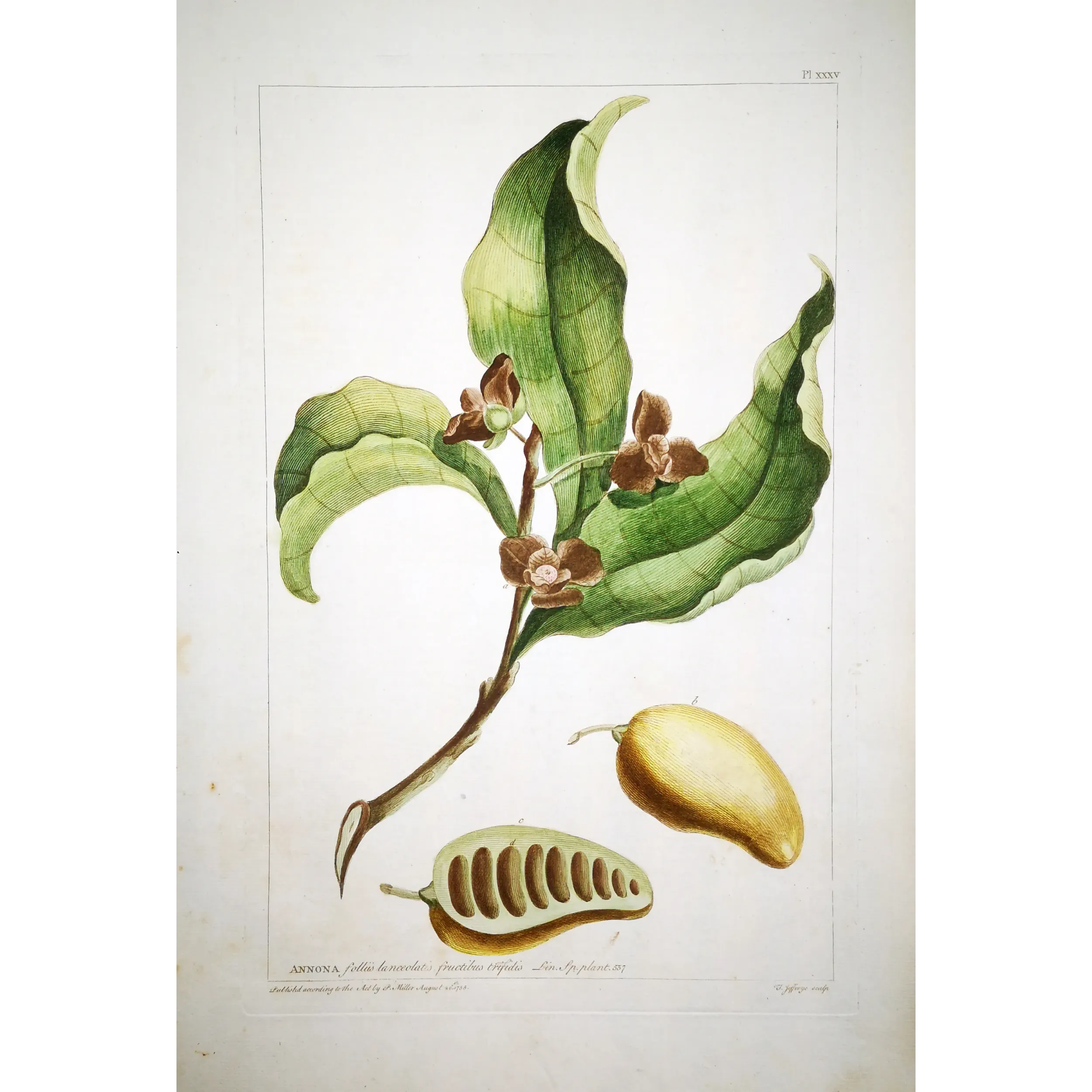
An original 18th-century hand-colored engraving depicting a Custard Apple (Annona sp.), from Philip Miller’s Figures of the Most Beautiful, Useful, and Uncommon Plants. Combining botanical precision with decorative clarity, the composition features both the plant and its distinctive fruit in sectional detail.