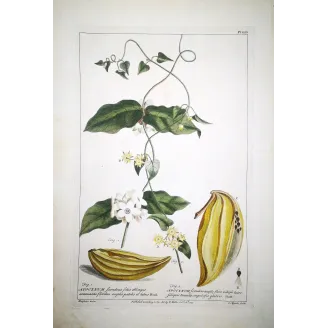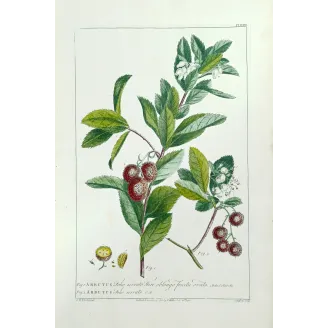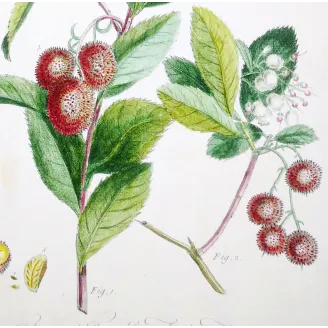
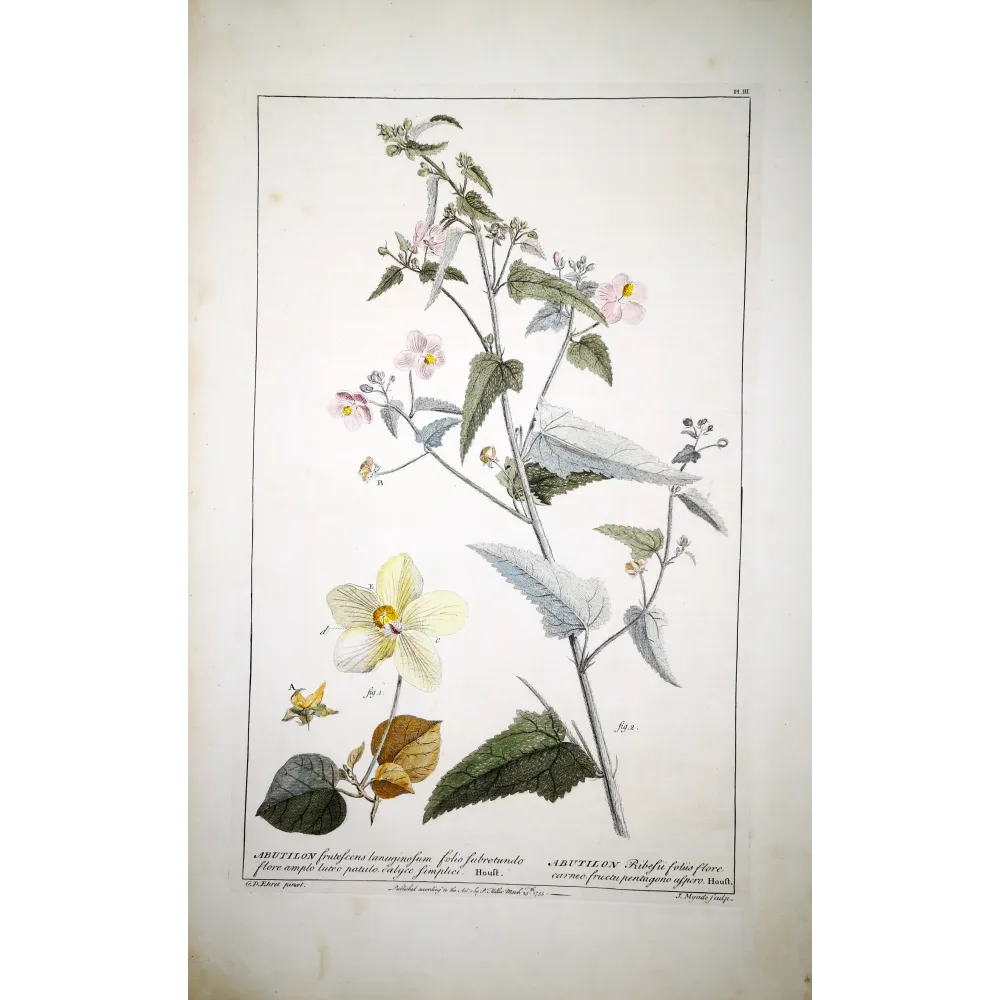
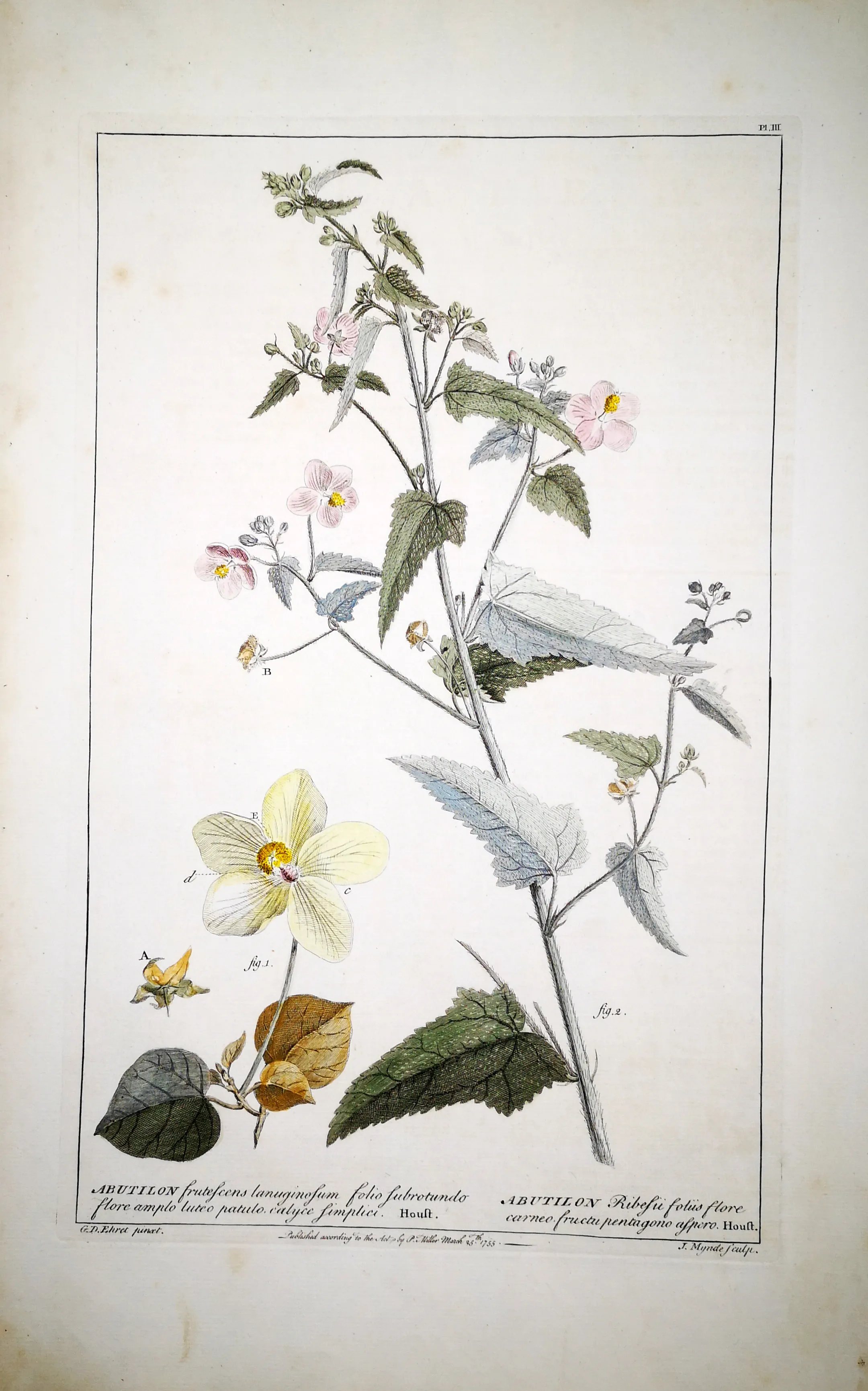
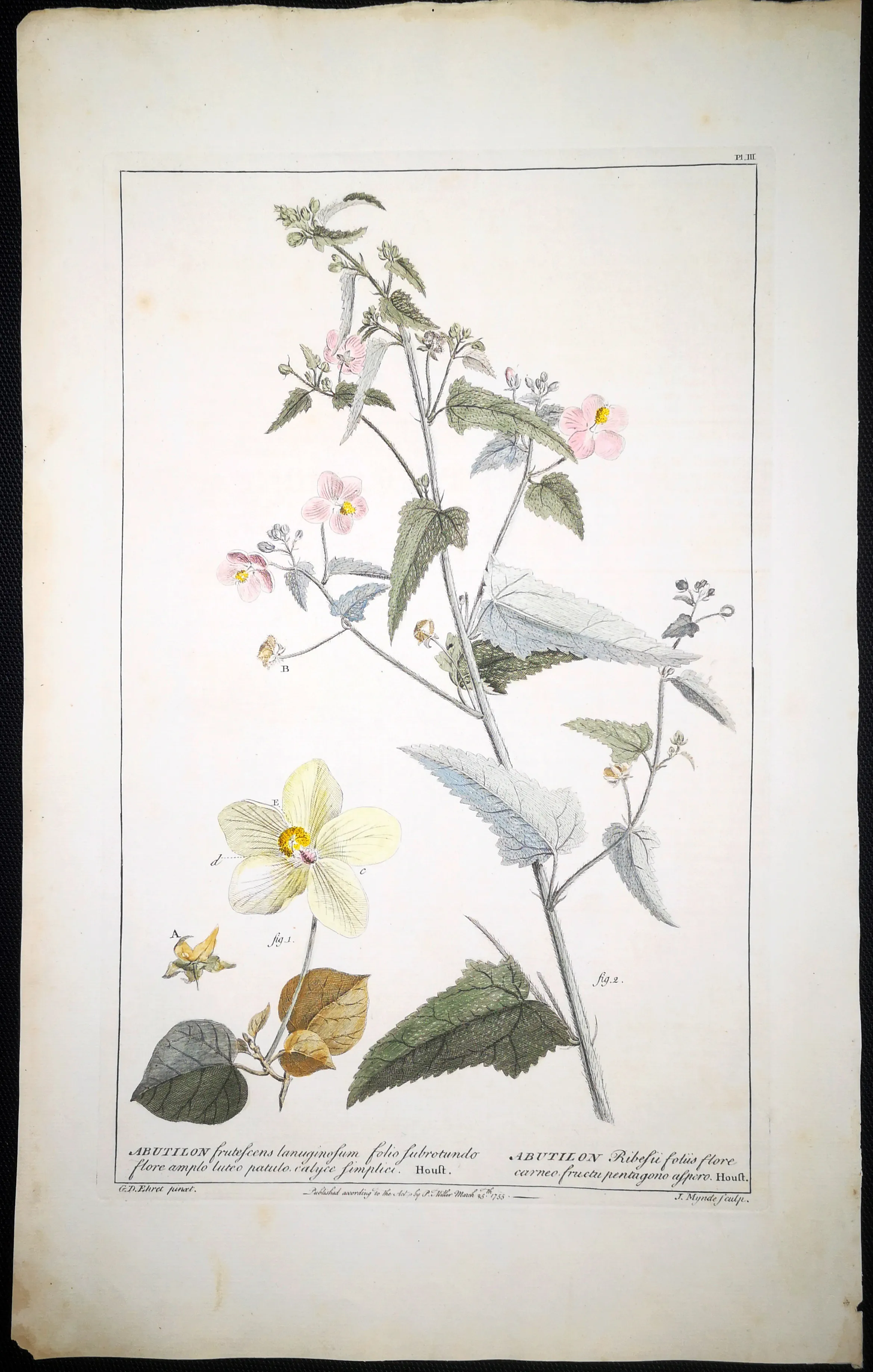

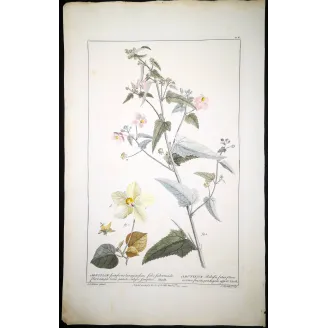
A refined botanical engraving depicting Abutilon, illustrating the balance between structural clarity and delicate floral detail in 18th-century botany.
 Delivery policy
Your print will be carefully prepared and shipped worldwide via trusted couriers (UPS or similar).
 Authentic antique prints
Original engravings from the 17th–19th century.
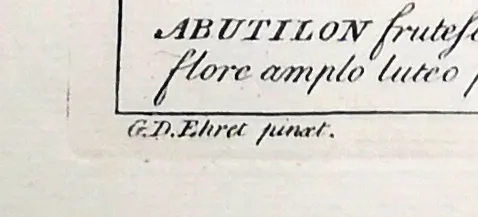
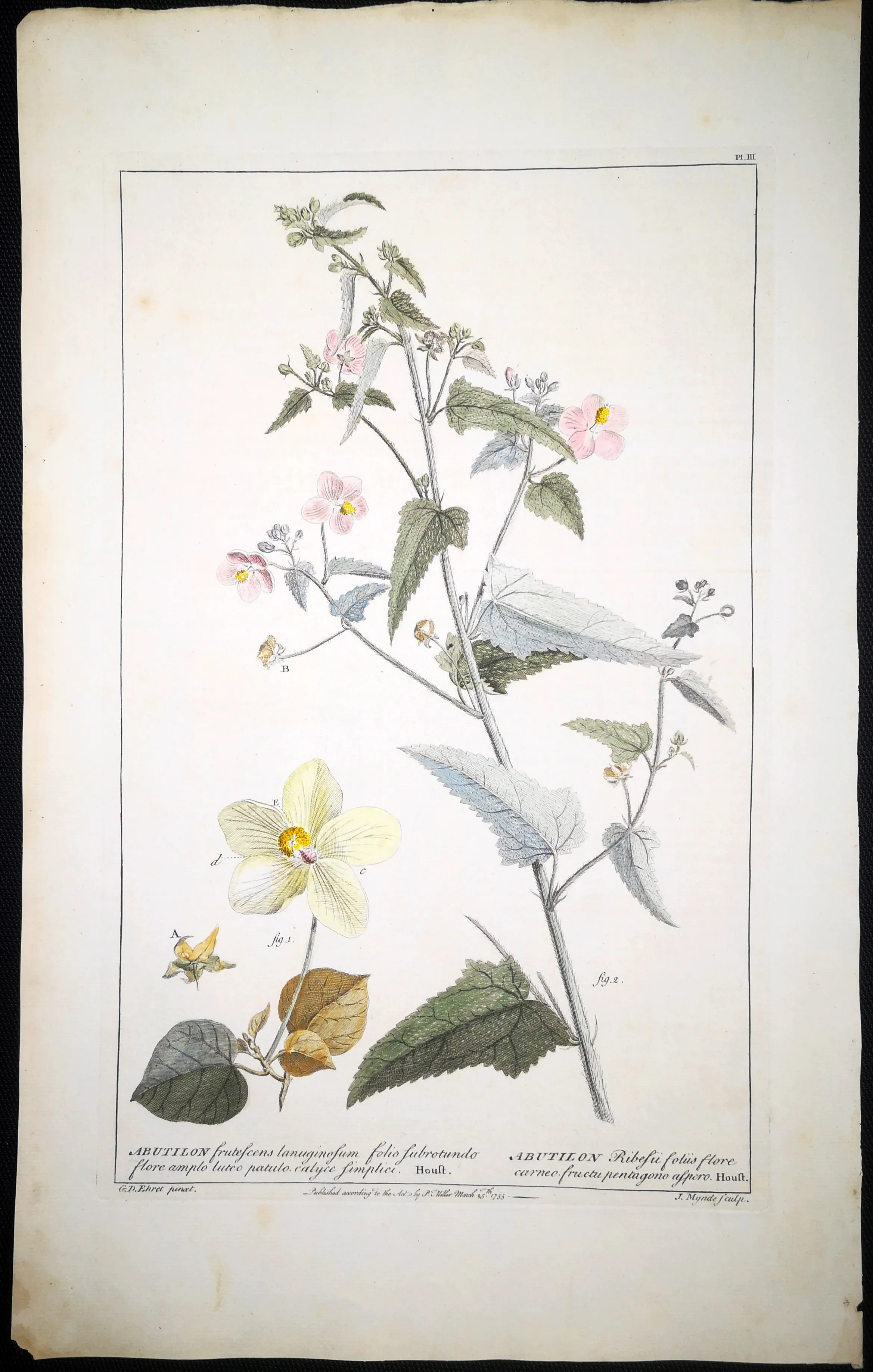
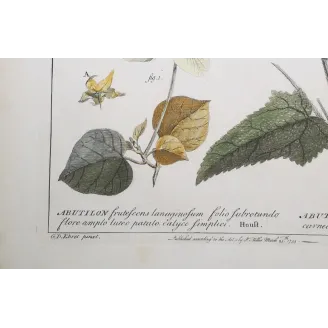
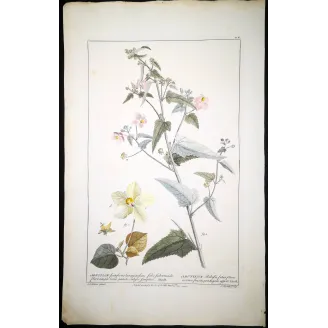
This original 18th-century hand-colored copper engraving depicts a species of Abutilon, illustrated by Georg Dionysius Ehret for Philip Miller’s Figures of the Most Beautiful, Useful, and Uncommon Plants, published in London between 1755 and 1760. The work represents a key moment in botanical illustration, where scientific observation was translated into a precise and highly legible visual form.
Drawn from living specimens cultivated at the Chelsea Physic Garden, the composition reflects a careful study of structure and variation, characteristic of Miller’s approach to botanical classification.
— • —
The engraving presents the plant in a clear vertical structure, with branching stems supporting a sequence of leaves and blossoms. The finely serrated foliage introduces texture and movement, while the soft coloration enhances the naturalistic quality of the composition.
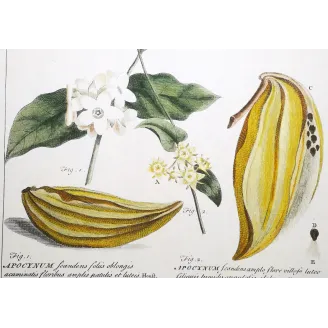
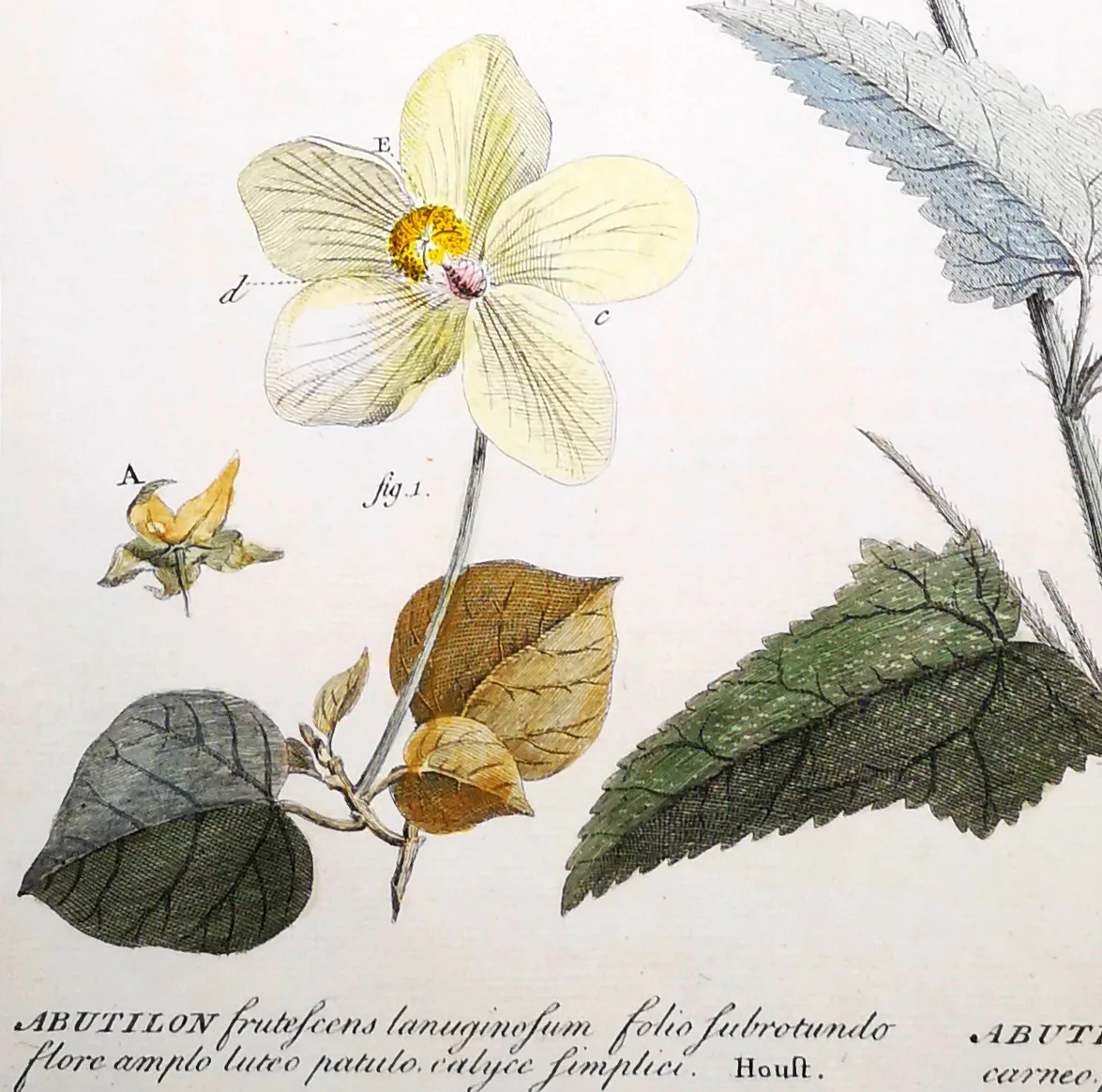
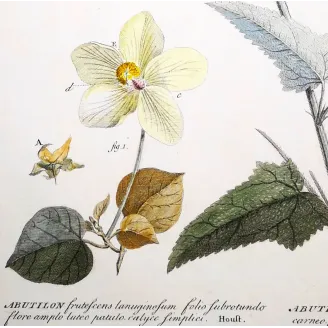
Particular attention is given to the flowers, rendered in subtle tones of pale yellow and soft pink. Their delicate form contrasts with the more defined geometry of the leaves, creating a balanced and harmonious visual relationship.
Additional botanical details — including isolated elements and sectional studies — enrich the plate, reflecting the scientific intent of the work while maintaining a refined decorative presence.
The clarity of the background allows the plant to emerge with precision, a defining feature of Ehret’s contribution to botanical illustration during the Enlightenment.
The genus Abutilon includes a variety of flowering plants valued for their ornamental qualities and delicate blossoms. Known for their soft petals and structured foliage, these plants were cultivated in botanical gardens across Europe and studied for their morphological diversity.
In the context of 18th-century botany, such species contributed to a broader understanding of plant classification and the relationship between form and function.
This engraving belongs to Philip Miller’s Figures of the Most Beautiful, Useful, and Uncommon Plants, a landmark publication of the mid-18th century. Produced under Miller’s supervision, the plates were drawn from living plants and executed by leading botanical artists, including Georg Dionysius Ehret.
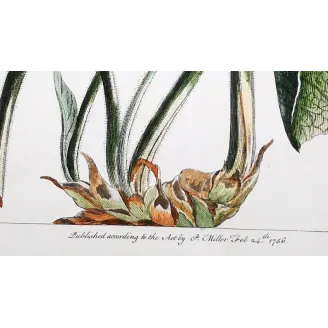
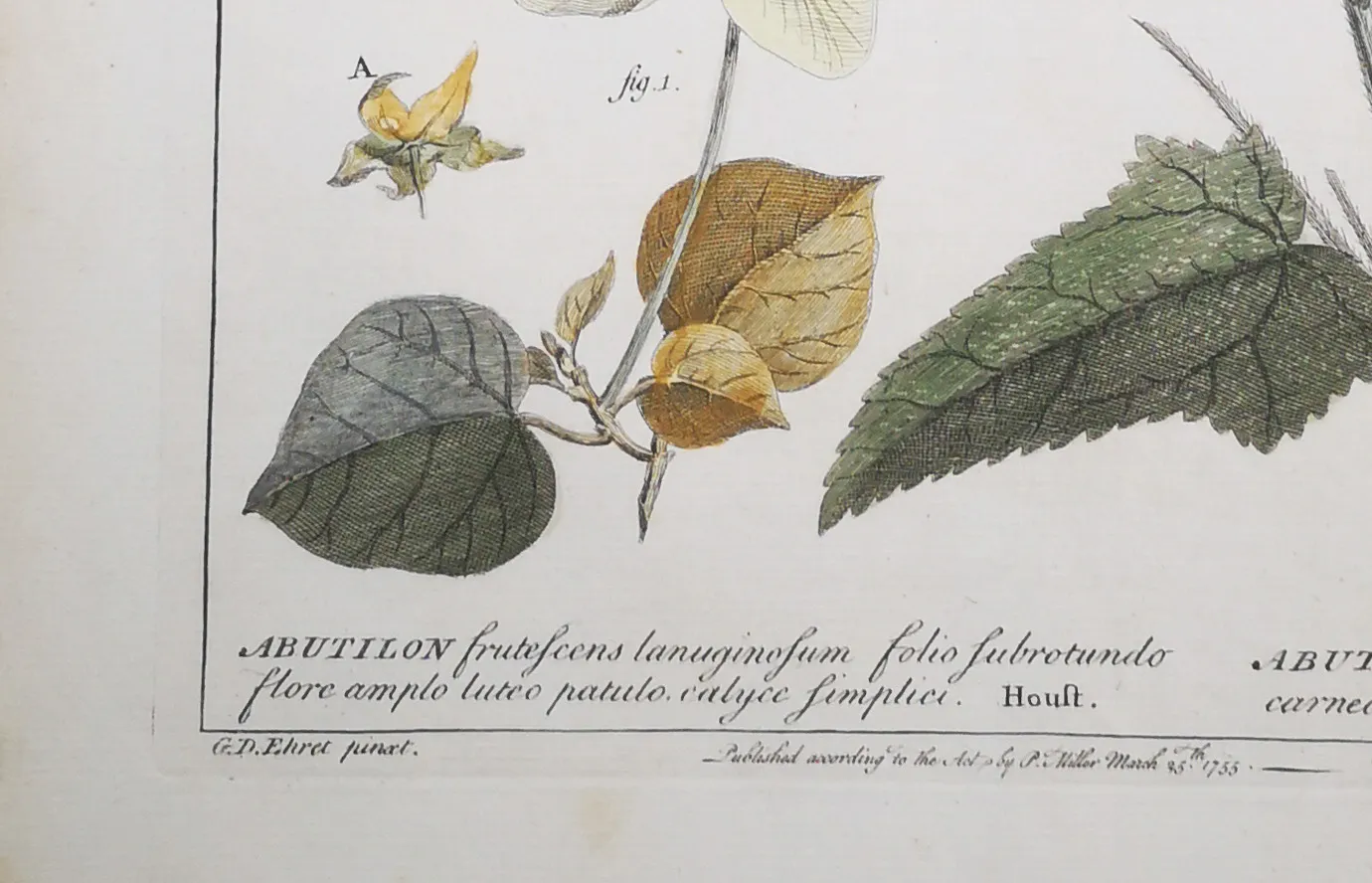
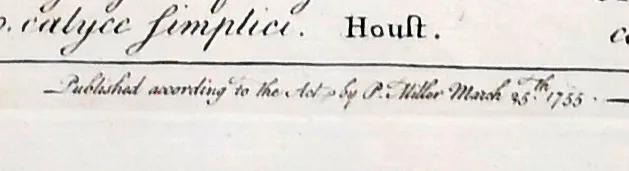
The engraving bears a publication line stating “Published according to Act of Parliament”, dated 1755, confirming its origin within the first edition of the work.
Discover more about the artist: Georg Dionysius Ehret — The Art of Botanical Precision .
Browse the complete collection: Miller – Uncommon Plants Collection , featuring original 18th-century engravings that combine scientific precision with refined decorative presence.
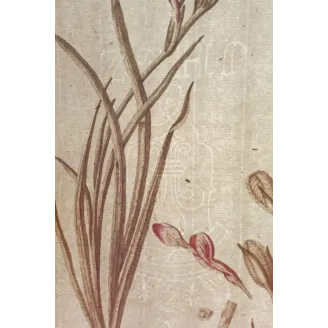
Very good antique condition. The engraving retains a strong, clear impression with finely preserved original hand-coloring. Printed on high-quality 18th-century laid paper, with visible texture and structure. The margins remain generous and well balanced. A light sign of handling is visible along the left margin, together with a few small lightly toned spots. The sheet also shows a watermark with the visible letter “W” in the paper. These minor signs remain fully consistent with the period and do not affect the overall visual quality of the engraving.
Specific References
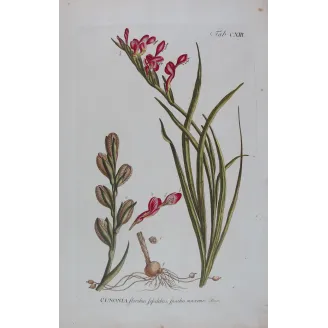
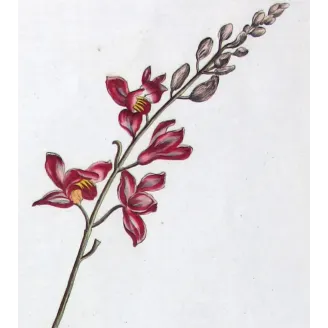
A refined 18th-century botanical engraving depicting Cunonia sp., distinguished by bold original hand-coloring and an elegant vertical composition. The vivid pink blossoms, slender leaves, and exposed bulb create a decorative image of strong botanical character.
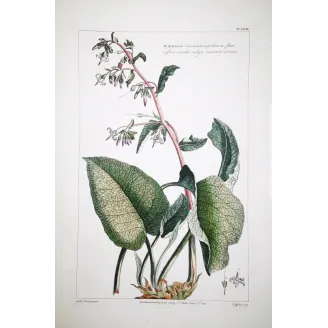
Borage Plant (Borrago sp.) – Antique Hand-Colored Engraving by Ehret (1756).
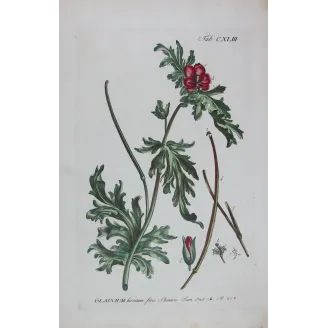
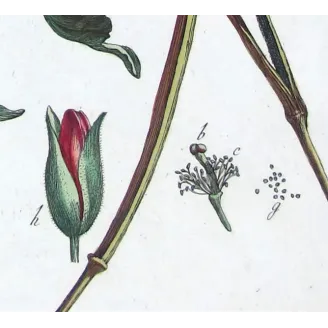
A striking 18th-century botanical engraving depicting Glaucium, featuring bold red blossoms and intricately shaped foliage. The expressive composition and original hand-coloring create a vivid and decorative botanical image.
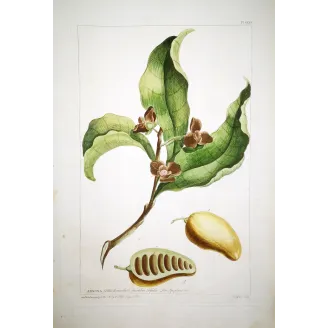
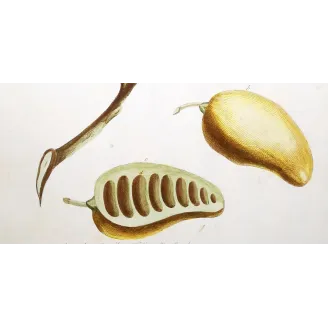
An original 18th-century hand-colored engraving depicting a Custard Apple (Annona sp.), from Philip Miller’s Figures of the Most Beautiful, Useful, and Uncommon Plants. Combining botanical precision with decorative clarity, the composition features both the plant and its distinctive fruit in sectional detail.
An original 18th-century hand-colored engraving depicting Apocynum scandens, published in Philip Miller’s Figures of the Most Beautiful, Useful, and Uncommon Plants. The composition combines delicate star-shaped flowers, elegant climbing stems, and striking striped seed pods, uniting botanical precision with refined decorative presence.
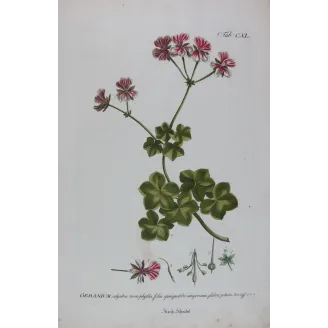
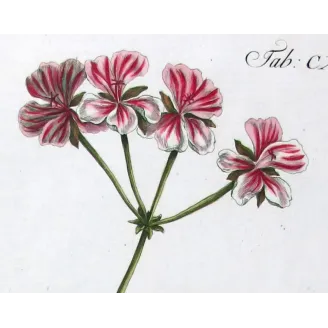
A refined 18th-century botanical engraving depicting Geranium, featuring distinctive rounded foliage and delicate pink blossoms. The balanced composition and original hand-coloring create a harmonious and decorative botanical print.
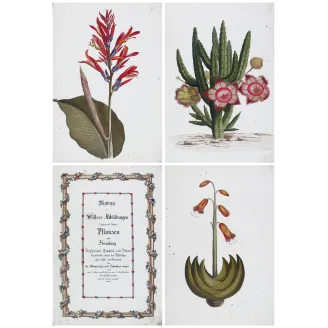
A rare set of four original 18th-century botanical watercolors, entirely hand-painted and rich in color and detail. A curated ensemble combining scientific observation with decorative elegance — perfect for refined interiors and collectors.
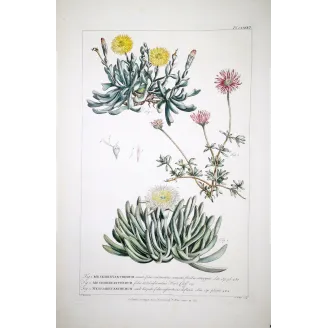
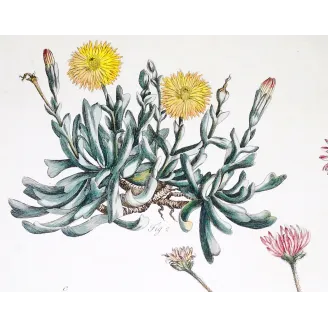
A refined engraving of Mesembryanthemum species by Ehret, combining sculptural succulent forms with delicate floral studies from Miller’s 18th-century work.
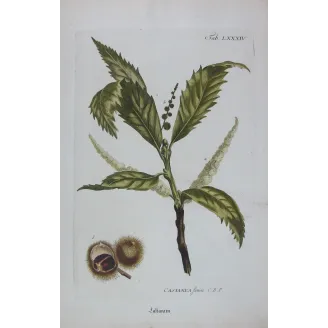
A refined 18th-century botanical engraving depicting the chestnut tree, featuring detailed foliage and characteristic fruit. The balanced composition and original hand-coloring create a visually rich and highly decorative natural history print.
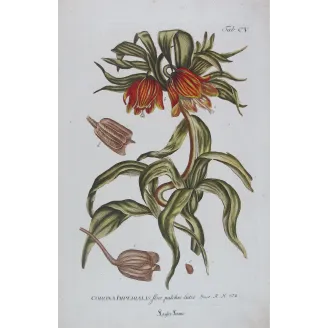
A striking 18th-century botanical engraving of Crown Imperial (Fritillaria imperialis), distinguished by unusually bold hand-coloring and a dynamic, flowing composition. This plate exemplifies the expressive character of German botanical illustration, combining strong visual presence with refined natural observation.
A vibrant Arbutus engraving by Georg Dionysius Ehret from Miller’s 1755 botanical work, combining botanical precision with striking decorative appeal.
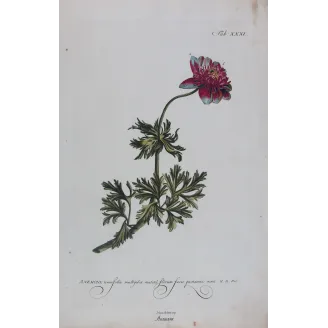
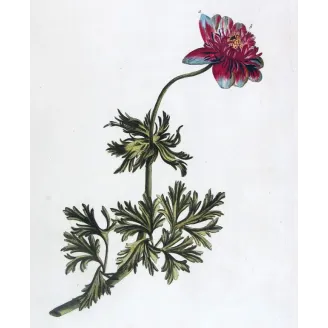
A refined 18th-century botanical engraving depicting an Anemone (Anemone tenuifolia), distinguished by bold hand-coloring and a delicate, minimal composition. The vivid flower contrasts elegantly against the open background, creating a refined decorative presence.
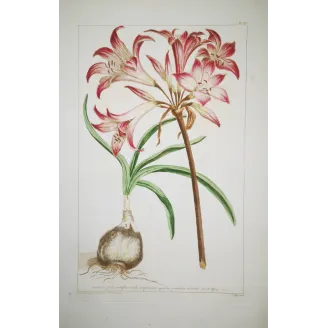
An elegant 18th-century botanical engraving of the Belladonna Lily (Amaryllis belladonna), published in Philip Miller’s Figures of the Most Beautiful, Useful, and Uncommon Plants. Presented in exceptional “like brand new” condition, this plate combines scientific clarity with refined decorative appeal, enhanced by fresh original hand-coloring.
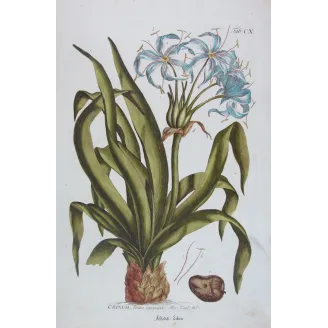
A striking 18th-century botanical engraving depicting a Blue Crinum Lily (Crinum sp.), distinguished by bold hand-coloring and an elegant vertical composition. The vivid blue blossoms and sculptural foliage exemplify the expressive character of German botanical illustration.
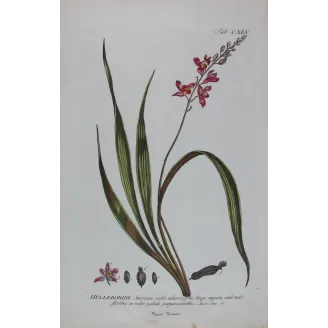
An elegant 18th-century botanical engraving depicting Helleborine, characterized by slender foliage and delicate pink blossoms. The refined vertical composition and original hand-coloring create a balanced and decorative botanical image.
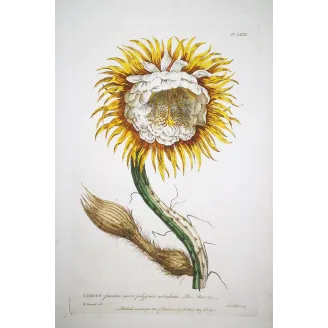
A dramatic Cereus engraving by Richard Lancake, featuring a luminous night-blooming flower from Miller’s celebrated 18th-century botanical work.
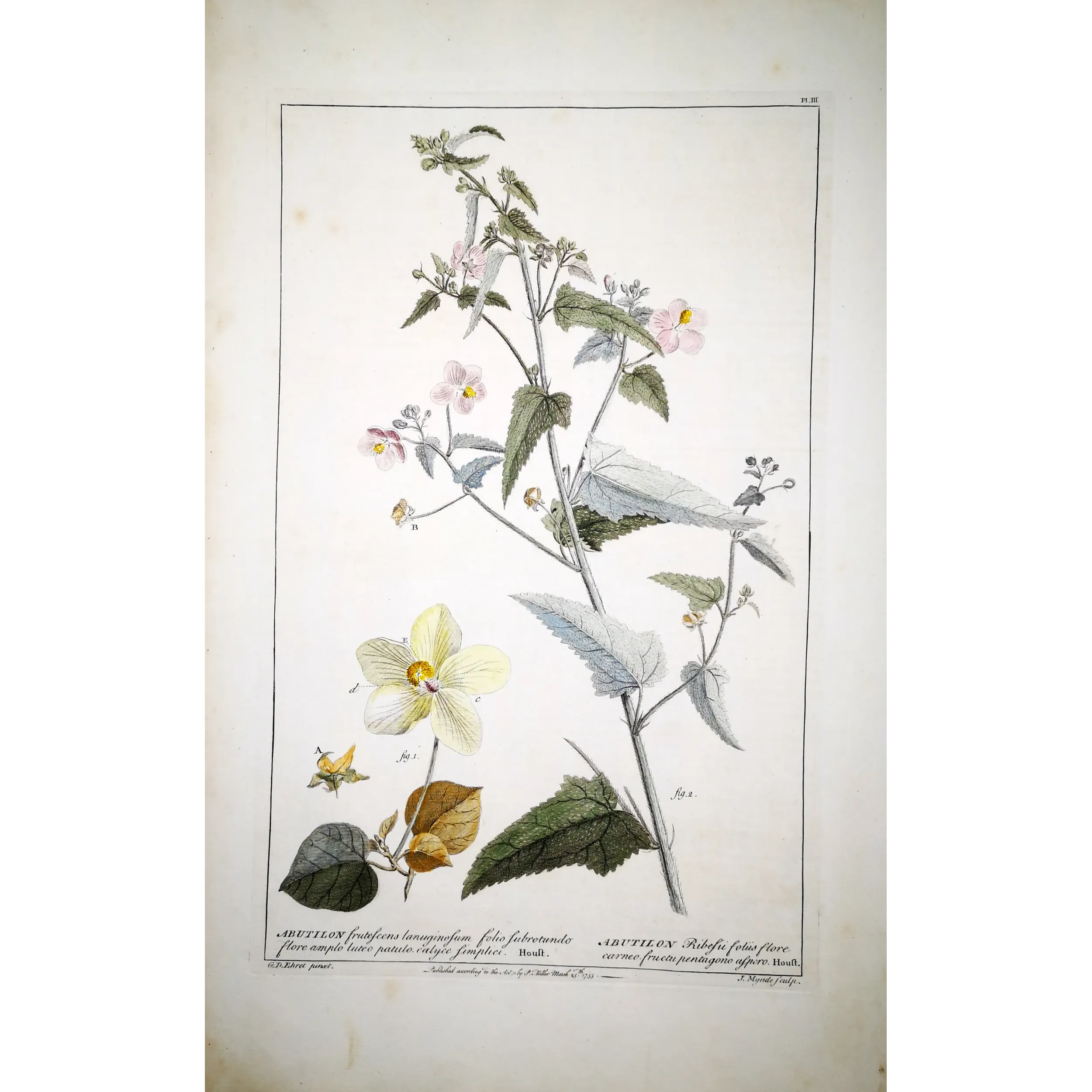
A refined botanical engraving depicting Abutilon, illustrating the balance between structural clarity and delicate floral detail in 18th-century botany.