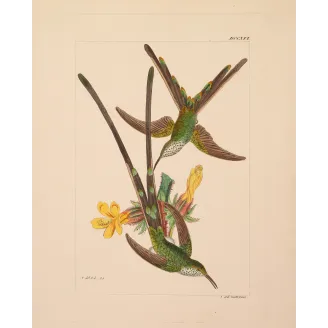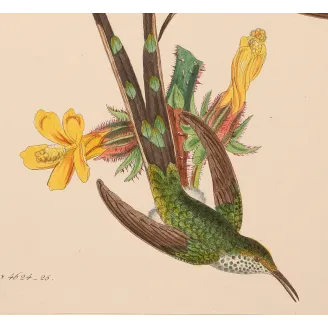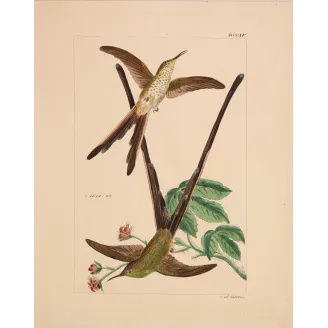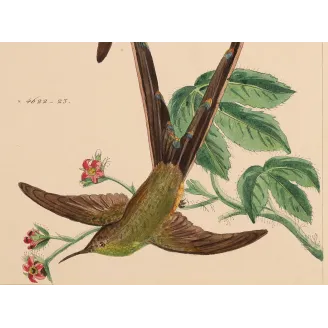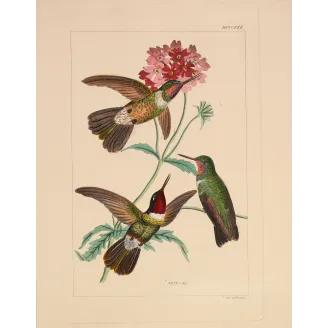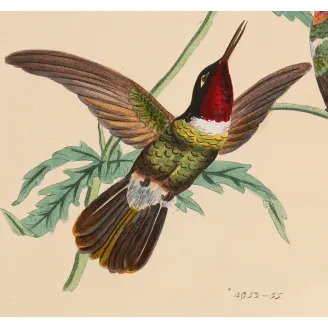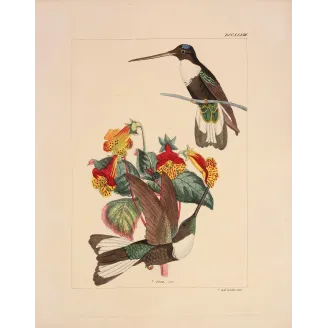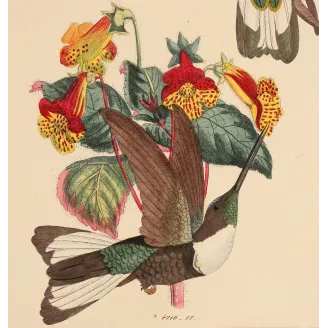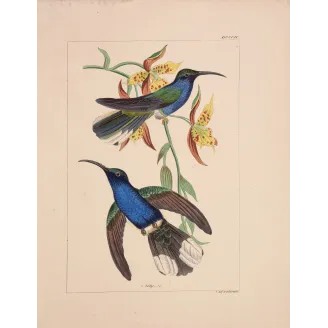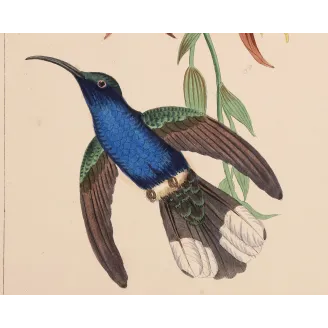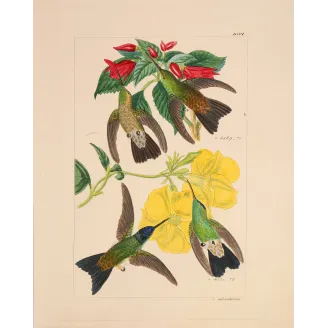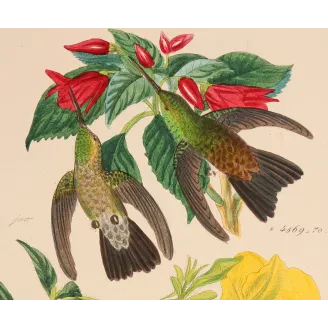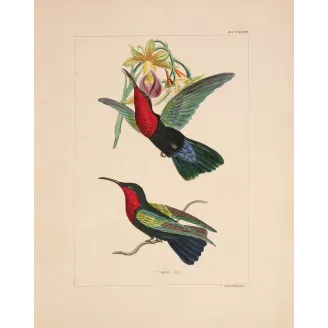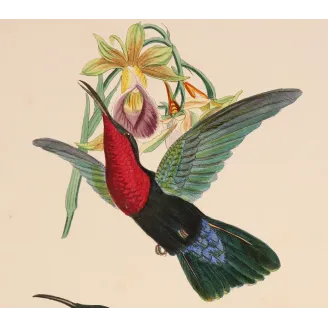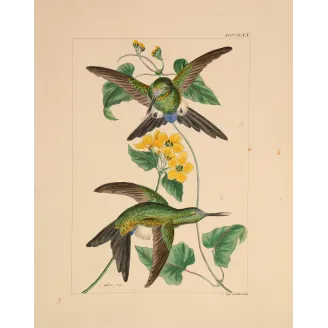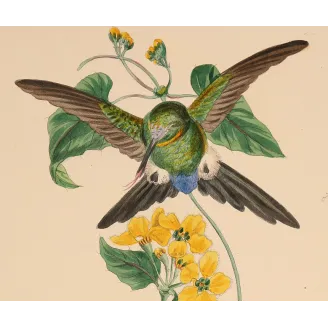
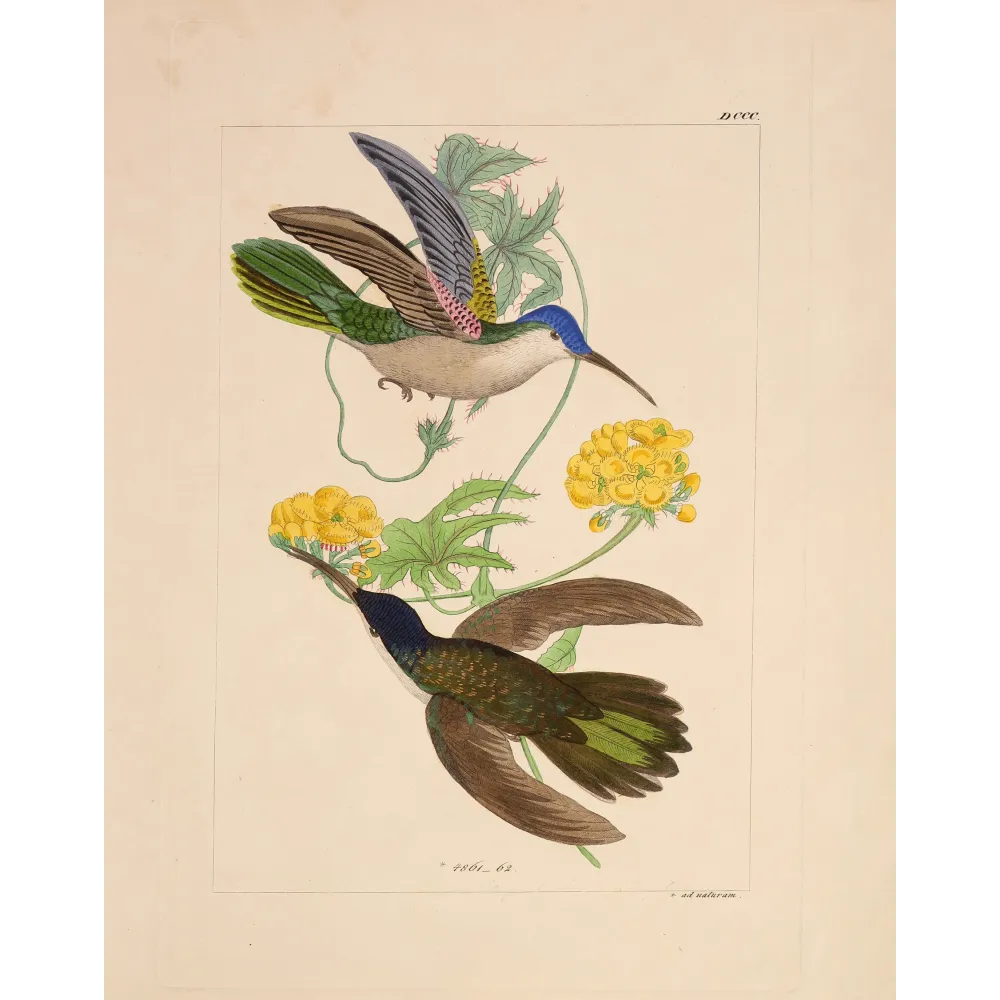
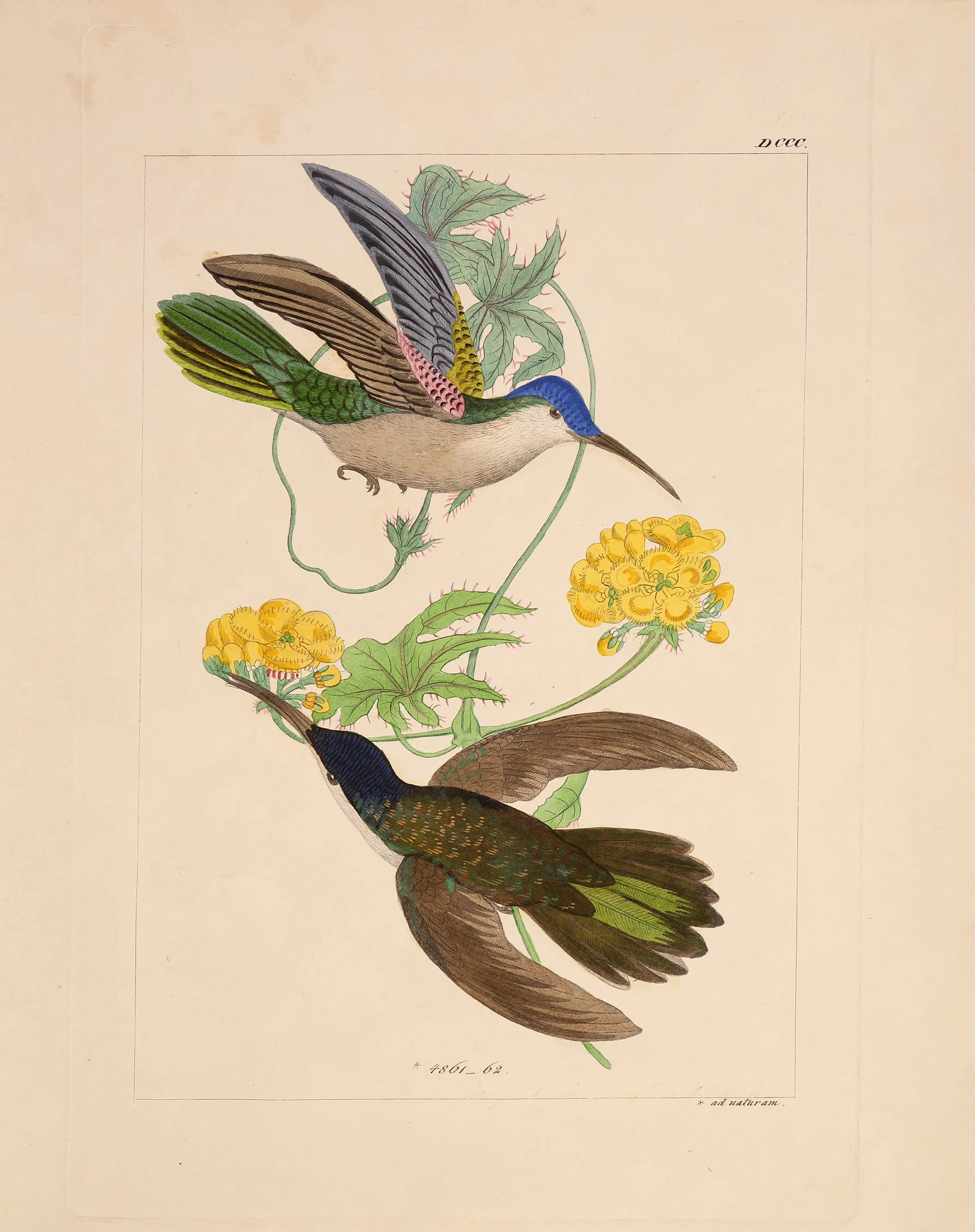
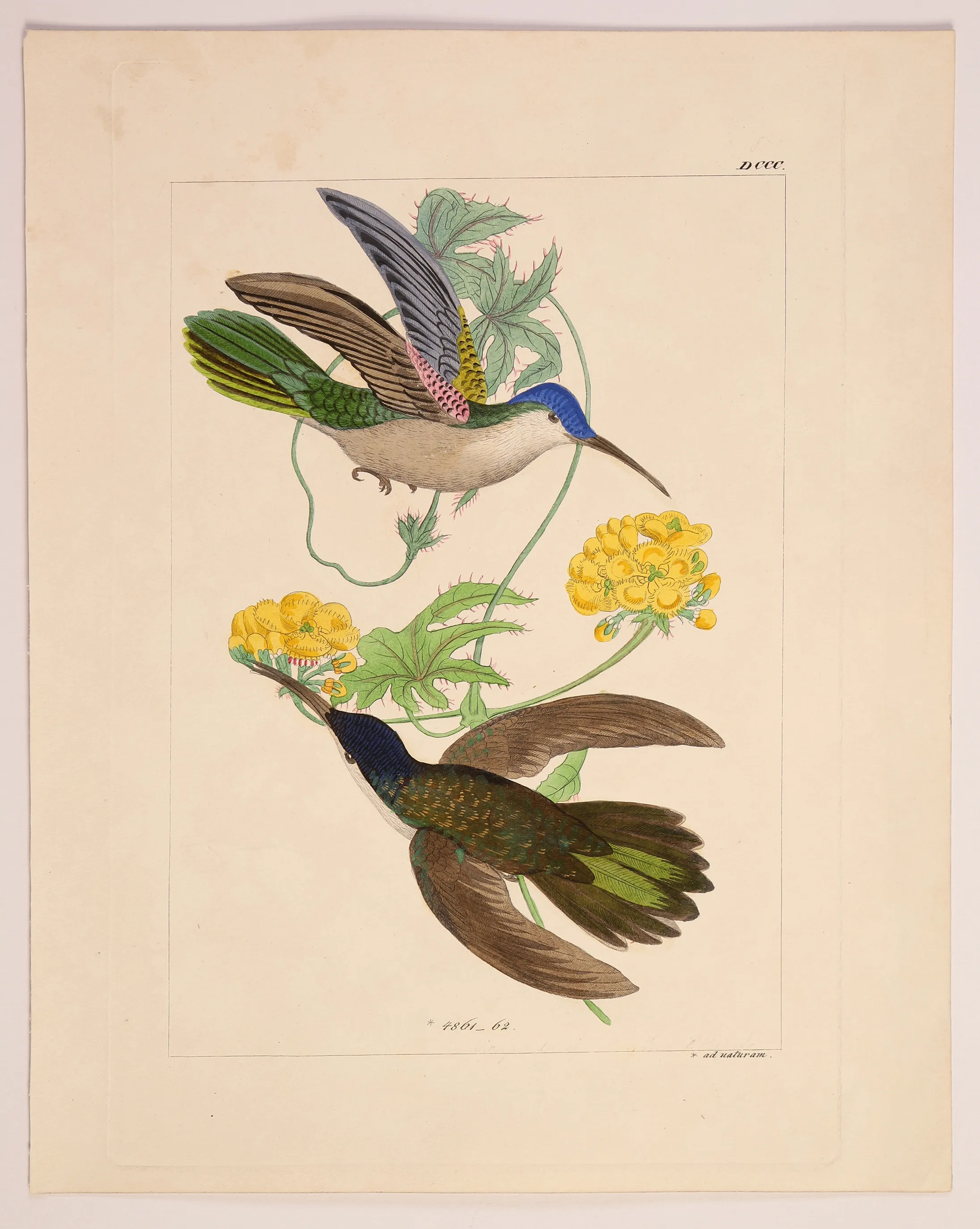
Original nineteenth-century hand-colored engraving depicting the Blue-headed Sabrewing (Saepiopterus lazulus), a tropical hummingbird illustrated by Ludwig Reichenbach in his celebrated Trochilinarum Enumeratio.
 Delivery policy
Your print will be carefully prepared and shipped worldwide via trusted couriers (UPS or similar).
 Authentic antique prints
Original engravings from the 17th–19th century.
This original nineteenth-century hand-colored engraving depicts the Blue-headed Sabrewing (Saepiopterus lazulus), a tropical hummingbird illustrated by Ludwig Reichenbach in his celebrated Trochilinarum Enumeratio. The plate combines scientific observation with a vivid and highly decorative sense of movement.
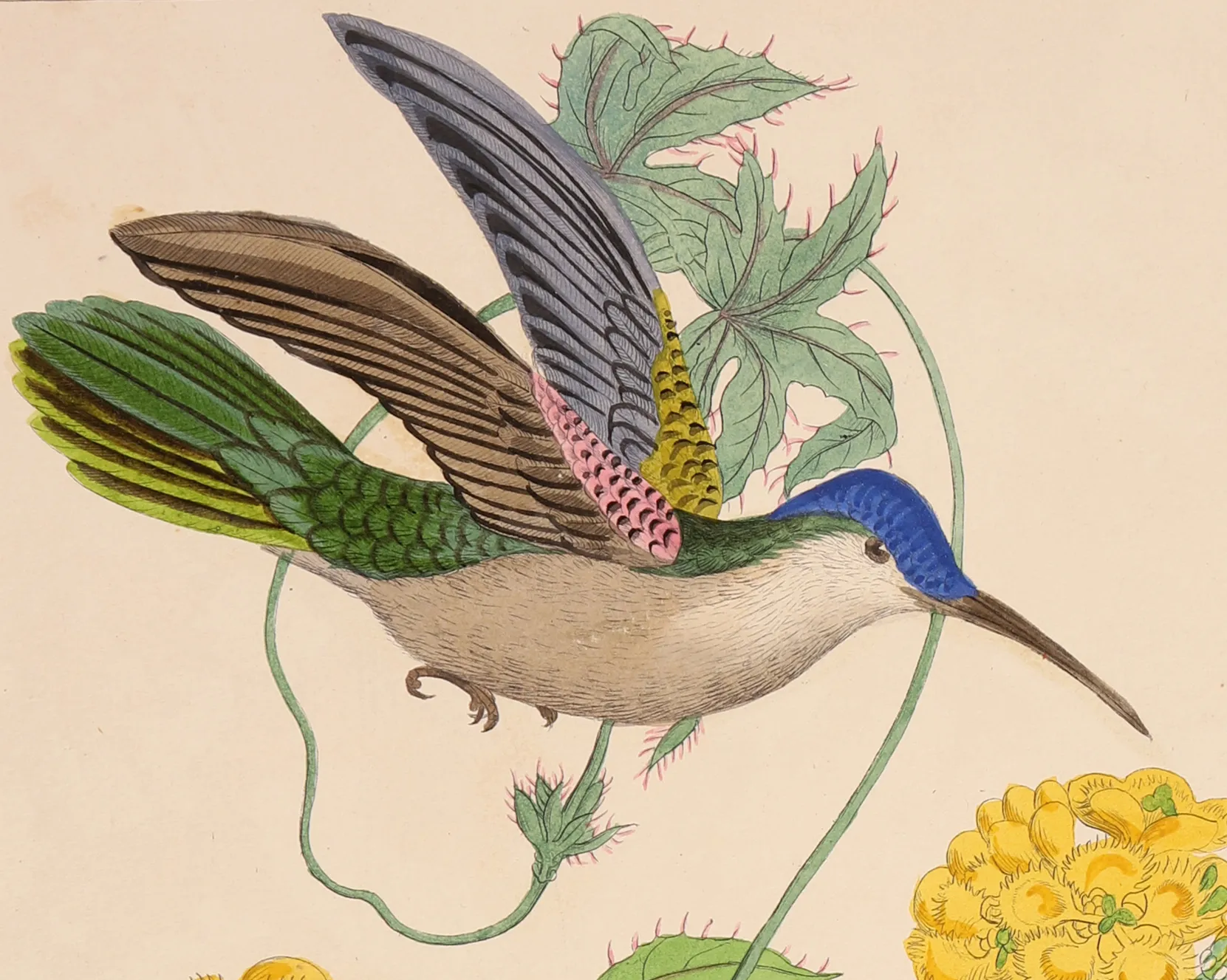
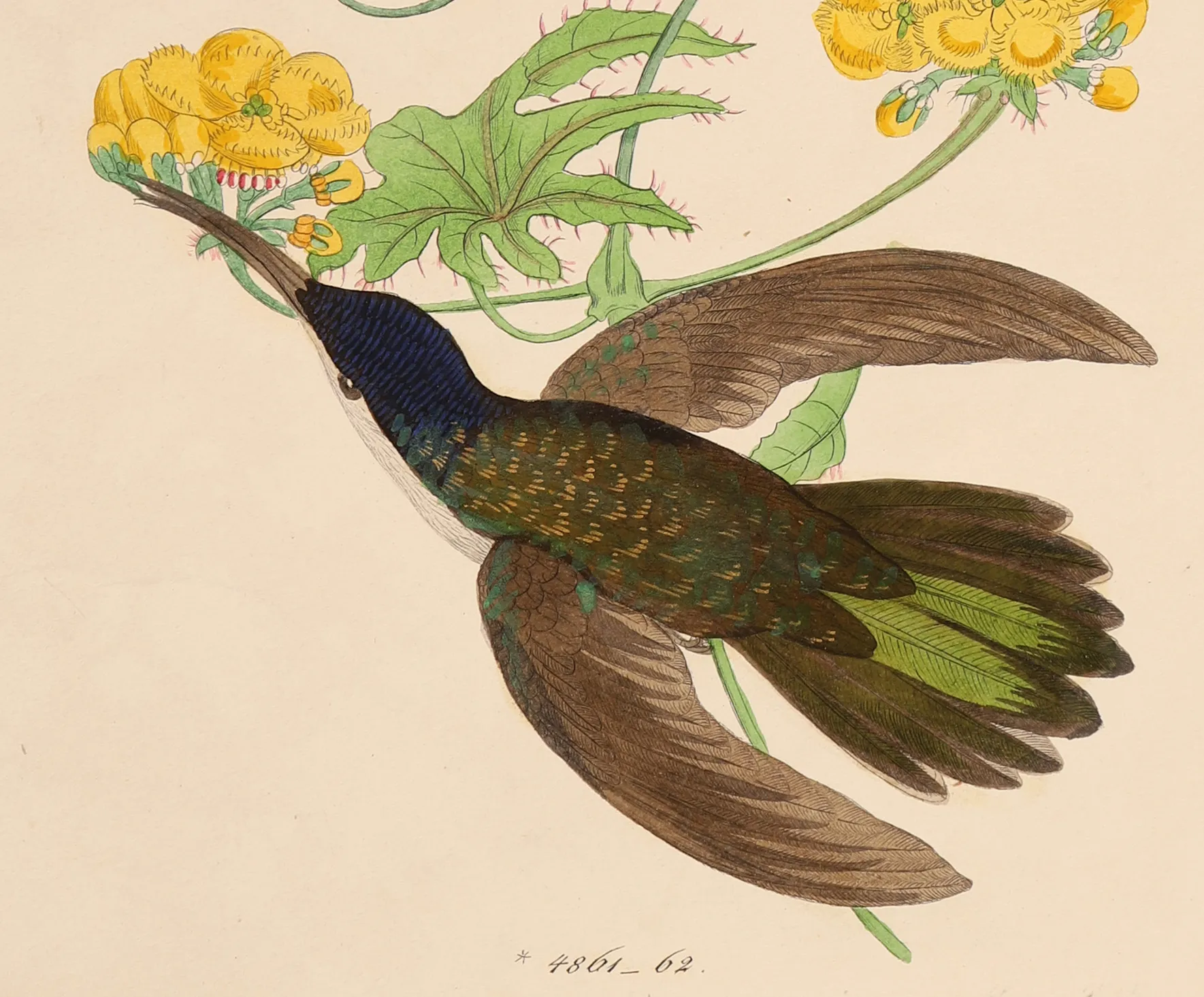
Two hummingbirds are shown in flight among yellow blossoms and curling green stems. The intense sapphire-blue heads, emerald plumage and soft botanical forms create a refined tropical composition with strong visual presence.
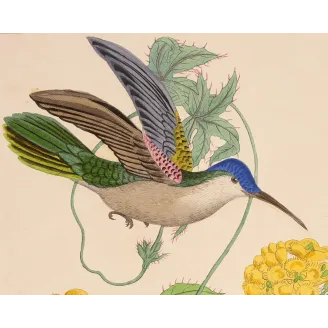
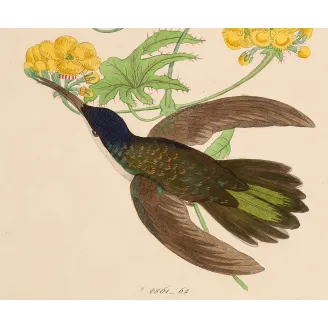
This engraving stands out for its elegant diagonal movement and luminous colour contrasts. The upper bird appears suspended in flight, while the lower bird extends across the composition with open wings, creating a dynamic rhythm across the page.
The sapphire-blue heads contrast beautifully with yellow flowers and deep green foliage, giving the plate a fresh, sophisticated decorative character. It is especially suited to studies, libraries, refined living rooms and curated natural history walls.
Saepiopterus lazulus, historically recorded by Reichenbach in the Campylopterinae group, was associated with Jamaica, New Granada and Central America. Its vivid blue head and elegant form made it a striking subject within the nineteenth-century study of hummingbirds.
In this plate, Reichenbach presents the species through movement and colour rather than stillness alone. The result is a refined example of Victorian natural history illustration, where taxonomy, observation and decorative elegance are brought together in a single image.
This engraving belongs to Ludwig Reichenbach’s remarkable world of hummingbirds, where Victorian scientific curiosity meets extraordinary visual elegance. Explore the story behind Trochilinarum Enumeratio and discover why these original hummingbird engravings remain so compelling today.
Very Good condition. Original nineteenth-century paper with strong hand-colouring, generous margins and a well-preserved impression. Visible plate mark consistent with period intaglio printing. Minor age-related marks may be present, fully consistent with authenticity and historical character.
Species: Saepiopterus lazulus
Common name: Blue-headed Sabrewing
Work: Trochilinarum Enumeratio
Author: Ludwig Reichenbach
Date: c. 1855–1860
Technique: Original hand-colored engraving
Plate: DCCC (800)
Reference number: 4863
Inscription: ad naturam (“drawn from life”)
Origin noted by Reichenbach: Jamaica, New Granada, Central America
Sheet size: approx. 28.5 × 22.5 cm
Specific References
Original nineteenth-century hand-colored engraving depicting the Green-tailed Trainbearer (Lesbia bifurcata), one of Ludwig Reichenbach’s most elegant hummingbird compositions from Trochilinarum Enumeratio.
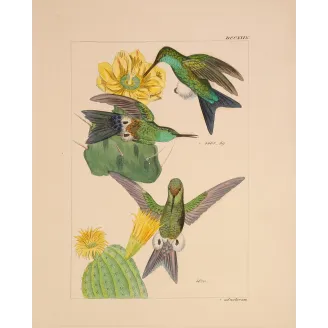
An original nineteenth-century hand-colored engraving from Ludwig Reichenbach's Trochilinarum Enumeratio, depicting Eriocnemis simplex among flowering passionflowers and cactus blossoms. A remarkable natural history engraving celebrating the extraordinary botanical diversity of hummingbird habitats.
Original nineteenth-century hand-colored engraving depicting Victoria's Trainbearer (Lesbia victoriae), a rare Andean hummingbird illustrated by Ludwig Reichenbach in Trochilinarum Enumeratio.
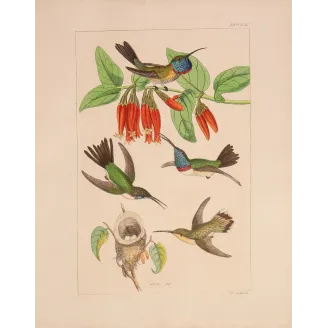
An original nineteenth-century hand-colored engraving from Ludwig Reichenbach's Trochilinarum Enumeratio, depicting hummingbirds surrounding their nest among brilliant tubular blossoms. This elegant composition celebrates the harmony between tropical birds, flowers and the delicate cycle of new life.
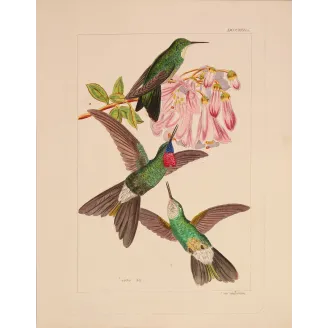
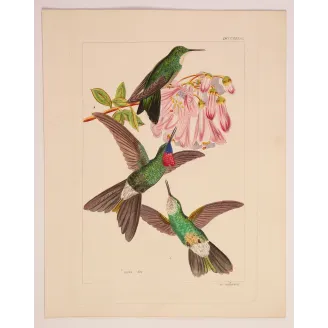
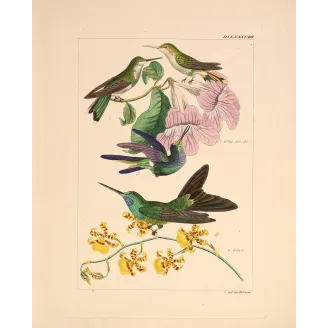
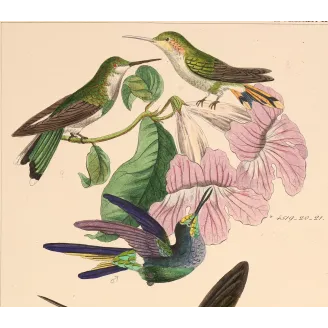
Original nineteenth-century hand-colored engraving by Ludwig Reichenbach, depicting three hummingbirds among pink blossoms. A rare later plate from the Trochilinarum Enumeratio corpus, not fully documented in the principal published index.
An original nineteenth-century hand-colored engraving from Ludwig Reichenbach's Trochilinarum Enumeratio, depicting Bourcieria prunellii among the vibrant blossoms of Achimenes picta. A refined composition balancing quiet observation and graceful flight in one of the most elegant plates of the series.
Original 19th-century hummingbird engraving depicting Cuvier’s Sabrewing (*Campylopterus cuvierii*), published by Ludwig Reichenbach for *Trochilinarum Enumeratio*. A refined composition marked *ad naturam* — drawn from life — combining scientific observation with remarkable decorative elegance.
An original nineteenth-century hand-colored engraving from Ludwig Reichenbach's Trochilinarum Enumeratio, depicting three hummingbirds gathered around elegant pendulous blossoms. One of the most harmonious compositions of the series, celebrating movement, colour and the timeless relationship between hummingbirds and flowering plants.
An original nineteenth-century hand-colored engraving from Ludwig Reichenbach's Trochilinarum Enumeratio, portraying emerald hummingbirds feeding among brilliant crimson and golden blossoms. A refined natural history composition celebrating the extraordinary colours and botanical diversity of the tropical forest.
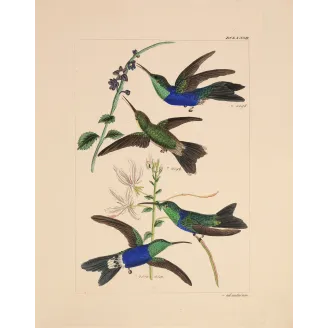
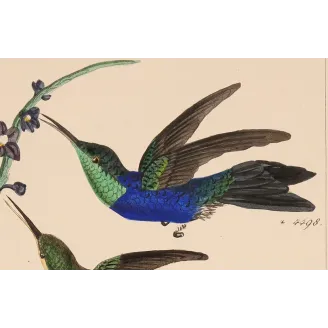
An original nineteenth-century hand-colored engraving from Ludwig Reichenbach's Trochilinarum Enumeratio, depicting brilliantly iridescent hummingbirds feeding among Stachytarpheta and Cleome blossoms. A refined composition celebrating the extraordinary colours and botanical relationships of tropical hummingbirds.
Original nineteenth-century hand-colored engraving by Ludwig Reichenbach, depicting three hummingbirds among pink blossoms. A rare later plate from the Trochilinarum Enumeratio corpus, not fully documented in the principal published index.
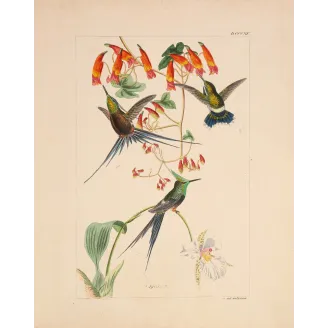
An original nineteenth-century hand-colored engraving from Ludwig Reichenbach's Trochilinarum Enumeratio, portraying elegant long-tailed hummingbirds suspended among cascading tropical blossoms. This exceptionally decorative composition combines graceful movement, botanical beauty and the refined artistry of Victorian natural history illustration.
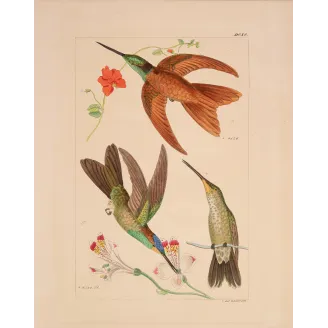
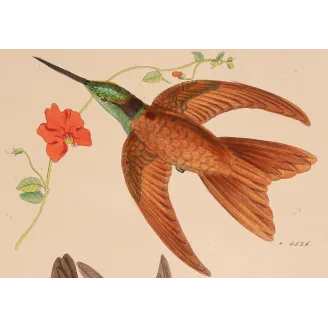
Original nineteenth-century hand-colored engraving depicting Coeligena sagittata and the hummingbird identified by Reichenbach as Warszewiczii (later associated with Helianthea iris Gould). A visually striking composition featuring emerald plumage, warm copper tones and two botanical species from Northern Peru.
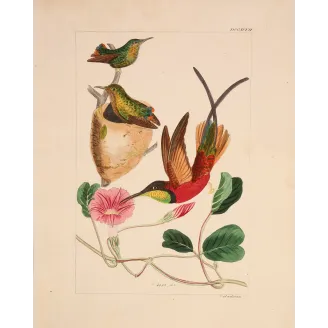
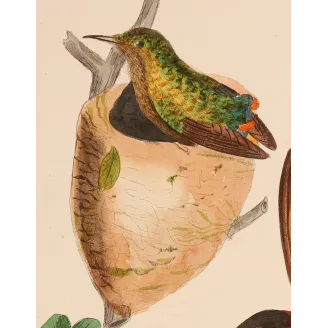
An exceptionally decorative nineteenth-century hand-colored engraving depicting the Crimson Topaz (Topaza pyra), one of the most spectacular hummingbirds of the Amazon Basin. Published by Ludwig Reichenbach in Trochilinarum Enumeratio, the composition combines vibrant colour, remarkable movement and a rarely encountered nesting scene.
An original hand-colored engraving depicting Lucian's Puffleg (Eriocnemis luciani), one of the most distinctive high-Andean hummingbirds illustrated by Ludwig Reichenbach in Trochilinarum Enumeratio (c. 1855–1860). Drawn ad naturam ("from life"), the composition captures the remarkable white feather tufts that give pufflegs their name, together with brilliant emerald plumage and delicate yellow blossoms. Combining Victorian scientific precision with refined decorative elegance, this authentic nineteenth-century engraving remains both an important ornithological document and a striking work of natural history art.
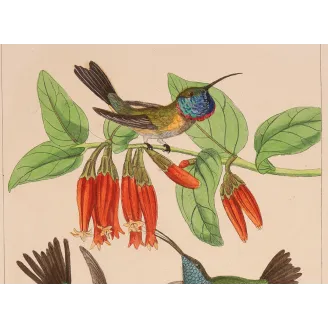
An original nineteenth-century hand-colored engraving from Ludwig Reichenbach's Trochilinarum Enumeratio, depicting Coeligena ourissia among the elegant blossoms of Bignonia picta. Four hummingbirds create one of the most harmonious and visually refined compositions in the celebrated Victorian series.
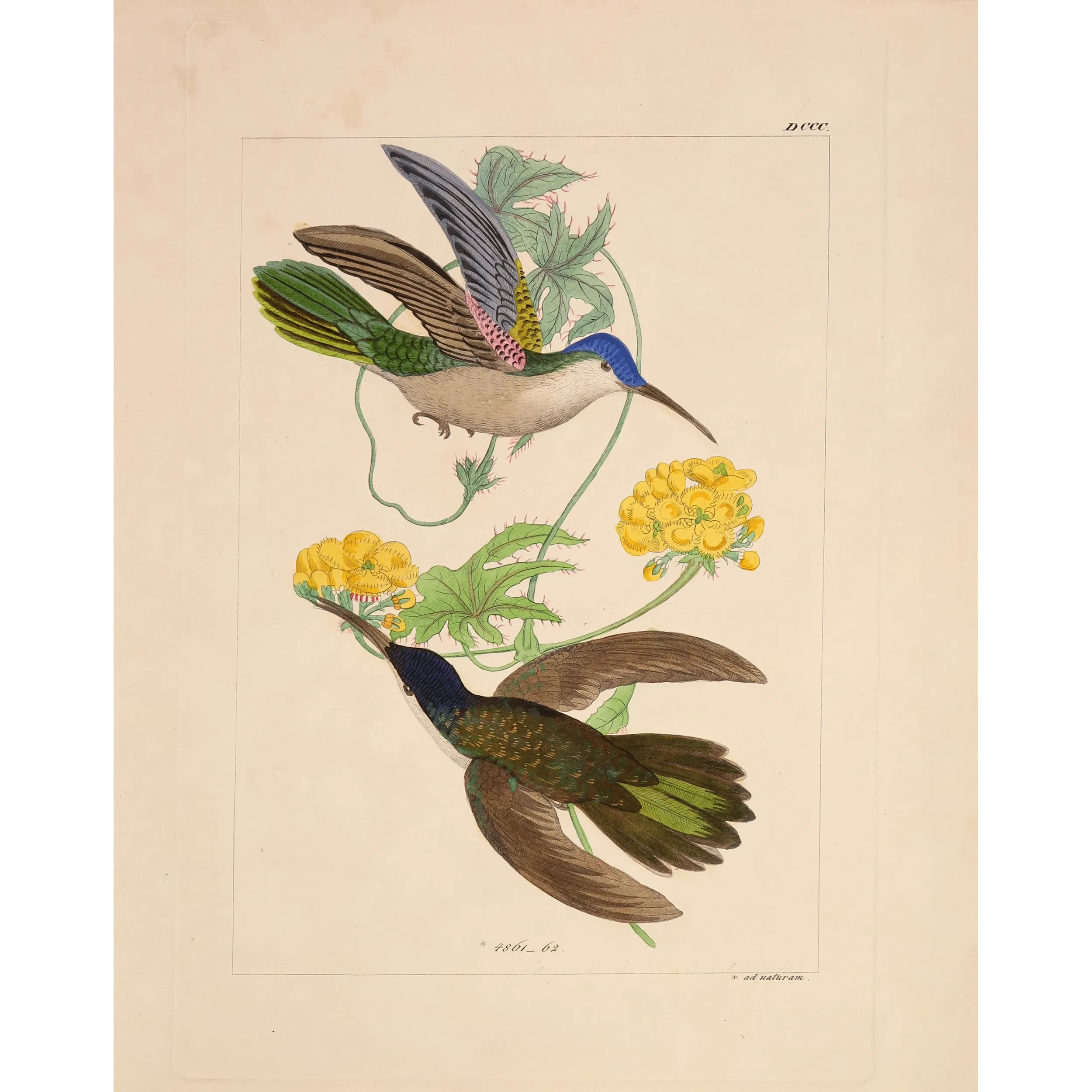
Original nineteenth-century hand-colored engraving depicting the Blue-headed Sabrewing (Saepiopterus lazulus), a tropical hummingbird illustrated by Ludwig Reichenbach in his celebrated Trochilinarum Enumeratio.