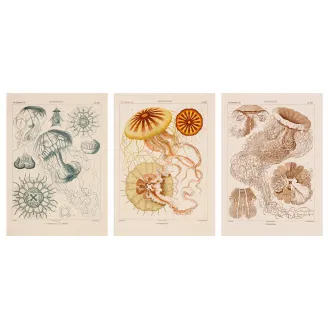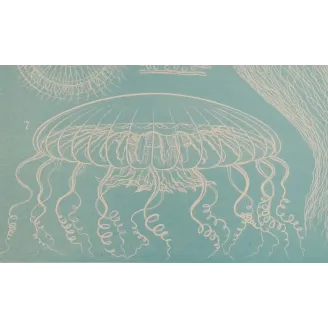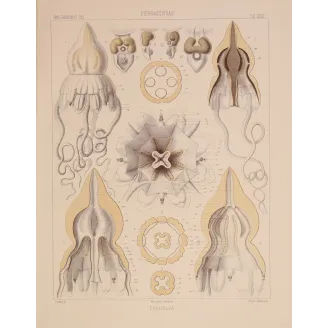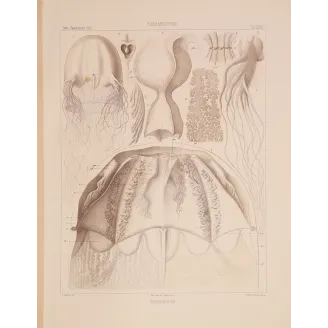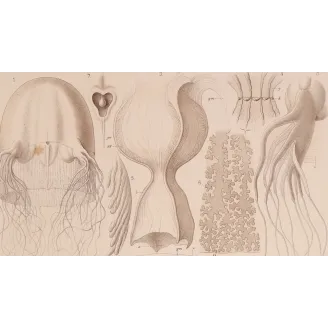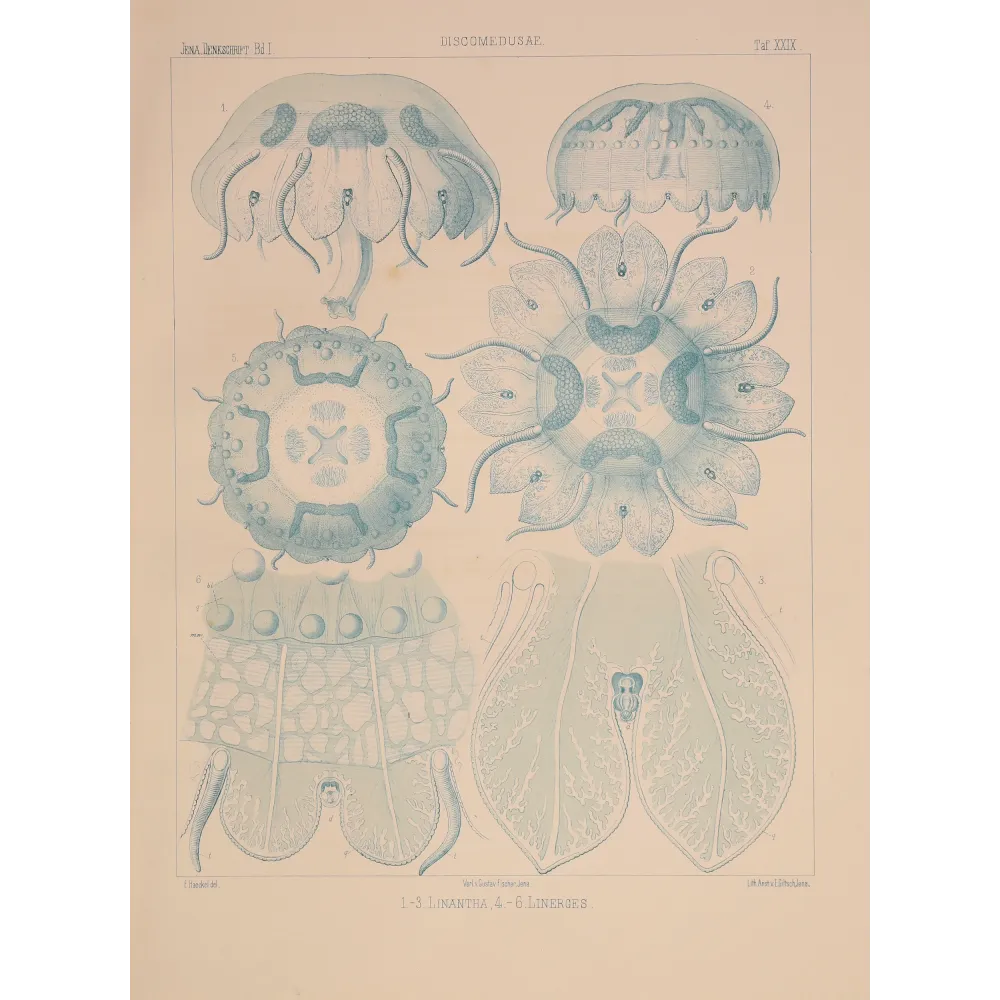
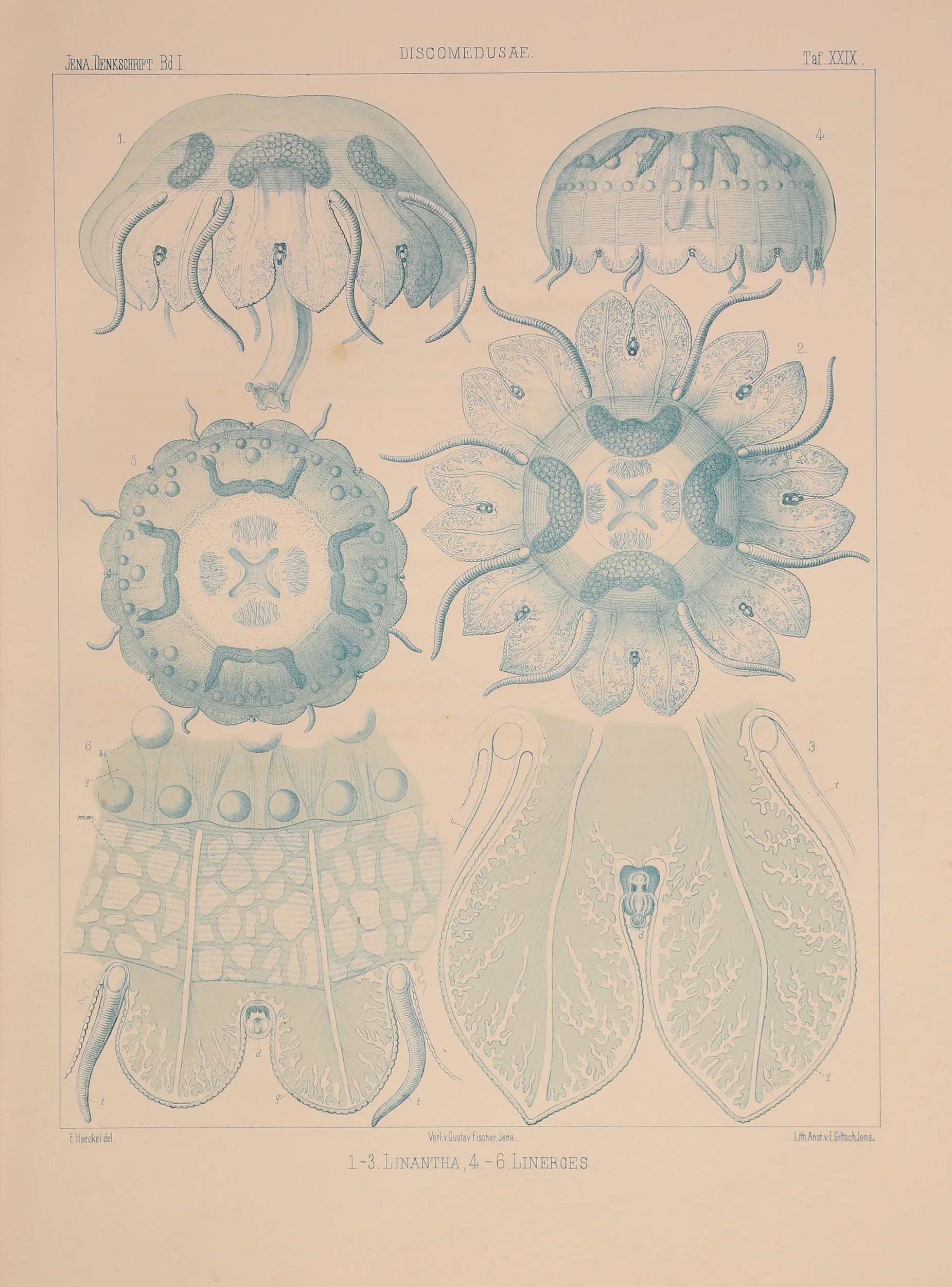
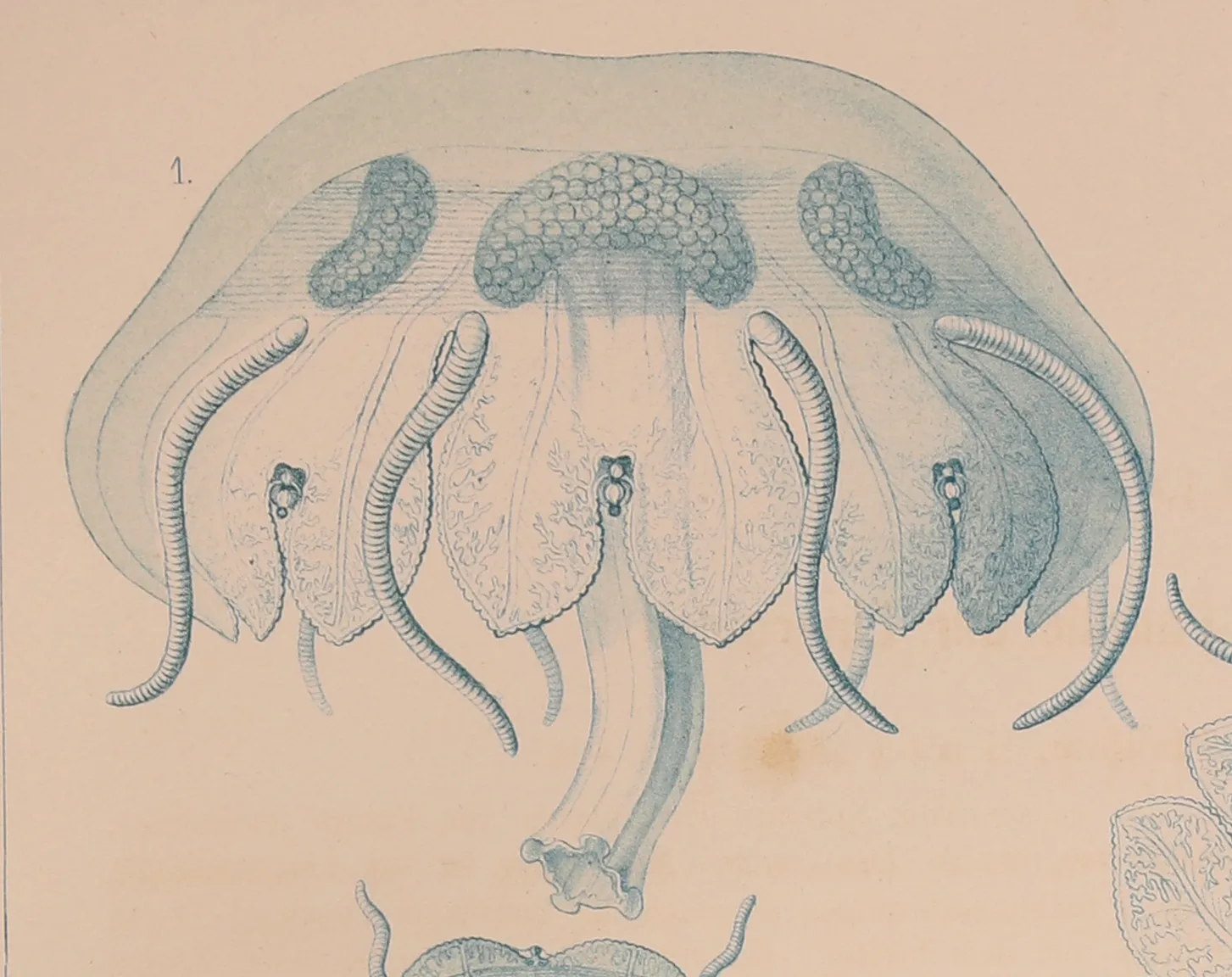
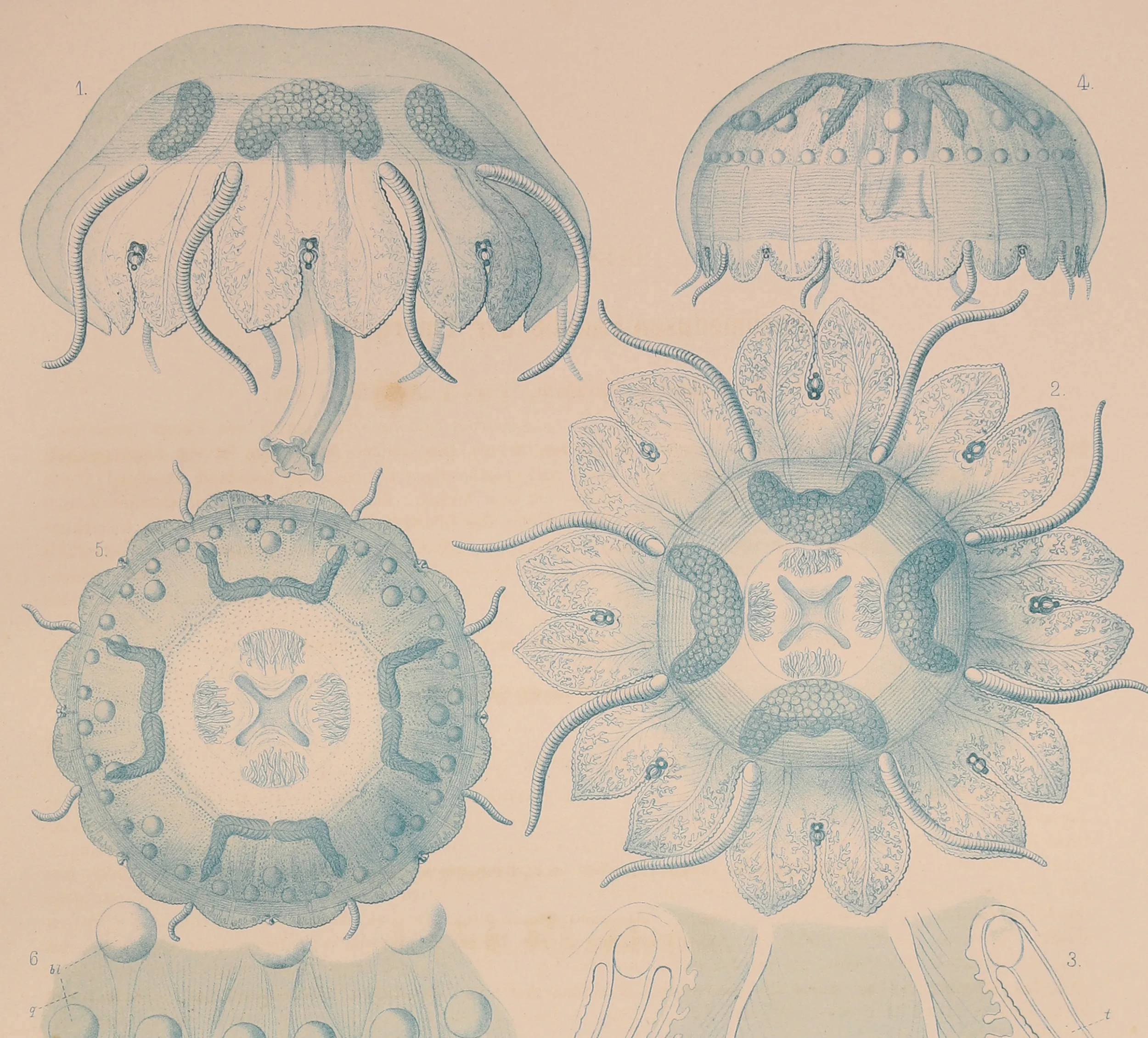
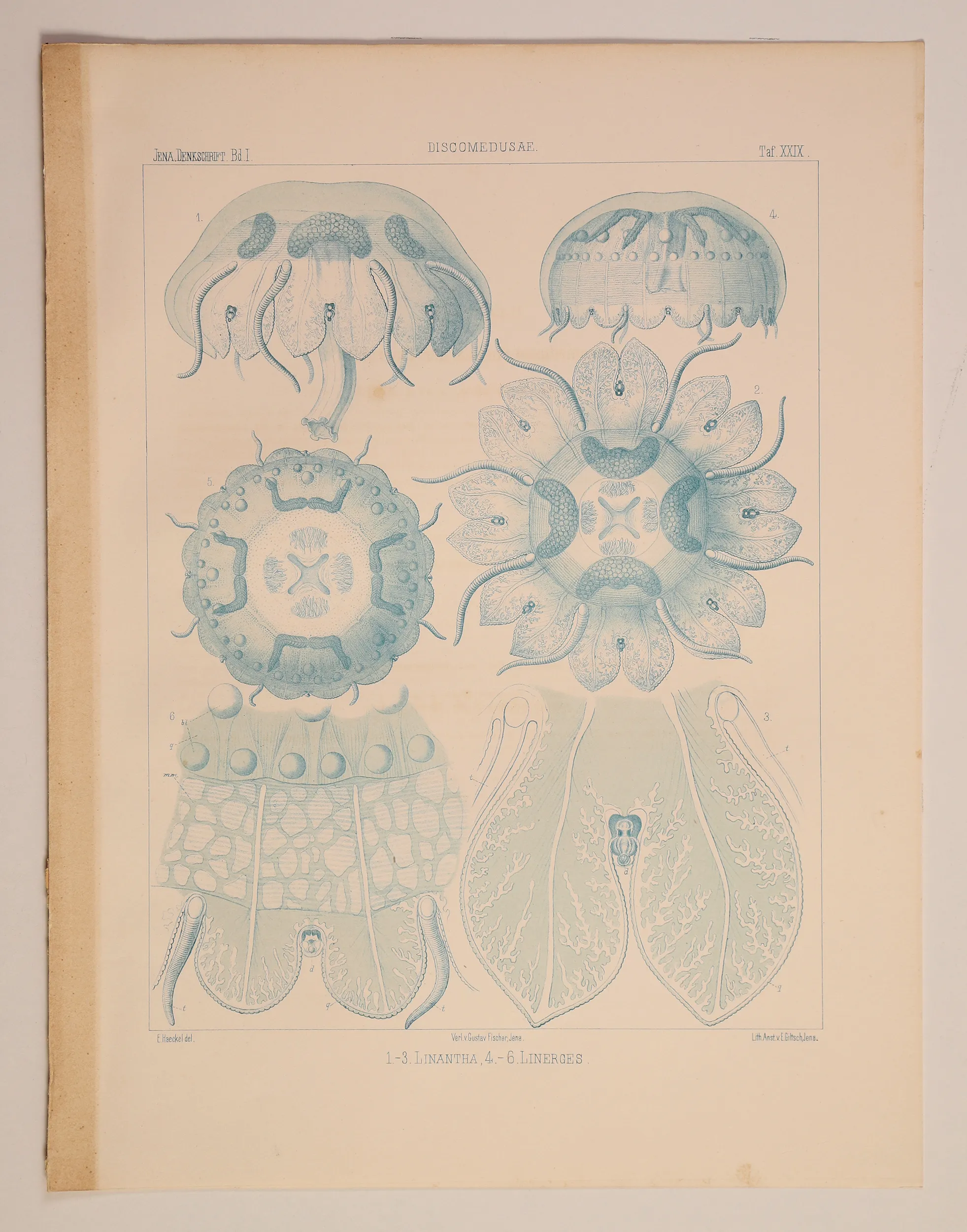
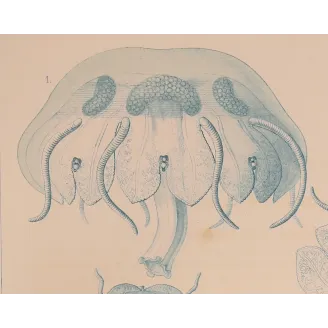
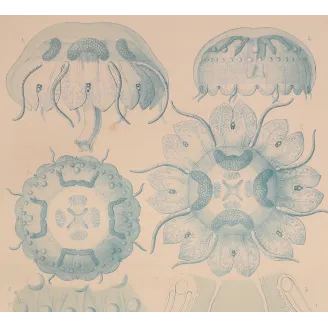
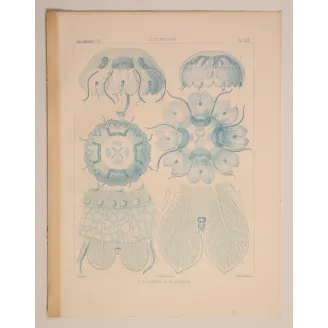
Original 1879 lithograph from Ernst Haeckel's Das System der Medusen, depicting Linantha and Linerges jellyfish in a refined pale-blue palette. A striking combination of scientific precision, marine symmetry and decorative elegance.
 Delivery policy
Your print will be carefully prepared and shipped worldwide via trusted couriers (UPS or similar).
 Authentic antique prints
Original engravings from the 17th–19th century.
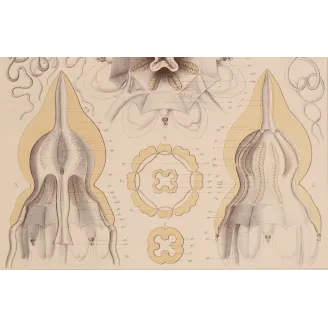
This original 1879 lithograph from Ernst Haeckel’s monumental scientific work Das System der Medusen depicts the delicate forms of the Discomedusae, including Linantha and Linerges. Printed in a refined pale-blue palette and bearing the important plate credit “E. Haeckel del.”, the work combines marine biology with remarkable decorative elegance.
The plate reveals Haeckel’s extraordinary ability to transform scientific observation into visual rhythm. Through radial symmetry, transparent anatomical structures and flowing marine forms, this jellyfish study approaches the language of ornament while remaining a rigorous nineteenth-century scientific illustration.
The composition brings together several related medusae forms, balancing full organism views with anatomical details and radial structures. The large circular elements and translucent bell-shaped forms create a calm but highly sophisticated visual field.
Its soft blue tonality gives the plate a particularly contemporary decorative presence, while the scientific inscriptions and anatomical precision preserve its identity as an authentic natural history document.
With its pale marine blue, balanced composition and quiet ornamental rhythm, this lithograph is especially suited to refined interiors, coastal-inspired spaces, studies, libraries and contemporary gallery walls. It offers a rare combination of scientific depth and visual lightness.
Displayed on its own, the plate has a serene and elegant presence; placed alongside other Haeckel medusae, it introduces a luminous blue note into a curated natural history arrangement.
Discover more about Ernst Haeckel, his marine studies and the visual world behind his extraordinary jellyfish plates in our editorial feature:
Ernst Haeckel and the Beauty of Jellyfish
Printed on original nineteenth-century paper and preserved in very good antique condition. Minor age-related toning, occasional spotting and gentle signs of handling may be present, consistent with authentic scientific lithographs of this period. Please examine the photographs carefully, as each impression retains its own individual antique character.
— • —
Specific References
A rare curated suite of three original 1879 lithographs by Ernst Haeckel, bringing together medusae later visually echoed in his iconic Kunstformen der Natur. A museum-grade grouping combining scientific beauty, early marine illustration and exceptional decorative presence.
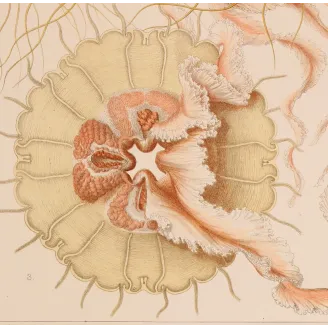
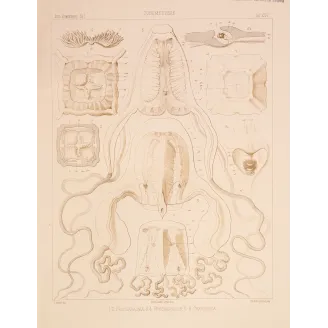
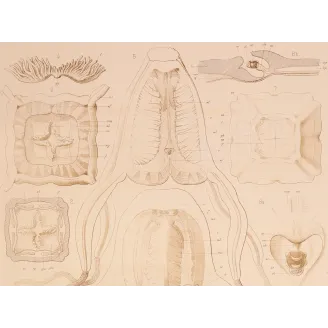
An original 1879 lithograph by Ernst Haeckel from Das System der Medusen, depicting the remarkable forms of the Narcomedusae. Combining delicate pink, coral and golden tones with extraordinary scientific precision, this authentic nineteenth-century marine study reveals why Haeckel's jellyfish imagery later became one of the defining visual inspirations of Art Nouveau.
A refined pair of original 19th-century jellyfish lithographs by Ernst Haeckel, selected from Das System der Medusen (1879). Rendered in delicate monochrome cyan tones, these scientific plates reveal the hidden geometry of marine life with remarkable decorative elegance. A striking museum-quality ensemble for interiors inspired by science, design and natural history.
Original 1879 lithograph from Ernst Haeckel's Das System der Medusen, depicting Collaspis jellyfish with extraordinary anatomical precision. A refined scientific composition centered on radial symmetry and marine morphology.
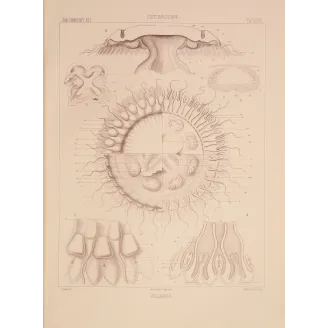
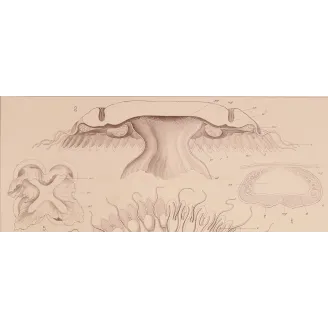
Original 1879 lithograph from Ernst Haeckel's Das System der Medusen, depicting Pericolpa and related Peromedusae forms. A refined marine study combining biological symmetry, architectural structure and delicate golden tones.
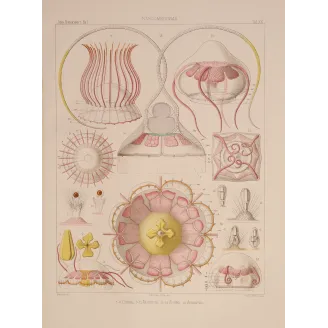
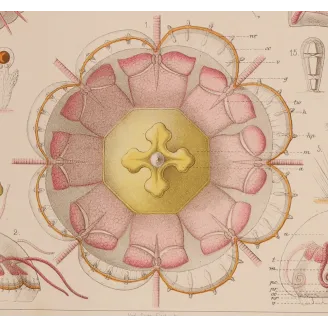
An original 1879 lithograph by Ernst Haeckel from Das System der Medusen, depicting the remarkable anatomy of Cubomedusae (box jellyfish). Combining scientific precision with striking architectural symmetry, this authentic nineteenth-century plate reveals the hidden biological structures behind one of the ocean’s most fascinating marine organisms.
An original 1879 lithograph by Ernst Haeckel from Das System der Medusen, depicting the extraordinary anatomy of Chirodropus, one of the most remarkable Cubomedusae. Combining scientific precision, monumental scale and elegant nineteenth-century lithographic craftsmanship, this authentic marine study reveals the hidden architecture of one of nature’s most complex jellyfish forms.
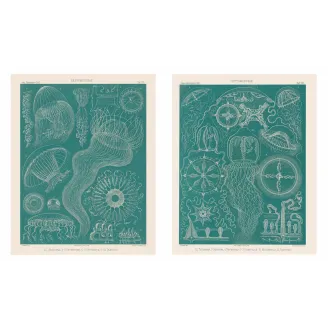
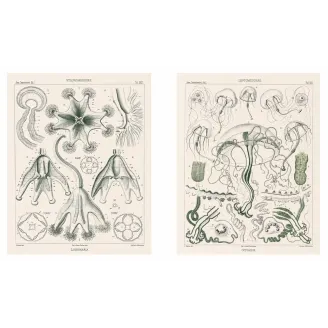
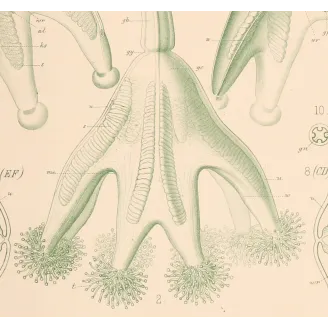
A refined curated diptych of two original 1879 lithographs by Ernst Haeckel from Das System der Medusen, printed in delicate monochromatic green and bearing the plate credit “E. Haeckel del.” Combining marine geometry with scientific precision, these authentic nineteenth-century jellyfish studies create an unusually elegant visual ensemble for collectors, interiors and natural history enthusiasts.
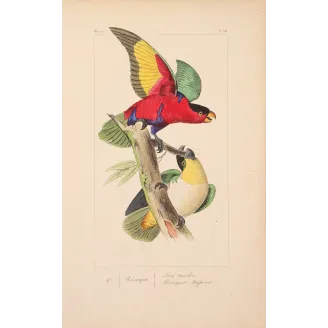
A highly dynamic 19th-century engraving depicting a tricolour lory in flight above a contrasting parakeet. The vivid interplay of red, yellow, green and blue creates a striking decorative composition with exceptional visual energy and presence.
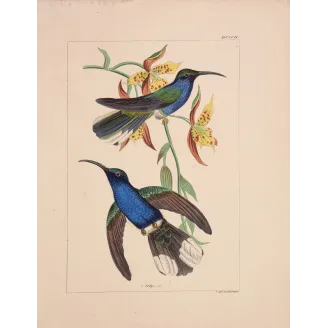
Original 19th-century hummingbird engraving depicting Cuvier’s Sabrewing (*Campylopterus cuvierii*), published by Ludwig Reichenbach for *Trochilinarum Enumeratio*. A refined composition marked *ad naturam* — drawn from life — combining scientific observation with remarkable decorative elegance.
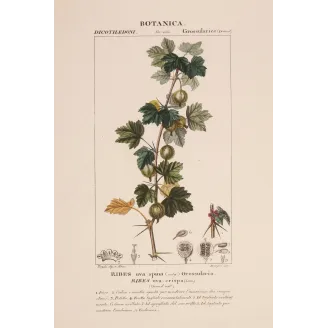
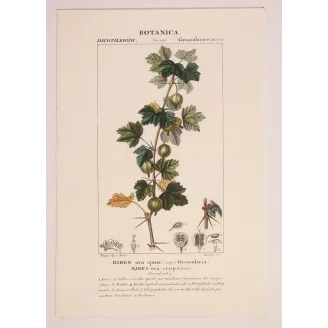
A charming depiction of *Ribes uva-crispa*, the gooseberry plant, detailed with its spiny stems and translucent green fruits.
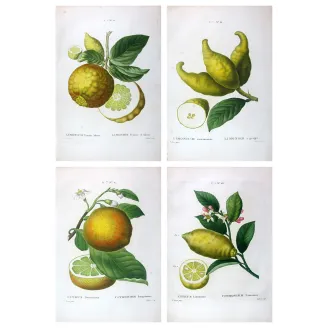
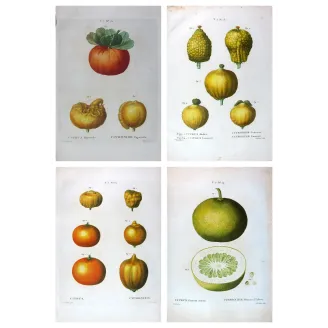
Nine original citrus engravings by Pancrace Bessa, uniting rare cedrats, sculptural lemons, and monumental Pomme d’Adam varieties into a coherent Napoleonic-era ensemble. Botanical study and refined color harmonize in a portfolio conceived to be read as a whole.
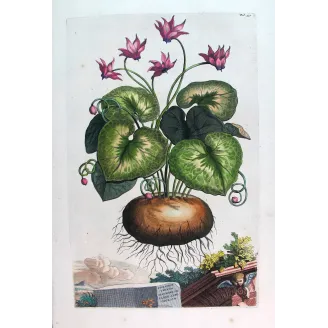
A rare 17th-century botanical engraving from Abraham Munting’s Nauwkeurige Beschryving der Aardgewassen - Phytographia Curiosa, depicting a cyclamen plant with exposed tuber, delicate pink flowers and richly patterned leaves. An expressive example of early botanical art combining scientific curiosity with striking decorative presence.
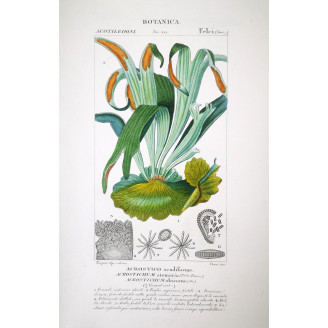
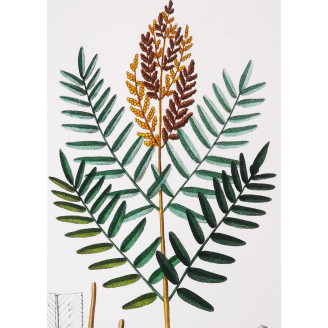
A complete set of 22 original hand-colored Engravings of ferns by Turpin, from the Dizionario di Scienze Naturali (c. 1830).
Original 1774 engraving by Jacob L'Admiral: Early Moth Stage among Willow Leaves.
Vibrant parakeets perched on branches: a scarlet macaw and a black cockatoo with yellow and red highlights.
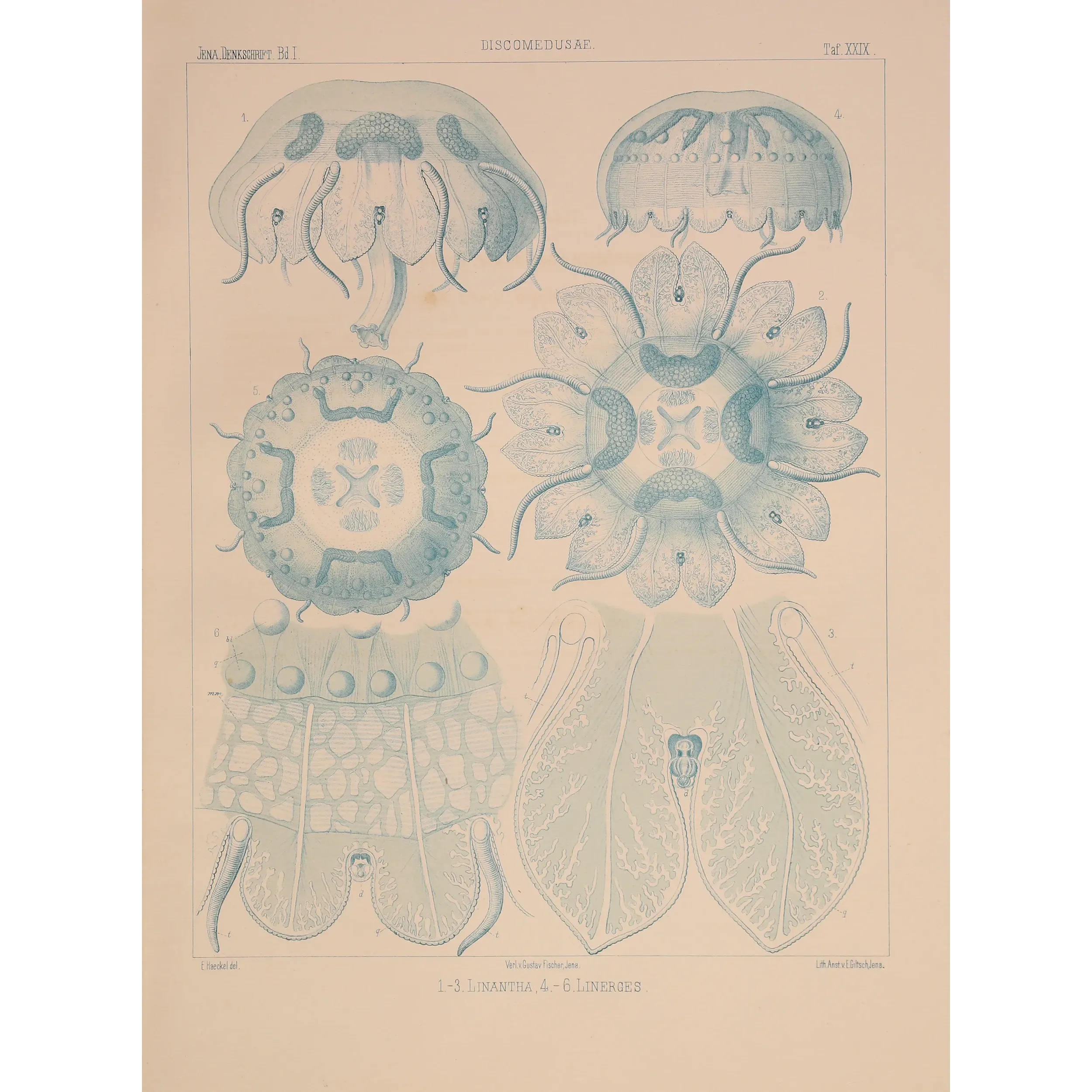
Original 1879 lithograph from Ernst Haeckel's Das System der Medusen, depicting Linantha and Linerges jellyfish in a refined pale-blue palette. A striking combination of scientific precision, marine symmetry and decorative elegance.