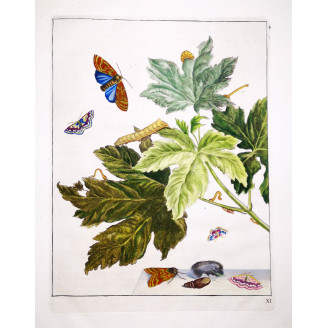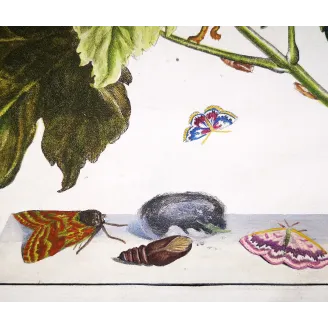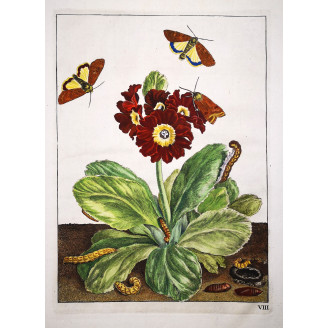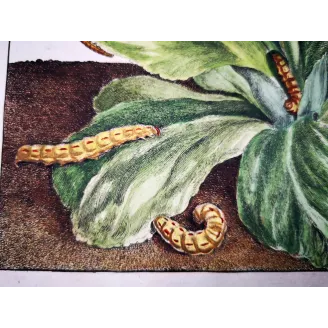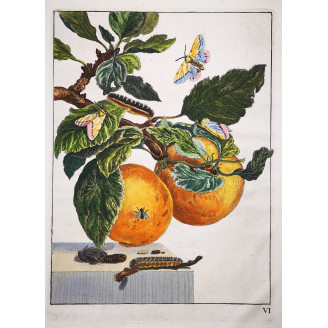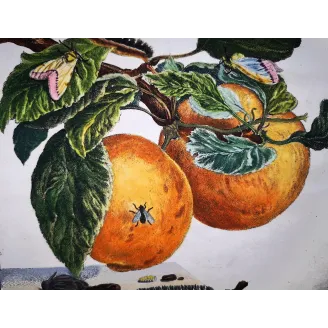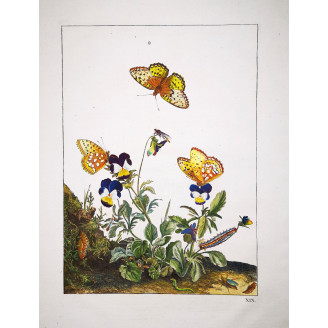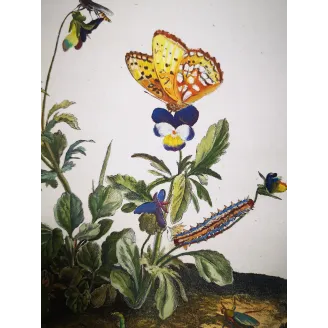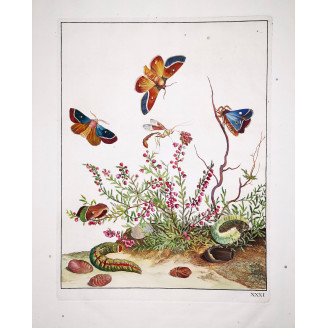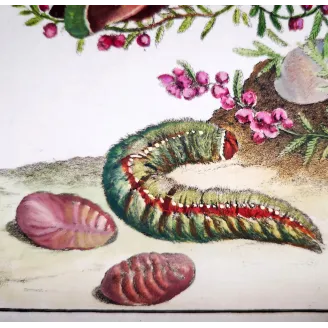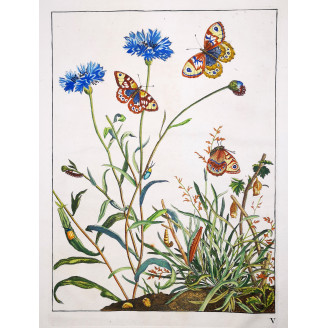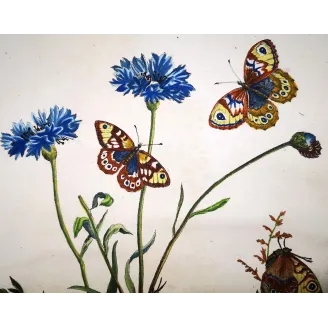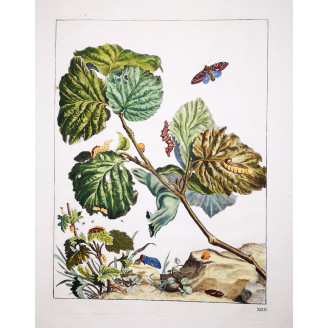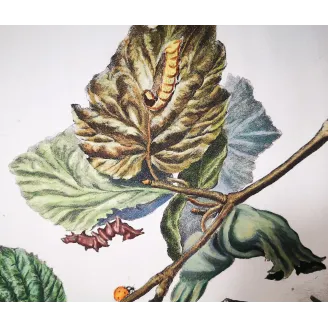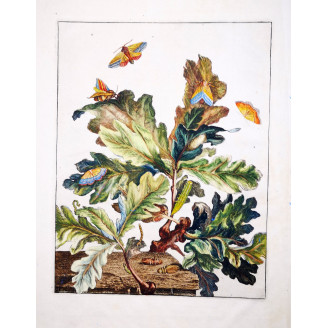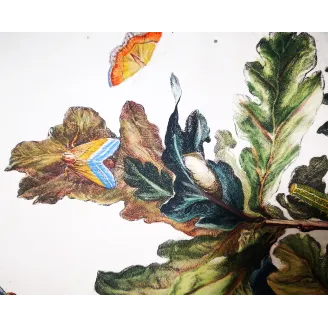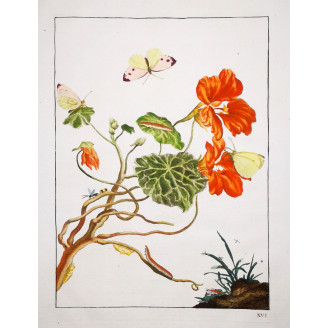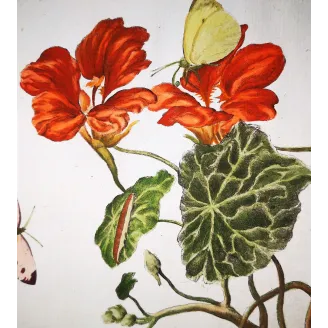
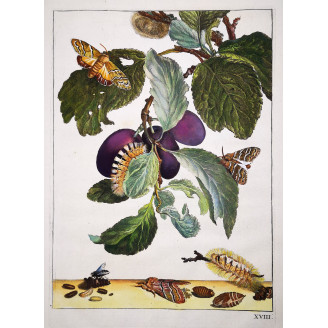
Original 1774 engraving by Jacob LâAdmiral: Swallowtail Butterfly on Thistle.
 Delivery policy
Your print will be carefully prepared and shipped worldwide via trusted couriers (UPS or similar).
 Authentic antique prints
Original engravings from the 17th–19th century.
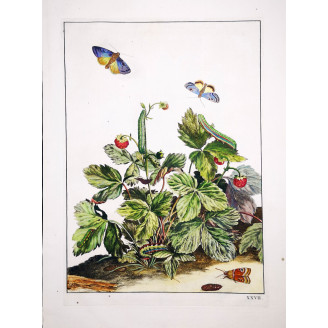
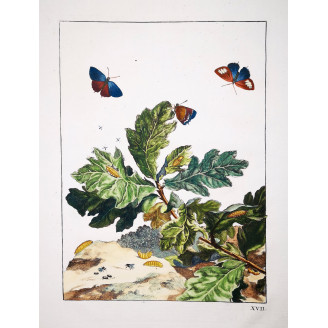
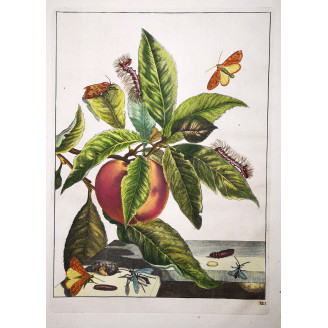
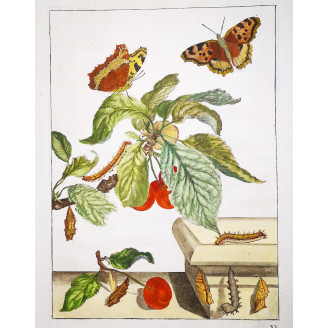
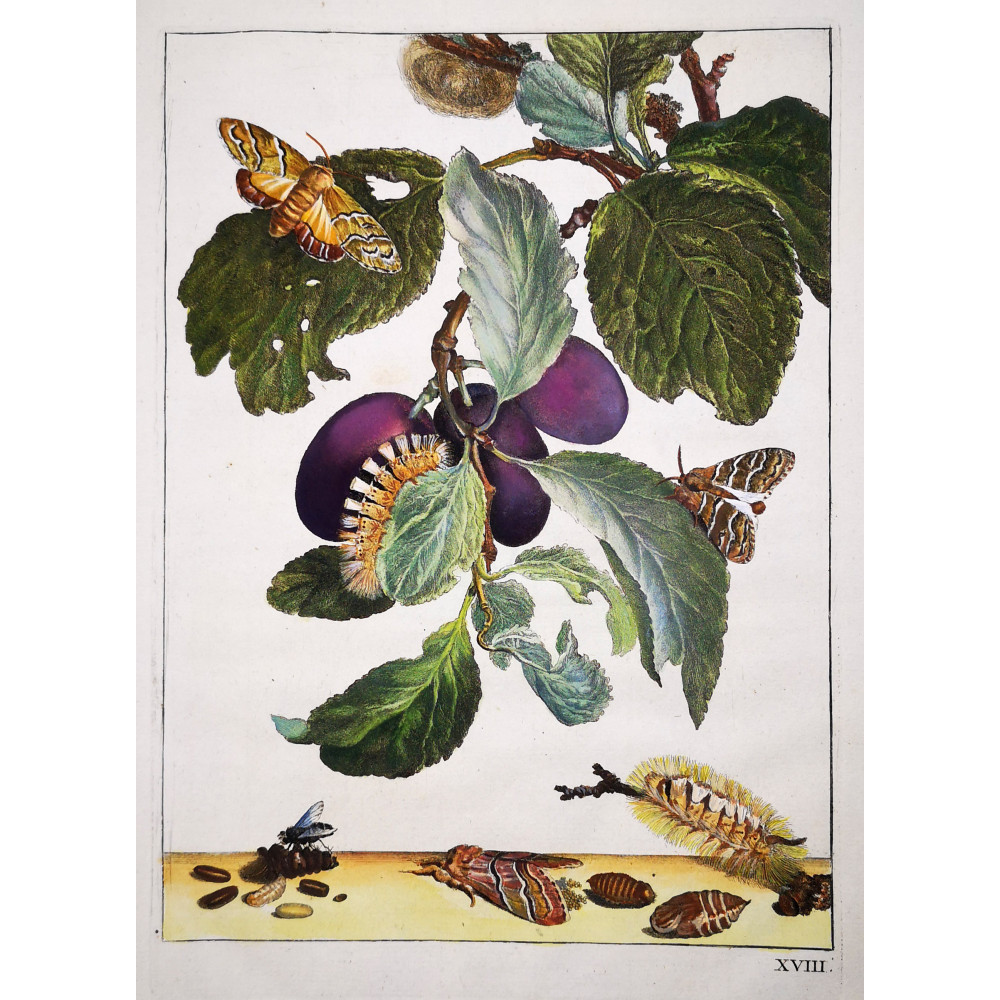
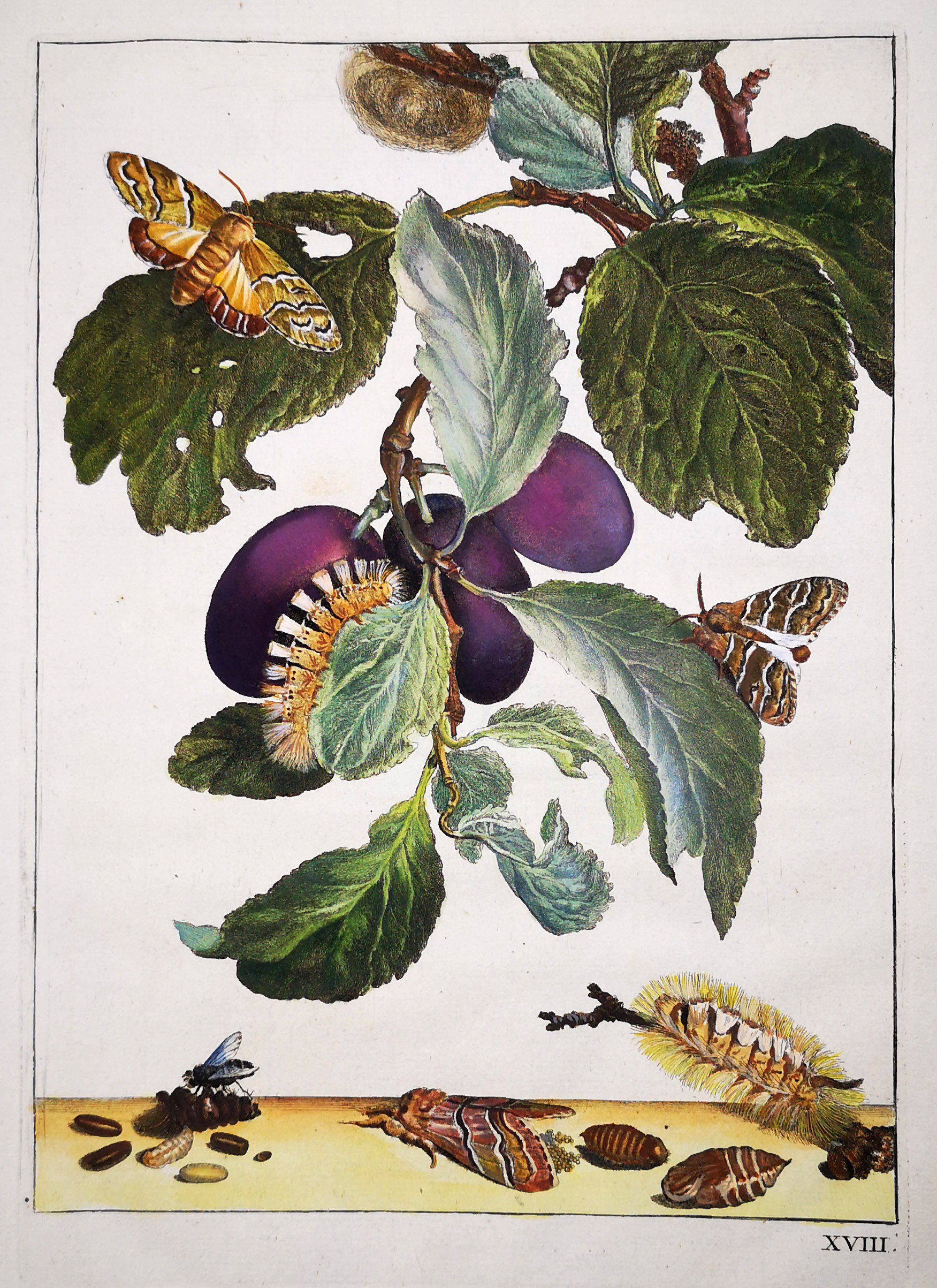
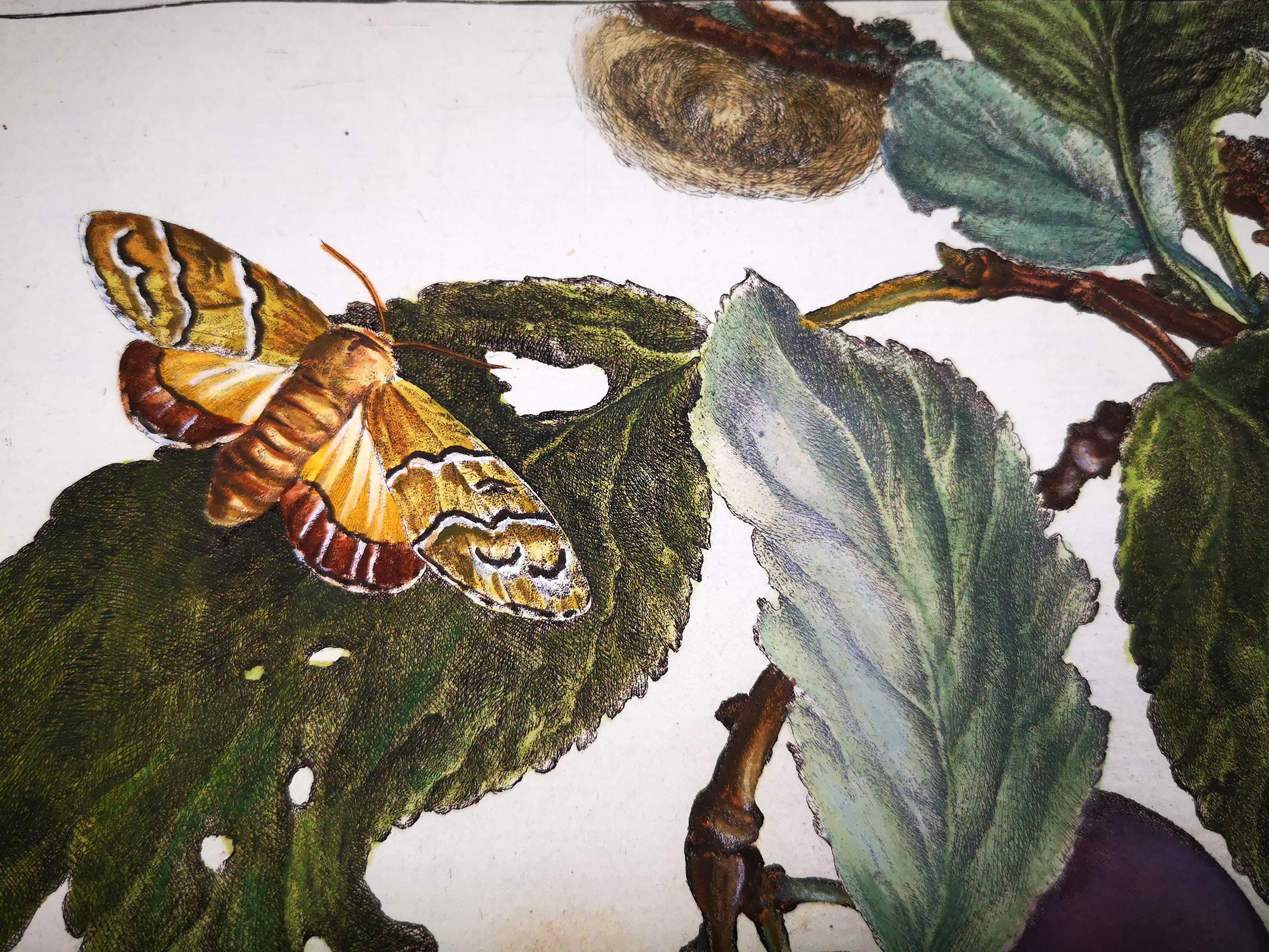
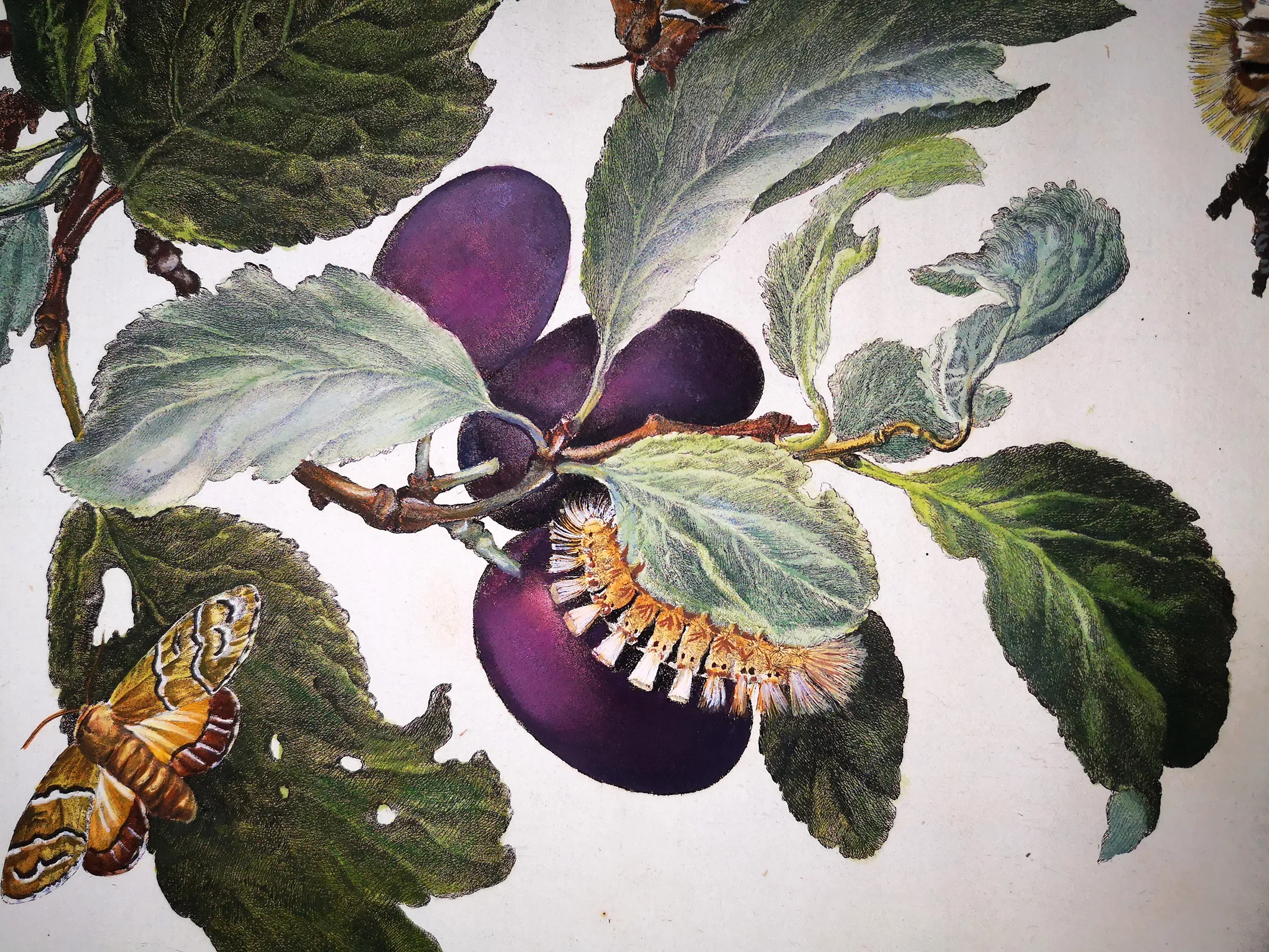
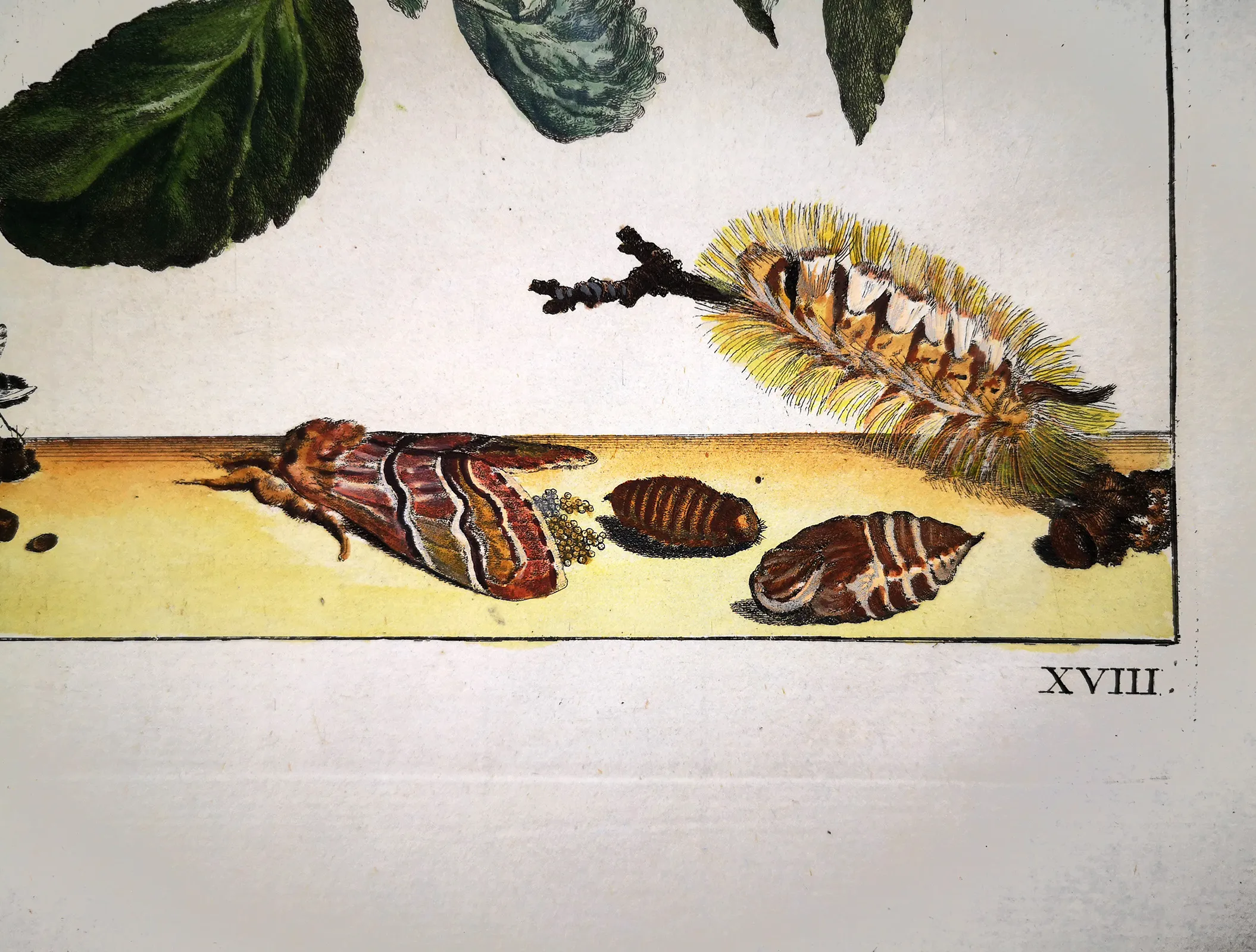
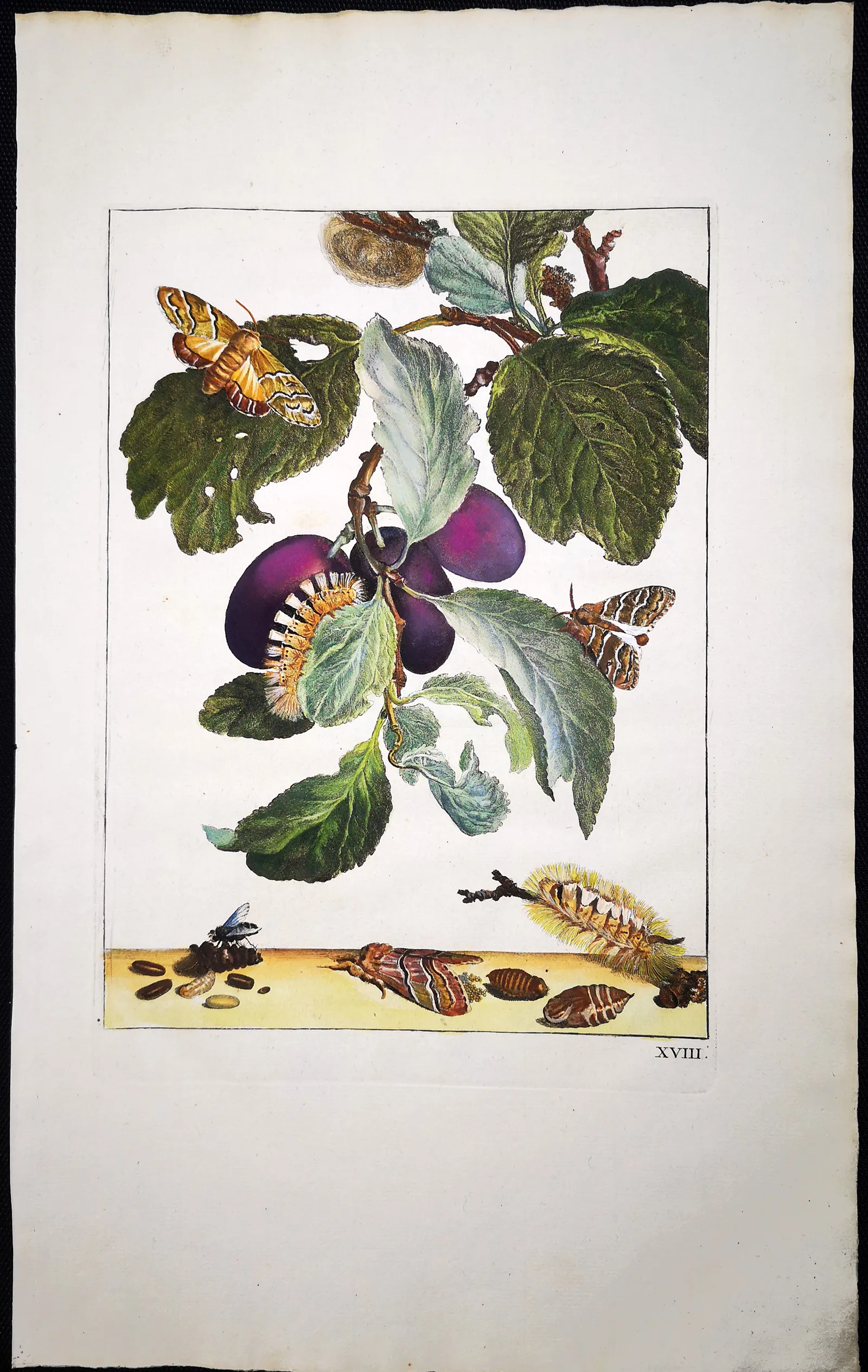
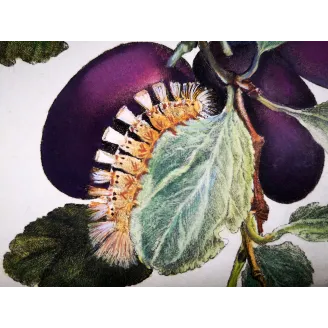
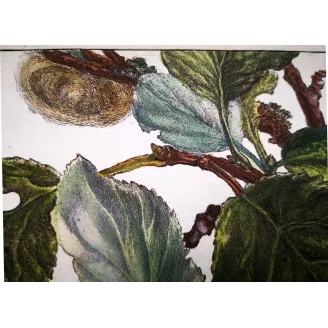
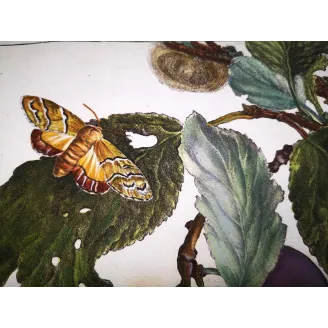
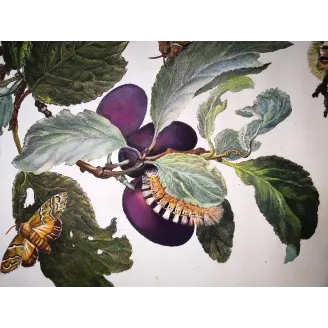
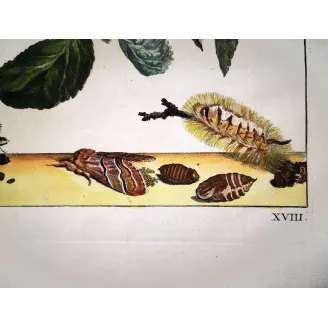
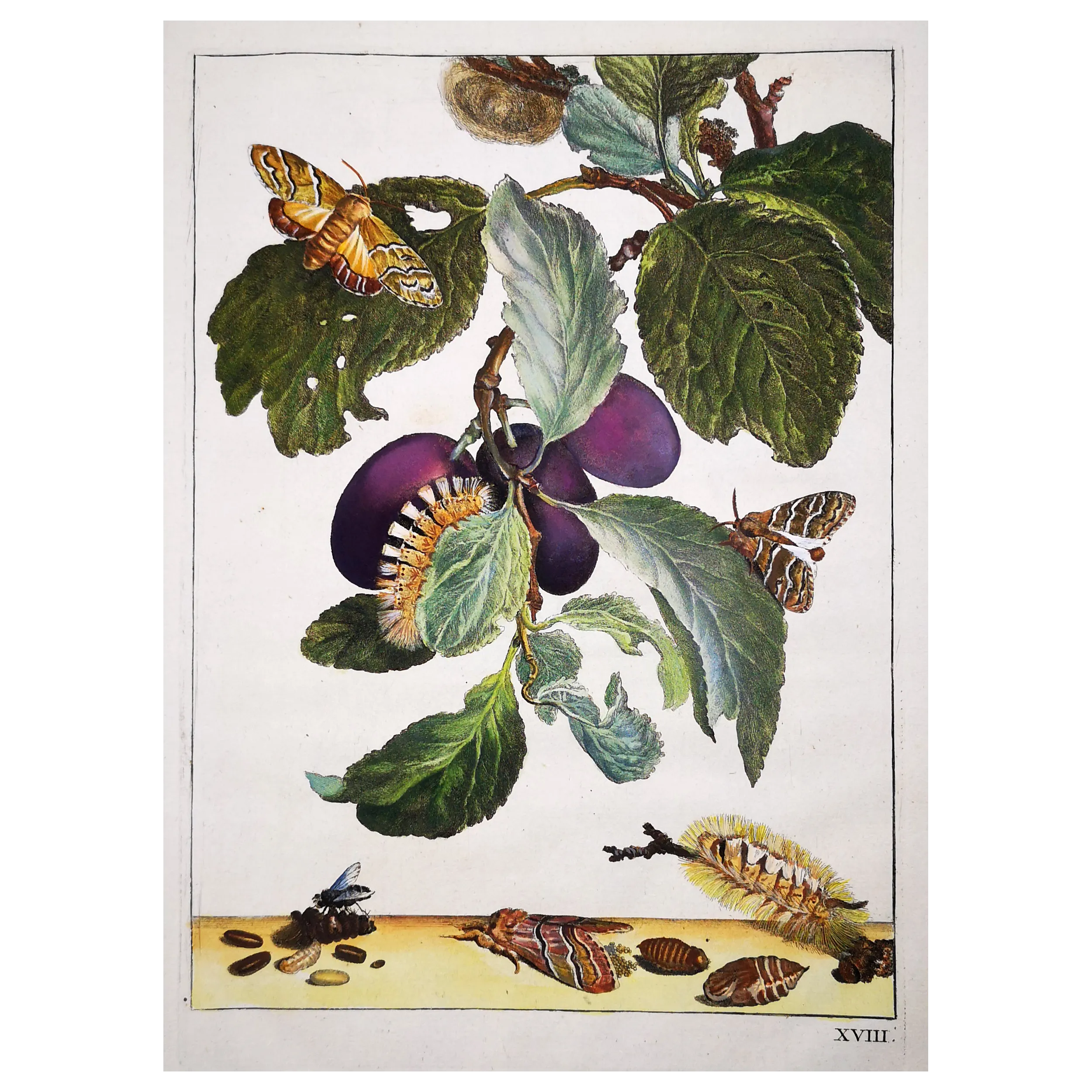
This original hand-colored copper engraving by Jacob L’Admiral, published in 1774, documents the life cycle of a moth species observed on a plum branch. The composition integrates ripened fruit, foliage, larval stages, chrysalis, and adult forms within a unified natural setting.
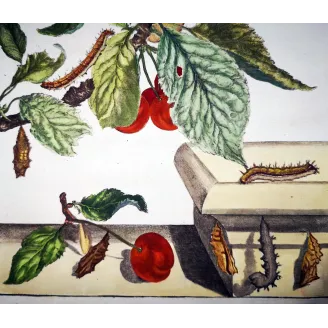
Deep violet plums provide chromatic gravity at the center of the plate, while the successive stages of metamorphosis unfold along the lower register and across the branch. The image balances botanical richness with entomological precision.
The engraving originates from Auwkeurige Waarneemingen Omtrent de Veranderingen Van Veele Insekten (1774), one of the Dutch Enlightenment’s significant contributions to early empirical entomology.
— • —
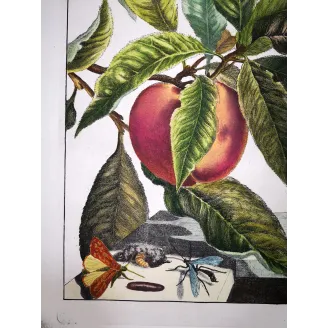
The composition is diagonally dynamic. The fruit cluster anchors the upper portion of the plate, while larva, chrysalis, and adult moth are arranged methodically below, transforming the lower margin into a platform of evidence.
Color application is disciplined yet expressive: the saturated purples of the plums contrast with the earthy browns of the larvae and the subtle tonal gradations of the moth’s wings. The engraving demonstrates L’Admiral’s ability to integrate aesthetic appeal with scientific sequencing.
In the eighteenth century, insect metamorphosis was increasingly studied in relation to agricultural environments. By observing species directly on their host plants, naturalists contributed to both theoretical understanding and practical horticultural knowledge.
L’Admiral’s plate reflects this Enlightenment emphasis on observation over speculation. Transformation is presented as verifiable process, documented patiently and engraved with clarity. The work stands at the intersection of cabinet curiosity and applied natural science.
Produced in the Dutch Republic in 1774, this engraving embodies a culture in which scientific inquiry and artisanal engraving were inseparable practices. Each plate required drawing from life, transfer to copper, printing, and individual hand-coloring.
Such works were preserved within scholarly libraries and natural history collections, where they functioned both as tools of study and as refined visual documents of empirical research.
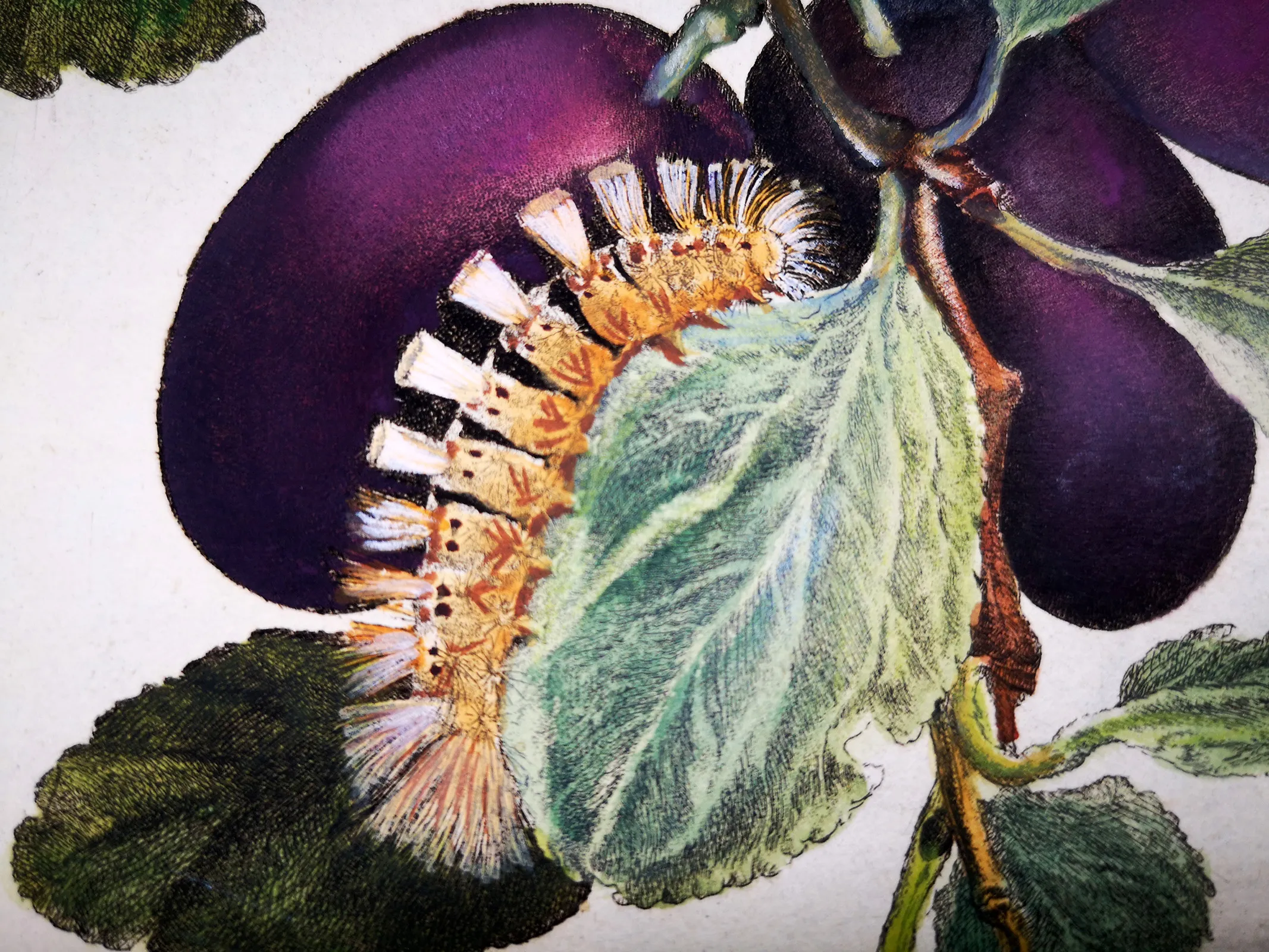
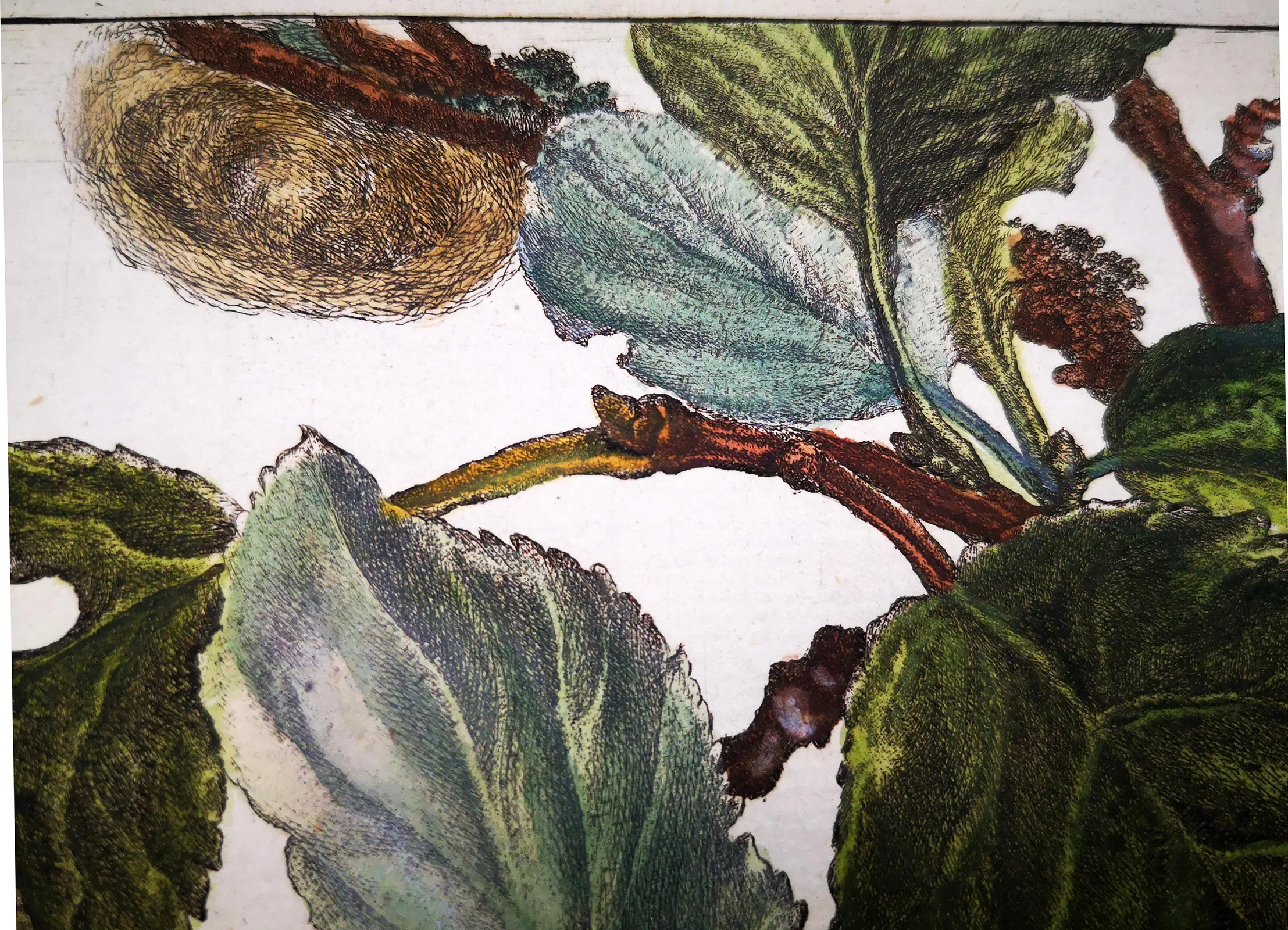
Printed on original eighteenth-century laid paper with visible chain lines. The impression remains strong and well-defined. The hand-coloring is vivid and stable, particularly within the plum fruits and insect stages.
No watermark observed. The sheet is in exceptionally fine condition for a 1774 publication, with no significant structural weaknesses or restorations.
For a deeper exploration of Jacob L’Admiral’s contribution to eighteenth-century entomology and the scientific culture of the Dutch Enlightenment, we invite you to read our editorial study:
Jacob L’Admiral and the Metamorphosis of Insects – A Dutch Enlightenment Marvel (1774)
Specific References
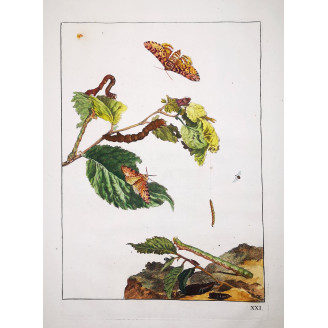
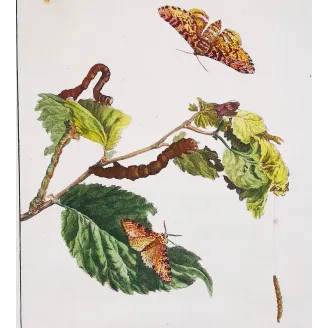
Original 1774 engraving by Jacob LâAdmiral: Pepperes Moth on Birch.
Original 1774 engraving by Jacob L'Admiral: Early Moth Stage among Willow Leaves.
Antique entomological engraving by Jacob L’Admiral, featuring *Lymantria dispar *, and *Malus*.
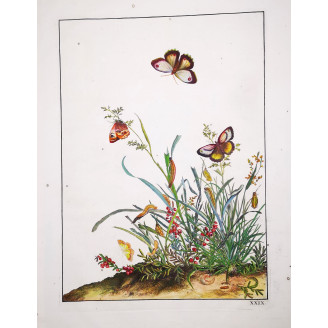
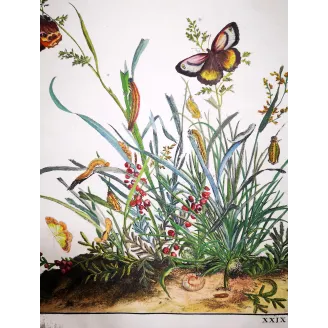
Original 1774 engraving by Jacob LâAdmiral: Lesser Marbled Fritillary on wild Pansy.
Original 1774 engraving by Jacob L'Admiral: Moths and Larvae on Fruit Tree Branch.
Original 1774 engraving by Jacob L'Admiral: Large Tortoiseshell on Sweet Cherry.
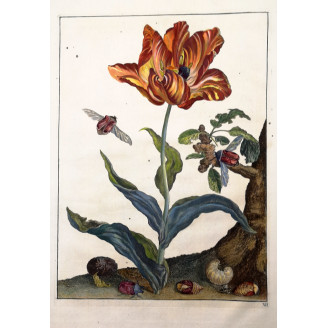
Original 1774 engraving by Jacob L'Admiral: Rose Chafer beetle with Pupae Stages and Tulip.
Original 1774 engraving by Jacob L'Admiral: Ornate Butterfly and Metamorphosis Detail.
Original 1774 engraving by Jacob LâAdmiral: Swallowtail Butterfly on Thistle.