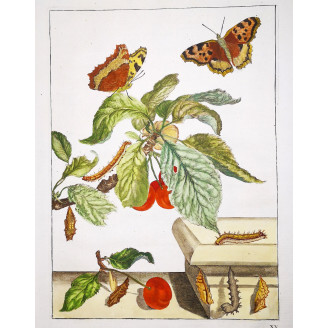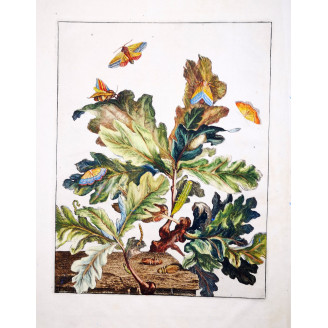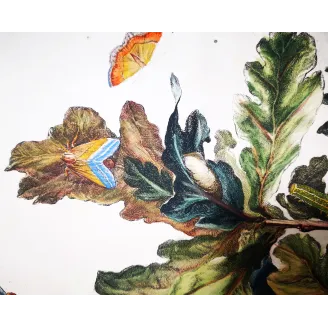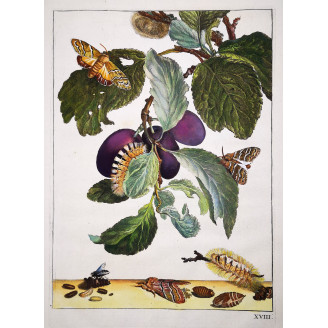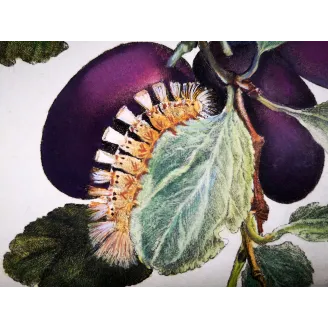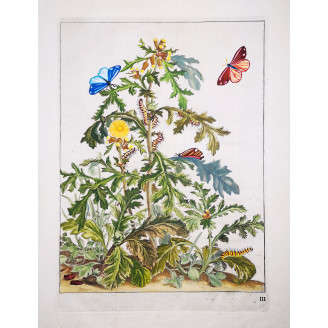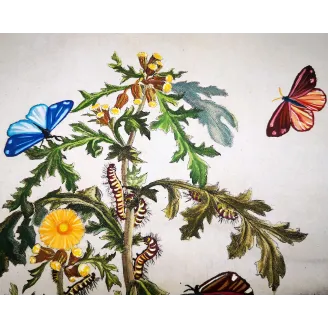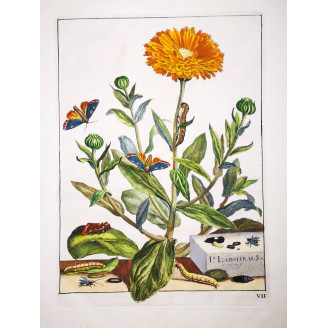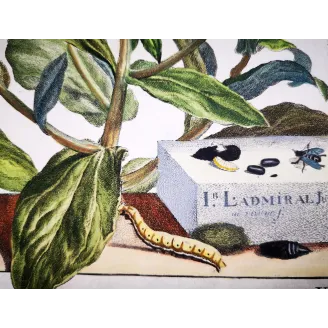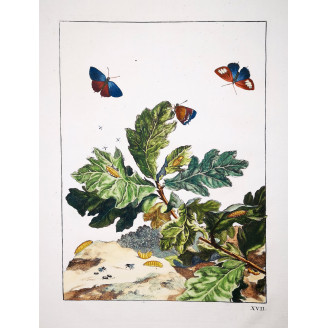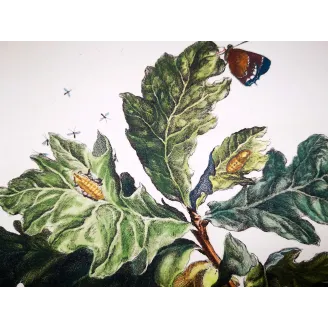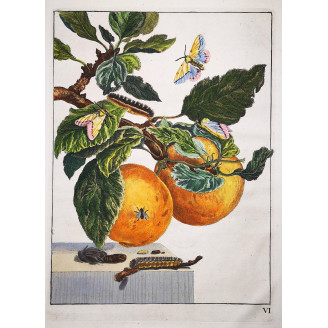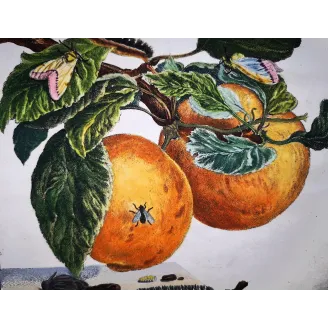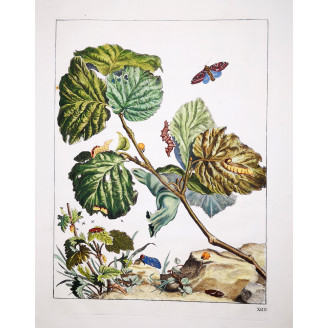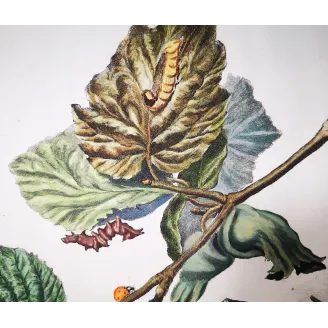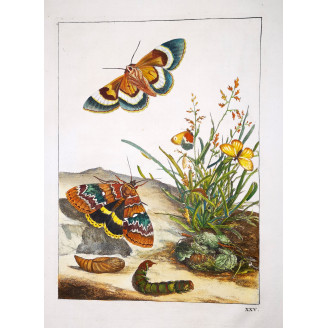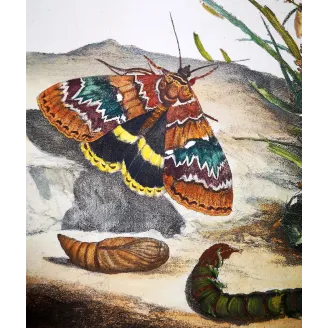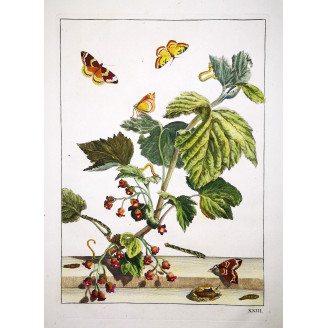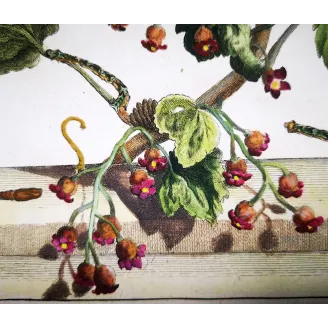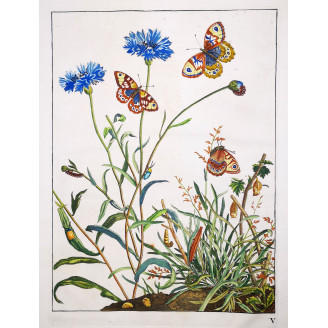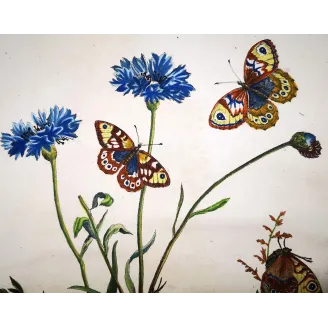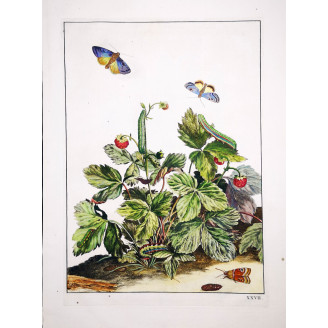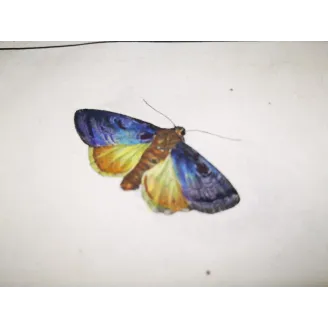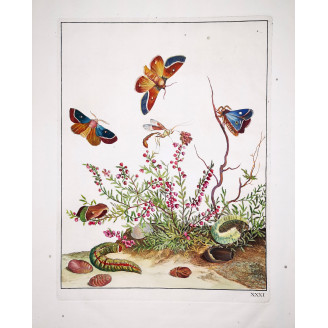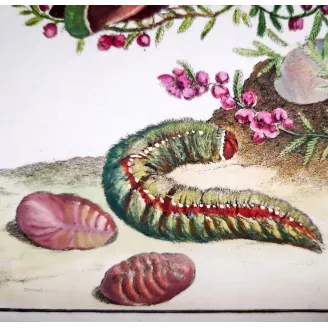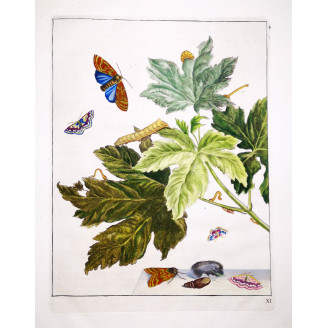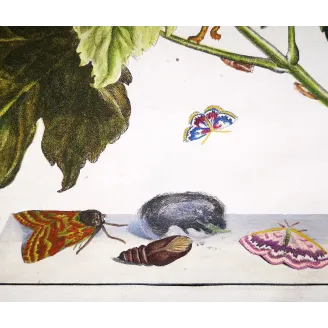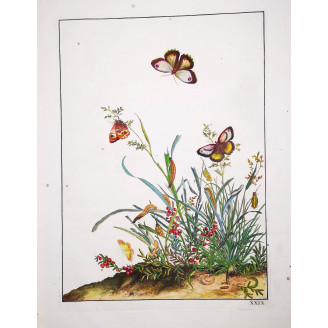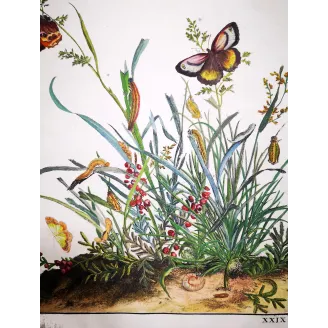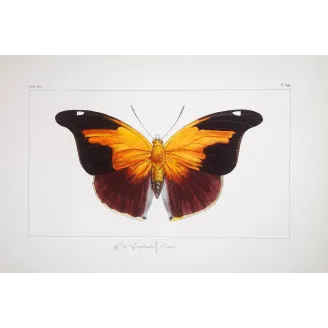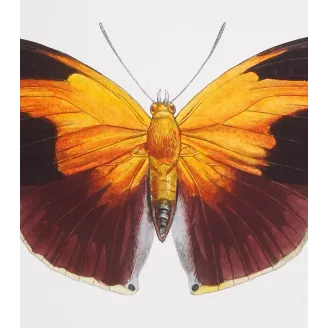
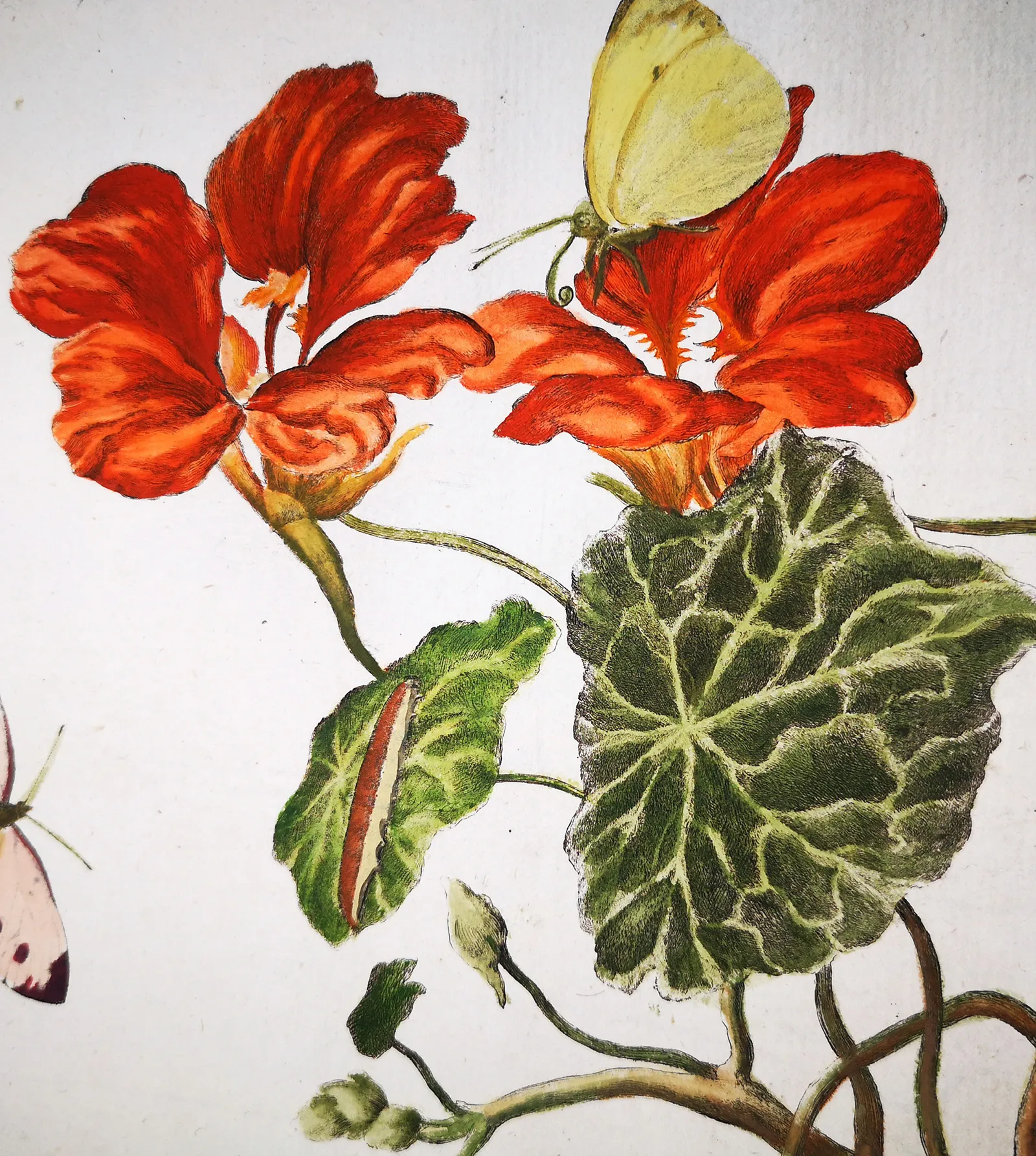
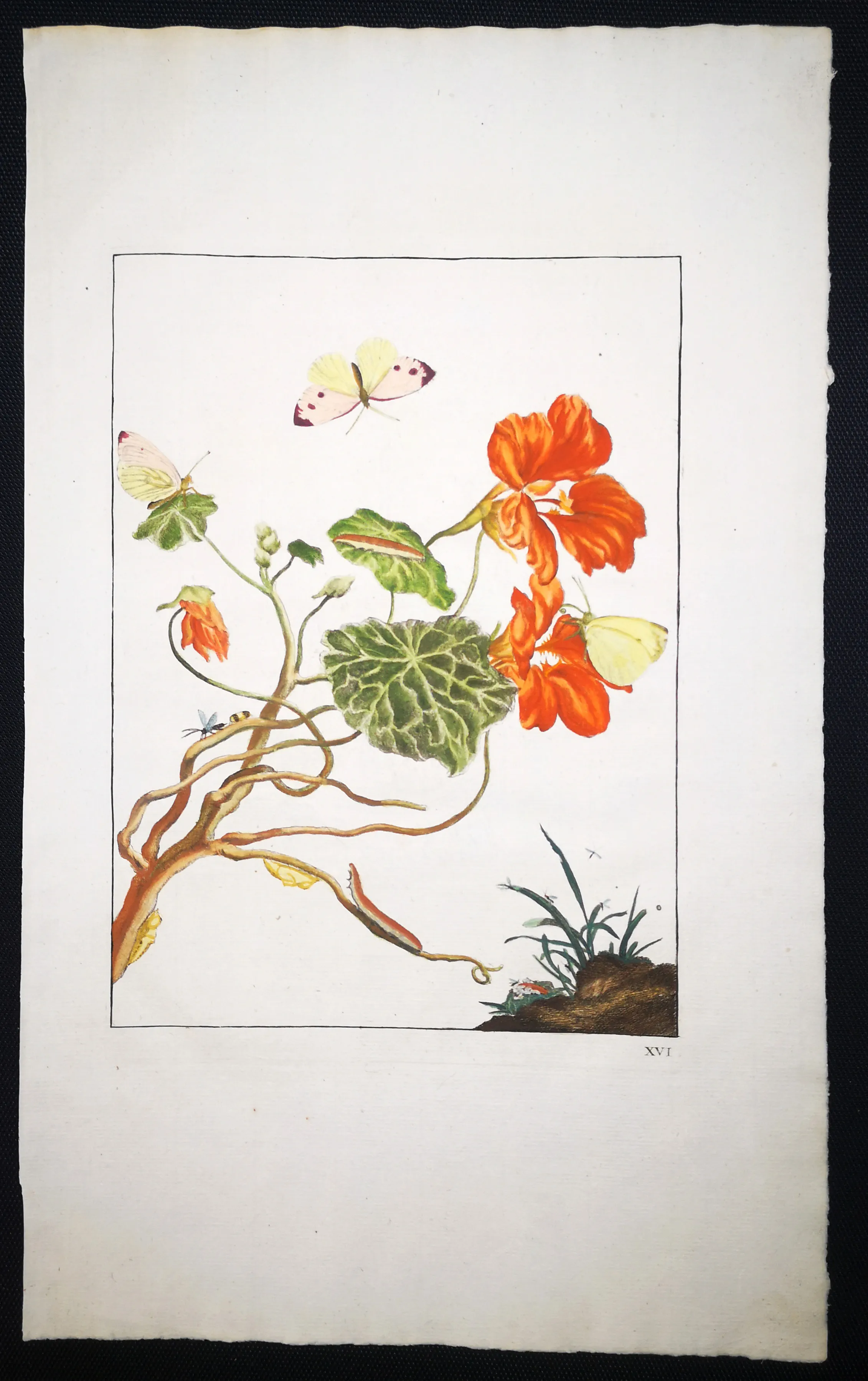
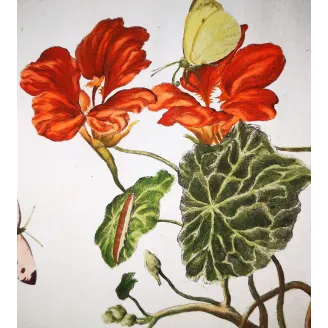
Original 1774 engraving by Jacob L'Admiral: Ornate Butterfly and Metamorphosis Detail.
 Delivery policy
Your print will be carefully prepared and shipped worldwide via trusted couriers (UPS or similar).
 Authentic antique prints
Original engravings from the 17th–19th century.
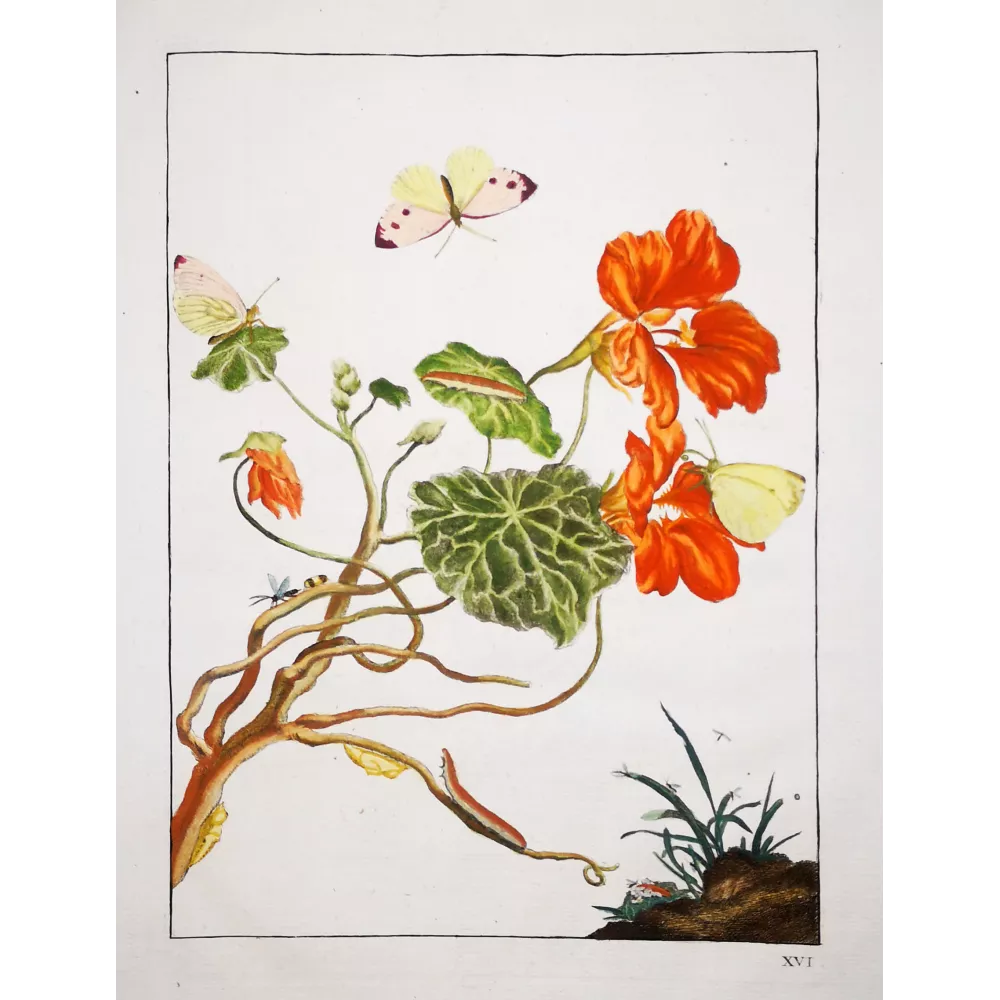
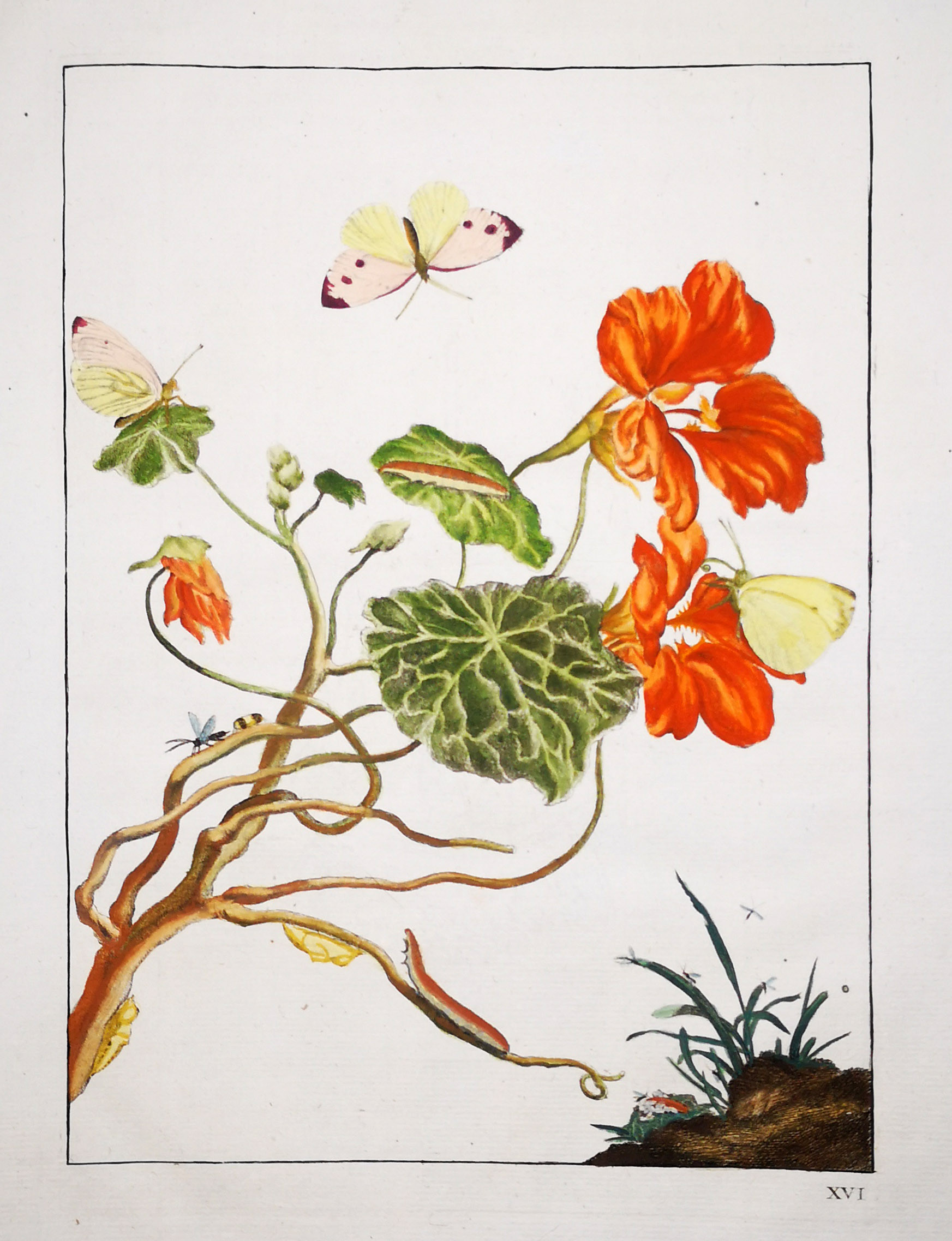
This original 1774 hand-colored engraving by Jacob L’Admiral depicts the Large White butterfly (Pieris brassicae) in its successive stages upon the nasturtium (Tropaeolum majus). The plate integrates larva, chrysalis, and winged adults within a cultivated garden plant celebrated in eighteenth-century ornamental horticulture.
The vivid orange blossoms of the nasturtium dominate the composition, their fluid petals contrasted by the pale, luminous wings of the butterflies. The sinuous stem extends diagonally across the sheet, creating movement and balance while preserving the clarity of scientific observation.
L’Admiral’s approach is both analytical and refined: metamorphosis is documented not as isolated specimen, but as a living process unfolding within decorative plant life.
— • —
The composition achieves harmony through contrast. The saturated orange of the flowers anchors the upper register, while the pale wings introduce lightness and rhythm. The engraved line remains precise, allowing the hand-coloring to articulate botanical texture — from the veined leaves to the soft transparency of the petals.
The arrangement feels spacious and deliberate, with generous white ground enhancing the visual prominence of the subject.
Pieris brassicae, commonly known as the Large White, was widely observed in European gardens due to its association with cultivated plants. Nasturtium (Tropaeolum majus) served not only as an ornamental species but also as a botanical subject of interest in eighteenth-century natural history.
By illustrating each stage of development directly upon the host plant, L’Admiral reflects the Enlightenment emphasis on ecological relationship and empirical documentation.
This engraving belongs to Jacob L’Admiral’s landmark 1774 study on insect metamorphosis — a foundational contribution to Dutch Enlightenment natural science. Each sheet was printed from copperplate and carefully hand-colored on original laid paper, embodying the union of artistic discipline and scientific inquiry.
For further historical context, see our editorial feature Jacob L’Admiral and the Metamorphosis of Insects.
Printed on original eighteenth-century laid paper with visible chain lines. A watermark with a clearly defined paper mill logo is present within the sheet, confirming period production. The margins remain fresh and clean. The impression is sharp, and the hand-coloring retains vivid saturation. An exceptionally well-preserved example dated 1774.
Specific References
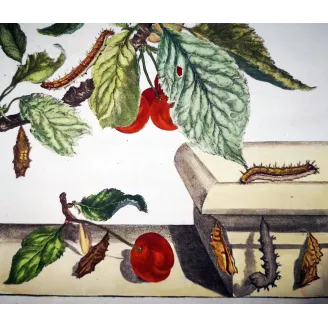
Original 1774 engraving by Jacob L'Admiral: Large Tortoiseshell on Sweet Cherry.
Original 1774 engraving by Jacob LâAdmiral: Swallowtail Butterfly on Thistle.
Antique entomological engraving by Jacob L’Admiral, featuring *Lymantria dispar *, and *Malus*.
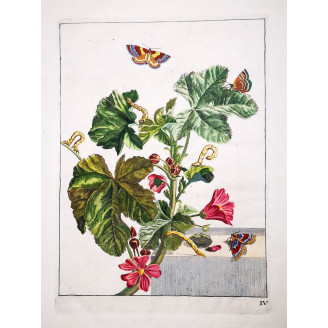
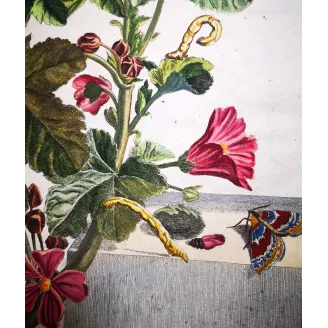
Original 1774 engraving by Jacob L'Admiral: Red Twin-spot Carpet on Mallow.
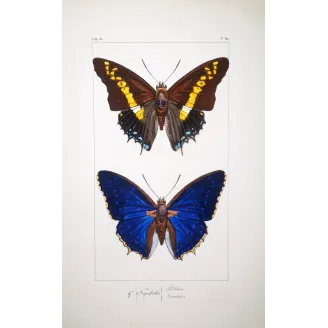
Original 1835 hand-colored copper engraving depicting the butterflies Pollux and Eurilochus. A visually striking double-specimen plate from Hippolyte Lucas’ celebrated Exotic Butterflies, engraved by Pauquet, with strong appeal as natural history art and antique butterfly wall art.
Original 1774 engraving by Jacob L'Admiral: Red Twin-spot Carpet on Mallow.
18th-century hand-colored engraving of the Wilding or Crab Tree by Elisabeth Blackwell, with blossom and fruit details.
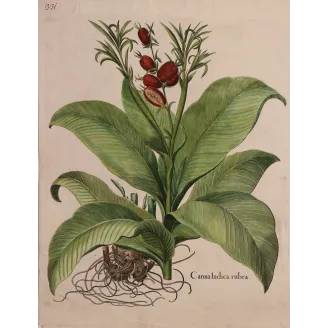
Original seventeenth-century hand-colored botanical engraving of Canna Indica rubra from Basilius Besler's monumental Hortus Eystettensis, first published in 1613. The imposing composition combines sweeping green foliage, exposed roots and vivid red botanical forms, while the laid-paper sheet preserves a watermark and the remarkable printed autumnal heading “SECVNDVS ORDO COLLECTARVM PLANTARVM AVTVMNALIVM” on its verso.
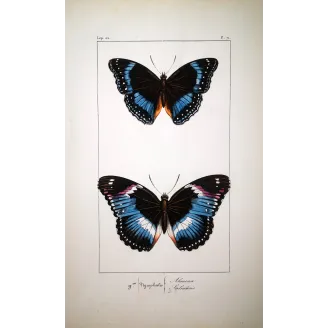
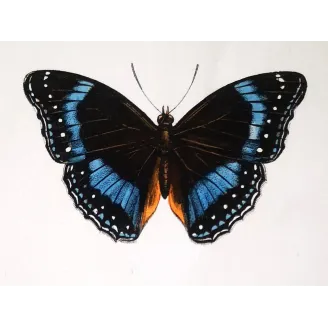
A vivid 19th-century hand-colored engraving depicting two striking tropical butterflies: the Blue-banded Eggfly (Hypolimnas alimena) and the Blue Diadem (Hypolimnas salmacis). Published in Hippolyte Lucas’s Exotic Butterflies (1835), the plate highlights their dramatic contrast of velvety black wings with electric blue bands and delicate white markings.
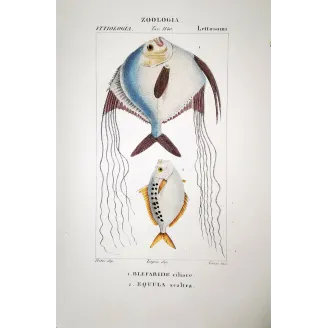
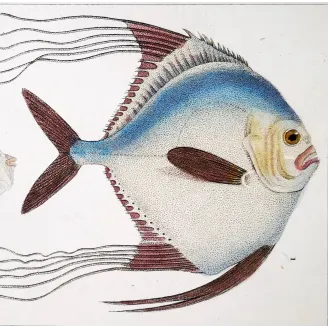
Delicate 19th-century hand-colored engraving of a ponyfish with companion species, ideal for marine-themed interiors and collectors.
Original 1835 hand-colored engraving of Nymphalis orion, drawn and engraved by Pauquet under the scientific direction of Hippolyte Lucas for Exotic Butterflies.
Original 1774 engraving by Jacob L'Admiral: Large Tortoiseshell on Sweet Cherry.
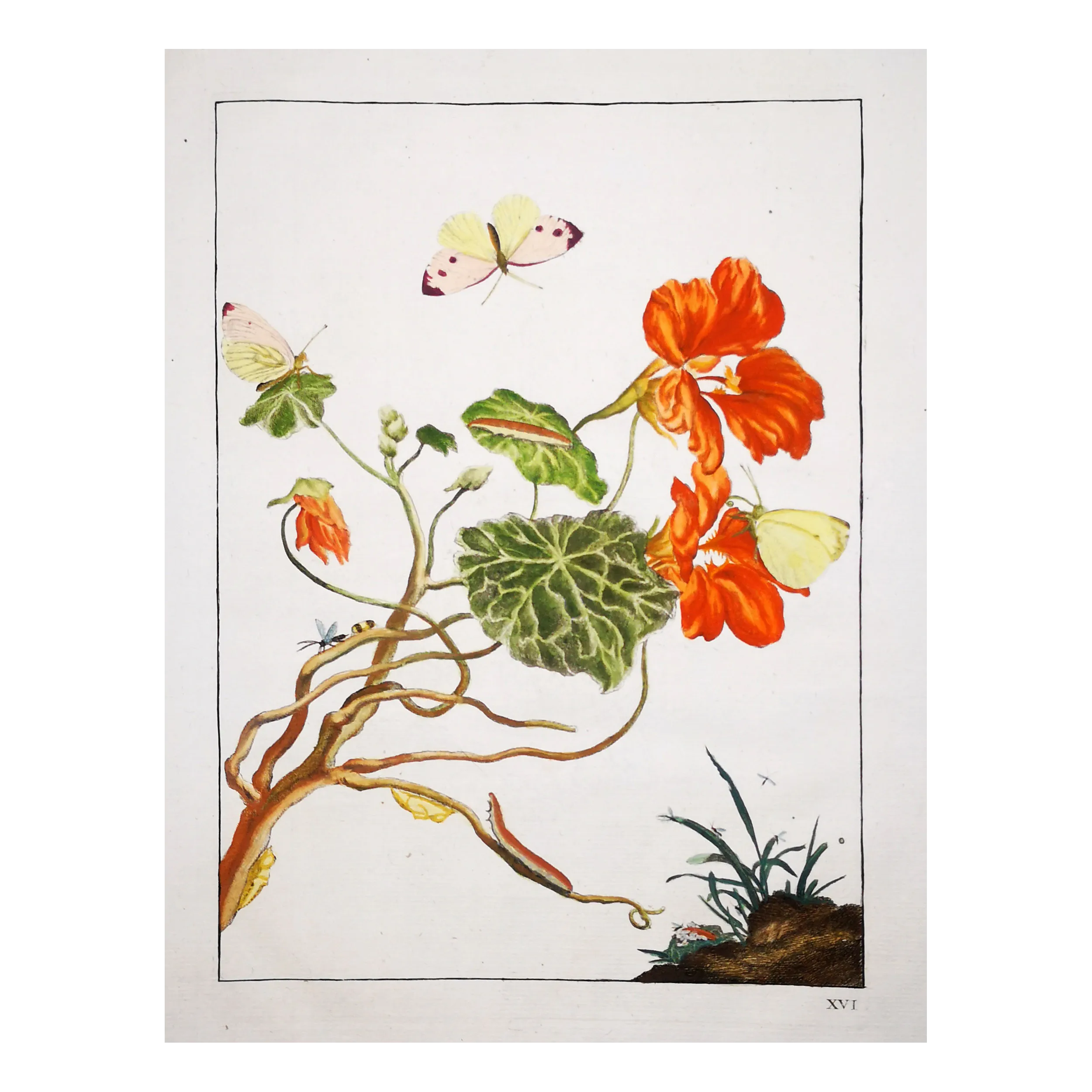
Original 1774 engraving by Jacob L'Admiral: Ornate Butterfly and Metamorphosis Detail.