 Delivery policy
Your print will be carefully prepared and shipped worldwide via trusted couriers (UPS or similar).
 Authentic antique prints
Original engravings from the 17th–19th century.
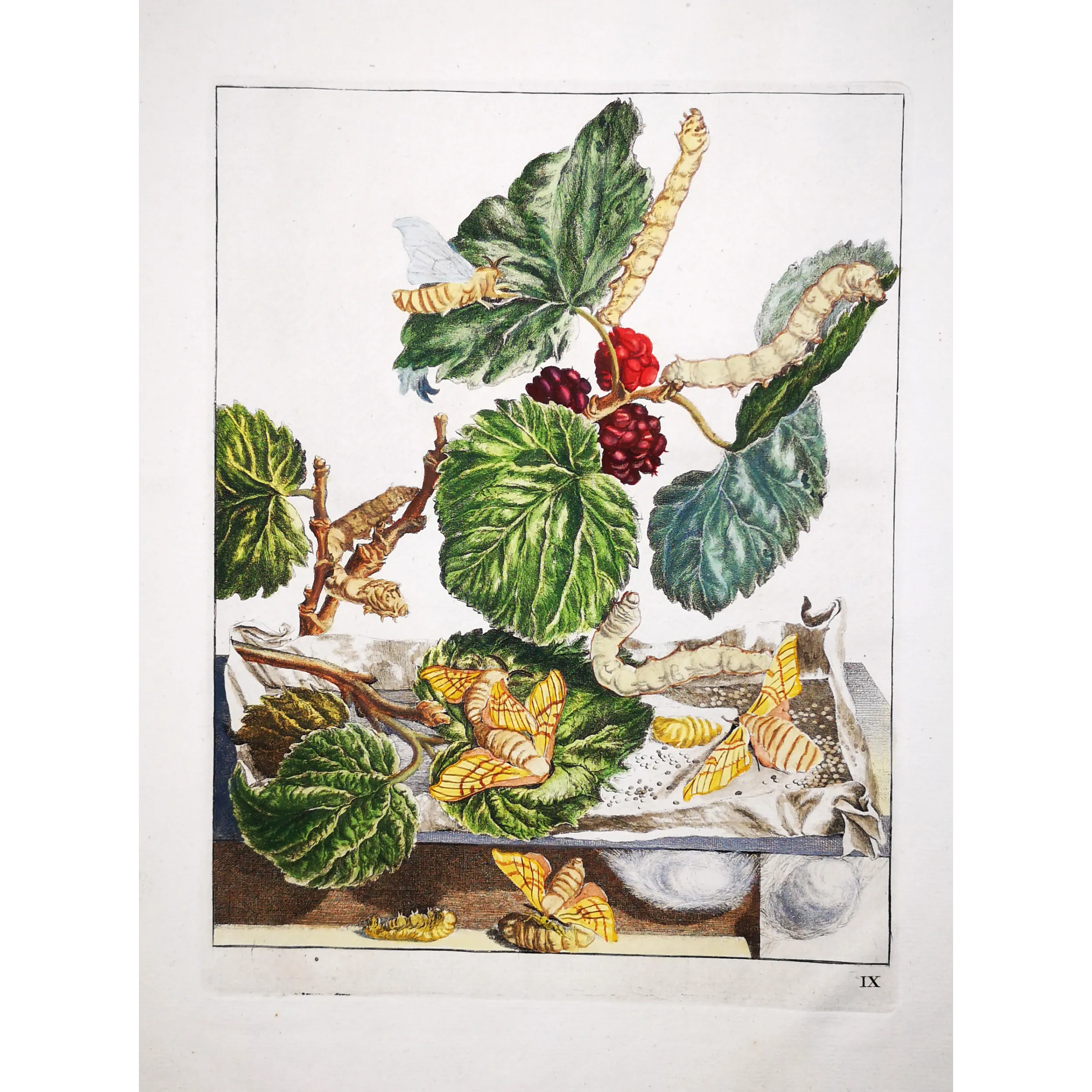
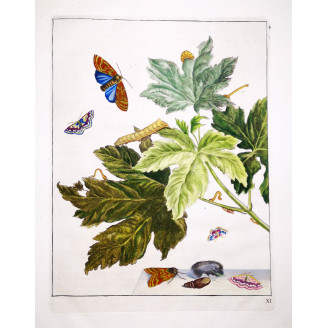
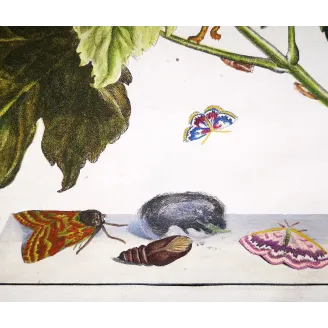
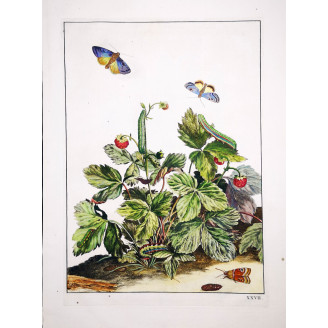
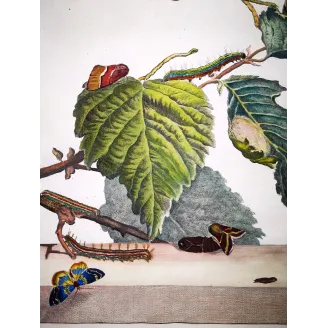
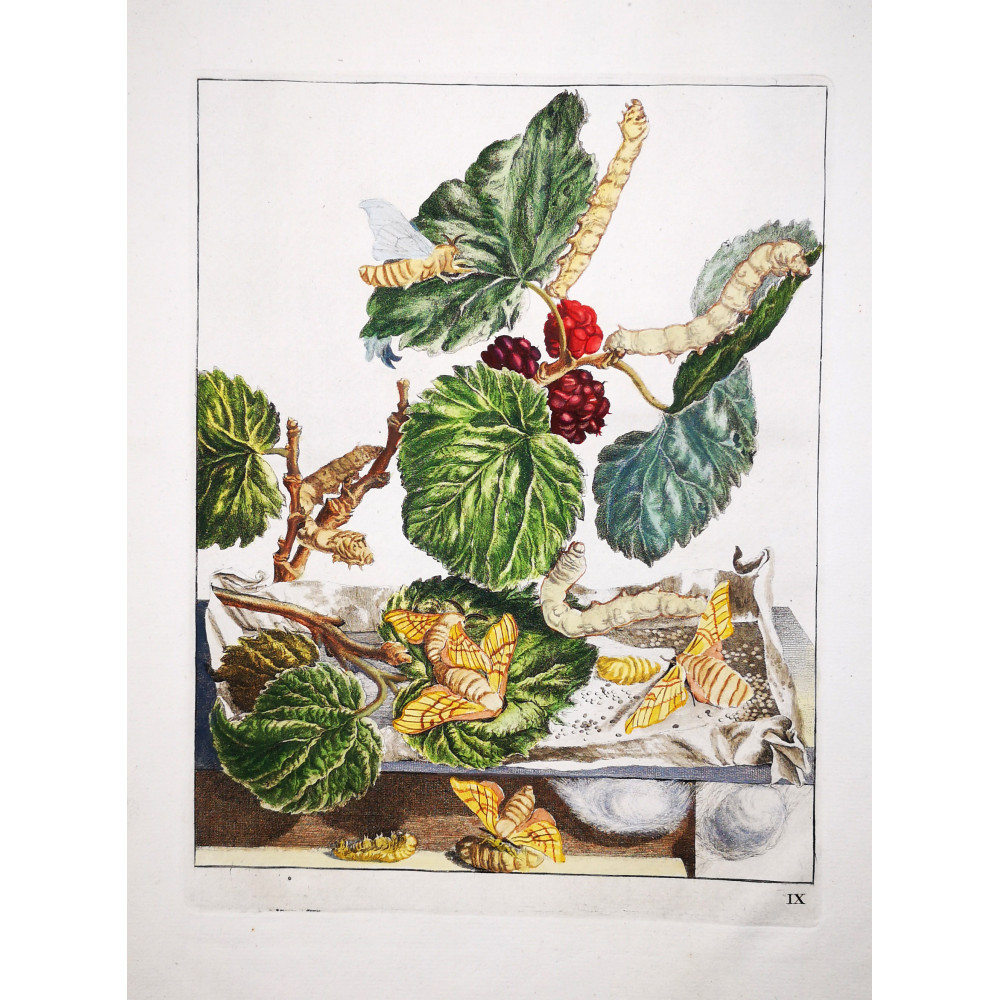
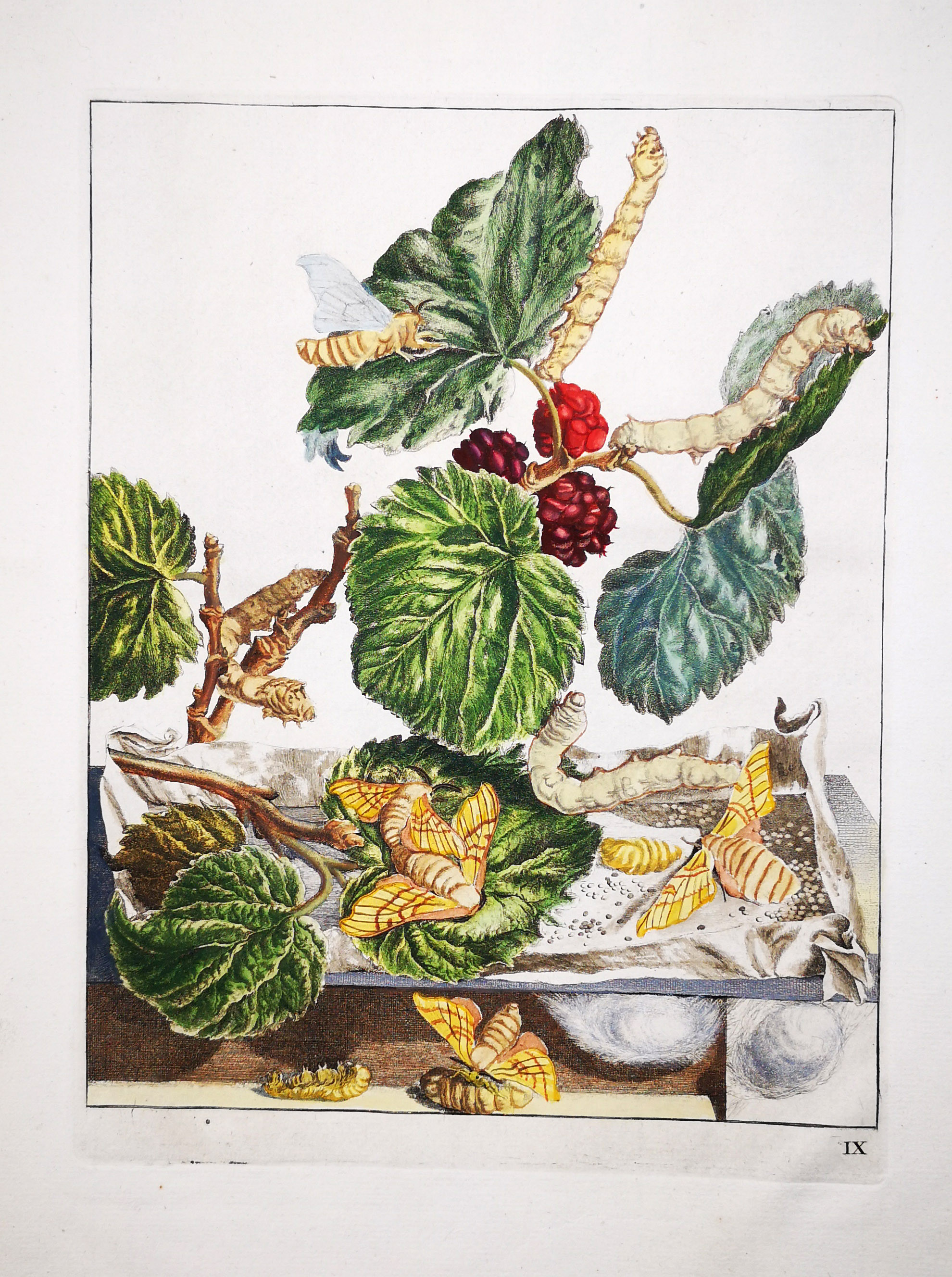
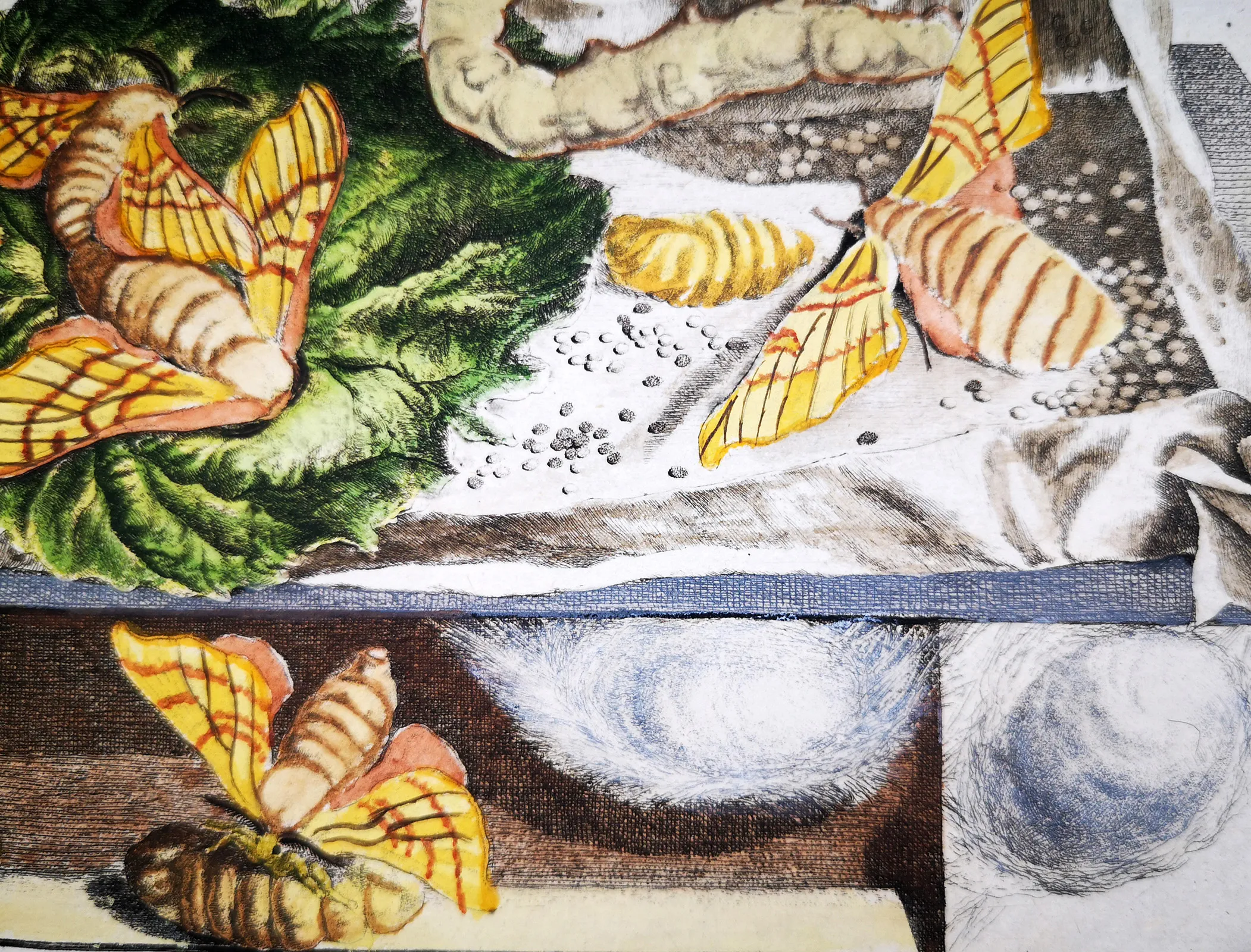
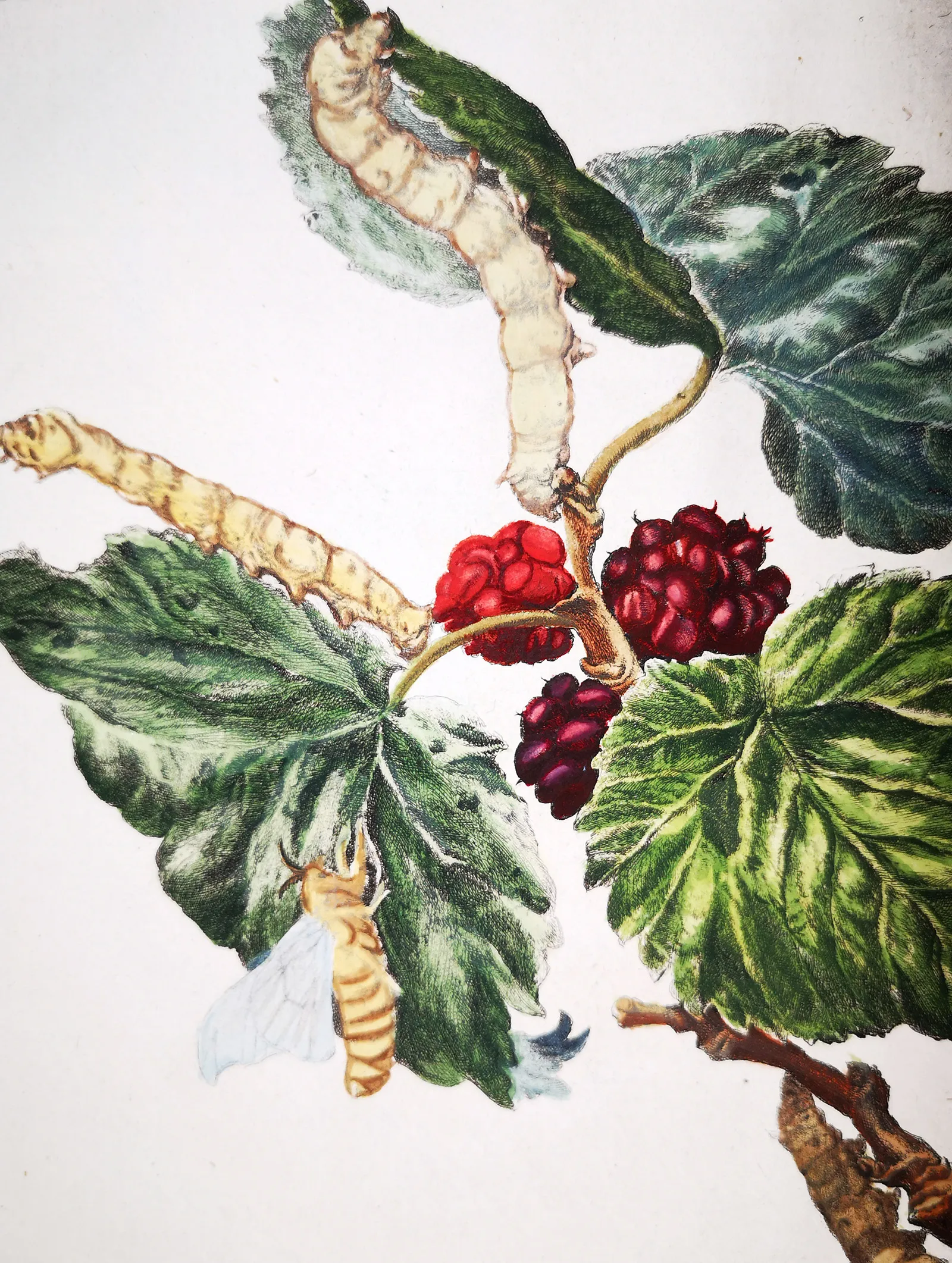
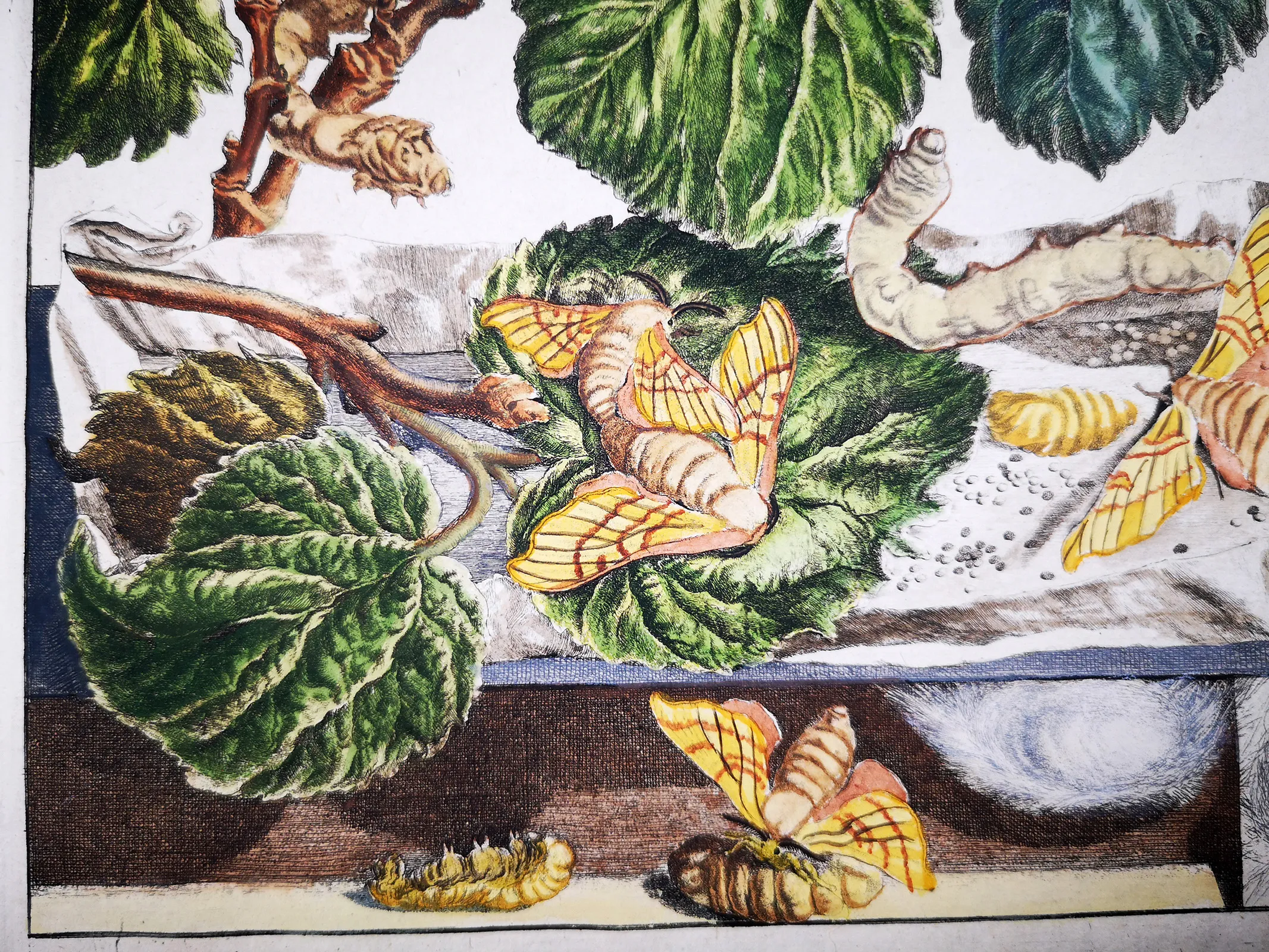
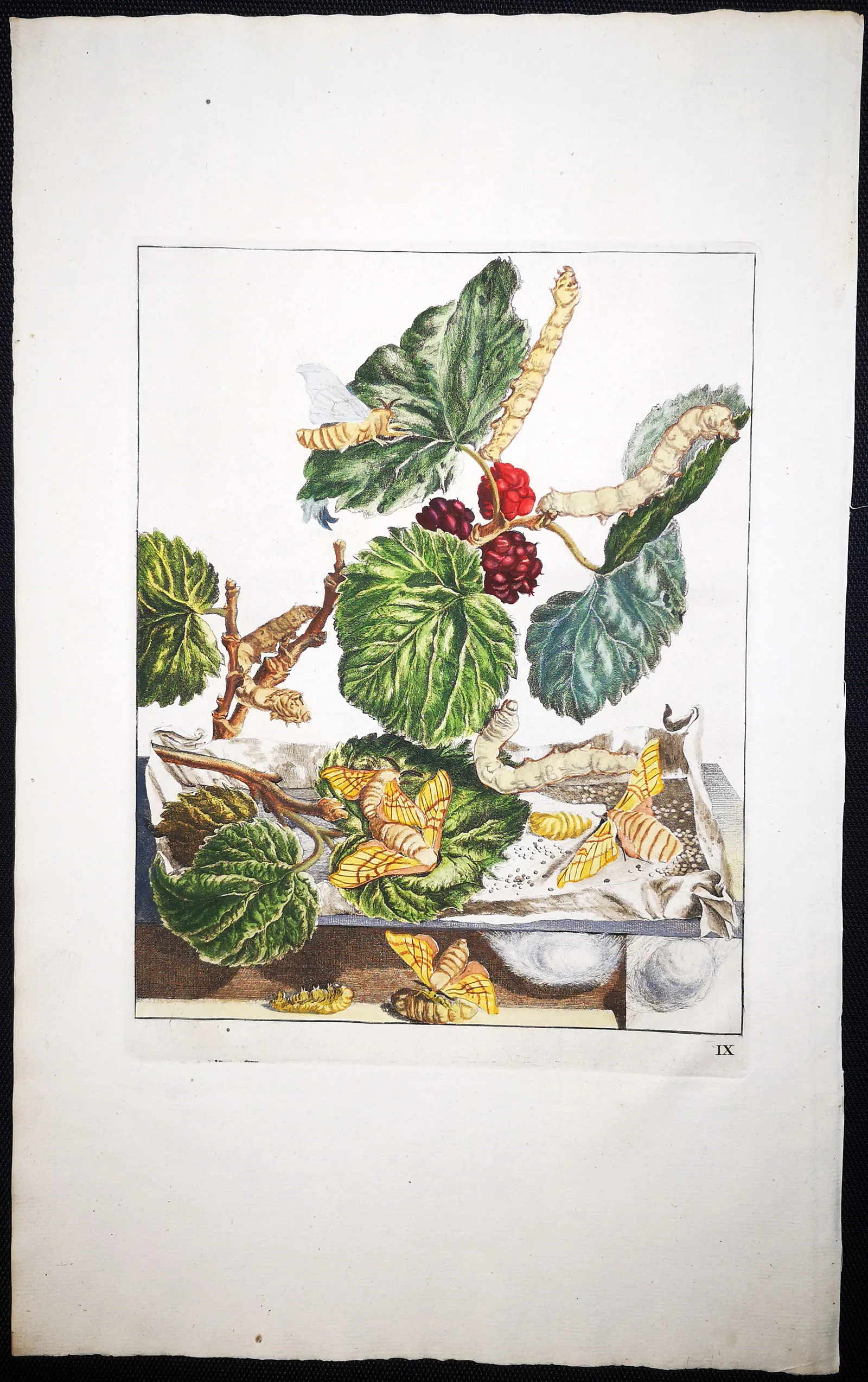
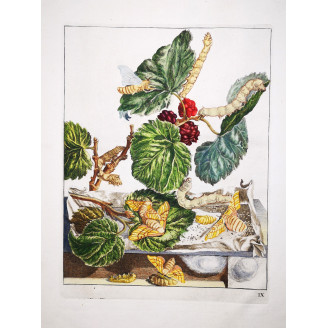
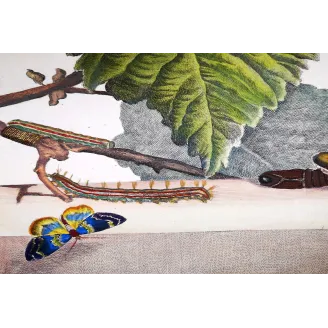
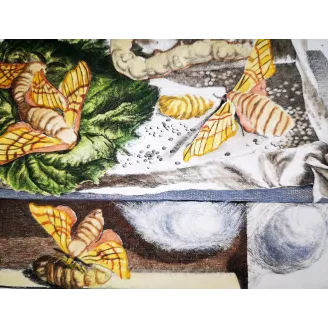
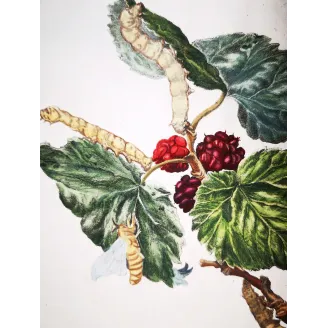
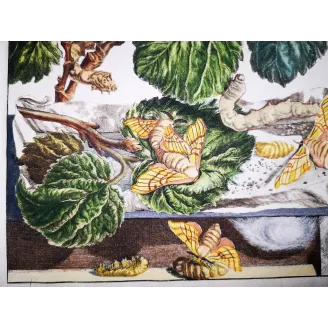
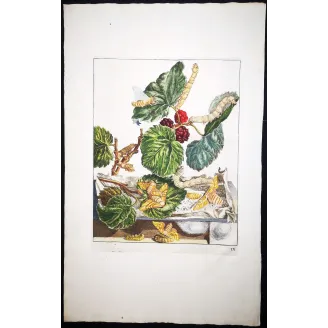
This original 1774 hand-colored engraving by Jacob L’Admiral depicts the silkworm (Bombyx mori) in successive stages of development upon the white mulberry (Morus alba). Larvae feed upon the foliage, chrysalides rest within spun cocoons, and winged moths emerge in quiet symmetry below.
Unlike purely decorative compositions, this plate presents metamorphosis as industry as well as biology. The mulberry leaves — carefully veined and structured — support a species whose life cycle shaped European textile production for centuries.
L’Admiral documents not only natural transformation, but the intersection between science, cultivation, and economic life in the Enlightenment era.
— • —
The composition is layered and deliberate. The broad mulberry leaves create structural weight in the upper register, while the lower section reveals cocoons and adult moths arranged with near-symmetrical calm. The repeated golden tones of the moth wings introduce warmth against the cool greens of the foliage.
The engraved line remains crisp, allowing the hand-coloring to articulate subtle tonal variations in the larvae and the fibrous texture of the silk cocoons.
Bombyx mori, domesticated for silk production since antiquity, became central to European sericulture by the eighteenth century. The white mulberry (Morus alba) was cultivated extensively to sustain larval feeding.
By presenting the complete life cycle upon its host plant, L’Admiral aligns with Enlightenment scientific methodology — uniting taxonomy, developmental study, and agricultural relevance within a single engraved plate.
This engraving forms part of Jacob L’Admiral’s influential 1774 study of insect metamorphosis — a milestone of Dutch Enlightenment natural science. Printed from copperplate and hand-colored on original laid paper, each sheet represents the disciplined intersection of observation and artistry.
Discover more in our editorial feature: Jacob L’Admiral and the Metamorphosis of Insects.
Printed on original eighteenth-century laid paper with visible chain lines. The margins remain fresh and clean. The impression is sharp, and the hand-coloring retains clarity and tonal integrity. No watermark observed. A well-preserved example dated 1774.
Specific References
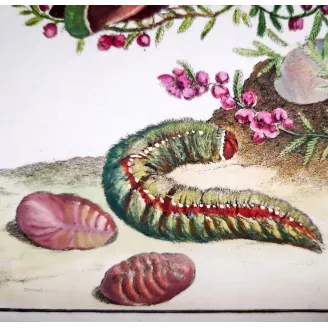
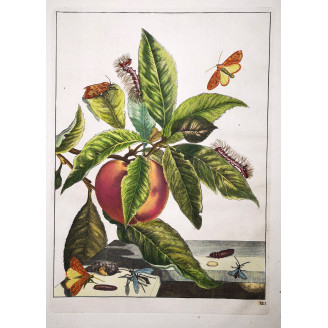
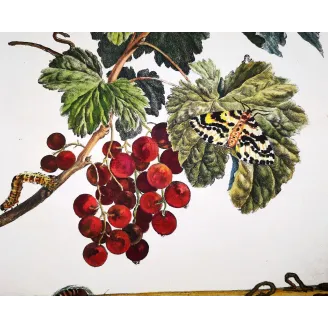
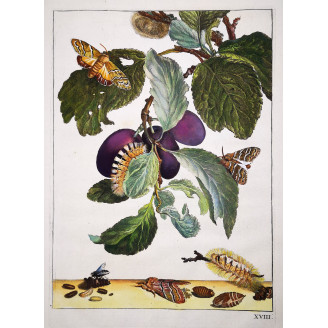
Antique entomological engraving by Jacob L’Admiral, featuring *Lymantria dispar *, and *Malus*.
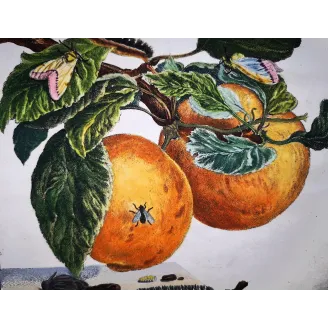
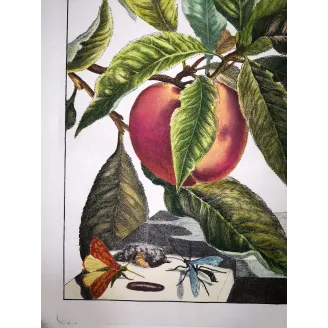
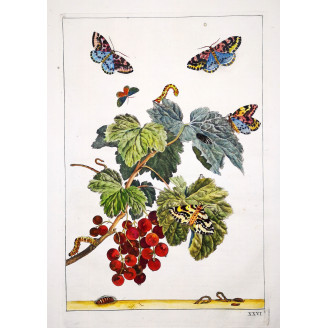
Original 1774 engraving by Jacob L'Admiral: Moths and Larvae on Fruit Tree Branch.
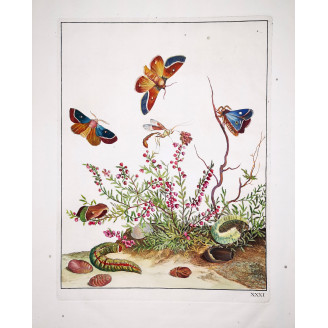
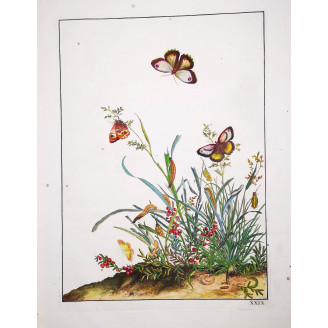
Original 1774 engraving by Jacob L'Admiral: Red Butterflies on Flowering Stem.
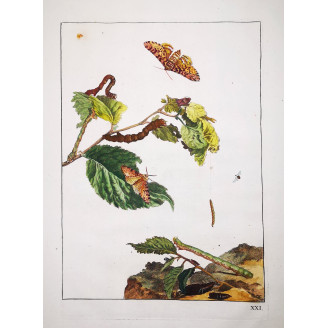
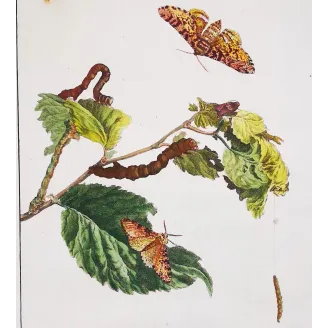
Original 1774 engraving by Jacob LâAdmiral: Pepperes Moth on Birch.
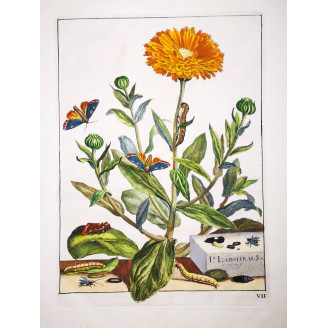
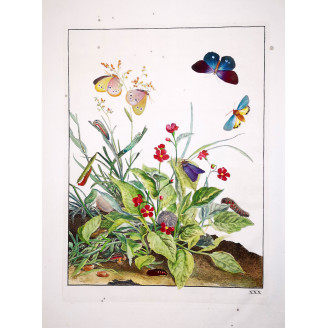
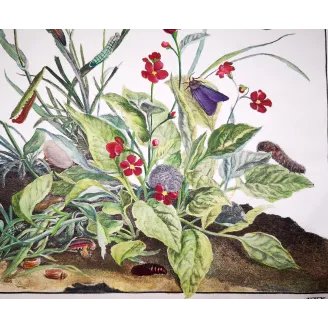
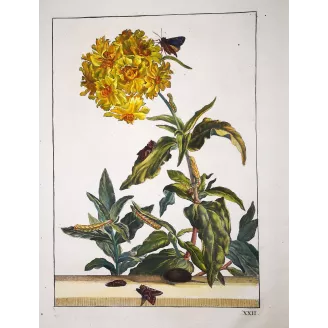
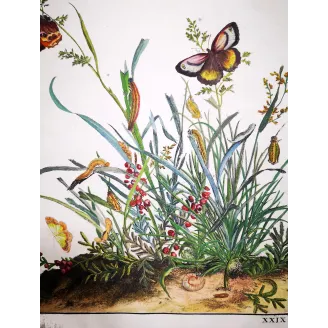
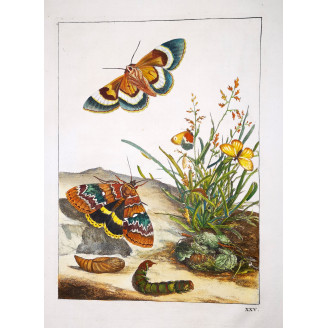
Original 1774 engraving by Jacob L'Admiral: Colorful Insects on Flowering Stalk.
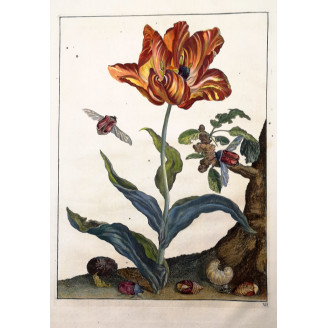
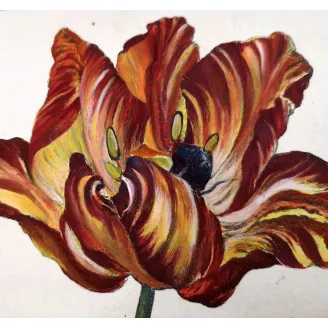
Original 1774 engraving by Jacob L'Admiral: Rose Chafer beetle with Pupae Stages and Tulip.
Original 1774 engraving by Jacob LâAdmiral: Swallowtail Butterfly on Thistle.
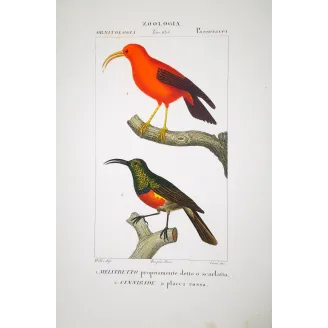
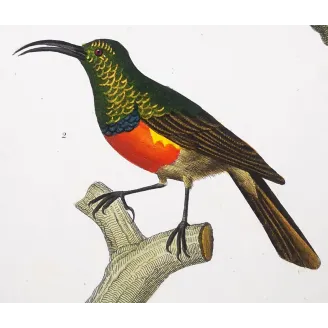
Brilliantly colored honeycreeper and sunbird illustration with tropical vibrancy, captured by Prêtre.
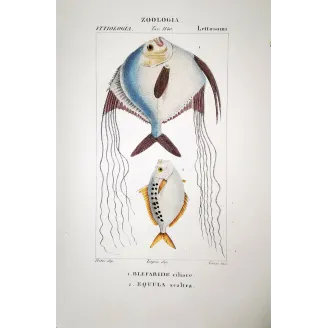
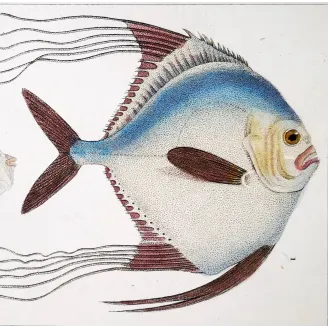
Delicate 19th-century hand-colored engraving of a ponyfish with companion species, ideal for marine-themed interiors and collectors.
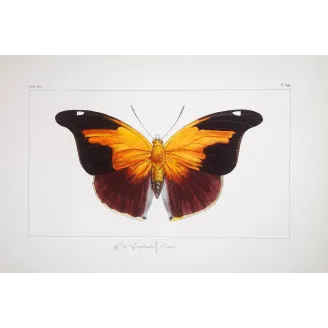
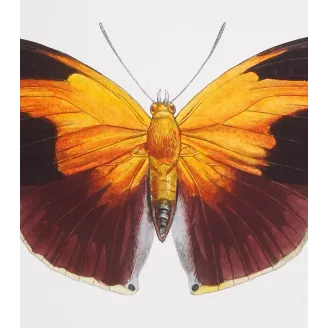
Original 1835 hand-colored engraving of Nymphalis orion, drawn and engraved by Pauquet under the scientific direction of Hippolyte Lucas for Exotic Butterflies.
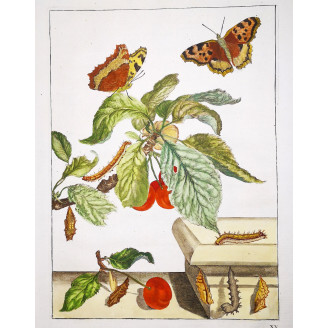
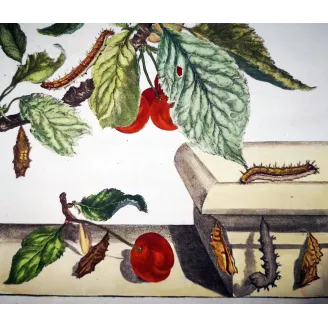
Original 1774 engraving by Jacob L'Admiral: Large Tortoiseshell on Sweet Cherry.
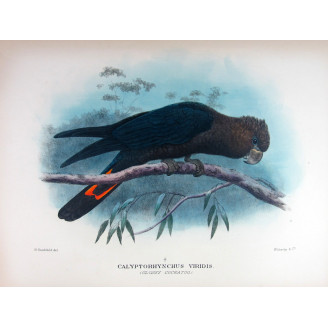
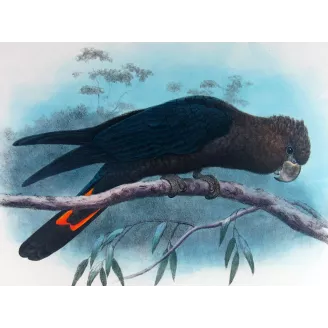
Glossy Cockatoo print by H. Goodchild, dark tones and rare presence on the plate
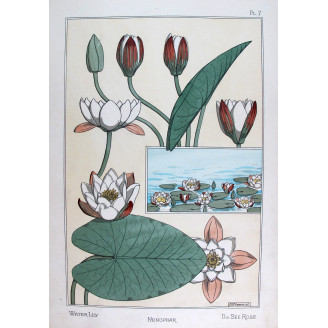
This second edition of the Water-Lily plate (No. 7) captures all the refined serenity of Plate 9, with slight variations in layout and ornamental balance.