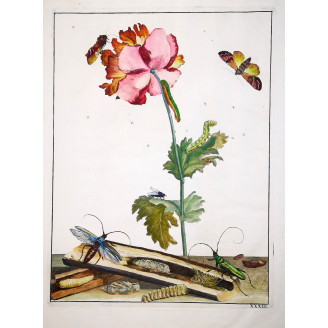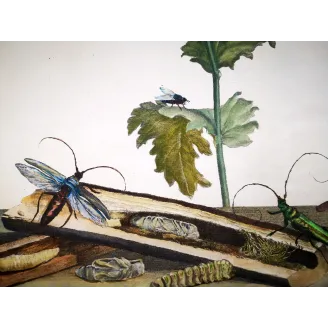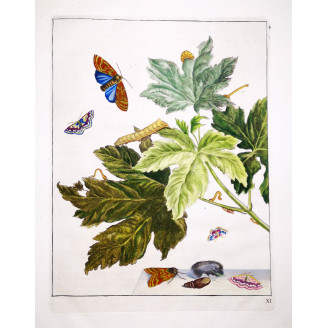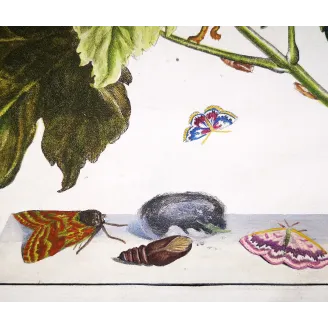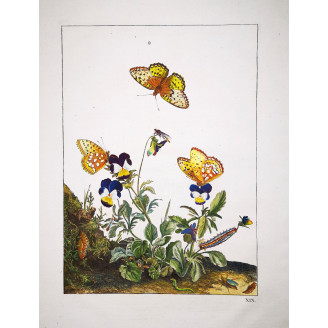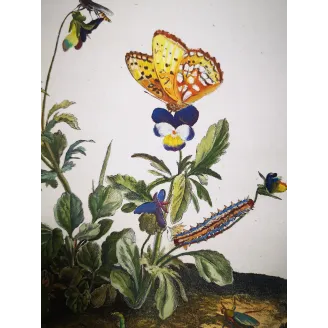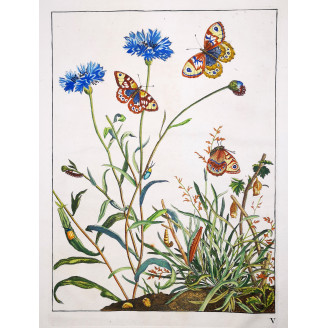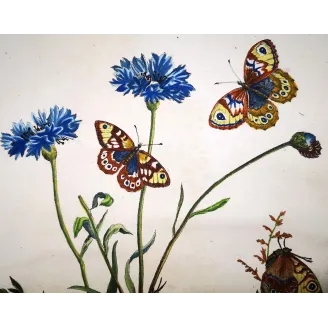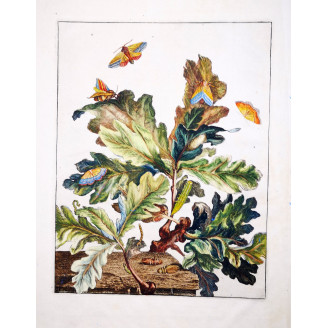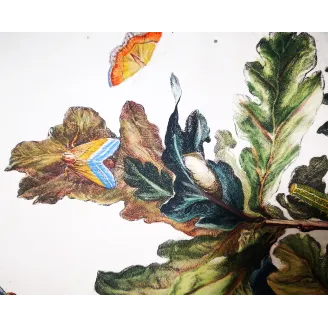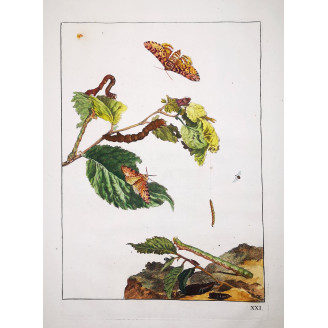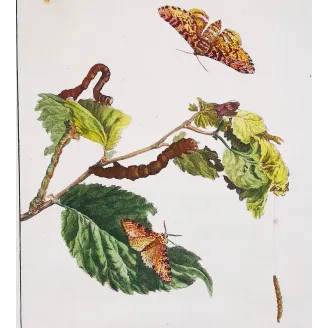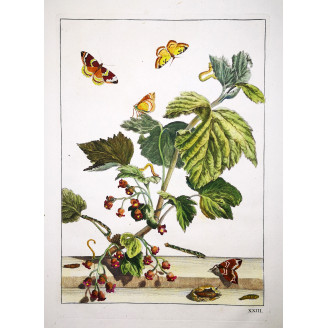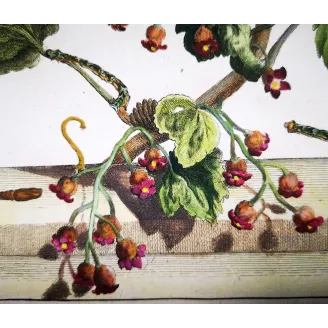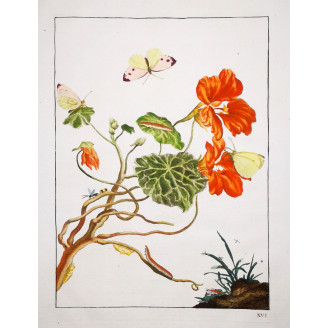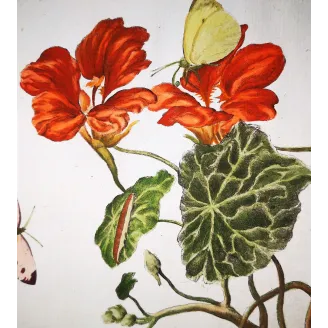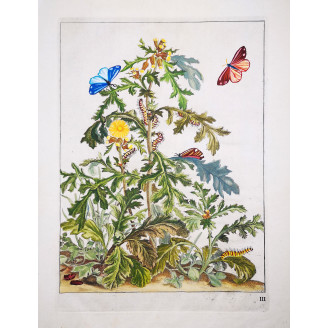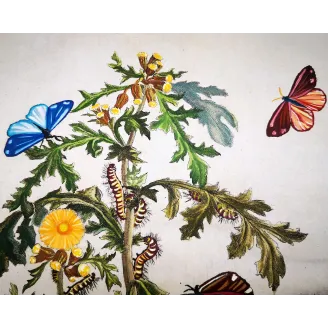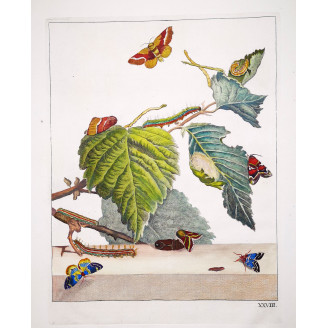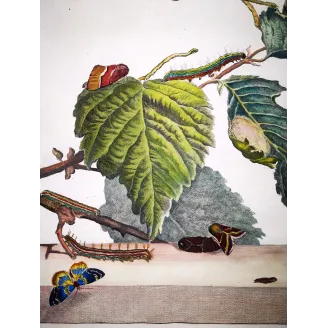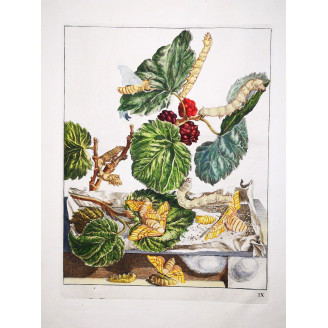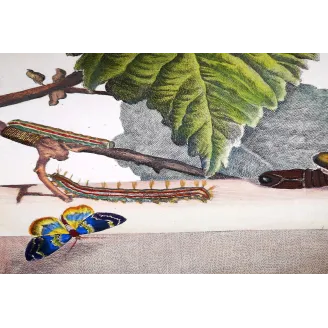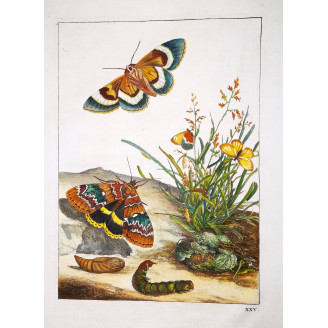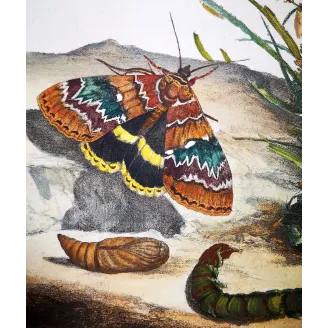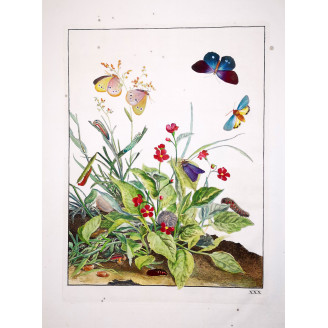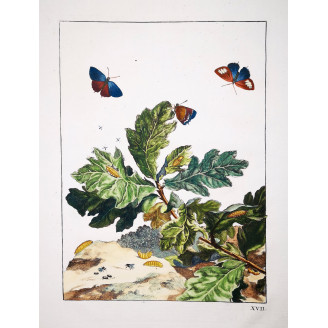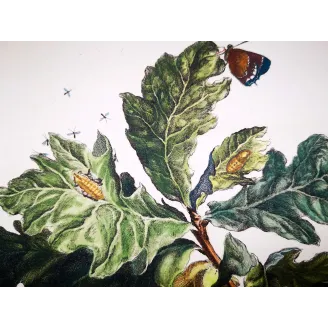
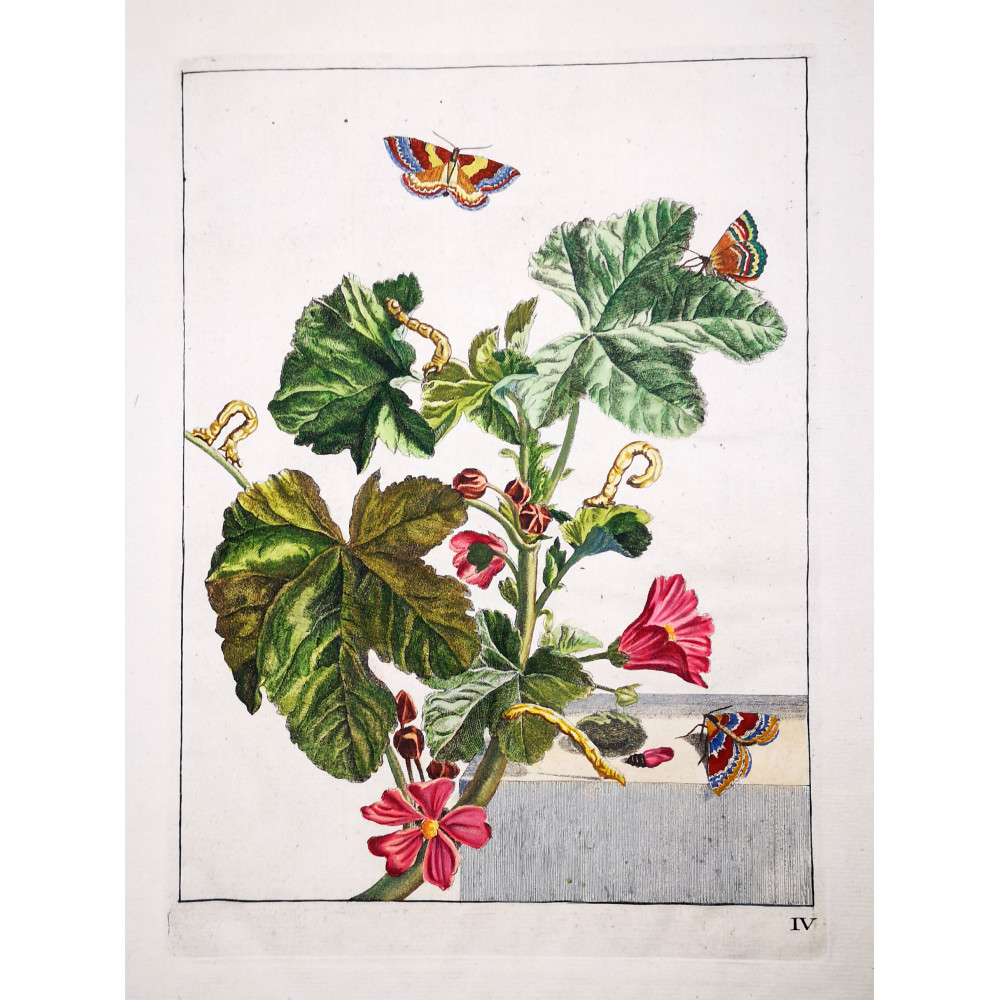
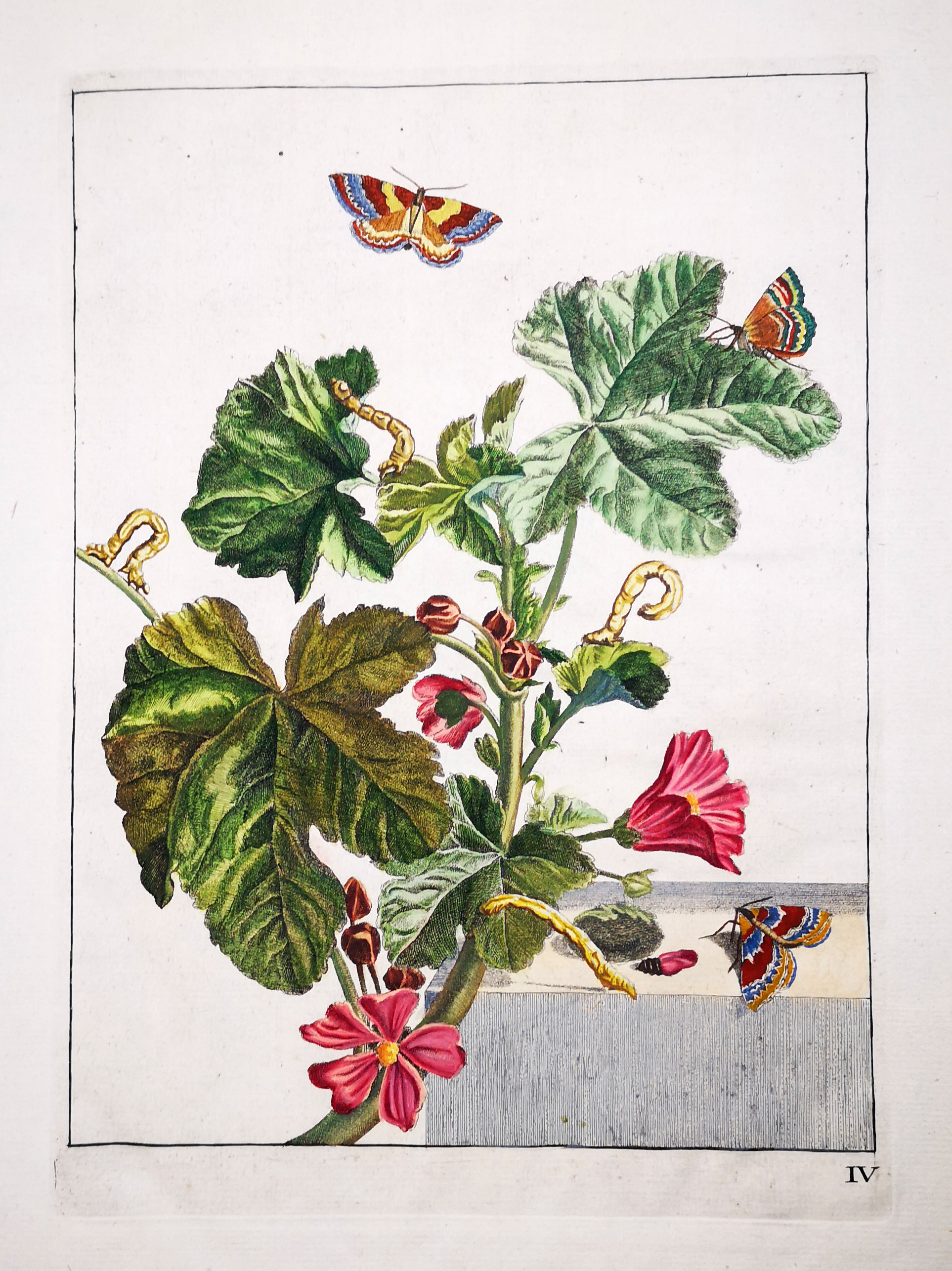
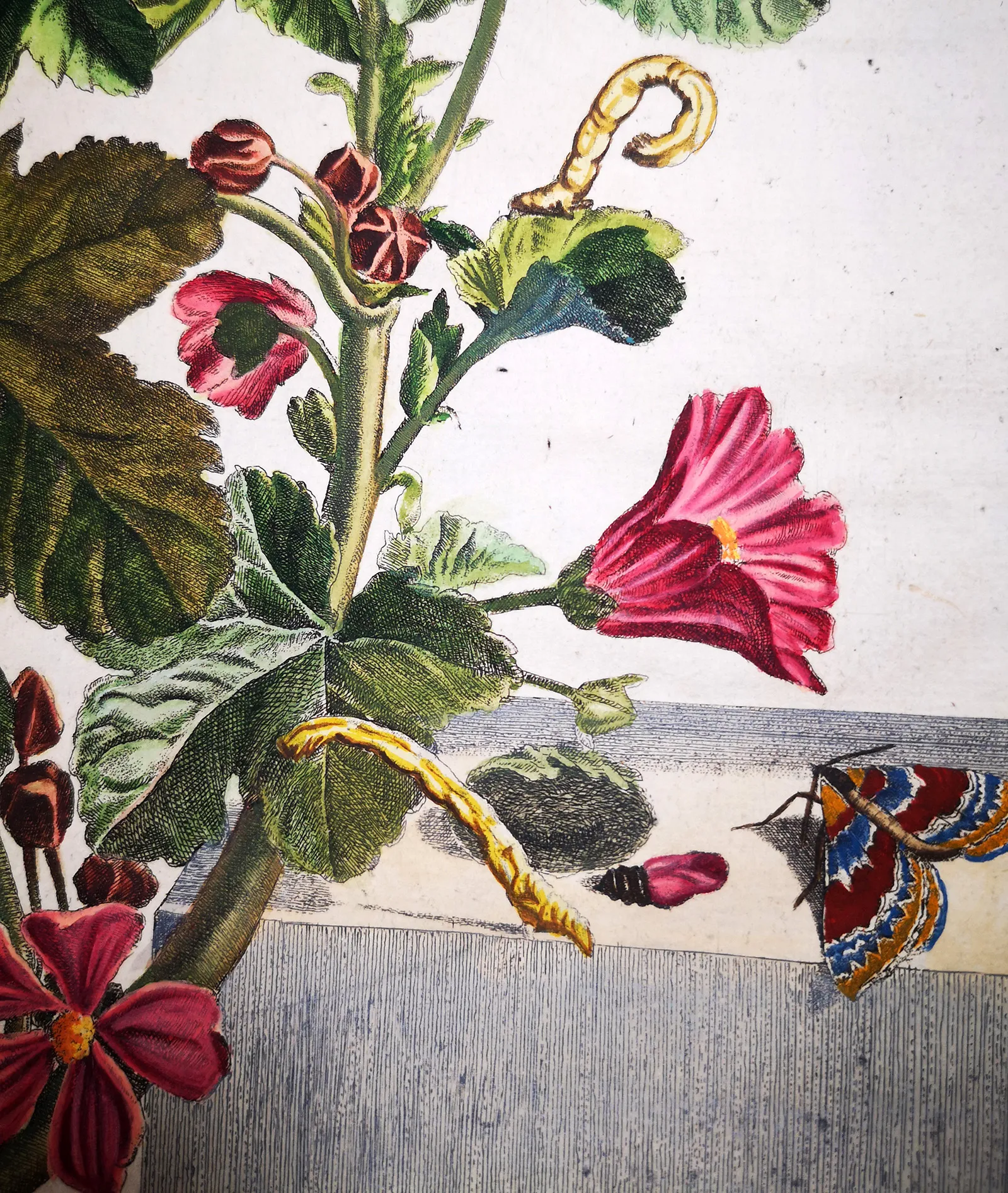
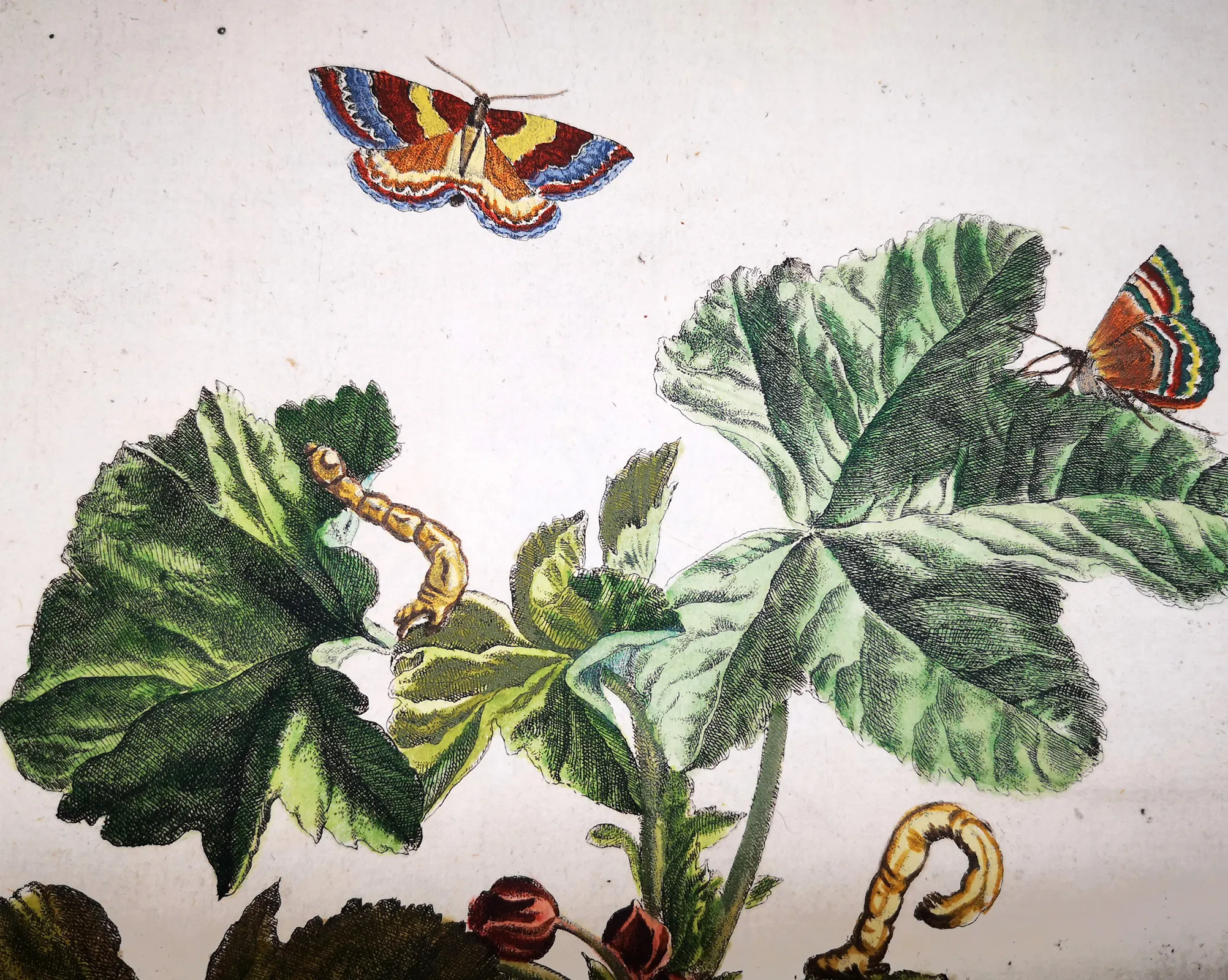
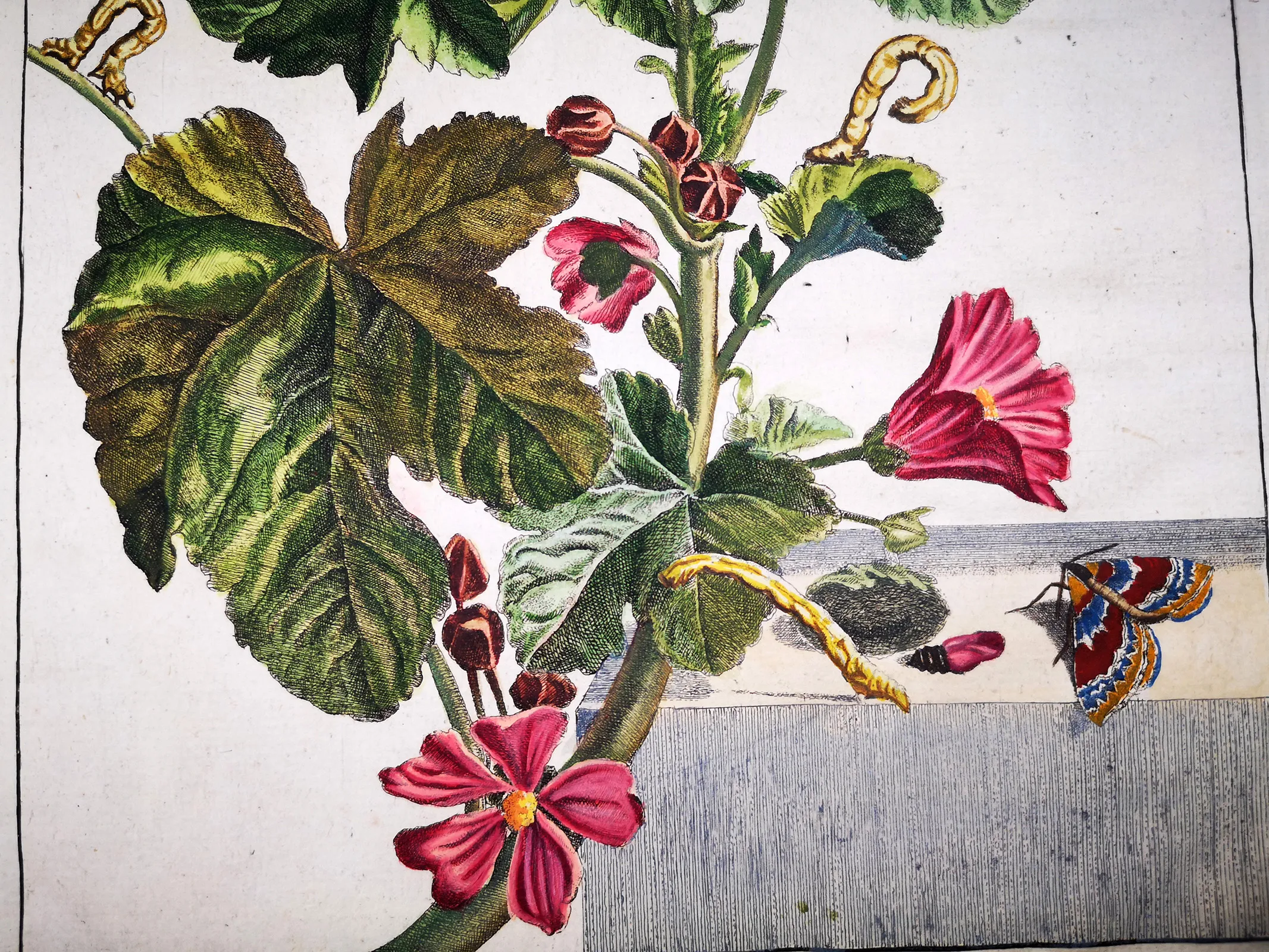
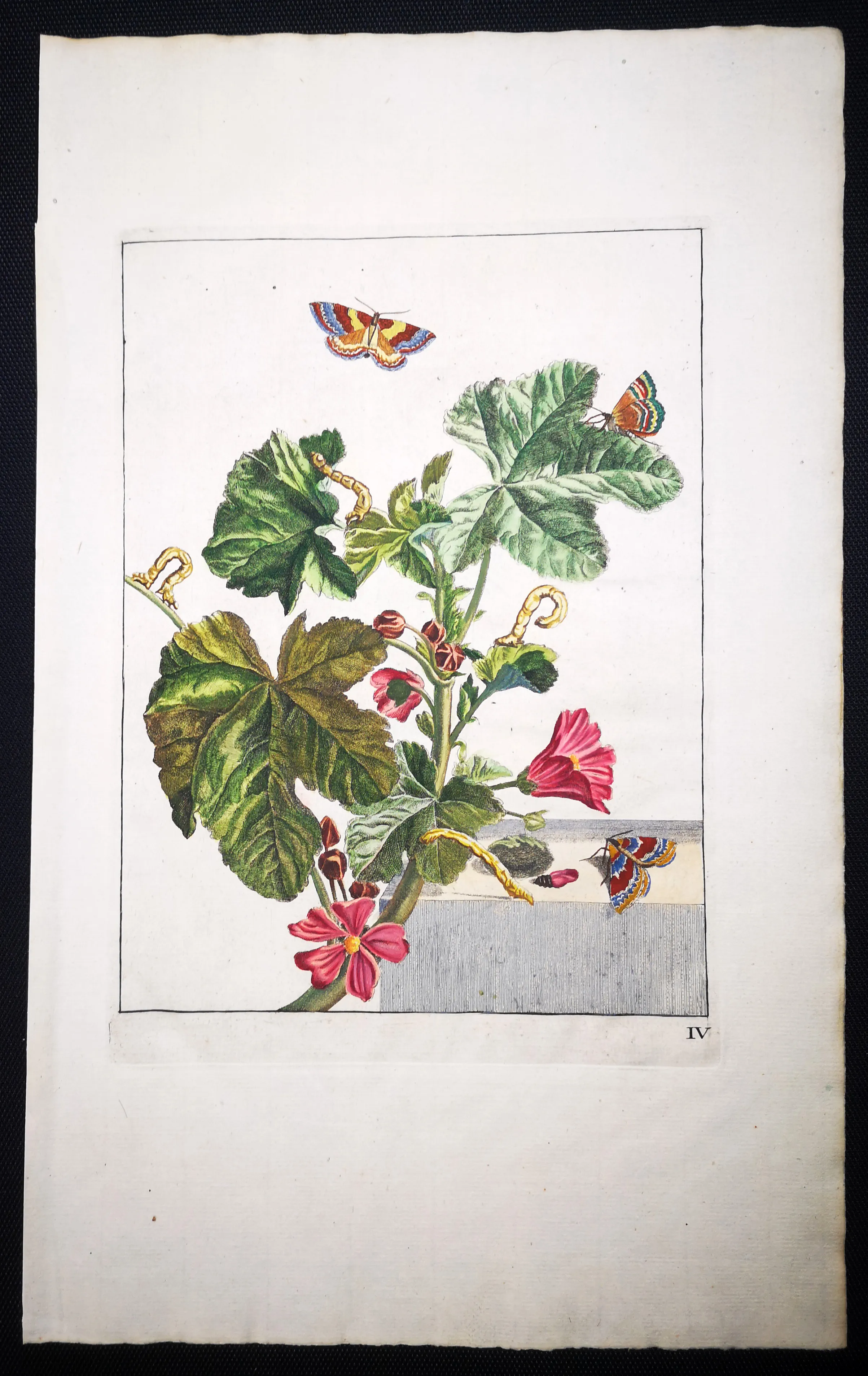
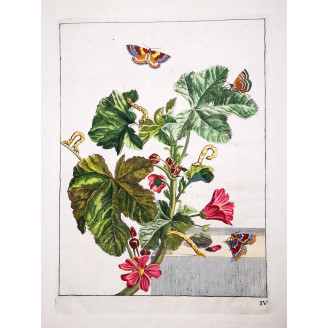
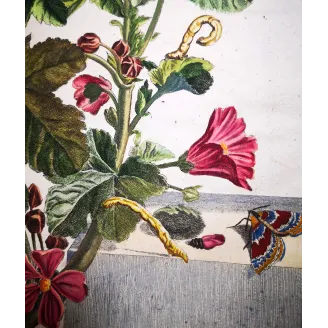
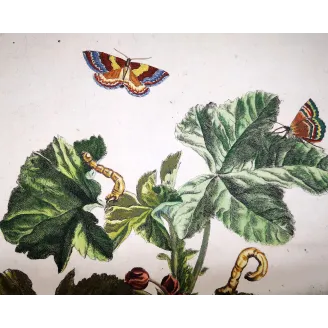
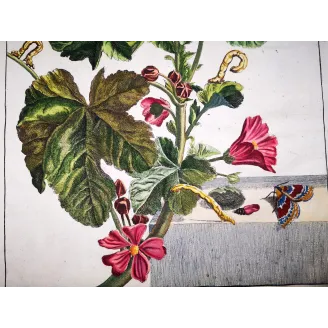
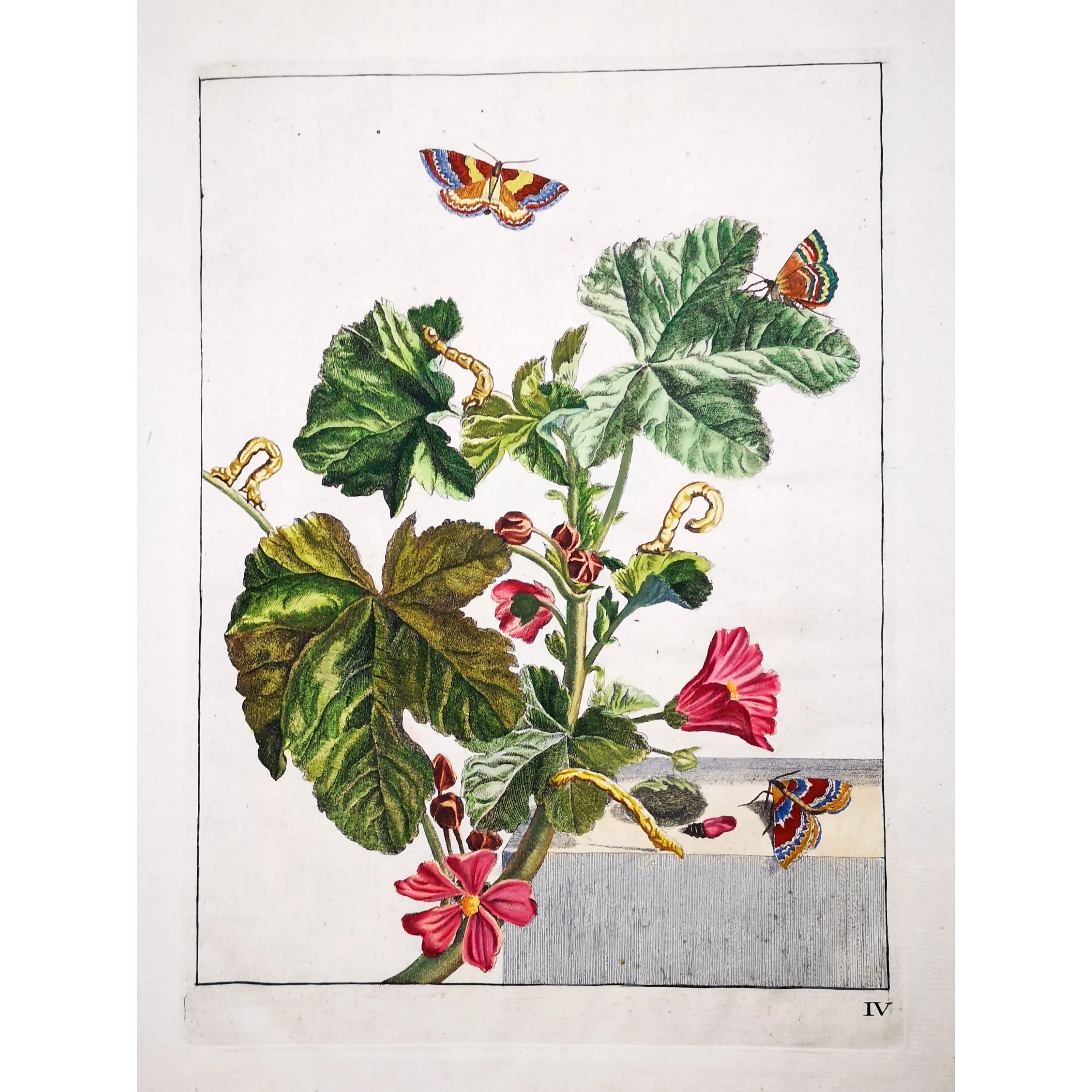
Original 1774 engraving by Jacob L'Admiral: Red Twin-spot Carpet on Mallow.
 Delivery policy
Your print will be carefully prepared and shipped worldwide via trusted couriers (UPS or similar).
 Authentic antique prints
Original engravings from the 17th–19th century.
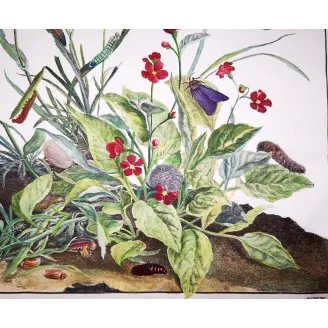
This original 1774 hand-colored engraving by Jacob L’Admiral depicts the Red Twin-spot Carpet (Xanthorhoe spadicearia) in successive stages of transformation upon mallow (Malva). Larvae ascend the foliage, chrysalides rest near the lower register, and vividly patterned adults hover in balanced suspension above the flowering stem.
The composition unites the broad, softly veined leaves of the mallow with the delicately structured geometry of the moths’ wings. Pink blossoms introduce warmth, while the generous white ground preserves clarity and visual air.
L’Admiral presents metamorphosis not as ornament, but as process—integrating botanical structure and insect development within a disciplined Enlightenment framework.
— • —
The plate achieves equilibrium through contrast. The saturated reds and blues of the adult moths create rhythmic accents across the upper field, while the dense green leaves anchor the composition below. The engraved line remains crisp and controlled, allowing the hand-coloring to articulate leaf texture and wing pattern with remarkable precision.
The spatial openness surrounding the plant enhances its sculptural presence, making the sheet visually refined while maintaining scientific clarity.
Xanthorhoe spadicearia, commonly known as the Red Twin-spot Carpet, is a European geometrid moth associated with herbaceous plants including species of Malva. Eighteenth-century entomologists increasingly emphasized the importance of documenting life cycles in relation to host plants.
By presenting larval, pupal, and adult stages within the same botanical framework, L’Admiral demonstrates the ecological awareness characteristic of Dutch Enlightenment natural science—observing transformation as a continuous biological phenomenon.
This engraving forms part of Jacob L’Admiral’s influential 1774 publication dedicated to insect metamorphosis—one of the most refined achievements of Dutch Enlightenment natural history. Each plate was printed from copper engraving and meticulously hand-colored on original laid paper, combining scientific rigor with artistic precision.
For further historical insight, see our editorial feature Jacob L’Admiral and the Metamorphosis of Insects.
Printed on original eighteenth-century laid paper with visible chain lines. A watermark with a clearly defined paper mill logo is present within the sheet, confirming period paper production. The margins remain fresh and clean, and the impression is sharp and well preserved. The hand-coloring retains strong saturation and clarity. An exceptional example dated 1774.
Specific References
Original 1774 engraving by Jacob L'Admiral: Larvae and Beetles with Ferns.
Original 1774 engraving by Jacob LâAdmiral: Lesser Marbled Fritillary on wild Pansy.
Original 1774 engraving by Jacob LâAdmiral: Pepperes Moth on Birch.
Original 1774 engraving by Jacob L'Admiral: Ornate Butterfly and Metamorphosis Detail.
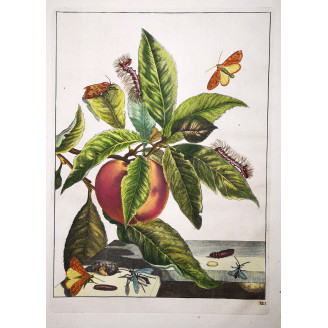
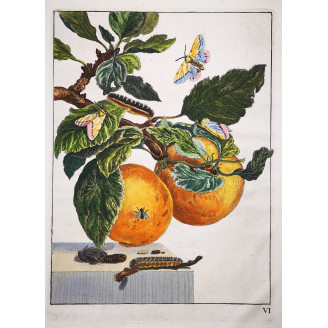
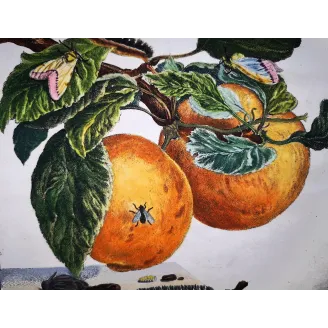
Original 1774 engraving by Jacob L'Admiral: Moths and Larvae on Fruit Tree Branch.
Antique entomological engraving by Jacob L’Admiral, featuring *Lymantria dispar *, and *Malus*.
Striking plate with long, elegant cornetfish and trumpetfish, hand-colored with vivid reds and tealsbold marine decor statement.
Original 1774 engraving by Jacob L'Admiral: Red Twin-spot Carpet on Mallow.