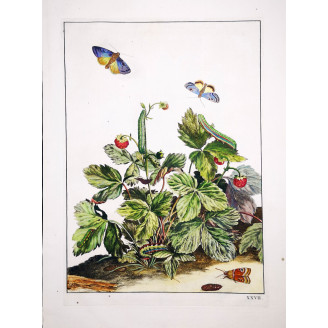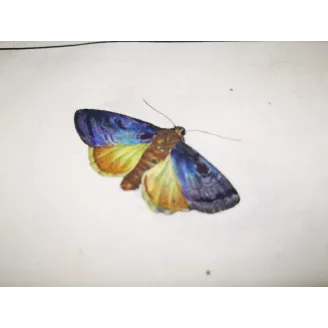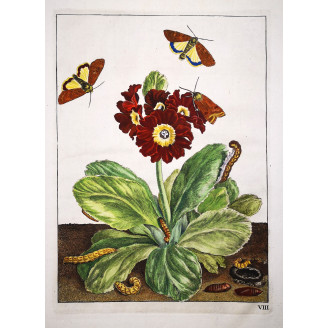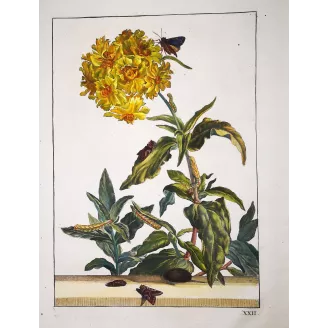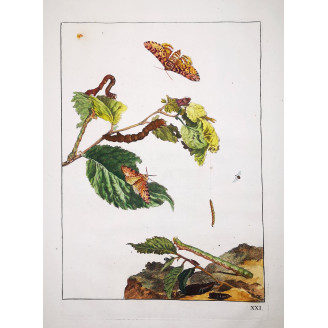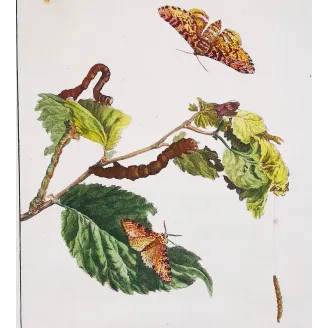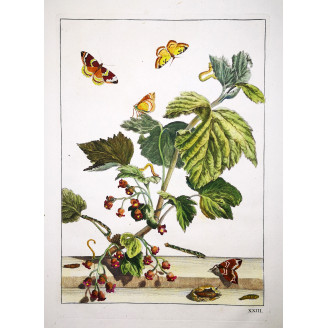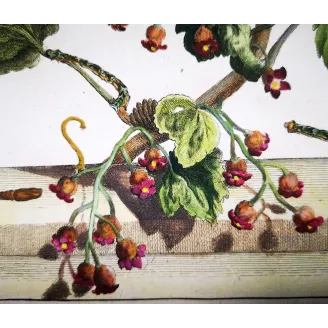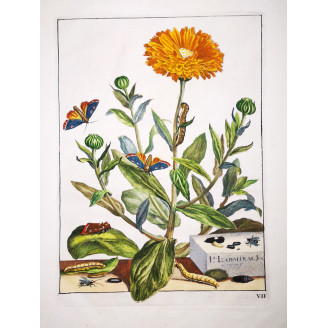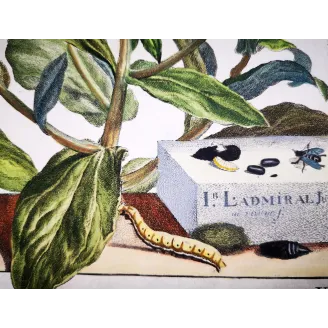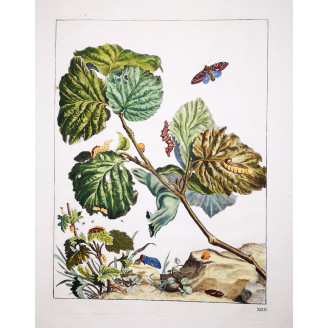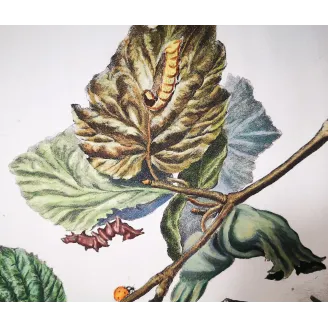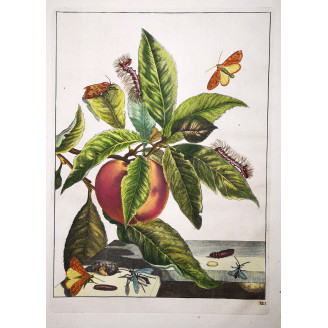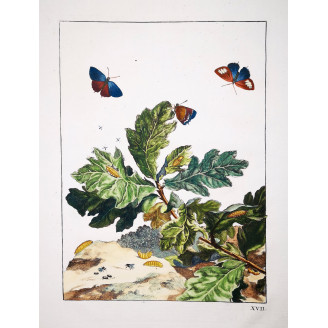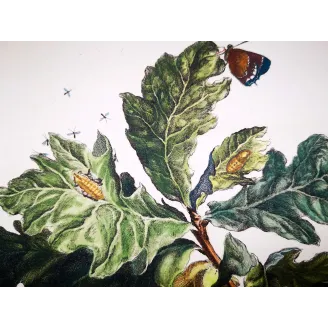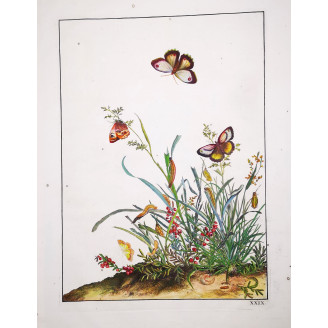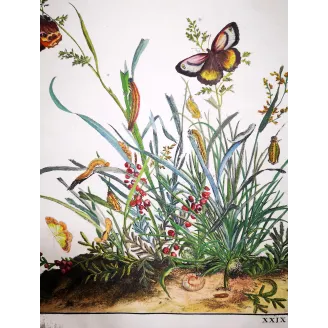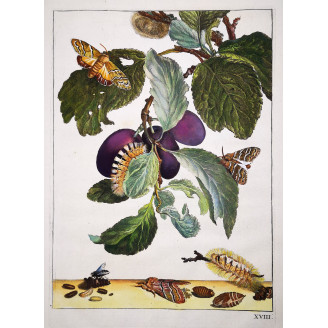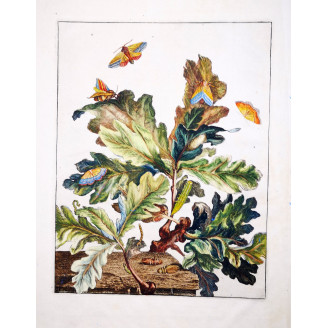
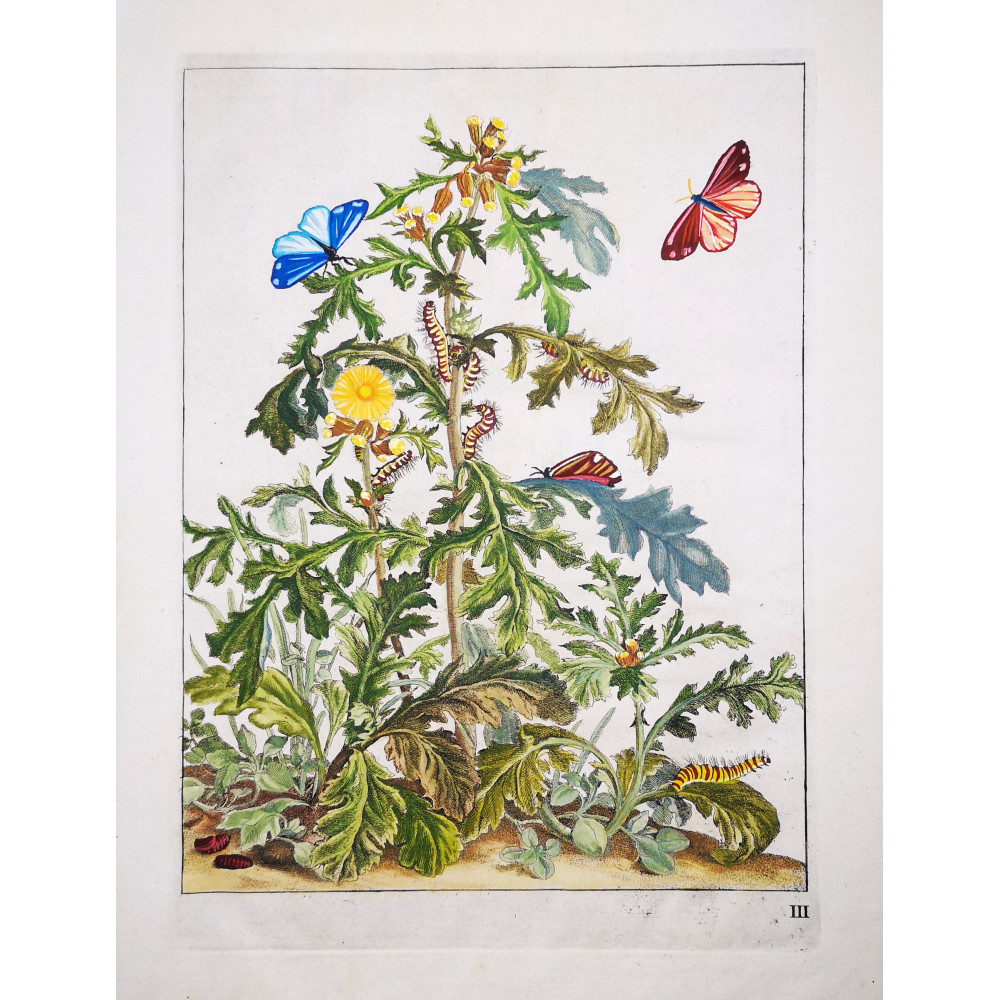
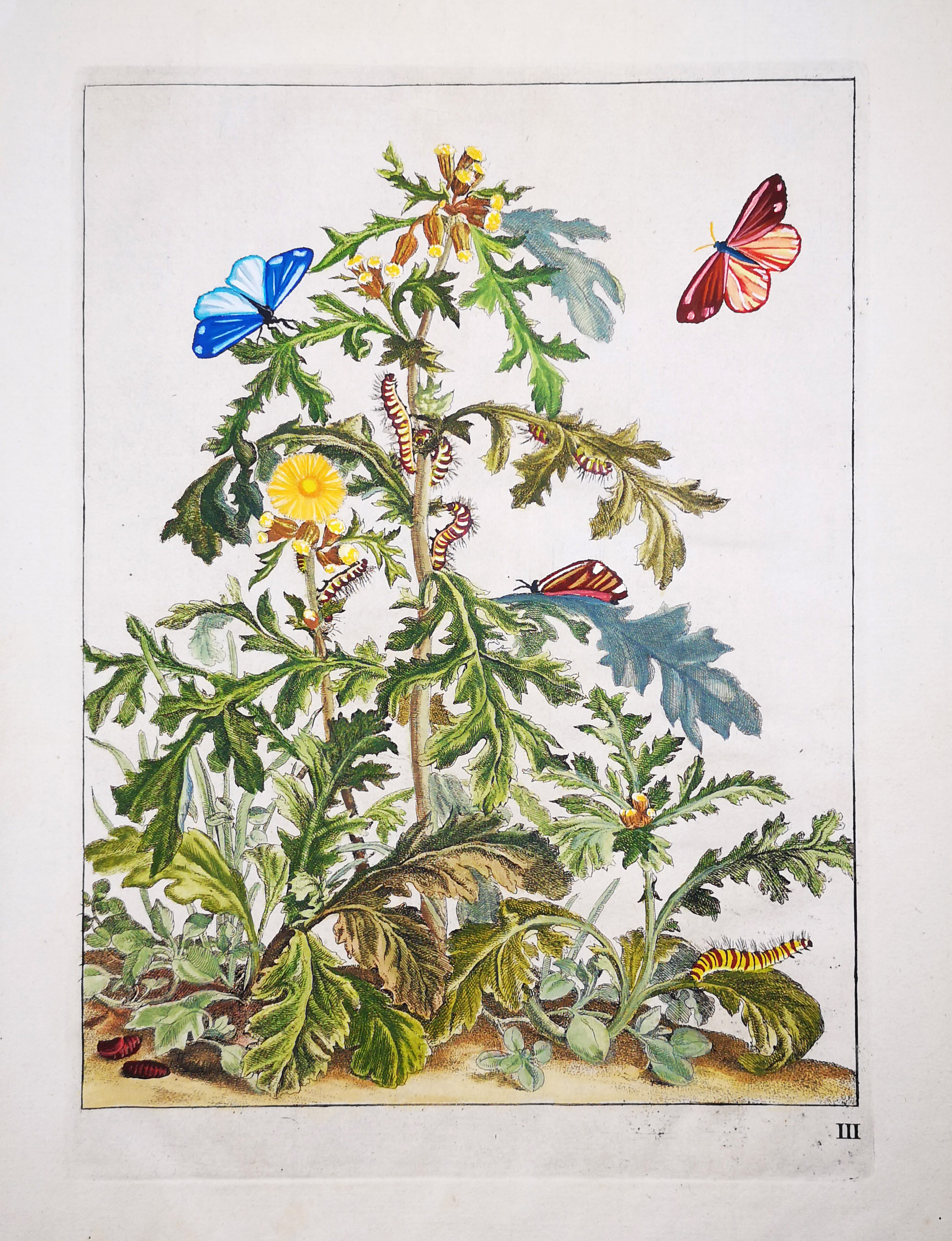
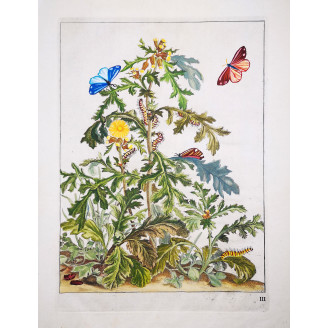
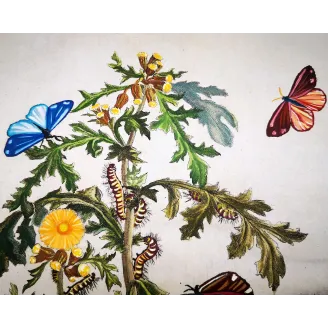
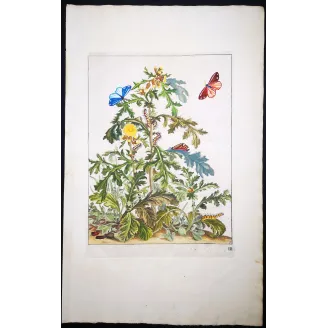
Original 1774 engraving by Jacob L'Admiral: Cinnabar Moth.
 Delivery policy
Your print will be carefully prepared and shipped worldwide via trusted couriers (UPS or similar).
 Authentic antique prints
Original engravings from the 17th–19th century.
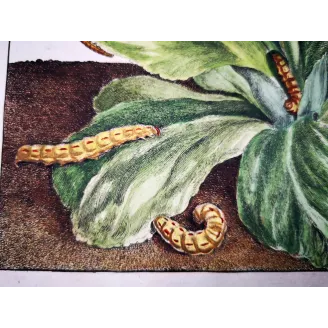
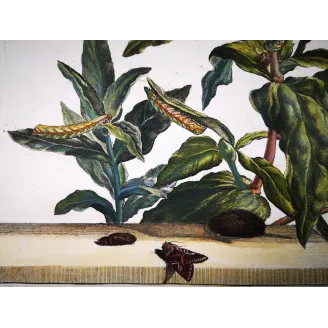
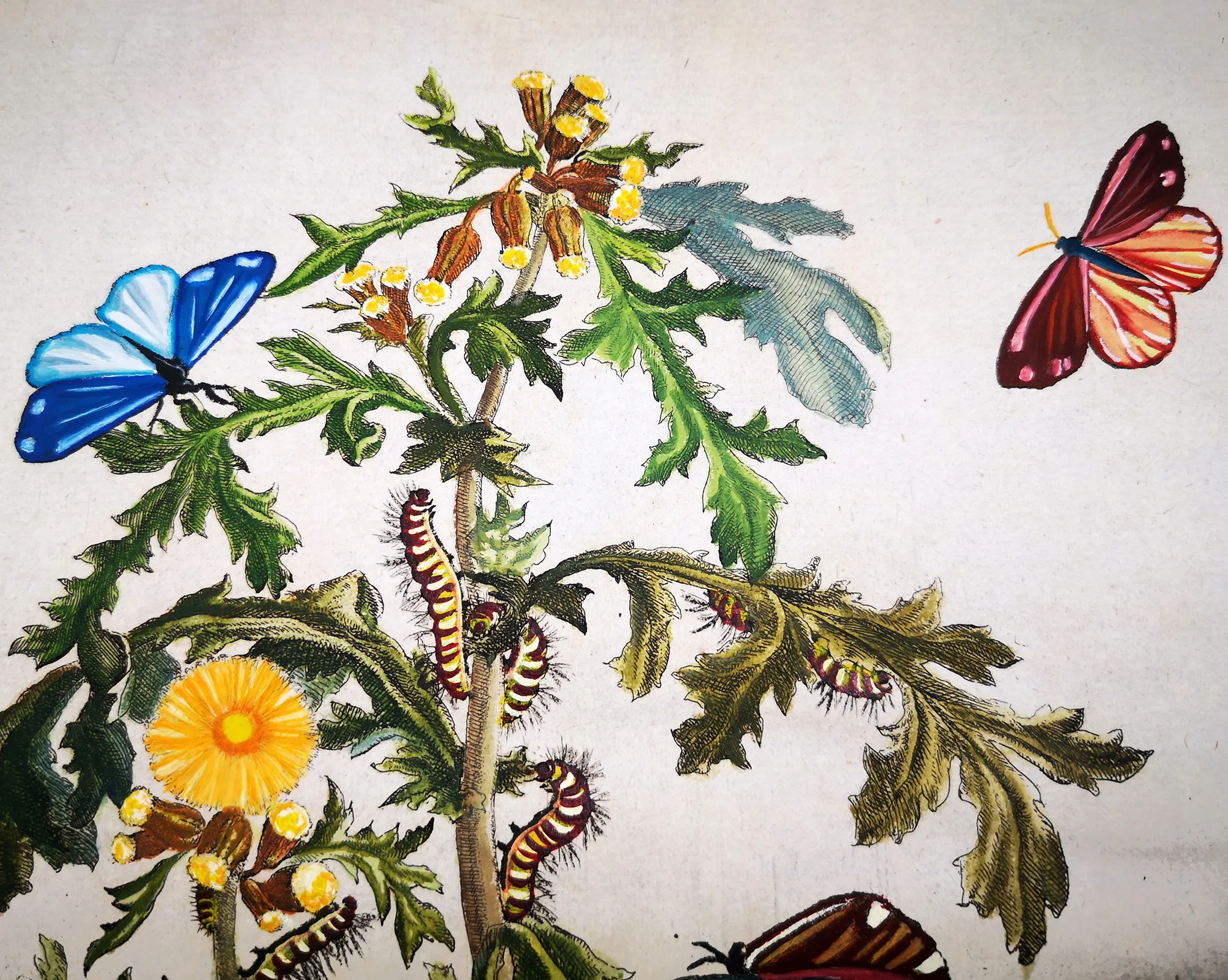
This original 1774 hand-colored engraving by Jacob L’Admiral depicts the Cinnabar Moth (Tyria jacobaeae) in successive stages of development among its characteristic host foliage. Larvae ascend the stems, chrysalides rest near the ground, and vividly colored adults hover in poised suspension above.
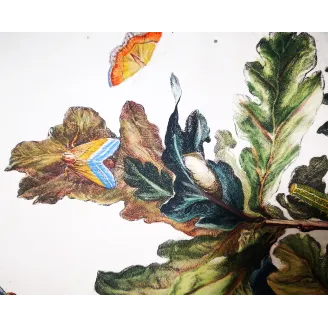
The plate is defined by dramatic chromatic contrast: deep carmine wings and electric blue accents stand sharply against the layered green structure of the plant. The botanical framework rises vertically, creating both stability and visual movement.
L’Admiral presents transformation as a continuous, observable sequence—balancing decorative impact with disciplined Enlightenment inquiry.
— • —
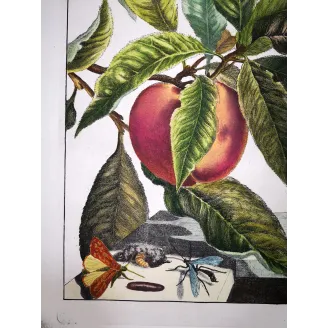
The composition is dense yet controlled. The upright botanical structure anchors the sheet, while the bright adults introduce asymmetrical rhythm. The engraved line remains precise, enabling the hand-coloring to articulate the segmented larvae and the sharply patterned wings with clarity.
The generous white field surrounding the subject enhances its sculptural presence, allowing the saturated hues to resonate without visual congestion.
Tyria jacobaeae, commonly known as the Cinnabar Moth, is notable for its striking aposematic coloration—an evolutionary signal associated with chemical defense derived from host plants. Eighteenth-century naturalists documented such species carefully due to their distinctive markings and ecological relationships.
By presenting larval, pupal, and adult stages together, L’Admiral emphasizes metamorphosis as a systematic biological process, aligning with the empirical spirit of Dutch Enlightenment science.
This engraving originates from Jacob L’Admiral’s seminal 1774 study of insect metamorphosis—an important contribution to Dutch Enlightenment natural history. Printed from copperplate and delicately hand-colored on original laid paper, each sheet represents a convergence of scientific documentation and refined craftsmanship.
Read more in our editorial feature: Jacob L’Admiral and the Metamorphosis of Insects.
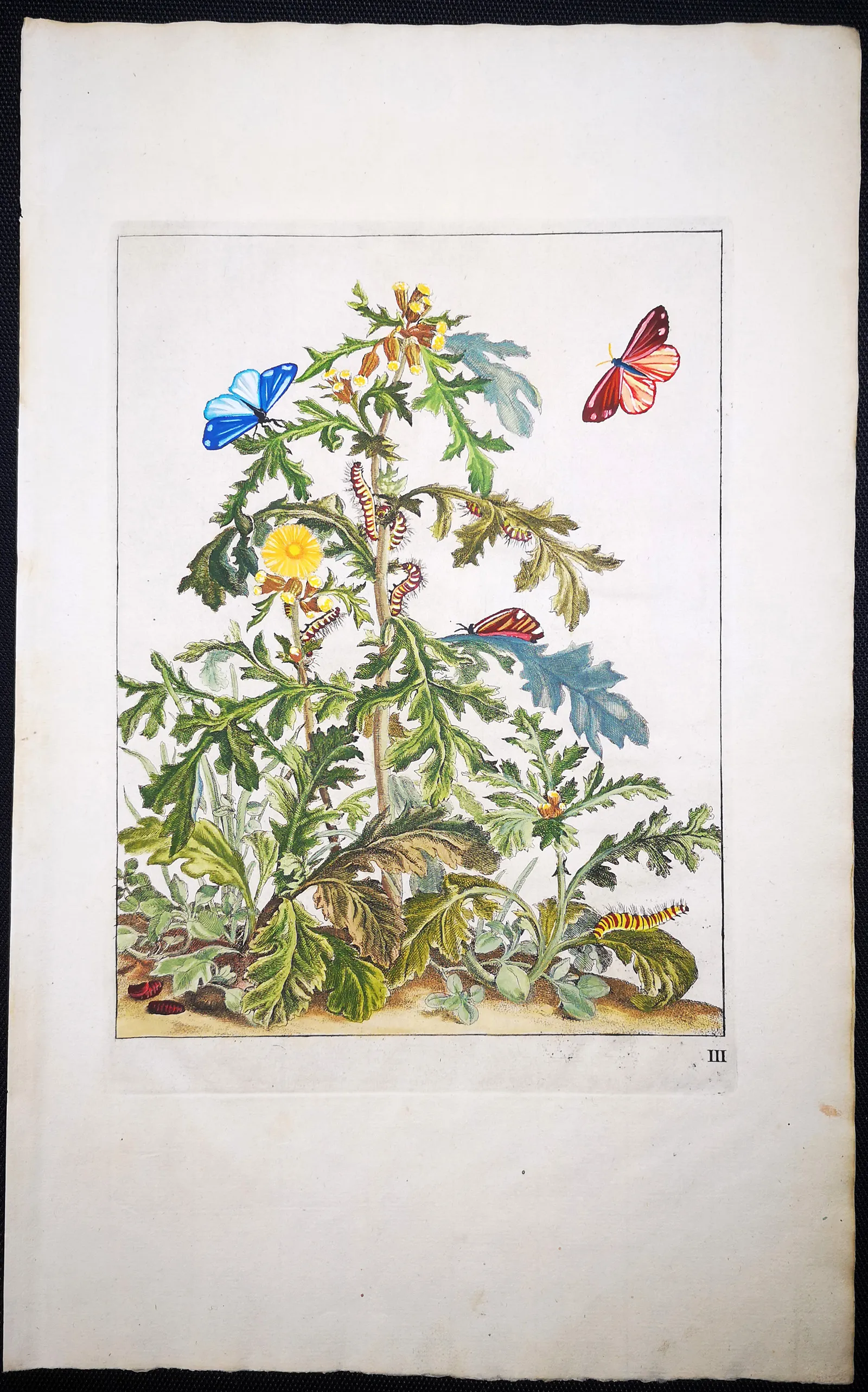
Printed on original eighteenth-century laid paper with visible chain lines. The margins remain fresh and clean. The impression is sharp and well preserved, and the hand-coloring retains vivid saturation. No watermark observed. A fine example dated 1774.
Specific References
Original 1774 engraving by Jacob L'Admiral: Early Moth Stage among Willow Leaves.
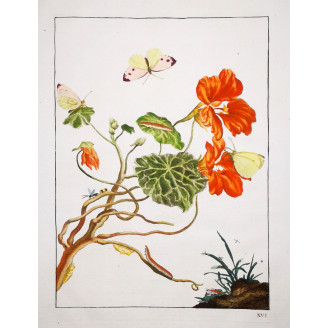
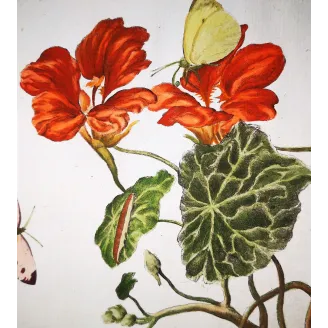
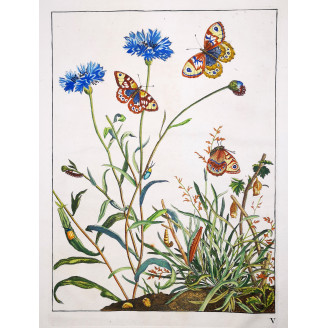
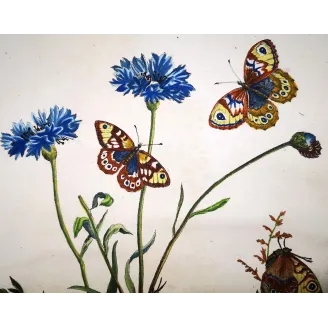
Original 1774 engraving by Jacob L'Admiral: Red Butterflies on Flowering Stem.
Original 1774 engraving by Jacob L'Admiral: Ornate Butterfly and Metamorphosis Detail.
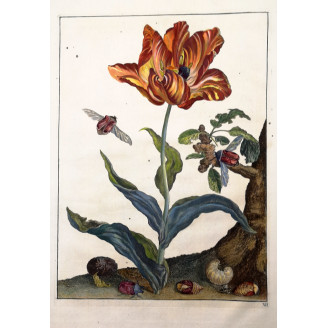
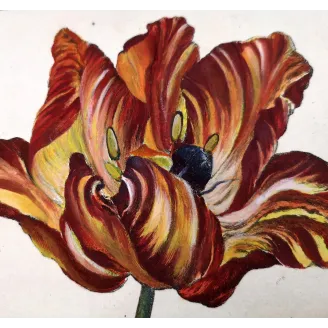
Original 1774 engraving by Jacob L'Admiral: Rose Chafer beetle with Pupae Stages and Tulip.
Original 1774 engraving by Jacob LâAdmiral: Pepperes Moth on Birch.
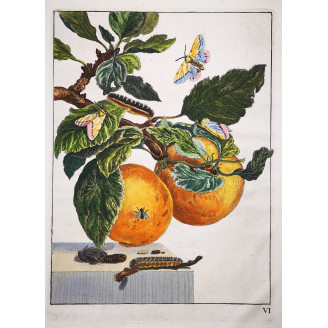
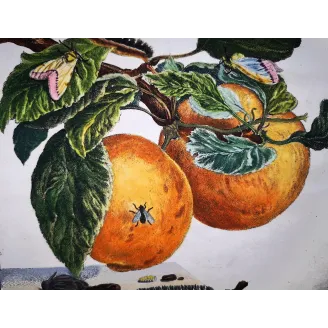
Original 1774 engraving by Jacob L'Admiral: Moths and Larvae on Fruit Tree Branch.
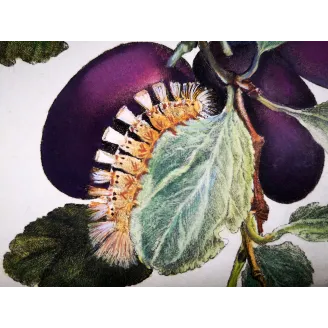
Antique entomological engraving by Jacob L’Admiral, featuring *Lymantria dispar *, and *Malus*.
Original 1774 engraving by Jacob LâAdmiral: Swallowtail Butterfly on Thistle.
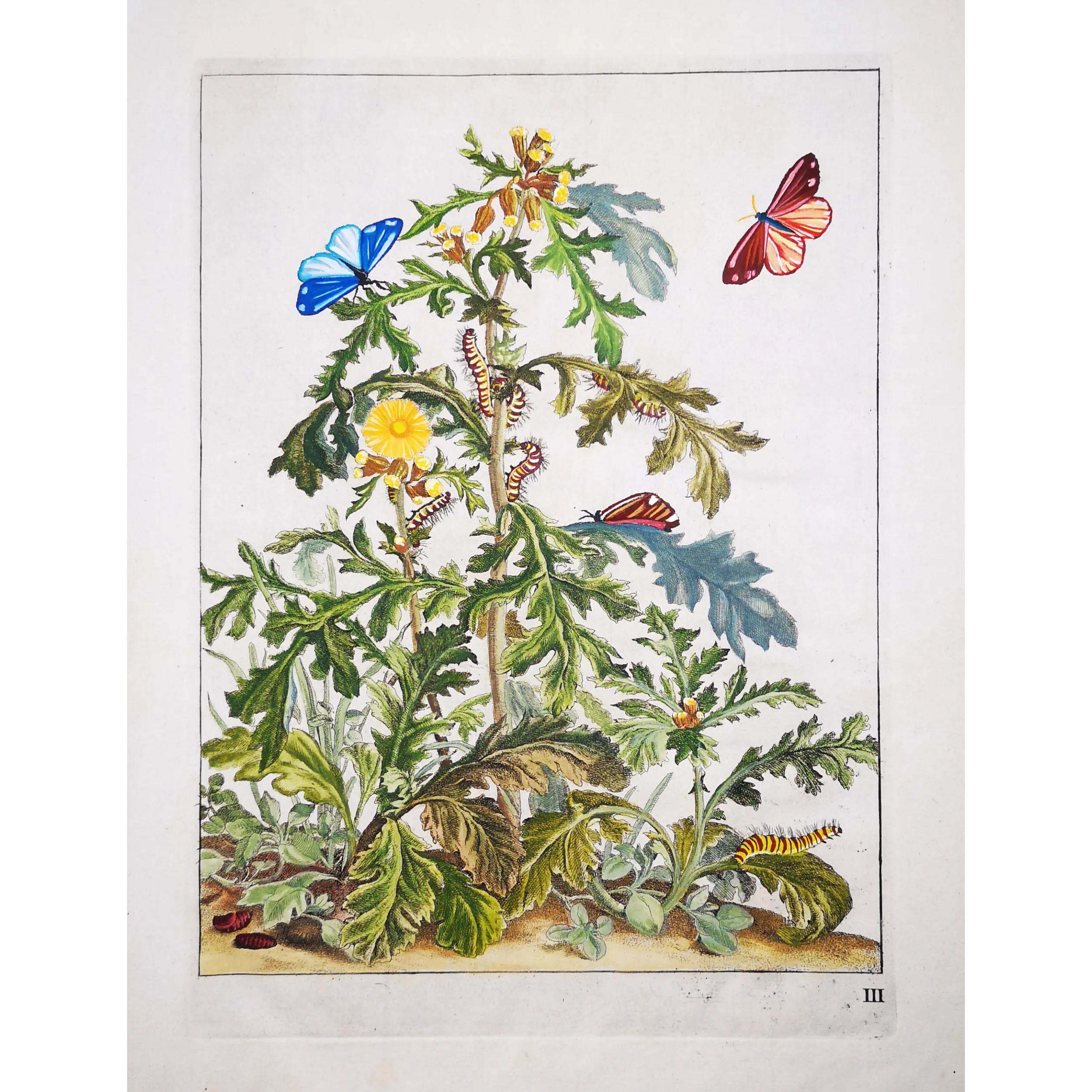
Original 1774 engraving by Jacob L'Admiral: Cinnabar Moth.