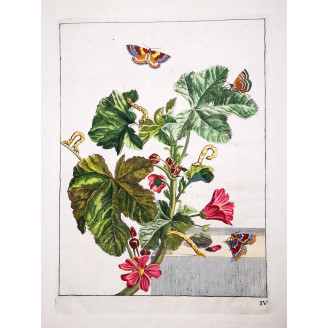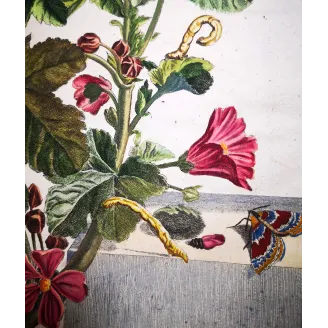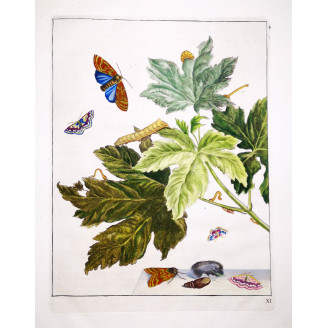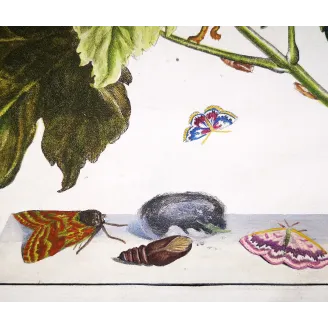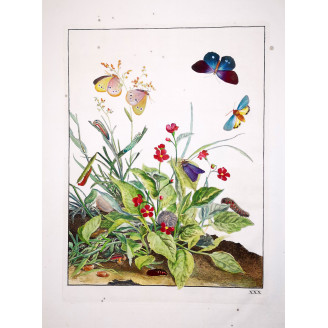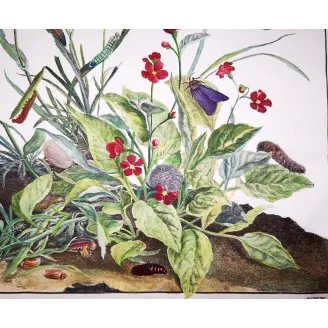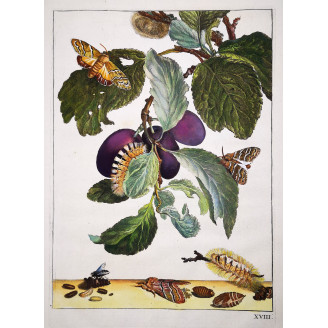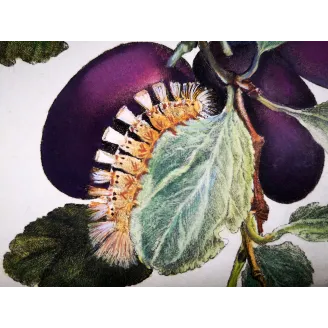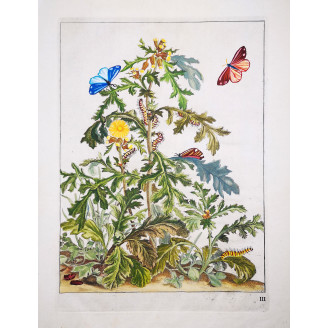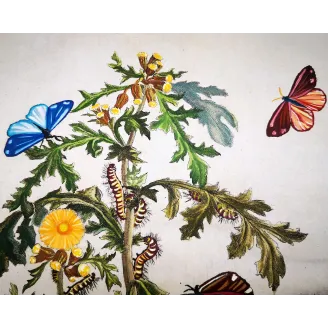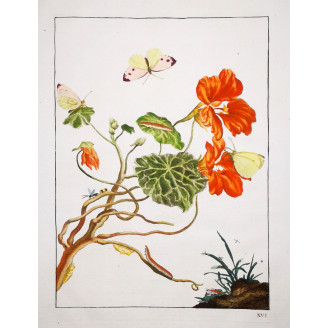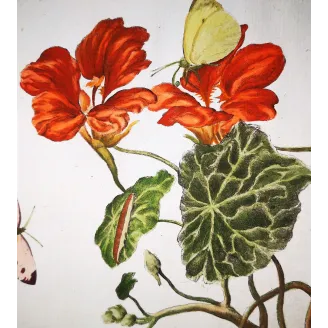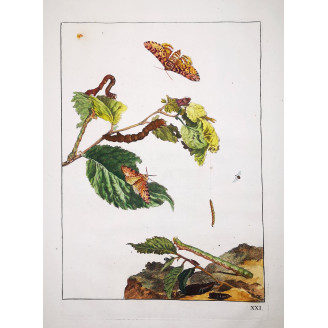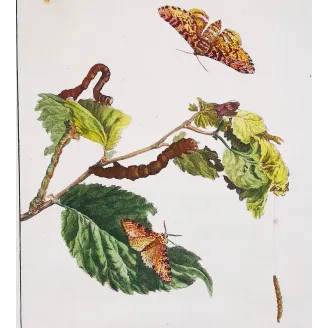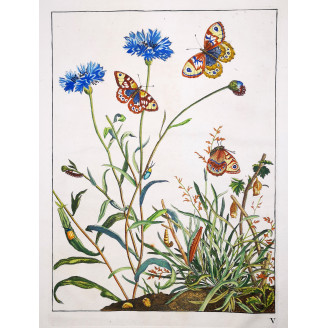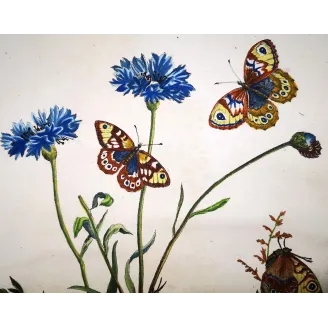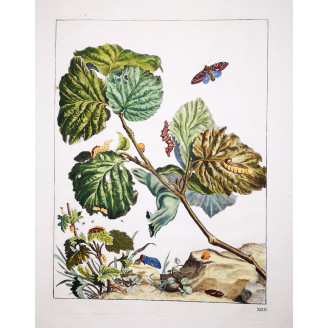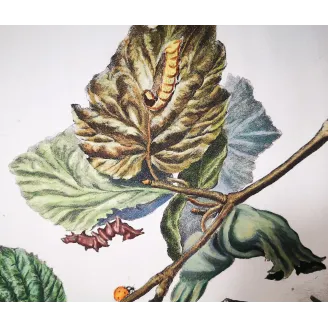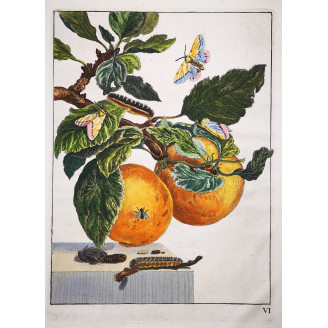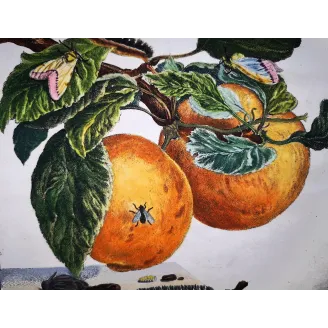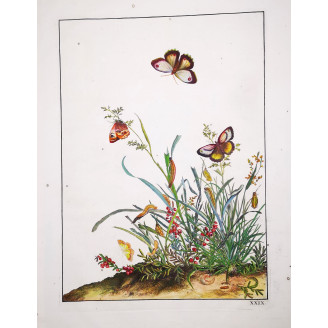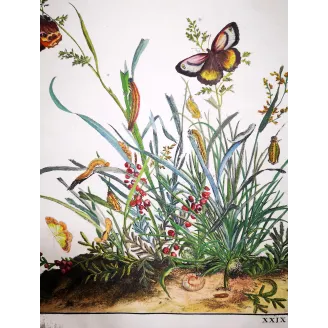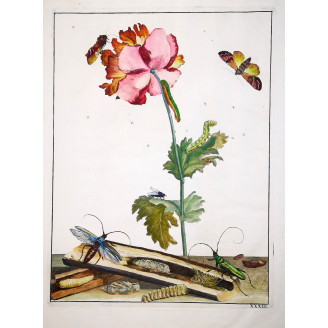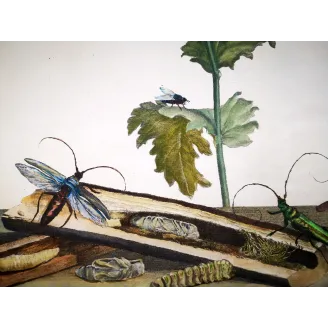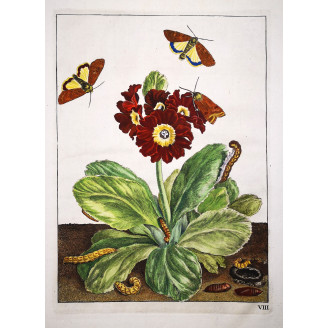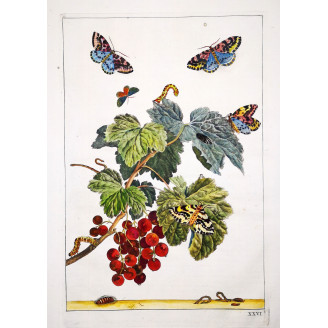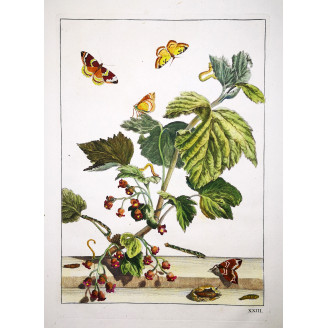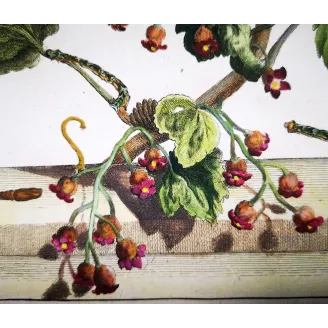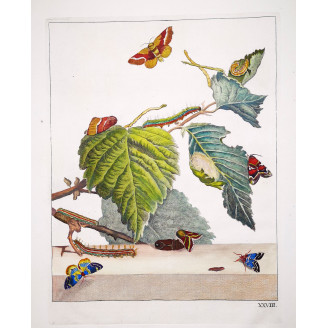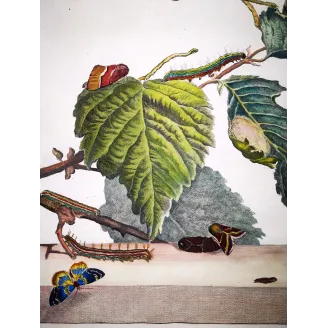
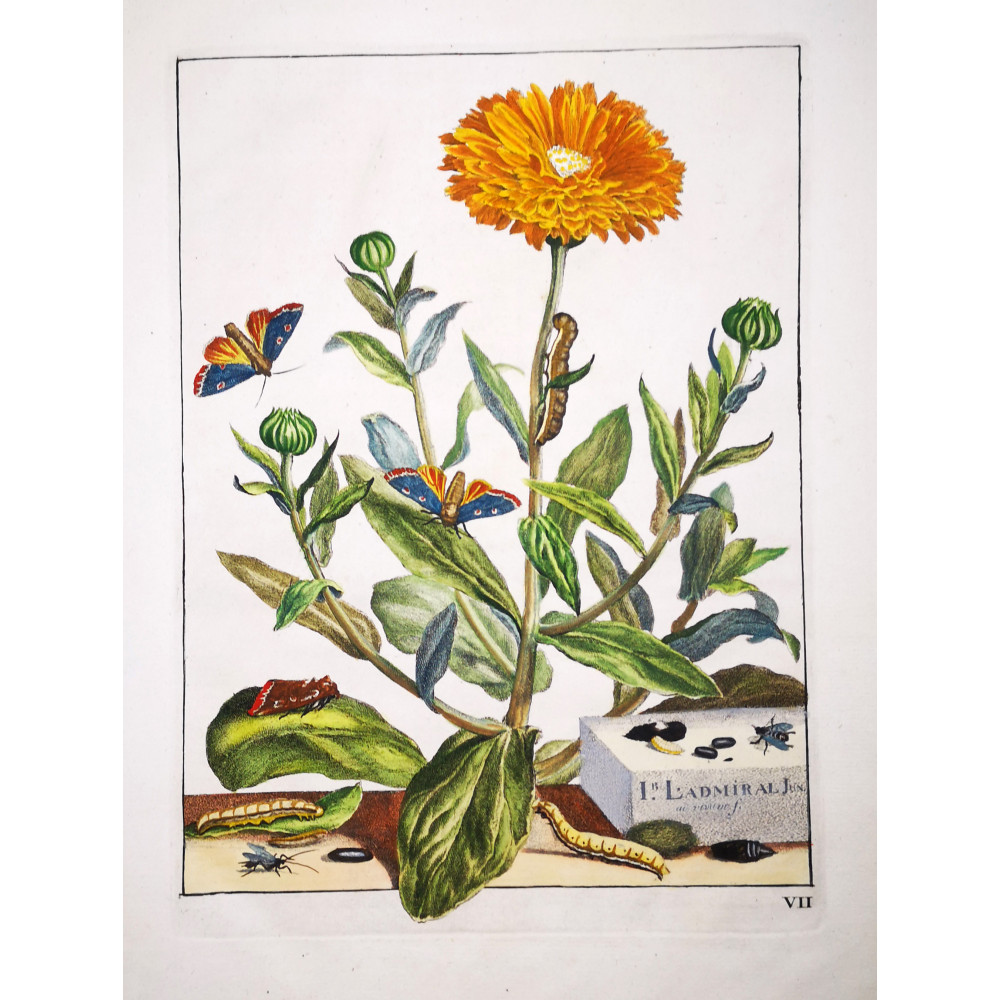
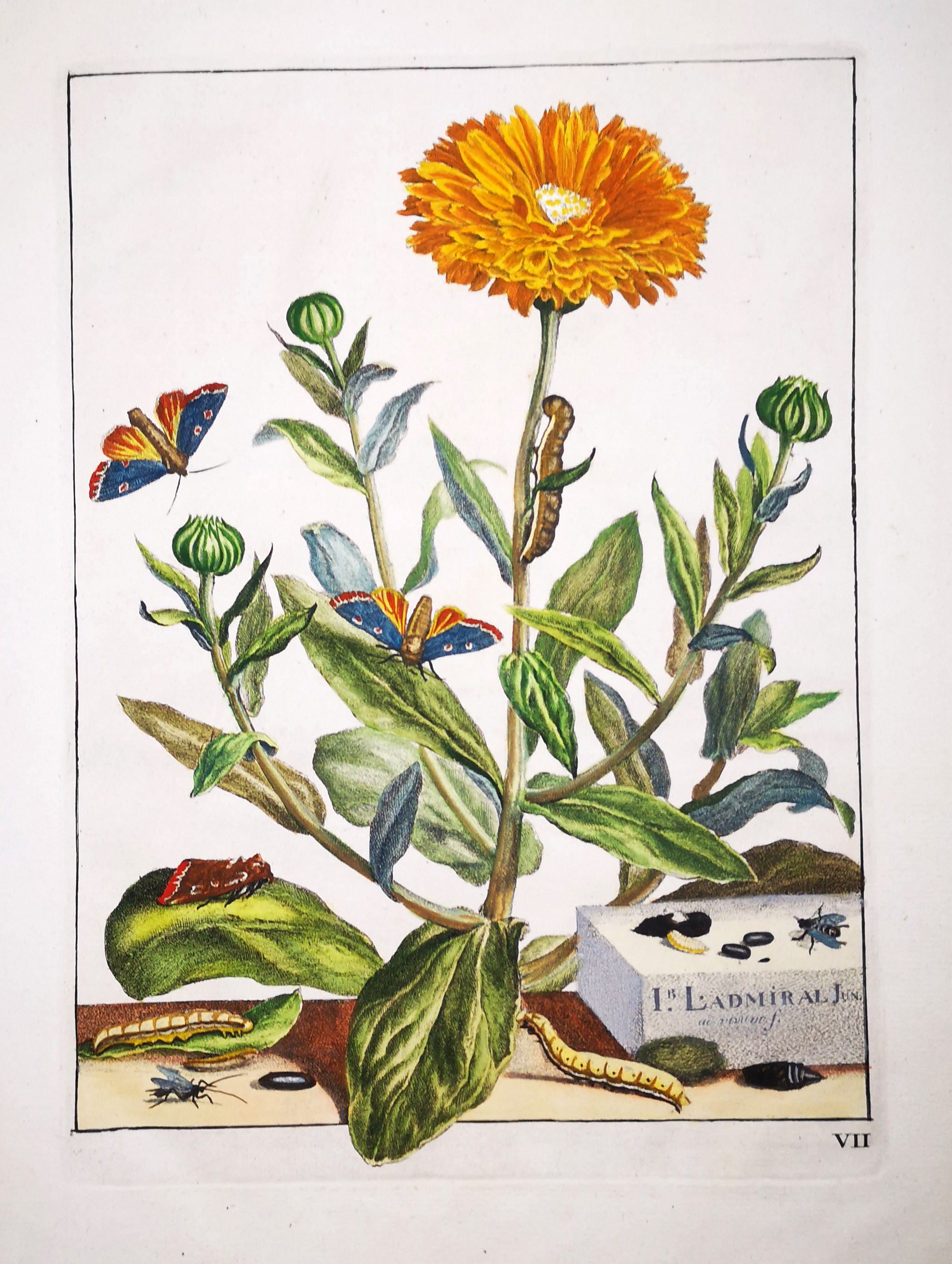
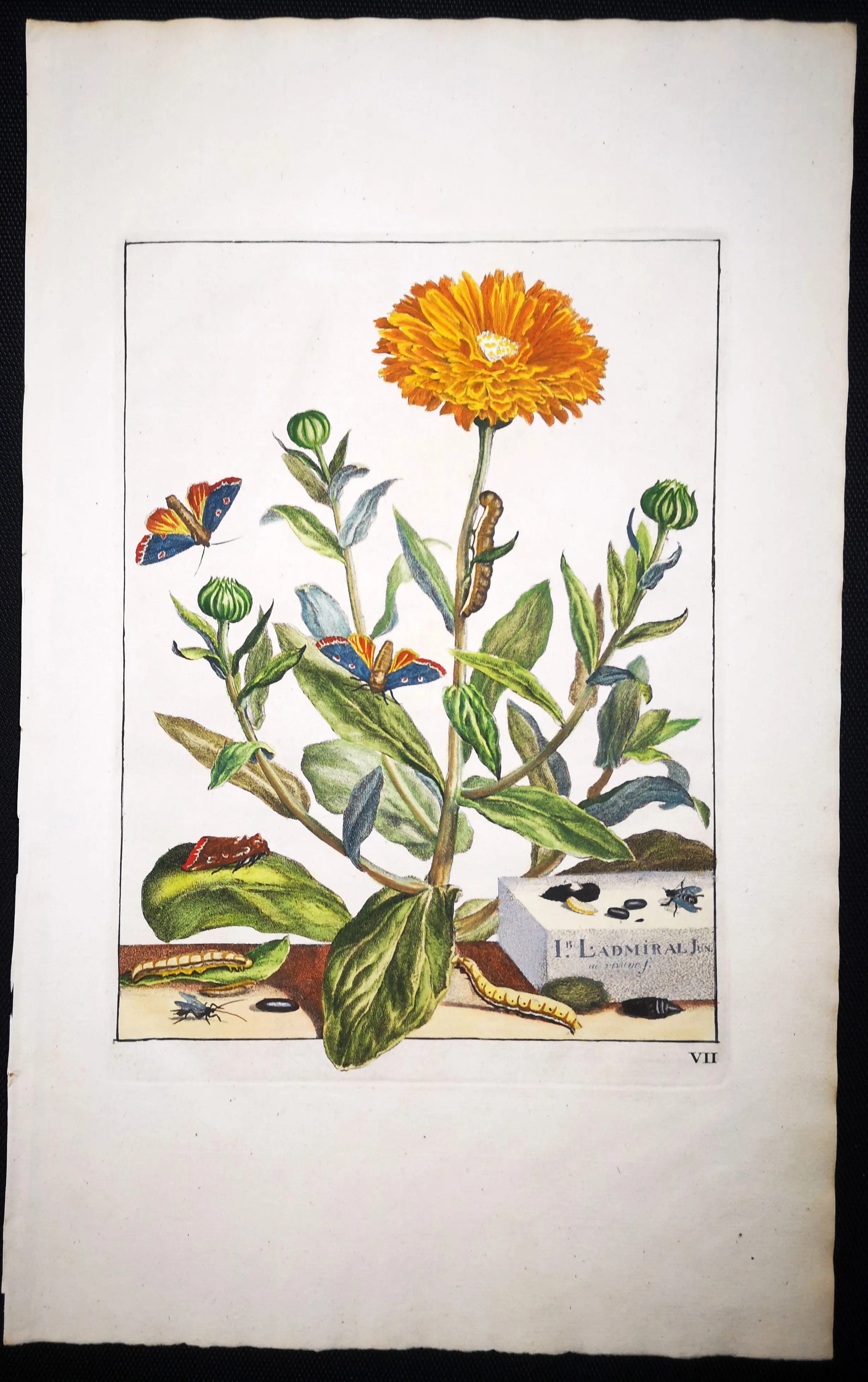
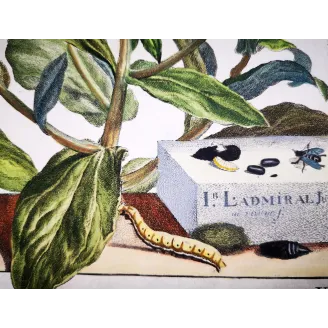
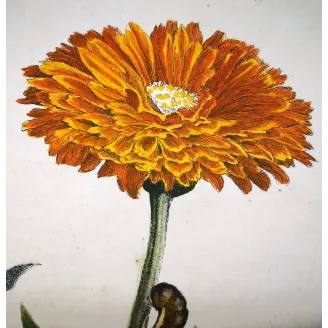
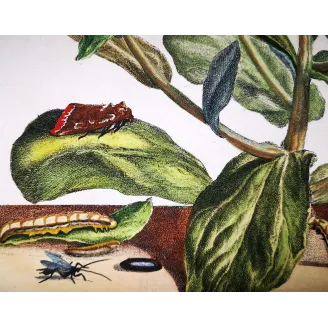
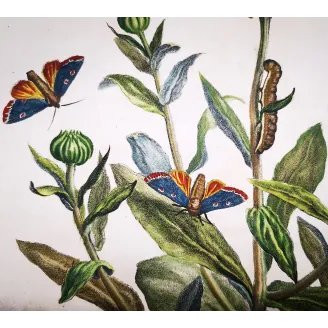
Original 1774 engraving by Jacob L'Admiral: The Gem on Gerbera.
 Delivery policy
Your print will be carefully prepared and shipped worldwide via trusted couriers (UPS or similar).
 Authentic antique prints
Original engravings from the 17th–19th century.
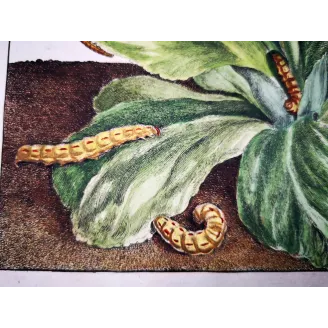
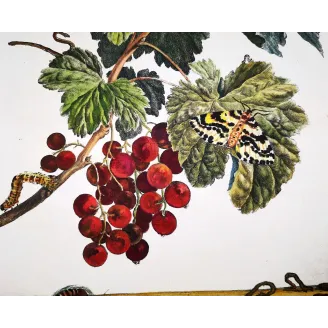
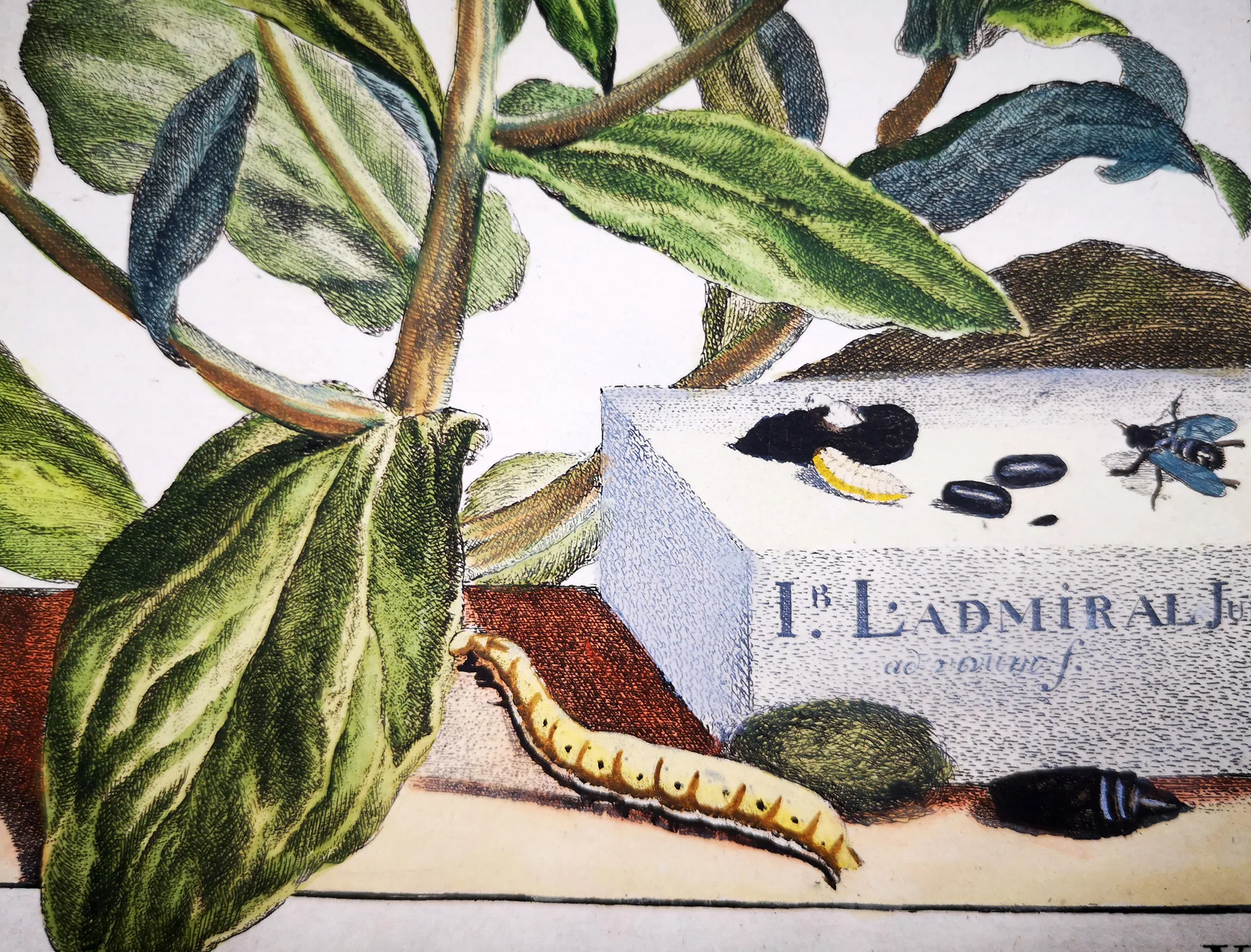
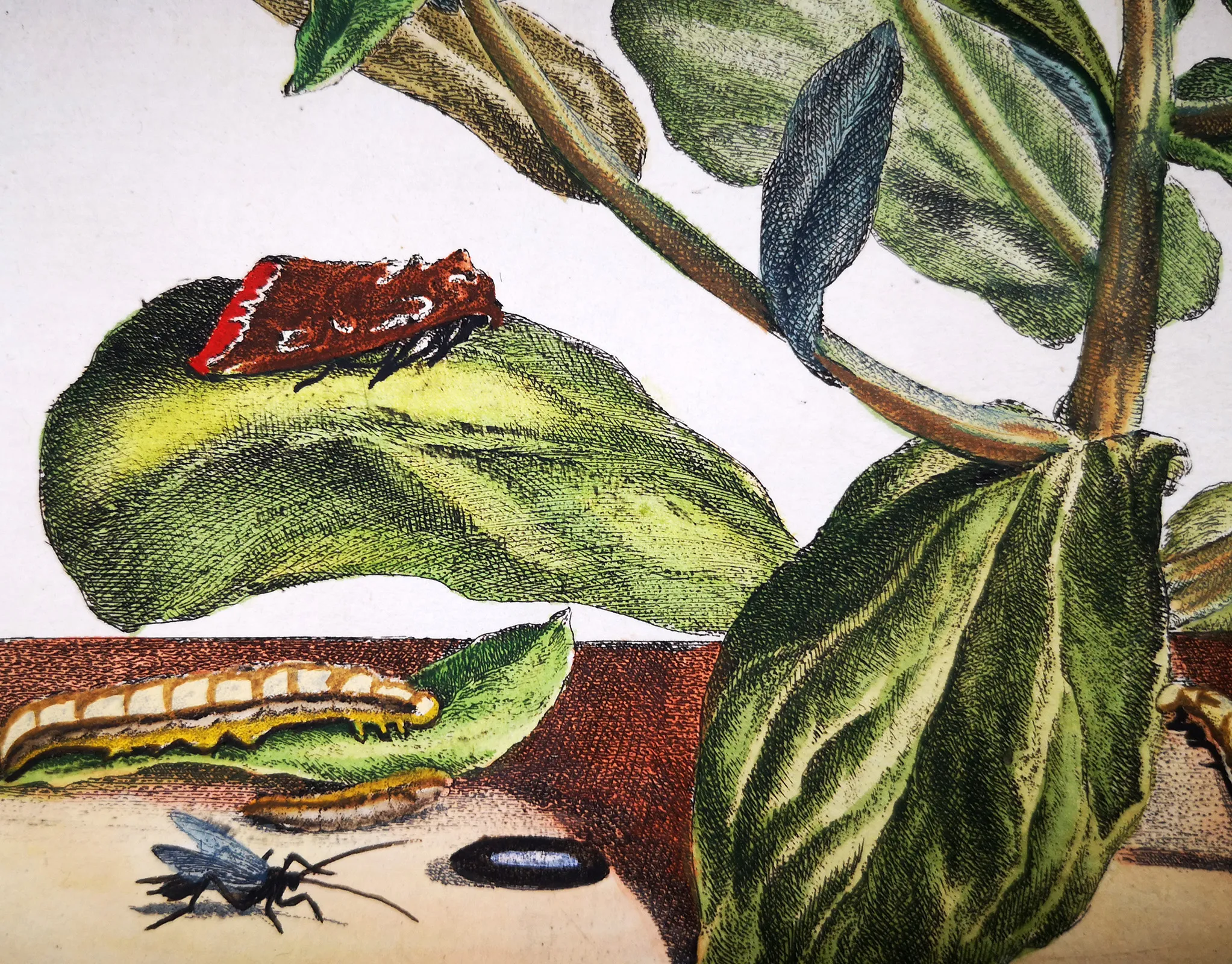
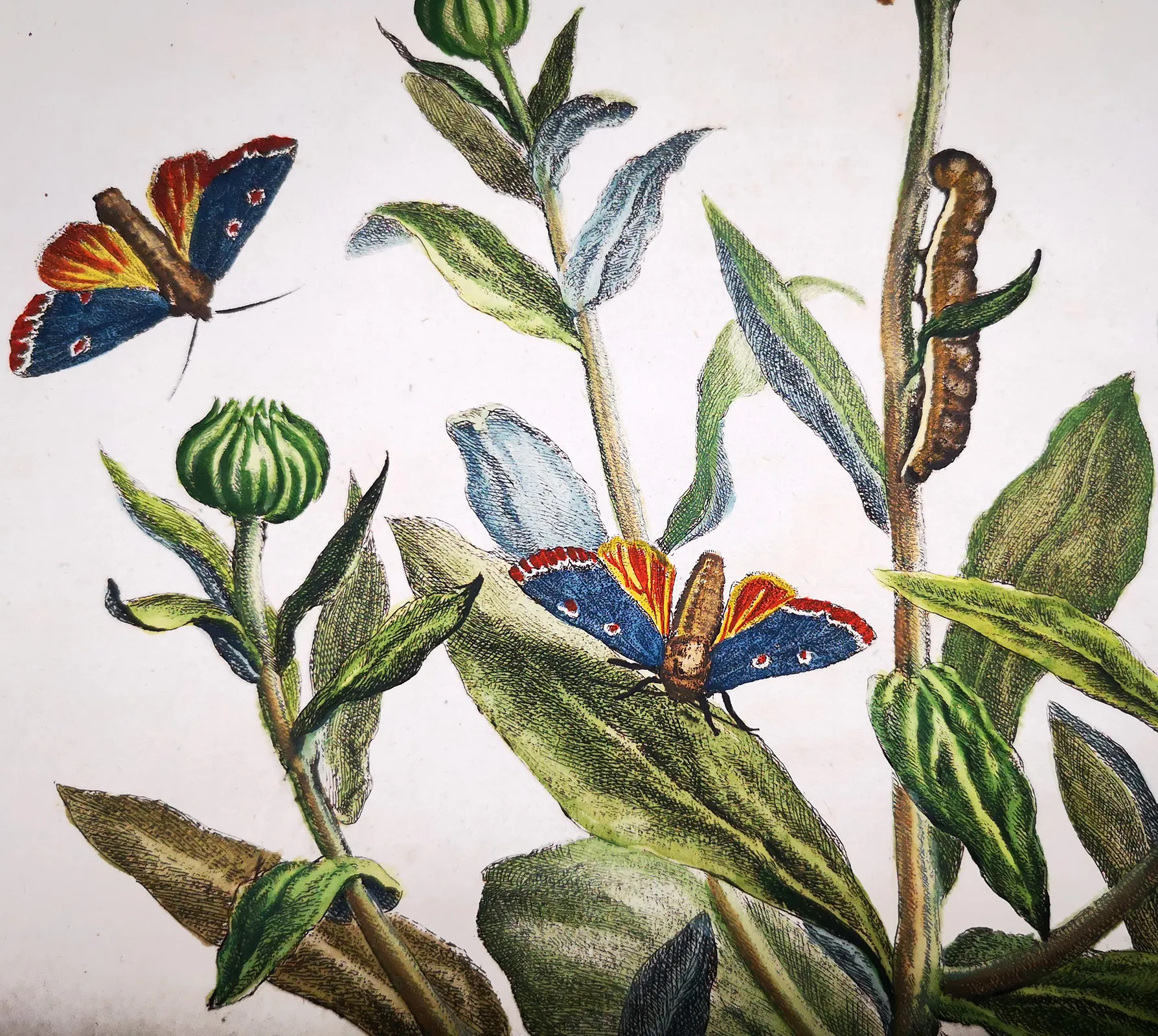
This original 1774 hand-colored engraving by Jacob L’Admiral depicts The Gem (Orthonama obstipata) in successive stages of development upon a gerbera (Gerbera). Larvae ascend the foliage, pupal forms rest near the lower register, and vividly marked adults hover with poised symmetry around the flowering stem.
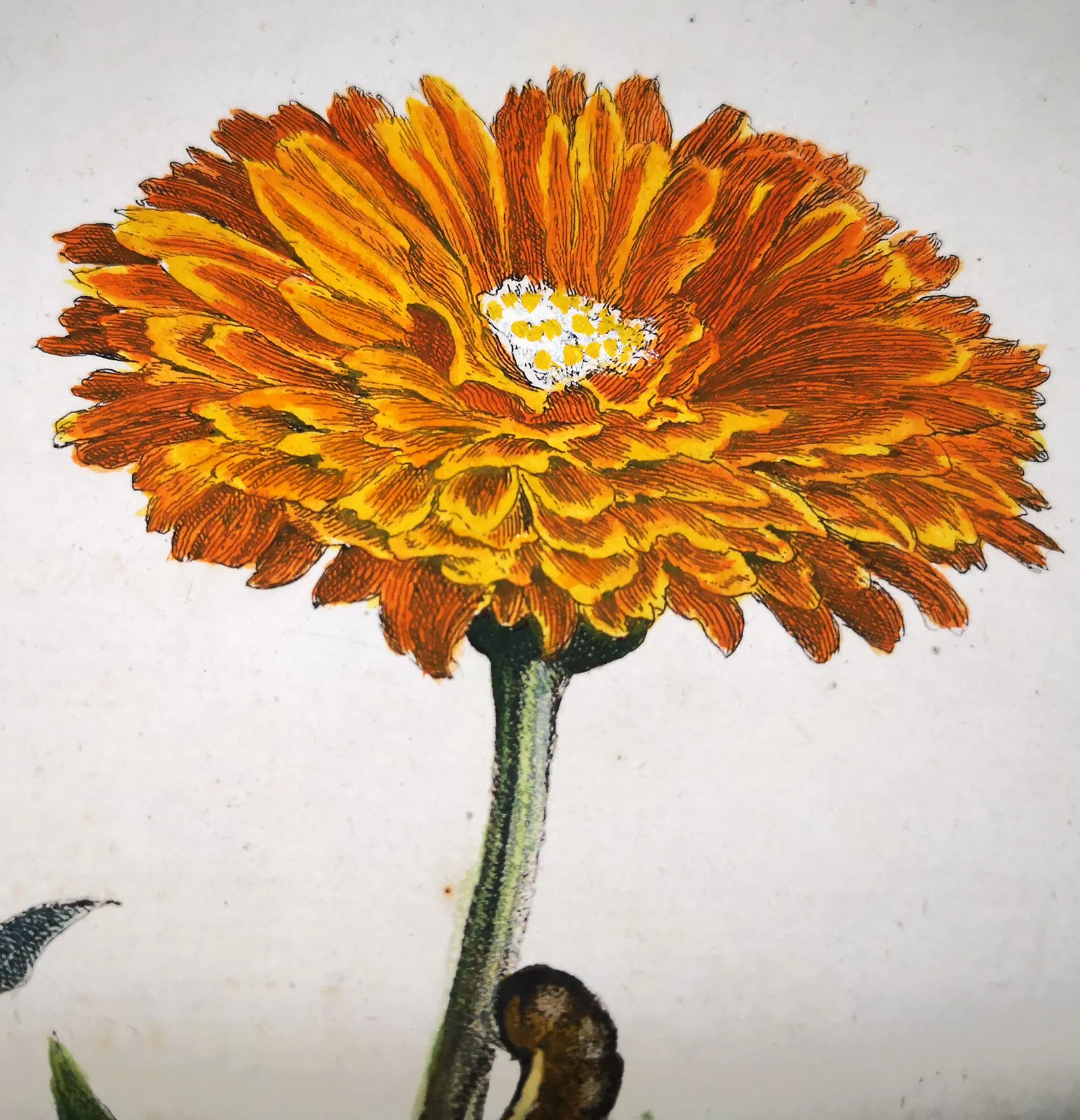
The luminous orange blossom commands the composition, rising above a structured network of leaves and buds. Its saturated petals create a powerful chromatic axis, while the patterned wings of the moths introduce measured movement across the upper field.
L’Admiral’s method integrates ornament and observation: the plant offers visual splendour, yet the metamorphic sequence remains clear, disciplined, and scientifically precise.
— • —
The plate is structured vertically, with the bloom acting as a luminous crown above the botanical framework. The engraved line is crisp and controlled, allowing the hand-coloring to articulate fine tonal shifts in the petals and the subtle texture of the leaves.
The open white ground enhances clarity and elevates the flower to near-sculptural presence, while the adult moths provide chromatic counterpoints in blue, red, and gold.
Orthonama obstipata, known as The Gem, belongs to the geometrid moth family. Eighteenth-century naturalists increasingly documented insect life cycles in relation to host plants, recognizing the ecological continuity between larval feeding and adult emergence.
By presenting larval, pupal, and adult stages within a single botanical setting, L’Admiral demonstrates the Enlightenment emphasis on systematic observation and biological transformation.
This engraving originates from Jacob L’Admiral’s landmark 1774 study of insect metamorphosis — a defining achievement of Dutch Enlightenment natural science. Each sheet was printed from copperplate and meticulously hand-colored on original laid paper, uniting empirical inquiry with refined artistic craftsmanship.
Explore more in our editorial feature: Jacob L’Admiral and the Metamorphosis of Insects.
Printed on original eighteenth-century laid paper with visible chain lines. A watermark bearing the letters of the paper mill is present within the sheet, confirming period manufacture. The margins remain fresh and clean, the impression is sharp, and the hand-coloring retains strong saturation. An excellent and well-preserved example dated 1774.
Specific References
Original 1774 engraving by Jacob L'Admiral: Red Twin-spot Carpet on Mallow.
Original 1774 engraving by Jacob LâAdmiral: Swallowtail Butterfly on Thistle.
Original 1774 engraving by Jacob L'Admiral: Ornate Butterfly and Metamorphosis Detail.
Original 1774 engraving by Jacob LâAdmiral: Pepperes Moth on Birch.
Antique entomological engraving by Jacob L’Admiral, featuring *Lymantria dispar *, and *Malus*.
Original 1774 engraving by Jacob L'Admiral: Larvae and Beetles with Ferns.
Original 1774 engraving by Jacob L'Admiral: Early Moth Stage among Willow Leaves.
Original 1774 engraving by Jacob L'Admiral: Colorful Insects on Flowering Stalk.
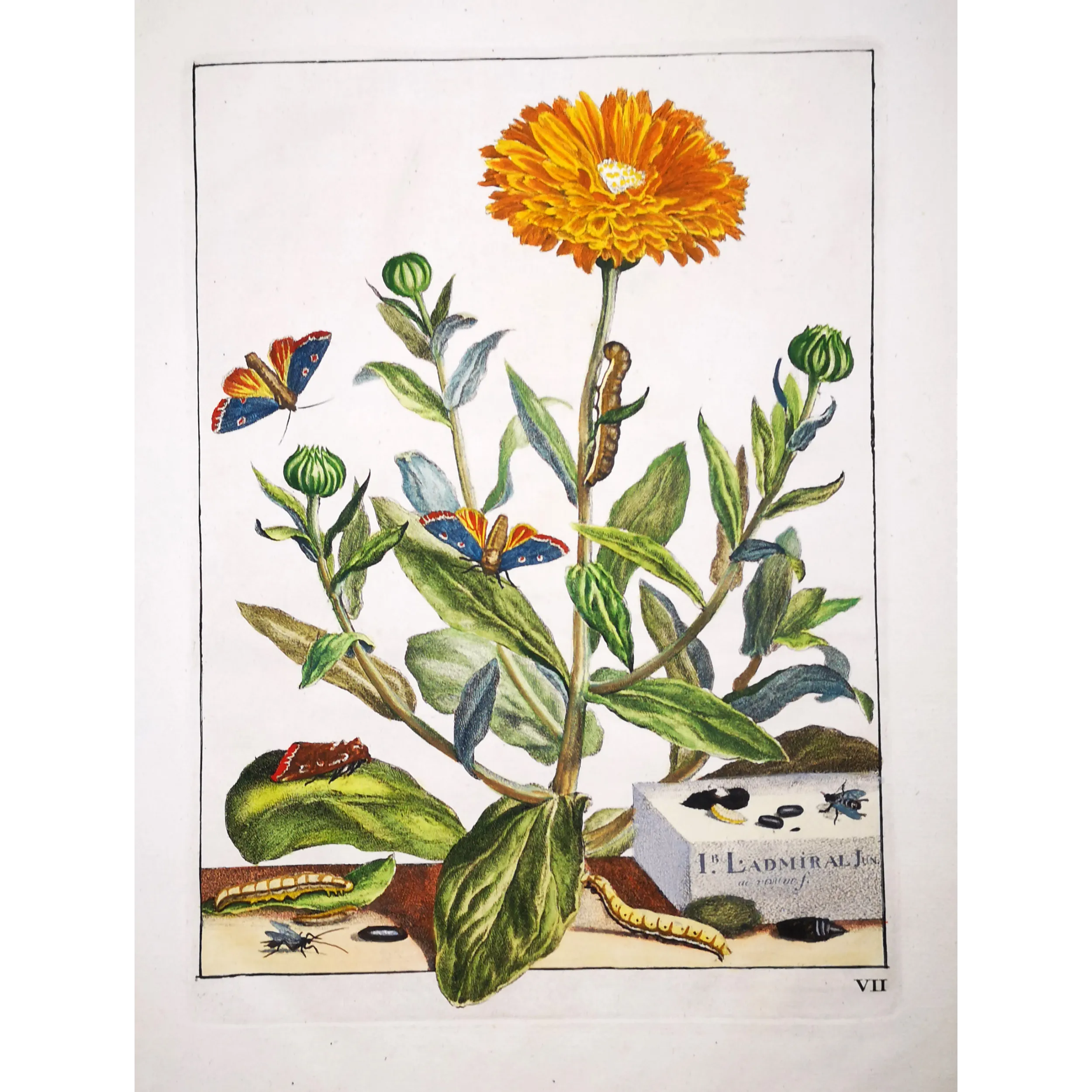
Original 1774 engraving by Jacob L'Admiral: The Gem on Gerbera.