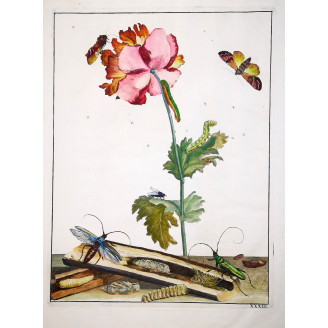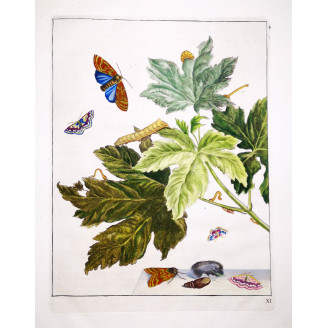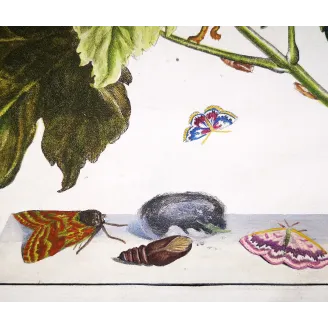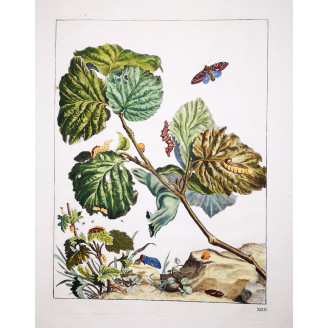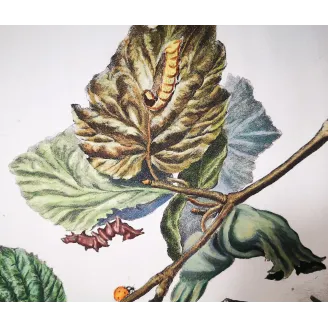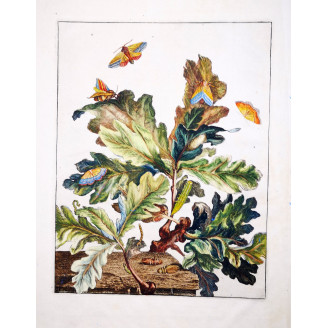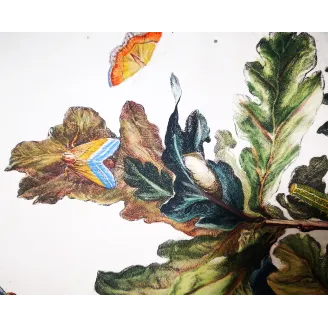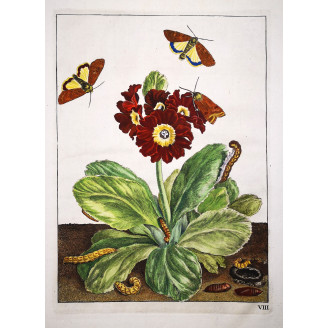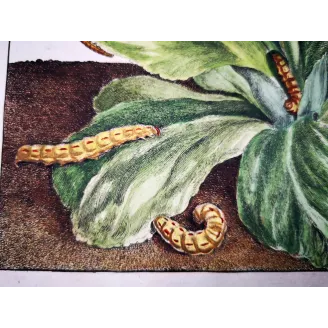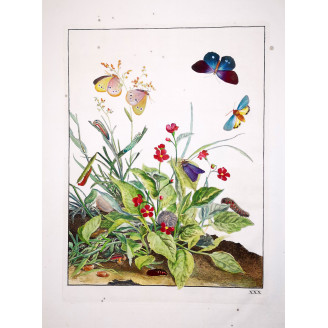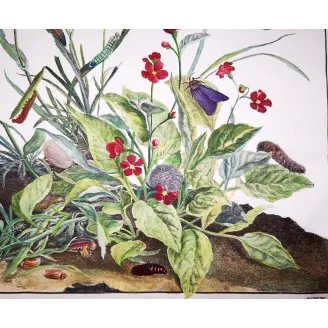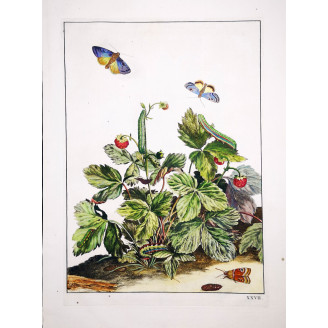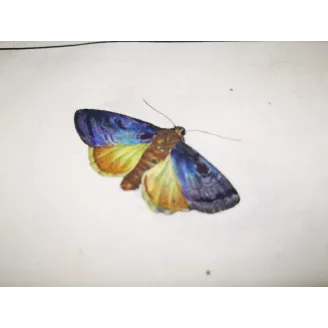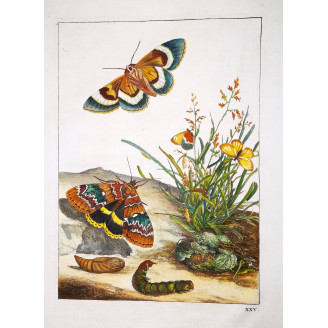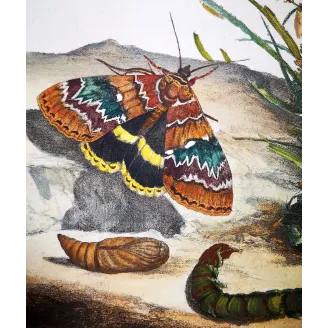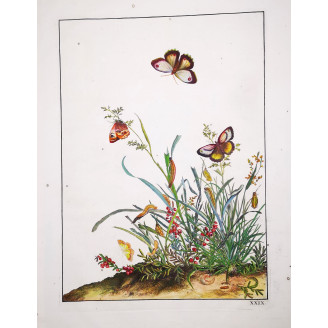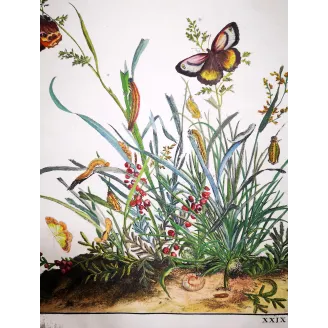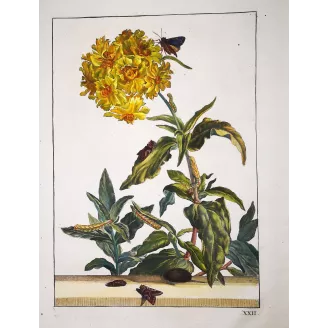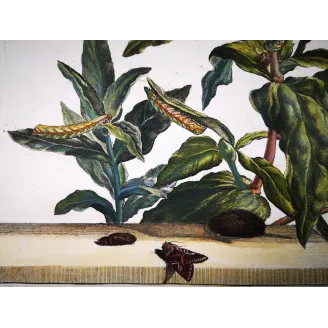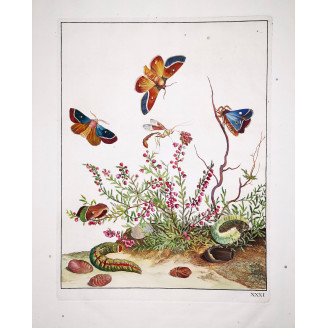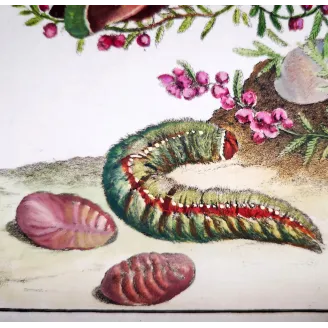
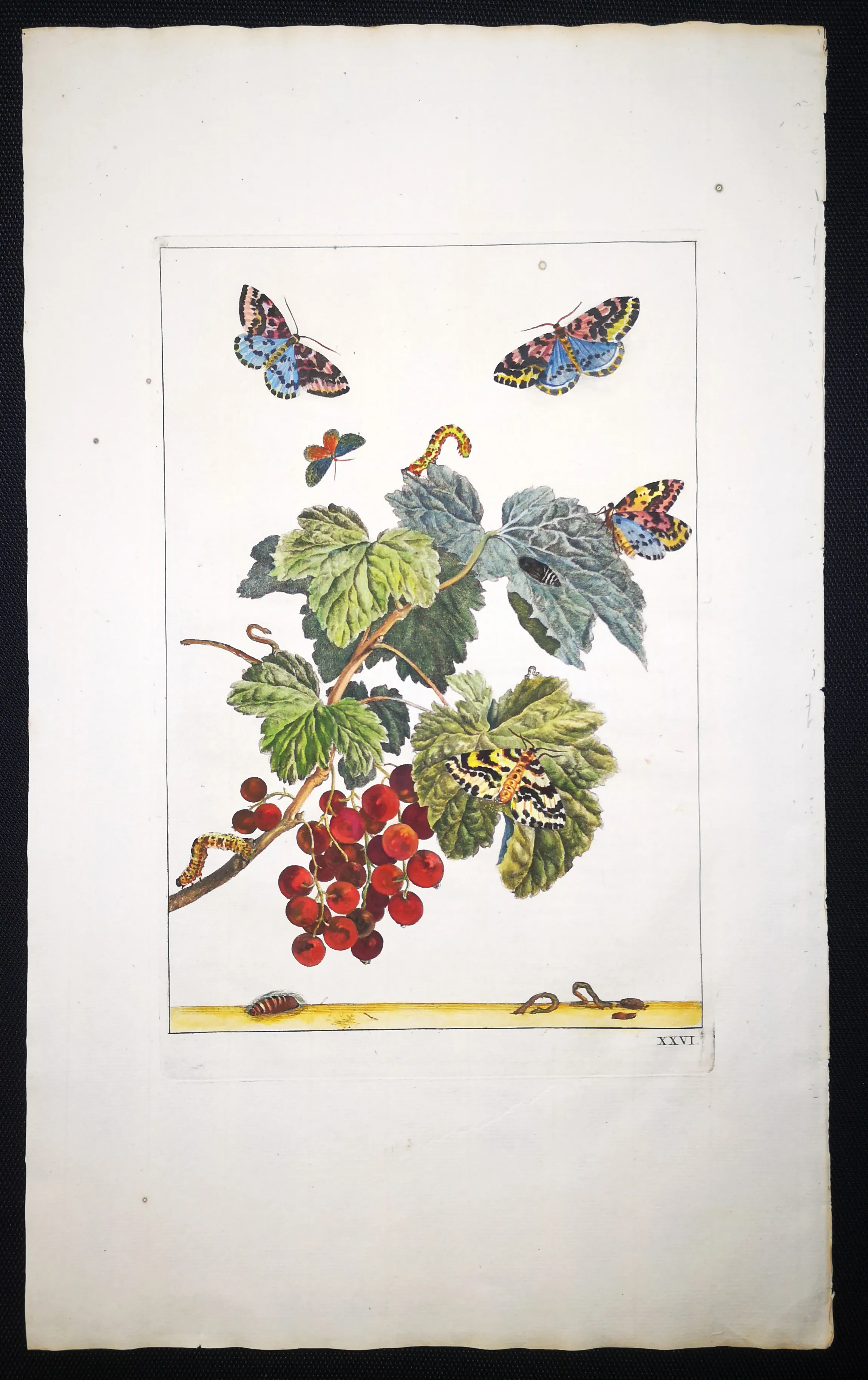
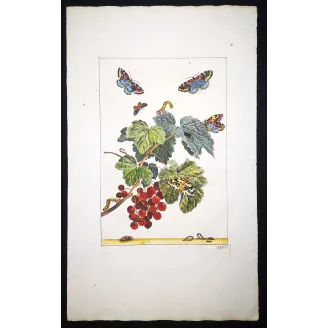
Original 1774 engraving by Jacob L'Admiral: Colorful Insects on Flowering Stalk.
 Delivery policy
Your print will be carefully prepared and shipped worldwide via trusted couriers (UPS or similar).
 Authentic antique prints
Original engravings from the 17th–19th century.
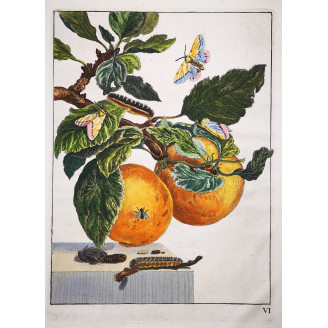
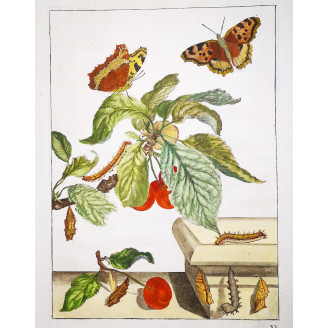
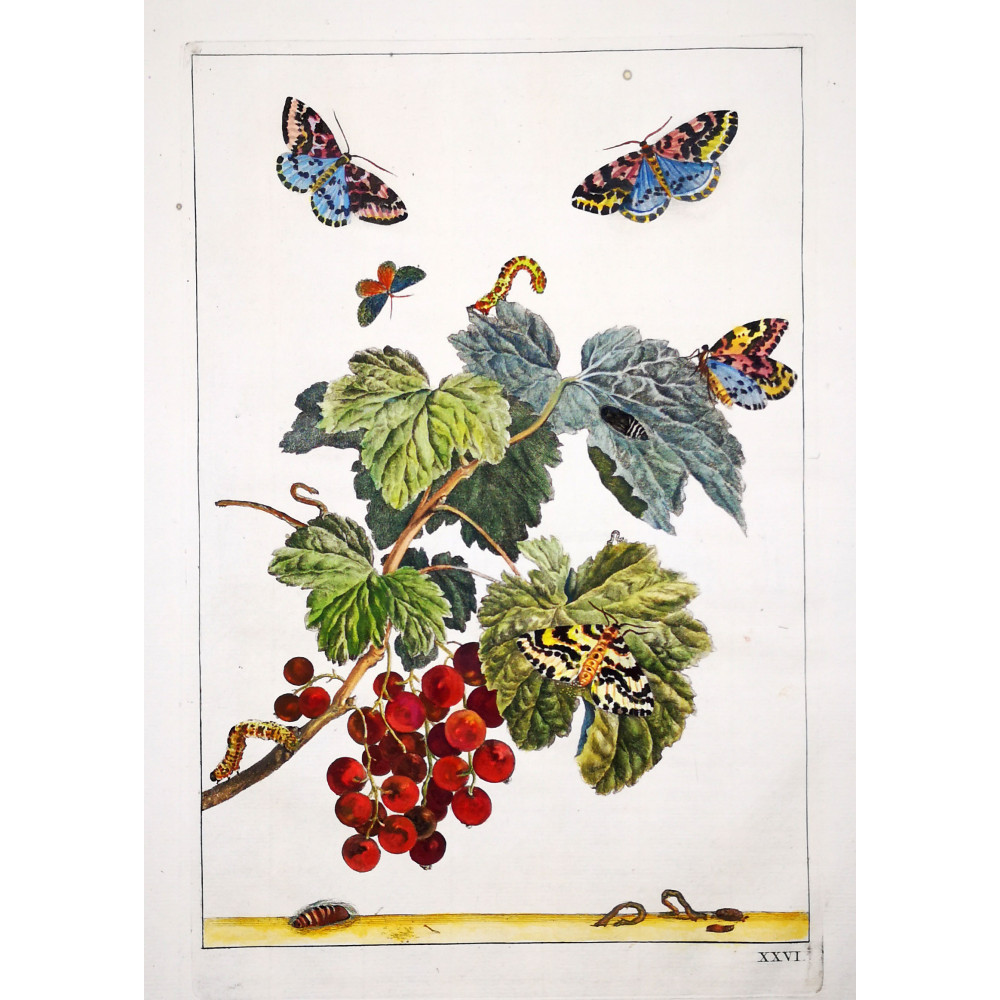
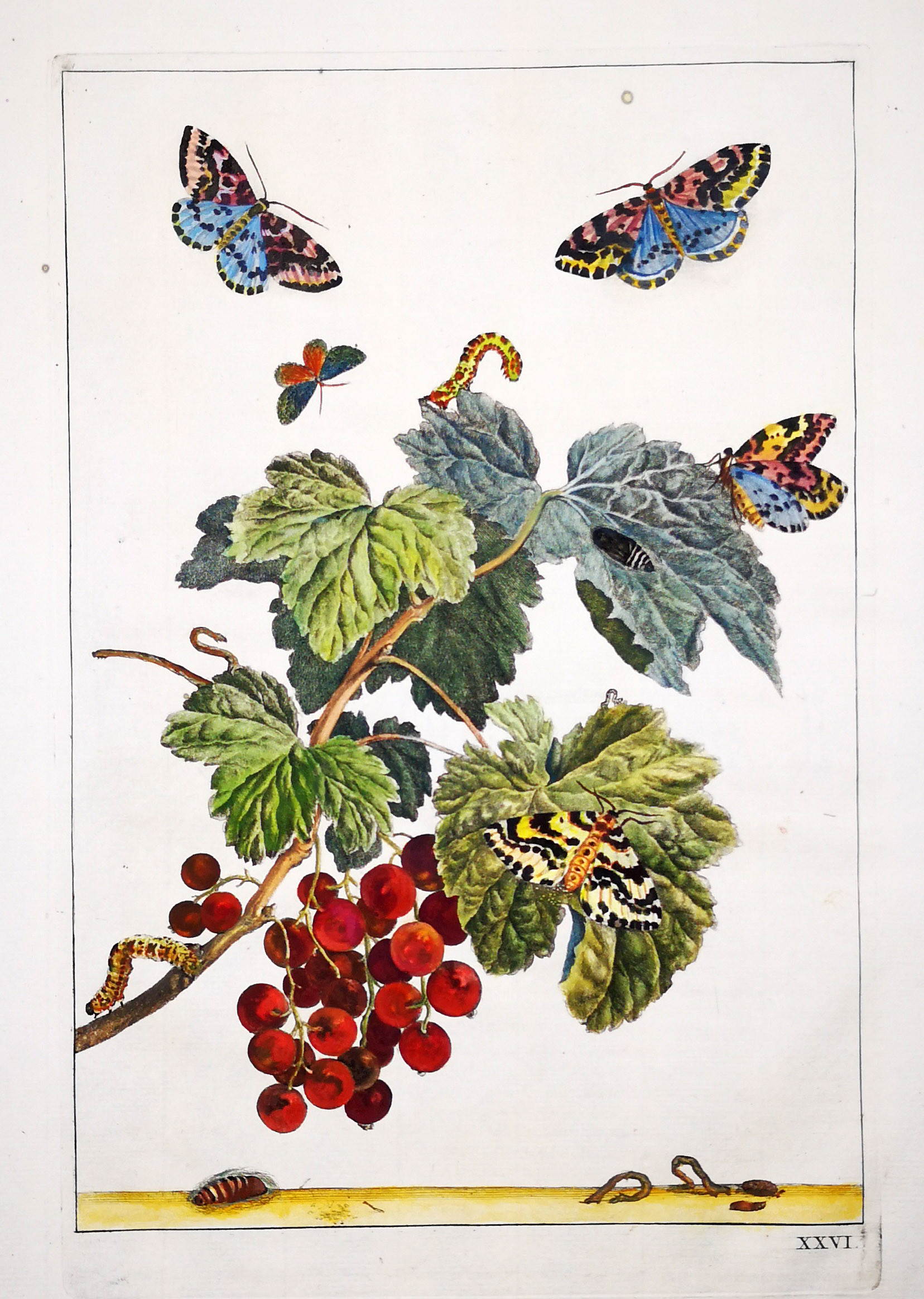
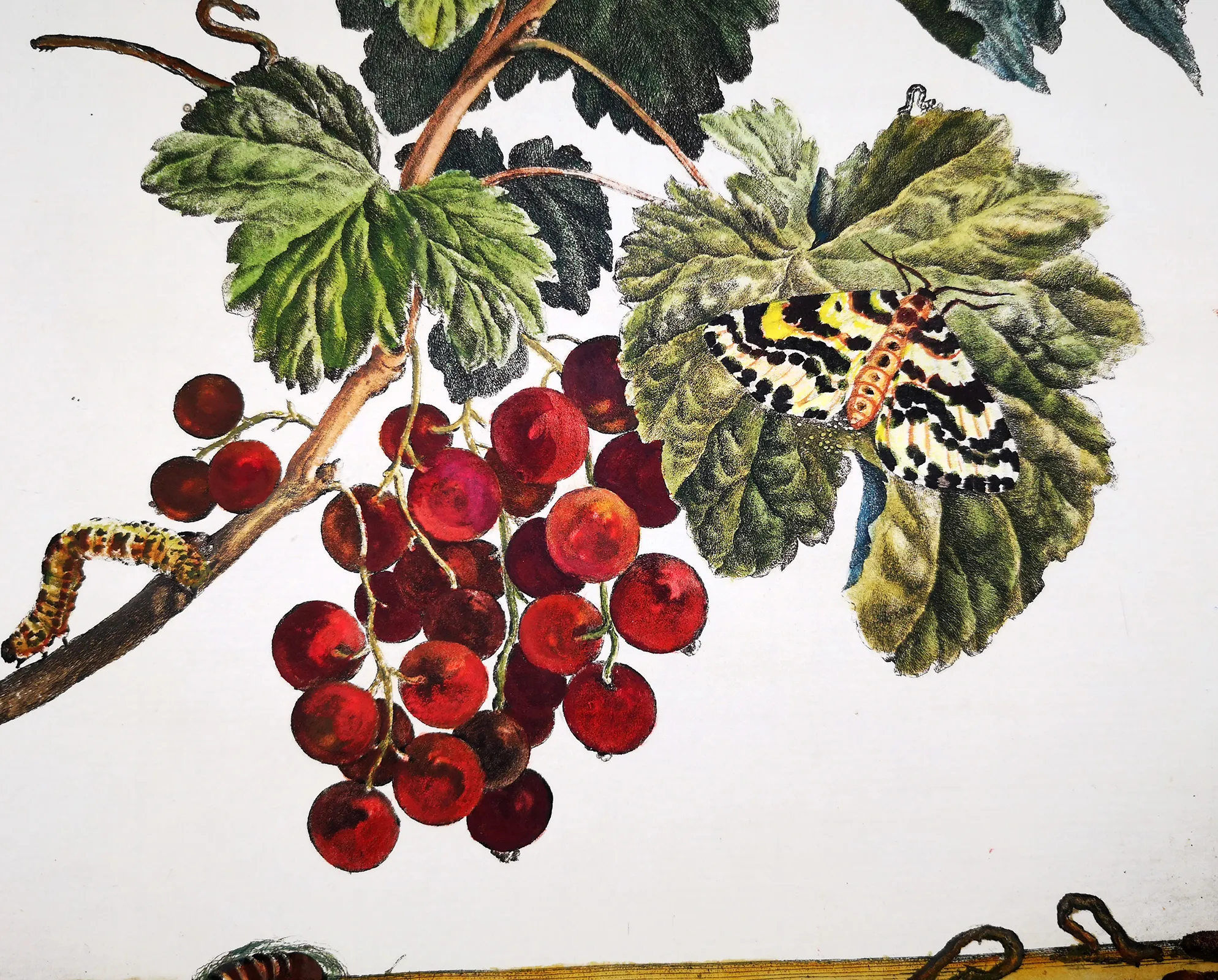
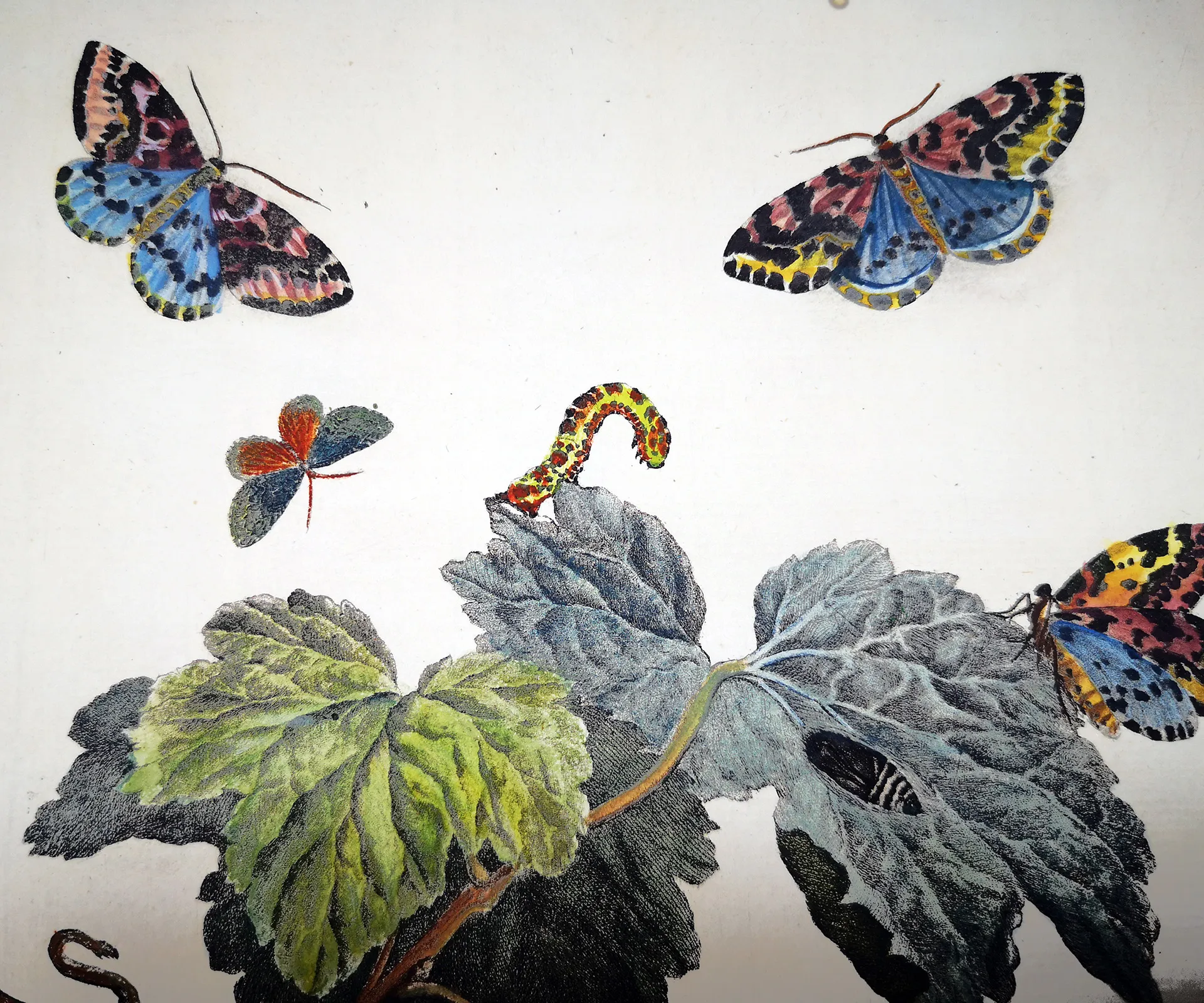
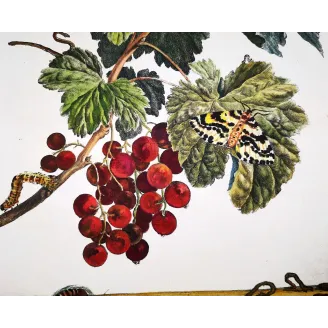
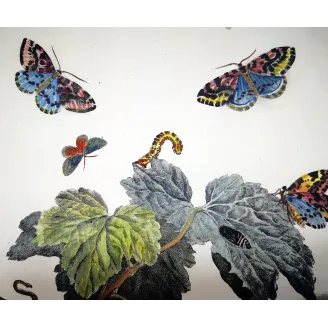
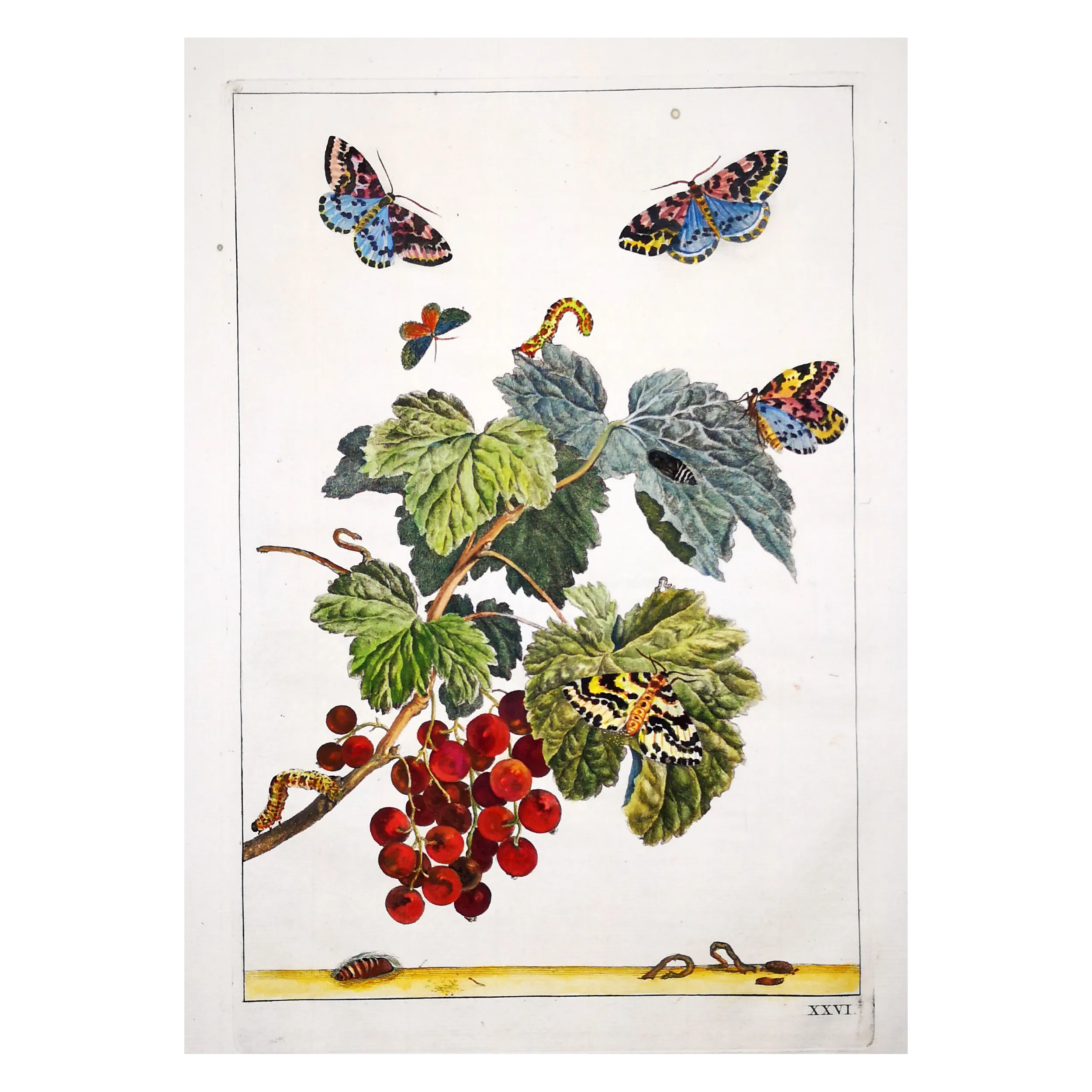
This original 1774 hand-colored engraving by Jacob L’Admiral presents the Magpie Moth (Abraxas grossulariata) in successive stages of transformation upon a currant branch (Ribes). The composition unites fruit, foliage, larva, chrysalis, and fully winged adults within a single field of scientific observation.
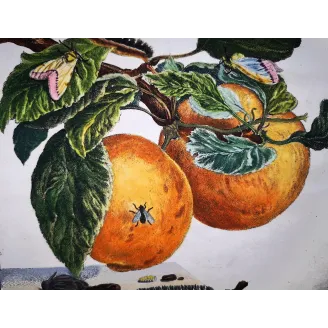
Clusters of translucent red berries anchor the lower half of the plate, their saturated tones contrasting with the intricate black, yellow, and cream patterning of the moths. The leaves unfold in layered diagonals, creating a measured structure that balances movement above with stability below.
L’Admiral does not isolate the insect as ornament; instead, he situates metamorphosis within cultivated nature, reflecting the Enlightenment desire to understand life cycles through close empirical study.
— • —
The plate achieves visual clarity through contrast. The luminous currants provide chromatic density, while the pale ground preserves spatial air around the hovering adults. The patterned wings — almost heraldic in appearance — introduce rhythm and repetition across the upper register of the composition.
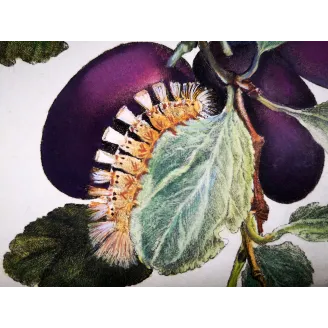
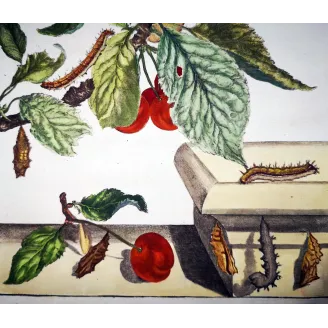
The engraved line remains sharp and controlled, allowing the hand-coloring to articulate fine textures: the gloss of the berries, the veining of the leaves, and the segmented anatomy of larval forms.
Abraxas grossulariata, commonly known as the Magpie Moth, is historically associated with currant and gooseberry plants (Ribes). In eighteenth-century horticulture, the species was carefully observed due to its impact on cultivated fruit shrubs.
By presenting larva, chrysalis, and adult upon the host plant, L’Admiral demonstrates the ecological awareness characteristic of Dutch Enlightenment natural science — documenting not only form, but biological relationship.
This engraving forms part of Jacob L’Admiral’s seminal 1774 publication dedicated to insect metamorphosis — a landmark in Dutch Enlightenment natural history. Each plate was printed from copper engraving and meticulously hand-colored on original laid paper, embodying both scientific rigor and artistic precision.
For deeper historical insight, see our editorial feature Jacob L’Admiral and the Metamorphosis of Insects.
Printed on original eighteenth-century laid paper with visible chain lines. A watermark is present within the sheet, confirming period paper production. The margins remain fresh and clean, and the impression is crisp and well preserved. The hand-coloring retains strong saturation and clarity. An exceptionally fine example dated 1774.
Specific References
Original 1774 engraving by Jacob L'Admiral: Larvae and Beetles with Ferns.
Original 1774 engraving by Jacob L'Admiral: Early Moth Stage among Willow Leaves.
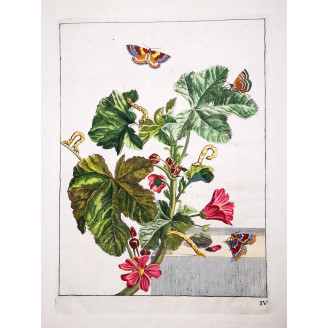
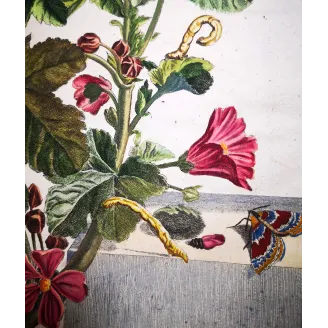
Original 1774 engraving by Jacob L'Admiral: Red Twin-spot Carpet on Mallow.
Original 1774 engraving by Jacob LâAdmiral: Swallowtail Butterfly on Thistle.
Original 1774 engraving by Jacob L'Admiral: Red Butterflies on Flowering Stem.
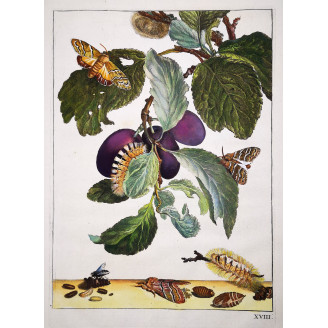
Antique entomological engraving by Jacob L’Admiral, featuring *Lymantria dispar *, and *Malus*.
Original 1774 engraving by Jacob L'Admiral: Large Tortoiseshell on Sweet Cherry.
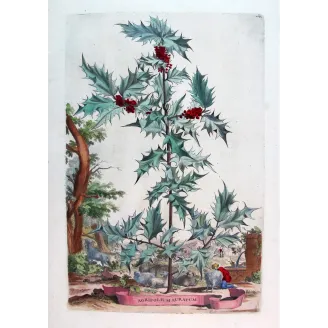
A striking 17th-century botanical engraving of golden holly, distinguished by its sculptural form and rare chromatic palette. A visually powerful composition blending natural history and decorative art.
Original 1774 engraving by Jacob L'Admiral: Colorful Insects on Flowering Stalk.