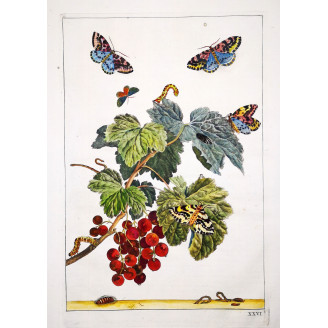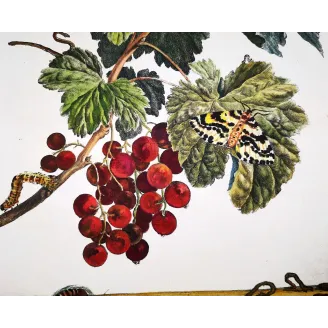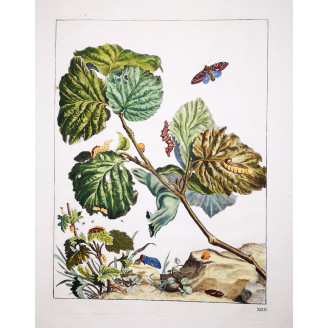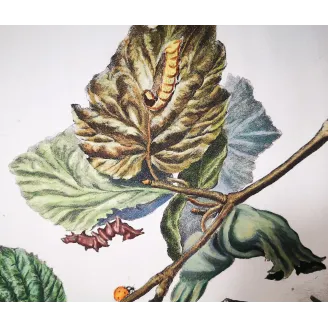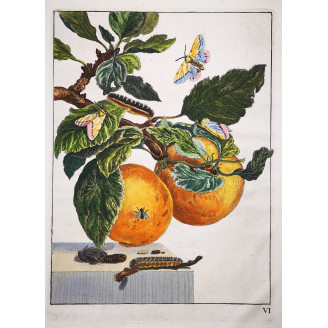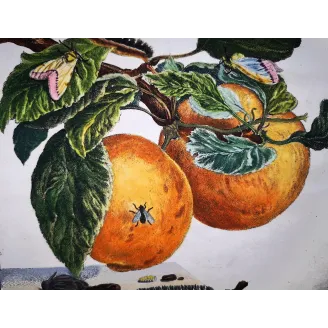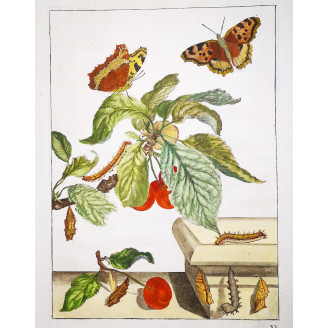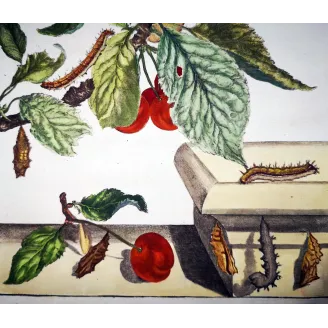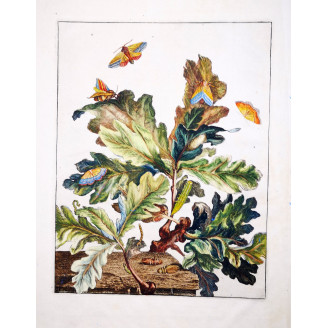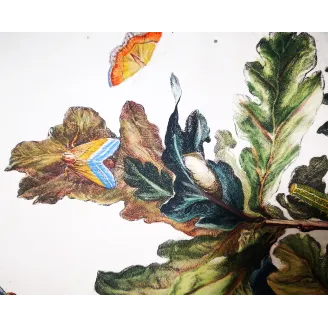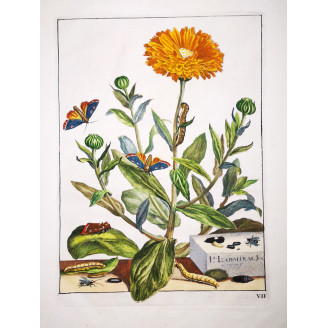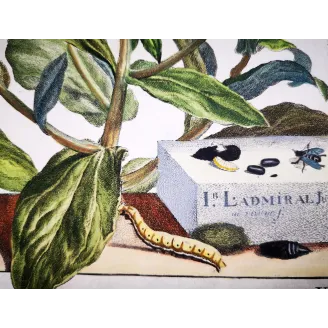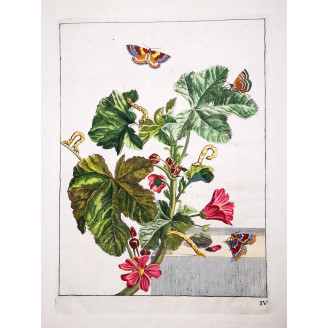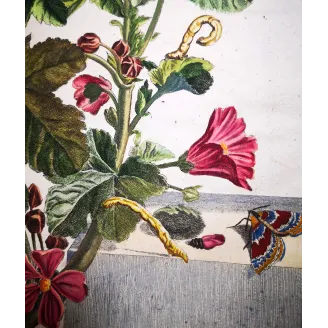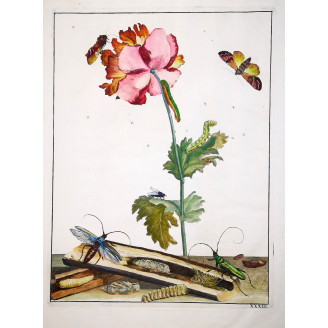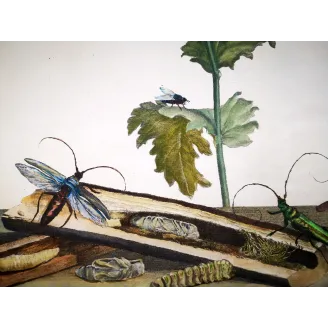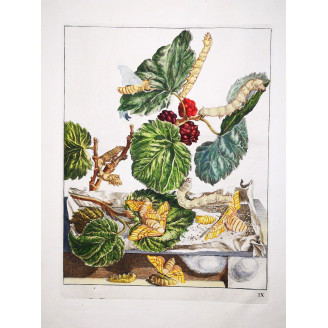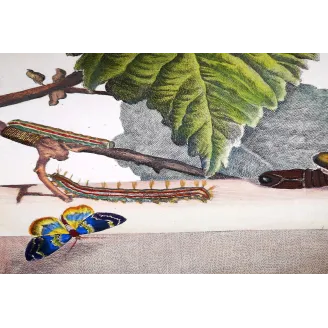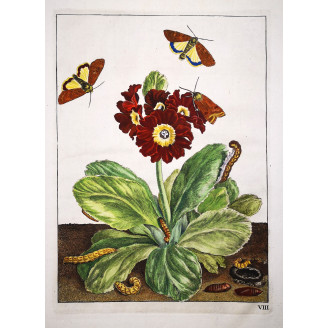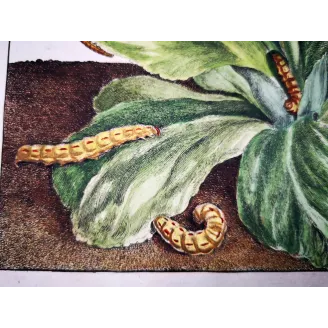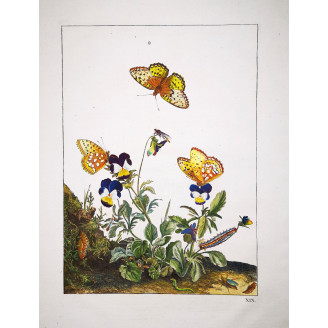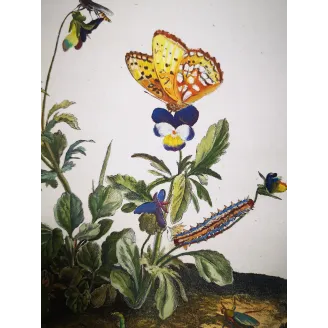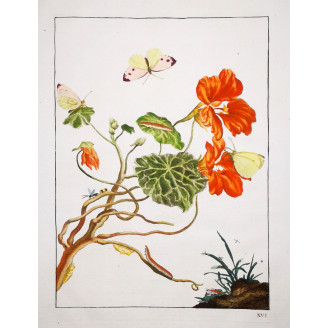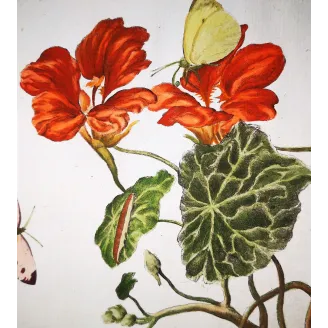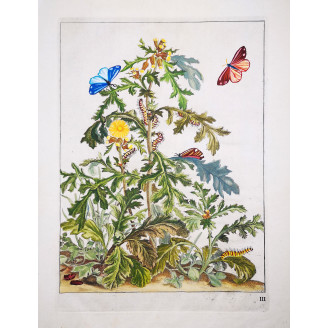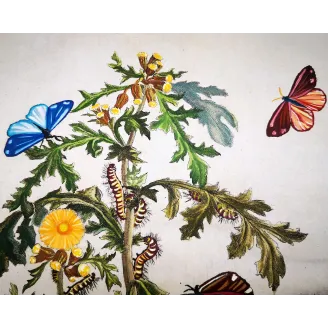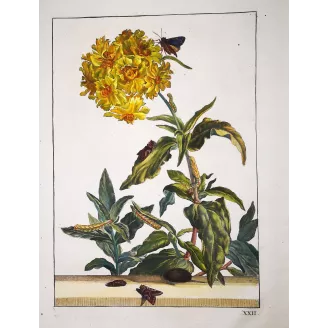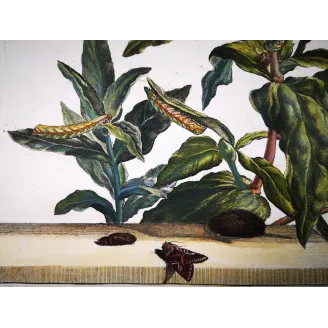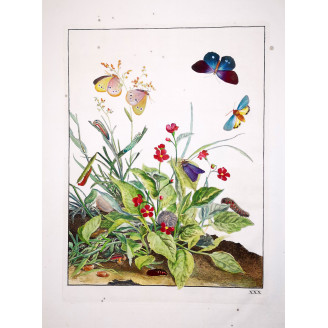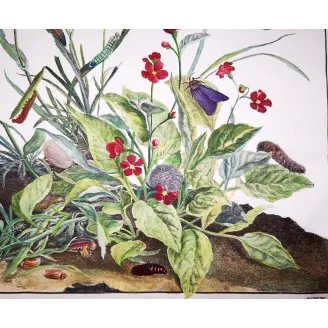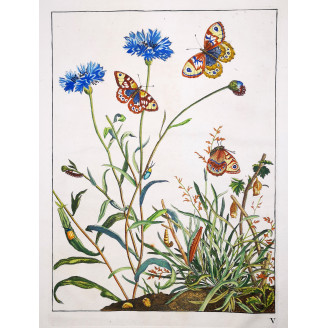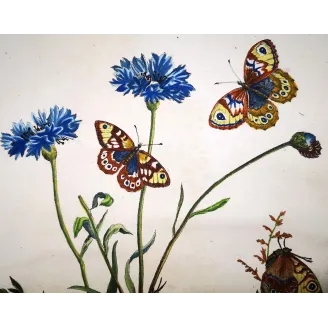
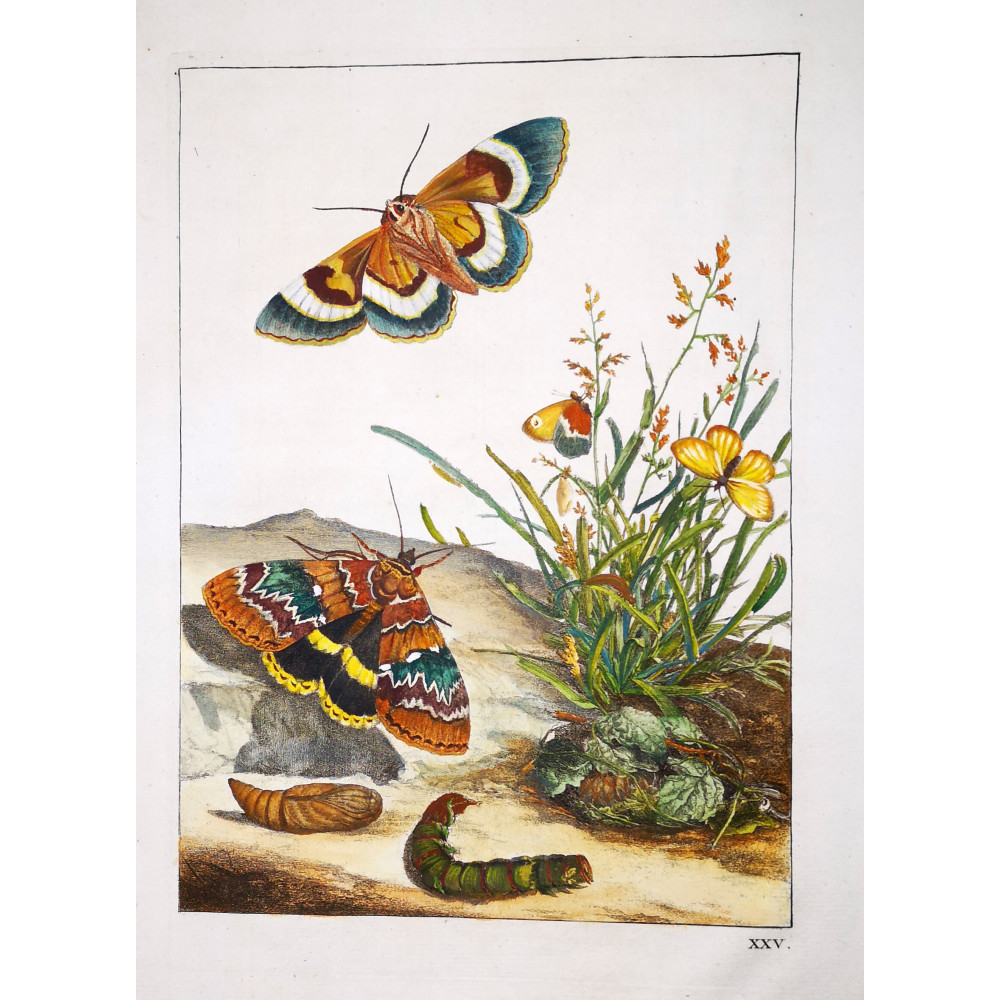
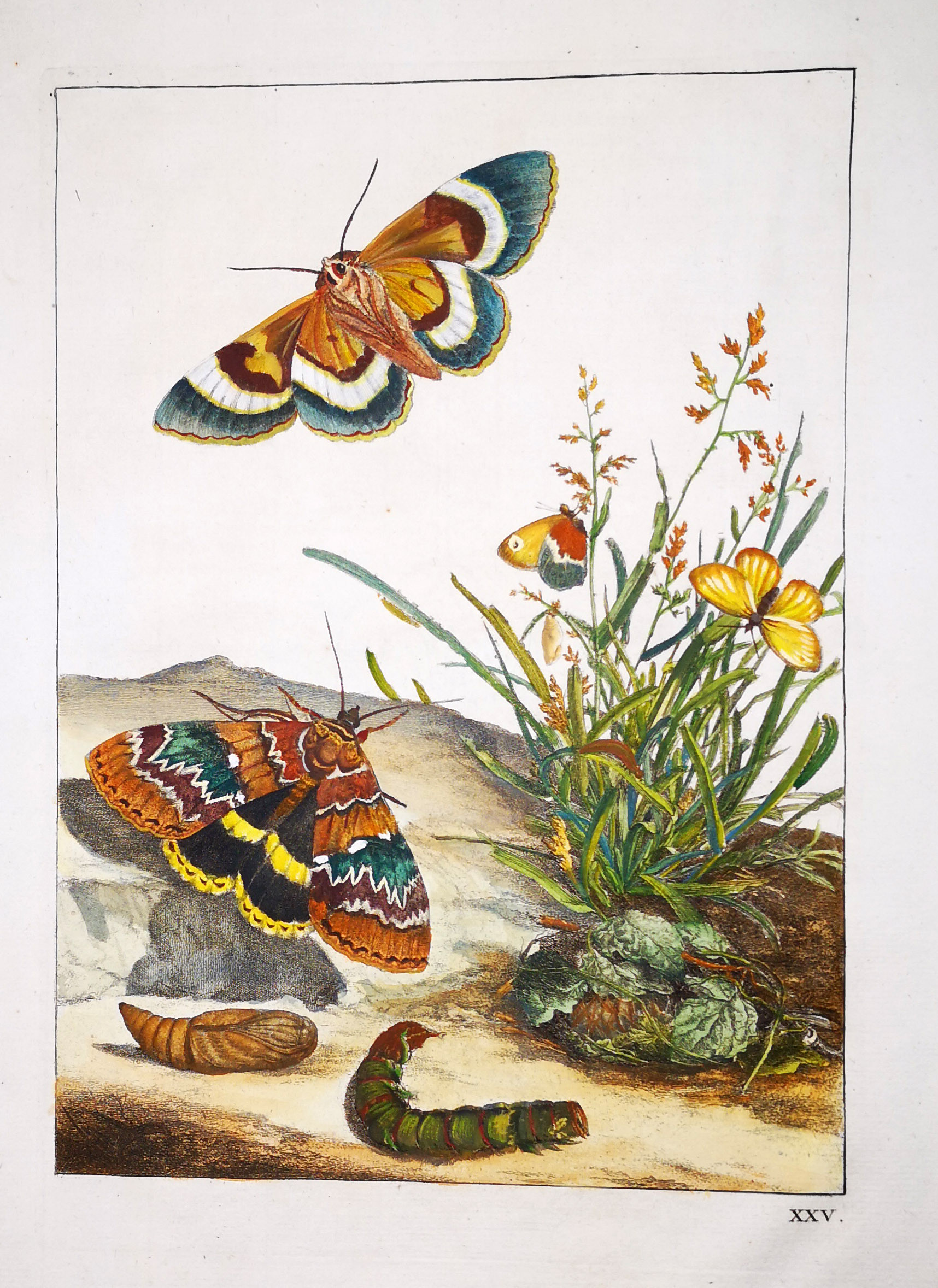
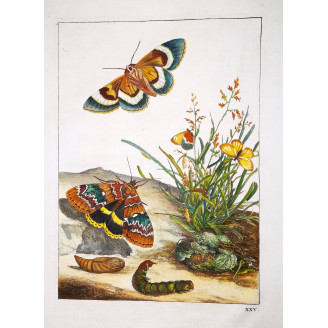
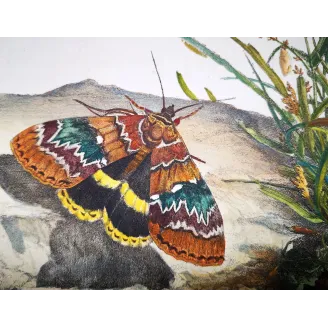
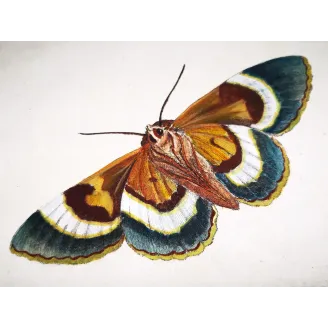
Original 1774 engraving by Jacob LâAdmiral: Clifden Nonpareil.
 Delivery policy
Your print will be carefully prepared and shipped worldwide via trusted couriers (UPS or similar).
 Authentic antique prints
Original engravings from the 17th–19th century.
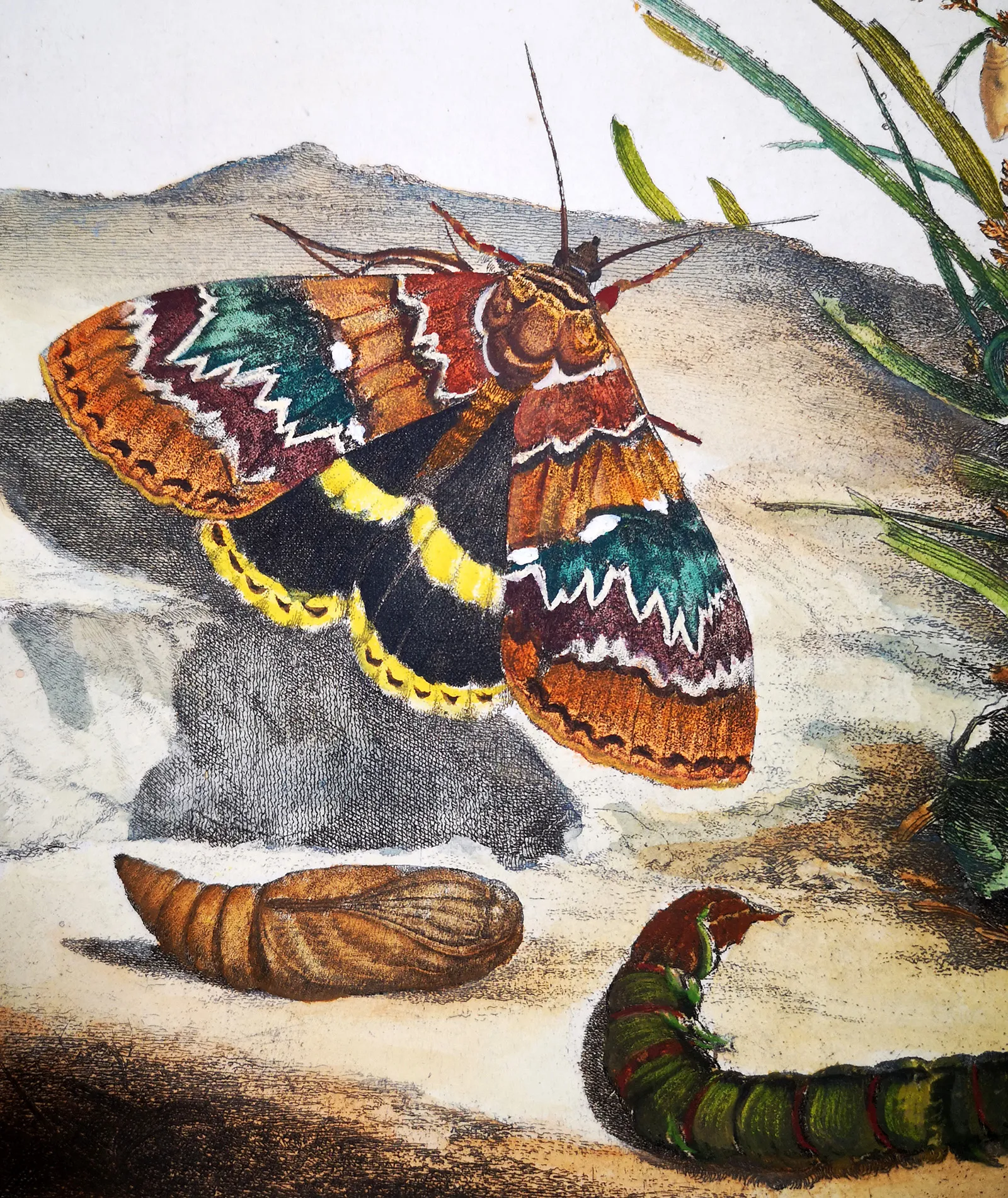
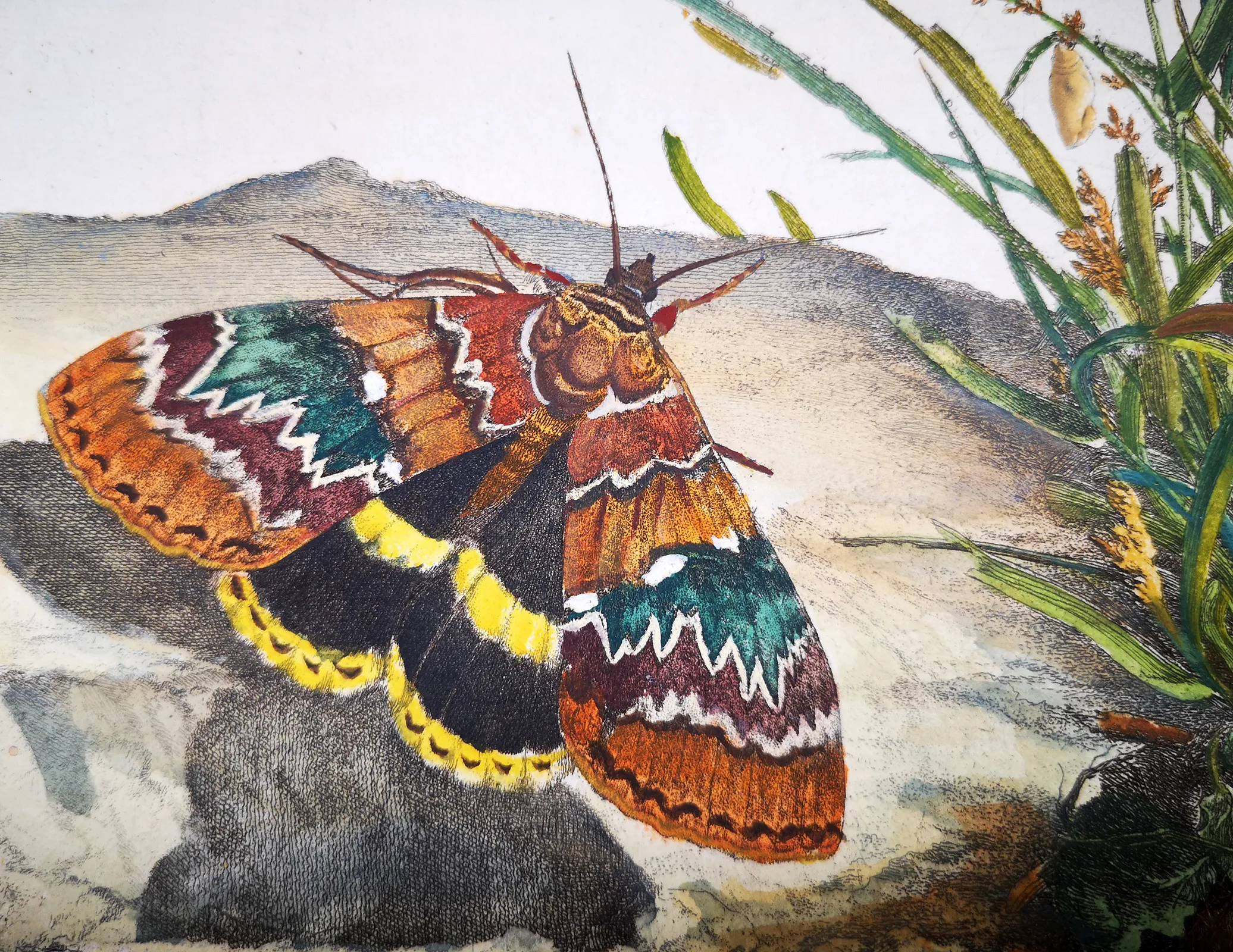
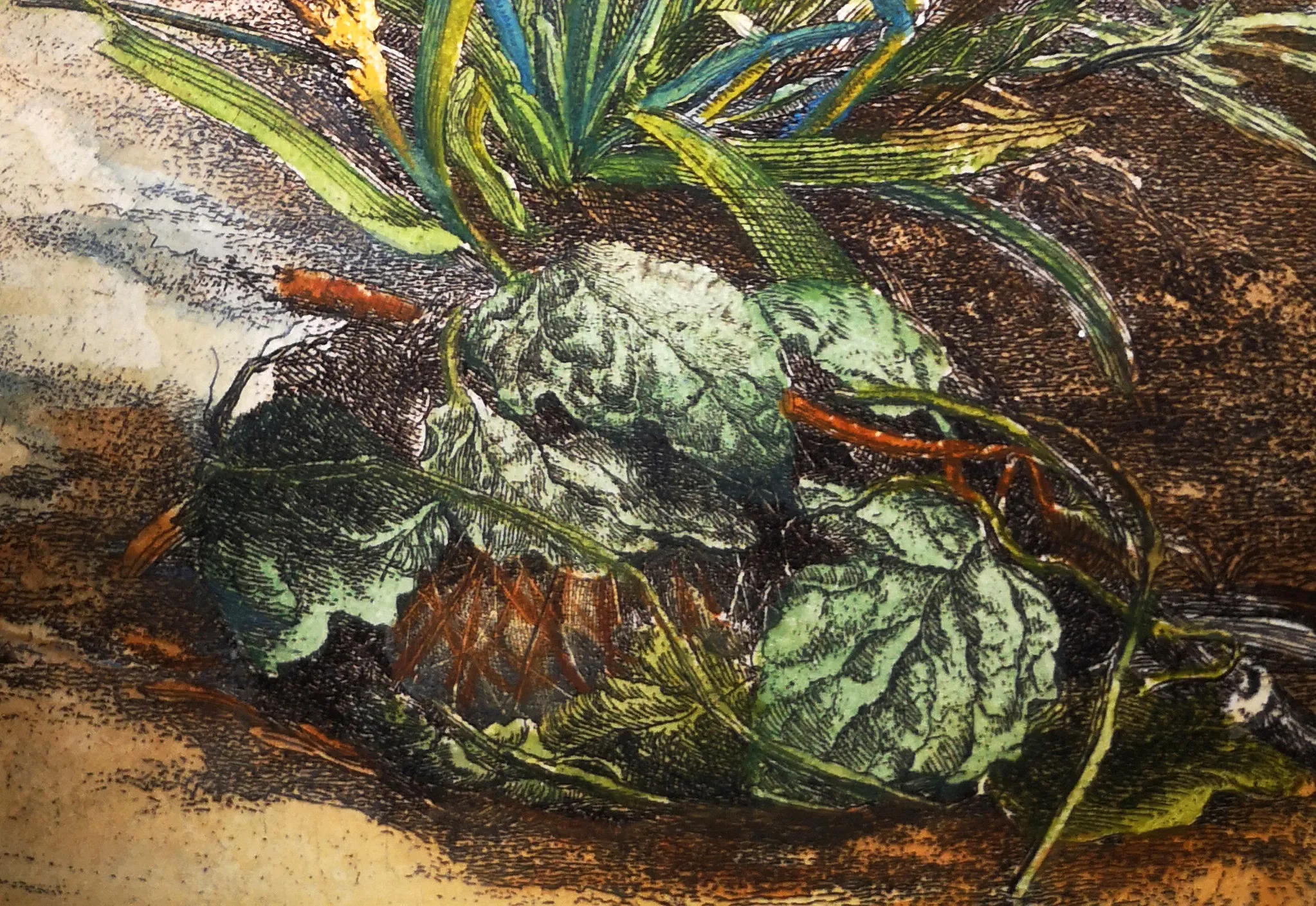
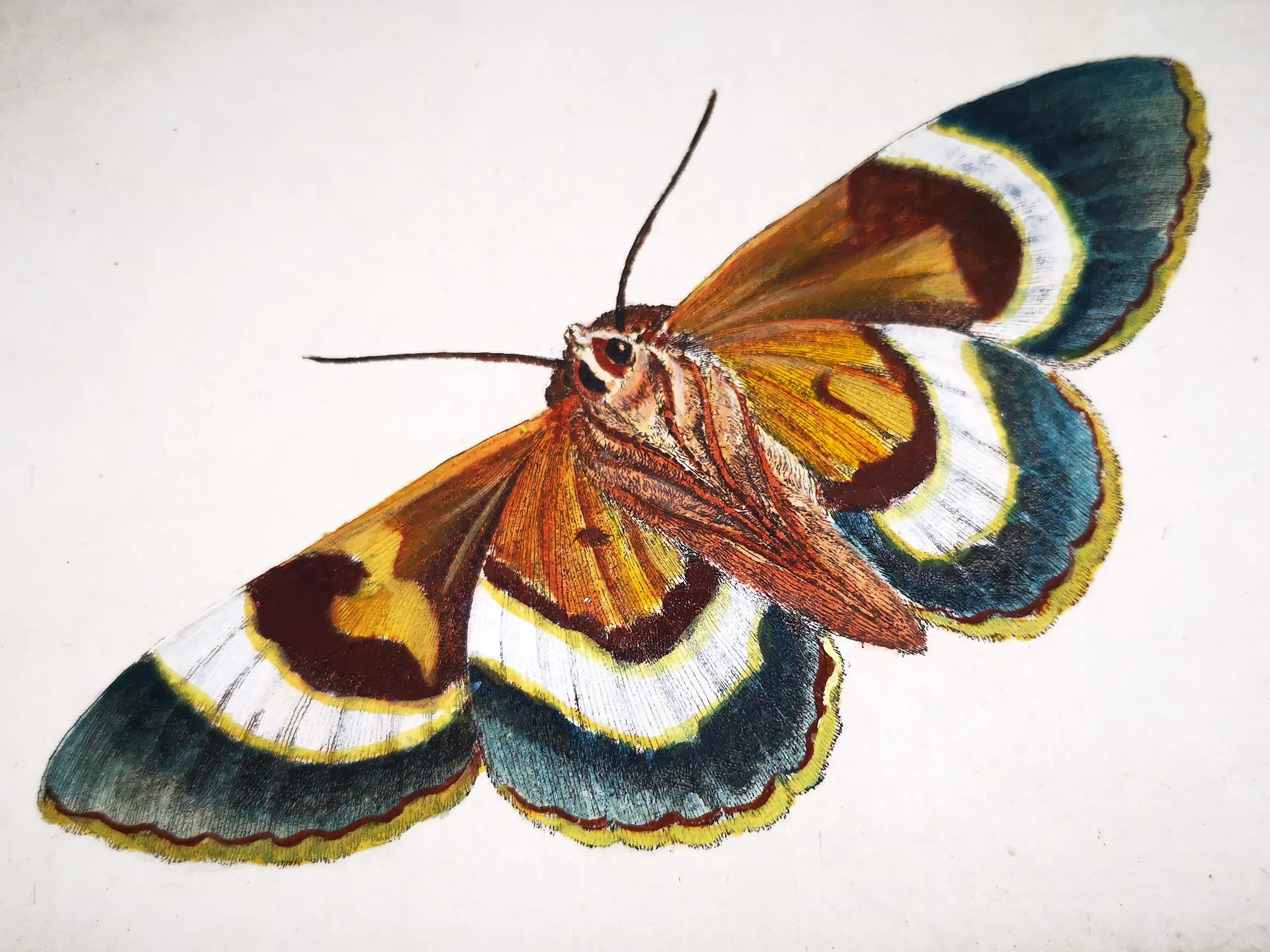
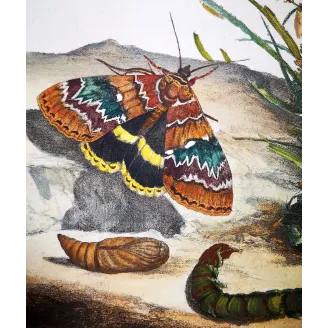
This original 1774 hand-colored engraving by Jacob L’Admiral depicts the extraordinary Clifden Nonpareil (Catocala fraxini) in its dramatic life cycle. The adult moth—renowned for its electric blue hindwings banded with black—appears alongside its larval and pupal stages, arranged within a carefully constructed natural setting.
The composition is unusually theatrical. One specimen rests with folded camouflage forewings, while another reveals the luminous blue flash that has made this species one of Europe’s most celebrated moths. Earthy tones of rock and foliage contrast magnificently with the saturated ultramarine and golden accents.
Here, Enlightenment science meets visual drama.
— • —
This plate stands out within L’Admiral’s corpus for its chromatic intensity. The vibrant blue hindwings create a focal explosion of color against subdued mineral greys and botanical greens. The resting specimen introduces textural realism, while the airborne moth adds movement and elevation.
The engraving line is crisp and confident, allowing the hand-coloring to articulate fine wing veining and the segmented body of the larva with remarkable clarity.
Catocala fraxini, known as the Clifden Nonpareil, is famed for its concealed hindwing coloration—an evolutionary adaptation used to startle predators. In the eighteenth century, such species fascinated naturalists due to their striking contrast between cryptic forewings and vivid hidden markings.
By presenting larva, chrysalis, and adult in one unified plate, L’Admiral reinforces the Enlightenment emphasis on complete lifecycle documentation and empirical observation.
This engraving forms part of Jacob L’Admiral’s seminal 1774 work dedicated to insect metamorphosis—an important milestone in Dutch Enlightenment natural history. Printed from copperplate and delicately hand-colored on original laid paper, each sheet reflects the convergence of scientific rigor and artistic excellence.
Discover more in our editorial feature: Jacob L’Admiral and the Metamorphosis of Insects.
Printed on original eighteenth-century laid paper with visible chain lines. Strong margins and a sharp impression. The hand-coloring remains vivid and exceptionally well preserved. A prominent watermark with paper mill logo is visible, consistent with high-quality eighteenth-century production. Dated 1774.
Specific References
Original 1774 engraving by Jacob L'Admiral: Colorful Insects on Flowering Stalk.
Antique entomological engraving by Jacob L’Admiral, featuring *Lymantria dispar *, and *Malus*.
Original 1774 engraving by Jacob L'Admiral: Large Tortoiseshell on Sweet Cherry.
Original 1774 engraving by Jacob L'Admiral: Red Twin-spot Carpet on Mallow.
Original 1774 engraving by Jacob L'Admiral: Larvae and Beetles with Ferns.
Original 1774 engraving by Jacob L'Admiral: Early Moth Stage among Willow Leaves.
Original 1774 engraving by Jacob LâAdmiral: Lesser Marbled Fritillary on wild Pansy.
Original 1774 engraving by Jacob L'Admiral: Ornate Butterfly and Metamorphosis Detail.
Original 1774 engraving by Jacob L'Admiral: Red Butterflies on Flowering Stem.
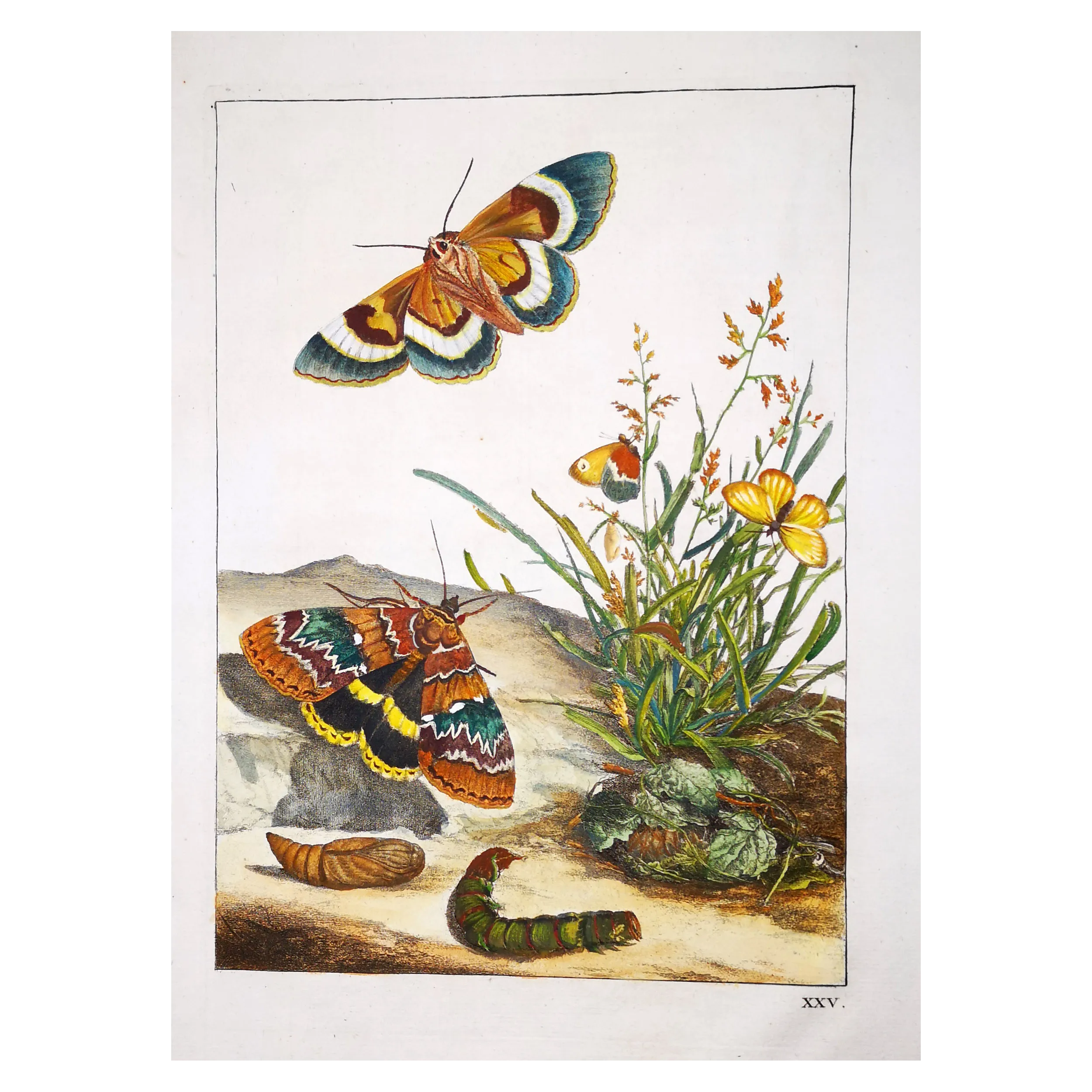
Original 1774 engraving by Jacob LâAdmiral: Clifden Nonpareil.