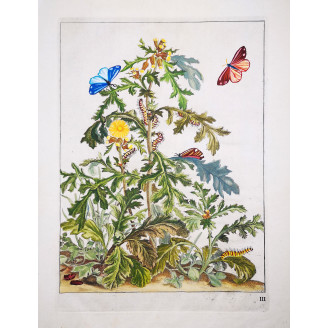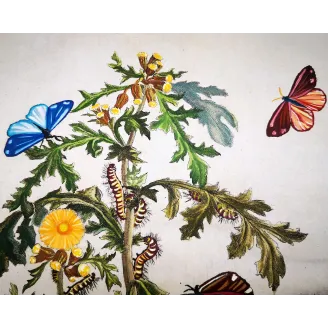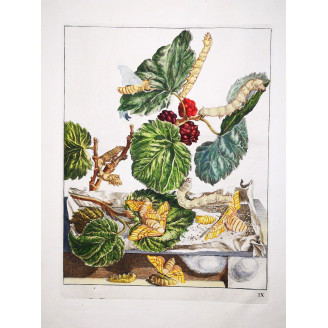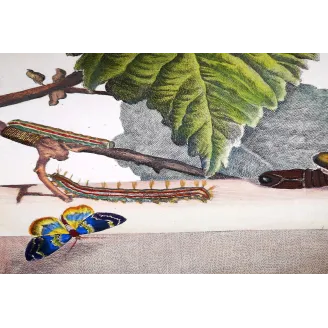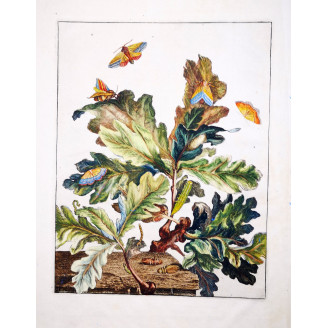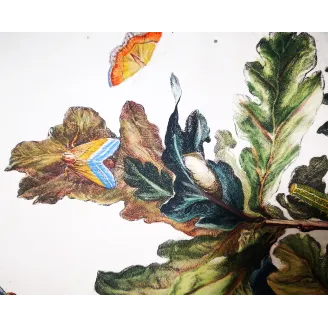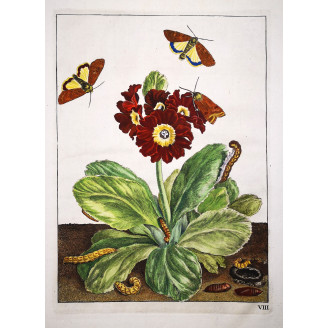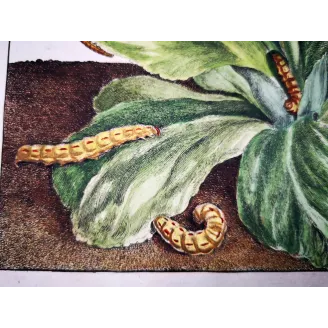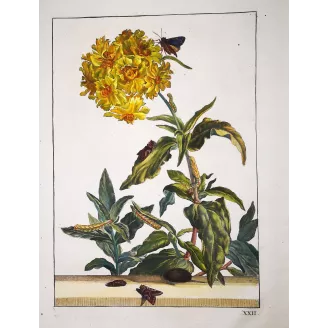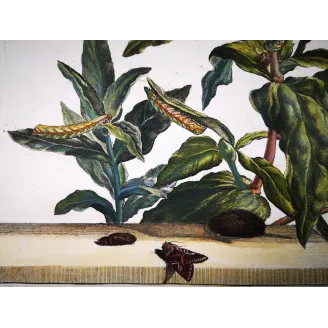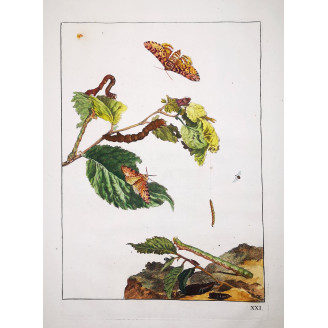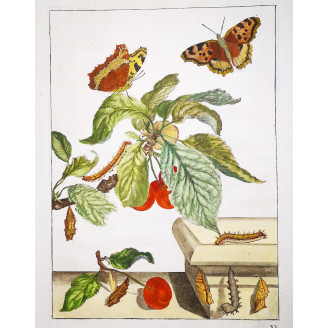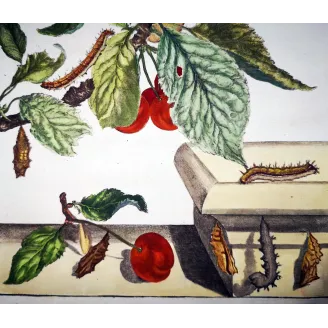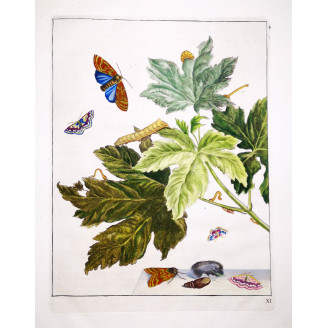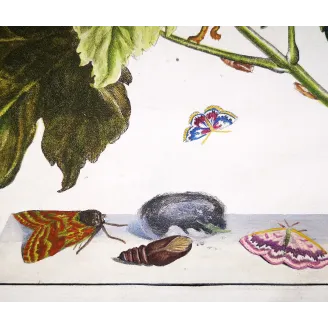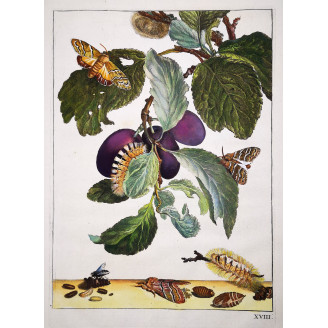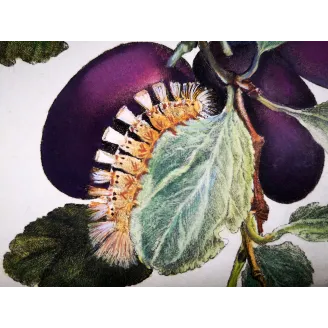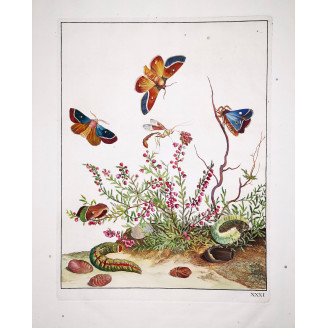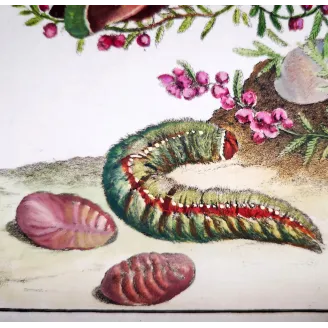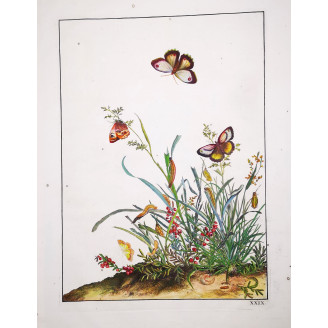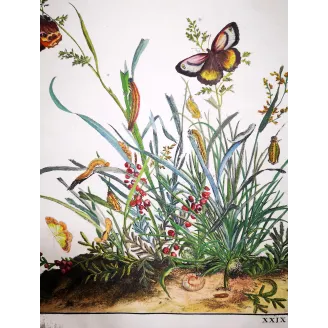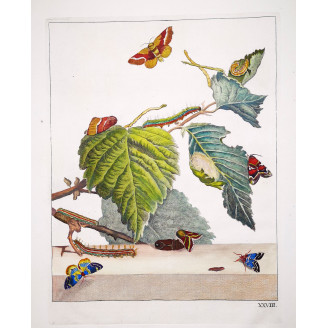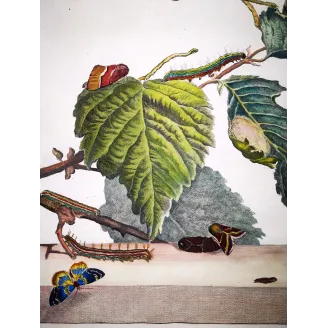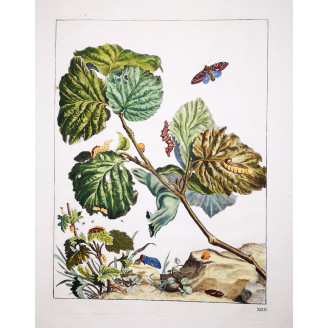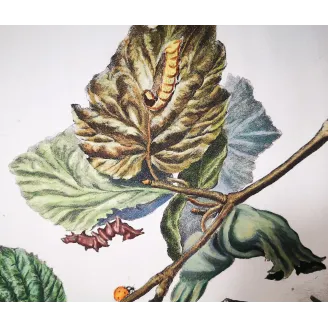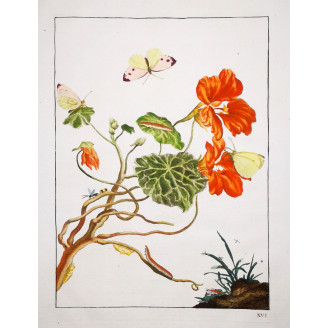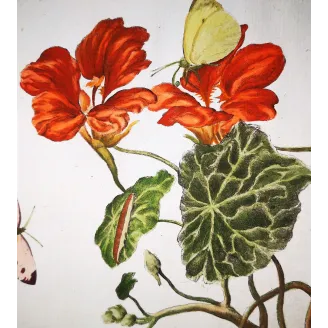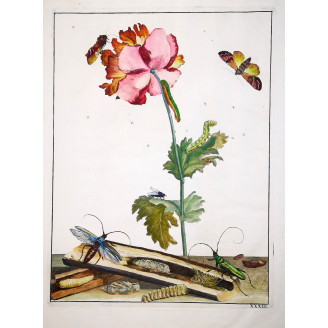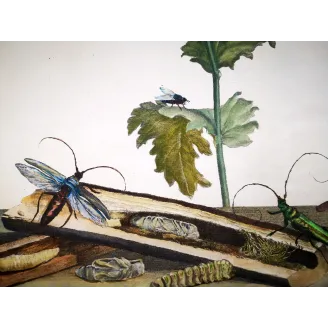
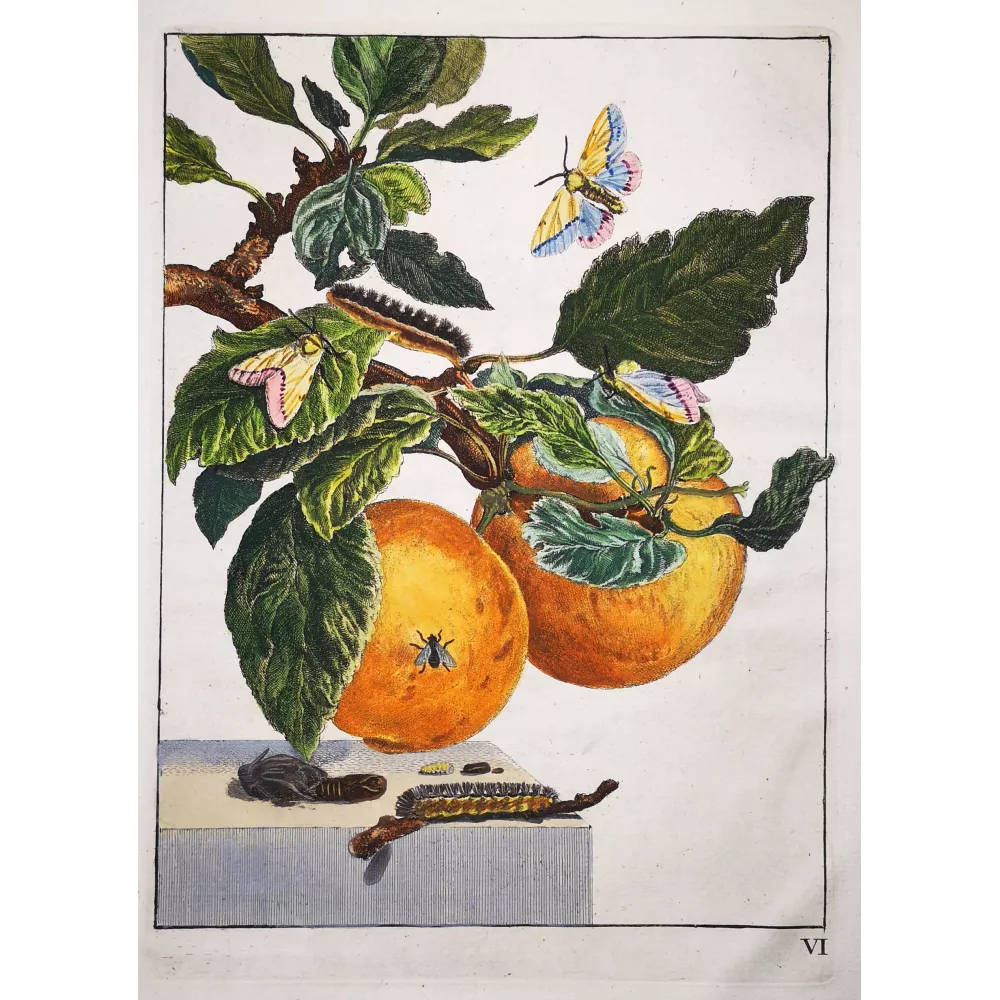
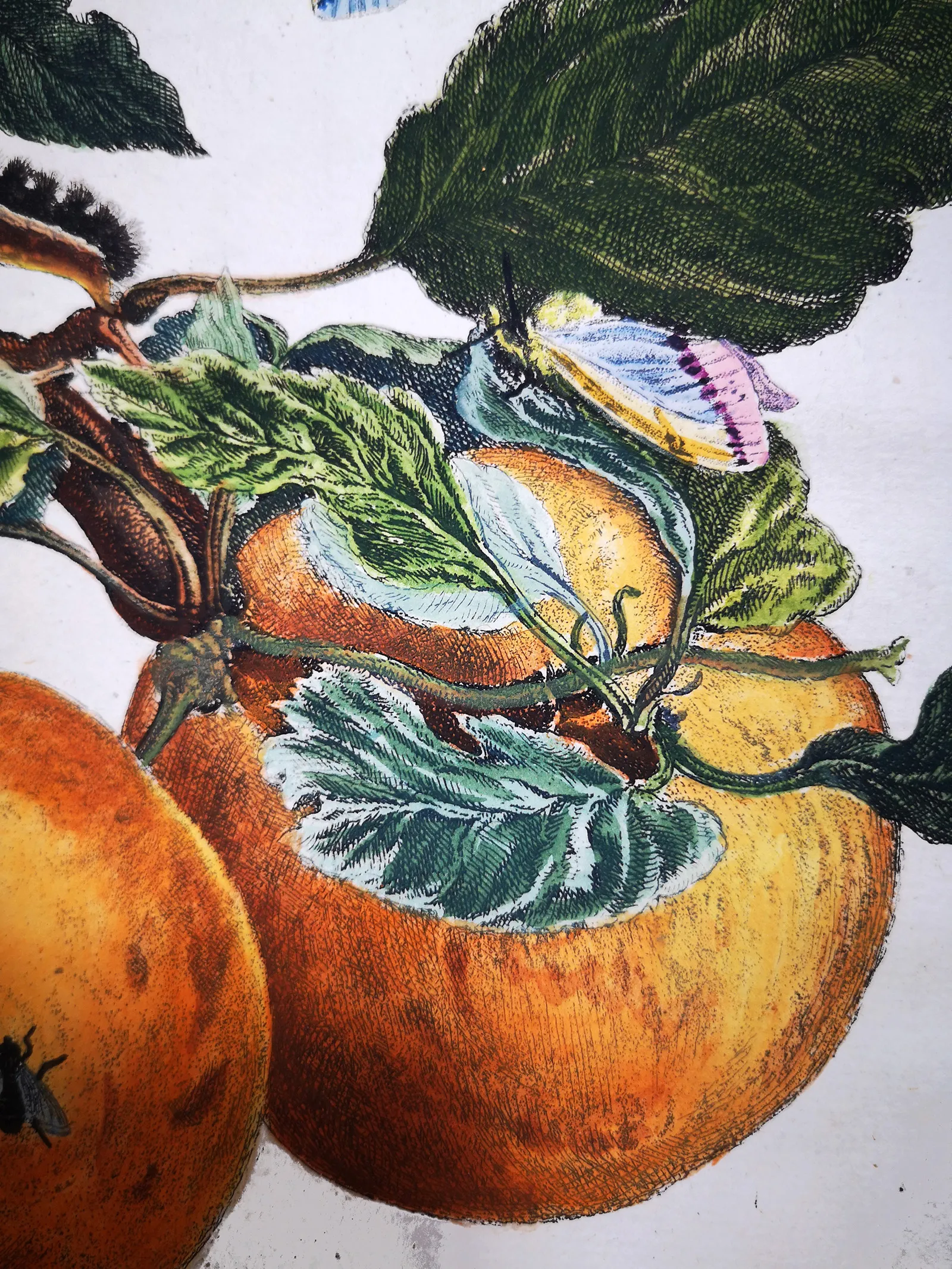
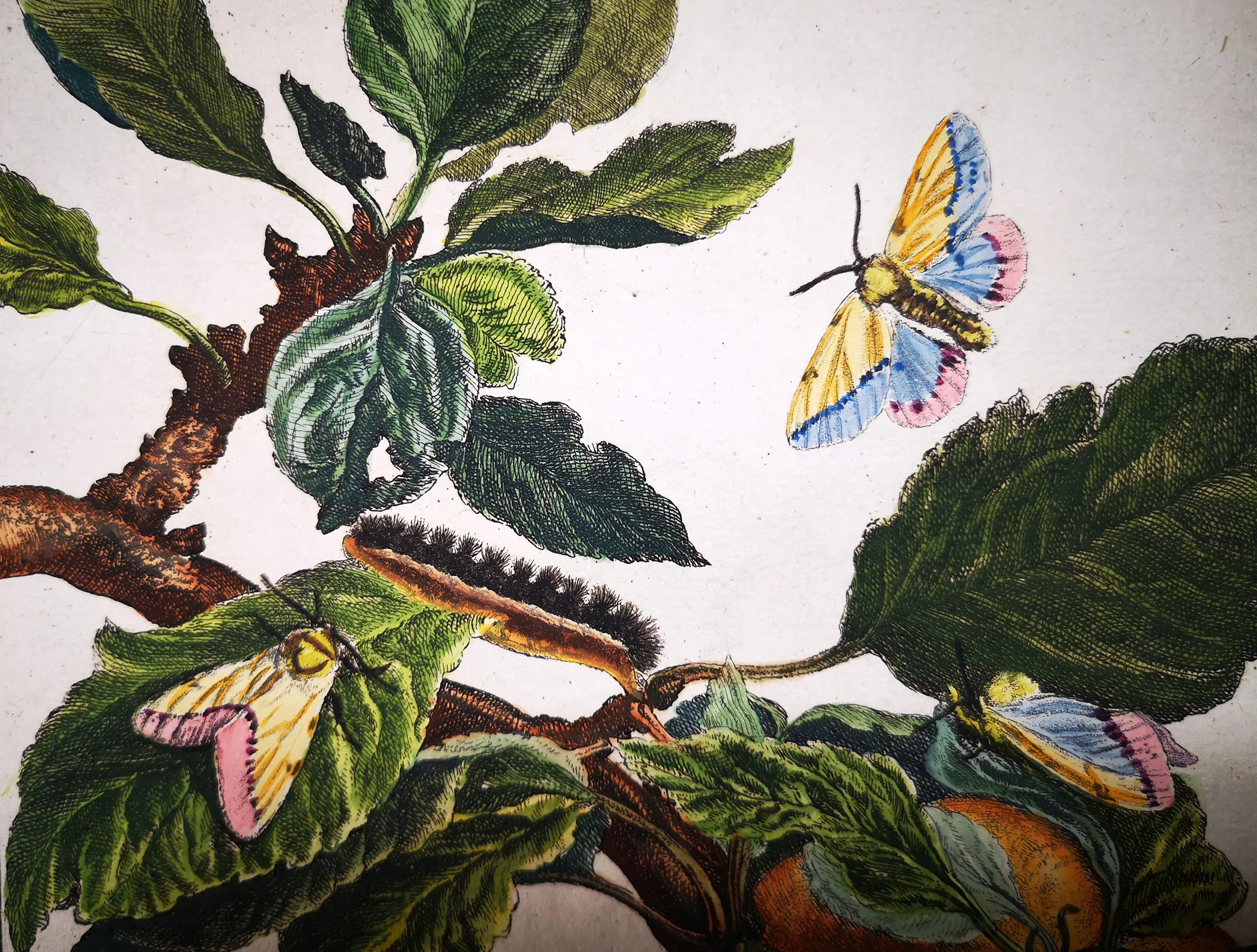
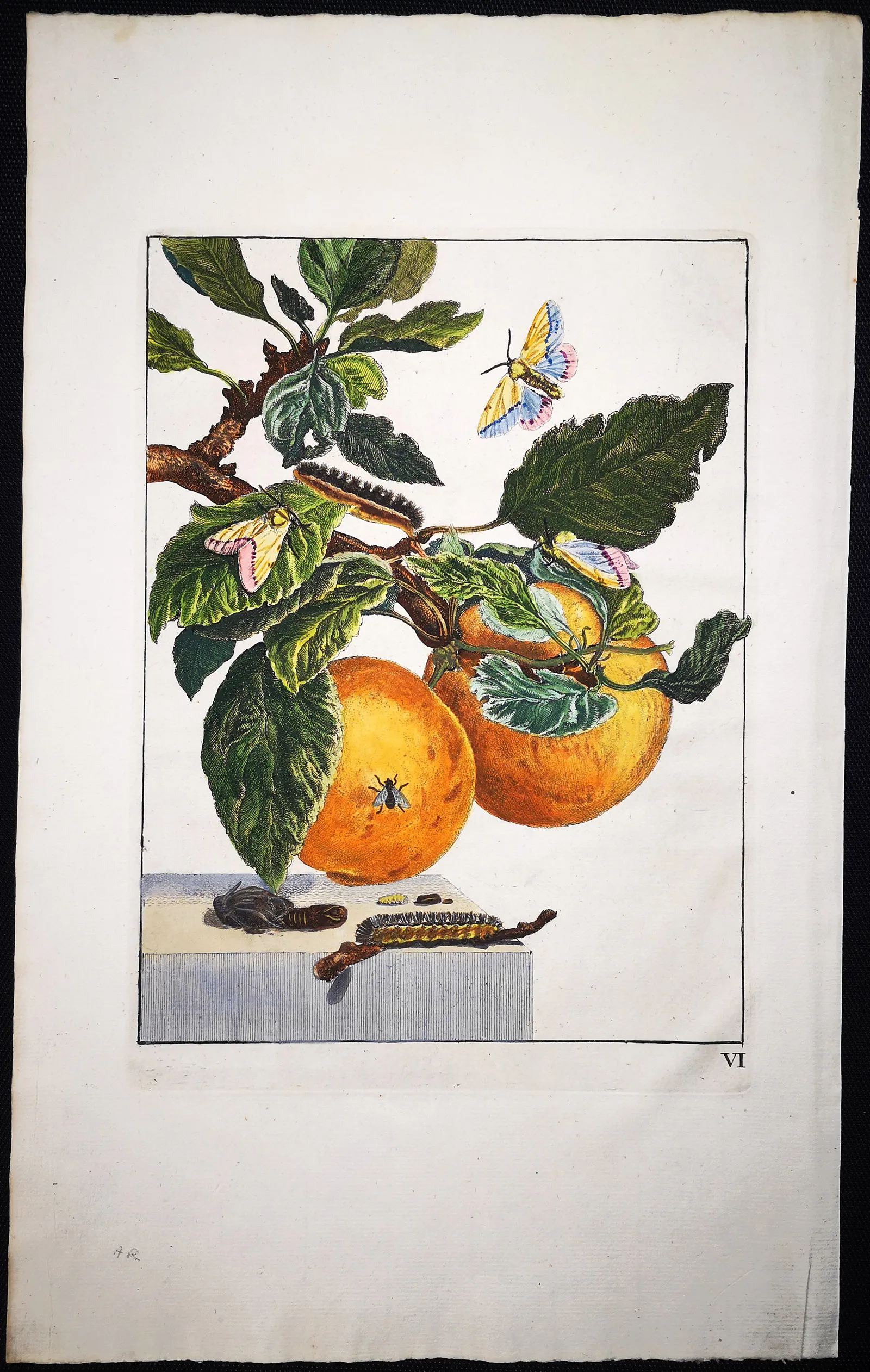
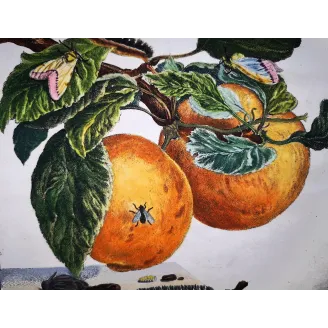
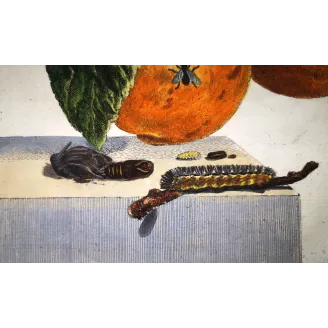
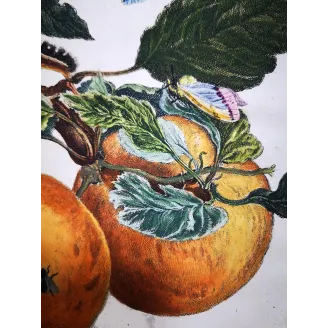
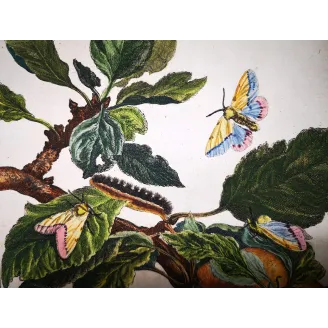
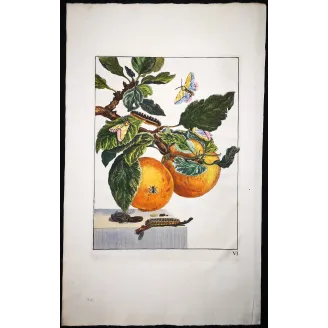
Antique entomological engraving by Jacob L’Admiral, featuring *Lymantria dispar *, and *Malus*.
 Delivery policy
Your print will be carefully prepared and shipped worldwide via trusted couriers (UPS or similar).
 Authentic antique prints
Original engravings from the 17th–19th century.
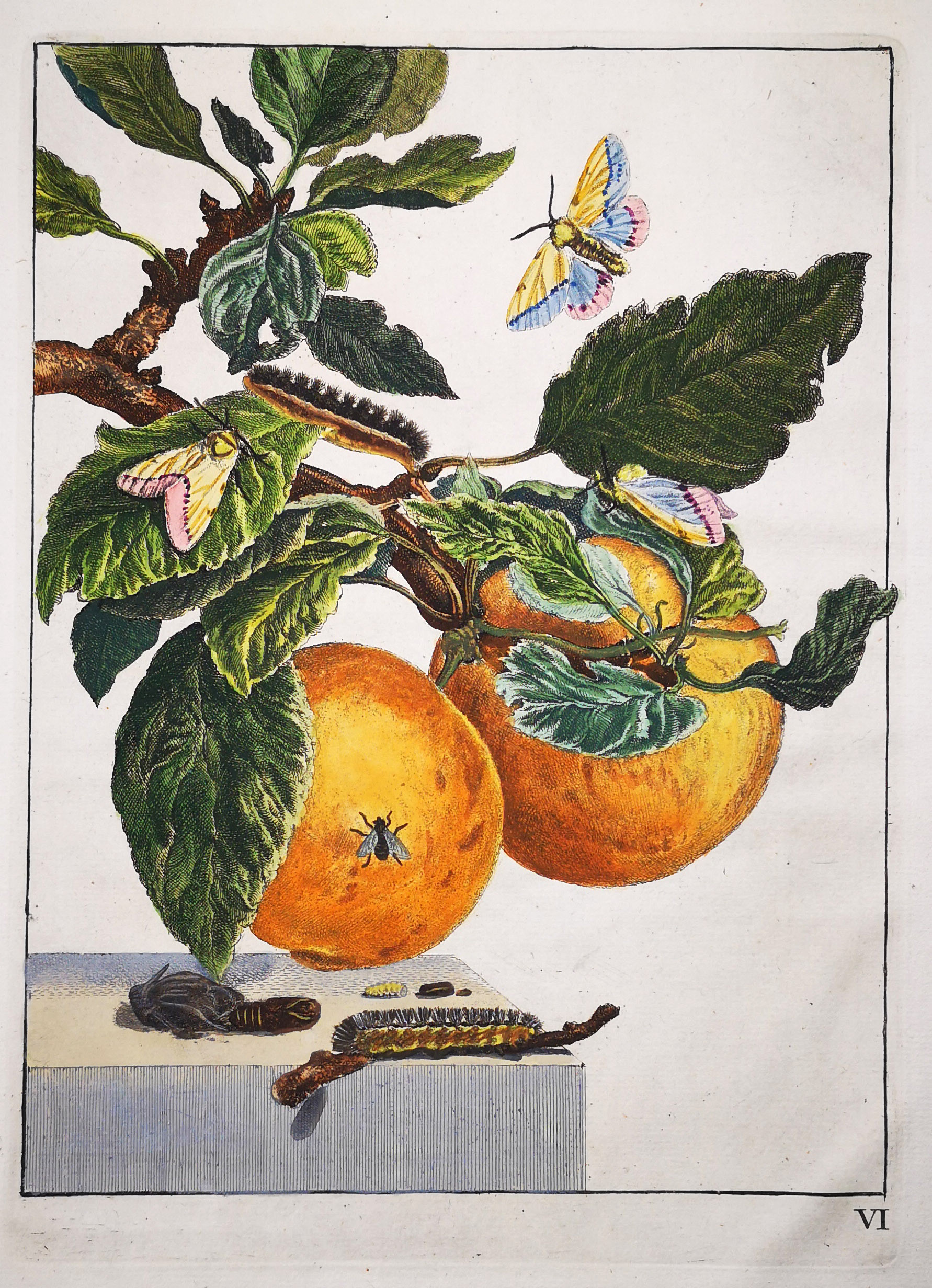
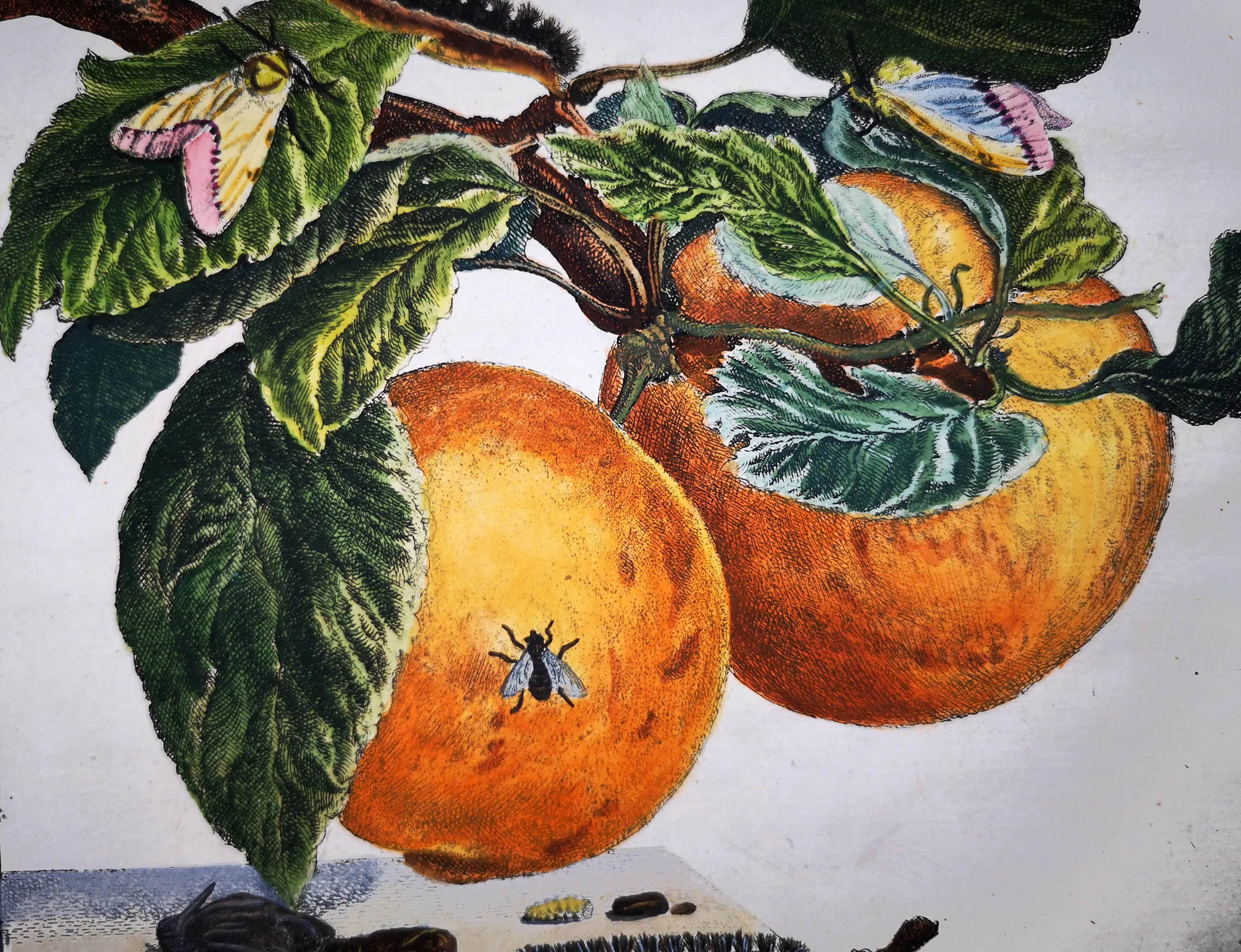
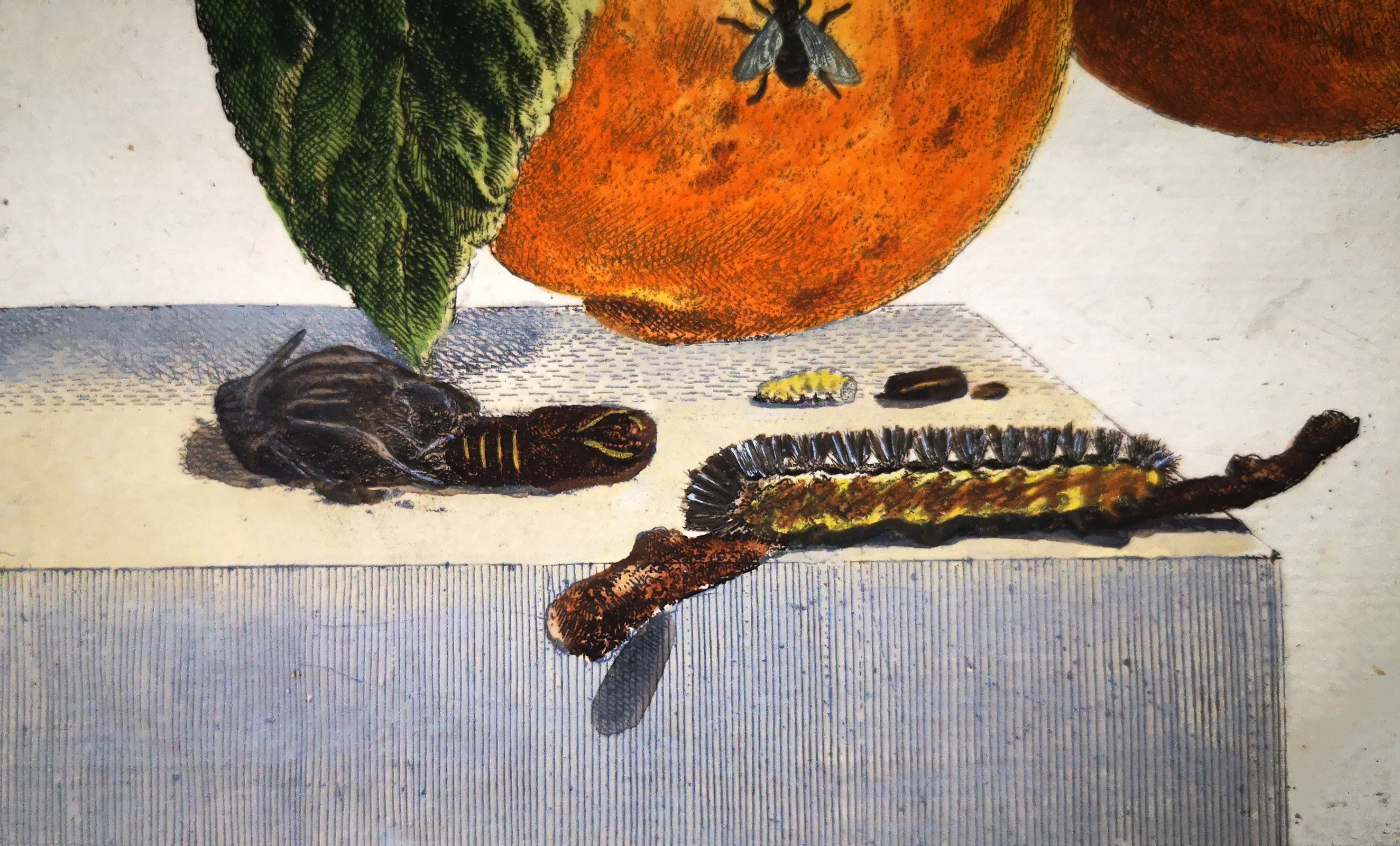
This original hand-colored copper engraving by Jacob L’Admiral, published in 1774, documents the life cycle of the Gypsy Moth (Lymantria dispar) in direct relation to its host plant, the apple tree (Malus). The composition integrates fruit, foliage, larval stages, chrysalis, and adult moth within a unified observational framework.
Rather than isolating the insect as specimen, L’Admiral situates transformation within agricultural reality. The apples provide chromatic weight and seasonal context, while the successive stages of the moth unfold along branch and pedestal.
The plate originates from Auwkeurige Waarneemingen Omtrent de Veranderingen Van Veele Insekten (1774), a landmark Dutch work that contributed to the empirical foundations of modern entomology.
— • —
The composition is horizontally dynamic. The weight of the apples anchors the scene, while the branch guides the eye toward the suspended adult moth. Below, larva and chrysalis stages are arranged with deliberate clarity, transforming the pedestal into a platform of evidence.
Color remains disciplined yet expressive: warm yellows and ochres define the fruit, deep greens articulate the foliage, and delicate tonal transitions render the moth’s wings. The image functions simultaneously as botanical study and entomological record.
During the eighteenth century, insect life cycles were increasingly studied in connection with agriculture. The Gypsy Moth, known for its impact on orchard trees, represented not only a biological curiosity but an economic concern.
L’Admiral’s work reflects the Enlightenment emphasis on direct observation and practical knowledge. By recording each stage of development within its natural host environment, he bridges cabinet curiosity and applied natural science.
Produced in the Dutch Republic in 1774, this engraving exemplifies the close relationship between scientific inquiry and artisanal mastery. Each plate required detailed drawing from life, transfer to copper, printing, and individual hand-coloring.
Works of this kind were preserved in scholarly libraries and natural history collections, where they served both as tools of study and as refined visual records of empirical research.
Printed on original eighteenth-century laid paper with visible chain lines and a clearly defined watermark featuring the paper mill’s emblem centrally positioned within the sheet. The impression is strong and crisp, and the hand-coloring remains vivid and well preserved.
The sheet is in exceptionally fine condition for a 1774 publication, with no significant structural weaknesses or restorations observed.
For a deeper exploration of Jacob L’Admiral’s contribution to eighteenth-century entomology and the scientific culture of the Dutch Enlightenment, we invite you to read our editorial study:
Jacob L’Admiral and the Metamorphosis of Insects – A Dutch Enlightenment Marvel (1774)
Specific References
Original 1774 engraving by Jacob L'Admiral: Early Moth Stage among Willow Leaves.
Original 1774 engraving by Jacob L'Admiral: Red Butterflies on Flowering Stem.
Original 1774 engraving by Jacob LâAdmiral: Pepperes Moth on Birch.
Original 1774 engraving by Jacob L'Admiral: Large Tortoiseshell on Sweet Cherry.
Original 1774 engraving by Jacob LâAdmiral: Swallowtail Butterfly on Thistle.
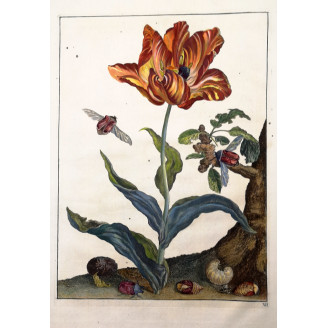
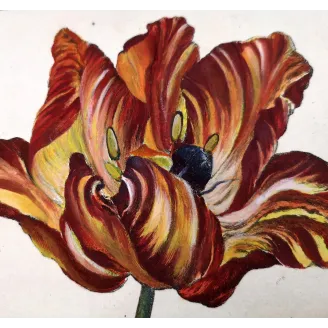
Original 1774 engraving by Jacob L'Admiral: Rose Chafer beetle with Pupae Stages and Tulip.
Original 1774 engraving by Jacob L'Admiral: Ornate Butterfly and Metamorphosis Detail.
Original 1774 engraving by Jacob L'Admiral: Larvae and Beetles with Ferns.
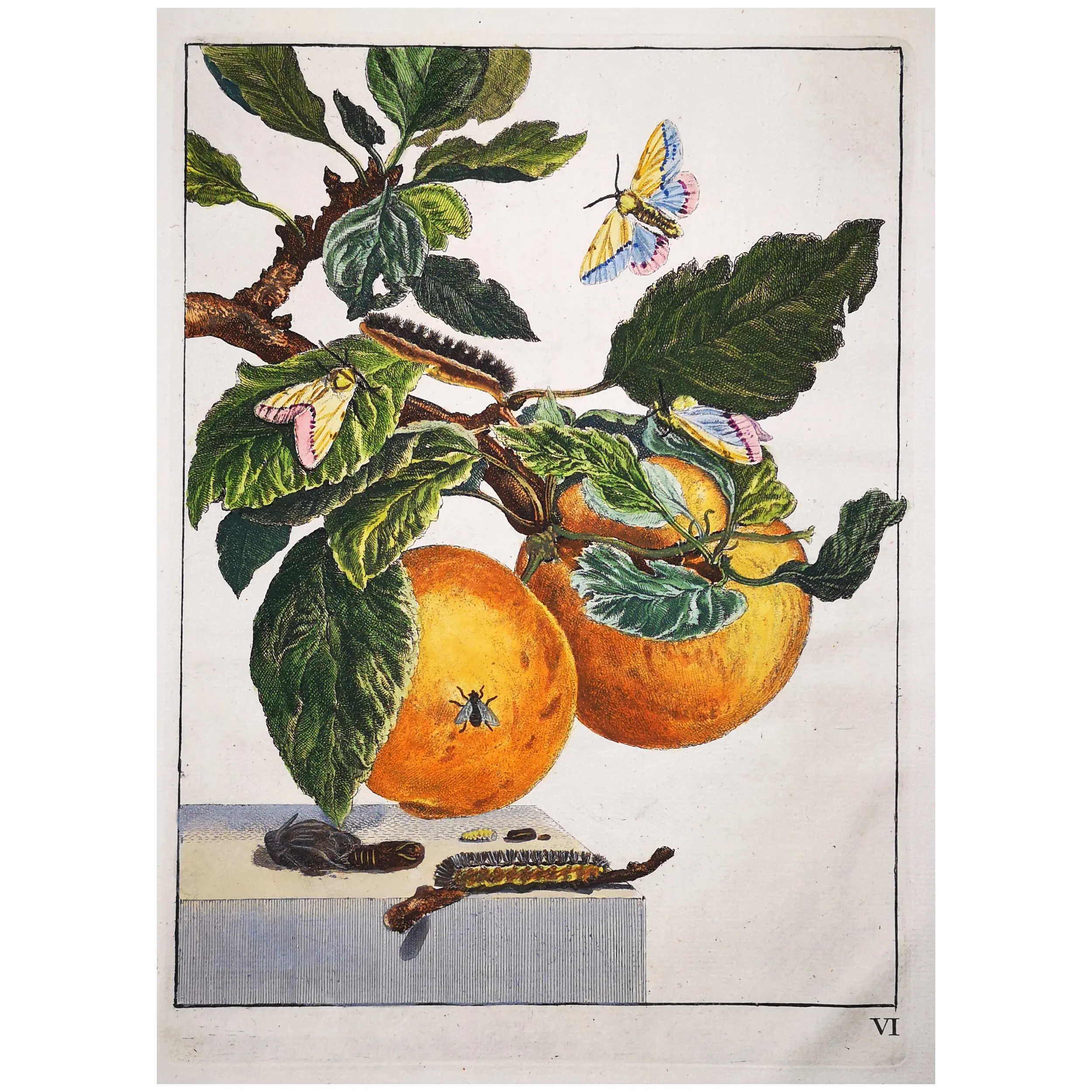
Antique entomological engraving by Jacob L’Admiral, featuring *Lymantria dispar *, and *Malus*.