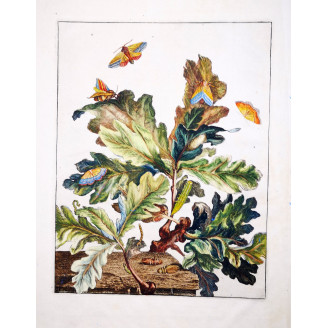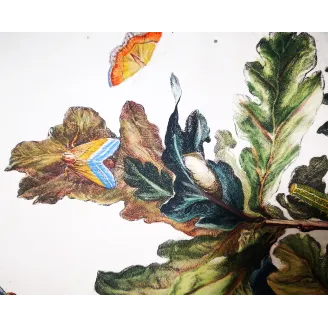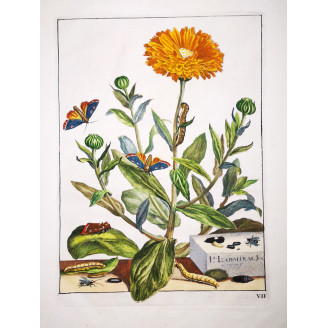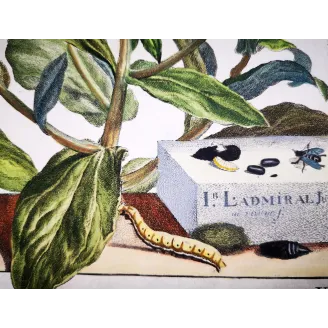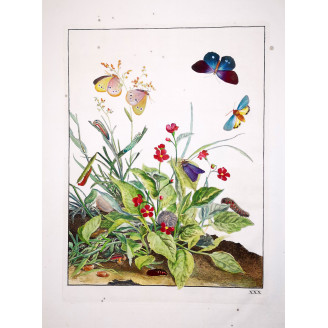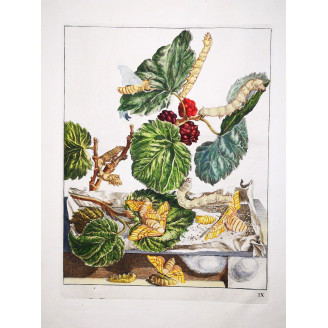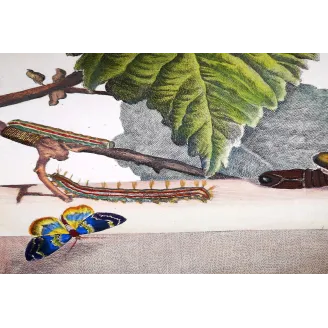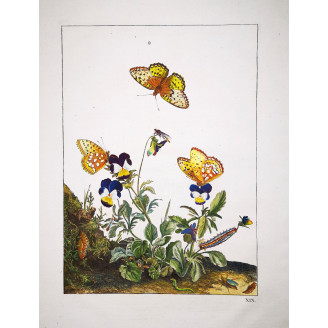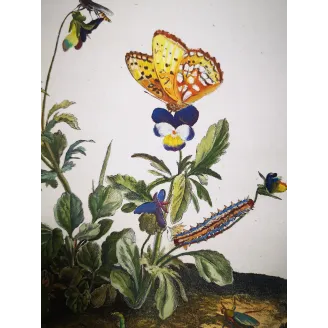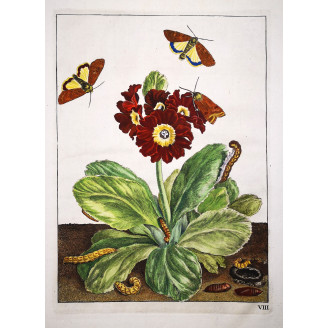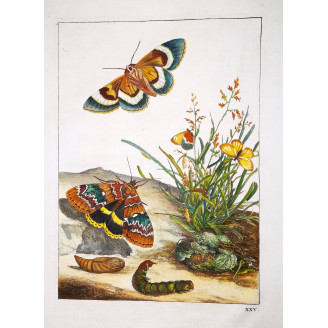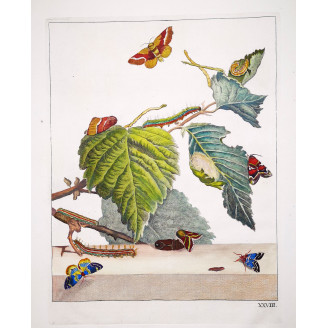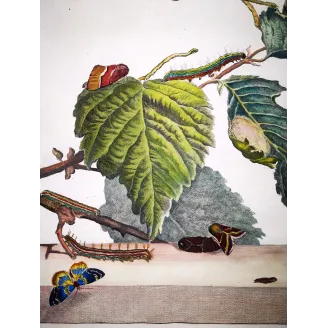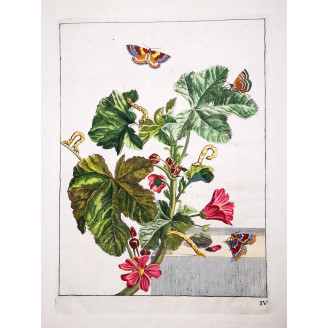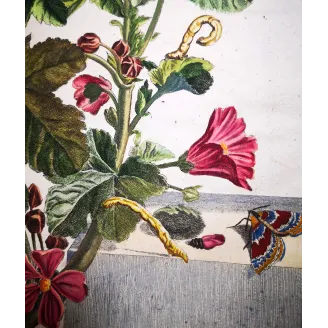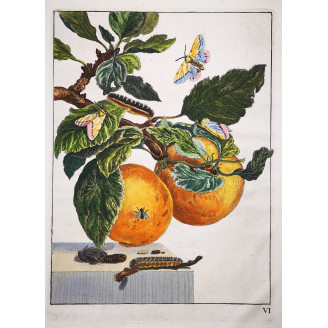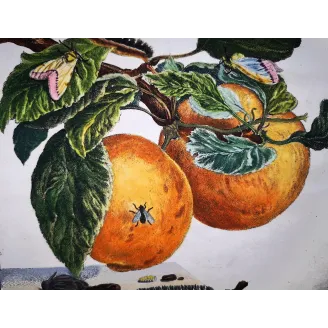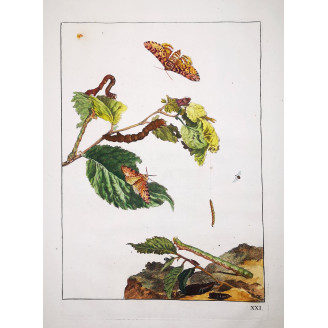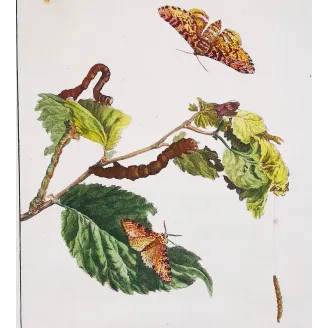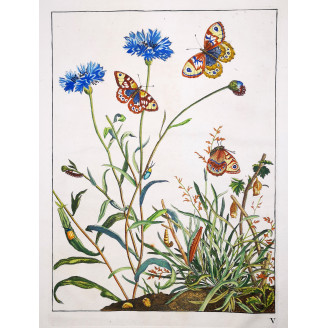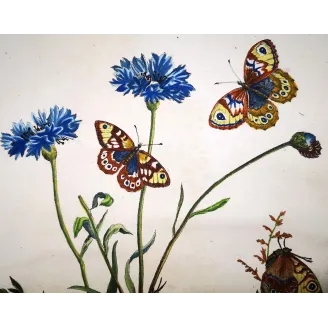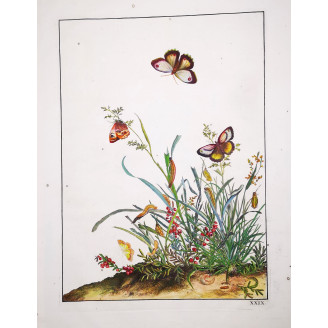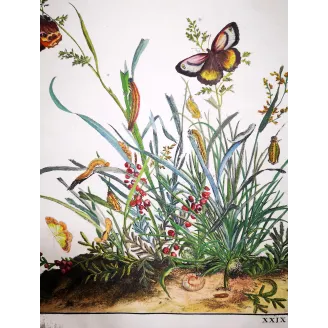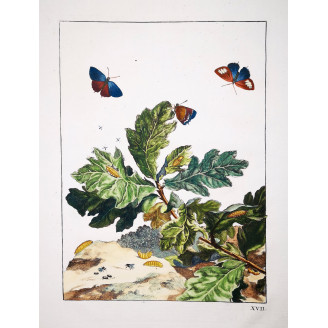
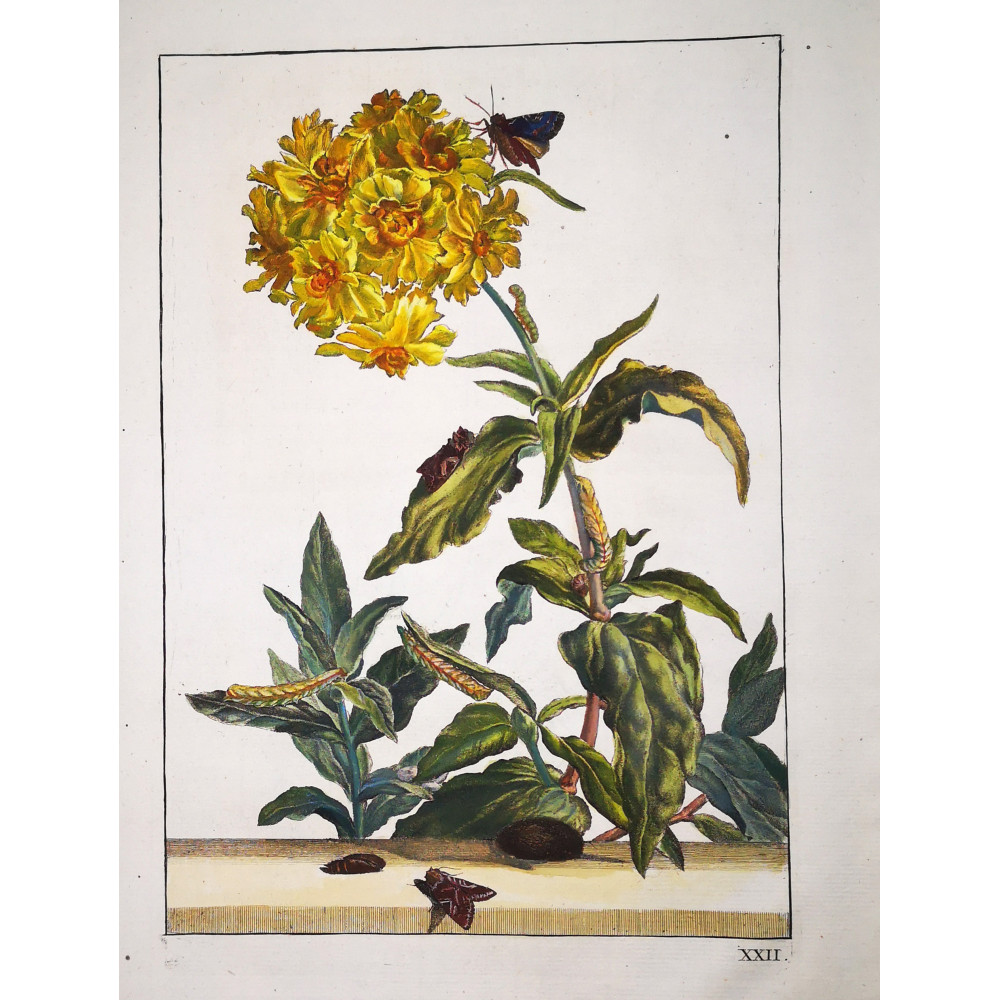
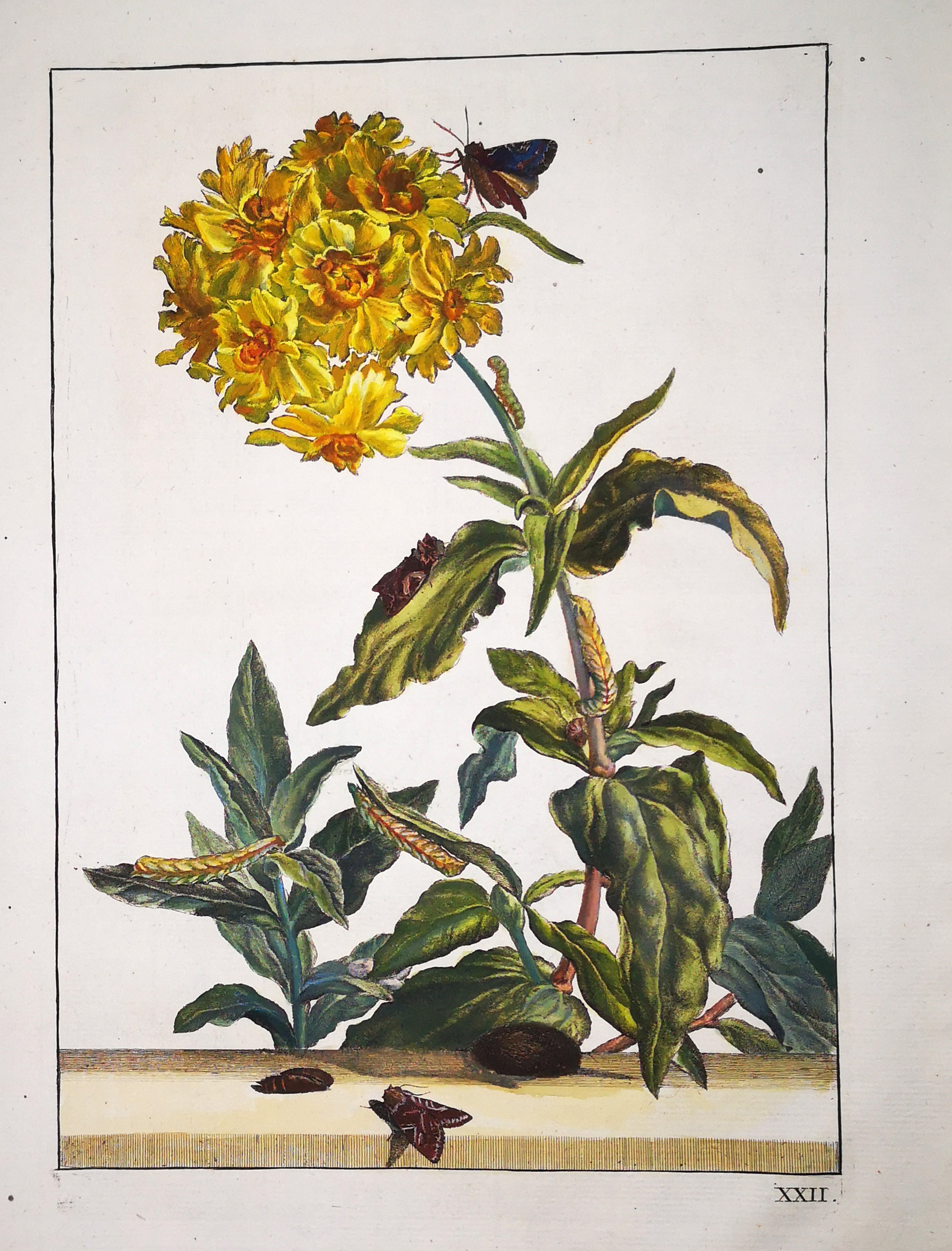
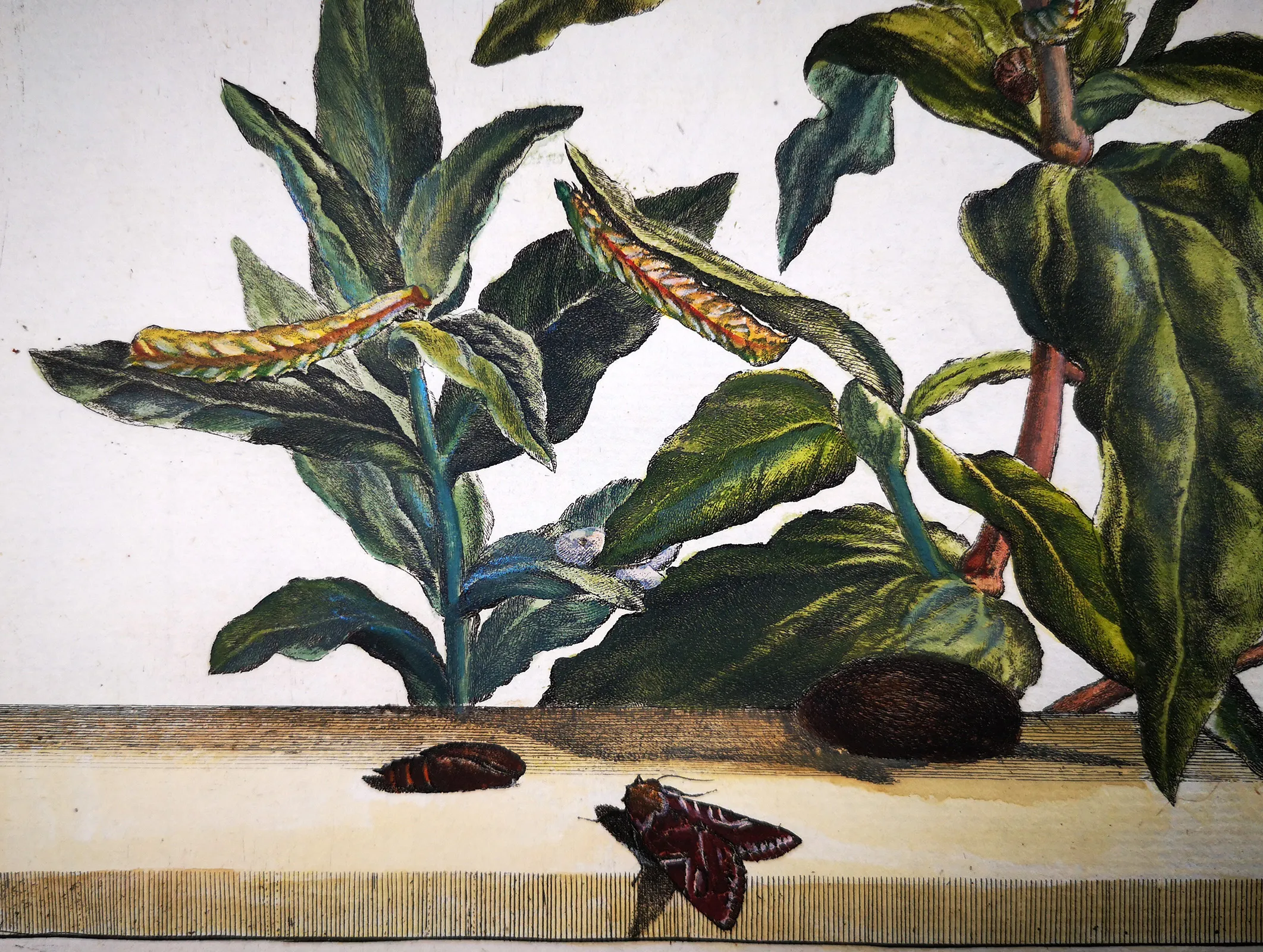
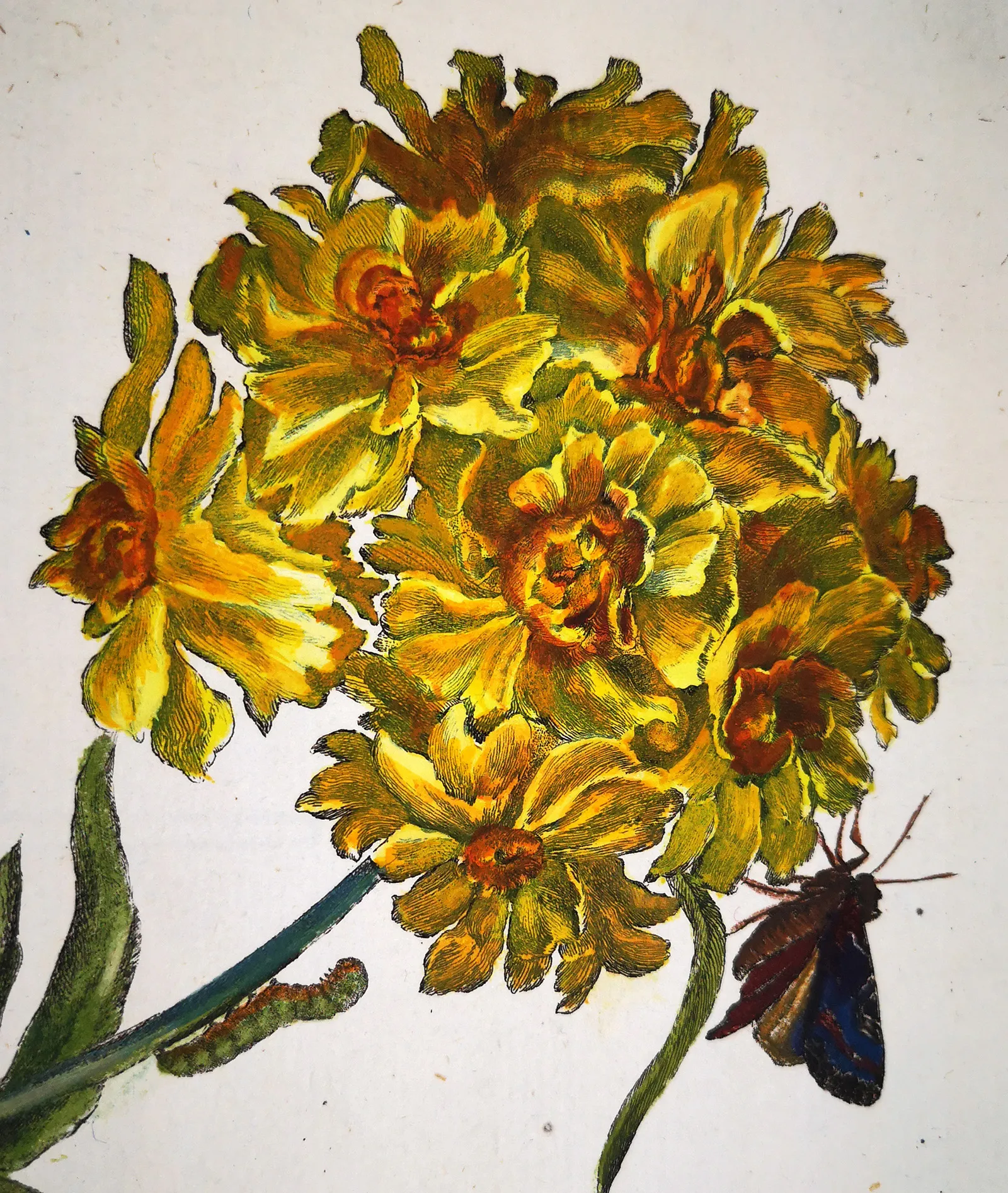
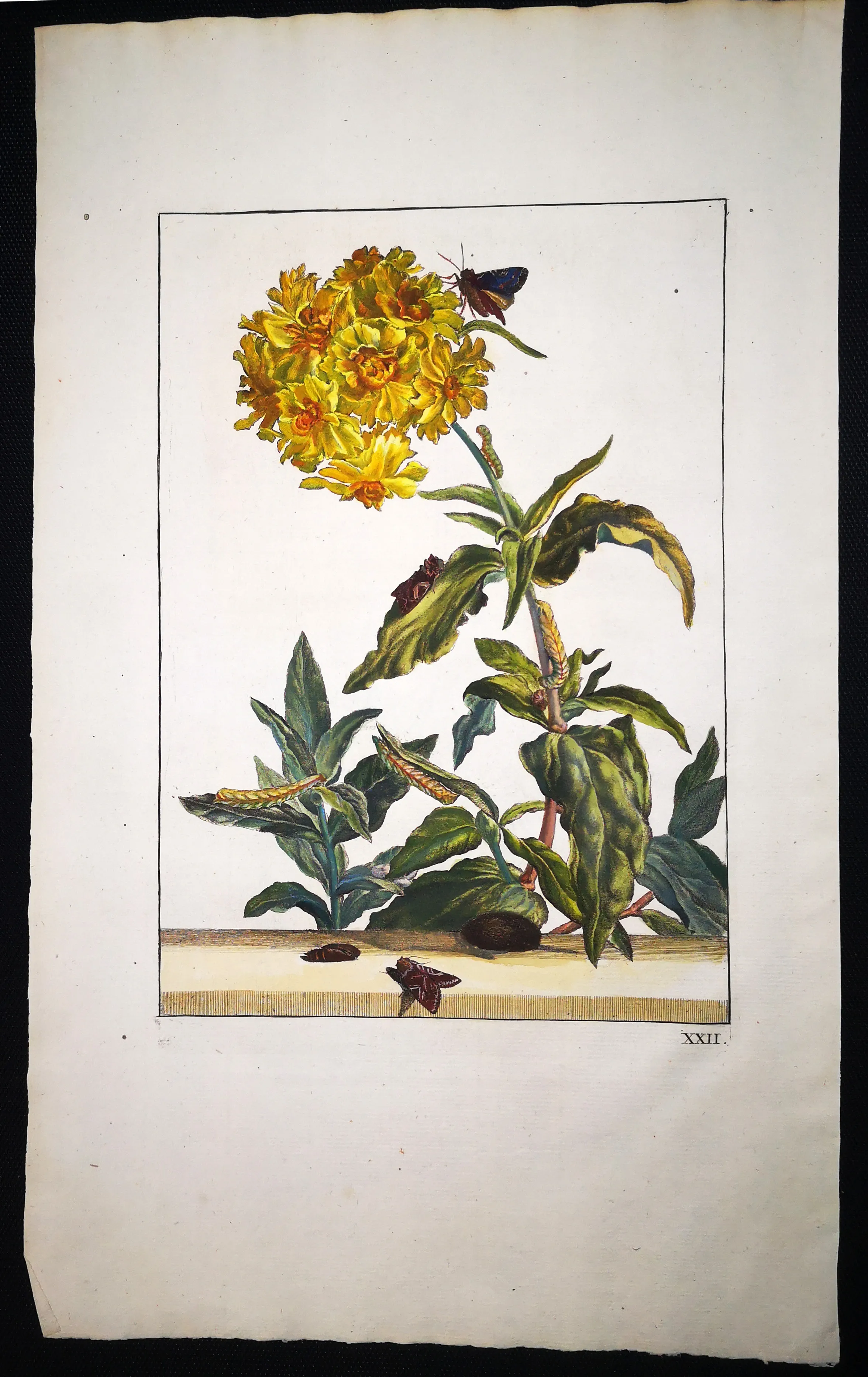
Original 1774 engraving by Jacob L'Admiral: Red Butterflies on Flowering Stem.
 Delivery policy
Your print will be carefully prepared and shipped worldwide via trusted couriers (UPS or similar).
 Authentic antique prints
Original engravings from the 17th–19th century.
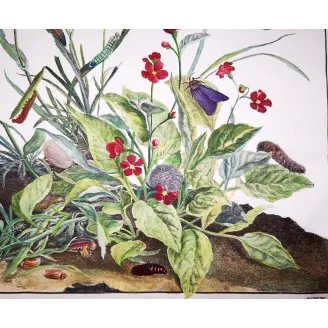
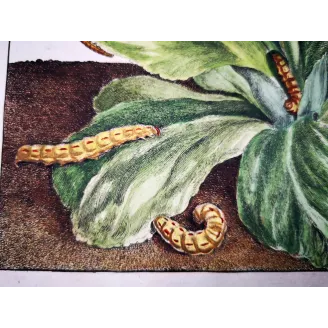
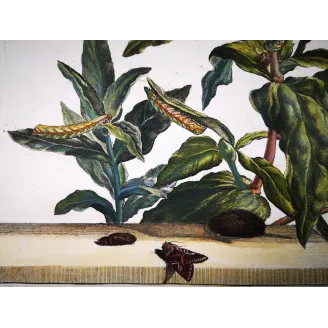
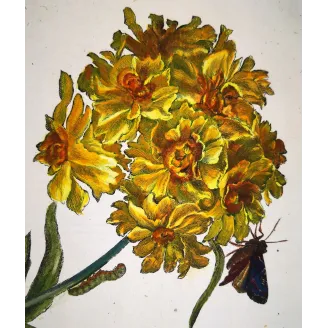
This original 1774 hand-colored engraving by Jacob L’Admiral presents the Oenistis Moth (Sasunaga oenistis) in its successive stages of development upon the Maltese Cross (Lychnis chalcedonica). Larvae traverse the leaves, chrysalides rest upon the base, and the winged adult emerges above the flowering stem — all contained within a disciplined observational field.
The brilliant yellow inflorescence forms the compositional apex, rising from structured foliage rendered in layered greens. Around this vertical axis, insect life is distributed with deliberate clarity, each stage positioned not for ornament but for study.
L’Admiral’s work reflects the empirical ethos of late eighteenth-century Dutch natural history. Transformation is presented as measurable process — sequential, observable, and integrated within its botanical environment.
— • —
The plate is organized along a pronounced vertical structure: the flowering stem ascends in measured proportion, while the leaves extend laterally to create visual stability. The saturated yellow blossoms provide chromatic intensity without excess, balanced by cooler tonal passages in the surrounding foliage.
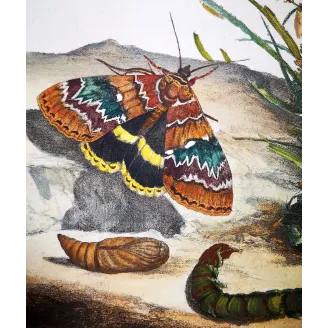
The moth, rendered with subtle contrasts of deep brown and muted blue, introduces motion into the otherwise composed botanical arrangement. The engraved line remains crisp and controlled, allowing the hand-coloring to articulate texture, depth, and surface variation with remarkable precision.
Eighteenth-century entomological study increasingly emphasized the systematic documentation of metamorphosis. By presenting larval, pupal, and adult stages in direct relation to Lychnis chalcedonica, L’Admiral situates insect life within its host plant rather than isolating it as an abstract specimen.
This integrated representation reflects the methodological rigor of Enlightenment natural inquiry: observation, classification, and ecological association. The plate embodies a scientific framework in which transformation is not allegorical, but biological — grounded in direct study of living systems.
This engraving forms part of Jacob L’Admiral’s landmark 1774 publication devoted to the metamorphosis of insects — a significant contribution to Dutch Enlightenment science. Printed on original laid paper and meticulously hand-colored, each sheet represents the convergence of empirical observation and refined copperplate craftsmanship.
To explore the historical and intellectual background of L’Admiral’s work, see our editorial feature Jacob L’Admiral and the Metamorphosis of Insects.
Printed on original eighteenth-century laid paper with visible chain lines and a clearly defined period watermark bearing the paper mill device. The sheet retains fresh and clean margins, and the impression remains crisp and well-defined. The hand-coloring is vivid and stable. Exceptionally well preserved for a publication dated 1774.
Specific References
Original 1774 engraving by Jacob LâAdmiral: Lesser Marbled Fritillary on wild Pansy.
Original 1774 engraving by Jacob L'Admiral: Early Moth Stage among Willow Leaves.
Original 1774 engraving by Jacob L'Admiral: Red Twin-spot Carpet on Mallow.
Antique entomological engraving by Jacob L’Admiral, featuring *Lymantria dispar *, and *Malus*.
Original 1774 engraving by Jacob LâAdmiral: Pepperes Moth on Birch.
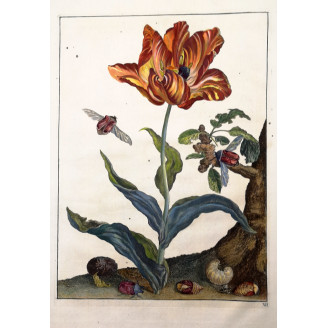
Original 1774 engraving by Jacob L'Admiral: Rose Chafer beetle with Pupae Stages and Tulip.
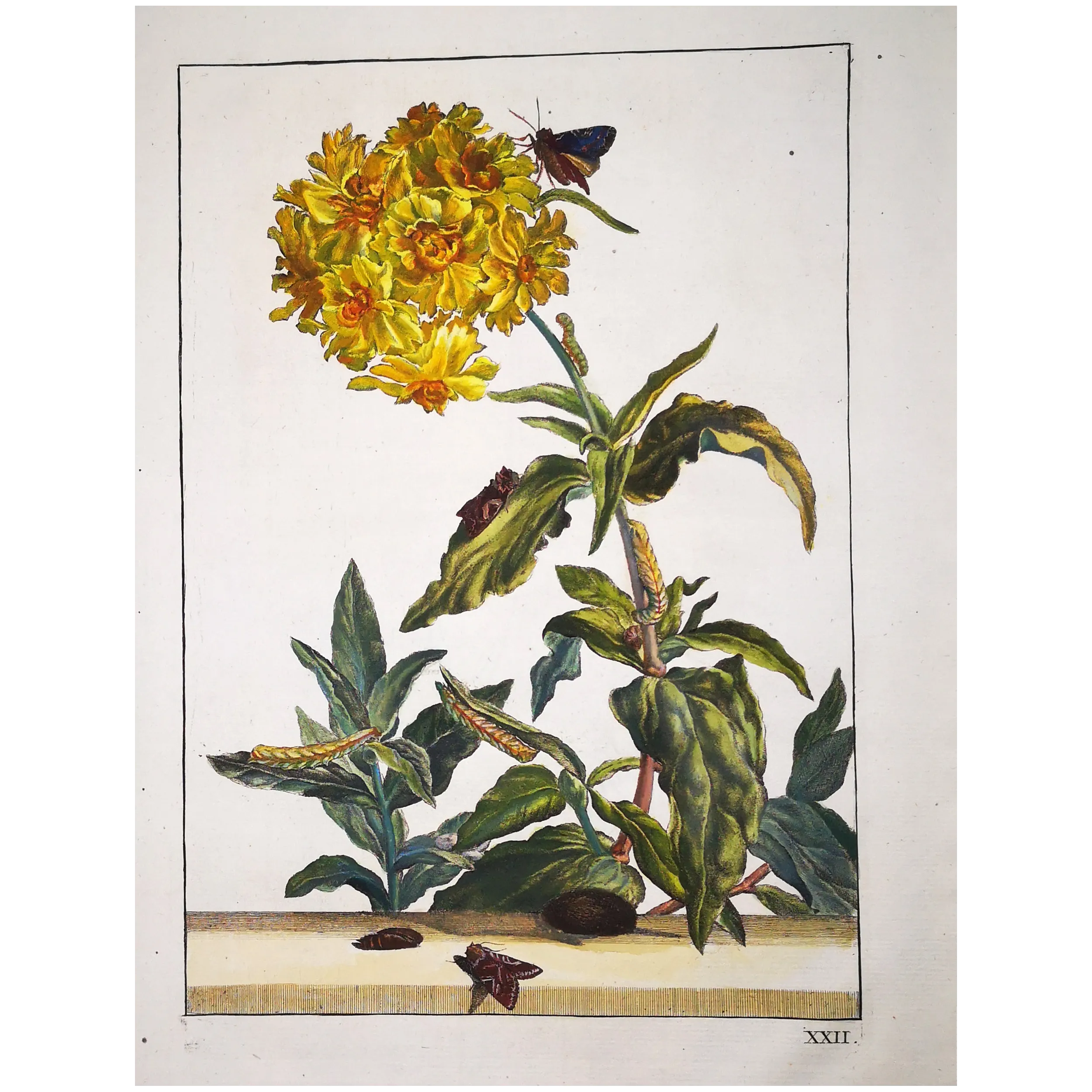
Original 1774 engraving by Jacob L'Admiral: Red Butterflies on Flowering Stem.