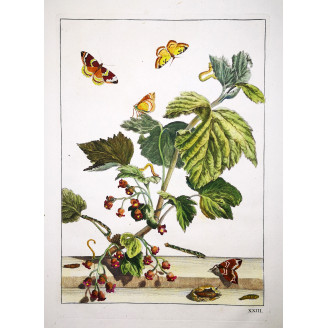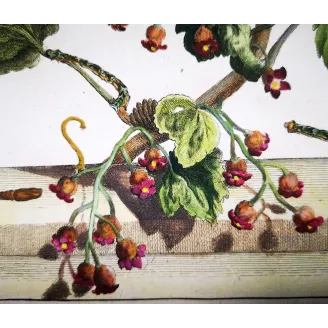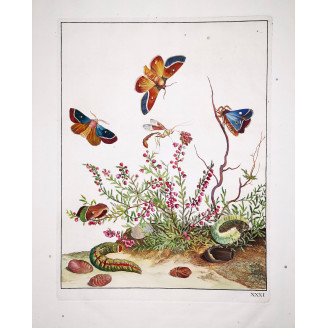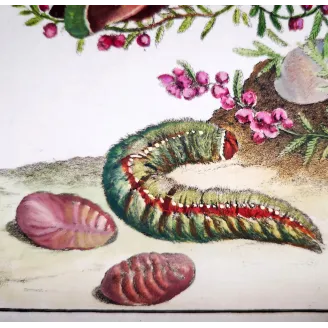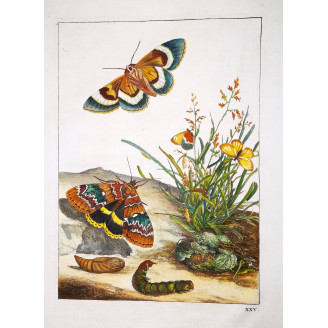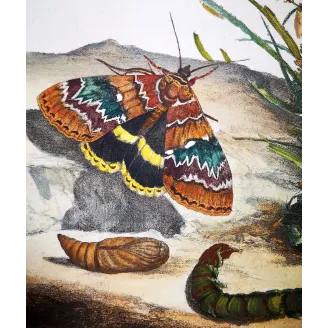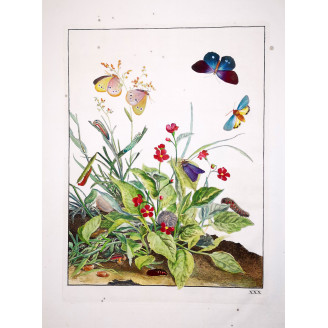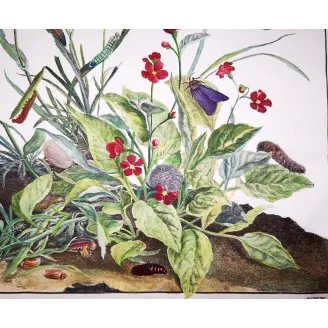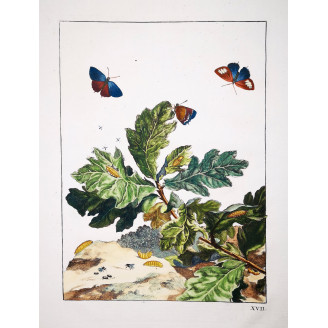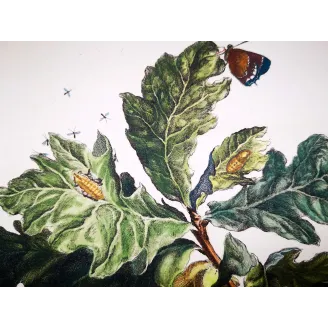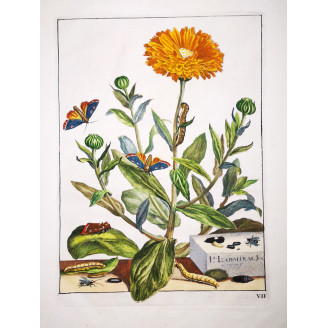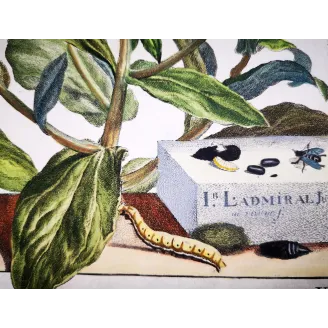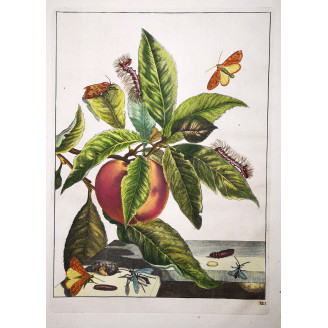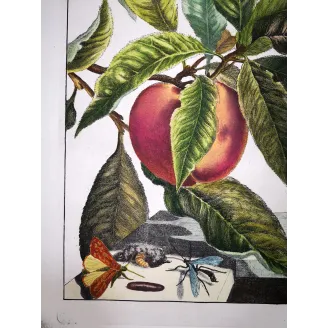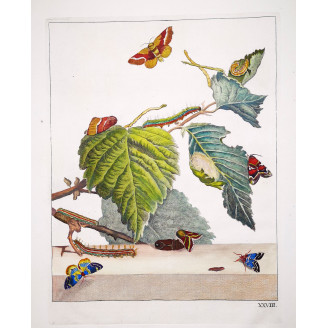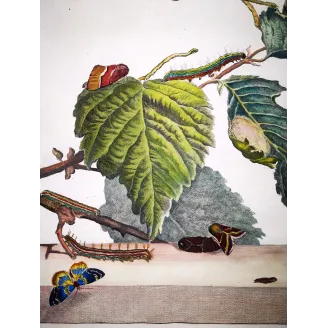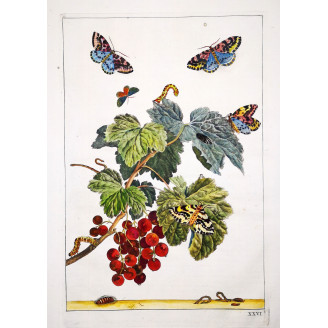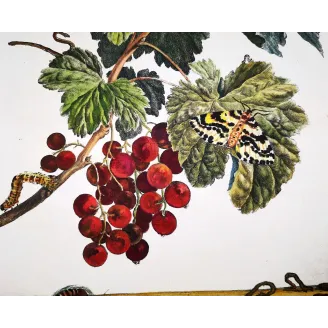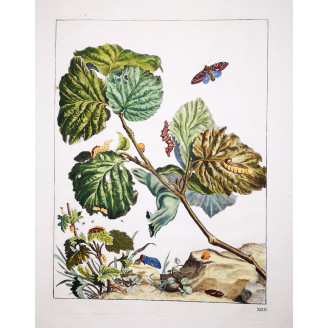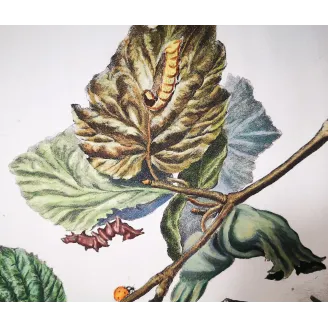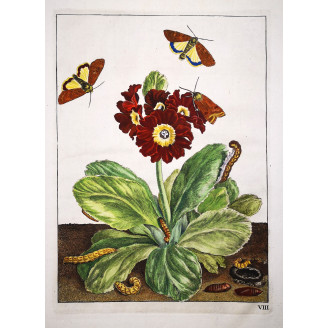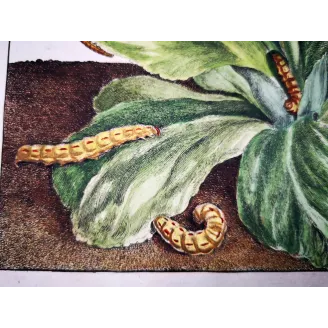
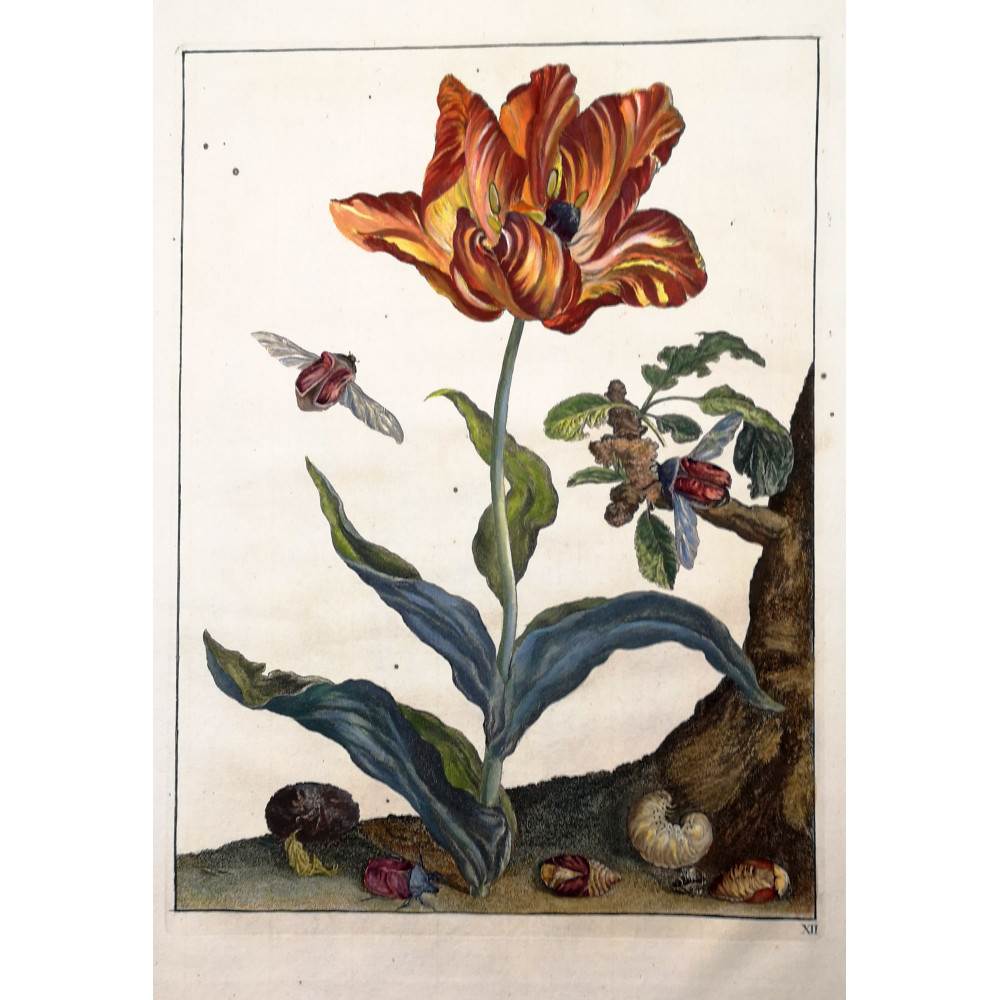
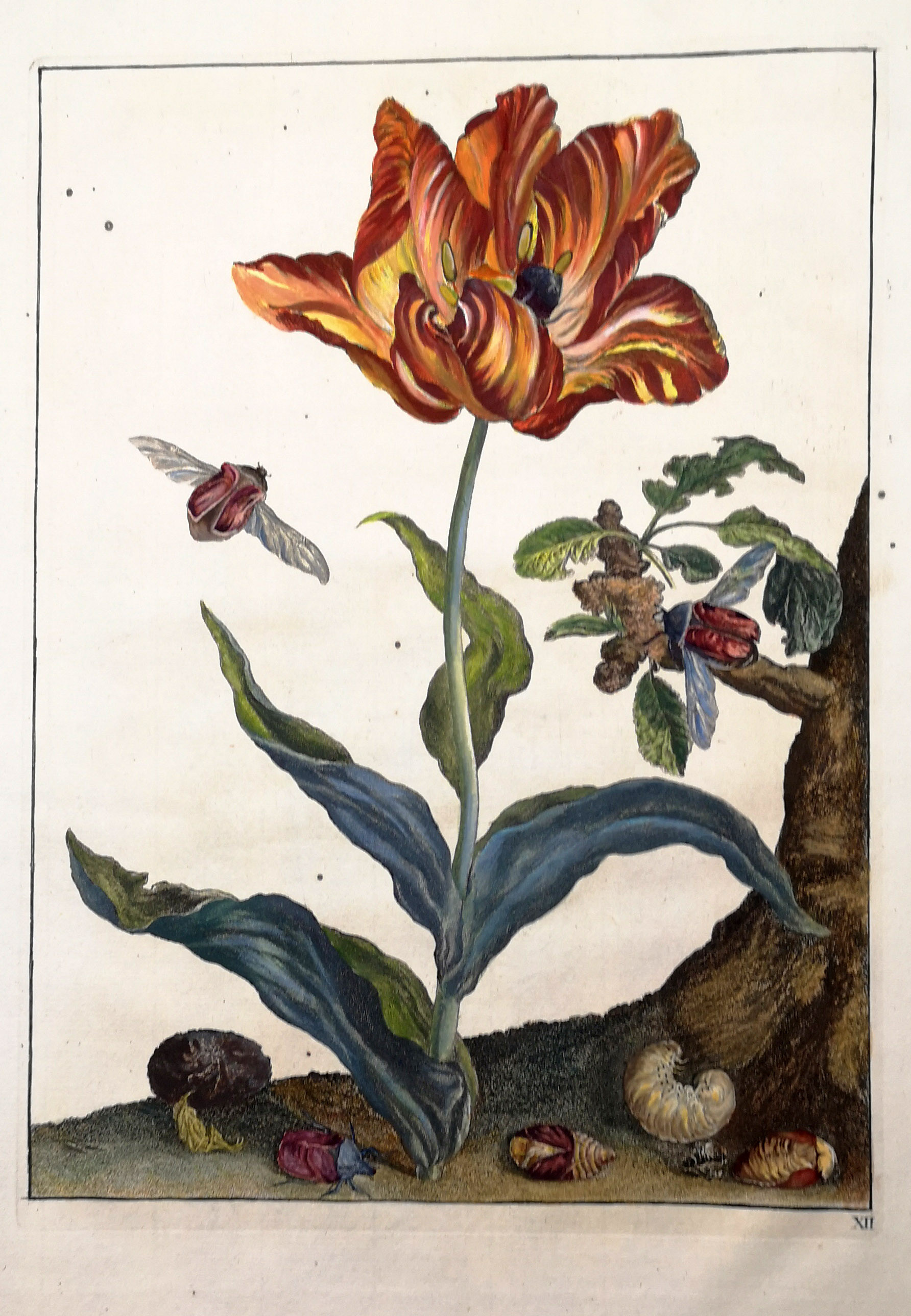
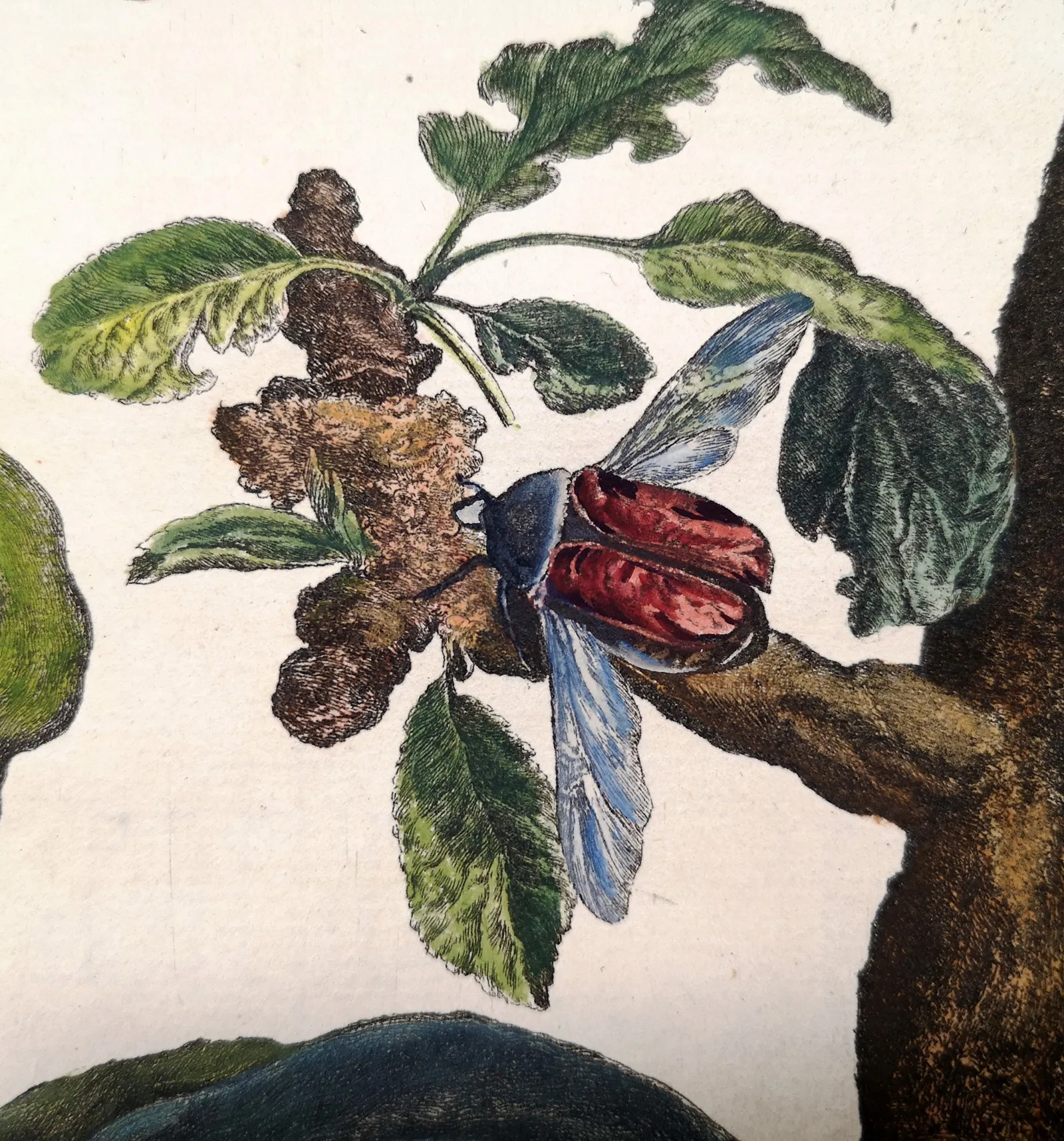
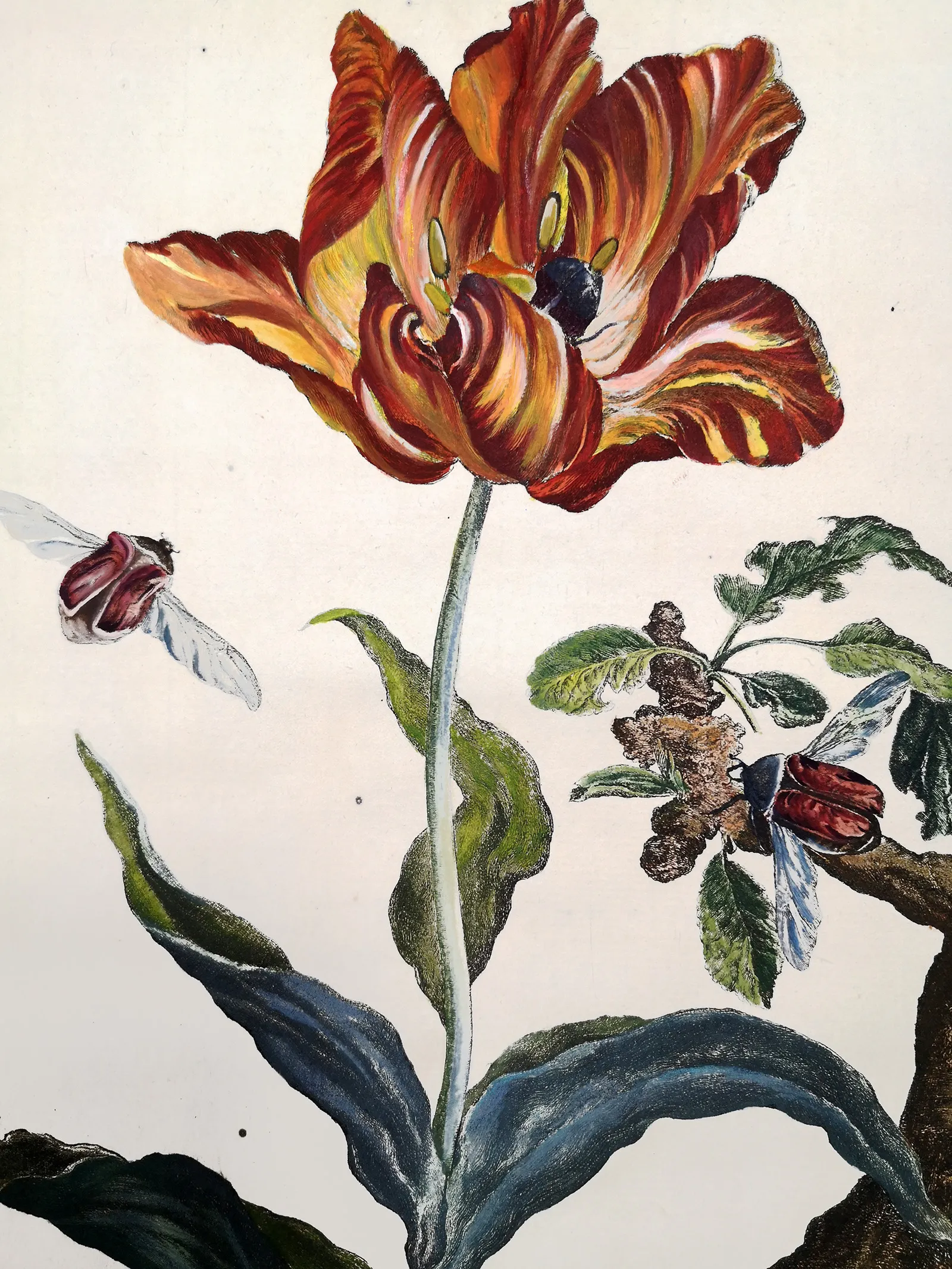
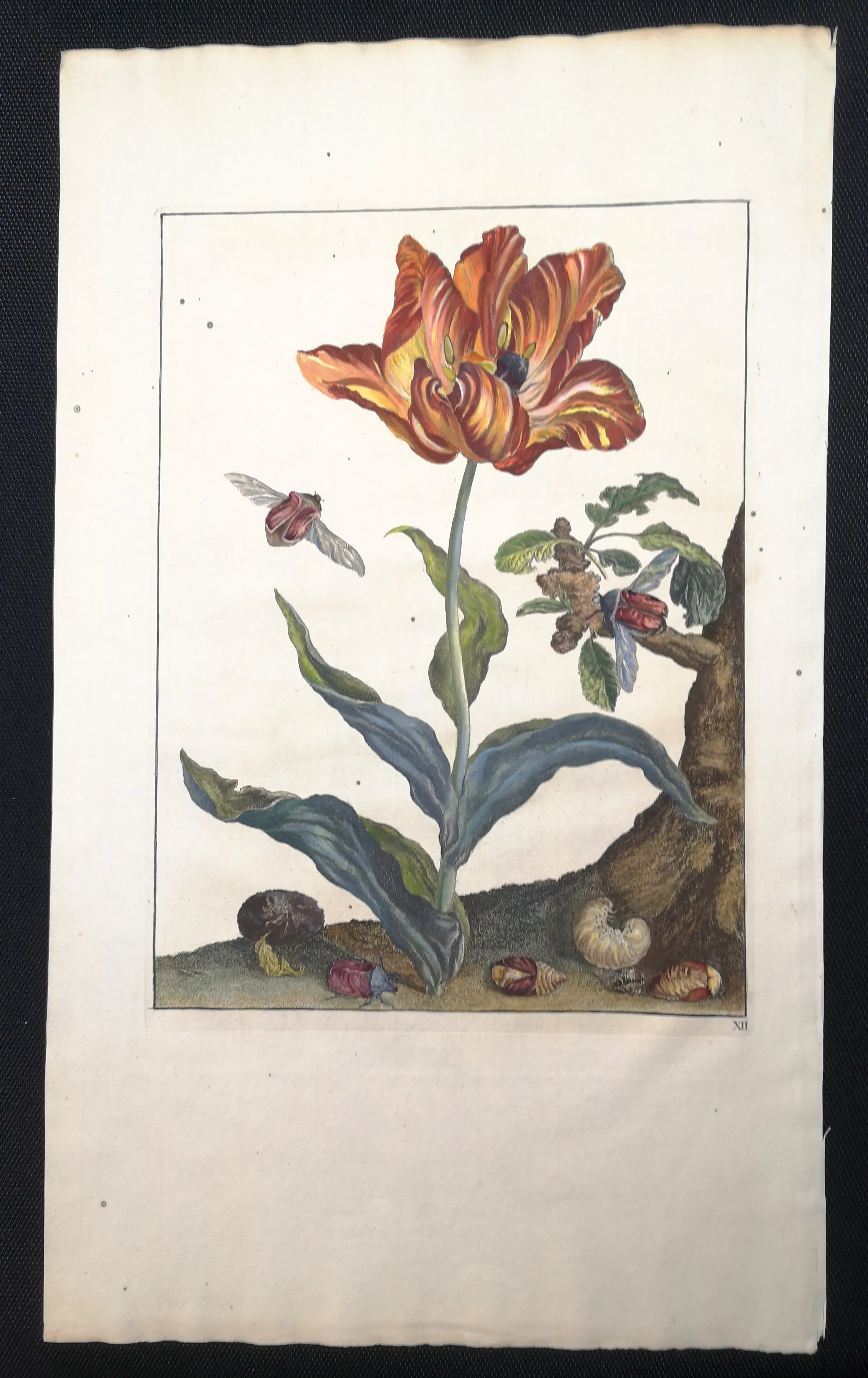
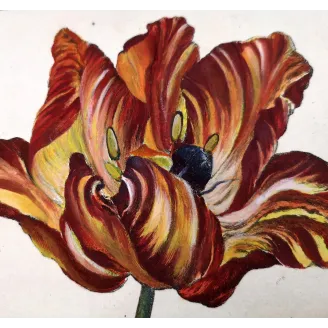
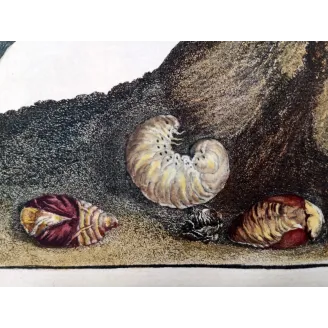
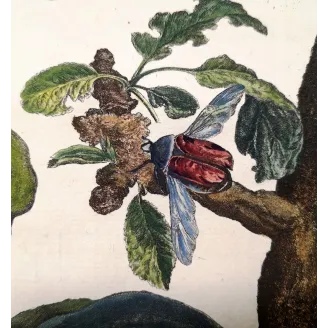
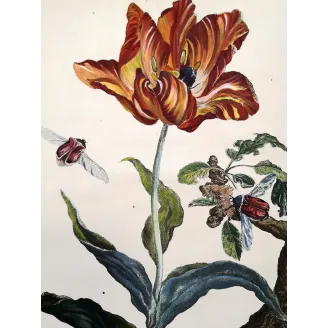
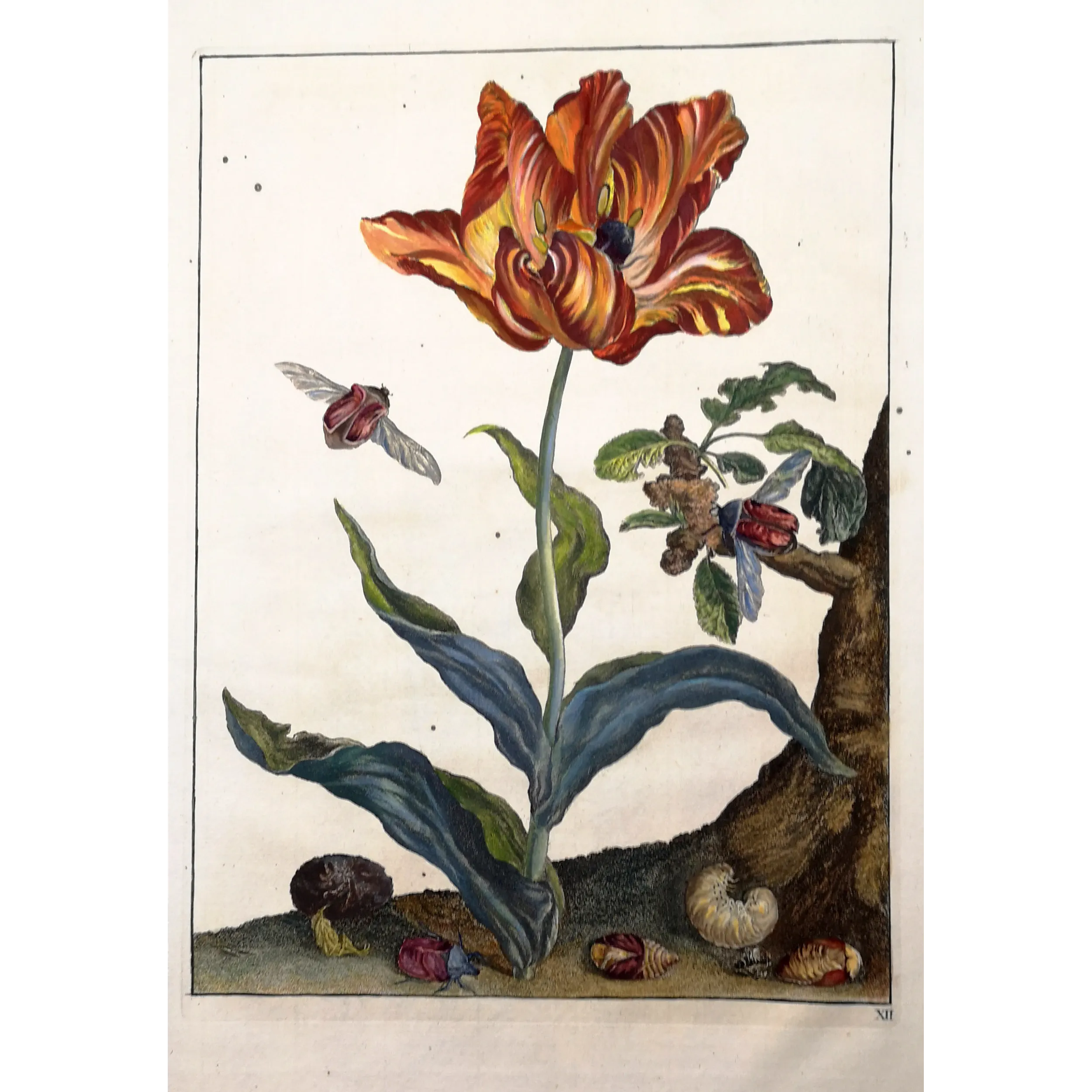
Original 1774 engraving by Jacob L'Admiral: Rose Chafer beetle with Pupae Stages and Tulip.
 Delivery policy
Your print will be carefully prepared and shipped worldwide via trusted couriers (UPS or similar).
 Authentic antique prints
Original engravings from the 17th–19th century.
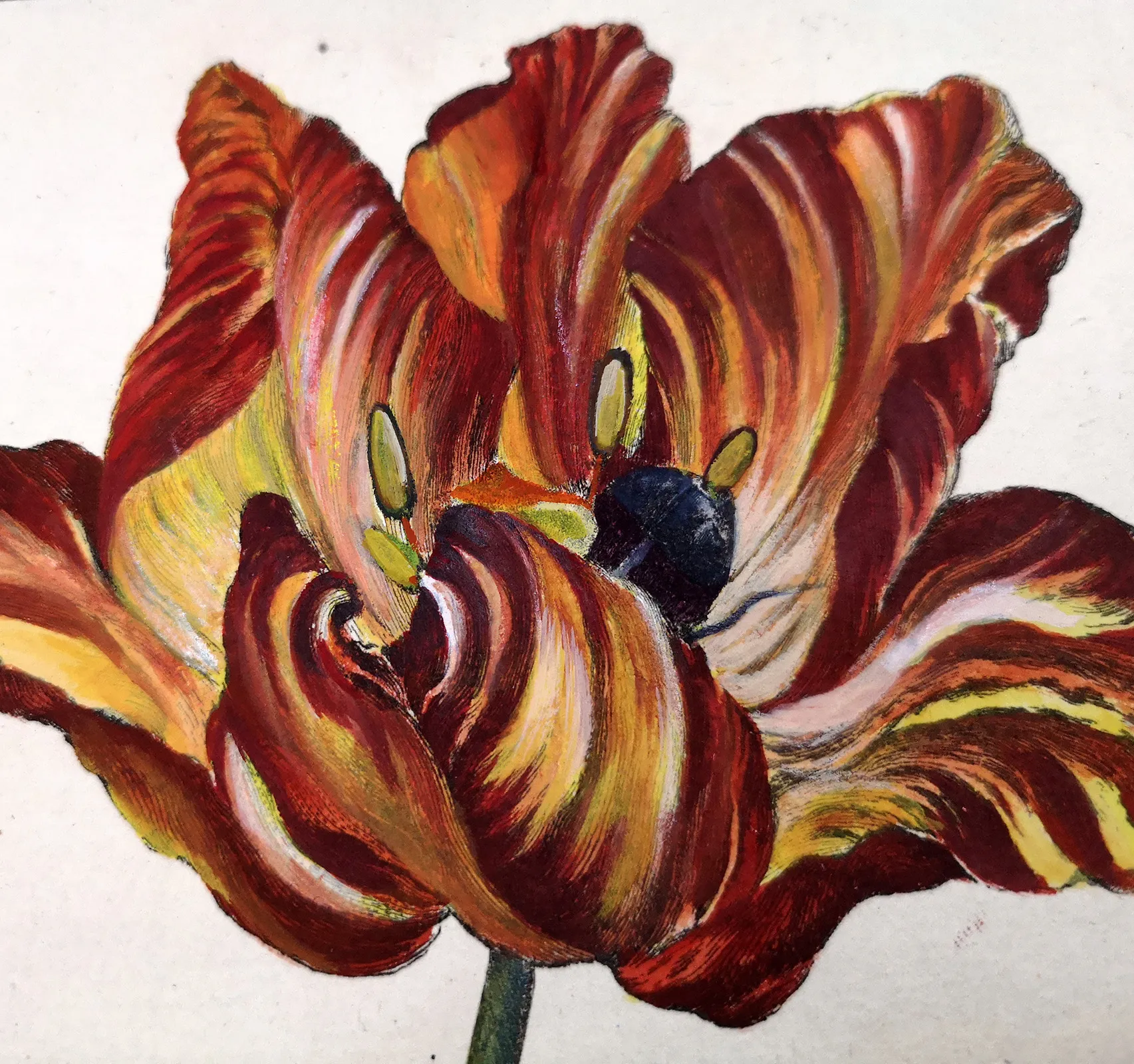
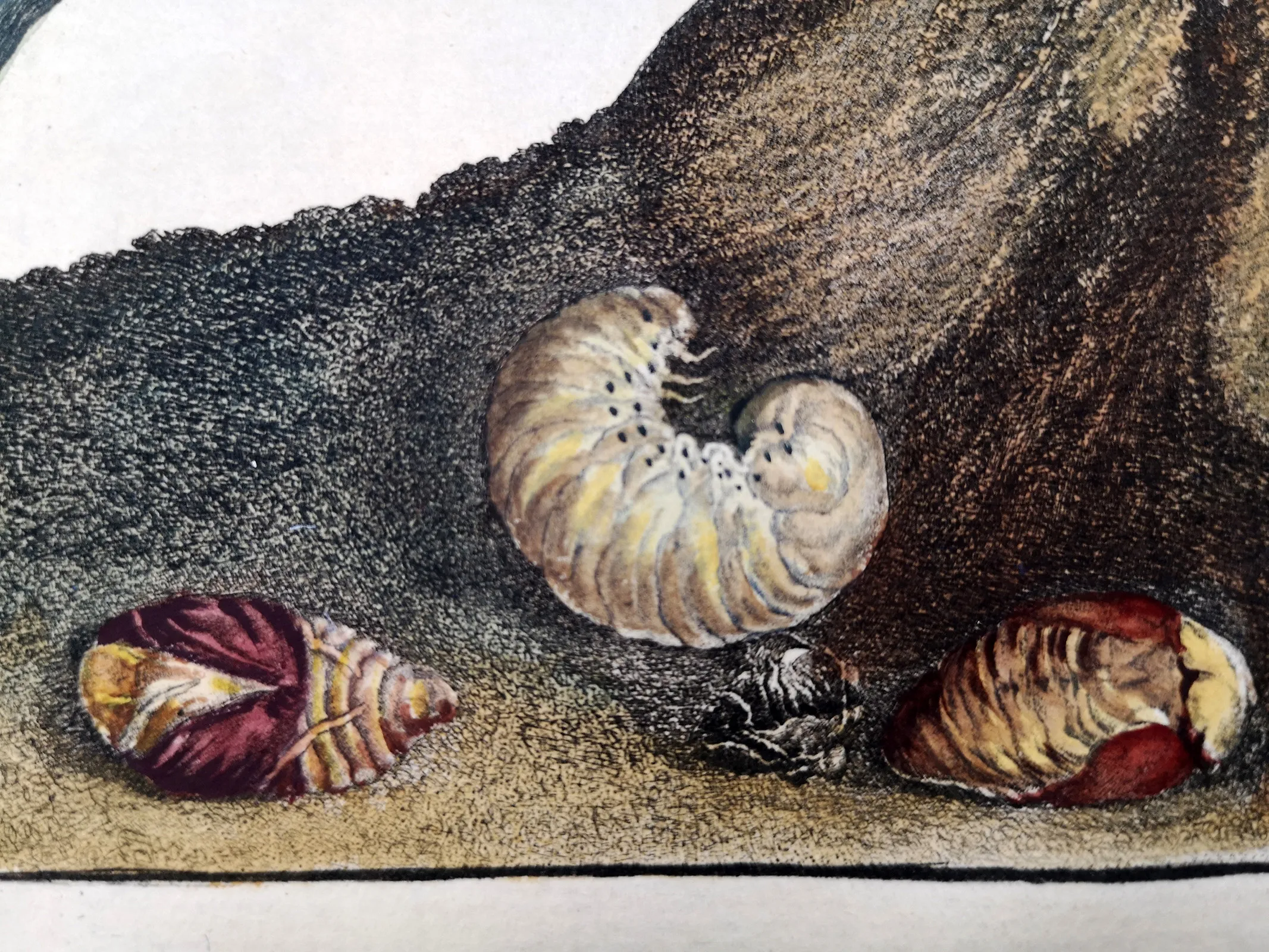
This hand-colored copper engraving by Jacob L’Admiral, published in 1774, presents a complete visual study of insect transformation set within a botanical environment. A richly striated tulip rises at the center of the composition, while larva, chrysalis, and winged adult unfold in quiet succession along the ground and adjacent branch.
Rather than isolating specimens against a blank field, L’Admiral integrates each stage into a living scene. The life cycle progresses from soil to bloom, guiding the viewer through transformation as an observable process rather than symbolic allegory.
The plate originates from Auwkeurige Waarneemingen Omtrent de Veranderingen Van Veele Insekten (1774), a foundational Dutch contribution to early modern entomology.
— • —
The composition is architecturally balanced. The tulip provides vertical authority and chromatic intensity, while the insect stages create a grounded narrative rhythm along the lower register. The suspended adult insect introduces motion and fragility, counterbalancing the stability of the plant form.
Color is applied with measured precision: deep reds and ochres articulate the tulip petals, muted earth tones define the terrain, and subtle gradations describe the corporeality of the larvae. The result is neither decorative excess nor rigid diagram—it is disciplined observation rendered with aesthetic intelligence.
By the mid-eighteenth century, the study of metamorphosis had shifted from speculative theory toward empirical documentation. Dutch naturalists, influenced by Enlightenment rationalism, recorded insect life cycles directly from observation.
L’Admiral’s work embodies this intellectual transition. Transformation is presented not as curiosity, but as evidence—carefully sequenced, patiently observed, and engraved with scientific intention. The plate stands at the threshold between cabinet of curiosity culture and modern biological inquiry.
Produced in the Dutch Republic during the late Enlightenment, this engraving reflects a culture in which scientific observation and artisanal engraving were inseparable practices. Each plate required drawing from life, transfer to copper, printing, and individual hand-coloring.
Works such as this were preserved in scholarly libraries and private cabinets of curiosity, where transformation itself became a subject of disciplined study. Today, they remain material witnesses to early modern natural philosophy.
Printed on original eighteenth-century laid paper with visible chain lines and a clearly present period watermark. The impression remains strong and well-defined, and the hand-coloring is vivid and stable—particularly within the tulip petals and insect stages.
The sheet measures approximately 43 × 26 cm. Extremely minor and unobtrusive ink spots (approximately 2 mm in diameter) are present, consistent with historic printing processes. Overall condition is exceptionally well preserved for a publication dated 1774.
For a deeper exploration of Jacob L’Admiral’s contribution to eighteenth-century entomology and the scientific culture of the Dutch Enlightenment, we invite you to read our editorial study:
Jacob L’Admiral and the Metamorphosis of Insects – A Dutch Enlightenment Marvel (1774)
Specific References
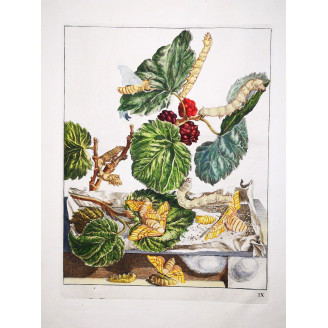
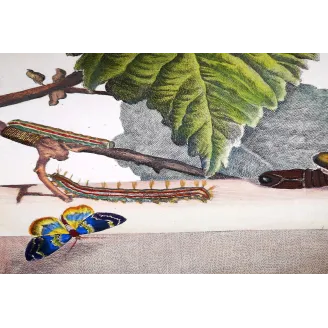
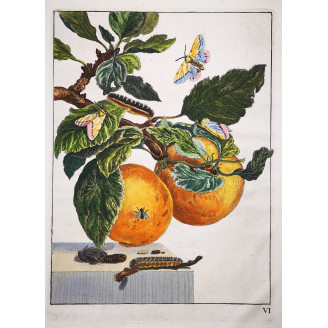
Original 1774 engraving by Jacob L'Admiral: Moths and Larvae on Fruit Tree Branch.
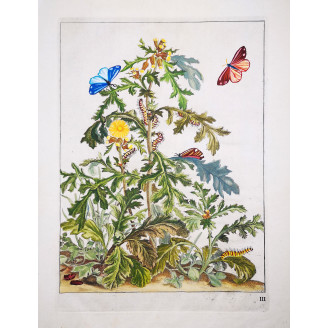
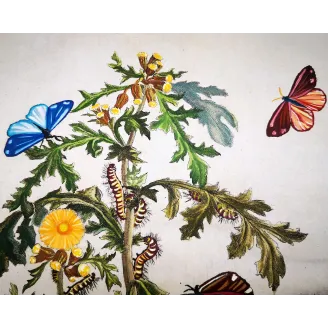
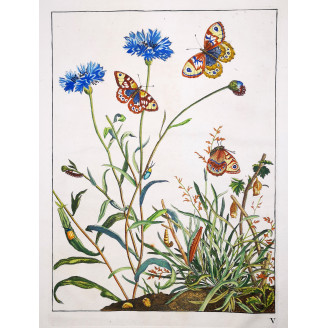
Original 1774 engraving by Jacob L'Admiral: Colorful Insects on Flowering Stalk.
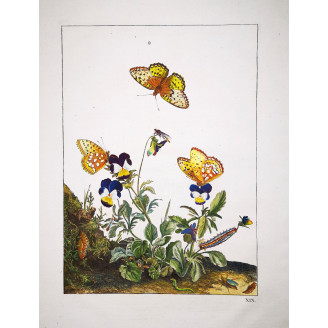
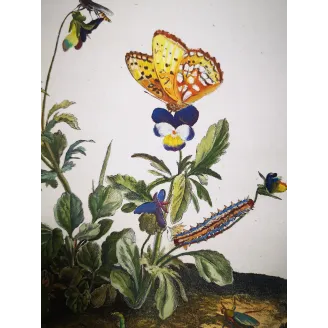
Original 1774 engraving by Jacob LâAdmiral: Lesser Marbled Fritillary on wild Pansy.
Antique entomological engraving by Jacob L’Admiral, featuring *Lymantria dispar *, and *Malus*.
Original 1774 engraving by Jacob L'Admiral: Early Moth Stage among Willow Leaves.
Original 1774 engraving by Jacob L'Admiral: Rose Chafer beetle with Pupae Stages and Tulip.