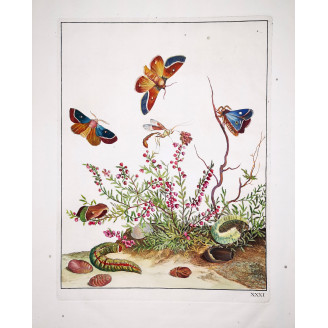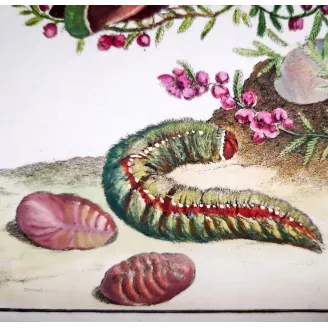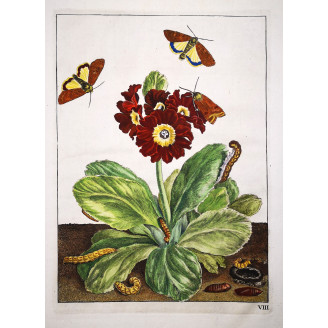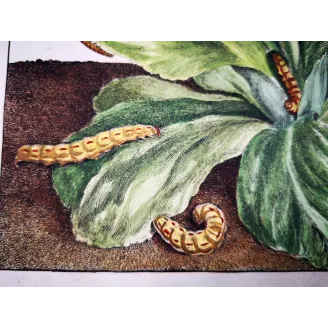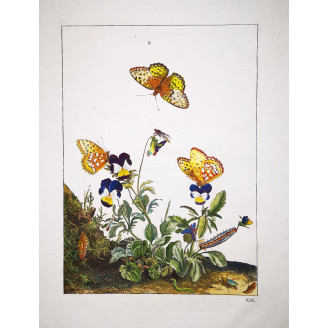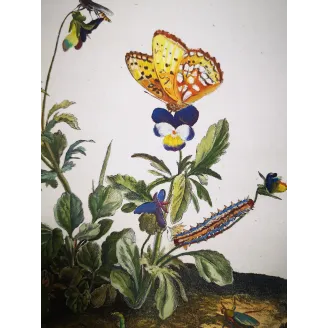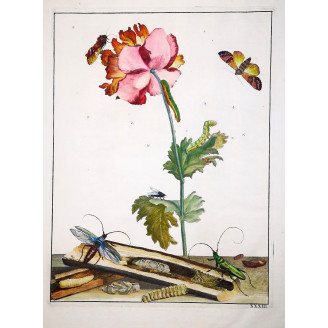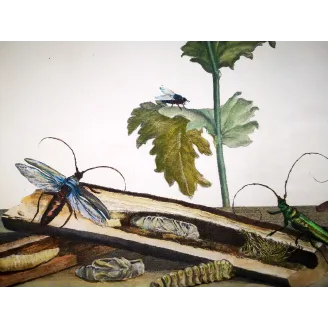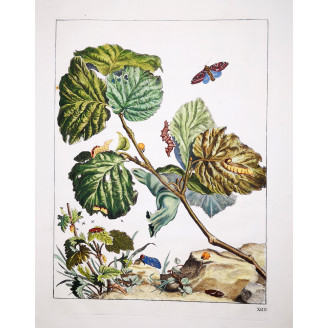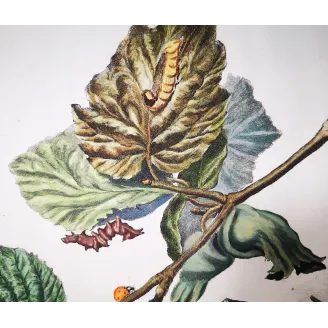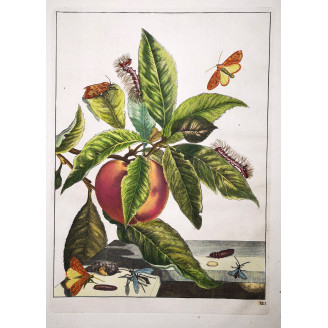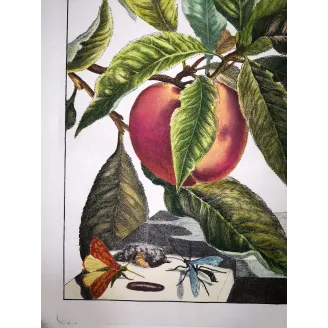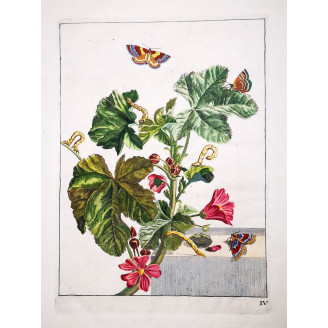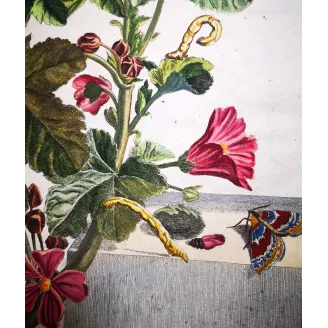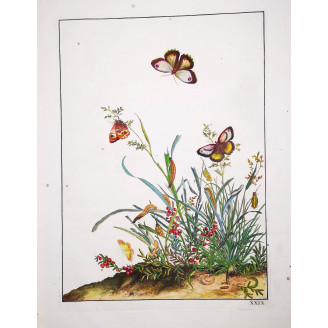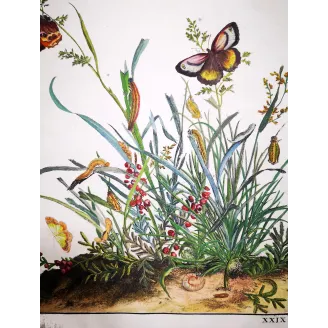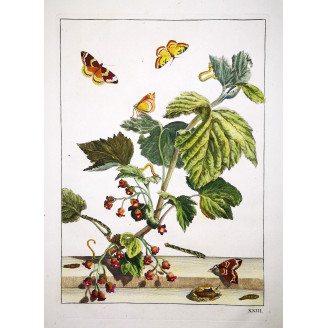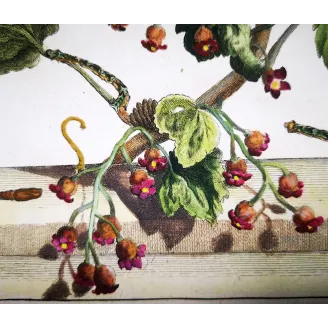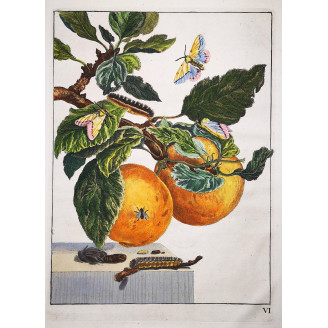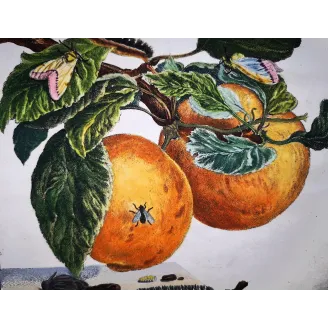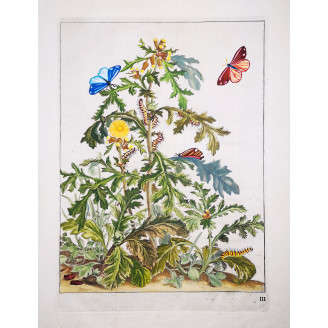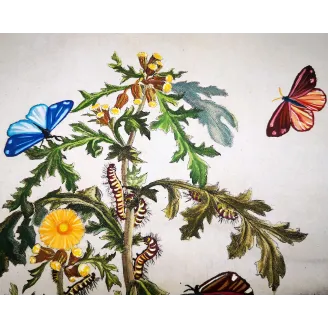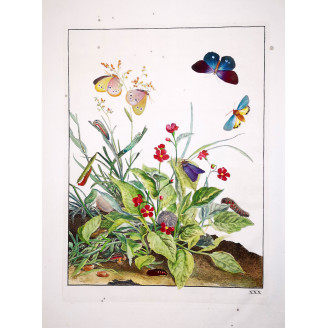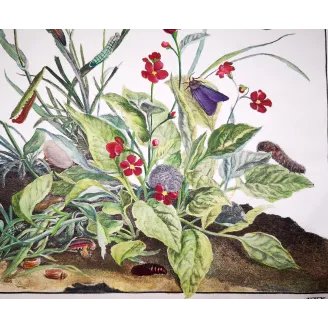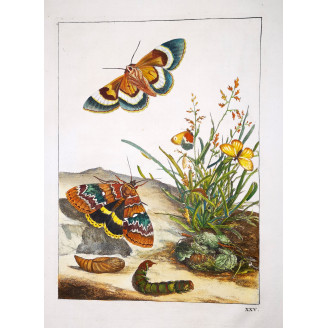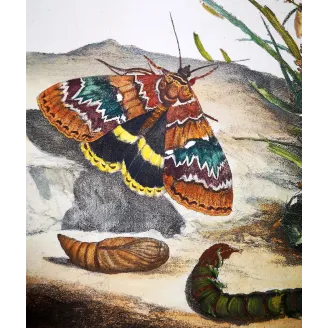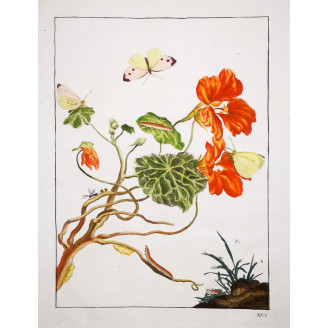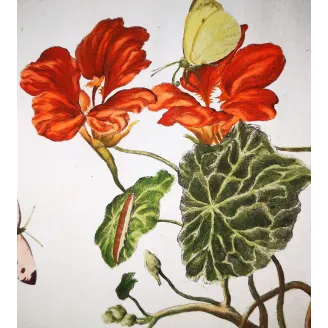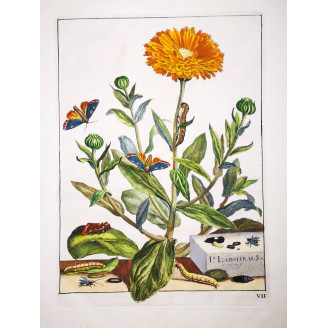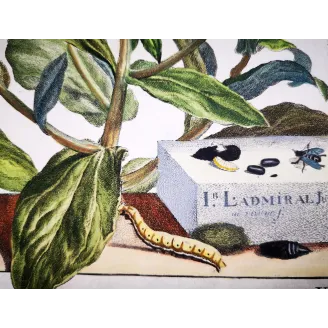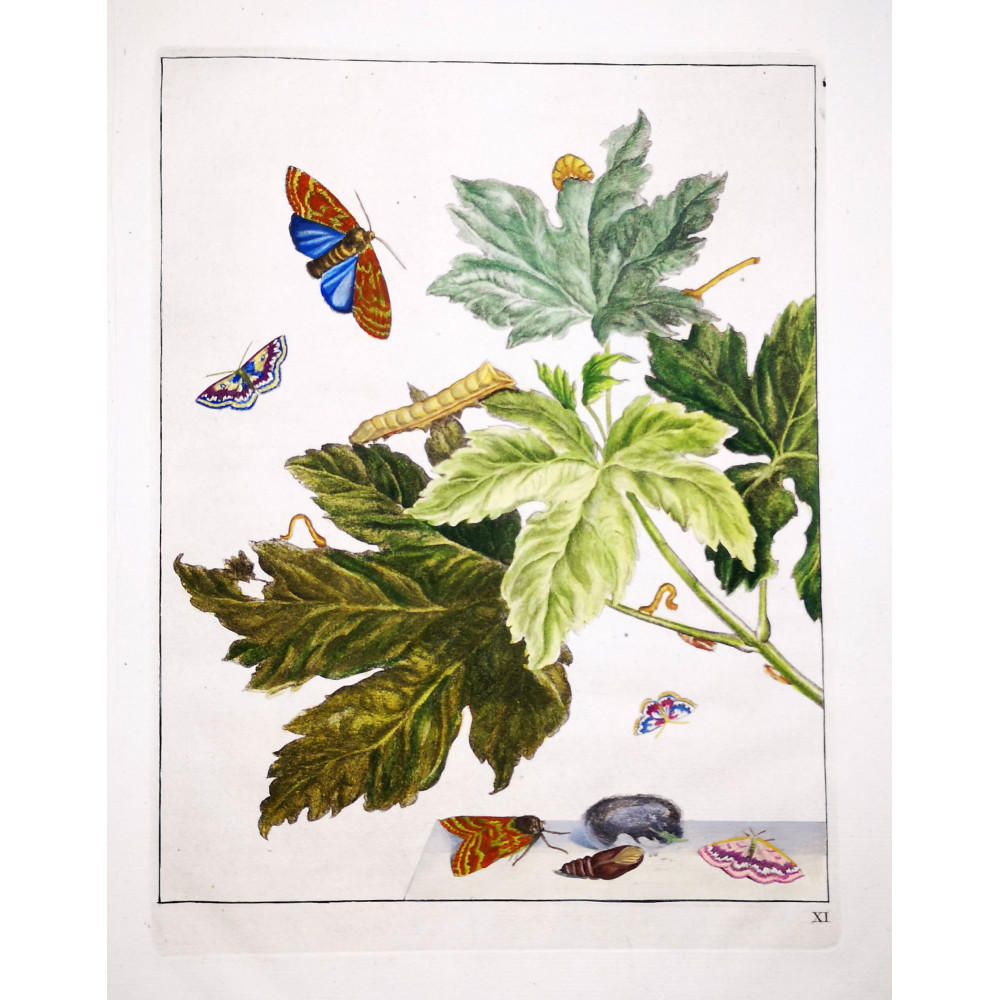
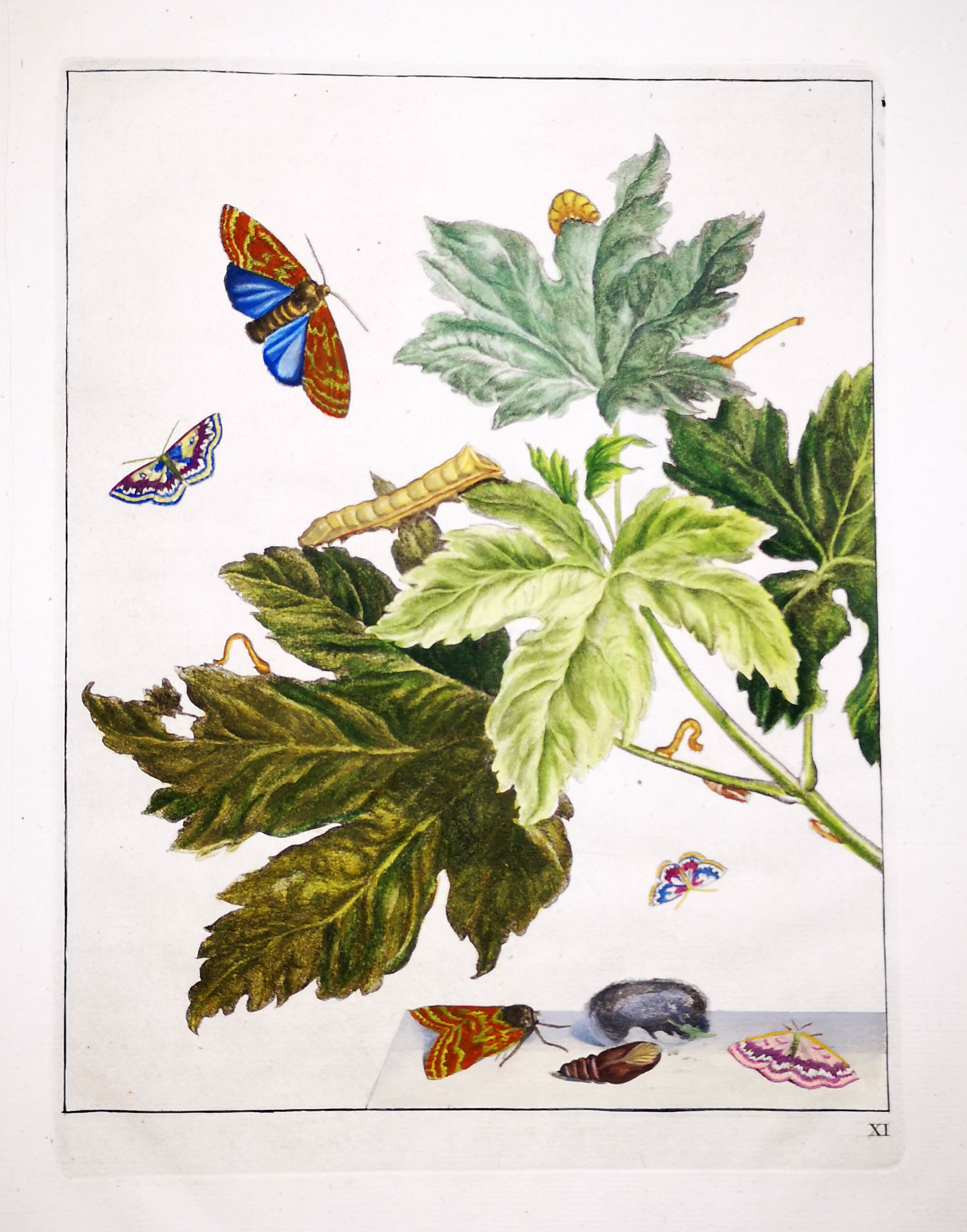
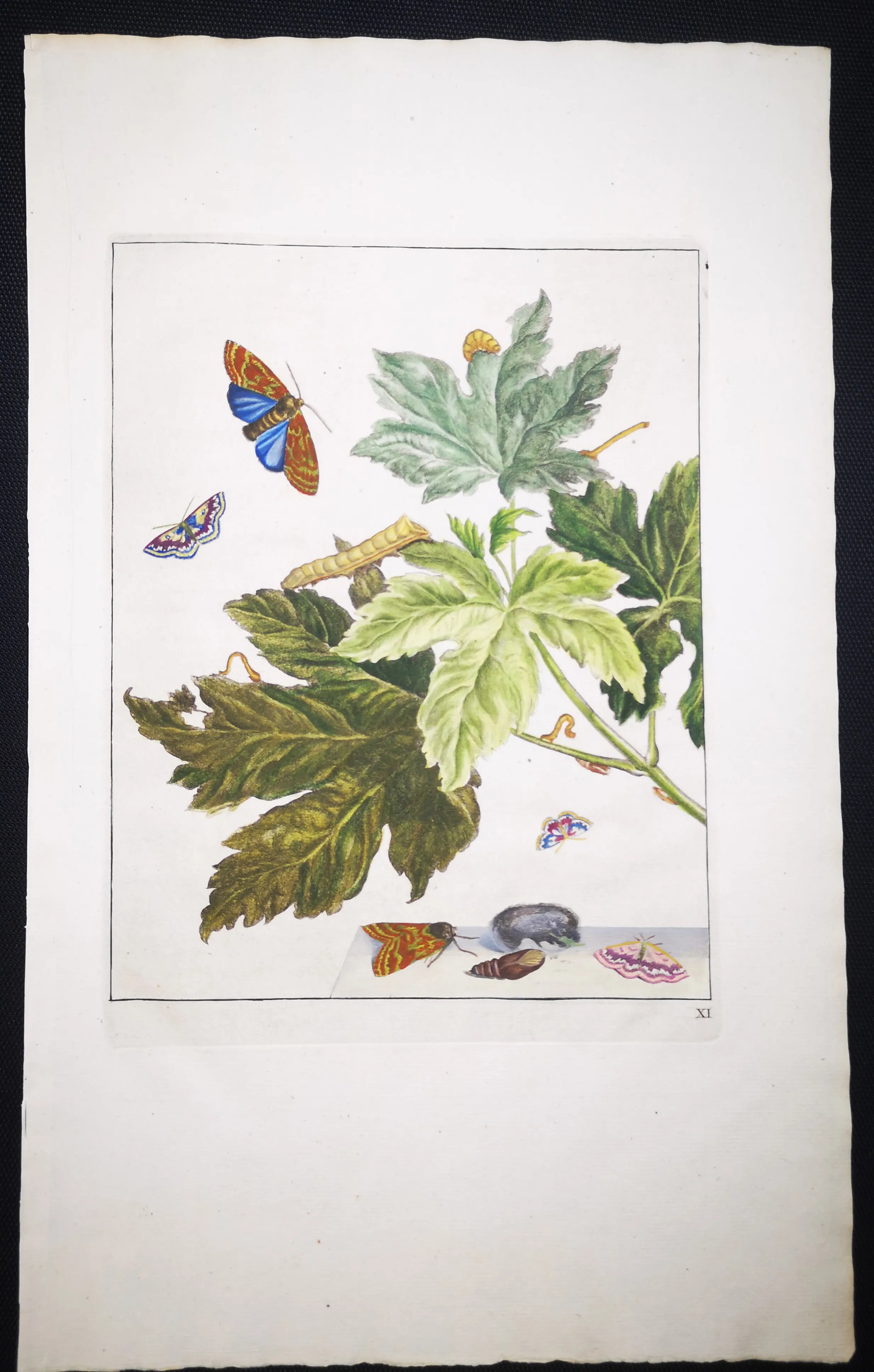
Original 1774 engraving by Jacob LâAdmiral: Codling Moth.
 Delivery policy
Your print will be carefully prepared and shipped worldwide via trusted couriers (UPS or similar).
 Authentic antique prints
Original engravings from the 17th–19th century.
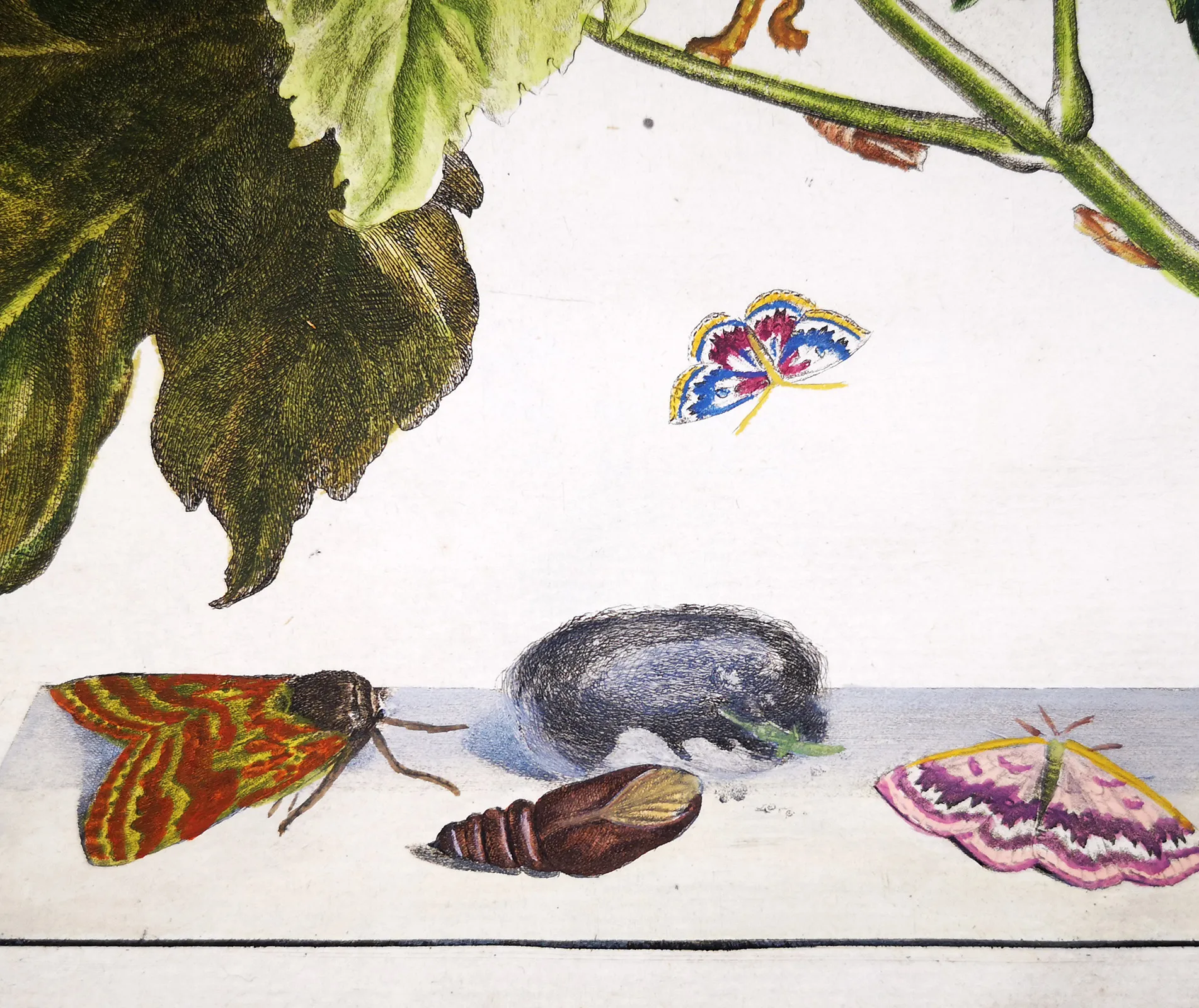
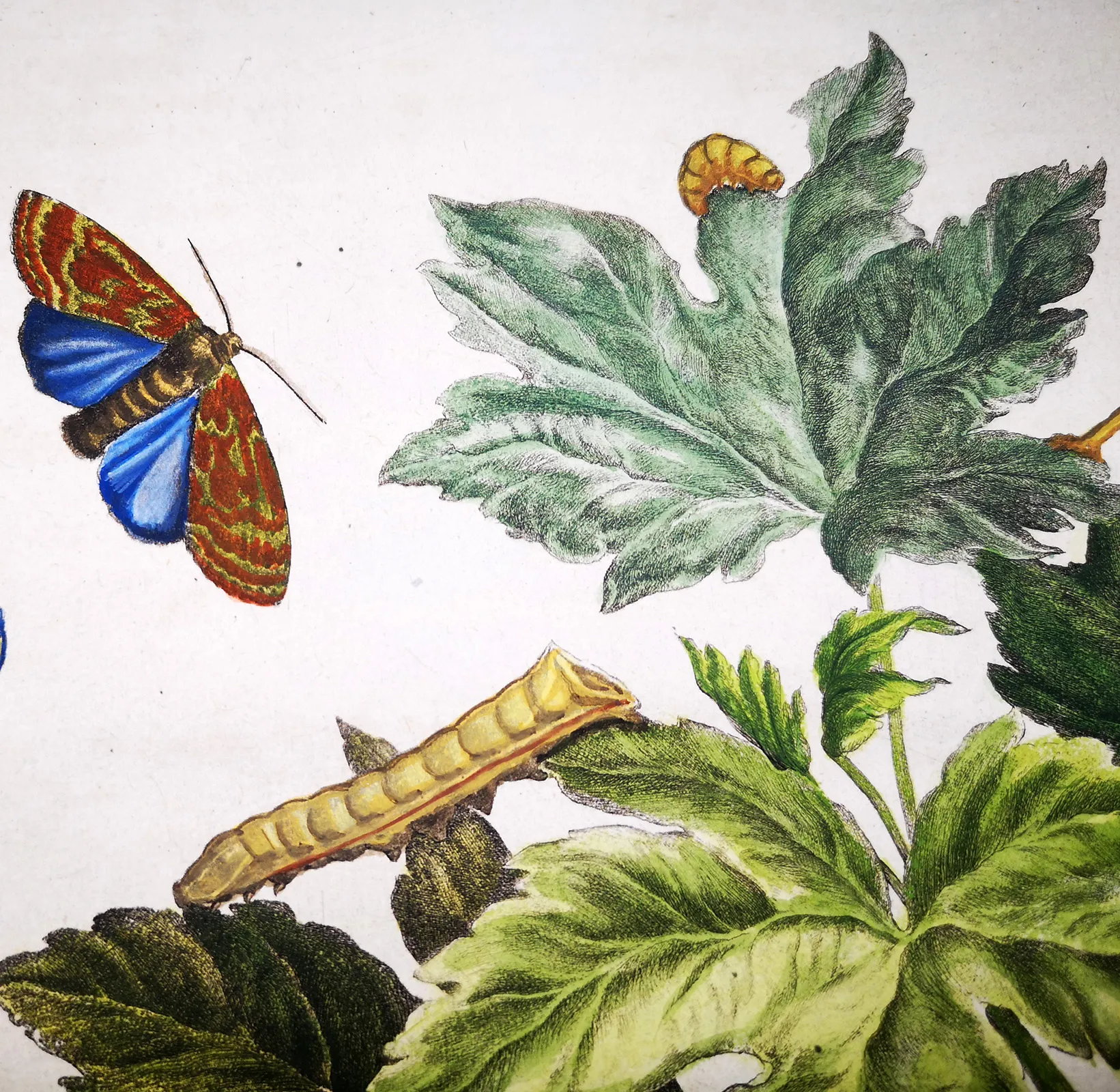
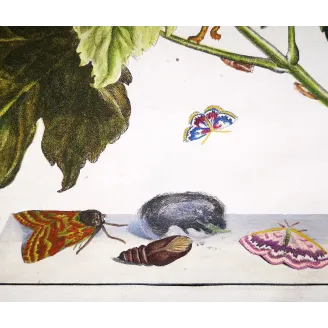
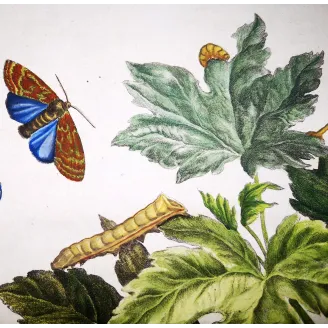
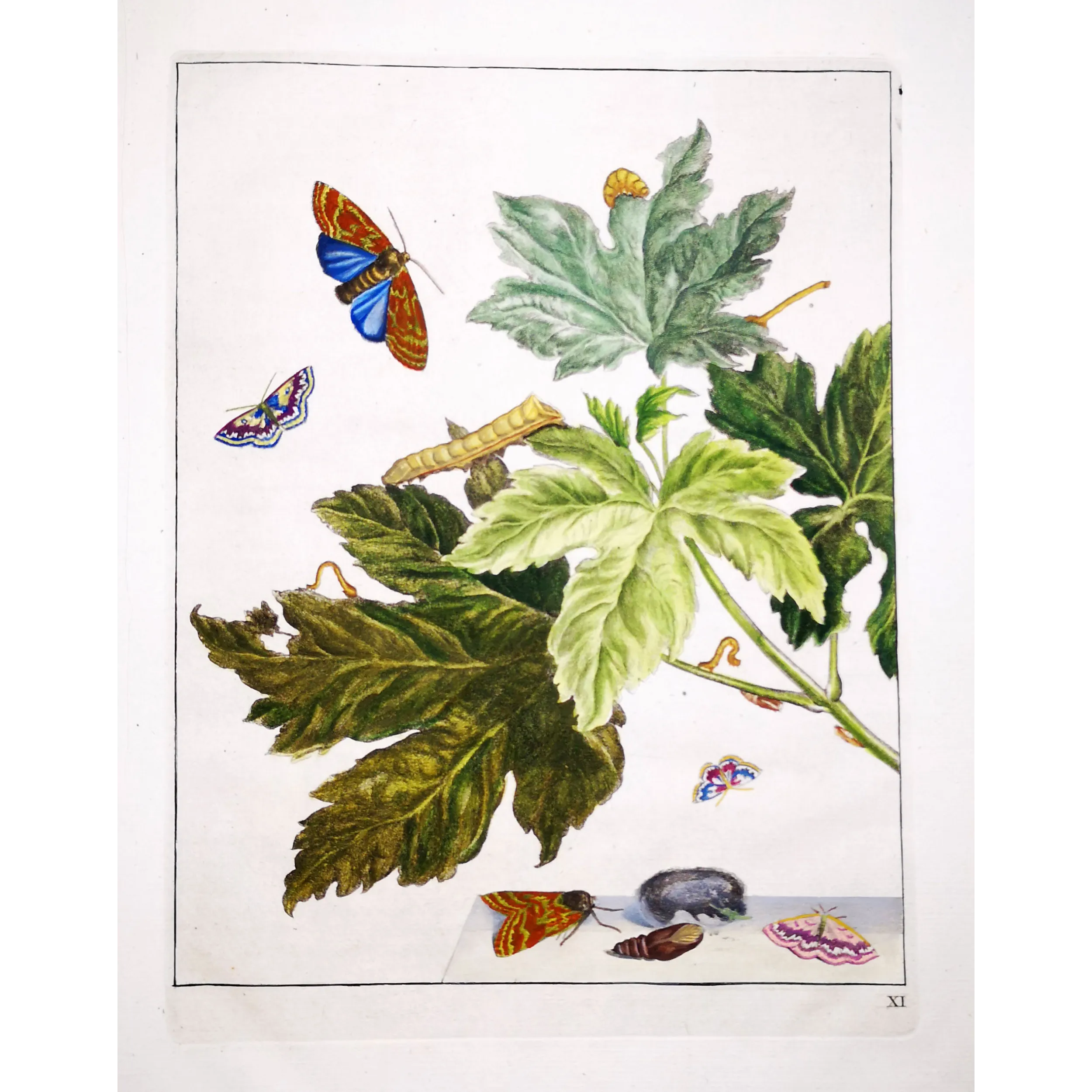
This original 1774 hand-colored engraving by Jacob L’Admiral depicts the Codling Moth (Cydia pomonella) in a carefully structured botanical setting. Large, articulated leaves dominate the composition, while adult moths, larvae, and pupal stages are distributed with scientific clarity across the plate.
The dynamic contrast between luminous blue, amber, and crimson wing tones and the deep green foliage creates a visually compelling yet disciplined composition.
The plate exemplifies L’Admiral’s ability to combine entomological precision with refined pictorial balance.
— • —
Broad foliage structures anchor the image with sculptural depth, while the suspended moths provide movement within the open white field. The engraving line remains crisp, particularly in the leaf venation and segmentation of larval forms.
The chromatic interplay between cool blues and warm rust tones enhances decorative appeal without compromising scientific integrity.
Cydia pomonella, historically associated with apple orchards, was of significant agricultural interest in the eighteenth century. L’Admiral’s systematic documentation of its life cycle reflects the Enlightenment commitment to observational taxonomy and applied natural science.
Such engravings served both as scientific references and as visual records of economically relevant species.
Published in 1774, Jacob L’Admiral’s engravings represent a landmark in Dutch Enlightenment natural history. Each sheet was printed from copperplate and delicately hand-colored, uniting empirical study with compositional refinement.
Explore the broader context in our editorial feature: Jacob L’Admiral and the Metamorphosis of Insects.
Printed on original eighteenth-century laid paper (approx. 43 × 26 cm). Gentle and even age toning consistent with period. Impression clear and well preserved; hand-coloring retains balanced vibrancy. Watermark with logo visible in the sheet.
Specific References
Original 1774 engraving by Jacob L'Admiral: Early Moth Stage among Willow Leaves.
Original 1774 engraving by Jacob LâAdmiral: Lesser Marbled Fritillary on wild Pansy.
Original 1774 engraving by Jacob L'Admiral: Larvae and Beetles with Ferns.
Original 1774 engraving by Jacob L'Admiral: Moths and Larvae on Fruit Tree Branch.
Original 1774 engraving by Jacob L'Admiral: Red Twin-spot Carpet on Mallow.
Antique entomological engraving by Jacob L’Admiral, featuring *Lymantria dispar *, and *Malus*.
Original 1774 engraving by Jacob L'Admiral: Ornate Butterfly and Metamorphosis Detail.
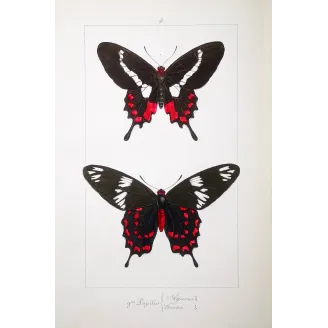
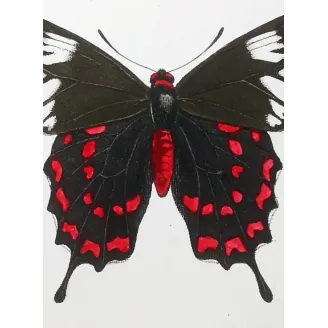
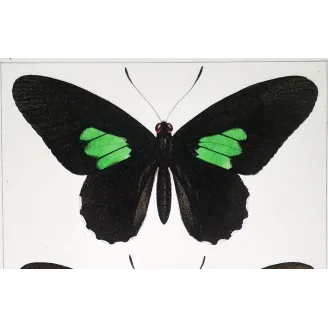
Crimson Rose swallowtails with deep black wings and vivid red markings. A dramatic 1835 engraving, perfect as bold antique butterfly wall art.
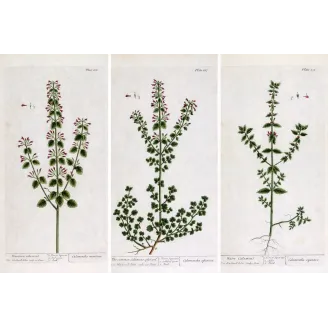
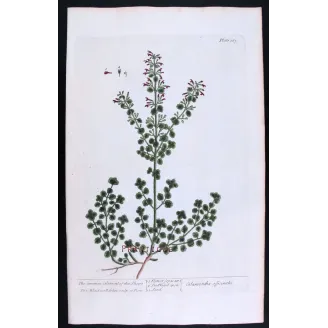
A curated botanical trio illustrating three closely related Calamintha species — officinalis, montana, and aquatica — as engraved and hand-colored by Elisabeth Blackwell for A Curious Herbal (1737–1739). Presented together, these plates offer a rare comparative view of medicinal, habitat-specific, and morphological variation within a single genus, reflecting early modern botanical practice and apothecary knowledge.
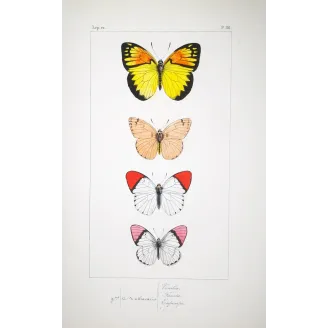
Bright yellow and white butterflies with vivid orange and pink tips. A refined 1835 engraving with strong decorative contrast.
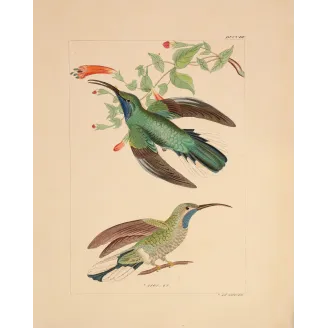
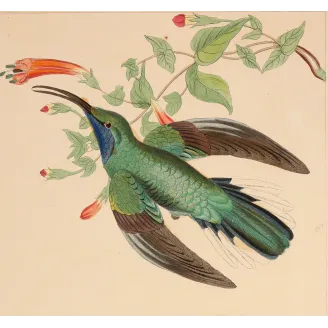
An elegant original nineteenth-century hand-colored engraving from Ludwig Reichenbach's Trochilinarum Enumeratio, depicting Ramond's Hummingbird among the scarlet blossoms of Lemoinea spectabilis. A beautifully balanced composition celebrating the harmony between hummingbirds and tropical flowers.
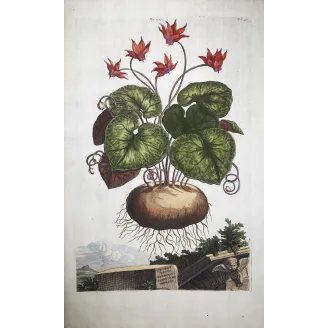
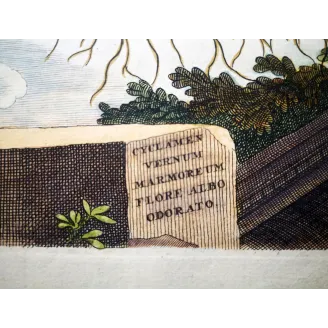
Original 17th-century hand-colored engraving of Cyclamen (Cyclamen europaeum) by Abraham Munting, featuring exposed root structure and elegant botanical composition.
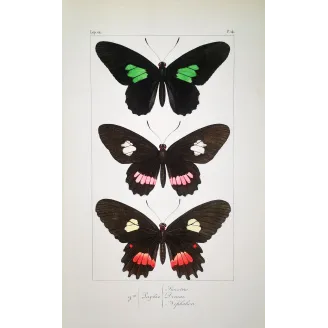
Striking black butterflies with vivid green, pink, and red accents. A dramatic 1835 engraving with strong contrast and bold decorative appeal.
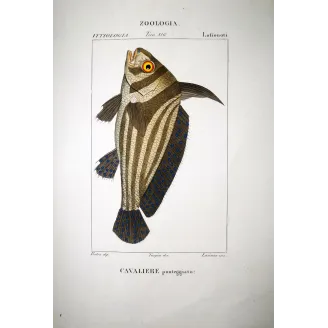
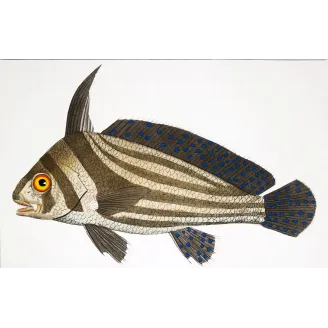
Striped body with blue-spotted fins; a refined 19th-century marine engraving ideal for study walls and coastal interiors.
Original 1774 engraving by Jacob LâAdmiral: Codling Moth.