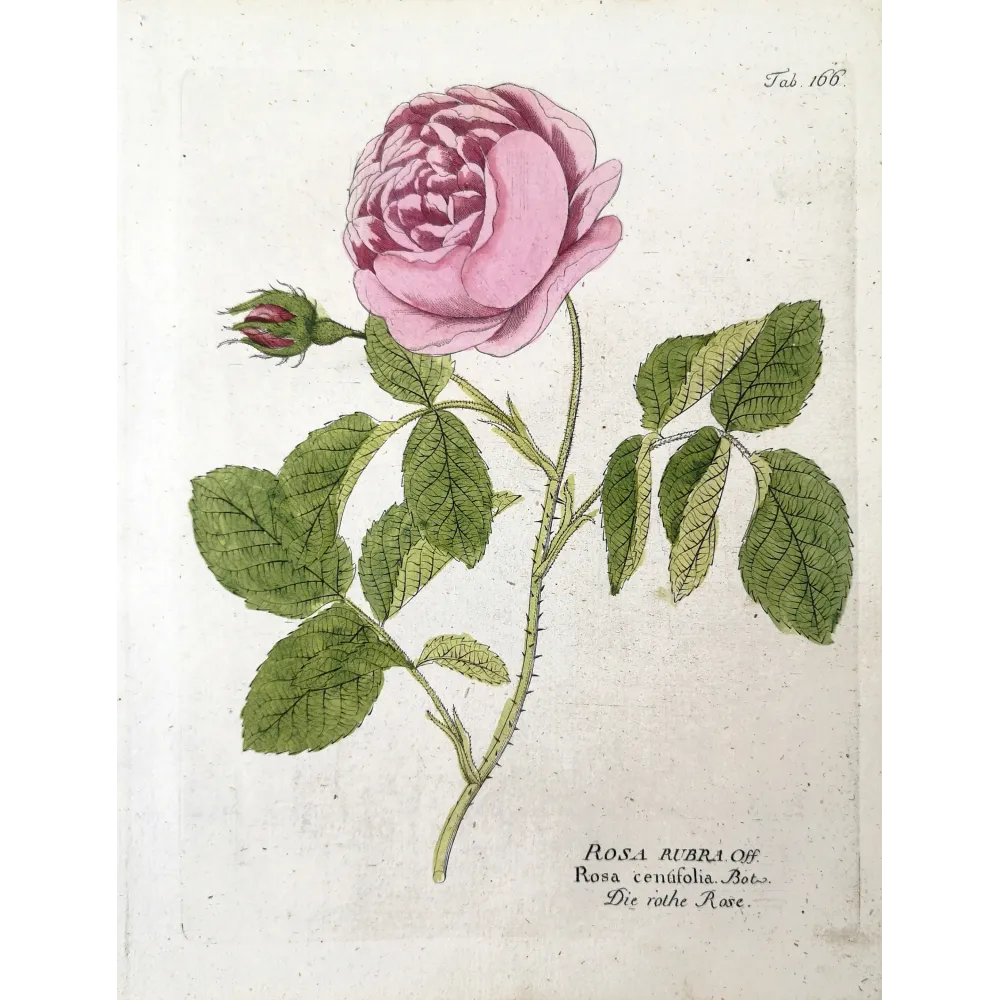
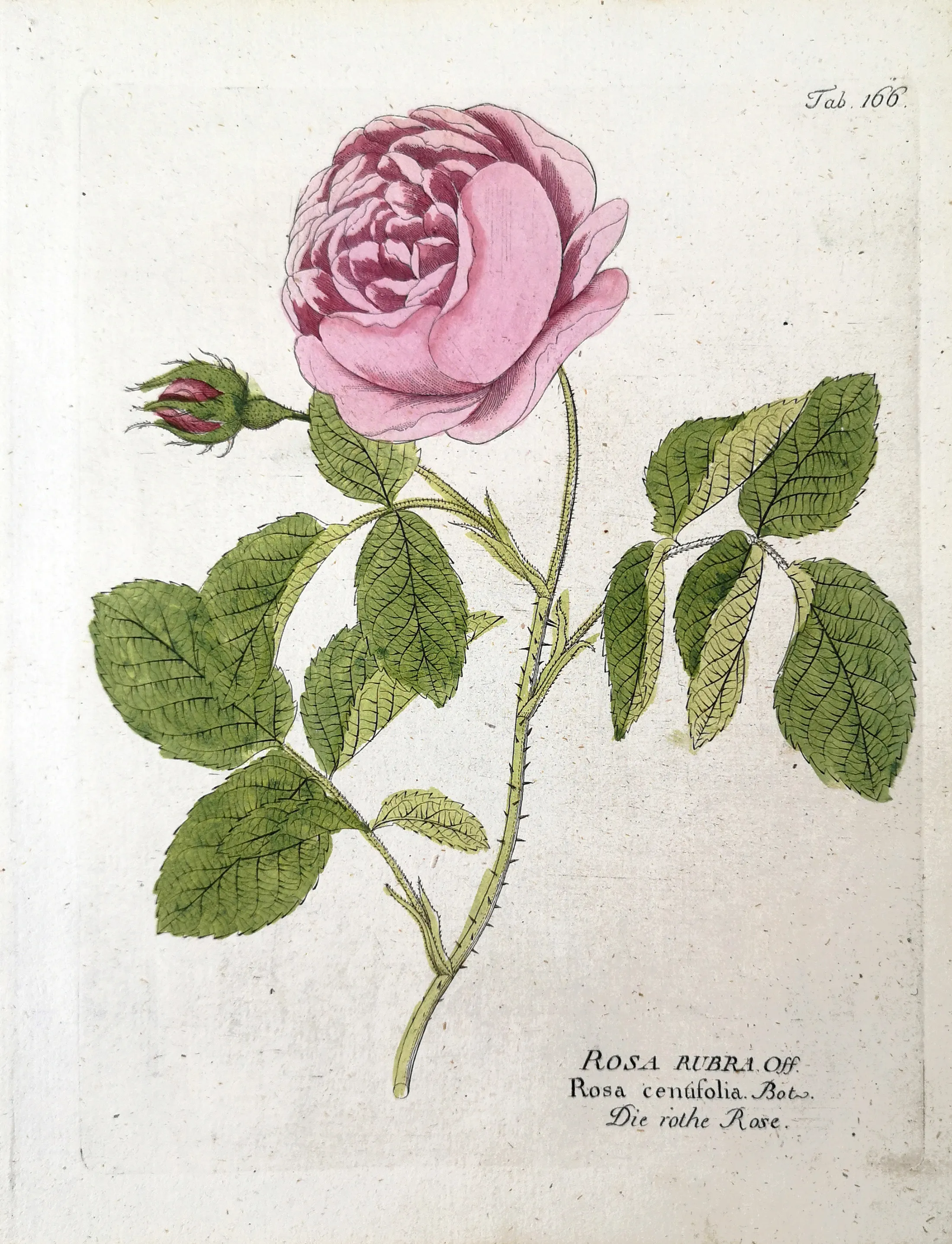
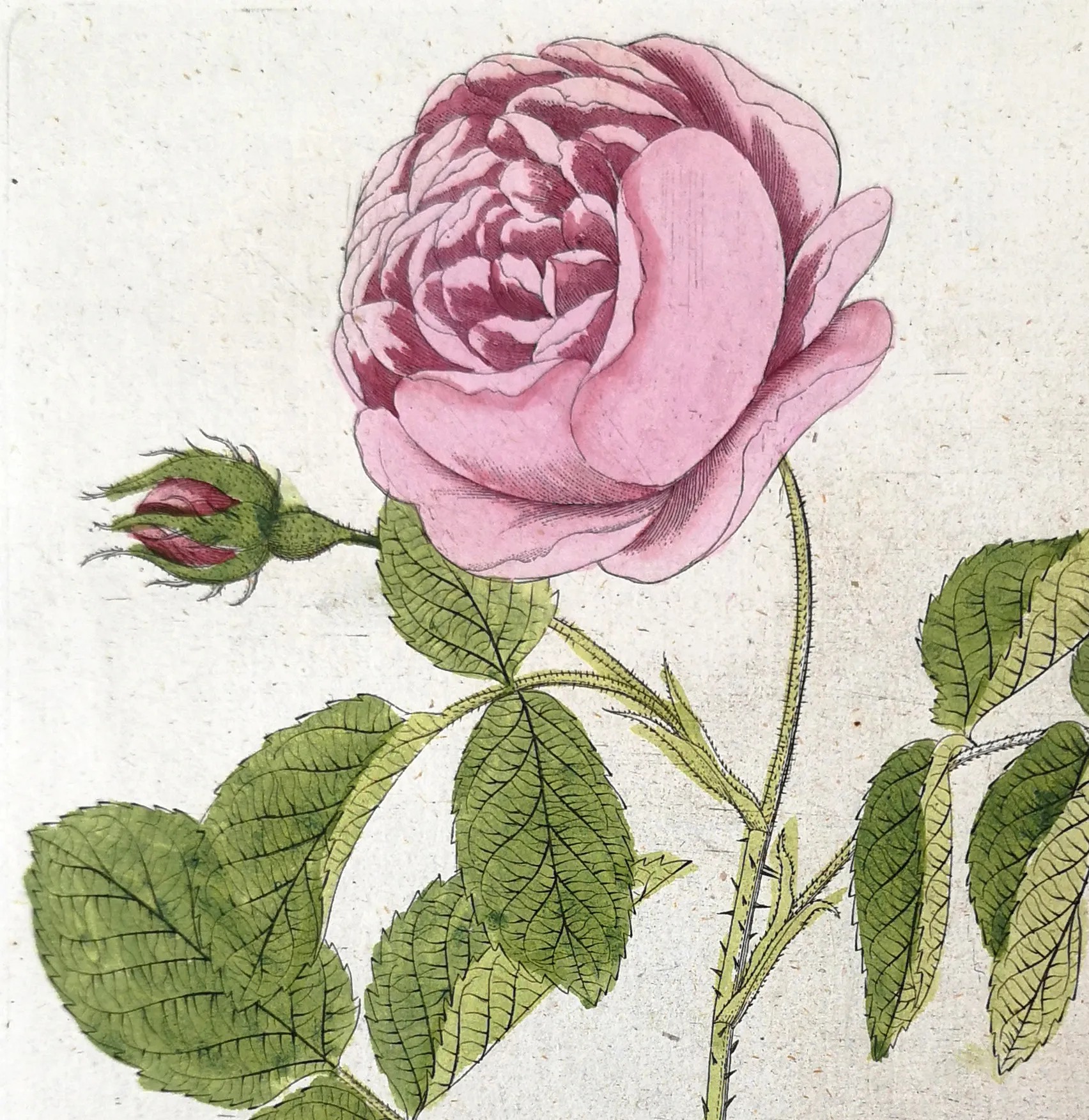
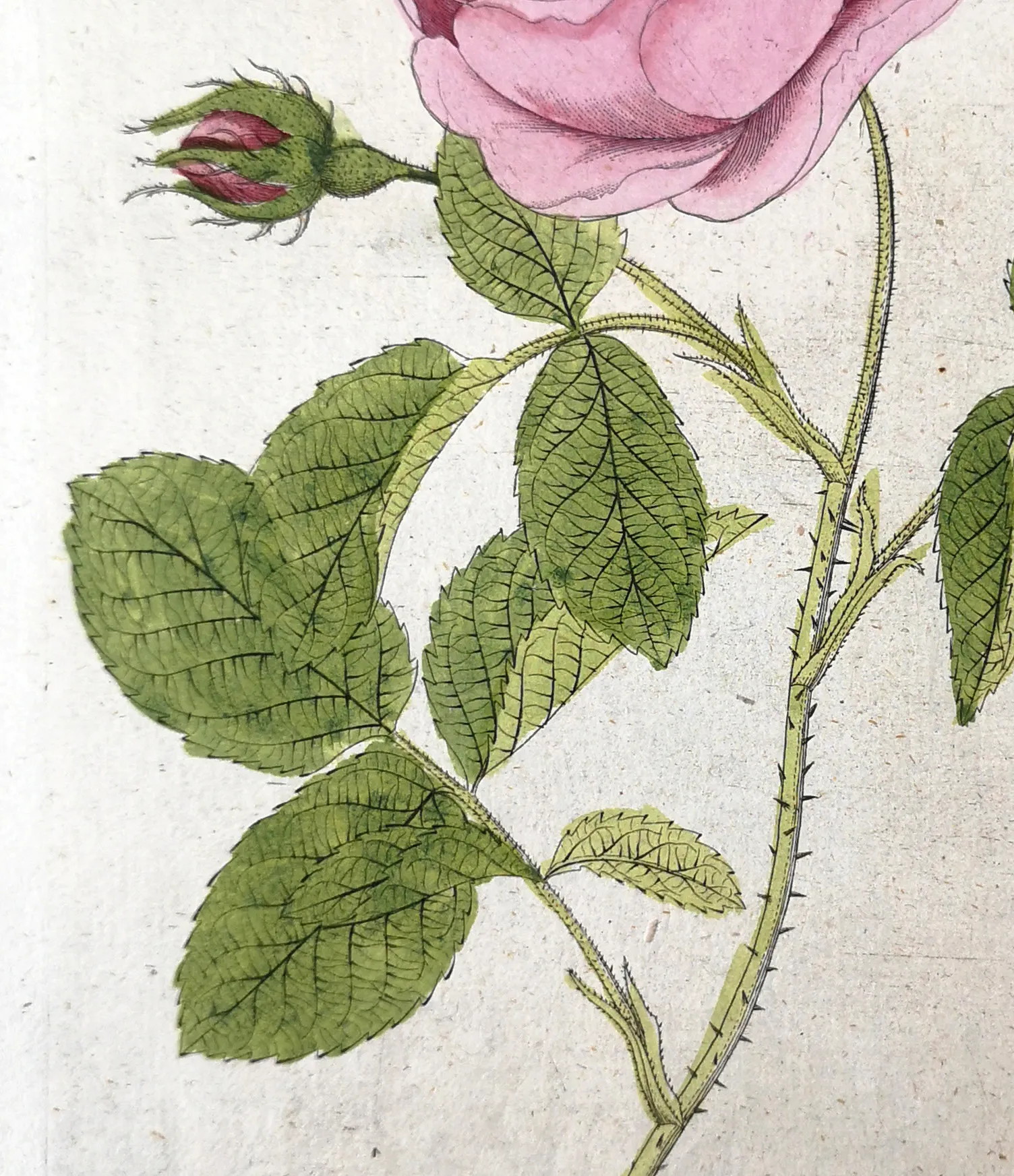
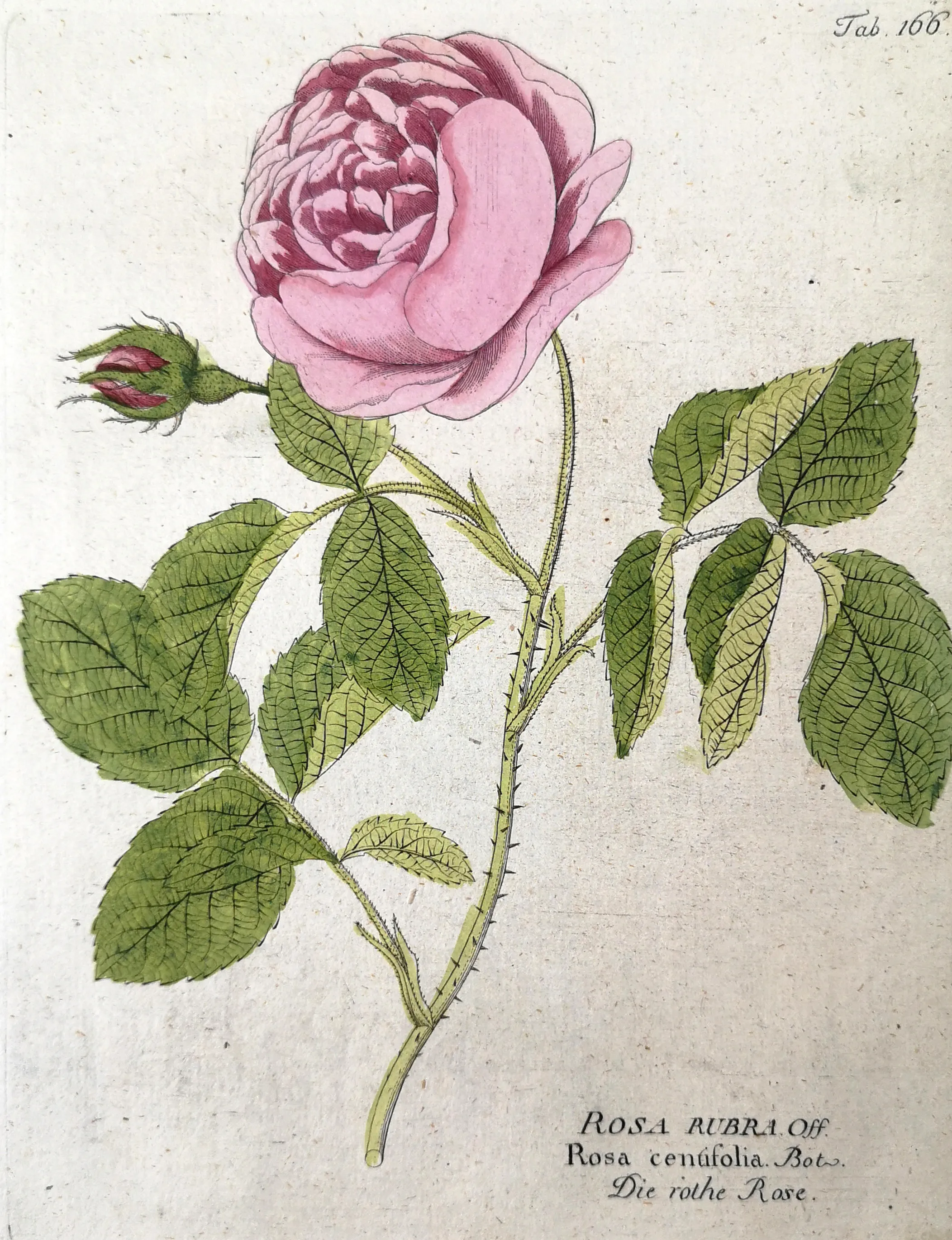
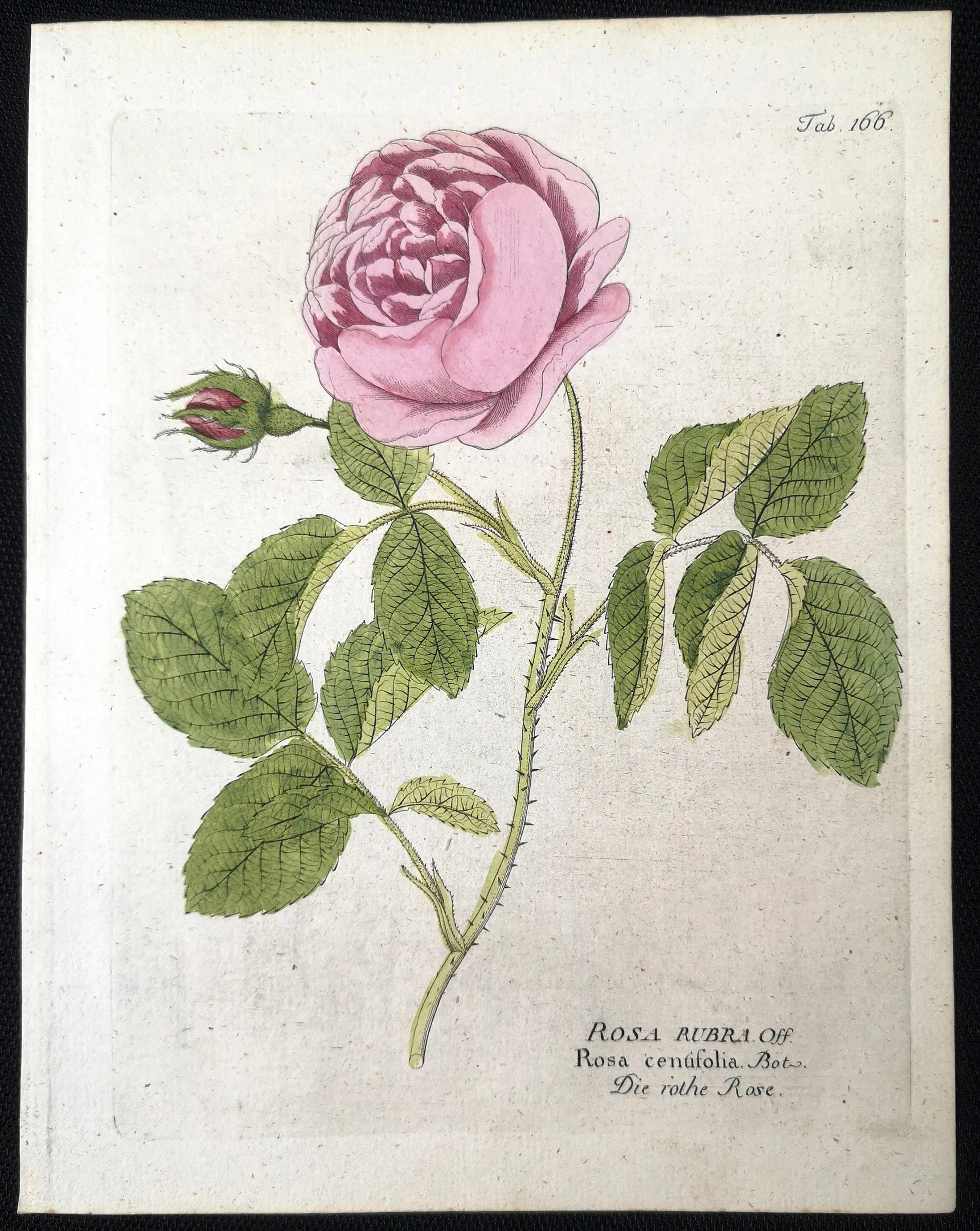


Fine hand-colored engraving of a Provence rose, rendered with soft shading and botanical charm, ideal for elegant décor.
 Delivery policy
Your print will be carefully prepared and shipped worldwide via trusted couriers (UPS or similar).
 Authentic antique prints
Original engravings from the 17th–19th century.
This original 18th-century hand-colored engraving depicts the Provence Rose (Rosa centifolia), illustrated by Vietz with a calm balance of botanical clarity and decorative grace.
Selected for its refined linework and harmonious palette, the composition brings the precision of early botanical publishing into contemporary interiors.
— • —
The plate presents a clean, centred arrangement designed for legibility: foliage and floral elements are rendered with measured detail, while hand-colouring enhances volume without obscuring the engraving. The overall tonal restraint lends the work an elegant presence, suitable for curated botanical displays, studies, or refined living spaces.
Issued within Vietz’s Icones Plantarum, these plates belong to an era when natural history was disseminated through finely printed and hand-finished images, intended to educate as well as to delight. Vietz’s approach privileges legibility, calm composition, and an enduring decorative harmony.
For further context on Vietz and the visual language of Icones Plantarum, see our editorial feature: Vietz – Icones Plantarum.
The print is in very good condition. The paper is laid. The surface is very Clean, no toning, no foxing, very ligh finger sign right bottom coner. The plate mark is fully visible, and the margins are generous.
Each print is examined and presented individually, following our curatorial approach, and offered as an authentic period work without restoration that might compromise its historical integrity.
Specific References
Detailed antique print of the black mulberry with lush foliage and ripe fruit.
Rich natural history engraving of the walnut tree with fruit, husk and detailed botanical elements.
Detailed engraving of oak leaves and acorns, ideal for rustic and natural interiors.
Refined botanical engraving of sand leek with bulb, flowering head and dissected floral details.
Striking engraving of a columnar euphorbia, with architectural forms and vivid green tones.
Delicate engraving of the saffron crocus with its iconic purple blooms and vivid stigmas.
Highly decorative engraving of sea squill with large bulb, stems and delicate flowering spike.
Vibrant engraving of the melon fruit with botanical cross-section and climbing tendrils.
Graphic depiction of the larch bracket fungus with bold grey and ochre surfaces.
Elegant botanical engraving of the broad bean plant with detailed foliage and pods.
Refined depiction of the stone pine with cone, needles and botanical elements.
Elegant natural history engraving of Scots pine with cones and needle clusters.
Fine botanical engraving showing delicate redcurrant clusters and bright green leaves.
Elegant depiction of the mezereum plant with slender leaves and red berries.
Highly decorative engraving of houseleek flowers and rosette structure in vivid tones.
Fine botanical engraving of oregano with delicate flowering stems and aromatic leaves.
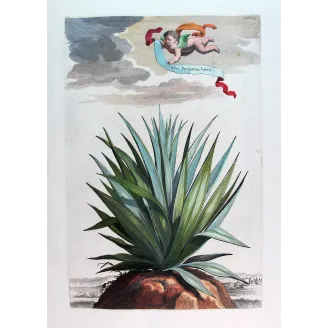
A striking 17th-century botanical engraving from Abraham Munting’s Nauwkeurige Beschryving der Aardgewassen - Phytographia Curiosa, depicting a monumental aloe with architectural structure and a decorative cartouche. A powerful example of early botanical art combining scientific observation with theatrical composition.
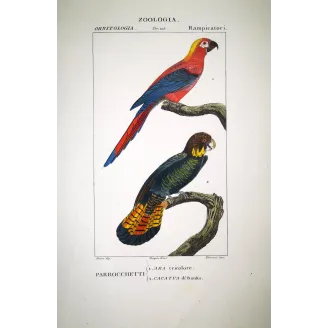
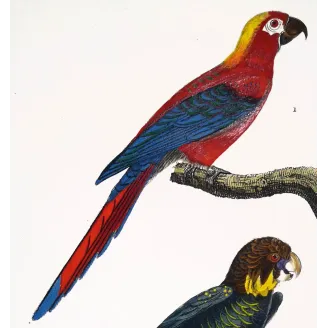
Vibrant parakeets perched on branches: a scarlet macaw and a black cockatoo with yellow and red highlights.
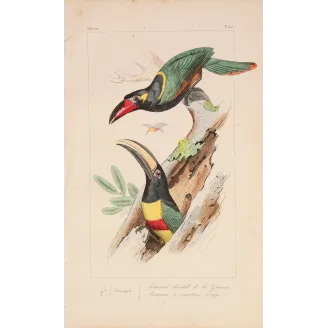
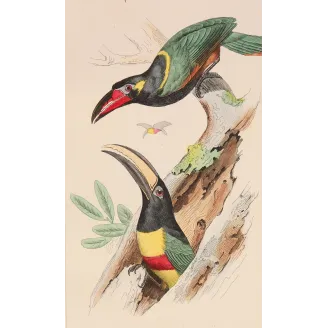
This vivid 19th-century engraving depicts two exotic aracaris, showcasing striking contrasts of green, red and yellow plumage. A highly decorative composition combining scientific observation with strong visual appeal, ideal for collectors of tropical ornithology and refined interior spaces.
Fine 18th-century engraving of the Medlar Tree by Elisabeth Blackwell, featuring fruit, blossom, and botanical detail.
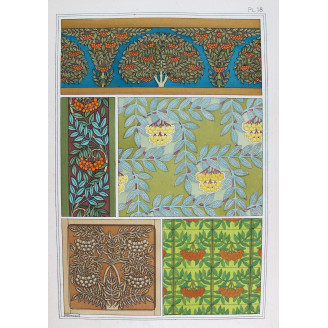
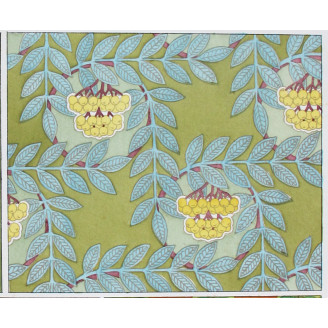
With its compound leaves and clusters of red berries, the sorb tree is rich in folk symbolism.
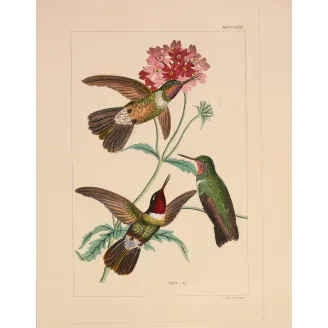
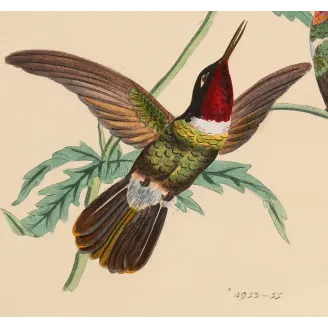
Original nineteenth-century hand-colored engraving by Ludwig Reichenbach, depicting three hummingbirds among pink blossoms. A rare later plate from the Trochilinarum Enumeratio corpus, not fully documented in the principal published index.
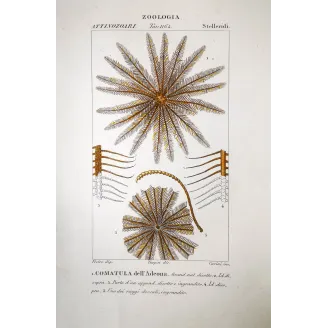
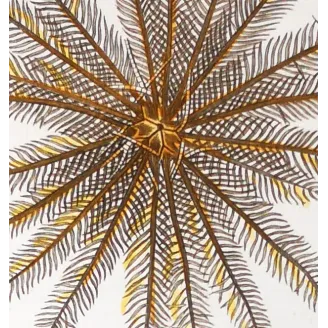
Rare 19th-century print of the feather star Comatula of the Adeona, with anatomical details.
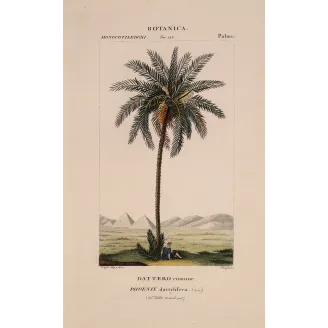
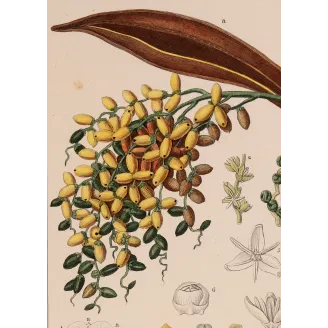
Detailed antique illustrations of the date palm tree and its floral and fruit anatomy.
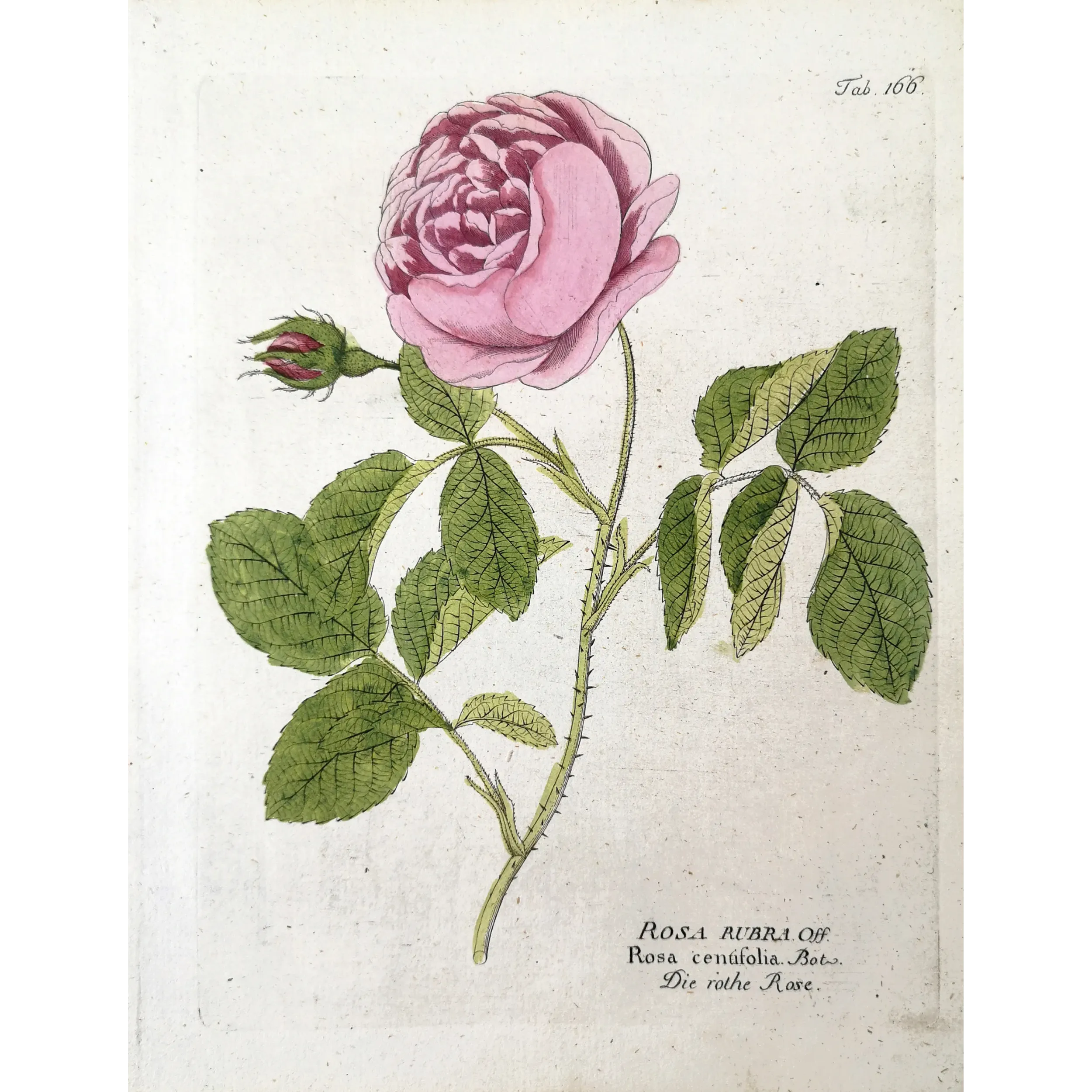
Fine hand-colored engraving of a Provence rose, rendered with soft shading and botanical charm, ideal for elegant décor.