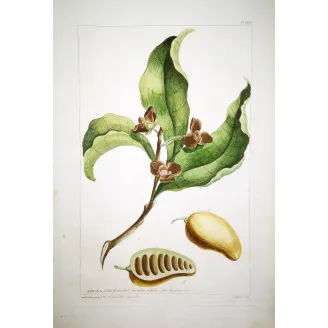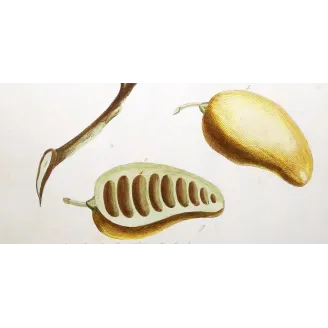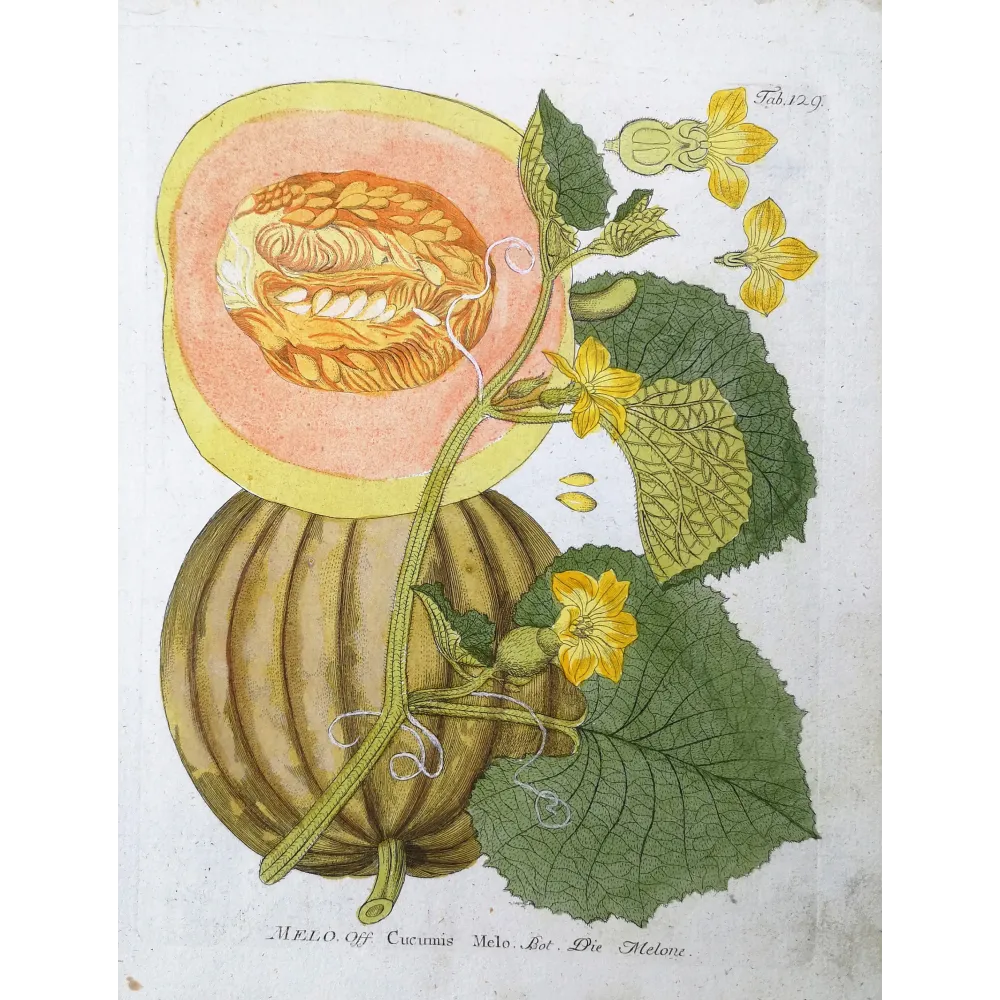
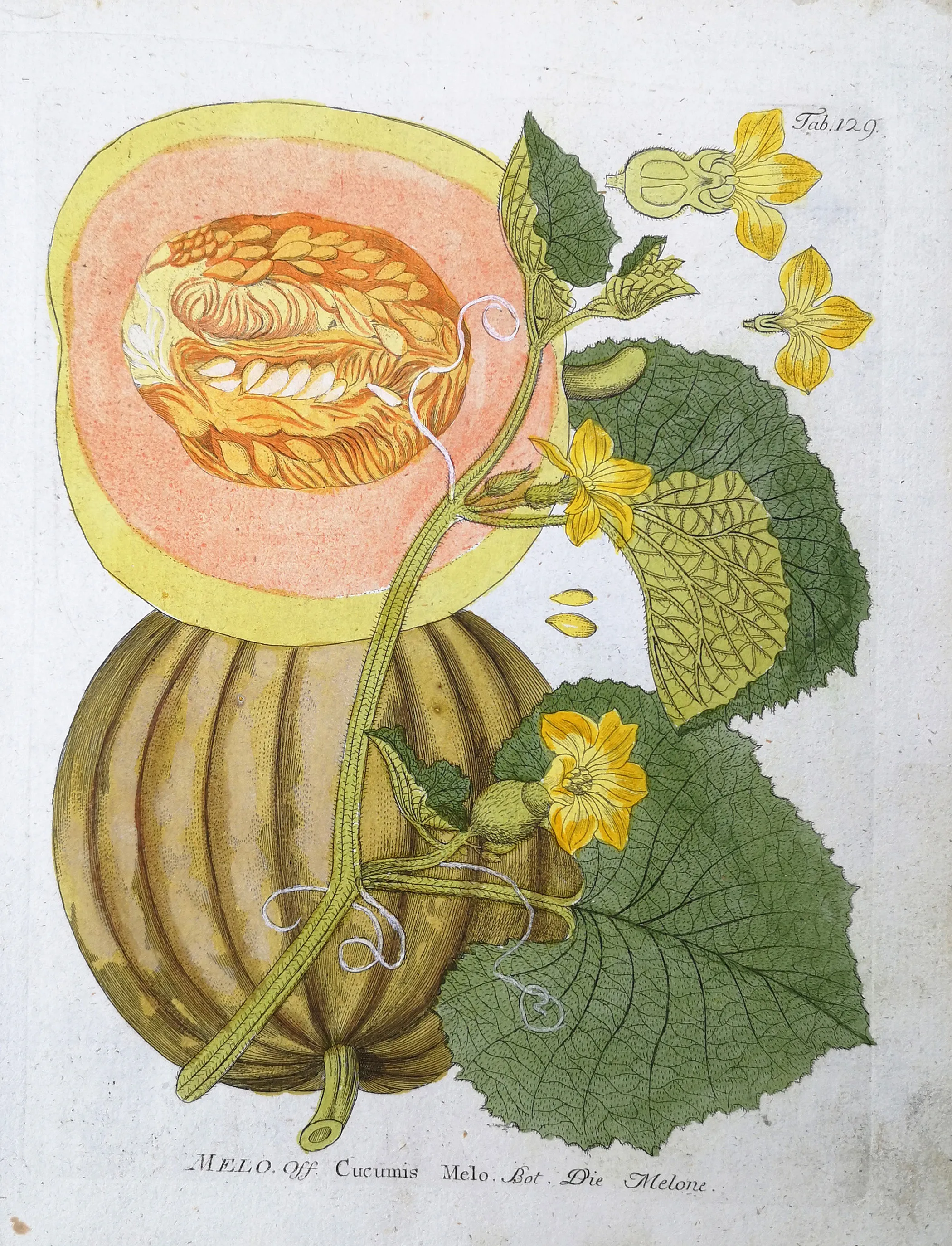
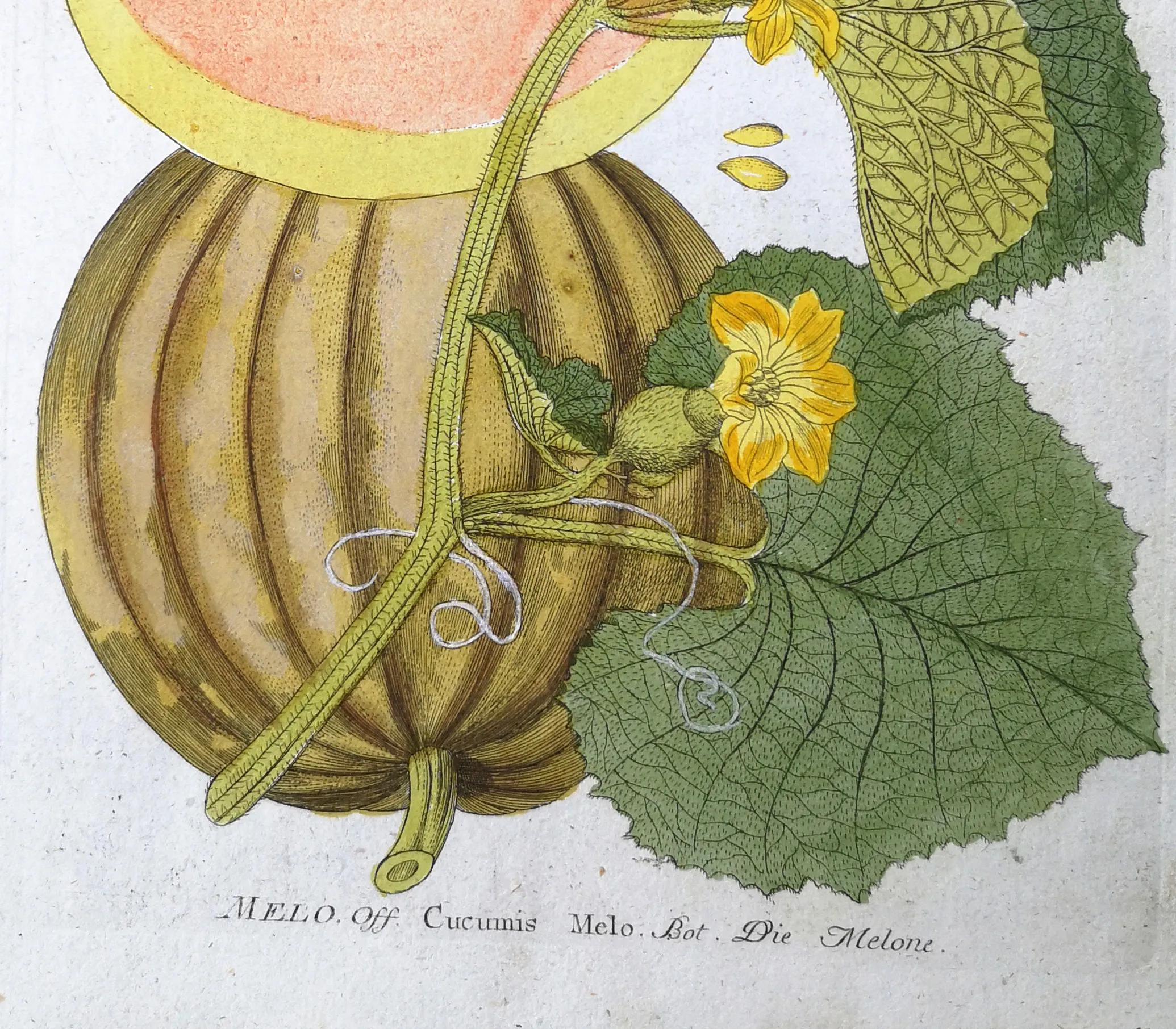
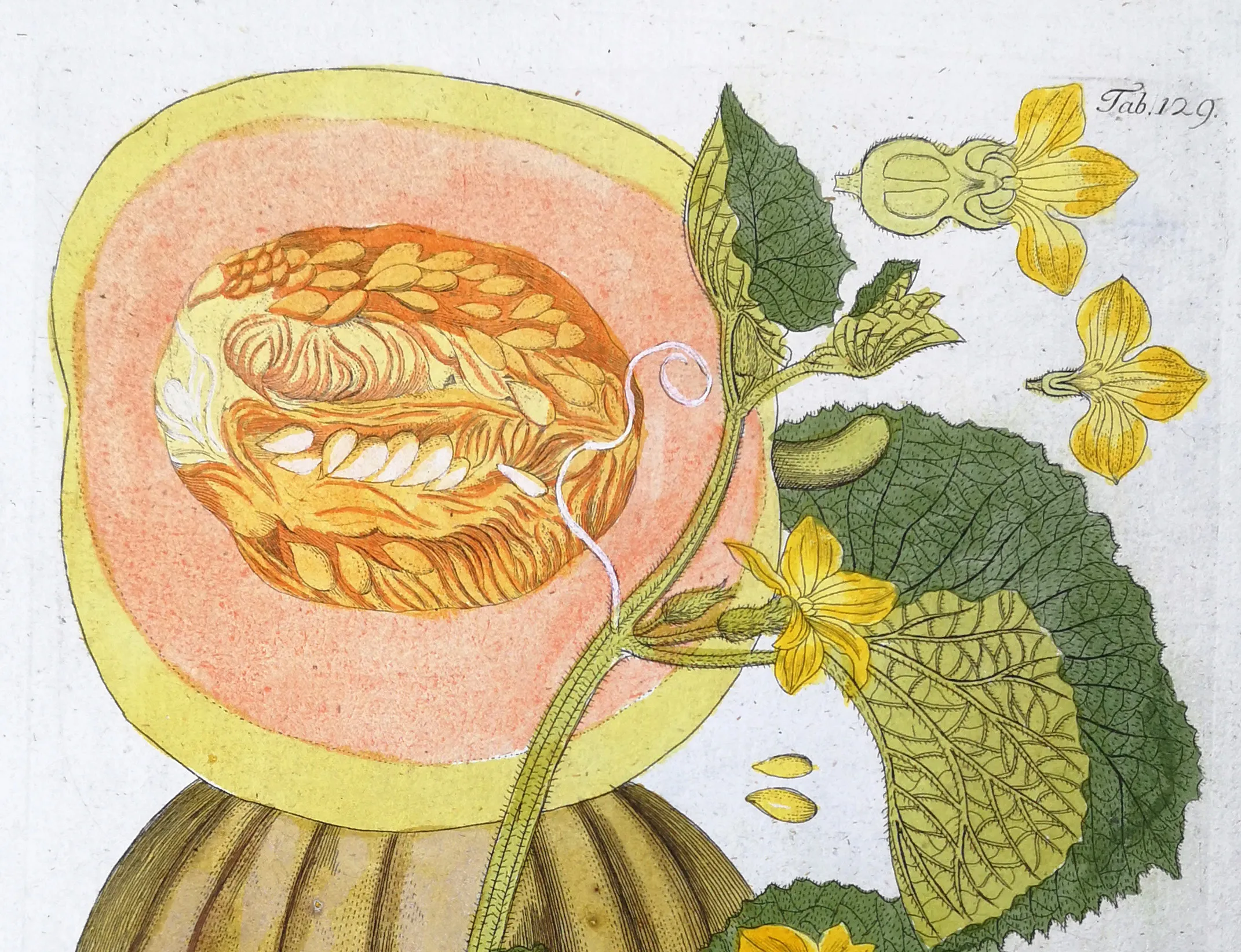
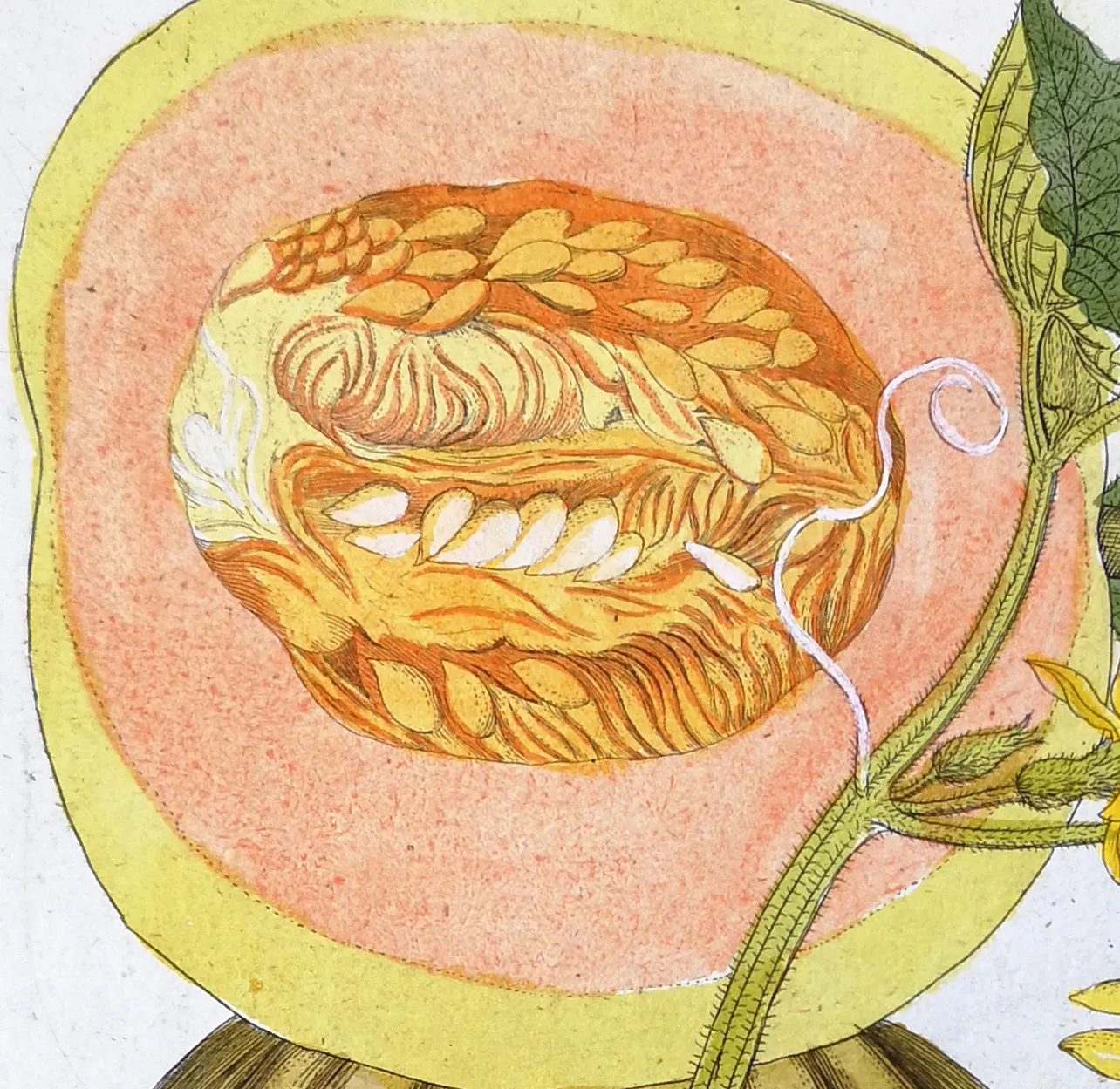
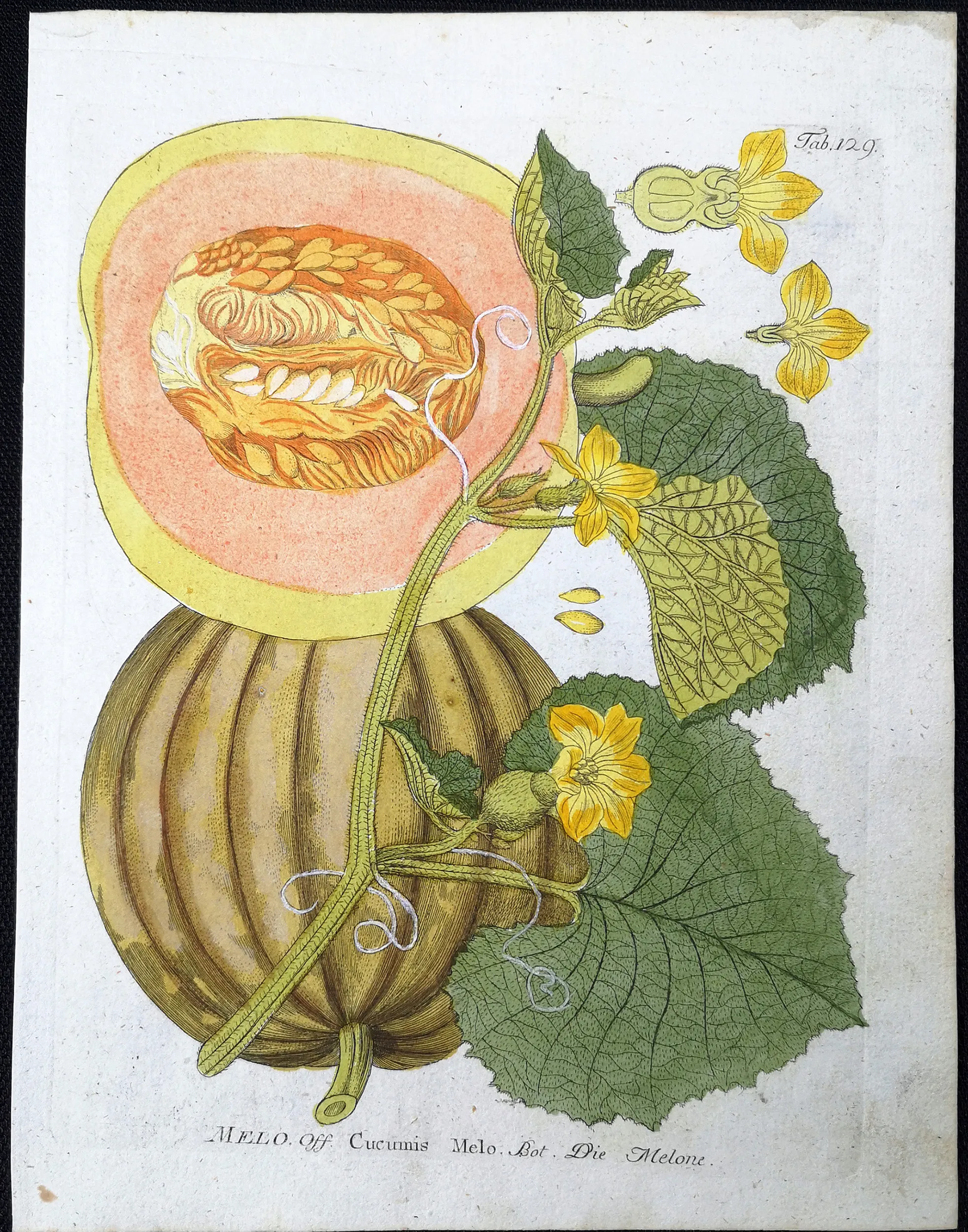


Vibrant engraving of the melon fruit with botanical cross-section and climbing tendrils.
 Delivery policy
Your print will be carefully prepared and shipped worldwide via trusted couriers (UPS or similar).
 Authentic antique prints
Original engravings from the 17th–19th century.
This original 18th-century hand-colored engraving depicts the Melon (Cucumis melo), illustrated by Vietz with a calm balance of botanical clarity and decorative grace.
Selected for its refined linework and harmonious palette, the composition brings the precision of early botanical publishing into contemporary interiors.
— • —
The plate presents a clean, centred arrangement designed for legibility: foliage and floral elements are rendered with measured detail, while hand-colouring enhances volume without obscuring the engraving. The overall tonal restraint lends the work an elegant presence, suitable for curated botanical displays, studies, or refined living spaces.
Issued within Vietz’s Icones Plantarum, these plates belong to an era when natural history was disseminated through finely printed and hand-finished images, intended to educate as well as to delight. Vietz’s approach privileges legibility, calm composition, and an enduring decorative harmony.
For further context on Vietz and the visual language of Icones Plantarum, see our editorial feature: Vietz – Icones Plantarum.
The print is in very good condition. The paper is laid. The surface is very Clean, no toning, no foxing, very ligh finger sign right bottom coner. The plate mark is fully visible, and the margins are generous.
Each print is examined and presented individually, following our curatorial approach, and offered as an authentic period work without restoration that might compromise its historical integrity.
Specific References
Elegant hand-colored peony engraving with rich pink petals and botanical detail, perfect for collectors and refined interiors.
Fine hand-colored engraving of a Provence rose, rendered with soft shading and botanical charm, ideal for elegant décor.
Graceful depiction of the bay laurel branch with glossy leaves and white blossoms.
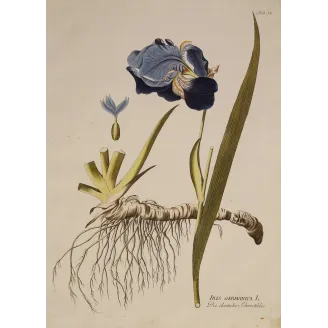
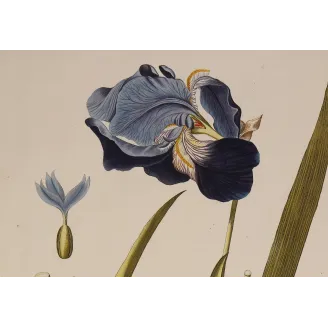
Refined hand-colored engraving of the Florentine iris with elegant petals and detailed rhizome structure.
Elegant depiction of the mezereum plant with slender leaves and red berries.
Detailed engraving of oak leaves and acorns, ideal for rustic and natural interiors.
Highly decorative engraving of sea squill with large bulb, stems and delicate flowering spike.
Fine botanical engraving of oregano with delicate flowering stems and aromatic leaves.
Graceful depiction of Strychnos colubrina with slender leaves and vivid red fruits.
Delicate engraving of the saffron crocus with its iconic purple blooms and vivid stigmas.
Detailed antique print of the black mulberry with lush foliage and ripe fruit.
Refined botanical engraving of sand leek with bulb, flowering head and dissected floral details.
Rich natural history engraving of the walnut tree with fruit, husk and detailed botanical elements.
Decorative engraving of a medicinal bracket fungus with rich brown and cream textures.
Striking engraving of a columnar euphorbia, with architectural forms and vivid green tones.
Graphic depiction of the larch bracket fungus with bold grey and ochre surfaces.
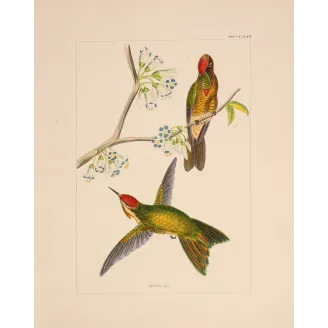
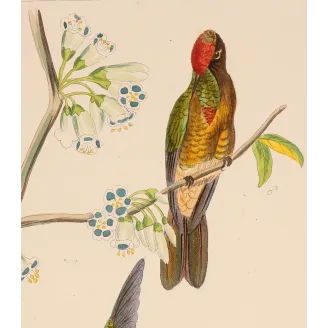
Original nineteenth-century hand-colored engraving from the rare Sylphae section associated with Ludwig Reichenbach's Trochilinarum Enumeratio. Plate 821 depicts two brilliantly coloured hummingbirds among delicate white blossoms.
Charming pear study by Redouté, showing delicate blossom and ripening fruit. Balanced and refined.
An original eighteenth-century botanical engraving depicting Iris germanica, published in Joseph Jacob von Plenck's celebrated Icones Plantarum Medicinalium. Printed on fine laid paper bearing the Honig watermark, the sheet combines scientific precision with the refined artistic craftsmanship of the Viennese botanical school.
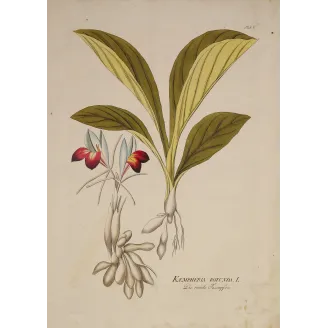
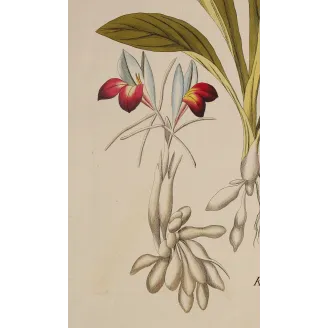
Original eighteenth-century botanical engraving depicting Kaempferia rotunda, published in Vienna by Joseph Jacob von Plenck for Icones Plantarum Medicinalium (Plate 5). The elegant composition combines broad architectural foliage, richly coloured crimson flowers and delicately modelled underground tubers, demonstrating the extraordinary refinement of Plenck's Viennese botanical school. Printed on fine Honig laid paper with visible "IV" watermark.
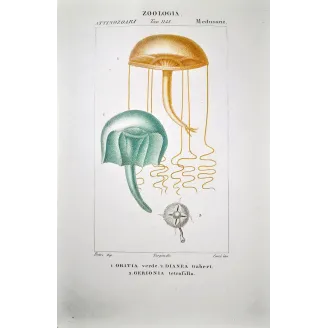
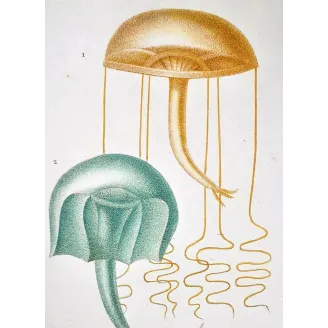
Trio of rare jellyfish types in soft tones, hand-colored lithograph by Prêtre.
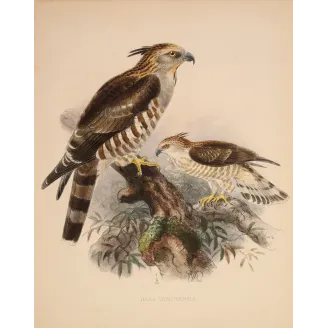
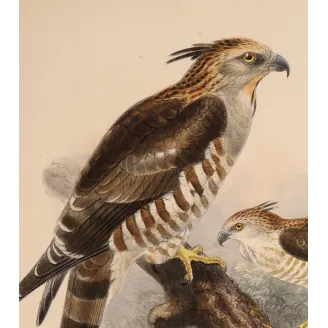
Original antique bird print depicting Baza ceylonensis (Ceylon Hawk-Eagle), illustrated by J.G. Keulemans for A History of the Birds of Ceylon. A striking Victorian ornithological lithograph featuring a refined pair of raptors with strong decorative presence.
An original 18th-century hand-colored engraving depicting a Custard Apple (Annona sp.), from Philip Miller’s Figures of the Most Beautiful, Useful, and Uncommon Plants. Combining botanical precision with decorative clarity, the composition features both the plant and its distinctive fruit in sectional detail.
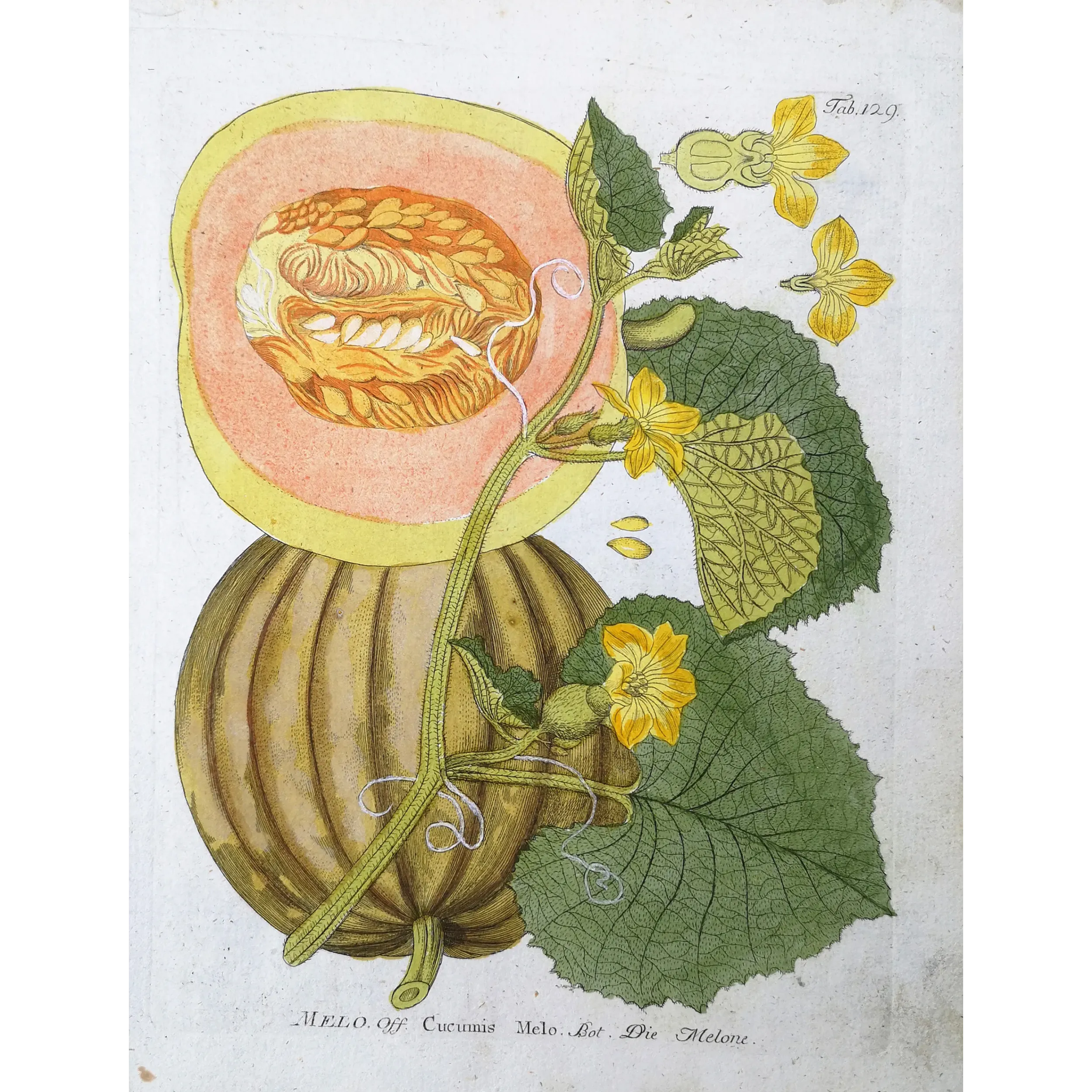
Vibrant engraving of the melon fruit with botanical cross-section and climbing tendrils.