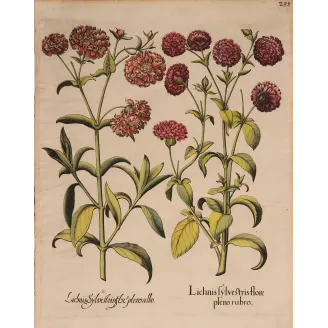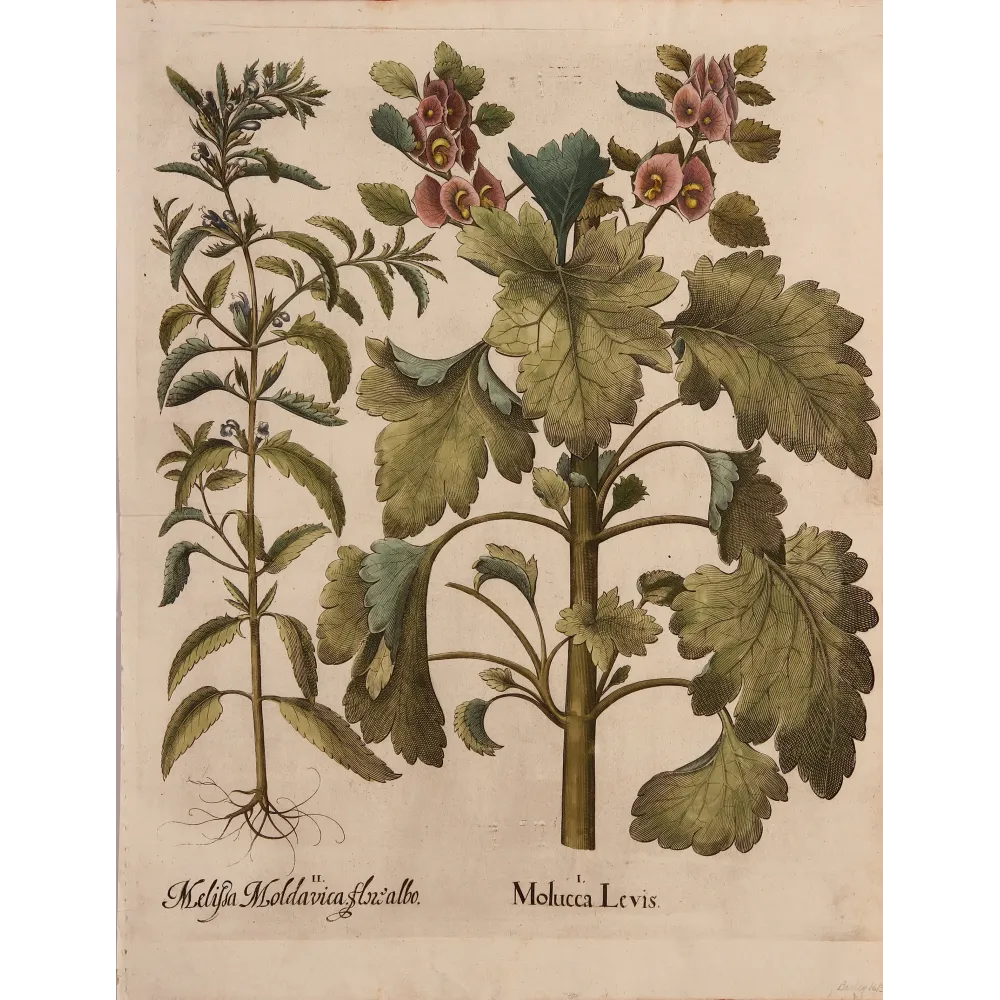
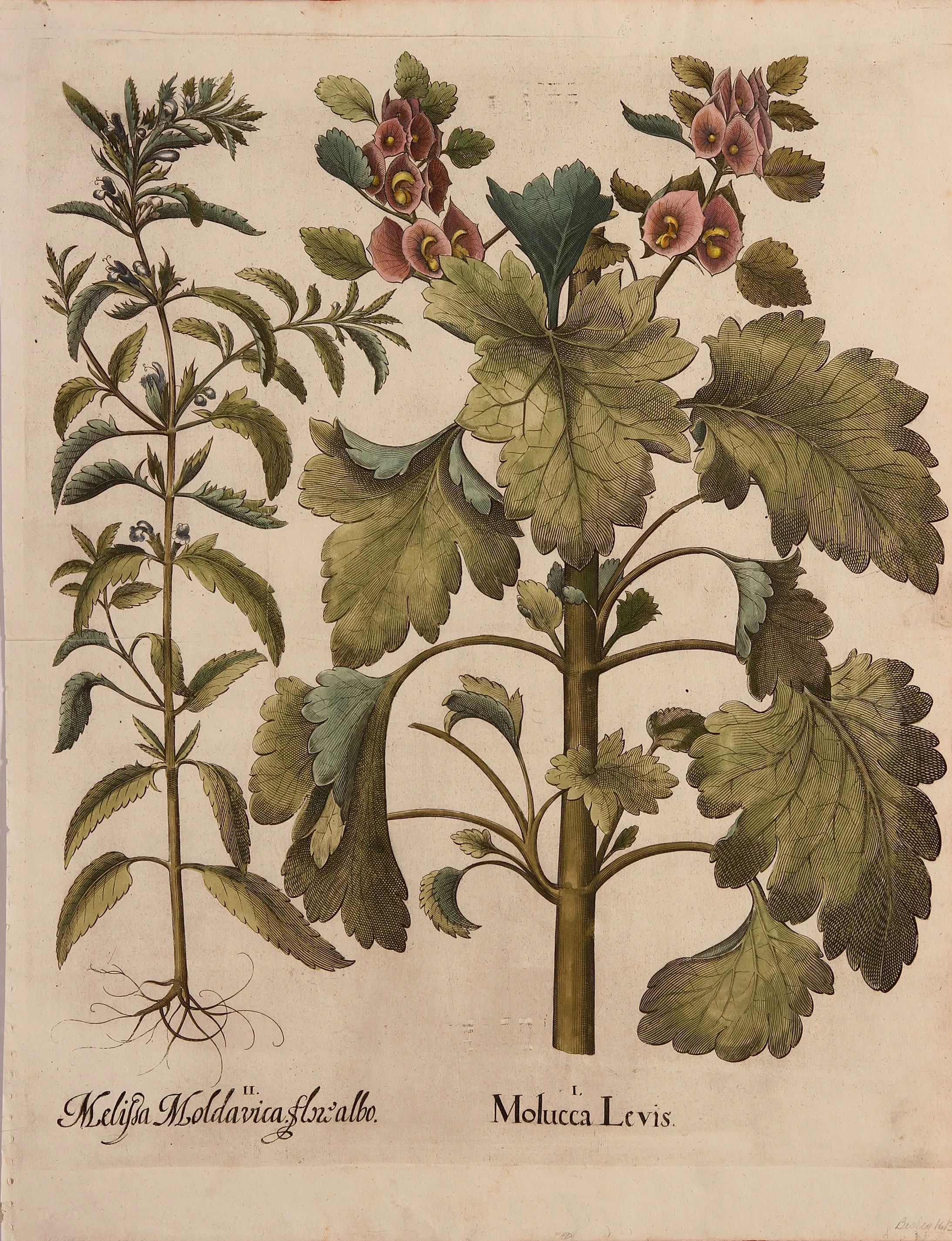
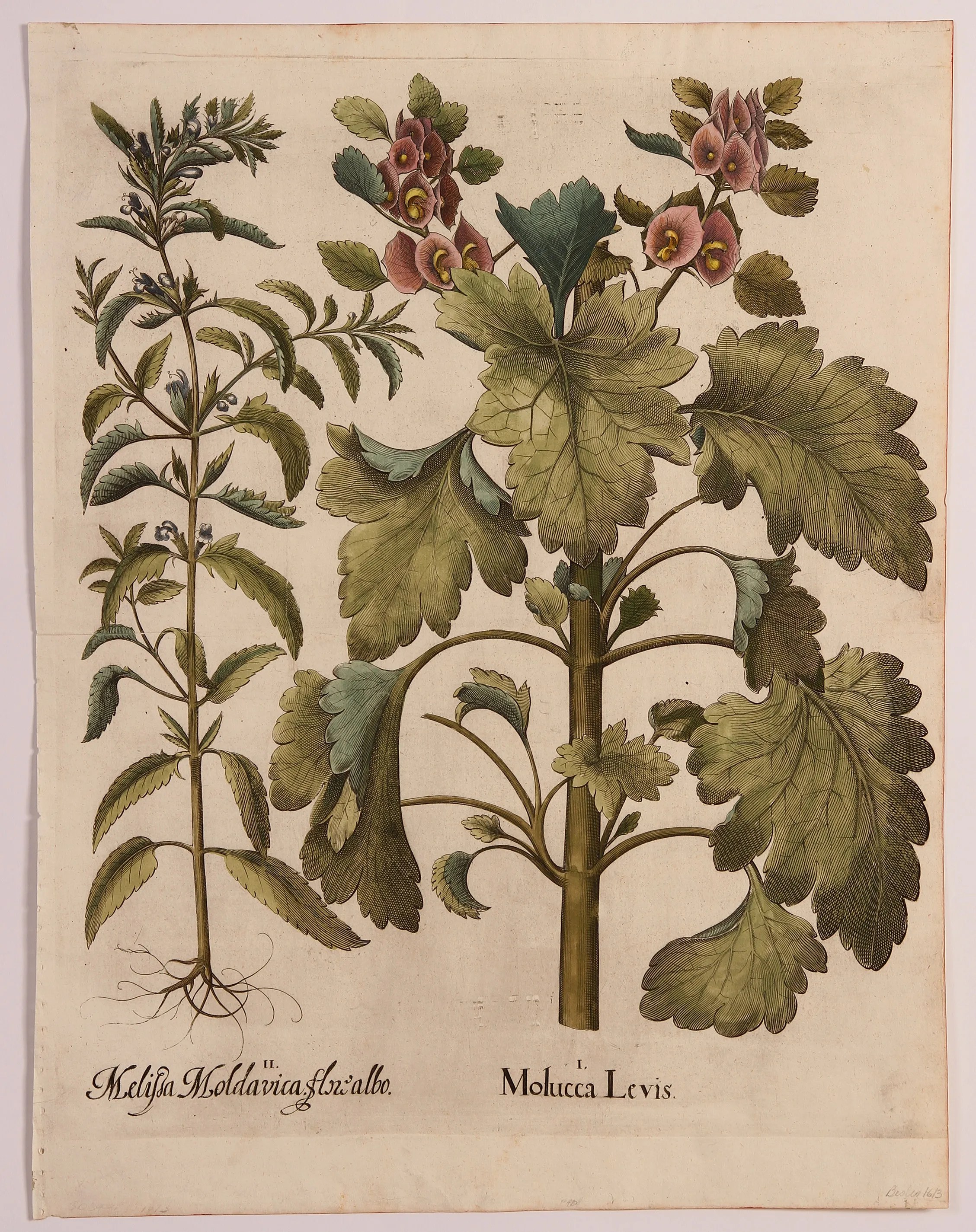
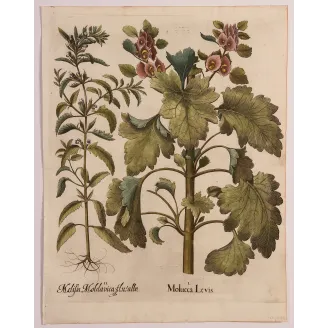
Original seventeenth-century hand-coloured botanical engraving depicting <em>Molucca Levis</em> and <em>Melissa Moldavica flor. albo</em>, from Basilius Besler’s monumental <em>Hortus Eystettensis</em>, published in 1613. The composition contrasts the slender architecture of the Melissa with the broad, sculptural foliage and distinctive pink-mauve flowers of the Molucca. Printed on substantial early laid paper with approximately 32 mm chain-line spacing and a visible, presently
 Delivery policy
Your print will be carefully prepared and shipped worldwide via trusted couriers (UPS or similar).
 Authentic antique prints
Original engravings from the 17th–19th century.
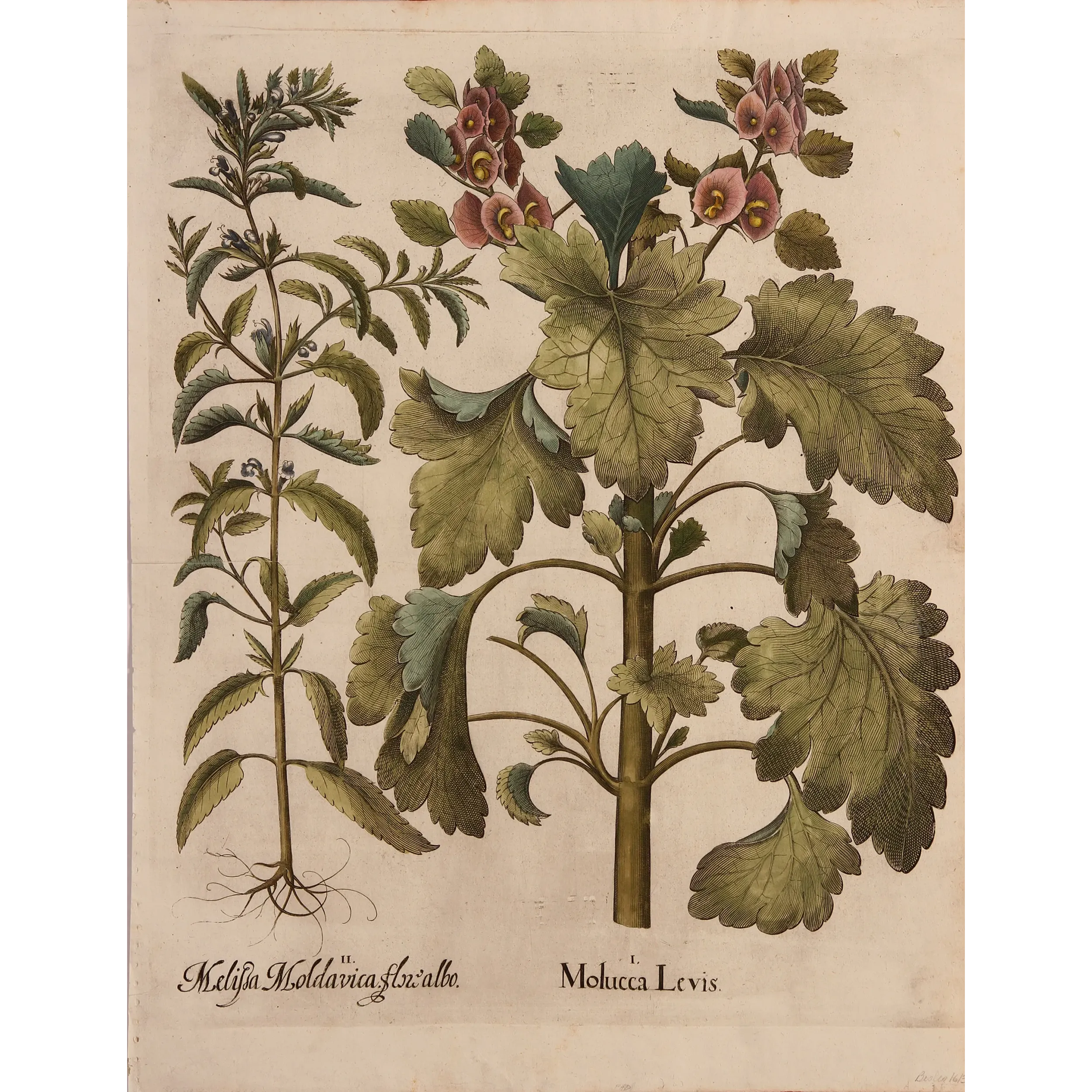
This original hand-coloured botanical engraving from Basilius Besler’s Hortus Eystettensis, first published in 1613, presents two plants historically inscribed Melissa Moldavica flor. albo and Molucca Levis. Sharing the same large sheet, they occupy the page in completely different ways: the Melissa rises through a slender vertical framework, while the Molucca expands through broad sculptural foliage and distinctive pink-mauve flowering forms.
The contrast is immediate. On the left, fine stems, narrow leaves and exposed roots create a light and linear structure. On the right, the Molucca develops through a powerful central stem and overlapping lobed leaves whose scale and density dominate the composition.
Two plants share the same sheet, yet they inhabit it in completely different ways.
The composition is organised around a striking contrast of botanical scale. The left-hand Melissa develops vertically through a fine central stem, successive lateral branches and comparatively small leaves. Its exposed roots remain visible at the base, reinforcing the delicacy and structural clarity of the plant.
The Molucca Levis, by contrast, occupies the page through mass. Its robust central stem supports a succession of large lobed leaves that overlap and turn in different directions, creating broad areas of botanical volume across the right and central portions of the sheet.
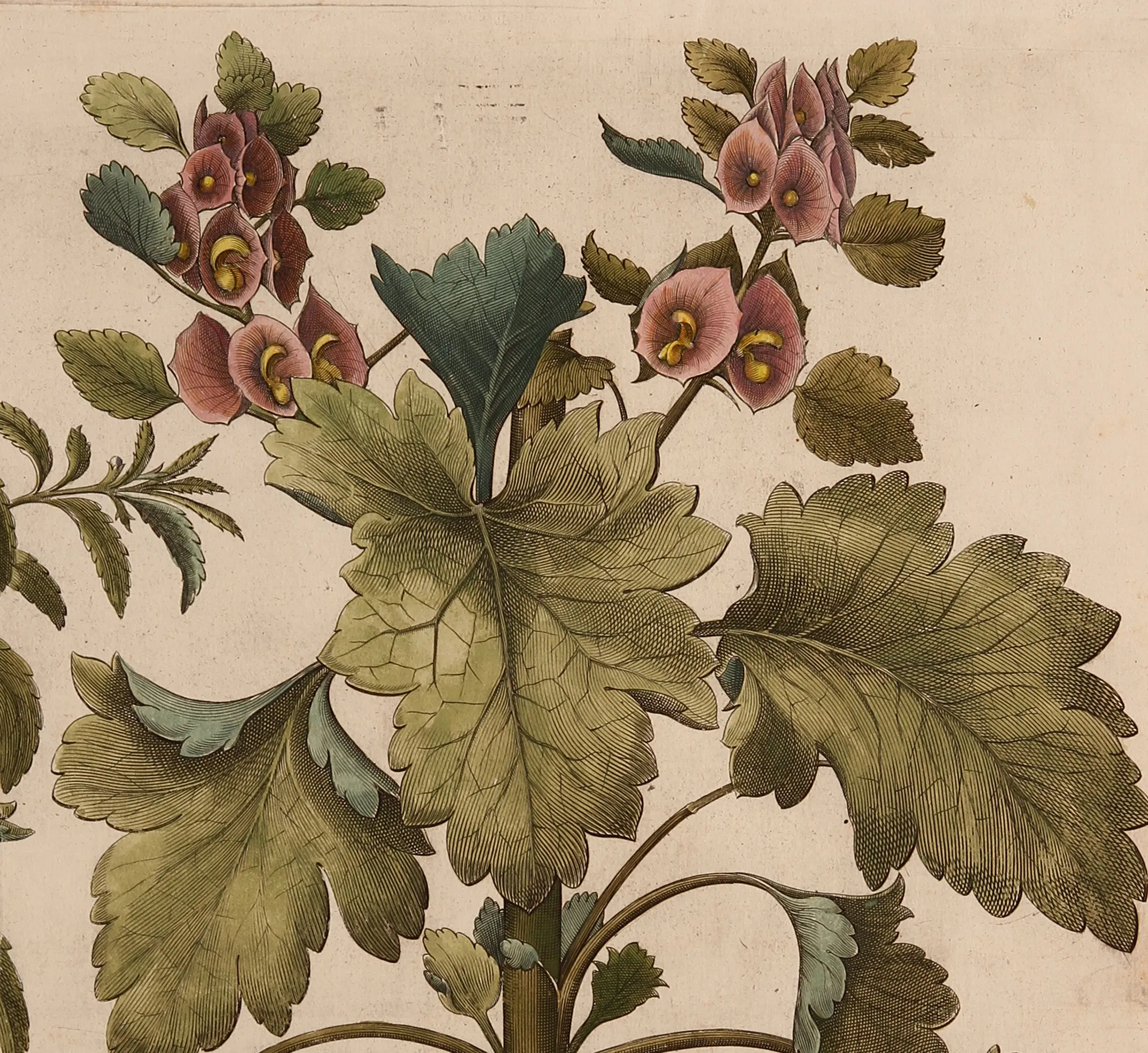
The leaves are the principal visual force of the composition. Their surfaces are articulated through dense engraved hatching that follows the direction of the veins, describing curvature, overlap and differences of plane with remarkable precision.
Hand colouring reinforces this structure rather than obscuring it. Olive, yellow-green and cooler blue-green passages differentiate individual leaves and help distinguish upper and lower surfaces, while darker engraved modelling remains clearly visible beneath the colour.
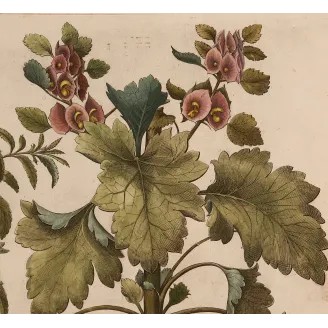
The flowering forms of the Molucca introduce a contrasting chromatic register. Soft pink and mauve tones appear above the dominant green mass, while yellow details at their centres create small points of intensity within an otherwise restrained palette.
The Melissa provides an important visual counterweight. Its thinner silhouette and open branching structure prevent the large Molucca from overwhelming the entire sheet. The two plants therefore establish a balance through difference rather than symmetry.
The generous unprinted background preserves this distinction. Each specimen remains clearly legible from root to flower, allowing the eye to move between fine linear growth and broad sculptural foliage without the two structures merging into a single decorative mass.
The historical inscriptions identify the two plants as Melissa Moldavica flor. albo and Molucca Levis. These names belong to the botanical and horticultural vocabulary of the early seventeenth century and should not automatically be treated as equivalent to modern taxonomic designations.
The engraved image itself preserves a rich record of botanical form. The Melissa is represented with exposed roots, upright branching stems and comparatively narrow foliage, while the Molucca is characterised by a more substantial stem, broad lobed leaves and conspicuous flowering structures.
Placed together, the two specimens offer an unusually clear contrast of habit and architecture. Their differences can be read not only through the flowers but through the entire organisation of root, stem and foliage.
The identification presented here therefore preserves the historical nomenclature engraved on the sheet rather than imposing modern botanical terminology where the seventeenth-century source reflects an earlier system of classification.
The large folio format of the Hortus Eystettensis allowed Besler and his collaborators to place botanically different specimens together without sacrificing their individual clarity. In this sheet, contrast itself becomes one of the principal visual experiences.
The Melissa is almost entirely linear. Its visual character depends upon the rise of the stem, the rhythm of the branches and the repeated interruption of small leaves. Even the exposed root system remains light and open.
The Molucca follows the opposite logic. It occupies space through broad surfaces. Each lobed leaf forms a substantial visual plane, and their repeated overlaps create a layered structure that feels almost architectural.
The large leaves are especially sophisticated. Some turn outward, others fold toward the viewer, while several overlap enough to create deep zones of shadow. Engraved hatching and hand-applied colour work together to make these changing planes readable.
The flowers do not dominate immediately. Instead, they emerge above the great foliage as concentrated areas of pink and mauve. Their relatively small scale makes the surrounding leaves appear even larger and reinforces the unusual structure of the plant.
The relationship between the two specimens can therefore be understood through a series of visual oppositions: fine and broad, open and dense, linear and sculptural, delicate and substantial.
The sheet does not require these differences to be resolved into a single decorative harmony. Their coexistence is precisely what gives the image its character.
Besler’s large sheet becomes a field in which botanical structure can be understood through contrast.
Direct examination of this impression reveals an early laid sheet measuring approximately 53.4 × 41.0 cm. The handmade paper shows an approximate chain-line spacing of 32 mm, preserving the structural pattern created by the papermaking mould.
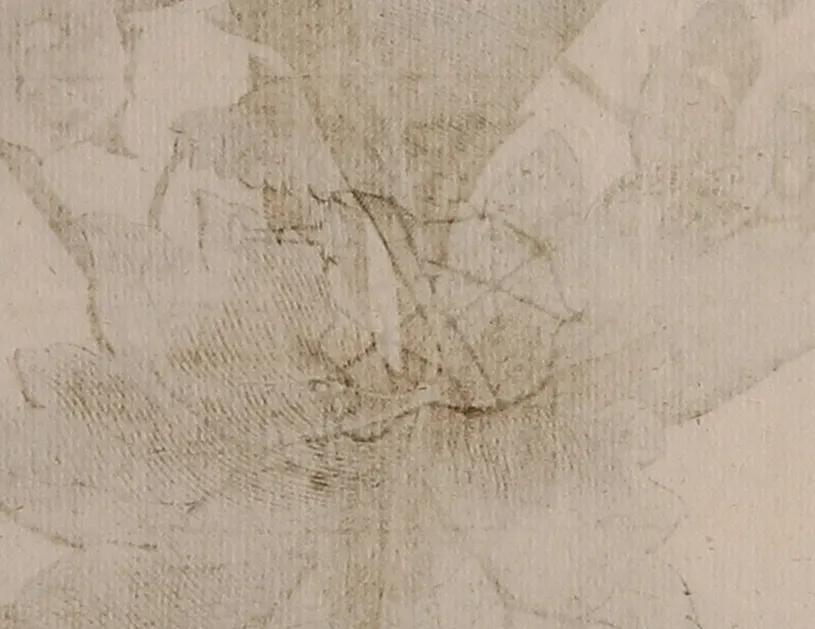
A watermark is visible within the sheet, but its surviving form has not been securely identified. It differs from the pine-cone watermark observed on other Besler impressions within the Prantique collection.
The watermark is therefore recorded as direct material evidence observed on this individual impression; no attribution to a particular paper mill, issue or edition is proposed.
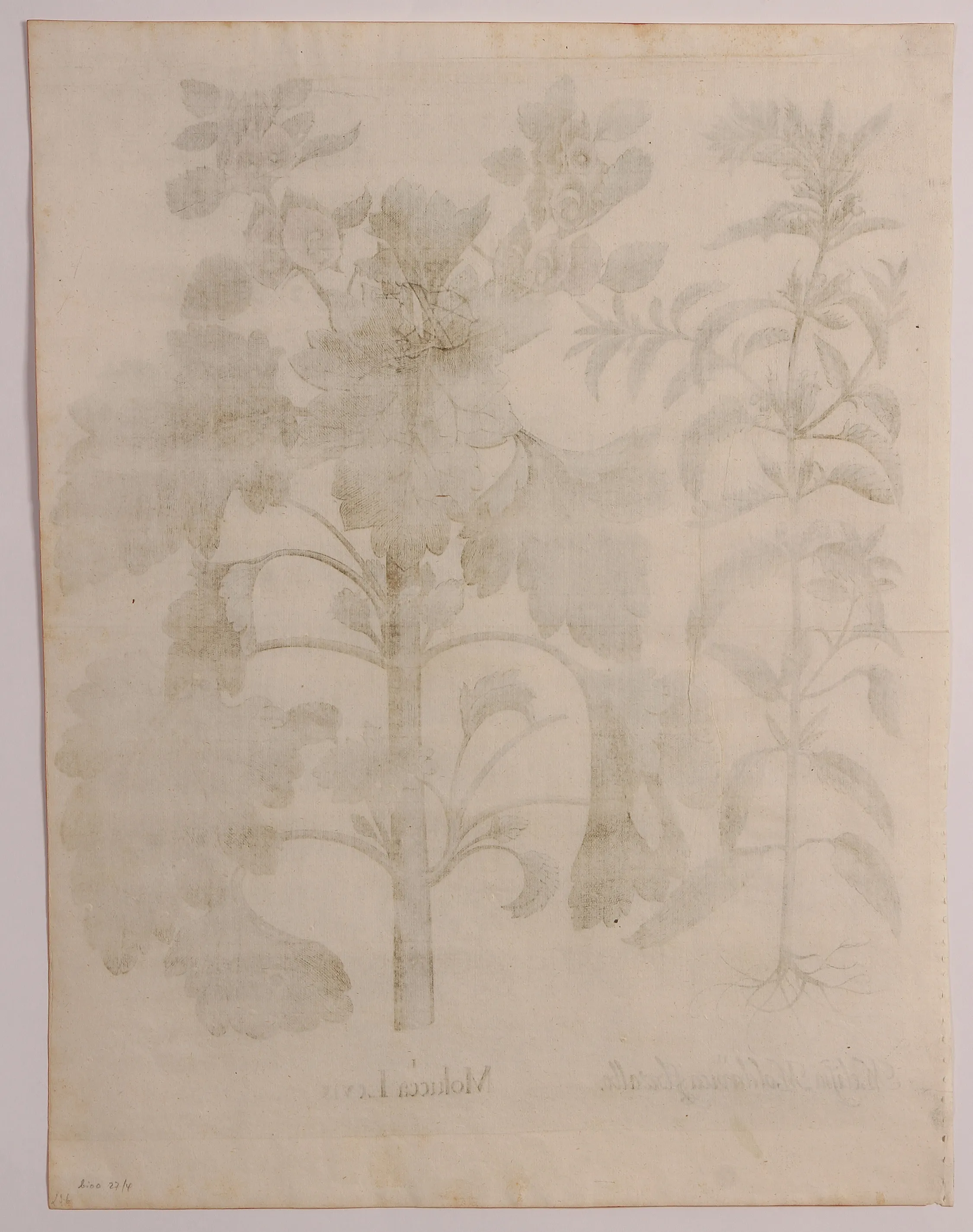
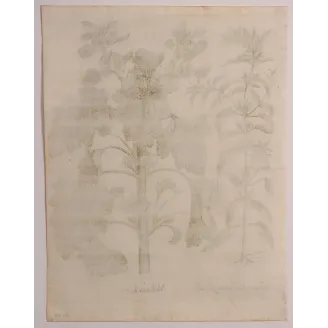
The verso is unprinted, allowing the physical structure of the laid paper and the show-through of the engraved image to remain readily visible. The approximately 32 mm chain-line spacing also differs slightly from the approximately 30 mm spacing observed on several other sheets examined within the same collection.
No conclusion is drawn from this difference in isolation. It is retained as part of the material record of the individual sheet.
The watermark is important not because it provides an automatic answer, but because it preserves evidence that can still be observed and documented four centuries later.
Published in 1613, Basilius Besler’s Hortus Eystettensis transformed the celebrated garden at Eichstätt into one of the most ambitious botanical monuments of early modern Europe. Its monumental engravings recorded plants through an exceptional combination of botanical observation, large-scale composition and elaborate printmaking.
The great folio format allowed individual specimens to be presented with remarkable clarity, but it also created space for comparison. Different plants could occupy the same sheet while retaining their own structural identities.
This impression demonstrates that possibility particularly well. The slender architecture of the Melissa and the broad sculptural foliage of the Molucca remain visually distinct, allowing botanical difference itself to become part of the experience of the image.
Our Historical Perspective explores the broader relationship between the living garden, the printed image and the passage of time through Besler’s own prefatory words, contemporary testimony and surviving pages of the work.
Basilius Besler and the Hortus Eystettensis: A Garden Against Time →
Explore the Basilius Besler – Hortus Eystettensis Collection →
Very good overall condition for an original early seventeenth-century botanical engraving. The laid paper remains structurally sound and the botanical composition retains strong visual presence and excellent definition.
The hand colouring remains well preserved and finely balanced. The foliage retains extensive variation across olive, yellow-green and cooler blue-green tones, while the pink-mauve flowering structures of the Molucca remain clear and visually distinct. The engraved modelling is strongly legible beneath the colour throughout the composition.
Natural age-related toning, light creasing and historical handling traces are visible across the sheet, together with minor marginal irregularities and wear consistent with the age and physical history of the impression.
The plate-mark area along the right side is no longer preserved, consistent with historical trimming of that edge. This does not materially affect the principal botanical composition or the historical inscriptions beneath the plants.
The verso is unprinted. A watermark remains visible within the laid sheet, although its surviving form has not been securely identified.
Please examine the professional high-resolution photographs of both recto and verso for a complete visual assessment. Additional photographs are available upon request.
Historical botanical inscriptions: Melissa Moldavica flor. albo; Molucca Levis
Work: Hortus Eystettensis
Author / project director: Basilius Besler (1561–1629)
Place of publication: Nuremberg
Date: 1613
Technique: Original copper engraving with hand colouring
Artistic tradition: Early seventeenth-century botanical illustration
Paper: Early laid paper
Chain-line spacing: approx. 32 mm
Watermark: Present — unidentified during direct examination
Verso: Unprinted
Plate mark: Right plate-mark area no longer preserved, consistent with historical trimming of the edge
Sheet size: approx. 53.4 × 41.0 cm
Condition: Very good overall condition, with natural age-related toning, light creasing, marginal wear and historical trimming of the right plate-mark area
Photography: Professional high-resolution photography of recto and verso
Additional photographs: Available upon request
Authenticity: Original seventeenth-century print — never a modern reproduction

Specific References
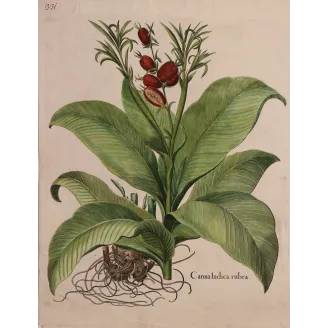
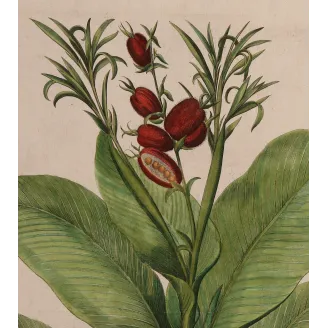
Original seventeenth-century hand-colored botanical engraving of Canna Indica rubra from Basilius Besler's monumental Hortus Eystettensis, first published in 1613. The imposing composition combines sweeping green foliage, exposed roots and vivid red botanical forms, while the laid-paper sheet preserves a watermark and the remarkable printed autumnal heading “SECVNDVS ORDO COLLECTARVM PLANTARVM AVTVMNALIVM” on its verso.
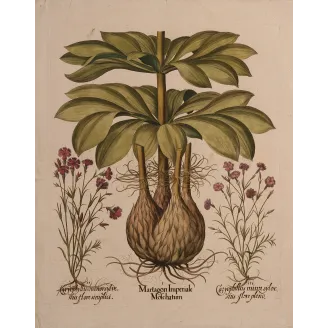
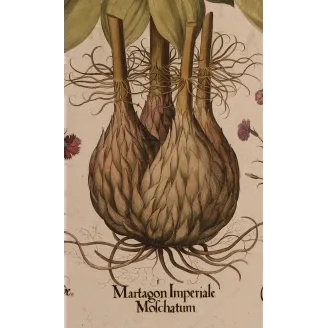
Original seventeenth-century hand-coloured botanical engraving from Basilius Besler’s monumental <em>Hortus Eystettensis</em>, published in 1613. This exceptionally large sheet preserves the lower part of an originally two-sheet composition, centred upon the imposing <em>Martagon Imperiale Molchatum</em> and accompanied by two flowering <em>Caryophyllus</em> forms. The verso retains the remarkable original typographical heading <em>Tertius Ordo Collectarum Plantarum Æstivalium</em>, material evidence of the seasonal organisation of Besler’s great botanical work.
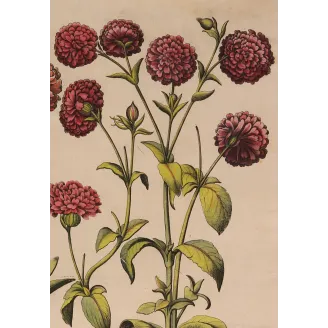
Original seventeenth-century hand-coloured botanical engraving depicting two forms historically inscribed <em>Lychnis Sylvestris</em>, from Basilius Besler’s monumental <em>Hortus Eystettensis</em>, published in 1613. The two flowering specimens create an exceptional comparative composition, with richly articulated red and crimson blossoms set against restrained green foliage. Printed on substantial laid paper with an approximately 30 mm chain-line spacing and a visible <em>pomme de pin</em> (pine-cone) watermark.
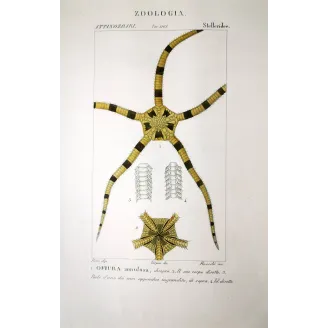
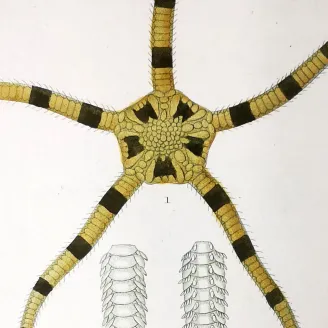
Antique print of Ophiura annulosa (brittle star) with anatomical details from a 19th-century zoological dictionary.
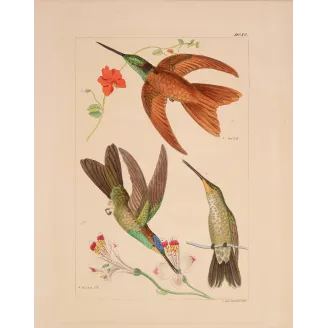
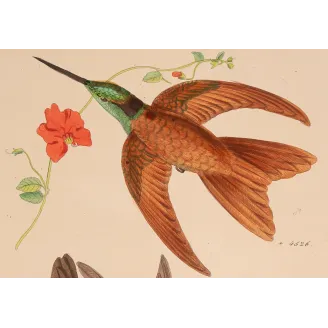
Original nineteenth-century hand-colored engraving depicting Coeligena sagittata and the hummingbird identified by Reichenbach as Warszewiczii (later associated with Helianthea iris Gould). A visually striking composition featuring emerald plumage, warm copper tones and two botanical species from Northern Peru.
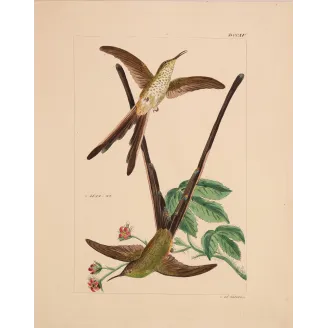
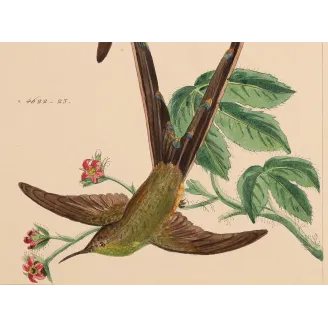
Original nineteenth-century hand-colored engraving depicting Victoria's Trainbearer (Lesbia victoriae), a rare Andean hummingbird illustrated by Ludwig Reichenbach in Trochilinarum Enumeratio.
Elegant olive branches with vivid green leaves and fruit in subtle yellow tones.
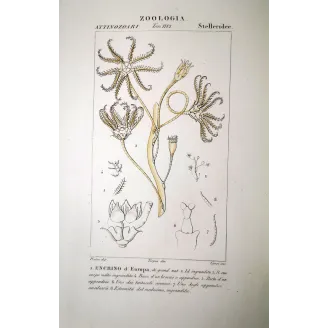
Elegant antique depiction of a crinoid with anatomical studies and fine detailing.
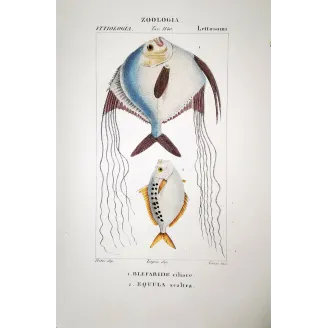
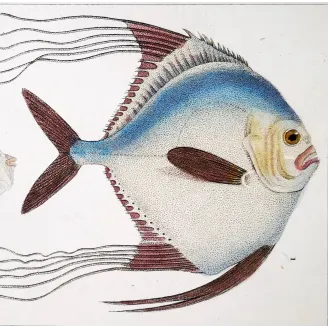
Delicate 19th-century hand-colored engraving of a ponyfish with companion species, ideal for marine-themed interiors and collectors.
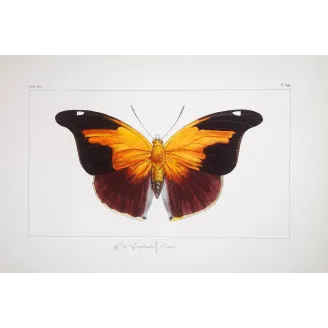
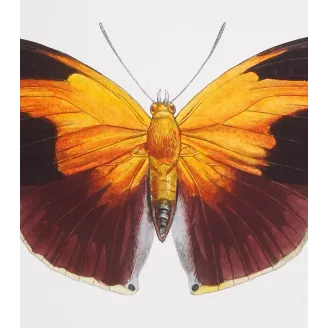
Original 1835 hand-colored engraving of Nymphalis orion, drawn and engraved by Pauquet under the scientific direction of Hippolyte Lucas for Exotic Butterflies.
Original seventeenth-century hand-coloured botanical engraving depicting <em>Molucca Levis</em> and <em>Melissa Moldavica flor. albo</em>, from Basilius Besler’s monumental <em>Hortus Eystettensis</em>, published in 1613. The composition contrasts the slender architecture of the Melissa with the broad, sculptural foliage and distinctive pink-mauve flowers of the Molucca. Printed on substantial early laid paper with approximately 32 mm chain-line spacing and a visible, presently