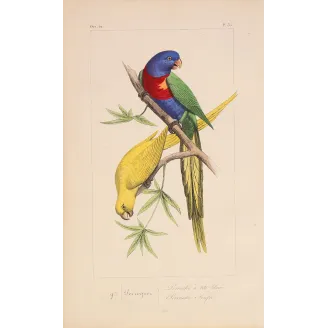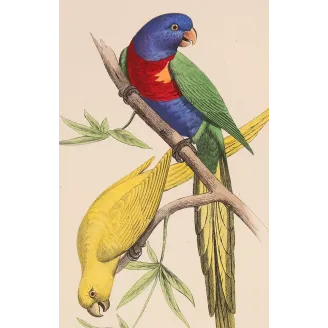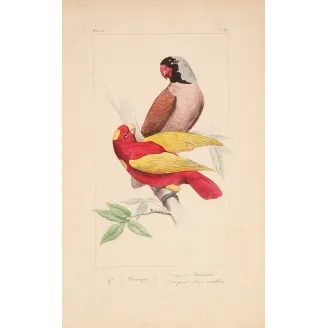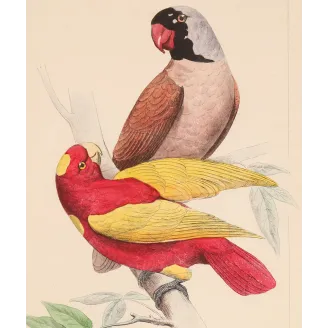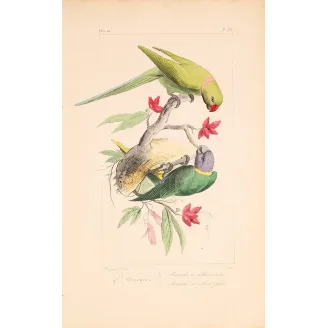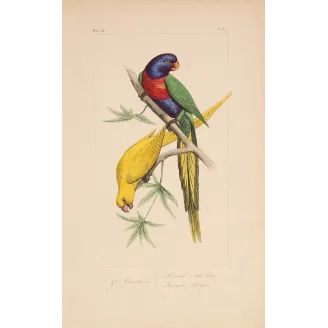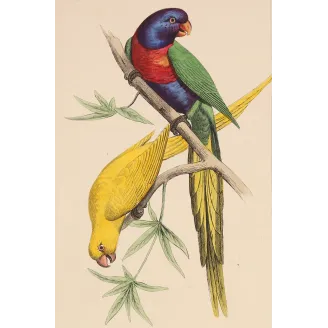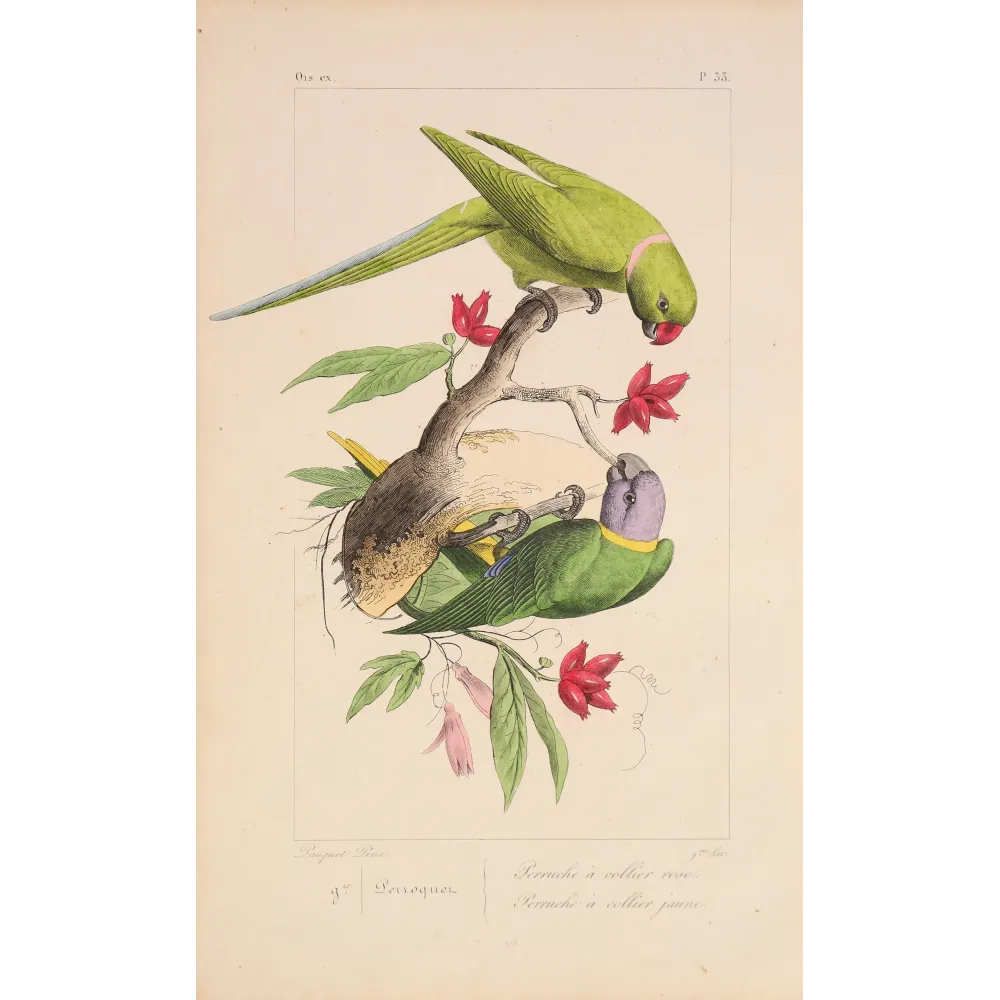
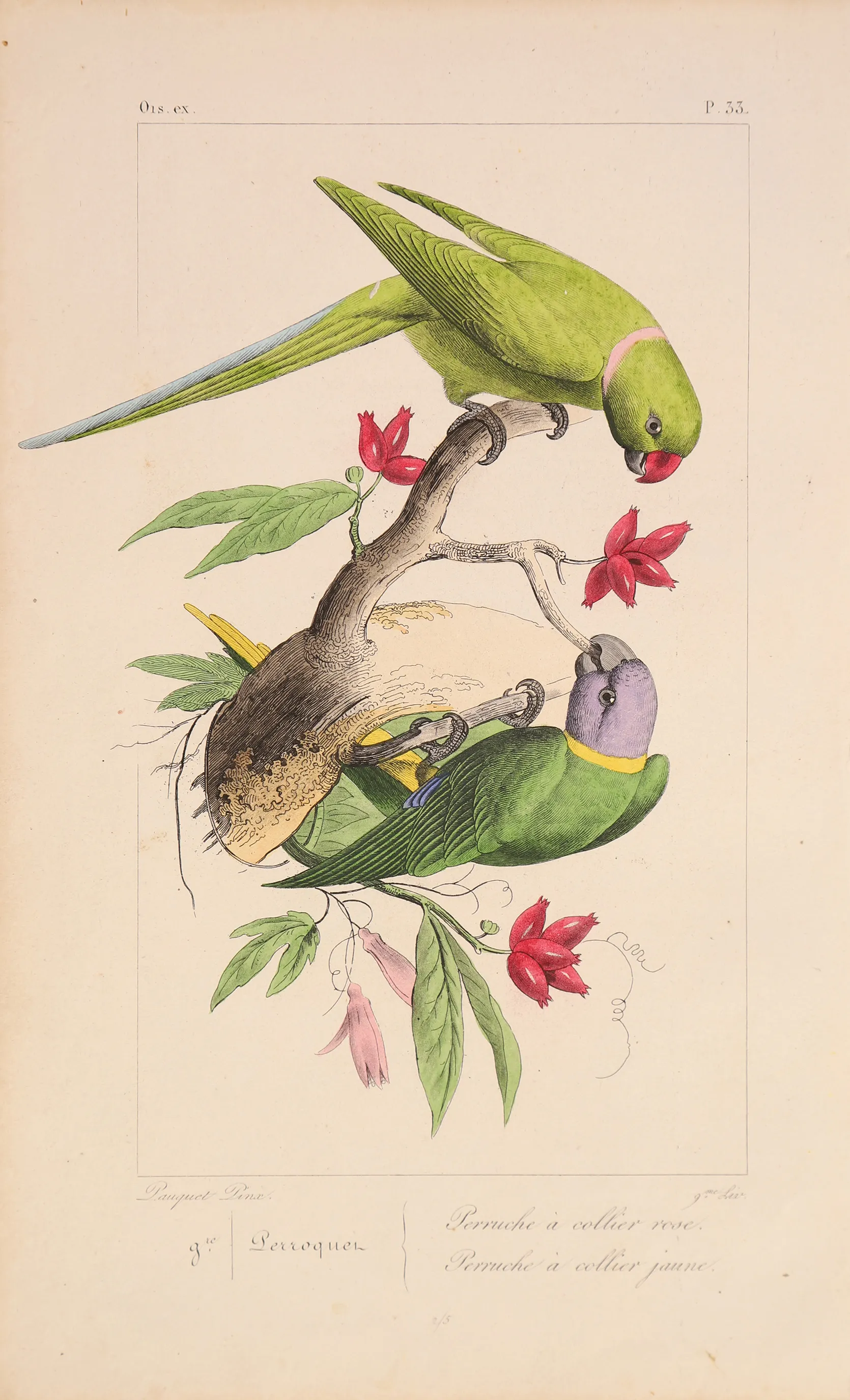
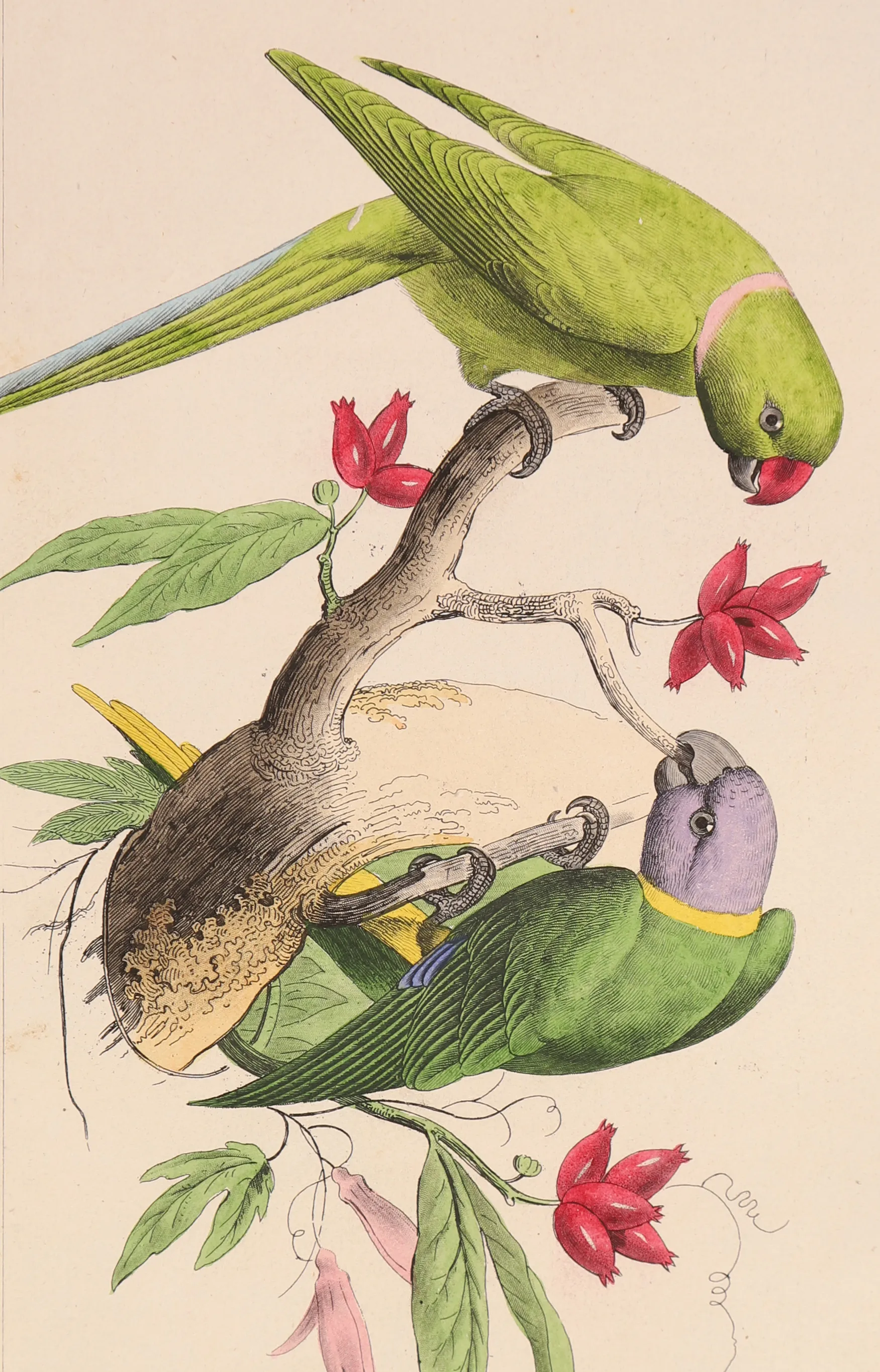
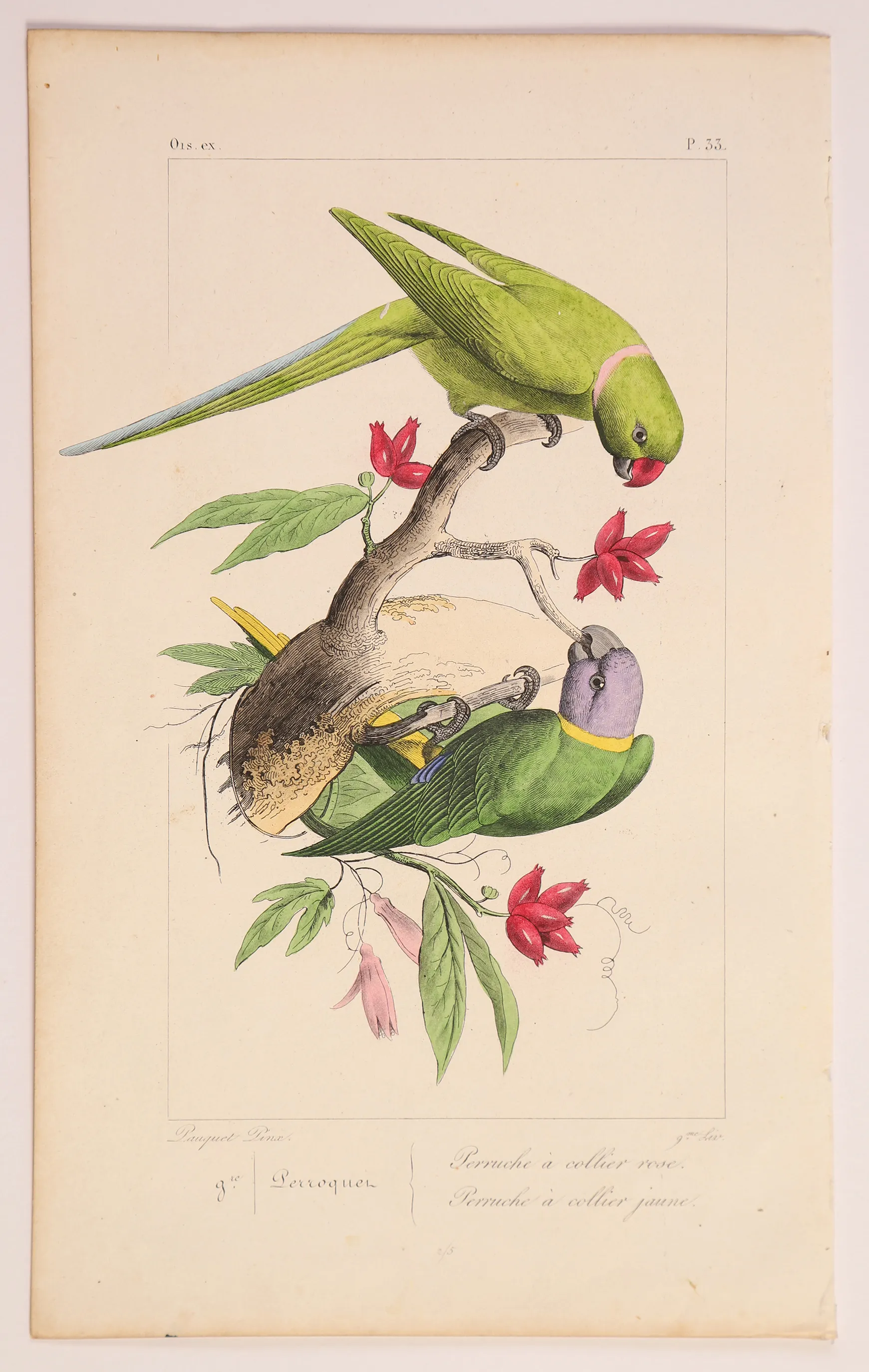
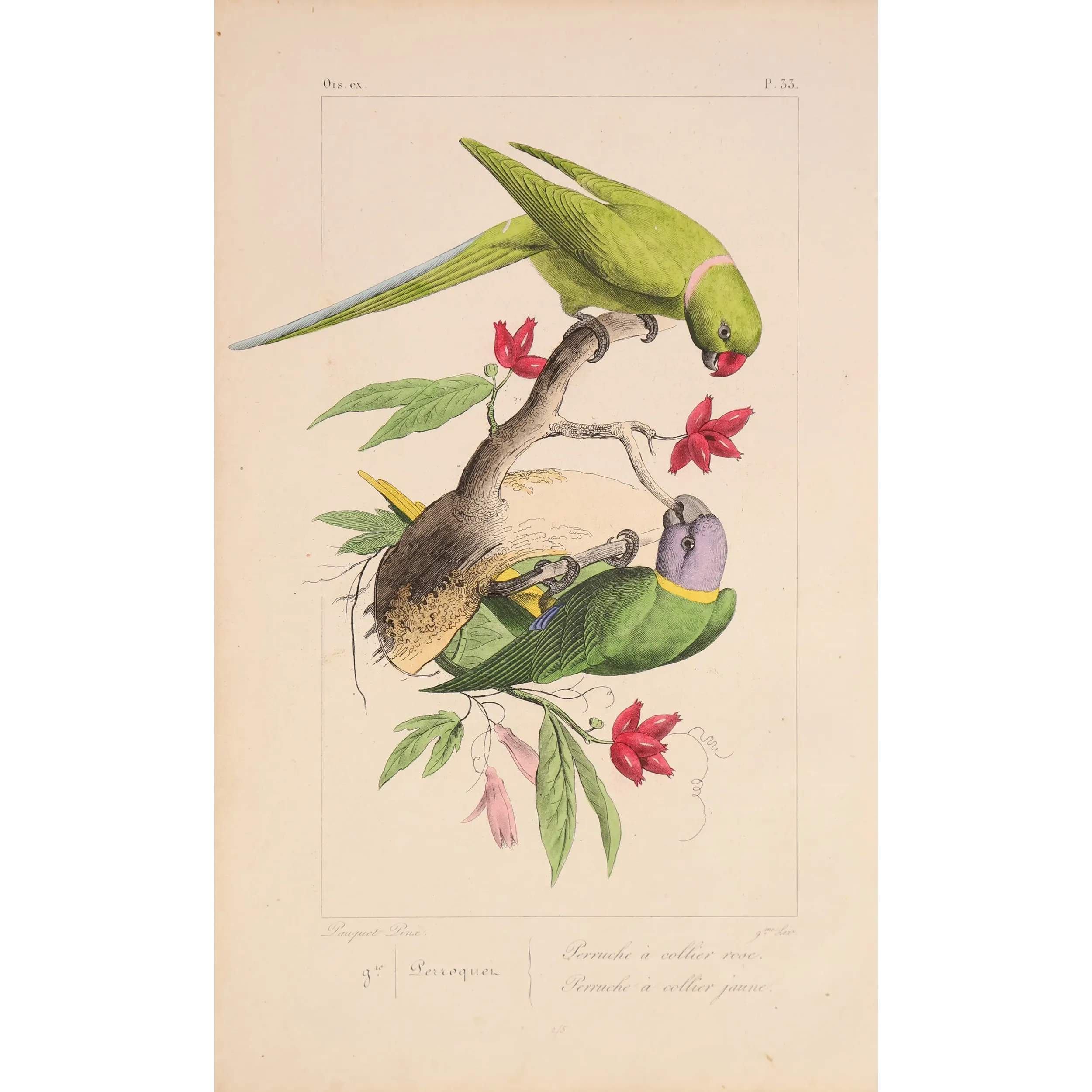
Vivid 19th-century hand-colored engraving depicting two parakeets in dynamic interaction, with striking green plumage and contrasting red and violet accents. A highly decorative exotic bird composition.
 Delivery policy
Your print will be carefully prepared and shipped worldwide via trusted couriers (UPS or similar).
 Authentic antique prints
Original engravings from the 17th–19th century.
```html
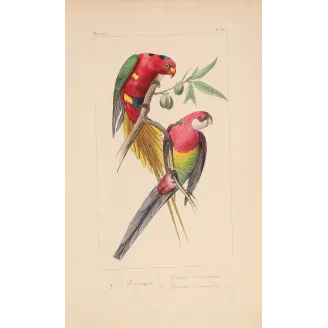
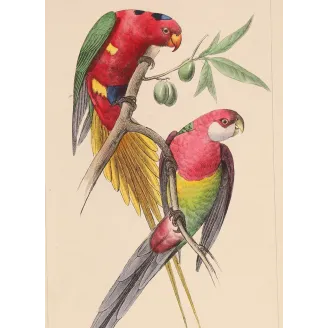
This exceptional original first-edition plate depicts two vividly coloured parakeets from C. L. Lemaire’s Histoire Naturelle des Oiseaux Exotiques, published in Paris in 1836. The historical titles printed directly on the sheet identify the subjects as Perruche à collier rose and Perruche à collier jaune. The figures were created by Pauquet, described in the original publication as peintes d’après nature and engraved on steel.
The plate embodies one of the most distinctive qualities of the work: the birds are not presented as static specimens, but as living subjects caught within a moment of action. Their opposing postures, the inclined branch and the direction of their heads create a subtle visual exchange in which observation and artistic construction become inseparable.
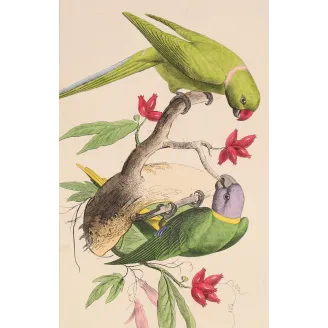
The original hand colouring remains exceptionally fresh and luminous. Direct examination of this individual impression reveals selective gum arabic confined to the green wing and back areas of the lower bird. These limited reflective passages increase the physical presence of the lower subject while the upper bird and surrounding botanical elements retain a predominantly matte appearance.
The composition is organised around a compact branching structure that supports two very different physical attitudes. The upper parakeet shifts its weight decisively forward and downward towards the brilliant red flower, while the lower bird rotates around the branch in an opposing direction. This contrast prevents the plate from becoming symmetrical or static.
Pauquet constructs movement through a sequence of small but carefully controlled decisions. The inclination of the branch establishes direction; the position of the claws makes the birds’ balance physically credible; bodies, heads and tails continue or oppose those directions across the sheet.
The chromatic structure reinforces this movement. Fresh greens dominate both birds, interrupted by the rose-red beak and collar of the upper subject, the violet-blue head and yellow collar of its companion, and the intense crimson flowers distributed around the composition. These accents guide the eye naturally between the two figures.
In this particular impression, the surface treatment introduces an additional visual hierarchy. Gum arabic is restricted to selected green areas of the lower bird — principally the wing and back — where the glossy finish catches light differently from the surrounding matte colour. The enhancement is therefore localised rather than general, concentrating luminosity on one subject without altering the balance of the entire plate.
Nothing actually moves on the sheet, yet almost every structural element suggests movement.
Psittacula parakeets were among the exotic birds most admired by nineteenth-century European audiences. Their elongated tails, vivid plumage and animated behaviour made them particularly suited to a natural-history culture fascinated equally by biological diversity and visual beauty.
The historical titles printed directly on the plate identify the birds as Perruche à collier rose and Perruche à collier jaune. These names belong to the zoological language of the period and are preserved here as part of the historical evidence carried by the sheet.
In modern taxonomic terms, the subjects are associated with the Rose-Ringed Parakeet (Psittacula krameri) and the Plum-Headed Parakeet (Psittacula cyanocephala). Preserving both the original nomenclature and the modern identification allows the plate to remain anchored to its nineteenth-century context while making its subjects intelligible through contemporary taxonomy.
Plate P.33 provides an especially clear demonstration of Pauquet’s ability to transform anatomical observation into the suggestion of living movement. The two birds share the same branching structure, yet each occupies it differently, generating a composition based on opposition rather than repetition.
The upper bird bends decisively towards the flower, transferring visual weight along the descending line of its body. Below, the second bird introduces a counter-movement through the opposite orientation of its torso and the upward turn of its head. The tails extend these directional vectors, while the branch connects the two gestures into a single composition.
The movement can almost be read as a sequence:
branch → balance → body → head → gaze
Direct examination of this impression adds a distinctly material layer to that reading. Gum arabic has not been distributed across both birds uniformly; instead, it is concentrated on the green wing and back areas of the lower subject. These passages acquire a soft reflective depth when viewed under changing light, giving greater visual weight to the bird occupying the lower half of the composition.
The selective finish also demonstrates why individual impressions from the same engraved plate must be examined independently. The engraved matrix establishes the composition, but hand-applied colour and surface enhancement preserve a degree of material individuality from sheet to sheet.
This close reading reveals why P.33 functions as more than a beautiful illustration of two birds. Pauquet preserves the anatomical clarity required by natural-history illustration while giving both subjects the physical tension of living creatures caught within an unfolding action.
Published in Paris in 1836, C. L. Lemaire’s Histoire Naturelle des Oiseaux Exotiques brought together natural-history knowledge, brilliant hand colouring and Pauquet’s remarkable ability to suggest the physical presence of the living bird. Plate P.33 is examined in our dedicated Historical Perspective as a Case Study in the construction of movement through posture, balance, direction and gaze.
Histoire Naturelle des Oiseaux Exotiques: Art, Observation and the Living Bird →
The Pauquet name also belongs to a broader world of nineteenth-century natural-history illustration. Across different zoological subjects, the artists adapted their visual language to very different scientific and editorial purposes — from the animated presence of Lemaire’s birds to the precise, specimen-like presentation of exotic butterflies.
Excellent condition. Direct examination of this impression shows a clean and luminous first-edition sheet with fresh, beautifully preserved original hand colouring and crisp engraved detail throughout.
Selective gum arabic remains clearly visible on the green wing and back areas of the lower bird. No comparable glossy enhancement has been observed across the upper bird. The remaining coloured passages and botanical elements retain a predominantly matte surface, creating a subtle contrast between the treated and untreated areas.
The sheet shows only minor signs of natural age and handling consistent with an original work of 1836. The central image remains bright, sharply defined and visually compelling, with no significant defect affecting its overall presentation.
Original plate titles: Perruche à collier rose / Perruche à collier jaune
Modern identification: Rose-Ringed Parakeet (Psittacula krameri) / Plum-Headed Parakeet (Psittacula cyanocephala)
Work: Histoire Naturelle des Oiseaux Exotiques
Author: C. L. Lemaire
Figures: Pauquet
Publication: Paris, Pauquet Éditeur / Debure Libraire
Edition: First edition
Date: 1836
Plate: P. 33
Technique: Original hand-colored steel engraving
Colour: Contemporary hand colouring
Surface enhancement: Selective gum arabic on the green wing and back areas of the lower bird; no gum arabic observed on the upper bird, based on direct examination
Paper: Fine period paper
Watermark: None observed
Sheet size: approx. 22 × 13.5 cm
Photography: Detailed professional photographs of this individual impression are provided; additional photographs are available upon request.
```
Specific References
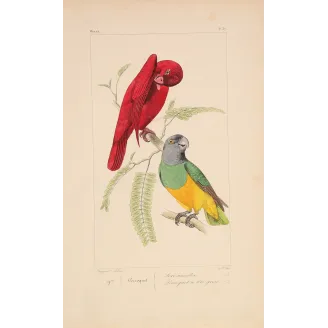
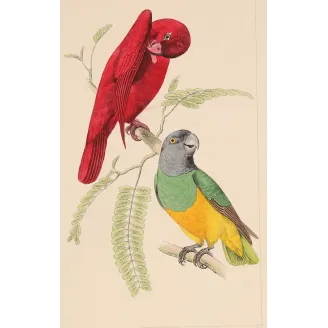
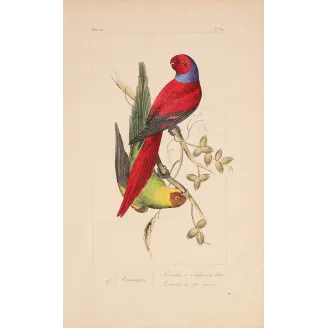
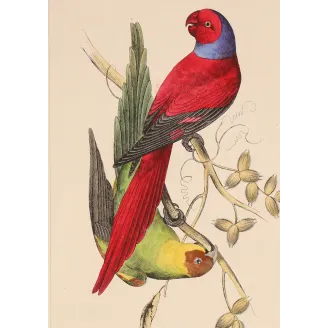
A striking 19th-century hand-colored engraving depicting two exotic parrots in a composition of vivid chromatic contrast. The brilliant red lory and the grey-headed, yellow-breasted parakeet create a highly decorative image of strong visual presence, ideal for collectors of antique ornithological prints and refined interiors.
Highly decorative 19th-century engraving of exotic parakeets with vivid blue, red and yellow plumage. A striking and colorful antique bird print.
A vibrant 19th-century hand-colored engraving depicting two exotic parrots with striking red and yellow plumage contrasted by softer natural tones. A dynamic and decorative composition with strong visual presence, ideal for collectors and interior display.
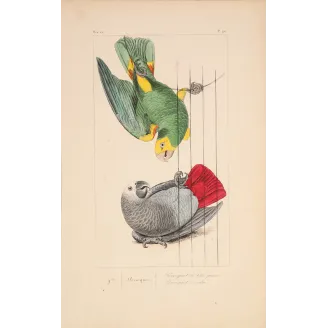
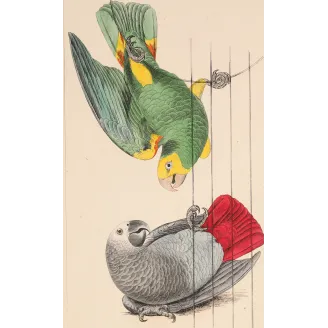
A distinctive 19th-century engraving depicting two parrots in an unusual composition, including one shown suspended upside-down. The presence of cage elements adds historical character, creating a unique and visually engaging natural history print.
A vivid 19th-century engraving depicting two exotic parakeets in a dynamic vertical composition. The intense red plumage contrasts beautifully with green and yellow tones, creating a striking decorative work with strong visual presence.
A refined 19th-century engraving depicting two parakeets arranged in a fluid and harmonious composition. The dominant green tones, enhanced by delicate red and violet accents, create an elegant and highly decorative natural history print.
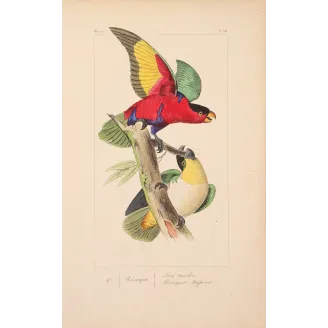
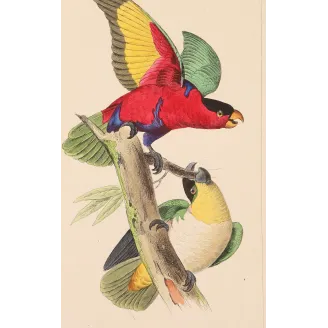
A highly dynamic 19th-century engraving depicting a tricolour lory in flight above a contrasting parakeet. The vivid interplay of red, yellow, green and blue creates a striking decorative composition with exceptional visual energy and presence.
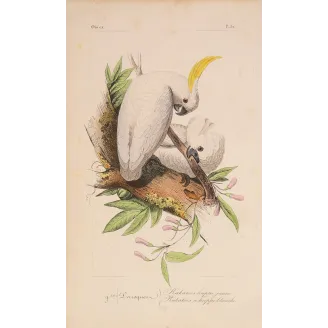
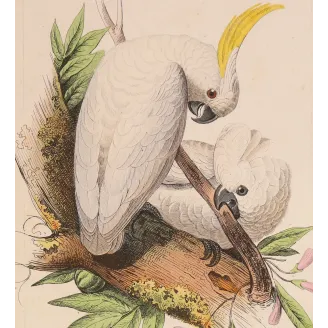
Elegant 19th-century hand-colored engraving depicting two sulphur-crested cockatoos, rendered with refined detail and soft tonal harmony. A balanced and decorative exotic bird composition ideal for sophisticated interiors.
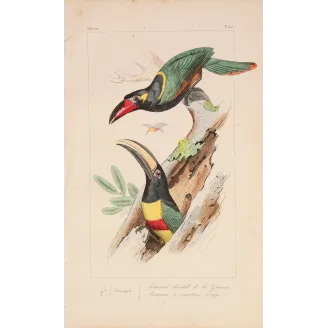
This vivid 19th-century engraving depicts two exotic aracaris, showcasing striking contrasts of green, red and yellow plumage. A highly decorative composition combining scientific observation with strong visual appeal, ideal for collectors of tropical ornithology and refined interior spaces.
A striking 19th-century engraving depicting two exotic parrots with vivid red, pink and green plumage. The composition combines strong colour contrast with elegant vertical balance, creating a highly decorative and visually impactful antique print.
A striking 19th-century engraving depicting two vividly colored parakeets in a dynamic composition. The intense contrast of blue, red, green and yellow creates a highly decorative work, ideal as a focal piece in refined interiors.
A striking 19th-century engraving depicting two vividly colored parakeets in a dynamic composition. The intense contrast of blue, red, green and yellow creates a highly decorative work, ideal as a focal piece in refined interiors.
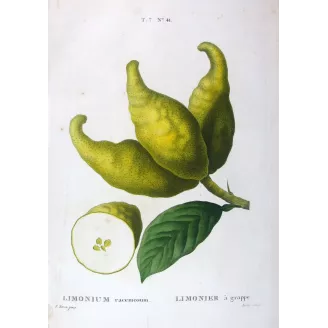
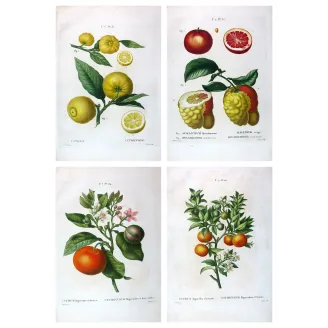
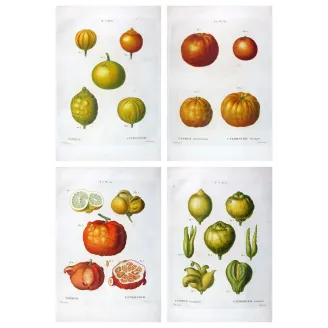
A coherent ensemble of eight original orange and bigarade engravings by Pancrace Bessa, reflecting the cultivated discipline of French orangeries in the Napoleonic era. Botanical precision and architectural composure unite in a refined citrus portfolio preserved as a complete series.
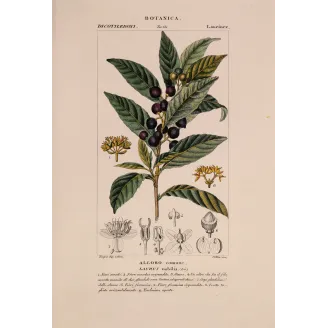
Graceful composition of bay laurel with fruits, blossoms, and internal flower structure.
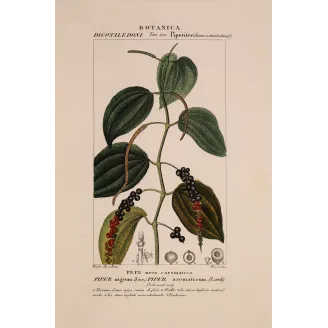
Detailed depiction of the black pepper vine with fruiting spikes and leaves.
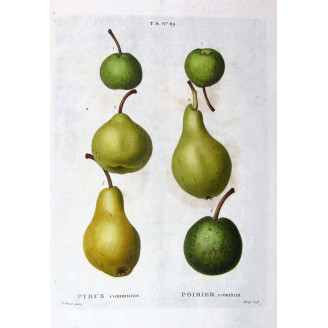
A refined study of French cultivated pear varieties, distinguished by subtle chromatic contrasts and carefully modelled forms. This hand-colored engraving reflects Pancrace Bessa’s ability to elevate orchard subjects through balance, restraint, and quiet visual authority.
Vivid 19th-century hand-colored engraving depicting two parakeets in dynamic interaction, with striking green plumage and contrasting red and violet accents. A highly decorative exotic bird composition.