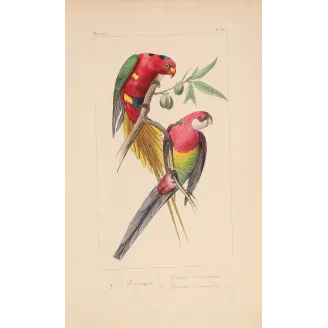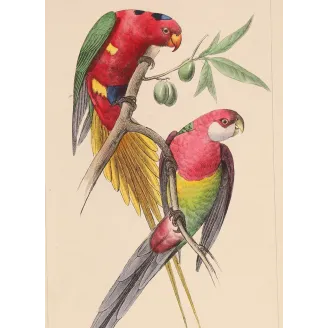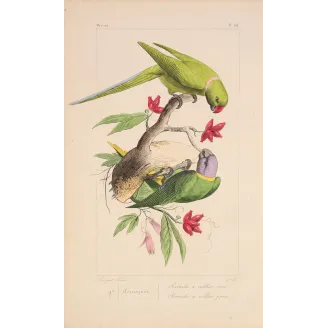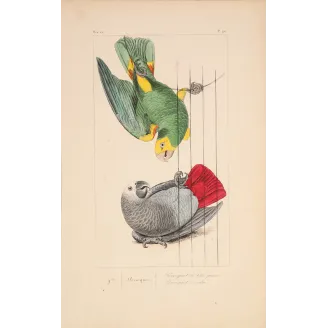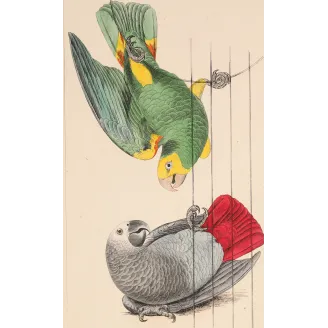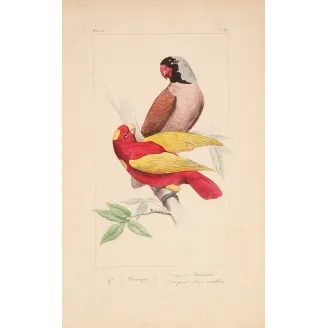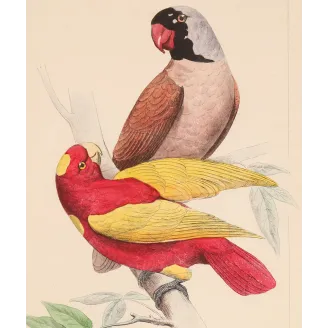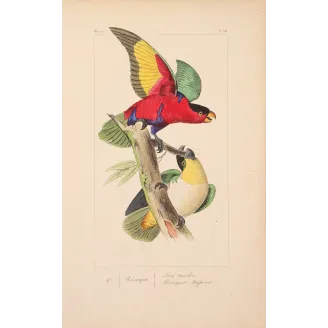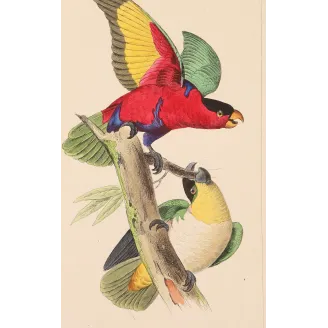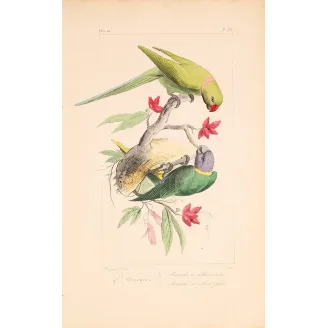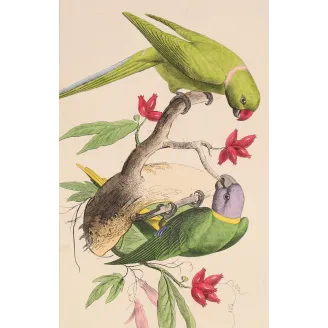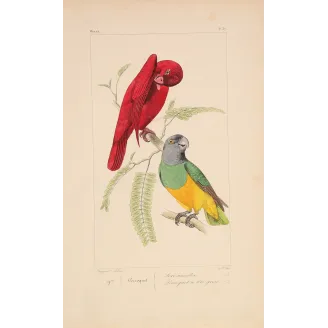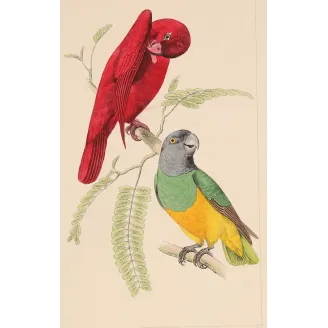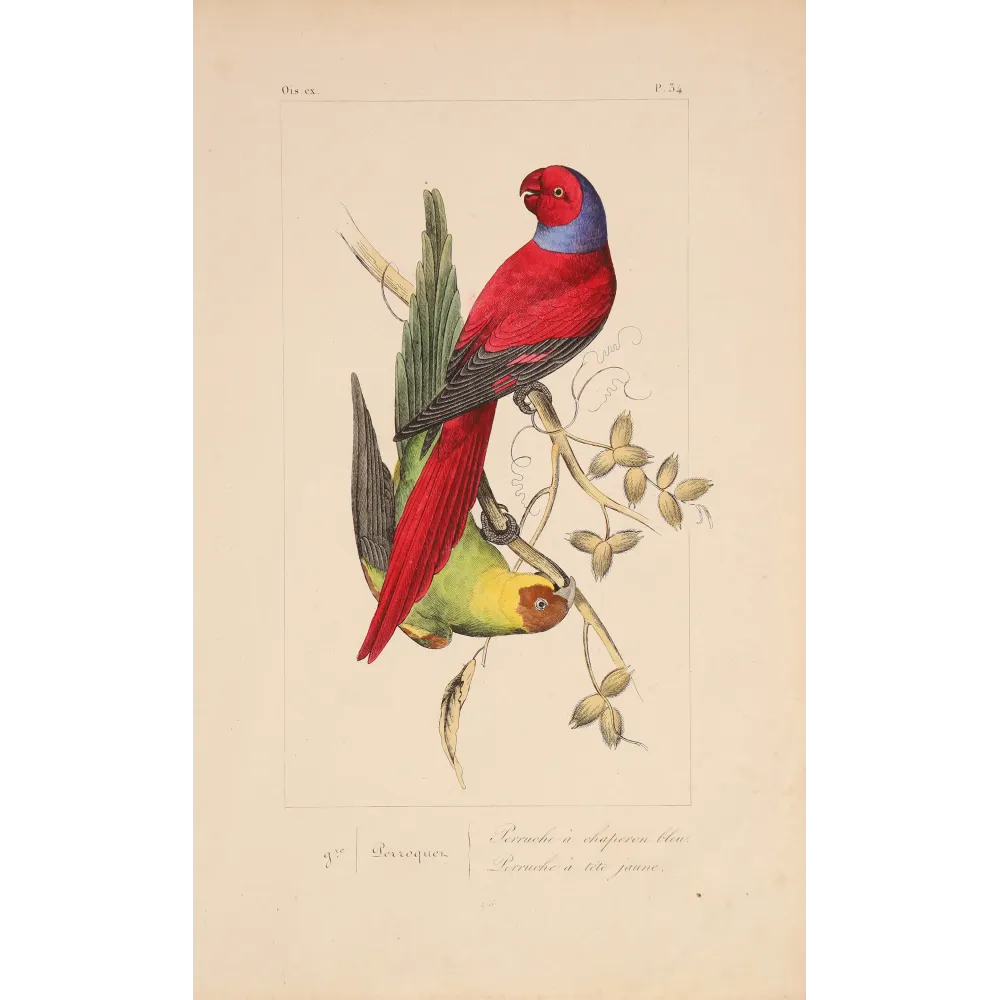
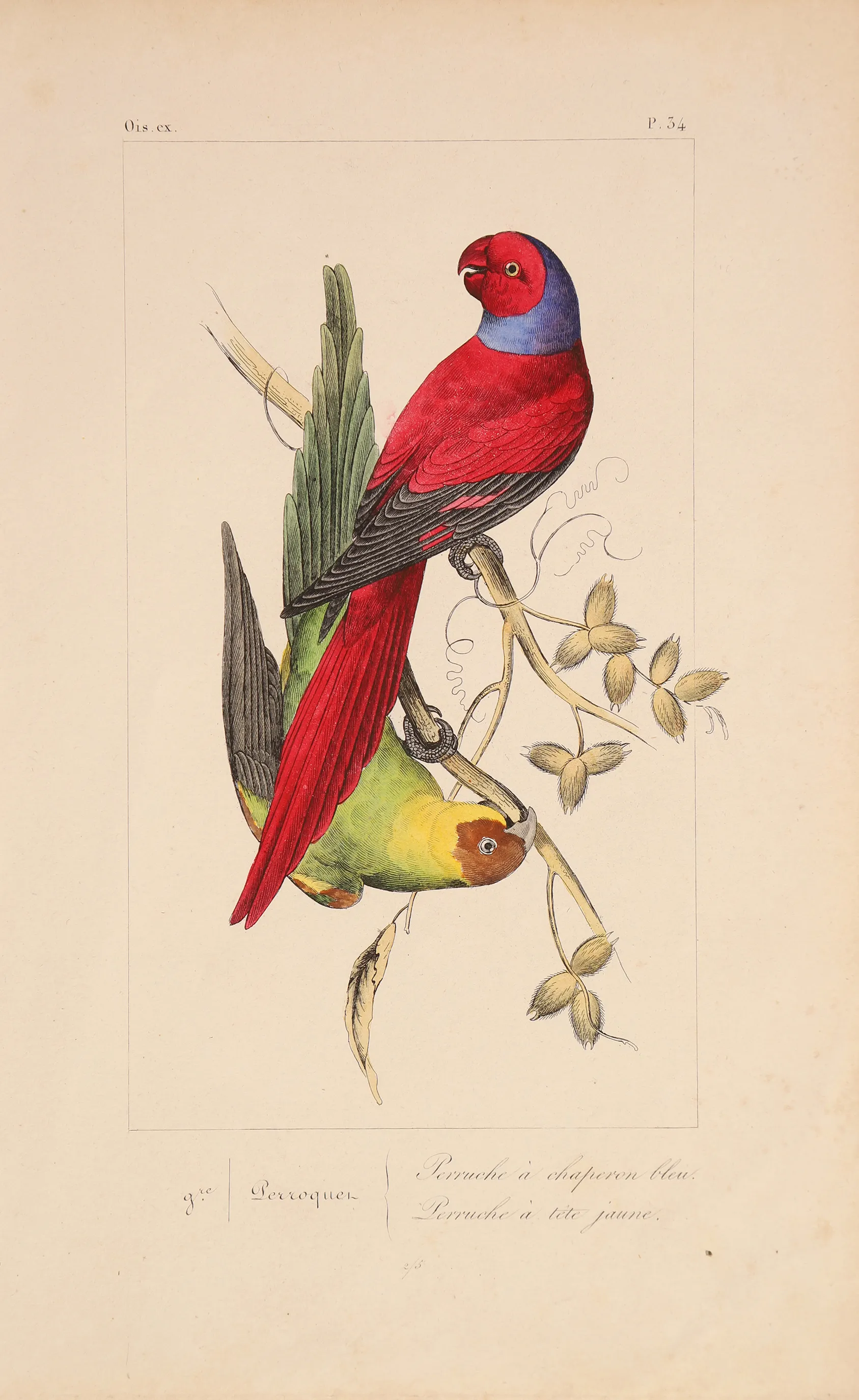
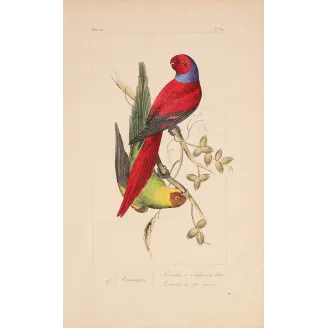
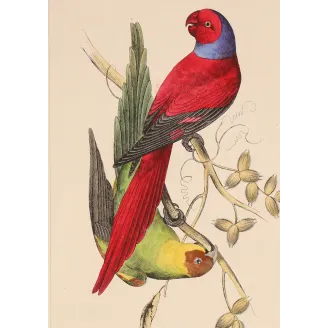
A vivid 19th-century engraving depicting two exotic parakeets in a dynamic vertical composition. The intense red plumage contrasts beautifully with green and yellow tones, creating a striking decorative work with strong visual presence.
 Delivery policy
Your print will be carefully prepared and shipped worldwide via trusted couriers (UPS or similar).
 Authentic antique prints
Original engravings from the 17th–19th century.
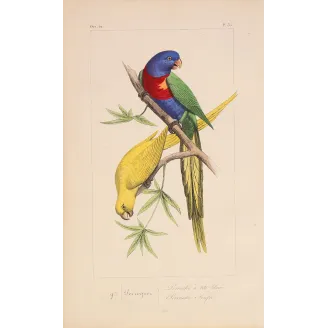
This refined original first-edition plate depicts two vividly coloured exotic parakeets from C. L. Lemaire’s Histoire Naturelle des Oiseaux Exotiques, published in Paris in 1836. The historical titles printed directly on the sheet identify the subjects as Perruche à chaperon bleu and Perruche à tête jaune. The figures were created by Pauquet, described in the original publication as peintes d’après nature and engraved on steel.
Plate P.34 is built around a strong vertical contrast. The upper bird remains upright and visually commanding, its long crimson body establishing the principal axis of the composition. Below, the second subject turns beneath the branch, introducing an inverted posture that transforms an otherwise restrained arrangement into a scene of subtle movement.
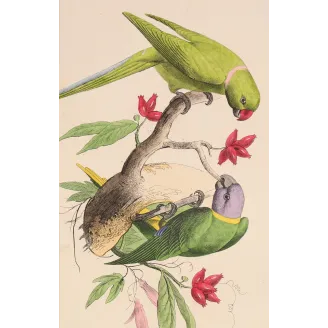
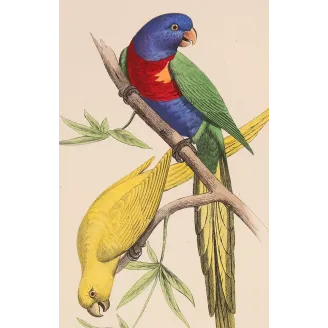
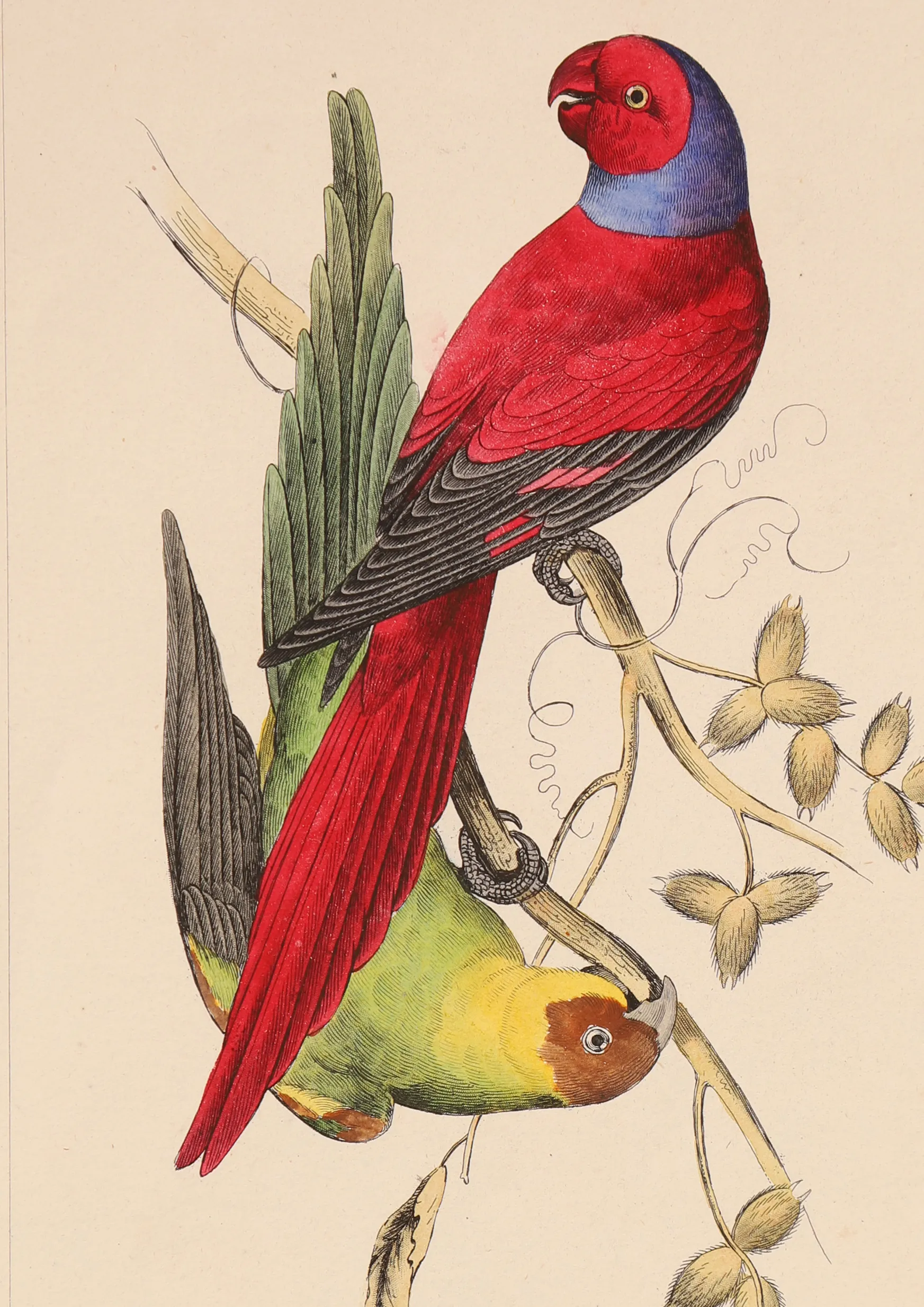
The original hand colouring remains exceptionally fresh and luminous. Direct examination reveals selective gum arabic on the red tail of the upper bird and on the yellow plumage of the lower subject. These two isolated reflective passages create distinct points of light within the composition, strengthening the chromatic relationship between the birds without disturbing the predominantly matte character of the surrounding plumage and vegetation.
The composition is organised around a narrow branching structure that rises through the centre of the image. The upper bird follows this vertical architecture closely. Its head is held high, its body remains compact and its exceptionally long red tail descends almost uninterrupted through the centre of the plate.
The lower subject introduces the decisive variation. Rather than repeating the upright posture above, it turns beneath the branch with the head directed downward and outward. This inversion creates movement through rotation rather than flight, allowing Pauquet to animate the sheet while preserving the clarity expected of natural-history illustration.
Colour reinforces the hierarchy. The upper bird forms an intense field of crimson red, sharpened by the blue collar and dark wing feathers. The lower subject is quieter but more varied, moving from green through yellow into the warm brown-red of the head. The two palettes remain clearly differentiated while functioning as a balanced chromatic pair.
The surrounding vegetation is deliberately restrained. Pale branches, narrow leaves and softly coloured seed forms provide structure without competing with the birds. Their lightness allows the two principal colour masses to remain immediately legible against the generous unprinted field of the sheet.
One bird establishes the axis; the other breaks it.
The original plate identifies the birds as Perruche à chaperon bleu and Perruche à tête jaune. These names belong to the zoological vocabulary of the nineteenth century and are preserved here exactly as part of the historical evidence carried by the sheet.
Because historical vernacular names do not always correspond unambiguously to modern species classifications, Prantique retains these original designations rather than imposing a contemporary taxonomic identification without sufficient evidence. The descriptive English titles Blue-Capped Parakeet and Yellow-Headed Parakeet therefore remain closely tied to the nomenclature printed on the original plate.
Plate P.34 demonstrates how Pauquet could generate a strong sense of vitality from a remarkably economical arrangement. The visual interest does not depend on open wings or interaction between the birds, but on the contrast between an established vertical axis and a body that turns away from it.
The movement can almost be read as a sequence:
axis → posture → descent → inversion → balance
The upper bird establishes order. Its upright posture, long tail and close relationship with the main branch give the composition a strong structural centre. The lower subject then disrupts that order by rotating beneath the perch, creating a second direction without destabilising the overall image.
Direct examination reveals a similarly selective use of surface enhancement. Gum arabic is visible on the red tail of the upper bird and across the yellow plumage of the lower subject, while the remaining colours retain a predominantly matte finish.
These two reflective areas are separated physically and chromatically, yet they communicate across the sheet. The luminous red tail draws the eye vertically downward from the dominant upper bird, while the yellow passage below introduces a second point of brilliance around the inverted subject.
The effect is restrained but highly effective: two limited areas of gloss are sufficient to animate the entire chromatic structure, just as two contrasting postures are sufficient to transform a simple vertical arrangement into a living composition.
Published in Paris in 1836, C. L. Lemaire’s Histoire Naturelle des Oiseaux Exotiques brought together natural-history knowledge, brilliant hand colouring and Pauquet’s remarkable ability to suggest the physical presence of the living bird. Our dedicated Historical Perspective explores how observation d’après nature, gesture and composition combine throughout the work.
Histoire Naturelle des Oiseaux Exotiques: Art, Observation and the Living Bird →
The Pauquet name also belongs to a broader world of nineteenth-century natural-history illustration. Across different zoological subjects, the artists adapted their visual language to very different scientific and editorial purposes — from the animated presence of Lemaire’s birds to the precise, specimen-like presentation of exotic butterflies.
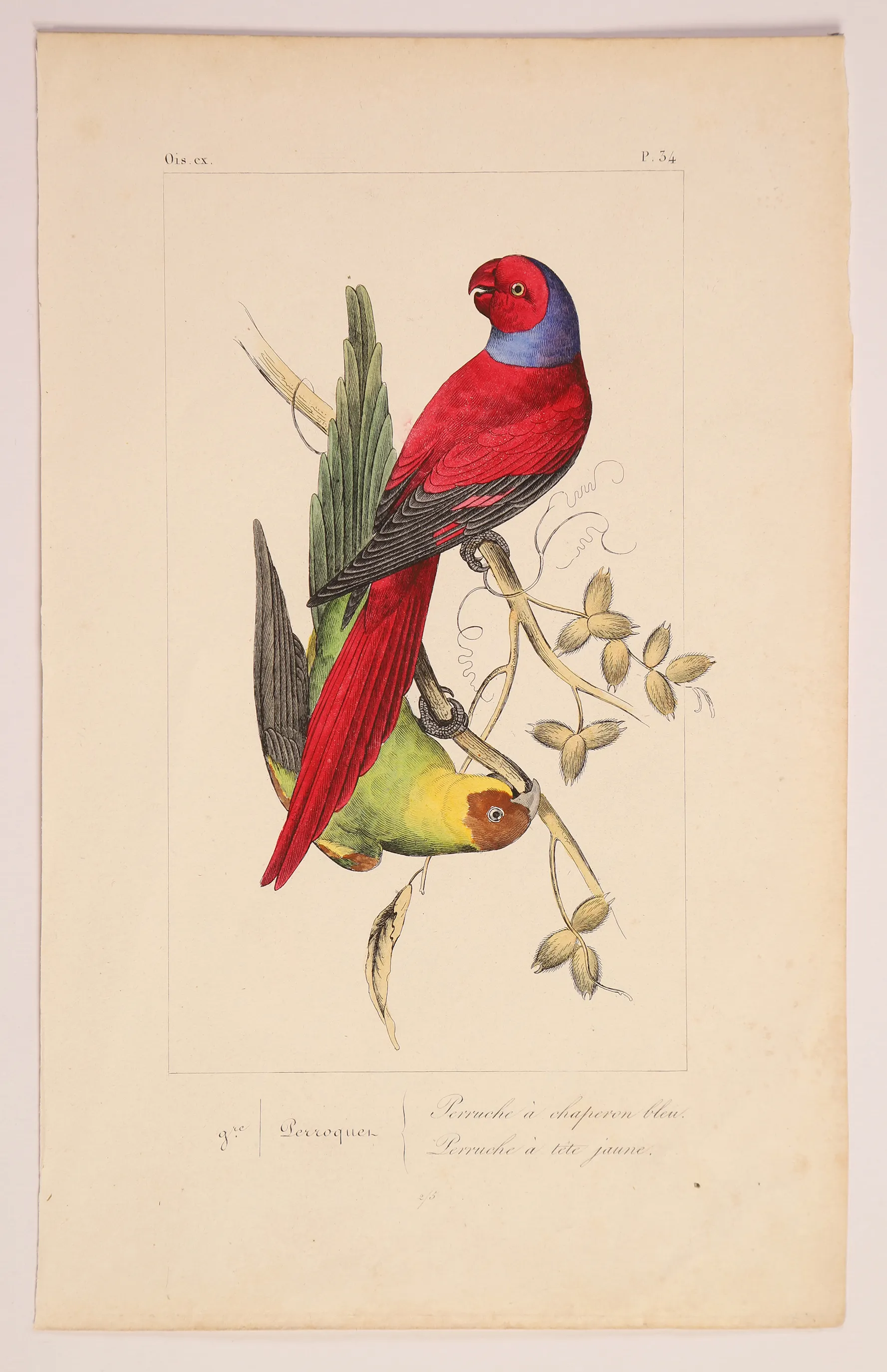
Excellent condition. Direct examination of this impression shows a clean and luminous first-edition sheet with fresh, beautifully preserved original hand colouring and crisp engraved detail throughout.
Selective gum arabic remains clearly visible on the red tail of the upper bird and on the yellow plumage of the lower subject. These reflective areas remain well preserved, while the surrounding colours and botanical elements retain a predominantly matte appearance.
The sheet shows only minor signs of natural age and handling consistent with an original work of 1836. The central image remains bright, sharply defined and visually striking, with generous margins and no significant defect affecting the composition.
Original plate titles: Perruche à chaperon bleu / Perruche à tête jaune
Modern identification: Blue-Capped Parakeet / Yellow-Headed Parakeet — historical designations retained pending secure modern taxonomic identification
Work: Histoire Naturelle des Oiseaux Exotiques
Author: C. L. Lemaire
Figures: Pauquet
Publication: Paris, Pauquet Éditeur / Debure Libraire
Edition: First edition
Date: 1836
Plate: P. 34
Technique: Original hand-colored steel engraving
Colour: Contemporary hand colouring
Surface enhancement: Selective gum arabic on the red tail of the upper bird and yellow plumage of the lower bird, observed by direct examination
Paper: Fine period paper
Watermark: None observed
Sheet size: approx. 23 × 14 cm
Photography: Detailed professional photographs of this individual impression are provided; additional photographs are available upon request.
Specific References
This vivid 19th-century engraving depicts two exotic aracaris, showcasing striking contrasts of green, red and yellow plumage. A highly decorative composition combining scientific observation with strong visual appeal, ideal for collectors of tropical ornithology and refined interior spaces.
A striking 19th-century engraving depicting two exotic parrots with vivid red, pink and green plumage. The composition combines strong colour contrast with elegant vertical balance, creating a highly decorative and visually impactful antique print.
Elegant 19th-century hand-colored engraving depicting two sulphur-crested cockatoos, rendered with refined detail and soft tonal harmony. A balanced and decorative exotic bird composition ideal for sophisticated interiors.
Vivid 19th-century hand-colored engraving depicting two parakeets in dynamic interaction, with striking green plumage and contrasting red and violet accents. A highly decorative exotic bird composition.
A distinctive 19th-century engraving depicting two parrots in an unusual composition, including one shown suspended upside-down. The presence of cage elements adds historical character, creating a unique and visually engaging natural history print.
A vibrant 19th-century hand-colored engraving depicting two exotic parrots with striking red and yellow plumage contrasted by softer natural tones. A dynamic and decorative composition with strong visual presence, ideal for collectors and interior display.
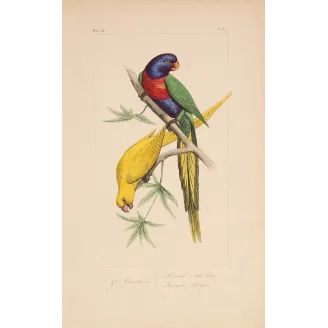
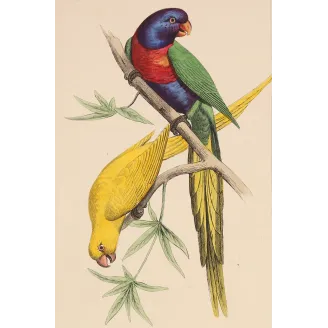
A highly dynamic 19th-century engraving depicting a tricolour lory in flight above a contrasting parakeet. The vivid interplay of red, yellow, green and blue creates a striking decorative composition with exceptional visual energy and presence.
Highly decorative 19th-century engraving of exotic parakeets with vivid blue, red and yellow plumage. A striking and colorful antique bird print.
A refined 19th-century engraving depicting two parakeets arranged in a fluid and harmonious composition. The dominant green tones, enhanced by delicate red and violet accents, create an elegant and highly decorative natural history print.
A striking 19th-century engraving depicting two vividly colored parakeets in a dynamic composition. The intense contrast of blue, red, green and yellow creates a highly decorative work, ideal as a focal piece in refined interiors.
A striking 19th-century hand-colored engraving depicting two exotic parrots in a composition of vivid chromatic contrast. The brilliant red lory and the grey-headed, yellow-breasted parakeet create a highly decorative image of strong visual presence, ideal for collectors of antique ornithological prints and refined interiors.
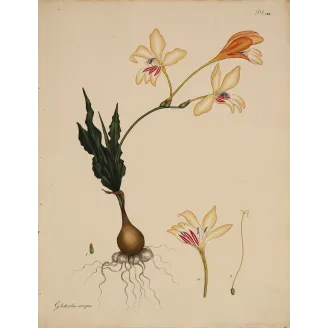
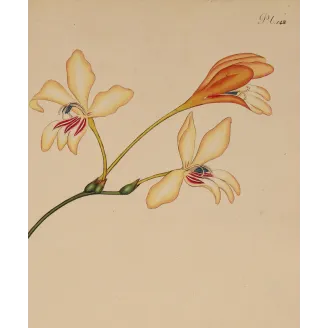
Original hand-coloured copper engraving of Gladiolus crispus (Curled-Leaved Gladiolus), engraved, coloured and published by Henry Charles Andrews for The Botanist's Repository, Plate CXLII, 1804. This elegant botanical print combines remarkably delicate transparent watercolour, restrained engraving and selective gum arabic applications that give the foliage a subtle natural lustre. A refined example of British botanical illustration from the early nineteenth century.
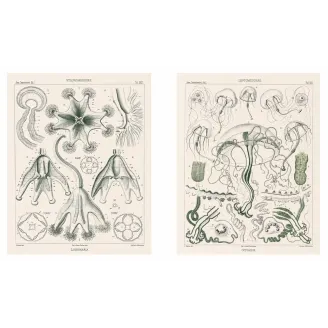
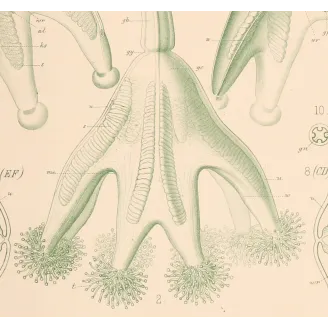
A refined curated diptych of two original 1879 lithographs by Ernst Haeckel from Das System der Medusen, printed in delicate monochromatic green and bearing the plate credit “E. Haeckel del.” Combining marine geometry with scientific precision, these authentic nineteenth-century jellyfish studies create an unusually elegant visual ensemble for collectors, interiors and natural history enthusiasts.
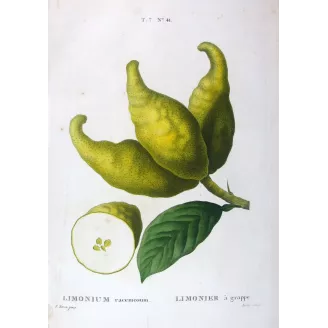
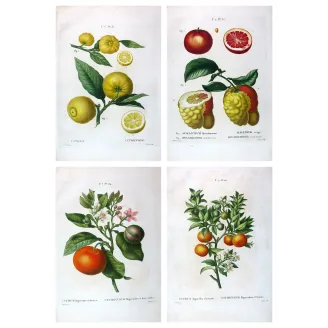
A coherent ensemble of eight original orange and bigarade engravings by Pancrace Bessa, reflecting the cultivated discipline of French orangeries in the Napoleonic era. Botanical precision and architectural composure unite in a refined citrus portfolio preserved as a complete series.
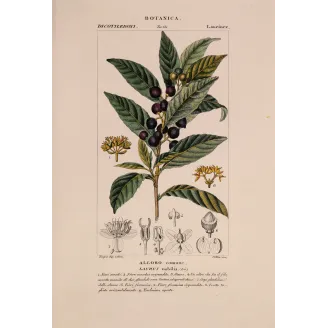
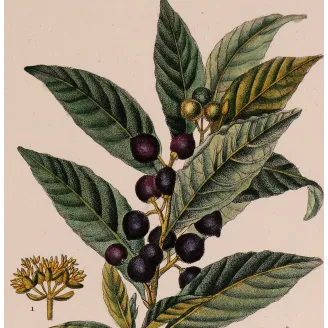
Graceful composition of bay laurel with fruits, blossoms, and internal flower structure.
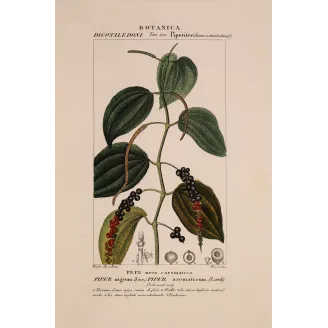
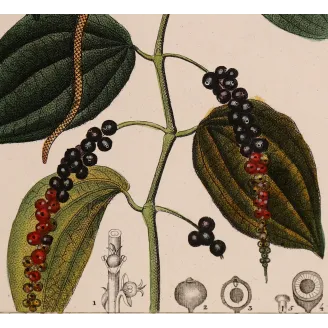
Detailed depiction of the black pepper vine with fruiting spikes and leaves.
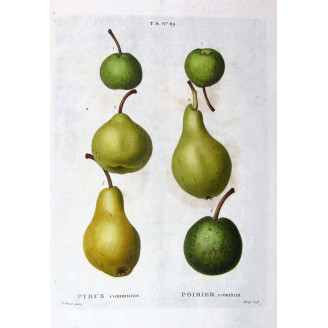
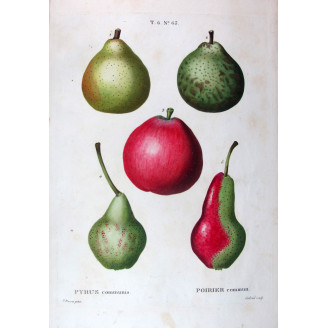
A refined study of French cultivated pear varieties, distinguished by subtle chromatic contrasts and carefully modelled forms. This hand-colored engraving reflects Pancrace Bessa’s ability to elevate orchard subjects through balance, restraint, and quiet visual authority.
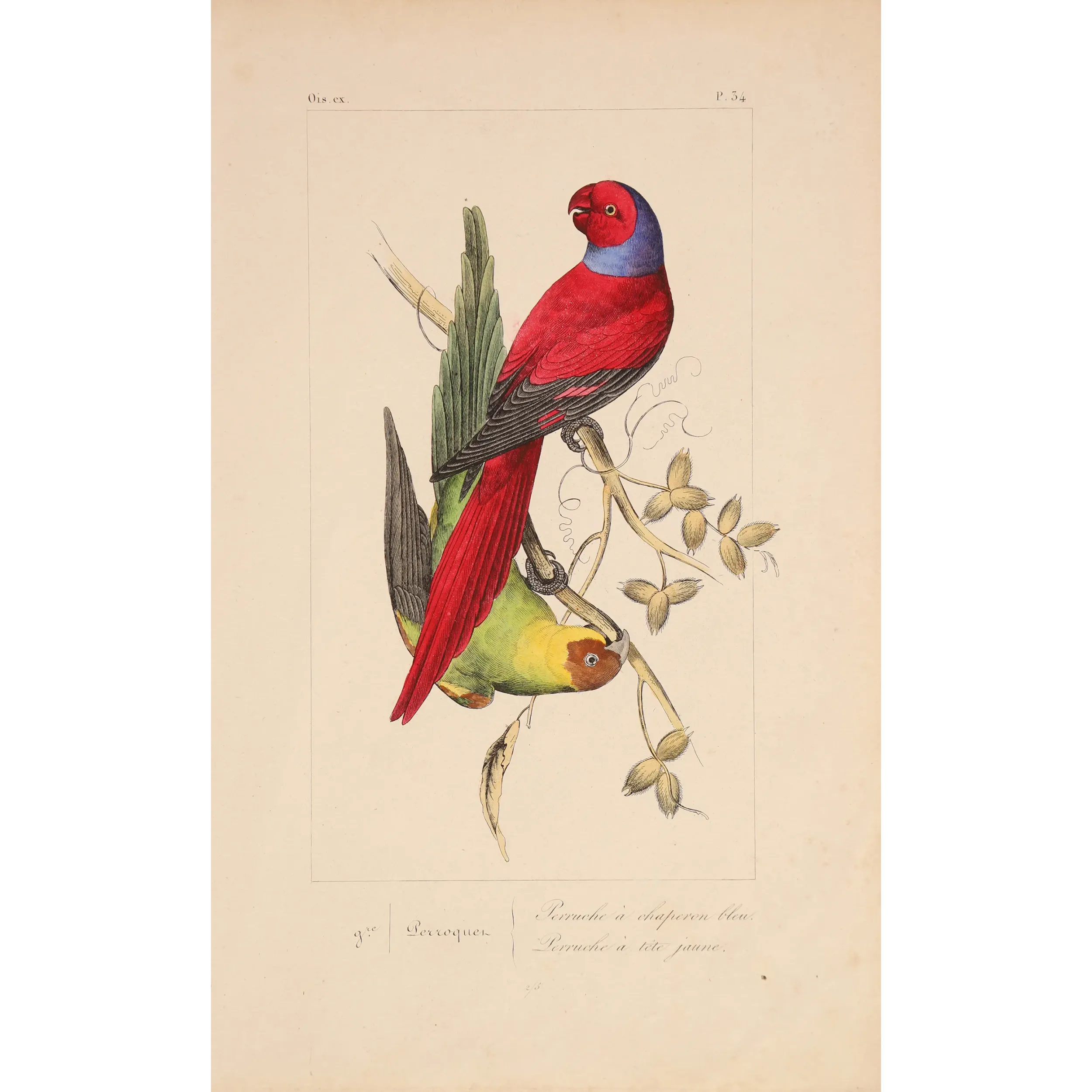
A vivid 19th-century engraving depicting two exotic parakeets in a dynamic vertical composition. The intense red plumage contrasts beautifully with green and yellow tones, creating a striking decorative work with strong visual presence.