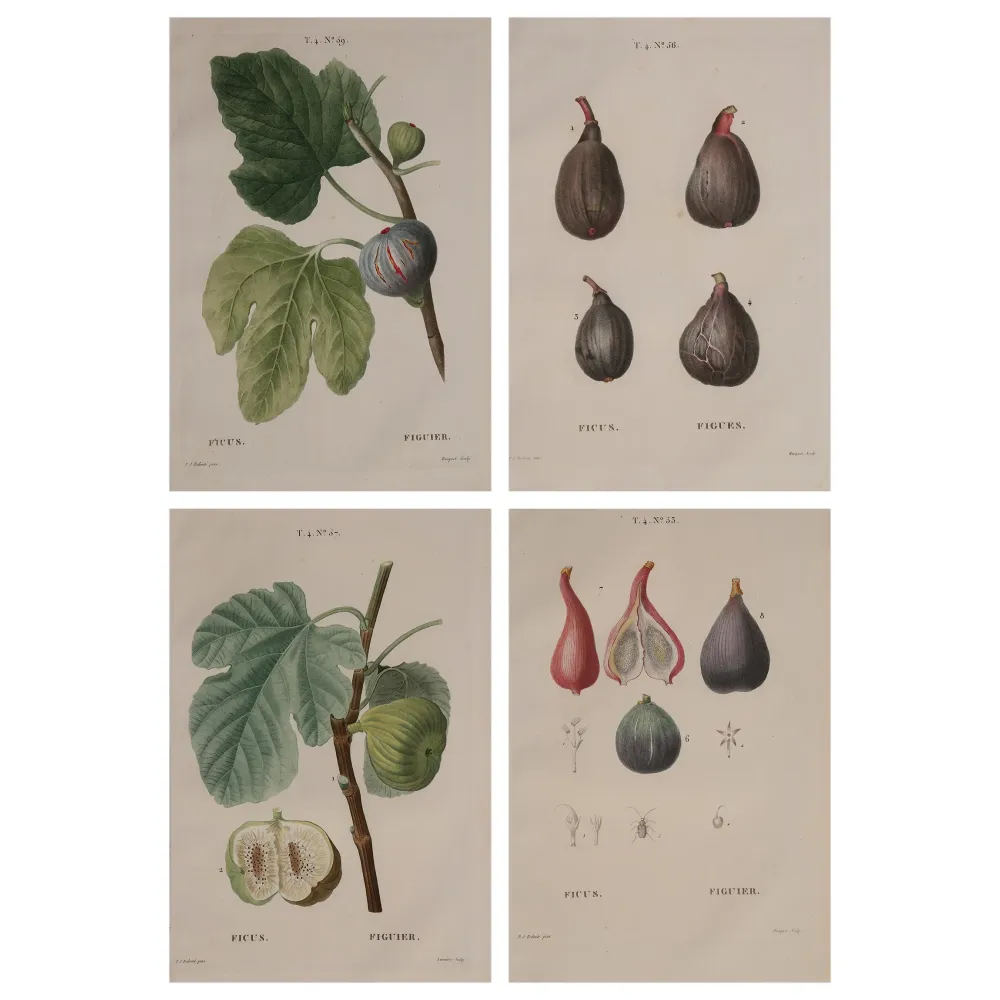
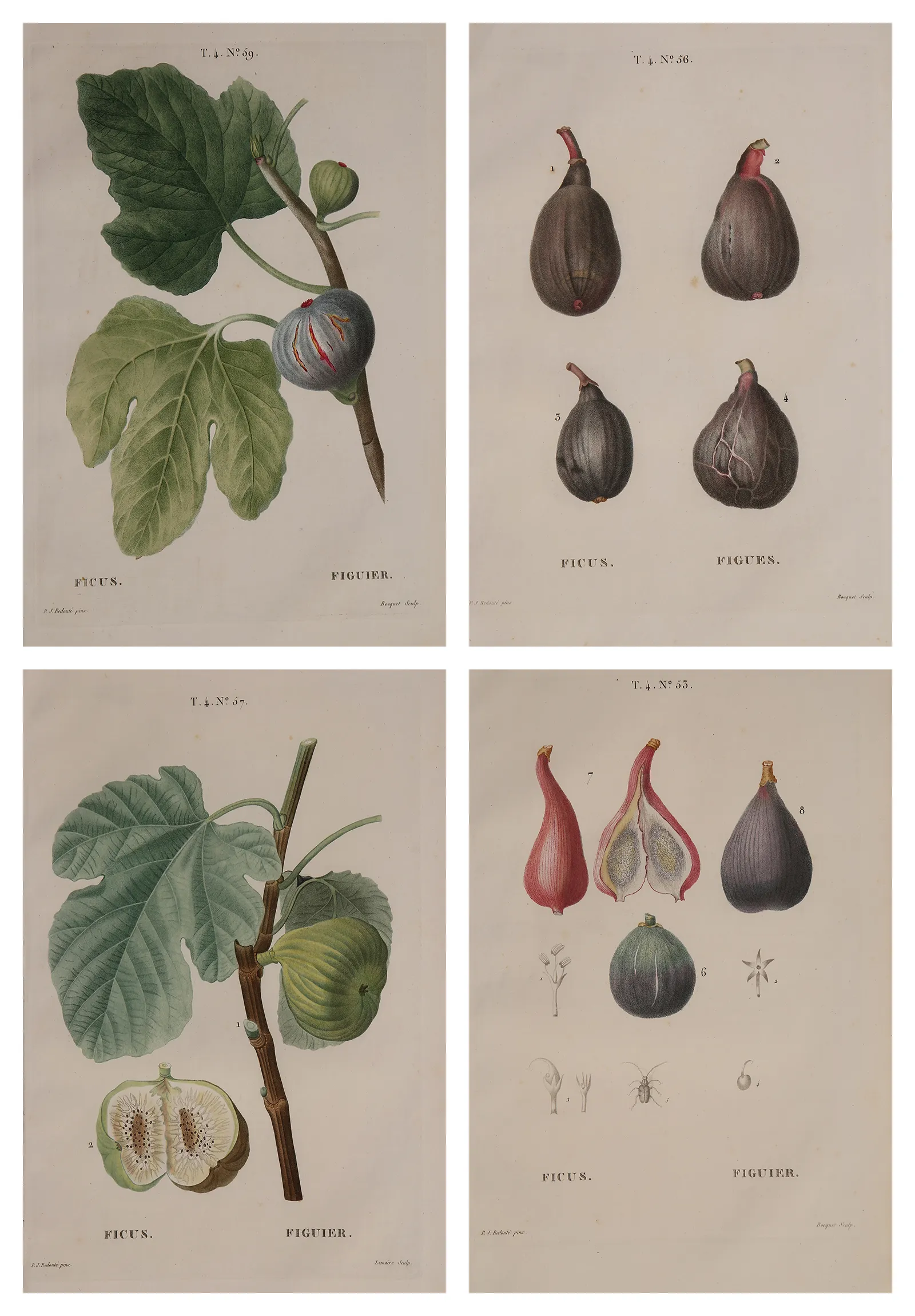
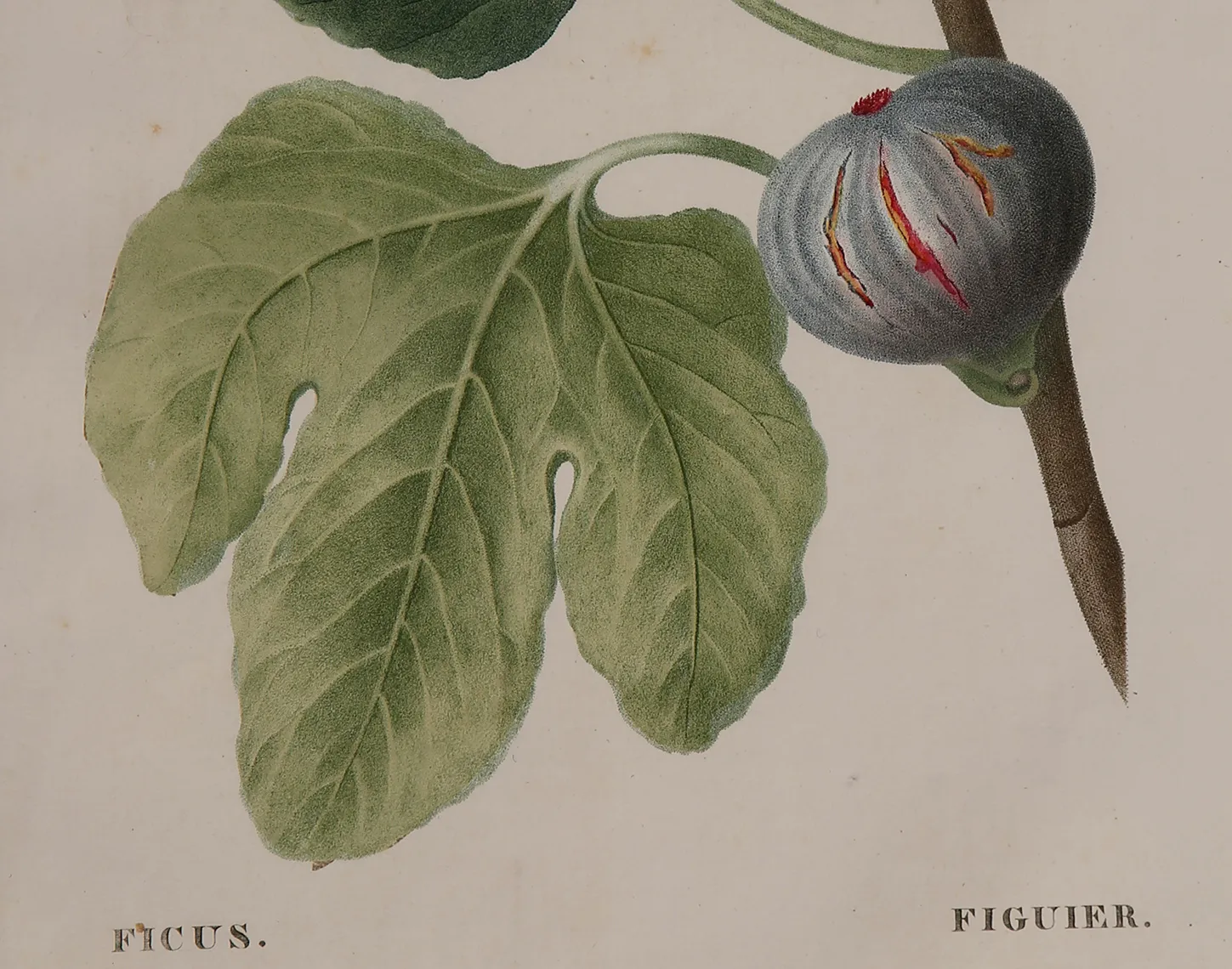
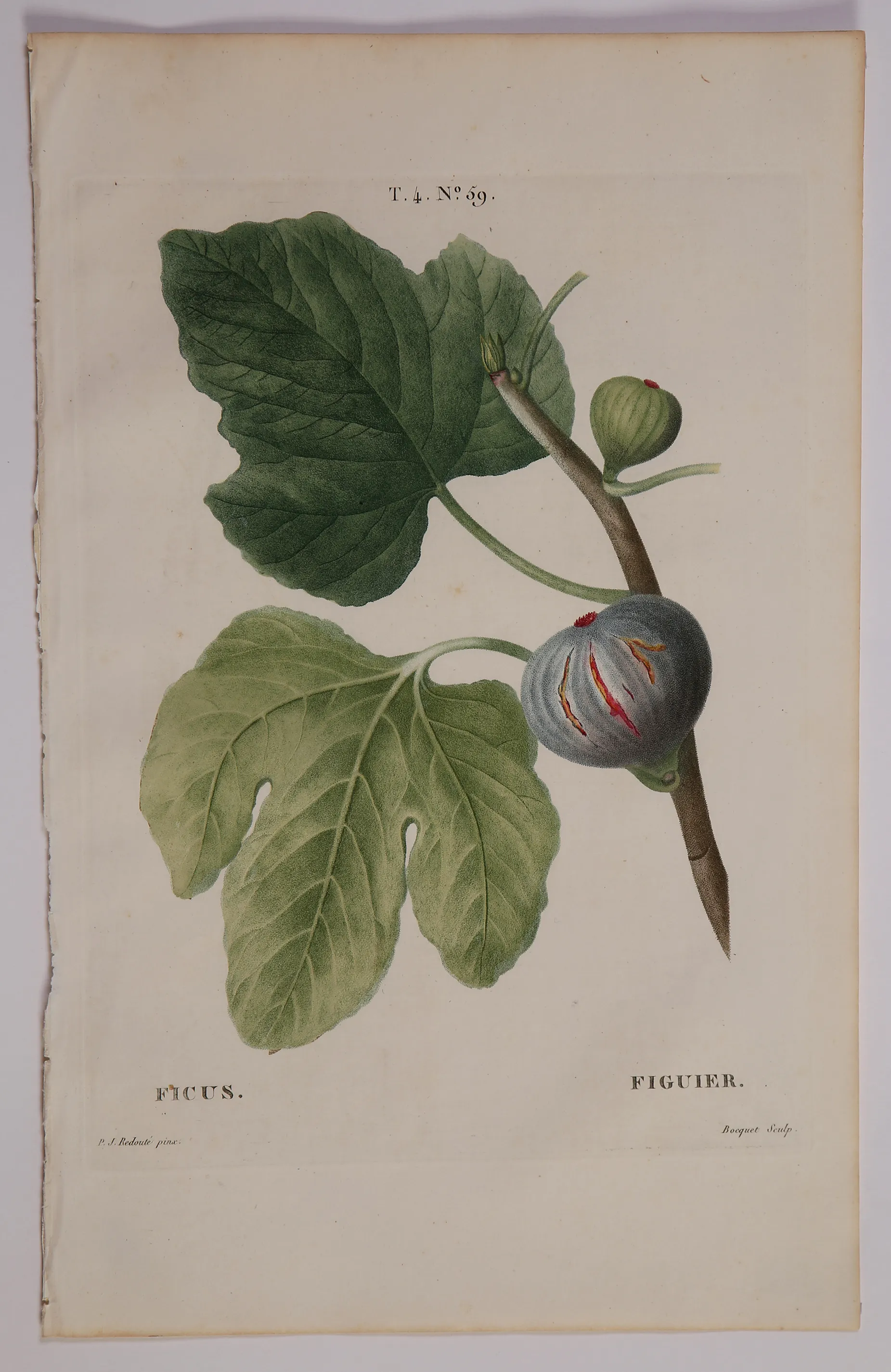

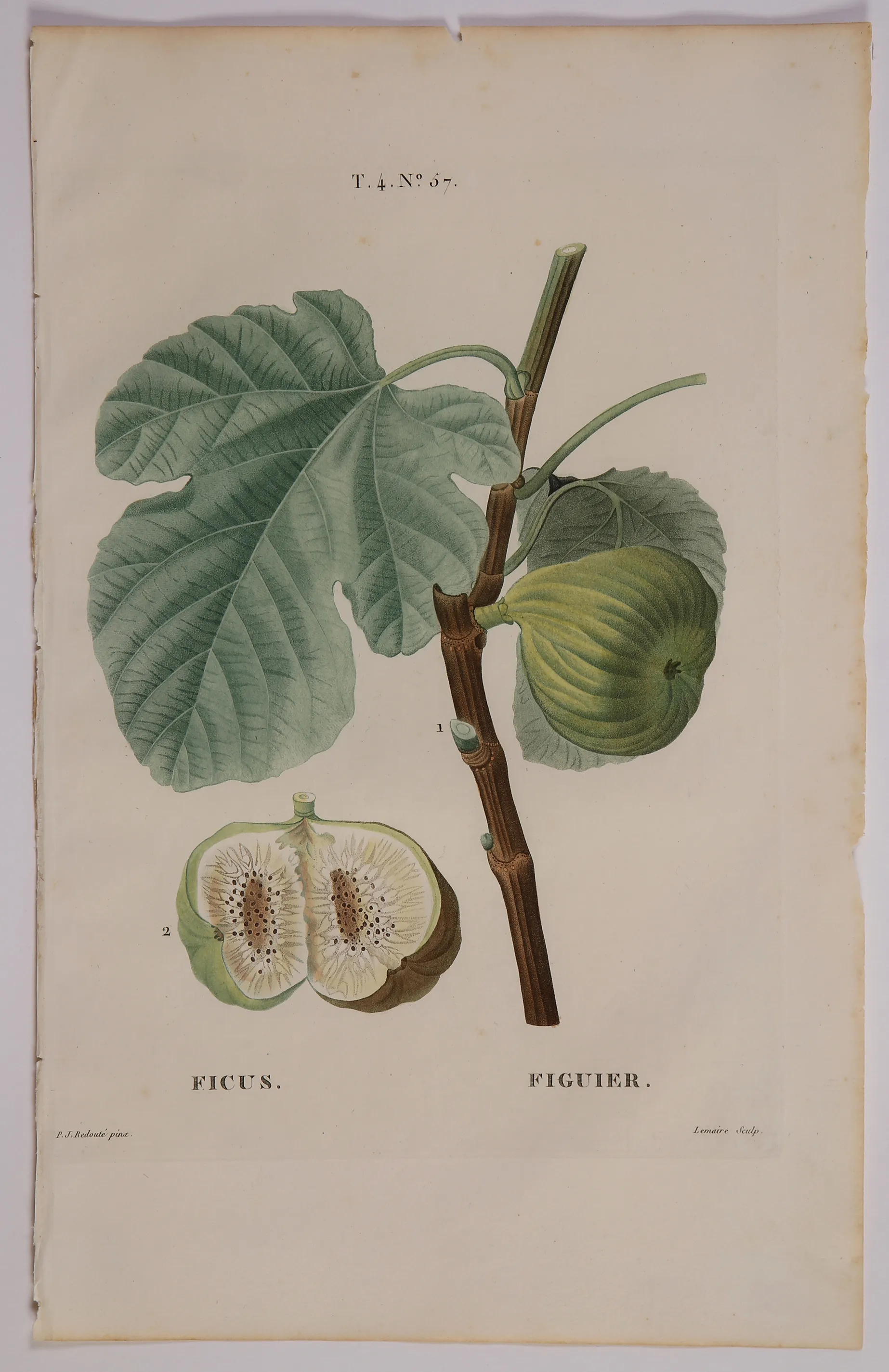
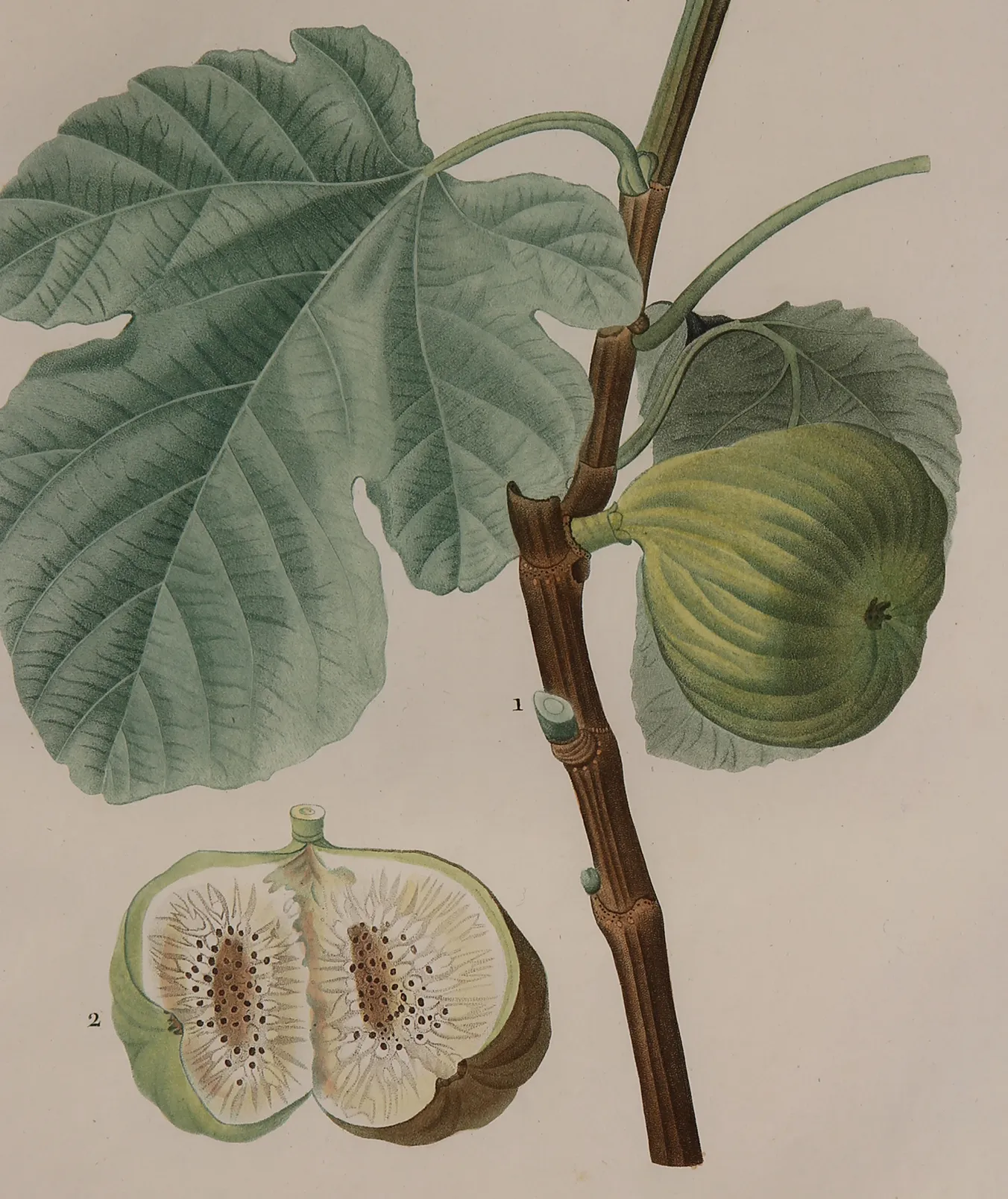
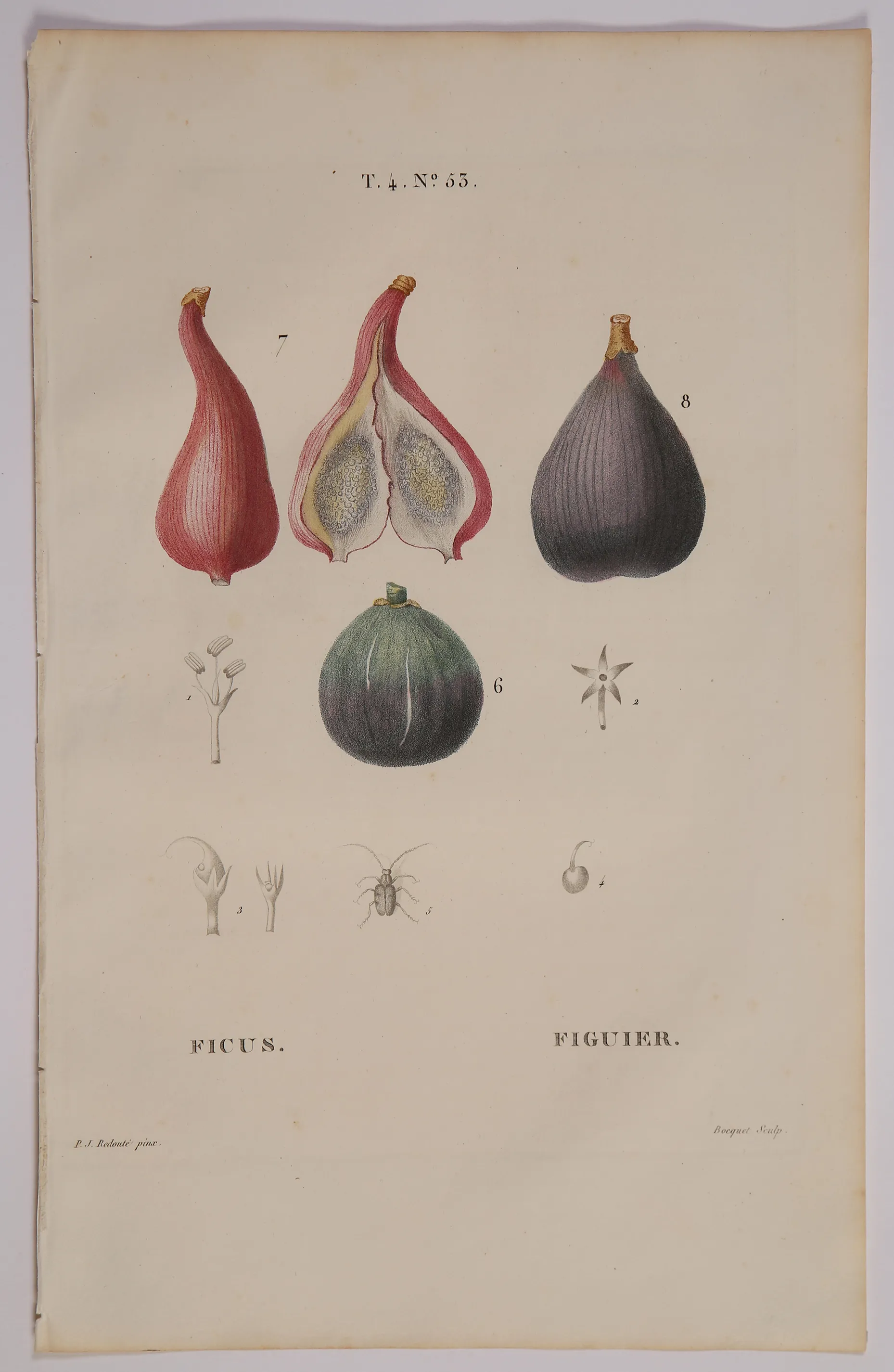
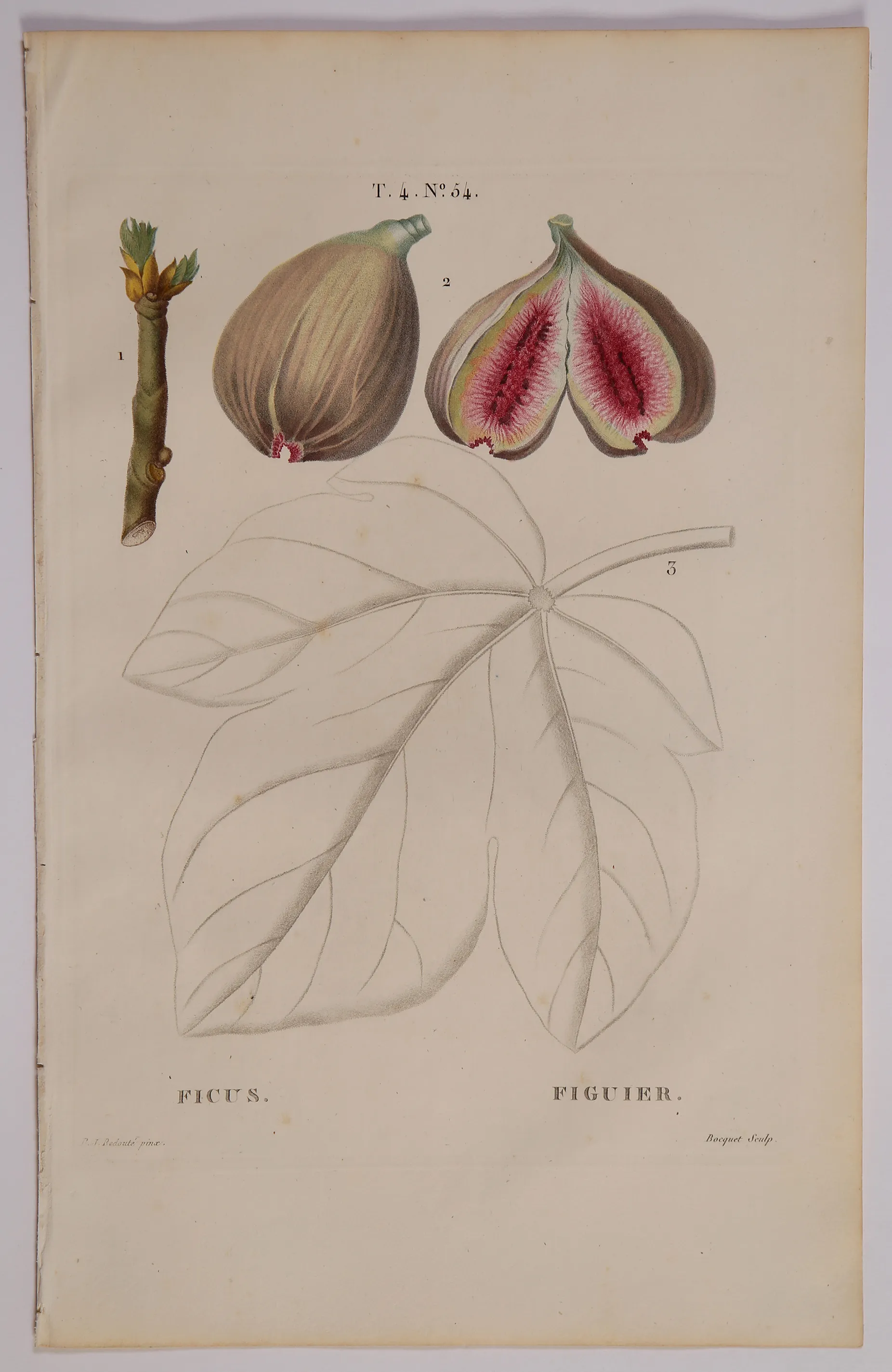
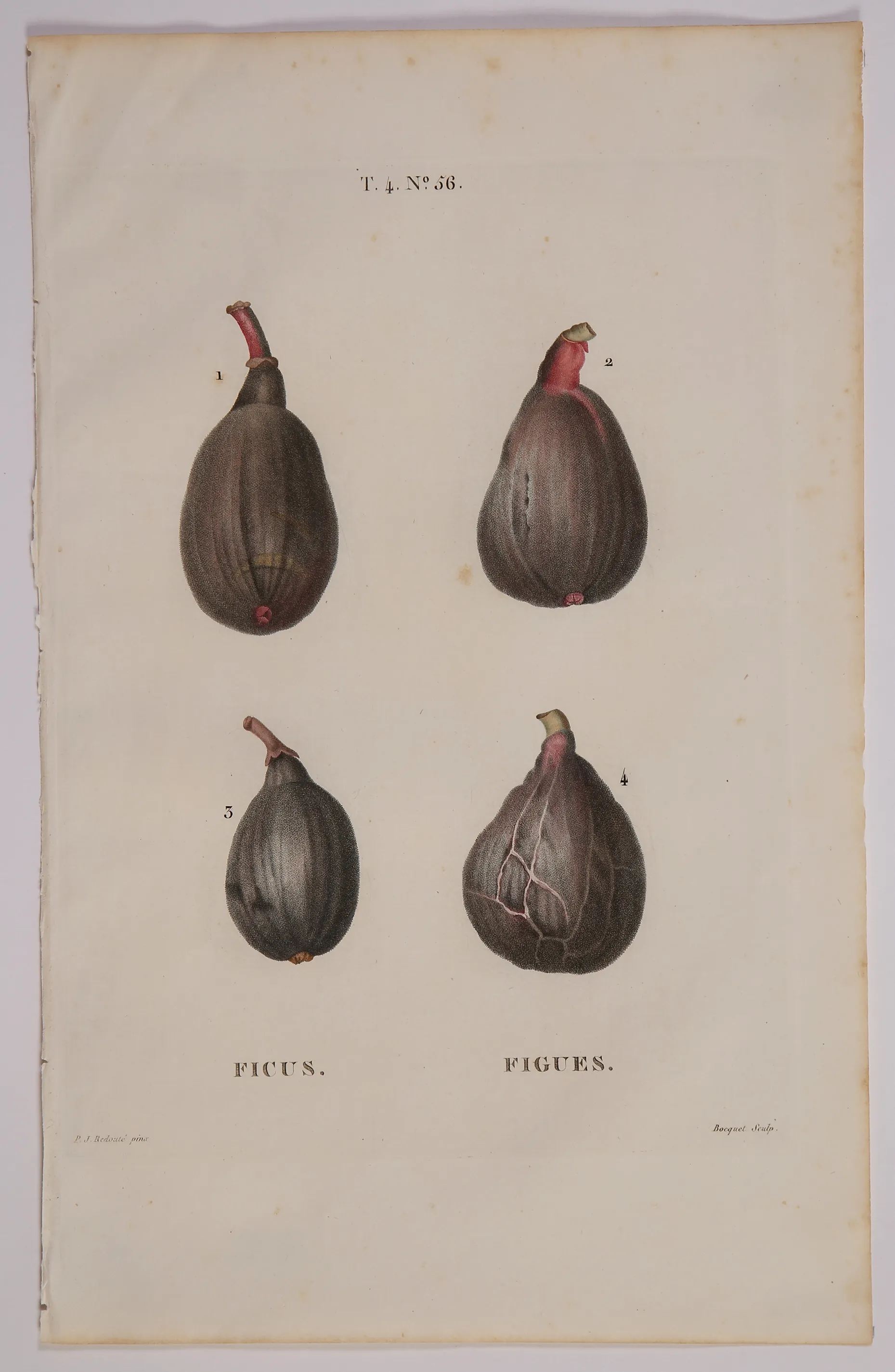
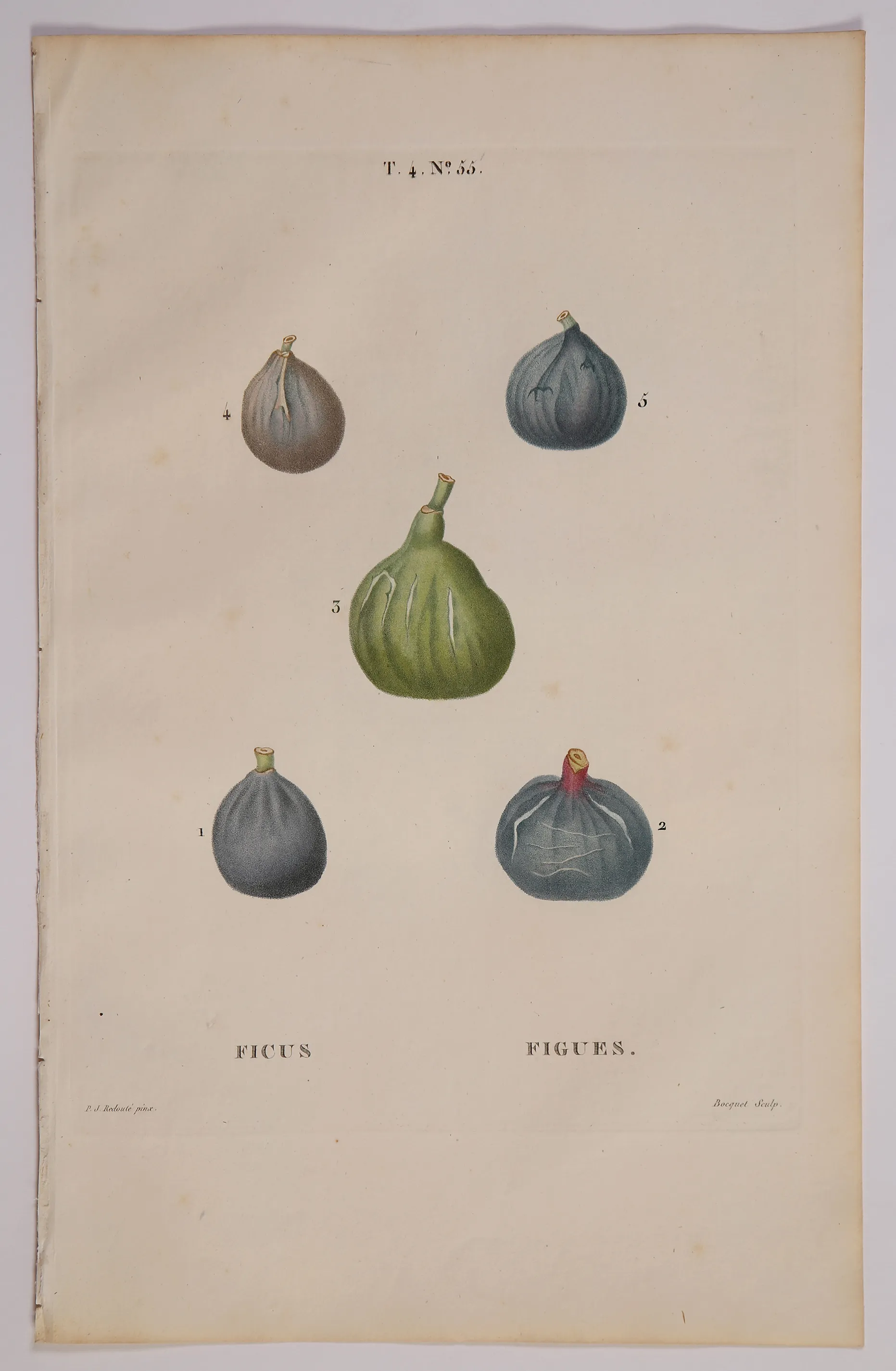
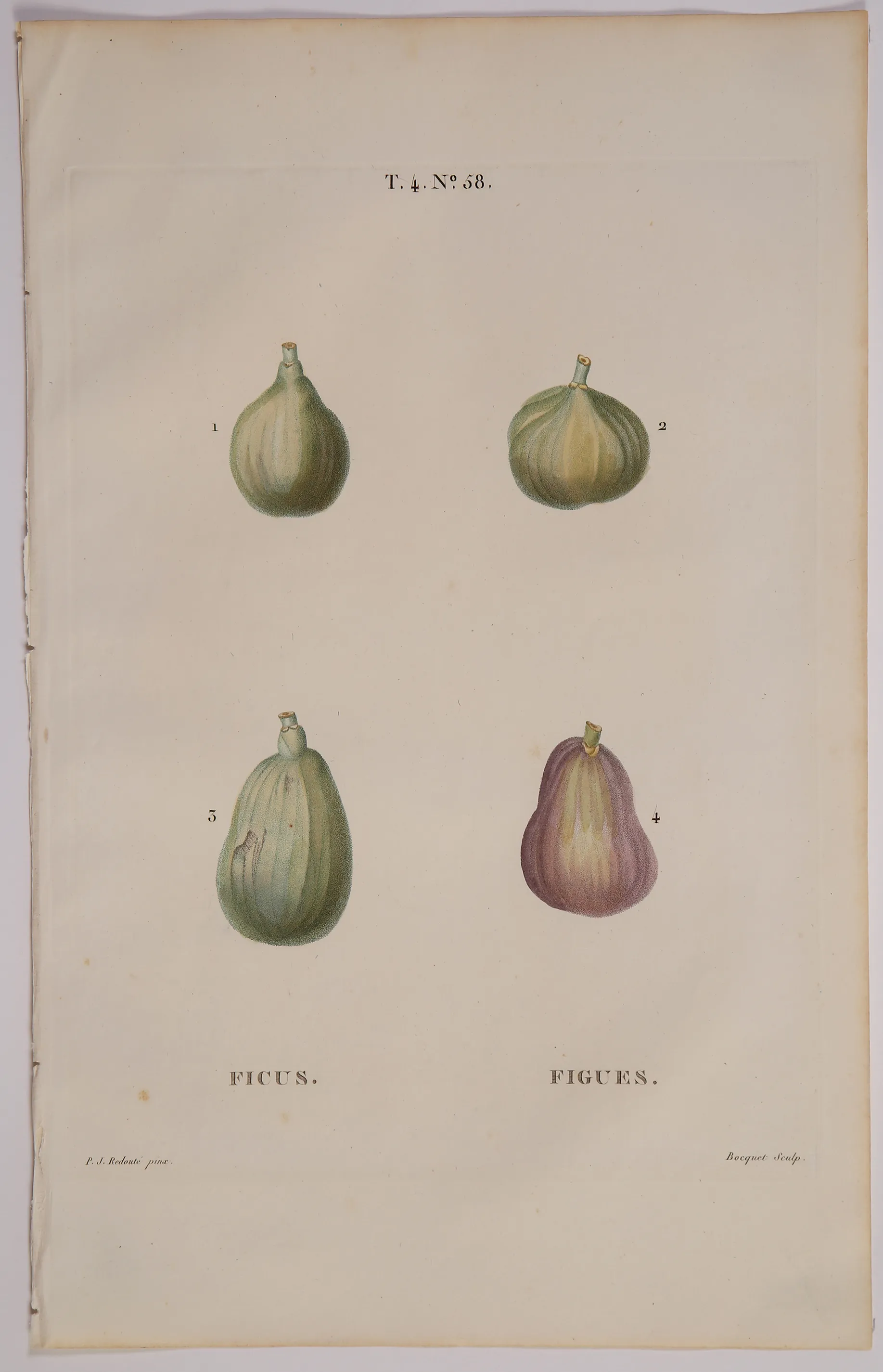
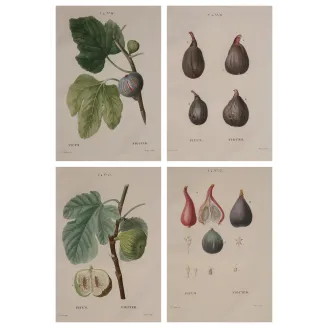
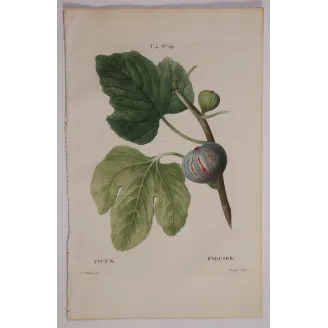
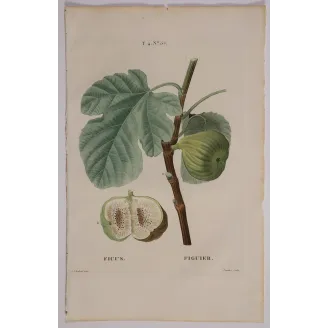
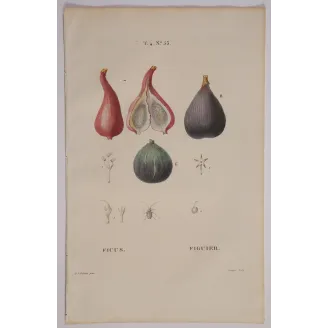
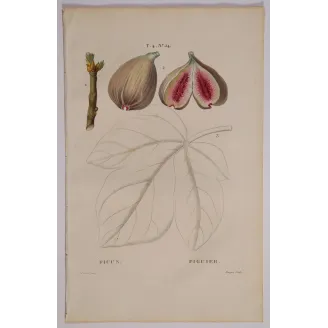
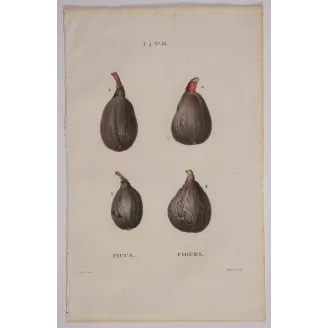
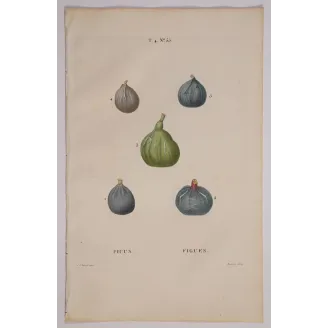
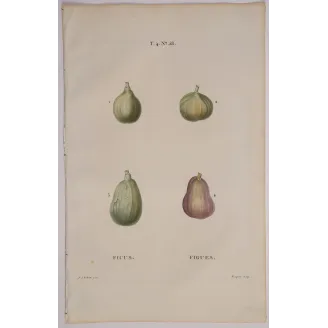
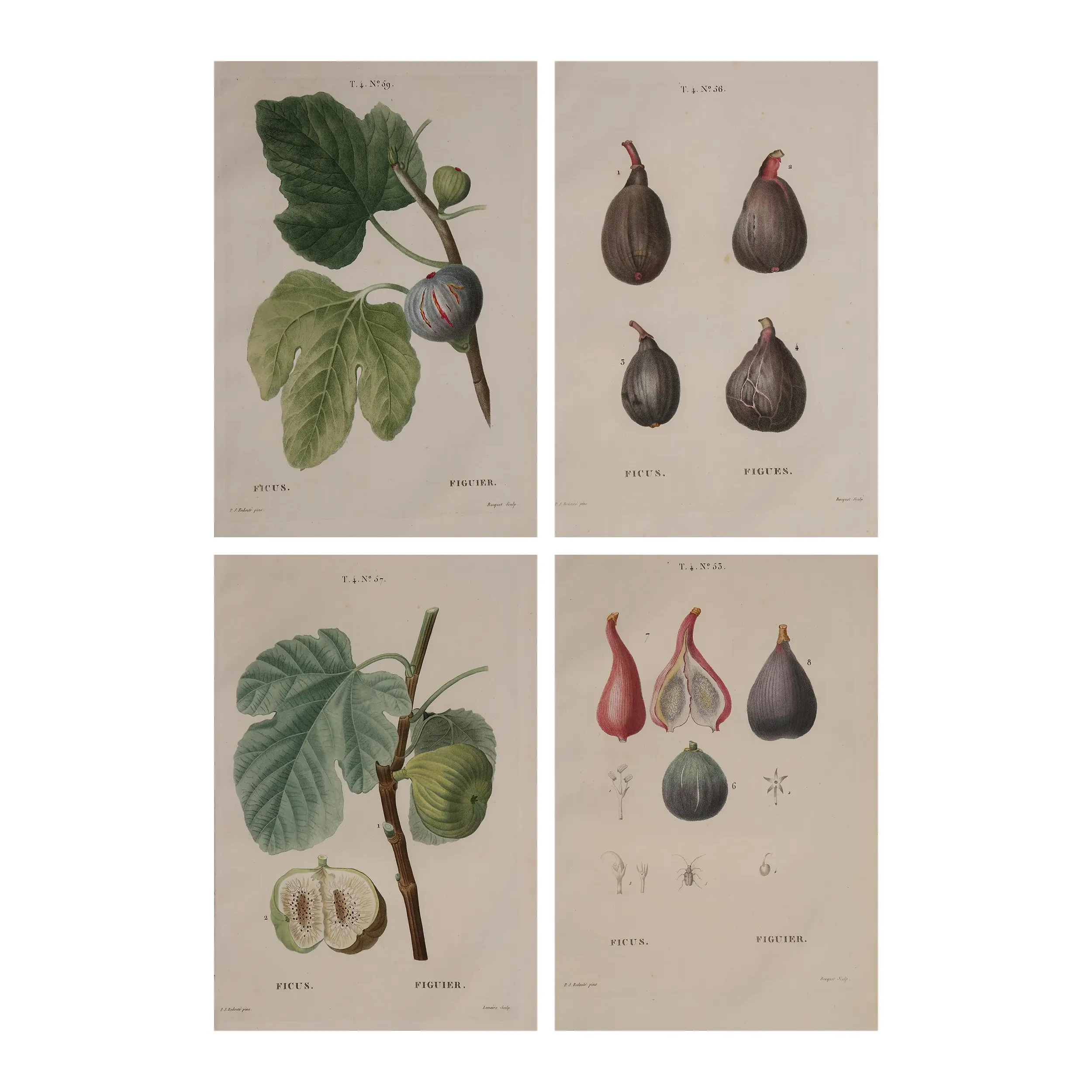
A complete Study Set comprising all seven fig plates from Volume IV of the Nouveau Duhamel (1809), after painted models by Pierre-Joseph Redouté. Printed in colour and finished by hand, the engravings bring together historical varieties, leafy branches, fruit sections and botanical details. Each sheet measures 40 × 25.5 cm. All seven prints are in excellent overall condition; watermarks are recorded on six sheets
 Delivery policy
Your print will be carefully prepared and shipped worldwide via trusted couriers (UPS or similar).
 Authentic antique prints
Original engravings from the 17th–19th century.
This Study Set brings together all seven plates devoted to figs in volume IV of the Nouveau Duhamel: the consecutive sequence numbered 53–59. Based on painted models by Pierre-Joseph Redouté, the images move between leafy branches, individual fruits, open sections and enlarged botanical details.
The original Explication des planches identifies the varieties and structures represented on each sheet. Preserved together, the seven prints allow these observations to be compared across the complete fig sequence, from the character of the foliage to the changing forms and colours of the fruit.
The value of the set lies in this relationship: each plate offers a distinct observation, while the complete sequence reveals the breadth of the study.
The seven compositions alternate between expansive foliage and carefully spaced arrangements of isolated fruits. Plates 57 and 59 establish the fig tree through branches and broad leaves; the other sheets concentrate attention on fruit forms, sections and smaller botanical structures.
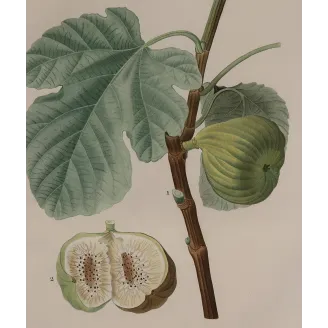
Colour gives the sequence much of its cohesion. Deep leaf greens and pale reverses accompany yellow-green, violet, brown and rose-toned figs. Fine modelling articulates the skins and their ribs, while open sections introduce a different visual texture within the fruit.
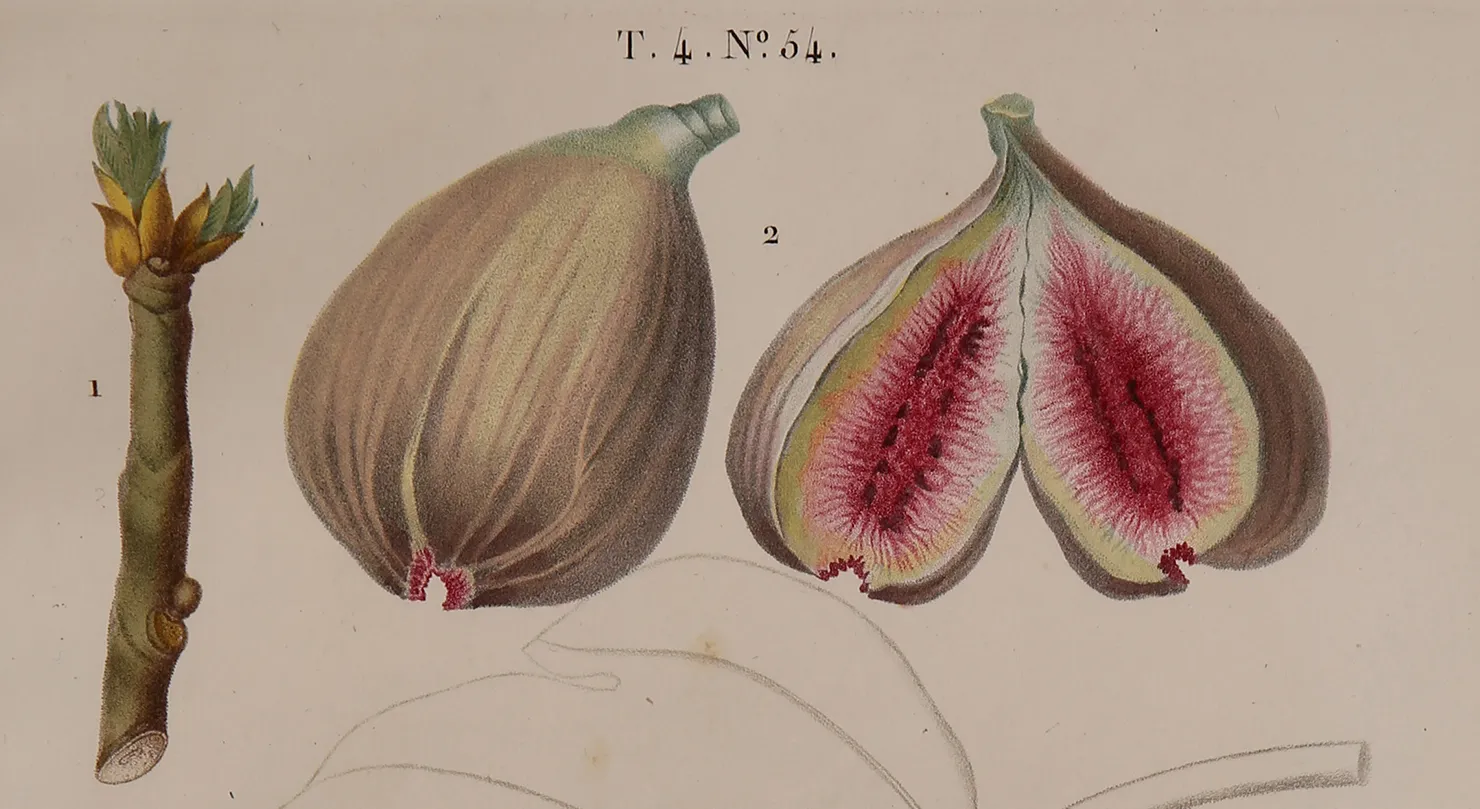
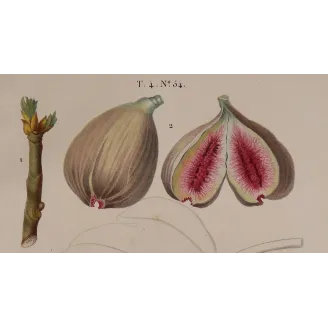
Plate 54 provides a particularly distinct arrangement. A bud-bearing branch and coloured fruit studies sit above a large, largely uncoloured leaf drawing. The contrast allows the leaf’s outline and veins to remain visible without competing with the fruit and its coloured section.
The comparative sheets use generous intervals of unprinted paper. Variations in breadth, length, contour and surface become easier to see because each fruit is presented independently. The numbered figures preserve the connection between the image and its explanation.
In plate 59, the contrast between a dark upper leaf surface and a pale underside gives the leafy composition depth. The fruit and the diagonal branch provide a compact counterweight to the broad foliage.
Seen as an ensemble, the sequence balances three visual languages: the broad surfaces of leaves, the rounded volumes of fruits, and the fine linear structures of botanical detail.
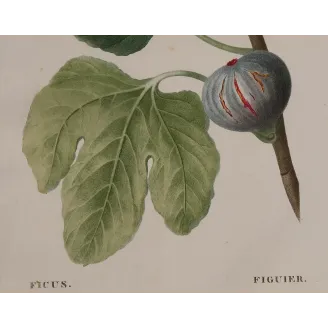
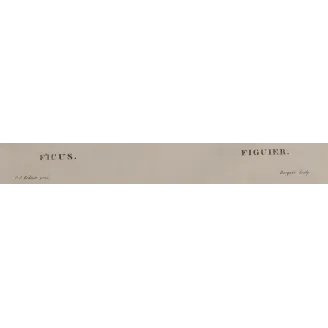
The engraved headings identify the subject as Ficus, Figuier or Figues. The sequence studies the cultivated fig through historical varieties, foliage, fruit sections and reproductive details described in the accompanying text.
The original explanation distinguishes first- and second-crop fruits and preserves names including Servantine, Royale, Mouissonne, Coucourelle, Marseillaise, Argenteuil and Barnissote. These names are retained here as historical designations; their equivalence to present-day cultivars is not assumed.
The small insect in plate 53 is described in the original text as a kind of lepture living in fig-tree wood. It forms part of that plate’s wider observation of the tree and should not be confused with a depiction of the fig’s pollinating wasp.
The completeness of this Study Set concerns a precisely defined editorial group: all seven fig plates, numbered 53–59, in volume IV. The original explanation documents their subjects in the same consecutive order.
UAD53 — Plate 53: enlarged floral structures, a seed with its pistil, and the insect described as living in fig-tree wood; Petite-Bourjassote, wild figs and Mouissonne.
UAD54 — Plate 54: a fig-tree bud, a first-crop Servantine fig and a leaf of the Figuier Servantine.
UAD55 — Plate 55: Coucourelle brune, Mouissonne hâtive of the second crop, Royale, Mourenaou, and a second-crop Mouissonne at the end of the season.
UAD56 — Plate 56: Perrouquine, Aubique noire, Brayasque and Mouissonne, described as first-crop figs.
UAD57 — Plate 57: Figue d’Argenteuil.
UAD58 — Plate 58: Coucourelle blanche, Marseillaise, Verte and Rose.
UAD59 — Plate 59: Figue Barnissote.
The explanation connects some visible differences to growing conditions. It describes one Mouissonne fruit with uncracked skin from less fertile ground and another with cracked skin from fertile, moist ground. It also comments on the proportions of a fruit in plate 55, relating its appearance to the painter’s viewpoint. These observations make the relationship between horticultural experience and pictorial representation explicit.
Each sheet measures 40 × 25.5 cm. The engraved numbering identifies volume IV and the individual plate, while the inventory references UAD53–UAD59 preserve the correspondence between the seven physical prints and their photographic records.
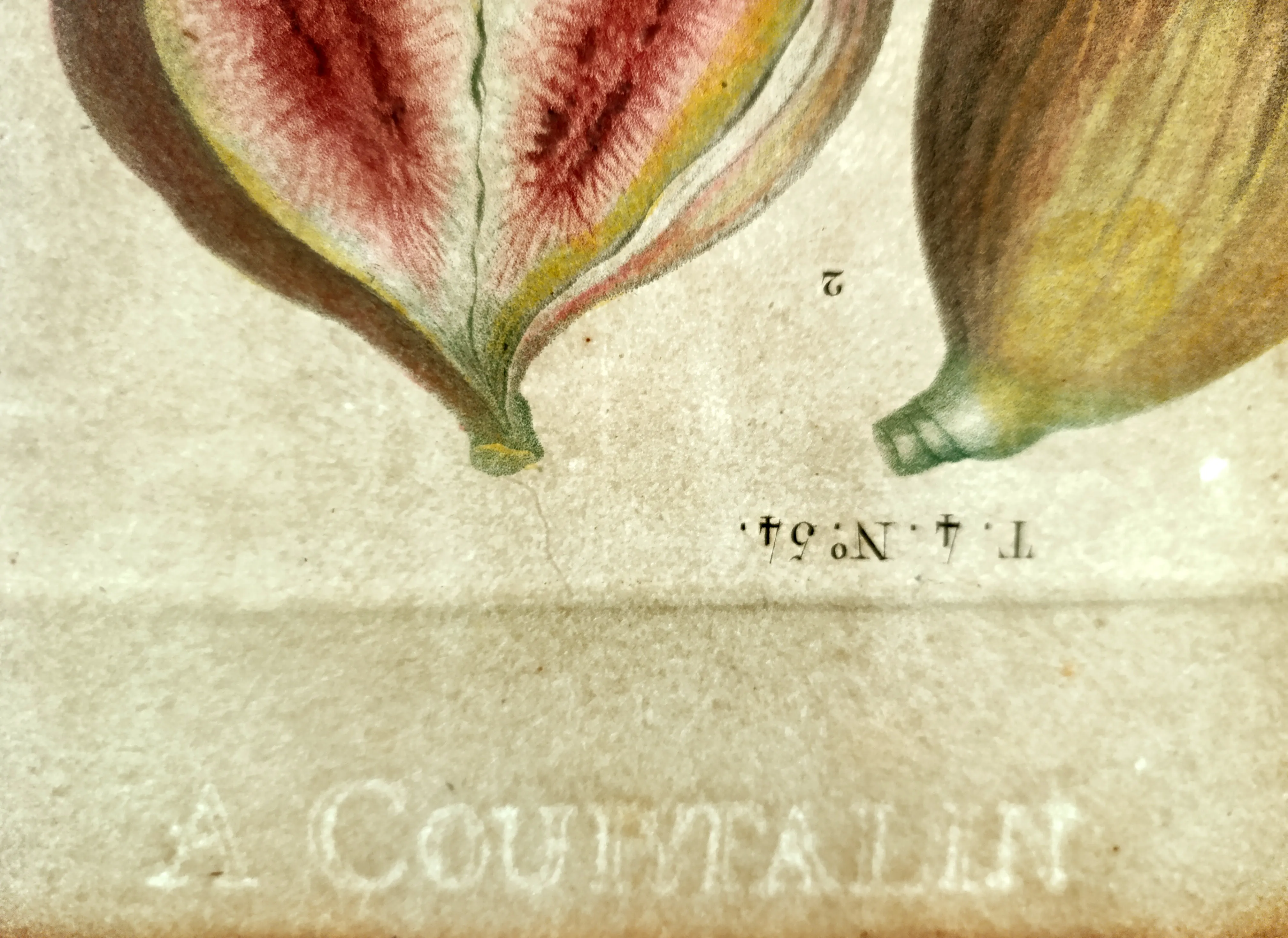
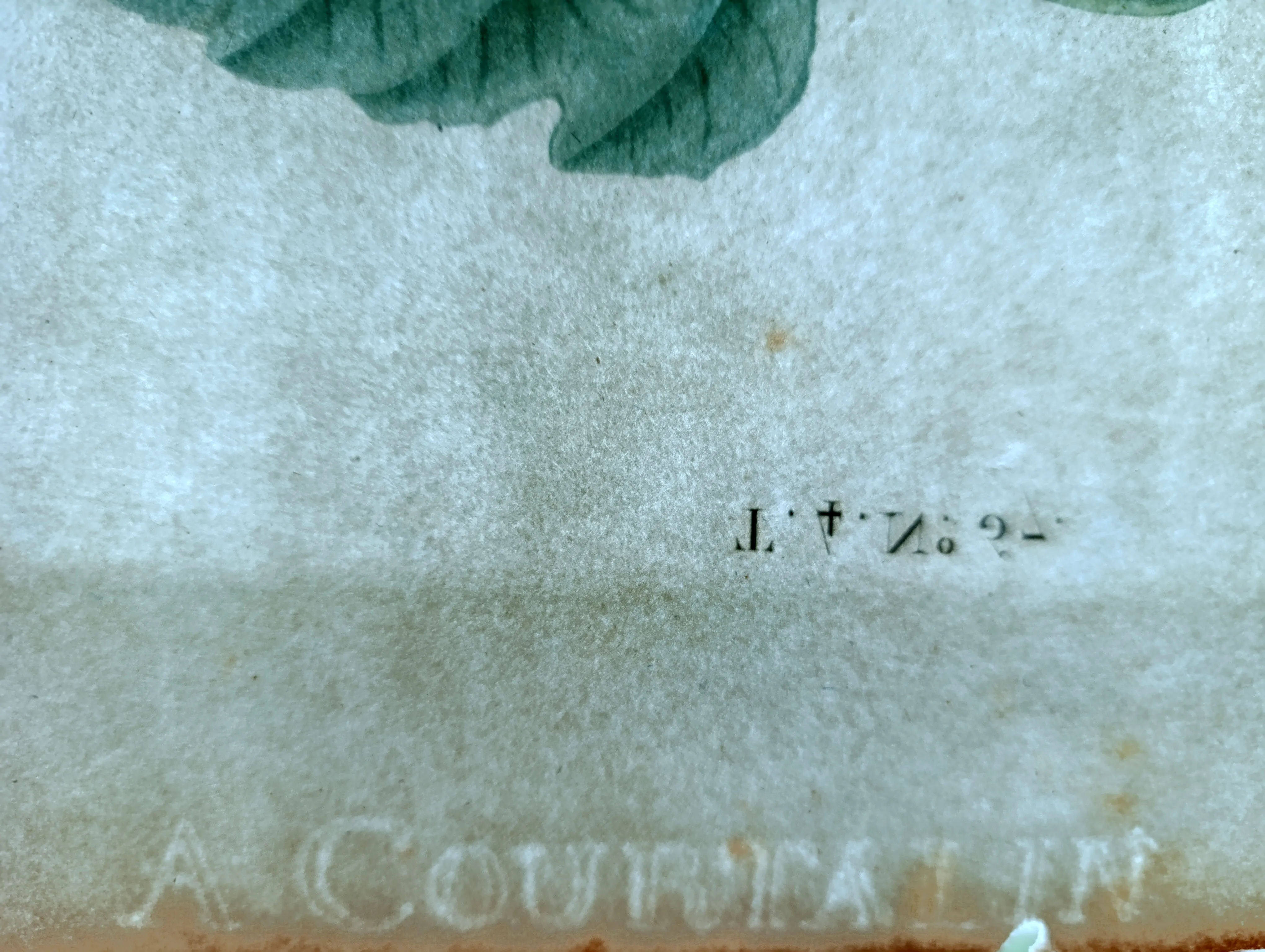
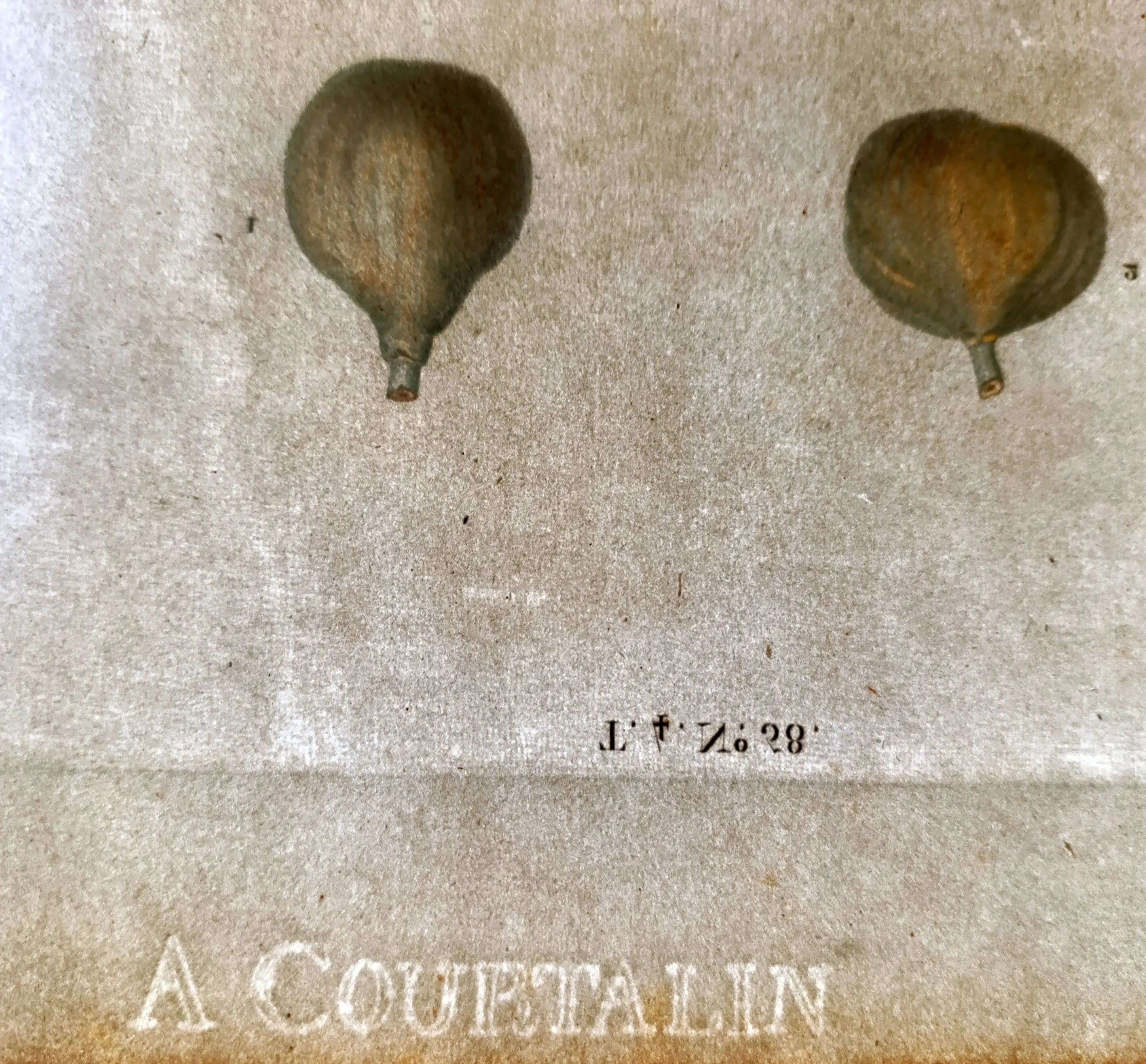
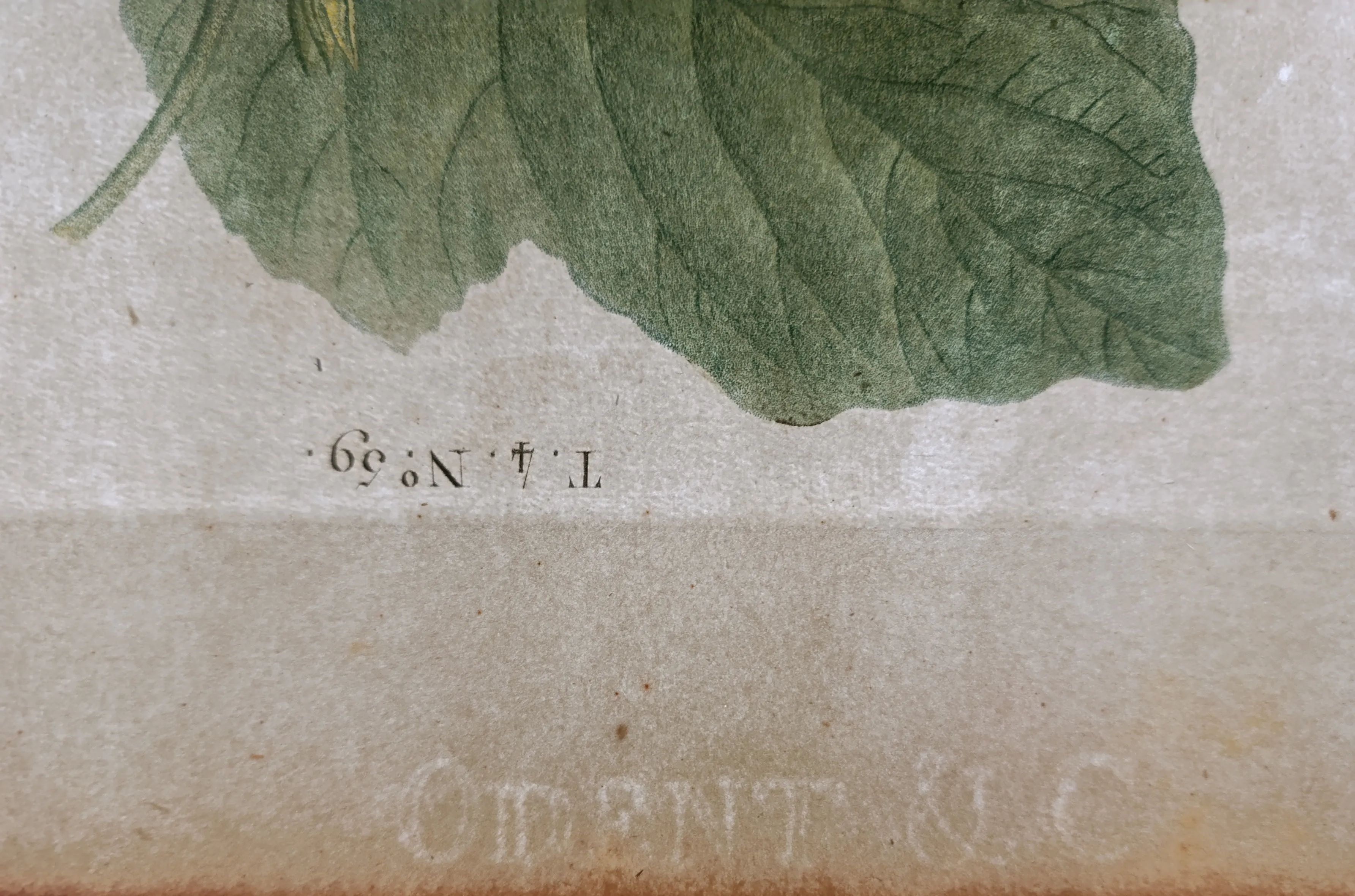
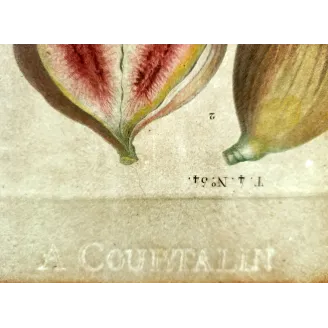
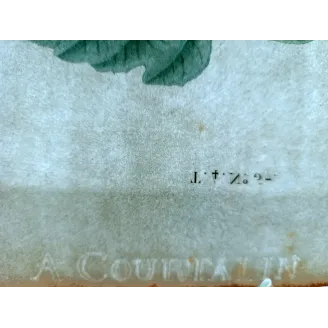
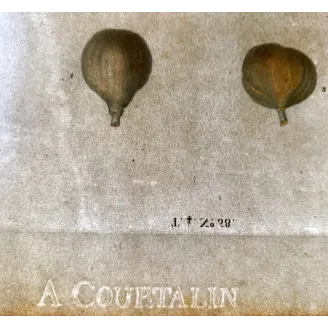
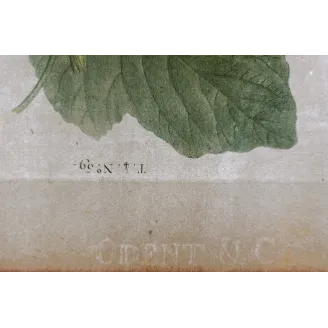
Examination of the sheets has recorded watermarks on six of the seven prints. Marks identified as A Courtalin occur on plates 54, 56, 57 and 58; marks identified as Odent & C occur on plates 53 and 59. No watermark was detected on plate 55.
On plate 53, the mark is partial at the lower sheet edge. On plate 56, approximately half of the mark remains visible at the lower edge. For these sheets, the names identify the watermark types reported from examination; the surviving inscriptions are incomplete.
The differences in watermark are recorded as characteristics of the individual sheets. They add a material dimension to the complete botanical sequence without, by themselves, demonstrating separate editions or print runs.
For further information on the Courtalin paper mill and its history, including its documented association with the Odent family, our Redouté essay now includes a dedicated section on paper and material history. Explore Courtalin and the Odent Family →
Each plate bears the engraved credit P. J. Redouté pinx., identifying Redouté as painter of the model. Bocquet is credited with the engraving on plates 53–56 and 58–59; Lemaire is credited on plate 57. These are printed role inscriptions.
The sequence preserves both the images of the figs and material evidence of the paper and collaborative production through which those images reached the page.
Volume IV of the Nouveau Duhamel, published in 1809, places this fig sequence within the renewed study of trees and shrubs cultivated in France. Its combination of explanatory text and botanical plates enables the differences between cultivated forms to be studied through both words and images.
The seven sheets preserve that relationship particularly clearly. Names, figure numbers, fruit sections, growing conditions and comments on representation form a connected record of how the fig was observed and described.
Redouté’s painted models were translated into engravings by the engravers credited on the sheets. The impressions were printed in colour and finished by hand, combining colour printing with a final stage of manual colouring. This sequence of distinct roles and processes forms part of the material history of the set.
Explore the wider artistic and scientific context through the two associated Redouté readings below.
Pierre-Joseph Redouté — Botanical Illustration and History →
Pierre-Joseph Redouté — Scientific Accuracy and Poetic Beauty →
All seven prints are in excellent overall condition, as assessed through direct examination of the sheets. The botanical images retain clear definition and a coherent visual presence across the complete sequence.
The colours remain visually well balanced, with differentiated greens in the foliage and a wide range of tones across the fruits. Fine modelling and numbered botanical details remain clearly legible.
Light age-related toning, scattered small spots and minor edge irregularities are visible, varying from sheet to sheet. Traces of former binding remain along the left edges. Plate 57 has a small loss at the upper sheet edge, outside the printed image.
The watermarks on plates 53 and 56 are partial at the lower sheet edges. These material characteristics are recorded individually alongside the overall condition assessment.
Please examine the high-resolution photographs of each sheet and the available details for a complete visual assessment. Additional photographs are available upon request.
Historical botanical inscriptions: Ficus; Figuier; Figues
Work: Traité des arbres et arbustes que l’on cultive en France — Nouveau Duhamel
Volume: IV
Date of volume publication: 1809
Painted models: Pierre-Joseph Redouté (1759–1840), credited P. J. Redouté pinx.
Engraving credits: Bocquet, plates 53–56 and 58–59; Lemaire, plate 57
Technique: Original botanical engravings printed in colour and finished by hand
Artistic tradition: Early nineteenth-century botanical and horticultural illustration
Contents: Seven original prints, offered together as one Study Set
Completeness: All seven fig plates in volume IV, numbered 53–59
Watermarks: A Courtalin, plates 54, 56, 57 and 58; Odent & C, plates 53 and 59; none detected on plate 55
Partial watermarks: Plates 53 and 56, at the lower sheet edges
Sheet size: 40 × 25.5 cm each (height × width)
Inventory references: UAD53–UAD59
Condition: Excellent overall condition on all seven sheets, with minor age-related and marginal traces as described above
Photography: Individual sheet photographs, selected details and transmitted-light watermark photographs
Additional photographs: Available upon request
Authenticity: Original nineteenth-century prints — never modern reproductions
Specific References
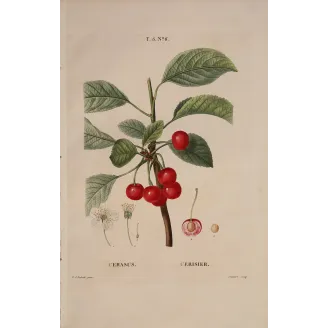
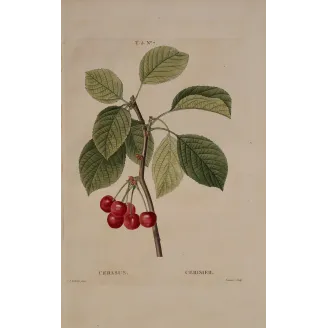
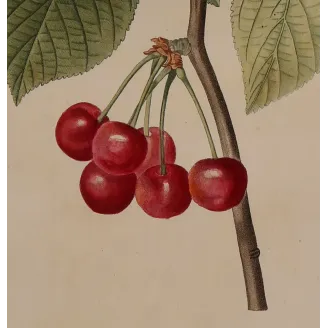
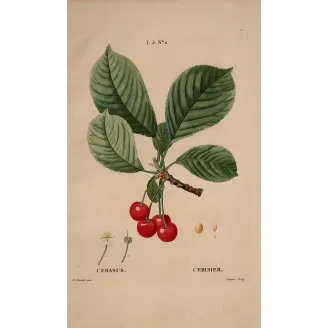
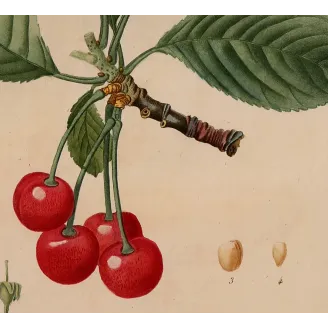
Rare Redouté botanical engraving of the cherry tree (Cerasus). Vivid red fruits and blossoms in exquisite detail.
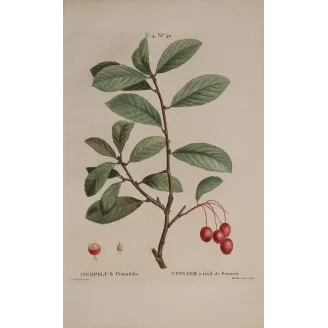
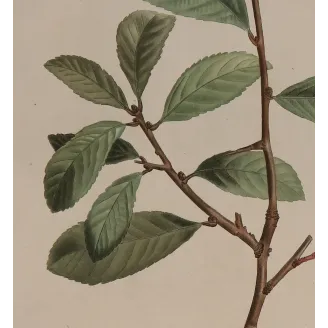
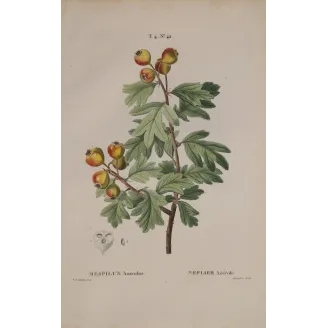
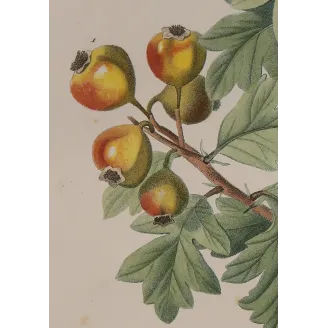
Original botanical engraving of Mespilus prunifolia by Redouté. Elegant branch and fruit, perfect for refined interiors.
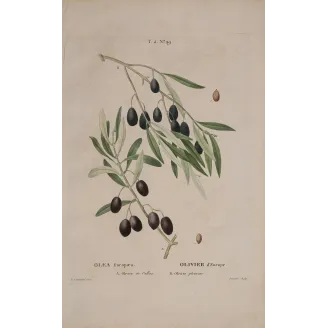
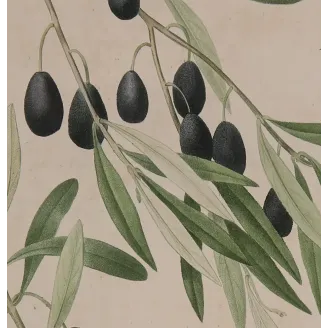
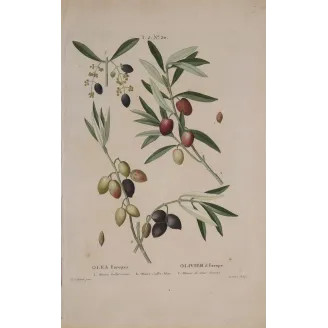
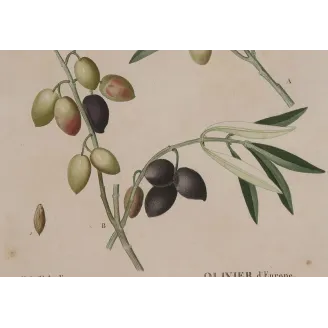
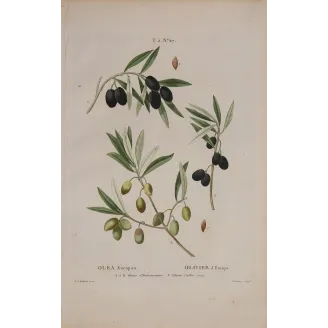
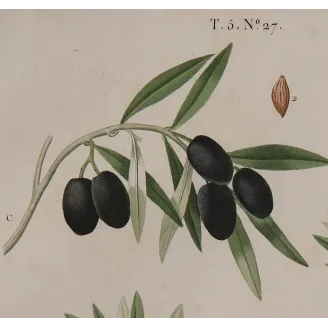
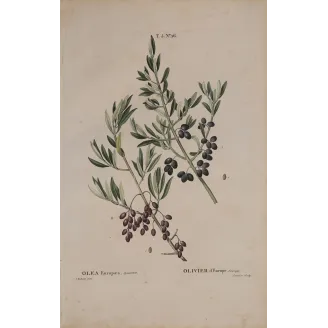
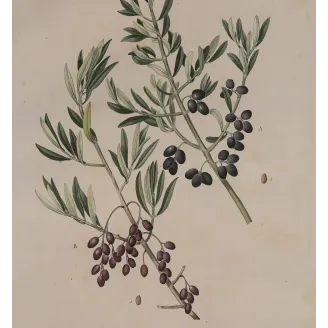
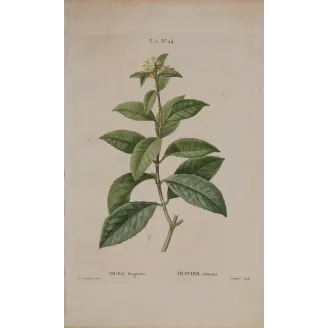
Olive tree study by Redouté with detailed foliage and seeds. bright fruit and slender branches. Decorative and vivid.
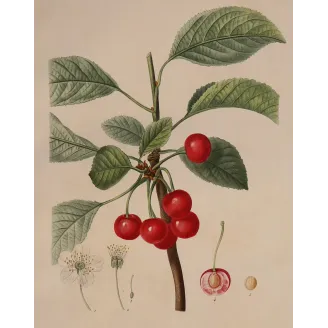
Antique Botanical print of the Cherry tree by Redouté. Lush foliage and red fruits in harmonious layout.
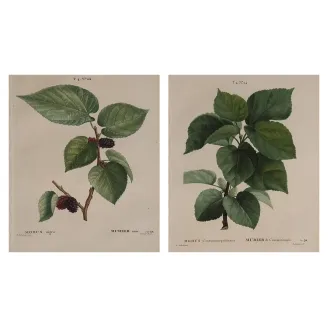
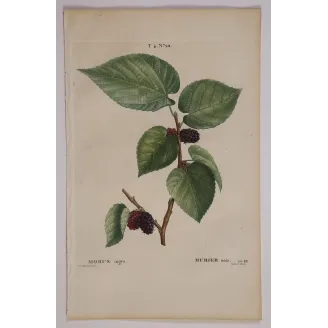
A pair of original botanical engravings after Pierre-Joseph Redouté from Volume IV of the Nouveau Duhamel, depicting the black mulberry and the historically named Constantinople mulberry. Printed in colour and finished by hand, the two plates offer complementary studies of foliage and fruit. Each sheet measures 40 × 25.5 cm. Both are in excellent condition.
Charming pear study by Redouté, showing delicate blossom and ripening fruit. Balanced and refined.
Graceful composition of the Amelanchier with fine leaves and berry-like fruit.
Original 18th-century hand-colored copper engraving depicts a species of Cassia (now commonly associated with the genus Senna)
A pair of original botanical engravings after Pierre-Joseph Redouté from Volume IV of the Nouveau Duhamel, depicting the black mulberry and the historically named Constantinople mulberry. Printed in colour and finished by hand, the two plates offer complementary studies of foliage and fruit. Each sheet measures 40 × 25.5 cm. Both are in excellent condition.
A complete Study Set comprising all seven fig plates from Volume IV of the Nouveau Duhamel (1809), after painted models by Pierre-Joseph Redouté. Printed in colour and finished by hand, the engravings bring together historical varieties, leafy branches, fruit sections and botanical details. Each sheet measures 40 × 25.5 cm. All seven prints are in excellent overall condition; watermarks are recorded on six sheets