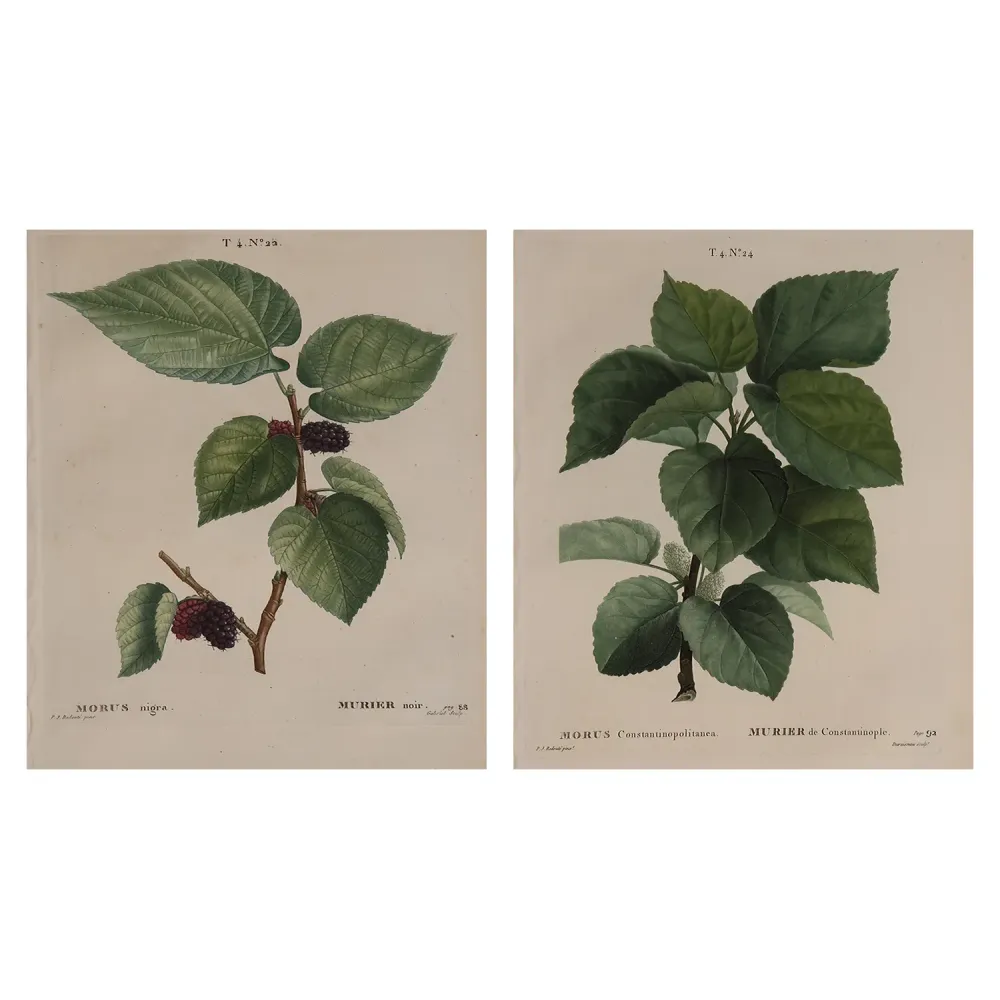
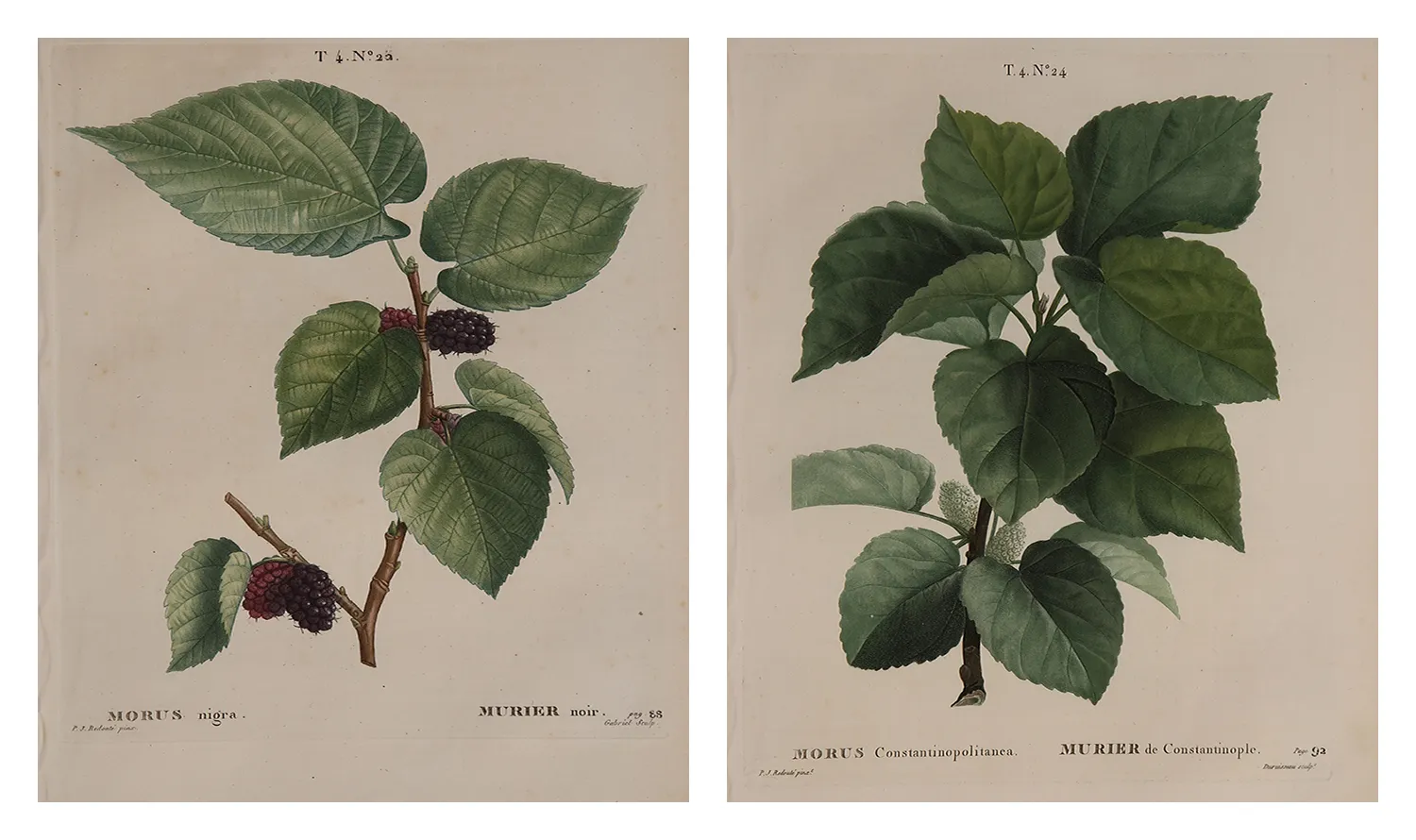


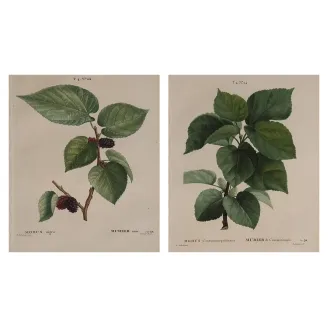

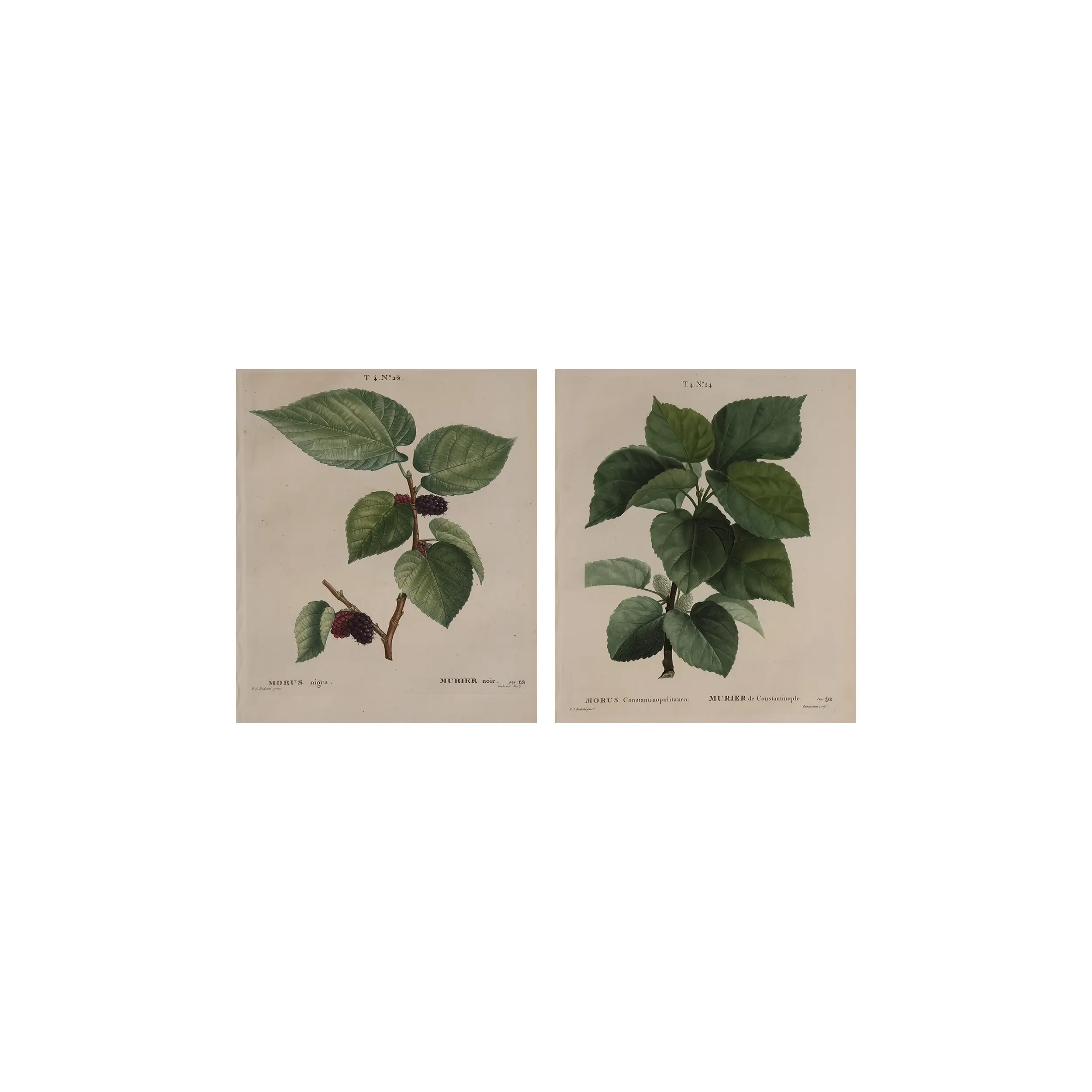
A pair of original botanical engravings after Pierre-Joseph Redouté from Volume IV of the Nouveau Duhamel, depicting the black mulberry and the historically named Constantinople mulberry. Printed in colour and finished by hand, the two plates offer complementary studies of foliage and fruit. Each sheet measures 40 × 25.5 cm. Both are in excellent condition.
 Delivery policy
Your print will be carefully prepared and shipped worldwide via trusted couriers (UPS or similar).
 Authentic antique prints
Original engravings from the 17th–19th century.
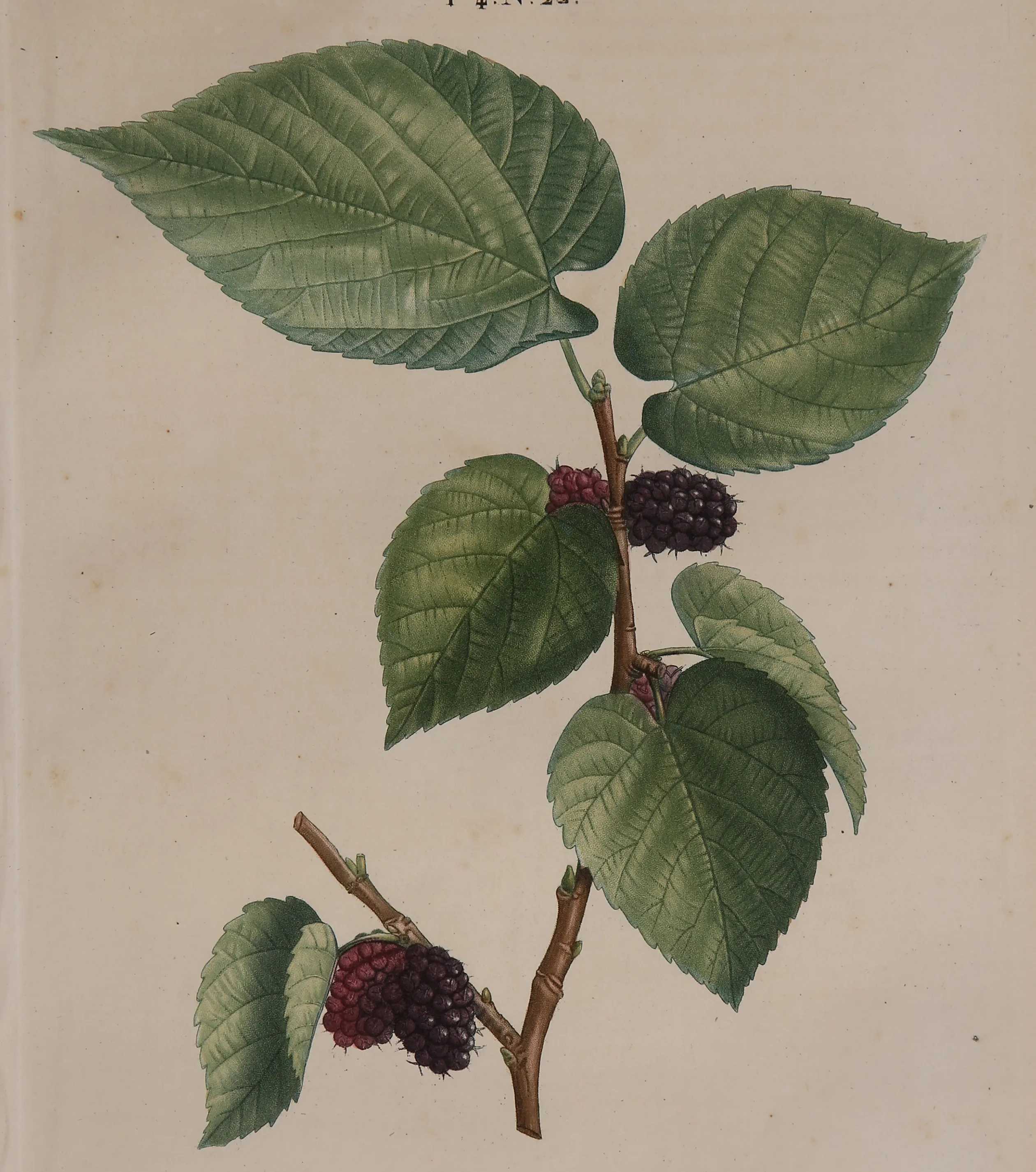
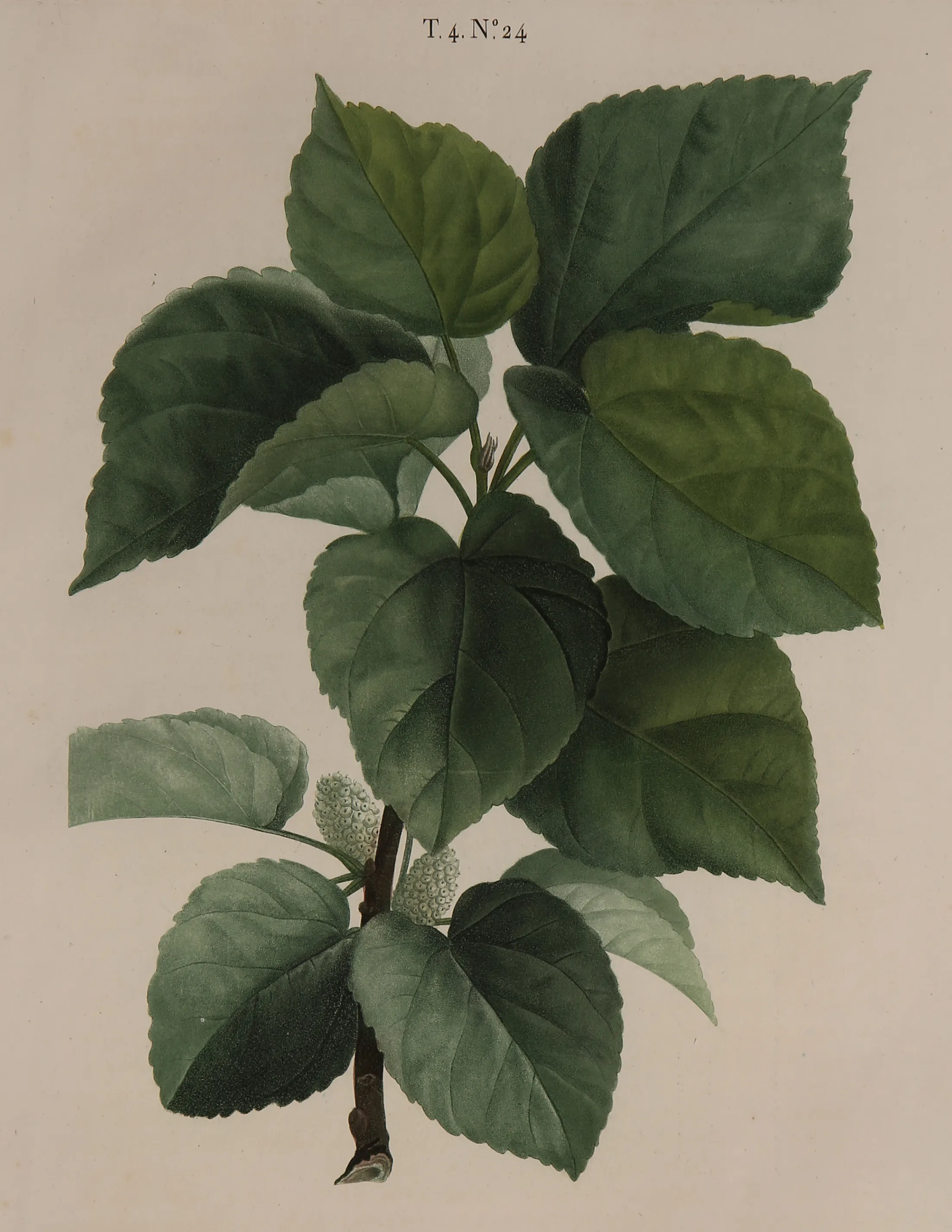
This Study Set brings together two mulberry plates from volume IV of the Nouveau Duhamel: plate 22, Morus nigra, and plate 24, Morus Constantinopolitanea. Based on painted models by Pierre-Joseph Redouté, the compositions examine leafy branches and fruit through two distinct arrangements.
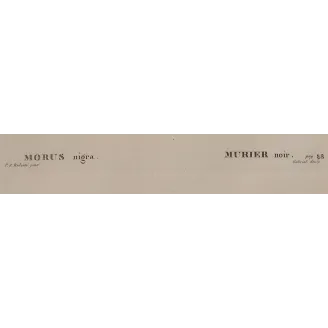
The engraved French headings identify the subjects as Mûrier noir and Mûrier de Constantinople. Presented together, the prints invite comparison of leaf contours, venation, fruit colour and the distribution of foliage along the branches.
The interest of the pair lies in its complementary observations: the dark fruits of the black mulberry draw the eye into an open composition, while the Constantinople mulberry builds its presence through a denser succession of leaves.
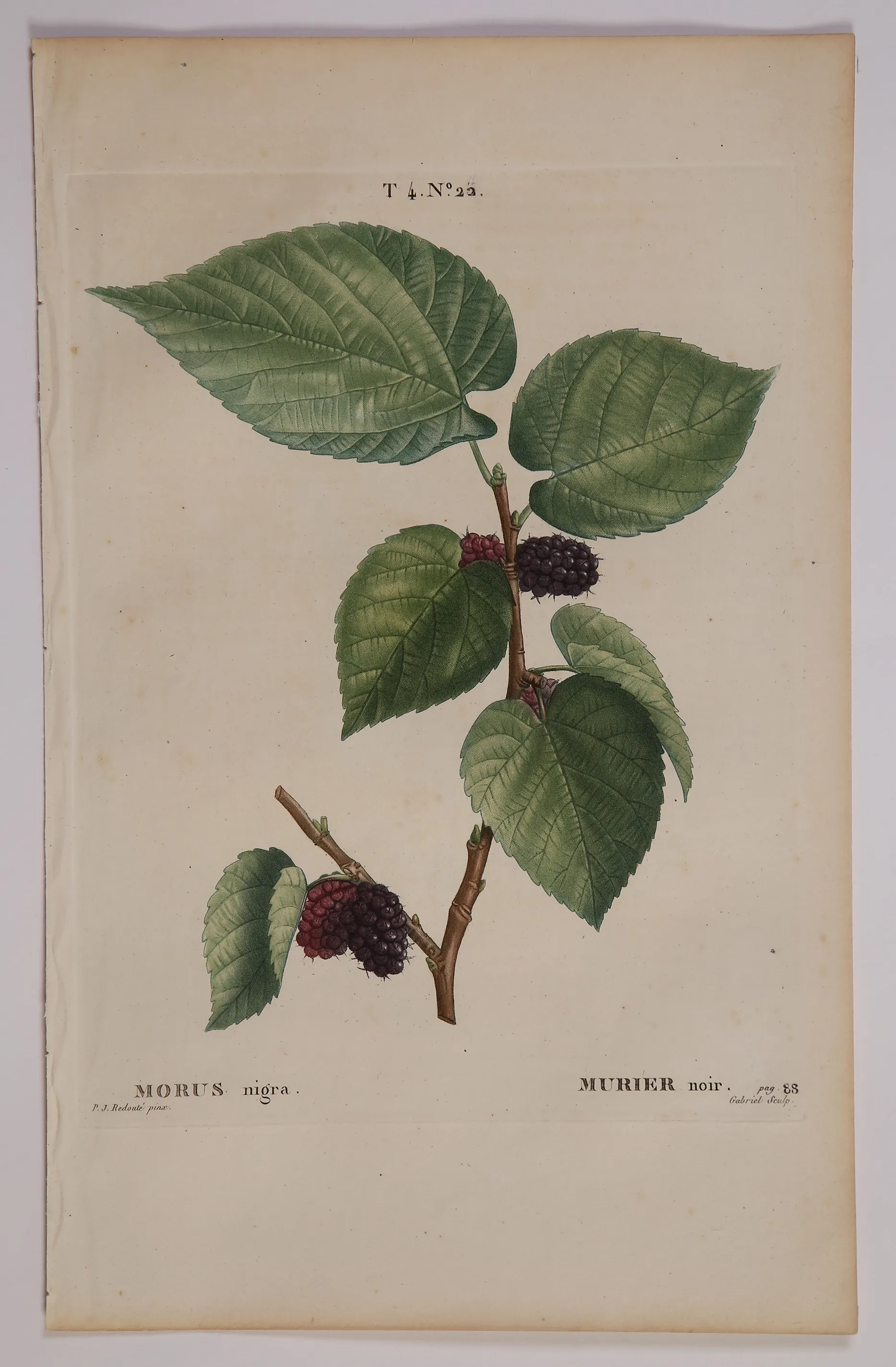
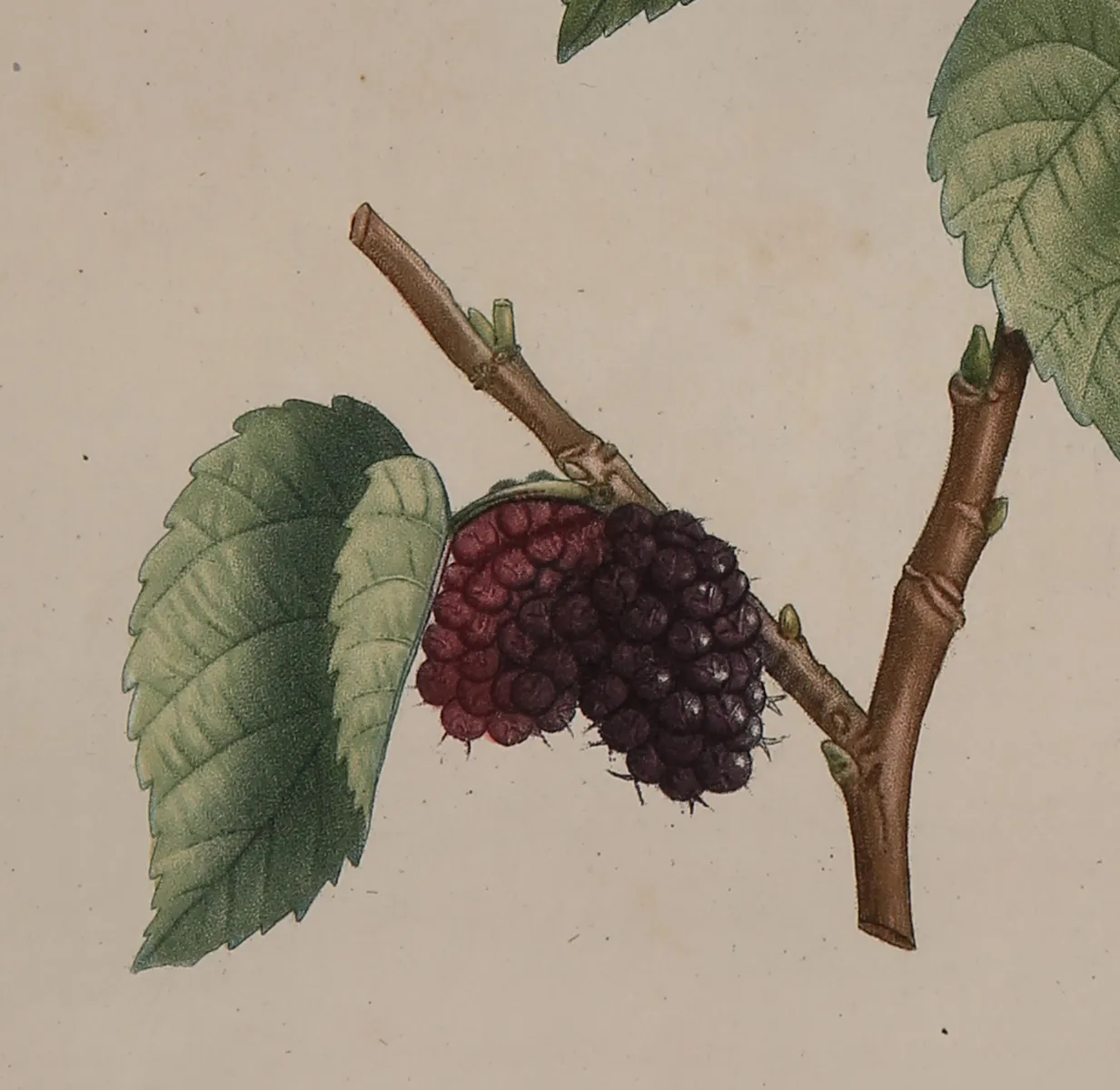
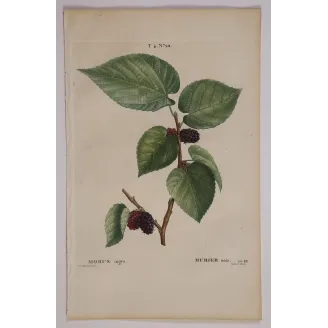
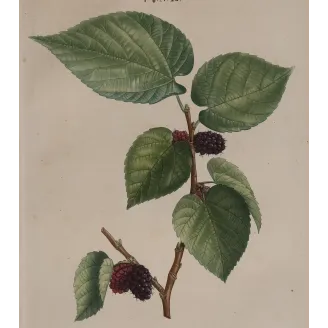
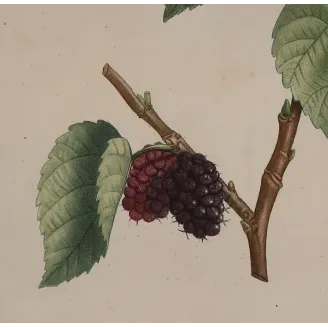
In plate 22, the branch rises through generous areas of unprinted paper. Two broad leaves establish the upper part of the composition, while smaller leaves and fruit clusters punctuate the stem below. The lower lateral branch provides a second grouping of fruit and a quiet counterbalance to the ascending form.
The mulberries introduce concentrated passages of red, purple and near-black against the greens of the foliage. Their individually modelled surfaces contrast with the broad leaf planes, where fine veins and serrated margins remain clearly articulated.
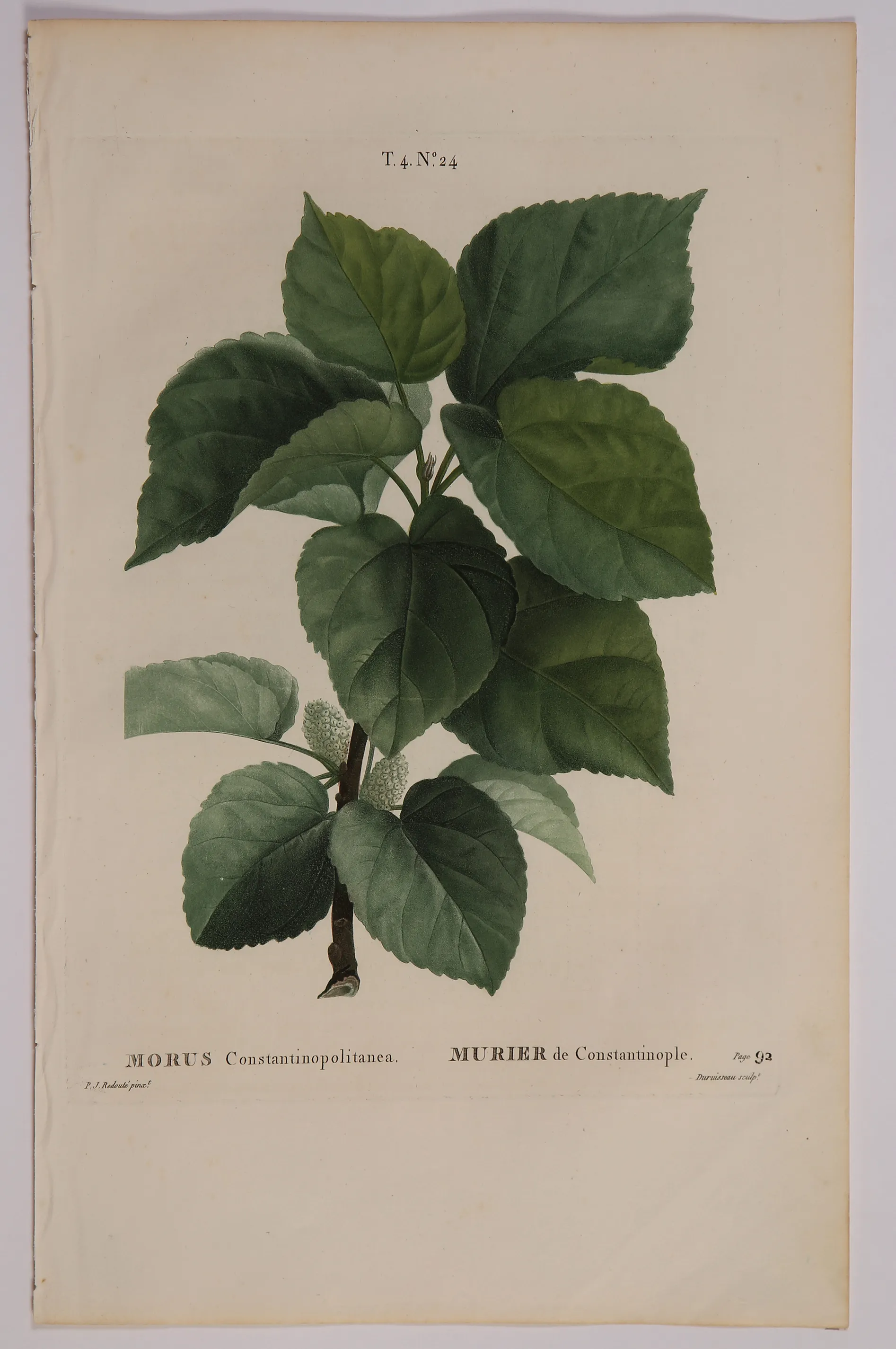
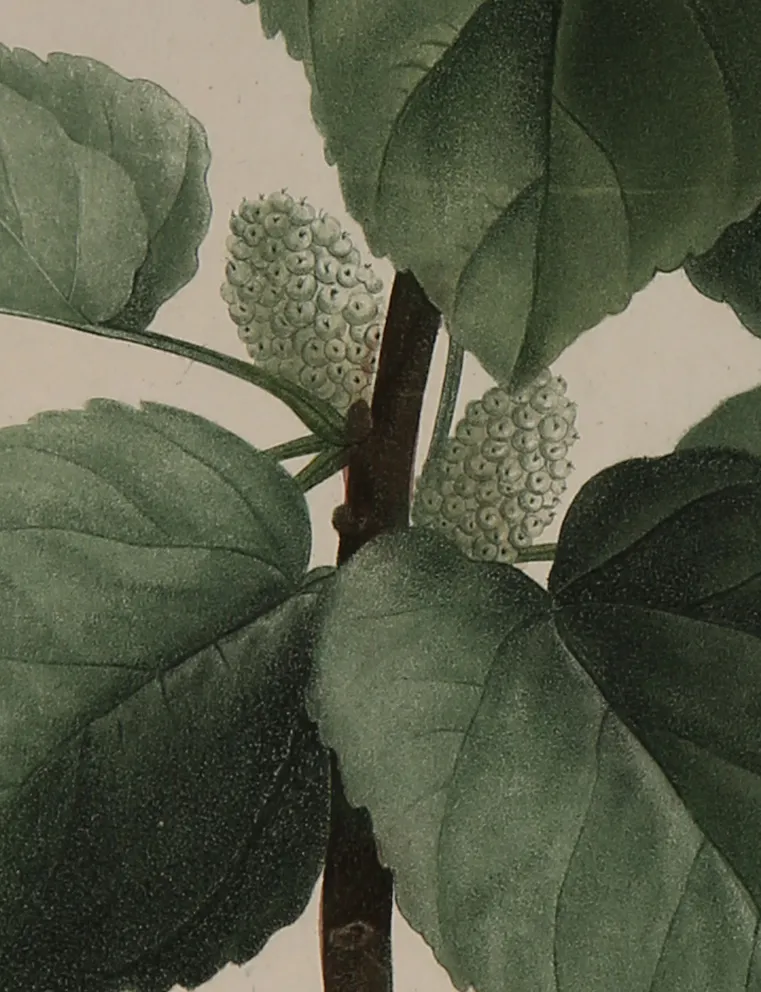
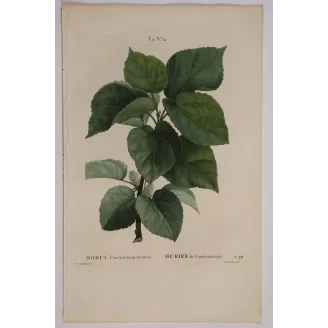
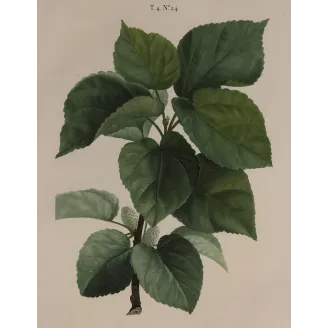
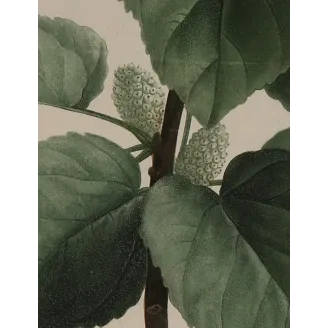
Plate 24 offers a more compact arrangement. Overlapping leaves occupy much of the central field, alternating darker upper surfaces with paler reverses. Small, pale fruits appear beside the lower part of the stem, inviting a closer look within the surrounding foliage.
The two sheets share an emphasis on leaf structure but differ in rhythm. One allows the branch and dark fruit to remain distinctly separated; the other gathers its leaves into a continuous sequence of overlapping forms. Their matching sheet dimensions make these differences especially clear when viewed side by side.
Plate 22 bears the botanical inscription Morus nigra and the French heading Mûrier noir, identifying the black mulberry. The illustration gives particular attention to its broad, serrated leaves and the contrasting colours of the fruit represented along the branch.
Plate 24 is inscribed Morus Constantinopolitanea and Mûrier de Constantinople. This historical designation is retained as it appears on the sheet. Its equivalence to a present-day botanical name is not assumed here.
Read together, the plates preserve two named subjects within the publication’s study of trees and shrubs. The comparison follows the evidence of the images and their headings: foliage, branching and fruit, observed through the botanical vocabulary of the work.
This is a selected two-plate Study Set from volume IV. Its coherence rests on the shared mulberry subject, the painted models credited to Redouté, and the complementary visual character of the two compositions.
UBPa — Plate 22: Morus nigra — Mûrier noir. A leafy branch with dark and reddish fruit clusters; the engraved page reference is 88.
UBPb — Plate 24: Morus Constantinopolitanea — Mûrier de Constantinople. A densely leafed branch with pale fruits beside the lower stem; the engraved page reference is 93.
The plates are offered together as a comparative pair. This selection does not constitute a complete mulberry sequence, and no claim is made that the two sheets formed an original separate set.
Each sheet measures 40 × 25.5 cm. The engraved numbering identifies volume IV and the individual plate, while the inventory references UBPa and UBPb preserve the correspondence between the physical prints and their photographic records.
No watermark has been detected on either sheet during examination. This records the result for these particular specimens; it does not establish the absence of watermarks throughout the paper used for the publication.
Both plates bear the engraved credit P. J. Redouté pinx., identifying Redouté as painter of the model. This is a printed role inscription, rather than an autograph signature or evidence that he personally engraved or coloured the impressions.
The impressions were printed in colour and finished by hand. Their production therefore combines a colour-printing stage with final manual colouring, distinct from the painted models on which the compositions were based.
Beyond their botanical subjects, the two sheets preserve the numbering, titles and production credits that connect each image to its place within the work.
Volume IV of the Nouveau Duhamel, published in 1809, places these mulberry studies within the renewed study of trees and shrubs cultivated in France. Botanical images and explanatory text form complementary parts of that editorial undertaking.
The bilingual headings and engraved page references retain the connection between the plates and the written treatment of their subjects. The historical name of the Constantinople mulberry also preserves the terminology through which the tree was presented to readers of the work.
Redouté’s painted models supplied the basis for the engraved compositions. Colour printing and final hand colouring brought the greens of the foliage and the contrasting tones of the fruit to the impressions offered here.
Explore the wider artistic and scientific context through the two associated Redouté readings below.
Pierre-Joseph Redouté — Botanical Illustration and History →
Pierre-Joseph Redouté — Scientific Accuracy and Poetic Beauty →
Both prints are in excellent overall condition, as assessed through direct examination of the sheets. The botanical compositions and engraved headings remain clearly legible.
The photographs show differentiated greens across the foliage, with fine veins and leaf contours retaining clear definition. On plate 22, the reddish and dark fruit clusters remain visually distinct; on plate 24, the pale fruits are discernible among the overlapping leaves.
Light age-related toning, scattered small spots and minor edge irregularities are visible in the photographs. Traces of former binding remain along the left edges. These characteristics are recorded alongside the overall condition assessment.
Please examine the high-resolution photographs of both sheets for a complete visual assessment. Additional photographs are available upon request.
Historical botanical inscriptions: Morus nigra; Morus Constantinopolitanea
French headings: Mûrier noir; Mûrier de Constantinople
Work: Traité des arbres et arbustes que l’on cultive en France — Nouveau Duhamel
Volume: IV
Plates: 22 and 24
Date of volume publication: 1809
Painted models: Pierre-Joseph Redouté (1759–1840), credited P. J. Redouté pinx.
Technique: Original botanical engravings printed in colour and finished by hand
Artistic tradition: Early nineteenth-century botanical and horticultural illustration
Contents: Two original prints, offered together as one Study Set
Selection: A comparative mulberry pair from volume IV
Watermarks: None detected on either sheet
Sheet size: 40 × 25.5 cm each (height × width)
Inventory references: UBPa; UBPb
Condition: Excellent overall condition on both sheets, with minor age-related and marginal traces as described above
Photography: Individual sheet photographs
Additional photographs: Available upon request
Authenticity: Original nineteenth-century prints — never modern reproductions
Specific References
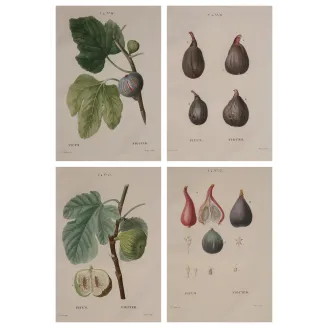
A complete Study Set comprising all seven fig plates from Volume IV of the Nouveau Duhamel (1809), after painted models by Pierre-Joseph Redouté. Printed in colour and finished by hand, the engravings bring together historical varieties, leafy branches, fruit sections and botanical details. Each sheet measures 40 × 25.5 cm. All seven prints are in excellent overall condition; watermarks are recorded on six sheets
Graceful composition of the Amelanchier with fine leaves and berry-like fruit.
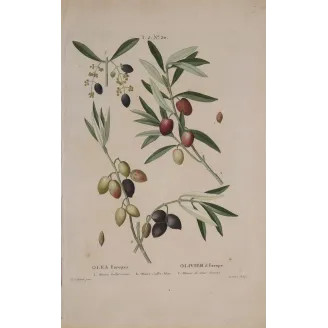
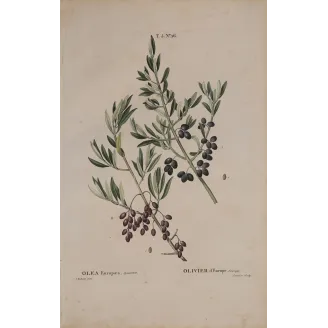
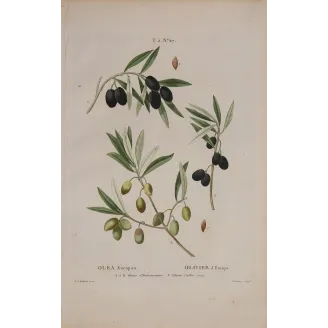
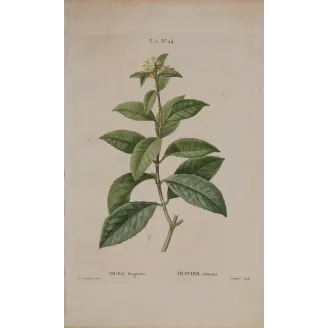
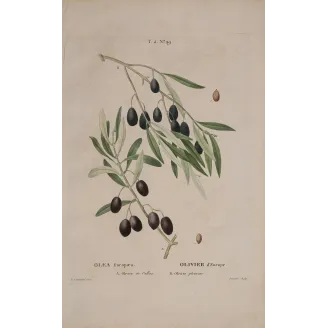
Olive tree study by Redouté with detailed foliage and seeds. bright fruit and slender branches. Decorative and vivid.
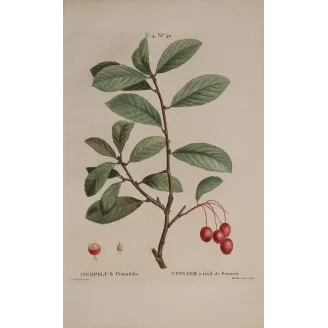
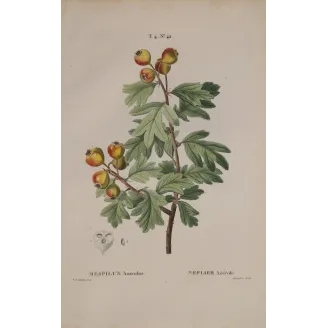
Original botanical engraving of Mespilus prunifolia by Redouté. Elegant branch and fruit, perfect for refined interiors.
Charming pear study by Redouté, showing delicate blossom and ripening fruit. Balanced and refined.
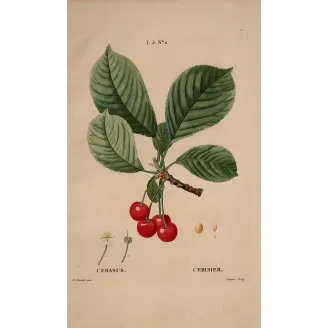
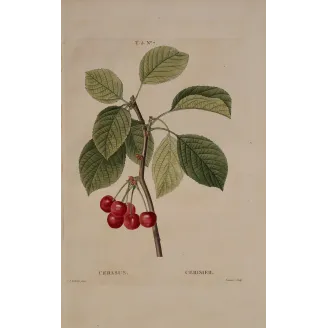
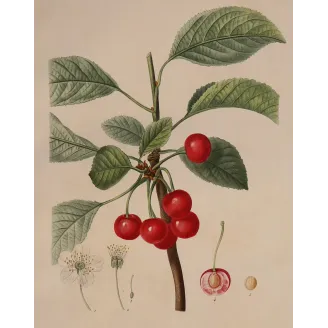
Antique Botanical print of the Cherry tree by Redouté. Lush foliage and red fruits in harmonious layout.
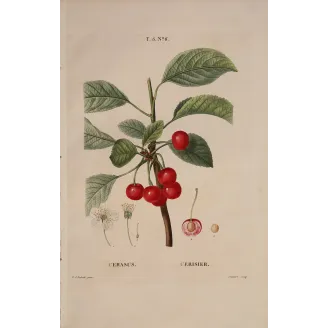
Rare Redouté botanical engraving of the cherry tree (Cerasus). Vivid red fruits and blossoms in exquisite detail.
A pair of original botanical engravings after Pierre-Joseph Redouté from Volume IV of the Nouveau Duhamel, depicting the black mulberry and the historically named Constantinople mulberry. Printed in colour and finished by hand, the two plates offer complementary studies of foliage and fruit. Each sheet measures 40 × 25.5 cm. Both are in excellent condition.