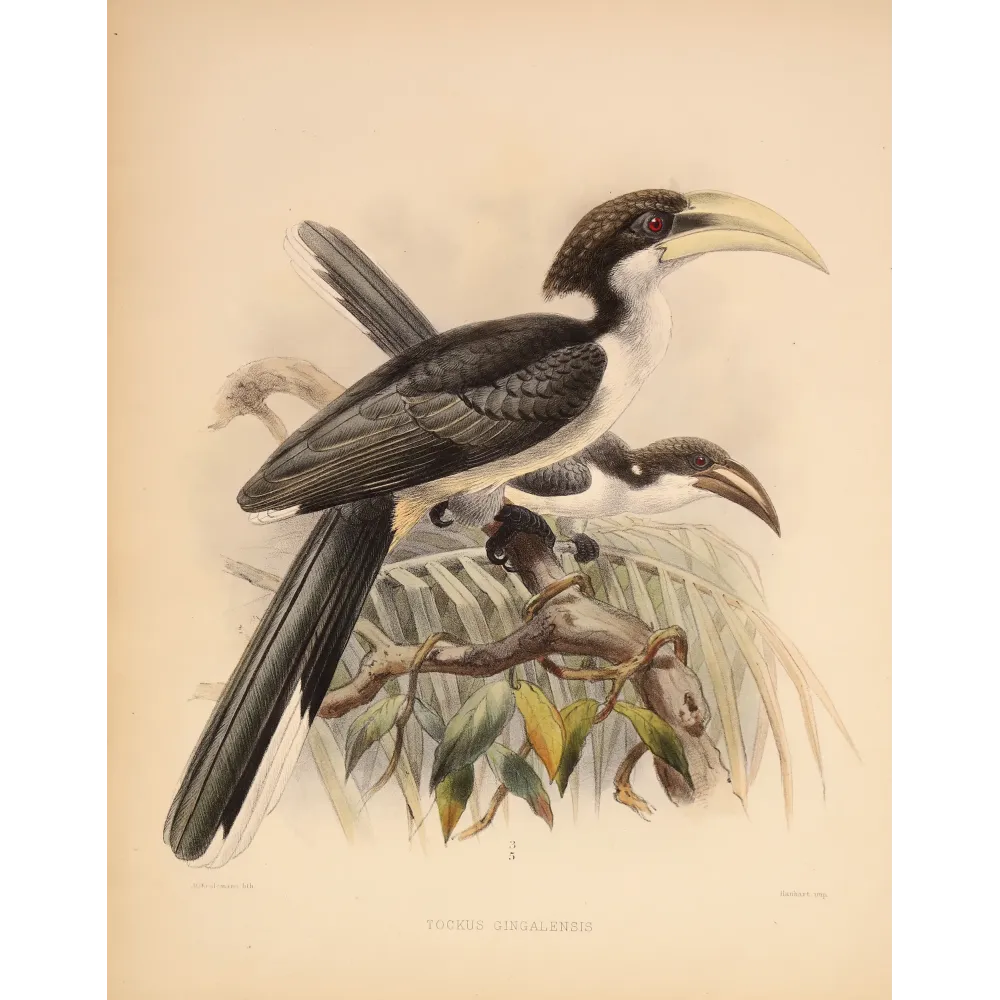
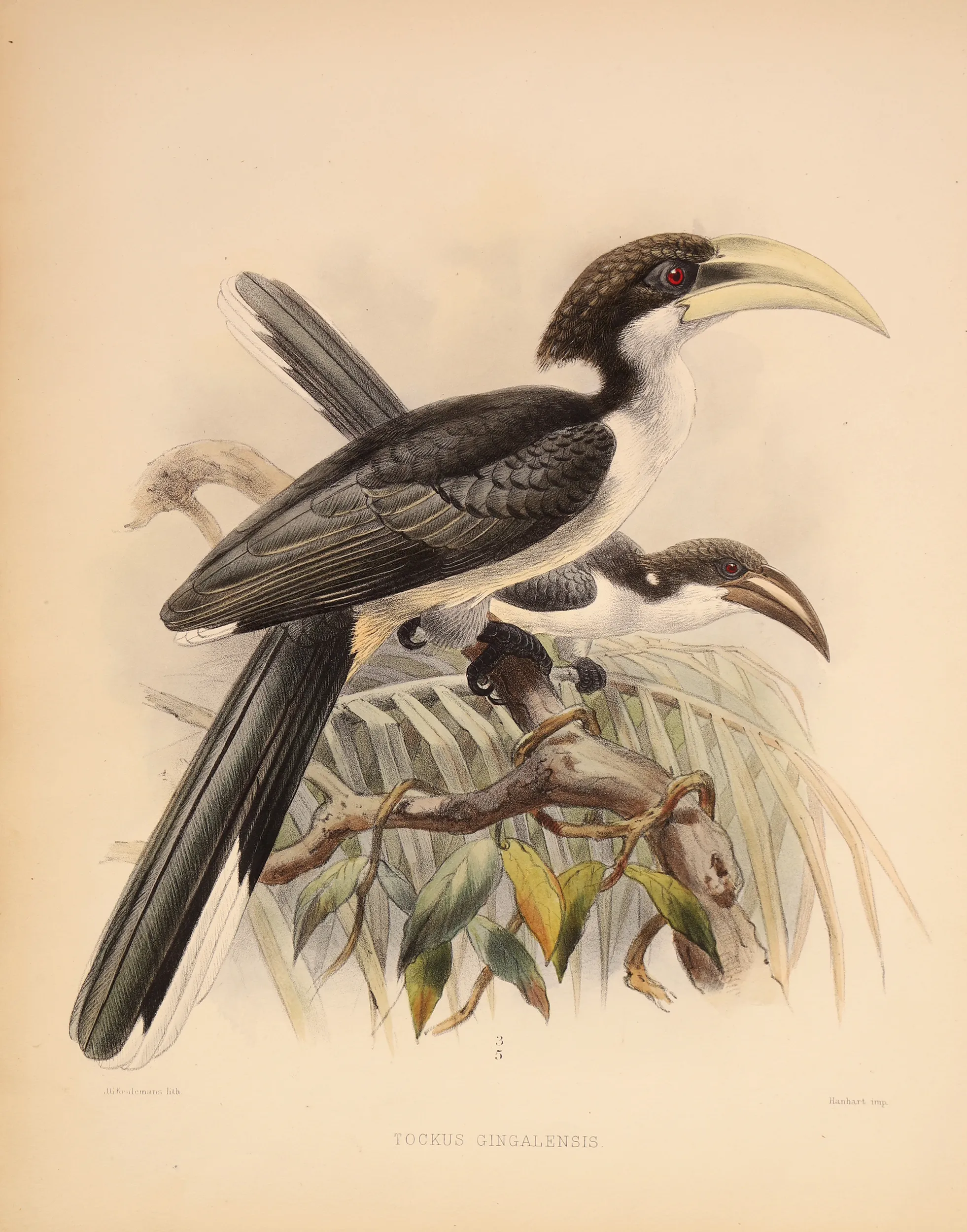
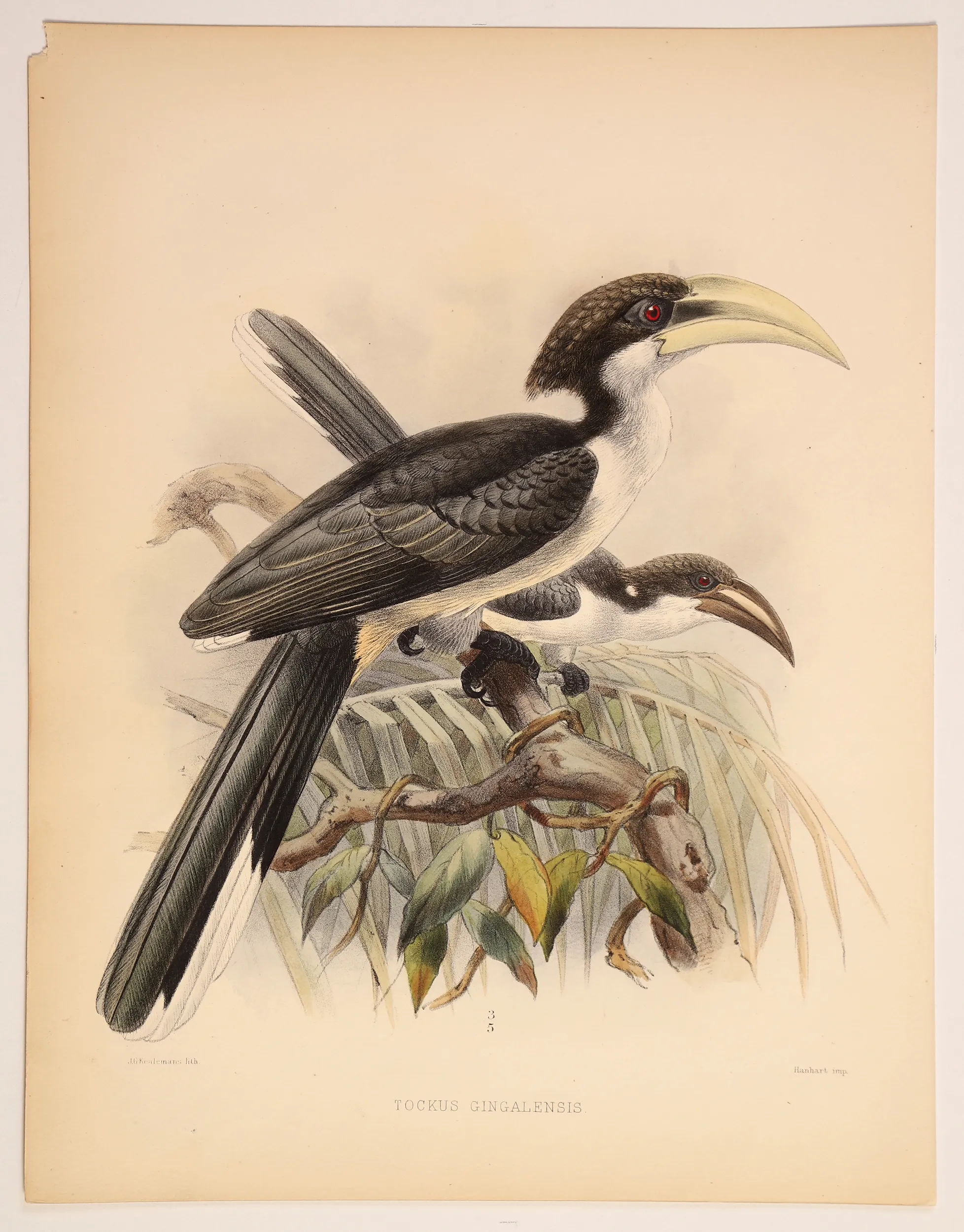
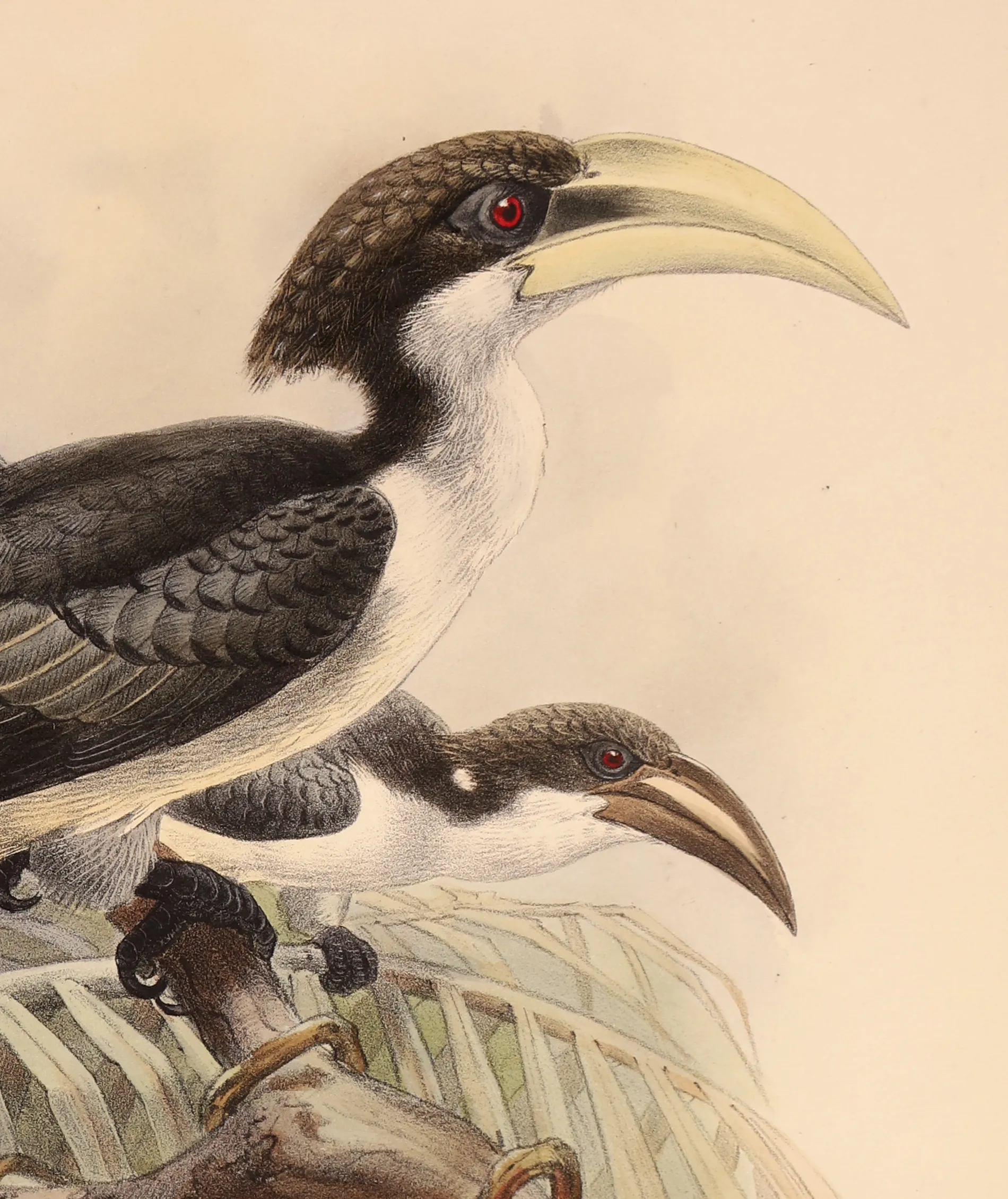
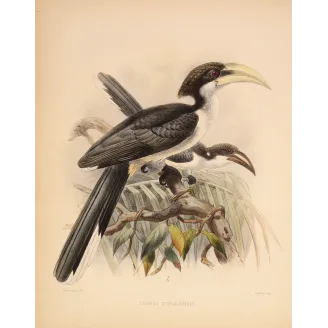
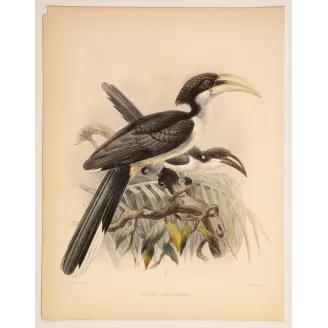
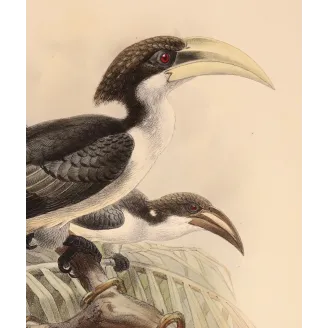
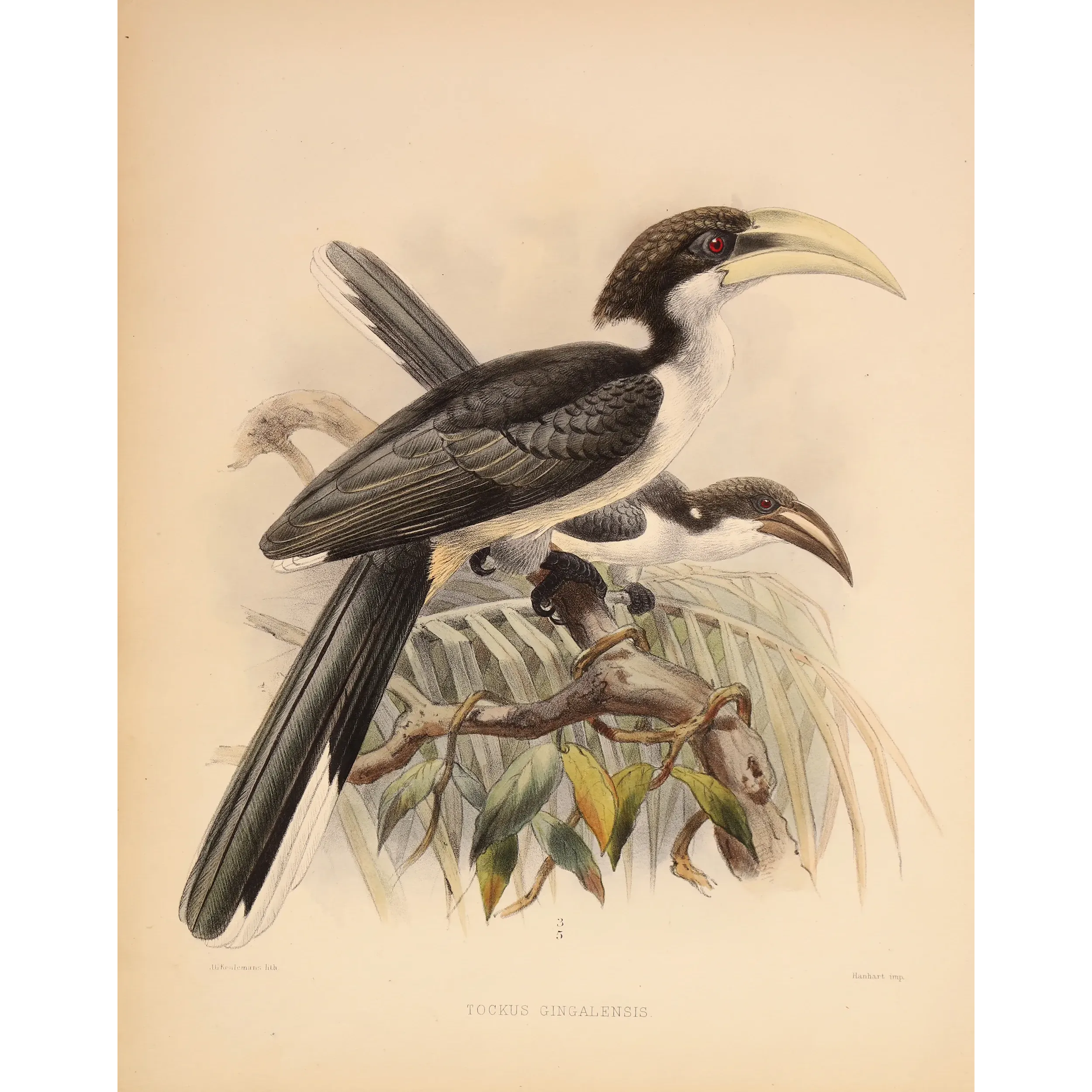
Original nineteenth-century bird print depicting the elegant Ceylon Hornbill (Tockus gingalensis), illustrated by Johannes Gerardus Keulemans for William Vincent Legge’s celebrated Birds of Ceylon. This refined ornithological lithograph combines scientific precision with sculptural decorative appeal, featuring the species’ remarkable ivory-coloured bill and poised tropical composition.
 Delivery policy
Your print will be carefully prepared and shipped worldwide via trusted couriers (UPS or similar).
 Authentic antique prints
Original engravings from the 17th–19th century.
Few birds possess a silhouette as immediately recognisable as the Ceylon Hornbill, historically identified on this plate as Tockus gingalensis and now generally classified as Ocyceros gingalensis. Johannes Gerardus Keulemans presents the species through an imposing curved bill, elongated body and deep, richly modelled plumage, transforming precise ornithological observation into an image of remarkable sculptural presence.
Published in William Vincent Legge’s A History of the Birds of Ceylon, the plate demonstrates how Keulemans could construct a composition dominated by blacks and dark browns without allowing it to become visually heavy. Through controlled posture, restrained vegetation and selective surface gloss, the bird remains unexpectedly luminous against the softer botanical setting.
— • —
The composition is organised around the hornbill’s extraordinary profile. Its long, downward-curving bill projects decisively into the surrounding space, while the head, body and tail form a sequence of strong directional lines. Keulemans uses this distinctive anatomy not simply as a diagnostic feature, but as the structural foundation of the entire image.
The bird occupies the branch with controlled alertness. Its upright posture conveys weight and authority, while the subtle turn of the head introduces a sense of watchful intelligence. Rather than creating theatrical movement, Keulemans relies upon stillness, proportion and silhouette, allowing the species’ unusual form to command the sheet naturally.
The plumage is dominated by deep blacks and dark brown-grey tonalities. Fine lithographic modelling distinguishes the rounded head, folded wings and extended tail, preventing these darker passages from merging into a single flat mass. Small tonal transitions and carefully articulated feather boundaries preserve both anatomical clarity and visual depth.
Direct examination of the original impression reveals selective applications of gum arabic across the darkest plumage of the head, wings and tail. The transparent finish is not applied uniformly, but reserved for the deepest passages, where reflected light helps distinguish overlapping feathers and reinforces the sculptural modelling of the bird.
This remarkably restrained use of gloss has an important visual consequence. Although the composition is dominated by rich dark colours, the print never appears heavy or sombre. The interplay between matte and luminous surfaces captures ambient light, giving the black plumage a surprising brilliance while preserving its natural depth.
The surrounding vegetation remains deliberately softer and entirely matte. Its muted green, grey and warm neutral tones establish habitat and atmosphere without competing with the principal subject. This contrast between the luminous bird and the pastel botanical background allows the hornbill to emerge with exceptional clarity.
Scientific and artistic objectives therefore converge throughout the plate. The selective gloss improves the legibility of dark feather structures, while the restrained background and powerful silhouette transform the ornithological subject into a composition of unusual elegance and decorative authority.
The Ceylon Grey Hornbill (Ocyceros gingalensis), historically published as Tockus gingalensis, is an endemic bird of Sri Lanka. It is distinguished by its elongated curved bill, long tail, grey-brown body and contrasting darker wing and head plumage.
Hornbills belong to a wider group distributed across tropical Africa and Asia, yet the Ceylon species developed its own recognisable form within the island’s forests and wooded habitats. Its combination of broader regional affinity and local distinction made it particularly relevant to nineteenth-century discussions concerning island fauna.
Within Legge’s work, the species illustrates one of the central scientific questions raised by Ceylon’s avifauna: how birds belonging to familiar Asian groups could acquire stable characteristics of their own after developing within the island’s particular geography and environment.
This original lithograph belongs to William Vincent Legge’s A History of the Birds of Ceylon, published between 1878 and 1880 after more than eight years of observation and collecting on the island. The work became the first comprehensive ornithological treatment of Ceylon, bringing together field experience, historical literature, museum comparison and the illustrations of Johannes Gerardus Keulemans.
The Ceylon Hornbill gives visible form to one of the work’s central themes. It belongs to a bird family widely distributed beyond Sri Lanka, yet possesses a distinctive island identity. Keulemans communicates this scientific importance through an image whose strong silhouette, dark tonal structure and selective luminosity make the species immediately memorable.
Understand the Historical Context of this Print →
Discover more about the artist: Johannes Gerardus Keulemans — Precision and Passion in Ornithological Illustration.
Browse the complete collection: Keulemans – Birds of Ceylon Collection.
For readers wishing to better understand antique prints—from technique and paper to collecting criteria—explore our Antique Prints Guide.
Excellent antique condition. An exceptionally fresh, crisp and virtually immaculate impression, preserving its original contemporary hand colouring with remarkable clarity. The sheet remains bright and exceptionally clean, with only negligible evidence of age.
Selective applications of gum arabic remain beautifully preserved across the darkest plumage of the head, wings and tail. These original transparent finishes create delicate variations of sheen under changing light, separating overlapping feathers and giving the predominantly dark composition an unexpected luminosity.
The botanical background retains its deliberately softer, matte and pastel appearance. This contrast remains exceptionally well preserved and allows the darker bird to project clearly from its setting without appearing visually heavy.
Printed on fine nineteenth-century paper with generous original margins. No watermark observed. Overall, an outstanding and unusually well-preserved example of Keulemans’ hand-coloured ornithological lithography.
Specific References
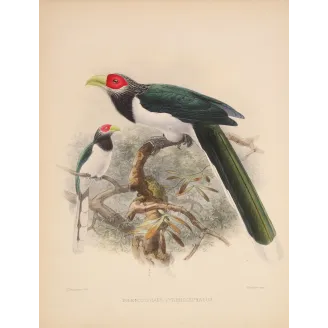
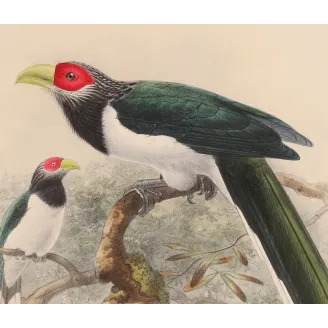
Original nineteenth-century bird print depicting the remarkable Red-faced Malkoha (Phaenicophaeus pyrrhocephalus), illustrated by Johannes Gerardus Keulemans for William Vincent Legge’s celebrated Birds of Ceylon. With its vivid scarlet face, elegant elongated tail and refined tropical palette, this striking ornithological lithograph combines scientific precision with exceptional decorative presence.
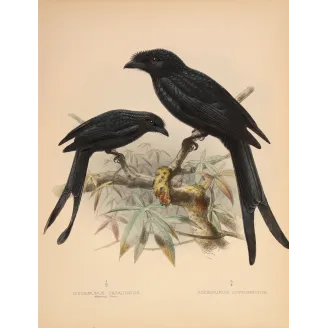
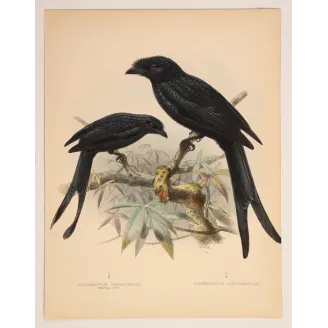
Original nineteenth-century bird print depicting two remarkable Sri Lankan drongos — Dissemurus paradiseus and Dissemurus lophorhinus — illustrated by Johannes Gerardus Keulemans for William Vincent Legge’s celebrated Birds of Ceylon. Distinguished by deep iridescent plumage and elegant elongated forms, this refined ornithological lithograph combines scientific precision with understated decorative sophistication.
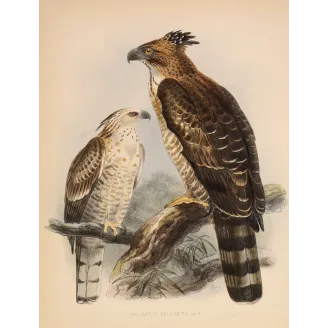
Original antique bird print depicting Spizaëtus kelaarti (Crested Hawk-Eagle), illustrated by J.G. Keulemans for A History of the Birds of Ceylon. A striking Victorian ornithological lithograph featuring an imposing pair of raptors with exceptional decorative presence.
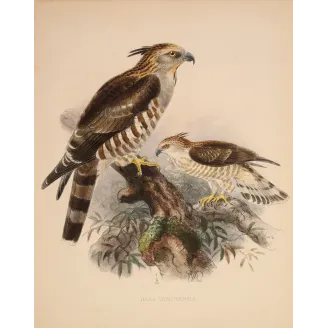
Original antique bird print depicting Baza ceylonensis (Ceylon Hawk-Eagle), illustrated by J.G. Keulemans for A History of the Birds of Ceylon. A striking Victorian ornithological lithograph featuring a refined pair of raptors with strong decorative presence.
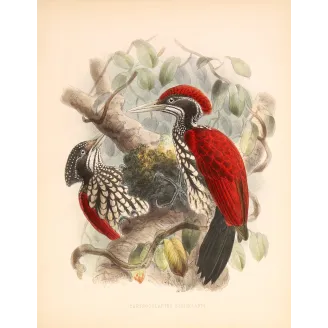
Original nineteenth-century bird print depicting the striking Crimson-backed Flameback (Chrysocolaptes stricklandi), illustrated by Johannes Gerardus Keulemans for William Vincent Legge’s celebrated Birds of Ceylon. This rare ornithological lithograph combines scientific precision with exceptional decorative appeal, featuring vivid crimson plumage and refined naturalistic composition.
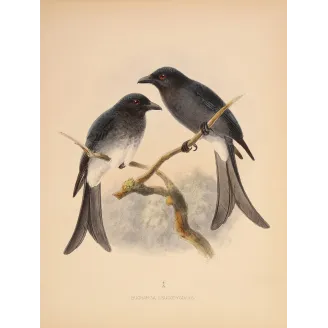
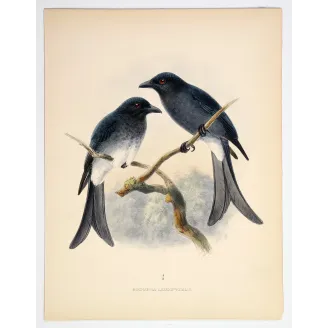
Original antique bird print by J.G. Keulemans depicting Buchanga leucopygialis (White-rumped Drongo), from A History of the Birds of Ceylon. A refined Victorian ornithological lithograph with elegant tonal balance and exceptional decorative presence.
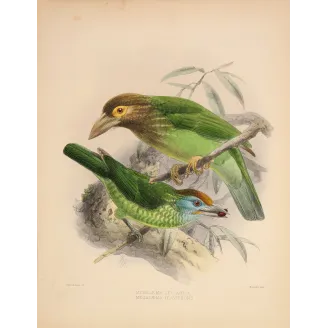
Original nineteenth-century bird print depicting two remarkable Sri Lankan barbets — Megalaema zeylanica and Megalaema flavifrons — illustrated by Johannes Gerardus Keulemans for William Vincent Legge’s celebrated Birds of Ceylon. Rich in tropical colour and compositional balance, this striking ornithological lithograph combines scientific observation with refined decorative appeal.
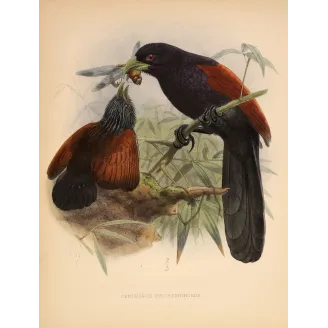
Original hand-colored bird engraving depicting the Green-Billed Coucal (Centropus chlororhynchus), illustrated by Johannes Gerardus Keulemans for The Birds of Ceylon. A striking tropical composition with rich chestnut and deep blue plumage.
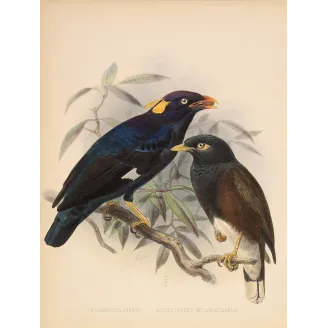
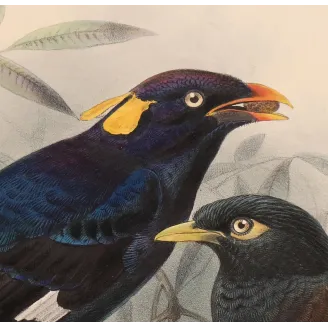
Original nineteenth-century bird print depicting two remarkable Sri Lankan mynas — Eulabes ptilogenys and Acridotheres melanosternus — illustrated by Johannes Gerardus Keulemans for William Vincent Legge’s celebrated Birds of Ceylon. Distinguished by rich iridescent plumage and refined compositional balance, this elegant ornithological lithograph combines scientific precision with exceptional decorative sophistication.
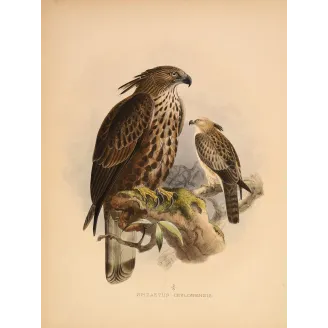
Original antique bird print depicting Spizaëtus ceylonensis (Ceylon Hawk-Eagle), illustrated by J.G. Keulemans for A History of the Birds of Ceylon. A refined Victorian ornithological lithograph featuring an elegant pair of raptors with remarkable decorative presence.
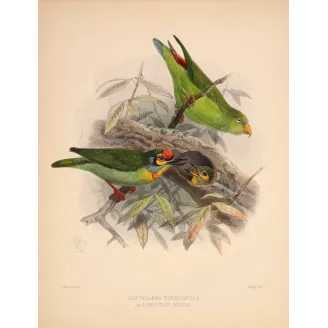
Original hand-colored bird engraving depicting the Crimson-fronted Barbet (Xantholaema rubricapilla) and the Ceylon Hanging Parrot (Loriculus indicus), illustrated by Johannes Gerardus Keulemans for Birds of Ceylon. A vivid tropical composition rich in colour and narrative charm.
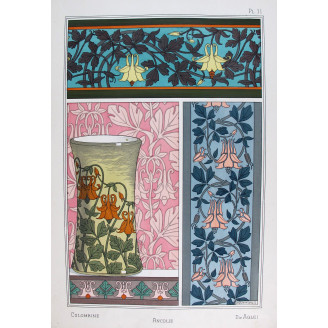
Graceful and enigmatic, the columbine (ancolie) is rendered here in flowing lines and soft complexity.
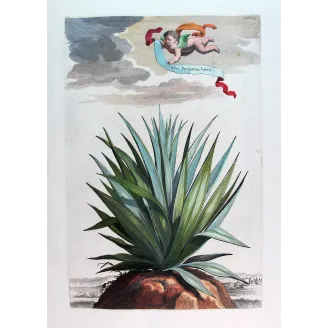
A striking 17th-century botanical engraving from Abraham Munting’s Nauwkeurige Beschryving der Aardgewassen - Phytographia Curiosa, depicting a monumental aloe with architectural structure and a decorative cartouche. A powerful example of early botanical art combining scientific observation with theatrical composition.
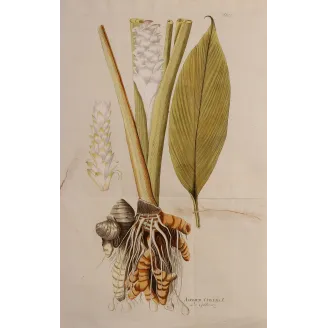
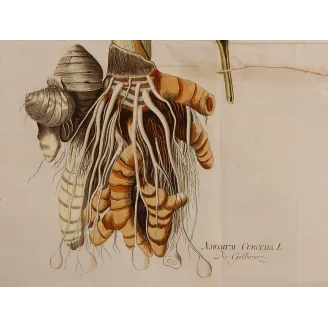
Exceptional large-format eighteenth-century botanical engraving depicting <em>Amomum Curcuma</em> L., published as Plate IV of Joseph Jacob von Plenck’s <em>Icones Plantarum Medicinalium</em>. Printed on a large folded sheet of Honig laid paper with complete watermark and contemporary hand colouring, the composition combines a remarkably refined pale inflorescence, monumental foliage and an exceptionally detailed rhizomatous structure. A powerful Plenck Statement Piece preserving both extraordinary botanical clarity and the visible material history of an eighteenth-century folded plate.
In this vibrant composition, Grasset elevates the humble gourd (courge) to an elegant decorative form.
Vibrant parakeets perched on branches: a scarlet macaw and a black cockatoo with yellow and red highlights.
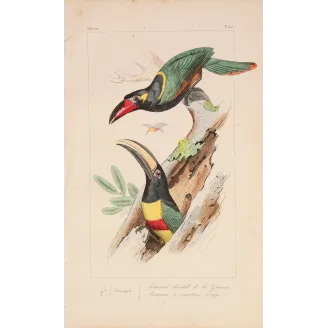
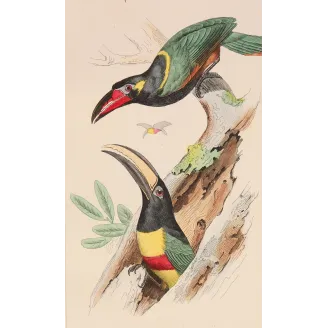
This vivid 19th-century engraving depicts two exotic aracaris, showcasing striking contrasts of green, red and yellow plumage. A highly decorative composition combining scientific observation with strong visual appeal, ideal for collectors of tropical ornithology and refined interior spaces.
Fine 18th-century engraving of the Medlar Tree by Elisabeth Blackwell, featuring fruit, blossom, and botanical detail.
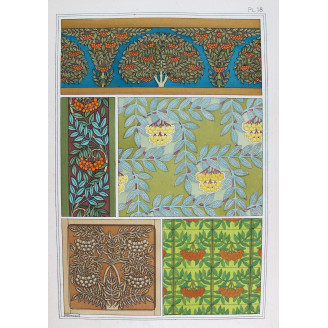
With its compound leaves and clusters of red berries, the sorb tree is rich in folk symbolism.
Original nineteenth-century bird print depicting the elegant Ceylon Hornbill (Tockus gingalensis), illustrated by Johannes Gerardus Keulemans for William Vincent Legge’s celebrated Birds of Ceylon. This refined ornithological lithograph combines scientific precision with sculptural decorative appeal, featuring the species’ remarkable ivory-coloured bill and poised tropical composition.