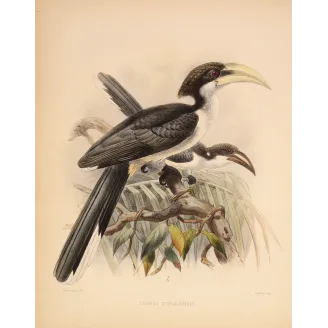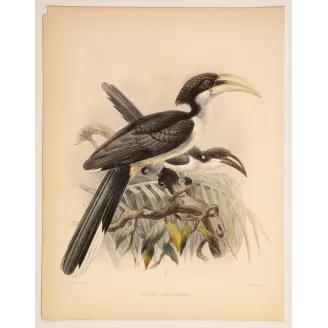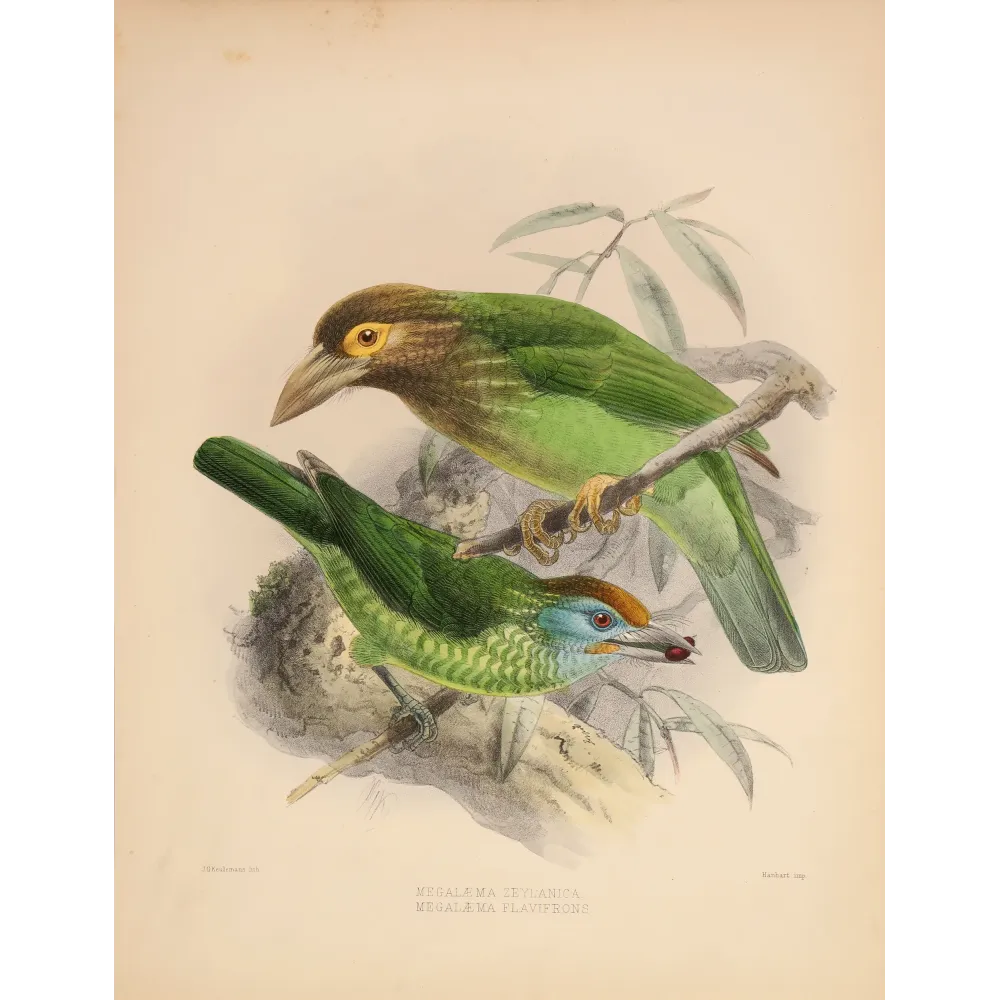

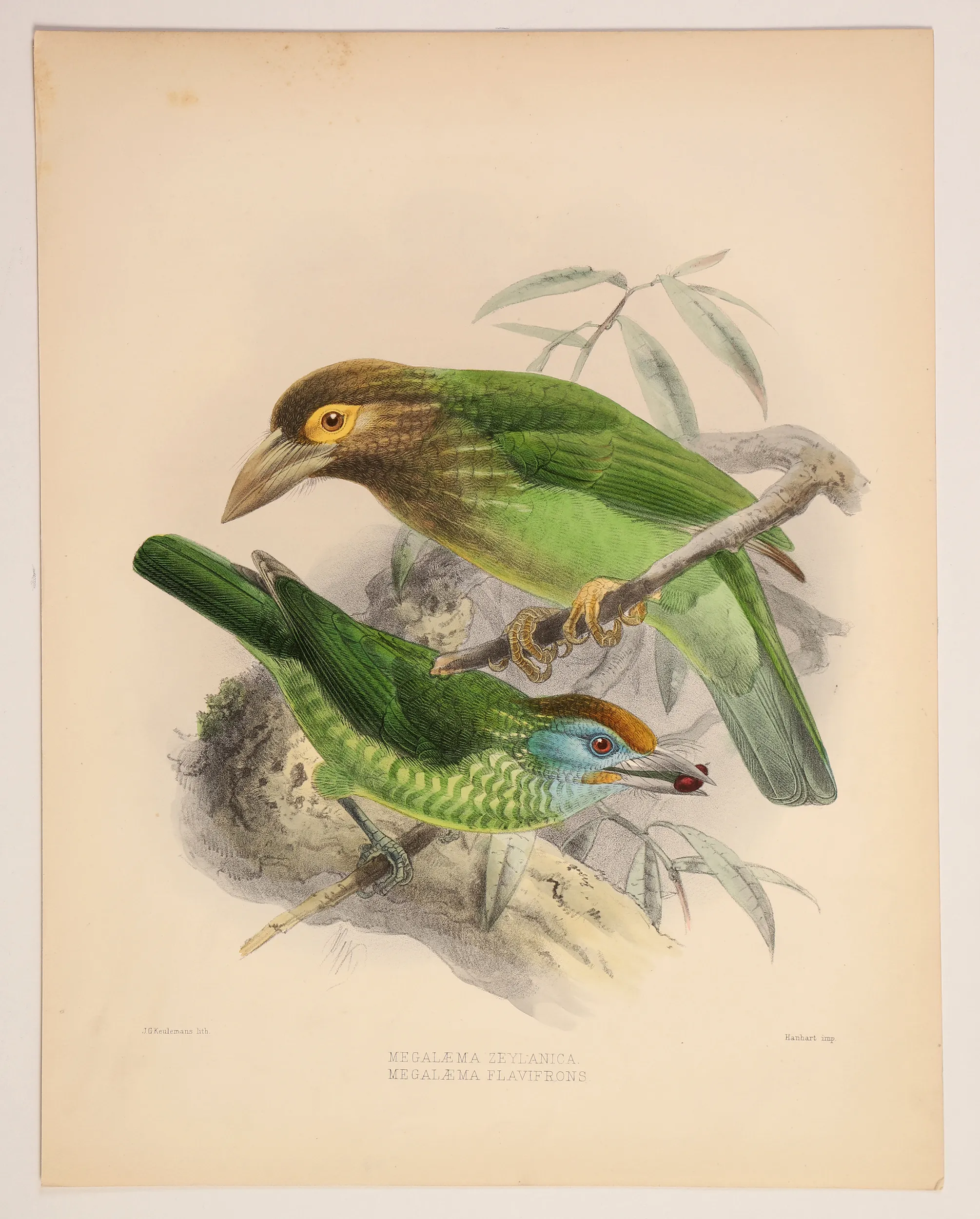
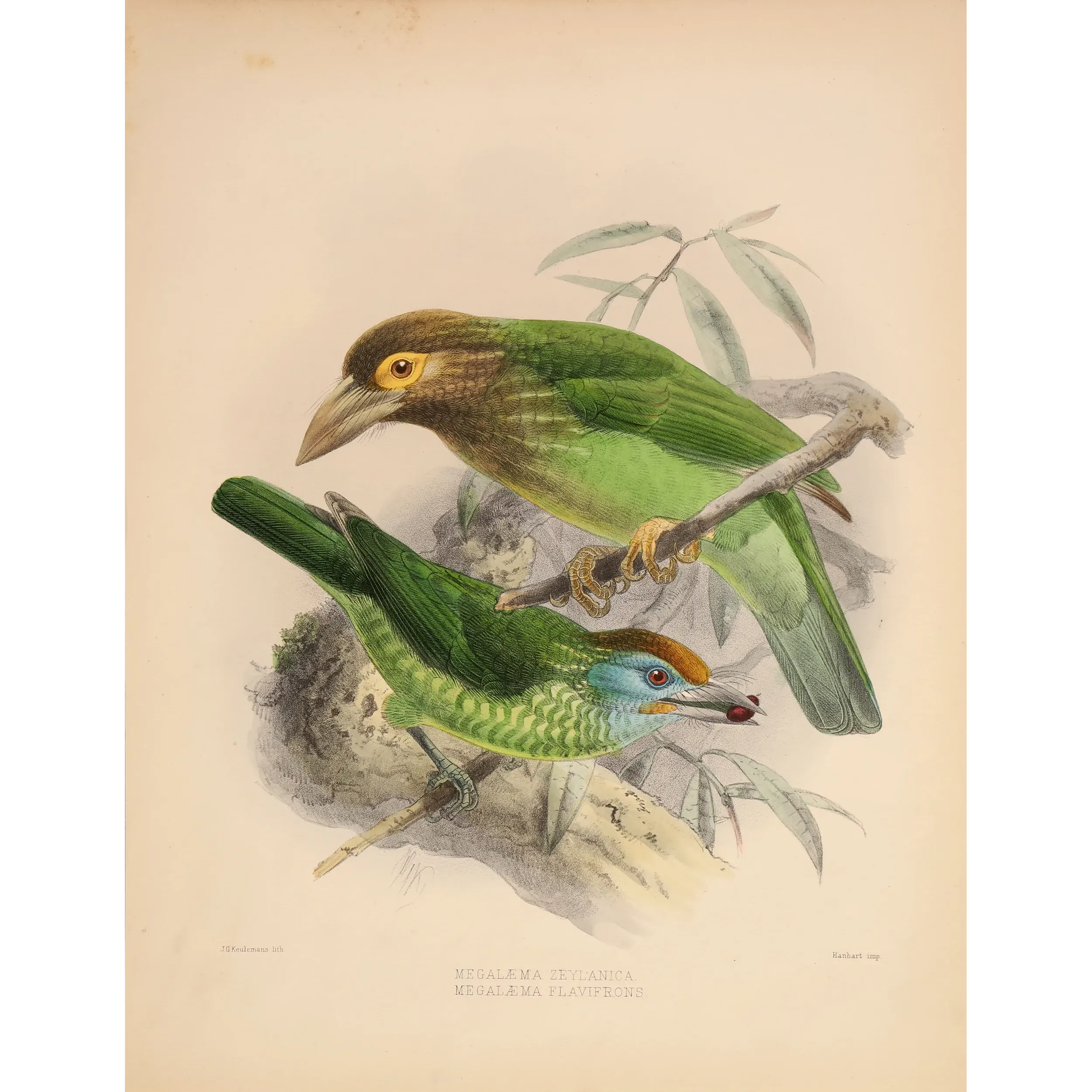
Original nineteenth-century bird print depicting two remarkable Sri Lankan barbets — Megalaema zeylanica and Megalaema flavifrons — illustrated by Johannes Gerardus Keulemans for William Vincent Legge’s celebrated Birds of Ceylon. Rich in tropical colour and compositional balance, this striking ornithological lithograph combines scientific observation with refined decorative appeal.
 Delivery policy
Your print will be carefully prepared and shipped worldwide via trusted couriers (UPS or similar).
 Authentic antique prints
Original engravings from the 17th–19th century.
An elegant succession of emerald, olive, lime and blue-green tones immediately defines this original plate depicting the Brown-headed Barbet and the Yellow-fronted Barbet, historically identified as Megalaema zeylanica and Megalaema flavifrons. Johannes Gerardus Keulemans transforms their related forms into a composition of exceptional chromatic richness and comparative clarity.
Published in William Vincent Legge’s A History of the Birds of Ceylon, the plate brings two closely related birds into a single visual field. Their shared structure establishes affinity, while differences in head colour, facial markings and plumage allow the eye to recognise their individual identities. Scientific comparison and decorative refinement become inseparable.
— • —
The composition is organised through an elegant diagonal relationship between the two birds. The larger Brown-headed Barbet occupies the upper part of the sheet with calm physical authority, while the smaller Yellow-fronted Barbet extends across the lower foreground, introducing movement, contrast and a more animated narrative presence.
Keulemans uses scale not merely to separate the subjects, but to create spatial depth. The upper bird sits farther within the branching structure, while the lower figure advances towards the viewer. Their overlapping positions allow the composition to remain compact and coherent without sacrificing the visibility of either species.
The plate is distinguished by an exceptionally refined orchestration of greens. Deep emerald passages coexist with olive, yellow-green, apple-green and cooler blue-green tonalities. These colours are not applied as broad uniform fields: they are varied according to the structure and orientation of the feathers, producing an image of unusual depth and natural sophistication.
The underlying lithographic modelling is essential to this effect. Fine grey lines, soft shadows and carefully articulated feather divisions remain visible beneath the transparent hand colouring, giving form to wings, breasts and tails. Colour does not conceal the lithograph; it works with it, allowing printed structure and pigment to reinforce one another.
Direct examination of the original impression reveals selective applications of gum arabic across the plumage of both birds. On the wings, the transparent finish is concentrated principally within the darkest feathers, where reflected light helps separate overlapping structures and increases the visual depth of the folded plumage.
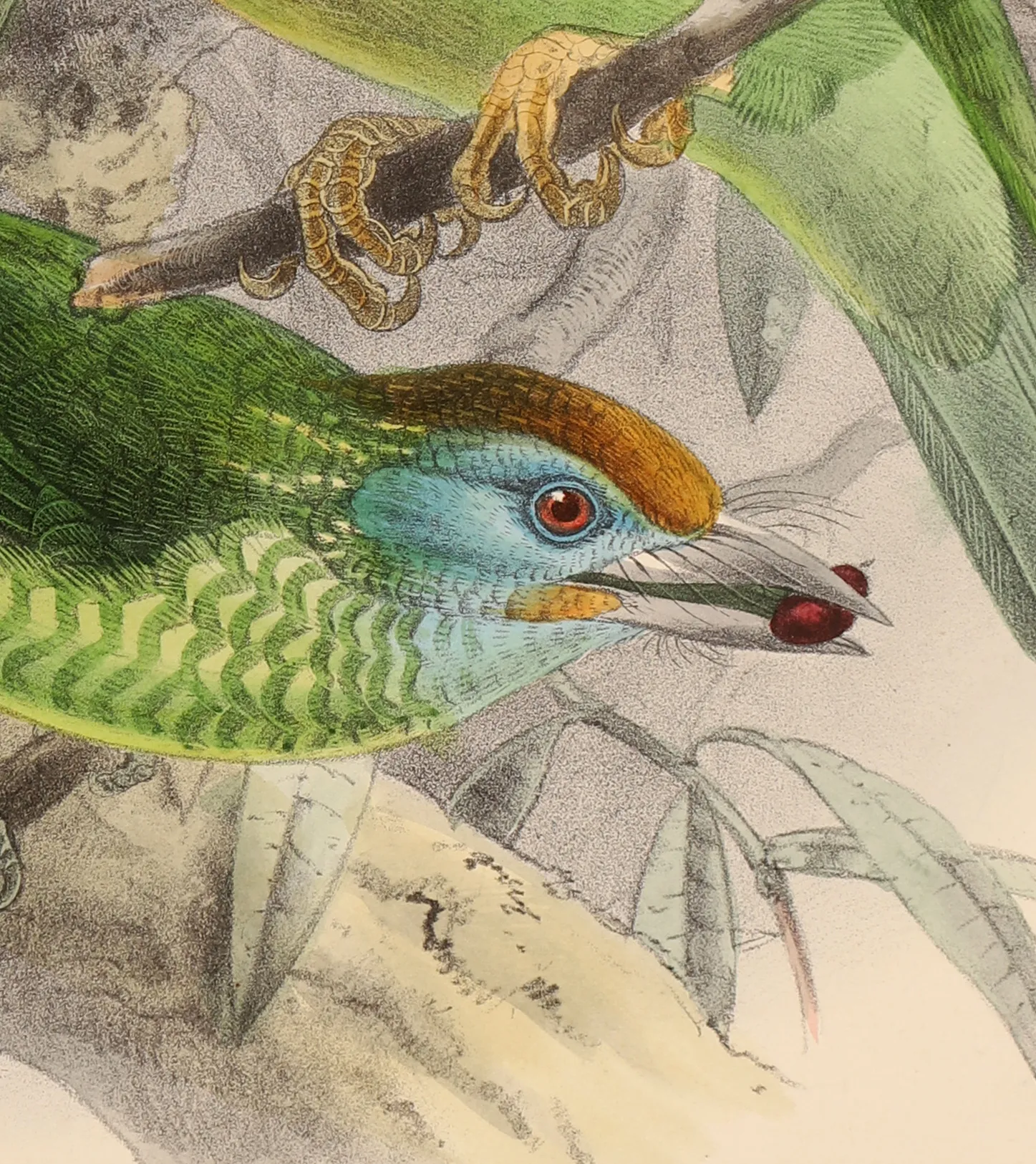
Minute applications of gum arabic are also visible within the pupils of both subjects. These tiny points of reflected light animate the eyes and give the birds an immediate, alert presence. The effect is extremely discreet, yet it contributes significantly to the perception of living subjects rather than static taxonomic specimens.
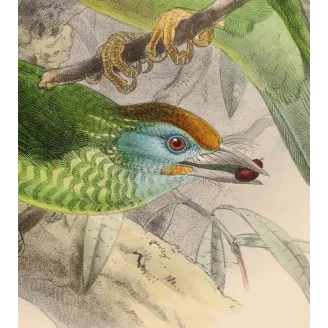
The smaller bird introduces several concentrated chromatic accents: the turquoise-blue face, russet crown, warm yellow passages and the small red fruit held delicately within its bill. These details enliven the predominantly green palette without disturbing its overall harmony. The fruit functions as both a naturalistic observation and a precise visual punctuation.
The botanical setting remains deliberately softer and more restrained. Pale leaves, grey branches and atmospheric lithographic passages recede behind the birds, allowing their saturated plumage and selectively luminous surfaces to emerge with sculptural clarity.
Despite the abundance of colour, the composition never feels excessive. Keulemans controls every tonal transition, allowing vivid green to move gradually from light to shadow. This balance gives the plate a calm elegance while preserving the richness and physical vitality of the subjects.
The result is a print of exceptional seduction: scientifically precise, materially sophisticated and visually harmonious. Its appeal lies not in dramatic contrast alone, but in the extraordinary variety Keulemans extracts from a predominantly green palette through lithographic structure, transparent colour and selective reflected light.
The two birds were historically published as Megalaema zeylanica and Megalaema flavifrons. The Brown-headed Barbet belongs to a wider South Asian distribution, while the Yellow-fronted Barbet is endemic to Sri Lanka. Their placement together therefore provides a particularly effective visual comparison between a more widely distributed regional form and an island-specific relative.
Both belong to a group of compact, fruit-eating birds recognised by their robust bills, rounded bodies and rich green plumage. Their structural similarities immediately reveal their relationship, while differences in the head, face and colour pattern distinguish their separate identities.
Within Legge’s work, the plate gives visible form to one of the central questions of nineteenth-century ornithology: when should a geographically distinct population be understood as a local variation, and when do stable differences justify recognition as a separate species?
This original lithograph belongs to William Vincent Legge’s A History of the Birds of Ceylon, published between 1878 and 1880 after more than eight years of observation and collecting on the island. The work became the first comprehensive ornithological treatment of Ceylon, bringing together field experience, historical literature, museum comparison and the illustrations of Johannes Gerardus Keulemans.
The paired barbets provide one of the clearest examples of the comparative method at the heart of the publication. Their shared anatomy reveals biological affinity, while their contrasting plumage and geographic distribution invite the reader to consider how island isolation could produce recognisably distinct forms.
Understand the Historical Context of this Print →
Discover more about the artist: Johannes Gerardus Keulemans — Precision and Passion in Ornithological Illustration.
Browse the complete collection: Keulemans – Birds of Ceylon Collection.
For readers wishing to better understand antique prints—from technique and paper to collecting criteria—explore our Antique Prints Guide.
Excellent antique condition. Exceptionally fresh and crisp impression with beautifully preserved contemporary hand colouring. The printed and coloured surfaces remain clean and stable, with no significant fading, abrasion or loss affecting the principal subjects. The sheet is sound and retains generous original margins. A few minor age-related marks and light foxing are visible principally near the upper edge, consistent with the period and outside the central image area. No watermark observed. Overall, an outstanding collector-quality impression retaining exceptional freshness and material integrity.
Specific References
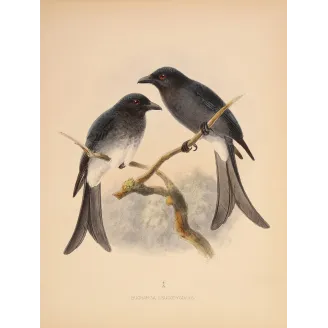
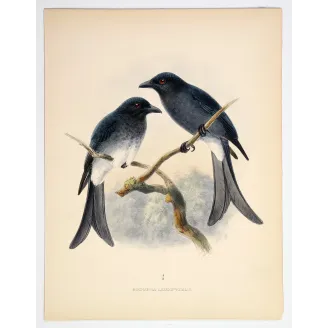
Original antique bird print by J.G. Keulemans depicting Buchanga leucopygialis (White-rumped Drongo), from A History of the Birds of Ceylon. A refined Victorian ornithological lithograph with elegant tonal balance and exceptional decorative presence.
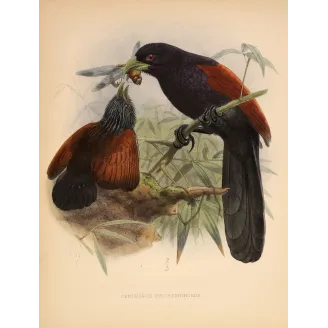
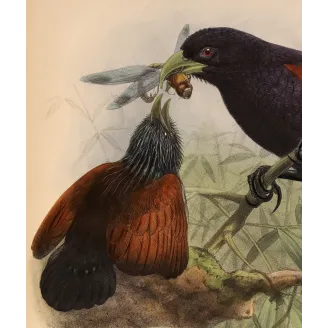
Original hand-colored bird engraving depicting the Green-Billed Coucal (Centropus chlororhynchus), illustrated by Johannes Gerardus Keulemans for The Birds of Ceylon. A striking tropical composition with rich chestnut and deep blue plumage.
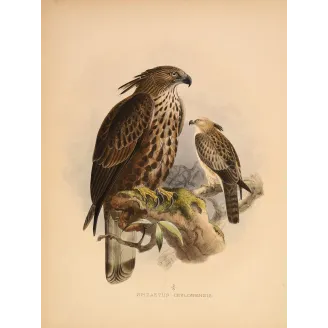
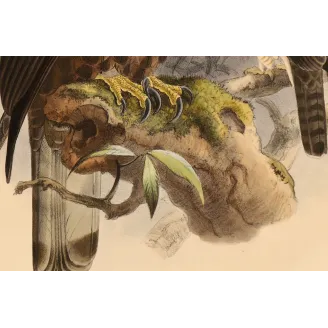
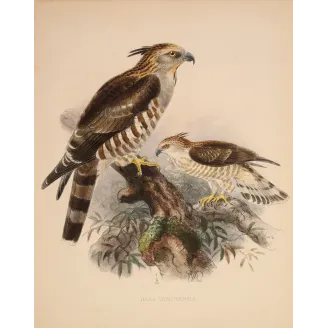
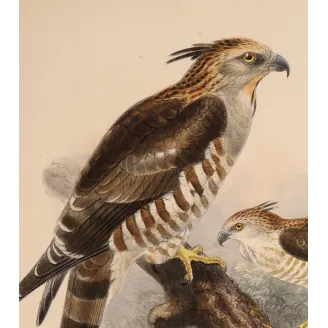
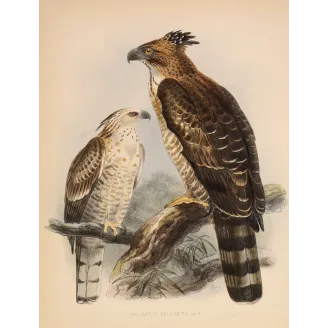
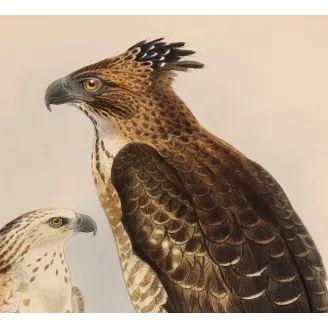
Original antique bird print depicting Spizaëtus ceylonensis (Ceylon Hawk-Eagle), illustrated by J.G. Keulemans for A History of the Birds of Ceylon. A refined Victorian ornithological lithograph featuring an elegant pair of raptors with remarkable decorative presence.
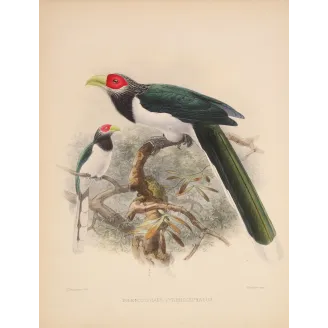
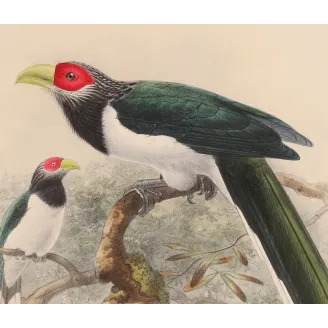
Original nineteenth-century bird print depicting the remarkable Red-faced Malkoha (Phaenicophaeus pyrrhocephalus), illustrated by Johannes Gerardus Keulemans for William Vincent Legge’s celebrated Birds of Ceylon. With its vivid scarlet face, elegant elongated tail and refined tropical palette, this striking ornithological lithograph combines scientific precision with exceptional decorative presence.
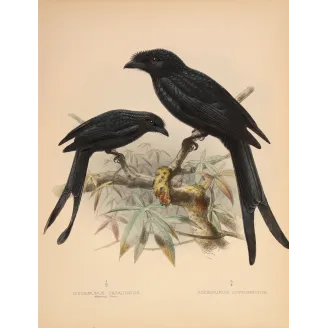
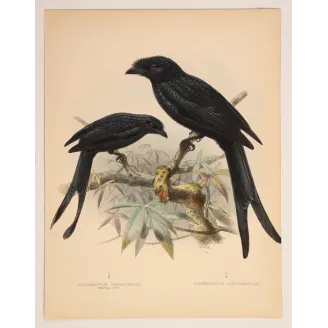
Original nineteenth-century bird print depicting two remarkable Sri Lankan drongos — Dissemurus paradiseus and Dissemurus lophorhinus — illustrated by Johannes Gerardus Keulemans for William Vincent Legge’s celebrated Birds of Ceylon. Distinguished by deep iridescent plumage and elegant elongated forms, this refined ornithological lithograph combines scientific precision with understated decorative sophistication.
Original antique bird print depicting Baza ceylonensis (Ceylon Hawk-Eagle), illustrated by J.G. Keulemans for A History of the Birds of Ceylon. A striking Victorian ornithological lithograph featuring a refined pair of raptors with strong decorative presence.
Original antique bird print depicting Spizaëtus kelaarti (Crested Hawk-Eagle), illustrated by J.G. Keulemans for A History of the Birds of Ceylon. A striking Victorian ornithological lithograph featuring an imposing pair of raptors with exceptional decorative presence.
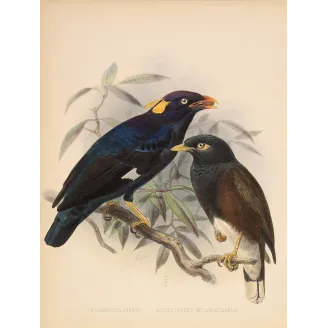
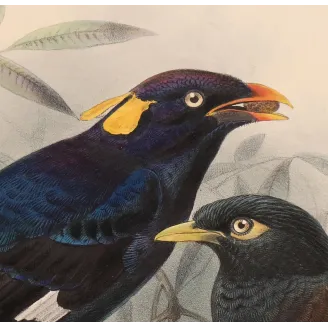
Original nineteenth-century bird print depicting two remarkable Sri Lankan mynas — Eulabes ptilogenys and Acridotheres melanosternus — illustrated by Johannes Gerardus Keulemans for William Vincent Legge’s celebrated Birds of Ceylon. Distinguished by rich iridescent plumage and refined compositional balance, this elegant ornithological lithograph combines scientific precision with exceptional decorative sophistication.
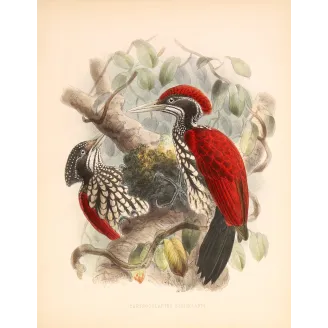
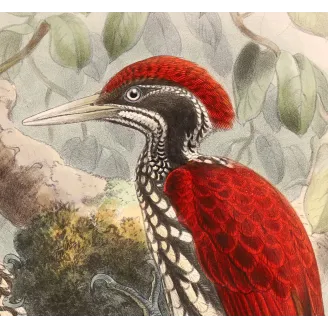
Original nineteenth-century bird print depicting the striking Crimson-backed Flameback (Chrysocolaptes stricklandi), illustrated by Johannes Gerardus Keulemans for William Vincent Legge’s celebrated Birds of Ceylon. This rare ornithological lithograph combines scientific precision with exceptional decorative appeal, featuring vivid crimson plumage and refined naturalistic composition.
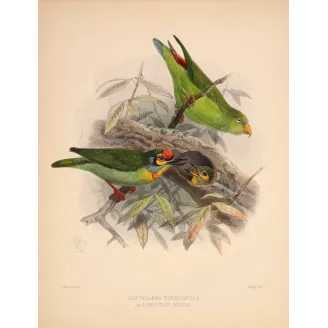
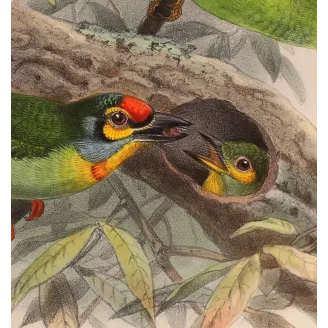
Original hand-colored bird engraving depicting the Crimson-fronted Barbet (Xantholaema rubricapilla) and the Ceylon Hanging Parrot (Loriculus indicus), illustrated by Johannes Gerardus Keulemans for Birds of Ceylon. A vivid tropical composition rich in colour and narrative charm.
Original nineteenth-century bird print depicting the elegant Ceylon Hornbill (Tockus gingalensis), illustrated by Johannes Gerardus Keulemans for William Vincent Legge’s celebrated Birds of Ceylon. This refined ornithological lithograph combines scientific precision with sculptural decorative appeal, featuring the species’ remarkable ivory-coloured bill and poised tropical composition.
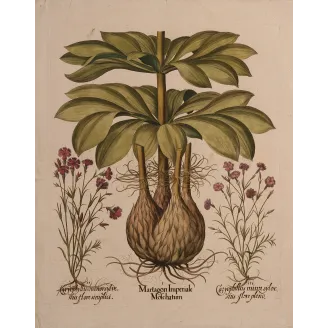
Original seventeenth-century hand-coloured botanical engraving from Basilius Besler’s monumental <em>Hortus Eystettensis</em>, published in 1613. This exceptionally large sheet preserves the lower part of an originally two-sheet composition, centred upon the imposing <em>Martagon Imperiale Molchatum</em> and accompanied by two flowering <em>Caryophyllus</em> forms. The verso retains the remarkable original typographical heading <em>Tertius Ordo Collectarum Plantarum Æstivalium</em>, material evidence of the seasonal organisation of Besler’s great botanical work.
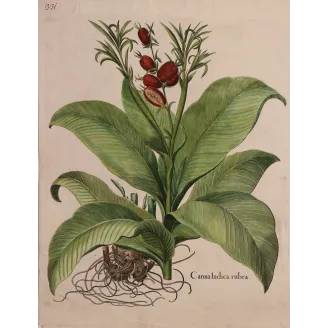
Original seventeenth-century hand-colored botanical engraving of Canna Indica rubra from Basilius Besler's monumental Hortus Eystettensis, first published in 1613. The imposing composition combines sweeping green foliage, exposed roots and vivid red botanical forms, while the laid-paper sheet preserves a watermark and the remarkable printed autumnal heading “SECVNDVS ORDO COLLECTARVM PLANTARVM AVTVMNALIVM” on its verso.
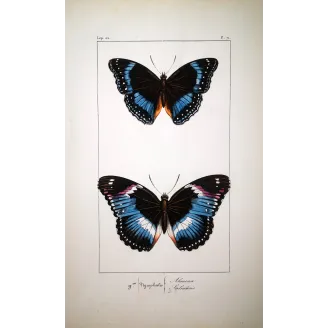
A vivid 19th-century hand-colored engraving depicting two striking tropical butterflies: the Blue-banded Eggfly (Hypolimnas alimena) and the Blue Diadem (Hypolimnas salmacis). Published in Hippolyte Lucas’s Exotic Butterflies (1835), the plate highlights their dramatic contrast of velvety black wings with electric blue bands and delicate white markings.
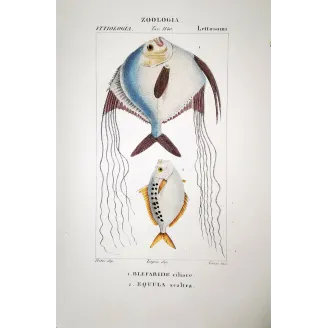
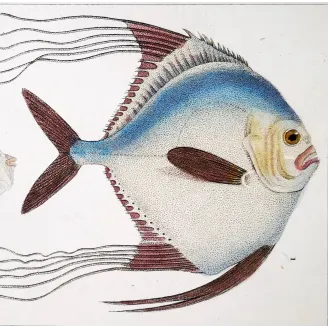
Delicate 19th-century hand-colored engraving of a ponyfish with companion species, ideal for marine-themed interiors and collectors.
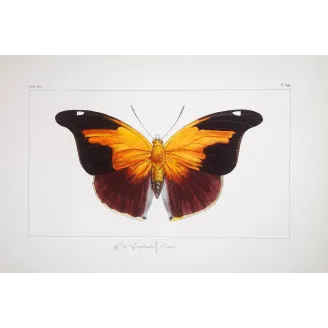
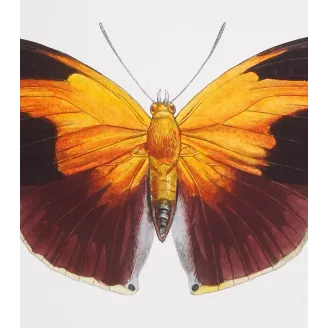
Original 1835 hand-colored engraving of Nymphalis orion, drawn and engraved by Pauquet under the scientific direction of Hippolyte Lucas for Exotic Butterflies.
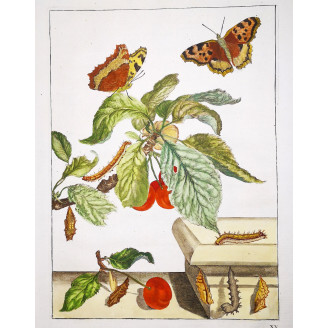
Original 1774 engraving by Jacob L'Admiral: Large Tortoiseshell on Sweet Cherry.
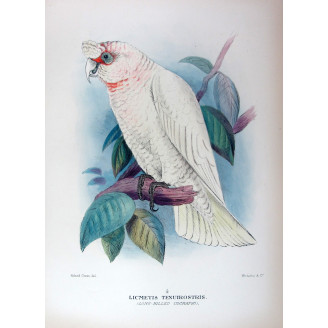
Glossy Cockatoo print by H. Goodchild, dark tones and rare presence on the plate
Original nineteenth-century bird print depicting two remarkable Sri Lankan barbets — Megalaema zeylanica and Megalaema flavifrons — illustrated by Johannes Gerardus Keulemans for William Vincent Legge’s celebrated Birds of Ceylon. Rich in tropical colour and compositional balance, this striking ornithological lithograph combines scientific observation with refined decorative appeal.