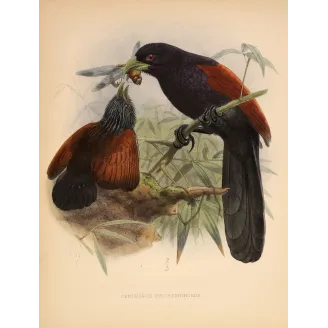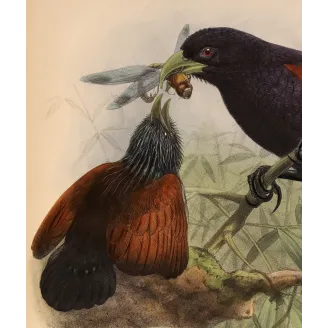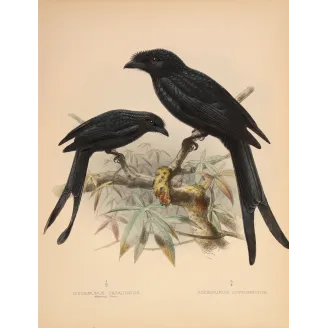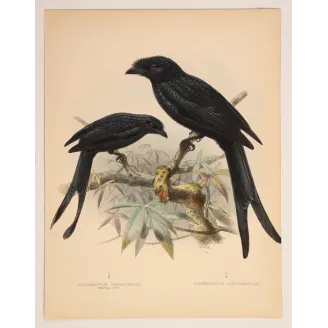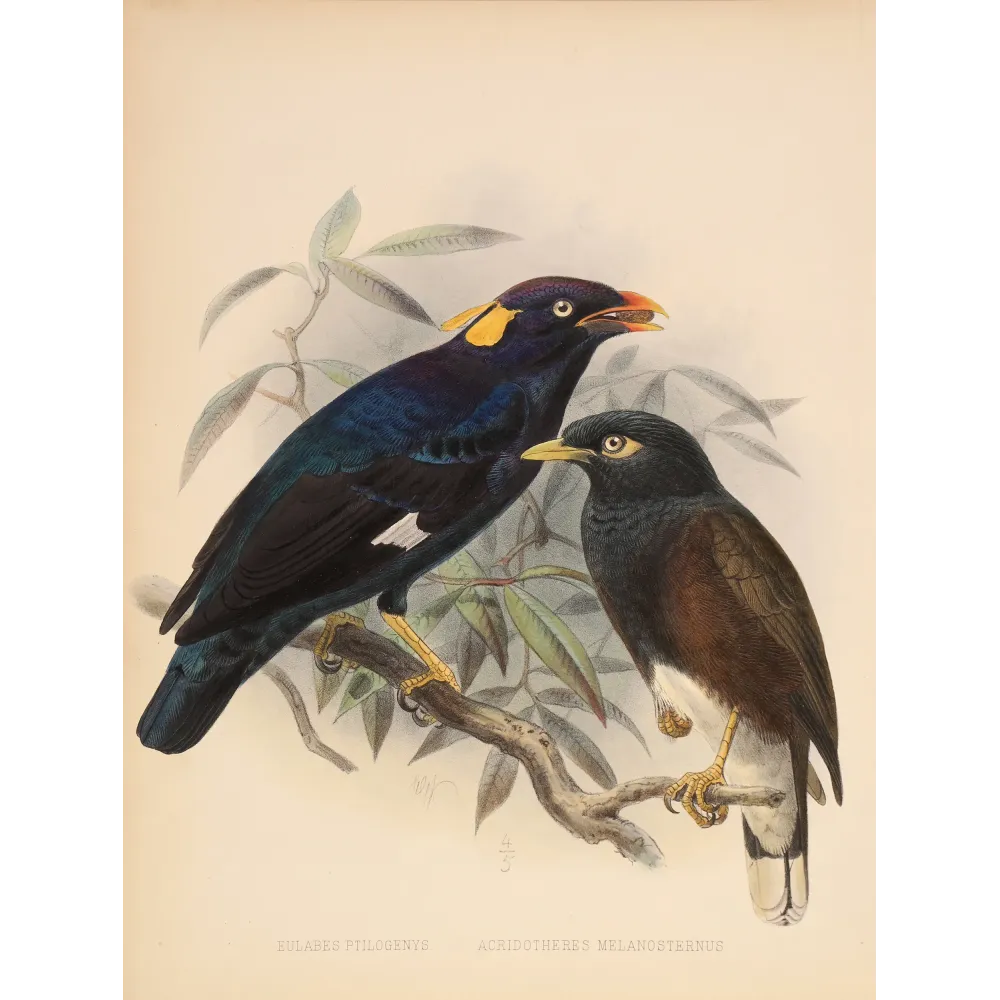
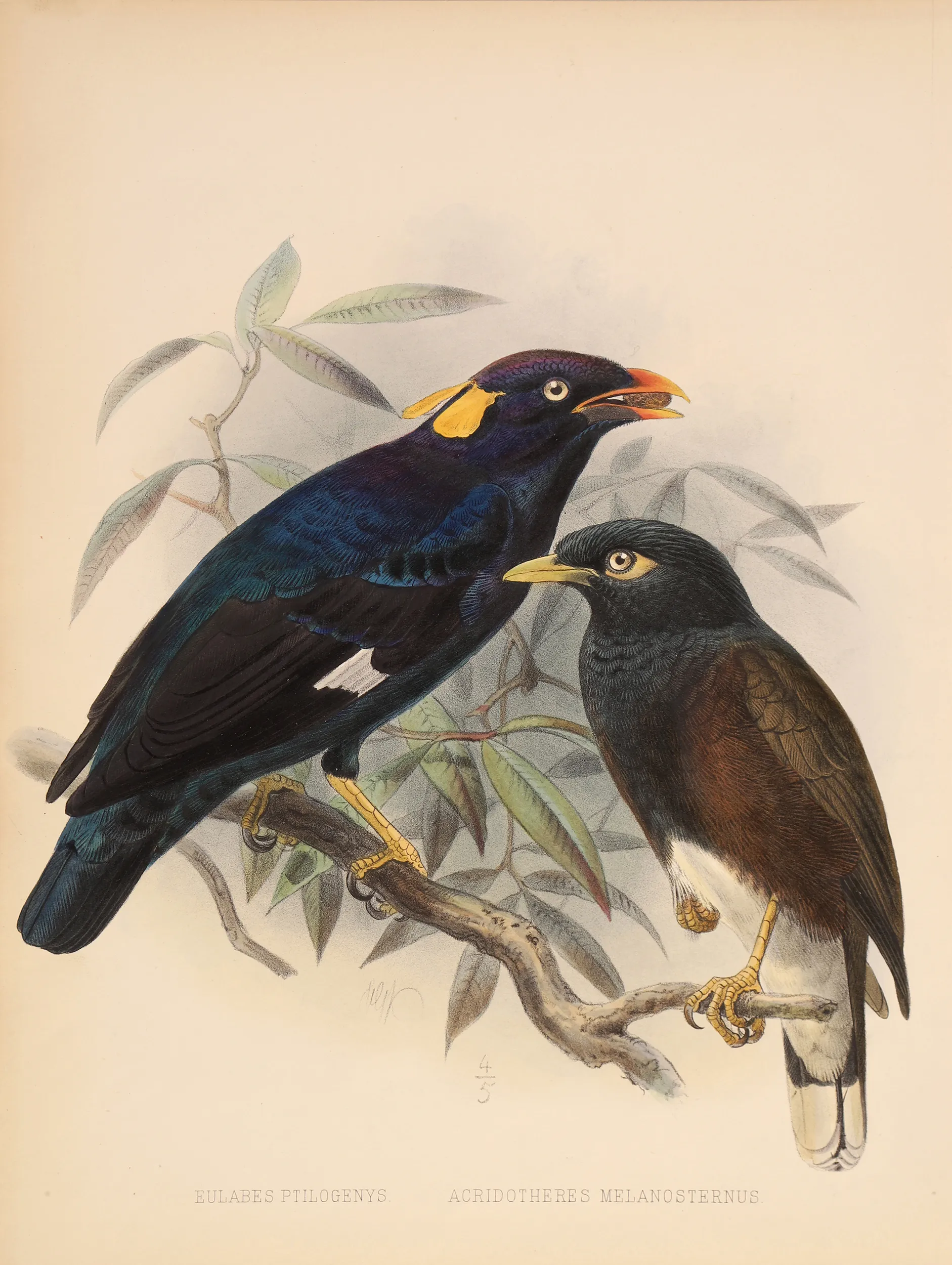
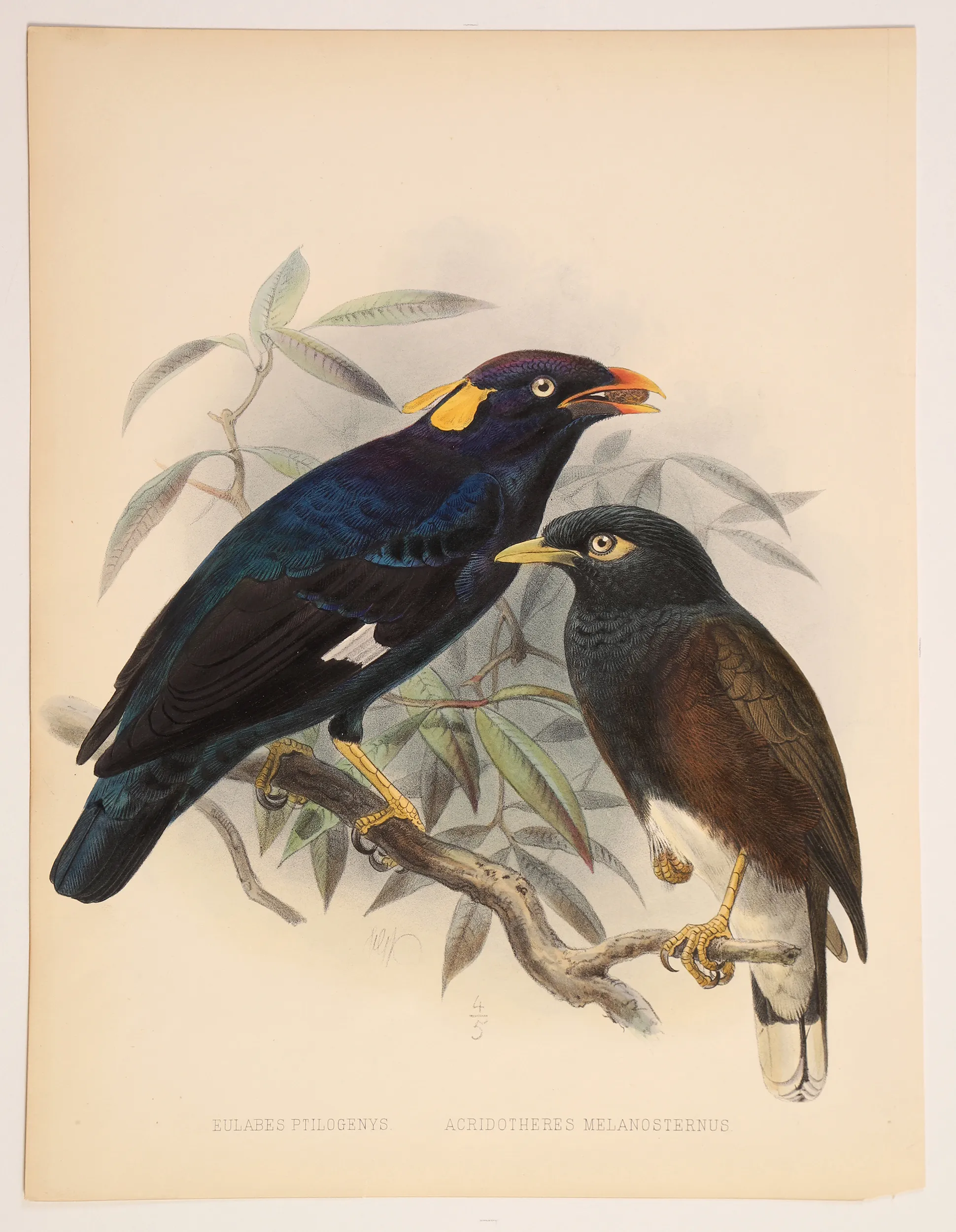
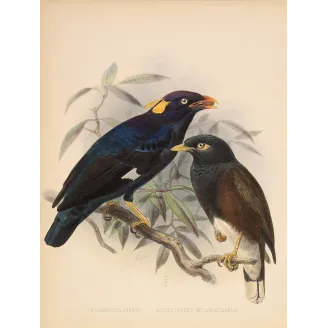
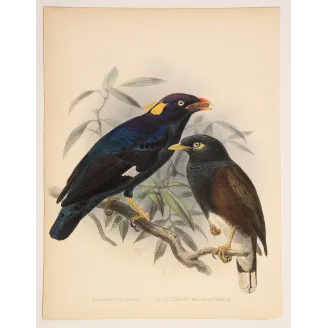
Original nineteenth-century bird print depicting two remarkable Sri Lankan mynas — Eulabes ptilogenys and Acridotheres melanosternus — illustrated by Johannes Gerardus Keulemans for William Vincent Legge’s celebrated Birds of Ceylon. Distinguished by rich iridescent plumage and refined compositional balance, this elegant ornithological lithograph combines scientific precision with exceptional decorative sophistication.
 Delivery policy
Your print will be carefully prepared and shipped worldwide via trusted couriers (UPS or similar).
 Authentic antique prints
Original engravings from the 17th–19th century.
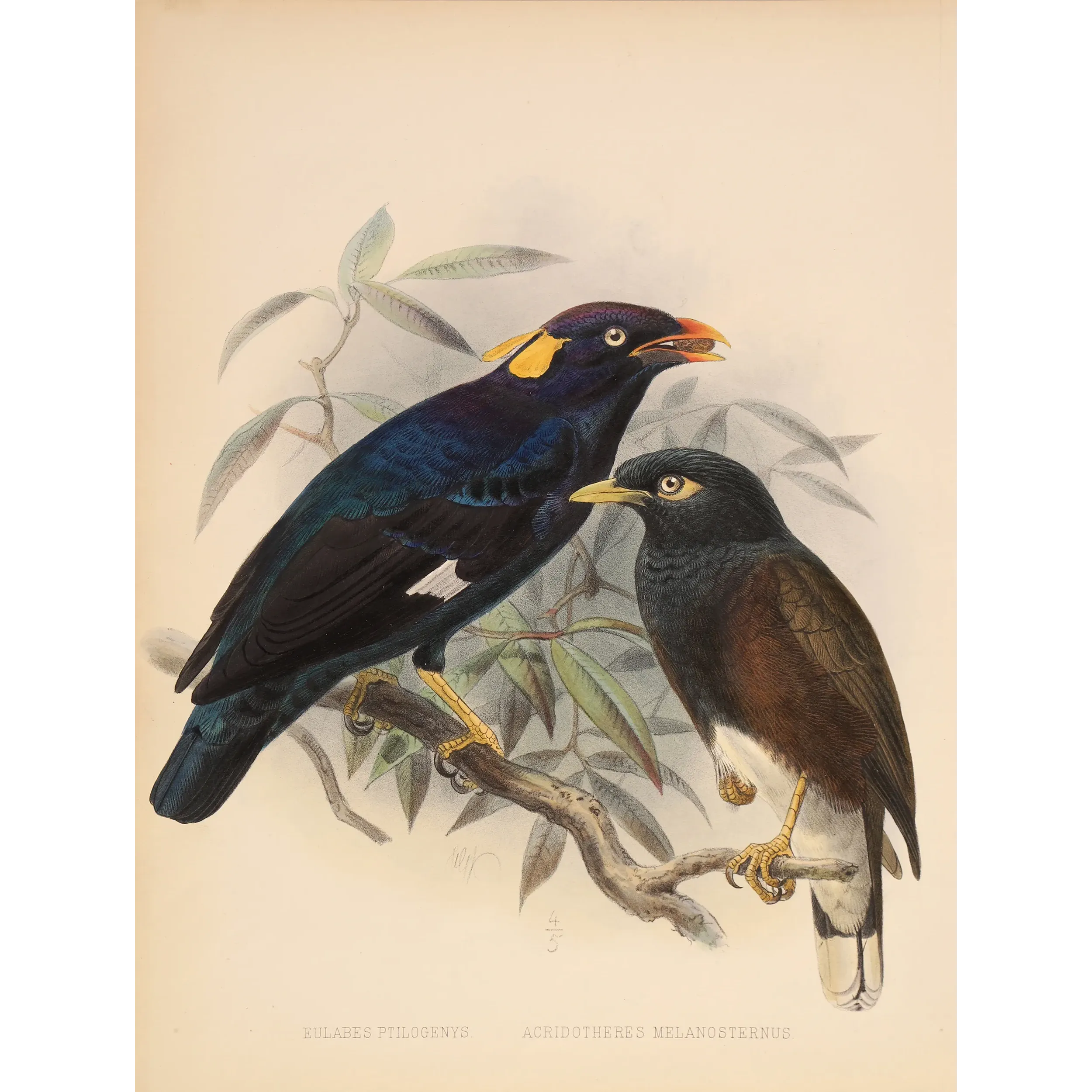
Deep blue-black plumage, vivid yellow facial details and warm brown tonalities give this original plate of two Sri Lankan mynas an immediate visual richness. Johannes Gerardus Keulemans presents Eulabes ptilogenys and Acridotheres melanosternus as distinct yet harmoniously related subjects, balancing scientific clarity with exceptional chromatic sophistication.
Published in William Vincent Legge’s A History of the Birds of Ceylon, the composition demonstrates how a predominantly dark palette can remain remarkably bright. Intense blues, luminous yellows, carefully controlled hand colouring and selective gum arabic finishing allow the birds to emerge with sculptural presence from a deliberately restrained botanical setting.
— • —
The composition is built around a finely balanced dialogue between the two birds. The larger subject occupies the left side with an expansive silhouette and expressive open bill, while the smaller figure stands more compactly to the right. Their differing scale, posture and direction create movement without disturbing the overall equilibrium of the plate.
Keulemans gives the principal bird a commanding visual presence through the broad sweep of its body, folded wings and tail. The second bird introduces a quieter counterweight, its rounded form and warmer brown plumage softening the stronger diagonal established by the larger figure.
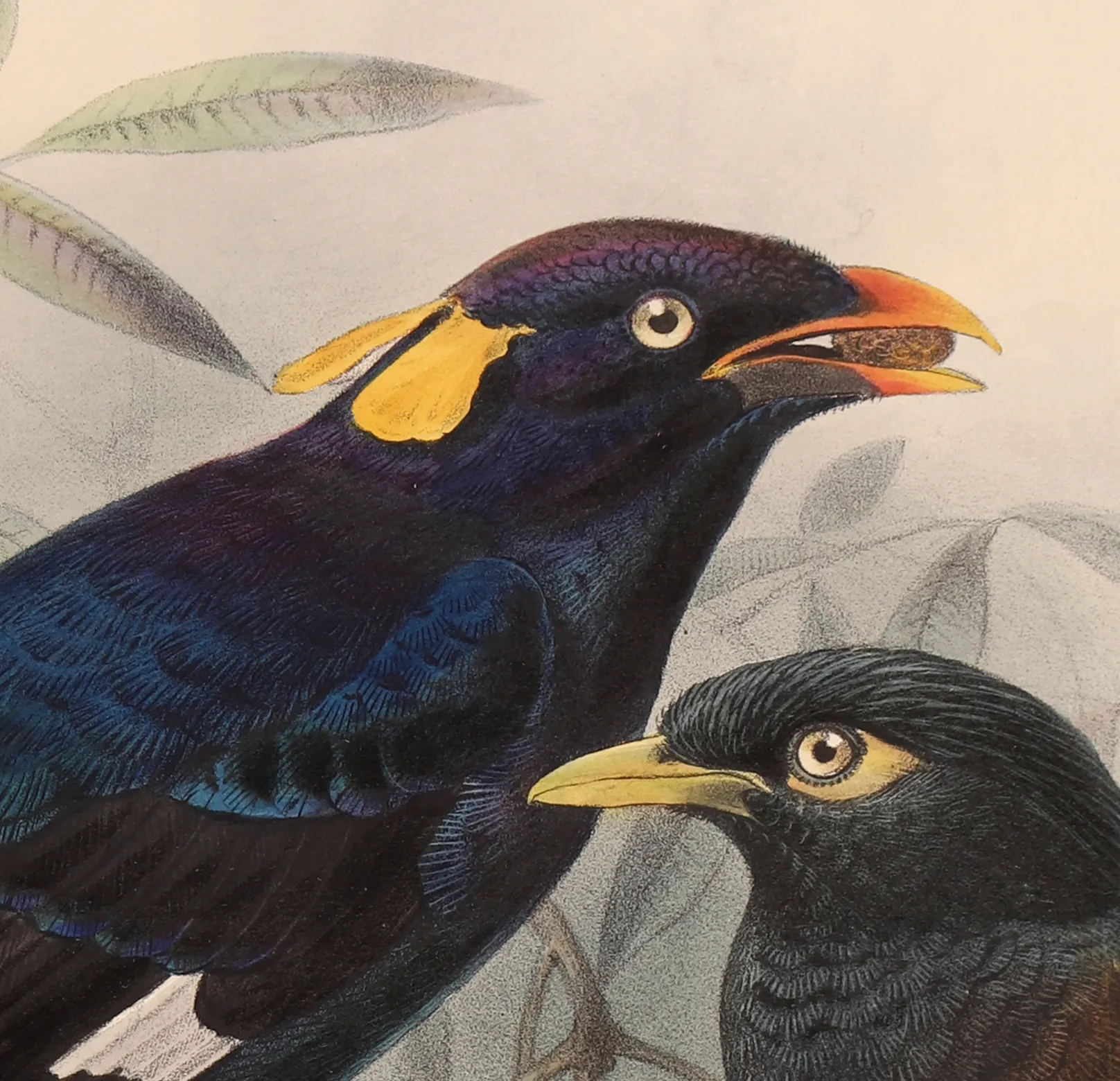
The chromatic structure is exceptionally refined. Midnight blue, violet-black, turquoise and deep petrol tones move across the plumage of the principal bird, interrupted by intense yellow wattles, legs and bill. These saturated accents prevent the composition from becoming sombre and give the figure a remarkable brilliance.
The smaller subject develops a different tonal language. Black and charcoal passages across the head and breast merge gradually into warm chestnut-brown plumage, while pale areas beneath the body and tail introduce light and separation. The contrast between the two birds is therefore not merely anatomical, but also chromatic and textural.
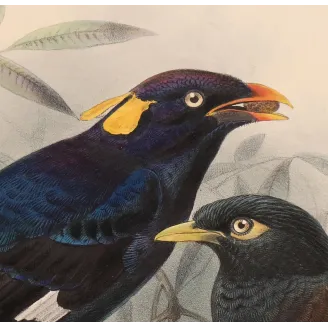
Direct examination of the original impression reveals a particularly refined use of gum arabic. On the principal bird, the transparent finish is reserved for selected areas of the darkest black plumage, where it creates restrained highlights without obscuring the underlying lithographic structure.
The application is more extensive on the smaller subject, particularly across the darker plumage of the head, breast and upper body. These selectively glossy passages capture ambient light and separate overlapping feather structures, giving the compact figure greater volume and physical presence.
The gum arabic is never used as a uniform varnish. Its distribution follows the tonal hierarchy of the plumage, reinforcing the deepest areas while leaving lighter colours comparatively matte. This contrast allows the composition to remain luminous despite its predominance of black, blue and dark brown.
The intense blue and yellow pigments play an equally important role. Blue passages across the wings and back of the principal bird reflect light with exceptional freshness, while the vivid yellow details around the face, bill and legs act as precise chromatic accents. Together they animate the darker structure of the image and maintain a strong sense of visual clarity.
The botanical background is deliberately restrained and pastel in appearance. Soft grey-green leaves, muted branches and atmospheric lithographic shading establish a natural setting while remaining visually subordinate. Far from being incidental, this quiet background is essential to the artistic balance of the plate: it creates depth, frames the birds and prevents the richly coloured subjects from appearing isolated against an empty field.
Because the surrounding foliage remains matte, the selectively luminous plumage advances naturally into the foreground. The birds dominate the composition without visual heaviness, and the relationship between saturated subjects and subdued setting gives the plate an unusually polished decorative character.
The result is a remarkably bright and sophisticated image. Keulemans transforms a palette founded upon dark plumage into a composition of iridescent vitality, using intense colour, transparent gloss and restrained background modelling to unite scientific observation with refined artistic balance.
The two birds are historically identified as Eulabes ptilogenys and Acridotheres melanosternus. Both belong to the starling and myna family, a group recognised for intelligence, complex vocal behaviour and strong social interaction.
Their contrasting forms reflect the diversity found within Sri Lanka’s avifauna. One is distinguished by glossy blue-black plumage and vivid yellow facial structures, while the other combines dark head and breast feathers with warmer brown upper plumage and pale lower passages.
Within Legge’s regional study, such paired representations allowed related birds to be compared directly. Differences in colour, proportion and plumage structure could be observed within a single plate, reinforcing the comparative method that shaped nineteenth-century ornithology.
This original lithograph belongs to William Vincent Legge’s A History of the Birds of Ceylon, published between 1878 and 1880 after more than eight years of observation and collecting on the island. The work became the first comprehensive ornithological treatment of Ceylon, bringing together field experience, historical literature, museum comparison and the illustrations of Johannes Gerardus Keulemans.
The paired mynas demonstrate Keulemans’ ability to distinguish related birds through posture, tonal structure and carefully controlled colour. Their dark plumage also reveals how selective hand finishing could preserve scientific legibility while giving the original impression a remarkable degree of luminosity.
Understand the Historical Context of this Print →
Discover more about the artist: Johannes Gerardus Keulemans — Precision and Passion in Ornithological Illustration.
Browse the complete collection: Keulemans – Birds of Ceylon Collection.
For readers wishing to better understand antique prints—from technique and paper to collecting criteria—explore our Antique Prints Guide.
Excellent antique condition. Fresh and crisp impression with exceptionally well-preserved contemporary hand colouring. The printed and coloured surfaces remain clean, stable and substantially free from abrasion, fading or pigment loss. The paper is sound and retains generous original margins, with only negligible age-related signs consistent with the period. No watermark observed. Overall, an outstanding collector-quality impression preserving excellent colour strength, surface integrity and material freshness.
Specific References
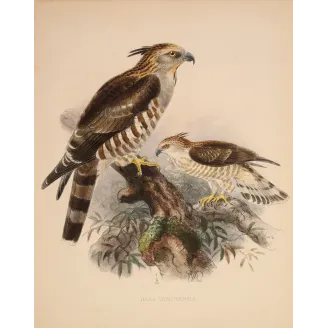
Original antique bird print depicting Baza ceylonensis (Ceylon Hawk-Eagle), illustrated by J.G. Keulemans for A History of the Birds of Ceylon. A striking Victorian ornithological lithograph featuring a refined pair of raptors with strong decorative presence.
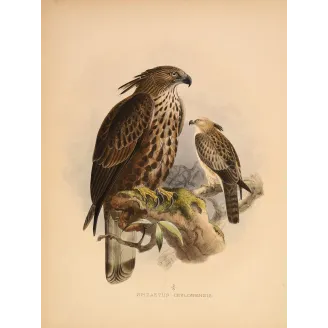
Original antique bird print depicting Spizaëtus ceylonensis (Ceylon Hawk-Eagle), illustrated by J.G. Keulemans for A History of the Birds of Ceylon. A refined Victorian ornithological lithograph featuring an elegant pair of raptors with remarkable decorative presence.
Original hand-colored bird engraving depicting the Green-Billed Coucal (Centropus chlororhynchus), illustrated by Johannes Gerardus Keulemans for The Birds of Ceylon. A striking tropical composition with rich chestnut and deep blue plumage.
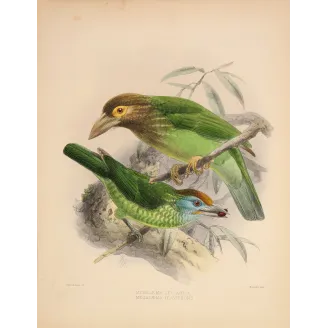
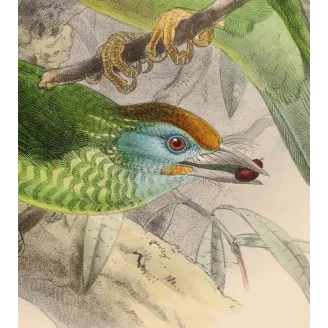
Original nineteenth-century bird print depicting two remarkable Sri Lankan barbets — Megalaema zeylanica and Megalaema flavifrons — illustrated by Johannes Gerardus Keulemans for William Vincent Legge’s celebrated Birds of Ceylon. Rich in tropical colour and compositional balance, this striking ornithological lithograph combines scientific observation with refined decorative appeal.
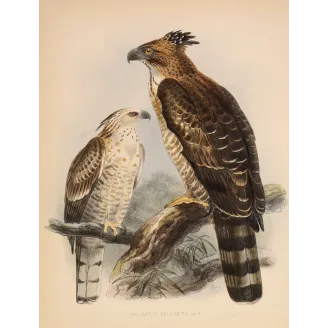
Original antique bird print depicting Spizaëtus kelaarti (Crested Hawk-Eagle), illustrated by J.G. Keulemans for A History of the Birds of Ceylon. A striking Victorian ornithological lithograph featuring an imposing pair of raptors with exceptional decorative presence.
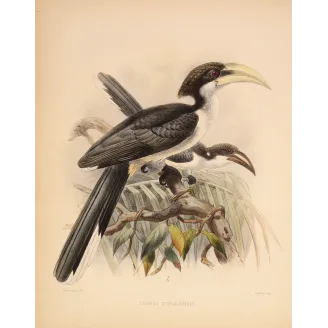
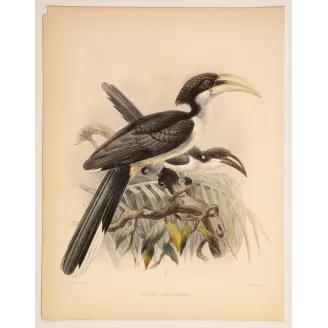
Original nineteenth-century bird print depicting the elegant Ceylon Hornbill (Tockus gingalensis), illustrated by Johannes Gerardus Keulemans for William Vincent Legge’s celebrated Birds of Ceylon. This refined ornithological lithograph combines scientific precision with sculptural decorative appeal, featuring the species’ remarkable ivory-coloured bill and poised tropical composition.
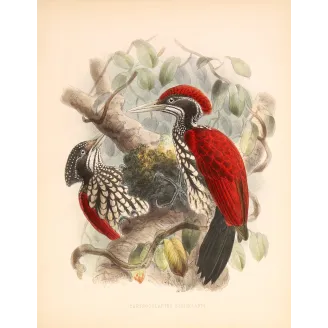
Original nineteenth-century bird print depicting the striking Crimson-backed Flameback (Chrysocolaptes stricklandi), illustrated by Johannes Gerardus Keulemans for William Vincent Legge’s celebrated Birds of Ceylon. This rare ornithological lithograph combines scientific precision with exceptional decorative appeal, featuring vivid crimson plumage and refined naturalistic composition.
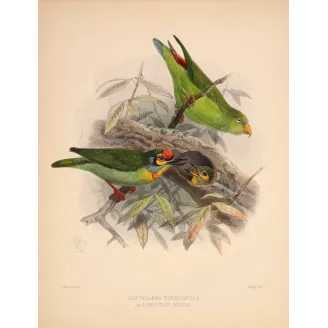
Original hand-colored bird engraving depicting the Crimson-fronted Barbet (Xantholaema rubricapilla) and the Ceylon Hanging Parrot (Loriculus indicus), illustrated by Johannes Gerardus Keulemans for Birds of Ceylon. A vivid tropical composition rich in colour and narrative charm.
Original nineteenth-century bird print depicting two remarkable Sri Lankan drongos — Dissemurus paradiseus and Dissemurus lophorhinus — illustrated by Johannes Gerardus Keulemans for William Vincent Legge’s celebrated Birds of Ceylon. Distinguished by deep iridescent plumage and elegant elongated forms, this refined ornithological lithograph combines scientific precision with understated decorative sophistication.
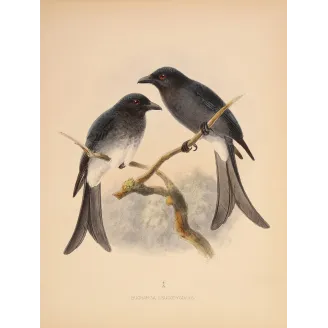
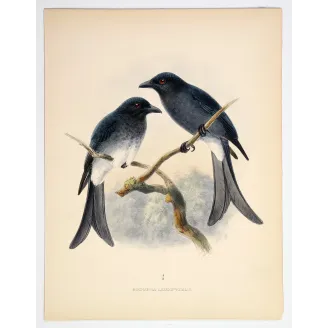
Original antique bird print by J.G. Keulemans depicting Buchanga leucopygialis (White-rumped Drongo), from A History of the Birds of Ceylon. A refined Victorian ornithological lithograph with elegant tonal balance and exceptional decorative presence.
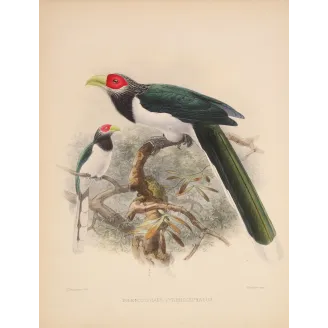
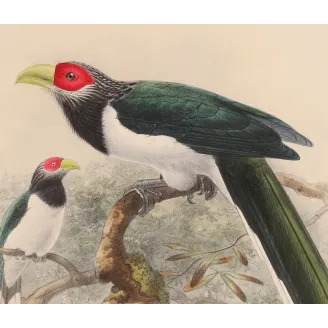
Original nineteenth-century bird print depicting the remarkable Red-faced Malkoha (Phaenicophaeus pyrrhocephalus), illustrated by Johannes Gerardus Keulemans for William Vincent Legge’s celebrated Birds of Ceylon. With its vivid scarlet face, elegant elongated tail and refined tropical palette, this striking ornithological lithograph combines scientific precision with exceptional decorative presence.
Original 18th-century engraving of the Wild Cucumber by Elisabeth Blackwell, with spined fruit and yellow flowers.
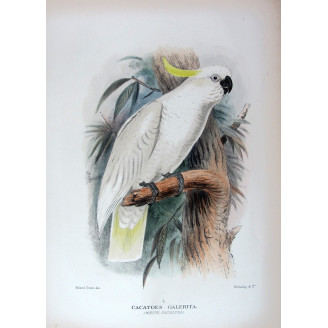
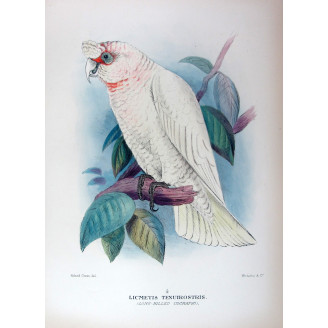
Antique lithograph of the Sulphur-crested Cockatoo by Roland Green, hand-colored.
Brilliantly colored honeycreeper and sunbird illustration with tropical vibrancy, captured by Prêtre.
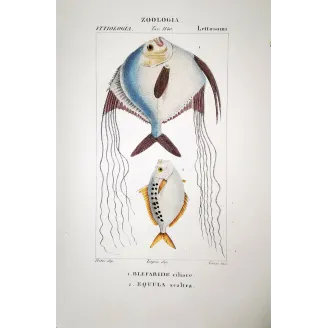
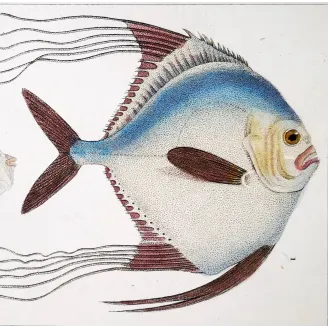
Delicate 19th-century hand-colored engraving of a ponyfish with companion species, ideal for marine-themed interiors and collectors.
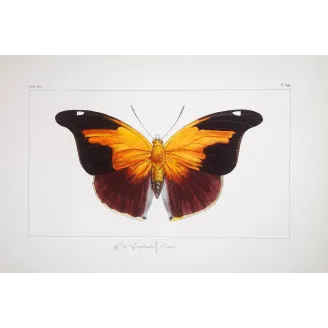
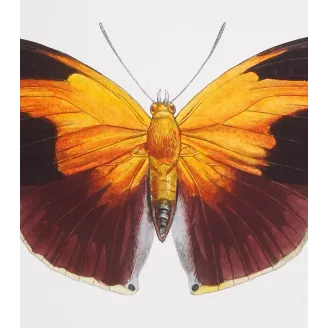
Original 1835 hand-colored engraving of Nymphalis orion, drawn and engraved by Pauquet under the scientific direction of Hippolyte Lucas for Exotic Butterflies.
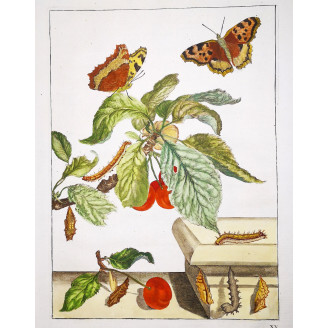
Original 1774 engraving by Jacob L'Admiral: Large Tortoiseshell on Sweet Cherry.
Original nineteenth-century bird print depicting two remarkable Sri Lankan mynas — Eulabes ptilogenys and Acridotheres melanosternus — illustrated by Johannes Gerardus Keulemans for William Vincent Legge’s celebrated Birds of Ceylon. Distinguished by rich iridescent plumage and refined compositional balance, this elegant ornithological lithograph combines scientific precision with exceptional decorative sophistication.