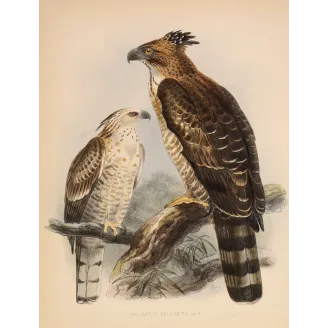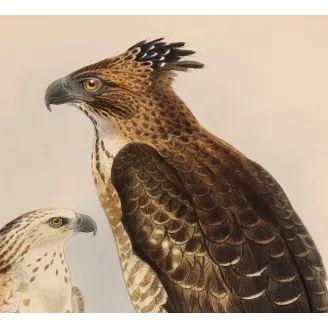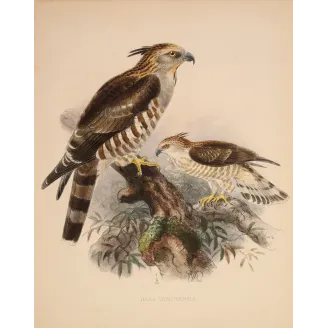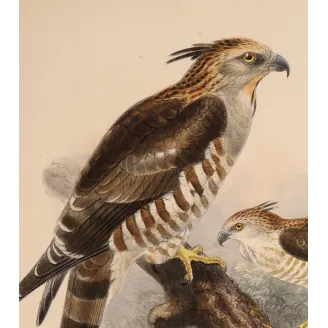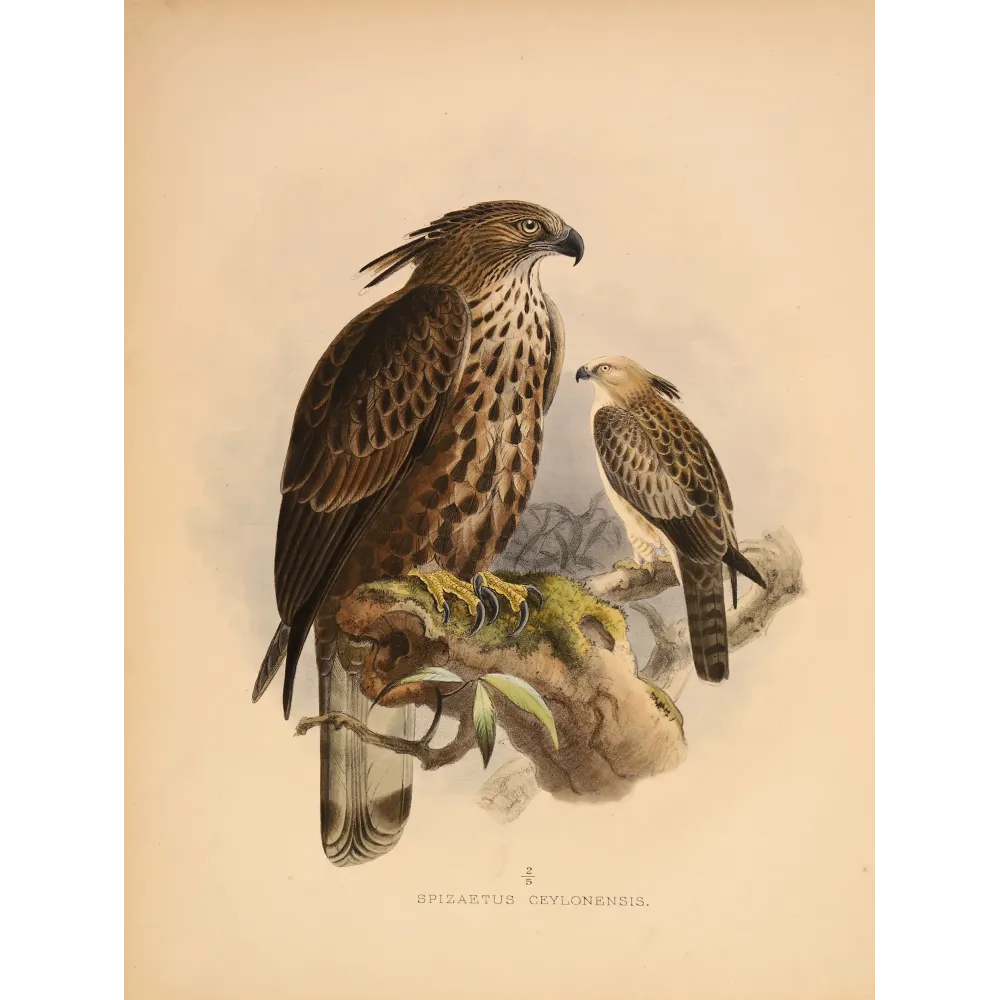
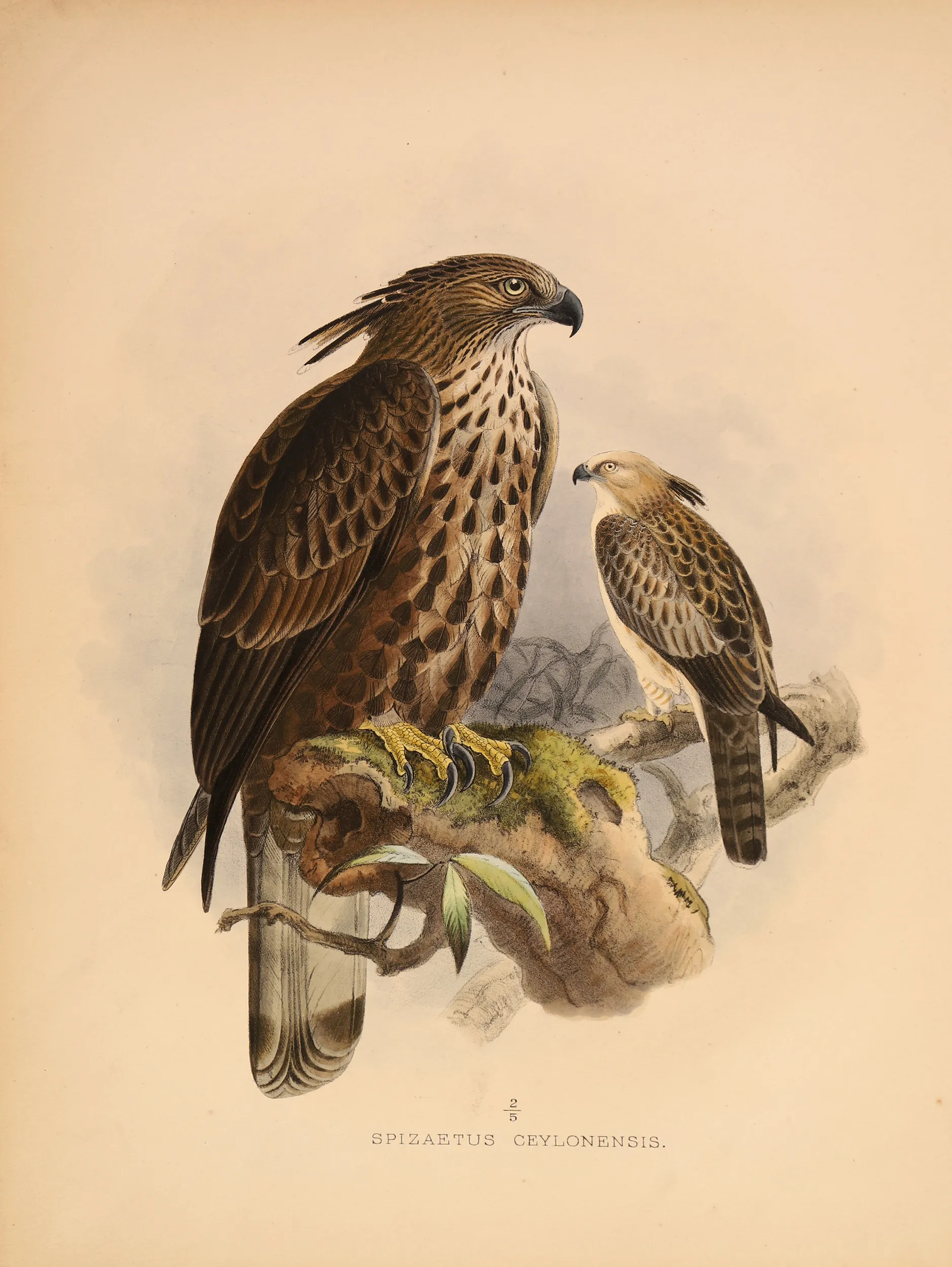
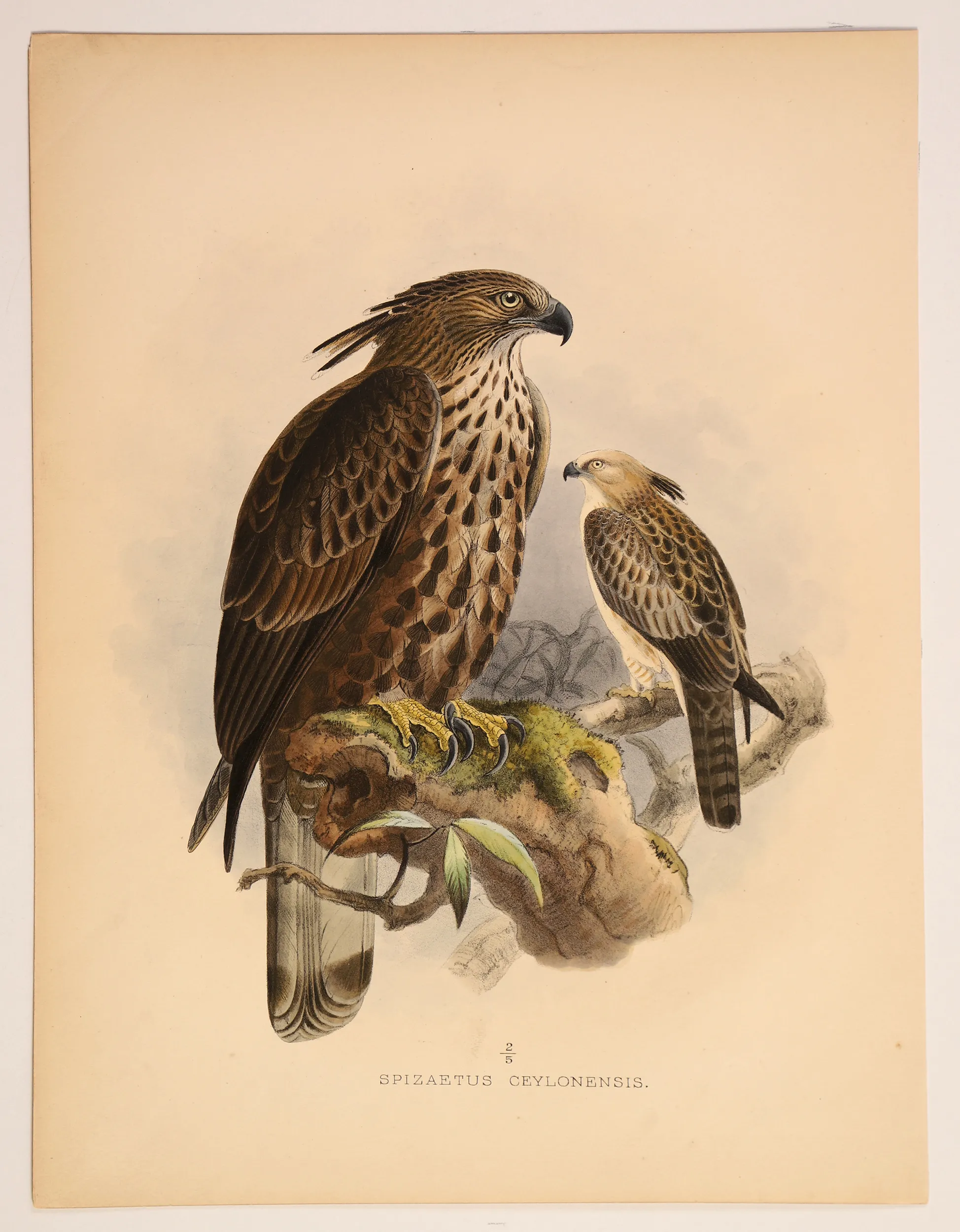
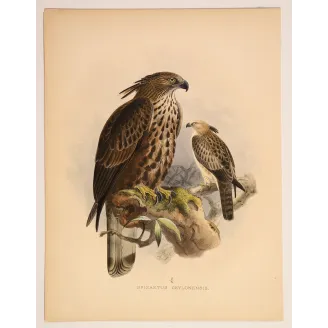
Original antique bird print depicting Spizaëtus ceylonensis (Ceylon Hawk-Eagle), illustrated by J.G. Keulemans for A History of the Birds of Ceylon. A refined Victorian ornithological lithograph featuring an elegant pair of raptors with remarkable decorative presence.
 Delivery policy
Your print will be carefully prepared and shipped worldwide via trusted couriers (UPS or similar).
 Authentic antique prints
Original engravings from the 17th–19th century.
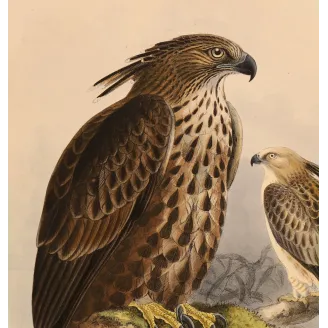
This original nineteenth-century ornithological lithograph depicts the Ceylon Hawk-Eagle (Spizaëtus ceylonensis), illustrated by Johannes Gerardus Keulemans for William Vincent Legge’s A History of the Birds of Ceylon. The composition presents two raptors — a dominant foreground bird and a smaller companion — in a restrained study of plumage, scale and visual authority.
Rather than relying upon brilliant tropical colour, Keulemans builds the plate around an exceptionally rich range of browns, ochres, creams and soft greys. The principal bird dominates through mass, posture and finely articulated feather structure, while the secondary figure and subdued setting establish depth and balance.
— • —
The composition is organised around the commanding vertical presence of the principal hawk-eagle. Its broad body, strong legs, long tail and carefully layered plumage give the bird an imposing sculptural quality, while the smaller companion, positioned farther back, introduces a quieter counterpoint and a clear sense of spatial recession.
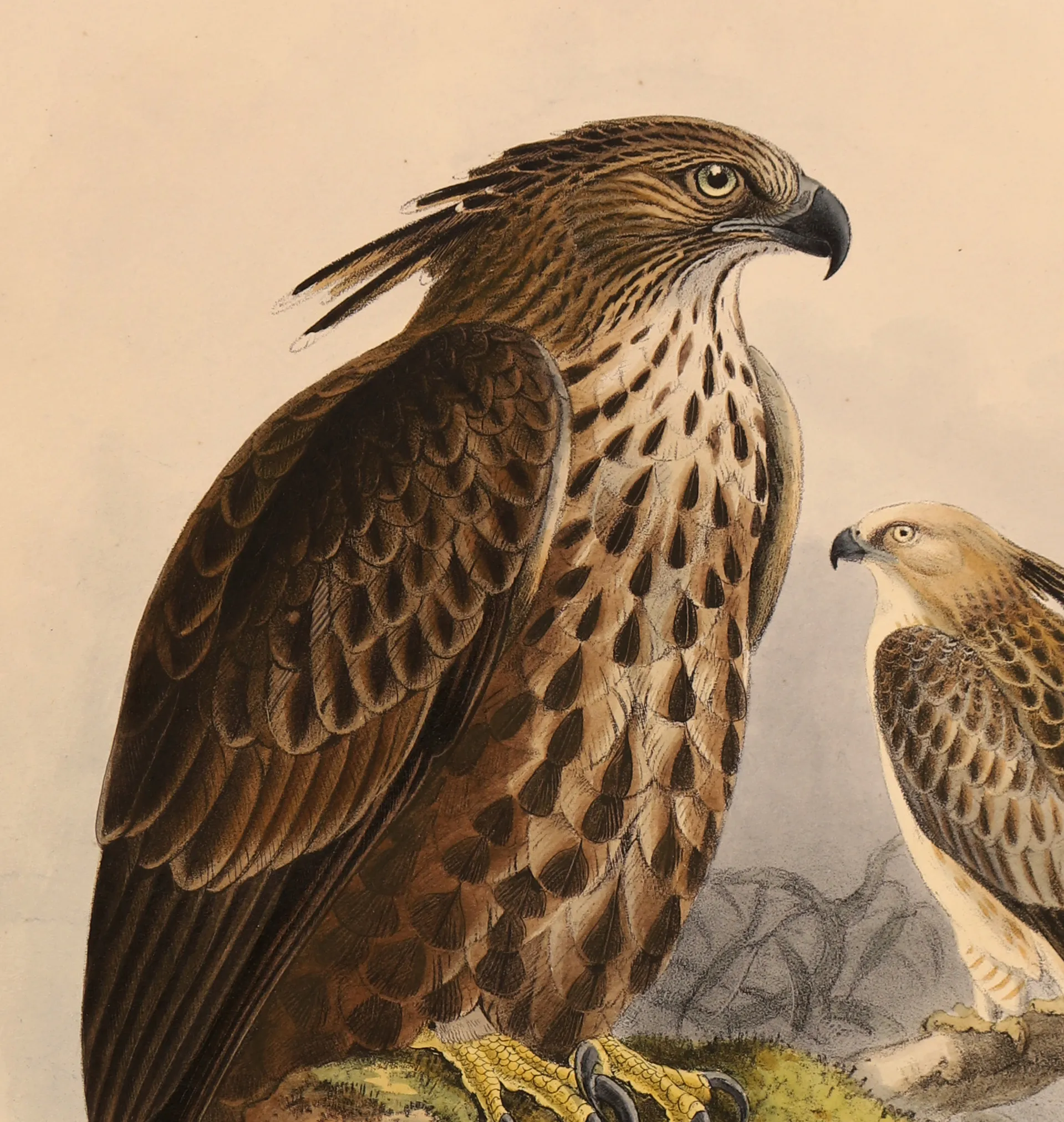
Brown becomes the central chromatic language of the plate. Deep chocolate, warm chestnut, ochre, tobacco, beige and cream appear in a continuous sequence of tonal variations. These colours are distributed according to feather structure, allowing wings, breast and tail to remain clearly articulated despite the restricted palette.
The lithographic drawing provides the underlying architecture. Fine feather lines, delicate shadows and precise contour work establish volume before the hand colouring is applied. The pigments reinforce rather than conceal the printed structure, producing a dense yet remarkably refined surface.
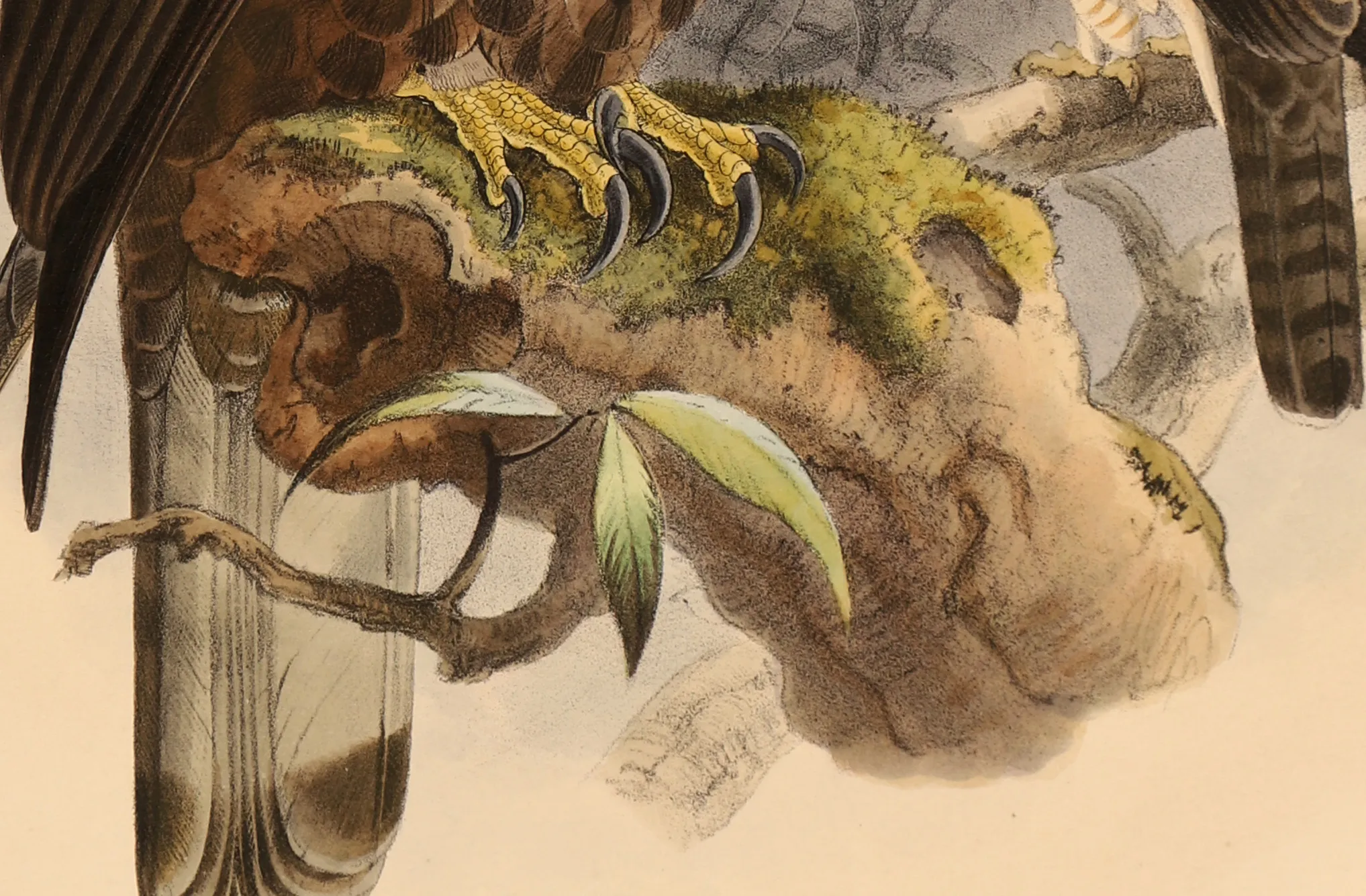
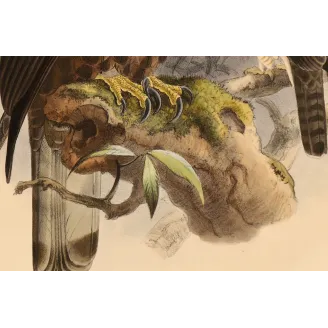
Direct examination of the original impression reveals selective applications of gum arabic across the wing and tail plumage of the principal foreground bird. The transparent finish is concentrated within darker feather groups, where reflected light helps separate overlapping structures and enhances the three-dimensional modelling of the body.
This selective gloss gives the darker plumage an unexpected luminosity. Although the plate is dominated by brown and neutral tonalities, the principal bird never appears heavy or visually closed. Subtle reflections across wings and tail create a continuous play between matte and luminous surfaces.
The secondary bird remains comparatively softer and more matte in appearance. This difference in surface treatment strengthens the compositional hierarchy, allowing the principal subject to advance visually while the smaller figure recedes into the atmospheric setting.
The background is deliberately restrained and pastel in character. Sparse vegetation, muted branches and soft grey-brown lithographic passages provide enough environmental context to suggest a more open and less luxuriant setting than that found in many of the tropical plates from the series.
This visual sparseness reinforces the identity of the raptor. Open space around the birds allows the long tails, broad wings and powerful talons to remain fully legible, while the reduced vegetation prevents the scene from competing with their physical presence.
The result is a plate of remarkable tonal sophistication. Keulemans transforms a predominantly brown palette into an image of luminosity, depth and controlled power, demonstrating how scientific observation and artistic restraint could combine to produce a composition of quiet but enduring authority.
The Ceylon Hawk-Eagle is identified on the original plate as Spizaëtus ceylonensis. Its powerful body, broad wings, strong talons and distinctive crest make it one of the most commanding raptors represented in Legge’s study of the birds of Ceylon.
The inclusion of two individuals allows comparison of size, plumage development and posture within a single composition. Such paired representations offered nineteenth-century ornithologists an immediate visual means of examining variation within the species.
Within A History of the Birds of Ceylon, raptor plates such as this demonstrate the broader ambition of regional ornithology: to document not only identification, but morphology, age-related differences and the environmental character of the birds themselves.
This original lithograph belongs to William Vincent Legge’s A History of the Birds of Ceylon, published between 1878 and 1880 after more than eight years of observation and collecting on the island. The work became the first comprehensive ornithological treatment of Ceylon, bringing together field experience, historical literature, museum comparison and the illustrations of Johannes Gerardus Keulemans.
This hawk-eagle plate reveals Keulemans’ ability to create visual authority through tonal restraint rather than brilliant colour. The principal bird dominates through scale, carefully modelled plumage and controlled surface luminosity, while the secondary figure and sparse setting establish depth and comparative context.
Understand the Historical Context of this Print →
Discover more about the artist: Johannes Gerardus Keulemans — Precision and Passion in Ornithological Illustration.
Browse the complete collection: Keulemans – Birds of Ceylon Collection.
For readers wishing to better understand antique prints—from technique and paper to collecting criteria—explore our Antique Prints Guide.
Excellent antique condition. Fresh, crisp and well-defined impression with original contemporary hand colouring and hand-finished surface intact. Printed and coloured areas remain clean and stable, with no significant fading, abrasion or pigment loss affecting the principal subjects. Paper sound and stable with generous original margins. Minor age-related handling traces and tonal variation may be present, consistent with the period. No watermark observed.
Specific References
Original antique bird print depicting Spizaëtus kelaarti (Crested Hawk-Eagle), illustrated by J.G. Keulemans for A History of the Birds of Ceylon. A striking Victorian ornithological lithograph featuring an imposing pair of raptors with exceptional decorative presence.
Original nineteenth-century bird print depicting two remarkable Sri Lankan barbets — Megalaema zeylanica and Megalaema flavifrons — illustrated by Johannes Gerardus Keulemans for William Vincent Legge’s celebrated Birds of Ceylon. Rich in tropical colour and compositional balance, this striking ornithological lithograph combines scientific observation with refined decorative appeal.
Original antique bird print depicting Baza ceylonensis (Ceylon Hawk-Eagle), illustrated by J.G. Keulemans for A History of the Birds of Ceylon. A striking Victorian ornithological lithograph featuring a refined pair of raptors with strong decorative presence.
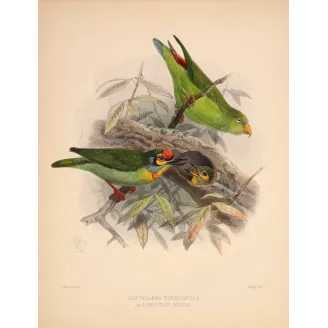
Original hand-colored bird engraving depicting the Crimson-fronted Barbet (Xantholaema rubricapilla) and the Ceylon Hanging Parrot (Loriculus indicus), illustrated by Johannes Gerardus Keulemans for Birds of Ceylon. A vivid tropical composition rich in colour and narrative charm.
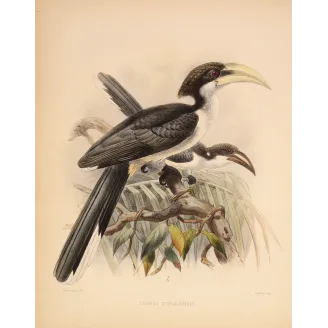
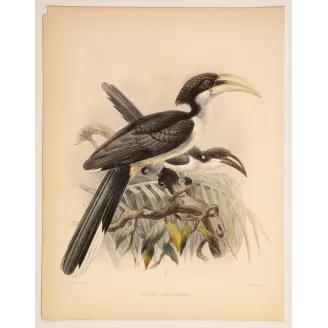
Original nineteenth-century bird print depicting the elegant Ceylon Hornbill (Tockus gingalensis), illustrated by Johannes Gerardus Keulemans for William Vincent Legge’s celebrated Birds of Ceylon. This refined ornithological lithograph combines scientific precision with sculptural decorative appeal, featuring the species’ remarkable ivory-coloured bill and poised tropical composition.
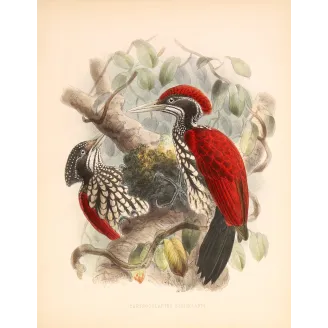
Original nineteenth-century bird print depicting the striking Crimson-backed Flameback (Chrysocolaptes stricklandi), illustrated by Johannes Gerardus Keulemans for William Vincent Legge’s celebrated Birds of Ceylon. This rare ornithological lithograph combines scientific precision with exceptional decorative appeal, featuring vivid crimson plumage and refined naturalistic composition.
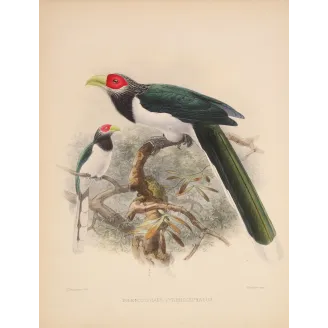
Original nineteenth-century bird print depicting the remarkable Red-faced Malkoha (Phaenicophaeus pyrrhocephalus), illustrated by Johannes Gerardus Keulemans for William Vincent Legge’s celebrated Birds of Ceylon. With its vivid scarlet face, elegant elongated tail and refined tropical palette, this striking ornithological lithograph combines scientific precision with exceptional decorative presence.
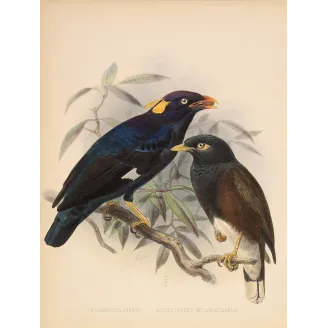
Original nineteenth-century bird print depicting two remarkable Sri Lankan mynas — Eulabes ptilogenys and Acridotheres melanosternus — illustrated by Johannes Gerardus Keulemans for William Vincent Legge’s celebrated Birds of Ceylon. Distinguished by rich iridescent plumage and refined compositional balance, this elegant ornithological lithograph combines scientific precision with exceptional decorative sophistication.
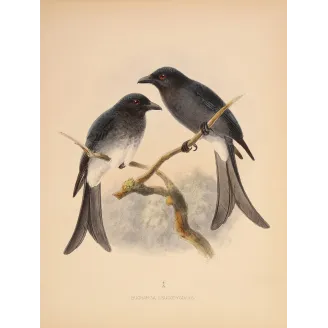
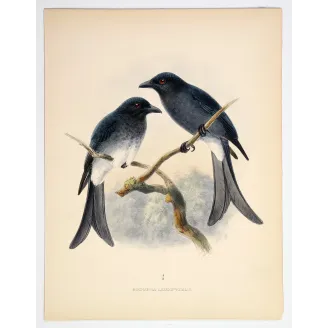
Original antique bird print by J.G. Keulemans depicting Buchanga leucopygialis (White-rumped Drongo), from A History of the Birds of Ceylon. A refined Victorian ornithological lithograph with elegant tonal balance and exceptional decorative presence.
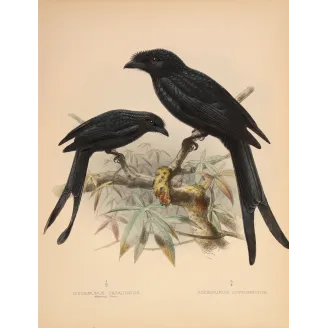
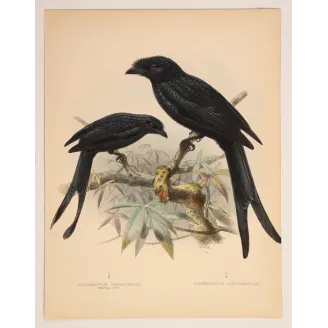
Original nineteenth-century bird print depicting two remarkable Sri Lankan drongos — Dissemurus paradiseus and Dissemurus lophorhinus — illustrated by Johannes Gerardus Keulemans for William Vincent Legge’s celebrated Birds of Ceylon. Distinguished by deep iridescent plumage and elegant elongated forms, this refined ornithological lithograph combines scientific precision with understated decorative sophistication.
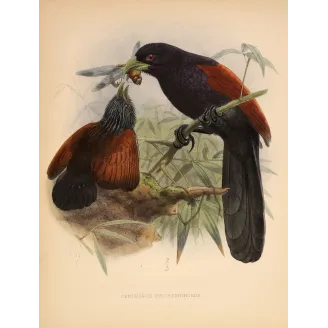
Original hand-colored bird engraving depicting the Green-Billed Coucal (Centropus chlororhynchus), illustrated by Johannes Gerardus Keulemans for The Birds of Ceylon. A striking tropical composition with rich chestnut and deep blue plumage.
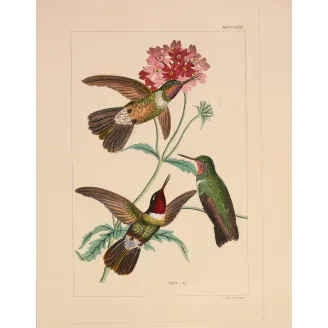
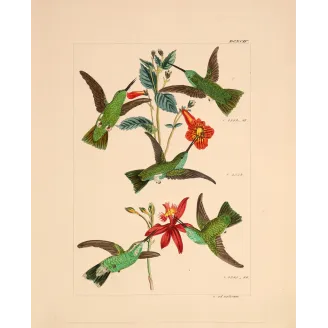
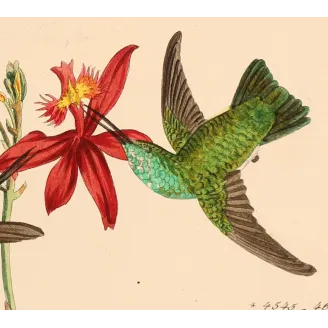
Original nineteenth-century hand-colored engraving by Ludwig Reichenbach, depicting three hummingbirds among pink blossoms. A rare later plate from the Trochilinarum Enumeratio corpus, not fully documented in the principal published index.
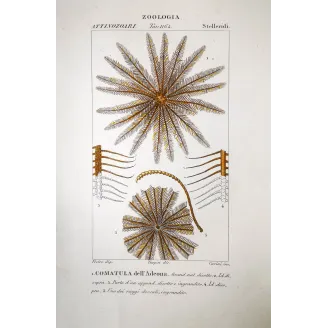
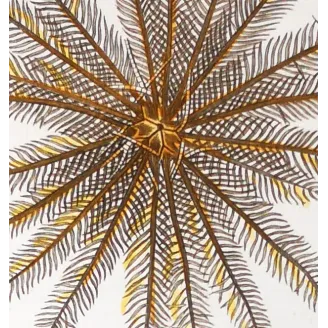
Rare 19th-century print of the feather star Comatula of the Adeona, with anatomical details.
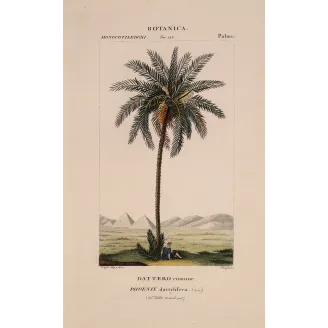
Detailed antique illustrations of the date palm tree and its floral and fruit anatomy.
Fine botanical engraving showing delicate redcurrant clusters and bright green leaves.
An exceptional original hand-colored engraving from Ludwig Reichenbach's Trochilinarum Enumeratio, depicting five brilliant hummingbirds feeding among scarlet tropical flowers. Featuring Esmeralda, Euchloris and Maculicollis, this dynamic nineteenth-century composition beautifully combines botanical richness with the elegance of Victorian ornithological illustration.
Vivid 19th-century hand-colored engraving depicting two parakeets in dynamic interaction, with striking green plumage and contrasting red and violet accents. A highly decorative exotic bird composition.
A striking 19th-century engraving depicting two vividly colored parakeets in a dynamic composition. The intense contrast of blue, red, green and yellow creates a highly decorative work, ideal as a focal piece in refined interiors.
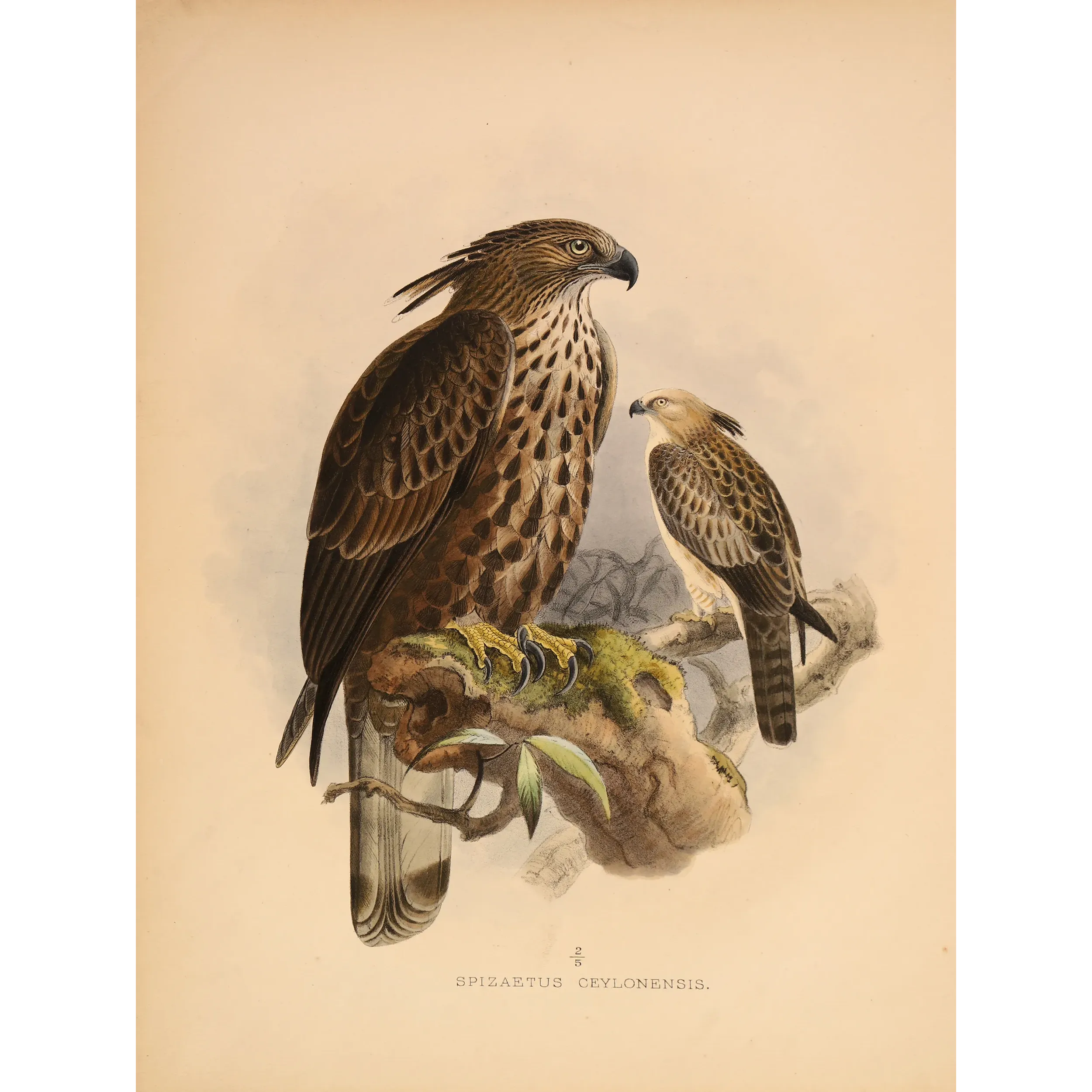
Original antique bird print depicting Spizaëtus ceylonensis (Ceylon Hawk-Eagle), illustrated by J.G. Keulemans for A History of the Birds of Ceylon. A refined Victorian ornithological lithograph featuring an elegant pair of raptors with remarkable decorative presence.