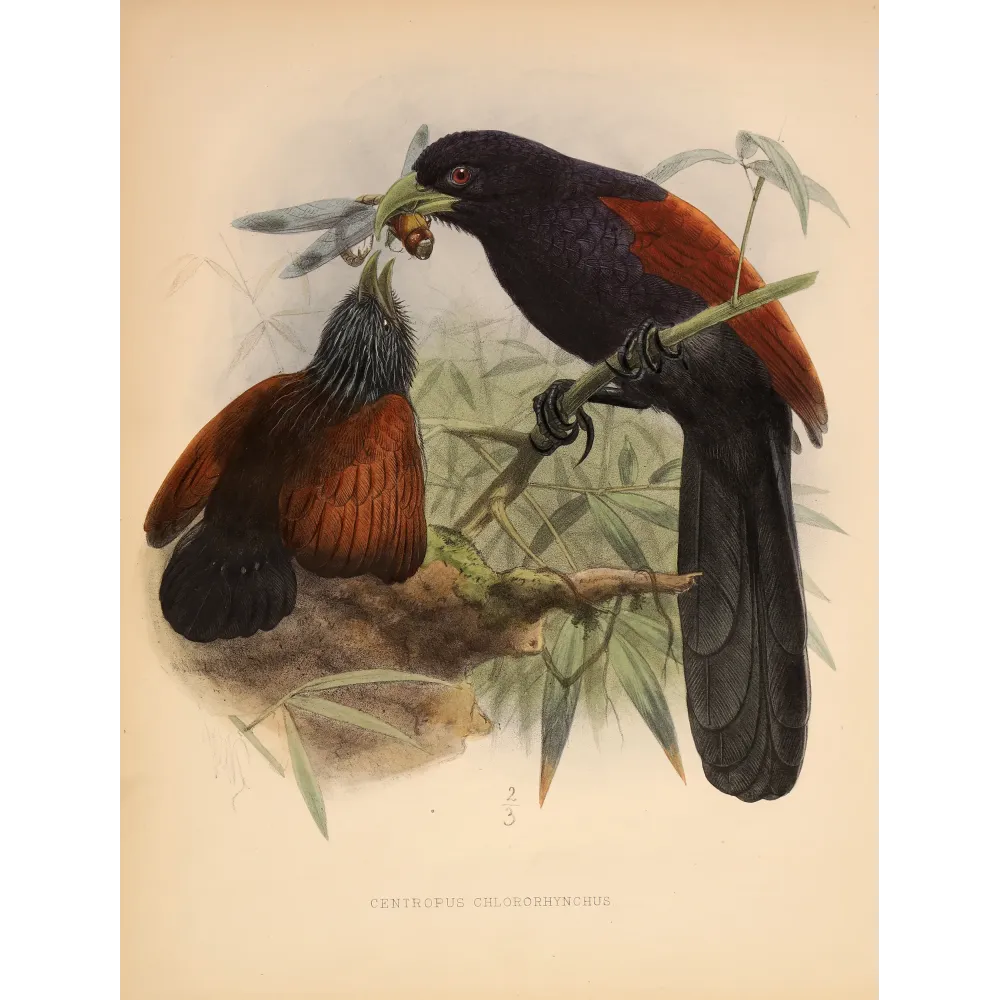
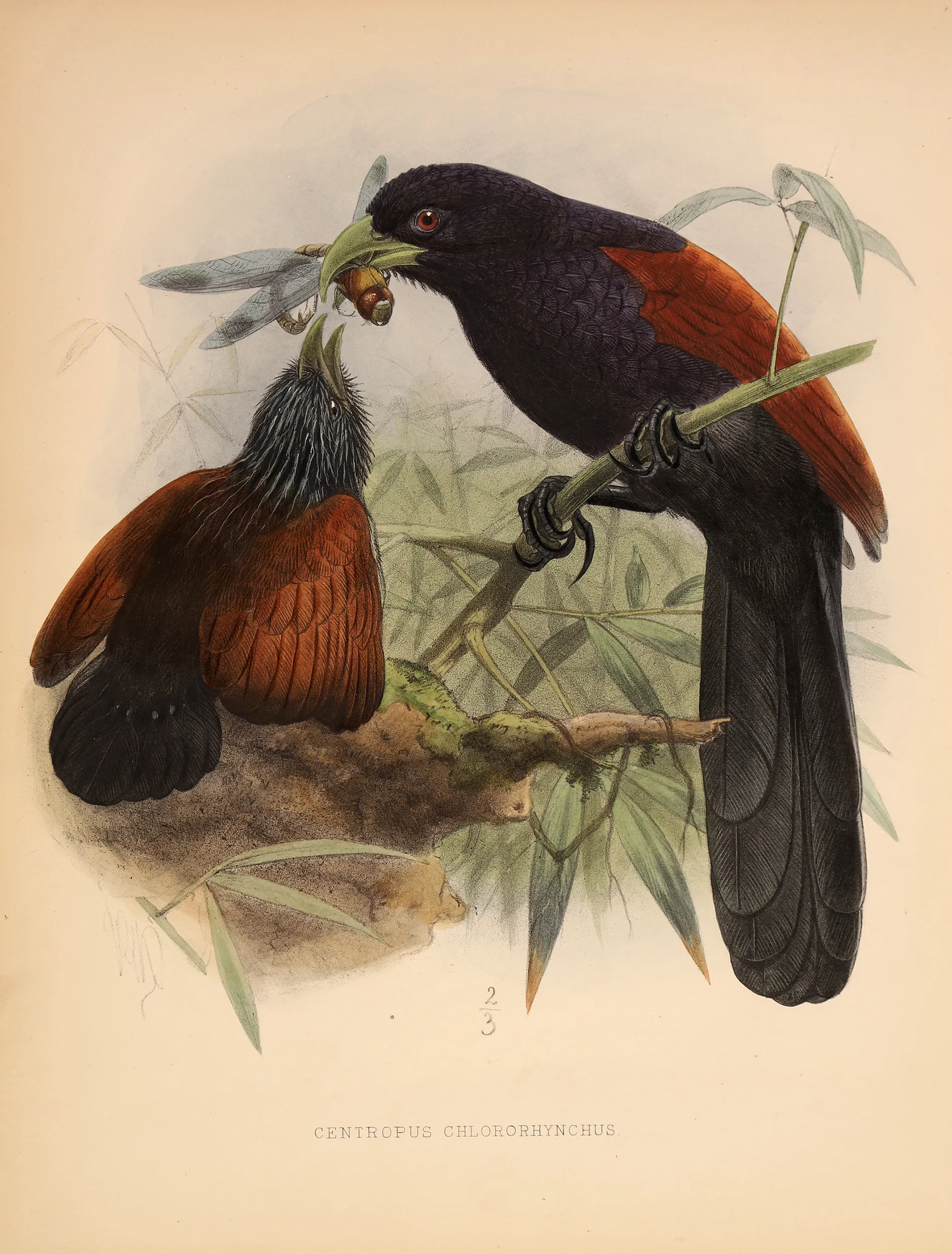
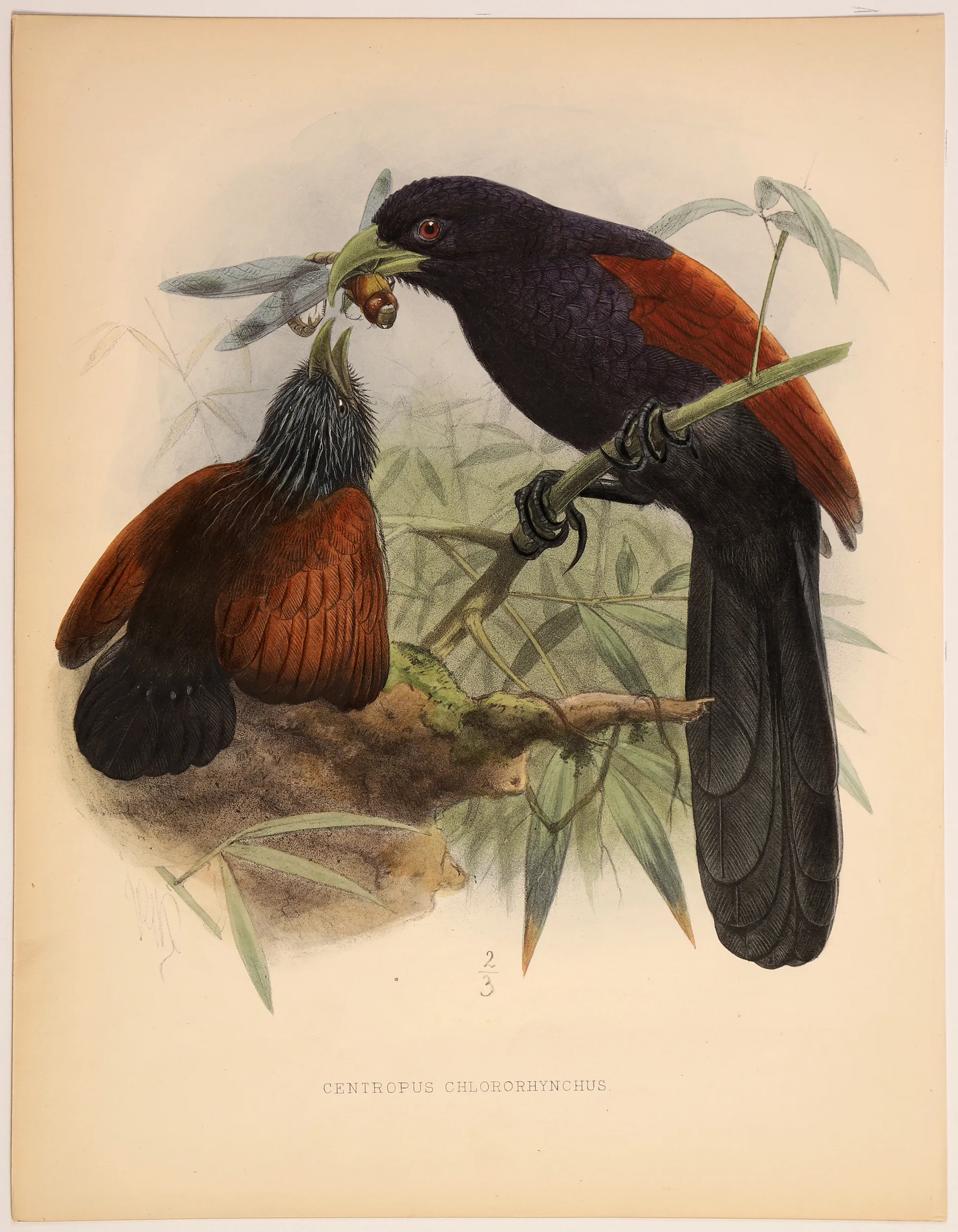
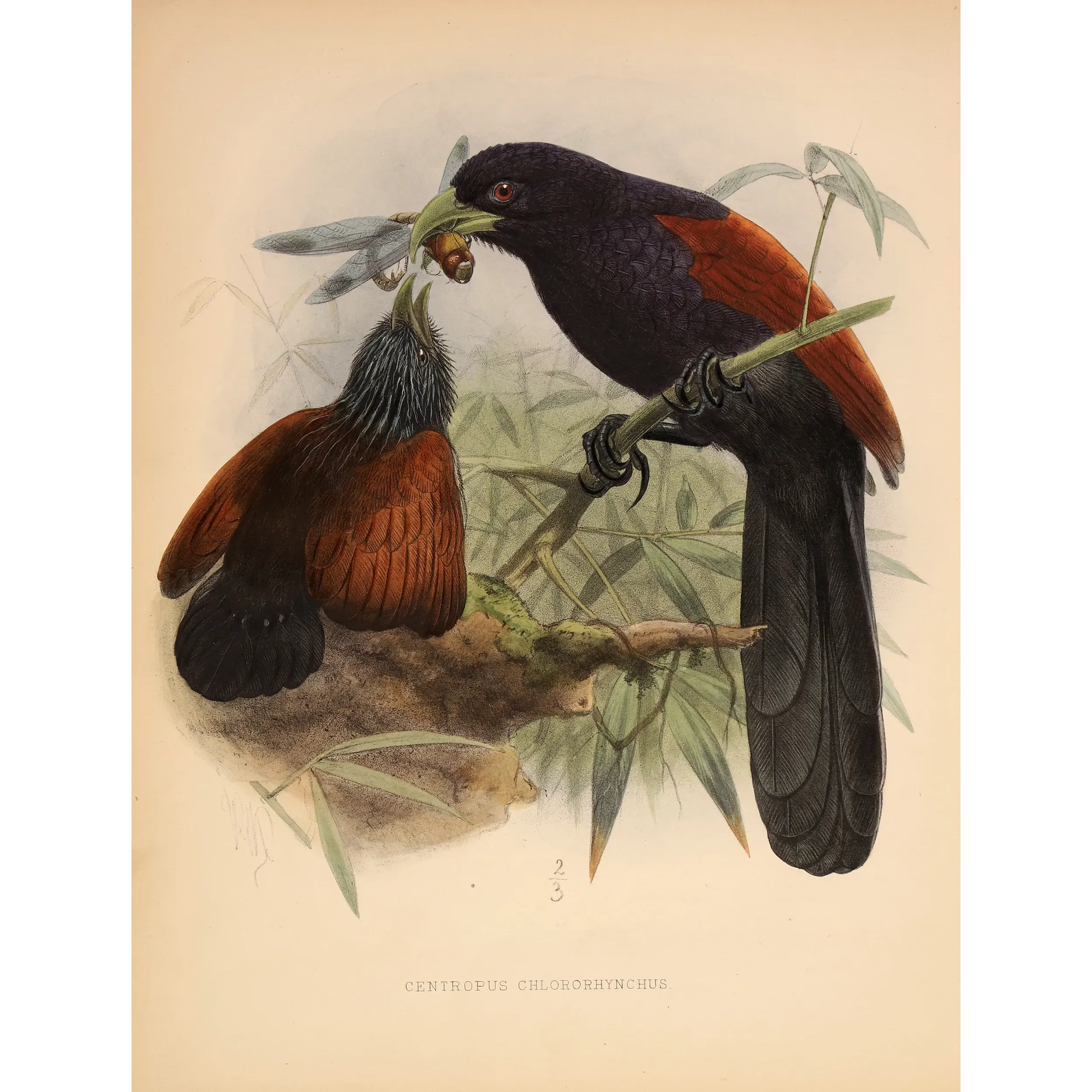
Original hand-colored bird engraving depicting the Green-Billed Coucal (Centropus chlororhynchus), illustrated by Johannes Gerardus Keulemans for The Birds of Ceylon. A striking tropical composition with rich chestnut and deep blue plumage.
 Delivery policy
Your print will be carefully prepared and shipped worldwide via trusted couriers (UPS or similar).
 Authentic antique prints
Original engravings from the 17th–19th century.
A rare moment of parental care forms the emotional and visual centre of this original plate depicting the Green-billed Coucal, historically inscribed as Centropus chlororhynchus. Johannes Gerardus Keulemans presents the adult offering captured insect prey to its juvenile, transforming precise ornithological observation into an intimate scene of nourishment and protection.
Published in William Vincent Legge’s A History of the Birds of Ceylon, the composition combines deep blue-black plumage, warm chestnut wings and restrained tropical foliage. Its exceptional power lies not only in the identification of the species, but in the representation of behaviour: an adult and young bird connected through a fleeting natural gesture.
— • —
The composition is structured around the relationship between the two birds. The adult occupies the upper right portion of the sheet, its long body and tail descending with quiet authority, while the juvenile rises from the lower left. Their opposing positions meet at the centre through the feeding gesture, creating a precise visual and emotional axis.
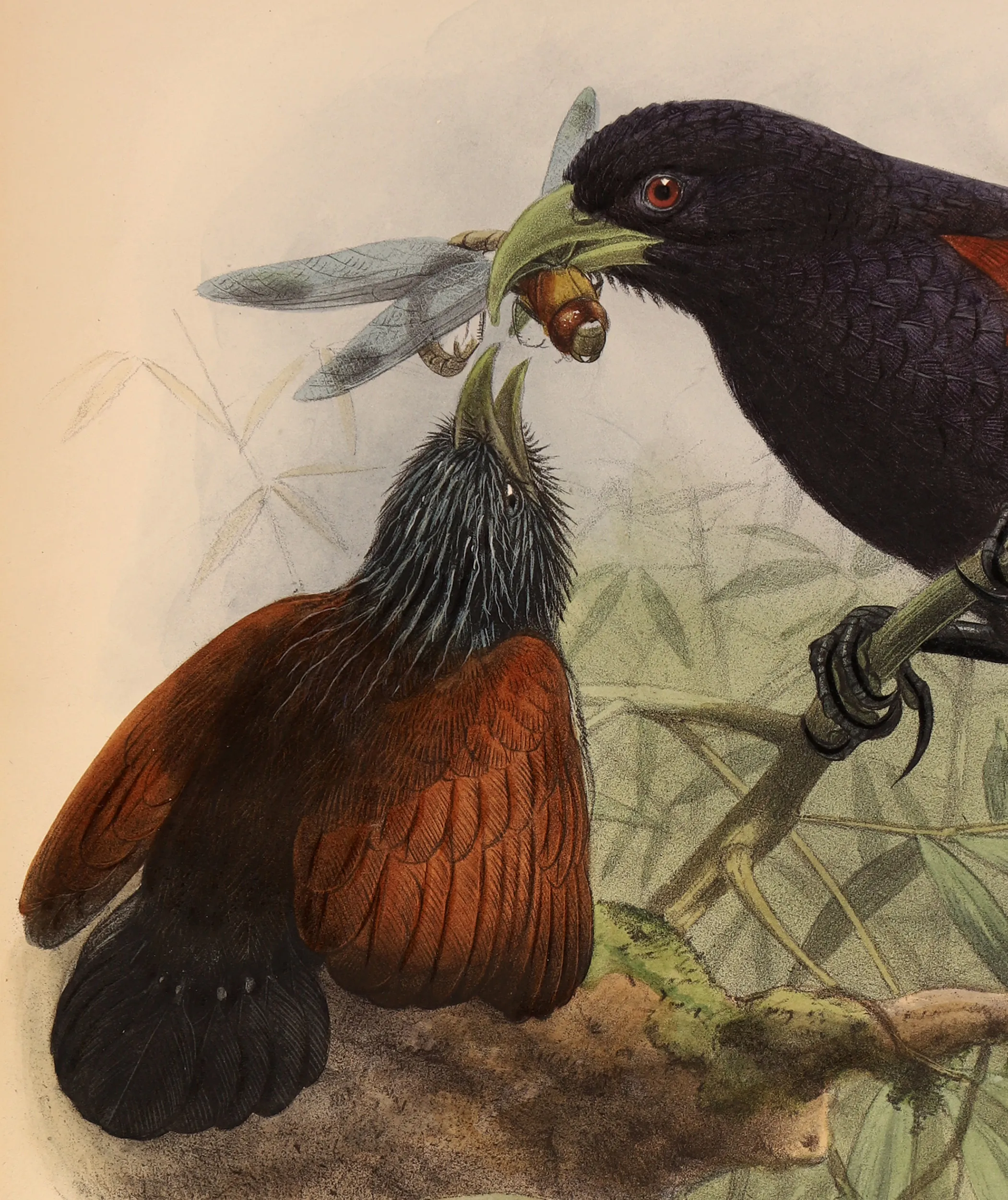
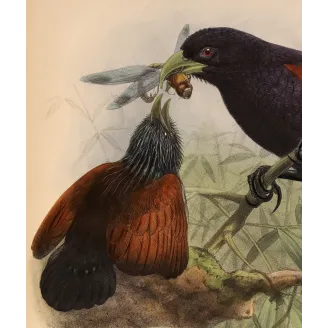
Keulemans captures the instant immediately before the transfer of food. The adult bends forward while holding the body of a captured dragonfly within its green bill; the juvenile stretches upward with its bill open and throat extended. This small interval between offering and acceptance gives the plate an unusual sense of suspended movement.
The scene celebrates parental care without sentimentality. Every posture remains anatomically convincing: the adult grips the branch firmly, the juvenile anchors itself lower within the vegetation, and the distance between their bills is carefully controlled. Scientific observation and narrative expression reinforce one another.
The adult is defined by a powerful contrast between the deep blue-black head, breast and tail and the warm chestnut-red wings. The long dark tail establishes a strong vertical element, while the red-brown wing creates a concentrated field of colour that interrupts and animates the otherwise sombre plumage.
The juvenile repeats the same chromatic structure in a softer and less fully developed form. Its chestnut wings and dark lower plumage connect it visually to the adult, while the fine pale markings around the throat and neck communicate its younger feather structure. The relationship between the two birds is therefore expressed not only through behaviour, but through colour and anatomy.
Direct examination of the original impression reveals selective applications of gum arabic on both subjects. On the adult, the transparent finish is visible across portions of the tail plumage and within the dark area between the bill and eye, where reflected light improves the definition of otherwise closely related black tonalities.
On the juvenile, gum arabic is applied across the darker back and along selected borders of the smaller feathers. These restrained highlights separate overlapping structures, emphasise the less mature plumage and give the compact body greater volume under changing light.
The extensive dark passages never become visually inert. Matte black, blue-grey lithographic modelling and selective reflected gloss create continuous tonal variation, while the chestnut wings introduce warmth and chromatic intensity. The result is a composition dominated by decisive browns, blacks and greys, yet possessing remarkable luminosity and depth.
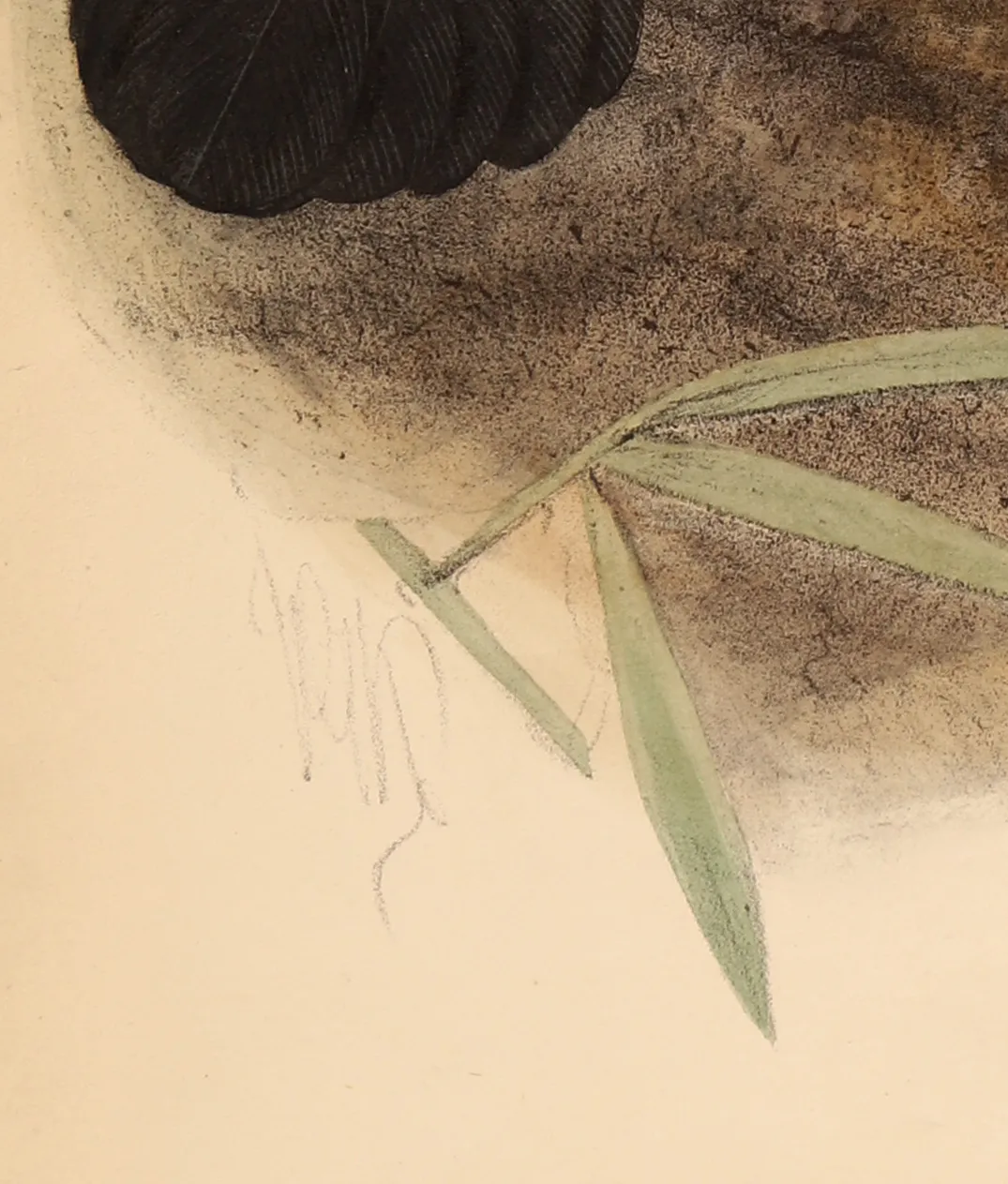
The botanical setting remains deliberately soft and pastel in character. Pale bamboo-like foliage, muted green branches and atmospheric grey shading provide habitat and spatial structure without competing with the birds. This subdued background allows the feeding scene to remain the unquestioned centre of attention.
Particularly effective is the contrast between the broad physical presence of the adult and the upward-reaching fragility of the juvenile. The adult’s long tail, strong claws and dark mass communicate protection and authority; the young bird’s open bill and extended neck convey dependence and expectation.
The result is one of the most narratively compelling plates in the series. Keulemans transforms a scientifically observed behaviour into an image of intimacy, movement and extraordinary decorative force, while preserving the anatomical precision required by Victorian ornithology.
The Green-billed Coucal is identified on the original plate as Centropus chlororhynchus; the modern spelling generally accepted for the species is Centropus chlororhynchos. It is a distinctive Sri Lankan coucal recognised by its pale green bill, dark head and body, chestnut wings and long graduated tail.
The species belongs to the cuckoo family, although its heavy form, terrestrial habits and dense-vegetation habitat give it a markedly different appearance from many more familiar cuckoos. Its restricted island distribution made it especially significant to nineteenth-century naturalists examining the distinctive character of Ceylon’s avifauna.
The adult-and-juvenile pairing adds an important behavioural dimension to Legge’s regional study. Rather than recording plumage alone, the plate preserves an observed relationship between two generations and demonstrates how ornithological illustration could document feeding, development and family behaviour.
This original lithograph belongs to William Vincent Legge’s A History of the Birds of Ceylon, published between 1878 and 1880 after more than eight years of observation and collecting on the island. The work became the first comprehensive ornithological treatment of Ceylon, bringing together field experience, historical literature, museum comparison and the illustrations of Johannes Gerardus Keulemans.
The Green-billed Coucal plate demonstrates that the publication was concerned not only with classification, but also with the life histories of birds. By depicting the adult feeding its juvenile, Keulemans transforms behavioural observation into a composition of exceptional intimacy and visual authority.
Understand the Historical Context of this Print →
Discover more about the artist: Johannes Gerardus Keulemans — Precision and Passion in Ornithological Illustration.
Browse the complete collection: Keulemans – Birds of Ceylon Collection.
For readers wishing to better understand antique prints—from technique and paper to collecting criteria—explore our Antique Prints Guide.
Excellent antique condition. Exceptionally fresh and crisp impression with beautifully preserved contemporary hand colouring. The printed, coloured and hand-finished surfaces remain clean and stable, with no significant fading, abrasion or pigment loss affecting the principal subjects. The paper is sound and retains generous original margins, with only negligible age-related evidence consistent with the period. No watermark observed. Overall, an outstanding collector-quality impression retaining exceptional colour strength, surface integrity and material freshness.
Specific References
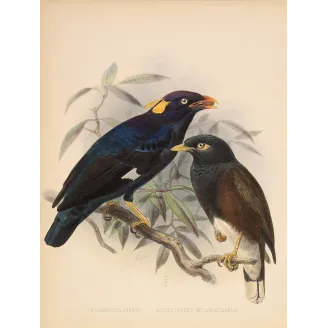
Original nineteenth-century bird print depicting two remarkable Sri Lankan mynas — Eulabes ptilogenys and Acridotheres melanosternus — illustrated by Johannes Gerardus Keulemans for William Vincent Legge’s celebrated Birds of Ceylon. Distinguished by rich iridescent plumage and refined compositional balance, this elegant ornithological lithograph combines scientific precision with exceptional decorative sophistication.
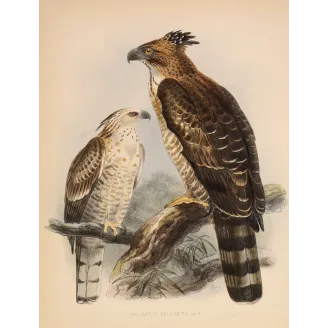
Original antique bird print depicting Spizaëtus kelaarti (Crested Hawk-Eagle), illustrated by J.G. Keulemans for A History of the Birds of Ceylon. A striking Victorian ornithological lithograph featuring an imposing pair of raptors with exceptional decorative presence.
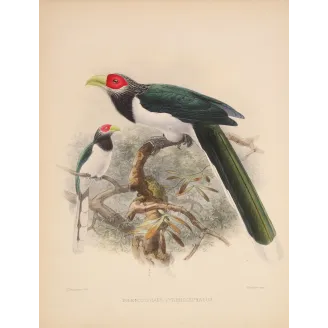
Original nineteenth-century bird print depicting the remarkable Red-faced Malkoha (Phaenicophaeus pyrrhocephalus), illustrated by Johannes Gerardus Keulemans for William Vincent Legge’s celebrated Birds of Ceylon. With its vivid scarlet face, elegant elongated tail and refined tropical palette, this striking ornithological lithograph combines scientific precision with exceptional decorative presence.
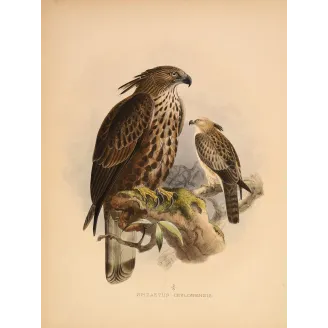
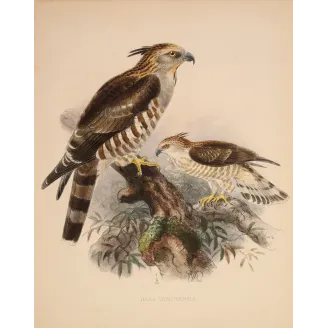
Original antique bird print depicting Spizaëtus ceylonensis (Ceylon Hawk-Eagle), illustrated by J.G. Keulemans for A History of the Birds of Ceylon. A refined Victorian ornithological lithograph featuring an elegant pair of raptors with remarkable decorative presence.
Original antique bird print depicting Baza ceylonensis (Ceylon Hawk-Eagle), illustrated by J.G. Keulemans for A History of the Birds of Ceylon. A striking Victorian ornithological lithograph featuring a refined pair of raptors with strong decorative presence.
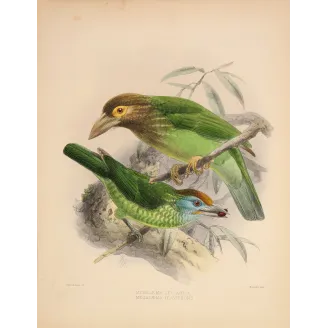
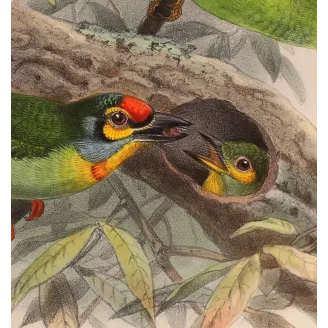
Original nineteenth-century bird print depicting two remarkable Sri Lankan barbets — Megalaema zeylanica and Megalaema flavifrons — illustrated by Johannes Gerardus Keulemans for William Vincent Legge’s celebrated Birds of Ceylon. Rich in tropical colour and compositional balance, this striking ornithological lithograph combines scientific observation with refined decorative appeal.
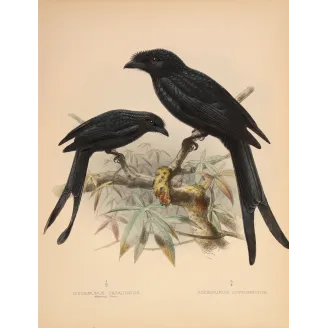
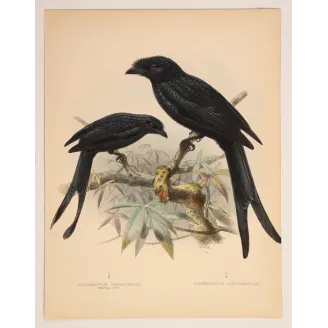
Original nineteenth-century bird print depicting two remarkable Sri Lankan drongos — Dissemurus paradiseus and Dissemurus lophorhinus — illustrated by Johannes Gerardus Keulemans for William Vincent Legge’s celebrated Birds of Ceylon. Distinguished by deep iridescent plumage and elegant elongated forms, this refined ornithological lithograph combines scientific precision with understated decorative sophistication.
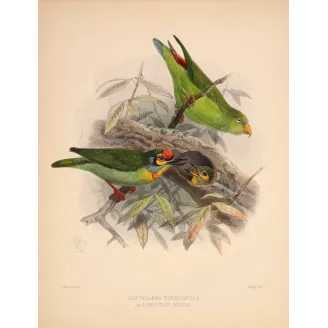
Original hand-colored bird engraving depicting the Crimson-fronted Barbet (Xantholaema rubricapilla) and the Ceylon Hanging Parrot (Loriculus indicus), illustrated by Johannes Gerardus Keulemans for Birds of Ceylon. A vivid tropical composition rich in colour and narrative charm.
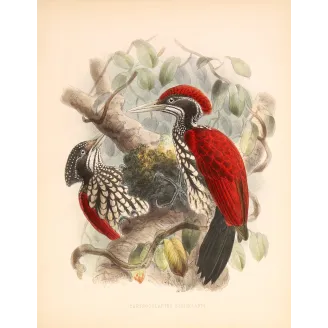
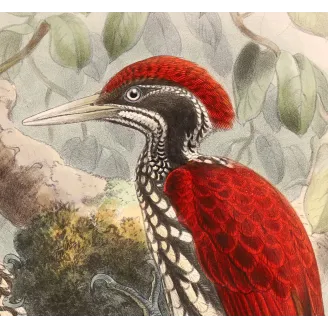
Original nineteenth-century bird print depicting the striking Crimson-backed Flameback (Chrysocolaptes stricklandi), illustrated by Johannes Gerardus Keulemans for William Vincent Legge’s celebrated Birds of Ceylon. This rare ornithological lithograph combines scientific precision with exceptional decorative appeal, featuring vivid crimson plumage and refined naturalistic composition.
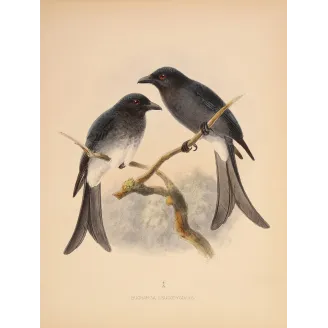
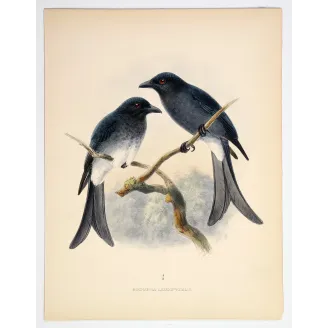
Original antique bird print by J.G. Keulemans depicting Buchanga leucopygialis (White-rumped Drongo), from A History of the Birds of Ceylon. A refined Victorian ornithological lithograph with elegant tonal balance and exceptional decorative presence.
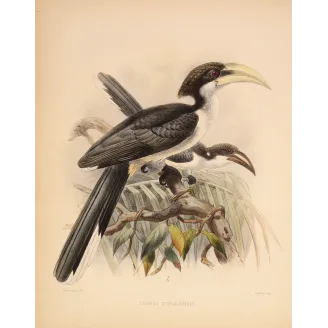
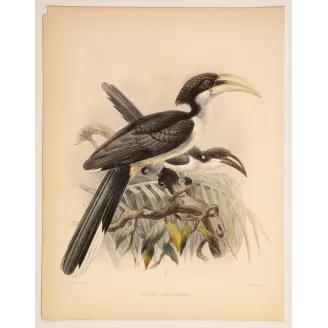
Original nineteenth-century bird print depicting the elegant Ceylon Hornbill (Tockus gingalensis), illustrated by Johannes Gerardus Keulemans for William Vincent Legge’s celebrated Birds of Ceylon. This refined ornithological lithograph combines scientific precision with sculptural decorative appeal, featuring the species’ remarkable ivory-coloured bill and poised tropical composition.
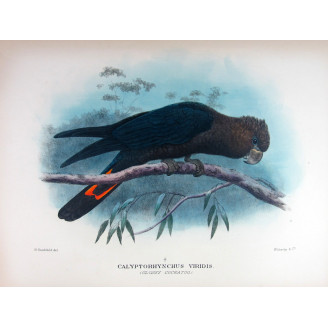
Glossy Cockatoo print by H. Goodchild, dark tones and rare presence on the plate
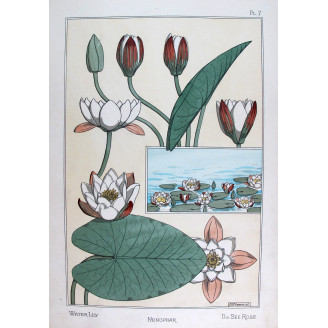
This second edition of the Water-Lily plate (No. 7) captures all the refined serenity of Plate 9, with slight variations in layout and ornamental balance.
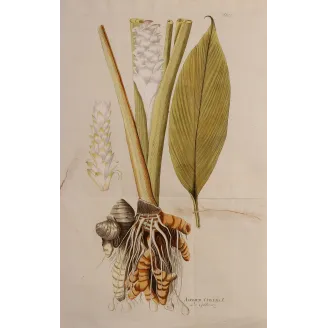
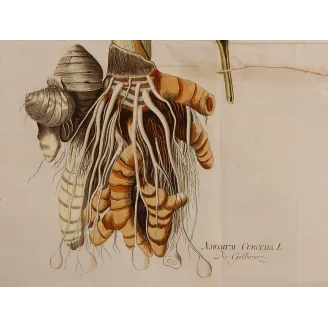
Exceptional large-format eighteenth-century botanical engraving depicting <em>Amomum Curcuma</em> L., published as Plate IV of Joseph Jacob von Plenck’s <em>Icones Plantarum Medicinalium</em>. Printed on a large folded sheet of Honig laid paper with complete watermark and contemporary hand colouring, the composition combines a remarkably refined pale inflorescence, monumental foliage and an exceptionally detailed rhizomatous structure. A powerful Plenck Statement Piece preserving both extraordinary botanical clarity and the visible material history of an eighteenth-century folded plate.
In this vibrant composition, Grasset elevates the humble gourd (courge) to an elegant decorative form.
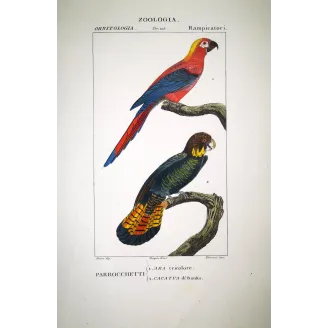
Vibrant parakeets perched on branches: a scarlet macaw and a black cockatoo with yellow and red highlights.
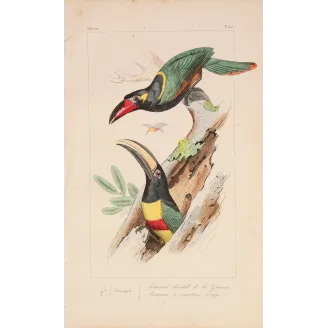
This vivid 19th-century engraving depicts two exotic aracaris, showcasing striking contrasts of green, red and yellow plumage. A highly decorative composition combining scientific observation with strong visual appeal, ideal for collectors of tropical ornithology and refined interior spaces.
Fine 18th-century engraving of the Medlar Tree by Elisabeth Blackwell, featuring fruit, blossom, and botanical detail.
Original hand-colored bird engraving depicting the Green-Billed Coucal (Centropus chlororhynchus), illustrated by Johannes Gerardus Keulemans for The Birds of Ceylon. A striking tropical composition with rich chestnut and deep blue plumage.