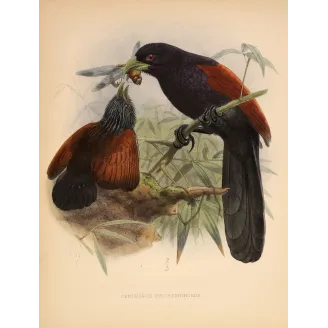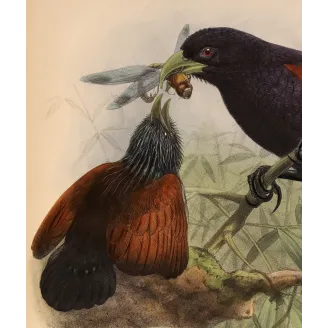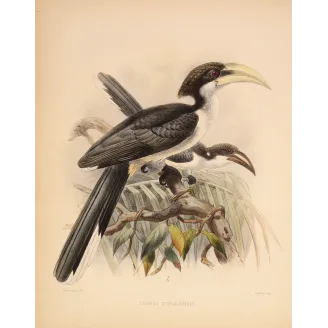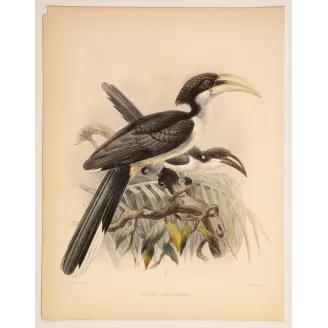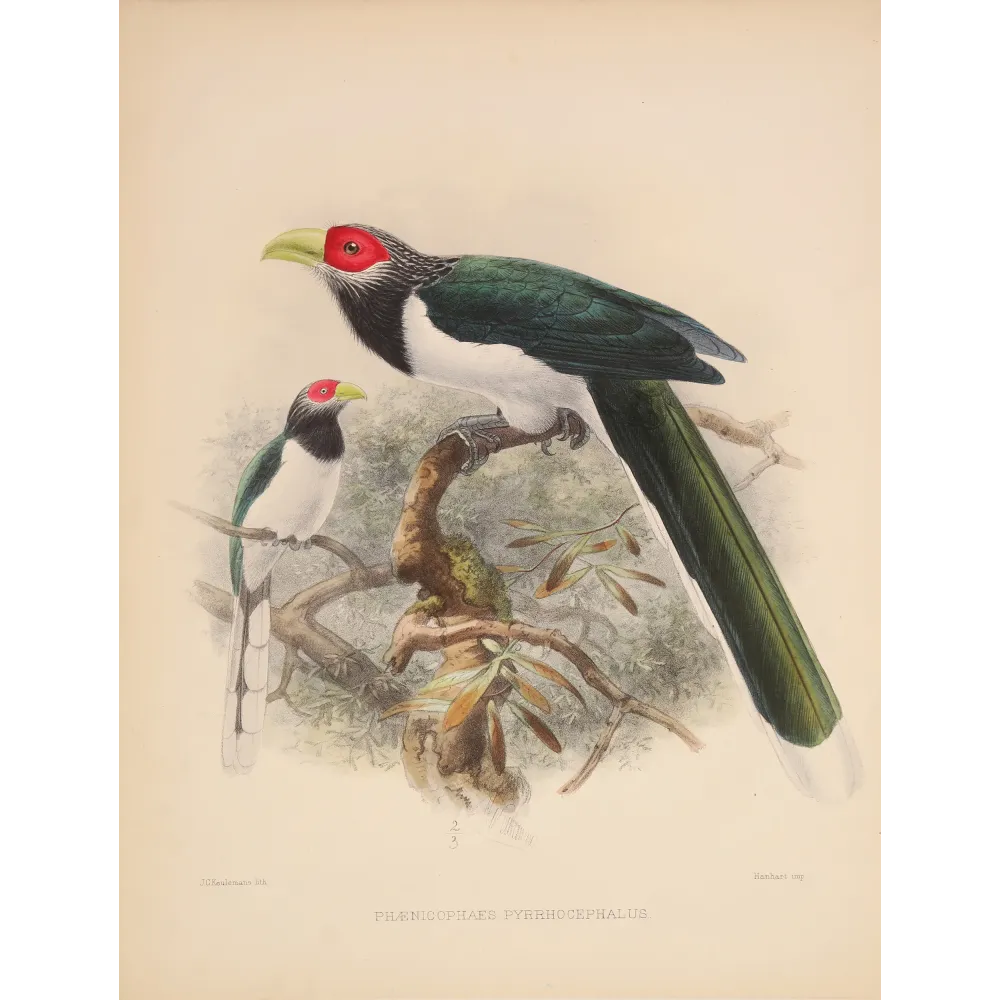
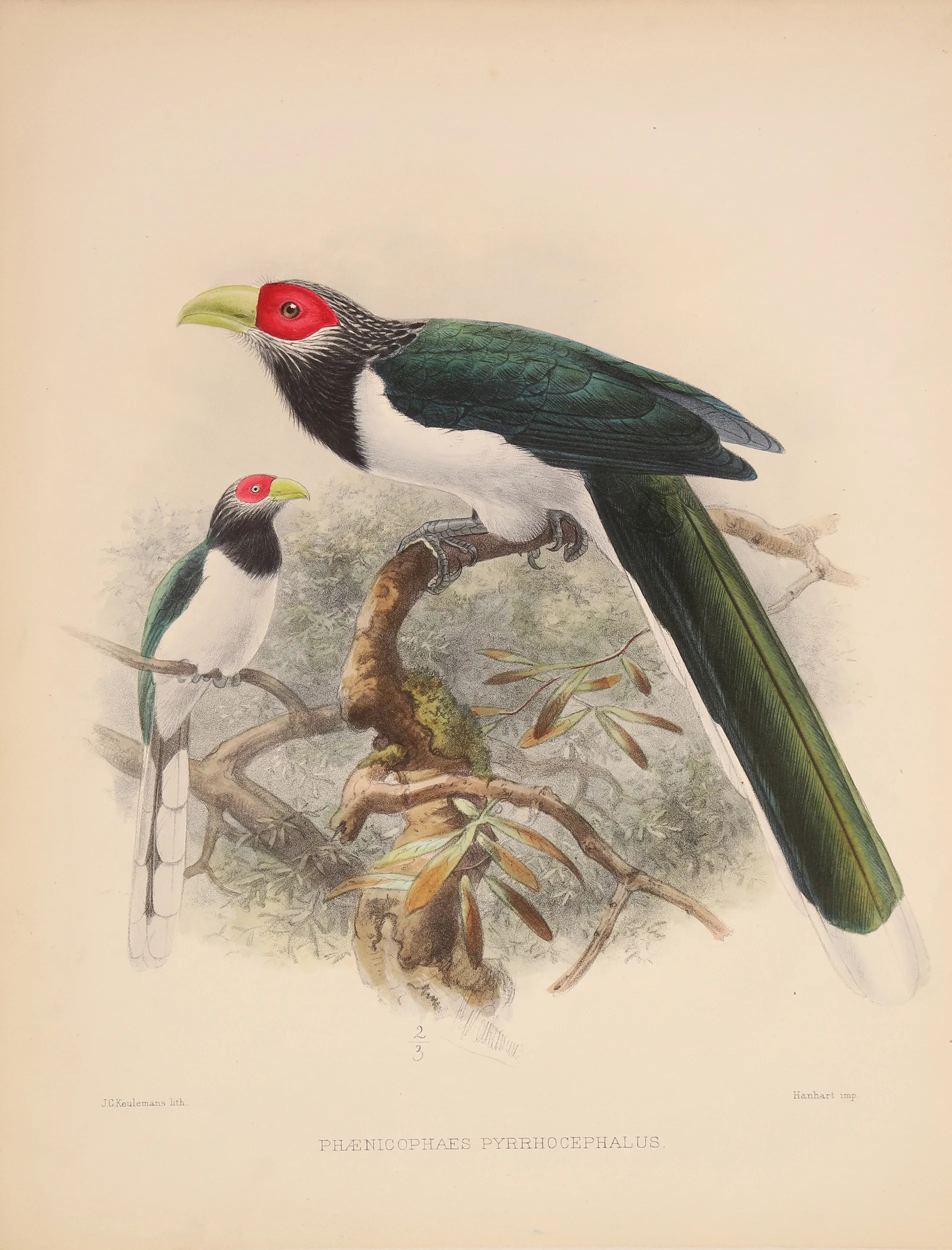
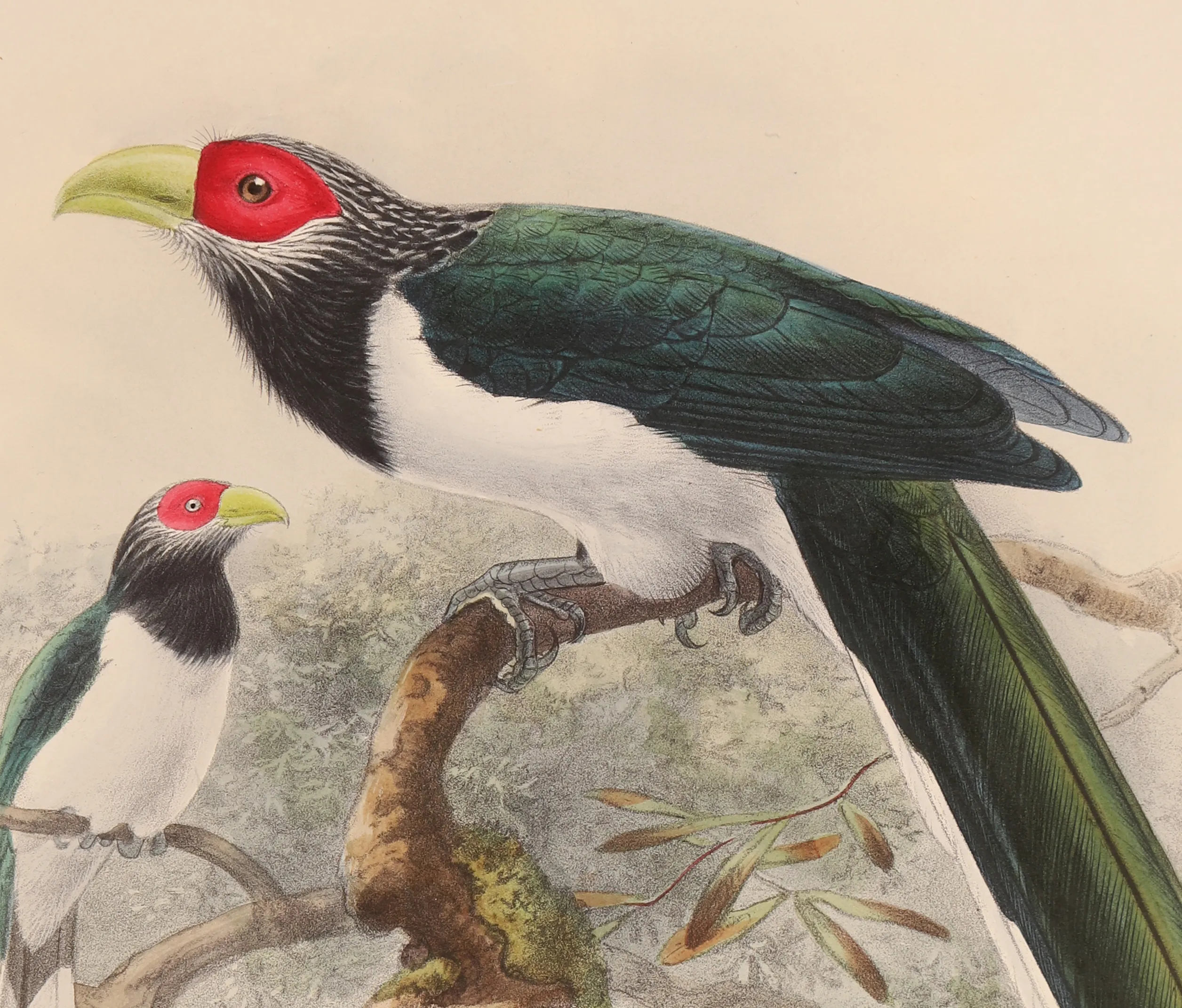
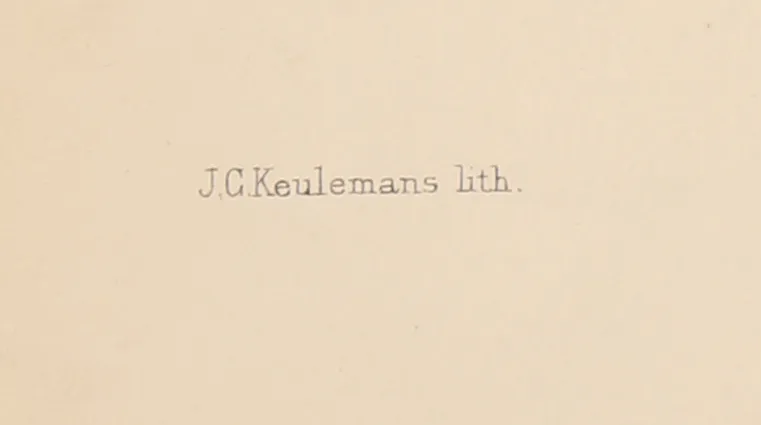

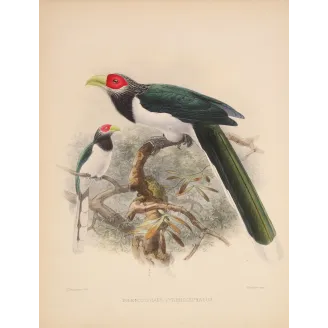
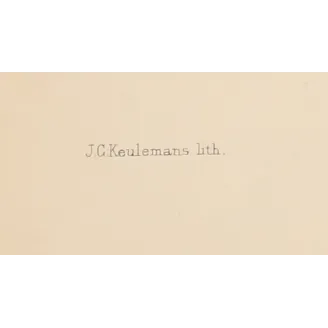
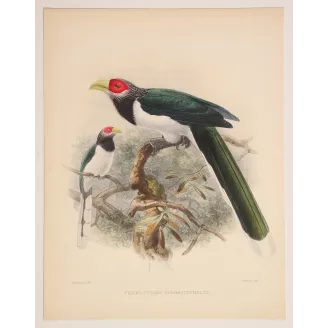
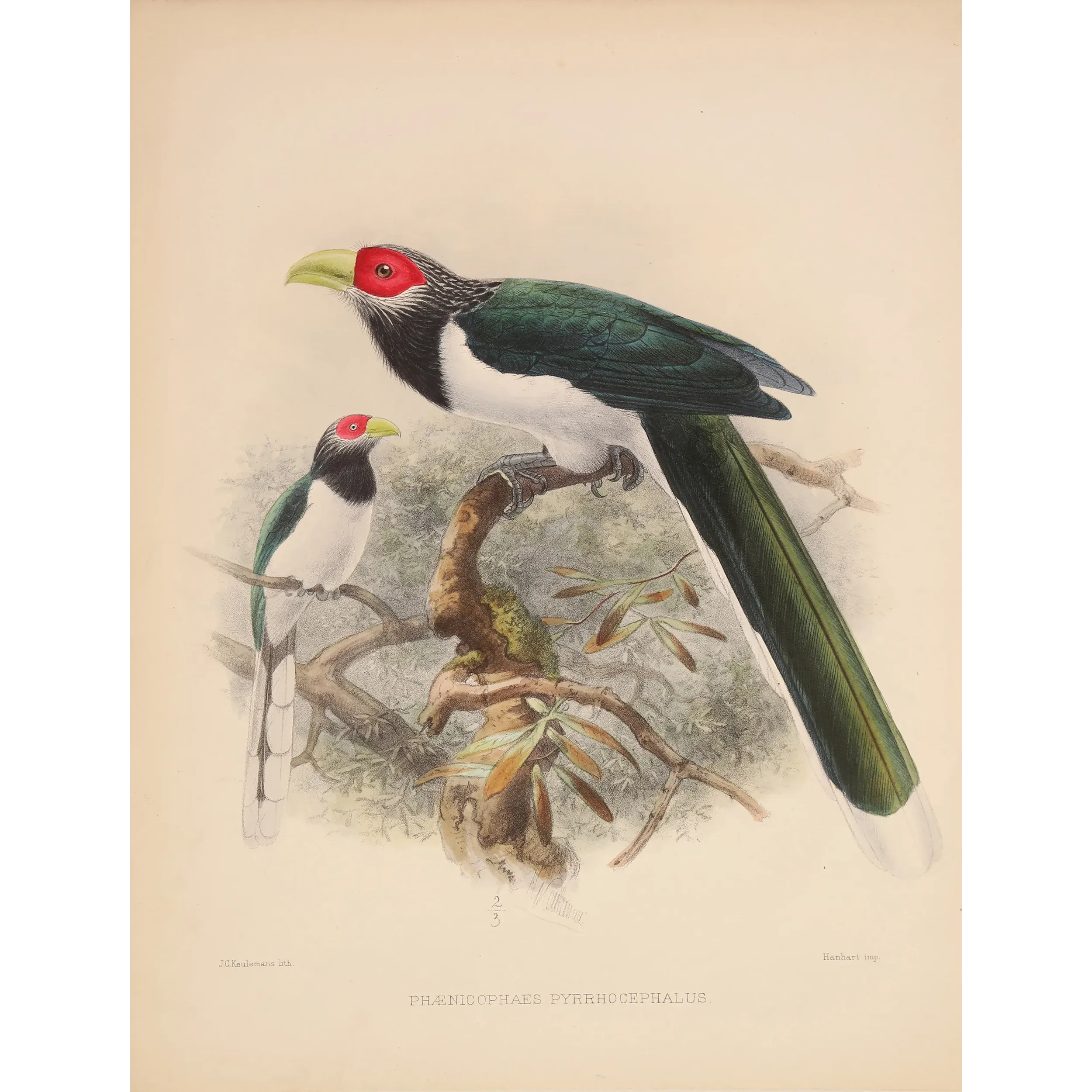
Original nineteenth-century bird print depicting the remarkable Red-faced Malkoha (Phaenicophaeus pyrrhocephalus), illustrated by Johannes Gerardus Keulemans for William Vincent Legge’s celebrated Birds of Ceylon. With its vivid scarlet face, elegant elongated tail and refined tropical palette, this striking ornithological lithograph combines scientific precision with exceptional decorative presence.
 Delivery policy
Your print will be carefully prepared and shipped worldwide via trusted couriers (UPS or similar).
 Authentic antique prints
Original engravings from the 17th–19th century.
Dominating the composition with an extraordinary combination of deep green plumage, brilliant scarlet facial skin and luminous white underparts, the Red-faced Malkoha (Phaenicophaeus pyrrhocephalus) becomes one of Johannes Gerardus Keulemans’ most physically commanding subjects from William Vincent Legge’s A History of the Birds of Ceylon.
The principal bird projects confidently into the foreground, while the smaller companion introduces scale and spatial depth. Through refined hand colouring, soft lithographic modelling and selective applications of gum arabic, Keulemans creates an image that is scientifically legible, materially sophisticated and exceptionally luminous.
— • —
The composition is organised around the imposing physical presence of the principal bird. Its elongated body and tail extend diagonally across the sheet, while the strongly defined head and pale curved bill establish an immediate focal point. The smaller companion occupies the lower left of the scene, introducing a second scale and reinforcing the monumental character of the dominant figure.
Keulemans balances this visual authority through elegant restraint. The principal bird appears poised rather than theatrical, its body held with quiet confidence above the branching structure. The smaller bird echoes its colours and anatomy without competing for attention, creating a rhythm of repetition that draws the eye through the composition.
The chromatic structure is particularly refined. Brilliant scarlet surrounds the eyes and contrasts with the pale green bills, while deep emerald, blue-green and black passages define the upper plumage. Against these saturated colours, the broad white breast introduces light, softness and visual relief.
Direct examination of the original impression reveals selective applications of gum arabic across the darker green feathers of the body, wings and elongated tail. The transparent finish is concentrated within the deepest tonal passages, where reflected light separates overlapping feathers, reinforces their structure and enriches the natural brilliance of the green plumage.
A minute application of gum arabic is also visible within the pupil of the principal bird. This tiny reflective point animates the eye and intensifies the surrounding scarlet facial colour, giving the expression an exceptional immediacy. The detail is extremely restrained, yet it contributes significantly to the impression of a living, alert subject.
Although much of the principal bird is built from dark greens and blacks, the composition remains remarkably luminous. The controlled interplay between matte pigment and selective gloss allows ambient light to move across the plumage, preventing the darker passages from appearing heavy or visually closed.
Particularly remarkable is the treatment of the white plumage. Keulemans does not rely upon a flat or uniformly opaque layer of white. Instead, finely controlled pigment is distributed in varying intensities over the soft grey modelling of the lithographic base. The underlying printed tone remains visible in carefully selected areas, shaping the breast, belly and lower body without compromising their essential whiteness.
This combination of high-quality white pigment, graduated hand colouring and delicate grey lithographic shading produces an extraordinarily soft, cloud-like volume. The white breast appears rounded and almost weightless, giving the bird a convincing three-dimensional presence while preserving the delicacy of its plumage.
The surrounding vegetation remains deliberately subdued and matte. Pale greens, warm browns and soft greys establish a tropical habitat without competing with the birds. Because the background recedes into this pastel atmosphere, the principal subject advances naturally into the foreground and imposes its physical elegance upon the entire sheet.
The result is a composition in which colour, surface and lithographic modelling work in complete harmony. Scientific observation defines the anatomy and plumage, while Keulemans’ artistic control transforms the plate into an image of exceptional luminosity, sculptural presence and refined tropical elegance.
The Red-faced Malkoha (Phaenicophaeus pyrrhocephalus) is an endemic bird of Sri Lanka, immediately recognisable by its vivid red facial skin, pale green bill, long graduated tail and contrasting white, black and green plumage. Its elongated proportions give the species one of the most distinctive silhouettes within the island’s avifauna.
Associated with forested habitats, the bird moves through branches and dense vegetation with a combination of agility and deliberate grace. Its unusual appearance and restricted geographic distribution made it an especially significant subject for nineteenth-century ornithologists studying the distinctive character of Ceylon’s birdlife.
Within Legge’s regional study, the Red-faced Malkoha exemplified the wider scientific importance of Sri Lanka: an island whose birds belonged to recognisable Asian families, yet frequently displayed stable forms and characteristics found nowhere else.
This original lithograph belongs to William Vincent Legge’s A History of the Birds of Ceylon, published between 1878 and 1880 after more than eight years of observation and collecting on the island. The work became the first comprehensive ornithological treatment of Ceylon, bringing together field experience, historical literature, museum comparison and the illustrations of Johannes Gerardus Keulemans.
The Red-faced Malkoha embodies the dual scientific and artistic ambitions of the publication. Its endemic identity contributed to the study of Ceylon’s distinctive avifauna, while its unusual proportions and contrasting plumage allowed Keulemans to create one of the work’s most elegant and materially sophisticated compositions.
Understand the Historical Context of this Print →
Discover more about the artist: Johannes Gerardus Keulemans — Precision and Passion in Ornithological Illustration.
Browse the complete collection: Keulemans – Birds of Ceylon Collection.
For readers wishing to better understand antique prints—from technique and paper to collecting criteria—explore our Antique Prints Guide.
Excellent antique condition. An exceptionally fresh, crisp and virtually immaculate impression, retaining its original contemporary hand colouring with outstanding clarity and luminosity. The sheet remains remarkably bright and clean, with only negligible evidence of age.
Selective applications of gum arabic remain beautifully preserved across the darker green plumage of the body, wings and tail. These original transparent finishes create subtle variations of sheen under changing light, enriching the feather structure and giving the predominantly dark upper plumage a remarkable brilliance.
A minute application of gum arabic within the pupil of the principal bird remains clearly effective, creating a delicate point of reflected light that enhances the vitality of the eye and intensifies the surrounding scarlet facial colouring.
The white plumage is exceptionally well preserved. Its carefully graduated pigment, combined with the soft grey modelling of the underlying lithograph, retains the original cloud-like volume and delicate three-dimensional effect intended by the artist and colourist.
The botanical background remains matte, soft and pastel in appearance, preserving the intended distinction between the atmospheric setting and the more luminous foreground subjects.
Printed on fine nineteenth-century paper with generous original margins. No watermark observed. Overall, an outstanding and exceptionally well-preserved example of Keulemans’ hand-coloured ornithological lithography.
Specific References
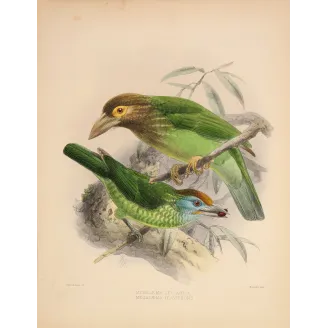
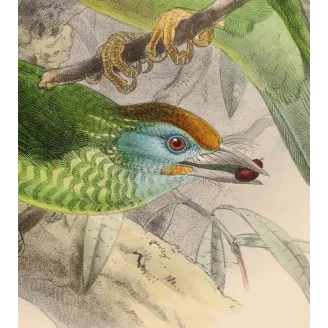
Original nineteenth-century bird print depicting two remarkable Sri Lankan barbets — Megalaema zeylanica and Megalaema flavifrons — illustrated by Johannes Gerardus Keulemans for William Vincent Legge’s celebrated Birds of Ceylon. Rich in tropical colour and compositional balance, this striking ornithological lithograph combines scientific observation with refined decorative appeal.
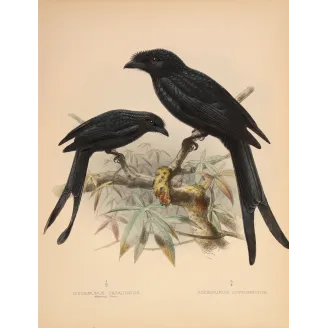
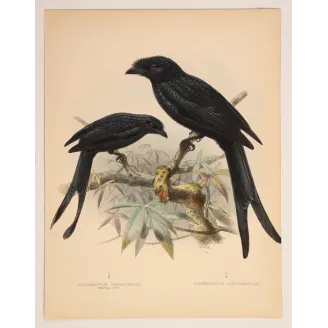
Original nineteenth-century bird print depicting two remarkable Sri Lankan drongos — Dissemurus paradiseus and Dissemurus lophorhinus — illustrated by Johannes Gerardus Keulemans for William Vincent Legge’s celebrated Birds of Ceylon. Distinguished by deep iridescent plumage and elegant elongated forms, this refined ornithological lithograph combines scientific precision with understated decorative sophistication.
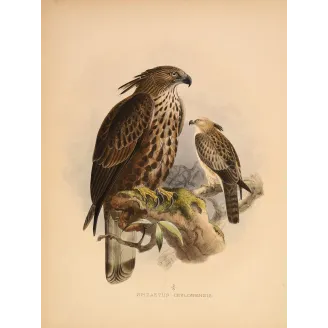
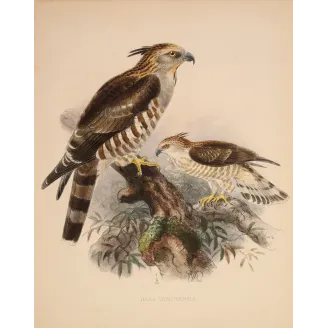
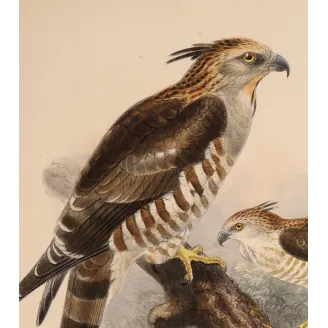
Original antique bird print depicting Spizaëtus ceylonensis (Ceylon Hawk-Eagle), illustrated by J.G. Keulemans for A History of the Birds of Ceylon. A refined Victorian ornithological lithograph featuring an elegant pair of raptors with remarkable decorative presence.
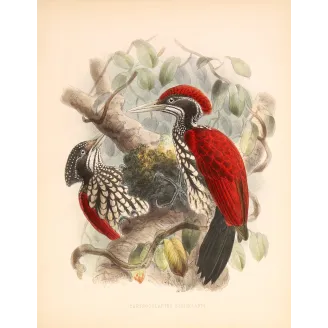
Original nineteenth-century bird print depicting the striking Crimson-backed Flameback (Chrysocolaptes stricklandi), illustrated by Johannes Gerardus Keulemans for William Vincent Legge’s celebrated Birds of Ceylon. This rare ornithological lithograph combines scientific precision with exceptional decorative appeal, featuring vivid crimson plumage and refined naturalistic composition.
Original antique bird print depicting Baza ceylonensis (Ceylon Hawk-Eagle), illustrated by J.G. Keulemans for A History of the Birds of Ceylon. A striking Victorian ornithological lithograph featuring a refined pair of raptors with strong decorative presence.
Original hand-colored bird engraving depicting the Green-Billed Coucal (Centropus chlororhynchus), illustrated by Johannes Gerardus Keulemans for The Birds of Ceylon. A striking tropical composition with rich chestnut and deep blue plumage.
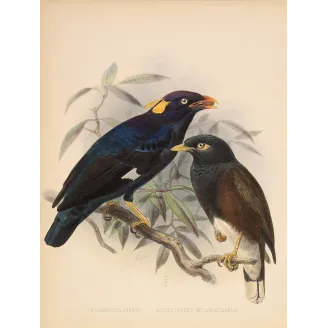
Original nineteenth-century bird print depicting two remarkable Sri Lankan mynas — Eulabes ptilogenys and Acridotheres melanosternus — illustrated by Johannes Gerardus Keulemans for William Vincent Legge’s celebrated Birds of Ceylon. Distinguished by rich iridescent plumage and refined compositional balance, this elegant ornithological lithograph combines scientific precision with exceptional decorative sophistication.
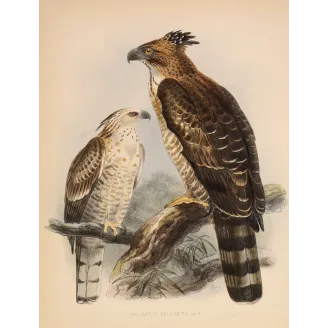
Original antique bird print depicting Spizaëtus kelaarti (Crested Hawk-Eagle), illustrated by J.G. Keulemans for A History of the Birds of Ceylon. A striking Victorian ornithological lithograph featuring an imposing pair of raptors with exceptional decorative presence.
Original nineteenth-century bird print depicting the elegant Ceylon Hornbill (Tockus gingalensis), illustrated by Johannes Gerardus Keulemans for William Vincent Legge’s celebrated Birds of Ceylon. This refined ornithological lithograph combines scientific precision with sculptural decorative appeal, featuring the species’ remarkable ivory-coloured bill and poised tropical composition.
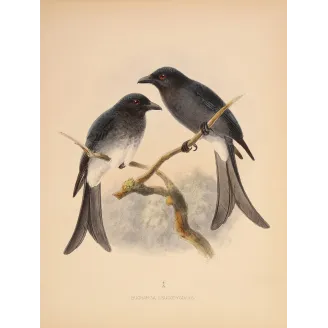
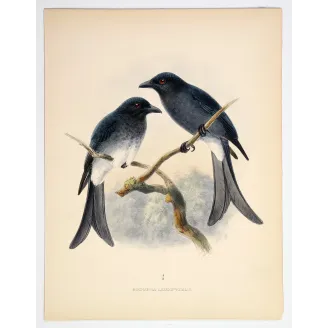
Original antique bird print by J.G. Keulemans depicting Buchanga leucopygialis (White-rumped Drongo), from A History of the Birds of Ceylon. A refined Victorian ornithological lithograph with elegant tonal balance and exceptional decorative presence.
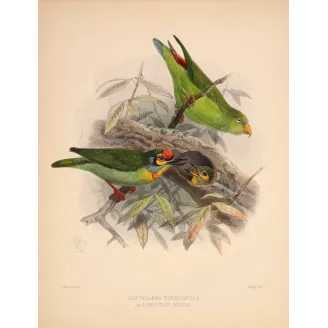
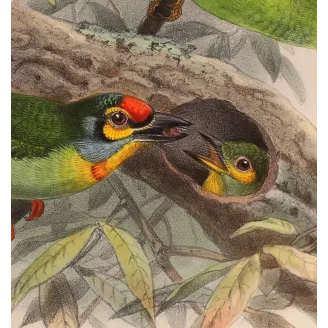
Original hand-colored bird engraving depicting the Crimson-fronted Barbet (Xantholaema rubricapilla) and the Ceylon Hanging Parrot (Loriculus indicus), illustrated by Johannes Gerardus Keulemans for Birds of Ceylon. A vivid tropical composition rich in colour and narrative charm.
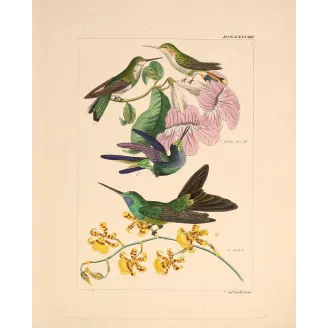
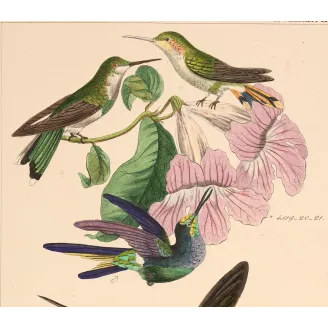
An original nineteenth-century hand-colored engraving from Ludwig Reichenbach's Trochilinarum Enumeratio, depicting Coeligena ourissia among the elegant blossoms of Bignonia picta. Four hummingbirds create one of the most harmonious and visually refined compositions in the celebrated Victorian series.
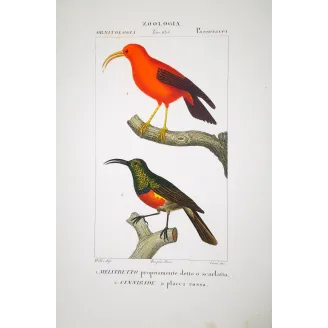
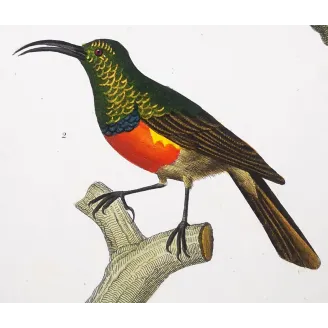
Brilliantly colored honeycreeper and sunbird illustration with tropical vibrancy, captured by Prêtre.
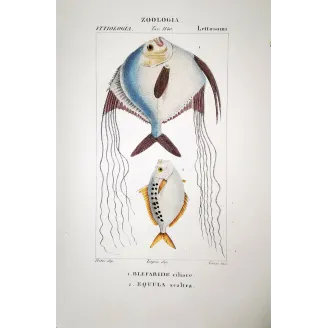
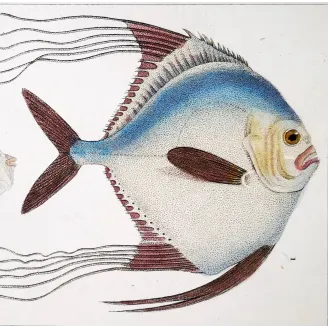
Delicate 19th-century hand-colored engraving of a ponyfish with companion species, ideal for marine-themed interiors and collectors.
Original 1835 hand-colored engraving of Nymphalis orion, drawn and engraved by Pauquet under the scientific direction of Hippolyte Lucas for Exotic Butterflies.
Original 1774 engraving by Jacob L'Admiral: Large Tortoiseshell on Sweet Cherry.
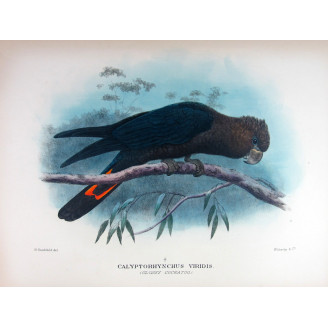
Glossy Cockatoo print by H. Goodchild, dark tones and rare presence on the plate
Original nineteenth-century bird print depicting the remarkable Red-faced Malkoha (Phaenicophaeus pyrrhocephalus), illustrated by Johannes Gerardus Keulemans for William Vincent Legge’s celebrated Birds of Ceylon. With its vivid scarlet face, elegant elongated tail and refined tropical palette, this striking ornithological lithograph combines scientific precision with exceptional decorative presence.