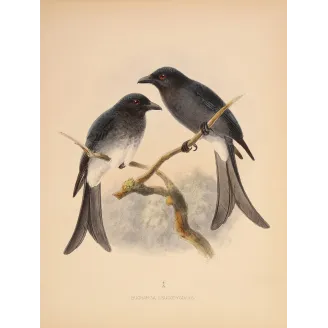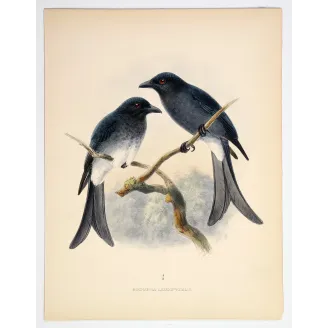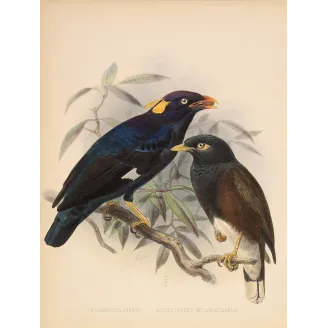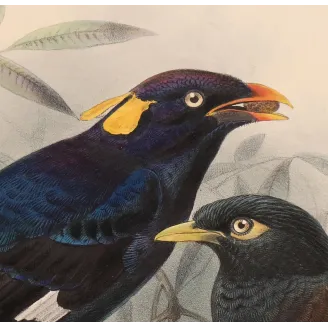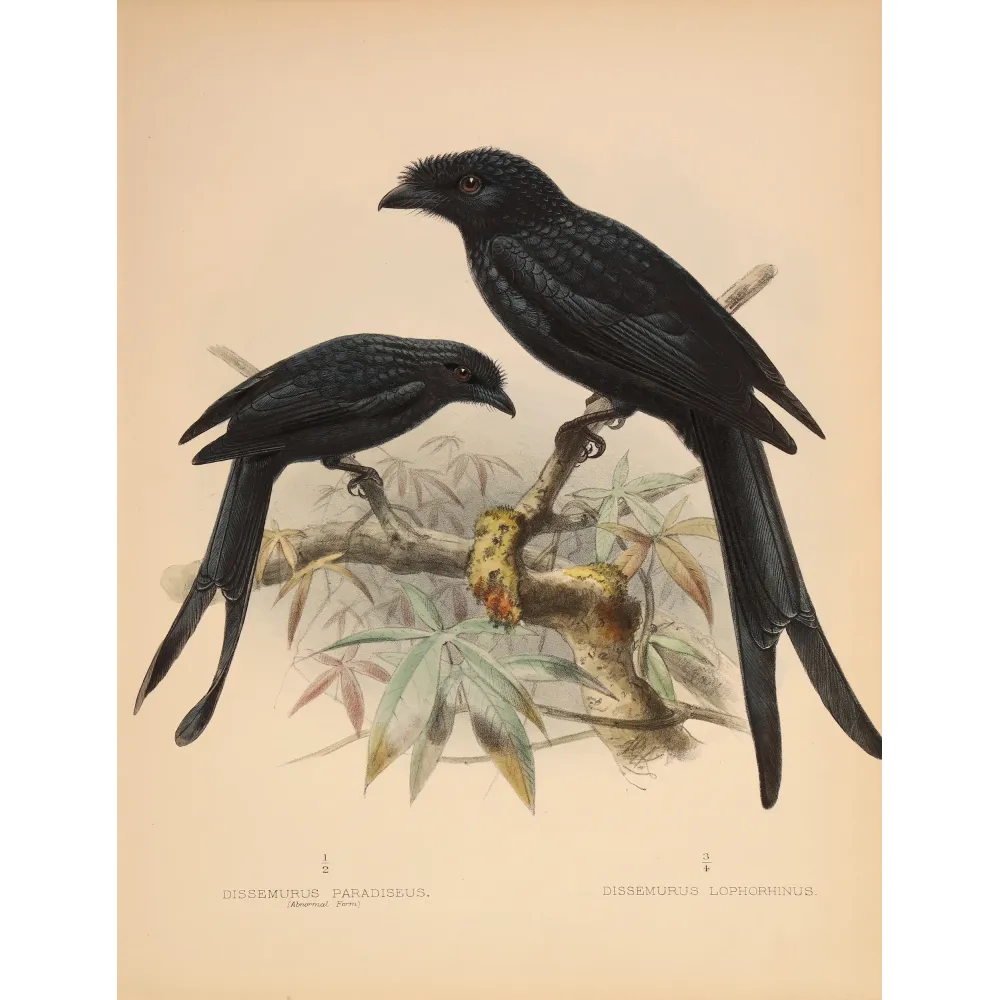
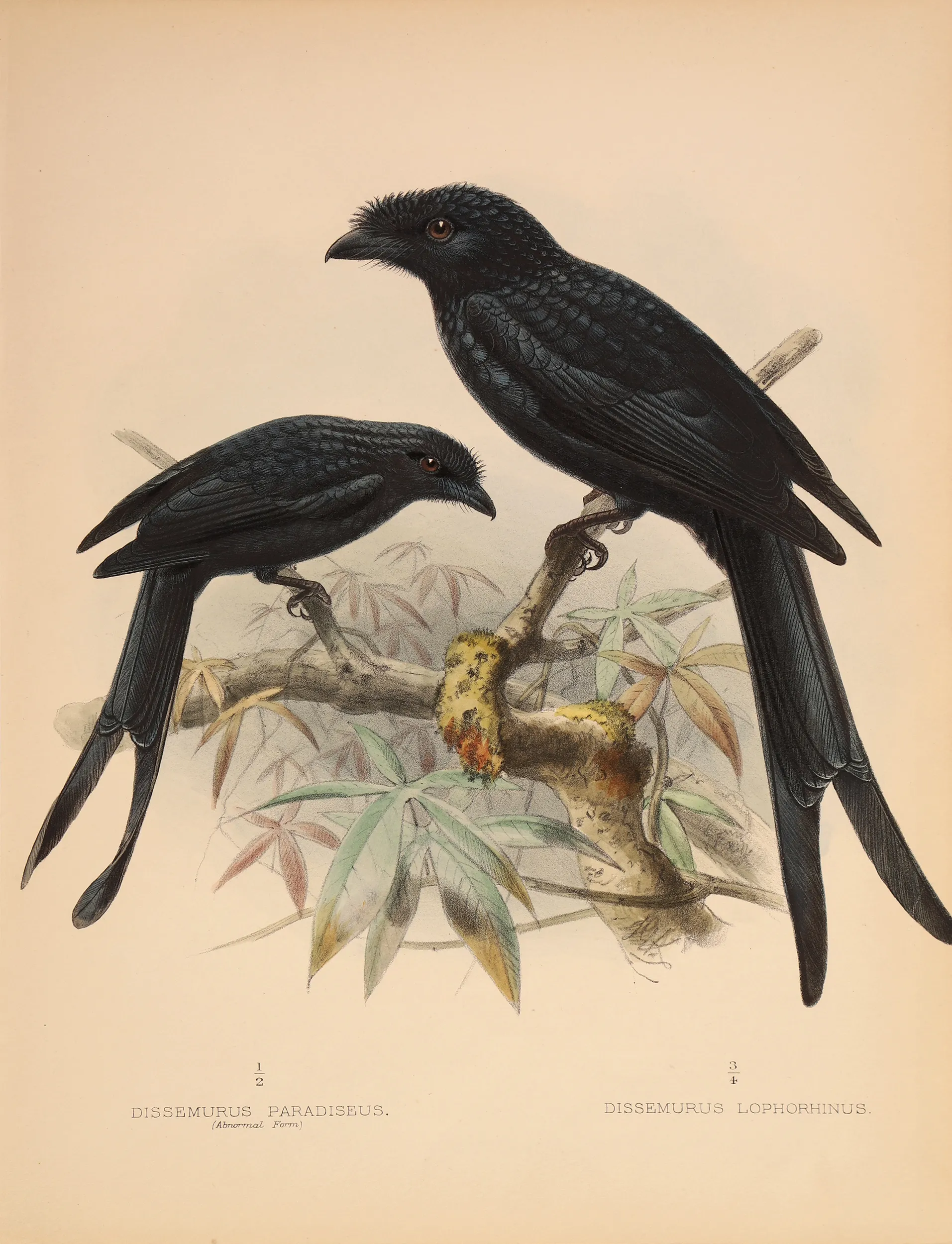
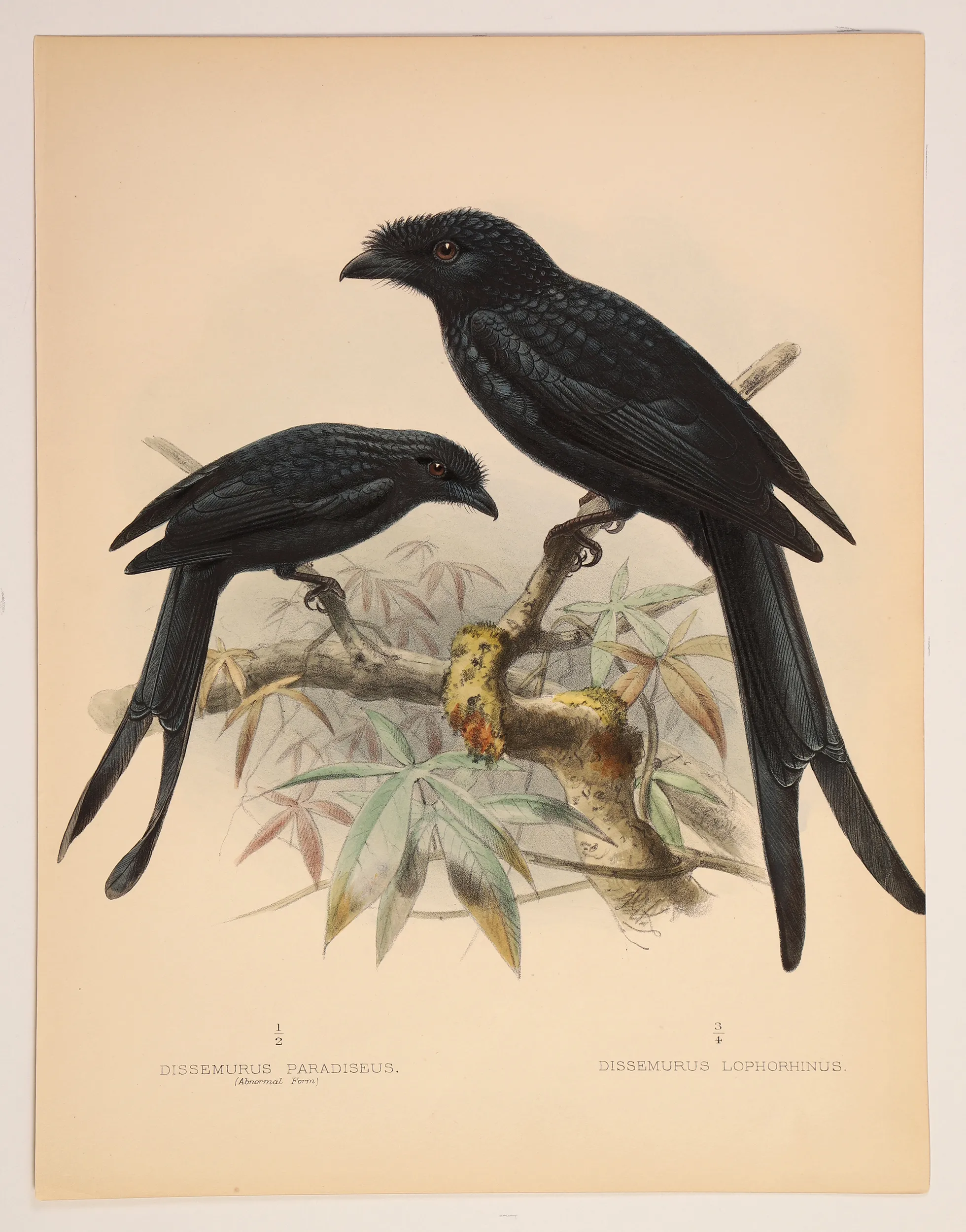
Original nineteenth-century bird print depicting two remarkable Sri Lankan drongos — Dissemurus paradiseus and Dissemurus lophorhinus — illustrated by Johannes Gerardus Keulemans for William Vincent Legge’s celebrated Birds of Ceylon. Distinguished by deep iridescent plumage and elegant elongated forms, this refined ornithological lithograph combines scientific precision with understated decorative sophistication.
 Delivery policy
Your print will be carefully prepared and shipped worldwide via trusted couriers (UPS or similar).
 Authentic antique prints
Original engravings from the 17th–19th century.
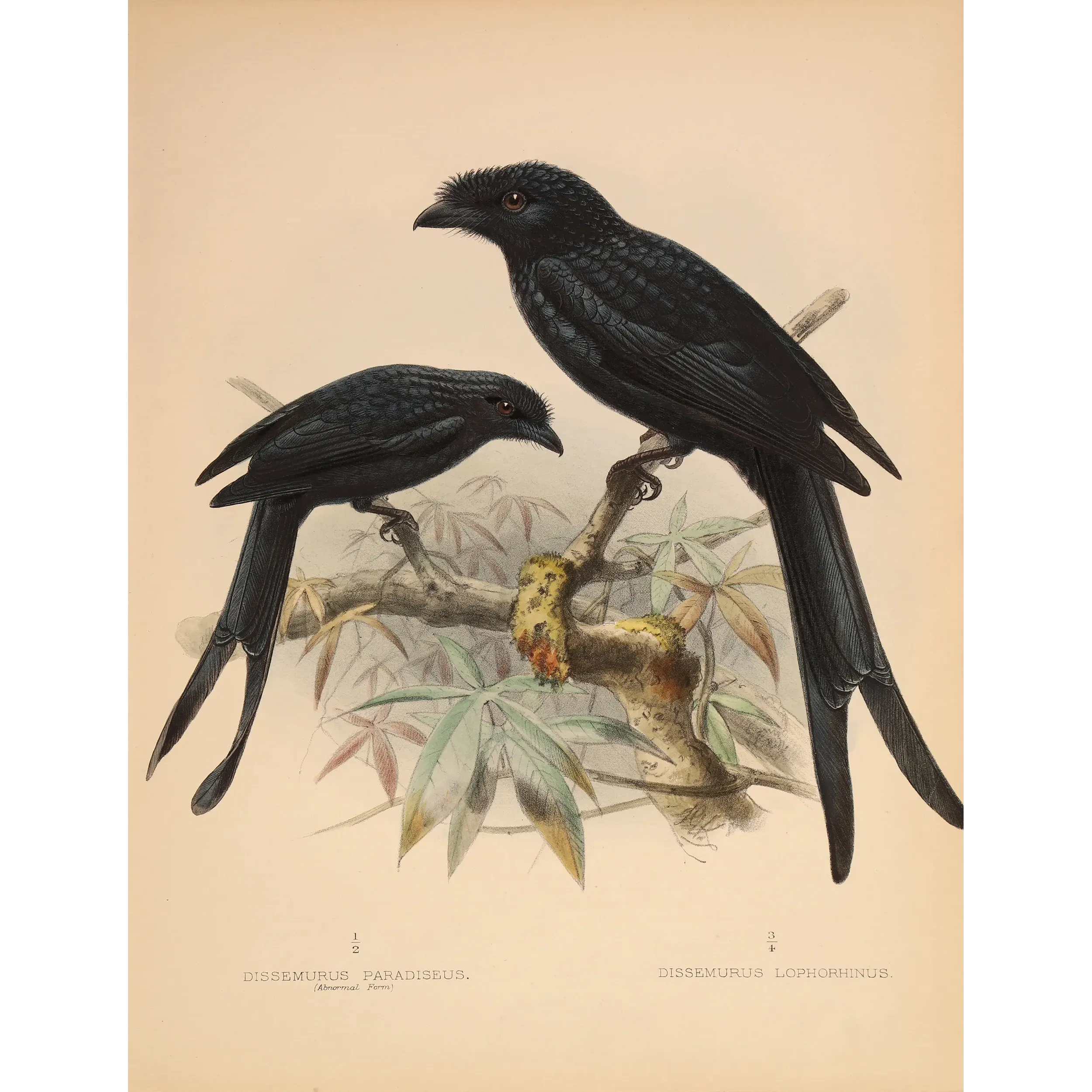
This original nineteenth-century bird print depicts two remarkable Sri Lankan drongos — Dissemurus paradiseus and Dissemurus lophorhinus — illustrated by Johannes Gerardus Keulemans for William Vincent Legge's celebrated A History of the Birds of Ceylon.
Unlike the brightly coloured tropical plates within the series, this composition demonstrates Keulemans' extraordinary ability to build visual richness almost entirely through tonal variation. Black, charcoal, blue-grey and subtle iridescent reflections combine to produce one of the most technically sophisticated engravings of the entire work.
— • —
At first glance the composition appears almost monochromatic, yet prolonged observation reveals an exceptionally rich orchestration of greys, blue-blacks and soft iridescent reflections. Rather than relying upon brilliant colours, Keulemans constructs beauty through the subtle modelling of light across the plumage.
The principal bird dominates the composition through its upright posture and elongated tail, while the smaller companion establishes balance across the lower left. Their opposing positions generate an elegant visual rhythm without disturbing the remarkable serenity of the scene.
The lithographic drawing plays the leading role. Minute variations in grey modelling define individual feathers, volume and anatomical structure long before the hand colouring intervenes. Colour therefore enriches an already complete image rather than creating it.
Direct examination of the original impression reveals an extensive yet remarkably restrained application of gum arabic. On the principal bird it enhances the breast plumage, selected wing feathers, the thoracic area, the pupil and the delicate ring surrounding the eye. These transparent glossy passages produce subtle reflections that separate overlapping feather groups while increasing the sensation of living plumage.
The secondary bird receives a comparable treatment. Gum arabic appears across portions of the wings, around the eye and within selected dark feather groups, introducing gentle highlights that animate the otherwise matte surface without becoming visually intrusive.
The restrained botanical background remains deliberately pastel and understated. Soft foliage and muted branches establish spatial depth while preserving complete visual priority for the birds themselves. This balance between quiet surroundings and highly articulated subjects contributes greatly to the engraving's elegance.
Despite being constructed almost entirely from dark tonalities, the composition remains surprisingly luminous. The interplay between lithographic modelling, contemporary hand colouring and selective gum arabic creates continuous micro-reflections that prevent the dark plumage from ever appearing flat or opaque.
The result is one of the most intellectually refined plates in Birds of Ceylon—an engraving that demonstrates how nineteenth-century ornithological illustration could transform a restricted palette into an image of extraordinary depth, atmosphere and decorative sophistication.
The two birds illustrated here belong to the drongo family, celebrated for their graceful silhouettes, agile flight and remarkable intelligence. Their glossy plumage appears almost black at first sight, yet under natural light reveals subtle metallic blue and charcoal reflections.
Within Legge's work these closely related species offered valuable comparative material for nineteenth-century ornithologists, allowing differences in morphology, tail structure and plumage texture to be examined through Keulemans' exceptionally precise illustrations.
This original lithograph belongs to William Vincent Legge's A History of the Birds of Ceylon, published after more than eight years of field observation on the island. Keulemans translated those scientific observations into plates that combined rigorous ornithology with exceptional artistic refinement.
Among the darkest compositions of the entire publication, this engraving perfectly illustrates Keulemans' mastery of tonal modelling. Rather than relying upon brilliant colour, he achieves volume, luminosity and elegance through subtle gradations of grey, carefully controlled hand colouring and selective surface finishing.
Understand the Historical Context of this Print →
Discover more about the artist: Johannes Gerardus Keulemans — Precision and Passion in Ornithological Illustration.
Browse the complete collection: Keulemans – Birds of Ceylon Collection.
For readers wishing to better understand antique prints—from technique and paper to collecting criteria—explore our Antique Prints Guide.
Excellent antique condition. Exceptionally fresh impression with beautifully preserved contemporary hand colouring and original gum arabic finishing. The printed and coloured surfaces remain clean and stable, retaining excellent tonal richness and surface integrity throughout the darkest passages of the composition. Paper fresh and sound with generous original margins. Minor age-related signs may be present, entirely consistent with the period. No watermark observed.
Specific References
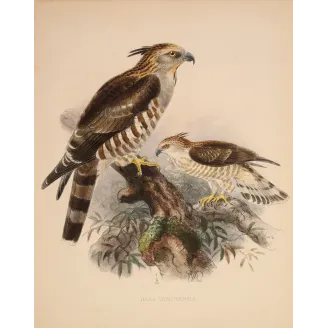
Original antique bird print depicting Baza ceylonensis (Ceylon Hawk-Eagle), illustrated by J.G. Keulemans for A History of the Birds of Ceylon. A striking Victorian ornithological lithograph featuring a refined pair of raptors with strong decorative presence.
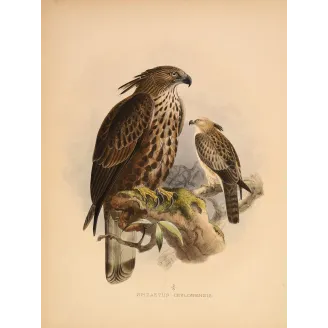
Original antique bird print depicting Spizaëtus ceylonensis (Ceylon Hawk-Eagle), illustrated by J.G. Keulemans for A History of the Birds of Ceylon. A refined Victorian ornithological lithograph featuring an elegant pair of raptors with remarkable decorative presence.
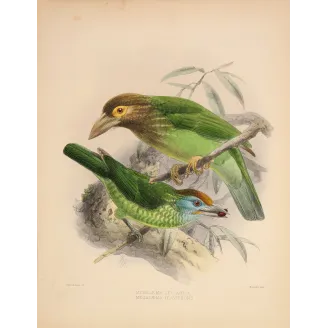
Original nineteenth-century bird print depicting two remarkable Sri Lankan barbets — Megalaema zeylanica and Megalaema flavifrons — illustrated by Johannes Gerardus Keulemans for William Vincent Legge’s celebrated Birds of Ceylon. Rich in tropical colour and compositional balance, this striking ornithological lithograph combines scientific observation with refined decorative appeal.
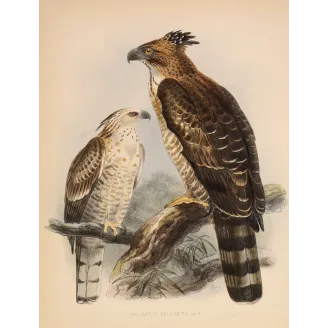
Original antique bird print depicting Spizaëtus kelaarti (Crested Hawk-Eagle), illustrated by J.G. Keulemans for A History of the Birds of Ceylon. A striking Victorian ornithological lithograph featuring an imposing pair of raptors with exceptional decorative presence.
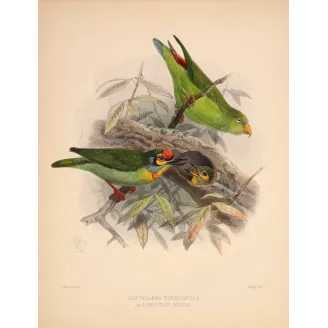
Original hand-colored bird engraving depicting the Crimson-fronted Barbet (Xantholaema rubricapilla) and the Ceylon Hanging Parrot (Loriculus indicus), illustrated by Johannes Gerardus Keulemans for Birds of Ceylon. A vivid tropical composition rich in colour and narrative charm.
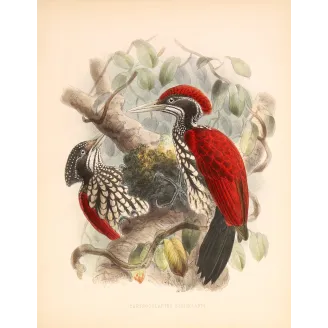
Original nineteenth-century bird print depicting the striking Crimson-backed Flameback (Chrysocolaptes stricklandi), illustrated by Johannes Gerardus Keulemans for William Vincent Legge’s celebrated Birds of Ceylon. This rare ornithological lithograph combines scientific precision with exceptional decorative appeal, featuring vivid crimson plumage and refined naturalistic composition.
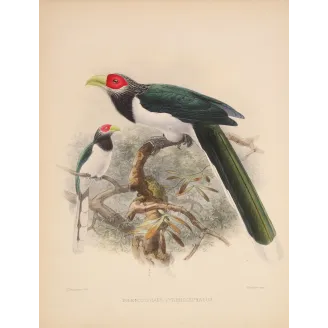
Original nineteenth-century bird print depicting the remarkable Red-faced Malkoha (Phaenicophaeus pyrrhocephalus), illustrated by Johannes Gerardus Keulemans for William Vincent Legge’s celebrated Birds of Ceylon. With its vivid scarlet face, elegant elongated tail and refined tropical palette, this striking ornithological lithograph combines scientific precision with exceptional decorative presence.
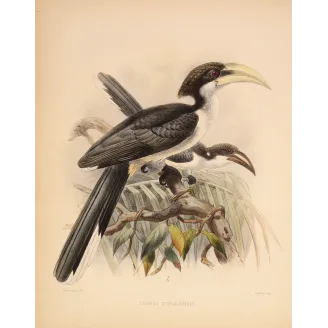
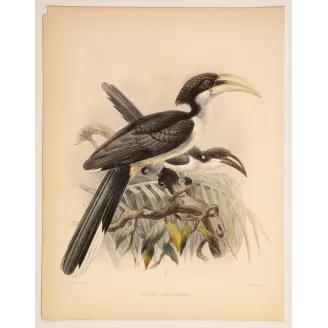
Original nineteenth-century bird print depicting the elegant Ceylon Hornbill (Tockus gingalensis), illustrated by Johannes Gerardus Keulemans for William Vincent Legge’s celebrated Birds of Ceylon. This refined ornithological lithograph combines scientific precision with sculptural decorative appeal, featuring the species’ remarkable ivory-coloured bill and poised tropical composition.
Original antique bird print by J.G. Keulemans depicting Buchanga leucopygialis (White-rumped Drongo), from A History of the Birds of Ceylon. A refined Victorian ornithological lithograph with elegant tonal balance and exceptional decorative presence.
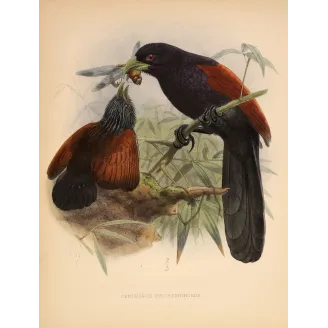
Original hand-colored bird engraving depicting the Green-Billed Coucal (Centropus chlororhynchus), illustrated by Johannes Gerardus Keulemans for The Birds of Ceylon. A striking tropical composition with rich chestnut and deep blue plumage.
Original nineteenth-century bird print depicting two remarkable Sri Lankan mynas — Eulabes ptilogenys and Acridotheres melanosternus — illustrated by Johannes Gerardus Keulemans for William Vincent Legge’s celebrated Birds of Ceylon. Distinguished by rich iridescent plumage and refined compositional balance, this elegant ornithological lithograph combines scientific precision with exceptional decorative sophistication.
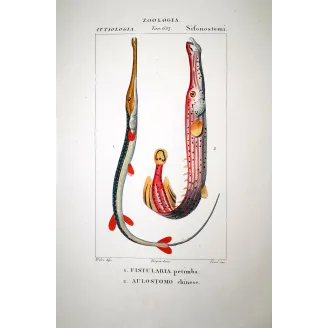
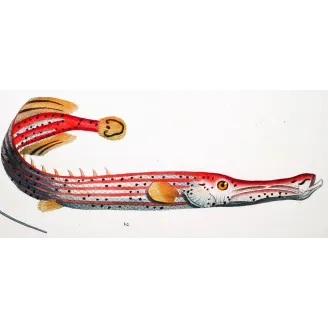
Striking plate with long, elegant cornetfish and trumpetfish, hand-colored with vivid reds and tealsbold marine decor statement.
Original 1774 engraving by Jacob LâAdmiral: Swallowtail Butterfly on Thistle.
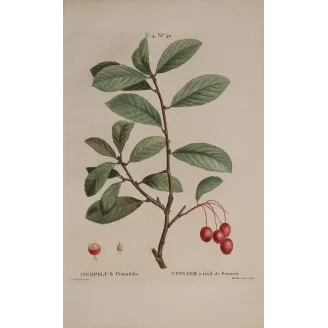
Original botanical engraving of Mespilus prunifolia by Redouté. Elegant branch and fruit, perfect for refined interiors.
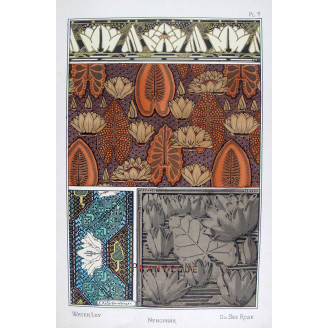
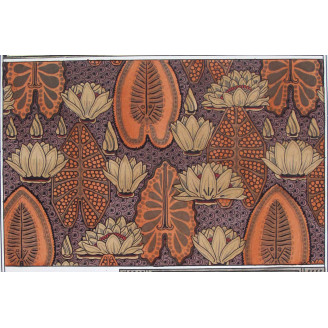
his extraordinary plate by Eugène Grasset features the water-lily (Nénuphar), rendered with both botanical accuracy and ornamental imagination.
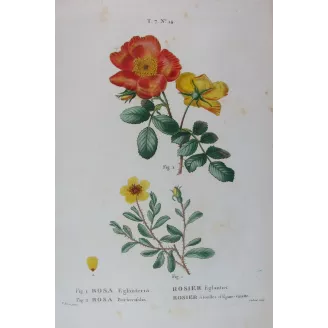
Eglantine & Berberis-leaved Rose Rosier à feuilles d'Épine-vinette Original hand-colored botanical engraving by Pancrace Bessa.
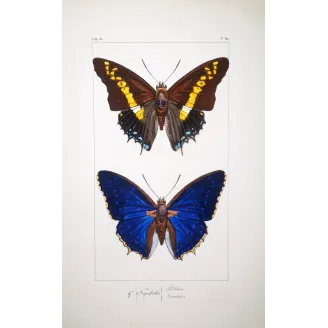
Original 1835 hand-colored copper engraving depicting the butterflies Pollux and Eurilochus. A visually striking double-specimen plate from Hippolyte Lucas’ celebrated Exotic Butterflies, engraved by Pauquet, with strong appeal as natural history art and antique butterfly wall art.
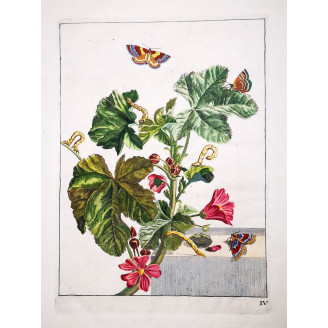
Original 1774 engraving by Jacob L'Admiral: Red Twin-spot Carpet on Mallow.
Original nineteenth-century bird print depicting two remarkable Sri Lankan drongos — Dissemurus paradiseus and Dissemurus lophorhinus — illustrated by Johannes Gerardus Keulemans for William Vincent Legge’s celebrated Birds of Ceylon. Distinguished by deep iridescent plumage and elegant elongated forms, this refined ornithological lithograph combines scientific precision with understated decorative sophistication.