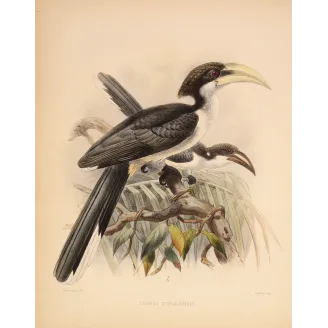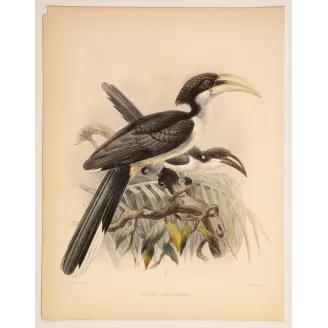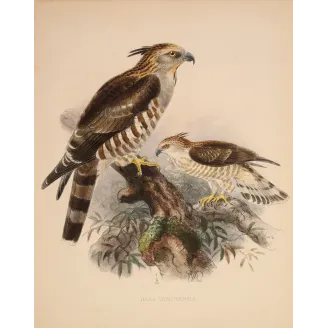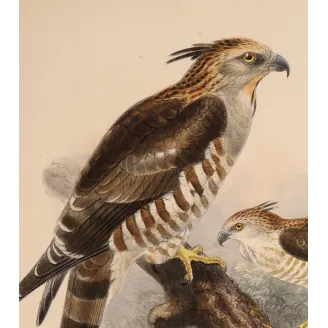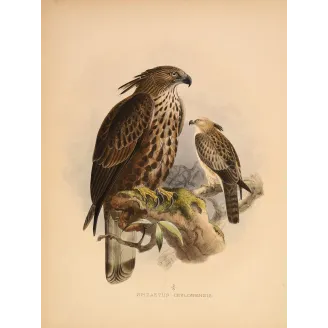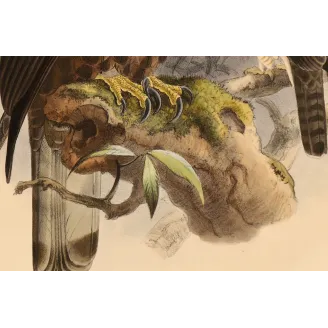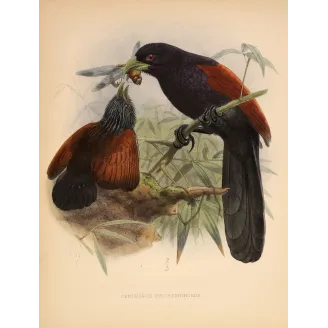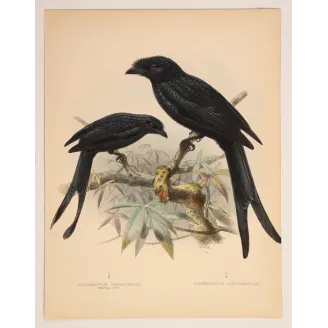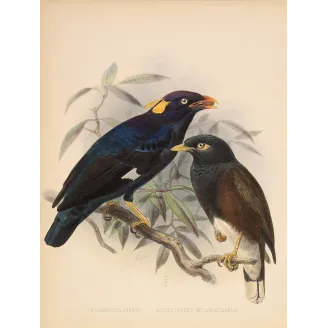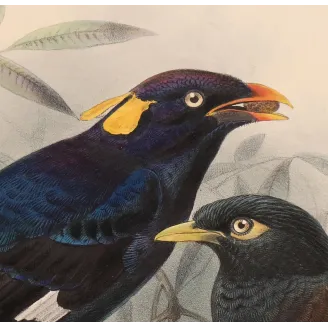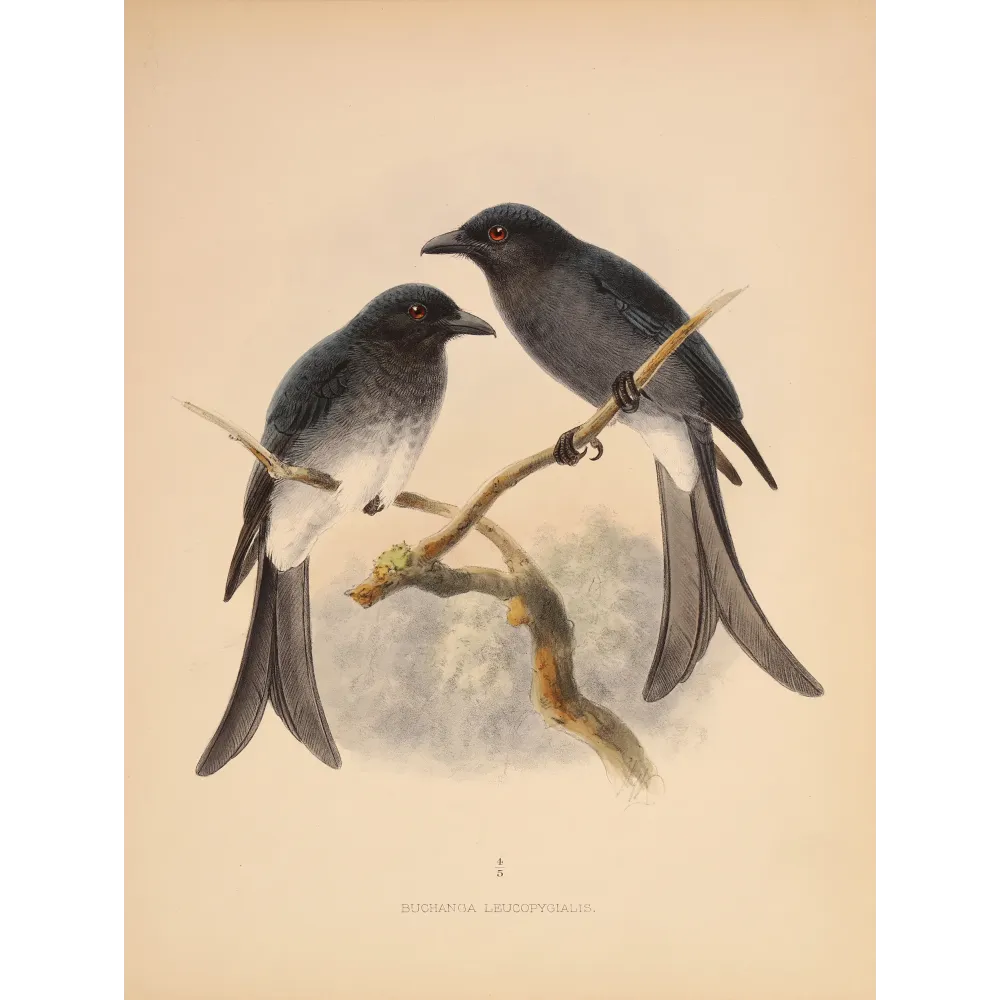
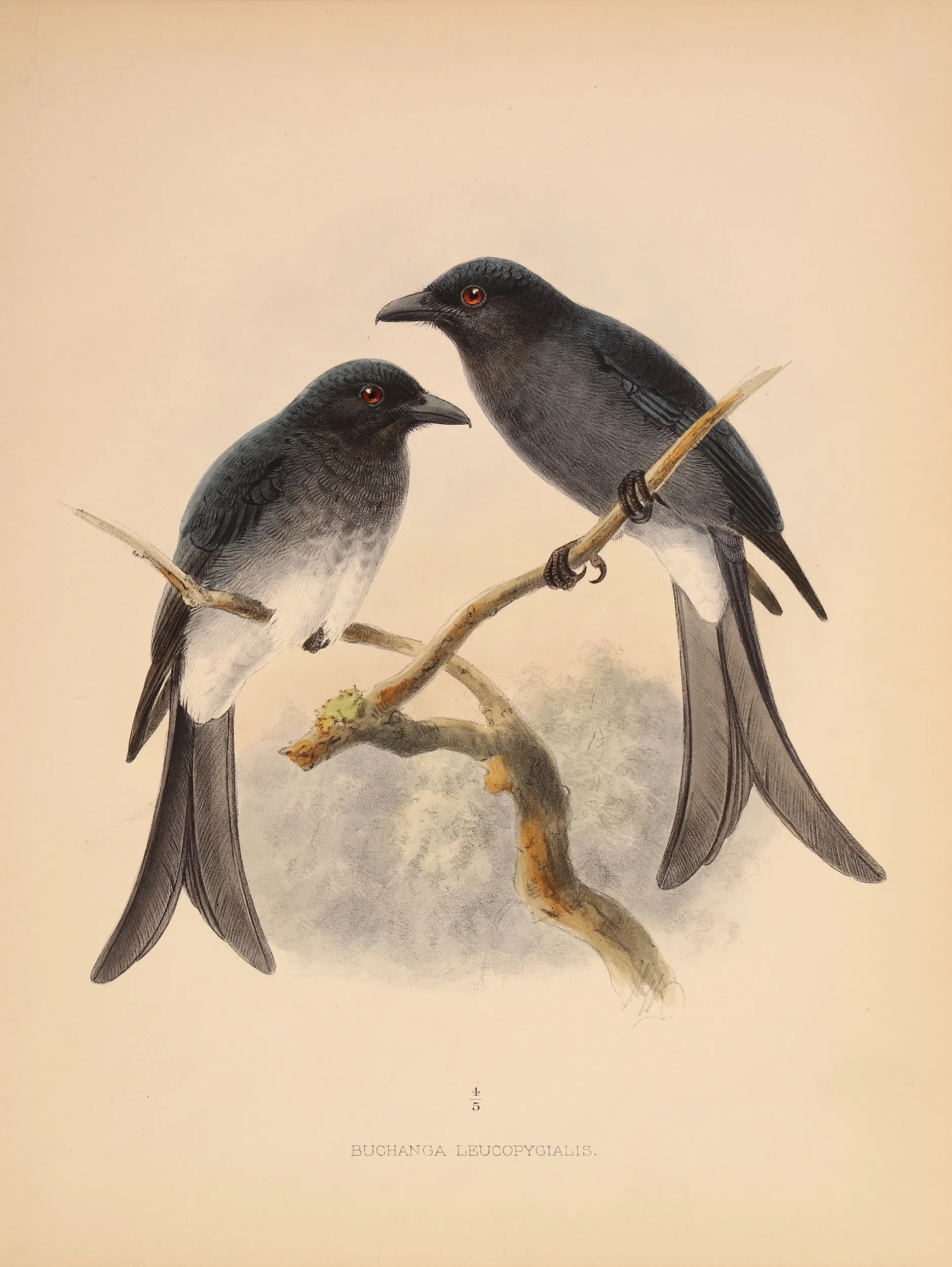
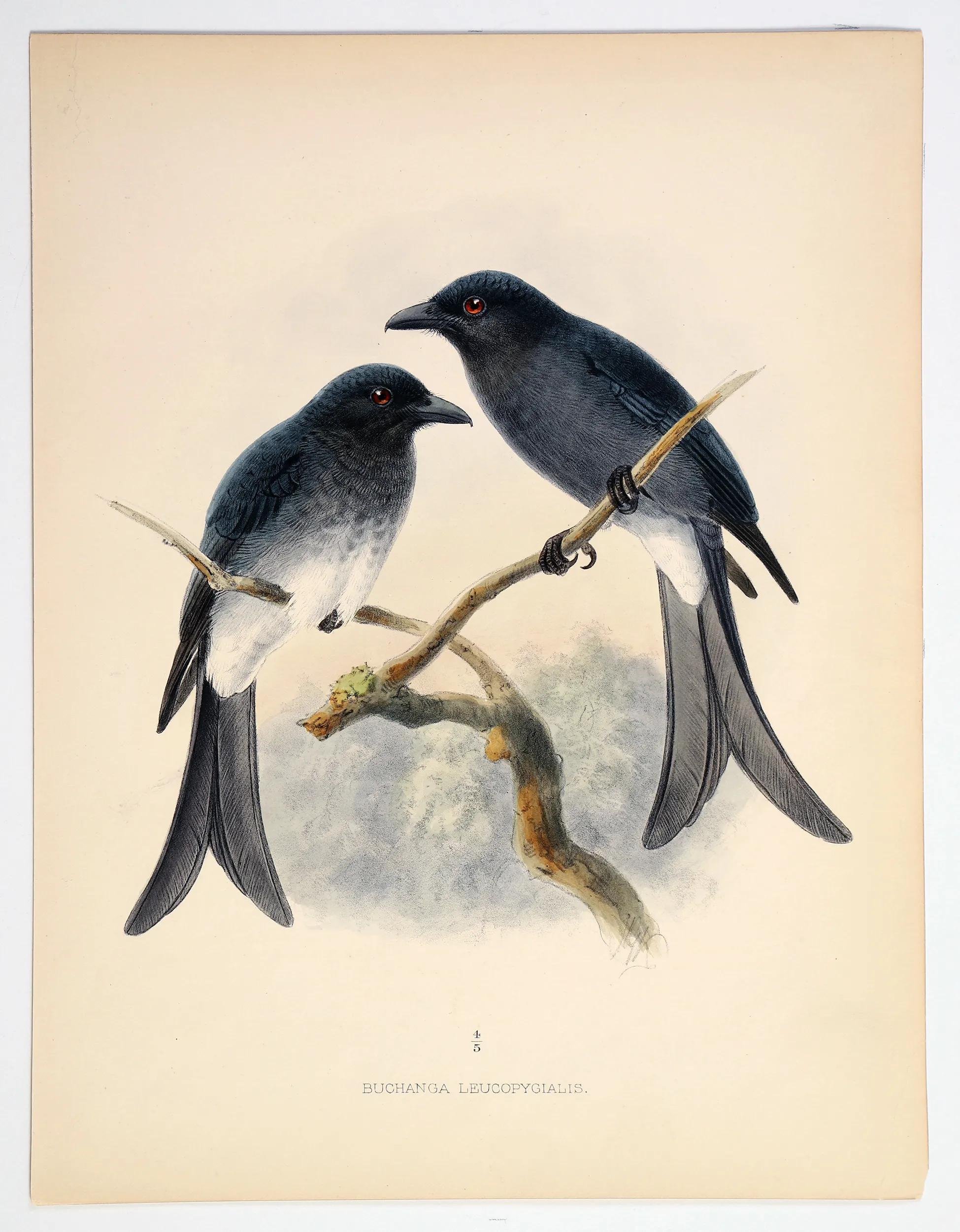
Original antique bird print by J.G. Keulemans depicting Buchanga leucopygialis (White-rumped Drongo), from A History of the Birds of Ceylon. A refined Victorian ornithological lithograph with elegant tonal balance and exceptional decorative presence.
 Delivery policy
Your print will be carefully prepared and shipped worldwide via trusted couriers (UPS or similar).
 Authentic antique prints
Original engravings from the 17th–19th century.
Built almost entirely from charcoal, slate-grey, silver and softly modulated white, this original nineteenth-century plate of the White-rumped Drongo (Buchanga leucopygialis) is among the most restrained and technically refined compositions illustrated by Johannes Gerardus Keulemans for William Vincent Legge’s A History of the Birds of Ceylon.
Rather than relying upon brilliant tropical colour, Keulemans creates visual presence through lithographic precision, subtle tonal transitions and an exceptionally controlled use of white pigment. The two birds emerge with delicacy and quiet authority from a distant pastel setting, demonstrating how a restricted palette can produce an image of remarkable luminosity and emotional balance.
— • —
The composition presents two birds facing one another in a poised and contemplative dialogue. Their bodies occupy opposite sides of the branching structure, while their inclined heads create a quiet visual connection across the centre of the sheet. The resulting balance is calm and almost symmetrical without appearing rigid.
Keulemans differentiates the two subjects through posture and scale. The bird on the right rises more prominently and carries its elongated tail in a broad descending curve, while the smaller companion appears lower and slightly withdrawn. This subtle variation introduces spatial depth while preserving the essential serenity of the pairing.
The artistic strength of the plate lies in its exceptionally broad range of grey tonalities. Charcoal, graphite, slate-blue and silver-grey passages move gradually across the heads, breasts, wings and tails. None of these areas is rendered as a uniform dark mass; each is articulated through minute tonal changes that describe feather direction, volume and anatomy.
The lithographic drawing is fundamental to this effect. Fine lines and delicate stippled passages establish the structure of individual feathers, while soft printed shadows model the rounded forms of the breast and body. The contemporary hand colouring reinforces this foundation without concealing the extraordinary delicacy of the lithographic mark.
Direct examination of the original impression reveals a particularly restrained use of gum arabic. The transparent finish is concentrated principally within the pupils and surrounding eye contours of both birds, introducing minute points of reflected light that animate their expressions and intensify the warm reddish tones of the eyes.
Only minimal applications of gum arabic appear across selected areas of the wing plumage. These discreet highlights are sufficient to separate a few overlapping feather groups without disturbing the soft, predominantly matte character of the composition. Gloss is therefore used as a precise optical accent rather than as a general surface treatment.
Particularly remarkable is the treatment of the white underparts. Keulemans and the contemporary colourist do not create these areas through a flat application of opaque white. Instead, the pigment is distributed in carefully graduated intensities over the refined grey modelling of the underlying lithograph.
The lithographic grey remains visible beneath and between the white passages, shaping the transition from the darker breast to the luminous belly. This interaction produces an exceptionally soft, cloud-like effect: the white plumage appears rounded and three-dimensional, yet retains an almost weightless delicacy.
The restrained botanical background is placed at a perceptible visual distance. Pale grey-green foliage and atmospheric shading remain limited to the central lower area, providing habitat and depth without enclosing the birds or competing with their silhouettes.
This extensive open space is essential to the plate’s elegance. It allows the long tails and refined contours to remain fully legible, while the limited pastel background creates a quiet atmospheric setting rather than a descriptive landscape.
The result is one of the most subtle compositions in Birds of Ceylon. Its beauty does not depend upon immediate chromatic spectacle, but emerges gradually through close observation of the lithographic line, the many shades of grey, the delicate reflected light within the eyes and the extraordinary cloud-like modelling of the white plumage.
The White-rumped Drongo is historically identified on the plate as Buchanga leucopygialis. Its most characteristic visual features include dark grey plumage, pale underparts, long divided tail feathers and the contrasting light area around the lower body and rump.
Drongos are recognised for their agility, intelligence and distinctive silhouettes. Although their plumage may initially appear monochromatic, close observation reveals subtle blue-grey and charcoal variations that change according to feather structure and the direction of light.
By representing two individuals together, Keulemans allows differences of posture, proportion and feather arrangement to be observed within a single composition. The plate therefore functions simultaneously as a species portrait and as a comparative visual study.
This original lithograph belongs to William Vincent Legge’s A History of the Birds of Ceylon, published between 1878 and 1880 after more than eight years of observation and collecting on the island. The work became the first comprehensive ornithological treatment of Ceylon, bringing together field experience, historical literature, museum comparison and the illustrations of Johannes Gerardus Keulemans.
The White-rumped Drongo plate demonstrates Keulemans’ ability to create scientific clarity and artistic refinement from an exceptionally restricted palette. Its many tones of grey, precisely modelled white plumage and restrained surface finishing reward attentive observation and reveal the sophisticated material language of Victorian ornithological illustration.
Understand the Historical Context of this Print →
Discover more about the artist: Johannes Gerardus Keulemans — Precision and Passion in Ornithological Illustration.
Browse the complete collection: Keulemans – Birds of Ceylon Collection.
For readers wishing to better understand antique prints—from technique and paper to collecting criteria—explore our Antique Prints Guide.
Excellent antique condition. Fresh and well-defined impression with the original contemporary hand colouring and hand-finished surface intact. Printed image clean and clearly legible throughout, with no significant abrasion, colour loss or disruption affecting the principal subjects. Paper sound and stable, retaining generous original margins. A faint age-related crease or surface line is visible near the upper left margin, outside the principal image area. Minor handling traces and tonal variation may be present, consistent with the age of the sheet. No watermark observed.
Specific References
Original nineteenth-century bird print depicting the elegant Ceylon Hornbill (Tockus gingalensis), illustrated by Johannes Gerardus Keulemans for William Vincent Legge’s celebrated Birds of Ceylon. This refined ornithological lithograph combines scientific precision with sculptural decorative appeal, featuring the species’ remarkable ivory-coloured bill and poised tropical composition.
Original nineteenth-century bird print depicting two remarkable Sri Lankan barbets — Megalaema zeylanica and Megalaema flavifrons — illustrated by Johannes Gerardus Keulemans for William Vincent Legge’s celebrated Birds of Ceylon. Rich in tropical colour and compositional balance, this striking ornithological lithograph combines scientific observation with refined decorative appeal.
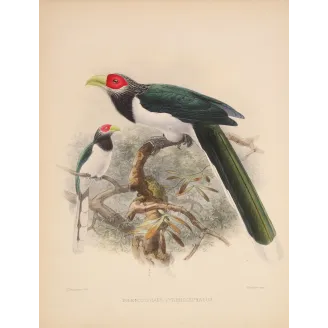
Original nineteenth-century bird print depicting the remarkable Red-faced Malkoha (Phaenicophaeus pyrrhocephalus), illustrated by Johannes Gerardus Keulemans for William Vincent Legge’s celebrated Birds of Ceylon. With its vivid scarlet face, elegant elongated tail and refined tropical palette, this striking ornithological lithograph combines scientific precision with exceptional decorative presence.
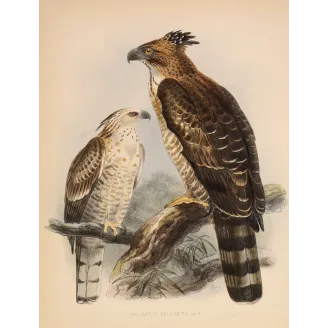
Original antique bird print depicting Spizaëtus kelaarti (Crested Hawk-Eagle), illustrated by J.G. Keulemans for A History of the Birds of Ceylon. A striking Victorian ornithological lithograph featuring an imposing pair of raptors with exceptional decorative presence.
Original antique bird print depicting Baza ceylonensis (Ceylon Hawk-Eagle), illustrated by J.G. Keulemans for A History of the Birds of Ceylon. A striking Victorian ornithological lithograph featuring a refined pair of raptors with strong decorative presence.
Original antique bird print depicting Spizaëtus ceylonensis (Ceylon Hawk-Eagle), illustrated by J.G. Keulemans for A History of the Birds of Ceylon. A refined Victorian ornithological lithograph featuring an elegant pair of raptors with remarkable decorative presence.
Original hand-colored bird engraving depicting the Green-Billed Coucal (Centropus chlororhynchus), illustrated by Johannes Gerardus Keulemans for The Birds of Ceylon. A striking tropical composition with rich chestnut and deep blue plumage.
Original nineteenth-century bird print depicting the striking Crimson-backed Flameback (Chrysocolaptes stricklandi), illustrated by Johannes Gerardus Keulemans for William Vincent Legge’s celebrated Birds of Ceylon. This rare ornithological lithograph combines scientific precision with exceptional decorative appeal, featuring vivid crimson plumage and refined naturalistic composition.
Original hand-colored bird engraving depicting the Crimson-fronted Barbet (Xantholaema rubricapilla) and the Ceylon Hanging Parrot (Loriculus indicus), illustrated by Johannes Gerardus Keulemans for Birds of Ceylon. A vivid tropical composition rich in colour and narrative charm.
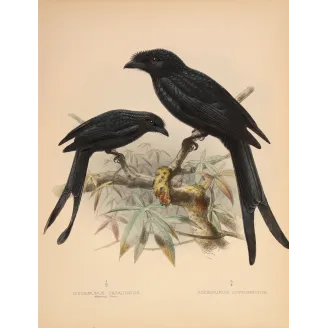
Original nineteenth-century bird print depicting two remarkable Sri Lankan drongos — Dissemurus paradiseus and Dissemurus lophorhinus — illustrated by Johannes Gerardus Keulemans for William Vincent Legge’s celebrated Birds of Ceylon. Distinguished by deep iridescent plumage and elegant elongated forms, this refined ornithological lithograph combines scientific precision with understated decorative sophistication.
Original nineteenth-century bird print depicting two remarkable Sri Lankan mynas — Eulabes ptilogenys and Acridotheres melanosternus — illustrated by Johannes Gerardus Keulemans for William Vincent Legge’s celebrated Birds of Ceylon. Distinguished by rich iridescent plumage and refined compositional balance, this elegant ornithological lithograph combines scientific precision with exceptional decorative sophistication.
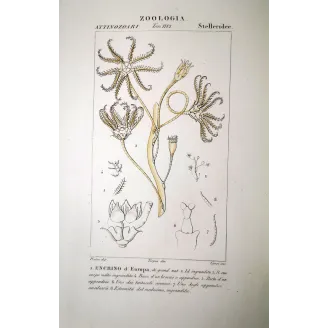
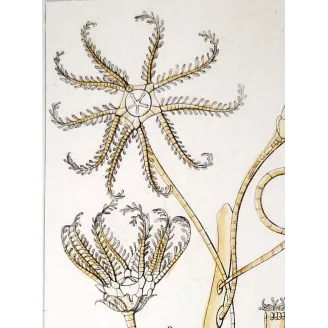
Elegant antique depiction of a crinoid with anatomical studies and fine detailing.
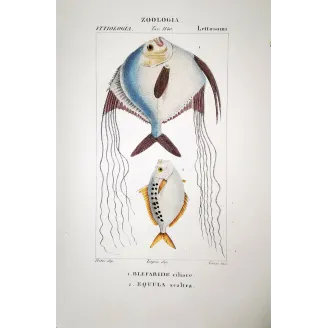
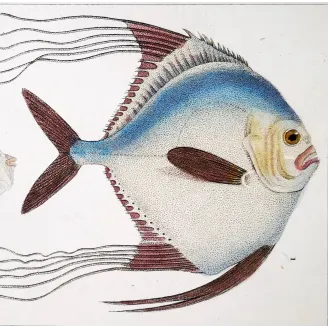
Delicate 19th-century hand-colored engraving of a ponyfish with companion species, ideal for marine-themed interiors and collectors.
Original 1835 hand-colored engraving of Nymphalis orion, drawn and engraved by Pauquet under the scientific direction of Hippolyte Lucas for Exotic Butterflies.
Original 1774 engraving by Jacob L'Admiral: Large Tortoiseshell on Sweet Cherry.
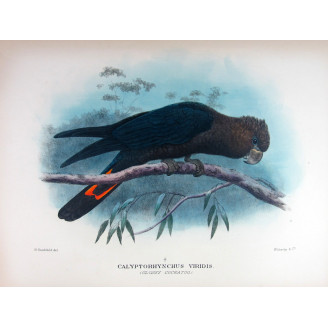
Glossy Cockatoo print by H. Goodchild, dark tones and rare presence on the plate
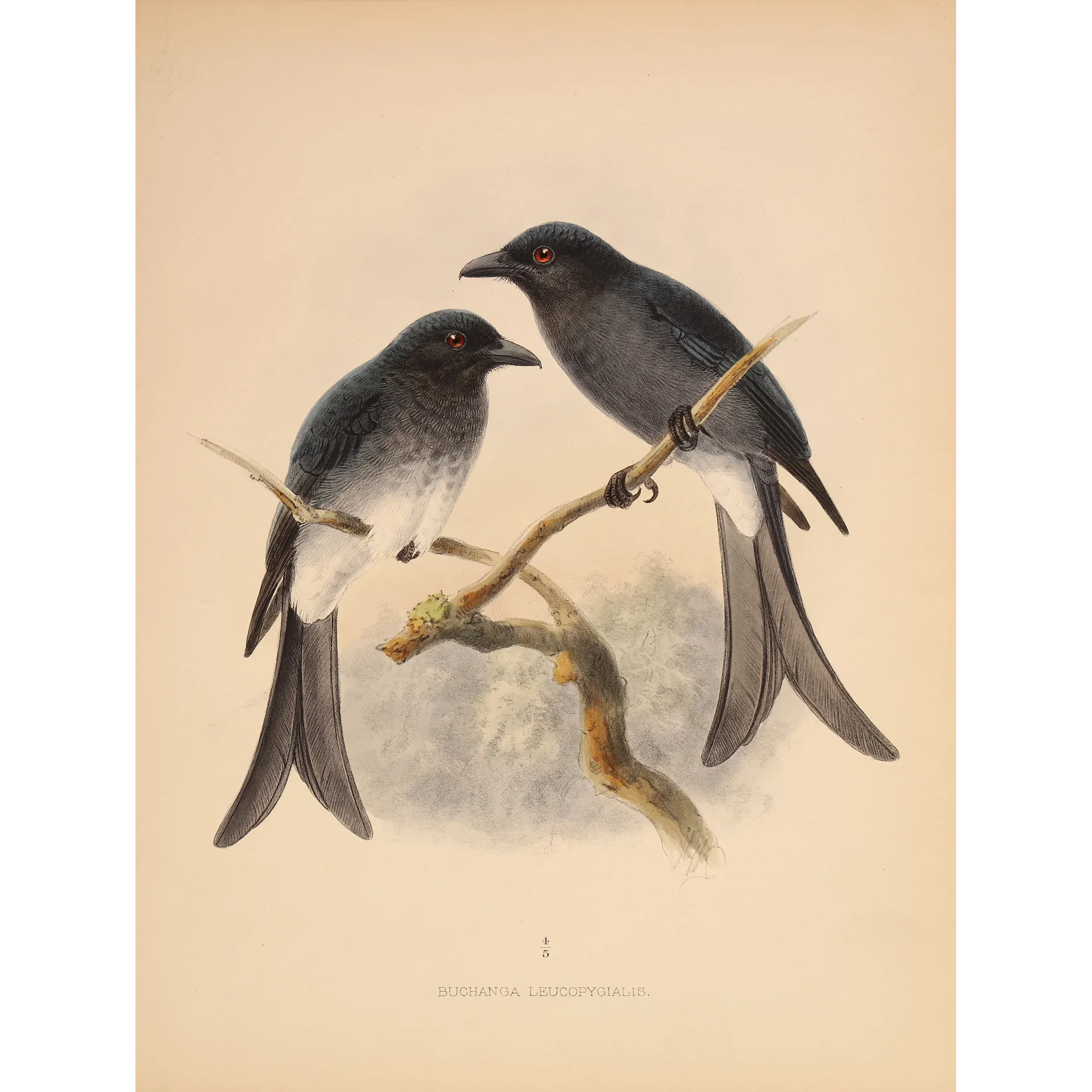
Original antique bird print by J.G. Keulemans depicting Buchanga leucopygialis (White-rumped Drongo), from A History of the Birds of Ceylon. A refined Victorian ornithological lithograph with elegant tonal balance and exceptional decorative presence.