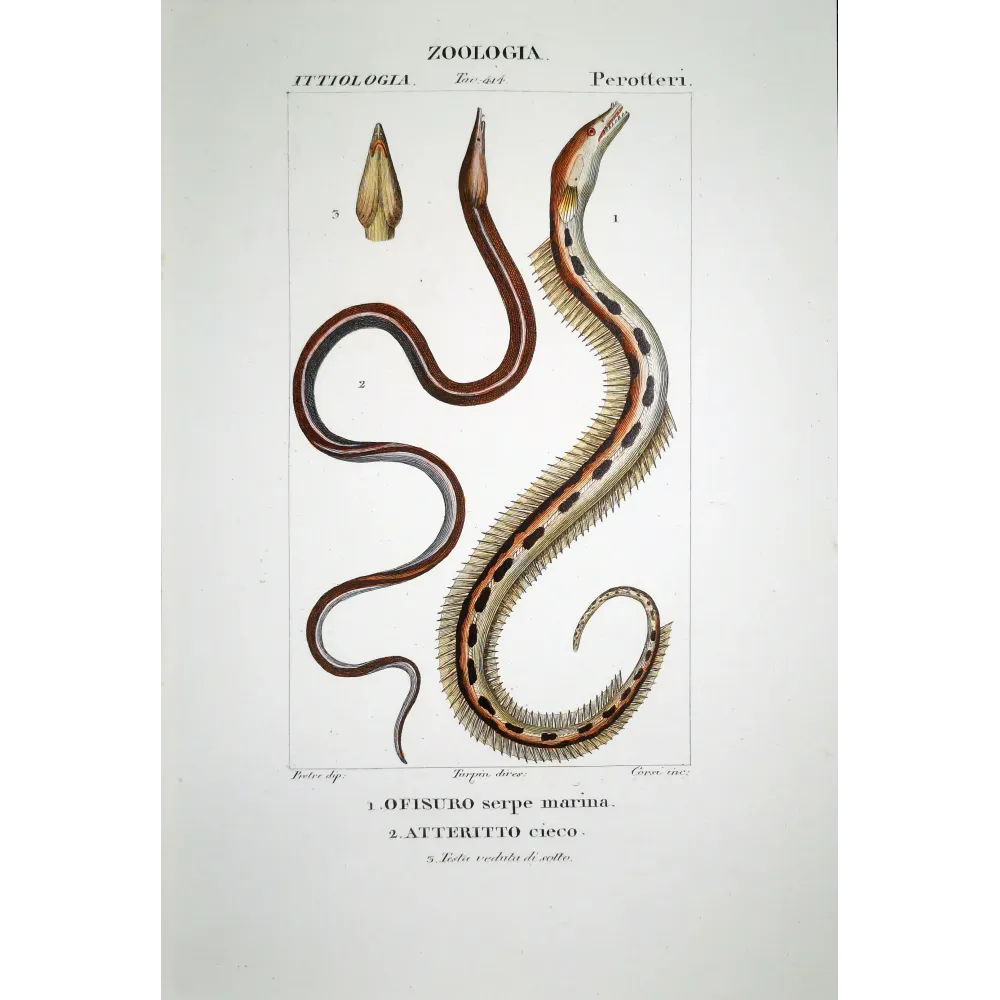
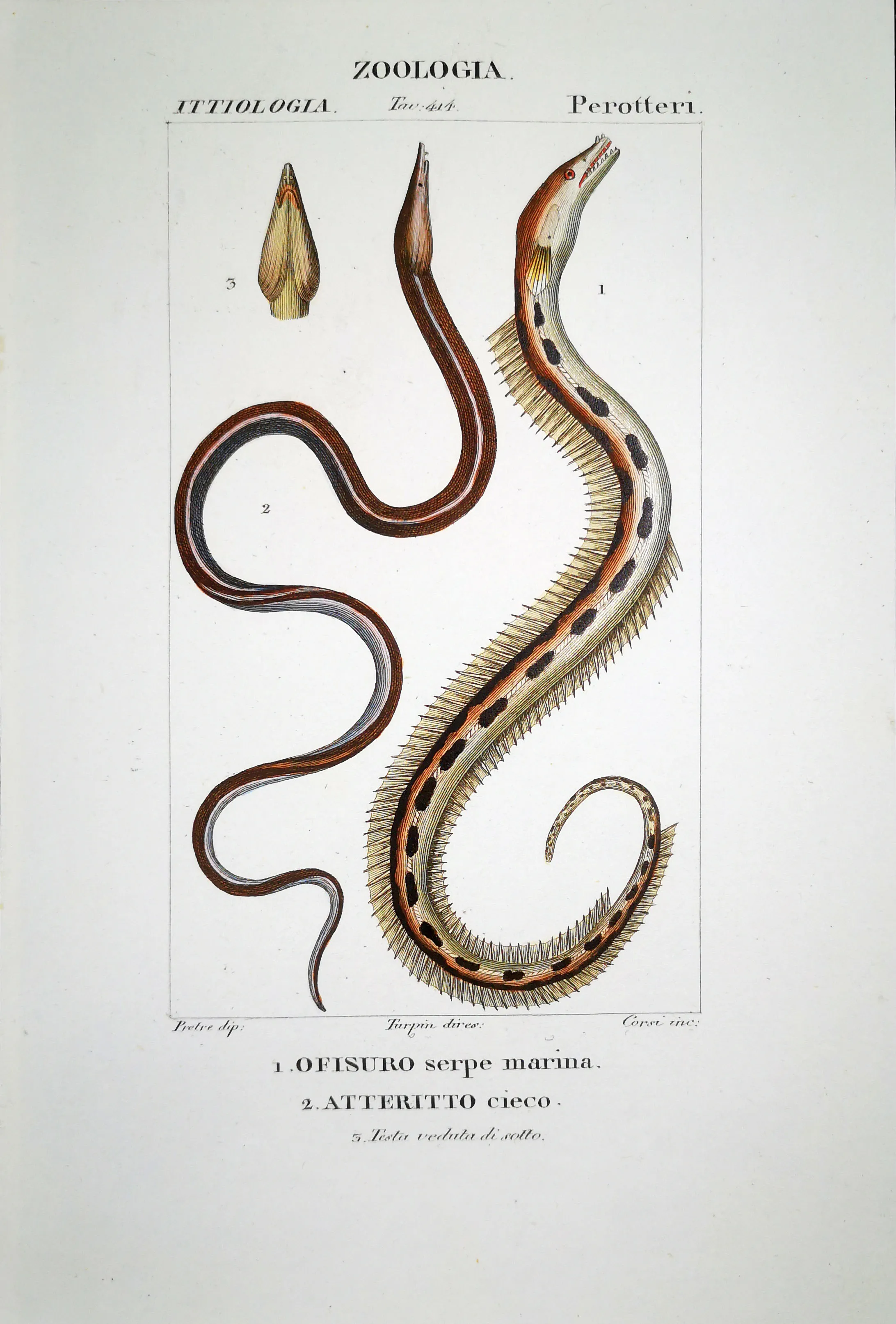


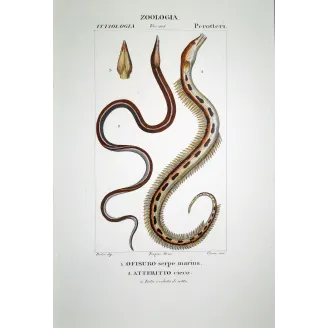
Dramatic eel composition with sinuous forms and precise stippling; a rare and architectural marine subject for refined interiors.
 Delivery policy
Your print will be carefully prepared and shipped worldwide via trusted couriers (UPS or similar).
 Authentic antique prints
Original engravings from the 17th–19th century.
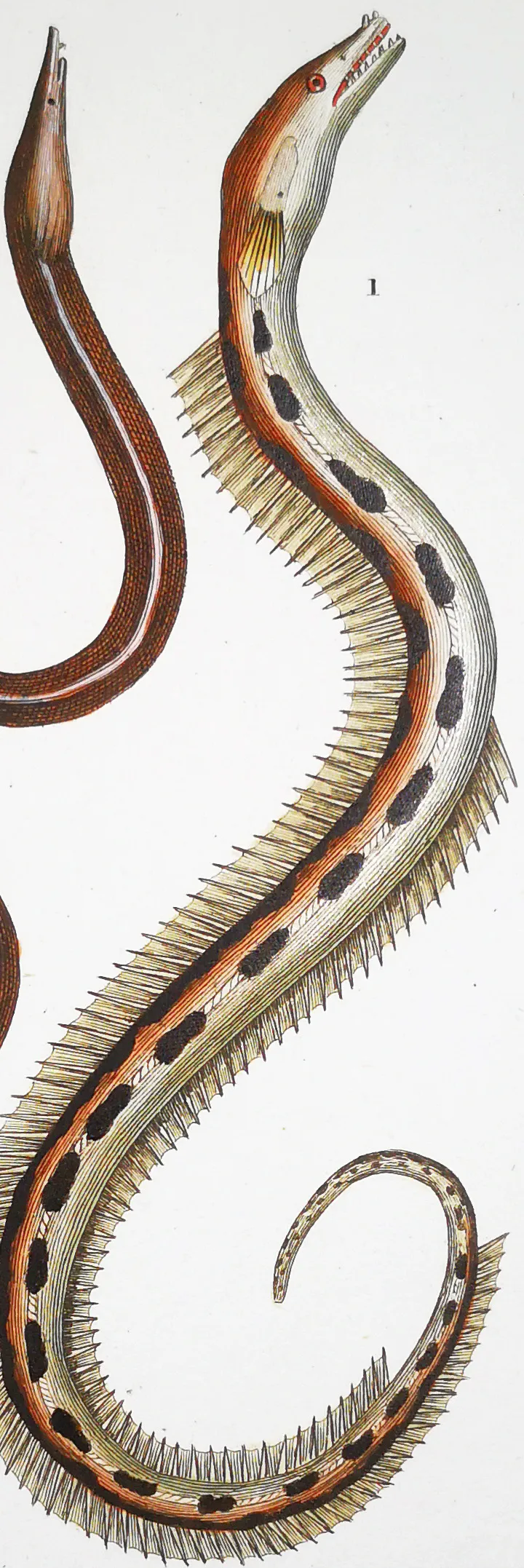
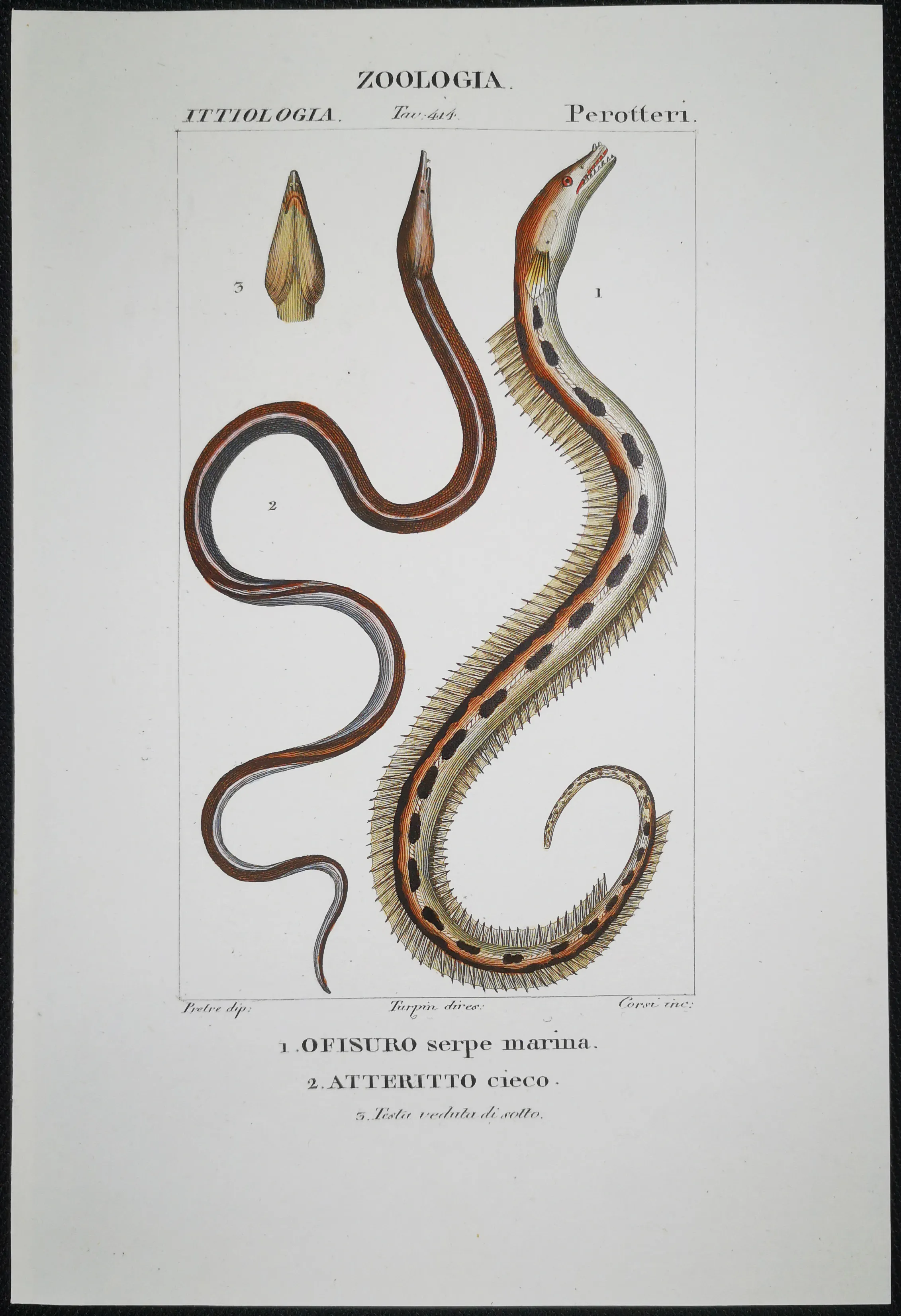
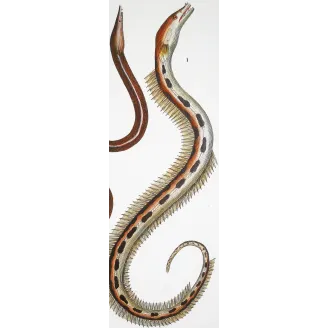
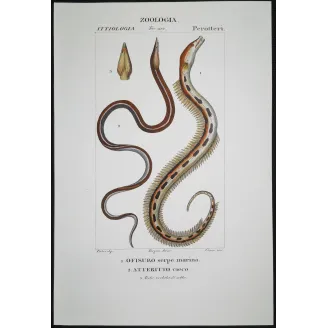
This original hand-colored engraving depicts two eel-like marine fishes: the Serpent Eel, Ophisurus serpemarina, and the Blind Eel, identified in the plate as Atteritto cieco. The composition is a study of motion captured without movement — bodies arranged as flowing curves that reveal structure, texture, and species character.
Prêtre’s engraving is remarkably controlled: the long bodies are articulated with disciplined contour, while patterning and colour establish identity. The Serpent Eel’s spotted spine-like motif and fine marginal spines create a tactile, almost “stitched” edge, contrasting with the darker, smoother companion form.
The engraving belongs to the Italian edition of the Dizionario di Scienze Naturali (Florence, Battelli press), one of the most ambitious encyclopedic scientific enterprises of its time, for which Pierre Antoine Prêtre produced a refined series of marine life plates.
— • —
The plate is compositionally bold: the main specimen coils into a large curve that becomes the visual framework of the sheet. This creates a dynamic balance between negative space and line, giving the engraving a surprisingly modern graphic presence.
Colour is restrained but effective — warm browns and pale neutrals are punctuated by darker accents and spotted markings, reinforcing the sense of biological specificity while remaining elegant for display.
The Serpent Eel, Ophisurus serpemarina, and the Blind Eel (Atteritto cieco, as titled in the plate tradition) reflect a deep cultural fascination that runs through nineteenth-century marine illustration: the sea as a realm of “other” anatomies — elongated bodies, reduced fins, and forms that blur the boundary between fish and serpent. In the pre-photographic era, antique eel engravings like this were essential for cataloguing such creatures with authority, turning mystery into legible knowledge. As a 19th-century marine life print, the plate has strong collector appeal: dramatic line, distinctive patterning, and the intellectual gravitas of antique scientific illustration.
This plate forms part of the historic Dizionario di Scienze Naturali, a monumental early nineteenth-century encyclopedic enterprise once preserved within a noble library and today housed in the Sacchetti Collection. Each engraving reflects a period in which scientific ambition was matched by exceptional artisanal execution — from the disciplined copperplate line to the luminous hand-colouring applied individually to every impression.
To discover the full story behind these rare prints and their noble provenance, we invite you to read our editorial feature “Not Just Another Print”.
The engraving is in excellent antique condition. The sheet presents clean margins and a well-preserved impression. The paper is smooth early nineteenth-century wove paper (non-laid), consistent with Italian scientific editions of the period. No watermark has been observed. The original hand-colouring remains fresh and well preserved, with no visible losses.
For further context on Pierre Antoine Prêtre and his contribution to nineteenth-century zoological illustration, see our editorial feature:
Pierre Antoine Prêtre – Illustrator of Natural Science and Marine Life
Specific References
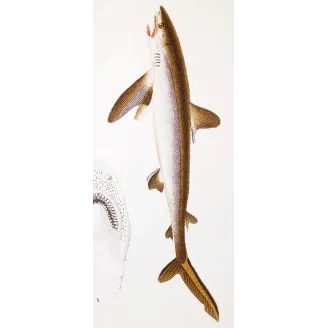
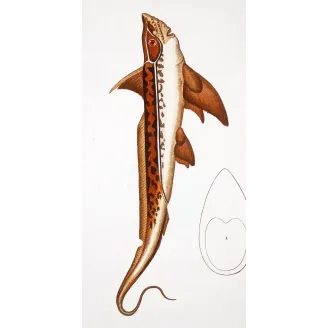
Dynamic 19th-century antique print with Spiny Dogfish and Tiger Catshark by Pierre Antoine Prêtre, contrasting forms and rich marine tones.
Fine 19th-century antique print depicting Porbeagle and Spiny Dogfish by Pierre Antoine Prêtre, detailed and vibrant marine pair.
Distinctive composition with streamlined forms and the famous remora disktechnical curiosity with refined aesthetics.
Detailed 19th-century engraving of the Small-Spotted Catshark by Pierre Antoine Prêtre, combining elegance and scientific accuracy.
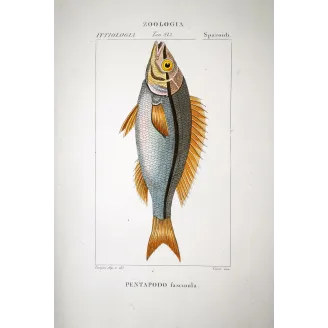
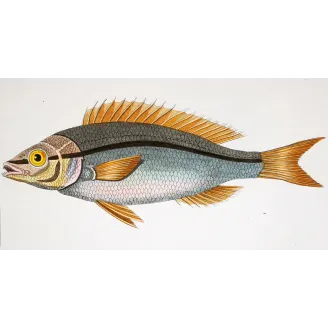
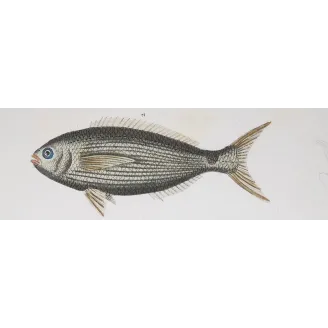
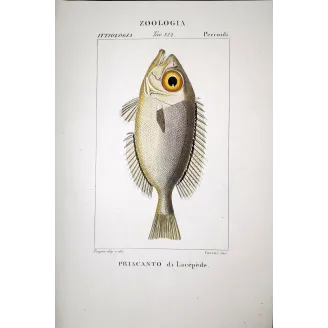
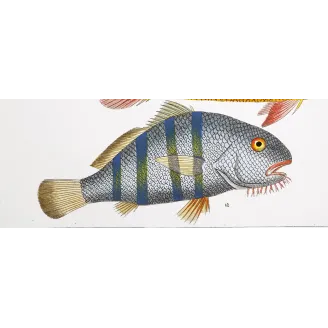
Elegant Pentapodus fish with shimmering orange-silver tones and refined aquatic poise.
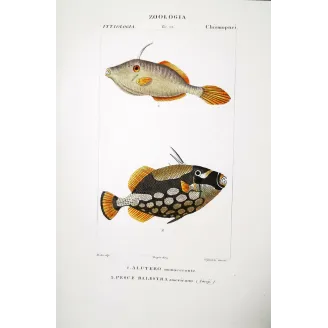
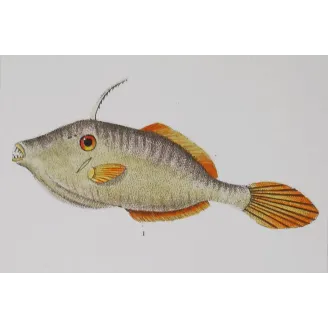
Geometric patterns and bold contrasts; elegant plate featuring a refined filefish with a dramatic American triggerfish.
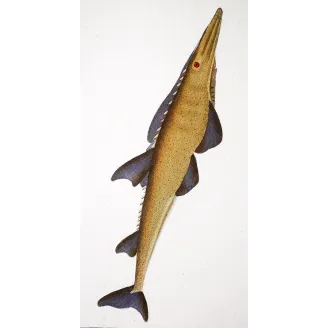
Charming 19th-century engraving of the Smooth Guitarfish by Pierre Antoine Prêtre, highlighting elegant form and serene coloration.
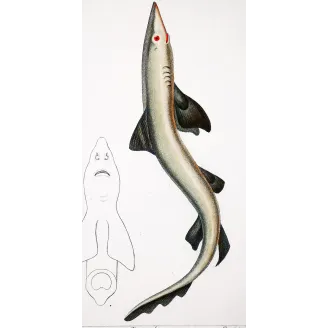
Refined 19th-century hand-colored engraving of the Tope Shark by Pierre Antoine Prêtre, notable for its elegant form and tonal realism.
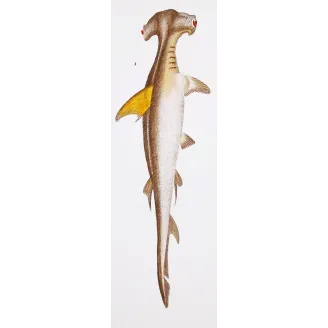
Vibrant 19th-century antique print by Pierre Antoine Prêtre depicting a Hammerhead Shark and Smoothhound, remarkable for color contrast and composition.
Graceful 19th-century engraving of the Angelshark by Pierre Antoine Prêtre, rich in soft tones and fine anatomical accuracy.
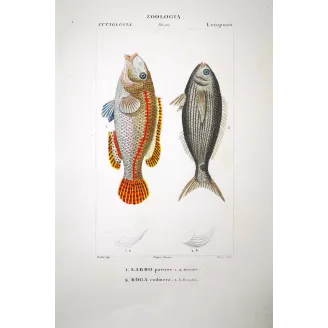
Brilliant peacock wrasse with patterned fins and a silver boga; lively palette and refined stippling for elegant interiors.
Rare 19th-century engraving of the Golden Chimaera by Pierre Antoine Prêtre, featuring warm tones and elegant anatomy.
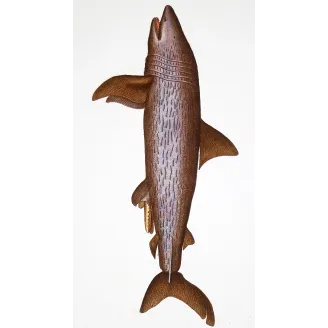
Spectacular 19th-century antique print of the Basking Shark by Pierre Antoine Prêtre, capturing monumental scale and serene presence.
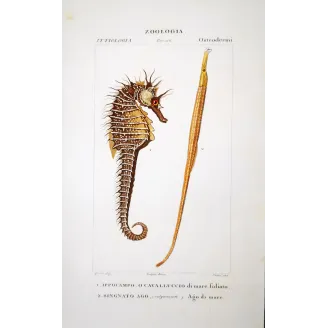
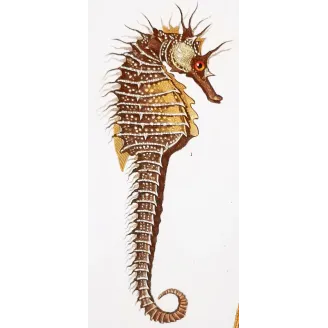
Vivid hand-colored Antique Print of a leafy seahorse with a slender pipefishan iconic duo for marine art lovers and collectors.
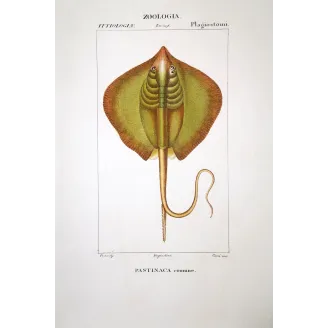
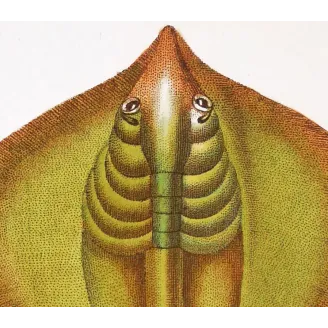
Graceful stingray with warm olive-brown tones and a long tail; tranquil marine subject with elegant presence.
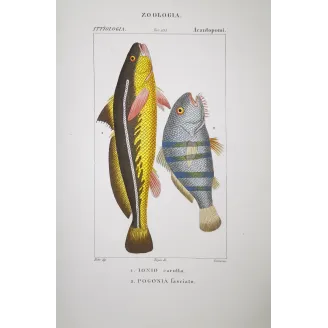
Graphic pairing with bold yellow stripe and banded companion; vibrant hand-coloring and clear natural history styling.
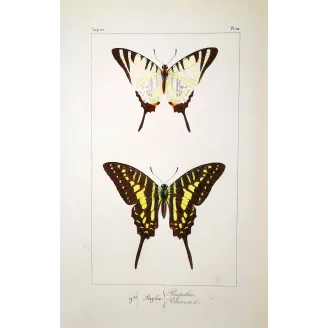
Black swallowtail butterflies with ivory, yellow and green patterns. A refined 1835 engraving, ideal as antique butterfly wall art.
Crimson Rose swallowtails with deep black wings and vivid red markings. A dramatic 1835 engraving, perfect as bold antique butterfly wall art.
A curated botanical trio illustrating three closely related Calamintha species — officinalis, montana, and aquatica — as engraved and hand-colored by Elisabeth Blackwell for A Curious Herbal (1737–1739). Presented together, these plates offer a rare comparative view of medicinal, habitat-specific, and morphological variation within a single genus, reflecting early modern botanical practice and apothecary knowledge.
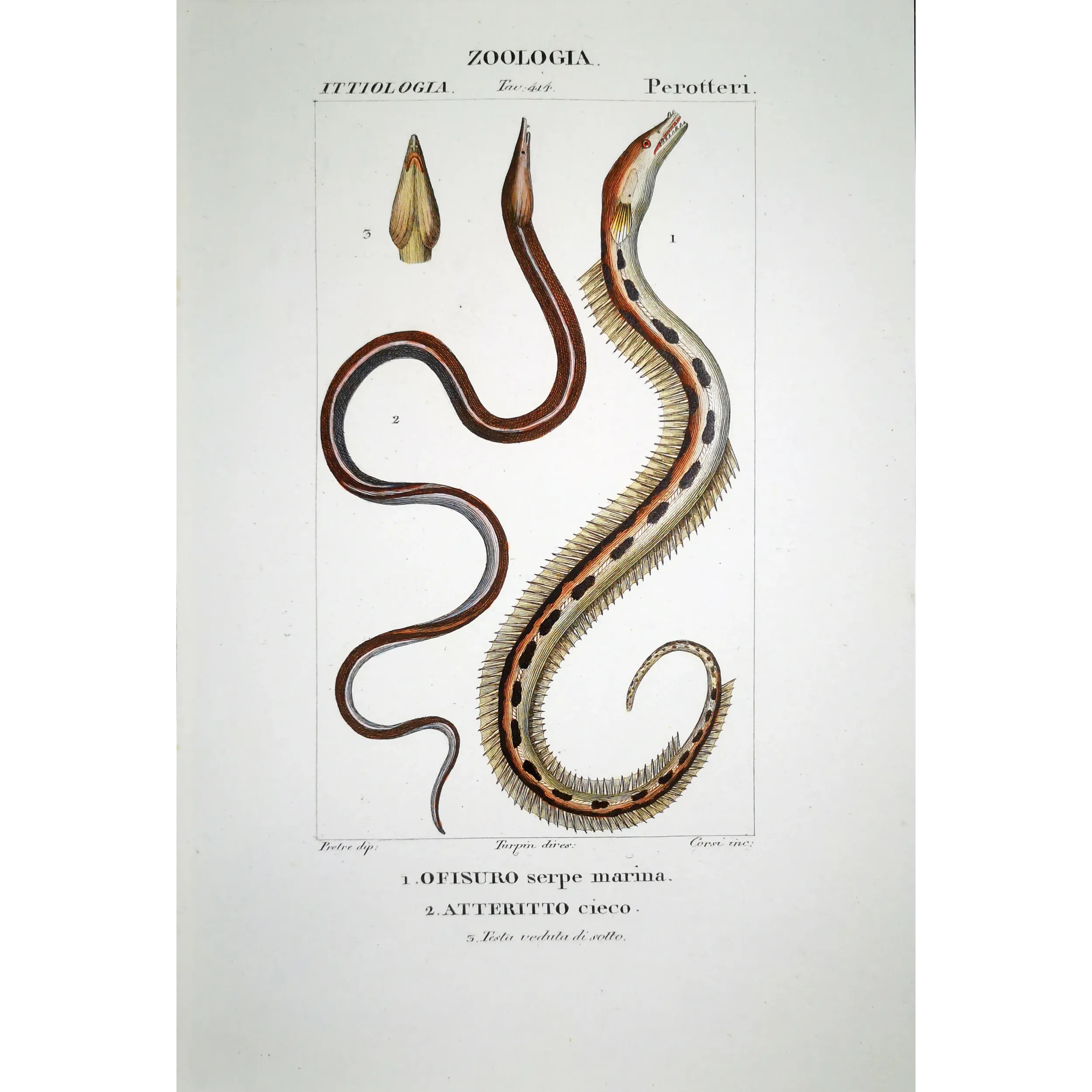
Dramatic eel composition with sinuous forms and precise stippling; a rare and architectural marine subject for refined interiors.