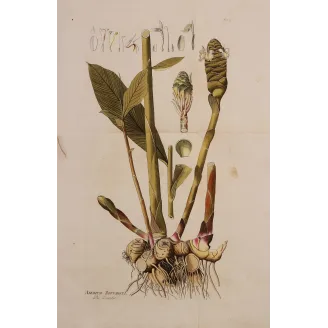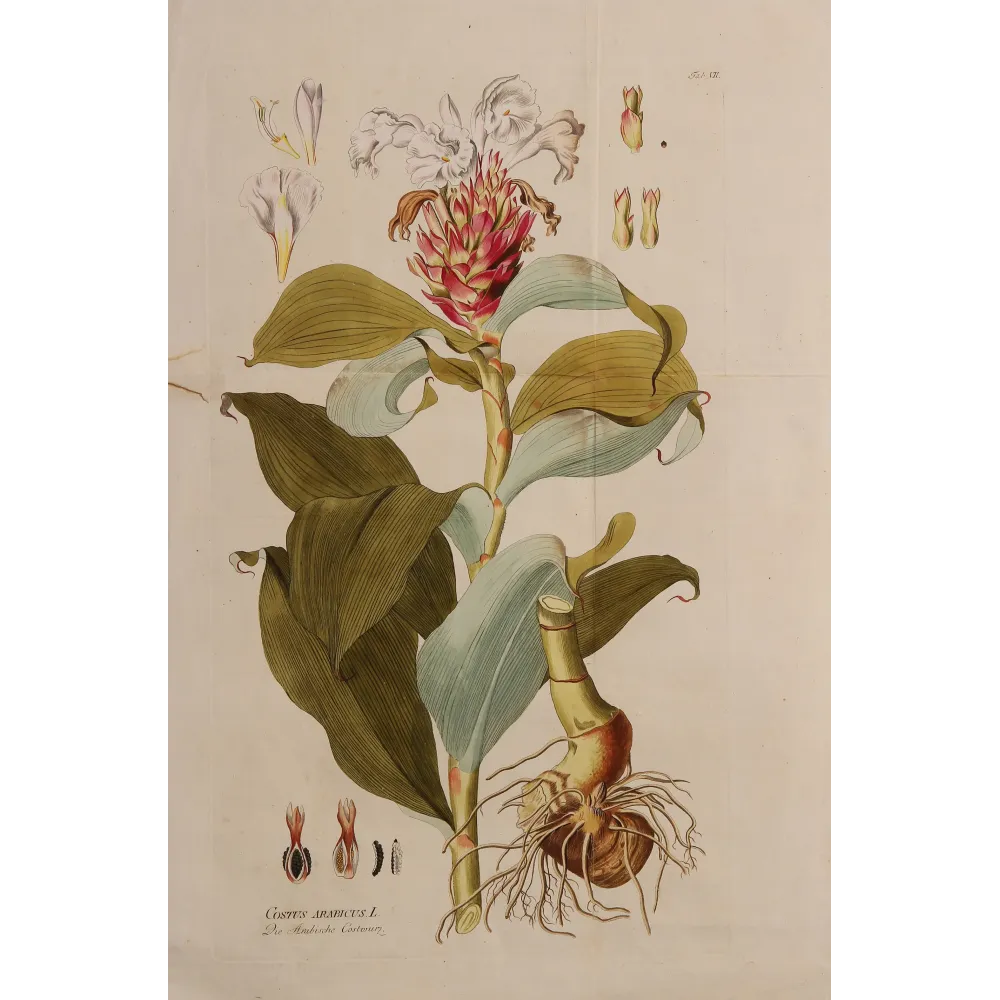
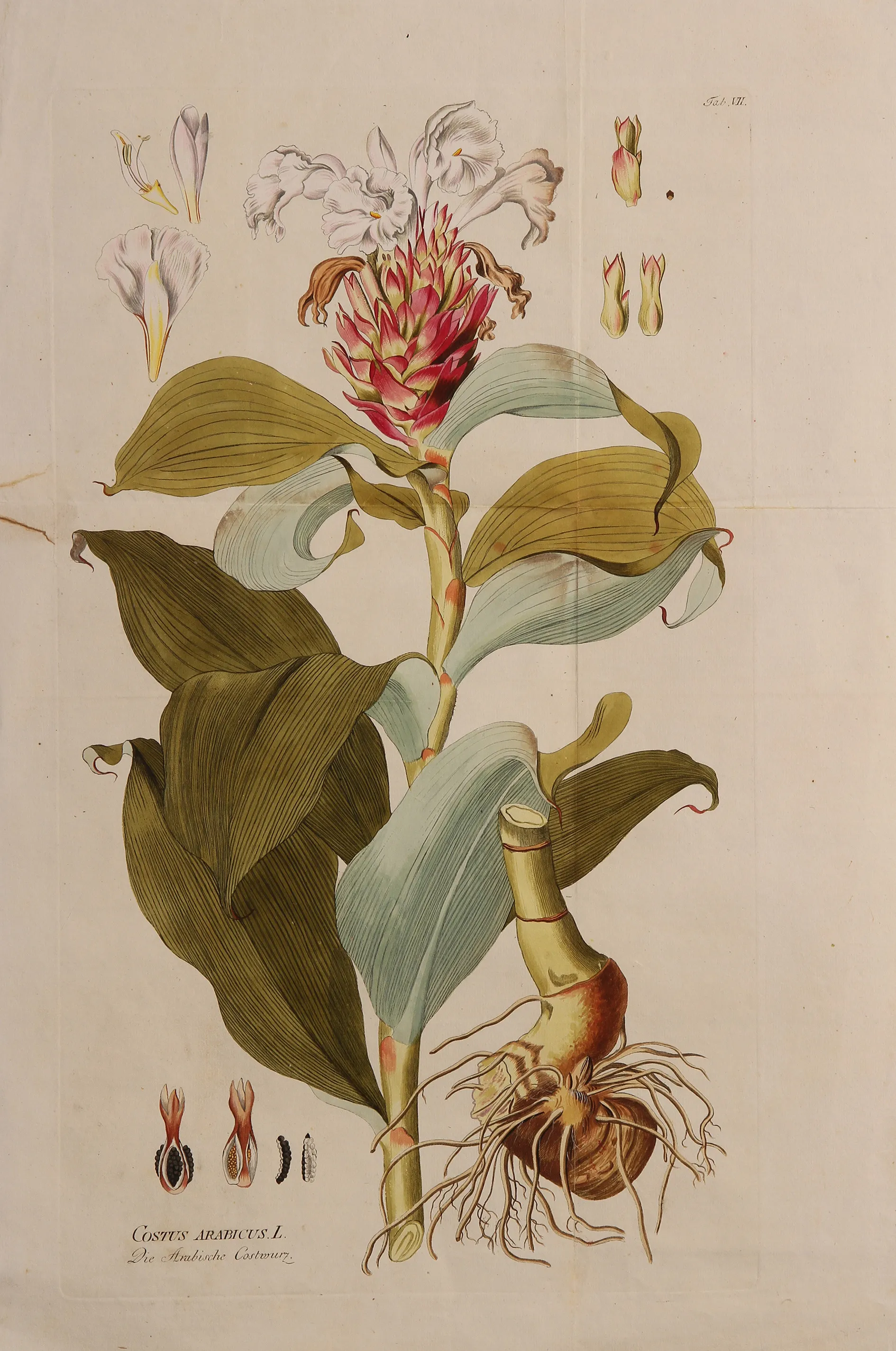
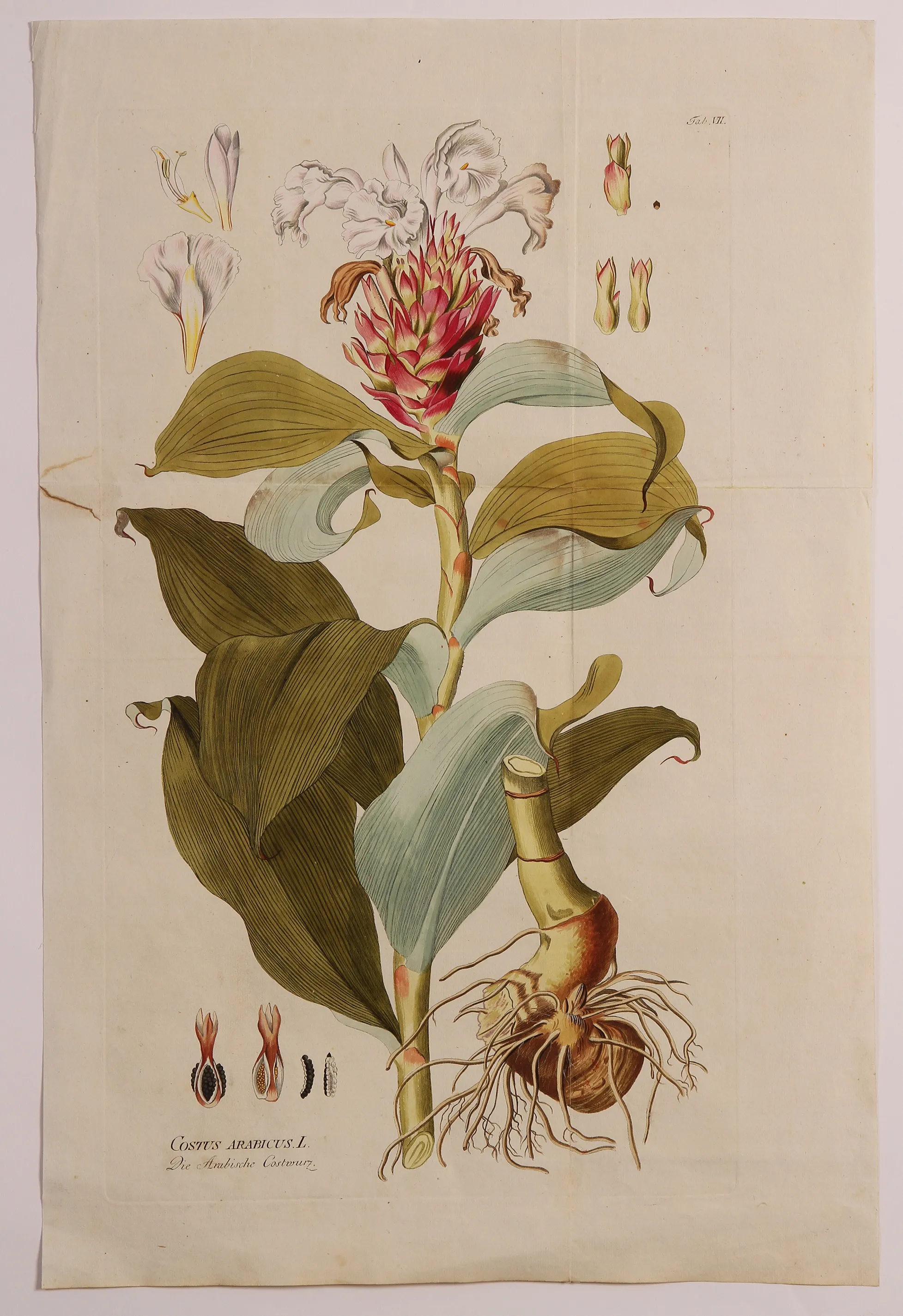
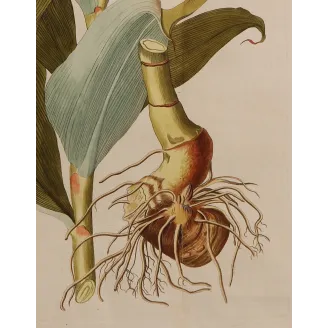
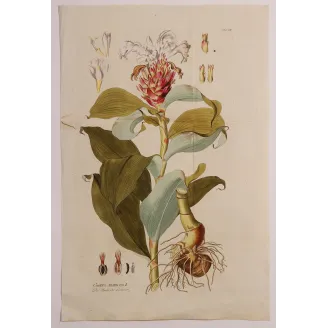
Exceptional large-format eighteenth-century botanical engraving depicting <em>Costus arabicus</em> L., published as Plate VII of Joseph Jacob von Plenck’s <em>Icones Plantarum Medicinalium</em>. Printed on an unusually large folded sheet measuring 66.3 × 43.5 cm, the composition combines a monumental flowering specimen, extensive root and rhizome structures and finely observed botanical details with beautifully preserved contemporary hand colouring. Complete Honig watermark with logo.
 Delivery policy
Your print will be carefully prepared and shipped worldwide via trusted couriers (UPS or similar).
 Authentic antique prints
Original engravings from the 17th–19th century.
This exceptional large-format botanical engraving from Joseph Jacob von Plenck’s Icones Plantarum Medicinalium depicts Costus arabicus L., a tropical rhizomatous plant belonging to the Costaceae. Published in Vienna during the late eighteenth century as Plate VII, the image occupies an unusually large folded sheet measuring approximately 66.3 × 43.5 cm.
From the substantial underground rhizome and radiating roots, a vigorous flowering stem rises through an extraordinary succession of broad leaves towards a brilliant terminal inflorescence. Separate botanical details surround the principal specimen, allowing flower, reproductive structures and seeds to be examined independently without diminishing the monumental presence of the plant itself.
The exceptional scale is integral to the character of the plate: Plenck transforms botanical description into a commanding visual study in which root, foliage, flower and analytical detail unfold across almost the entire surface of the large eighteenth-century sheet.
The composition develops vertically from the exposed rhizome at the lower right towards the elaborate flowering structure above. Rather than reducing the specimen to fit a conventional folio, the large folded format gives the plant sufficient space to retain an unusually convincing sense of physical scale and botanical presence.
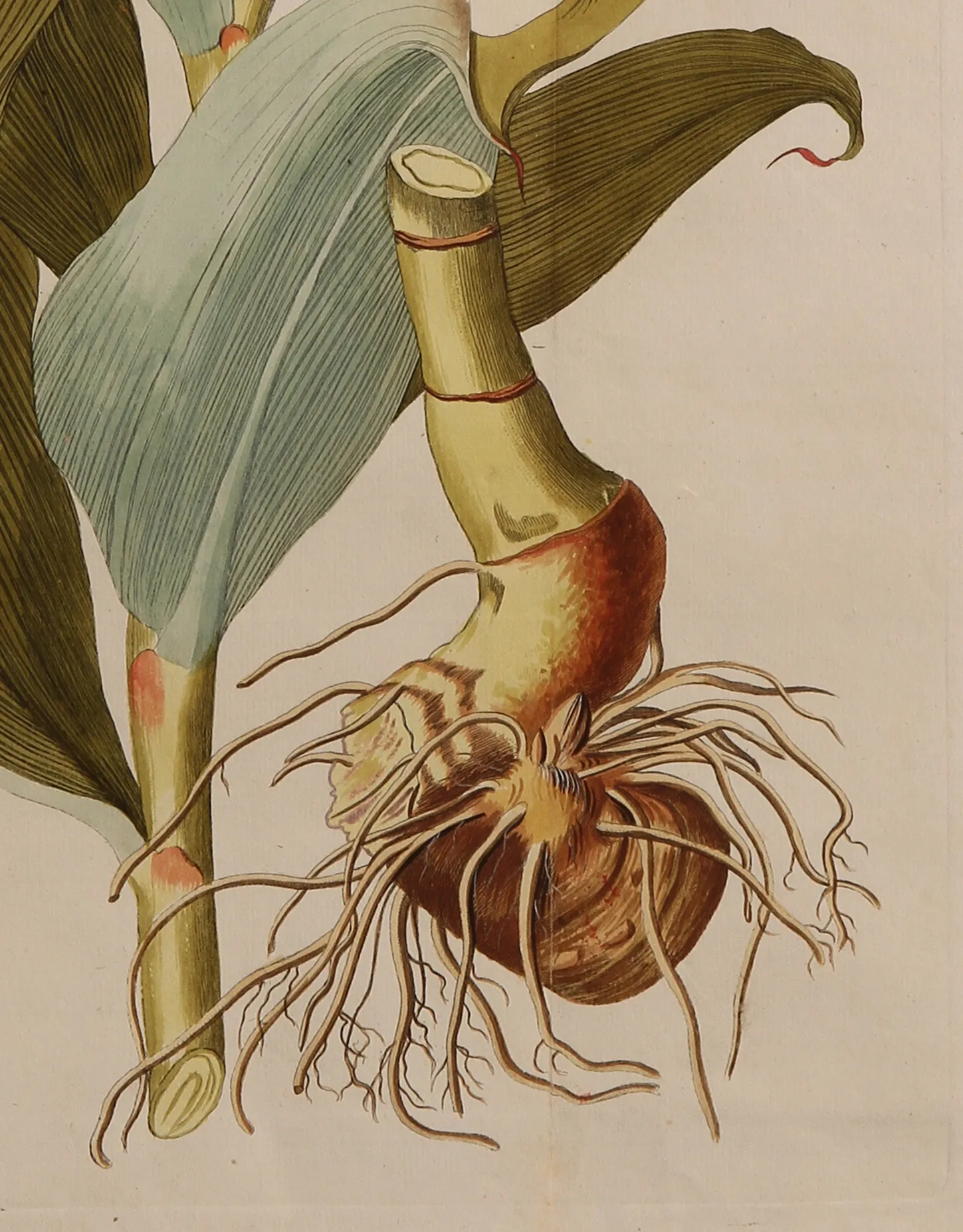
The lower part of the image is dominated by the rhizome and extensive root system. Warm ochres, browns and reddish tones articulate the fleshy underground structures, while numerous fine roots spread outward in different directions. The engraved line becomes particularly dense here, creating texture, weight and a strong visual foundation for the plant above.
From this substantial base rises a tall articulated stem carrying a sequence of exceptionally broad leaves. Their alternating directions create a powerful rhythm across the sheet. Some leaves curve outward almost horizontally, while others fold back towards the stem, preventing the composition from becoming static despite its pronounced vertical structure.
The colouring of the foliage is particularly sophisticated. Olive, brown-green and cool blue-green passages distinguish individual leaves while preserving the finely engraved parallel veins beneath the transparent pigments. These tonal differences give each leaf its own spatial position and allow overlapping forms to remain clearly legible.
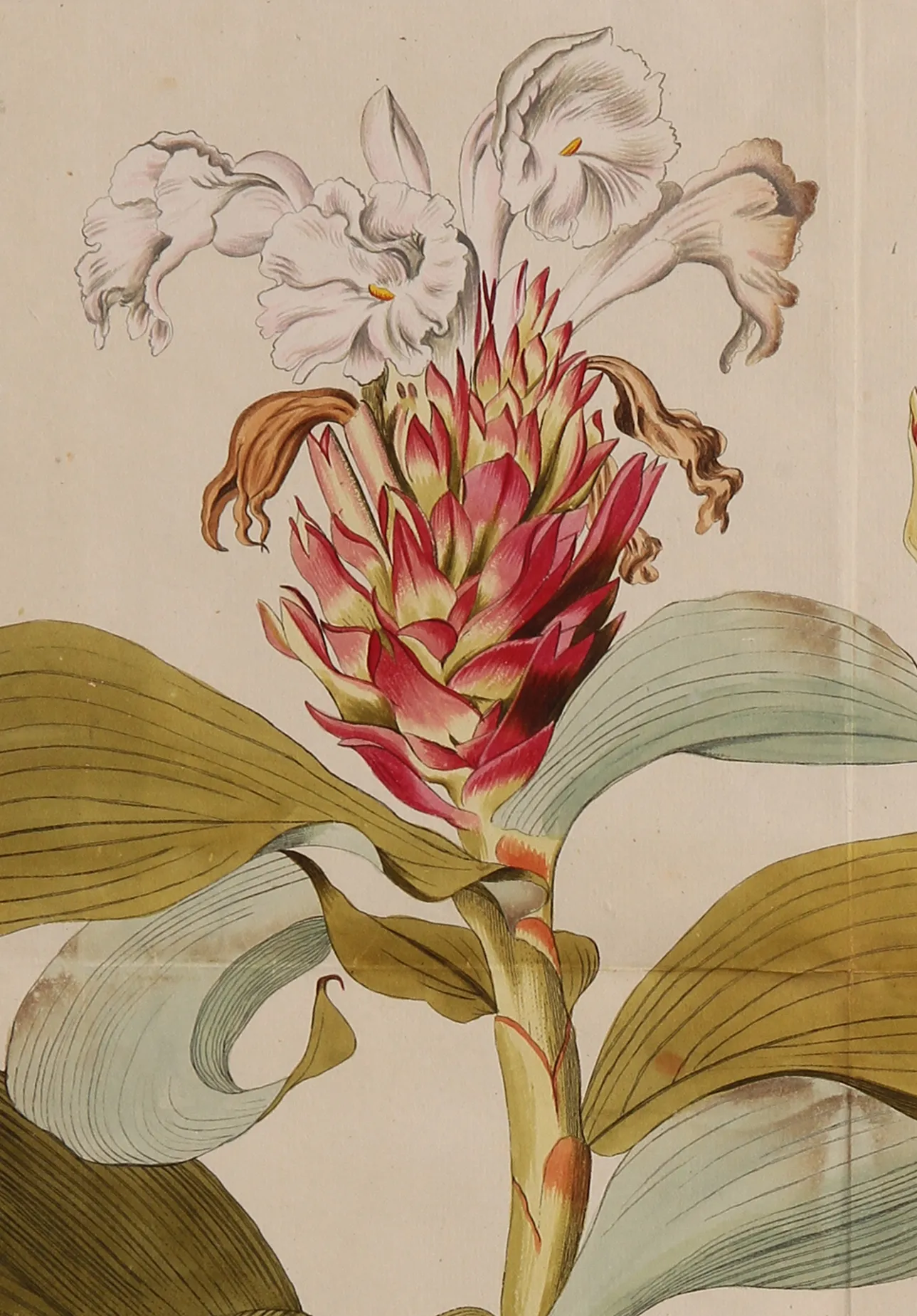
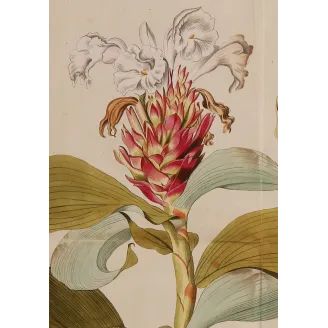
At the summit, the terminal inflorescence provides the principal chromatic focus. Brilliant crimson and rose-red bracts rise in a dense architectural cluster, from which pale flowers emerge with delicately shaded petals. Their restrained whites, pinks and soft violet-grey passages create a luminous contrast with the saturated reds beneath.
The botanical studies surrounding the main specimen extend the scientific content of the plate. Enlarged floral structures occupy the upper margins, while sections of the fruit and seeds appear below. These isolated details clarify structures that could not be examined adequately within the flowering plant alone.
The engraved line remains consistently disciplined throughout the image. Closely spaced parallel strokes describe the large leaves, finer modelling defines the flowers and reproductive organs, and denser networks of line give the rhizome and roots their remarkable material substance. Contemporary hand colouring works with rather than obscures this underlying structure.
Costus arabicus L. is a tropical rhizomatous species belonging to the Costaceae, a family within the order Zingiberales. It is characterised by substantial underground rhizomes, tall leafy shoots and conspicuous terminal inflorescences composed of overlapping bracts from which the flowers emerge.
The species is native to tropical regions of the Americas and Caribbean. Its broad foliage, vigorous growth and highly structured flowering head give it the architectural appearance clearly emphasised in Plenck’s engraving.
The name Costus arabicus was established by Carl Linnaeus in the eighteenth century and remains accepted in modern botanical taxonomy. Plenck’s inclusion of the species within Icones Plantarum Medicinalium reflects the historical European study of plants associated with medicinal botany and the expanding botanical knowledge of tropical regions.
The historical use of the word “costus” requires some care. Different plants were associated with this name within earlier medicinal and commercial traditions, and Costus arabicus should not be confused with the unrelated Asian plant historically traded as costus root. Plenck’s plate is best understood within its own eighteenth-century botanical and pharmacological context.
Joseph Jacob von Plenck conceived Icones Plantarum Medicinalium as a union of botanical instruction and refined artistic presentation. Plants were isolated against the open sheet and represented through the structures required for recognition, while fine copper engraving and contemporary hand colouring gave the images exceptional clarity.
Plate VII demonstrates the remarkable flexibility of that programme. Where the dimensions and structure of a specimen demanded greater space, Plenck’s publication could employ a substantially larger folded sheet. The result is not simply an enlarged decorative image, but an expanded botanical field in which the physical architecture of the plant can be examined with unusual immediacy.
The composition proceeds almost continuously from underground structure to flowering summit. Rhizome, roots, articulated stem, successive leaves, terminal inflorescence and separate analytical details together form an extensive visual account of the plant. The viewer is encouraged to understand the specimen as an integrated botanical organism rather than as an isolated flower.
The broad leaves are essential to the visual power of the plate. Their strong parallel venation and alternating directions produce large fields of olive, green and blue-grey colour that move across the sheet, while their curved edges create a continual exchange between botanical description and abstract rhythm.
Against these substantial leaves, the flowering head becomes dramatically concentrated. Red and crimson bracts form a sharply defined central structure from which the paler flowers emerge. The contrast between saturated colour and delicately shaded petals gives the upper section an almost sculptural intensity.
The treatment of the underground structures is equally important. Plenck does not conceal the rhizome beneath an idealised stem but exposes it completely, together with the surrounding roots. This makes visible a part of the plant normally hidden from direct observation and gives the lower composition exceptional scientific and visual weight.
Separate details placed around the principal specimen preserve the analytical character of the work. Enlarged flowers, reproductive structures, fruit sections and seeds supplement the monumental whole with precisely selected information, maintaining the balance between observation at natural scale and comparative botanical study.
The unusual folded format is therefore fundamental to the identity of this impression. Measuring approximately 66.3 × 43.5 cm when opened, the sheet provides a dramatically larger field than the standard plates within the work and allows the botanical composition to develop with an exceptional sense of scale.
For the contemporary collector, this physical scale produces an additional quality without altering the historical meaning of the object. The same dimensions originally required by Plenck’s botanical programme now give the engraving an unusually commanding presence when displayed, allowing an eighteenth-century scientific image to operate convincingly as a major work within a large interior.
The plate therefore represents a particularly compelling intersection of scientific observation, eighteenth-century craftsmanship and visual monumentality. Its importance lies not in enlargement for decorative effect, but in the exceptional spatial generosity with which Plenck allowed the plant itself to determine the character of the image.
For this reason, this work forms part of Prantique’s Statement Pieces — a curated selection of original antique prints distinguished by their exceptional scale and presence within contemporary interiors.
The engraving is printed on a large sheet of fine eighteenth-century laid paper associated with the Honig papermaking tradition. Closely spaced laid lines and broader chain lines belong to the physical structure of the handmade sheet and may become visible when examined in transmitted or raking light.
A complete Honig watermark with its distinctive logo is preserved within this impression. Its survival provides important material evidence for the paper used in the production of Plenck’s botanical work and connects the sheet with the high-quality handmade papers selected for the publication.
Unlike the standard-format plates within Icones Plantarum Medicinalium, this engraving was produced on an unusually large sheet designed to be folded for incorporation within the volume. The historical vertical and horizontal fold lines remain visible and form an intrinsic part of the original material structure of the plate.
When unfolded, the sheet measures approximately 66.3 × 43.5 cm. This exceptional size permits a botanical composition of substantially greater scale while retaining the fine surface required for precise copperplate engraving and delicate hand-applied colour.
The plate mark remains visible around the engraved field, preserving the physical relationship between the copperplate impression and the surrounding handmade paper. Together, the plate mark, complete watermark, laid structure and historical folds provide a particularly rich record of the object’s eighteenth-century manufacture.
Published in Vienna from 1788, Joseph Jacob von Plenck’s Icones Plantarum Medicinalium belongs to the great illustrated botanical projects of the European Enlightenment. It was intended to provide physicians, apothecaries and students with clear visual references for recognising plants associated with historical medicinal practice.
Each image was printed from a finely engraved copperplate and subsequently coloured by hand. Every surviving impression therefore combines the repeatable precision of printmaking with the individual judgement and craftsmanship of an eighteenth-century colourist.
Large folded plates such as this Costus arabicus reveal an especially ambitious aspect of Plenck’s project. Rather than reducing every botanical subject to an identical visual format, the publication could expand the physical field of the image when the structure and scale of the plant required additional space.
The complete Honig watermark, original folding structure and extensive botanical composition make this impression a particularly revealing material document of how scientific illustration, papermaking, copper engraving and hand colouring were brought together in late eighteenth-century Vienna.
Discover how scientific observation, handmade paper, copper engraving and contemporary colour came together in Plenck’s botanical masterpiece.
Excellent condition. The large eighteenth-century laid sheet remains structurally sound and presents the botanical composition with excellent clarity. The engraved impression retains strong definition throughout the extensive foliage, flowering structures, rhizome, roots and analytical details.
The contemporary hand colouring is beautifully preserved. The intense crimson and rose tones of the terminal inflorescence remain vivid, while the olive, brown-green and cool blue-green foliage retains its subtle tonal differentiation. Warm ochres and browns continue to articulate the rhizome and extensive root system with remarkable depth.
The original vertical and horizontal folds associated with the large folded format remain visible. These are historical structural features resulting from the way the oversized plate was folded for incorporation within the original volume and should be understood as part of the material history of the sheet.
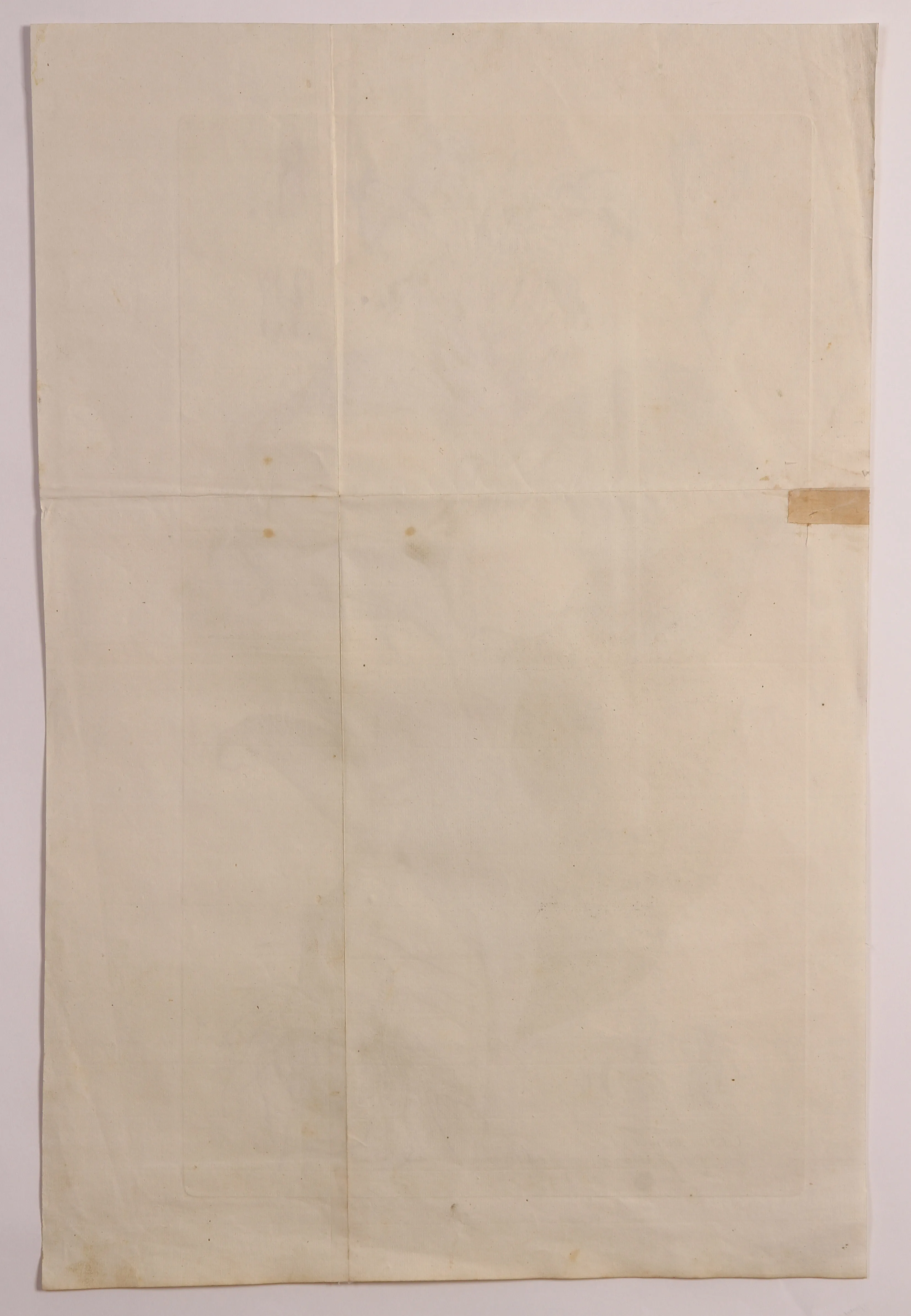
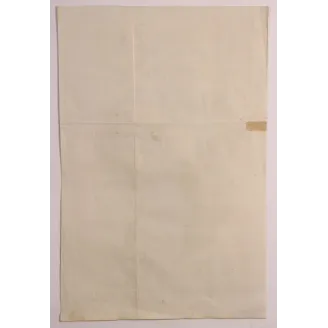
A historical repair to a tear is present along the left side of the sheet and is clearly visible from the reverse. The repair stabilises the affected area and does not materially interfere with the principal botanical composition. Additional light age-related traces and minor localised marks remain consistent with the history of a large eighteenth-century folded plate.
The complete Honig watermark remains preserved, and the plate mark is visible around the engraved field. Overall, the impression combines excellent botanical presentation, beautifully preserved contemporary colour and unusually rich evidence of its original paper structure and historical use. Please examine the professional high-resolution photographs of both recto and verso for a complete visual assessment.
Botanical name: Costus arabicus L.
Common name: Arabian Costus
German title: Die Arabische Costwurz
Work: Icones Plantarum Medicinalium
Author: Joseph Jacob von Plenck (1735–1807)
Artistic tradition: Viennese botanical school
Place of publication: Vienna
Date: c. 1788
Technique: Original copper engraving with contemporary hand-applied watercolour
Paper: Fine eighteenth-century laid paper associated with the Honig papermaking tradition
Watermark: Complete Honig watermark with logo
Plate mark: Visible around the engraved field
Plate: VII / 7
Centuria: I
Plant family: Costaceae
Sheet format: Large folded botanical plate
Sheet size: approx. 66.3 × 43.5 cm
Condition: Excellent condition, with original historical folds and a stabilised historical tear repair visible from the reverse
Curatorial classification: Statement Piece
Collector positioning: Exceptional large-format Plenck plate combining botanical significance, unusually substantial scale and powerful visual presence
Authenticity: Original eighteenth-century print — never a modern reproduction
```
Specific References
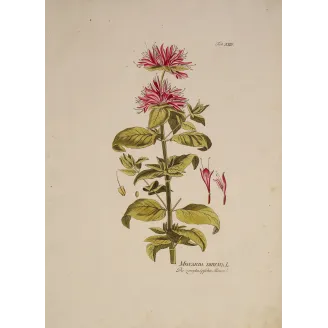
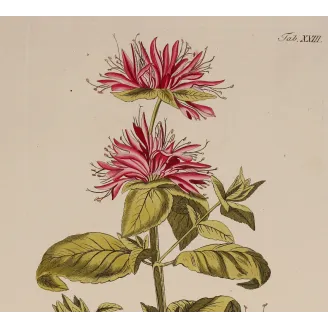
Original eighteenth-century botanical engraving depicting Monarda didyma L., published in Vienna as Plate XXIII of Joseph Jacob von Plenck's Icones Plantarum Medicinalium. This refined composition combines elegant vertical balance, delicate crimson flowers and beautifully preserved contemporary hand colouring on Honig laid paper with complete watermark.
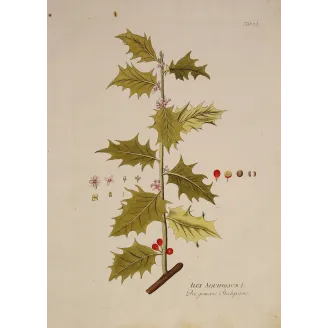
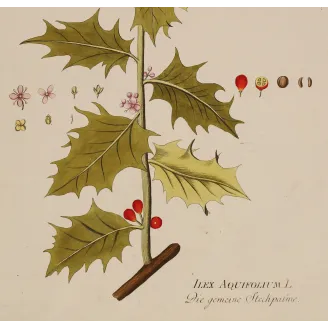
Original eighteenth-century botanical engraving depicting Ilex aquifolium L., the common holly, published in Vienna as Plate 72 of Joseph Jacob von Plenck’s Icones Plantarum Medicinalium. The composition combines sharply articulated evergreen foliage, delicate pink flowers, brilliant red fruits and separate botanical details, preserved on fine laid paper with a visible partial “IV” watermark.
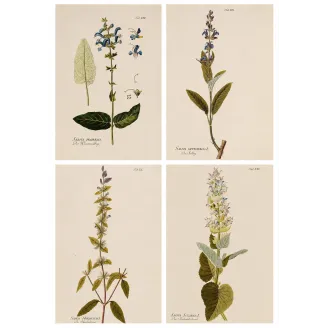
A complete four-plate botanical study devoted to the genus <em>Salvia</em>, preserved exactly as originally published within Joseph Jacob von Plenck's <em>Icones Plantarum Medicinalium</em>. Combining remarkable scientific integrity with exceptional decorative harmony, this Museum Quality Study Set represents one of the most visually refined surviving botanical sequences of the late eighteenth century.
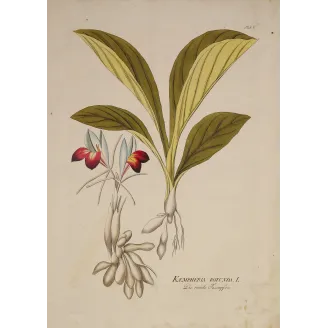
Original eighteenth-century botanical engraving depicting Kaempferia rotunda, published in Vienna by Joseph Jacob von Plenck for Icones Plantarum Medicinalium (Plate 5). The elegant composition combines broad architectural foliage, richly coloured crimson flowers and delicately modelled underground tubers, demonstrating the extraordinary refinement of Plenck's Viennese botanical school. Printed on fine Honig laid paper with visible "IV" watermark.
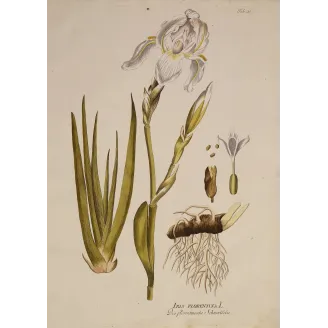
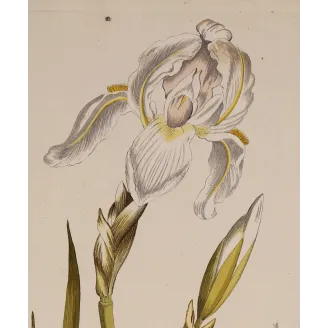
An elegant original botanical engraving depicting Iris florentina, delicately hand-coloured and published by Joseph Jacob von Plenck around 1788. Printed on original laid paper with visible plate mark and exceptionally refined colouring.
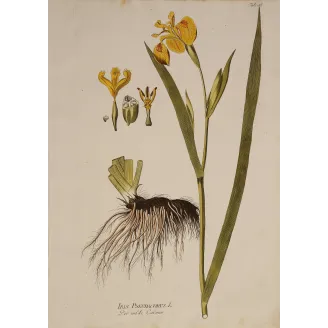
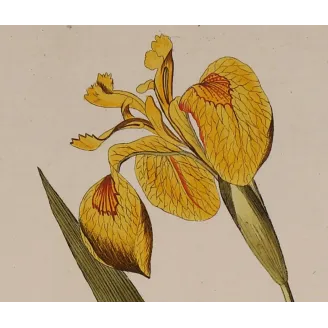
Original hand-coloured copper engraving depicting the Yellow Flag Iris (Iris pseudacorus), published by Joseph Jacob von Plenck in Vienna around 1788 for Icones Plantarum Medicinalium. A refined eighteenth-century botanical illustration distinguished by its elegant composition, beautifully engraved rhizome, luminous yellow flower, selective gum arabic highlights and excellent state of preservation.
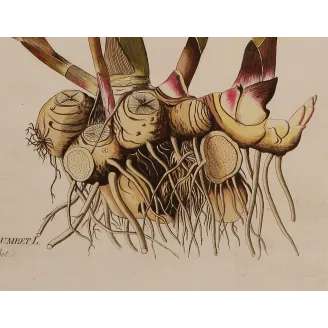
Exceptional large-format eighteenth-century botanical engraving depicting <em>Amomum Zerumbet</em> L., published as Plate II of Joseph Jacob von Plenck’s <em>Icones Plantarum Medicinalium</em>. Printed on a large folded sheet of Honig laid paper with complete watermark and contemporary hand colouring, the composition combines monumental rhizomatous structures, tall architectural stems and precisely observed analytical details. A rare large-scale Plenck Statement Piece with remarkable historical and visual presence.
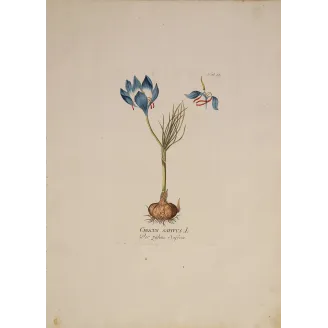
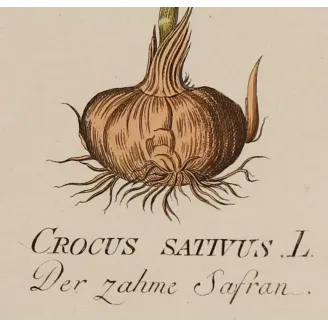
Original eighteenth-century botanical engraving depicting Crocus sativus L., the true saffron crocus, published in Vienna as Plate 32 of Joseph Jacob von Plenck's Icones Plantarum Medicinalium. This elegant composition celebrates one of history's most valuable medicinal and culinary plants through refined hand colouring, exceptional botanical clarity and beautifully preserved eighteenth-century laid paper.
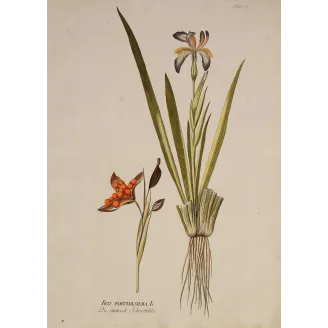
Original eighteenth-century botanical engraving depicting Iris foetidissima (Stinking Iris), published in Vienna by Joseph Jacob von Plenck for Icones Plantarum Medicinalium (Plate 37). Finely engraved and beautifully hand-coloured, the composition illustrates the flowering plant together with its open seed capsule and brilliant orange seeds, combining scientific precision with exceptional decorative elegance. Printed on fine laid Honig paper with visible "IV" watermark and excellent contemporary hand colouring.
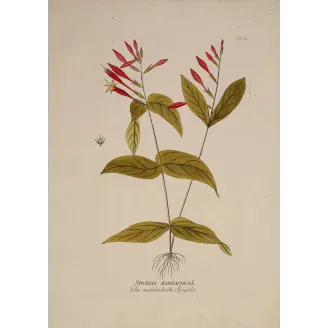
Original eighteenth-century botanical engraving depicting Spigelia marilandica L., published in Vienna as Plate 89 of Joseph Jacob von Plenck's Icones Plantarum Medicinalium. The elegant composition is distinguished by its graceful vertical rhythm, brilliant scarlet tubular flowers and refined contemporary hand colouring on fine laid paper.
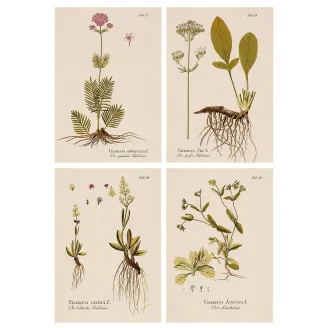
A complete four-plate botanical study devoted to the genus Valeriana, preserved exactly as originally published by Joseph Jacob von Plenck in Icones Plantarum Medicinalium. This Museum Quality Study Set combines scientific integrity, exceptional preservation and remarkable decorative harmony, offering collectors and interior designers an increasingly rare opportunity to acquire an intact eighteenth-century botanical sequence.
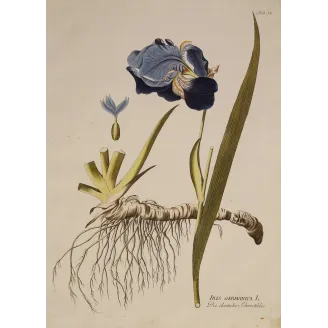
An original eighteenth-century botanical engraving depicting Iris germanica, published in Joseph Jacob von Plenck's celebrated Icones Plantarum Medicinalium. Printed on fine laid paper bearing the Honig watermark, the sheet combines scientific precision with the refined artistic craftsmanship of the Viennese botanical school.
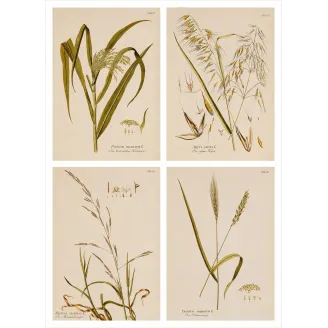
Seven-plate botanical corpus devoted to Europe's principal cereal crops, preserved exactly as originally published in Joseph Jacob von Plenck's Icones Plantarum Medicinalium. Combining scientific precision, historical significance and remarkable visual harmony, this Museum Quality Study Set documents the plants that shaped European agriculture and civilisation.
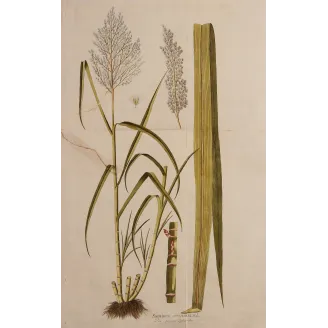
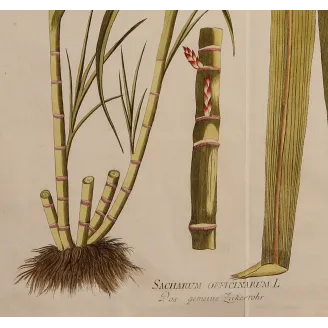
Exceptional large-format eighteenth-century botanical engraving depicting <em>Saccharum officinarum</em> L. (sugar cane), published as Plate 40 of Joseph Jacob von Plenck’s <em>Icones Plantarum Medicinalium</em>. Printed on a large folded sheet of laid paper with “IV” watermark and contemporary hand colouring, the composition combines the elegant vertical architecture of the cane with exceptionally delicate flowering panicles and a monumental isolated leaf. A distinctive Plenck Statement Piece preserving remarkable botanical clarity together with the visible material history of an eighteenth-century folded plate.
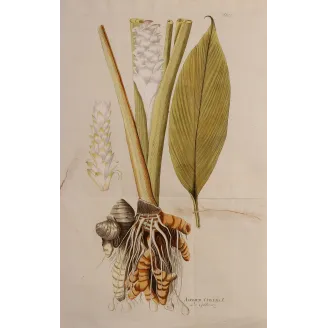
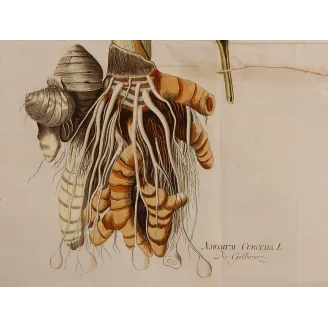
Exceptional large-format eighteenth-century botanical engraving depicting <em>Amomum Curcuma</em> L., published as Plate IV of Joseph Jacob von Plenck’s <em>Icones Plantarum Medicinalium</em>. Printed on a large folded sheet of Honig laid paper with complete watermark and contemporary hand colouring, the composition combines a remarkably refined pale inflorescence, monumental foliage and an exceptionally detailed rhizomatous structure. A powerful Plenck Statement Piece preserving both extraordinary botanical clarity and the visible material history of an eighteenth-century folded plate.
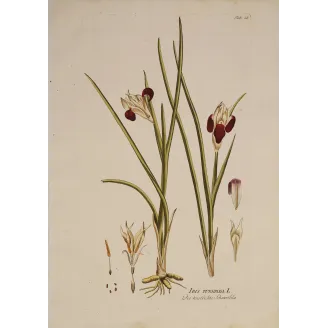
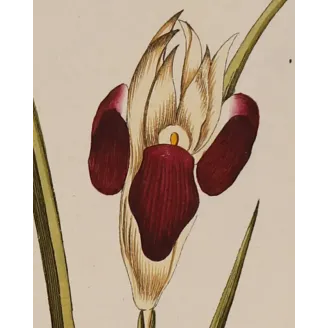
Original eighteenth-century botanical engraving depicting Iris tuberosa (Snake's Head Iris), published in Vienna by Joseph Jacob von Plenck for Icones Plantarum Medicinalium (Plate 38). This elegant composition combines two flowering specimens with finely engraved botanical details and a beautifully preserved complete Honig watermark. Contemporary hand colouring and selective gum arabic produce remarkable depth, while the velvety deep burgundy petals create one of the most refined colour harmonies within Plenck's celebrated Iris series.
This vivid 19th-century engraving depicts two exotic aracaris, showcasing striking contrasts of green, red and yellow plumage. A highly decorative composition combining scientific observation with strong visual appeal, ideal for collectors of tropical ornithology and refined interior spaces.
Fine 18th-century engraving of the Medlar Tree by Elisabeth Blackwell, featuring fruit, blossom, and botanical detail.
With its compound leaves and clusters of red berries, the sorb tree is rich in folk symbolism.
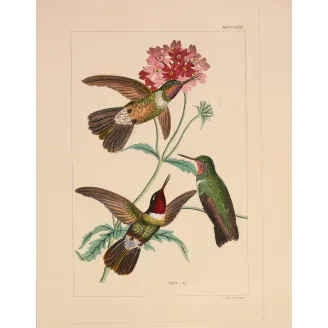
Original nineteenth-century hand-colored engraving by Ludwig Reichenbach, depicting three hummingbirds among pink blossoms. A rare later plate from the Trochilinarum Enumeratio corpus, not fully documented in the principal published index.
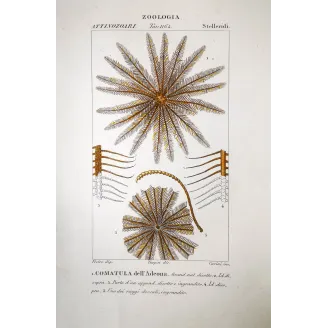
Rare 19th-century print of the feather star Comatula of the Adeona, with anatomical details.
Detailed antique illustrations of the date palm tree and its floral and fruit anatomy.
Fine botanical engraving showing delicate redcurrant clusters and bright green leaves.
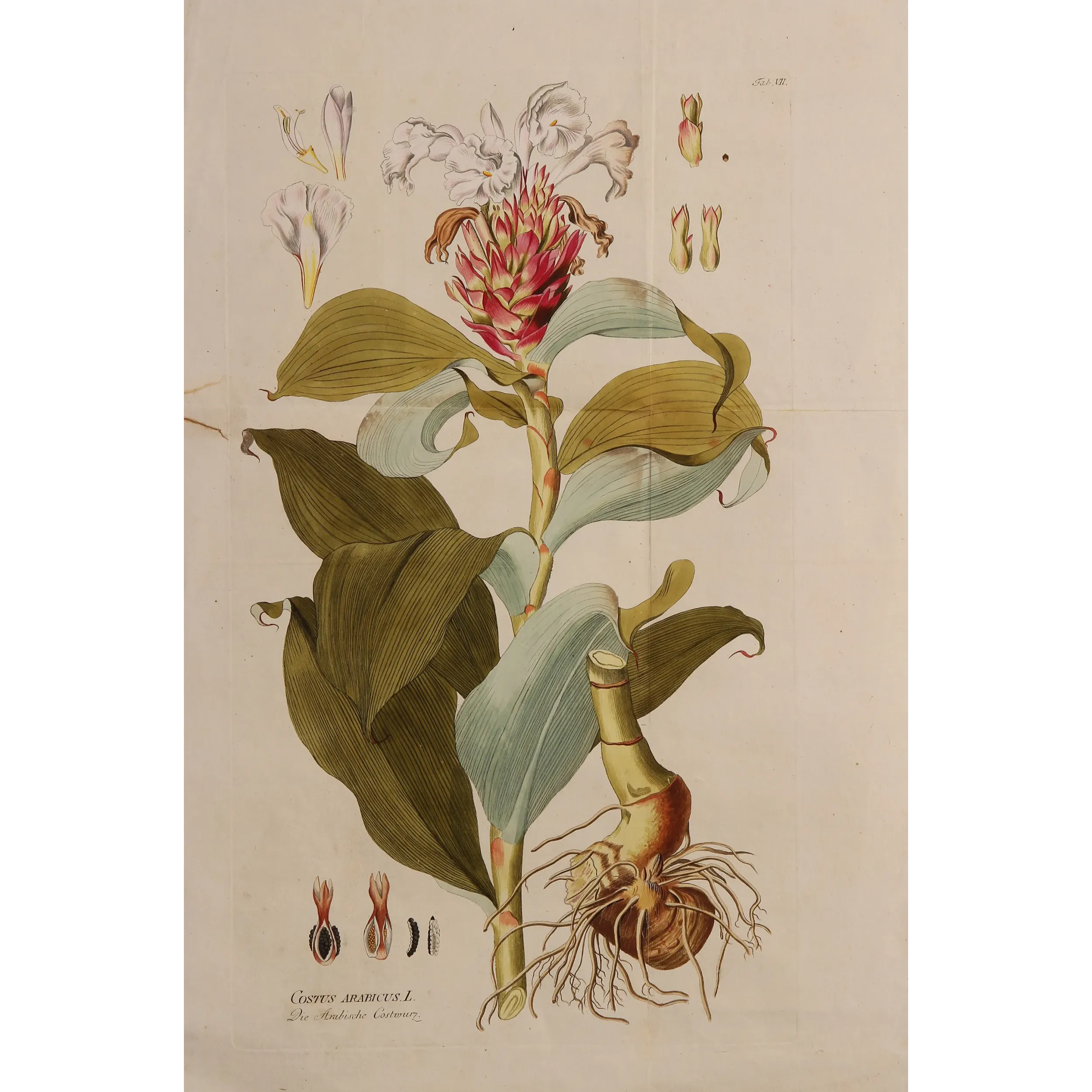
Exceptional large-format eighteenth-century botanical engraving depicting <em>Costus arabicus</em> L., published as Plate VII of Joseph Jacob von Plenck’s <em>Icones Plantarum Medicinalium</em>. Printed on an unusually large folded sheet measuring 66.3 × 43.5 cm, the composition combines a monumental flowering specimen, extensive root and rhizome structures and finely observed botanical details with beautifully preserved contemporary hand colouring. Complete Honig watermark with logo.