Subcategories
-

Redouté P.J.
Pierre-Joseph Redouté – Arboreal Elegance from Arbres et Arbustes
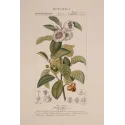
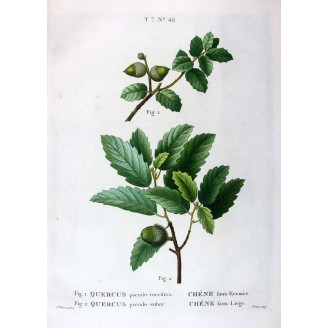
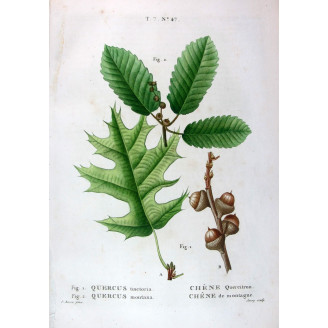
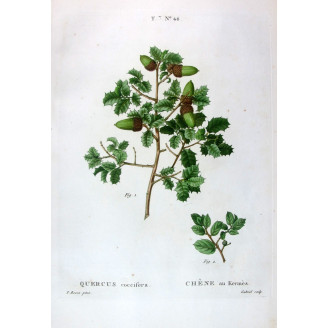
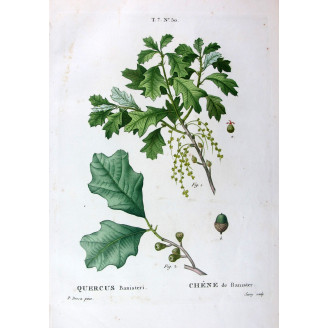
Discover a refined selection of original early nineteenth-century botanical prints after paintings by Pierre-Joseph Redouté. Created for the illustrated publishing enterprise commonly known as the Nouveau Duhamel, these plates extend his botanical art beyond the flower garden to trees, shrubs and cultivated fruit.
Branches, leaves, flowers and fruit are arranged with scientific clarity and remarkable visual balance. Open areas of paper allow each botanical structure to remain legible, while subtle transitions of line, tone and colour give foliage and fruit volume and presence.
Each original impression is considered individually. Its catalogue entry records the botanical subject and composition alongside the inscriptions, engraver, paper, colouring, margins, condition and other physical evidence observable in the surviving sheet.
— • —Buy with Confidence
 Original antique impressions — carefully selected and individually examined
- Original works on paper — never modern reproductions
- Worldwide delivery via UPS / DHL Premium Express — free above €300
- No customs duties or taxes worldwide — no delays, no extra charges upon delivery
- Secure, professional packaging for safe international delivery
- Returns accepted — a smooth, worry-free experience
— • —Heritage Stories – Two Ways of Reading Redouté
Explore Redouté's arboreal work through two complementary perspectives: the visual relationships revealed by a coherent group of cherry engravings, and the wider editorial and material world in which the plates of the Nouveau Duhamel were produced.
Curatorial PerspectivePierre-Joseph Redouté: Floral Art in the Service of ScienceA comparative reading of the cherry-tree engravings: branching forms, foliage, fruit and the compositional choices that allow related botanical images to be understood both individually and as a coherent group.
Historical PerspectivePierre-Joseph Redouté and the Making of a Botanical ImageAn examination of the Nouveau Duhamel as a collaborative publishing enterprise: Redouté's painted models, the work of engravers, the ambitions of the publication and the material evidence preserved by individual sheets.
Looking for original Redouté botanical prints? Explore authentic early nineteenth-century engravings of trees, shrubs and cultivated fruit from the Nouveau Duhamel — works in which botanical observation, printmaking and refined visual composition come together.
-

Turpin P.J.F
Curated Highlights from the Collection
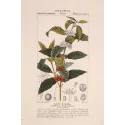
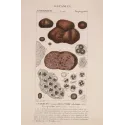
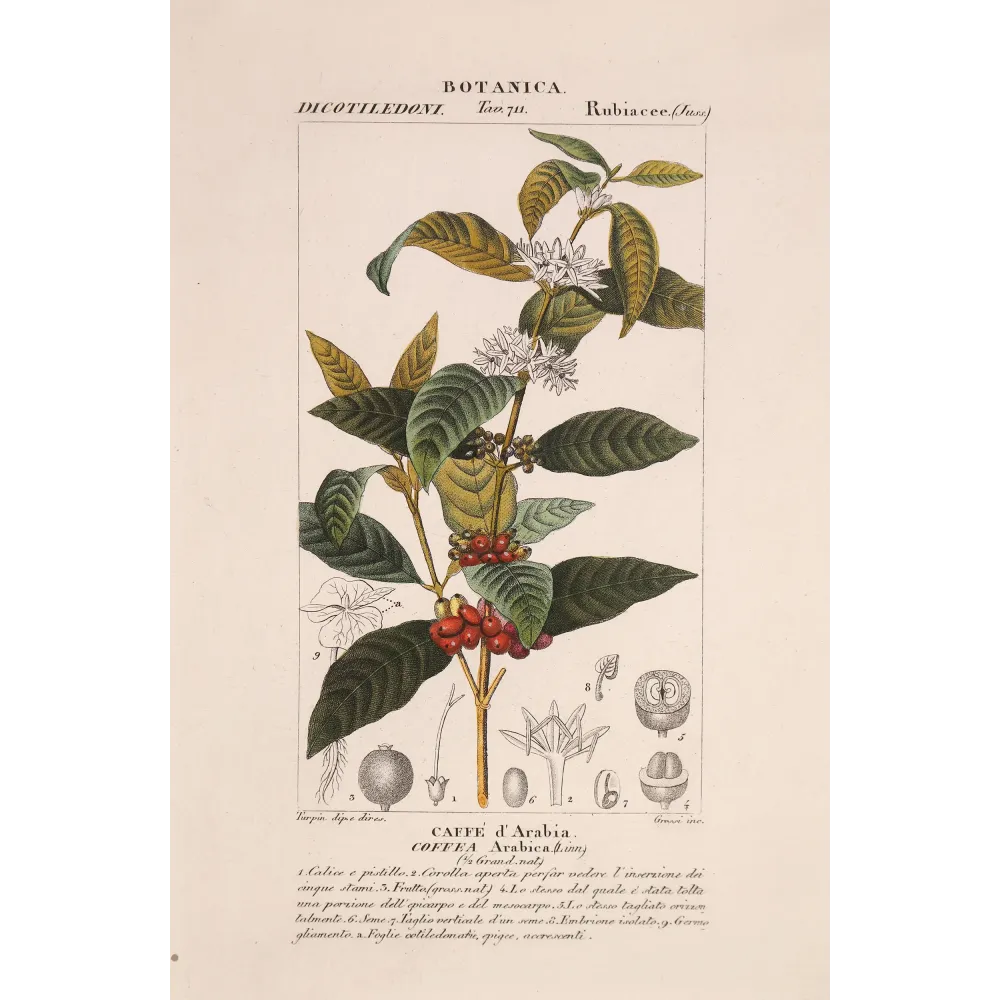
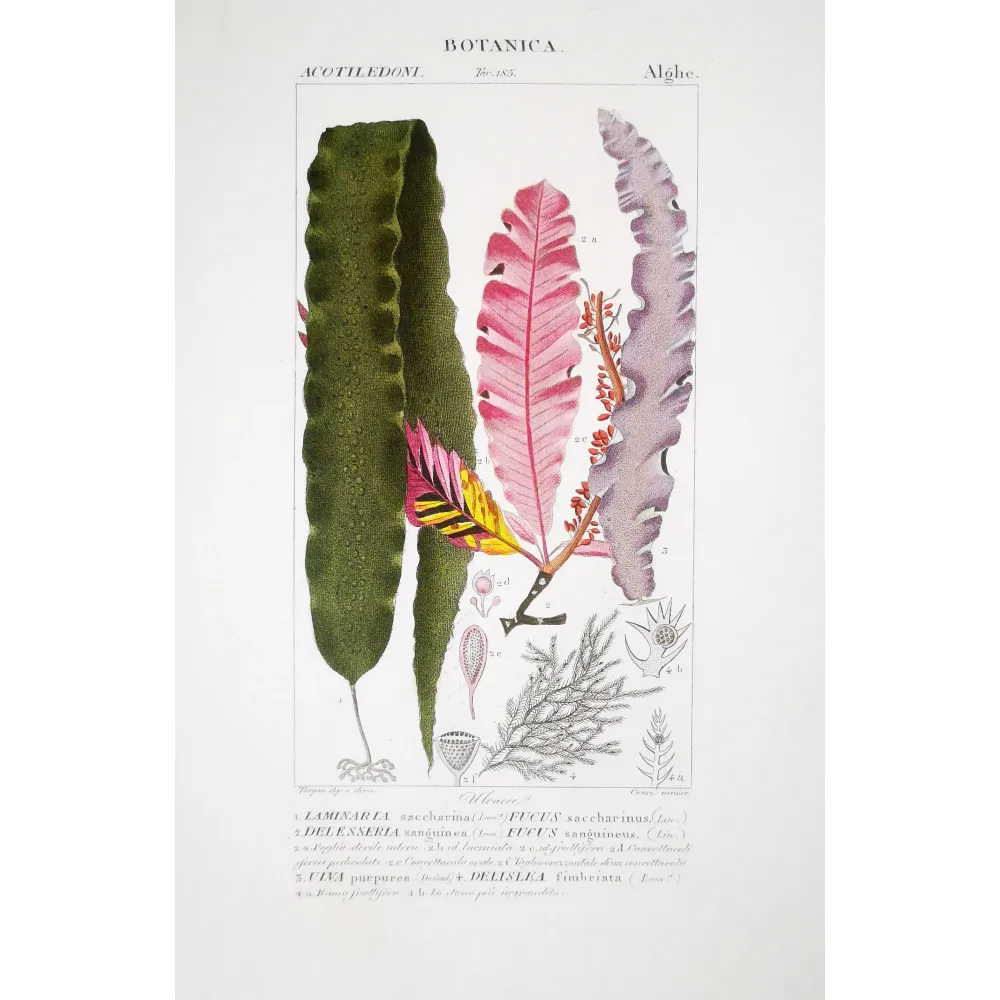
Selected botanical engravings by Turpin from the Dizionario di Scienze Naturali.
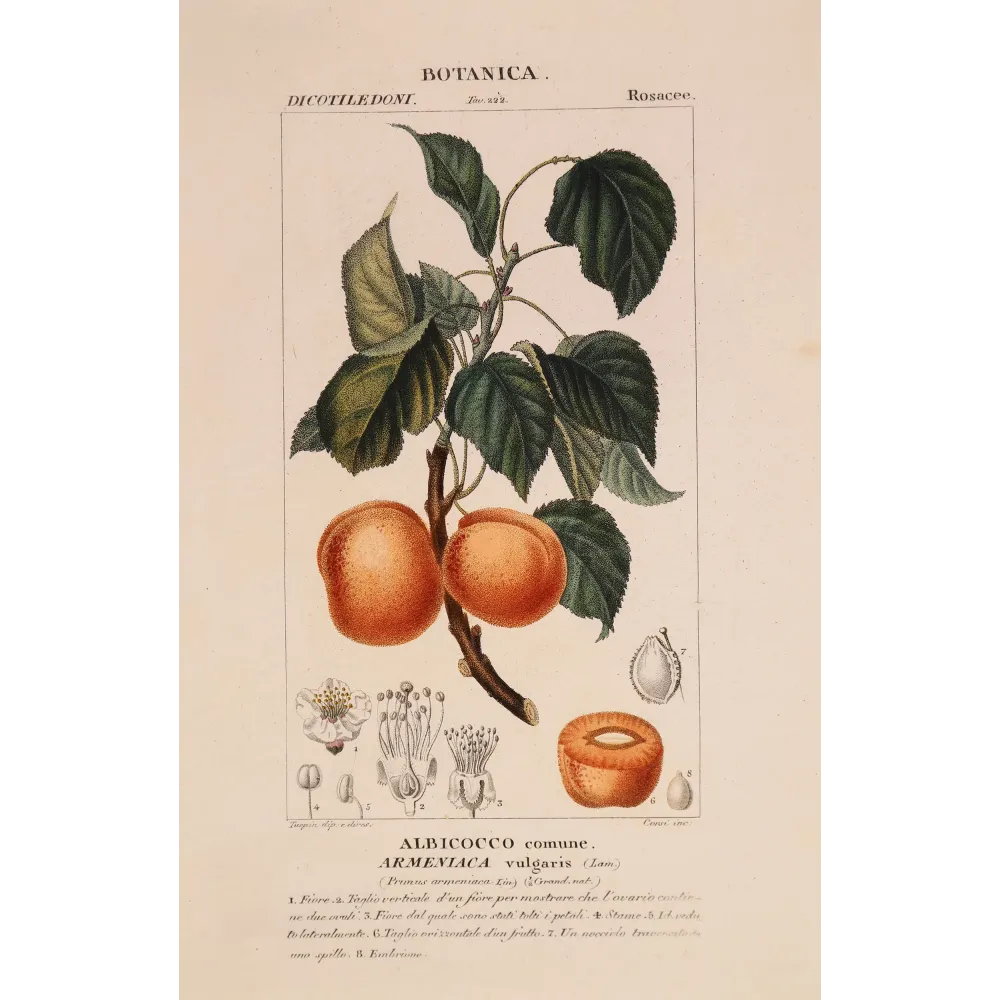 — • —
Pierre Jean François Turpin – Botanical Engravings in Perfect Harmony
Discover the botanical elegance of Pierre Jean François Turpin, one of the greatest botanical illustrators of the 19th century. These original engravings, taken from the Florentine Dizionario di Scienze Naturali, reveal flowers, leaves and plant structures with a balance of scientific precision and poetic grace that has few equals in the history of natural history art.
Printed over 180 years ago and hand-finished with delicate gum arabic highlights, each plate combines fine line work, subtle shading and carefully observed detail. Turpin’s compositions are at once clear and lyrical, making these engravings ideal for interiors that seek both decorative refinement and a strong connection to scientific heritage.
From elegant flowers to rare botanical species and delicate studies of algae and fruit, these sheets offer a curated window into the visual language of early 19th-century botany — perfect for collectors, designers and anyone who appreciates art and knowledge in perfect harmony.
— • —Buy with Confidence
- Original antique prints — carefully selected and professionally preserved
- Individually curated — each piece is unique and never a reproduction
- Worldwide delivery via UPS / DHL Premium Express — free above €300
- No customs duties or taxes worldwide — no delays, no extra charges upon delivery
- Secure, professional packaging for safe international delivery
- Returns accepted — a smooth, worry-free experience
— • —Heritage Stories – Turpin in the Dizionario di Scienze Naturali
These botanical engravings belong to the historic Dizionario di Scienze Naturali, a monumental Florentine work that united scientific accuracy with refined naturalist illustration. Turpin’s plates stand out for their elegance, clarity and poetic structure — admired today by collectors, designers and botanical art lovers alike.
Pierre Jean François Turpin — The Botanical Illustrator of Natural Harmony Sacchetti Collection — “Not Just Another Print” Looking for original antique botanical prints by Turpin? Discover authentic 19th-century engravings from the Dizionario di Scienze Naturali, featuring elegant flowers, delicate ferns and rare plants — timeless scientific botanical art for refined interiors and serious collectors.
-
Bessa Pancrace
Curated Highlights from the Collection
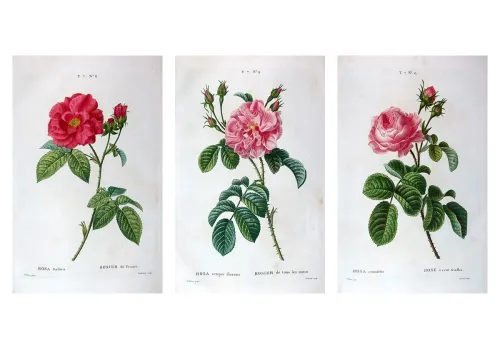
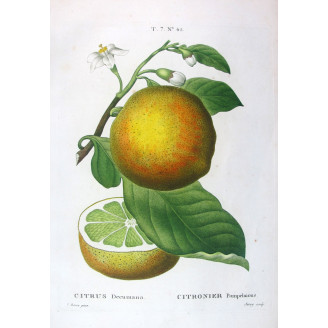
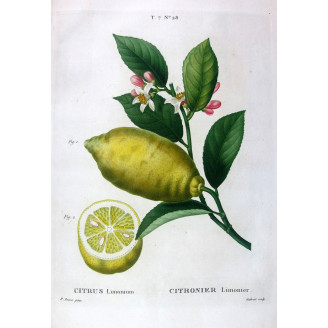
Selected botanical engravings by Pancrace Bessa from Arbres et Arbustes.
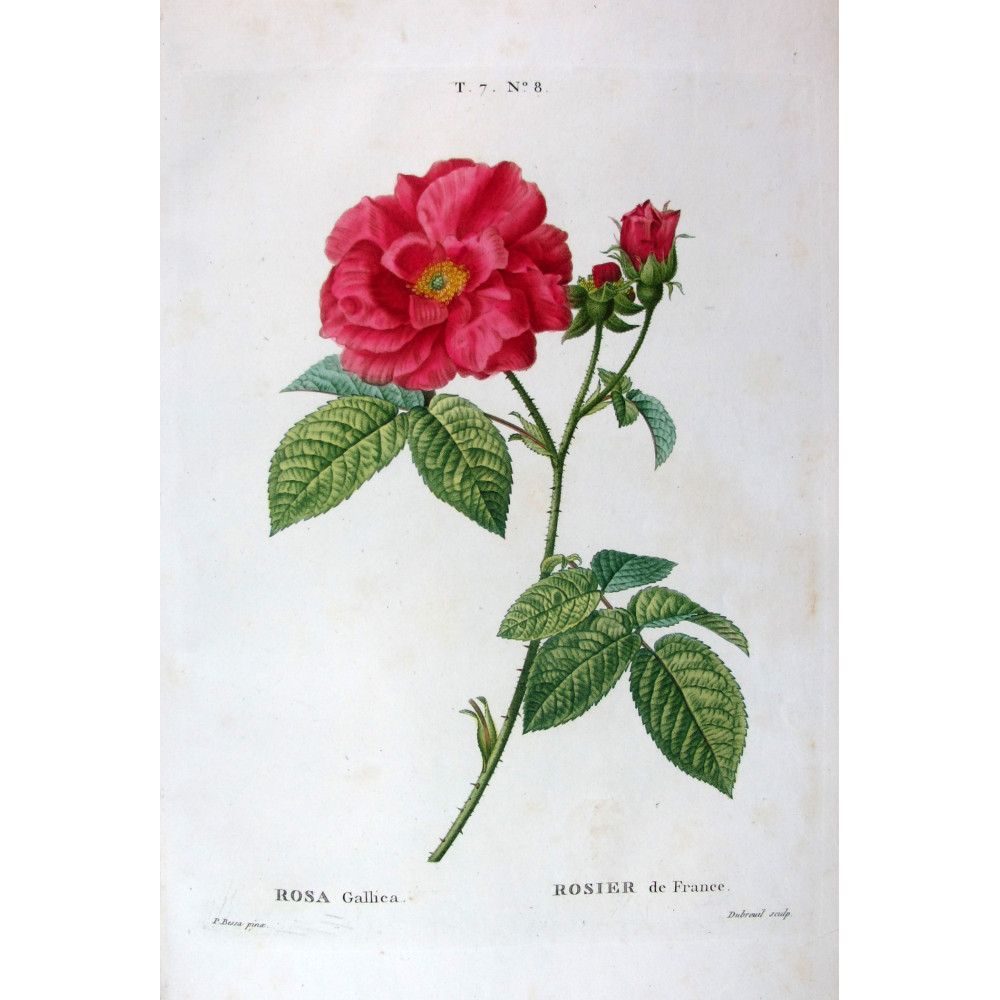
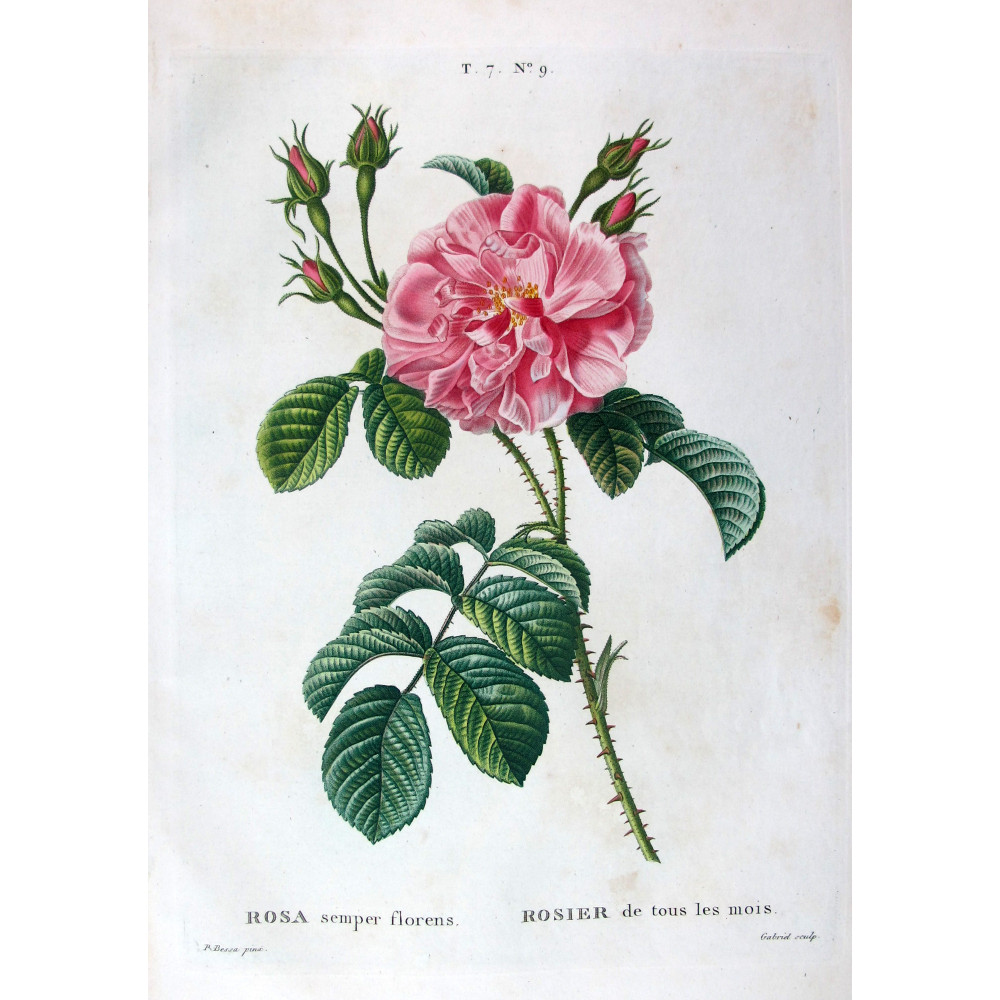
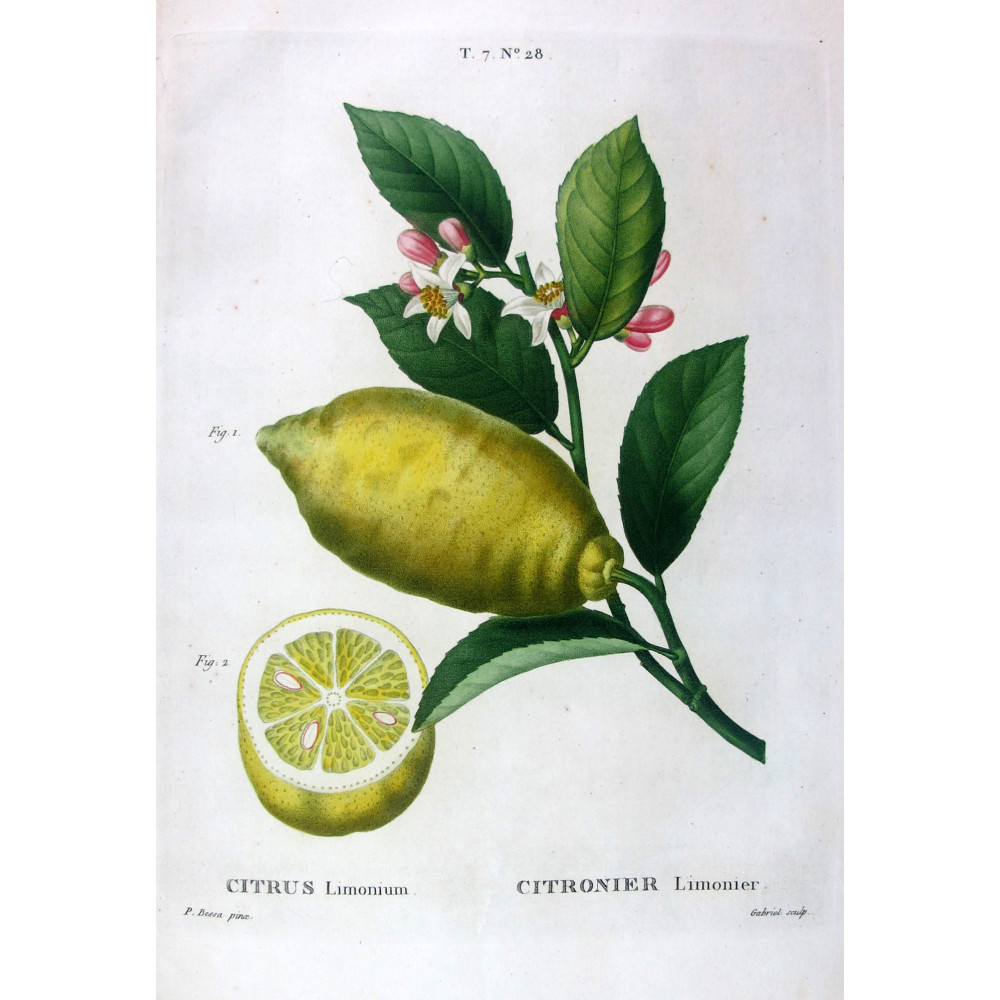 — • —
Pancrace Bessa – Botanical Grace from Arbres et Arbustes
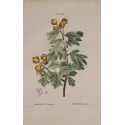
Explore the delicate precision of Pancrace Bessa’s botanical engravings, created for the monumental French work Arbres et Arbustes. Bessa’s style blends scientific clarity with a painter’s sensitivity: finely observed leaves, blossoms and fruit are arranged in compositions that feel both natural and serenely balanced.
These original 19th-century plates were printed with great care and finished by hand, often with subtle gum-arabic highlights that enrich light and texture. From garden roses to fruit-bearing trees, each sheet captures a moment of botanical poise — ideal for interiors that seek refinement without excess.
Whether framed individually or curated as a small gallery, Bessa’s engravings bring a quietly luxurious atmosphere to living rooms, studies and elegant kitchen spaces, while preserving the scientific spirit of early 19th-century natural history.
— • —Buy with Confidence
- Original antique prints — carefully selected and professionally preserved
- Individually curated — each piece is unique and never a reproduction
- Worldwide delivery via UPS / DHL Premium Express — free above €300
- No customs duties or taxes worldwide — no delays, no extra charges upon delivery
- Secure, professional packaging for safe international delivery
- Returns accepted — a smooth, worry-free experience
— • —Heritage Stories – Pancrace Bessa and the World of Arbres et Arbustes
Discover how Pancrace Bessa worked alongside the great botanists and patrons of his time to create one of the most refined visual records of trees and shrubs. His plates from Arbres et Arbustes stand at the crossroads of scientific observation and poetic botanical painting.
Pancrace Bessa — The Naturalist Painter of Botanical Grace Pierre-Joseph Redouté — Floral Art in the Service of Science Looking for original antique botanical prints by Pancrace Bessa? Discover 19th-century engravings of trees, shrubs, flowers and rare garden species — refined botanical wall art with both historical value and decorative beauty, ideal for collectors and sophisticated interiors.
-
Elisabeth Blackwell
Curated Highlights from the Collection
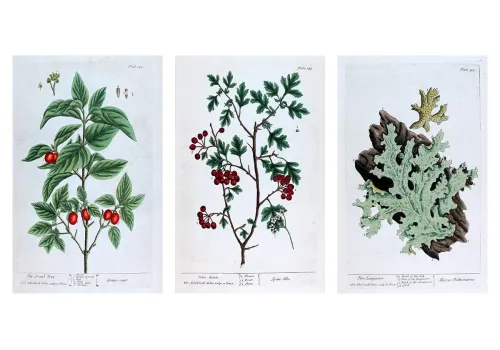
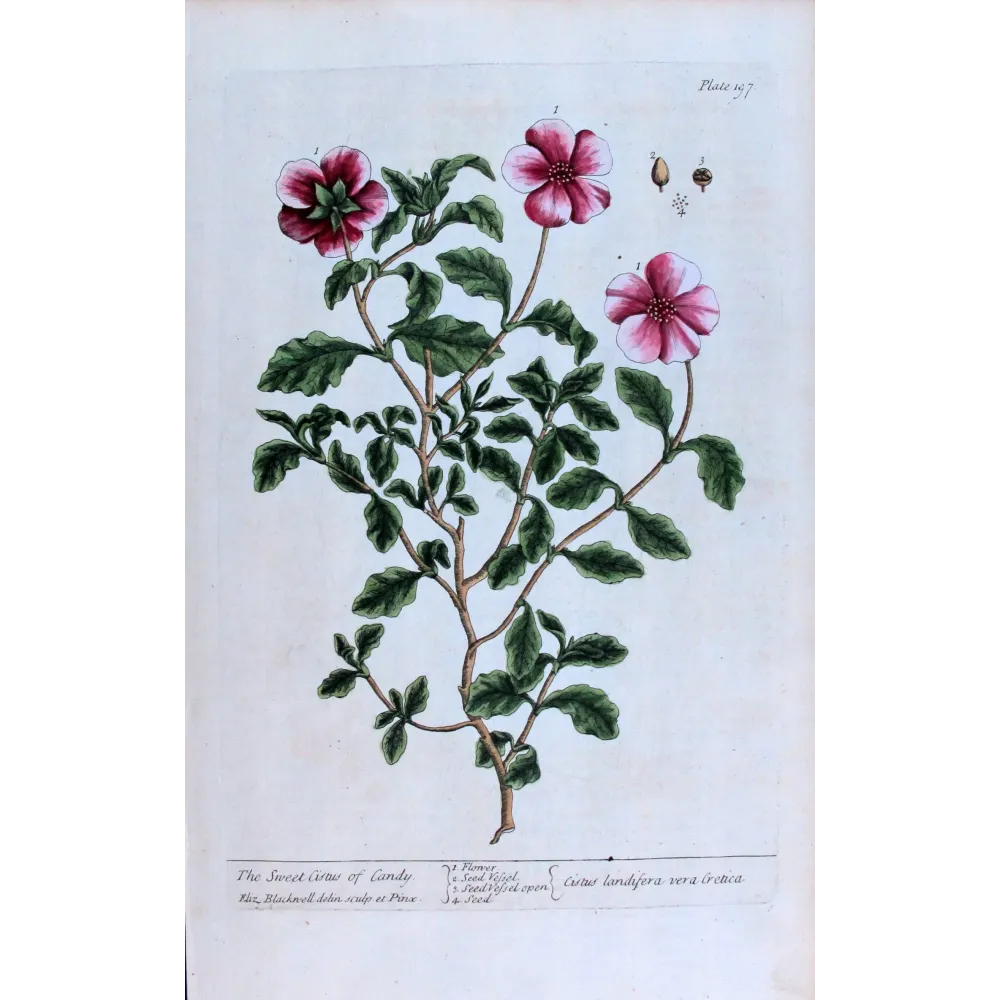
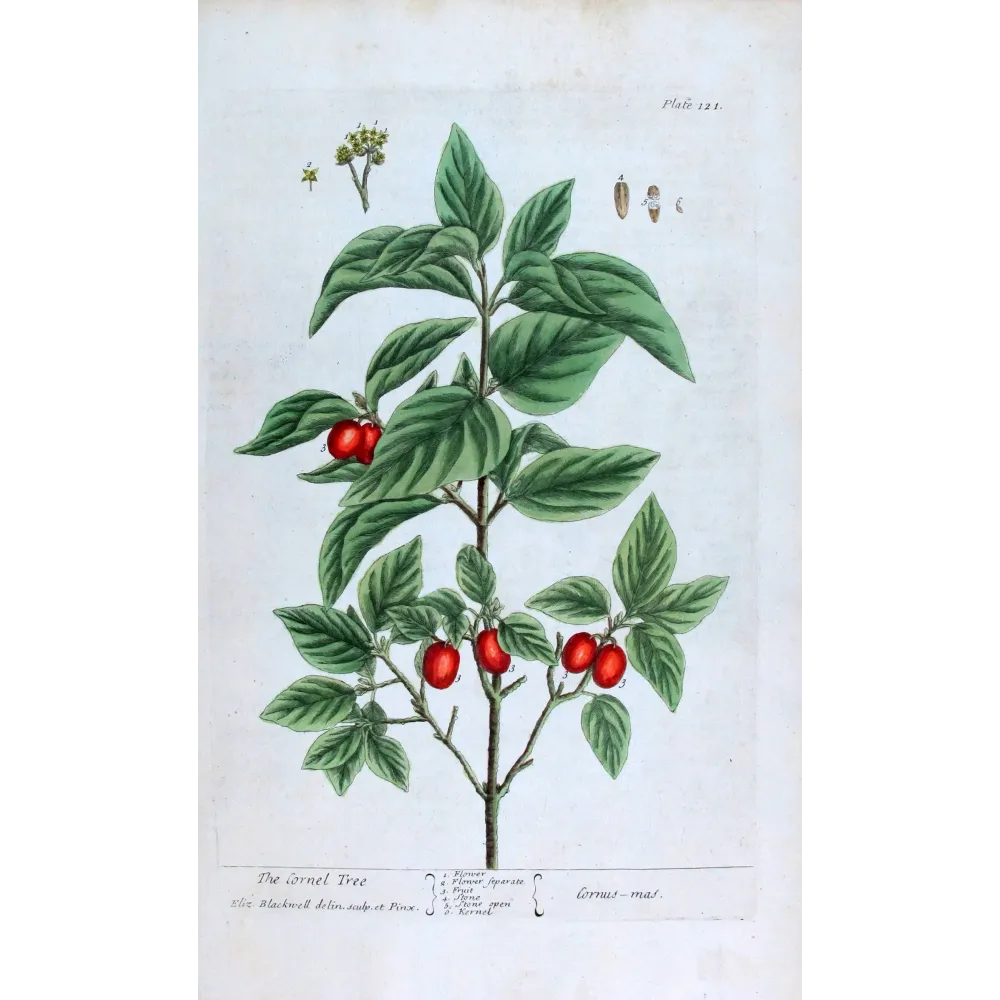
Selected botanical engravings from Elisabeth Blackwell’s A Curious Herbal.
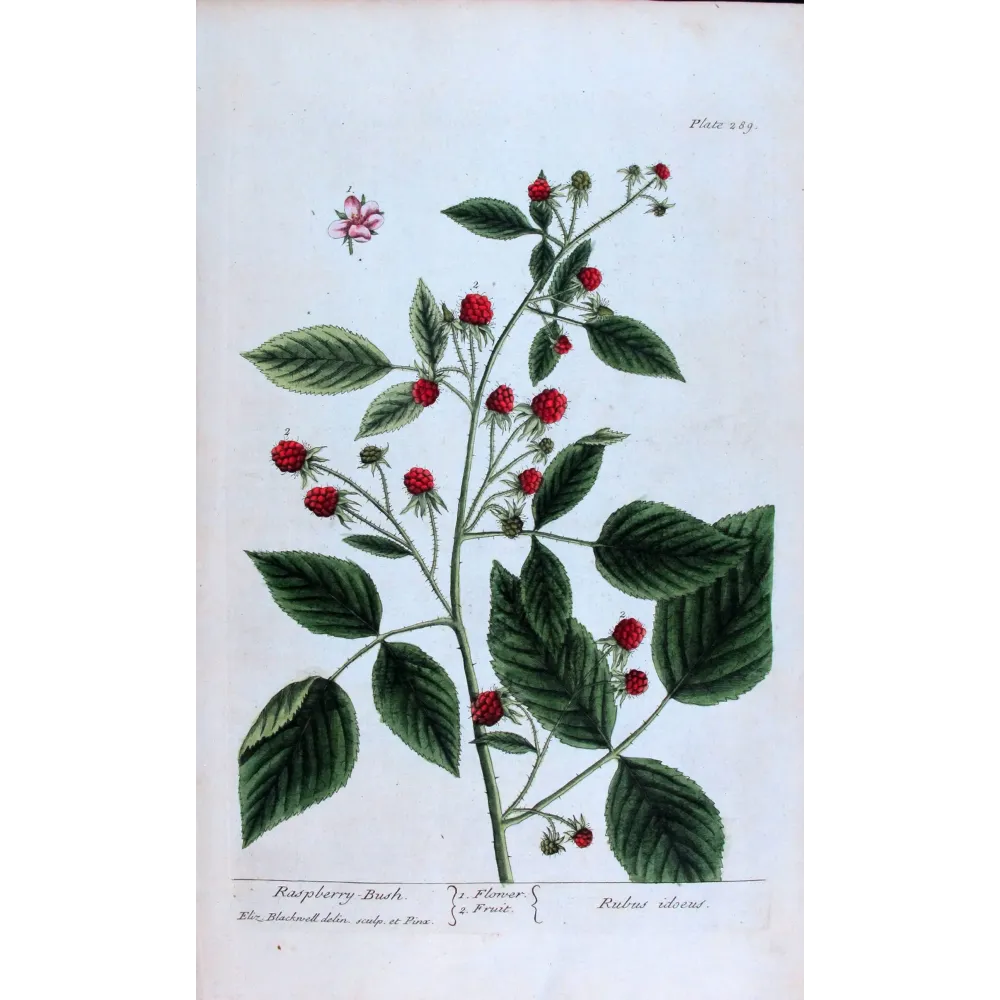 — • —
Elisabeth Blackwell – Plates from the 1737 Edition of A Curious Herbal
Discover a curated selection of original 18th-century botanical engravings by Elisabeth Blackwell, taken from the 1737 edition of A Curious Herbal. These plates were created to document medicinal plants with scientific accuracy and artistic grace, making Blackwell one of the pioneering female illustrators in the history of natural science.
Each engraving combines finely observed plant structure with delicate hand-colouring, capturing herbs, shrubs and garden species used in early-modern medicine and household remedies. From roots and stems to flowers and fruit, every detail reflects a careful dialogue between botany, pharmacy and visual art.
These original plates are ideal for refined interiors, herbal-inspired kitchens, studios and reading rooms, or as meaningful gifts for collectors, physicians, pharmacists and lovers of botanical history who appreciate both the beauty and the story behind each plant.
— • —Buy with Confidence
- Original antique prints — carefully selected and professionally preserved
- Individually curated — each piece is unique and never a reproduction
- Worldwide delivery via UPS / DHL Premium Express — free above €300
- No customs duties or taxes worldwide — no delays, no extra charges upon delivery
- Secure, professional packaging for safe international delivery
- Returns accepted — a smooth, worry-free experience
— • —Heritage Stories – Elisabeth Blackwell and A Curious Herbal
Behind these plates lies an extraordinary story of resilience, scholarship and artistic talent. Working in London in the 1730s, Elisabeth Blackwell produced A Curious Herbal to document medicinal plants, supporting her family while contributing to the advancement of botanical and medical knowledge.
Read the story behind A Curious Herbal and Elisabeth Blackwell → Looking for original botanical herb prints and antique medicinal plant engravings to enrich your home, office, kitchen or studio? Explore authentic 18th-century plates from Elisabeth Blackwell’s A Curious Herbal — timeless botanical artworks where science, history and interior elegance meet.
-
Vietz Icones Plantarum
Curated Highlights from the Collection
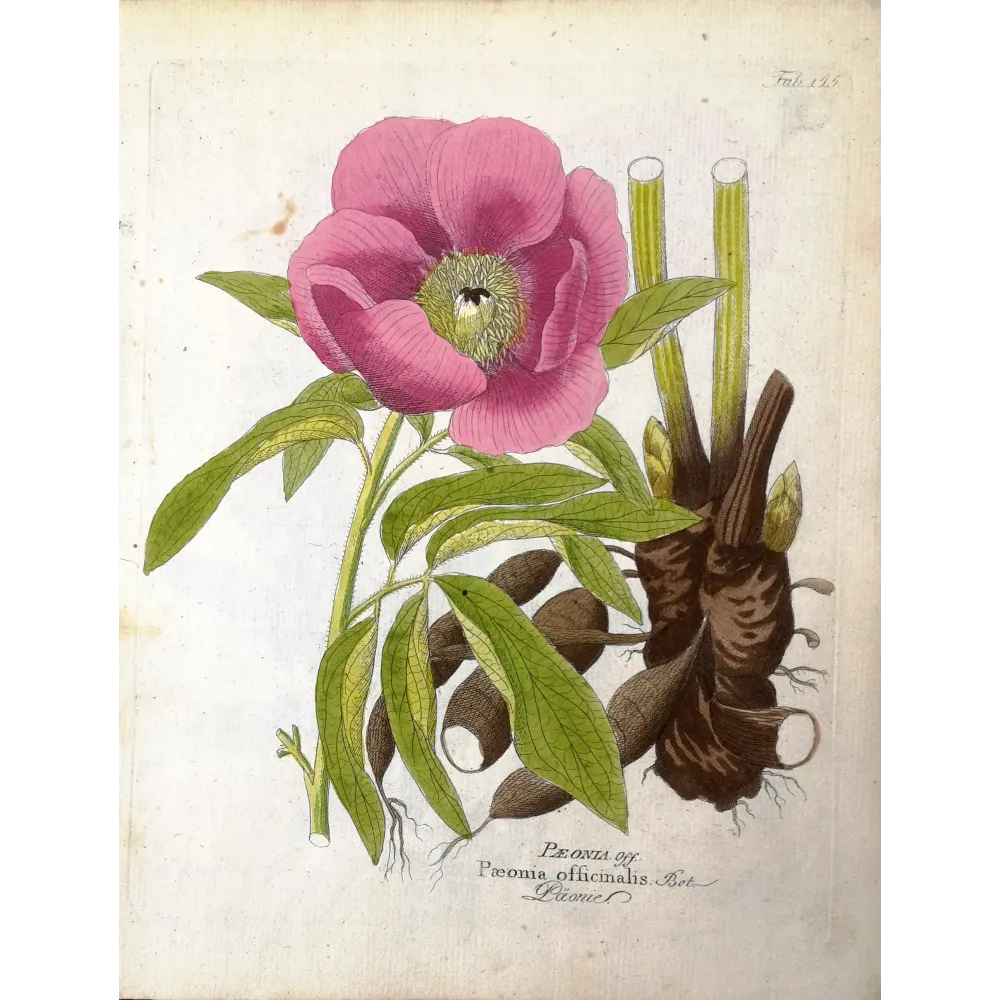
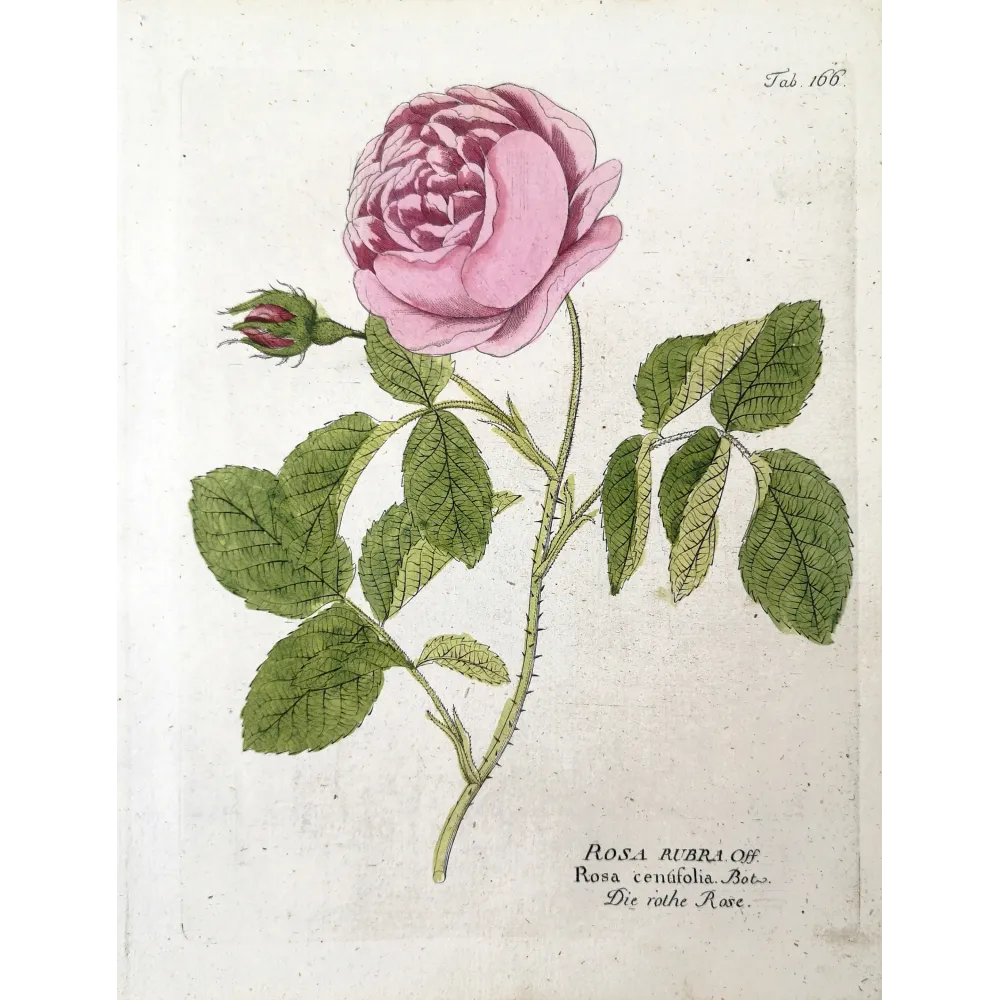
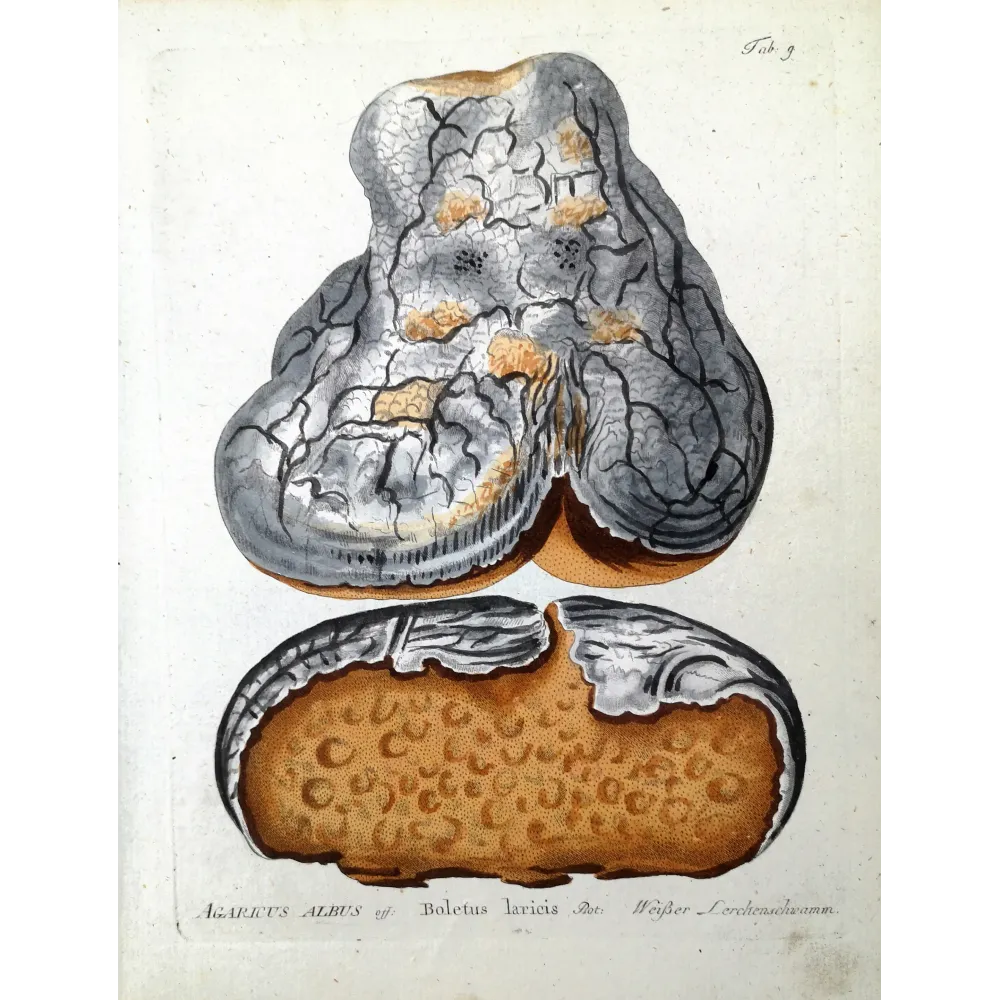
Selected botanical engravings from Vietz’s Icones Plantarum.
 — • —
Vietz – Icones Plantarum
The botanical engravings from Ferdinand Bernhard Vietz’s Icones Plantarum belong to one of the most refined visual traditions of early 19th-century Vienna. These plates, finely engraved and delicately hand-coloured, were conceived not only as scientific documents but as luminous portraits of plant structure — elegant compositions where venation, stems and blossoms are rendered with remarkable clarity.
Their balanced proportions and subtle chromatic tones make each engraving a timeless decorative presence. Whether displayed singly or as curated sets, Vietz’s botanicals bring a quiet, intellectual elegance to contemporary interiors — ideal for collectors of natural history art and for anyone seeking authentic antique prints of serene, ordered beauty.
— • —Buy with Confidence
- Original antique prints — carefully selected and professionally preserved
- Individually curated — each piece is unique and never a reproduction
- Worldwide delivery via UPS / DHL Premium Express — free above €300
- No customs duties or taxes worldwide — no delays, no extra charges upon delivery
- Secure, professional packaging for safe international delivery
- Returns accepted — a smooth, worry-free experience
— • —Heritage Stories
Published in the early 1800s, Icones Plantarum embodies Vienna’s Enlightenment spirit — a cultural landscape in which scientific accuracy and aesthetic refinement moved in parallel. Vietz’s engravings served as both pedagogical tools and objects of contemplation, revealing botanical structure with an almost architectural sense of order.
Read more about Ferdinand Bernhard Vietz and Icones Plantarum →
Looking for original botanical prints and antique botanical engravings to enrich your home, office or studio? Explore authentic early 19th-century plates from Ferdinand Bernhard Vietz’s Icones Plantarum — refined botanical artworks where scientific clarity, historical depth and timeless interior elegance meet.
-
Abraham Munting
Curated Highlights from the Collection
Selected botanical engravings from Abraham Munting’s remarkable natural history studies.
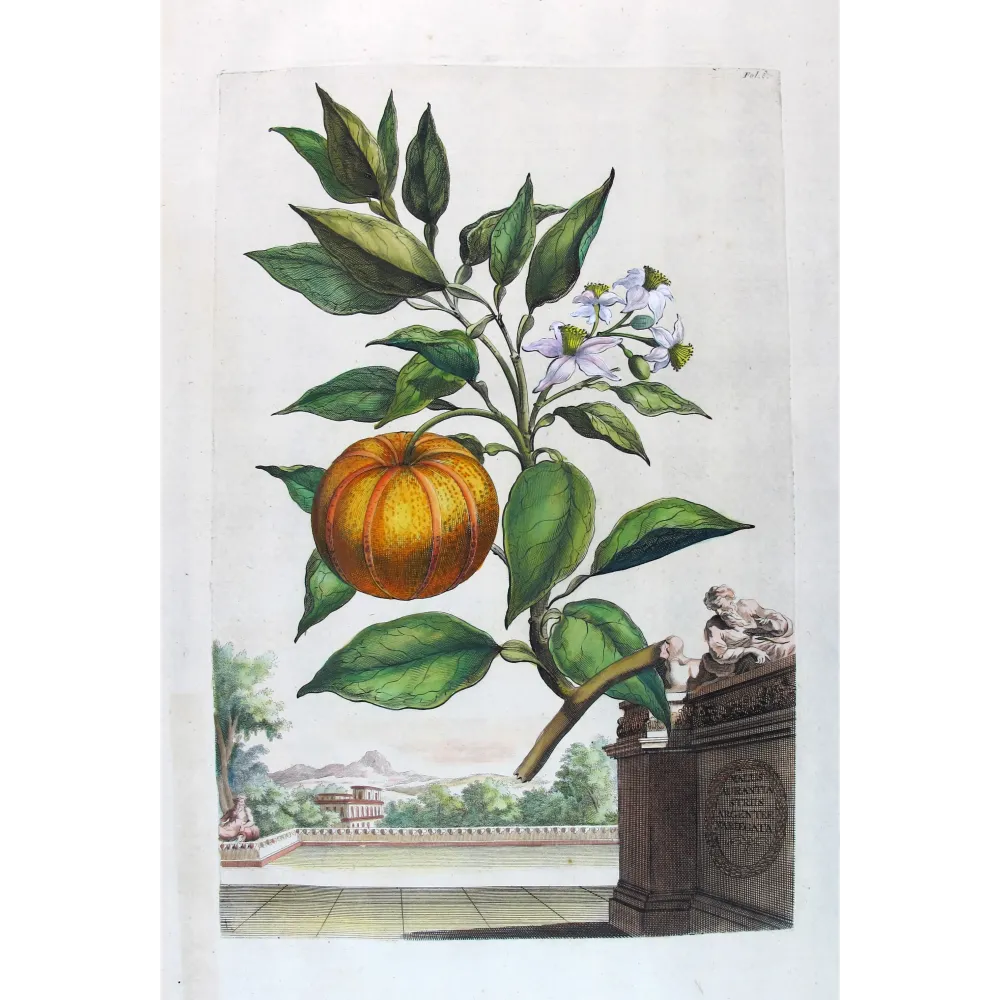
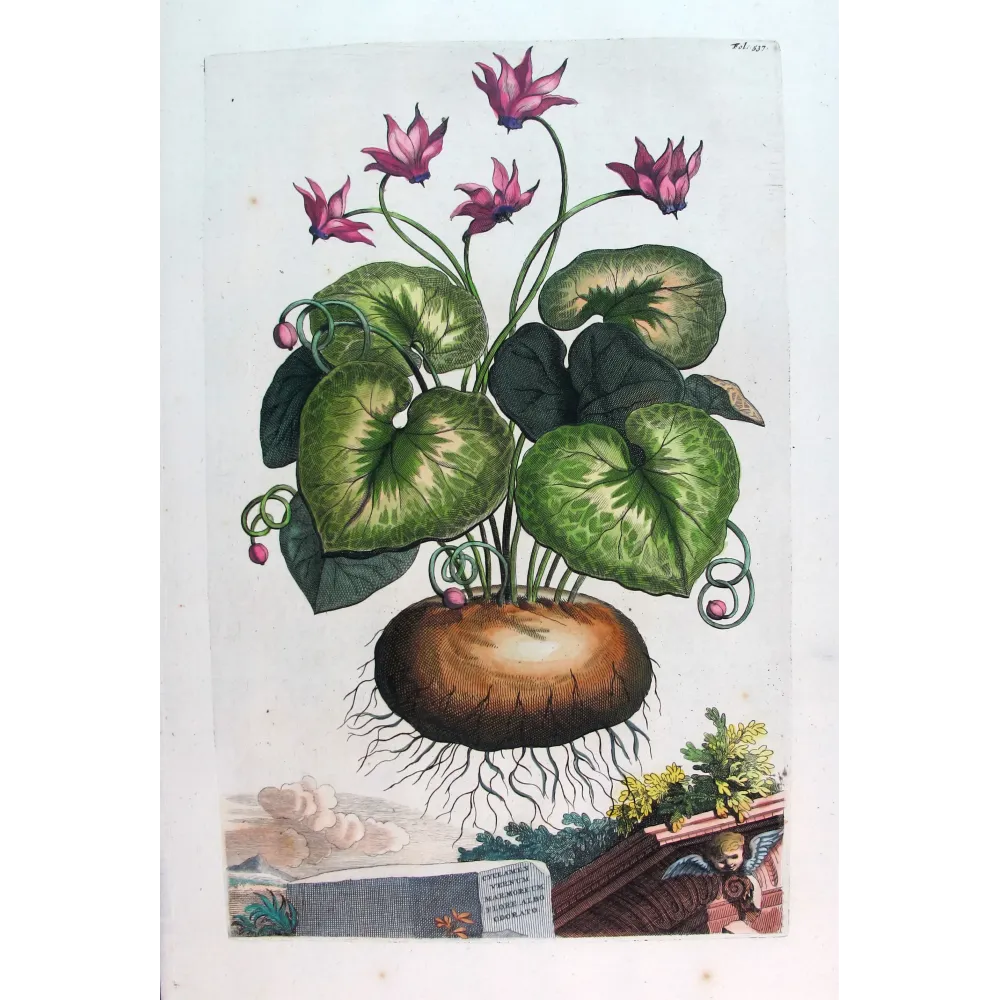
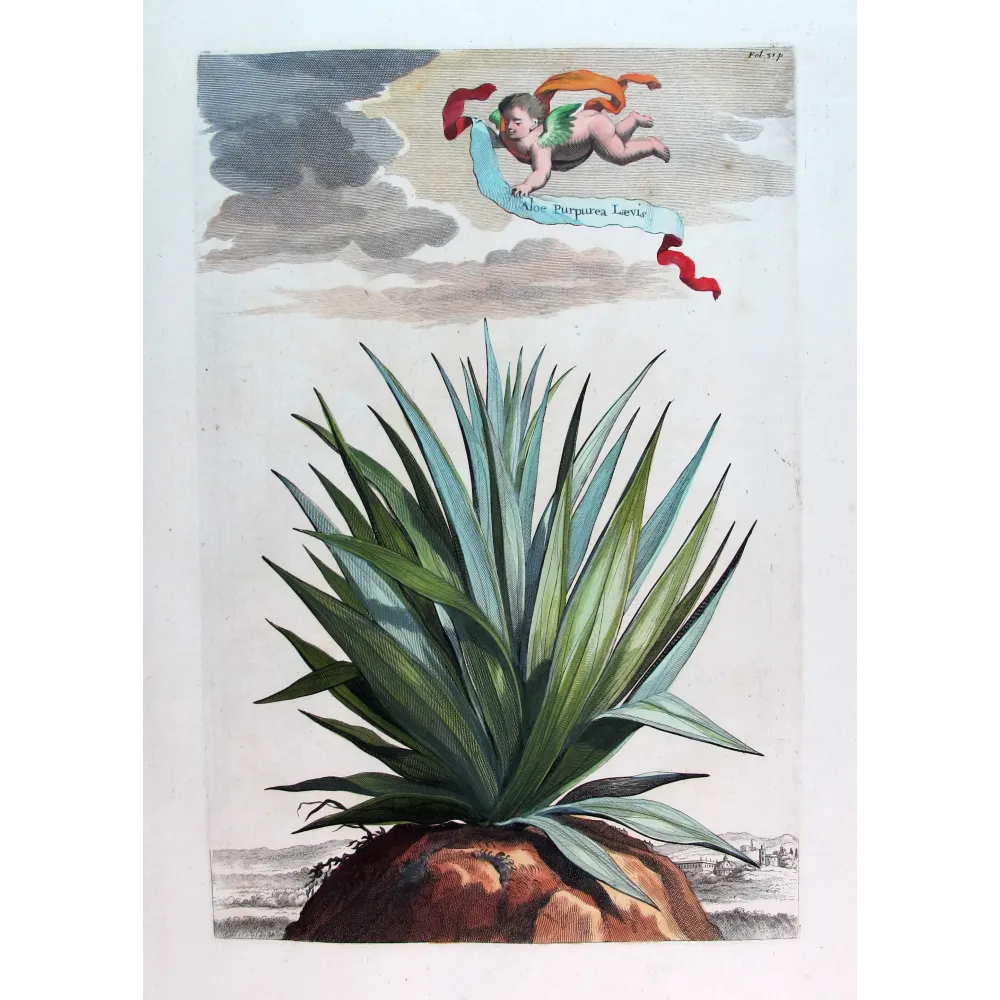 — • —
Abraham Munting – Botanical Curiosities from Nauwkeurige Beschryving der Aardgewassen
Discover a rare selection of original 17th-century botanical engravings by Abraham Munting, one of the most distinctive figures in early botanical illustration. His work originates from the Dutch publication Nauwkeurige Beschryving der Aardgewassen, later known as Phytographia Curiosa, where plants are presented not merely as scientific specimens, but as expressive visual compositions.
Published in Amsterdam at the end of the 17th century, these engravings belong to a fascinating era when botany still retained the spirit of the cabinet of curiosities. Munting’s plates often depict the full structure of each plant — roots, stems, blossoms and fruits — arranged with an almost sculptural sense of presence and balance.
These prints offer a distinctive decorative and intellectual quality: unusual botanical forms, strong vertical compositions, and a visual language that blends observation with imagination. Ideal for collectors of early natural history and for interiors seeking rare works with depth, character and historical resonance.
— • —Buy with Confidence
- Original antique prints — carefully selected and professionally preserved
- Individually curated — each piece is unique and never a reproduction
- Worldwide delivery via UPS / DHL Premium Express — free above €300
- No customs duties or taxes worldwide — no delays, no extra charges upon delivery
- Secure, professional packaging for safe international delivery
- Returns accepted — a smooth, worry-free experience
— • —Heritage Stories – The World of Munting
Explore the early age of botanical exploration, when science, wonder and artistic invention were deeply intertwined. Munting’s engravings reflect a world in which plants were studied with care, but also presented with a theatrical beauty that still feels extraordinary today.
Abraham Munting — Botanical Curiosity and Early Natural Science →
Looking for original Munting botanical prints? Discover authentic 17th-century engravings from Nauwkeurige Beschryving der Aardgewassen, also known as Phytographia Curiosa — rare works of early botanical art combining scientific observation, decorative power and cabinet-of-curiosities charm.
-
Philip Miller
Curated Highlights from the Collection
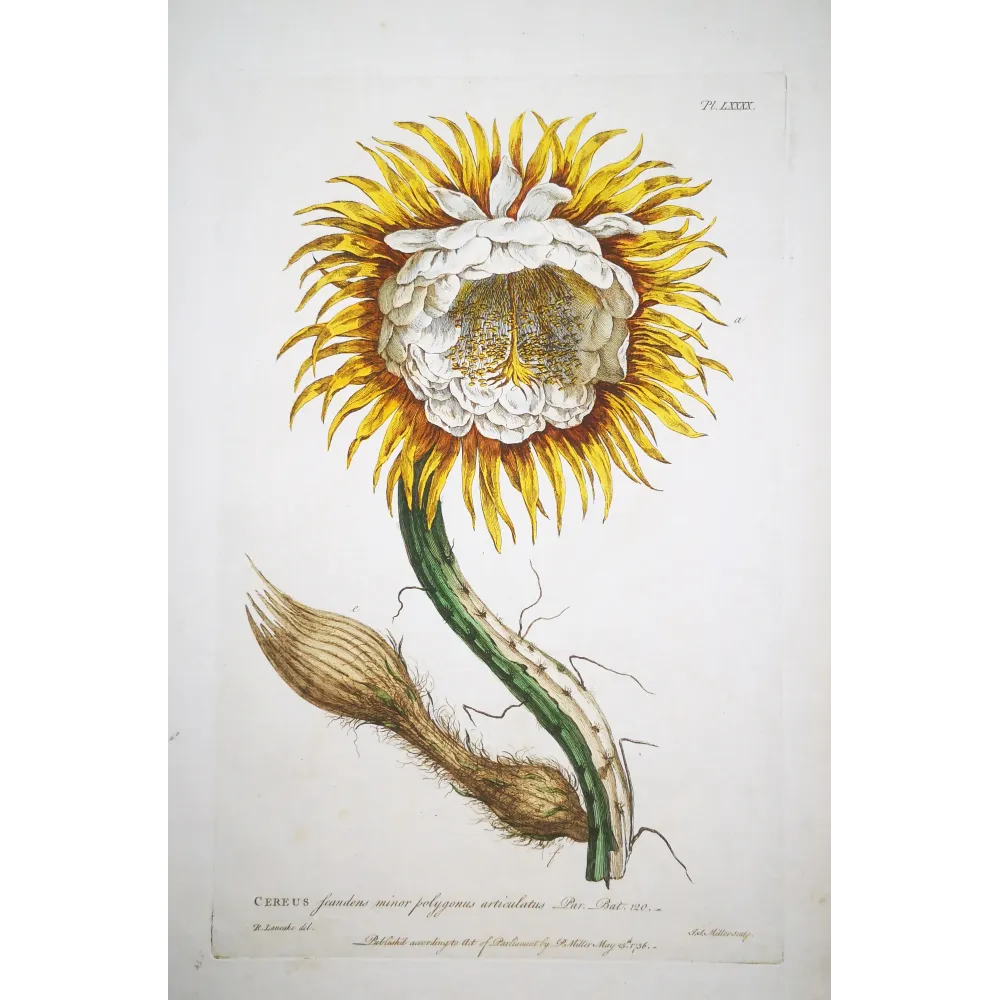
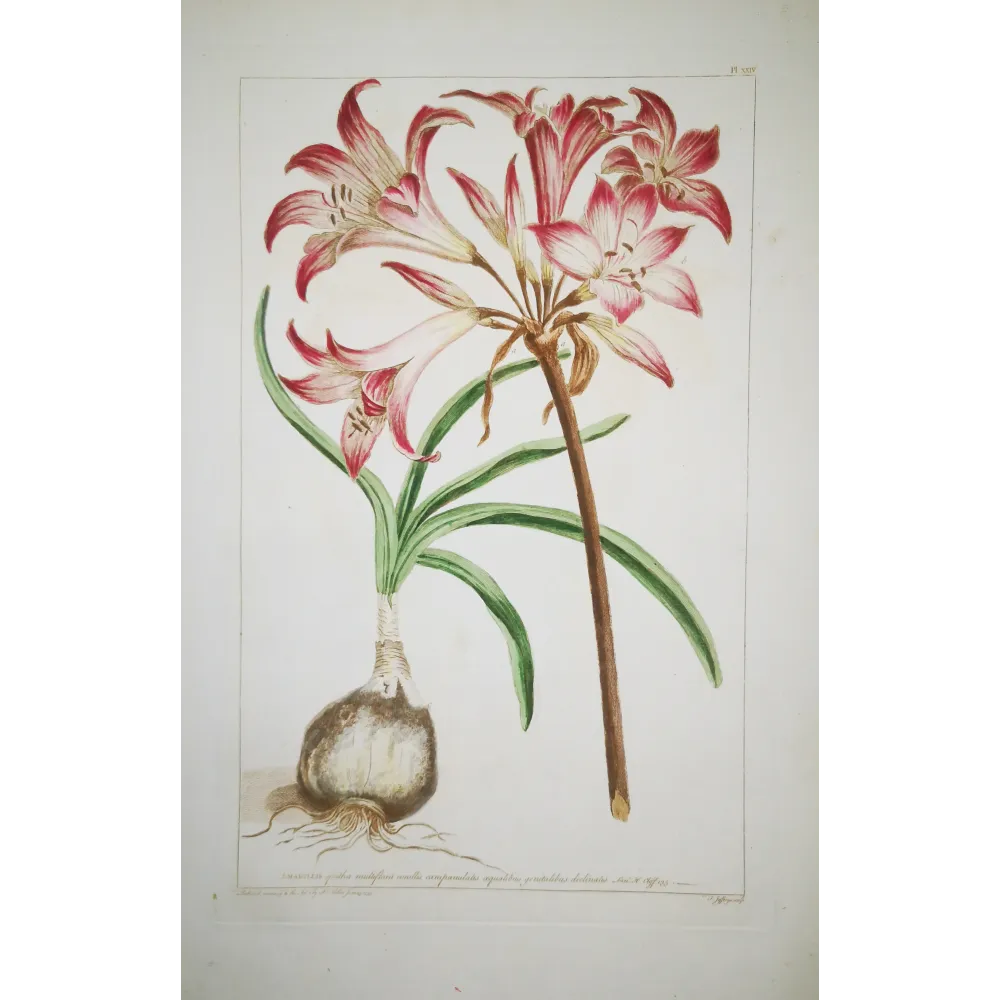
Selected botanical engravings from Philip Miller’s celebrated Figures of the Most Beautiful, Useful and Uncommon Plants.
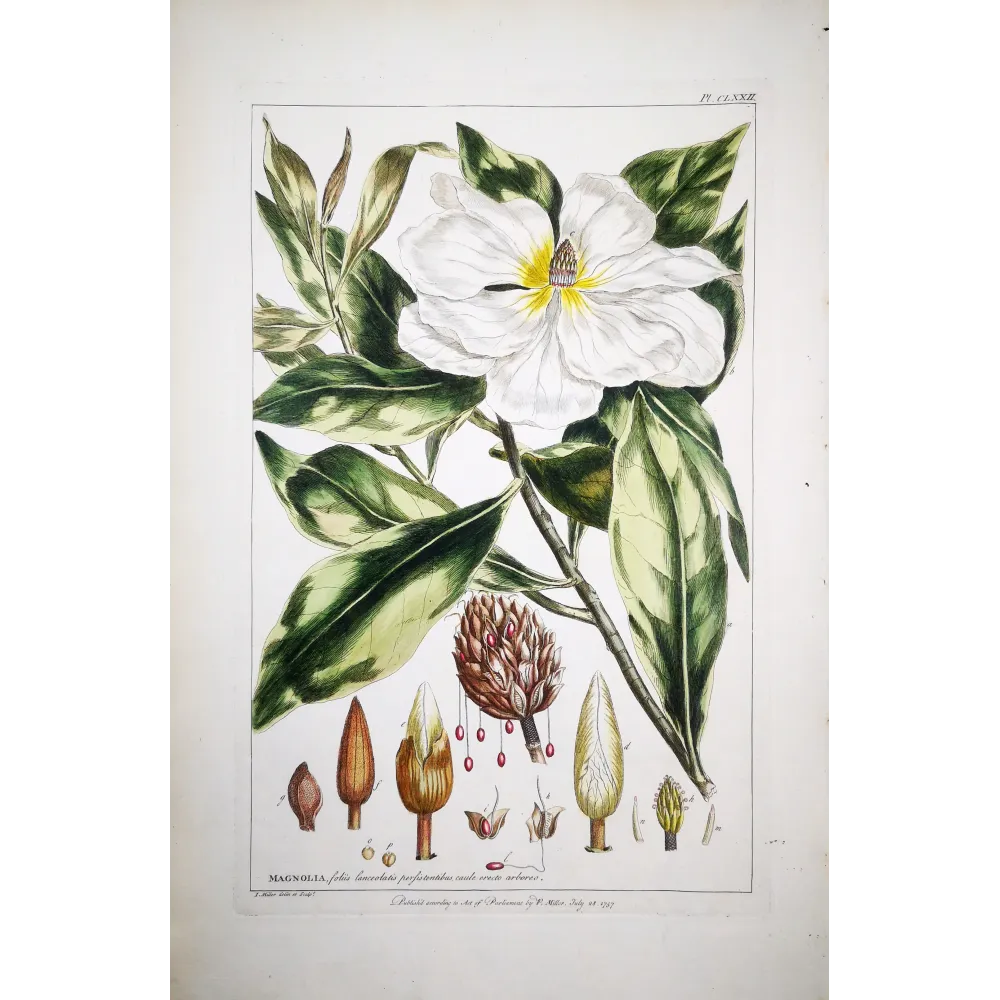
 — • —
Philip Miller – 18th-Century Botanical Elegance from Figures of the Most Beautiful, Useful, and Uncommon Plants
Discover a refined selection of original 18th-century botanical engravings and artworks associated with Philip Miller, one of the most influential figures in early modern botany. These works originate from Figures of the Most Beautiful, Useful, and Uncommon Plants, first published in London between 1755 and 1760 as a visual complement to his celebrated Gardeners Dictionary.
The collection includes plates from the first English edition, as well as works related to the later German edition of 1766, which expanded and enriched the original publication. This edition introduced a broader range of ornamental and cultivated species, reflecting a growing European interest in rare plants, horticultural experimentation, and decorative botanical imagery.
Produced under Miller’s scientific influence and drawn from living specimens, these works combine the precision of botanical observation with a refined decorative sensibility. Whether engraved by leading artists such as Georg Dionysius Ehret, Johann Sebastian Mueller and Richard Lancke, or interpreted through later continental variations, they reflect a moment when botanical science and visual elegance reached a remarkable synthesis.
— • —From the 1766 German Edition Preface
Issued as a refined continuation of Miller’s original English work, the German edition of 1766 presents the collection through a slightly different lens — one that places greater emphasis on ornamental richness and visual interpretation.
The German edition presents the work as a continuation of Miller’s illustrations of beautiful and rare plants, bringing together species admired for their rarity, variation, and ornamental value.
It emphasizes that many of these plants were successfully cultivated and observed in bloom, and were therefore faithfully drawn from nature — a principle that reflects the remarkable balance between scientific accuracy and decorative refinement that defines this collection.
— • —Buy with Confidence
- Original antique prints — carefully selected and professionally preserved
- Individually curated — each piece is unique and never a reproduction
- Worldwide delivery via UPS / DHL Premium Express — free above €300
- No customs duties or taxes worldwide — no delays, no extra charges upon delivery
- Secure, professional packaging for safe international delivery
- Returns accepted — a smooth, worry-free experience
— • —Heritage Stories – The World of Miller
Explore the figures behind this remarkable botanical work — from scientific vision to artistic execution. Together, they shaped a visual language that defined 18th-century botanical illustration.
Philip Miller — Botanical Science and the Art of Cultivation →
Georg Dionysius Ehret — The Art of Botanical Precision →
Johann Sebastian Mueller — The Precision of Botanical Engraving →
Richard Lancake — Botanical Observation and Engraved Form →Looking for original Philip Miller botanical prints? Discover authentic 18th-century engravings and artworks from Figures of the Most Beautiful, Useful, and Uncommon Plants — spanning the first English edition (1755–1760) and the enriched German edition of 1766 — combining scientific precision, horticultural innovation, and refined decorative presence.
-
Andrews Repository
Curated Highlights from the Collection
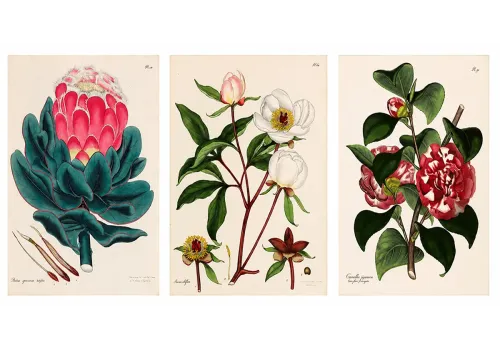
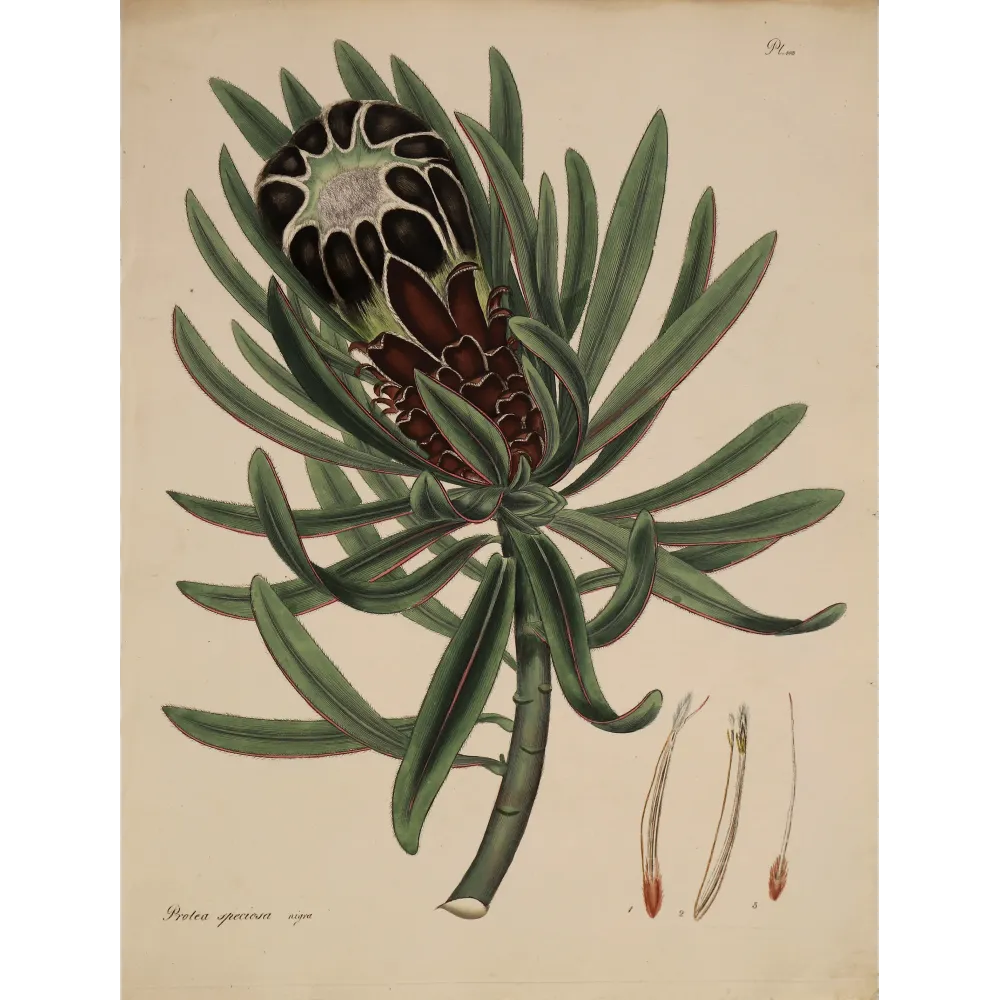
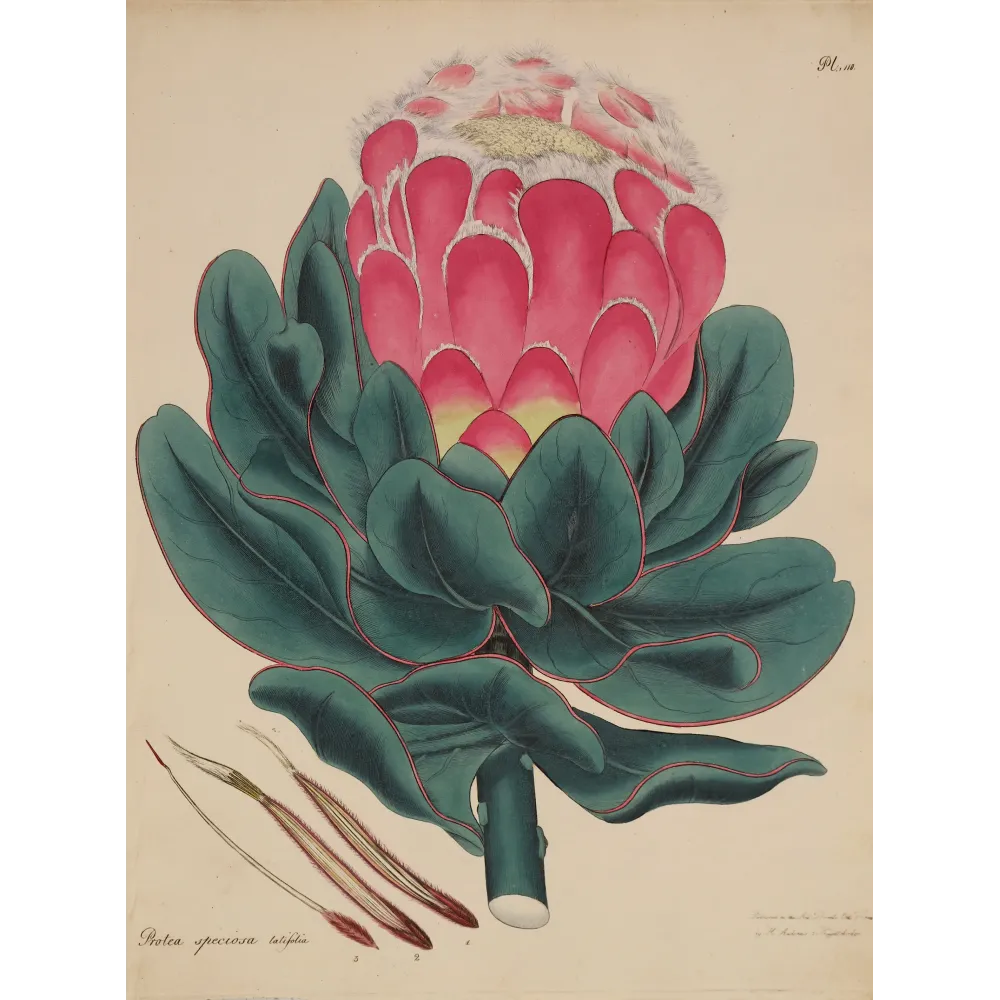
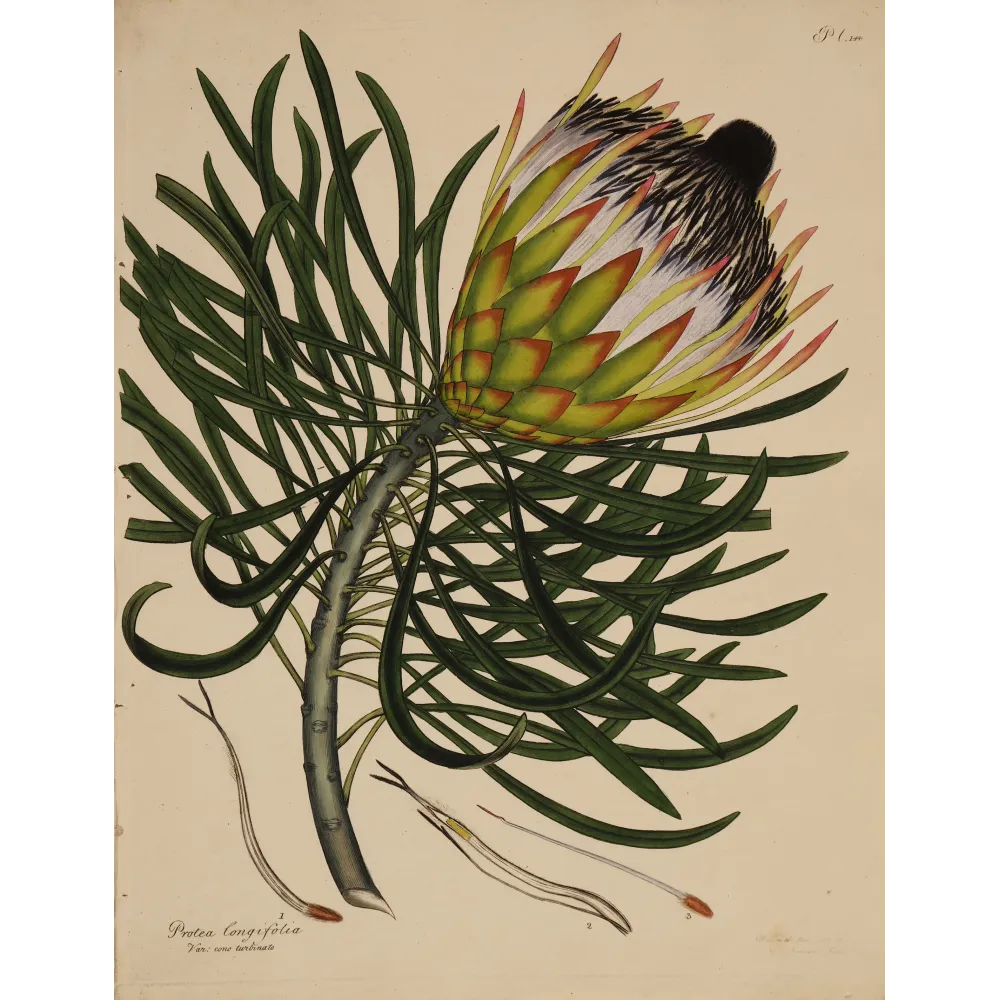
Selected hand-coloured botanical engravings from Henry Charles Andrews’ celebrated The Botanist’s Repository.
 — • —
Henry Charles Andrews – Exotic Botanical Treasures from The Botanist’s Repository
Discover a curated selection of original hand-coloured botanical engravings by Henry Charles Andrews, one of Britain’s most accomplished botanical artists. Published between 1797 and 1814, The Botanist’s Repository introduced collectors and gardeners to an extraordinary world of newly discovered ornamental plants, combining botanical observation with exceptional artistic refinement.
Unlike many botanical illustrators of his time, Andrews was not only the artist, but also the engraver, colourist and publisher of his own work. This unusual involvement in the complete creative process gave his plates a distinctive character, in which carefully observed botanical detail is matched by elegant composition, refined engraving and remarkably fresh hand-applied colour.
Our collection features remarkable South African Proteas alongside elegant Camellias, Peonies, Geraniums and other exotic ornamental plants that fascinated Britain during the great age of botanical exploration. These original engravings retain an exceptional decorative and historical presence, bringing together sculptural botanical forms, generous areas of open paper and the authenticity of works created more than two centuries ago.
— • —Buy with Confidence
- Original antique prints — carefully selected and professionally preserved
- Individually curated — each piece is unique and never a reproduction
- Worldwide delivery via UPS / DHL Premium Express — free above €300
- No customs duties or taxes worldwide — no delays, no extra charges upon delivery
- Secure, professional packaging for safe international delivery
- Returns accepted — a smooth, worry-free experience
— • —Heritage Stories – Britain’s Passion for Exotic Plants
Discover how Britain’s fascination with newly introduced plants transformed gardens, botanical science and illustrated publishing during the late eighteenth and early nineteenth centuries. Explore the remarkable story of Henry Charles Andrews and The Botanist’s Repository, one of the defining works of British botanical illustration.
Henry Charles Andrews and Britain’s Passion for Exotic Plants →
Looking for original Henry Charles Andrews botanical prints? Discover authentic hand-coloured engravings from The Botanist’s Repository (1797–1814), featuring Proteas, Camellias, Peonies, Geraniums and other remarkable ornamental plants from one of Britain’s most distinctive works of botanical illustration.
-
Plenck Icones
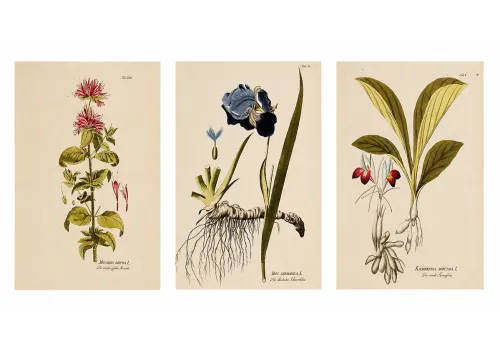
Joseph Jacob von Plenck – Original Antique Botanical Engravings from Icones Plantarum Medicinalium
Discover a curated selection of original hand-coloured botanical engravings from Joseph Jacob von Plenck's celebrated Icones Plantarum Medicinalium. Published in Vienna during the late eighteenth century, this remarkable botanical work united scientific observation, medical knowledge and artistic refinement, becoming one of the finest achievements of Enlightenment botanical illustration.
Physician, botanist and professor at the University of Vienna, Plenck conceived a publication distinguished by its unusually large format, elegant copper engraving and luminous contemporary hand colouring. Intended for physicians, pharmacists and naturalists, these engravings combine botanical precision with remarkable decorative balance, preserving the scientific spirit and visual sophistication of late eighteenth-century Europe.
Our collection features beautifully preserved original engravings depicting medicinal plants, ornamental flowers and economically significant species carefully selected from Plenck's monumental botanical publication. Printed on fine laid paper and individually coloured by hand shortly after printing, these authentic works continue to captivate collectors through their clarity, elegance and enduring historical importance.
— • —Buy with Confidence
- Original antique prints — carefully selected and professionally preserved
- Individually curated — each piece is unique and never a reproduction
- Worldwide delivery via UPS / DHL Premium Express — free above €300
- No customs duties or taxes worldwide — no delays, no extra charges upon delivery
- Secure, professional packaging for safe international delivery
- Returns accepted — a smooth, worry-free experience
— • —Heritage Stories – Joseph Jacob von Plenck and the Botanical Enlightenment
Discover how Enlightenment Vienna transformed botanical science into one of Europe's most refined artistic traditions. Explore the remarkable story of Joseph Jacob von Plenck and Icones Plantarum Medicinalium, a landmark publication where medicine, scientific observation and botanical illustration came together in perfect harmony.
Looking for original Joseph Jacob von Plenck botanical engravings? Discover authentic hand-coloured engravings from Icones Plantarum Medicinalium, published in Vienna during the late eighteenth century, featuring medicinal plants, ornamental flowers and one of the finest achievements of Enlightenment botanical illustration.
-
Besler Hortus
Basilius Besler – Original Hortus Eystettensis Botanical Engravings
First published in 1613, Basilius Besler's Hortus Eystettensis transformed the celebrated garden at Eichstätt into one of the great monuments of early botanical illustration. Its large-format engravings give individual plants an extraordinary visual presence: roots and bulbs emerge openly from the paper, stems rise through generous areas of untouched space, and flowers are arranged with a balance that often gives each specimen the character of a botanical portrait.
The original hand-coloured impressions presented in this collection unite botanical observation, monumental composition and the individuality of early colour applied by hand. More than four centuries after their creation, they remain compelling not only as images of plants, but as historical objects whose paper, versos, watermarks and surviving physical characteristics can still reveal something of the world in which the Hortus Eystettensis was made.
— • —Original Impressions, Individually Examined
An original Hortus Eystettensis engraving is more than its botanical image. The sheet itself can preserve evidence of its history: the structure of the laid paper, surviving watermarks, printed material on the verso, the character of the impression, historical trimming and other physical traces accumulated through centuries of preservation.
Each work in the Prantique collection is therefore considered individually. Its catalogue entry distinguishes between bibliographic evidence, direct examination of the surviving impression and curatorial interpretation of its composition and visual character.
Professional photography of both recto and verso allows the object to be examined beyond the botanical subject alone, bringing the physical history of each surviving sheet into the experience of the work.
— • —From Botanical Image to Historical Object
The monumental scale of Besler's plates allows the plants to occupy the page with unusual authority. Against largely unprinted backgrounds, foliage, flowers, bulbs and roots become the architecture of the composition itself.
In hand-coloured impressions, the engraved structure is transformed again through individually applied colour. Subtle variations of green, carefully modelled flowers and tonal changes across roots and bulbs return something of the living plant to the printed image while ensuring that no two coloured impressions are completely identical.
For the collector, this combination of image and material evidence is fundamental. Every surviving sheet belongs to the history of the Hortus Eystettensis, yet every individual impression has also acquired a physical biography of its own.
— • —A Garden Against Time
The Hortus Eystettensis was conceived within a world in which flowers, gardens and human lives were understood to be transient. In his prefatory writing, Besler himself reflects upon permanence, memory and the desire to carry human achievement beyond an individual lifetime.
Our Historical Perspective follows this idea through Besler's own words, the seasonal architecture of the book, Georg Remus's contemporary description of an “immortal work”, and the privileges intended to protect the publication as its images began to circulate beyond Eichstätt.
Read: Basilius Besler and the Hortus Eystettensis – A Garden Against Time →
— • —Explore the Collection
Explore the individual works below to discover what each original impression can reveal — from botanical identity and composition to the evidence preserved within the paper itself.
Front and verso photography, detailed material observations and individual curatorial analysis allow each sheet to be approached not simply as a decorative botanical image, but as an original historical object that has travelled from the early seventeenth century into the present.
— • —Every original antique impression preserves more than paper and pigments.
It preserves centuries of wonder for the natural world,
careful observation and patient craftsmanship,
thanks to the care of those who chose
to preserve the values it embodies.— • —




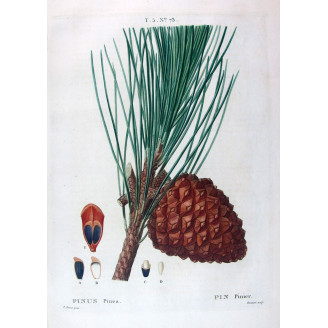


Dwarf Mountain Pine...
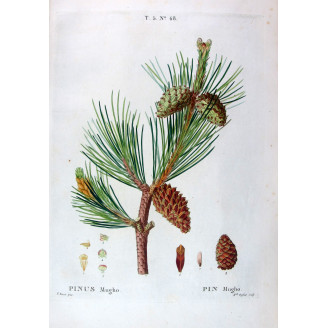
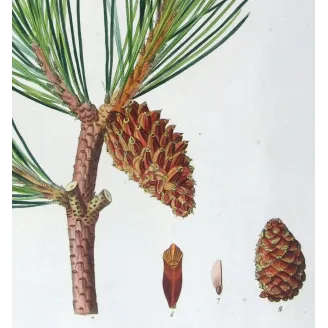
Antique engraving of Pinus Mugho by Bessa, rich in botanical detail.